Article

Estrogenic Effect Mechanism and Influencing Factors for Transformation Product Dimer Formed in Preservative Parabens Photolysis

1
Guangdong-Hong Kong-Macao Joint Laboratory for Contaminants Exposure and Health, Guangdong Key Laboratory of Environmental Catalysis and Health Risk Control, Institute of Environmental Health and Pollution Control, Guangdong University of Technology, Guangzhou 510006, China
2
Guangzhou Key Laboratory of Environmental Catalysis and Pollution Control, Key Laboratory of City Cluster Environmental Safety and Green Development of the Ministry of Education, School of Environmental Science and Engineering, Guangdong University of Technology, Guangzhou 510006, China
*
Author to whom correspondence should be addressed.
Toxics 2023, 11(2), 186; https://doi.org/10.3390/toxics11020186

Submission received: 31 December 2022 / Revised: 9 February 2023 / Accepted: 15 February 2023 / Published: 17 February 2023
(This article belongs to the Special Issue Transformation and Exposure Risk of Emerging Contaminants)

Abstract

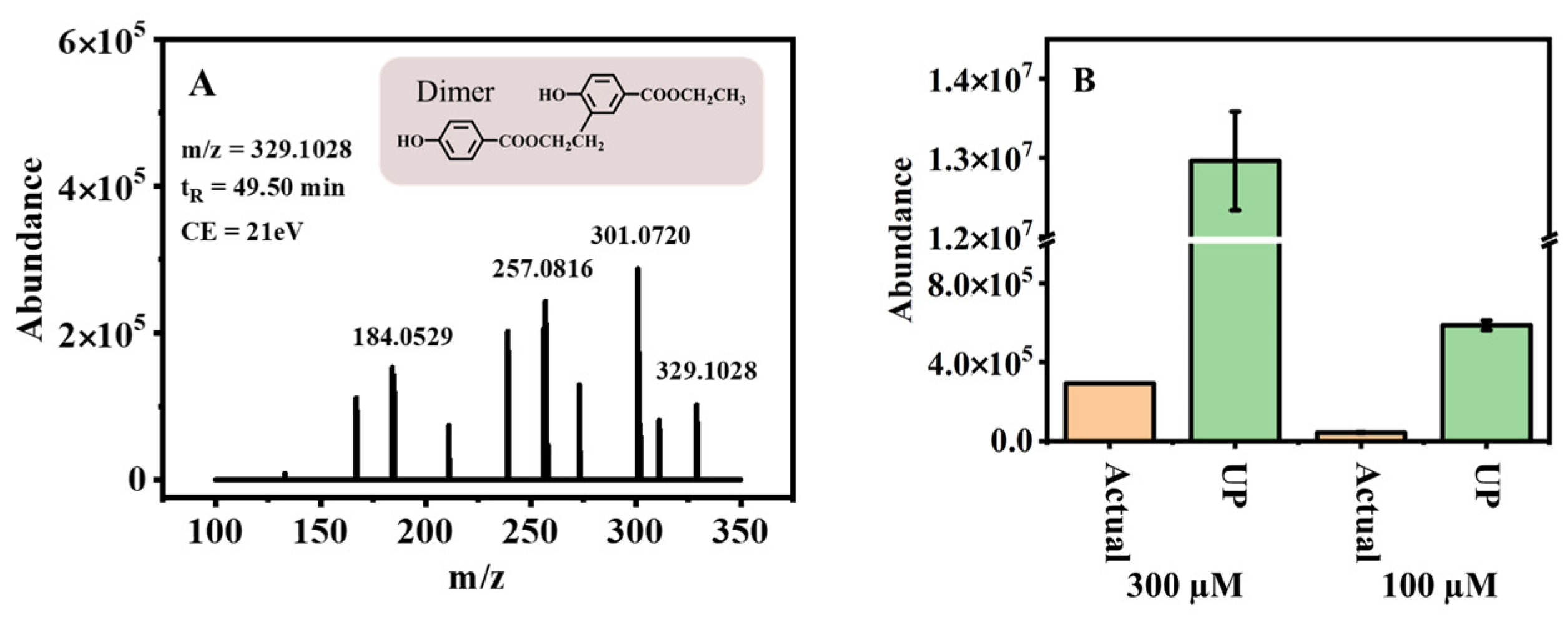
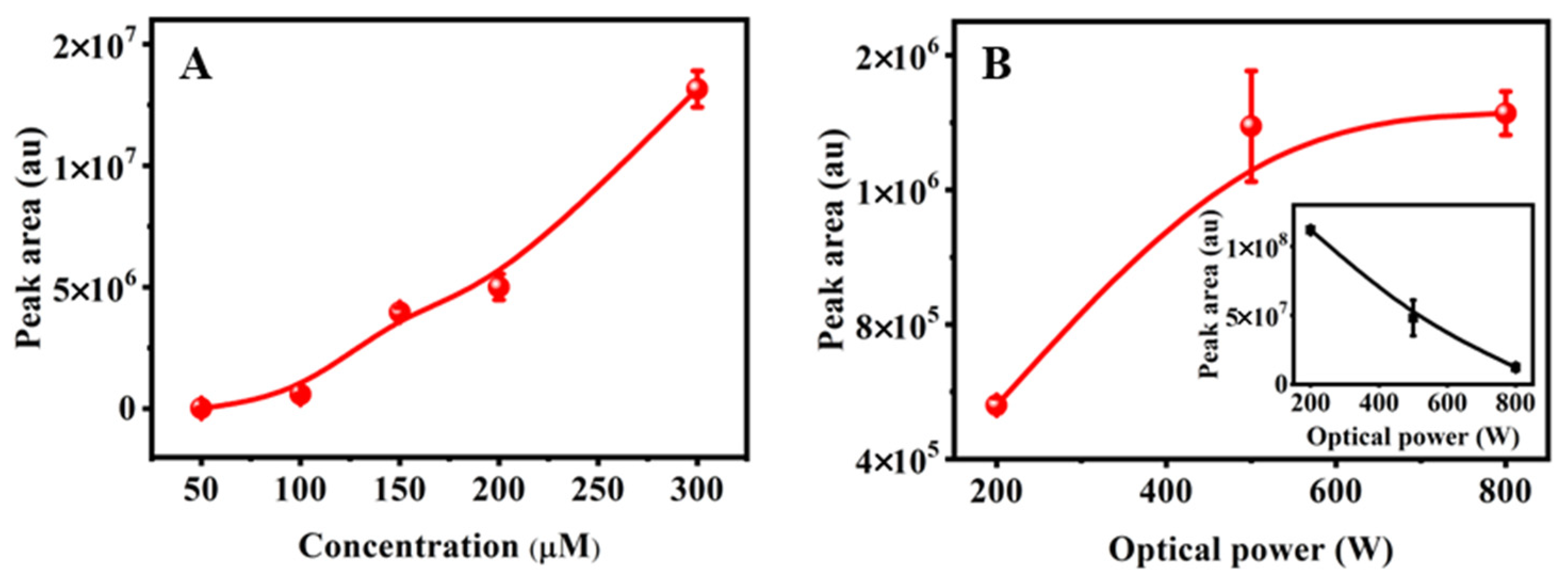
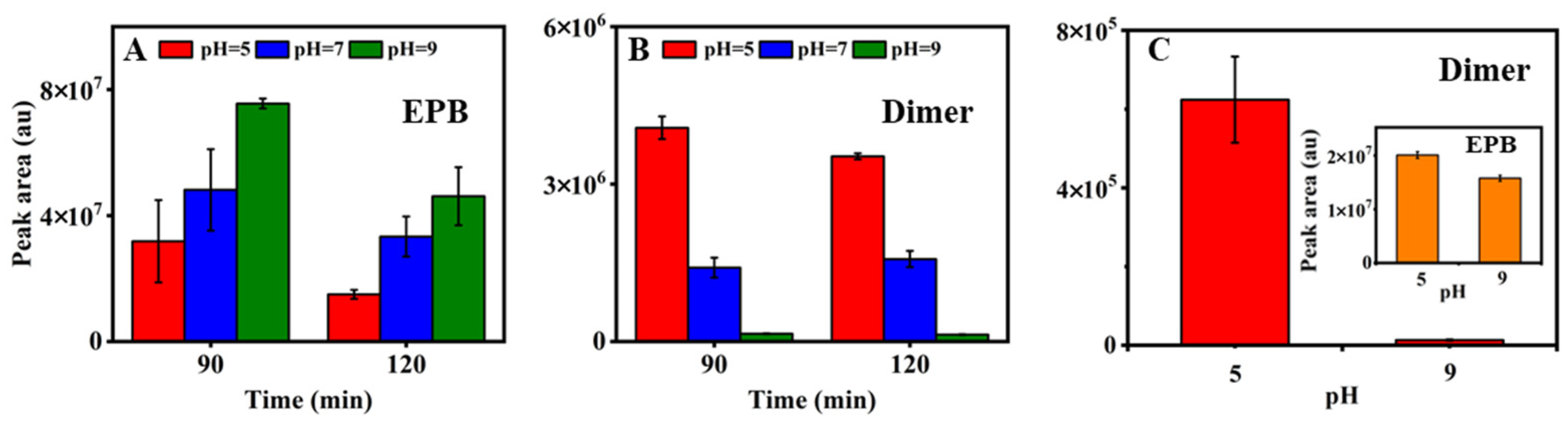
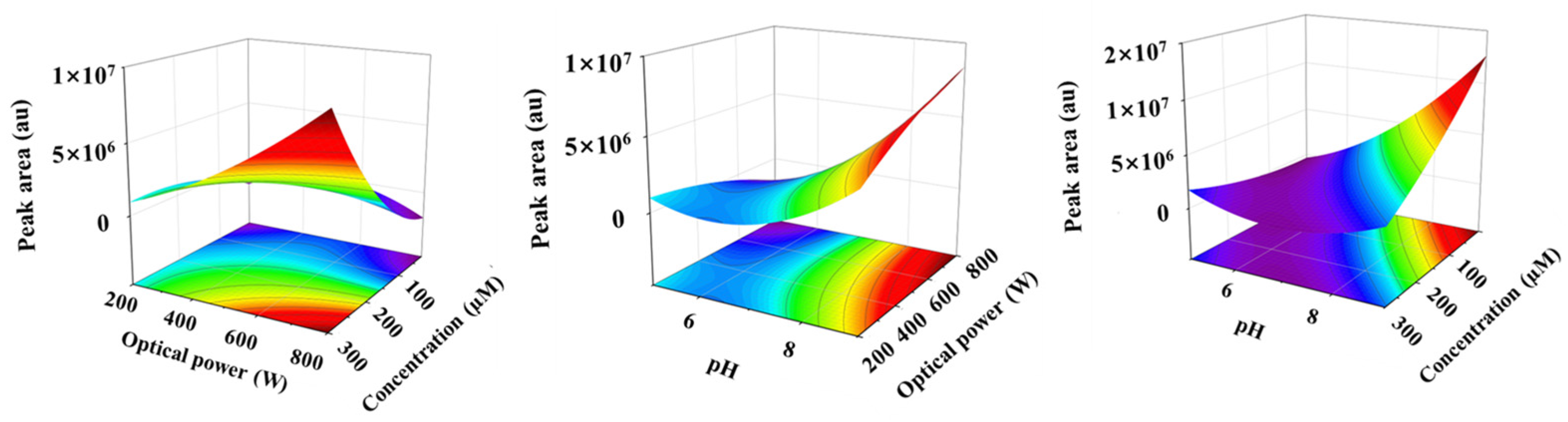
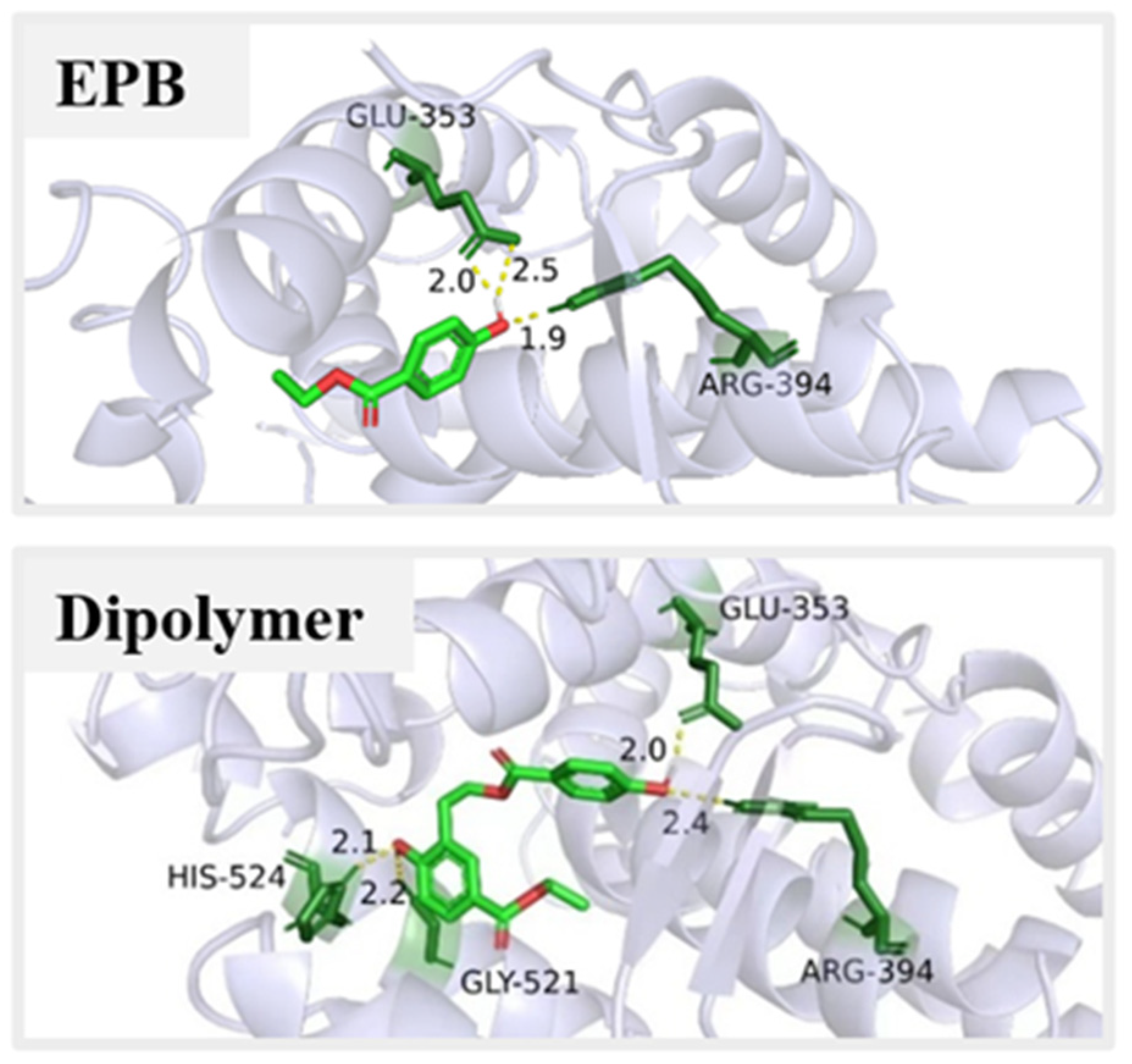
The environmental transformation and health effects of endocrine disruptors (EDCs) need urgent attention, particularly the formation of transformation products with higher toxicity than parent EDCs. In this paper, an important transformation product dimer (short for ethyl 4-hydroxy-3-(2-((4-hydroxybenzoyl) oxy) ethyl) benzoate) with estrogenic activity was investigated and detected in the photolysis of preservative ethyl-paraben (EPB) dissolved in actual water. The environmental factors, such as the higher initial concentration of EPB, the stronger optical power and the lower pH could stimulate the formation of the dimer. Simultaneously, the interaction of multiple environmental factors was significant, especially the initial concentration and pH using the response surface methodology. Furthermore, the relationship between the environmental factors and the formation of the product dimer was further explained and the empirical model equation was built for predicting the amount of dimer in actual water. Quantum chemical and toxicological calculations showed the estrogenic effect mechanism of the product dimer and it was revealed further that the hydrogen bonds of the dimer and ERα proteins (ARG-394, Glu-353, His-524, GYY-521) were formed, with a lowest binding energy of −8.38 Kcal/mol during molecular docking. In addition, the health effect risk of the product dimer was higher than the parent compound in the blood, cardiovascular system, gastrointestinal system, kidney and liver. In short, the present study was of great significance for the transformation product in pollution control and health effects in the photolysis of EDCs.
Keywords: photolysis products; estrogenic effect mechanism; central composite design; actual water photolysis products; estrogenic effect mechanism; central composite design; actual water