Review

The Role of Persistent Organic Pollutants in Obesity: A Review of Laboratory and Epidemiological Studies


1
Research Department, Innlandet Hospital Trust, P.O. Box 104, 2381 Brumunddal, Norway
2
Faculty of Health and Social Sciences, Inland Norway University of Applied Sciences, P.O. Box 400, 2418 Elverum, Norway
3
Department of Toxicology “Akademik Danilo Soldatović”, University of Belgrade-Faculty of Pharmacy, Vojvode Stepe 450, 11000 Belgrade, Serbia
4
World-Class Research Center “Digital Biodesign and Personalized Healthcare”, IM Sechenov First Moscow State Medical University (Sechenov University), 119435 Moscow, Russia
5
Department of Bioelementology, KG Razumovsky Moscow State University of Technologies and Management, 109004 Moscow, Russia
6
Laboratory of Ecobiomonitoring and Quality Control, Yaroslavl State University, 150003 Yaroslavl, Russia
7
Department of Molecular Pharmacology, Albert Einstein College of Medicine, Bronx, NY 10461, USA
8
Laboratory of Molecular Dietetics, IM Sechenov First Moscow State Medical University (Sechenov University), 119435 Moscow, Russia
*
Authors to whom correspondence should be addressed.
Toxics 2022, 10(2), 65; https://doi.org/10.3390/toxics10020065

Submission received: 20 December 2021 / Revised: 29 January 2022 / Accepted: 30 January 2022 / Published: 2 February 2022
(This article belongs to the Special Issue Environmental and Human Health Risk Assessment of POPs)

Abstract

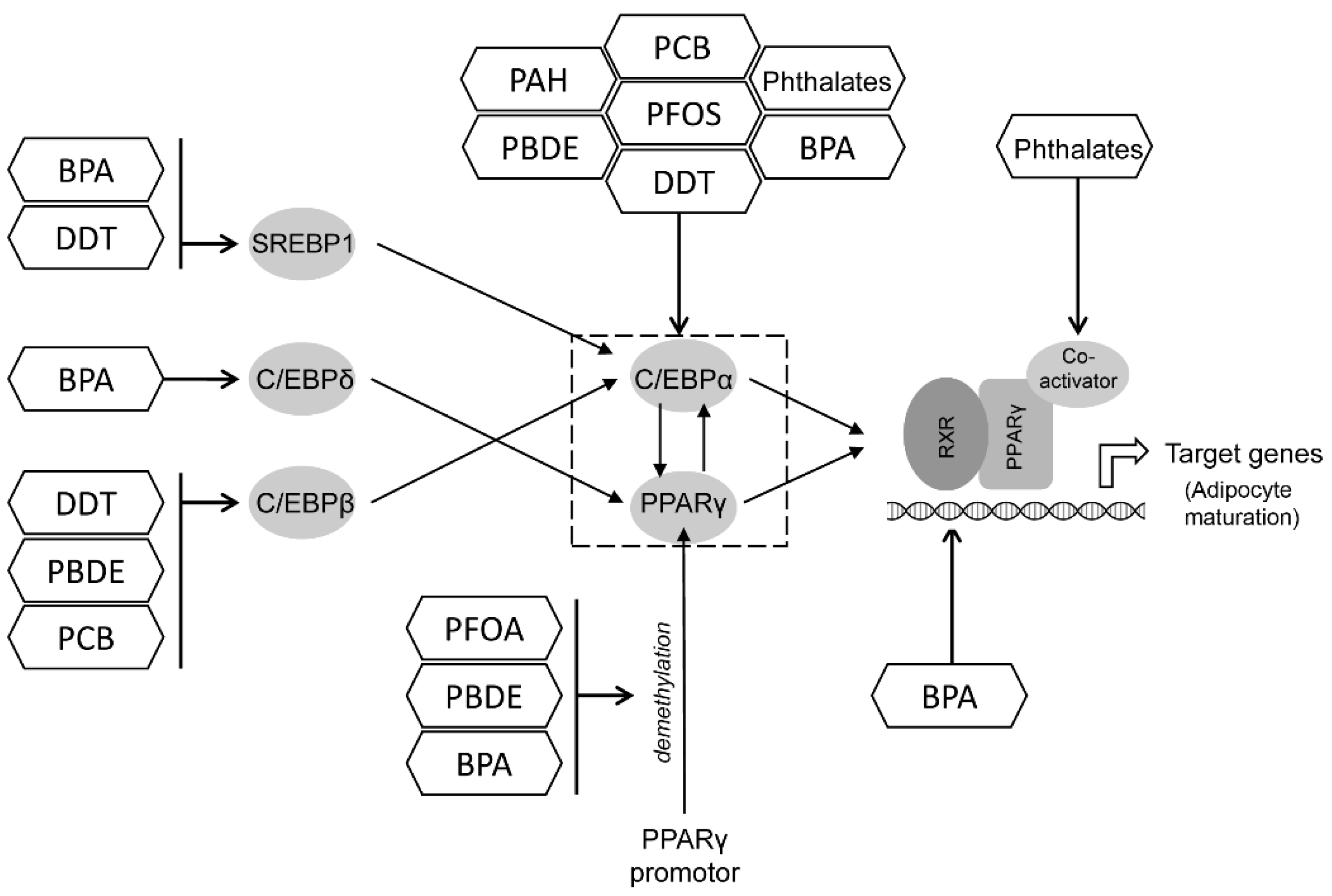
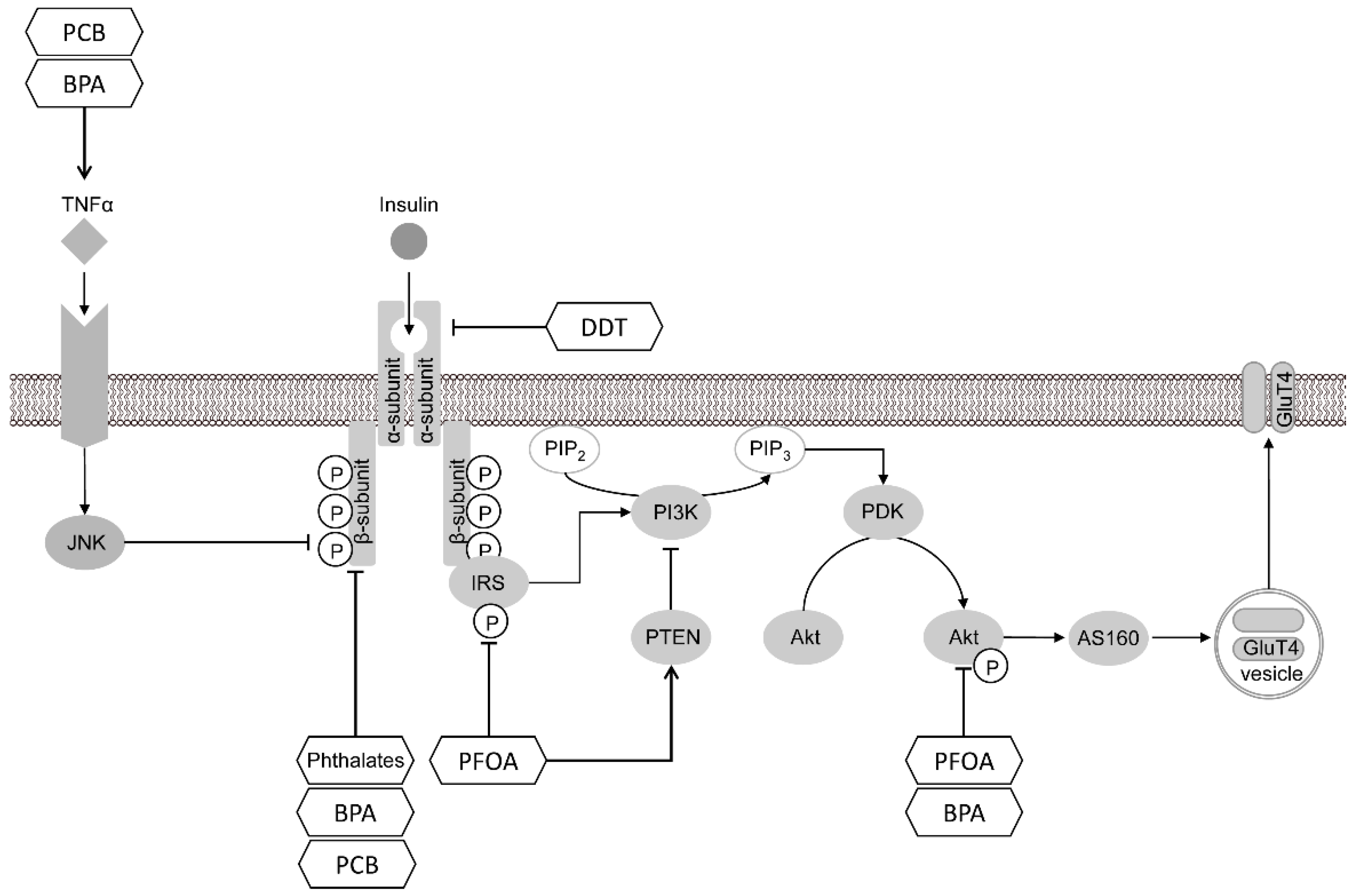
Persistent organic pollutants (POPs) are considered as potential obesogens that may affect adipose tissue development and functioning, thus promoting obesity. However, various POPs may have different mechanisms of action. The objective of the present review is to discuss the key mechanisms linking exposure to POPs to adipose tissue dysfunction and obesity. Laboratory data clearly demonstrate that the mechanisms associated with the interference of exposure to POPs with obesity include: (a) dysregulation of adipogenesis regulators (PPARγ and C/EBPα); (b) affinity and binding to nuclear receptors; (c) epigenetic effects; and/or (d) proinflammatory activity. Although in vivo data are generally corroborative of the in vitro results, studies in living organisms have shown that the impact of POPs on adipogenesis is affected by biological factors such as sex, age, and period of exposure. Epidemiological data demonstrate a significant association between exposure to POPs and obesity and obesity-associated metabolic disturbances (e.g., type 2 diabetes mellitus and metabolic syndrome), although the existing data are considered insufficient. In conclusion, both laboratory and epidemiological data underline the significant role of POPs as environmental obesogens. However, further studies are required to better characterize both the mechanisms and the dose/concentration-response effects of exposure to POPs in the development of obesity and other metabolic diseases.
Keywords: obesity; dioxin; polybromated diphenylethers; dichlorodiphenyltrichloroethane; polychlorinated biphenyls; polyaromatic hydrocarbons; bisphenol A; phthalates; perfluorinated compounds; adipogenesis obesity; dioxin; polybromated diphenylethers; dichlorodiphenyltrichloroethane; polychlorinated biphenyls; polyaromatic hydrocarbons; bisphenol A; phthalates; perfluorinated compounds; adipogenesis