Article

An Untargeted Metabolomics Investigation of Jiulong Yak (Bos grunniens) Meat by 1H-NMR


1
Department of Agro-Food Science and Technology, University of Bologna, 47521 Cesena, Italy
2
College of Food Science, Sichuan Agricultural University, Ya’an 625014, China
3
Department of Animal Medicine, Production and Health, University of Padova, 35100 Legnaro (Padova), Italy
*
Author to whom correspondence should be addressed.
Foods 2020, 9(4), 481; https://doi.org/10.3390/foods9040481
Submission received: 19 March 2020 / Revised: 24 March 2020 / Accepted: 26 March 2020 / Published: 12 April 2020

Abstract

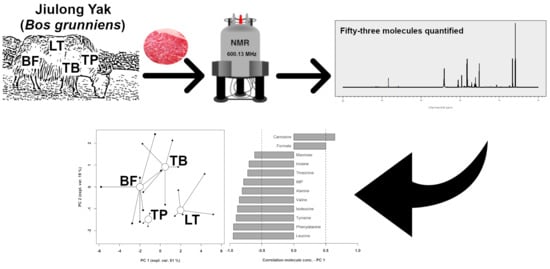
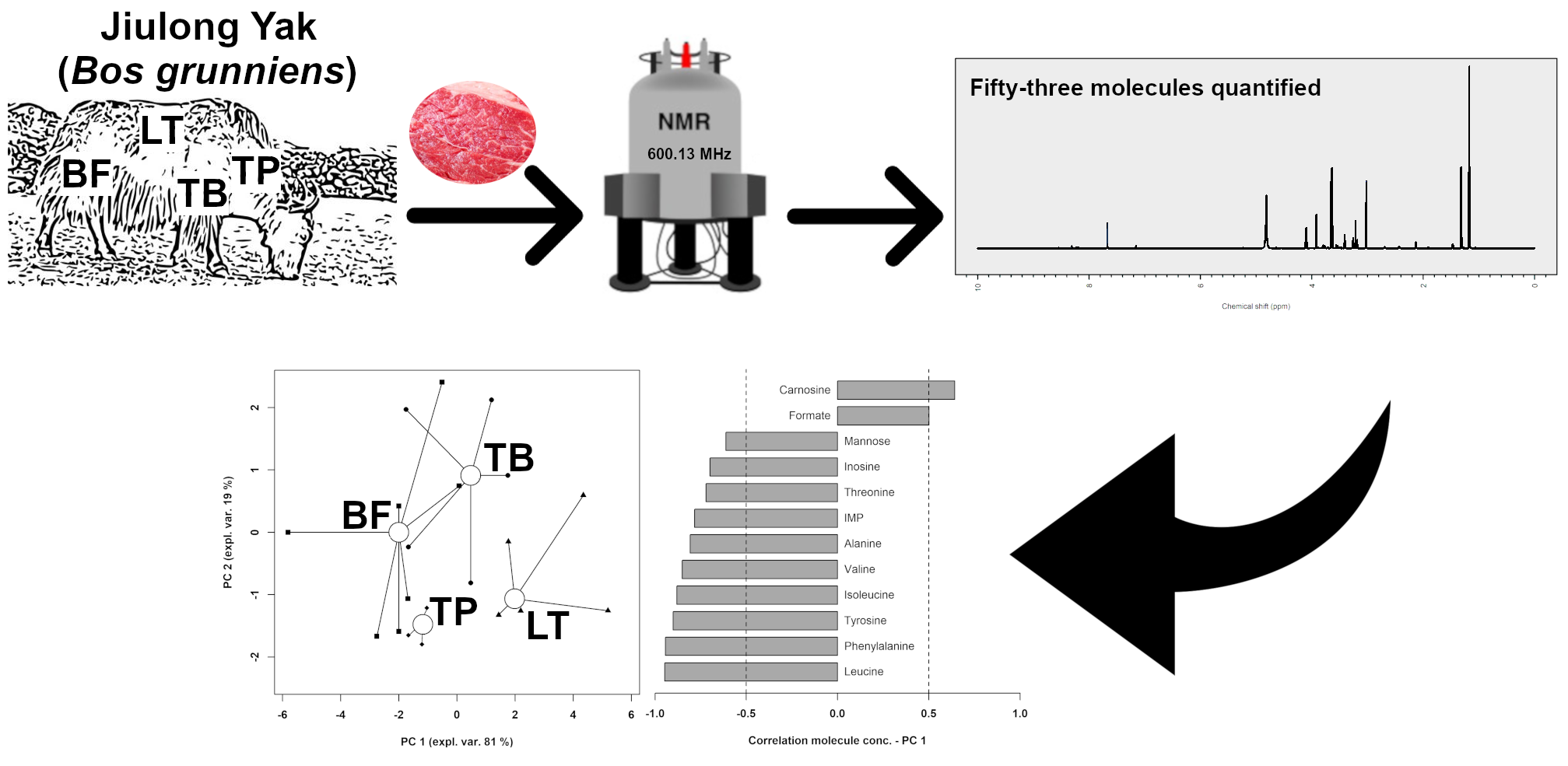
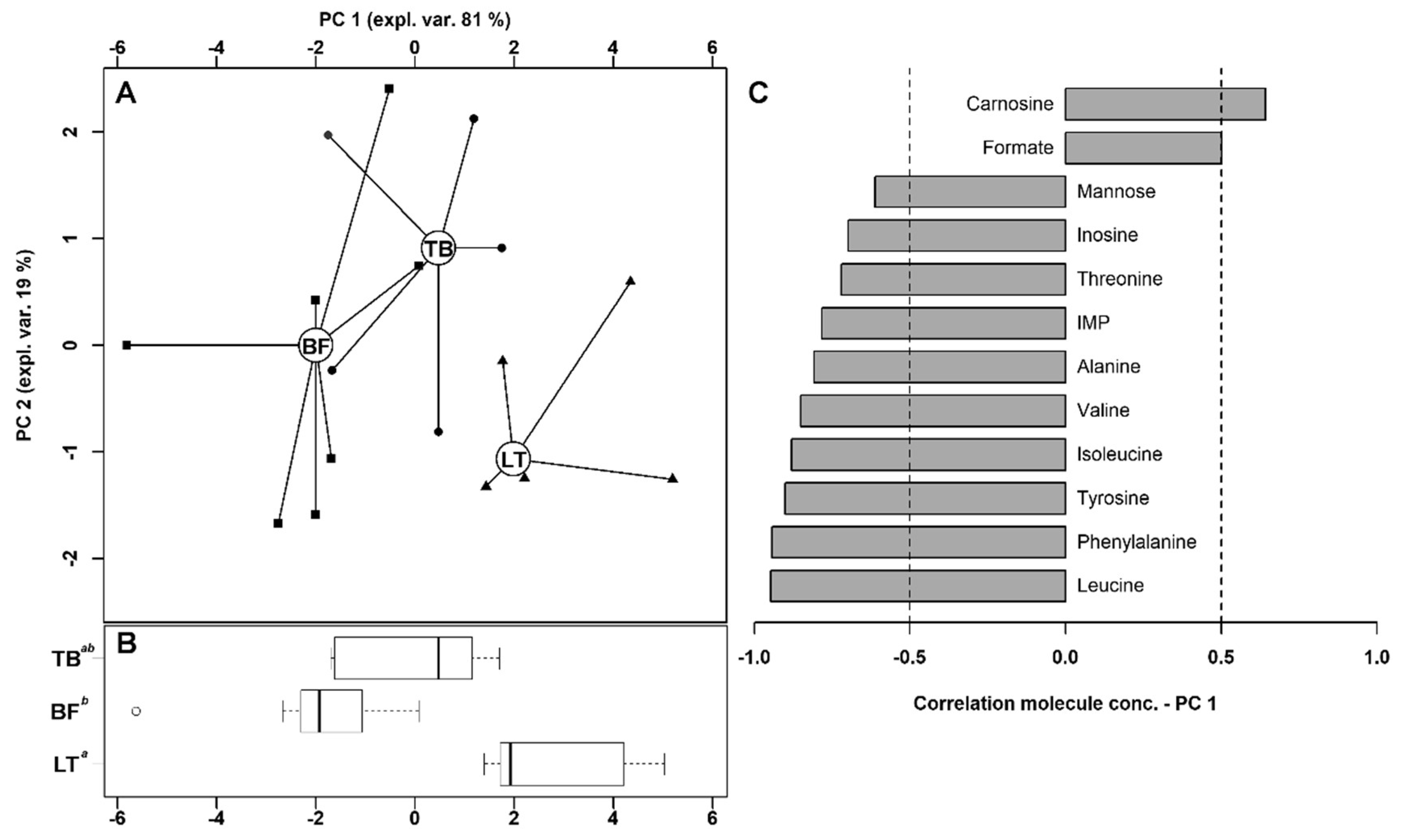
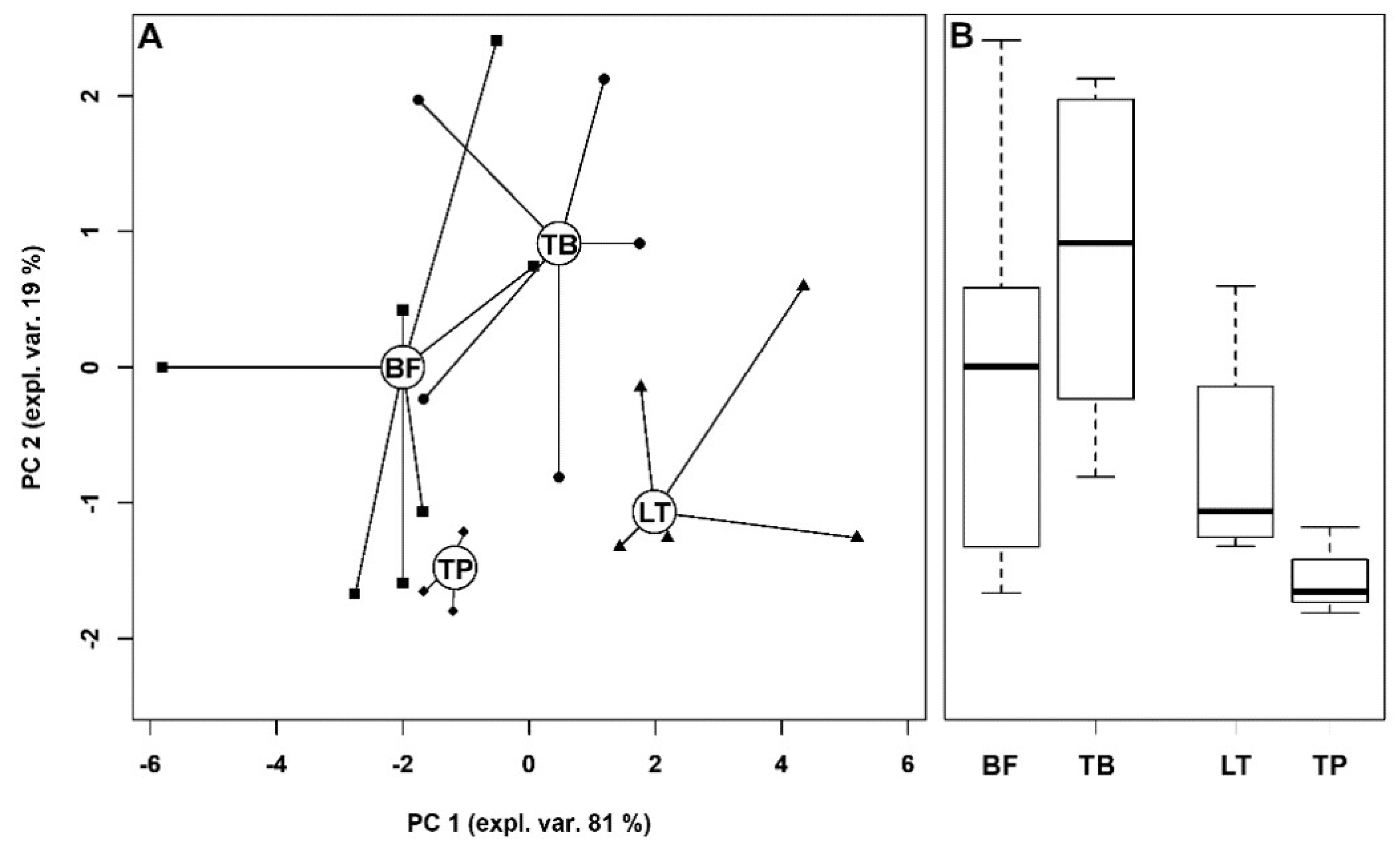
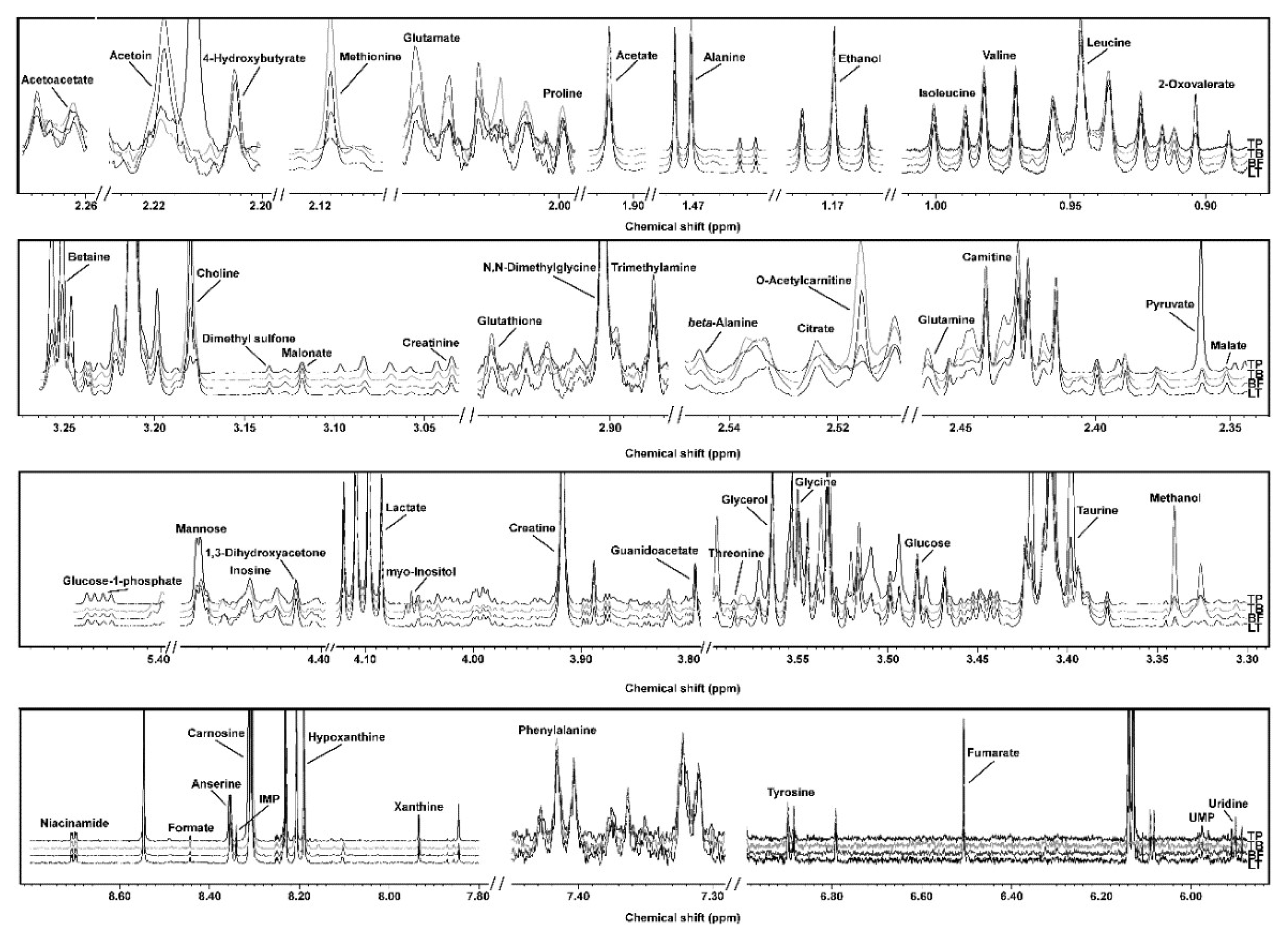
Yak represents the main meat source for Tibetan people. This work aimed to investigate the metabolome of raw meat from Jiulong yaks, focusing on specimens farmed and harvested locally through traditional procedures. Untargeted nuclear magnetic resonance spectroscopy (1H-NMR) was selected as the analytical platform. Samples from longissimus thoracis, trapezius, triceps brachii and biceps femoris muscles, with different prevalences of red and white fibers, were selected. Among the fifty-three metabolites quantified in each of them, carnitine, carnosine, creatine and taurine are known for their bioactive properties. Twelve molecules were found to be differently concentrated in relation to muscle type. Longissimus thoracis, compared to biceps femoris, had higher concentrations of carnosine and formate and lower concentrations of mannose, inosine, threonine, IMP, alanine, valine, isoleucine, tyrosine, phenylalanine and leucine. A metabolic pathway analysis suggested that the main pathways differing among the muscles were connected to the turnover of amino acids. These results contribute to a deeper understanding of yak raw meat metabolism and muscle type differences, which can be used as an initial reference for the meat industry to set up muscle-specific investigations. The possibility of simultaneously quantifying several bioactive compounds suggests that these investigations could revolve around meat’s nutritional value.
Keywords: yak; meat; metabolome; proton nuclear magnetic resonance spectroscopy; pathway analysis yak; meat; metabolome; proton nuclear magnetic resonance spectroscopy; pathway analysis
Graphical Abstract