

Preliminary Assessment of Parmigiano Reggiano Authenticity by Handheld Raman Spectroscopy


Abstract
1. Introduction
2. Materials and Methods
2.1. Sampling
2.2. Raman Spectra
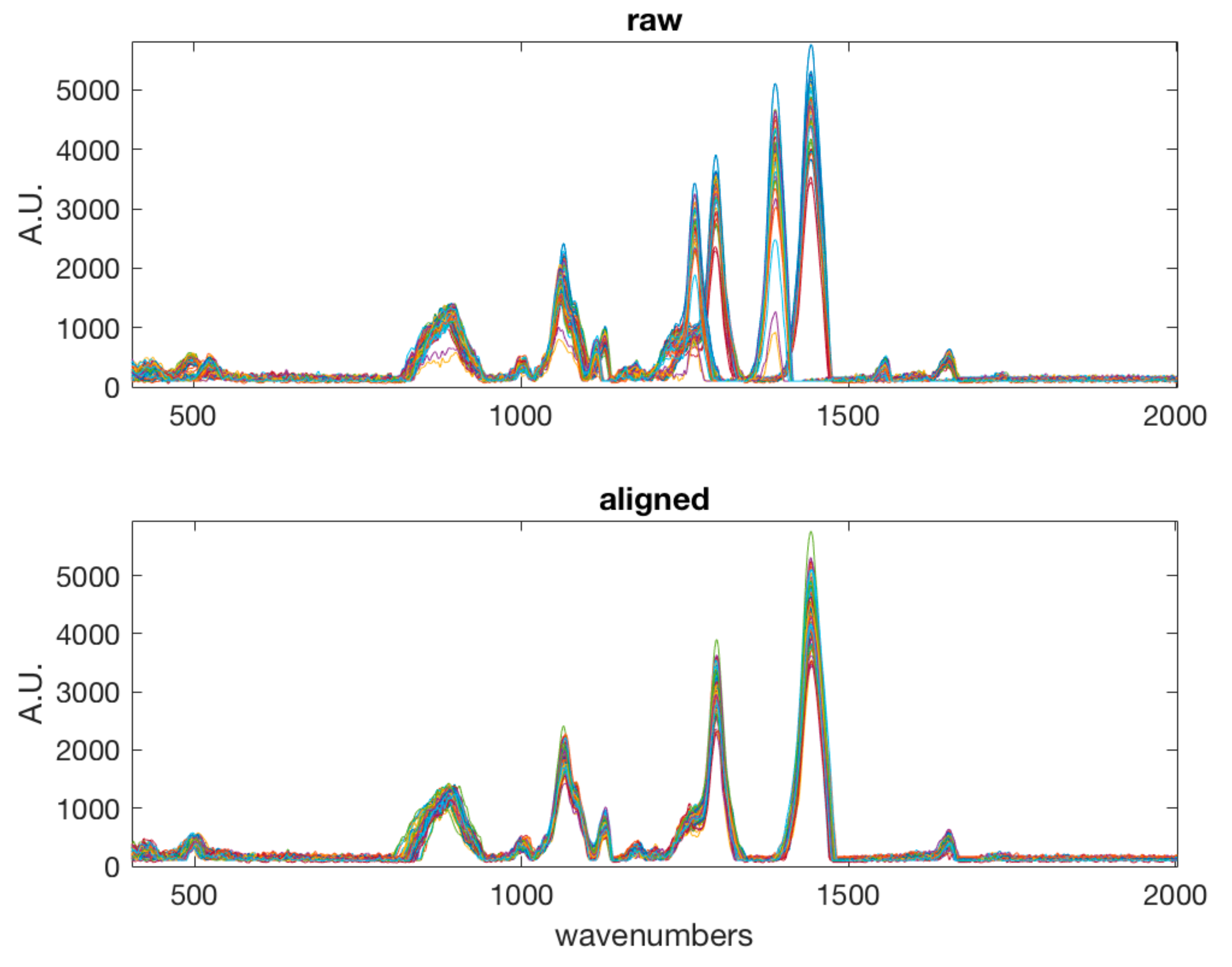
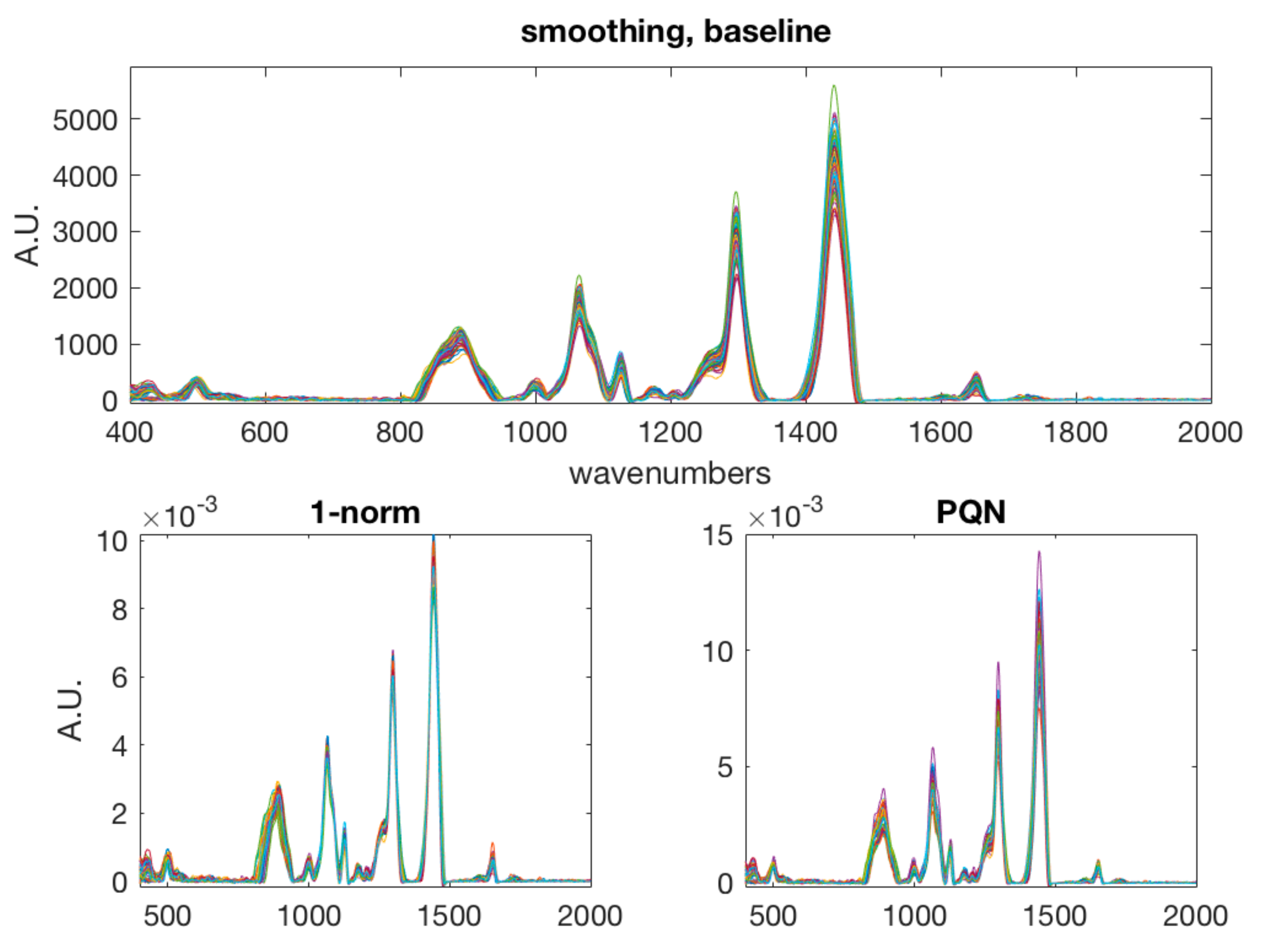
2.3. Spectral Preprocessing
2.4. Classification Analysis
2.4.1. Datasets
2.4.2. Soft Independent Modeling of Class Analogy (SIMCA)
2.5. Multivariate Calibration (PLS) of Rind Content
2.6. Software
3. Results
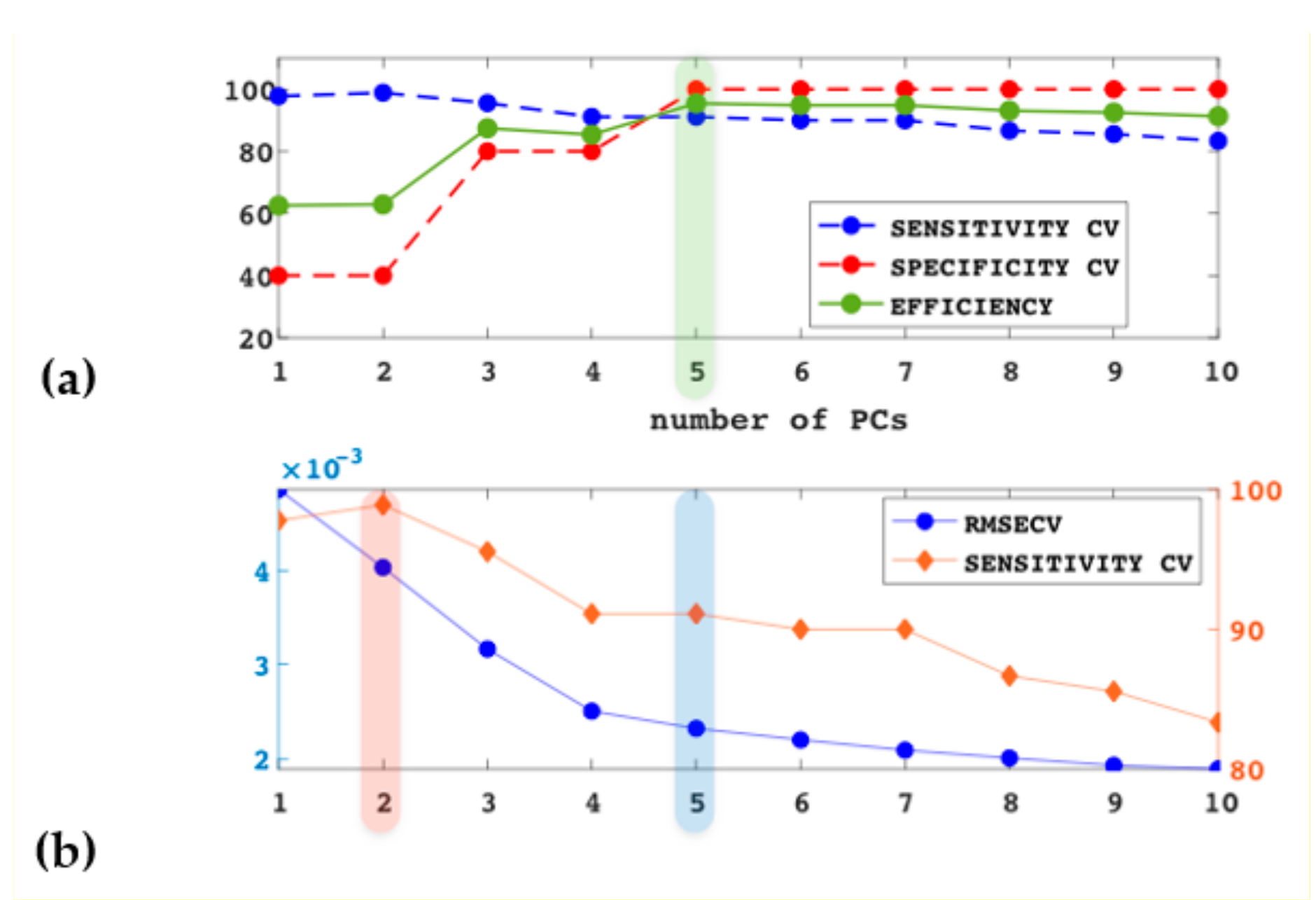
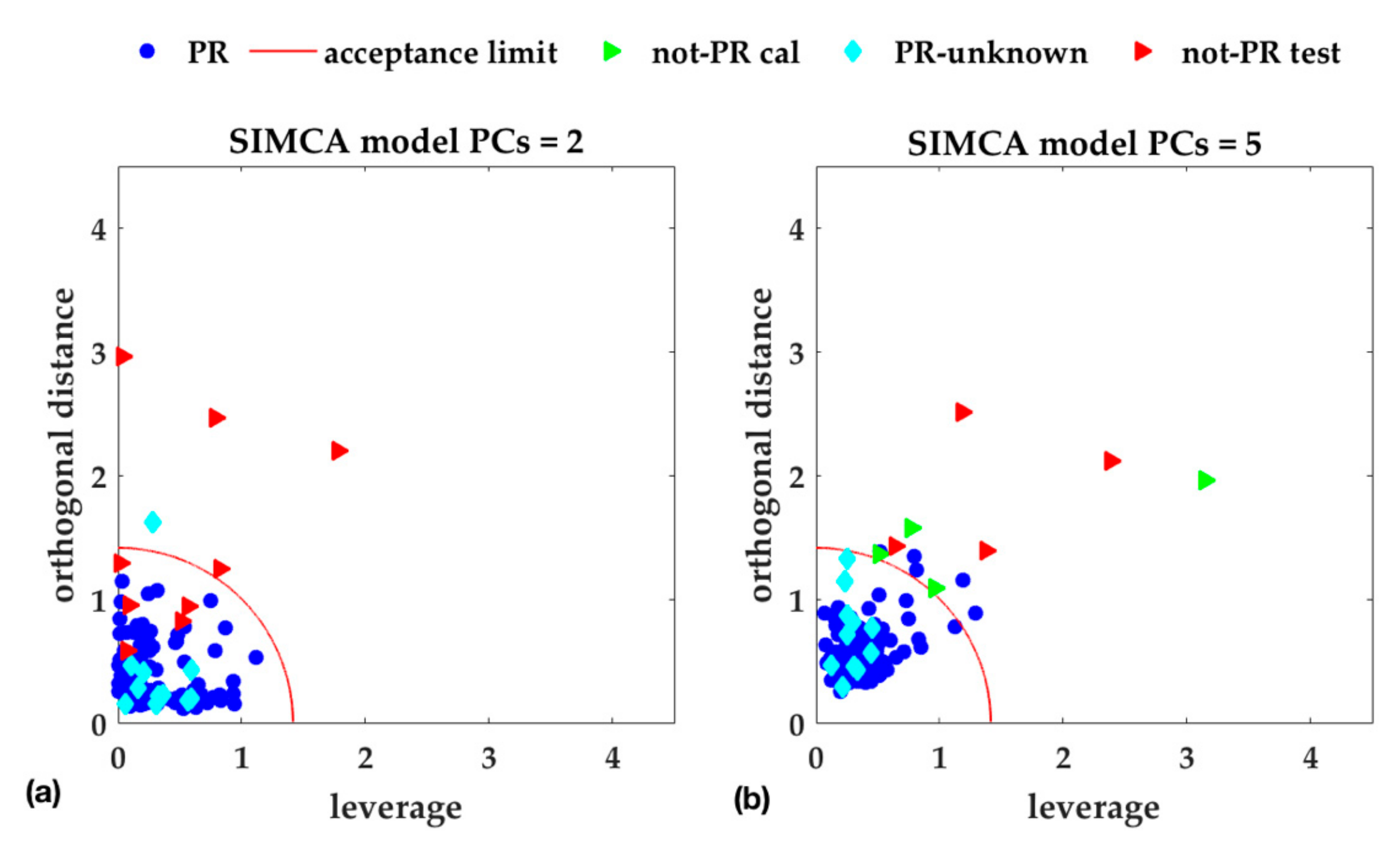
3.1. Authenticity Assessment
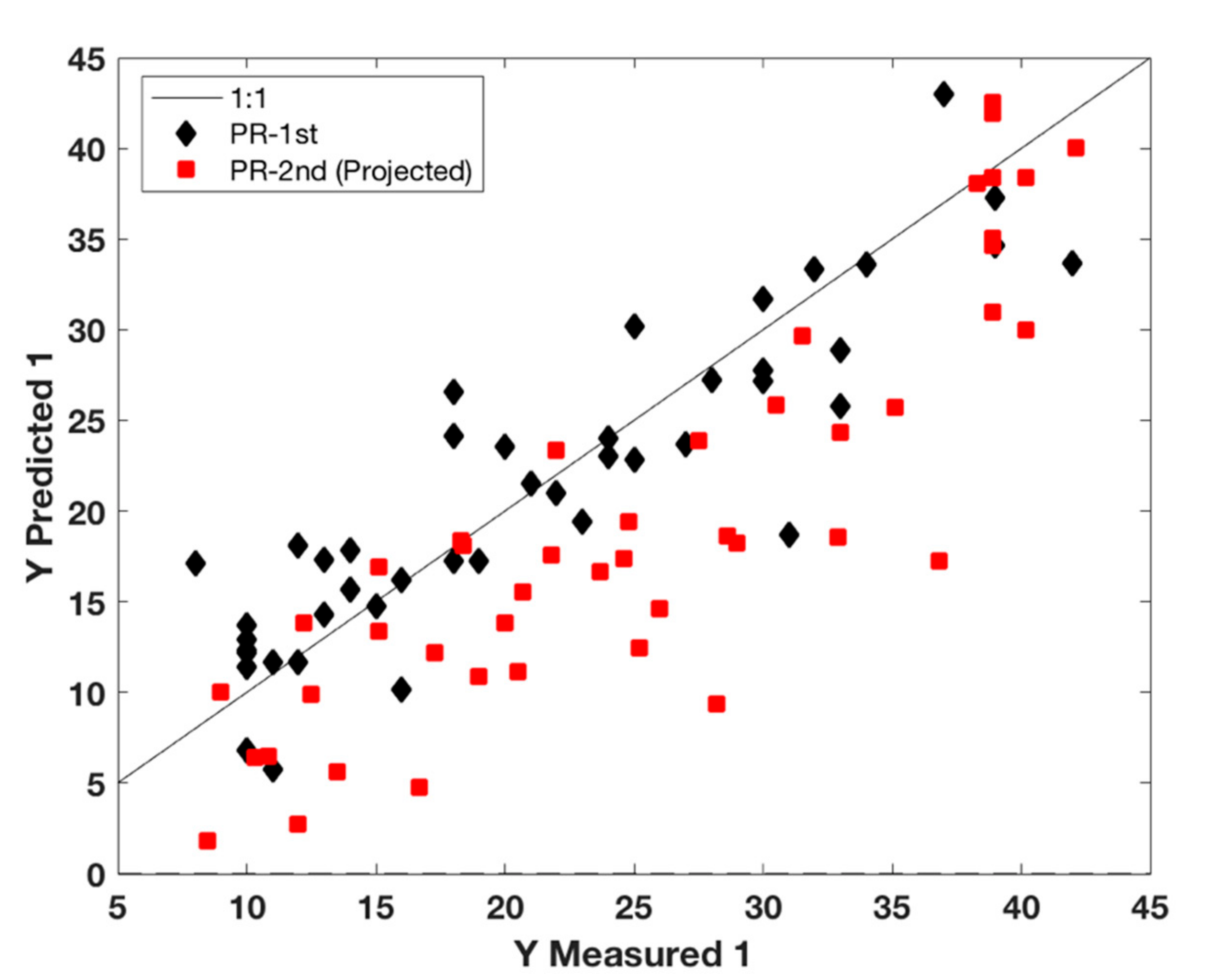
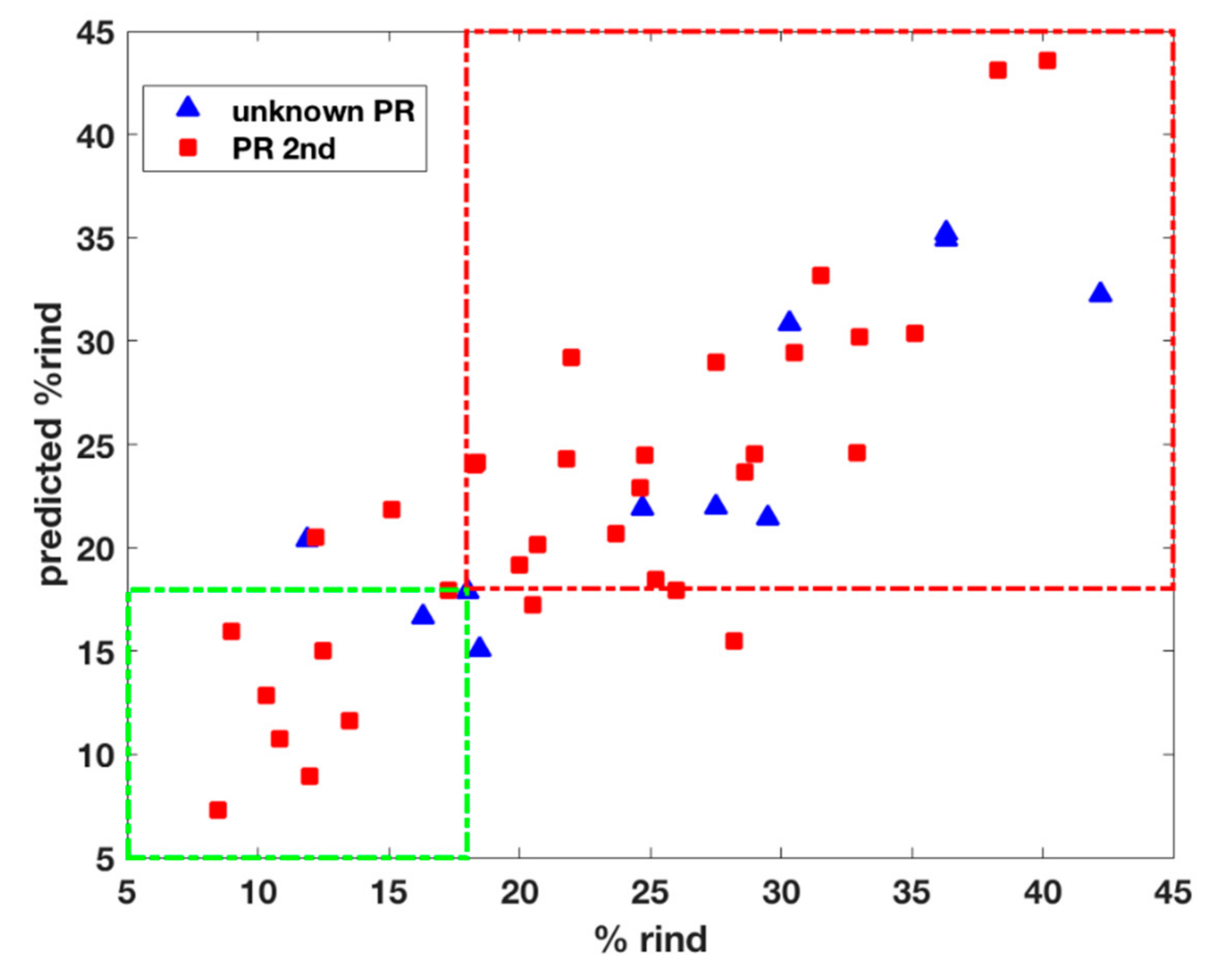
3.2. Calibration of Rind Content
4. Discussion
4.1. Authenticity Model
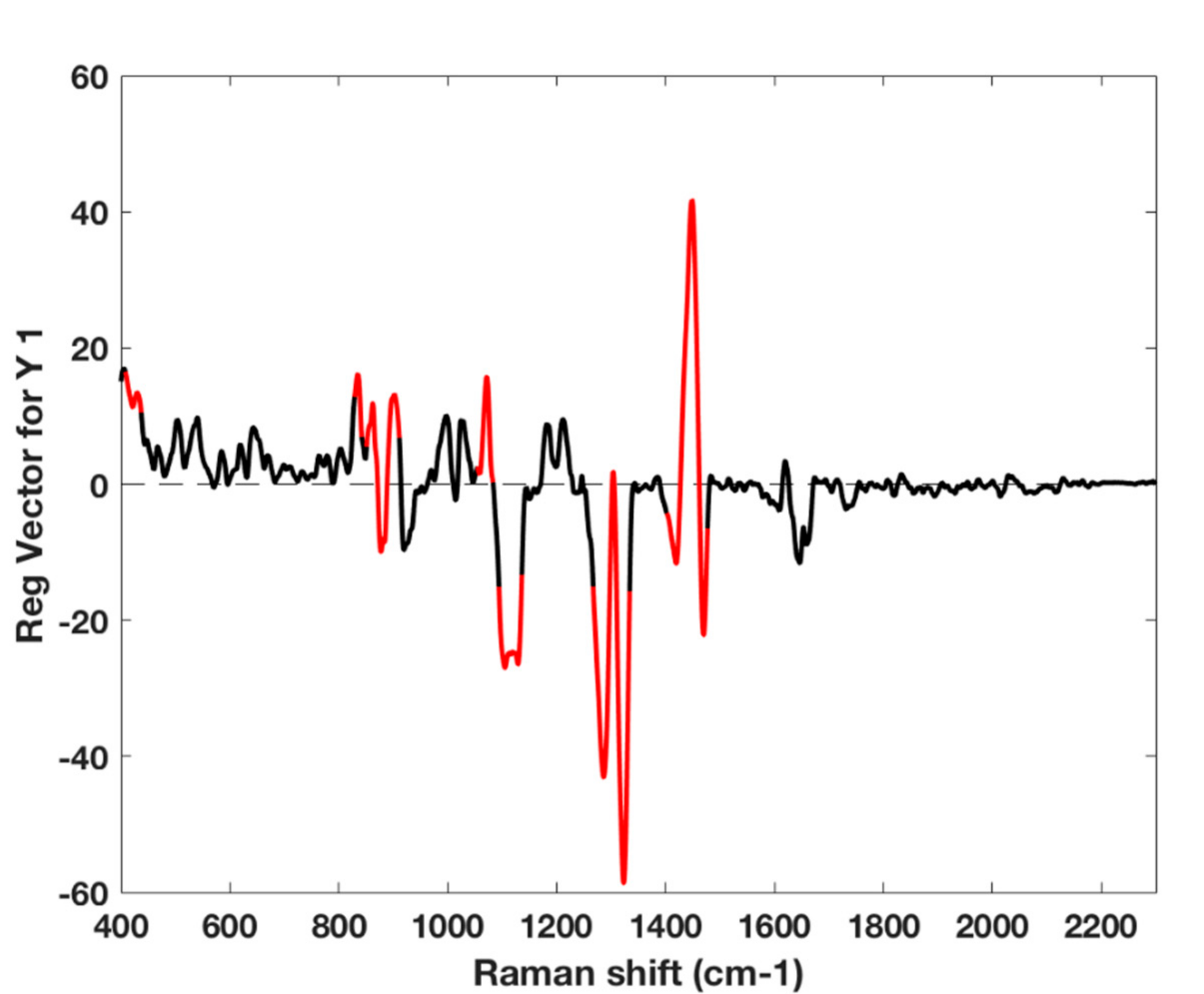
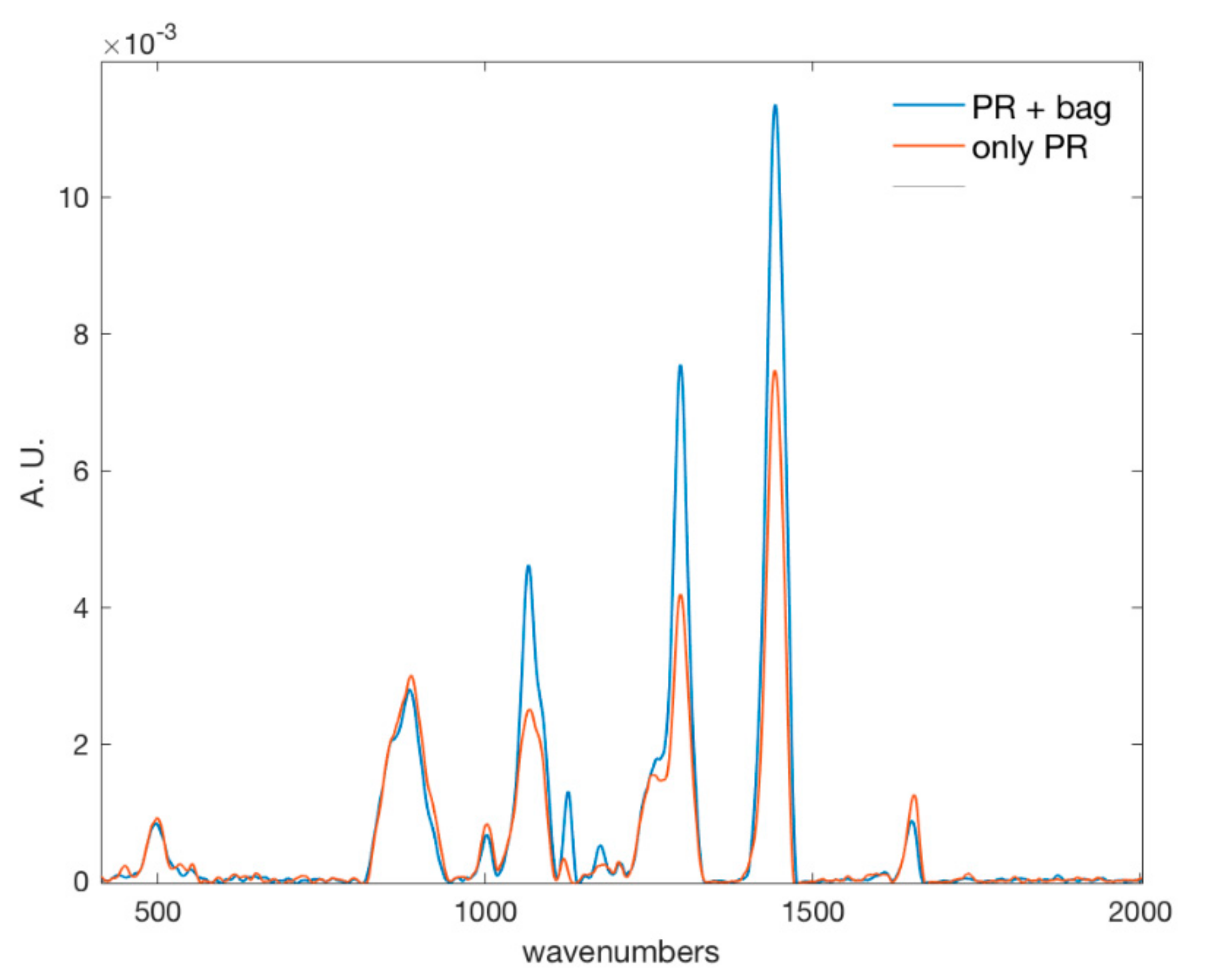
4.2. Calibration of Rind Content
5. Conclusions
Author Contributions
Funding
Acknowledgments
Conflicts of Interest
References
- European Parliament, Council of the European Union. Regulation (EU) No. 1151/2012 on quality schemes for agricultural products and foodstuffs. Off. J. Eur. Union 2012, 343, 1–29. [Google Scholar]
- Cuadros-Rodriguez, L.; Ruiz-Samblas, C.; Valverde-Som, L.; Perez-Castano, E.; Gonzalez-Casado, A. Chromatographic fingerprinting: An innovative approach for food ‘identitation’ and food authentication—A tutorial. Anal. Chim. Acta 2015, 909, 9–23. [Google Scholar] [CrossRef] [Scilit] [PubMed]
- Cocchi, M. Chemometrics for food quality control and authentication. In Encyclopedia of Analytical Chemistry; John Wiley & Sons, Ltd.: Hoboken, NJ, USA, 2007; Volume 3, pp. 1–27. [Google Scholar] [CrossRef] [Scilit]
- Rodriguez-Saona, L.; Aykas, D.P.; Borba, K.R.; Urtubia, A. Miniaturization of optical sensors and their potential for high-throughput screening of foods. Curr. Opin. Food Sci. 2020, 31, 136–150. [Google Scholar] [CrossRef] [Scilit]
- Ríos-Reina, R.; Callejón, R.M.; Savorani, F.; Amigo, J.M.; Cocchi, M. Data fusion approaches in spectroscopic characterization and classification of PDO wine vinegars. Talanta 2019, 198, 560–572. [Google Scholar] [CrossRef] [Scilit] [PubMed]
- Vermeulen, P.; Pierna, J.A.F.; Abbas, O.; Rogez, H.; Davrieux, F.; Baeten, V. Authentication and traceability of agricultural and food products using vibrational spectroscopy. In Food Traceability and Authenticity: Analytical Techniques, 1st ed.; Montet, D., Ray, R.C., Eds.; CRC Press: Boca Raton, FL, USA, 2018; pp. 298–331. [Google Scholar]
- Skov, T.; Honoré, A.H.; Max, H.; Næs, T.; Engelsen, S.B. Trends in analytical chemistry chemometrics in foodomics: Handling data structures from multiple analytical platforms. Trends Anal. Chem. 2014, 60, 71–79. [Google Scholar] [CrossRef] [Scilit]
- Lohumi, S.; Lee, S.; Lee, H.; Cho, B.-K. Review of vibrational spectroscopic techniques for the detection of food authenticity and adulteration. Trends Food Sci. Technol. 2015, 46, 85–98. [Google Scholar] [CrossRef] [Scilit]
- Thygesen, L.G.; Løkke, M.M.; Micklander, E.; Engelsen, S.B. Vibrational microspectroscopy of food. Raman vs. FT-IR. Trends Food Sci. Technol. 2003, 14, 50–57. [Google Scholar] [CrossRef] [Scilit]
- Ellis, D.I.; Muhamadali, H.; Xu, Y.; Eccles, R.; Goodall, I.; Goodacre, R. Rapid through-container detection of fake spirits and methanol quantification with handheld Raman spectroscopy. Analyst 2019, 144, 324–330. [Google Scholar] [CrossRef] [Scilit]
- Beganović, A.; Hawthorne, L.M.; Bach, K.; Huck, C.W. Critical review on the utilization of handheld and portable raman spectrometry in meat science. Foods 2019, 8, 49. [Google Scholar] [CrossRef] [Scilit]
- Tena, N.; Aparicio, R.; Baeten, V.; García-González, D.L.; Fernández-Pierna, J.A. Assessment of vibrational spectroscopy performance in geographical identification of virgin olive oils: A world level study. Eur. J. Lipid Sci. Technol. 2019, 121, 1900035. [Google Scholar] [CrossRef] [Scilit]
- Caponigro, V.; Marini, F.; Dorrepaal, R.M.; Herrero-Langreo, A.; Scannelle, A.G.M.; Gowen, A.A. Raman and fourier transform infrared hyperspectral imaging to study dairy residues on different surfaces. J. Spectr. Imaging 2019, 8, a3. [Google Scholar] [CrossRef] [Scilit]
- Firmani, P.; Vitale, R.; Ruckebusch, C.; Marini, F. ANOVA-simultaneous component analysis modelling of low-levelfused spectroscopic data: A food chemistry case-study. Anal. Chim. Acta 2020, 1125, 308–314. [Google Scholar] [CrossRef] [Scilit] [PubMed]
- Lohumi, S.; Lee, H.; Kim, M.S.; Qin, J.; Cho, B.-K. Through-packaging analysis of butter adulteration using line-scan spatially offset Raman spectroscopy. Anal. Bioanal. Chem. 2018, 410, 5663–5673. [Google Scholar] [CrossRef] [Scilit] [PubMed]
- de Sá Oliveira, K.; de Souza Callegaro, L.; Stephani, R.; Almeida, M.R.; Cappa de Oliveira, L.F. Analysis of spreadable cheese by Raman spectroscopy and chemometric tools. Food Chem. 2016, 194, 441–446. [Google Scholar] [CrossRef] [Scilit]
- Parmigiano Reggiano Consorzio Web Page. Available online: https://www.parmigianoreggiano.com/consortium/rules_regulation_2/default.aspx (accessed on 27 October 2020).
- Camin, F.; Wehrens, R.; Bertoldi, D.; Bontempo, L.; Ziller, L.; Perini, M.; Nicolini, M.; Nocetti, M.; Larcher, R. H, C, N and S stable isotopes and mineral profiles to objectively guarantee the authenticity of grated hard cheeses. Anal. Chim. Acta 2012, 711, 54–59. [Google Scholar] [CrossRef] [Scilit]
- Camin, F.; Bertoldi, D.; Santato, A.; Bontempo, L.; Perini, M.; Ziller, L.; Stroppa, A.; Larcher, R. Validation of methods for H, C, N and S stable isotopes and elemental analysis of cheese: Results of an international collaborative study. Rapid Commun. Mass Spectrom. 2015, 29, 415–423. [Google Scholar] [CrossRef] [Scilit]
- Cevoli, C.; Gori, A.; Nocetti, M.; Cuibus, L.; Caboni, M.F.; Fabbri, A. FT-NIR and FT-MIR spectroscopy to discriminate competitors, non compliance and compliance grated Parmigiano Reggiano cheese. Food Res. Int. 2013, 52, 214–220. [Google Scholar] [CrossRef] [Scilit]
- Cevoli, C.; Fabbri, A.; Gori, A.; Caboni, M.F.; Guarnieri, A. Screening of grated cheese authenticity by NIR spectroscopy. J. Agric. Eng. 2013, XLIV, e53. [Google Scholar] [CrossRef]
- Consonni, R.; Cagliani, L.R. Ripening and geographical characterization of Parmigiano Reggiano cheese by 1H NMR spectroscopy. Talanta 2008, 76, 200–205. [Google Scholar] [CrossRef] [Scilit]
- Abbatangelo, M.; Núñez-Carmona, E.; Sberveglieri, V. Application of a novel S3 nanowire gas sensor device in parallel with GC-MS for the identification of Parmigiano Reggiano from US and European competitors. J. Food Eng. 2018, 236, 36–43. [Google Scholar] [CrossRef] [Scilit]
- Cattaneo, S.; Hogenboom, J.A.; Masotti, F.; Rosi, V.; Pellegrino, L.; Resmini, P. Grated Grana Padano cheese: New hints on how to control quality and recognize imitations. Dairy Sci. Technol. 2008, 88, 595–605. [Google Scholar] [CrossRef] [Scilit]
- Pellegrino, L.; Tirelli, A.; De Noni, I.; Resmini, P. Valutazione del Grana Padano grattugiato attraverso la determinazione per elettroforesi capillare di frazioni caseiniche e di loro peptidi di degradazione. Sci. Tec. Latt. Casearia 2003, 54, 321–333. [Google Scholar]
- Abbatangelo, M.; Núñez-Carmona, E.; Sberveglieri, V.; Zappa, D.; Comini, E.; Sberveglieri, G. Application of a novel S3 nanowire gas densor device in parallel with GC-MS for the identification of rind percentage of grated Parmigiano Reggiano. Sensors 2018, 18, 1617. [Google Scholar] [CrossRef] [Scilit] [PubMed]
- Alinovi, M.; Mucchetti, G.; Tidona, F. Application of NIR spectroscopy and image analysis for the characterisation of grated Parmigiano-Reggiano cheese. Int. Dairy J. 2019, 92, 50–58. [Google Scholar] [CrossRef] [Scilit]
- Calvini, R.; Michelini, S.; Pizzamiglio, V.; Foca, G.; Ulrici, A. Exploring the potential of NIR hyperspectral imaging for automated quantification of rind amount in grated Parmigiano Reggiano cheese. Food Control 2020, 112, 107111. [Google Scholar] [CrossRef] [Scilit]
- Improving verification with Orbital Raster Scan Technology. Metrohm Raman Spectroscopy Application Raman Spectroscopy Application Note RS-11 Version 1, October 2017. Available online: https://www.metrohm.com/en/applications/AN-RS-011 (accessed on 27 October 2020).
- Geravand, A.; Hashemi Nezhad, S.M. Simulation study of the orbital raster scan (ORS) on the raman spectroscopy. Optik 2019, 178, 83–89. [Google Scholar] [CrossRef] [Scilit]
- Tomasi, G.; van den Berg, F.; Andersson, C. Correlation optimized warping and dynamic time warping as preprocessing methods for chromatographic data. J. Chemom. 2004, 18, 231–241. [Google Scholar] [CrossRef] [Scilit]
- Eilers, P.H.C. Parametric time warping. Anal. Chem. 2004, 76, 404–411. [Google Scholar] [CrossRef] [Scilit]
- Dieterle, F.; Ross, A.; Schlotterbeck, G.; Senn, H. Probabilistic quotient normalization as robust method to account for dilution of complex biological mixtures. Application in 1H NMR metabonomics. Anal. Chem. 2006, 78, 4281–4290. [Google Scholar] [CrossRef] [Scilit]
- Wold, S.; Sjostrom, M. SIMCA: A method for analysing chemical data in terms of similarity and analogy. In Chemometrics, Theory and Application, American Chemical Society Symposium Series; Kowalski, B.R., Ed.; American Chemical Society: Washington, DC, USA, 1977; Volume 52, pp. 243–282. [Google Scholar]
- Cocchi, M.; Biancolillo, A.; Marini, F. Chemometrics methods for classification and feature selection. In Data Analysis for Omics Sciences: Methods and Applications; Jaumot, J., Bedia, C., Tauler, R., Eds.; Comprehensive Analytical Chemistry; Barcelo, D., Ed.; Elsevier: Amsterdam, The Netherlands, 2018; Volume 82, Chapter 10. [Google Scholar]
- Jackson, J.E.; Muldholkar, G.S. Control procedures for residuals associated with principal component analysis. Dent. Tech. 1979, 21, 341–349. [Google Scholar] [CrossRef]
- Hotelling, H. The generalization of Student’s ratio. Ann. Math. Stat. 1931, 2, 360–378. [Google Scholar] [CrossRef] [Scilit]
- Vitale, R.; Marini, F.; Ruckebusch, C. SIMCA modeling for overlapping classes: Fixed or optimized decision threshold? Anal. Chem. 2018, 90, 10738–10747. [Google Scholar] [CrossRef] [Scilit] [PubMed]
- Zontov, Y.V.; Rodionova, O.; Kucheryavskiy, S.; Pomerantsev, A. DD-SIMCA—A MATLAB GUI tool for data driven SIMCA approach. Chemom. Intell. Lab. Syst. 2017, 167, 23–28. [Google Scholar] [CrossRef] [Scilit]
- Rodionova, O.Y.; Oliveri, P.; Pomerantsev, A.L. Rigorous and compliant approaches to one-class classification. Chemom. Intell. Lab. Syst. 2016, 159, 89–96. [Google Scholar] [CrossRef] [Scilit]
- Snee, R. Validation of regression models: Methods and examples. Technometrics 1977, 19, 415–428. [Google Scholar] [CrossRef]
- Geladi, P.; Kowalski, B.R. Partial least-squares regression: A tutorial. Anal. Chim. Acta 1986, 186, 1–17. [Google Scholar] [CrossRef] [Scilit]
- Wold, S.; Johansson, E.; Cocchi, M. PLS: Partial least squares projections to latent structures. In 3D QSAR in Drug Design: Theory, Methods and Applications; Kubinyi, H., Ed.; ESCOM Science Publishers: Leiden, The Netherlands, 1993; pp. 523–550. [Google Scholar]
- Favilla, S.; Durante, C.; Li Vigni, M.; Cocchi, M. Assessing feature relevance in NPLS models by VIP. Chemom. Intell. Lab. Syst. 2013, 129, 76–86. [Google Scholar] [CrossRef] [Scilit]
- Ettah, I.; Ashton, L. Determination of phosphorylation and deprotonation induced higher order structural transitions in αs-Caseins. Anal. Chem. 2019, 91, 13940–13946. [Google Scholar] [CrossRef] [Scilit] [PubMed]
- Treweek, T.M.; Thorn, C.D.; Price, W.E.; Carver, J.A. The chaperone action of bovine milk αS1- and αS2-caseins and their associated form αS-casein. Arch. Biochem. Biophys. 2011, 510, 42–52. [Google Scholar] [CrossRef] [Scilit]

| Samples Code | % Rind | N° | Production Period | Provenance | Grating-Packaging |
|---|---|---|---|---|---|
| PR 1st | 8–18 | 16 | September–December 2014 | MO(3) MN(1) PR(5) RE(7) | December 2015 |
| PR 1st | 19–42 | 24 | September–December 2014 | BO(1) MO(2) MN(1) PR(5) RE(3) | December 2015 |
| PR 2nd | 8.3–17.5 | 12 | December 2014–April 2015 | BO(1) MO(2) MN(1) PR(5) RE(3) | March 2016 |
| PR 2nd | 18.3–42 | 28 | January–April 2015 | MO(5) MN(1) PR(16) RE(6) | March 2016 |
| PR-unknown | 12–42.2 | 10 | December 2014–April 2015 | MN(1) PR(6) RE(3) | April 2016 |
| not-PR | - | 10 | - | Lithuania(5) Germany(3) Estonia(1) Leetonia(1) | - |
| Classification Rule | Criteria to Set n° PC | n° PC | % Sensitivity Fit (TP/Ncal [PR]) | % Sensitivity CV (TP/Ncal [PR]) | % Sensitivity Test (TP/Ntest) [unkonw-PR] | % Specificity Test (TN/Ntest) [not-PR] |
|---|---|---|---|---|---|---|
| Dred < sqrt(2) 1 α = 0.05 | max (Sensitivity CV) | 2 | 100 (90/90) | 99 (89/90) | 91 (10/11) | 55 (6/11) |
| Dred < sqrt(2) α = 0.05 | min (RMSECV) | 4 | 95 (86/90) | 91 (82/90) | 91 (10/11) | 82 (9/11) |
| 5 | 94 (85/90) | 91 (82/90) | 100 (11/11) | 100 (11/11) | ||
| DDSIMCA α = 0.05 | Posterior Sensitivity equals to nominal α | 2 | 96 2 (86/90) | 100 (11/11) | 82 (9/11) | |
| Dred < sqrt(2) α = 0.05 | max (Efficiency CV) 3 | 5 | 94 (85/90) | 91 (82/90) | 100 (11/11) | 100 (6/6) |
| Dred < sqrt(2) ROC-SIMCA | Optimize area under ROC in CV | 5 | 94 (85/90) | 91 (82/90) | 100 (11/11) | 100 (6/6) |
| Calibration Set n° Samples (+ n° Replicates) | n° LV | RMSEC | RMSECV | Validation Set n° Samples (+ n° Replicates) | RMSEP |
|---|---|---|---|---|---|
| PR 1st: 40 (+4) | 3 | 4.3 | 5.2 | PR 2nd: 40 (+6) | 7.6 |
| PR 1st: 40 (+4) PR 2nd: 6 (+6) | 3 | 4.8 | 5.7 | PR 2nd: 34 | 4.8 |
| unknown-PR: 10 (+1) | 5.1 |
Publisher’s Note: MDPI stays neutral with regard to jurisdictional claims in published maps and institutional affiliations. |
© 2020 by the authors. Licensee MDPI, Basel, Switzerland. This article is an open access article distributed under the terms and conditions of the Creative Commons Attribution (CC BY) license (http://creativecommons.org/licenses/by/4.0/).
Share and Cite
Li Vigni, M.; Durante, C.; Michelini, S.; Nocetti, M.; Cocchi, M. Preliminary Assessment of Parmigiano Reggiano Authenticity by Handheld Raman Spectroscopy. Foods 2020, 9, 1563. https://doi.org/10.3390/foods9111563
Li Vigni M, Durante C, Michelini S, Nocetti M, Cocchi M. Preliminary Assessment of Parmigiano Reggiano Authenticity by Handheld Raman Spectroscopy. Foods. 2020; 9(11):1563. https://doi.org/10.3390/foods9111563
Chicago/Turabian StyleLi Vigni, Mario, Caterina Durante, Sara Michelini, Marco Nocetti, and Marina Cocchi. 2020. "Preliminary Assessment of Parmigiano Reggiano Authenticity by Handheld Raman Spectroscopy" Foods 9, no. 11: 1563. https://doi.org/10.3390/foods9111563
APA StyleLi Vigni, M., Durante, C., Michelini, S., Nocetti, M., & Cocchi, M. (2020). Preliminary Assessment of Parmigiano Reggiano Authenticity by Handheld Raman Spectroscopy. Foods, 9(11), 1563. https://doi.org/10.3390/foods9111563

