Upcycling Apple and Carrot Pomace into Fortified Food Ingredients: Advancing Sustainability and Resource Efficiency

Abstract
1. Introduction
2. Methodology
3. Qualitative Aspects of Apple Pomace (AP) and Carrot Pomace (CP)
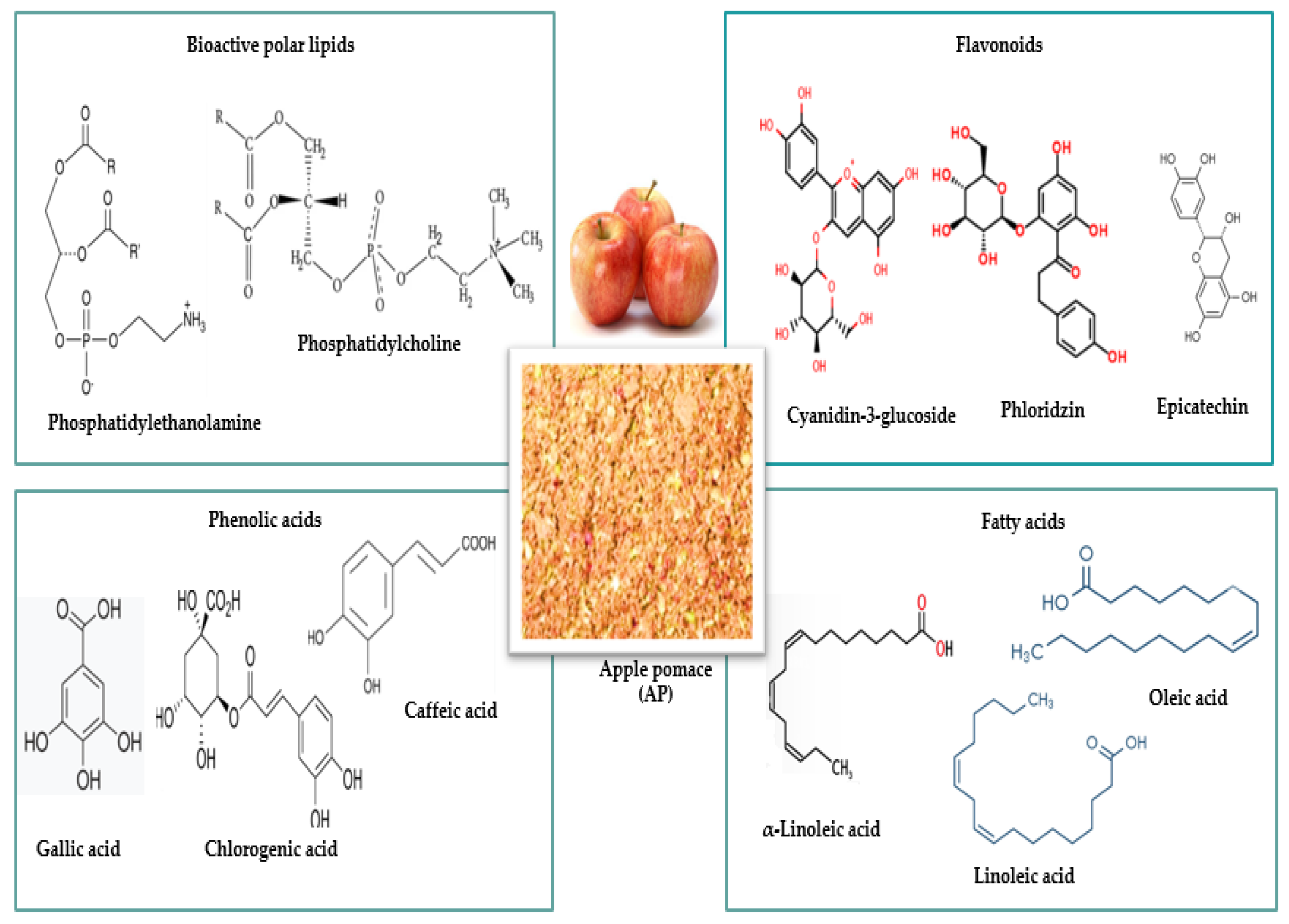
3.1. Quality of Apple Pomace (AP)
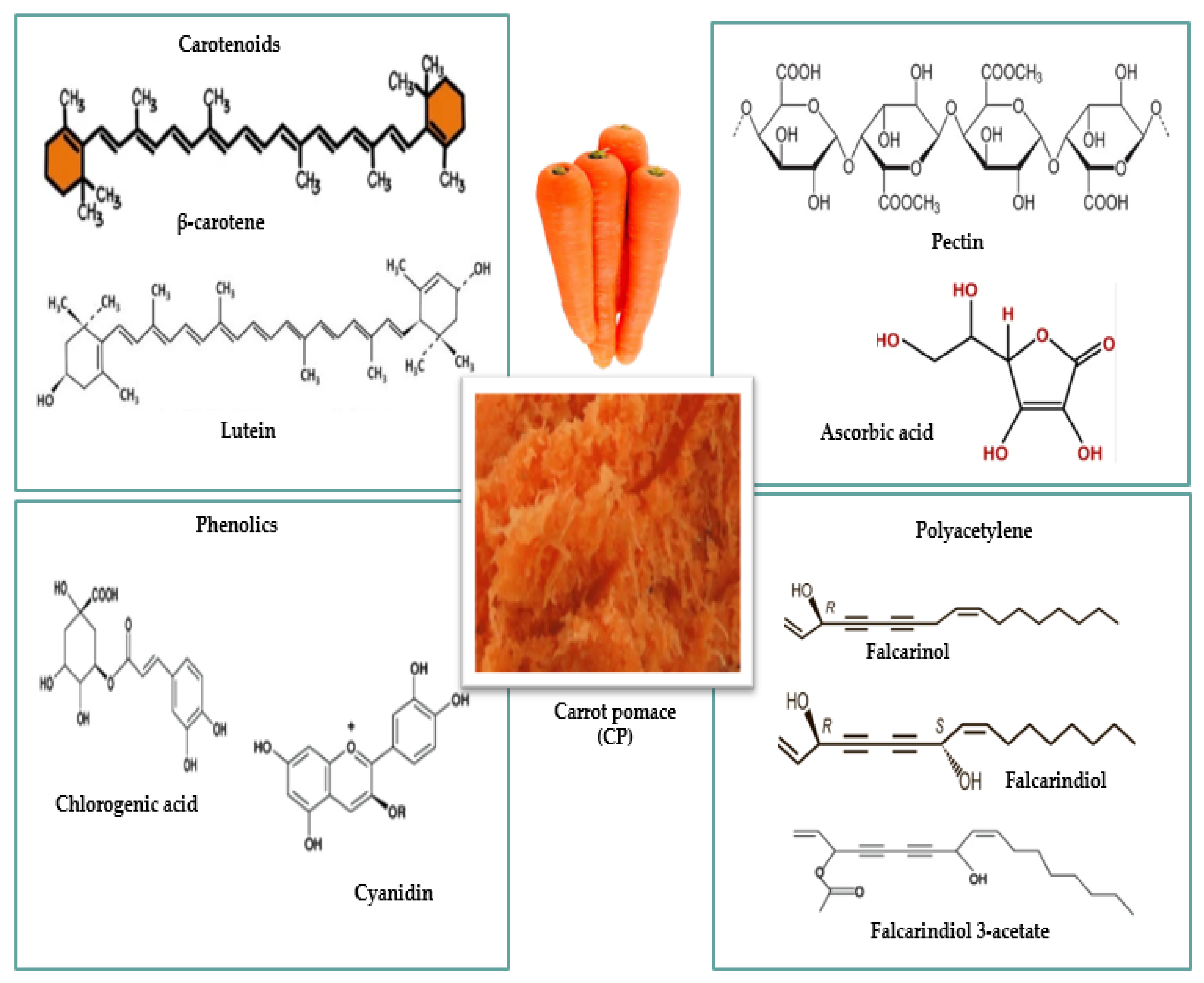
3.2. Quality of Carrot Pomace (CP)
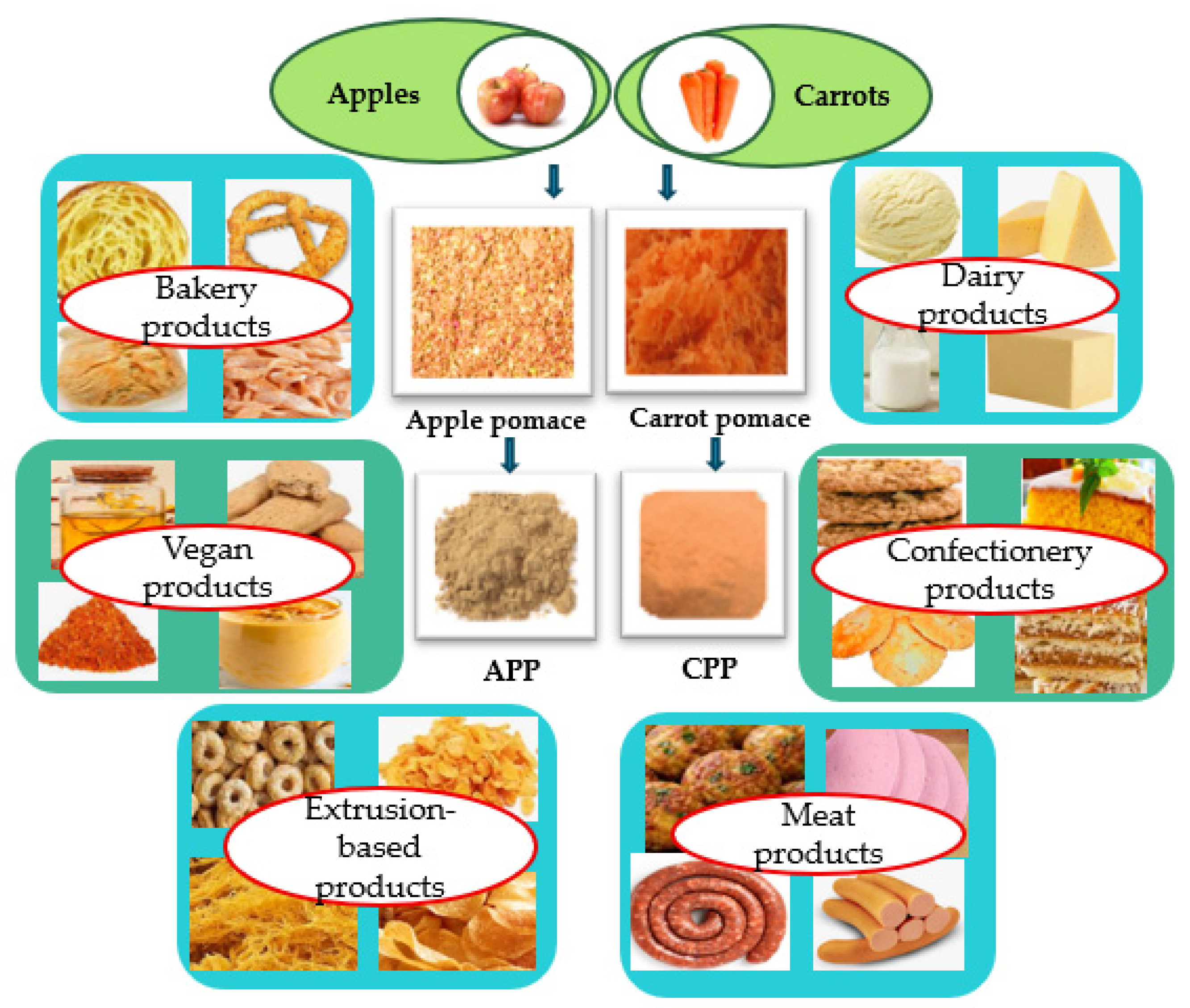
4. Applications of APP and CPP in the Food Industry
4.1. Applications of the APP in the Food Industry
4.2. Applications of CPP in the Food Industry
5. Environmental Considerations
6. Limitations
7. Conclusions
Author Contributions
Funding
Institutional Review Board Statement
Informed Consent Statement
Data Availability Statement
Conflicts of Interest
Abbreviations
| AOAC | Association of Official Analytical Chemists |
| AP | Apple pomace |
| APP | Apple pomace powder |
| CP | Carrot pomace |
| CPP | Carrot pomace powder |
| DNS | The dinitrosalicylic acid method |
| FAO | Food and Agriculture Organization |
| HC | Hydrocolloid |
| HPLC | High-Performance Liquid Chromatography |
| ICC | International Association for Cereal Chemistry |
| LCA | Life cycle assessment |
| LC-HRMS | High-resolution liquid chromatography mass spectrometry analysis |
| MW-HPCO2 | Microwave-assisted high-pressure CO2 system |
| OHC | Oil holding capacity |
| RSM | The response surface methodology |
| TPC | The phenolic content |
| WF | Water footprint |
| WHC | Water holding capacity |
| XG | Xanthan gum |
References
- Dodange, S.; Shekarchizadeh, H. From Waste to Value: Exploring Applications of Extracted Proteins from Food Processing By-Products. Appl. Food Res. 2026, 6, 101670. [Google Scholar] [CrossRef]
- Karim, A.; Osse, E.F.; Khalloufi, S. Innovative Strategies for Valorization of Byproducts from Soybean Industry: A Review on Status, Challenges, and Sustainable Approaches towards Zero-Waste Processing Systems. Heliyon 2025, 11, e42118. [Google Scholar] [CrossRef]
- Farahdiba, A.U.; Warmadewanthi, I.D.A.A.; Fransiscus, Y.; Rosyidah, E.; Hermana, J.; Yuniarto, A. The Present and Proposed Sustainable Food Waste Treatment Technology in Indonesia: A Review. Environ. Technol. Innov. 2023, 32, 103256. [Google Scholar] [CrossRef]
- Cakar, B.; Aydin, S.; Varank, G.; Ozcan, H.K. Assessment of Environmental Impact of Food Waste in Turkey. J. Clean. Prod. 2020, 244, 118846. [Google Scholar] [CrossRef]
- Cattaneo, A.; Federighi, G.; Vaz, S. The Environmental Impact of Reducing Food Loss and Waste: A Critical Assessment. Food Policy 2021, 98, 101890. [Google Scholar] [CrossRef]
- Al-Rumaihi, A.; McKay, G.; Mackey, H.R.; Al-Ansari, T. Environmental Impact Assessment of Food Waste Management Using Two Composting Techniques. Sustainability 2020, 12, 1595. [Google Scholar] [CrossRef]
- Goli, S.A.H.; Rezvani, Z.; Chatraei, E. Characterization and Storage Stability of Carrot Pomace-Fortified Milk Drink: Effect of Carrot Pomace Particle Size, Milk-Fat Content, and Stabilizer Levels. Appl. Food Res. 2025, 5, 101316. [Google Scholar] [CrossRef]
- Haider, I.; Choubey, V.K. Identifying Fruit and Vegetable Losses and Waste Causing Factors in Supply Chain towards Achieving Sustainable Consumption and Production. Environ. Dev. Sustain. 2025, 27, 19553–19582. [Google Scholar] [CrossRef]
- Kohli, K.; Prajapati, R.; Shah, R.; Das, M.; Sharma, B.K. Food Waste: Environmental Impact and Possible Solutions. Sustain. Food Technol. 2024, 2, 70–80. [Google Scholar] [CrossRef]
- Tigunova, O.; Bratishko, V.; Shulga, S. Apple Pomace as an Alternative Substrate for Butanol Production. AMB Express 2023, 13, 138. [Google Scholar] [CrossRef] [PubMed]
- Rabeeah, I.; Gruber-Schmidt, V.; Murray, H.; Afsharzadeh, N.; Paltram, R.; Marinovic, S.; Zia, H.; Hutabarat, O.S.; Hofsommer, M.; Slatnar, A.; et al. Apple Pomace as a Potential Source of Oxidative Stress-Protecting Dihydrochalcones. Antioxidants 2024, 13, 1159. [Google Scholar] [CrossRef]
- Szymczak, K.; Krajewska, A.; Grzyb, M.; Jodłowska, I.; Mietlińska, K.; Bonikowski, R. Upcycling Roman Chamomile Hydrolate and Apple Pomace Agri-Wastes into Sustainable Cosmetic Ingredients. Antioxidants 2026, 15, 380. [Google Scholar] [CrossRef] [PubMed]
- Bigdeloo, M.; Teymourian, T.; Kowsari, E.; Ramakrishna, S.; Ehsani, A. Sustainability and Circular Economy of Food Wastes: Waste Reduction Strategies, Higher Recycling Methods, and Improved Valorization. Mater. Circ. Econ. 2021, 3, 3. [Google Scholar] [CrossRef]
- Tamasiga, P.; Miri, T.; Onyeaka, H.; Hart, A. Food Waste and Circular Economy: Challenges and Opportunities. Sustainability 2022, 14, 9896. [Google Scholar] [CrossRef]
- Ikram, A.; Rasheed, A.; Ahmad Khan, A.; Khan, R.; Ahmad, M.; Bashir, R.; Hassan Mohamed, M. Exploring the Health Benefits and Utility of Carrots and Carrot Pomace: A Systematic Review. Int. J. Food Prop. 2024, 27, 180–193. [Google Scholar] [CrossRef]
- Bareen, M.A.; Antonio, D.; Corradini, M.G.; Rossella, C.; Paolo, D.I.; Marta, S.; Carla, S. Enhancing 3D Printing Performance and Product Quality Through the Valorization of Food By-Products and Waste. Compr. Rev. Food Sci. Food Saf. 2025, 24, e70267. [Google Scholar] [CrossRef]
- Lourenço, S.; Neves, M.; Gonçalves, E.M.; Roseiro, C.; Pombo, A.; Raimundo, D.; Pinheiro, J. Application of Fruit and Vegetable Processing By-Products as Ingredients in Aquafeed. Discov. Food 2025, 5, 45. [Google Scholar] [CrossRef]
- Zhang, T.; Wei, X.; Miao, Z.; Hassan, H.; Song, Y.; Fan, M. Screening for Antioxidant and Antibacterial Activities of Phenolics from Golden Delicious Apple Pomace. Chem. Cent. J. 2016, 10, 47. [Google Scholar] [CrossRef]
- Newson, W.R.; Johansson, E.; Papoutsis, K. Holistic Approach in the Valorization of Fruit and Vegetable By-Products Generated through Processing and Postharvest Storage. Crit. Rev. Biotechnol. 2025, 45, 1754–1771. [Google Scholar] [CrossRef]
- Blejan, A.M.; Nour, V.; Corbu, A.R.; Codină, G.G. Influence of Bilberry Pomace Powder Addition on the Physicochemical, Functional, Rheological, and Sensory Properties of Stirred Yogurt. Gels 2024, 10, 616. [Google Scholar] [CrossRef]
- Ghimpețeanu, O.M.; Mihai, O.D.; Petcu, C.D.; Irimia, R.A.G.; Negoiță, C.; Borda, C.; Tăpăloagă, D. Sensorial evaluation of pork meat sausages enriched with chokeberry (Aronia melanocarpa) and blueberry (Vaccinium myrtillus) powders. Sci. Pap. Ser. D Anim. Sci. 2024, 67, 451–456. [Google Scholar]
- Zarzycki, P.; Wirkijowska, A.; Teterycz, D.; Łysakowska, P. Innovations in Wheat Bread: Using Food Industry By-Products for Better Quality and Nutrition. Appl. Sci. 2024, 14, 3976. [Google Scholar] [CrossRef]
- Kamiloglu, S.; Grootaert, C.; Capanoglu, E.; Ozkan, C.; Smagghe, G.; Raes, K.; Van Camp, J. Anti-Inflammatory Potential of Black Carrot (Daucus carota L.) Polyphenols in a Co-Culture Model of Intestinal Caco-2 and Endothelial EA.hy926 Cells. Mol. Nutr. Food Res. 2017, 61, 1600455. [Google Scholar] [CrossRef]
- Ferreira, R.; Lourenço, S.; Lopes, A.; Andrade, C.; Câmara, J.S.; Castilho, P.; Perestrelo, R. Evaluation of Fatty Acids Profile as a Useful Tool towards Valorization of By-Products of Agri-Food Industry. Foods 2021, 10, 2867. [Google Scholar] [CrossRef]
- Stanca, L.; Bilteanu, L.; Bujor, O.C.; Ion, V.A.; Petre, A.C.; Bădulescu, L.; Ghimpeteanu, O.M. Development of functional foods: A comparative study on the polyphenols and anthocyanins content in chokeberry and blueberry pomace extracts and their antitumor properties. Foods 2024, 13, 2552. [Google Scholar] [CrossRef] [PubMed]
- Papadopoulou, D.; Chrysikopoulou, V.; Rampaouni, A.; Plakidis, C.; Ofrydopoulou, A.; Shiels, K.; Saha, S.K.; Tsoupras, A. Antioxidant, Antithrombotic and Anti-Inflammatory Properties of Amphiphilic Bioactives from Water Kefir Grains and Its Apple Pomace-Based Fermented Beverage. Antioxidants 2025, 14, 164. [Google Scholar] [CrossRef] [PubMed]
- Madrera, R.R.; Bedrinana, R.P.; Valles, B.S. Enhancement of the Nutritional Properties of Apple Pomace by Fermentation with Autochthonous Yeasts. LWT 2017, 79, 27–33. [Google Scholar] [CrossRef]
- Ezzat, S.M.; Salama, M.; El Kersh, D.; Salem, M. Apple Pomace as a Source of Nutraceuticals. In Food and Agricultural Byproducts as Important Source of Valuable Nutraceuticals; Egbuna, C., Sawicka, B., Khan, J., Eds.; Springer: Cham, Switzerland, 2022; pp. 73–90. [Google Scholar] [CrossRef]
- Fernandes, P.A.; Le Bourvellec, C.; Renard, C.M.; Nunes, F.M.; Bastos, R.; Coelho, E.; Cardoso, S.M. Revisiting the Chemistry of Apple Pomace Polyphenols. Food Chem. 2019, 294, 9–18. [Google Scholar] [CrossRef]
- Lyu, F.; Luiz, S.F.; Azeredo, D.R.P.; Cruz, A.G.; Ajlouni, S.; Ranadheera, C.S. Apple Pomace as a Functional and Healthy Ingredient in Food Products: A Review. Processes 2020, 8, 319. [Google Scholar] [CrossRef]
- Bhat, I.M.; Wani, S.M.; Mir, S.A.; Naseem, Z. Effect of Microwave-Assisted Vacuum and Hot Air Oven Drying Methods on Quality Characteristics of Apple Pomace Powder. Food Prod. Process. Nutr. 2023, 5, 26. [Google Scholar] [CrossRef]
- Waldbauer, K.; McKinnon, R.; Kopp, B. Apple Pomace as Potential Source of Natural Active Compounds. Planta Med. 2017, 83, 994–1010. [Google Scholar] [CrossRef]
- Wang, X.; Kristo, E.; LaPointe, G. The Effect of Apple Pomace on the Texture, Rheology and Microstructure of Set Type Yogurt. Food Hydrocoll. 2019, 91, 83–91. [Google Scholar] [CrossRef]
- Vasiliu, A.E.; Mureşan, A.; Mureşan, V.; Petruț, G.; Muste, S. Apple and apple pomace chemical compositions—A review. Hop Med. Plants 2018, 1–2. Available online: http://journals.usamvcluj.ro/index.php/hamei/article/view/13232/10837 (accessed on 10 April 2026). [CrossRef]
- Asif, M.; Javaid, T.; Razzaq, Z.U.; Khan, M.K.I.; Maan, A.A.; Yousaf, S.; Shahid, S. Sustainable Utilization of Apple Pomace and Its Emerging Potential for Development of Functional Foods. Environ. Sci. Pollut. Res. 2024, 31, 17932–17950. [Google Scholar] [CrossRef] [PubMed]
- Sabahi, S.; Abbasi, A.; Mortazavi, S.A. Phenolic Components from Carrot (Daucus carota L.) Pomace: Optimizing the Extraction and Assessing Its Potential Antioxidant and Antimicrobial Activities. Heliyon 2024, 10, e36971. [Google Scholar] [CrossRef]
- Papoutsis, K.; Edelenbos, M. Postharvest Environmentally and Human-Friendly Pre-Treatments to Minimize Carrot Waste in the Supply Chain Caused by Physiological Disorders and Fungi. Trends Food Sci. Technol. 2021, 112, 88–98. [Google Scholar] [CrossRef]
- Rutyna, A.; Galus, S. Valorisation of Carrot Pomace for Novel Crispbread Development Using the Potential of Chia Seeds (Salvia hispanica L.) as a Texturising Agent. Food Chem. 2025, 496, 146761. [Google Scholar] [CrossRef]
- Nazar, M.S.; Saeed, M.; Khan, V.; ul Haq, I.; Tariq, M.A.; Tanoli, A.H.; Zakki, S.A. Nutritional and Therapeutic Importance of Carrot Pomace: A Review Article. Int. J. Nat. Med. Health Sci. 2023, 2, 25–33. [Google Scholar] [CrossRef]
- Süremelihindi, S.; Demir, A.E.; Göğüş, F.; Yanık, D.K. Microwave-Assisted High-Pressure CO2 Extraction of Carotenoids from Carrot Pomace Using Sunflower Oil as a Green Solvent. Microchem. J. 2025, 212, 113367. [Google Scholar] [CrossRef]
- Grispoldi, L.; Ianni, F.; Blasi, F.; Pollini, L.; Crotti, S.; Cruciani, D.; Cenci-Goga, B.T.; Cossignani, L. Apple Pomace as Valuable Food Ingredient for Enhancing Nutritional and Antioxidant Properties of Italian Salami. Antioxidants 2022, 11, 1221. [Google Scholar] [CrossRef] [PubMed]
- Cossignani, L.; Ianni, F.; Blasi, F.; Pollini, L.; Di Michele, A.; Pagano, C.; Ricci, M.; Perioli, L. Investigation on Apple Pomace as Thickening Agent with Antioxidant Properties. Plants 2023, 12, 906. [Google Scholar] [CrossRef]
- Pei, X.; Wang, Y.; Wu, Q.; Liu, J.; Li, Y. From Fruit Waste to Fruit: A Circular Economy Scheme Participated by Urban Residents and Fruit Farmers. J. Environ. Manag. 2026, 397, 128243. [Google Scholar] [CrossRef]
- Hwang, H.Y.; Kim, S.H.; Kim, M.S.; Park, S.J.; Lee, C.H. Co-Composting of Chicken Manure with Organic Wastes: Characterization of Gases Emissions and Compost Quality. Appl. Biol. Chem. 2020, 63, 3. [Google Scholar] [CrossRef]
- Socas-Rodríguez, B.; Álvarez-Rivera, G.; Valdés, A.; Ibáñez, E.; Cifuentes, A. Food by-products and food wastes: Are they safe enough for their valorization? Trends Food Sci. Technol. 2021, 114, 133–147. [Google Scholar] [CrossRef]
- Morales-Contreras, B.E.; Wicker, L.; Rosas-Flores, W.; Contreras-Esquivel, J.C.; Gallegos-Infante, J.A.; Reyes-Jaquez, D.; Morales-Castro, J. Apple Pomace from Variety “Blanca de Asturias” as Sustainable Source of Pectin: Composition, Rheological, and Thermal Properties. LWT 2020, 117, 108641. [Google Scholar] [CrossRef]
- Bchir, B.; Karoui, R.; Danthine, S.; Blecker, C.; Besbes, S.; Attia, H. Date, Apple, and Pear By-Products as Functional Ingredients in Pasta: Cooking Quality Attributes and Physicochemical, Rheological, and Sensorial Properties. Foods 2022, 11, 1393. [Google Scholar] [CrossRef]
- Sobczak, P.; Nadulski, R.; Kobus, Z.; Zawiślak, K. Technology for Apple Pomace Utilization within a Sustainable Development Policy Framework. Sustainability 2022, 14, 5470. [Google Scholar] [CrossRef]
- Rana, S.; Rana, A.; Gupta, S.; Bhushan, S. Varietal Influence on Phenolic Constituents and Nutritive Characteristics of Pomace Obtained from Apples Grown in Western Himalayas. J. Food Sci. Technol. 2021, 58, 166–174. [Google Scholar] [CrossRef]
- Granucci, N.; Harris, P.J.; Villas-Boas, S.G. Chemical Compositions of Fruit and Vegetable Pomaces from the Beverage Industries. Waste Biomass Valorization 2023, 14, 3841–3856. [Google Scholar] [CrossRef]
- Krasnova, I.; Segliņa, D. Content of Phenolic Compounds and Antioxidant Activity in Fresh Apple, Pomace and Pomace Water Extract—Effect of Cultivar. In Proceedings of the Latvian Academy of Sciences. Section B. Natural, Exact, and Applied Sciences; Latvian Academy of Sciences: Riga, Latvia, 2019. [Google Scholar] [CrossRef]
- Usman, M.; Ahmed, S.; Mehmood, A.; Bilal, M.; Patil, P.J.; Akram, K.; Farooq, U. Effect of Apple Pomace on Nutrition, Rheology of Dough and Cookies Quality. J. Food Sci. Technol. 2020, 57, 3244–3251. [Google Scholar] [CrossRef]
- Luca, M.I.; Ungureanu-Iuga, M.; Mironeasa, S. Carrot Pomace Characterization for Application in Cereal-Based Products. Appl. Sci. 2022, 12, 7989. [Google Scholar] [CrossRef]
- Begum, R.; Chowdhury, M.A.F.; Hasan, M.R.; Rahman, M.F.; Rahman, M.H.; Alim, M.A. Efficacy of Freeze-Dried Carrot Pomace Powder in Improving the Quality of Wheat Bread. Food Res. 2023, 7, 11–22. [Google Scholar] [CrossRef]
- Cozma, A.; Mihuţ, C.; Velciov, A.; Chiş, C.; Mircov, V.D.; Popescu, S.; Alexa, E.; Rada, M. Determination of the Nutritional Composition of Carrot Pomace. Sci. Pap. Ser. B Hortic. 2024, 68, 431–437. [Google Scholar]
- Mall, U.P.; Patel, V.H. Carrot pomace powder: A promising source of polyphenols and prebiotics for improving gut health. Nutrire 2024, 49, 9. [Google Scholar] [CrossRef]
- Umair, M.; Jabbar, S.; Nasiru, M.M.; Lu, Z.; Zhang, J.; Abid, M.; Zhao, L. Ultrasound-Assisted Extraction of Carotenoids from Carrot Pomace and Their Optimisation through Response Surface Methodology. Molecules 2021, 26, 6763. [Google Scholar] [CrossRef]
- Kultys, E.; Moczkowska-Wyrwisz, M. Effect of Using Carrot Pomace and Beetroot-Apple Pomace on Physicochemical and Sensory Properties of Pasta. LWT 2022, 168, 113858. [Google Scholar] [CrossRef]
- Feng, Z.Q.; Dou, W.; Alaxi, S.; Niu, Y.G.; Yu, L.L. Modified Soluble Dietary Fiber from Black Bean Coats with Its Rheological and Bile Acid Binding Properties. Food Hydrocoll. 2017, 62, 94–101. [Google Scholar] [CrossRef]
- Shen, M.; Wang, W.H.; Cao, L.K. Soluble Dietary Fibers from Black Soybean Hulls: Physical and Enzymatic Modification, Structure, Physical Properties, and Cholesterol Binding Capacity. J. Food Sci. 2020, 85, 1668–1674. [Google Scholar] [CrossRef]
- Zhao, Y.; Yu, K.; Tian, X.; Sui, W.; Wu, T.; Wang, S.; Zhang, M. Combined Modification of Soluble Dietary Fibers from Apple Pomace by Steam Explosion and Enzymatic Hydrolysis to Improve Its Structural, Physicochemical and Functional Properties. Waste Biomass Valorization 2022, 13, 4869–4879. [Google Scholar] [CrossRef]
- Calvete-Torre, I.; Sabater, C.; Antón, M.J.; Moreno, F.J.; Riestra, S.; Margolles, A.; Ruiz, L. Prebiotic Potential of Apple Pomace and Pectins from Different Apple Varieties: Modulatory Effects on Key Target Commensal Microbial Populations. Food Hydrocoll. 2022, 133, 107958. [Google Scholar] [CrossRef]
- Antonic, B.; Jancikova, S.; Dordevic, D.; Tremlova, B. Apple Pomace as Food Fortification Ingredient: A Systematic Review and Meta-Analysis. J. Food Sci. 2020, 85, 2977–2985. [Google Scholar] [CrossRef]
- Bortolini, D.G.; Benvenutti, L.; Demiate, I.M.; Nogueira, A.; Alberti, A.; Zielinski, A.A.F. A New Approach to the Use of Apple Pomace in Cider Making for the Recovery of Phenolic Compounds. LWT 2020, 126, 109316. [Google Scholar] [CrossRef]
- Persic, M.; Mikulic-Petkovsek, M.; Slatnar, A.; Veberic, R. Chemical Composition of Apple Fruit, Juice and Pomace and the Correlation between Phenolic Content, Enzymatic Activity and Browning. LWT 2017, 82, 23–31. [Google Scholar] [CrossRef]
- De Camargo, A.C.; Schwember, A.R.; Parada, R.; Garcia, S.; Maróstica Júnior, M.R.; Franchin, M.; Regitano-d’Arce, M.A.B.; Shahidi, F. Opinion on the Hurdles and Potential Health Benefits in Value-Added Use of Plant Food Processing By-Products as Sources of Phenolic Compounds. Int. J. Mol. Sci. 2018, 19, 3498. [Google Scholar] [CrossRef]
- Markowski, J.; Celejewska, K.; Rosłonek, A.; Kosmala, M. Impact of Different Thermal Preservation Technologies on the Quality of Apple-Based Smoothies. LWT 2017, 85, 470–473. [Google Scholar] [CrossRef]
- Gumul, D.; Ziobro, R.; Korus, J.; Kruczek, M. Apple Pomace as a Source of Bioactive Polyphenol Compounds in Gluten-Free Breads. Antioxidants 2021, 10, 807. [Google Scholar] [CrossRef] [PubMed]
- He, W.; Laaksonen, O.; Tian, Y.; Heinonen, M.; Bitz, L.; Yang, B. Phenolic Compound Profiles in Finnish Apple (Malus × domestica Borkh.) Juices and Ciders Fermented with Saccharomyces cerevisiae and Schizosaccharomyces pombe Strains. Food Chem. 2022, 373, 131437. [Google Scholar] [CrossRef]
- Cantero, L.; Salmerón, J.; Miranda, J.; Larretxi, I.; Fernández-Gil, M.D.P.; Bustamante, M.Á.; Matias, S.; Navarro, V.; Simón, E.; Martínez, O. Performance of Apple Pomace for Gluten-Free Bread Manufacture: Effect on Physicochemical Characteristics and Nutritional Value. Appl. Sci. 2022, 12, 5934. [Google Scholar] [CrossRef]
- Díaz-Núñez, A.; López-Gámez, G.; Martín-Belloso, O.; Soliva-Fortuny, R.; Elez-Martínez, P. Optimizing Enzymatic Processing of Apple Pomace: A Strategy for Modifying Techno-Functional Properties and Dietary Fiber. Eur. Food Res. Technol. 2025, 251, 4589–4603. [Google Scholar] [CrossRef]
- Yu, G.; Bei, J.; Zhao, J.; Li, Q.; Cheng, C. Modification of Carrot (Daucus carota Linn. var. sativa Hoffm.) Pomace Insoluble Dietary Fiber with Complex Enzyme Method, Ultrafine Comminution, and High Hydrostatic Pressure. Food Chem. 2018, 257, 333–340. [Google Scholar] [CrossRef]
- Jafari, F.; Khodaiyan, F.; Kiani, H.; Hosseini, S.S. Pectin from Carrot Pomace: Optimization of Extraction and Physicochemical Properties. Carbohydr. Polym. 2017, 157, 1315–1322. [Google Scholar] [CrossRef]
- Martínez-Saldarriaga, J.; Henao-Rojas, J.C.; Flórez-Martínez, D.H.; Cadena-Chamorro, E.M.; Yepes-Betancur, D.P. Methodological Framework for Supporting Phytochemical Bioprospecting Research: A Case Study on Carrot (Daucus carota L.) Crop By-Products. Heliyon 2025, 11, e41822. [Google Scholar] [CrossRef]
- Richards, J.; Lammert, A.; Madden, J.; Cahn, A.; Kang, I.; Amin, S. Addition of Carrot Pomace to Enhance the Physical, Sensory, and Functional Properties of Beef Patties. Foods 2024, 13, 3910. [Google Scholar] [CrossRef] [PubMed]
- Surbhi, S.; Verma, R.C.; Deepak, R.; Jain, H.K.; Yadav, K.K. A Review: Food, Chemical Composition and Utilization of Carrot (Daucus carota L.) Pomace. Int. J. Chem. Stud. 2018, 6, 2921–2926. [Google Scholar]
- Román, M.C.; Riveros-Gómez, M.; Zalazar-García, D.; Ranea-Vera, I.M.; Podetti, C.; Fabani, M.P.; Rodriguez, R.; Mazza, G. Valorization of Carrot Processing Waste through Lycopene Recovery and Development of Functional Oil-Enriching Agents. Sustainability 2026, 18, 789. [Google Scholar] [CrossRef]
- Richards, J.; Lammert, A.; Madden, J.; Kang, I.; Amin, S. Physical Treatments Modified the Functionality of Carrot Pomace. Foods 2024, 13, 2084. [Google Scholar] [CrossRef]
- Baskovtceva, A.; Barakova, N.; Samodelkin, E.; Kiprushkina, E.; Alkhateeb, R.; Tochilnikov, G. Unlocking the Potential of Carrot Pomace: Enzymatic and Impact-Disintegrator-Activator Processing for Elevated Beta-Carotene Concentration in Carrot Powder. Funct. Foods Health Dis. 2023, 13, 505–519. [Google Scholar] [CrossRef]
- Mena-García, A.; Ruiz-Matute, A.I.; Soria, A.C.; Sanz, M.L. Green Techniques for Extraction of Bioactive Carbohydrates. TrAC Trends Anal. Chem. 2019, 119, 115612. [Google Scholar] [CrossRef]
- Drevelegka, I.; Goula, A.M. Recovery of Grape Pomace Phenolic Compounds through Optimized Extraction and Adsorption Processes. Chem. Eng. Process. Process Intensif. 2020, 149, 107845. [Google Scholar] [CrossRef]
- Zhang, Y.; Wang, X.; Cao, M. Confinedly Implanted NiFe2O4-rGO: Cluster Tailoring and Highly Tunable Electromagnetic Properties for Selective-Frequency Microwave Absorption. Nano Res. 2018, 11, 1426–1436. [Google Scholar] [CrossRef]
- Vandorou, M.; Plakidis, C.; Tsompanidou, I.M.; Adamantidi, T.; Panagopoulou, E.A.; Tsoupras, A. A Review on Apple Pomace Bioactives for Natural Functional Food and Cosmetic Products with Therapeutic Health-Promoting Properties. Int. J. Mol. Sci. 2024, 25, 10856. [Google Scholar] [CrossRef] [PubMed]
- Kumar, S.; Kesawat, M.S.; Kherawat, B.S.; Singh, A.; Kumar, A.; Kumari, S.; Alamery, S.F.; Singh, P.; Masika, F.B.; Manohar, S. Unexplored Potential of Carrot (Daucus carota L.) Bioactive in Combating Cancer: An Insight into Intricate Mechanisms. All Life 2026, 19, 2619329. [Google Scholar] [CrossRef]
- Zlatanović, S.; Kalušević, A.; Micić, D.; Laličić-Petronijević, J.; Tomić, N.; Ostojić, S.; Gorjanović, S. Functionality and Storability of Cookies Fortified at the Industrial Scale with up to 75% of Apple Pomace Flour Produced by Dehydration. Foods 2019, 8, 561. [Google Scholar] [CrossRef] [PubMed]
- Mandache, M.B.; Topală, C.M.; Vijan, L.E.; Cosmulescu, S. Enhancing Biscuit Nutritional Value Through Apple and Sour Cherry Pomace Fortification. Appl. Sci. 2025, 15, 11823. [Google Scholar] [CrossRef]
- Krajewska, A.; Dziki, D.; Sobota, A. From Apple By-Product to Shortbread Cookies: Drying Conditions and Their Impact on Product Quality. Appl. Sci. 2025, 15, 10667. [Google Scholar] [CrossRef]
- Kırbaş, Z.; Kumcuoglu, S.; Tavman, S. Effects of Apple, Orange and Carrot Pomace Powders on Gluten-Free Batter Rheology and Cake Properties. J. Food Sci. Technol. 2019, 56, 914–926. [Google Scholar] [CrossRef] [PubMed]
- Gumul, D.; Kruczek, M.; Ivanišová, E.; Słupski, J.; Kowalski, S. Apple Pomace as an Ingredient Enriching Wheat Pasta with Health-Promoting Compounds. Foods 2023, 12, 804. [Google Scholar] [CrossRef]
- Mangiapelo, L.; Ianni, F.; Pagano, C.; Grispoldi, L.; Blasi, F.; Cenci-Goga, B.; Cossignani, L. Role of Apple Pomace in the Formulation of a Novel Healthy Mayonnaise. Eur. Food Res. Technol. 2023, 249, 2835–2847. [Google Scholar] [CrossRef]
- Carpes, S.T.; Bertotto, C.; Bilck, A.P.; Yamashita, F.; Anjos, O.; Siddique, M.A.B.; Brunton, N.P. Bio-Based Films Prepared with Apple Pomace: Volatiles Compound Composition and Mechanical, Antioxidant and Antibacterial Properties. LWT 2021, 144, 111241. [Google Scholar] [CrossRef]
- Yadav, S.Y.; Pathera, A.K.; Rayees-ul-Islam, R.U.I.; Malik, A.K.; Sharma, D.P. Effect of Wheat Bran and Dried Carrot Pomace Addition on Quality Characteristics of Chicken Sausage. Asian-Australas. J. Anim. Sci. 2018, 31, 1496–1504. [Google Scholar] [CrossRef]
- Ziobro, R.; Ivanišová, E.; Bojňanská, T.; Gumul, D. Retention of Antioxidants from Dried Carrot Pomace in Wheat Bread. Appl. Sci. 2022, 12, 9735. [Google Scholar] [CrossRef]
- Ghadimi, N.S.; Houshmand-Dalir, M.; Jafarloo, H.R.; Ahmadi-Dastgerdi, A. Application of Carrot Pomace as Dietary Fiber in the Formulation of Bread. J. Food Biochem. 2025, 1, 6016591. [Google Scholar] [CrossRef]
- Sahni, P.; Shere, D.M. Physico-Chemical and Sensory Characteristics of Carrot Pomace Powder Incorporated Fibre Rich Cookies. Asian J. Dairy Food Res. 2017, 36, 327–331. [Google Scholar] [CrossRef]
- Ahmad, M.; Wani, T.A.; Wani, S.M.; Masoodi, F.A.; Gani, A. Incorporation of Carrot Pomace Powder in Wheat Flour: Effect on Flour, Dough and Cookie Characteristics. J. Food Sci. Technol. 2016, 53, 3715–3724. [Google Scholar] [CrossRef]
- Andrejko, D.; Blicharz-Kania, A.; Krajewska, M.; Sagan, A.; Pastusiak, M.; Ociesa, M. The Influence of the Use of Carrot and Apple Pomace on Changes in the Physical Characteristics and Nutritional Quality of Oat Cookies. Processes 2024, 12, 2063. [Google Scholar] [CrossRef]
- Majzoobi, M.; Vosooghi Poor, Z.; Mesbahi, G.; Jamalian, J.; Farahnaky, A. Effects of Carrot Pomace Powder and a Mixture of Pectin and Xanthan on the Quality of Gluten-Free Batter and Cakes. J. Texture Stud. 2017, 48, 616–623. [Google Scholar] [CrossRef]
- Rezvani, Z.; Goli, S.A.H. Production of milk-based drink enriched by dietary fiber using carrot pomace: Physicochemical and organoleptic properties during storage. Food Hydrocoll. 2024, 151, 109834. [Google Scholar] [CrossRef]
- Rațu, R.N.; Oncică, G.F.; Stoica, F.; Constantin, O.E.; Stănciuc, N.; Aprodu, I.; Andronoiu, D.G.; Banožić, M.; Ćujić Nikolić, N.; Râpeanu, G. Value-Added Carp Roe Salad Supplemented with Orange Carrot Pomace Powder. Foods 2025, 14, 3606. [Google Scholar] [CrossRef]
- Florença, S.G.; Ferrão, A.C.; Costa, F.P.; Guiné, R.P. Development and Characterisation of Pasta Enriched with Carrot Powder. Foods 2026, 15, 289. [Google Scholar] [CrossRef] [PubMed]
- Mankutė, V.; Jagelavičiūtė, J.; Bašinskienė, L.; Čižeikienė, D. Application of Apple By-Products and Xanthan Gum in the Development of Fiber-Enriched Gluten-Free Muffins. Appl. Sci. 2026, 16, 922. [Google Scholar] [CrossRef]
- Schmid, V.; Trabert, A.; Keller, J.; Bunzel, M.; Karbstein, H.P.; Emin, M.A. Defined Shear and Heat Treatment of Apple Pomace: Impact on Dietary Fiber Structures and Functional Properties. Eur. Food Res. Technol. 2021, 247, 2109–2122. [Google Scholar] [CrossRef]
- Mohtarami, F. Effect of Carrot Pomace Powder and Dushab (Traditional Grape Juice Concentrate) on the Physical and Sensory Properties of Cakes: A Combined Mixtures Design Approach. Curr. Nutr. Food Sci. 2019, 15, 572–582. [Google Scholar] [CrossRef]
- Ibrahim, H.A. Evaluation of the Sensory, Physical, and Chemical Properties of Gluten-Free Biscuits Made from Corn Flour with the Addition of Carrot Powder. East J. Appl. Sci. 2026, 2, 10–20. [Google Scholar] [CrossRef]
- Mureșan, A.E.; Man, S.; Socaci, S.A.; Pușcaș, A.; Tanislav, A.E.; Pall, E.; Mureșan, V.; Cerbu, C.G. Functionality of Muffins Fortified with Apple Pomace: Nutritional, Textural, and Sensory Aspects. Appl. Sci. 2024, 14, 6439. [Google Scholar] [CrossRef]
- Kumar, H.; Bhardwaj, K.; Sharma, R.; Nepovimova, E.; Kuča, K.; Dhanjal, D.S.; Verma, R.; Bhardwaj, P.; Sharma, S.; Kumar, D. Fruit and Vegetable Peels: Utilization of High Value Horticultural Waste in Novel Industrial Applications. Molecules 2020, 25, 2812. [Google Scholar] [CrossRef]
- Maqsood, S.; Khalid, W.; Kumar, P.; Benmebarek, I.E.; Rasool, I.F.U.; Trif, M.; Moreno, A.; Esatbeyoglu, T. Valorization of Plant-Based Agro-Industrial Waste and By-Product for the Production of Polysaccharide: Towards a More Circular Economy. Appl. Food Res. 2025, 5, 100954. [Google Scholar] [CrossRef]
- De Brito Nogueira, T.B.; Da Silva, T.P.M.; de Araújo Luiz, D.; De Andrade, C.J.; De Andrade, L.M.; Ferreira, M.S.L.; Fai, A.E.C. Fruits and Vegetable-Processing Waste: A Case Study in Two Markets at Rio de Janeiro, RJ, Brazil. Environ. Sci. Pollut. Res. 2020, 27, 18530–18540. [Google Scholar] [CrossRef]
- Caldeira, C.; De Laurentiis, V.; Corrado, S.; van Holsteijn, F.; Sala, S. Quantification of Food Waste per Product Group along the Food Supply Chain in the European Union: A Mass Flow Analysis. Resour. Conserv. Recycl. 2019, 149, 479–488. [Google Scholar] [CrossRef]
- Roy, P.; Mohanty, A.K.; Dick, P.; Misra, M. A Review on the Challenges and Choices for Food Waste Valorization: Environmental and Economic Impacts. ACS Environ. Au 2023, 3, 58–75. [Google Scholar] [CrossRef]
- Chew, K.R.; Leong, H.Y.; Khoo, K.S.; Vo, D.V.N.; Anjum, H.; Chang, C.K.; Show, P.L. Effects of Anaerobic Digestion of Food Waste on Biogas Production and Environmental Impacts: A Review. Environ. Chem. Lett. 2021, 19, 2921–2939. [Google Scholar] [CrossRef]
- Parameshwari, S. Impact of Food Waste and Its Effect on Environment. Int. J. Food Sci. Nutr. 2017, 2, 184–187. [Google Scholar]
- Gallo, M.; Arrighi, G.; Moreschi, L.; Del Borghi, A.; Athanassiou, A.; Perotto, G. Life Cycle Assessment of a Circular Economy Process for Tray Production via Water-Based Upcycling of Vegetable Waste. ACS Sustain. Chem. Eng. 2022, 10, 13936–13944. [Google Scholar] [CrossRef]
- Martin-Gorriz, B.; Gallego-Elvira, B.; Martínez-Alvarez, V.; Maestre-Valero, J.F. Life Cycle Assessment of Fruit and Vegetable Production in the Region of Murcia (South-East Spain) and Evaluation of Impact Mitigation Practices. J. Clean. Prod. 2020, 265, 121656. [Google Scholar] [CrossRef]
- Sasaki, Y.; Orikasa, T.; Takaoka, R.; Nakamura, N.; Hayashi, K.; Yasaka, Y.; Makino, N.; Shobatake, K.; Koide, S.; Shiina, T. A Novel Simplified Model to Evaluate Environmental Impact Based on Life Cycle Assessment Methodology—Case Study of Spinach Considering Food Waste Reduction through Modified Atmosphere Packaging. Future Foods 2024, 10, 100456. [Google Scholar] [CrossRef]
- Scherhaufer, S.; Moates, G.; Hartikainen, H.; Waldron, K.; Obersteiner, G. Environmental Impacts of Food Waste in Europe. Waste Manag. 2018, 77, 98–113. [Google Scholar] [CrossRef]
- Birkenmaier, F.; Schuchter, L.; Pillei, M.; Bach, K. Assessing Environmental and Economic Sustainability of Fresh Unpacked, Fresh Packed, and Frozen Carrots in Austria: A Case Study with a Life Cycle Assessment (LCA) Approach. Sustainability 2024, 16, 7513. [Google Scholar] [CrossRef]
- Lopes, J.; Medeiros, D.L.; Kiperstok, A. Combining cleaner production and life cycle assessment for reducing the environmental impacts of irrigated carrot production in Brazilian semi-arid region. J. Clean. Prod. 2018, 170, 924–939. [Google Scholar] [CrossRef]
- Kowalczyk, Z.; Kuboń, M. Assessing the impact of water use in conventional and organic carrot production in Poland. Sci. Rep. 2022, 12, 3522. [Google Scholar] [CrossRef]
- Chen, J.; Ozturk, O.K. Valorization of Plant-Based Protein-Rich Byproducts through Physical Processing Techniques: A Review. Int. J. Biol. Macromol. 2026, 341, 150308. [Google Scholar] [CrossRef] [PubMed]
- Argun, M.E.; Argun, M.Ş.; Ates, H. Zero Waste Principle for the Fruit Processing Industry: Recovery, Advanced Conversion and Revalorization Approaches. J. Water Process Eng. 2025, 71, 107243. [Google Scholar] [CrossRef]
- Liu, X.; Le Bourvellec, C.; Yu, J.; Zhao, L.; Wang, K.; Tao, Y.; Renard, C.M.; Hu, Z. Trends and Challenges on Fruit and Vegetable Processing: Insights into Sustainable, Traceable, Precise, Healthy, Intelligent, Personalized and Local Innovative Food Products. Trends Food Sci. Technol. 2022, 125, 12–25. [Google Scholar] [CrossRef]
- Merino, D.; Quilez-Molina, A.I.; Perotto, G.; Bassani, A.; Spigno, G.; Athanassiou, A. A Second Life for Fruit and Vegetable Waste: A Review on Bioplastic Films and Coatings for Potential Food Protection Applications. Green Chem. 2022, 24, 4703–4727. [Google Scholar] [CrossRef]
- Zhang, A.; Qiu, Y.; Chen, D.; Feng, Y.; Zhang, B. Valorization of Fruit Waste by Biochar Production via Thermo-Chemical Conversion: A Mini-Review. J. Anal. Appl. Pyrolysis 2024, 182, 106688. [Google Scholar] [CrossRef]
- Costa, J.M.; Colpini, L.M.S.; Forster-Carneiro, T. Transforming Waste into Value: A Sustainable Zero-Waste Biorefinery for Biochar Production and Gallic Acid Adsorption from Apple Pomace. ACS Omega 2025, 10, 50252–50266. [Google Scholar] [CrossRef]
- Elkhalifa, S.; Parthasarathy, P.; Mackey, H.R.; Al-Ansari, T.; Elhassan, O.; Mansour, S.; McKay, G. Biochar development from thermal TGA studies of individual food waste vegetables and their blended systems. Biomass Conv. Bioref. 2025, 15, 29965–29982. [Google Scholar] [CrossRef]
- Molinuevo-Salces, B.; Riaño, B.; Hijosa-Valsero, M.; González-García, I.; Paniagua-García, A.I.; Hernández, D.; Garita-Cambronero, J.; Díez-Antolínez, R.; García-González, M.C. Valorization of apple pomaces for biofuel production: A biorefinery approach. Biomass Bioenergy 2020, 142, 105785. [Google Scholar] [CrossRef]
- Xue, B.; Yan, T.; Chen, X.; Baral, K.R.; Dabiri, A.; Cristobal-Carballo, O.; Smith, L.; Stergiadis, S.; Theodoridou, K. Integrated rumen-animal-manure analysis of dairy emission mitigation by feeding apple pomace and hempseed cake. Environ. Technol. Innov. 2025, 40, 104508. [Google Scholar] [CrossRef]
- Sabater, C.; Ruiz, L.; Delgado, S.; Ruas-Madiedo, P.; Margolles, A. Valorization of Vegetable Food Waste and By-Products Through Fermentation Processes. Front. Microbiol. 2020, 11, 581997. [Google Scholar] [CrossRef]
- Nguyen, T.T.V.; Phan, A.N.; Nguyen, T.-A.; Nguyen, T.K.; Nguyen, S.T.; Pugazhendhi, A.; Phuong, H.H.K. Valorization of agriculture waste biomass as biochar: As first-rate biosorbent for remediation of contaminated soil. Chemosphere 2022, 307, 135834. [Google Scholar] [CrossRef]
- Shawky, E.; Gibbons, S.; Selim, D.A. Bio-Sourcing from Byproducts: A Comprehensive Review of Bioactive Molecules in Agri-Food Waste (AFW) Streams for Valorization and Sustainable Applications. Bioresour. Technol. 2025, 431, 132640. [Google Scholar] [CrossRef]
- Konjevod, M.; Alonso, R.M.; Taha, A.Y.; Lanceros-Méndez, S.; Sáiz, J. Zero-Waste Valorization of Agricultural Products: The Model Case of Mixed Fermentation in Kombucha. Environ. Chall. 2025, 20, 101225. [Google Scholar] [CrossRef]



| Chemical Composition (%) (DW) | Detection Technique ** | References *** | |
|---|---|---|---|
| Dietary fiber | 35.8 insoluble; 20.1 soluble. | The enzymatic–gravimetric method | [27] |
| 33.5 (total pectin) | Electric heavy-duty extractor (Turmix de Mexico S.A. de C.V, Queretaro, Mexico) | [46] | |
| 5.3–12.4 | by a theoretical calculation, considering the quantity added to the sample | [47] | |
| 5.3 | The enzymatic–gravimetric method | [48] | |
| 26.5 | AOAC Official Method 991.43 using the Megazyme kit K-TDFR-100A (Cedarlane Laboratories Ltd., Burlington, ON, Canada) | [33] | |
| 42.6 total fiber of which 8.2 is soluble and 32.9 is insoluble | AOAC methods (labeled 991.42, 993.19 and 985.29) | [49] | |
| 39.5 (total fiber) | Gravimetrically after hot water extraction, followed by precipitation with acidified ethanol | [50] | |
| Total polyphenolics * (mg GAE 100 g−1 DW) | between 2.2 and 4.6 | The photometric method using Folin–Ciocalteu reagent | [49] |
| 652.7 (Auksis cultivar) 472.5 (Alesja cultivar) 716.1 (Antej cultivar) | The photometric method using Folin–Ciocalteu reagent | [51] | |
| 45.1 | Soxhlet extractor | [48] | |
| 312.3 | The Folin–Ciocalteu colorimetric assay | [50] | |
| Carbohydrates | 4.7 | HPLC and NIR | [27] |
| 7.4 (total sugars) | HPLC with a refractive index detector | [48] | |
| 19.8 | The differences in mean values, 100-(sum of percentages of ash, moisture, protein, and lipid) | [47] | |
| 45.1 | The Megazyme kit K-SUFRG (Cedarlane Laboratories Ltd., Burlington, ON, Canada) | [33] | |
| 37.3 (reducing sugars) | The dinitrosalicylic (DNS) acid method | [50] | |
| Total protein | 3.5 | The Kjeldahl method | [27] |
| 3.8 | AACC (2000)-30.01 (FP-528 Nitrogen/protein Determinator, LECO Corporation, St Joseph, MI, USA) | [33] | |
| 4.8 | spectrophotometer (xMark™, Bio Rad, Hercules, CA, USA) | [46] | |
| 1.9 | The Kjeldahl method | [48] | |
| 3.4 | The Kjeldahl method | [50] | |
| Total fat | 1.8 | The Soxhlet extraction | [27] |
| 3.8 | SGS Canada Inc. (Burnaby, BC, Canada) | [33] | |
| 0.6 | AOAC (2007) | [46] | |
| 1.7 | AOAC (1997) | [47] | |
| 0.8 | The Soxhlet extraction | [48] | |
| 4.4 | The Svennerholm solvent extraction method | [50] | |
| Moisture | 15.3 to 21.6 | According to the Standard ISO 6496:1999 | [51] |
| 8.5 | AOAC (2007) | [46] | |
| 8.9 | AACC 2000 standard method (method no. 44-15A) | [52] | |
| Ash | 6.3 | AOAC (1997) | [47] |
| 3.8 | The gravimetric method (AACC Method 08-01) | [48] | |
| 1.5 | Ash was measured as the weight lost after ashing at 600 °C for 2 h. | [50] | |
| Chemical Composition (%) (DW) | Detection Technique * | References ** | |
|---|---|---|---|
| Dietary fiber | 20.1–33.3 | Megazyme kit K-TDFR-200a 04/17 (Megazyme Ltd., Bray, County Wicklow, Ireland) | [53] |
| 13.1 | AOAC (2010) | [54] | |
| 25.6–31.8 | The Foss method (Fibertec™ 2010 Automated Crude & Detergent Fiber Solution, Slangerupgade DK-3400, Hilleroed, Denmark) according to AOAC 978.10 procedure | [55] | |
| 43.6 | AOAC (2005). 18th Edition, Association of Official Analytical Chemists, Washington DC, Methods 935.14 and 992.24 | [56] | |
| β-caroten | 11.8 | AOAC, 1980 (UV/V spectrophotometer) | [54] |
| 14.9 | Ultrasound-assisted extraction: RSM with central-composite design | [57] | |
| 48.3 (total carotenoids) | Box–Behnken design for carotenoid extraction by MW-HPCO2 (sistem de CO2 de înaltă presiune asistat de microunde) | [40] | |
| Carbohydrates | 46.5–58.9 | The differences in mean values, 100-(sum of percentages of ash, moisture, protein, and lipid) | [53] |
| 49.2–53.1 | The differences in mean values, 100-(sum of percentages of ash, moisture, protein, and lipid) | [55] | |
| 52.7 | LC-HRMS | [56] | |
| Total protein | 6.9–9.1 | The ICC method (105/2) | [53] |
| 6.3–7.3 | The Kjeldahl method | [55] | |
| 5.83 | AOAC (2005), Methods 935.14 and 992.24. | [56] | |
| Moisture | 30.0 | AOAC (2005), Methods 935.14 and 992.24. | [58] |
| 16.6 | AOAC (2005) Methods 935.14 and 992.24. | [56] | |
| Ash | 5.3–5.9 | ICC (105/1) | [53] |
| 6,7 | AOAC, 2010 | [54] | |
| 5.4–6.9 | AOAC (2006) Method 925.36 | [55] | |
| 6.1 | AOAC (2005) Methods 935.14 and 992.24. | [56] | |
| Food Composites | Application Conditions | Results | References |
|---|---|---|---|
| cookies | 25, 50 and 75% (fine and coarse) | ↑ sensory parameters (flavor and texture) ↑ antioxidant activity (50% optimal value) | [85] |
| 5, 10 and 15% | ↑ bioactive compounds ↑ antioxidant activity (10% optimal value) | [86] | |
| 20% | ↑ dietary fiber content ↓ color ↓ increases firmness ↓ increases cutting strength | [87] | |
| gluten-free cookies | 5, 10 and 15% | ↑ flow behavior and viscoelastic parameters ↑ dietary fiber content ↓ increases core hardness (5% optimal value) | [88] |
| bread | 10, 20, 30 and 50% | ↑ dietary fiber ↑ total polyphenol content ↓ water absorption capacity is unstable at 50% addition ↓ decrease in hardness and shear strength (all variants are optimal depending on the desired final characteristic) | [89] |
| Italian salami | 7 and 14% | ↑ dietary fiber ↑ phenolic compounds ↑ lower calorie content (7% optimal value) | [41] |
| mayonnaise | 2, 4 and 6% | ↑ physicochemical, sensory, and rheological parameters ↑ bioactive compounds ↑ texturizing agent (4% optimal value) | [90] |
| biodegradable food packaging film | 8% | ↑ total polyphenol content ↑ antioxidant activity | [91] |
| hydrogel | drying in an oven at 55 °C for 12 h; homogenization and drying in an oven at 55 °C for 12 h; homogenization and freeze-drying; ground and sieved, resulting in three particle sizes (>400 µm, 250–400 µm and <250 µm) | ↑ total phenolic content and antioxidant capacity ↑ thickening capacity (oven-dried at 55 °C with particle size 250–400 μm and (particle size >400 μm—optimal variant) | [42] |
| Food Composites | Application Conditions | Results | References |
|---|---|---|---|
| chicken sausages | 6% | ↑ dietary fiber content ↑ acceptability | [92] |
| bread | 15% | ↑ antioxidant properties ↑ long-lasting color ↓ intense aroma | [93] |
| 5, 10, 15 and 20% | ↑ nutritional and sensory value ↓ decrease in specific volume and elasticity (10% optimal value) | [54] | |
| 10, 20 and 30% | ↑ specific volume, moisture content; ↑ dietary fiber ↓ fat content ↓ protein ↓ sensory properties ↓ rheological properties (10% optimal value) | [94] | |
| pasta | 10, 20 and 30% | ↑ dietary fiber, water absorption, swelling index ↑ consumer acceptability (10% optimal value) | [58] |
| cookies | 5, 10, 15, 20 and 25% | ↑ weight, thickness, and hardness ↓ elongation factor and diameter (10% of the optimal value) | [95] |
| 72- and 120-mesh particles in proportions of 10, 15, and 20% | ↑ dietary fiber ↑ functional and rheological properties (↑ 120 mesh) ↓ protein | [96] | |
| oatmeal cookies | 5% and 10% | ↑ elasticity and texture. ↑ polyphenols, fats, and minerals ↓ hardness ↓ color (altered hues) ↓ protein (10% optimal value) | [97] |
| gluten-free cookies | 10, 20 and 30% | ↑ viscosity ↑ uniformity index ↑ density and pH ↓ color (30% optimal value) | [98] |
| milk-based beverages | 2, 4 and 6% | ↑ dietary fiber, carotenoids, and vitamins ↓ acidity (slightly increased) (4% optimal value) | [99] |
| meatballs | 1, 3 and 4.2% | ↑ dietary fiber ↑ sensory properties ↑ functional properties (3% optimal value) | [74] |
| fish roe salad | 6 and 12% | ↑ physical and chemical properties ↑ sensory properties (12% optimal value) | [100] |
| gluten-free pasta | 5 and 10% | ↑ hydration, cohesion, and cooking parameters ↑ nutritional parameters ↓ color (10% optimal value) | [101] |
| gluten-free muffins | 5 and 10% | ↑ dietary fiber ↑ reduces hardness (5% optimal value) | [102] |
Disclaimer/Publisher’s Note: The statements, opinions and data contained in all publications are solely those of the individual author(s) and contributor(s) and not of MDPI and/or the editor(s). MDPI and/or the editor(s) disclaim responsibility for any injury to people or property resulting from any ideas, methods, instructions or products referred to in the content. |
© 2026 by the authors. Licensee MDPI, Basel, Switzerland. This article is an open access article distributed under the terms and conditions of the Creative Commons Attribution (CC BY) license.
Share and Cite
Căpruciu, R.; Popescu, S.M. Upcycling Apple and Carrot Pomace into Fortified Food Ingredients: Advancing Sustainability and Resource Efficiency. Foods 2026, 15, 1514. https://doi.org/10.3390/foods15091514
Căpruciu R, Popescu SM. Upcycling Apple and Carrot Pomace into Fortified Food Ingredients: Advancing Sustainability and Resource Efficiency. Foods. 2026; 15(9):1514. https://doi.org/10.3390/foods15091514
Chicago/Turabian StyleCăpruciu, Ramona, and Simona Mariana Popescu. 2026. "Upcycling Apple and Carrot Pomace into Fortified Food Ingredients: Advancing Sustainability and Resource Efficiency" Foods 15, no. 9: 1514. https://doi.org/10.3390/foods15091514
APA StyleCăpruciu, R., & Popescu, S. M. (2026). Upcycling Apple and Carrot Pomace into Fortified Food Ingredients: Advancing Sustainability and Resource Efficiency. Foods, 15(9), 1514. https://doi.org/10.3390/foods15091514