Composition, Functionality, and Use of Plantain Peel (Musa paradisiaca): A Scoping Review

 , , , , and
Abstract
1. Introduction
2. Material and Methods
2.1. Protocol and Registration
2.2. Search Strategy
2.3. Eligibility Criteria, Study Selection, and Data Extraction
3. Results and Discussion
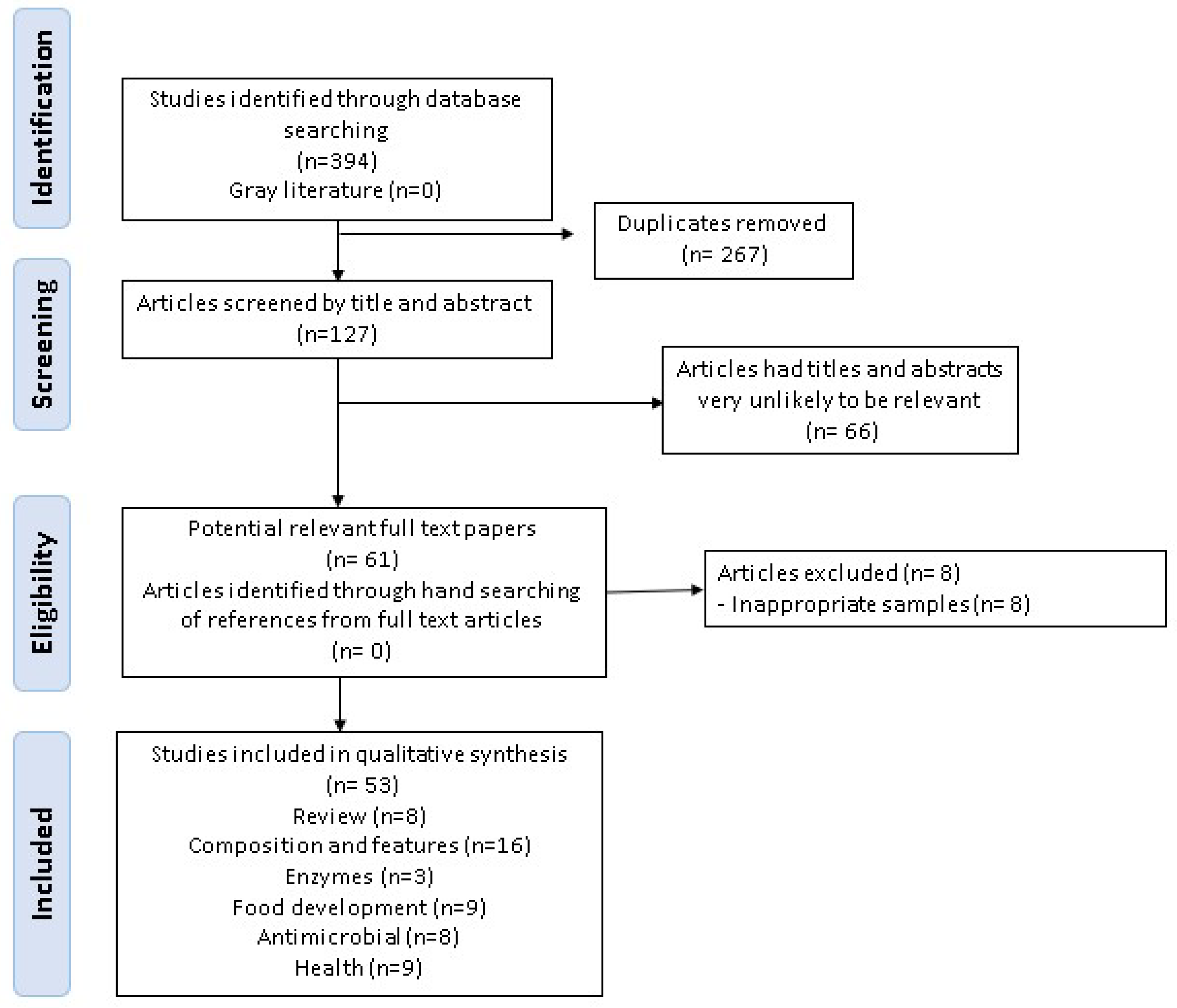
3.1. Selection of Studies

3.2. Composition and Functionality of Plantain Peel
3.3. Health Benefits
3.4. Applications of Plantain Peel in Food Production
3.5. Antimicrobial Potential and Biotechnological Applications
3.6. Application of Plantain Peel in Enzyme Production
3.7. Contribution/Challenges/Future Perspectives
4. Final Considerations
Supplementary Materials
Funding
Institutional Review Board Statement
Informed Consent Statement
Data Availability Statement
Conflicts of Interest
References
- Reinhardt, D.H.; Albuquerque, A.F.A.; Romano, M.R.; Borges, A.L.; Souza, L.S. Cultivo de Plátanos (Bananeiras Tipo Terra); Sistema de Produção 42; Embrapa Mandioca e Fruticultura: Cruz das Almas, Brazil, 2016. [Google Scholar]
- Cunha, L. Registradas as Primeiras Variedades de Banana da Terra do Brasil. Available online: https://www.embrapa.br/busca-de-noticias/-/noticia/41393172/registradas-as-primeiras-variedades-de-banana-da-terra-do-brasil (accessed on 9 December 2024).
- Tsamo, C.V.P.; Herent, M.-F.; Tomekpe, K.; Happi Emaga, T.; Quetin-Leclercq, J.; Rogez, H.; Larondelle, Y.; Andre, C. Phenolic profiling in the pulp and peel of nine plantain cultivars (Musa sp.). Food Chem. 2015, 167, 197–204. [Google Scholar] [CrossRef] [PubMed]
- Gibert, O.; Dufour, D.; Giraldo, A.; Sánchez, T.; Reynes, M.; Pain, J.-P.; González, A.; Fernández, A.; Díaz, A. Differentiation between Cooking Bananas and Dessert Bananas. 1. Morphological and Compositional Characterization of Cultivated Colombian Musaceae (Musa sp.) in Relation to Consumer Preferences. J. Agric. Food Chem. 2009, 57, 7857–7869. [Google Scholar] [CrossRef] [PubMed]
- Emaga, T.H.; Andrianaivo, R.H.; Wathelet, B.; Tchango, J.T.; Paquot, M. Effects of the stage of maturation and varieties on the chemical composition of banana and plantain peels. Food Chem. 2007, 103, 590–600. [Google Scholar] [CrossRef]
- Ritika; Rizwana; Shukla, S.; Sondhi, A.; Tripathi, A.; Lee, J.; Patel, S.K.S.; Agarwal, A. Valorisation of fruit waste for harnessing the bioactive compounds and its therapeutic application. Trends Food Sci. Technol. 2024, 144, 104302. [Google Scholar] [CrossRef]
- Abdullah, R.; Younas, Q.; Kaleem, A.; Iqtedar, M.; Aftab, M.; Saleem, F. Phytochemical and antimicrobial properties of different plants and in silico investigation of their bioactive compounds in wound healing and rheumatism. Saudi J. Biol. Sci. 2024, 31, 103942. [Google Scholar] [CrossRef] [PubMed]
- Ajijolakewu, K.A.; Ayoola, A.S.; Agbabiaka, T.O.; Zakariyah, F.R.; Ahmed, N.R.; Oyedele, O.J.; Sani, A. A review of the ethnomedicinal, antimicrobial, and phytochemical properties of Musa paradisiaca (plantain). Bull. Natl. Res. Cent. 2021, 45, 86. [Google Scholar] [CrossRef]
- Bhatti, S.A.; Hussain, M.H.; Mohsin, M.Z.; Mohsin, A.; Zaman, W.Q.; Guo, M.; Iqbal, M.W.; Siddiqui, S.A.; Ibrahim, S.A.; Ur-Rehman, S. Evaluation of the antimicrobial effects of Capsicum, Nigella sativa, Musa paradisiaca L., and Citrus limetta: A review. Front. Sustain. Food Syst. 2022, 6, 1043823. [Google Scholar] [CrossRef]
- Monrroy, M.; Rueda, L.; Aparicio, A.L.; García, J.R. Fermentation of Musa paradisiaca peels to produce citric acid. J. Chem. 2019, 2019, 8356712. [Google Scholar] [CrossRef]
- Utami, M.; Yenn, T.W.; Alam, M.W.; Ravindran, B.; Husniati; Purnama, I.; Salmahaminati; Hidayat, H.; Dhetaya, F.N.; Salsabilla, S.N. Efficient photocatalytic bactericidal performance of green-synthesised TiO2/reduced graphene oxide using banana peel extracts. Heliyon 2024, 10, e26636. [Google Scholar] [CrossRef]
- Widoyanti, A.A.E.; Chaikong, K.; Rangsinth, P.; Saengratwatchara, P.; Leung, G.P.-H.; Prasansuklab, A. Valorization of Nam Wah Banana (Musa paradisiaca L.) Byproducts as a Source of Bioactive Compounds with Antioxidant and Anti-inflammatory Properties: In Vitro and In Silico Studies. Foods 2023, 12, 3955. [Google Scholar] [CrossRef]
- Ouzzani, M.; Hammady, H.; Fedorowicz, Z.; Elmagarmid, A. Rayyan—A web and mobile app for systematic reviews. Syst. Rev. 2016, 5, 210. [Google Scholar] [CrossRef] [PubMed]
- Pilco, G.; Borja, D.; Goetschel, L.; Andrade, P.; Irazabal, J.; Vargas-Jentzsch, P.; Guil-Guerrero, J.L.; Rueda-Ayala, V.; Ramos, L.A. Caracterización bromatológica y evaluación de la actividad antimi- crobiana en cáscara de banano Ecuatoriano (Musa paradisiaca). Enfoque UTE 2018, 9, 48–58. [Google Scholar] [CrossRef]
- Oyeyinka, B.O.; Afolayan, A. Comparative Evaluation of the Nutritive, Mineral, and Antinutritive Composition of Musa sinensis L. (Banana) and Musa paradisiaca L. (Plantain) Fruit Compartments. Plants 2019, 8, 598. [Google Scholar] [CrossRef]
- Pham, T.; Nguyen, V.; Pham, T.; Pham, N.; Tran, T. Effects of ripeness and extraction conditions on the content of phenolic compounds in banana peels (Musa paradisiaca L.). Food Res. 2022, 154–163. [Google Scholar] [CrossRef]
- Nasrin, T.A.A.; Noomhorm, A.; Anal, A.K. Physico-chemical characterization of culled plantain pulp starch, peel starch, and flour. Int. J. Food Prop. 2015, 18, 165–177. [Google Scholar] [CrossRef]
- Xie, J.; Zhang, Y.; Klomklao, S.; Simpson, B.K. Pectin from plantain peels: Green recovery for transformation into reinforced packaging films. Waste Manag. 2023, 161, 225–233. [Google Scholar] [CrossRef]
- Emaga, T.H.; Robert, C.; Ronkart, S.N.; Wathelet, B.; Paquot, M. Dietary fibre components and pectin chemical features of peels during ripening in banana and plantain varieties. Bioresour. Technol. 2008, 99, 4346–4354. [Google Scholar] [CrossRef]
- Hernandez-Carmona, F.; Morales-Matos, Y.; Lambis-Miranda, H.; Pasqualino, J. Starch extraction potential from plantain peel wastes. J. Environ. Chem. Eng. 2017, 5, 4980–4985. [Google Scholar] [CrossRef]
- Venegas, R.; Torres, A.; Rueda, A.M.; Morales, M.A.; Arias, M.J.; Porras, A. Development and characterization of plantain (Musa paradisiaca) flour-based biopolymer films reinforced with plantain fibers. Polymers 2022, 14, 748. [Google Scholar] [CrossRef]
- Sriarumtias, F.; Najihudin, A.; Putri, I.; Akmal, A.; Hamdani, S. Microemulgel formulation of Kepok banana peel extract (Musa paradisiaca L.) as an antioxidant. J. Phys. Conf. Ser. 2019, 1402, 055090. [Google Scholar] [CrossRef]
- Padilla-Camberos, E.; Flores-Fernández, J.M.; Canales-Aguirre, A.A.; Barragán-Álvarez, C.P.; Gutiérrez-Mercado, Y.; Lugo-Cervantes, E. Wound healing and antioxidant capacity of Musa paradisiaca Linn. peel extracts. J. Pharm. Pharmacogn. Res. 2016, 4, 165–173. [Google Scholar] [CrossRef]
- Aquino, C.F.; Salomão, L.C.C.; Pinheiro-Sant’ana, H.M.; Ribeiro, S.M.R.; Siqueira, D.L.D.; Cecon, P.R. Carotenoides em polpas e cascas de bananas de 15 cultivares em dois estágios de maturação. Rev. Ceres 2018, 65, 217–226. [Google Scholar] [CrossRef]
- Apriani, E.F.; Miksusanti, M.; Novela, F. Formulation and Optimization Peel-Off Gel Mask with Polyvinyl Alcohol and Gelatin Based Using Factorial Design from Banana Peel Flour (Musa paradisiaca L) as Antioxidant. Indones. J. Pharm. 2022, 33, 261–268. [Google Scholar] [CrossRef]
- Agama-Acevedo, E.; Sañudo-Barajas, J.A.; De La Rocha, R.V.; González-Aguilar, G.A.; Bello-Pérez, L.A. Potential of plantain peels flour (Musa paradisiaca L.) as a source of dietary fiber and antioxidant compound. CyTA—J. Food 2016, 14, 117–123. [Google Scholar] [CrossRef]
- Indriawati, I.; Khalifah, K. The Capability of Kepok Banana Peel (Musa paradisiaca) to Triglyceride Level Decrease in Diabetic Rats. In Proceedings of the 4th International Conference on Food, Agriculture and Natural Resources (FANRes 2018); Atlantis Press: Dordrecht, The Netherlands, 2018; pp. 177–179. [Google Scholar]
- Ahmed, O.M.; Abd El-Twab, S.M.; Al-Muzafar, H.M.; Adel Amin, K.; Abdel Aziz, S.M.; Abdel-Gabbar, M. Musa paradisiaca L. leaf and fruit peel hydroethanolic extracts improved the lipid profile, glycemic index and oxidative stress in nicotinamide/streptozotocin-induced diabetic rats. Vet. Med. Sci. 2021, 7, 500–511. [Google Scholar] [CrossRef]
- Suleiman, K.Y.; Ajani, E.O.; Biobaku, K.T.; Okediran, B.S.; Azeez, M.O.; Jimoh, G.A.; Aremu, A.; Ahmed, A.O. Cardioprotective effects of aqueous extract of ripped musa paradisiaca peel in isoproterenol induced myocardial infarction rat model. Biomed. Res. Ther. 2021, 8, 4634–4648. [Google Scholar] [CrossRef]
- Damarjati, S.; Batubara, L.; Dewi, P.K.; Setyawati, A.N. The effect of giving plantain peel extract (Musa paradisiaca) on malondialdehyde levels in wistar rats exposed to filter cigarette smoke. J. Pharm. Negat. Results Vol. 2022, 13, 1118. [Google Scholar] [CrossRef]
- Oyeleye, S.I.; Olasehinde, T.A.; Odumosu, I.P.; Oboh, G. Plantain peels restore sexual performance, hormonal imbalance, and modulate nitric oxide production and key enzymes of penile function in paroxetine-sexually impaired male rats. J. Food Biochem. 2022, 46, e14261. [Google Scholar] [CrossRef] [PubMed]
- Sofini, P.S.; Mercy, D.J.; Raghavan, V.; Isaac, J.B.; Deepika, B.; Udayakumar, S.; Janani, G.; Devi, S.; Kiran, V.; Harini, A. Evaluation of scarless wound healing through nanohydrogel infused with selected plant extracts. J. Drug Deliv. Sci. Technol. 2024, 100, 106118. [Google Scholar] [CrossRef]
- Soeliono, I.; Puspitasari, I.; Gani, A.P.; Hadisoewignyo, L. Investigation of anxiolytic effects of ethanol extract from banana peel (Musa paradisiaca L. var Semeru). J. Res. Pharm. 2024, 28, 351–360. [Google Scholar] [CrossRef]
- Adjei, F.; Amponsah, E.; Ebo-Donkor, P.; Smith, J.B.; Tulashie, S.K. Formulation of mosquito repellent soap using neem extract, and Musa paradisiaca covers as a substitute source of alkalis. Case Stud. Chem. Environ. Eng. 2022, 5, 100171. [Google Scholar] [CrossRef]
- Oboh, G.; Akinsanmi, O.; Akinyemi, A.; Ademiluyi, A. Phenolic extracts from plantain (Musa paradisiaca) peels inhibit angiotensin 1 converting enzyme-in vitro: Possible antihypertensive benefits. Vegetos—Int. J. Plant Res. 2014, 27, 169–175. [Google Scholar] [CrossRef]
- Arun, K.B.; Persia, F.; Aswathy, P.; Chandran, J.; Sajeev, M.; Jayamurthy, P.; Nisha, P. Plantain peel-a potential source of antioxidant dietary fibre for developing functional cookies. J. Food Sci. Technol. 2015, 52, 6355–6364. [Google Scholar] [CrossRef]
- Anchundia, K.; Santacruz, S.; Coloma, J. Caracterización física de películas comestibles a base de cáscara de plátano (Musa paradisiaca). Rev. Chil. Nutr. 2016, 43, 394–399. [Google Scholar] [CrossRef]
- Martharini, D.; Indratiningsih, I. Kualitas mikrobiologis dan kimiawi kefir susu kambing dengan penambahan Lactobacillus acidophilus FNCC 0051 dan tepung kulit pisang kepok (Musa paradisiaca). Agritech 2017, 37, 23–30. [Google Scholar] [CrossRef]
- Adi, D.; Oduro, I.; Tortoe, C. Physicochemical changes in plantain during normal storage ripening. Sci. Afr. 2019, 6, e00164. [Google Scholar] [CrossRef]
- Akhter, M.J.; Al-Amin, M.; Hossain, M.A.; Kamal, M.M. Enriching wheat bread with banana peel powder: Impact on nutritional attributes, bioactive compounds, and antioxidant activity. Int. J. Food Sci. 2024, 2024, 2662967. [Google Scholar] [CrossRef]
- Bello-Pérez, L.A.; Pineda-Tapia, F.J.; Pacheco-Vargas, G.; Carmona-Garcia, R.; Tovar, J. Whole Unripe Plantain Flour as Unconventional Carbohydrate Source to Prepare Gluten-Free Pasta with High Dietary Fiber Content and Reduced Starch Hydrolysis. Starch-Stärke 2024, 76, 2200222. [Google Scholar] [CrossRef]
- Paramitasari, D.; Pramana, Y.S.; Suparman, S.; Putra, O.N.; Musa, M.; Pudjianto, K.; Triwiyono, B.; Supriyanti, A.; Elisa, S.; Singgih, B. Valorization of Lampung Province banana peel cultivars: Nutritional and functional characterizations for biscuit production and wheat flour substitution. J. Food Meas. Charact. 2024, 18, 9906–9920. [Google Scholar] [CrossRef]
- Diaba, M.A.; Baidoo, I.; Odai, B.T.; Achoribo, E.; Donkor, S.; Agbenyegah, S.; Brown-Appiah, C.; Akomea, Y.P.; Offei, B.; Mensah, E.O. Effectiveness of Unripe Plantain Peel on Tenderization of Beef and Okra as a Potential Substitute for Saltpeter. Food Saf. Health 2025, 3, 403–410. [Google Scholar] [CrossRef]
- Silva, A.R.d.S.; Peres, A.P.; Martins, R.A.d.S.; Magalhães, K.T.; Puerari, C.; Morzelle, M.C.; Bento, J.A.C. The Addition of Plantain Peel (Musa paradisiaca) to Fermented Milk as a Strategy for Enriching the Product and Reusing Agro-Industrial Waste. Beverages 2025, 11, 153. [Google Scholar] [CrossRef]
- Martharini, D.; Indratiningsih, I. Microbiological and chemical quality of goat milk kefir with the addition of Lactobacillus acidophilus FNCC 0051 and plantain peel flour (Musa paradisiaca). AGRITECH-J. Teknol. Pertan. 2017, 37, 22–29. [Google Scholar]
- Mundéné-Timothée, J.L.; Nouga Bissoue, A.; Nguimbou, R.M.; Bissim, S.M.; Bouelet Ntsama, I.S.; Bouopda Tamo, S.P.; Fokam, L.; Mouangue, R.; Yanou, N.N. Plantain flour: Production processes, technological characteristics, and its potential use in traditional African dishes—A review. J. Sci. Food Agric. 2025, 105, 4741–4752. [Google Scholar] [CrossRef]
- Serna-Jiménez, J.A.; López, J.Á.S.; Santos, M.D.L.Á.M.; Pérez, A.F.C. Exploiting waste derived from Musa spp. processing: Banana and plantain. Biofuels Bioprod. Biorefining 2023, 17, 1046–1067. [Google Scholar] [CrossRef]
- Imade, E.E.; Ajiboye, T.O.; Fadiji, A.E.; Onwudiwe, D.C.; Babalola, O.O. Green synthesis of zinc oxide nanoparticles using plantain peel extracts and the evaluation of their antibacterial activity. Sci. Afr. 2022, 16, e01152. [Google Scholar] [CrossRef]
- Vijayakumar, S.; Vaseeharan, B.; Malaikozhundan, B.; Gopi, N.; Ekambaram, P.; Pachaiappan, R.; Velusamy, P.; Murugan, K.; Benelli, G.; Kumar, R.S. Therapeutic effects of gold nanoparticles synthesized using Musa paradisiaca peel extract against multiple antibiotic resistant Enterococcus faecalis biofilms and human lung cancer cells (A549). Microb. Pathog. 2017, 102, 173–183. [Google Scholar] [CrossRef] [PubMed]
- Kifle, D.; Bacha, K.; Gonfa, G. Antimicrobial activities of biosynthesized nanosilver using Musa paradisiaca and Citrus sinensis peel extracts against major human and plant pathogens. Sci. Rep. 2025, 15, 6600. [Google Scholar] [CrossRef]
- Kapadia, S.P.; Pudakalkatti, P.S.; Shivanaikar, S. Detection of antimicrobial activity of banana peel (Musa paradisiaca L.) on Porphyromonas gingivalis and Aggregatibacter actinomycetemcomitans: An: In vitro: Study. Contemp. Clin. Dent. 2015, 6, 496–499. [Google Scholar] [CrossRef]
- Parsons, B.; Campbell, B.; Wigley, P. Soluble plantain nonstarch polysaccharides, although increasing caecal load, reduce systemic invasion of Salmonella Gallinarum in the chicken. Lett. Appl. Microbiol. 2015, 60, 347–351. [Google Scholar] [CrossRef] [PubMed]
- Wulandari, I.O.; Pebriatin, B.E.; Valiana, V.; Hadisaputra, S.; Ananto, A.D.; Sabarudin, A. Green synthesis of silver nanoparticles coated by water soluble chitosan and its potency as non-alcoholic hand sanitizer formulation. Materials 2022, 15, 4641. [Google Scholar] [CrossRef]
- Sethi, B.K.; Nanda, P.K.; Sahoo, S. Enhanced production of pectinase by Aspergillus terreus NCFT 4269.10 using banana peels as substrate. 3 Biotech 2016, 6, 36. [Google Scholar] [CrossRef] [PubMed]
- Adeniran, H.; Abiose, S.; Ogunsua, A. Production of fungal β-amylase and amyloglucosidase on some Nigerian agricultural residues. Food Bioprocess Technol. 2010, 3, 693–698. [Google Scholar] [CrossRef]
- Arias, D.; Rodríguez, J.; López, B.; Méndez, P. Evaluation of the physicochemical properties of pectin extracted from Musa paradisiaca banana peels at different pH conditions in the formation of nanoparticles. Heliyon 2021, 7, e06059. [Google Scholar] [CrossRef]
- Aji, G.K.; Laksono, H.; Wiguna, B.; Putri, R.P.G.; Kusumasmarawati, A.D.; Mufti, A.; Rutmala, A.; Rosyidin, A.K.; Nasori, A.S. Property Evaluation of Noodles Substituting Wheat Flour with Drum-Dried Overripe Kepok Plantain (Musa paradisiaca L.) Flour to Enhance the Nutrients. Prev. Nutr. Food Sci. 2024, 29, 554. [Google Scholar] [CrossRef]
- Tricco, A.C.; Lillie, E.; Zarin, W.; O’Brien, K.K.; Colquhoun, H.; Levac, D.; Moher, D.; Peters, M.D.J.; Horsley, T.; Weeks, L.; et al. PRISMA Extension for Scoping Reviews (PRISMAScR): Checklist and Explanation. Ann Intern Med. 2018, 169, 467–473. [Google Scholar] [CrossRef]

| Components | Plantain Peel | |||
|---|---|---|---|---|
| Pilco et al. [14] | Oyeyinka and Afolayan [15] | Pham et al. [16] | Nasrin et al. [17] | |
| Ripening stage | Ripe fresh | Ripe flour | Unripe fresh | Unripe flour |
| Protein (g/100 g) | 0.74 | 2.23 | 10.17 | 4.16 |
| Carbohydrate (g/100 g) | 8.3. | 68.57 | 62.91 | 72.52 |
| Lipid (g/100 g) | 0.47 | 1.1 | 14.26 | 6.02 |
| Dietary fiber (g/100 g) | 0.87 | 4.06 | - | 7.68 |
| Fixed mineral residue (g/100 g) | 1.55 | 2.23 | 12.63 | 9.66 |
| Potassium (mg/100 g) | 83.0 | - | - | - |
| Magnesium (mg/100 g) | - | - | 6.00 | - |
| Calcium (mg/100 g) | - | - | 7.00 | - |
| Objectives | Method Used | Main Results | Limitations |
|---|---|---|---|
| Recovery of pectin from green plantain peels and its application in packaging films by Xie et al. [18] | Enzymatic extraction of pectin, film production, and analysis of yield and properties | Pectin yield was 12.43% (control) and 25.00% (cellulase-assisted). Films showed improved mechanical properties. | Scalability and industrial optimization were not evaluated. |
| Formulation of antioxidant microemulsions using Kepok plantain peel by Sriarumtias et al. [22] | Methanolic extraction; DPPH assay; microemulsion formulation and evaluation | Microemulsions containing Kepok peel extract demonstrated stability and antioxidant activity. | Antioxidant activity was lower than that of vitamin C. |
| Determination of proximate composition and identification of phytochemicals with antimicrobial activity by Pilco et al. [14] | Proximate analysis; sequential ethanolic extraction; fractionation; antimicrobial testing | The peel contained 11% total solids and showed nutritional potential. Ethanolic extracts exhibited antimicrobial activity. | No specific antimicrobial compounds were isolated or identified. |
| Evaluation of the effect of ripening and extraction conditions on polyphenols and antioxidant activity by Pham et al. [16] | Proximate analysis; variation in extraction parameters; analysis of total phenolic content and antioxidant activity (DPPH) | Yellowish-green peels and optimized extraction (50% ethanol, 1:40, 1.5 h, 60 °C) resulted in the highest phenolic content and antioxidant activity | Specific phenolic compounds were not identified. |
| Evaluation of the wound healing activity of plantain peel extracts by Padilla-Camberos et al. [23] | Phytochemical screening; antioxidant analysis (DPPH); toxicity testing; in vivo wound healing model (rats); histology | Peel extracts exhibited antioxidant properties and positively influenced wound-healing processes. | Specific bioactive compounds responsible for the healing effect were not isolated. |
| Evaluation of carotenoid concentration in pulp and peel of 15 plantain cultivars at two ripening stages by Aquino et al. [24] | HPLC-DAD analysis of individual carotenoids and spectrophotometric analysis of total carotenoids in the pulp and peel | Cultivar “Terrinha” exhibited the highest levels of α- and β-carotene in the peel. The ripening stage significantly influenced carotenoid content. | Bioavailability of the carotenoids was not evaluated. |
| Optimization of a facial mask formulation containing plantain peel flour and evaluation of its antioxidant activity by Apriani et al. [25] | Peel flour preparation; phytochemical screening; mask formulation; antioxidant activity (DPPH) and optimization | The optimized formulation demonstrated low antioxidant activity. | A comparison between the efficiency of flour and pure peel extract was not performed. |
| Investigation of phytochemicals, antioxidant and anti-inflammatory activities, and toxicity of ‘Nam Wah’ plantain peel by Widoyanti et al. [12] | Sequential extraction; phytochemical screening; antioxidant (DPPH, FRAP) and anti-inflammatory (NO scavenging, 15-LOX inhibition) assays; toxicity; molecular docking | “Nam Wah” peel showed antioxidant and anti-inflammatory potential. | Study restricted to in vitro and in silico models, and a lack of in vivo validation. |
| Objectives | Methods | Mains Results | Limitations |
|---|---|---|---|
| Investigate the inhibitory effects of phenolic extract from different stages of ripeness of plantain peels on ACE and their antioxidant properties in vitro by Oboh et al. [35] | Phenolic extraction of plantain peels with methanol. In vitro tests: ACE inhibition, ABTS antioxidant capacity, and reducing property (FeCl3). Characterization of phenolic constituents. | Dose-dependent ACE inhibition. Green peel: ↑ ACE inhibition and ↑ antioxidant activity. Ripe peel: ↓ inhibition. | In vitro study; in vivo mechanisms and bioavailability of the compounds have not been investigated. |
| Analyze the potential of Kepok plantain peel extract to lower triglyceride levels by Indriawati and Khalifah. [27] | Wistar rats. Peel extract (100, 200, 400 mg/kg BW) for 14 days. Maturation stage not reported. | ↓ triglycerides at all doses of the extract tested. | Mechanism of action unclear. |
| Evaluate the antihyperglycemic effects of hydroethanolic extracts from plantain leaves and peel by Ahmed et al. [28] | Wistar rats with diabetes. Oral treatment with hydroethanolic extracts from the leaf or peel of M. paradisiaca (100 mg/kg/day) for 28 days. Maturation stage not reported. | The extracts improved glucose tolerance, ↑ insulin, and C-peptide. ↑ insulin receptor expression. | Single dose tested. Dose–response studies would be useful. |
| Investigate the potential cardioprotective effects of the aqueous extract of ripe plantain peel by Suleiman et al. [29] | Wistar rats. Pretreatment with MPPE (100, 200, 400 mg/kg) or aspirin (30 mg/kg). | MPPE (400 mg/kg) showed beneficial effects comparable or superior to aspirin. | Only one variety (ripe peel) was tested. |
| Determine the effect of plantain peel extract on MDA levels in rats exposed to cigarette smoke by Damarjati et al. [30] | Wistar rats. Groups: negative control; exposed to smoke; smoke with peel extract (200 mg/kg); and smoke with peel extract 400 mg/kg). Maturation stage not reported. | Plantain peel extract, at both doses, ↓ MDA levels. | The type of peel extraction was not detailed. The exact mechanism of MDA reduction has not been elucidated. |
| Investigate the effect of extracts from green and ripe plantain peel on the sexual behavior of rats by Oyeleye et al. [31] | Wistar rats with erectile dysfunction. Aqueous extracts of UPP and RPP (200 and 400 mg/kg). | Treatment with UPP and RPP reversed dysfunction, inhibited enzymes, and increased hormone levels. | Toxicity profile and long-term effects were not evaluated. |
| Development of a mosquito repellent soap using indigenous lye from the ashes of green and ripe plantain peels by Adjei et al. [34] | Production of lye from plantain peel ash. Formulation of bar soap and shower gel. Repellency testing on 40 humans. | The soap provided 3–4 h of protection against mosquito bites. | The study focuses on the ash from the peel, not on the direct properties of the peel as a health agent. |
| Evaluate wound healing using a nano-hydrogel infused with bioactive components from plants and plantain peel by Sofini et al. [32] | Wistar rats. Tests: antibacterial (S. aureus, E. coli), in vitro scratch wound healing assay, and in vivo burn wound healing. Maturation stage not reported. | The hydrogel showed antibacterial activity—faster healing of burn wounds compared to the compound without the nano-gel. | The exact individual contribution of plantain peel is inferred, but not isolated. |
| Investigate the potential anxiolytic effect of green banana peel ethanol extract (BPE) by Soeliono et al. [33] | Wistar rats. Groups: CMC control, alprazolam (0.4 mg/kg), tryptophan (270 mg/kg), 5-HTP (18 mg/kg), and BPE (140, 280 mg/kg). | BPE (140 and 280 mg/kg) did not show a significant anxiolytic effect. | The observed lack of anxiolytic effect contrasts with previous findings in other varieties. |
| Product Developed | Usage/Country | Sensory Analysis and Functional Compound Results | Limitations |
|---|---|---|---|
| Cookies Arun et al. [36] | Unripe cultivar Nendran plantain peel flour (NPF) (5%, 10%, and 15%). India. | NPF proved to be a rich source of dietary fiber and antioxidants. Cookies with 10% NPF showed good acceptability, whereas concentrations >10% reduced it. | Sensory acceptability decreased at concentrations >10%. |
| Edible films Anchundia et al. [37] | Unripe peel flour (38.11% starch) with acetylsalicylic acid (ASA). Ecuador. | The physical characteristics of the films resembled those of pure starch, except for the significantly lower water vapor permeability. | Shelf-life/storage tests were not performed. |
| Fermented goat milk Martharini and Indratiningsih [38] | Ripe plantain peel flour—Kepok (0%, 1%, and 2%). Indonesia. | Kefir quality complied with Codex standard 234–2003 across all treatments. The optimal formulation contained 3% L. acidophilus and 1% plantain peel flour. | Other flour concentrations and milk types were not evaluated. |
| Instant noodles Aji et al. [39] | Ripe Kepok plantain peel flour (KPF) (10%, 20%, and 30%). Indonesia. | Substituting 30% of starch with KPF improved gelatinization properties and overall quality, demonstrating its potential for nutritious, sustainable noodles. | Limited nutritional and sensory evaluation. |
| Enriched whole wheat bread Akhter et al. [40] | Ripe plantain peel flour (5%, 7%, and 10%). Bangladesh. | Flour incorporation significantly altered bread characteristics. Enrichment with up to 5% plantain flour maintained sensory acceptability comparable to the control. | Sensory acceptability was not evaluated for higher concentrations. |
| Gluten-Free Rolled Pasta Bello-Pérez et al. [41] | Whole unripe plantain flour (WUPF) and unripe plantain pulp flour (UPF). Mexico. | WUPF produced gluten-free dough with reduced starch hydrolysis and increased dietary fiber content. | Sensory evaluation was not performed. |
| Biscuits Paramitasari et al. [42] | Banana and plantain peel flour (BPF-J—Janten and BPF-K—Kepok) (20%, 40%, and 60%). Ripeness stage 4–5 (Von Loesecke scale). Indonesia. | The incorporation of BPF-J and BPF-K improved both the nutritional profile and functional properties of the biscuits. | Application limited to biscuits; other products were not tested. |
| Meat tenderizer Diaba et al. [43] | Ashes from unripe plantain peels (UPPA) and their filtrate (UPPAF). Ghana. | Green plantain peel ashes, and their filtrate, contained elements within FAO/WHO limits and proved effective as meat tenderizers. | Potential limitations in sample size or marination process. |
| Fermented milk Silva et al. [44] | Fresh unripe plantain peel (5, 10, and 20%). Brazil. | Digestion simulation indicated high bioaccessibility of bioactive compounds, suggesting effective absorption. | High concentrations negatively affected sensory acceptance. |
| Product Obtained from Plantain Peel Extract | Microorganism(s) Tested | Evaluation Method | Microbial Efficacy | Limitations |
|---|---|---|---|---|
| Zinc oxide nanoparticles (ZnONPs) Imade et al. [48] | Salmonella enterica, Klebsiella pneumoniae, Bacillus cereus MTCC 430, Staphylococcus aureus 26923 | Diffusion and dilution in broth and nutrient agar | Green-synthesized ZnONPs demonstrated significant antibacterial efficacy. | N/A |
| Silver nanoparticles (AgNPs) Pham et al. [16] | Staphylococcus aureus ATCC 29213 and Escherichia coli ATCC 25922 | Inhibition zone and minimum inhibitory concentration | Demonstrated antimicrobial activity against S. aureus and E. coli | Influence of coating biomolecules on surface properties |
| AgNPs coated with chitosan Widoyanti et al. [12] | Staphylococcus aureus and Escherichia coli | Diffusion with nutrient broth and nutrient agar. | Shows promise for antiseptic gel formulation | Stability testing was limited to a short duration (140 h). |
| Gold nanoparticles (AuNPs) Vijayakumar et al. [49] | Biofilm (Enterococcus faecalis), cytotoxicity (A549 cells), ecotoxicity (Ceriodaphnia cornuta) | Inhibition and cytotoxicity tests | Effective inhibition of biofilm formation by E. faecalis (100 mg/mL). | The study focused on synthesized AuNPs; the effect of the isolated extract was not evaluated. |
| AgNPs biosynthesized (BPAgNPs) Kifle et al. [50] | Bacillus cereus, Staphylococcus aureus, Escherichia coli, Morganella morganii, Aspergillus niger, Alternaria alternata, Penicillium digitatum, Fusarium oxysporum | Diffusion on disk (bacteria) and well (fungi) | Potent antibacterial and antifungal activity; applicable in reducing post-harvest losses | Long-term toxicity was not addressed. |
| Alcoholic extract of plantain peel Kapadia et al. [51] | Porphyromonas gingivalis and Aggregatibacter actinomycetemcomitans | Diffusion and serial dilution in broth | Antimicrobial activity against P. gingivalis and A. actinomycetemcomitans | In vitro study only; comparison of varieties or methods was absent. |
| TiO2/reduced graphene oxide nanocomposite (rGO) Utami et al. [11] | Escherichia coli and Staphylococcus aureus | Disk photocatalysis under sunlight | Achieved efficient and sustainable bacterial inactivation under sunlight | Industrial-scale feasibility and cost-effectiveness were not explored. |
| Feed with non-starch polysaccharides (NSP) Parsons et al. [52] | Salmonella gallinarum | In vitro test with B1OXI+ cells and in vivo test in chickens | Reduced S. gallinarum invasion in the liver and spleen, despite increased cecal load | Increased bacterial load in the cecum |
| Enzyme | Raw Material | Method | Main Results | Limitations |
|---|---|---|---|---|
| Citric acid (CA) Monrroy et al. [10] | Unripe plantain peel | Solid-state fermentation (SSF) with Aspergillus niger (30 °C, pH 1.4, 10% substrate consistency) | The maximum CA production of 29 g/kg on a dry matter basis was observed on the fourth day (96 h). pH was the most important parameter. | Strict pH control is required to achieve optimal yields. |
| Beta-amylase and amyloglycosidase Adeniran et al. [55] | Unripe plantain peels, cassava peels, yam peels, plantain peels, and spent brewery grains (SBGs) | Solid-state fermentation (SSF) and static submerged fermentation using Aspergillus niger (room temperature, 6 days) | Aspergillus niger produced the highest level of beta-amylase (33.2 EU) in plantain peel medium under the solid-state cultivation method. Plantain peels favored the production of beta-amylase. | Tested strains of A. flavus and A. fumigatus produced toxins, limiting their potential compared to A. niger. |
| Pectinase Sethi et al. [54] | Unripe plantain peel | SSF and liquid static surface fermentation (LSSF) with Aspergillus terreus NCFT 4269.10 (30 °C, 96 h, pH 5.0) | Plantain peels were the most suitable for pectinase biosynthesis (LSSF: 550 +/− 70.71 U/mL; SSF: 6500 +/− 1116.21 U/g). | The study primarily used an optimization method of one variable at a time (OVAT), which may not fully capture the complex interactions between parameters. |
Disclaimer/Publisher’s Note: The statements, opinions and data contained in all publications are solely those of the individual author(s) and contributor(s) and not of MDPI and/or the editor(s). MDPI and/or the editor(s) disclaim responsibility for any injury to people or property resulting from any ideas, methods, instructions or products referred to in the content. |
© 2026 by the authors. Licensee MDPI, Basel, Switzerland. This article is an open access article distributed under the terms and conditions of the Creative Commons Attribution (CC BY) license.
Share and Cite
Peres, A.P.; Puerari, C.; Beserra, B.T.S.; Bento, J.A.C.; Morzelle, M.C.; Zeppa, G. Composition, Functionality, and Use of Plantain Peel (Musa paradisiaca): A Scoping Review. Foods 2026, 15, 1133. https://doi.org/10.3390/foods15071133
Peres AP, Puerari C, Beserra BTS, Bento JAC, Morzelle MC, Zeppa G. Composition, Functionality, and Use of Plantain Peel (Musa paradisiaca): A Scoping Review. Foods. 2026; 15(7):1133. https://doi.org/10.3390/foods15071133
Chicago/Turabian StylePeres, Andrea Pissatto, Cláudia Puerari, Bruna Teles Soares Beserra, Juliana Aparecida Correia Bento, Maressa Caldeira Morzelle, and Giuseppe Zeppa. 2026. "Composition, Functionality, and Use of Plantain Peel (Musa paradisiaca): A Scoping Review" Foods 15, no. 7: 1133. https://doi.org/10.3390/foods15071133
APA StylePeres, A. P., Puerari, C., Beserra, B. T. S., Bento, J. A. C., Morzelle, M. C., & Zeppa, G. (2026). Composition, Functionality, and Use of Plantain Peel (Musa paradisiaca): A Scoping Review. Foods, 15(7), 1133. https://doi.org/10.3390/foods15071133