Wild Edible Fruits: A Structured Narrative Review on Bioactive Composition and Bioactivity

 , and
, and
Abstract
1. Introduction
2. Materials and Methods
2.1. Literature Search Strategy
2.2. Eligibility Criteria and Study Selection
- Population: Species of WEFs.
- Intervention: Analysis of chemical composition and/or bioactivity.
- Comparator: Comparison of positive biological effects versus neutral or negative actions, where applicable.
- Outcome: Identification of bioactive compounds, biological activities, nutritional relevance, and potential applications of WEFs.
2.3. Inclusion and Exclusion Criteria
- Detailed characterisation of bioactive compounds.
- Results from bioactivity assays (e.g., antioxidant, antimicrobial, anti-inflammatory, or cytotoxic activities).
- Nutritional, biomedical, or functional applications.
- Ecological, ethnobotanical, or socioeconomic implications related to WEF use.
- No strict publication date limits were imposed. However, priority was given to publishing studies from the 1980s onward, a period in which systematic chemical and biological analyses of WEFs became widespread. Previously published seminal studies were selectively included when they provided foundational data on the composition or traditional use of WEFs.
2.4. Data Extraction and Synthesis
3. Diversity of Wild Edible Fruits
3.1. Regional Case Studies
3.2. Conservation Status and Threats

| Region | Conservation Status | Threats | Key Species | Conservation Strategies | Reference |
|---|---|---|---|---|---|
| Aceh Province (Indonesia) | 35% Least Concern; 6% Vulnerable; 3% Near Threatened; 2% Low Risk; 2% Data Deficient; 52% No Data | Agricultural expansion; Over-exploitation; Land-use changes | Mangifera foetida; M. odorata; Artocarpus integer; Ficus altissima; Syzygium cumini | Community-based conservation; Domestication of WEFs | [23,37] |
| Paser, East Kalimantan (Indonesia) | Not specified | Agricultural expansion; Mining; Deforestation | Baccaurea lanceolata | In situ and ex situ conservation; Local community involvement | [22] |
| Ethiopia | Not specified | Habitat degradation; Agricultural expansion; Overgrazing; Selective logging; Deforestation | Opuntia ficus-indica; Carissa edulis; Ficus vasta | Community-based conservation; Awareness-raising; Sustainable Forest management | [31,32,33,34,35,36] |
| Garhwal Himalaya (India) | Vulnerable | Overharvesting; Habitat disturbances | Paeonia emodi | Agro-production techniques; Sustainable utilisation | [38] |
| Arunachal Pradesh (India) | Not specified | Rapid vanishing rate; Over-exploitation | Various species | Agroforestry systems; Policy interventions | [20] |
| Nepal | Not specified | Habitat destruction; Land-use change; Over-harvesting | Various species | Sustainable collection and trade; Community engagement | [39] |
| Tanzania | Not specified | Urbanisation; Agricultural expansion; Charcoal activities | Vitex mombassae; Strychnos spinosa; Tamarindus indica | Market promotion; Cultural importance awareness | [12] |
4. Bioactive Compound Profiles
4.1. Phenolic Compounds
| Family | Fruit | Total Phenolics (GAE) * | Main Phenolics | Reference |
|---|---|---|---|---|
| Adoxaceae | Sambucus nigra (Elderberry) | 12.7 mg/g fw | Cyanidin-3-galactoside chloride | [52] |
| Viburnum foetens | 1.14 mg rutin Equivalent/g fw | Flavonoids, flavonols, phenolics | [53] | |
| Arecaceae | Euterpe edulis | 0.75–1.37 mg/g fw (HPLC) | Gallic and protocatechuic acids, epicatechin, and quercetin | [54] |
| Berberidaceae | Berberis asiatica | High levels (not specified) | Catechin, anthocyanins (cyanin, delphinidin) | [55] |
| Berberis crataeginea | 0.02–0.23 mg/g fw | Rutin trihydrate, trans-cinnamic acid | [56] | |
| Combretaceae | Terminalia chebula | 14.03 mg/g dw | Protocatechuic, vanillic, and ferulic acids | [57] |
| Cornaceae | Cornus mas (Cornelian cherry) | 7.31–14.39 mg/g dw | Chlorogenic acid, caffeic acid, epicatechin, quercetin, cyanidin-3-O-glucoside, pelargonidin | [58] |
| Ebenaceae | Diospyros decandra | 214.64 mg/g dw | Caffeic and syringic acids | [57] |
| Ericaceae | Arbutus unedo | 7.73–16.21 mg/g fw | Gallic acid, cyanidin 3-glucoside | [59] |
| Vaccinium myrtillus (Bilberry) | 10.4 mg/g fw | Cyanidin-3-galactoside chloride | [52] | |
| Irvingiaceae | Irvingia malayana | 121.57 mg/g dw | Not specified | [60] |
| Muntingiaceae | Muntingia calabura | 16.5 mg/g dw | Ferulic acid | [57] |
| Myricaceae | Myrica esculenta | 9–15 mg/g fw | Catechin, anthocyanins (cyanin, delphinidin) | [55] |
| Myrtaceae | Myrtus comunis | 0.38 mg/g fw | Gallic acid, catechin, quercetin, Isorhamnetin, Apigenin 7-glucoside | [61] |
| Syzygium cordatum | 0.02 mg/g fw | Flavonols, phenolic acids | [62] | |
| Olacaceae | Ximenia caffra | 12.05 mg/g fw | Flavonols, phenolic acids | [62] |
| Phyllanthaceae | Antidesma velutinosum | 0.106 mg/g fw (HPLC) | Quercetin, caffeic, ferulic acids | [63] |
| Rhamnaceae | Zizyphus lotus | 16.4 mg/g dw (HPLC) | Gallic, vanillic, p-hydroxybenzoic, chlorogenic acids | [64] |
| Rosaceae | Crataegus monogyna | 101–153 mg/g dw | Epicatechin, hyperoside, chlorogenic acid, luteolin, quercetin, catechin, cyanidin | [65,66] |
| Prunus avium (Wild Cherry) | 8.8 mg/g fw | Cyanidin-3-galactoside chloride | [52] | |
| Prunus species (Wild cherry) | 2.37–11.05 mg/g fw | Cyanidin-3-rutinoside, cyanidin-3-glucoside, quercetin derivatives | [67] | |
| Rosa canina | 44.6–157 mg/g dw | Gallic and cinnamic acids, rutin, and quercetin | [68] | |
| Rubus fruticosus (Blackberry) | 9.8 mg/g fw | Cyanidin-3-galactoside chloride | [52] | |
| Rubus ulmifolius | 3.76–13.26 mg/g fw | Gallic acid, cyanidin 3-glucoside | [59] | |
| Rutaceae | Citrus daoxianensis | 43.46–45.38 mg/g dw | Vanillic, caffeic, p-cumaric, ferulic acids | [69] |
| Citrus poonensis | 36.54 mg/g dw | Vanillic, caffeic, p-cumaric, ferulic acids | [69] | |
| Citrus reticulata | 29.38–51.14 mg/g dw | Vanillic, caffeic, p-cumaric acids | [69] | |
| Solanaceae | Physalis alkekengi | 0.01–0.24 mg/g fw | p-Coumaric acid, (+)-catechin | [56] |
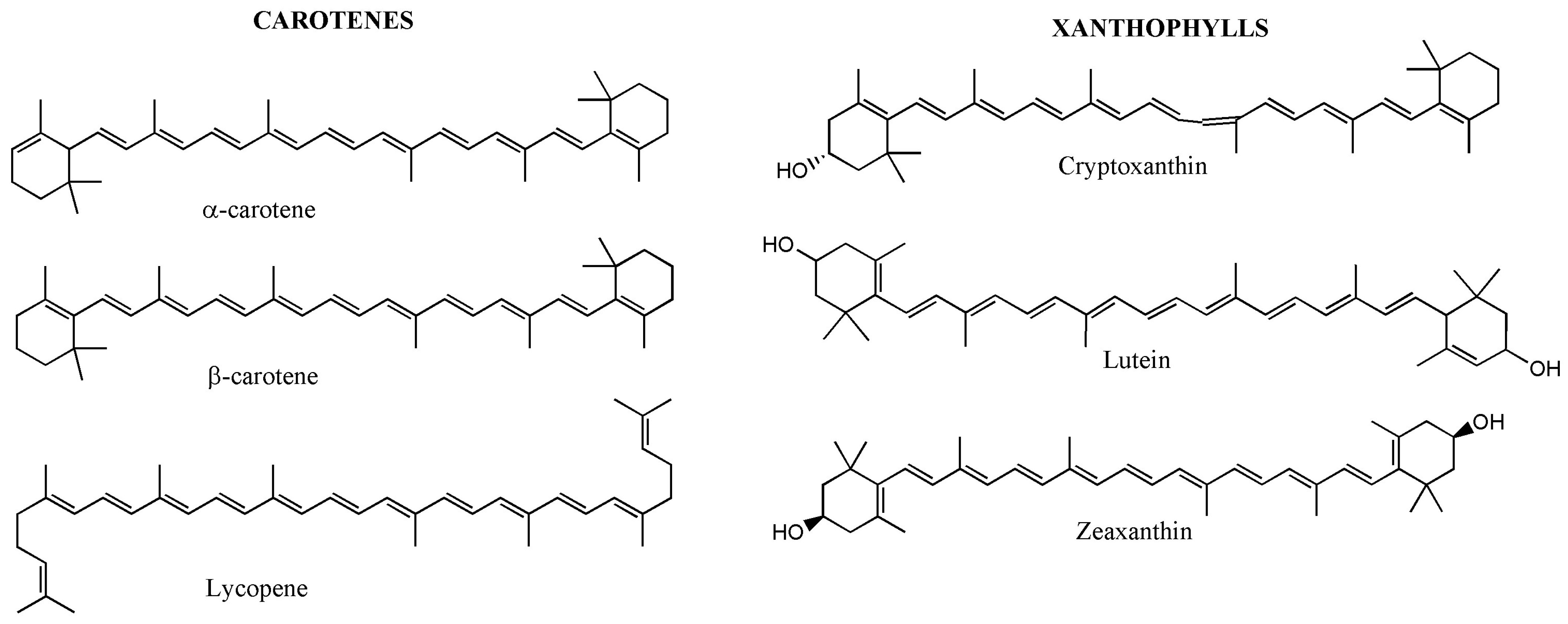
4.2. Carotenoids and Pigments
| Family | Species | Carotenoids | Total Carotenoids mg/kg | Reference |
|---|---|---|---|---|
| Apocynaceae | Carissa carandas | Zeaxanthin, | 559 dw | [81] |
| Arecaceae | Hyphaene thebaica | β-carotene, lutein | 1467 dw | [82] |
| Cucurbitaceae | Cionosicyos macranthus | Zeaxanthin, Violaxanthin, β-cryptoxanthin, cryptocapsin, capsanthin, capsoneoxanthin | Aril: 226, Mesocarp: 83.4 fw | [75] |
| Ericaceae | Arbutus unedo | (all-E)-Violaxanthin, 9Z-violaxanthin, (all-E)-neoxanthin, (9′Z)-neoxanthin, lutein | >340 dw | [83] |
| Elaeagnaceae | Elaeagnus umbellata | β-carotene, lutein, lycopene | 1851 dw | [84] |
| Hippophae rhamnoides | α- and β-carotene, lutein, cryptoxanthin, zeaxanthin, lycopene | 531–967 dw | [85] | |
| Myrtaceae | Eugenia stipitata | Lutein, β-cryptoxanthin, zeinoxanthin, β-carotene | Peel: 24.84; Pulp: 8.06 | [86] |
| Eugenia uniflora | β-carotene | 5.86 fw | [87] | |
| Psidium cattleianum | β-carotene | 6.27 fw | [87] | |
| Rosaceae | Cerasus humilis | β-carotene, zeaxanthin, lutein, violaxanthin | 9.5–28.2 fw | [88] |
| Crataegus monogyna | Mutatoxanthin, lutein, α-cryptoxanthin, β-cryptoxanthin, cis-β-carotene, all-trans-β-carotene, lycopene | 420 dw | [77] | |
| Rosa canina | Lycopene, β-carotene, β-cryptoxanthin, lutein | 224 fw | [76] | |
| Various (e.g., Rubus, Sorbus) | α-, β-, γ-carotene, β-cryptoxanthin, zeaxanthin, violaxanthin, lutein, lycopene | Highly variable | [89] | |
| Sapotaceae | Pouteria torta | Lutein, lutein epoxide, β-carotene, β-carotene epoxide, violaxanthin | 11.28 fw | [85,90] |
| Solanaceae | Lycium ruthenicum | β-carotene, β-cryptoxanthin, zeaxanthin, neoxanthin, violaxanthin, lutein | 2.4 dw | [91] |
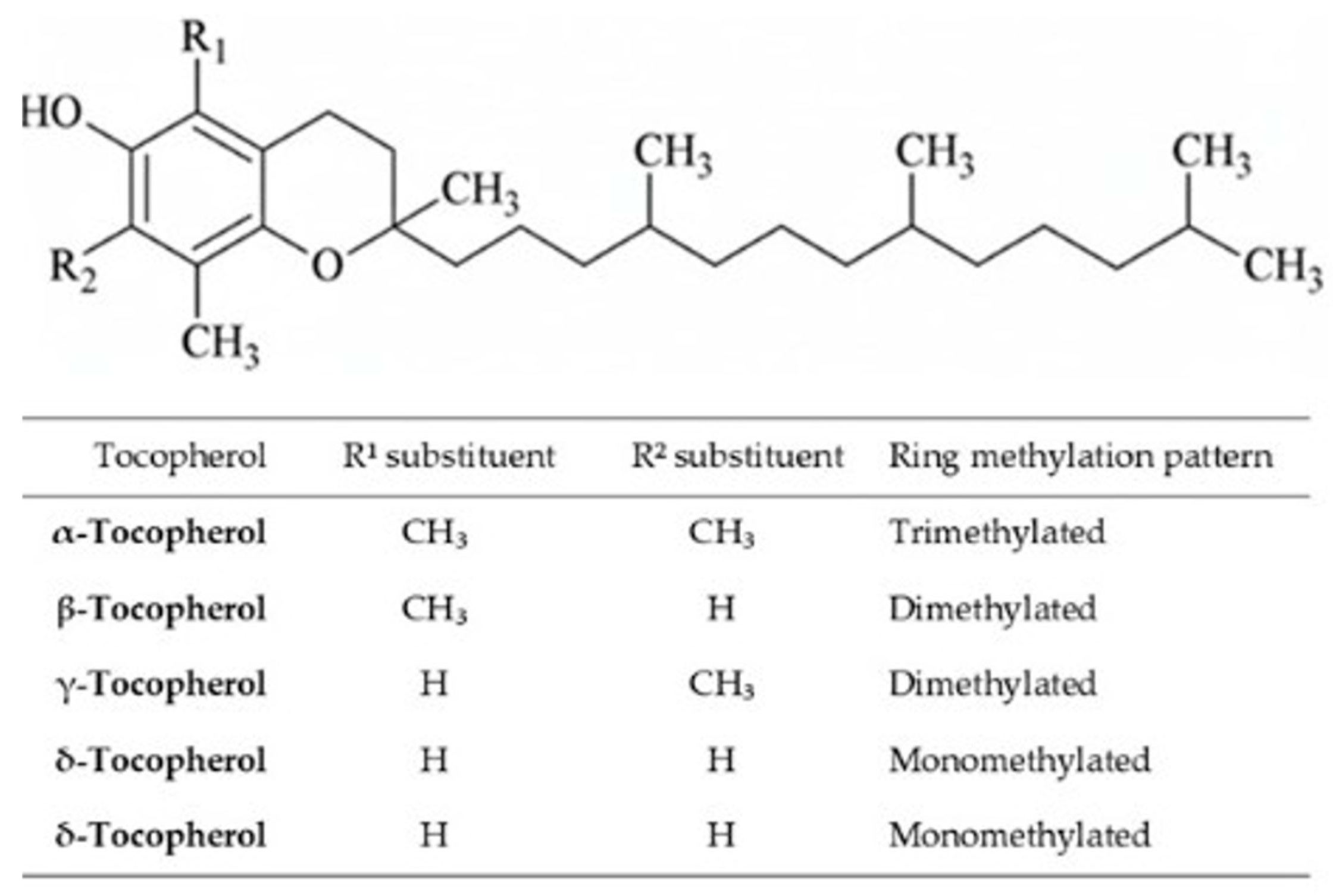
4.3. Tocols (Vitamin E)
| Family | Species | Tocols (mg/100 g fw) | Reference | ||||
|---|---|---|---|---|---|---|---|
| Total Tocols | α-Tocopherol | β-Tocopherol | γ-Tocopherol | δ-Tocopherol | |||
| Clusiaceae | Garcinia atroviridis | 7.56 | 7.56 | [97] | |||
| Combretaceae | Terminalia ferdinandiana | 1.04 | 1.02 | 0.02 | [98] | ||
| Cunoniaceae | Davidsonia pruriens | 0.09 | 0.04 | 0.03 | 0.02 | [98] | |
| Elaeagnaceae | Hippophae rhamnoides | 4.01 | 3.05 | 0.26 | 0.73 | [99] | |
| H. rhamnoides subsp. sinensis | 10.2 | 8.5 | 1.0 | 6.0 | 1.0 | [100] | |
| Ericaceae | Vaccinium vitis-idaeaa | 2.14 | 1.53 | 0.13 | [99] | ||
| Myrtaceae | Syzygium luehmannii | 0.46 | 0.23 | 0.23 | [98] | ||
| Psidium guajava | 0.88 | [97] | |||||
| Rosaceae | Crataegus monogyna | 3.37 | 2.88 | 0.15 | 0.17 | 0.16 | [95] |
| Prunus spinosa | 3.58–5.41 | 2.81–5.23 | 0.02–0.08 | 0.09–0.75 | 0.00–0.04 | [95,96] | |
| Ribes uva-crispa | 0.84 | 0.73 | 0.11 | [99] | |||
| Rosa canina | 4.38–4.29 | 3.63–4.14 | 0.10–0.14 | 0.10–0.56 | [96,99] | ||
| R. micrantha | 19.64 dw | 18.17 dw | 1.47 dw | [101] | |||
| Rubus chamaemorus | 3.62 | 2.95 | 0.20 | 0.45 | 0.02 | [99] | |
| Rubus ulmifolius | 13.48 | 3.38 | 0.24 | 3.73 | 3.69 | [95] | |
| Rutaceae | Acronychia acidula | 0.58 | 0.28 | 0.01 | 0.29 | [98] | |
| Citrus australasica | 2.38 | 2.34 | 0.04 | [98] | |||
| Citrus glauca | 0.78 | 0.70 | 0.08 | [98] | |||
| Santaleaceae | Santalum acuminatum | 1.30 | 1.17 | 0.09 | 0.04 | [98] | |
| Sapotaceae | Chrysophyllum albidum | 0.02 a | [102] | ||||
| Solanaceae | Lycium ruthenicum | 0.65–0.10 dw | 0.52–0.56 dw | 0.13–0.42 dw | 0.00–0.04 dw | [91] | |
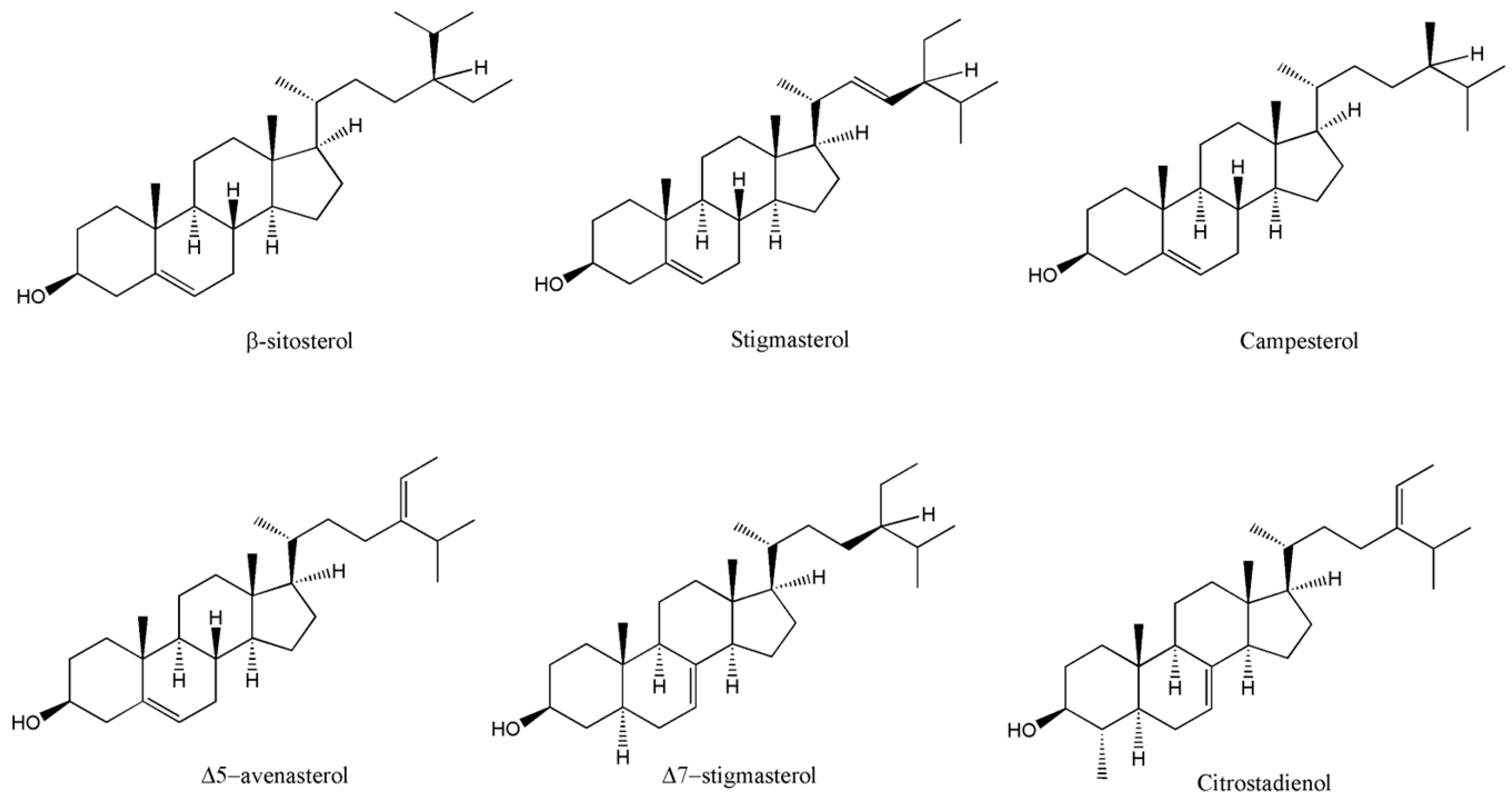
4.4. Sterols and Triterpenoids
| Family | Species | Sterols | Total Sterols (mg/kg) | Reference |
|---|---|---|---|---|
| Adoxaceae | Sambucus nigra | β-sitosterol, campesterol, stigmasterol, isofucosterol | 543.89 dw | [81,107,111] |
| Viburnum lentago | Stigmasterol, campesterol, β-sitosterol, isofucosterol | 1024 dw | [106] | |
| Viburnum trilobum | Stigmasterol, campesterol, β-sitosterol, isofucosterol | 905 a dw | [106] | |
| Arecaceae | Hyphaene thebaica | β-sitosterol, campesterol, stigmasterol, ergosterol, avenasterol | 29.9 dw | [112] |
| Apocynaceae | Carissa carandas | β-sitosterol, campesterol, stigmasterol | 139.2 fw | [81,107] |
| Caprifoliaceae | Lonicera caerulea | β-sitosterol, campesterol, cholesterol, cycloartanol, stigmasterol, isofucosterol | 46.61 fw/969 a dw | [106,113] |
| Symphoricarpos albus | β-sitosterol, stigmasterol | 683 a dw | [106] | |
| Ebenaceae | Diospyros mespiliformis | β-sitosterol, campesterol, stigmasterol, ergosterol, avenasterol | 29.2 dw | [112] |
| Ericaceae | Vaccinium angustifolium | Stigmasterol, campesterol, β-sitosterol, isofucosterol | 670 a dw | [106] |
| Fabaceae | Detarium senegalense | β-sitosterol, campesterol, stigmasterol, ergosterol, avenasterol | 32.1 dw | [112] |
| Oleaceae | Olea europaea (wild olives) | β-sitosterol, campesterol, stigmasterol | 1.114 dw | [107] |
| Rhamnaceae | Rhamnus cathartica | β-sitosterol, campesterol | 1016 a dw | [106] |
| Rosaceae | Amelanchier alnifolia | Stigmasterol, β-sitosterol, isofucosterol | 865 a dw | [106] |
| Aronia melanocarpa | Stigmasterol, campesterol, β-sitosterol, isofucosterol | 612 a dw | [106] | |
| Prunus virginiana | Stigmasterol, campesterol, β-sitosterol, isofucosterol | 283 a dw | [106] | |
| Ribes hirtellum | Stigmasterol, campesterol, β-sitosterol, isofucosterol | 938 a dw | [106] | |
| Ribes rubrum | Stigmasterol, campesterol, β-sitosterol, isofucosterol | 646 a dw | [106] | |
| Ribes rubrum | Stigmasterol, campesterol, β-sitosterol, isofucosterol | 718 a dw | [106] | |
| Rubus idaeus | Stigmasterol, campesterol, β-sitosterol, isofucosterol | 614 a dw | [106] | |
| Solanaceae | Lycium barbarum (Goji berries) | β-sitosterol, campesterol, Δ5-avenasterol | - | [114] |
| Umbelliferae | Buplerum croceum | β-sitosterol, stigmasterol, campesterol, Δ5-avenasterol, Δ-5,24-stigmastadienol | - | [115] |
| Buplerum flavum | β-sitosterol, stigmasterol, campesterol, Δ5-avenasterol, Δ-5,24-stigmastadienol | - | [115] | |
| Buplerum rotundifolium | β-sitosterol, stigmasterol, campesterol, Δ5-avenasterol, Δ-5,24-stigmastadienol | - | [115] | |
| Vitaceae | Ampelocissus martinii | β-sitosterol, stigmasterol | 13.92 dw | [116] |
| Vitis riparia | Stigmasterol, campesterol, β-sitosterol | 469 a dw | [106] |
4.5. Vitamin C
| Family | Especies | Range | Ascorbic Acid (mg/100 g) | Additional Notes | Reference |
|---|---|---|---|---|---|
| Adoxaceae | Viburnum opulus | Eurasia NW Africa | 185.4 | Rich in antioxidants like phenolic, giving high antioxidant, anti-inflammatory, and cardioprotective properties | [123] |
| Anarcadiaceae | Anacardium occidentale | Northeastern Brazil and Southeastern Venezuela | 202 | High antioxidant activity | [120] |
| Sclerocarya cafra | Transvaal, South Africa | 67.9 | Rich in minerals | [122] | |
| Spondias dulcis | Tropical Asia | 51.2 | Rich in carotenes, fiber, and antioxidants. Improves digestion, immunity, and skin health | [120] | |
| Apocynaceae | Carissa macrocarpa | South Africa | 74.1 | Rich in anthocyanins, calcium, magnesium, and phosphorus | [122] |
| Caprifoliaceae | Lonicera caerulea subsp. altaica | Circumpolar regions | 42.7 | Rich in antioxidants like anthocyanins, polyphenols, and flavonoids, offering benefits for heart health, vision, inflammation, blood sugar, and potentially cancer prevention | [123] |
| Landolphia capensis | Southern Africa | 60.1 | Antioxidant, antimicrobial, and potential medicinal (anti-inflammatory, antimalarial) properties | [122] | |
| Elaegnaceae | Hippophae rhamnoides | Eurasia | 66.64 | Rich in vitamins, minerals, antioxidants, essential fatty acids, and polyphenols. Offering strong antioxidant, anti-inflammatory, cardioprotective, and antimicrobial properties | [123] |
| Ericaceae | Arbutus unedo | Mediterranean area | 182–419 | High vitamin C and phenolic content; strong antioxidant activity | [42,59] |
| Malvaceae | Adansonia digitata | Central and Southern Africa | 213 | High in phenolics, acting as an antioxidant, anti-inflammatory, and prebiotic | [122] |
| Moraceae | Morus alba | Himalaya | 29.53 | High in phenols and flavonoids, reported to be beneficial against lipid and lipoproteins and to delay the onset of atherosclerosis | [42] |
| Oxalidaceae | Averrhoa carambola | South-East Asia | 25.5 | Low in calories and high in vitamin C, fibre, and antioxidants. Supports immune health, aids digestion, and helps with hydration | [120] |
| Phyllanthaceae | Phyllanthus emblica | South-East Asia to southern China | 33.1–437 | Rich in vitamin C; widely recognised for strong antioxidant capacity and traditional medicinal use | [19,42,120] |
| Rosaceae | Crataegus monogyna | Europe and western Asia | 15.2 | Rich in antioxidants, vitamins, minerals, and fibre. It offers cardioprotective, antioxidant, anti-inflammatory, and hypotensive properties | [95] |
| Prunus spinosa | Europe | 7.73 | Rich in antioxidants, minerals, fibre, and tannins, giving it astringent, anti-inflammatory, diuretic, and antimicrobial properties | [95] | |
| Rosa pratincola | North America | 426 | Rich in antioxidants (polyphenols, flavonoids, carotenoids), and vitamins A, E, K, providing anti-inflammatory, immune-boosting, antioxidant, and skin-health benefits | [119] | |
| Rubus idaeus | Ubiquitous | 26.4 | Rich in antioxidants and nutrients, offering anti-inflammatory, antimicrobial, astringent, and diuretic properties | [119] | |
| Rubus ulmifolius | Ubiquitous | 6.0–26.8 | Lower vitamin C than A. unedo, but rich in phenolic acids and anthocyanins | [59,95] | |
| Rutaceae | Aegle marmelos | Indian subcontinent and Southeast Asia | 517 | Rich in phytochemicals: tannins, flavonoids, and phenolic compounds. Antioxidant, anti-inflammatory, antimicrobial, and antidiabetic | [120] |
| Salicaceae | Dovyalis caffra | Southern Africa | 117 | Rich in antioxidants, fiber, potassium, and calcium | [122] |
| Sapotaceae | Chrysophyllum albidum | Central and Western Africa | 86.8–99.6 | Rich in antioxidants, minerals (calcium, iron), fiber, flavonoids and phenols. Anti-inflammatory, anti-diabetic, and potentially aid cognitive function | [102] |
4.6. Essential Minerals
| Family | Species | µg/100 g | mg/100 | Reference | ||||||
|---|---|---|---|---|---|---|---|---|---|---|
| Cu | Mn | Zn | Fe | K | Na | Ca | Mg | |||
| Achariaceae | Caloncoba welwitschii | 310 | 1750 | 560 | 0.8 | 451.3 | 14.4 | 76.1 | 1253.5 | [129] |
| Anacardiaceae | Pseudospondias microcarpa | 70 | 600 | 280 | 1.28 | 425.6 | 1.05 | 18.1 | 24.8 | [129] |
| Sclerocarya birrea | 100 | 110 | 340–700 | 1.12–3 | 2753 | 15.2–30 | 36.2–481 | 138–310 | [130,132,133] | |
| Spondias pinnata | 3 | – | 12 | 0.22 | 13 | 163 | 189 | 45 | [63] | |
| Annonaceae | Annona senegalensis | 170 | 430 | 640 | 1.33 | - | - | 28.9 | 42.2 | [130] |
| Annona stenophylla | 150 | 420 | 210 | 0.6 | 435.4 | 3.85 | 59 | 28.8 | [129] | |
| Apocinaceae | Landolphia buchananii | 190 | 950 | 260 | 0.47 | 281.8 | 3.61 | 10.4 | 16.6 | [129] |
| Landolphia camptoloba | 190 | 2670 | 390 | 0.72 | 274.8 | - | 15.9 | 25.5 | [129] | |
| Landolphia congolensis | 280 | 330 | 460 | 1.24 | 340.4 | 9.3 | 5.35 | 10.8 | [129] | |
| Landolphia dewevrei | 170 | 410 | 230 | 1.36 | 448.9 | - | 6.56 | 11.8 | [129] | |
| Landolphia lanceolata | 230 | 270 | 160 | 0.5 | 297.4 | 1.48 | 4.21 | 11.3 | [129] | |
| Landolphia owariensis | 170 | 270 | 350 | 0.49 | 164.7 | 4.45 | 5.71 | 14 | [129] | |
| Landolphia robustior | 250 | 1210 | 300 | 0.77 | 210.4 | 3.44 | 10.7 | 16 | [129] | |
| Arecaceae | Borassus aethiopum | 720 | 290 | 190 | 2.05–5.66 | 44–108.3 | 20.6–31.7 | [134,135] | ||
| Butia capitata | 100 | 100 | 100 | 0.7 | 293.9 | 0.9 | 3 | 6.3 | [136] | |
| Parkia biglobosa | 488–970 | 3340–5440 | 1150–1260 | 0.74–3.1 | 1997 | 77.8 | 145.3–284 | 4.5–202 | [134,137,138] | |
| Rafia matombe | 80 | 4950 | 570 | 0.43 | 242.9 | 5.72 | 251.6 | 56 | [129] | |
| Berberidaceae | Berberis aristata | 2300 | - | 3.7 | 52.3 | 392.8 | 47.1 | 396.3 | 5.1 | [131] |
| Berberis asiática | 2000 | - | 11.2 | 180.8 | 474.6 | 72.6 | 872.5 | 5.8 | [131] | |
| Berberis jaeschkeana | 2500 | - | 4.3 | 132 | 648.9 | 66.3 | 359.9 | 5.6 | [131] | |
| Berberis lycium | 1600 | - | 2.54 | 36.5 | 432.6 | 31.7 | 190.2 | 1.5 | [131] | |
| Berberis pseudumbellata | 1500 | - | 1.6 | 12.3 | 432.6 | 24 | 158.4 | 0.56 | [131] | |
| Cactaceae | Hylocereus triangularis | 15 | 11 | 34 | 0.5 | 207 | 8 | 31 | 23 | [139] |
| Opuntia polyacantha | 100 | 1560 | 611 | 1.15 | 130 | <9 | 180 | 69 | [119] | |
| Caricaceae | Carioca papaya | 1 | 3 | 9 | 37 | 85 | 7 | 16 | 10 | [139] |
| Vasconcella pulcra | 22–77 | – | 40–51.5 | 7.04–8.06 | 598.5–658.9 | 22.6–32.6 | 17.6–20.0 | 34.4–35.4 | [140] | |
| Vasconcella x heibornii | <0.5 | – | 83–156 | 6.31–6.61 | 371.1–417.9 | 6.31–6.61 | 13.5–18.2 | 31.0–35.6 | [140] | |
| Chrysobalanaceae | Chrysobalanus icaco | 125 | 240 | 55 | 0.37 | 186.5 | 62.5 | 5.25 | 27.5 | [141] |
| Parinari capensis | <130 | 210 | 110 | 0.26 | 222.3 | 1.81 | 80.7 | 26.7 | [129] | |
| Clusiaceae | Garcinia mangostana | 83.55 | 176.1 | 116.6 | 0.34 | 23.07 | – | 10.43 | 18.68 | [142] |
| Garcinia xanthocymus | 3490 | 2080 | 2920 | 10.89 | 30 | 4.94 | 14.03 | 31.62 | [6] | |
| Combretaceae | Terminalia chebula | 275.5 | 247.2 | 1029 | 0.76 | 358.4 | 4.57 | 10.87 | – | [4] |
| Flacourtiaceae | Flacourtia jangomas | 29.79 | 268 | 865.6 | 0.07 | 17.61 | – | 5.1 | 10.37 | [142] |
| Lamiaceae | Vitex madiensis subsp. Madiensis | 100 | 4700 | 310 | 360 | 504 | 3.07 | 26.4 | 25.6 | [129] |
| Loganiaceae | Strychnos cocculoides | 30 | 1170 | 40 | 0.16 | 206.2 | - | 17.1 | 28.1 | [129] |
| Strychnos pungens | 160 | 1340 | 110 | 0.26 | 563 | - | 21.9 | 36.8 | [129] | |
| Malpighiaceae | Malpighia glabra | 4 | 9 | 19 | 0.47 | 202 | <0.1 | 38 | 56 | [139] |
| Malvaceae | Adansonia digitata | 550–6000 | 390–6000 | 0.01–2400 | 0.017–4.40 | 2308–2392 | 0.054–5.5 | 3.4–387 | 2.1–209 | [130,132,133,134,143] |
| Cola parchycarpa | - | - | 1250 | 2.66 | 83.7 | 45.3 | 163.8 | 48.5 | [144] | |
| Cola Rostrata | - | - | 1410 | 2.51 | 82.7 | 42.7 | 170.3 | 80.4 | [144] | |
| Melastomataceae | Clidemia rubra | 10 | 9.61 | 63 | 1.73 | 163.4 | 0.85 | 43.6 | 9.21 | [145] |
| Tristemma mauritianum | 190 | 2650 | 440 | 1.42 | 162. | 1.85 | 137 | 37.2 | [129] | |
| Moraceae | Artocarpus heterophyllus | 1450 | 11.4 | 5410 | 1.13 | 410 | 44.3 | 27.1 | 28.3 | [6] |
| Morus nigra | 450 | 4270 | 6420 | 4 | 2190 | 69.2 | 474.4 | 163 | [6] | |
| Artocarpus lacucha | – | 755.3 | 336.8 | 0.28 | 137.55 | – | 26.17 | 8.8 | [142] | |
| Streblus taxoides | 73.87 | 297 | 30.16 | 0.45 | 39.45 | 2.79 | 4.75 | – | [4] | |
| Myrtaceae | Acca sellowiana | 160 | 62 | 22 | 0.4 | 68.4 | 0.4 | 6.8 | 3.9 | [136] |
| Eugenia involucrata | 37 | 100 | 100 | 0.4 | 124.9 | 4.1 | 9.8 | 6.7 | [136] | |
| Eugenia myrcianthes | 19 | 100 | 100 | 0.2 | 112.4 | 0.3 | 5.1 | 7.2 | [136] | |
| Eugenia malaccensis | 3 | 6 | 7 | 0.15 | 164 | 10 | 15 | 25 | [139] | |
| Eugenia rothii | 161.7 | 3128 | 457 | 1.44 | 676.6 | 8.64 | 20.5 | – | [4] | |
| Eugenia stipitata | 7 | 8 | 18 | 0.38 | 78 | 2 | 25 | 38 | [139] | |
| Eugenia uniflora | 7 | 11 | 19 | 0.49 | 165 | <0.1 | 48 | 38 | [139] | |
| Gaylussacia brasiliensis | 100 | – | 400 | 6.03 | 115.4 | 13.21 | 58.23 | 21.9 | [146] | |
| Myrciaria cauliflora | 6 | 28 | 19 | 0.33 | 213 | 5 | 22 | 16 | [139] | |
| Psidium guajava | 8 | 9 | 20 | 0.28 | 332–366 | 5–7 | 20–29 | 12–17 | [139] | |
| Passifloracea | Passiflora edulis | 5–6 | 12–16 | 20–43 | 0.61–0.66 | 100–764 | 16–30 | 22–53 | 16–26 | [139] |
| Passiflora foetida | 260 | 530 | 870 | 0.84 | 484 | 1.81 | 86.6 | 55.2 | [129] | |
| Phyllanthaceae | Antidesma velutinosum | 110 | – | 430 | 0.58 | 11 | 230 | 325 | 115 | [63] |
| Antidesma venosum | 180 | 2380 | 360 | 0.9 | 378 | 3.65 | 142 | 46.6 | [129] | |
| Baccaurea ramiflora | 23.6 | 103.7 | 85.8 | 0.14 | 18.8 | – | 4.95 | 10.7 | [142] | |
| Phyllanthus acidus | 200–489.9 | 1092–1913 | 0.8 | 1.48–1.86 | 104.4–302.4 | 8.96–10.8 | 11.3–22.4 | – | [4,142] | |
| Phyllanthus emblica | 4 | – | 140 | 0.16 | 13 | 151 | 42 | 13 | [63] | |
| Polygonaceae | Oxygonum fruticosum | 40 | 510 | 280 | 0.97 | 140.6 | - | 17.1 | 20.8 | [129] |
| Rhamnaceae | Ziziphus jujubar | 10 | 13 | 66 | 3.37 | 107 | 4 | 385 | 11 | [139] |
| Ziziphusmauritiana | 70.0 | 214.2 | 201.8 | 0.42 | 41.2 | 2.07 | 6.48 | – | [4,147,148] | |
| Ziziphusoenophia | 554.8 | – | 110.0 | 1.82 | 308.7 | 11.21 | 40.6 | – | [4] | |
| Rosaceae | Prunus americana | 35 | 76 | 94 | 0.174 | 364 | <9 | 11 | 8 | [119] |
| Prunus jenkinsiii | 2950 | 21,510 | 5350 | 3.07 | 2850 | 42.4 | 74.6 | 226.7 | [6] | |
| Prunus virginiana | 186 | 417 | 328 | 0.685 | 379 | <9 | 60 | 27 | [119] | |
| Rosa pratincola | 113 | 1.02 | 245 | 1.06 | 429 | <9 | 169 | 69 | [119] | |
| Rubus idaeus | 100 | 1.56 | 611 | 1.15 | 130 | <9 | 36 | 691 | [119] | |
| Rubus treutleri | 3.7 | 20,680 | 4480 | 11.2 | 1190 | 136.05 | 169.7 | 241.8 | [6] | |
| Rubiaceae | Morinda citrifolia | 11 | 28 | 21 | 0.57 | 374 | 13 | 43 | 17 | [139] |
| Morinda tinctoria | 145.1 | 1.16 | 0.31 | 0.5 | 78.8 | 3.7 | 10.6 | – | [4] | |
| Sabicea gilletii | 230 | 5670 | 240 | 1.03 | 143.1 | 2.1 | 63.9 | 30.2 | [129] | |
| Rutaceae | Aegle marmelos | 751.3 | 75.31 | 160.3 | 0.82 | 158.7 | – | 26.1 | 6.19 | [142] |
| Citrus jambhiri | 1010 | 610 | 2570 | 2.11 | 220 | 51.5 | 323.7 | 136.8 | [6] | |
| Glycosmis pentaphylla | 725.6 | 1547 | 1129.8 | 2.02 | 258.8 | 11.9 | 34.0 | – | [4] | |
| Toddalia asiatica | 12.0 | 213.2 | 49.27 | 12.26 | 218.63 | 10.02 | 25.0 | – | [4] | |
| Sapindaceae | Litchi chinensis | 25.53 | 238.9 | 297.31 | 0.05 | 31.19 | 0.18 | 0.91 | – | [4] |
| Sapotaceae | Chrysophyllum albidum | 5630–5820 | 4850–5160 | 8240–8270 | 2.23–2.29 | 666.2–700.8 | 35.5–54.5 | 365.5–425.0 | – | [102] |
| Mimusops elengi | 228.8 | 3.58 | 0.94 | 2.11 | 362.5 | 23.8 | 886.0 | – | [4] | |
| Solanaceae | Cyphomandra betacea | 11 | 20 | 2 | 0.41 | 524 | 6 | 26 | 20 | [139] |
| Solanum sisymbrifolium | 67 | 67 | 100 | 0.6 | 256.9 | 5 | 14.7 | 14.4 | [145] | |
| Solanum torvum | 560 | 3072 | 1395.0 | 2.13 | 304.7 | 13.0 | 59.9 | – | [4] | |
| Zingiberaceae | Aframomum alboviolaceum | 16.9 | 210 | 0.75 | 0.76 | 453.9 | 1.24 | 16.9 | 32.4 | [129] |
| Aframomum angustifolium | 27.5 | 350 | 1.25 | 0.97 | 464.7 | 1.01 | 27.5 | 59.5 | [129] | |
| Aframomum giganteum | 19.4 | 340 | 1.25 | 1.44 | 455.3 | 1.37 | 19.4 | 53.9 | [129] | |
| Zygophyllaceae | Balanites aegyptiaca | 620 | 650 | 2920 | 5.8 | - | - | 120 | 81.4 | [134] |
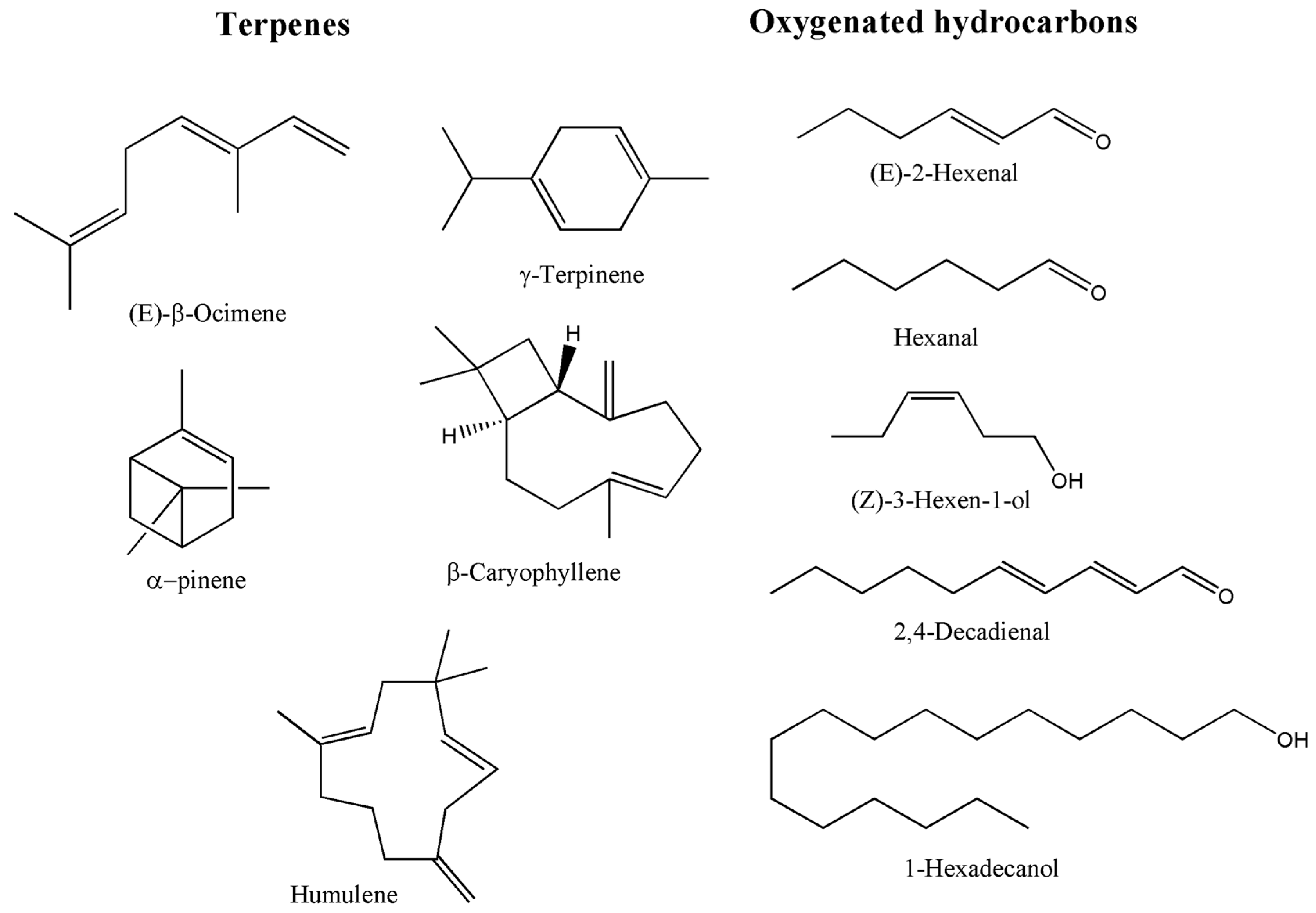
4.7. Terpenoids and Essential Oils
| Family | Fruit | Main Terpenoids | Main Essential Oils/ Key Components | Reference |
|---|---|---|---|---|
| Anacardiaceae | Schinus terebinthifolia | δ-3-carene, limonene, α-phellandrene, α-pinene, trans-caryophyllene | Monoterpenes (85.8%), Sesquiterpenes (5.3%) (% of total EO) | [154] |
| Annonaceae | Annona species | α-Pinene, β-Pinene, Limonene, 1,8-Cineole, Linalool, α-Terpineol, Geraniol, Nerol, Citronellol, β-Caryophyllene, α-Humulene, Germacrene D, δ-Cadinene, Spathulenol, Ledol, α-Cadinol, β-Selinene, Eudesmol, Lupeol, Ursolic acid, Oleanolic acid, Betulinic acid, Uvaol, Maslinic acid, Pomolic acid | Present in its EOs | [153] |
| Apiaceae | Levisticum officinale | Z-ligustilide, β-phellandrene, α-terpinyl acetate | Z-ligustilide (35.1%), β-phellandrene (34.4%), α-terpinyl acetate (4.2%) | [160] |
| Bromeliaceae | Greigia sphacelata | Euonyminol, Monic acid A, Dictamnoside N, Marrubiin, Quillaic acid | Present in its EOs | [161] |
| Burseraceae | Dacryodes edulis | Sabinene, terpinene-4-ol, α-pinene, p-cymene | Present in its EOs | [162] |
| Clusiaceae | Garcinia morella | Ursolic acid, Betulinic acid, Alloaromadendrene, Aromadendrene, Ascaridole, Caryophyllene oxide, Germacrene B, Globulol, Myrcene, Selina-3,7(11)-diene, Spathulenol, α-Copaene, α-Humulene, β-Caryophyllene, β-Copaene, β-Gurjunene, δ-Amorphene, δ-Elemene | Rich in terpenoids, including xanthonoids and triterpenoids | [152] |
| Fabaceae | Copaifera langsdorffii | Germacrene D, bicyclogermacrene, trans-caryophyllene, δ-elemene | Non-oxygenated sesquiterpenes | [163] |
| Moraceae | Brosimum gaudichaudii | Convallatoxin, Maragenin I acetate, Moruslanosteryl acetate | Present in hydroethanolic extracts | [164] |
| Ficus hispida | Lupeol acetate, β-Amyrin acetate, β-Amyrin, β-Sitosterol, Gluanol, Oleanolic acid, α-Amyrin, Ficustriol, Linalool, Linalool oxide, Terpineol, 2,6-Dimethyl-1,7-octadiene-3,6-diol | Included among various bioactive compounds | [151,152] | |
| Rutaceae | Zanthoxylum armatum | Linalool, cinnamate (E)methyl, limonene, myrcene, sabinene and terpinen-4-ol | High percentage of linalool (74.12%) | [150] |
4.8. Polysaccharides and Dietary Fibres
- Soluble Fibres: These include gums, mucilages, and pectins, which can be considered as prebiotics fermented by gut microbiota, aiding carbohydrate and lipid metabolism. Pectins are found in fruits like marula and Pouteria glomerata, and they are known for their gelling properties and health benefits, such as improving gut health and reducing cholesterol levels [166,170,171]. They augment dietary volume, facilitating regular bowel movements and averting constipation. Soluble fibres have hypocholesterolemic effects by binding to cholesterol molecules, thus impeding their absorption into the bloodstream [172,173,174]. This reduction in cholesterol intake subsequently diminishes the risk of cardiovascular diseases, including heart attacks and strokes [175]. Dietary fibres can also confer a heightened sense of fullness, curb appetite and aid in effective weight management. Such attributes are especially significant in addressing the global surge in obesity and its associated health concerns [176]. In addition to this, selected types of carbohydrates can also selectively stimulate the immunomodulating reaction, stimulating an increase or decrease in cytokines of importance for our immune responses [177].
- Insoluble Fibres: Comprising cellulose, hemicellulose, lignins, and other indigestible components. These fibres are pivotal in promoting digestive well-being [178,179] and contribute to aiding in digestive health by promoting bowel regularity [172,173,180] and preventing conditions like colonic diverticulosis, colon cancer and constipation [172,173,174].
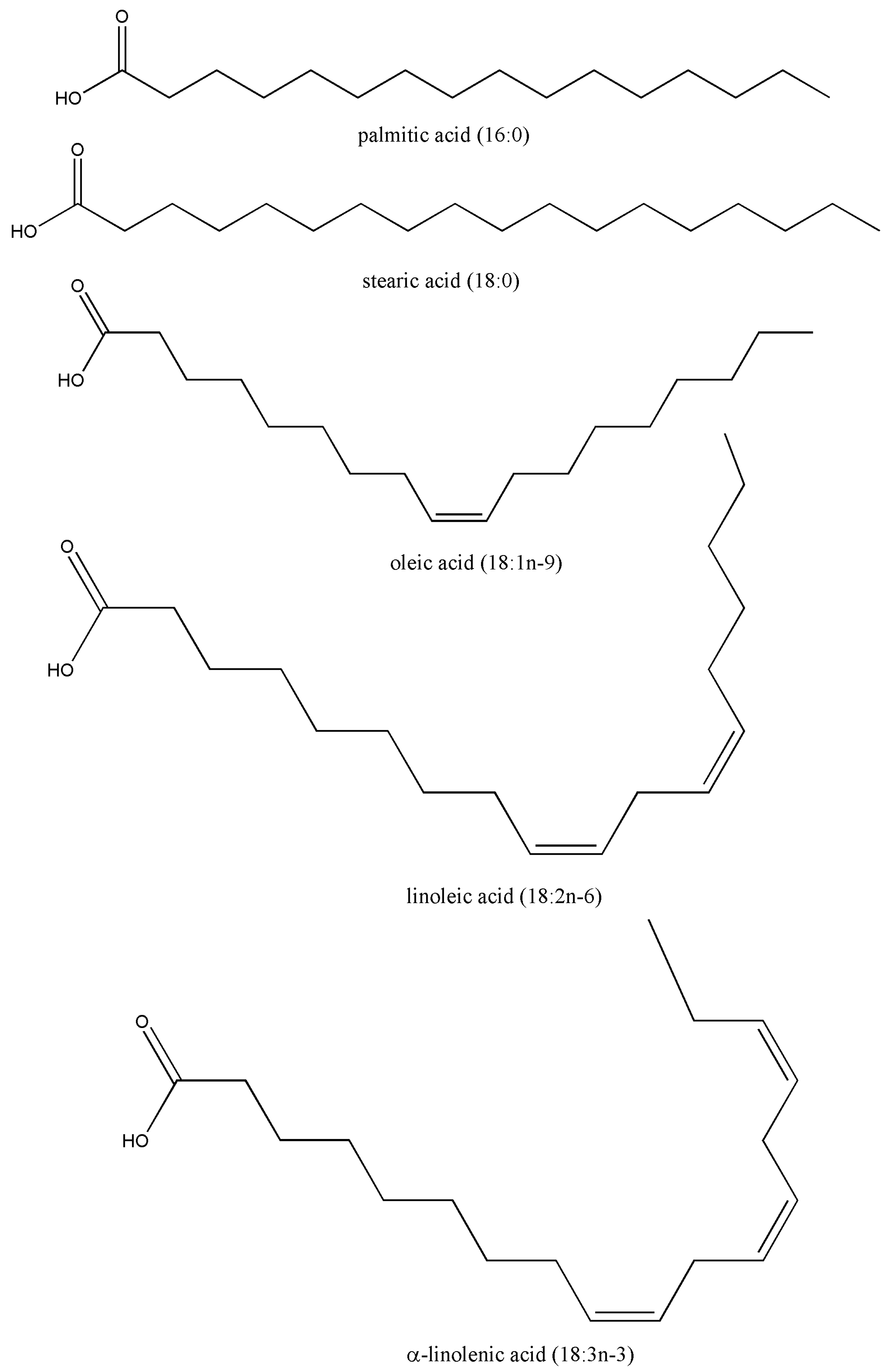
4.9. Fatty Acids
| Family | Wild Edible Fruit | Main FAs (FA% of Total FA Area) | Total Lipids/Fatty Acids (% fw) | Region | Reference |
|---|---|---|---|---|---|
| Apocynaceae | Landolphia kirkii | PA 59, SA 42 | - | Eastern and Southern Africa | [189] |
| Anacardiaceae | Sclerocarya birrea | PA 67, SA 9, OA 19 | - | Tropical Africa | [189] |
| Ebenaceae | Diospyros blancoi | PA 62, SA 25, OA 9 | - | Philippines | [189] |
| Elaeagnaceae | Hippophaë rhamnoides | POA 48, PA 29, OA 7, LA 11 | - | Europe to central Asia | [185] |
| Ericaceae | Arbutus unedo | PA 11, SA 4, OA 25, LA 24, ALA 31 | 1.4 | Mediterranean | [95] |
| Moraceae | Ficus drupacea | PA 46, SA 3, OA 7, LA 29, ALA 12 | 0.92 | South China to Tropical Asia and N. Queensland | [190] |
| Ficus exasperate | PA 7, SA 9, OA9, LA 54, ALA 2 | 4.28 | Tropical Africa | [191] | |
| Myrtaceae | Myrtus comunis | LaA 4 PA 16, OA 64, LA 13 | - | Mediterranean and Southwest Europe | [185] |
| Rhamnaceae | Ziziphus jujube | CaA 47, LaA 15, PA 6, LA 2 | 1.1 | China, feral in temperate worldwide areas | [186] |
| Rosaceae | Crataegus monogyna | PA 30, SA 4, OA 11, LA 11, ALA 16, LgA 13 | 1.2 | Europe and North Africa | [95] |
| Prunus spinose | PA 23, SA 14, OA 11, LA 14, ALA 11, ArA 13 | 2.0 | Europe, Western Asia, and Northwest Africa | [183] | |
| Rosa canina | PA 2, SA 14, OA 14, LA 40, ALA 26 | 0.7 | Northern Hemisphere | [192] | |
| Rosa species (Polish) | PA 2–4, SA 1–2, OA 14–20, LA 44–56, ALA 19–31 | 6–12 | Northern Hemisphere | [193] | |
| Rubus idaeaus | PA 5–9, OA 5–9, LA 42–53, ALA 18–24 | 0.5 | Europe and Northern Asia | [184] | |
| Rubus ulmifolius | PA 7, SA 3, OA 23, LA 48, ALA 13 | 1.4 | Western Europe | [95] |
4.10. Toxics and Antinutrients
5. Bioactivity of Wild Edible Fruits
5.1. Antioxidant Activity
5.2. Antimicrobial and Antifungal Effects
| Family | Species | Distribution | Antimicrobial Activity (Effectiveness & Targets) | Antifungal Activity (Effectiveness & Targets) | Reference |
|---|---|---|---|---|---|
| Adoxaceae | Sambucus nigra | Europe, extending to Western Asia and North Africa | High Activity: Active against respiratory tract pathogens.
| High Activity:
| [224,225] |
| Cactaceae | Opuntia ficus-indica | Native to Mexico; introduced in Central America, Southern USA, Africa, Asia and Southern Europe | High Activity: Cladodes (pads) show higher activity than fruit pulp, but fruit peel is active.
| Very High Activity: Strong inhibition of mycelial growth in crop pathogens.
| [226,227] |
| Clusiaceae | Garcinia gummi-gutta | Southern India | High Activity: Rind/fruit extracts mediated AgNPs (silver nanoparticles) show enhanced efficacy.
| High Activity: Potent anti-mucormycotic activity (fighting “Black Fungus”).
| [228,229] |
| Ericaceae | Arbutus unedo | Mediterranean area | Moderate Activity: Leaf extracts are significantly more potent than fruits.
| Moderate Activity:
| [230,231] |
| Vaccinium myrtillus | Northern Hemisphere | High Activity: Anthocyanin-rich extracts effectively target Gram-negative bacteria.
| Moderate Activity:
| [232,233] | |
| Glossuriaceae | Ribes aureum | Western U.S. | Moderate to High: Phenolic content correlates directly with inhibition of foodborne pathogens.
| High Activity:
| [234,235] |
| Lythraceae | Punica granatum | Mediterranean Europe, Africa, and Asia | Very High Activity: Peel extracts are among the most potent natural antimicrobials.
| High Activity:
| [236,237,238] |
| Malvaceae | Adansonia digitate | Central and Southern Africa | Considerable Activity: Methanolic pulp extracts are comparable to standard antibiotics for specific strains.
| Low/Specific Activity:
| [239,240,241] |
| Moraceae | Artocarpus lacucha | N. & E. India to S. Central China and Indo-China | Considerable Activity: Bark and fruit extracts inhibit enteric bacteria.
| Low Activity:
| [242] |
| Mytaceae | Syzygium cumini | Indian subcontinent, Southeast Asia, and parts of Australia | Very High Activity: Fruit juice and seed extracts are bactericidal.
| Moderate Activity:
| [243,244,245,246] |
| Rhamnaceae | Ziziphus jujuba | N. & E. China to S. Korea | High Activity: Polysaccharides and free phenolics in the fruit drive activity.
| Moderate Activity:
| [247,248] |
| Rosaceae | Cornus mas | Central to southern Europe and eastwards to Asia Minor | High Activity: Methanol fruit extracts are more effective than water extracts.
| Specific Activity:
| [249,250] |
| Crataegus monogyna | Europe and western Asia | Moderate Activity: Leaves generally show lower MICs (better activity) than fruits.
| High Activity:
| [251,252] | |
| Rosa canina | Europe, northwest Africa, and western Asia | High Activity: Fruit extracts (especially seeds) show strong inhibition against multidrug-resistant strains.
| High Activity: Significant inhibition zones against non-albicans Candida.
| [253,254] | |
| Rubus idaeus | Europe and northern Asia | High Activity: Aqueous fruit extracts significantly inhibit oral and biofilm-forming bacteria.
| High Activity: Effective against oral and opportunistic fungi.
| [255,256] | |
| Rubus ulmifolius | Western Europe | High Activity: Leaf extracts show superior activity to fruit; fruit is active against skin pathogens.
| High Activity:
| [257,258] |
5.3. Anti-Inflammatory and Analgesic Actions
5.3.1. Anti-Inflammatory Mechanisms
5.3.2. Antioxidant–Inflammation Crosstalk
5.3.3. Analgesic Effects and Pain Modulation
5.3.4. Integration of Phytochemicals and Nutrients
| Therapeutic Focus | Species (Family) | Bio-Pathway (Inflammation/Pain) | Key Compounds | Reference |
|---|---|---|---|---|
| Joint & Arthritis (Rheumatism, Swelling) | Aristotelia chilensis (Elaeocarpaceae) | Selective COX-2 inhibition (Gastric safe) | Delphinidins | [267] |
| Berberis vulgaris (Berberidaceae) | Downregulates IL-1β gene expression | Berberine | [268] | |
| Rubus idaeus | Blocks NF-κB nuclear translocation | Ellagic acid | [269] | |
| Opuntia ficus-indica (Cactaceae) | Inhibits PLA2 and COX-2 enzymes | Betalains | [270] | |
| Myrtus communis (Myrtaceae) | High-affinity COX-2 binding (Docking) | Myrtle essential oils | [271] | |
| Rosa canina (Rosaceae) | Relieves arthritis; inhibits pain sensation | Galactolipids | [253,272] | |
| Neuropathic & Central Pain (Nerve Damage, Migraine) | Solanum nigrum (Solanaceae) | Modulates opioid receptors (Central pain) | Solamargine | [273] |
| Morus nigra (Moraceae) | Desensitizes TRPA1/TRPV1 pain receptors | Kuwanon G, Rutin | [274] | |
| Respiratory & Immune (Infections, Asthma) | Sambucus nigra (Adoxaceae) | Modulates cytokine production (IL-6) | Cyanidin-3-glucoside | [275,276] |
| Hippophae rhamnoides (Elaeagnaceae) | p38 MAPK pathway inhibition | Isorhamnetin | [277] | |
| Lonicera caerulea (Caprifoliaceae) | Suppresses JAK/STAT/NF-κB axis | Iridoids | [278] | |
| Gut & Urinary Health (Colitis, UTI) | Vaccinium macrocarpon (Ericaceae) | Blocks TLR4-mediated signaling | Proanthocyanidins | [279] |
| Eugenia uniflora (Myrtaceae) | Stops neutrophil migration to injury | Sesquiterpenes | [280] | |
| Cornus mas (Cornaceae) | Reduces C-reactive protein levels | Loganic acid | [281] | |
| Skin & Systemic Health (Oedema, UV Damage) | Empetrum nigrum (Ericaceae) | Blocks UVB-induced ROS generation | Anthocyanins | [282] |
| Prunus spinosa (Rosaceae) | Inhibits Elastase and TNF-α secretion | Procyanidin B2 | [283,284] | |
| Physalis peruviana (Solanaceae) | Downregulates TPA-induced oedema | Withanolides | [285,286] | |
| Fragaria vesca (Rosaceae) | Scavenges NO; Inhibits proteasome | Agrimoniin | [287,288] |
5.4. Cytotoxic and Anticancer Potential
5.4.1. Antiproliferative Activity and Cell Line Sensitivity
5.4.2. Mechanisms of Anticancer Action
5.4.3. Comparative Potency and Extract Dependence
5.4.4. Limitations and Translational Challenges
5.4.5. Future Perspectives
5.5. Metabolic and Cardiovascular Benefits
| Benefits | Description | Reference |
|---|---|---|
| Antioxidant Activity | Wild fruits contain anthocyanins and flavonoids that scavenge free radicals, reducing oxidative stress. | [19,69,316] |
| Anti-inflammatory Effects | Bioactive compounds in wild fruits help reduce inflammation, which is crucial for preventing chronic diseases. | [19,69,316] |
| Cardiovascular Protection | Wild fruits help in protecting vascular endothelial function, regulating lipid metabolism, and modulating blood pressure. | [313,314,318] |
| Lipid Profile Improvement | Consumption of wild fruits can lower plasma lipid levels, reducing the risk of atherosclerosis. | [313,315,317] |
| Blood Pressure Regulation | Certain wild fruits, like kiwifruit, have been shown to lower blood pressure. | [313,314,318] |
| Platelet Function Inhibition | Wild fruits inhibit platelet aggregation, reducing the risk of thrombosis. | [313,317] |
| Anti-diabetic Effects | Phenolics in wild fruits improve metabolic health and help manage diabetes. | [316] |
| Anti-obesity Effects | Bioactive compounds in wild fruits help in weight management by reducing obesity-related markers. | [316] |
| Gastrointestinal Health | Dietary fibers in wild fruits aid in digestion and prevent gastrointestinal disorders. | [19] |
| Traditional Medicine Uses | Wild fruits are used in traditional medicine to treat various ailments, including cardiovascular diseases. | [19] |
5.6. Neuroprotective and Other Health-Promoting Properties
| Bioactive Compounds | Neuroprotective Properties | Sources | Reference |
|---|---|---|---|
| Polyphenols | Antioxidant, anti-inflammatory, and neurogenesis stimulation | Various wild fruits and berries | [19,45,312,319,320,321,322,323,325] |
| Flavonoids | Antioxidant, anti-inflammatory, neurogenesis stimulation, neurotransmitter regulation | Various wild fruits and berries | [19,45,69,312,319,321,323,324,325] |
| Anthocyanins | Antioxidant, anti-inflammatory, neuroplasticity enhancement | Berries, wild fruits | [19,69,312,321,323,324] |
| Tannins | Antioxidant, anti-inflammatory | Various wild fruits and berries | [45,312,321] |
| Caffeic Acid | Antioxidant, anti-inflammatory | Berries | [321,325] |
| Catechin | Antioxidant, anti-inflammatory | Berries | [321] |
| Quercetin | Antioxidant, anti-inflammatory, neuroplasticity enhancement | Berries | [321] |
| Kaempferol | Antioxidant, anti-inflammatory | Berries | [321] |
| Oleanolic Acid | Antioxidant, anti-inflammatory | Various wild fruits | [45] |
| 5-O-Caffeoylquinic Acid | Antioxidant, neuroprotection against oxidative stress | Corema album berries | [325] |
| Phenolic Acids | Antioxidant, anti-inflammatory, neurogenesis stimulation | Various wild fruits | [319,322] |
| Terpenoids | Antioxidant, anti-inflammatory | Various wild fruits | [319] |
| Vitamin C | Antioxidant, neuroprotection against oxidative stress | Wild orange, Indian coffee plum | [220] |
| Essential Oils | Antioxidant, anti-inflammatory | Various wild fruits | [45] |
5.7. Bioavailability, Metabolism, and Gut Microbiota Interactions
6. Nutritional and Functional Applications
6.1. Nutrient Density and Nutritional Value
6.2. Use in Functional Foods and Beverages
6.3. Development of Nutraceuticals and Supplements
7. Sustainability, Cultivation and Ethnobotany
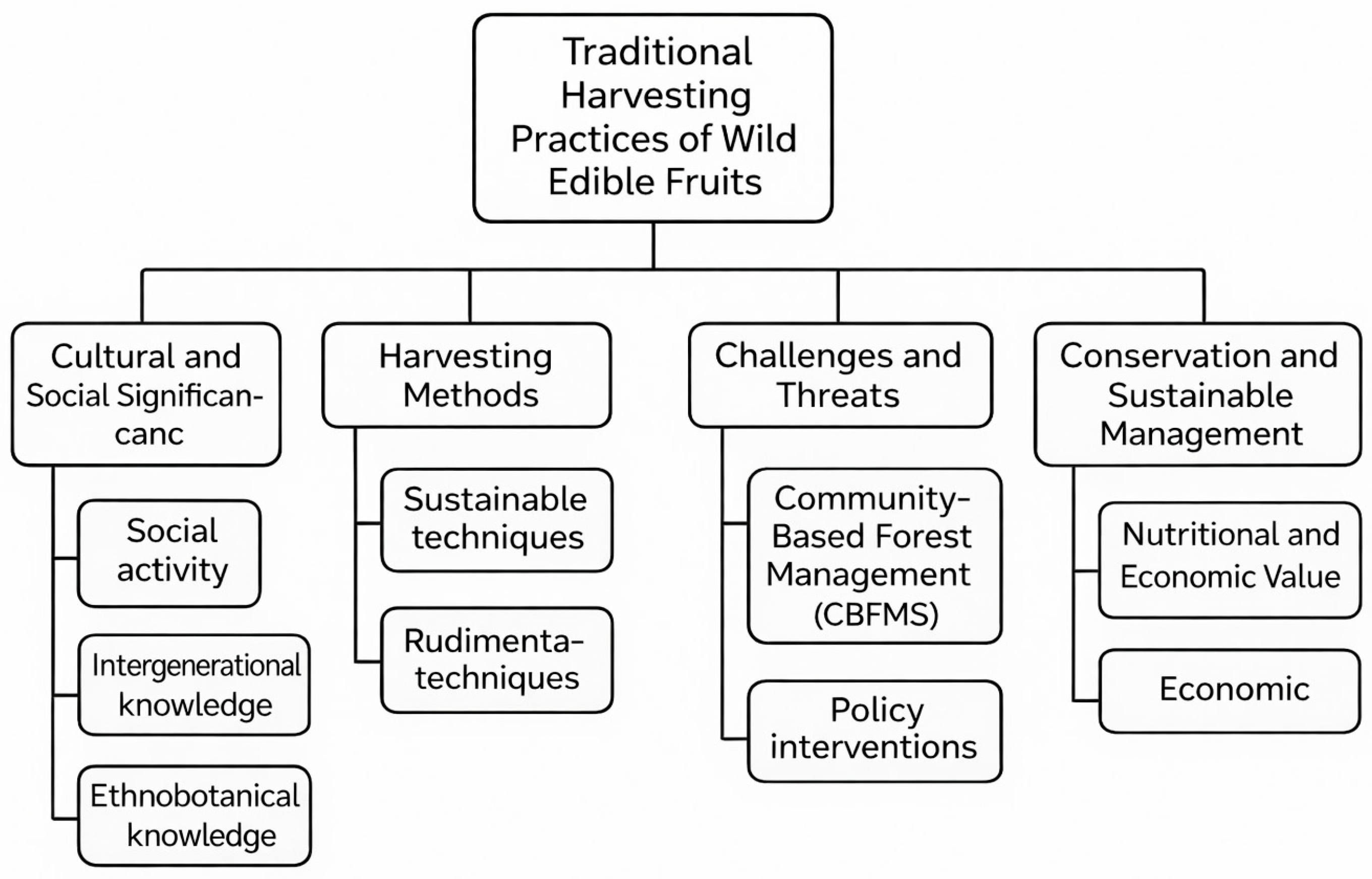
7.1. Traditional Harvesting Practices
7.2. Sustainable Management and Domestication
7.3. Socio-Economic and Livelihood Impacts
7.3.1. Socio-Economic and Cultural Value
7.3.2. Nutritional and Medicinal Contributions
7.3.3. Food Security and Sustainable Livelihoods
7.3.4. Environmental Pressures and the Need for Conservation
8. Challenges, Gaps and Future Directions
8.1. Standardisation of Analyses and Validation of Bioactivities
8.2. Bioprospecting, Intellectual Property, and Benefit Sharing
8.3. Technological Innovations and Sustainable Valorisation
8.4. Future Research on Wild Edible Fruits
9. Concluding Remarks
- Standardised Analytical Approaches: To overcome the variability driven by genetic and environmental factors and the lack of harmonised protocols.
- Clinical Validation: Transitioning from in vitro evidence to well-designed human clinical trials to establish efficacy, safe dosage ranges, and bioavailability.
- Technological Innovation: Integrating traditional knowledge with modern technologies, such as green extraction and nanoencapsulation, to enhance product stability and marketability.
Author Contributions
Funding
Institutional Review Board Statement
Informed Consent Statement
Data Availability Statement
Conflicts of Interest
Abbreviations
| AAS | Atomic absorption spectrometry |
| A549 | Human lung cancer cell line model |
| ABTS | 2,2′-azino-bis-(3-ethylbenzothiazoline-6-sulfonic acid) |
| ABTS•+ | ABTS radical cation |
| AgNPs | Silver nanoparticles |
| Akt | Protein Kinase B |
| ALA | Alpha-linolenic acid |
| AOAC | Association of Official Analytical Collaboration |
| AR | Androgen receptor |
| Bax | Bcl-2-associated X protein (Proapoptotic) |
| Bcl-2 | B-cell lymphoma (Antiapoptotic) |
| BGC-823 | Gastric carcinoma cell line model |
| CaA | Capric acid |
| CaCo-2 | Colorectal adenocarcinoma for cell line model |
| Caspase | Cysteine-aspartic protease |
| C-33A | Human uterine cancer cell line model |
| CBFMS | Community-based forest management |
| COX2 | Cycloooxygenase-2 |
| CSCs | Cancer Stem Cells |
| CVD | Cardiovascular diseases |
| DAD | Diode array detector |
| DPPH | 2,2-Diphenyl-1-picrylhydrazyl (stable free radical) |
| DU145 | Human prostate cancer cell line model |
| DW | Dry weight |
| EC50 | Half (50%) maximal effective concentration |
| EO | Essential oils |
| FRAP | Ferric reducing antioxidant power |
| FW | Fresh weight |
| G1 phase arrest | Pause in the cell cycle before the S phase, triggered by cell stress, DNA damage, or lack of growth factors |
| GAE | Gallic acid equivalent |
| GC | Gas chromatography |
| GI50 | Half (50%) maximal growth inhibitory concentration |
| H1299 | Non-small cell lung carcinoma cell line model |
| HCT-116 | Colorectal carcinoma cell line model |
| HeLa | Cervical cancer cell line model |
| HepG2 | Liver hepatocellular carcinoma cell line model |
| HL-60 | Promyelocytic leukemia cell line model |
| HPLC | High-performance liquid chromatography |
| HPTLC | High-performance thin-layer chromatography |
| HT-29 | Human colorectal adenocarcinoma cell line model |
| IC50 | Half (50%) maximal inhibitory concentration |
| ICP-MS | Inductively coupled plasma mass spectroscopy |
| ICP-OES | Inductively coupled plasma optical emission spectroscopy |
| IFN-γ | Interferon gamma |
| IL-1β | Interleukin-1 beta |
| IL-6 | Interleukin-6 |
| IL-12 | Interleukin-12 |
| JAK | Janus Kinase |
| LaA | Lauric acid |
| LA | Linoleic acid |
| LNCaP: | Prostate carcinoma (Lymph Node) cell line model |
| MCF-7 | Human breast cancer cell line model |
| MDA-MB-231 | Triple-negative breast cancer cell line model |
| MIC | Minimum inhibitory concentration |
| Mia PaCa-2 | Human pancreatic cancer cell line model |
| MMP | Matrix Metalloproteinase |
| mTOR | Mammalian Target of Rapamycin |
| NCI-H460 | Large cell lung carcinoma cell line model |
| NF-κB | Nuclear Factor kappa-light-chain-enhancer of activated B cells |
| OA | Oleic acid |
| OVCAR-3 | Ovarian carcinoma cell line model |
| PA | Palmitic acid |
| PANC-1 | Human pancreatic epithelioid carcinoma cell line model |
| PARP | Poly (ADP-ribose) polymerase |
| PC-3 | Prostate cancer cell line model |
| PGE2 | Prostaglandin E2 |
| PICO | Population; intervention; comparator; outcome |
| PI3K | Phosphoinositide 3-kinase |
| PLA2 | Phospholipase A2 |
| POA | Palmitoleic acid |
| PK | Mitogen-Activated Protein Kinase |
| ROO• | Peroxyl free organic radical |
| ROS | Reactive oxygen species |
| SA | Stearic acid |
| SKOV3 | Ovarian adenocarcinoma cell line model |
| SNA | Sambucus nigra Agglutinin (Lectin) |
| STAT | Signal Transducer and Activator of Transcription |
| STAT3 | Signal Transducer and Activator of Transcription 3 |
| T47D | Breast ductal epithelial tumor cell line model |
| TBARS | Thiobarbituric acid reactive substances |
| TEK | Traditional ecological knowledge |
| TLR4 | Toll-Like Receptor 4 |
| TNF-α | Tumor necrosis factor alpha |
| TPA | 12-O-tetradecanoylphorbol-13-acetate |
| TRP | Transient Receptor Potential |
| TRPA1 | Transient Receptor Potential Ankyrin 1 |
| TRPV1 | Transient Receptor Potential Vanilloid 1 |
| U-87 | Human glioblastoma cell line model |
| UVB | Ultraviolet B |
| VEGF | Vascular Endothelial Growth Factor |
| WEFs | Wild Edible Fruits |
References
- Jenipher, C.; Ayyanar, M. Nutritional Analysis on Wild Edible Fruits of Kolli Hills (Eastern Ghats of Tamil Nadu), India. In Pomotherapeutic Insights on Wild Edible Fruits; Springer: Singapore, 2025; pp. 1–17. [Google Scholar]
- Khanduri, P.; Rawat, S.; Rawat, D.S.; Kuriyal, S.K.; Dhingra, G.K. Wild edible fruit utilization patterns in Garhwal himalaya (Uttarakhand, India): A multi-decadal perspective. Genet. Resour. Crop Evol. 2025, 72, 7095–7113. [Google Scholar] [CrossRef]
- Abbasi, A.M.; Khan, M.A.; Khan, N.; Shah, M.H. Ethnobotanical survey of medicinally important wild edible fruits species used by tribal communities of Lesser Himalayas-Pakistan. J. Ethnopharmacol. 2013, 148, 528–536. [Google Scholar] [CrossRef]
- Mahapatra, A.K.; Mishra, S.; Basak, U.C.; Panda, P.C. Nutrient analysis of some selected wild edible fruits of deciduous forests of India: An explorative study towards non conventional bio-nutrition. Adv. J. Food Sci. Technol. 2012, 4, 15–21. [Google Scholar]
- Tharmabalan, R.T. Nutritional analysis of five wild edible vegetables traditionally consumed by the Orang Asli in perak. Int. J. Food Sci. 2021, 2021, 8823565. [Google Scholar] [CrossRef]
- Ngurthankhumi, R.; Hazarika, T.K.; Lalruatsangi, E.; Lalnunsangi, T.; Lalhmangaihzuali, H.P. Bioactive constituents and health promoting compounds of few wild edible fruits of North-East India. Int. J. Food Prop. 2024, 27, 927–950. [Google Scholar] [CrossRef]
- Maikhuri, R.K.; Parshwan, D.S.; Kewlani, P.; Negi, V.S.; Rawat, S.; Rawat, L.S. Nutritional composition of seed kernel and oil of wild edible plant species from Western Himalaya, India. Int. J. Fruit Sci. 2021, 21, 609–618. [Google Scholar] [CrossRef]
- Sharma, A.; Wagh, V.V. From forests to tables: Wild edible plants’ contribution to ethnomedicine and nutrition in northeastern Madhya Pradesh, India. Genet. Resour. Crop Evol. 2025, 72, 4205–4239. [Google Scholar] [CrossRef]
- Washa, W.B. Nutritional potential of some wild edible fruits of Shinyanga region, Tanzania. Aust. J. Crop Sci. 2025, 19, 25–28. [Google Scholar] [CrossRef]
- Avakoudjo, H.G.G.; Hounkpèvi, A.; Idohou, R.; Koné, M.W.; Assogbadjo, A.E. Local knowledge, uses, and factors determining the use of Strychnos spinosa organs in Benin (West Africa). Econ. Bot. 2020, 74, 15–31. [Google Scholar] [CrossRef]
- Chandra, R.; Uniyal, V.P. An ethnobotanical study of wild medicinal plants among the mountain community of Western Himalayas: A case study of Govind wildlife sanctuary and national park. Med. Plants-Int. J. Phytomed. Relat. Ind. 2021, 13, 251–265. [Google Scholar] [CrossRef]
- Mgalula, M.E. An ethnobotanical study of wild edible fruits in miombo woodlands of Tabora region in Western Tanzania. J. Ethnobiol. Ethnomed. 2024, 20, 23. [Google Scholar] [CrossRef] [PubMed]
- Chakravarty, S.; Bhutia, K.D.; Suresh, C.P.; Shukla, G.; Pala, N.A. A review on diversity, conservation and nutrition of wild edible fruits. J. Appl. Nat. Sci. 2016, 8, 2346–2353. [Google Scholar] [CrossRef]
- Ercıslı, S.; Sagbas, H.I. Wild edible fruits: A rich source of biodiversity. ANADOLU Ege Tarımsal Araştırma Enstitüsü Derg. 2017, 27, 116–122. [Google Scholar]
- Sardeshpande, M.; Shackleton, C. Wild edible fruits: A systematic review of an under-researched multifunctional NTFP (non-timber forest product). Forests 2019, 10, 467. [Google Scholar] [CrossRef]
- González-Zamorano, L.; Cámara, R.M.; Morales, P.; Cámara, M. Harnessing edible wild fruits: Sustainability and health aspects. Nutrients 2025, 17, 412. [Google Scholar] [CrossRef]
- Rumicha, T.D.; Belew, S.; Hasen, G.; Teka, T.A.; Forsido, S.F. Food, feed, and phytochemical uses of wild edible plants: A systematic review. Food Sci. Nutr. 2025, 13, e70454. [Google Scholar] [CrossRef]
- Dhrangadhariya, A.; Müller, H. Not so weak PICO: Leveraging weak supervision for participants, interventions, and outcomes recognition for systematic review automation. JAMIA Open 2023, 6, ooac107. [Google Scholar] [CrossRef]
- Pachuau, L.; Dutta, R.S. Wild edible fruits of Northeast India: Medicinal values and traditional practices. In Herbal Medicine in India: Indigenous Knowledge, Practice, Innovation and Its Value; Springer: Singapore, 2019; pp. 437–450. [Google Scholar]
- Hazarika, T.K.; Tayeng, B.; Ngurthankhumi, R.; Lalruatsangi, E.; Upadhyaya, K.; Lyngdoh, N. Unlocking wild edible fruits of Indo-Burma biodiversity hot spot, Arunachal pradesh, india, to support food security and sustainable rural livelihood. Sustainability 2022, 14, 16088. [Google Scholar] [CrossRef]
- Maroyi, A.; Cheikhyoussef, A. Traditional knowledge of wild edible fruits in southern Africa: A comparative use patterns in Namibia and Zimbabwe. Indian J. Tradit. Knowl. 2017, 16, 385–392. [Google Scholar]
- Suwardi, A.B.; Baihaqi, B.; Harmawan, T. Diversity, utilization, and sustainable management of wild edible fruit plants in agroforestry systems: A case study in Central Kalimantan, Indonesia. Agrofor. Syst. 2025, 99, 64. [Google Scholar] [CrossRef]
- Suwardi, A.B.; Navia, Z.I.; Harmawan, T.; Seprianto, S.; Syamsuardi, S.; Mukhtar, E. Diversity of wild edible fruit plant species and their threatened status in the Aceh Province, Indonesia. Biodivers. J. Biol. Divers. 2022, 23, 1310–1318. [Google Scholar] [CrossRef]
- Krishna, H.; Attri, B.L.; Kumar, A.; Ahmed, N. Changes in phenolic contents and antioxidant capacity of bayberry (Myrica esculenta Buch. Ham. ex D. Don) and yellow Himalayan raspberry (Rubus ellipticus Smith) based health beverages. Indian J. Tradit. Knowl. 2016, 15, 417–423. [Google Scholar]
- Rawat, S.; Acharya, P.; Bhutia, P.O.; Pandey, A.; Kumar, D.; Joshi, R.; Bhatt, I.D. Changes in nutritional, physicochemical, phytochemical composition and antioxidant potential of Mahonia nepalensis fruits during ripening. Int. J. Food Prop. 2023, 26, 1062–1078. [Google Scholar] [CrossRef]
- Sereno, A.B.; Bampi, M.; dos Santos, I.E.; Ferreira, S.M.R.; Bertin, R.L.; Krüger, C.C.H. Mineral profile, carotenoids and composition of cocona (Solanum sessiliflorum Dunal), a wild Brazilian fruit. J. Food Compos. Anal. 2018, 72, 32–38. [Google Scholar] [CrossRef]
- Lubisi, N.P.; Matlala, M.E.; Ramarumo, L.J.; Ndhlovu, P.T. Ethnobotanical and Nutritional Evaluation of Understudied Wild Edible Fruits in South Africa: Bridging Indigenous Knowledge and Food Security: A Review. Foods 2025, 14, 1726. [Google Scholar] [CrossRef] [PubMed]
- Dwivedi, S.K.; Ballabh, B.; Singh, R.; Joshi, S.K.; Bora, A. Studies on survey, diversity, evaluation and traditional use of wild edibles of Himalayas. In XXX International Horticultural Congress IHC2018: V International Symposium on Plant Genetic Resources and International Symposium on Applied Functional Molecular Biology; ISHS: Leuven, Belgium, 2018; pp. 43–50. [Google Scholar]
- Lei, J.; Liang, Z.; Zhang, H.; Li, Y.; Xue, B. Advances in exploitation and utilization of wild fruit resources of Annonaceae in China. J. Fruit Sci. 2022, 39, 121–130. [Google Scholar]
- Pathak, R.; Pant, V.; Negi, V.S.; Bhatt, I.D.; Belwal, T. Introduction to Himalayan region and wild edible diversity. In Himalayan Fruits and Berries; Elsevier: Amsterdam, The Netherlands, 2023; pp. 1–12. [Google Scholar]
- Dejene, T.; Agamy, M.S.; Agúndez, D.; Martin-Pinto, P. Ethnobotanical survey of wild edible fruit tree species in lowland areas of Ethiopia. Forests 2020, 11, 177. [Google Scholar] [CrossRef]
- Kidane, L.; Kejela, A. Food security and environment conservation through sustainable use of wild and semi-wild edible plants: A case study in Berek Natural Forest, Oromia special zone, Ethiopia. Agric. Food Secur. 2021, 10, 29. [Google Scholar] [CrossRef]
- Alemneh, D. Ethnobotany of wild edible plants in Yilmana Densa and Quarit Districts of West Gojjam zone, Amhara region, Ethiopia. Ethnobot. Res. Appl. 2020, 20, 1–14. [Google Scholar] [CrossRef]
- Guzo, S.; Lulekal, E.; Nemomissa, S. Ethnobotanical study of underutilized wild edible plants and threats to their long-term existence in Midakegn District, West Shewa Zone, Central Ethiopia. J. Ethnobiol. Ethnomed. 2023, 19, 30. [Google Scholar] [CrossRef]
- Fassil, A.; Mazengia, E.; Gebreamanuel, B.; Dessie, Y.; Kumera, B.; Atnkut, B.; Mullualem, D.; Tsega, A.; Van Damme, P. Harvesting nature’s bounty: Exploring the ethnobotanical landscape of wild edible plants in the Awi Agäw community, Northwestern Ethiopia. J. Ethnobiol. Ethnomed. 2024, 20, 59. [Google Scholar] [CrossRef]
- Masresha, G.; Melkamu, Y.; Walle, G.C. Ethnobotanical study on wild edible plants in Metema district, Amhara regional state, Ethiopia. Int. J. For. Res. 2023, 2023, 9243343. [Google Scholar] [CrossRef]
- Suwardi, A.B.; Navia, Z.I. Sustainable use and management of wild edible fruit plants: A case study in the Ulu Masen protected forest, West Aceh, Indonesia. J. Sustain. For. 2023, 42, 811–830. [Google Scholar] [CrossRef]
- Joshi, P.; Prakash, P.; Purohit, V.K. Assessing anthropogenic pressure and threats on Paeonia emodi Wall. ex Royle habitats in Garhwal Himalaya. J. Mt. Sci. 2023, 20, 810–820. [Google Scholar] [CrossRef]
- Uprety, Y.; Poudel, R.C.; Shrestha, K.K.; Rajbhandary, S.; Tiwari, N.N.; Shrestha, U.B.; Asselin, H. Diversity of use and local knowledge of wild edible plant resources in Nepal. J. Ethnobiol. Ethnomed. 2012, 8, 16. [Google Scholar] [CrossRef] [PubMed]
- Ballard, C.R.; Junior, M.R.M. Health benefits of flavonoids. In Bioactive Compounds; Elsevier: Amsterdam, The Netherlands, 2019; pp. 185–201. [Google Scholar]
- Natalello, A.; Hervás, G.; Toral, P.G.; Luciano, G.; Valenti, B.; Mendoza, A.G.; Pauselli, M.; Priolo, A.; Frutos, P. Bioactive compounds from pomegranate by-products increase the in vitro ruminal accumulation of potentially health promoting fatty acids. Anim. Feed. Sci. Technol. 2020, 259, 114355. [Google Scholar] [CrossRef]
- Bhatt, I.D.; Rawat, S.; Badhani, A.; Rawal, R.S. Nutraceutical potential of selected wild edible fruits of the Indian Himalayan region. Food Chem. 2017, 215, 84–91. [Google Scholar] [CrossRef]
- Cosmulescu, S.; Trandafir, I.; Nour, V. Phenolic acids and flavonoids profiles of extracts from edible wild fruits and their antioxidant properties. Int. J. Food Prop. 2017, 20, 3124–3134. [Google Scholar] [CrossRef]
- Saini, R.; Dangwal, K.; Singh, H.; Garg, V. Antioxidant and antiproliferative activities of phenolics isolated from fruits of Himalayan yellow raspberry (Rubus ellipticus). J. Food Sci. Technol. 2014, 51, 3369–3375. [Google Scholar] [CrossRef]
- Pratap, G.K.; Shantaram, M.; Raghavendra, H.L.; Kumar, S.; Harshini, V.K.; Poornima, D.V. A comprehensive analysis of wild edible fruits from the Rangayyanadurga four-horned antelope wildlife sanctuary. Biomedicine 2023, 43, 545–553. [Google Scholar] [CrossRef]
- Devi, A. Estimation of phytochemical constituents and antioxidant potential of underutilized ethnobotanically important wild edible fruits of Manipur. Indian J. Tradit. Knowl. (IJTK) 2024, 23, 478–488. [Google Scholar]
- Riccioni, G.; Gammone, M.A.; Tettamanti, G.; Bergante, S.; Pluchinotta, F.R.; D’Orazio, N. Resveratrol and anti-atherogenic effects. Int. J. Food Sci. Nutr. 2015, 66, 603–610. [Google Scholar] [CrossRef]
- Skrovankova, S.; Sumczynski, D.; Mlcek, J.; Jurikova, T.; Sochor, J. Bioactive compounds and antioxidant activity in different types of berries. Int. J. Mol. Sci. 2015, 16, 24673–24706. [Google Scholar] [CrossRef]
- Williams, G.; Stothart, C.I.; Hahn, D.; Stephens, J.H.; Craig, J.C.; Hodson, E.M. Cranberries for preventing urinary tract infections. Cochrane Database Syst. Rev. 2023, 4, CD001321. [Google Scholar]
- Fernandes, J.C.B. Methods of analysis for phenolic compounds. In Phenolic Compounds: Structure, Uses and Health Benefits; Oliver, P., Villem, A., Eds.; Nova Science Publishers: Hauppauge, NY, USA, 2017; pp. 67–92. [Google Scholar]
- Bahukhandi, A.; Barola, A.; Sekar, K.C. Antioxidant activity and polyphenolics of Fragaria nubicola: A wild edible fruit species of Himalaya. Proc. Natl. Acad. Sci. India Sect. B Biol. Sci. 2020, 90, 761–767. [Google Scholar] [CrossRef]
- Rimpapa, Z.; Toromanovic, J.; Tahirovic, I.; Šapčanin, A.; Sofic, E. Total content of phenols and anthocyanins in edible fruits from Bosnia. Bosn. J. Basic Med. Sci. 2007, 7, 119. [Google Scholar] [CrossRef]
- Abbasi, A.M.; Shah, M.H. Assessment of phenolic contents, essential/toxic metals and antioxidant capacity of fruits of Viburnum foetens decne. Biointerface Res. Appl. Chem. 2018, 8, 3178–3186. [Google Scholar]
- Borges, G.D.S.C.; Vieira, F.G.K.; Copetti, C.; Gonzaga, L.V.; Zambiazi, R.C.; Mancini Filho, J.; Fett, R. Chemical characterization, bioactive compounds, and antioxidant capacity of jussara (Euterpe edulis) fruit from the Atlantic Forest in southern Brazil. Food Res. Int. 2011, 44, 2128–2133. [Google Scholar] [CrossRef]
- Belwal, T.; Pandey, A.; Bhatt, I.D.; Rawal, R.S.; Luo, Z. Trends of polyphenolics and anthocyanins accumulation along ripening stages of wild edible fruits of Indian Himalayan region. Sci. Rep. 2019, 9, 5894. [Google Scholar] [CrossRef] [PubMed]
- Doğu, S.; Uslu, N.; Özcan, M.M.; Banjanin, T. Phenolic compounds of some wild edible fruits growing in Turkey. Erwerbs-Obstbau 2021, 63, 81–84. [Google Scholar] [CrossRef]
- Kubola, J.; Siriamornpun, S.; Meeso, N. Phytochemicals, vitamin C and sugar content of Thai wild fruits. Food Chem. 2011, 126, 972–981. [Google Scholar] [CrossRef]
- Bayram, H.M.; Ozkan, K.; Ozturkcan, A.; Sagdic, O.; Gunes, E.; Karadag, A. Effect of drying methods on free and bound phenolic compounds, antioxidant capacities, and bioaccessibility of Cornelian cherry. Eur. Food Res. Technol. 2024, 250, 2461–2478. [Google Scholar] [CrossRef]
- Ruiz-Rodríguez, B.M.; Sánchez-Moreno, C.; De Ancos, B.; de Cortes Sánchez-Mata, M.; Fernández-Ruiz, V.; Cámara, M.; Tardío, J. Wild Arbutus unedo L. and Rubus ulmifolius Schott fruits are underutilized sources of valuable bioactive compounds with antioxidant capacity. Fruits 2014, 69, 435–448. [Google Scholar] [CrossRef]
- Sangsopha, J.; Moongngarm, A.; Pornchaiyaphum, S.; Bandorn, A.; Khaejonlarp, R.; Pluemjia, B. Chemical compositions, phytochemicals, and biological activity of dried edible wild fruits. Pak. J. Agric. Sci. 2023, 60, 299–306. [Google Scholar] [CrossRef]
- Alkaltham, M.S.; Salamatullah, A.M.; Özcan, M.M.; Uslu, N.; Hayat, K.; Mohamed Ahmed, I.A. Influence of different drying methods on antioxidant activity, total phenol, and phenolic compounds of myrtle (Myrtus communis L.) fruits. J. Food Process. Preserv. 2021, 45, e15308. [Google Scholar] [CrossRef]
- Ndhlala, A.R.; Muchuweti, M.; Mupure, C.; Chitindingu, K.; Murenje, T.; Kasiyamhuru, A.; Benhura, M.A. Phenolic content and profiles of selected wild fruits of Zimbabwe: Ximenia caffra, Artobotrys brachypetalus and Syzygium cordatum. Int. J. Food Sci. Technol. 2008, 43, 1333–1337. [Google Scholar] [CrossRef]
- Judprasong, K.; Charoenkiatkul, S.; Thiyajai, P.; Sukprasansap, M. Nutrients and bioactive compounds of Thai indigenous fruits. Food Chem. 2013, 140, 507–512. [Google Scholar] [CrossRef]
- Marmouzi, I.; Kharbach, M.; El Jemli, M.; Bouyahya, A.; Cherrah, Y.; Bouklouze, A.; Vander Heyden, Y.; Faouzi, M.E.A. Antidiabetic, dermatoprotective, antioxidant and chemical functionalities in Zizyphus lotus leaves and fruits. Ind. Crops Prod. 2019, 132, 134–139. [Google Scholar] [CrossRef]
- Nabavi, S.F.; Habtemariam, S.; Ahmed, T.; Sureda, A.; Daglia, M.; Sobarzo-Sánchez, E.; Nabavi, S.M. Polyphenolic composition of Crataegus monogyna Jacq.: From chemistry to medical applications. Nutrients 2015, 7, 7708–7728. [Google Scholar] [CrossRef]
- Dekić, V.; Ristić, N.; Dekić, B.; Ristić, M. Phenolic and flavonoid content and antioxidant evaluation of hawthorn (Crataegus monogyna Jacq.) fruits and leaves extracts. Bull. Nat. Sci. Res. 2020, 10, 20–25. [Google Scholar] [CrossRef]
- Mikulic-Petkovsek, M.; Stampar, F.; Veberic, R.; Sircelj, H. Wild Prunus fruit species as a rich source of bioactive compounds. J. Food Sci. 2016, 81, C1928–C1937. [Google Scholar] [CrossRef]
- Polumackanycz, M.; Kaszuba, M.; Konopacka, A.; Marzec-Wróblewska, U.; Wesolowski, M.; Waleron, K.; Buciński, A.; Viapiana, A. Phenolic composition and biological properties of wild and commercial dog rose fruits and leaves. Molecules 2020, 25, 5272. [Google Scholar] [CrossRef] [PubMed]
- Li, Y.; Zhang, J.; Xu, D.; Zhou, T.; Zhou, Y.; Li, S.; Li, H. Bioactivities and health benefits of wild fruits. Int. J. Mol. Sci. 2016, 17, 1258. [Google Scholar] [CrossRef]
- Eggersdorfer, M.; Wyss, A. Carotenoids in human nutrition and health. Arch. Biochem. Biophys. 2018, 652, 18–26. [Google Scholar] [CrossRef]
- Esquivel, P.; Schweiggert, R.M.; Chacón-Ordóñez, T.; Steingass, C.B.; Carle, R.; Jiménez, V.M. Carotenoid assembly in fruits and vegetables. In Carotenoid Esters in Foods: Physical, Chemical and Biological Properties; Royal Society of Chemistry: London, UK, 2019. [Google Scholar]
- Tufail, T.; Fatima, S.; Bader Ul Ain, H.; Ikram, A.; Noreen, S.; Rebezov, M.; Al-Farga, A.; Saleh, R.; Shariati, M.A. Role of phytonutrients in the prevention and treatment of chronic diseases: A concrete review. ACS Omega 2025, 10, 12724–12755. [Google Scholar] [CrossRef]
- Oso, O.O.; Abiodun, P.O.; Omotade, O.O.; Oyewole, D. Vitamin A status and nutritional intake of carotenoids of preschool children in Ijaye Orile community in Nigeria. J. Trop. Pediatr. 2003, 49, 42–47. [Google Scholar] [CrossRef]
- Dolchinkova, T. Analysis of Carotenoids in Sweet Potatoes Using HPLC to Help Combat Vitamin A Deficiency. In Environment. Technology. Resources. Proceedings of the International Scientific and Practical Conference; RTU Press: Riga, Latvia, 2024; pp. 142–148. [Google Scholar]
- Murillo, E.; Watts, M.; Reyna, G.; Giuffrida, D.; Durant-Archibold, A.A. Carotenoid composition of Cionosicyos macranthus fruit. Nat. Prod. Commun. 2019, 14, 1934578X19862649. [Google Scholar] [CrossRef]
- Razungles, A.; Oszmianski, J.; Sapis, J. Determination of carotenoids in fruits of Rosa sp. (Rosa canina and Rosa rugosa) and of chokeberry (Aronia melanocarpa). J. Food Sci. 1989, 54, 774–775. [Google Scholar] [CrossRef]
- Cristea, E.; Ghendov-Mosanu, A.; Pintea, A.; Sturza, R.; Patras, A. Color stability and antioxidant capacity of Crataegus monogyna Jacq. berry extract influenced by different conditions. Horticulturae 2024, 10, 1184. [Google Scholar] [CrossRef]
- Khalil, A.; Tazeddinova, D.; Aljoumaa, K.; Kazhmukhanbetkyzy, Z.A.; Orazov, A.; Toshev, A.D. Carotenoids: Therapeutic strategy in the battle against viral emerging diseases, COVID-19: An overview. Prev. Nutr. Food Sci. 2021, 26, 241–261. [Google Scholar] [CrossRef]
- Sharma, C.; Kamle, M.; Kumar, P. Microbial-derived carotenoids and their health benefits. Microbiol. Res. 2024, 15, 1670–1689. [Google Scholar] [CrossRef]
- Wang, Y.; Yang, F.; Liu, T.; Zhao, C.; Gu, F.; Du, H.; Wang, F.; Zheng, J.; Xiao, H. Carotenoid fates in plant foods: Chemical changes from farm to table and nutrition. Crit. Rev. Food Sci. Nutr. 2024, 64, 1237–1255. [Google Scholar] [CrossRef]
- Longvah, T.; Anantan, I.; Bhaskarachary, K.; Venkaiah, K.; Longvah, T. Indian Food Composition Tables; National Institute of Nutrition, Indian Council of Medical Research Hyderabad: Secunderabad, India, 2017. [Google Scholar]
- Koubala, B.B.; Bayang, J.P.; Wangso, H.; Kolla, M.C.; Laya, A. Variation of Phenolics (Bound and Free), Minerals, and Antioxidant Activity of Twenty-Eight Wild Edible Fruits of Twenty-Three Species from Far North Region of Cameroon. BioMed Res. Int. 2021, 2021, 4154381. [Google Scholar] [CrossRef]
- Delgado-Pelayo, R.; Gallardo-Guerrero, L.; Hornero-Méndez, D. Carotenoid composition of strawberry tree (Arbutus unedo L.) fruits. Food Chem. 2016, 199, 165–175. [Google Scholar] [CrossRef]
- Guo, X.; Yang, L.; Hu, H.; Yang, L. Cloning and expression analysis of carotenogenic genes during ripening of autumn olive fruit (Elaeagnus umbellata). J. Agric. Food Chem. 2009, 57, 5334–5339. [Google Scholar] [CrossRef] [PubMed]
- Pop, R.M.; Weesepoel, Y.; Socaciu, C.; Pintea, A.; Vincken, J.; Gruppen, H. Carotenoid composition of berries and leaves from six Romanian sea buckthorn (Hippophae rhamnoides L.) varieties. Food Chem. 2014, 147, 1–9. [Google Scholar] [CrossRef] [PubMed]
- Garzón, G.A.; Narváez-Cuenca, C.; Kopec, R.E.; Barry, A.M.; Riedl, K.M.; Schwartz, S.J. Determination of carotenoids, total phenolic content, and antioxidant activity of Arazá (Eugenia stipitata McVaugh), an Amazonian fruit. J. Agric. Food Chem. 2012, 60, 4709–4717. [Google Scholar] [CrossRef]
- Denardin, C.C.; Hirsch, G.E.; da Rocha, R.F.; Vizzotto, M.; Henriques, A.T.; Moreira, J.C.; Guma, F.T.; Emanuelli, T. Antioxidant capacity and bioactive compounds of four Brazilian native fruits. J. Food Drug Anal. 2015, 23, 387–398. [Google Scholar] [CrossRef] [PubMed]
- Yang, R.; Yang, Y.; Hu, Y.; Yin, L.; Qu, P.; Wang, P.; Mu, X.; Zhang, S.; Xie, P.; Cheng, C.; et al. Comparison of bioactive compounds and antioxidant activities in differentially pigmented Cerasus humilis fruits. Molecules 2023, 28, 6272. [Google Scholar] [CrossRef]
- Popoviciu, D.R.; Negreanu-Pirjol, B.S. Rosaceae fruits as a valuable source of carotenoids: A review. In What to Know About Carotenoids; Albert, R.M., Ed.; Nova Science Publishers: Hauppauge, NY, USA, 2021. [Google Scholar]
- Yahia, E.M.; Gutiérrez-Orozco, F.; Arvizu-de Leon, C. Phytochemical and antioxidant characterization of mamey (Pouteria sapota Jacq. HE Moore & Stearn) fruit. Food Res. Int. 2011, 44, 2175–2181. [Google Scholar] [CrossRef]
- Liu, Z.; Liu, B.; Wen, H.; Tao, Y.; Shao, Y. Phytochemical profiles, nutritional constituents and antioxidant activity of black wolfberry (Lycium ruthenicum Murr.). Ind. Crops Prod. 2020, 154, 112692. [Google Scholar] [CrossRef]
- Galli, F.; Azzi, A.; Birringer, M.; Cook-Mills, J.M.; Eggersdorfer, M.; Frank, J.; Cruciani, G.; Lorkowski, S.; Özer, N.K. Vitamin E: Emerging aspects and new directions. Free Radic. Biol. Med. 2017, 102, 16–36. [Google Scholar] [CrossRef]
- Miyazawa, T.; Burdeos, G.C.; Itaya, M.; Nakagawa, K.; Miyazawa, T. Vitamin E: Regulatory redox interactions. IUBMB Life 2019, 71, 430–441. [Google Scholar] [CrossRef]
- Traber, M.G.; Stevens, J.F. Vitamins C and E: Beneficial effects from a mechanistic perspective. Free Radic. Biol. Med. 2011, 51, 1000–1013. [Google Scholar] [CrossRef]
- Morales, P.; Ferreira, I.C.; Carvalho, A.M.; Fernández-Ruiz, V.; Sánchez-Mata, M.C.; Cámara, M.; Morales, R.; Tardío, J. Wild edible fruits as a potential source of phytochemicals with capacity to inhibit lipid peroxidation. Eur. J. Lipid Sci. Technol. 2013, 115, 176–185. [Google Scholar] [CrossRef]
- Barros, L.; Carvalho, A.M.; Morais, J.S.; Ferreira, I.C. Strawberry-tree, blackthorn and rose fruits: Detailed characterisation in nutrients and phytochemicals with antioxidant properties. Food Chem. 2010, 120, 247–254. [Google Scholar] [CrossRef]
- Ching, L.S.; Mohamed, S. Alpha-tocopherol content in 62 edible tropical plants. J. Agric. Food Chem. 2001, 49, 3101–3105. [Google Scholar] [CrossRef] [PubMed]
- Konczak, I.; Roulle, P. Nutritional properties of commercially grown native Australian fruits: Lipophilic antioxidants and minerals. Food Res. Int. 2011, 44, 2339–2344. [Google Scholar] [CrossRef]
- Piironen, V.; Syvaoja, E.L.; Varo, P.; Salminen, K.; Koivistoinen, P. Tocopherols and tocotrienols in Finnish foods: Vegetables, fruits, and berries. J. Agric. Food Chem. 1986, 34, 742–746. [Google Scholar] [CrossRef]
- Kallio, H.; Yang, B.; Peippo, P. Effects of different origins and harvesting time on vitamin C, tocopherols, and tocotrienols in sea buckthorn (Hippophaë rhamnoides) berries. J. Agric. Food Chem. 2002, 50, 6136–6142. [Google Scholar] [CrossRef]
- Guimarães, R.; Barros, L.; Carvalho, A.M.; Ferreira, I.C. Studies on chemical constituents and bioactivity of Rosa micrantha: An alternative antioxidants source for food, pharmaceutical, or cosmetic applications. J. Agric. Food Chem. 2010, 58, 6277–6284. [Google Scholar] [CrossRef]
- Adepoju, O. Nutrient composition and micronutrient potential of three wildly grown varieties of African star apple (Chrysophyllum albidum) from Nigeria. Afr. J. Food Sci. 2012, 6, 344–351. [Google Scholar] [CrossRef]
- Saleem, M. Lupeol, a novel anti-inflammatory and anti-cancer dietary triterpene. Cancer Lett. 2009, 285, 109–115. [Google Scholar] [CrossRef]
- Górnaś, P.; Siger, A.; Juhņeviča, K.; Lācis, G.; Šnē, E.; Segliņa, D. Cold-pressed Japanese quince (Chaenomeles japonica (Thunb.) Lindl. ex Spach) seed oil as a rich source of α-tocopherol, carotenoids and phenolics: A comparison of the composition and antioxidant activity with nine other plant oils. Eur. J. Lipid Sci. Technol. 2014, 116, 563–570. [Google Scholar] [CrossRef]
- Kritchevsky, D.; Chen, S.C. Phytosterols—Health benefits and potential concerns: A review. Nutr. Res. 2005, 25, 413–428. [Google Scholar] [CrossRef]
- Kodikara, C.; Netticadan, T.; Thandapilly, S.J.; Bandara, N.; Wijekoon, C. Underutilized Canadian wild berries as potential sources of lipophilic bioactive compounds with antihypertensive properties. Food Funct. 2024, 15, 7534–7552. [Google Scholar] [CrossRef]
- León, L.; De la Rosa, R.; Velasco, L.; Belaj, A. Using wild olives in breeding programs: Implications on oil quality composition. Front. Plant Sci. 2018, 9, 232. [Google Scholar] [CrossRef] [PubMed]
- Alqahtani, A.; Hamid, K.; Kam, A.; Wong, K.H.; Abdelhak, Z.; Razmovski-Naumovski, V.; Chan, K.; Li, K.M.; Groundwater, P.W.; Li, G.Q. The pentacyclic triterpenoids in herbal medicines and their pharmacological activities in diabetes and diabetic complications. Curr. Med. Chem. 2013, 20, 908–931. [Google Scholar]
- Górnaś, P.; Lācis, G.; Mišina, I.; Ikase, L. Tocopherols in cultivated apple Malus sp. seeds: Composition, variability and specificity. Plants 2023, 12, 1169. [Google Scholar] [CrossRef] [PubMed]
- Zielińska, A.; Kubasiewicz, K.; Wójcicki, K.; Silva, A.M.; Nunes, F.M.; Szalata, M.; Słomski, R.; Eder, P.; Souto, E.B. Two-and Three-Dimensional Spectrofluorimetric Qualitative Analysis of Selected Vegetable Oils for Biomedical Applications. Molecules 2020, 25, 5608. [Google Scholar] [CrossRef]
- Onolbaatar, O.; Dashbaldan, S.; Pączkowski, C.; Szakiel, A. Fruit and Fruit-Derived Products of Selected Sambucus Plants as a Source of Phytosterols and Triterpenoids. Plants 2025, 14, 1490. [Google Scholar] [CrossRef]
- Aremu, M.O.; Ezekiel, E.; Usman, A.; Idzi, A.A.; Jude, C.O.; Hamza, I.M. Fatty Acid Profiles, Physicochemical Characteristics and Phytosterols of Three Underexploited Fruit Kernels and Pulps from North-East, Nigeria. Lafia J. Sci. Ind. Res. 2025, 4, 55–62. [Google Scholar] [CrossRef]
- Becker, R.; Paczkowski, C.; Szakiel, A. Triterpenoid profile of fruit and leaf cuticular waxes of edible honeysuckle Lonicera caerulea var. kamtschatica. Acta Soc. Bot. Pol. 2017, 86, 3539. [Google Scholar] [CrossRef]
- Zheng, Y.; Schlag, S.; Wernlein, T.; Vetter, W. Comprehensive gas chromatography with mass spectrometry analysis of sterols in red goji berries (Lycium sp.). Food Chem. 2024, 453, 139640. [Google Scholar] [CrossRef]
- Özcan, T. Patterns of lipid biomarkers in the fruit of Bupleurum L. growing wild in Turkey. Plant Biosyst.-Int. J. Deal. All Asp. Plant Biol. 2016, 150, 459–467. [Google Scholar] [CrossRef]
- Simchuer, W.; Srihanam, P. Phytosterol Screening of Skin and Seed Extracts of Wild Grape Ampelocissus martinii Planch. Fruits. Orient. J. Chem. 2018, 34, 875–880. [Google Scholar] [CrossRef]
- Carr, A.C.; Maggini, S. Vitamin C and immune function. Nutrients 2017, 9, 1211. [Google Scholar] [CrossRef]
- Padayatty, S.J.; Levine, M. Vitamin C: The known and the unknown and Goldilocks. Oral Dis. 2016, 22, 463–493. [Google Scholar] [CrossRef]
- Phillips, K.M.; Pehrsson, P.R.; Agnew, W.W.; Scheett, A.J.; Follett, J.R.; Lukaski, H.C.; Patterson, K.Y. Nutrient composition of selected traditional United States Northern plains native American plant foods. J. Food Compos. Anal. 2014, 34, 136–152. [Google Scholar] [CrossRef]
- Abeysuriya, H.I.; Bulugahapitiya, V.P.; Loku Pulukkuttige, J. Total vitamin C, ascorbic acid, dehydroascorbic acid, antioxidant properties, and iron content of underutilized and commonly consumed fruits in Sri Lanka. Int. J. Food Sci. 2020, 2020, 4783029. [Google Scholar] [CrossRef]
- Bvenura, C.; Sivakumar, D. The role of wild fruits and vegetables in delivering a balanced and healthy diet. Food Res. Int. 2017, 99, 15–30. [Google Scholar] [CrossRef]
- Wehmeyer, A.S. The nutrient composition of some edible wild fruits found in the Transvaal. S. Afr. Med. J. 1966, 40, 1102–1104. [Google Scholar] [PubMed]
- Vdovina, T.; Lagus, O.; Vinokurov, A.; Aimenova, Z.; Sumbembayev, A. Assessment of Biochemical Composition of Fruits of Hippophae rhamnoides (Elaeagnaceae juss.), Viburnum opulus (Viburnaceae raf.) and Lonicera caerulea subsp. altaica (Caprifoliaceae juss.). Metabolites 2025, 15, 256. [Google Scholar] [CrossRef] [PubMed]
- Parimelazhagan, T. Pharmacological Assays of Plant-Based Natural Products; Springer: Cham, Switzerland, 2015. [Google Scholar]
- Wang, C.; Zhang, R.; Wei, X.; Lv, M.; Jiang, Z. Metalloimmunology: The metal ion-controlled immunity. Adv. Immunol. 2020, 145, 187–241. [Google Scholar]
- Stathopoulou, M.G.; Kanoni, S.; Papanikolaou, G.; Antonopoulou, S.; Nomikos, T.; Dedoussis, G. Mineral intake. Prog. Mol. Biol. Transl. Sci. 2012, 108, 201–236. [Google Scholar]
- Afzal, S.; Sirohi, P.; Sharma, D.; Singh, N.K. Micronutrient movement and signalling in plants from a biofortification perspective. In Plant Micronutrients: Deficiency and Toxicity Management; Springer: Cham, Switzerland, 2020; pp. 129–171. [Google Scholar]
- Haghighatdoost, F.; Mohammadifard, N.; Sarrafzadegan, N. Trace Minerals. In Handbook of Food Bioactive Ingredients: Properties and Applications; Springer: Cham, Switzerland, 2023; pp. 1021–1062. [Google Scholar]
- Baumgärtel, C.; Götzke, L.; Weigand, J.J.; Neinhuis, C.; Panzo, M.H.; Afonso, F.; Lautenschläger, T. Beneficial or hazardous? A comprehensive study of 24 elements from wild edible plants from Angola. J. Appl. Bot. Food Qual. 2023, 96, 30–40. [Google Scholar]
- Eromosele, I.C.; Eromosele, C.O.; Kuzhkuzha, D.M. Evaluation of mineral elements and ascorbic acid contents in fruits of some wild plants. Plant Foods Hum. Nutr. 1991, 41, 151–154. [Google Scholar] [CrossRef] [PubMed]
- Andola, H.C.; Rawal, R.S.; Bhatt, I.D. Comparative studies on the nutritive and anti-nutritive properties of fruits in selected Berberis species of West Himalaya, India. Food Res. Int. 2011, 44, 2352–2356. [Google Scholar] [CrossRef]
- Glew, R.H.; VanderJagt, D.J.; Lockett, C.; Grivetti, L.E.; Smith, G.C.; Pastuszyn, A.; Millson, M. Amino acid, fatty acid, and mineral composition of 24 indigenous plants of Burkina Faso. J. Food Compos. Anal. 1997, 10, 205–217. [Google Scholar] [CrossRef]
- Magaia, T.; Uamusse, A.; Sjöholm, I.; Skog, K. Dietary fiber, organic acids and minerals in selected wild edible fruits of Mozambique. SpringerPlus 2013, 2, 88. [Google Scholar] [CrossRef]
- Lockett, C.T.; Calvert, C.C.; Grivetti, L.E. Energy and micronutrient composition of dietary and medicinal wild plants consumed during drought. Study of rural Fulani, Northeastern Nigeria. Int. J. Food Sci. Nutr. 2000, 51, 195–208. [Google Scholar] [CrossRef]
- Ali, A.; Alhadji, D.; Tchiegang, C.; Saïdou, C. Physico-chemical properties of palmyra palm (Borassus aethiopum Mart.) fruits from Northern Cameroon. Afr. J. Food Sci. 2010, 4, 115–119. [Google Scholar]
- Kinupp, V.F.; Barros, I.B.I.d. Teores de proteína e minerais de espécies nativas, potenciais hortaliças e frutas. Food Sci. Technol. 2008, 28, 846–857. [Google Scholar] [CrossRef]
- Cook, J.A.; VanderJagt, D.J.; Pastuszyn, A.; Mounkaila, G.; Glew, R.S.; Millson, M.; Glew, R.H. Nutrient and chemical composition of 13 wild plant foods of Niger. J. Food Compos. Anal. 2000, 13, 83–92. [Google Scholar] [CrossRef]
- Olujobi, O.J. Comparative evaluation of nutritional composition of African locust bean (Parkia biglobosa) fruits from two locations. Niger. J. Basic Appl. Sci. 2012, 20, 195–198. [Google Scholar]
- Leterme, P.; Buldgen, A.; Estrada, F.; Londoño, A.M. Mineral content of tropical fruits and unconventional foods of the Andes and the rain forest of Colombia. Food Chem. 2006, 95, 644–652. [Google Scholar] [CrossRef]
- Matute Jaramillo, L.P.; Tirado Valladares, B.G. Análisis Bromatólogico de Vasconcellea pulchra VM Badillo y Vasconcellea x heilbornii VM Badillo Procedentes de la Provincia Bolívar, Ecuador. 2013. Available online: https://dspace.ups.edu.ec/handle/123456789/6008 (accessed on 12 December 2025).
- de Melo Rodrigues, Y.J.; Dos Santos, N.R.; Tavares, P.P.L.G.; de Oliveira Mamede, M.E.; Menezes-Filho, J.A. Macro and trace element compositions and physicochemical parameters of guajiru fruits (Chrysobalanus icaco l.) from two Brazilian states. Heliyon 2023, 9, e20291. [Google Scholar] [CrossRef]
- Shajib, M.T.I.; Kawser, M.; Miah, M.N.; Begum, P.; Bhattacharjee, L.; Hossain, A.; Fomsgaard, I.S.; Islam, S.N. Nutritional composition of minor indigenous fruits: Cheapest nutritional source for the rural people of Bangladesh. Food Chem. 2013, 140, 466–470. [Google Scholar] [CrossRef]
- Sidibe, M.; Williams, J.T. Baobab, Adansonia digitata L.; Crops for the Future: Semenyih, Malaysia, 2002. [Google Scholar]
- Mukah, F.E.; Osuagwu, G.; Ogbu, M.D.; Nnamani, R.C.; Ugwu, L.C. Comparative Proximate, Vitamins, Minerals and Phytochemical Analysis of Cola rostrata K. Schum. and Cola parchycarpa K. Schum. Available online: https://publications.africanscientistjournal.org/sites/default/files/2023-05/afs2023010-24116.pdf (accessed on 4 November 2025).
- Gordon, A.; Cruz, A.P.G.; Cabral, L.M.C.; de Freitas, S.C.; Taxi, C.M.A.D.; Donangelo, C.M.; de Andrade Mattietto, R.; Friedrich, M.; da Matta, V.M.; Marx, F. Chemical characterization and evaluation of antioxidant properties of Açaí fruits (Euterpe oleraceae Mart.) during ripening. Food Chem. 2012, 133, 256–263. [Google Scholar] [CrossRef]
- Bramorski, A.; da Rosa Cherem, A.; Mezadri, T.; Melo, S.S.; Deschamps, F.C.; Gonzaga, L.V.; Rockenbach, I.I.; Fett, R. Chemical composition and antioxidant activity of Gaylussacia brasiliensis (camarinha) grown in Brazil. Food Res. Int. 2011, 44, 2134–2138. [Google Scholar] [CrossRef]
- Jin, C.; Yin-Chun, S.; Gui-Qin, C.; Wen-Dun, W. Ethnobotanical studies on wild edible fruits in Southern Yunnan: Folk names; nutritional value and uses. Econ. Bot. 1999, 53, 2–14. [Google Scholar] [CrossRef]
- Paul, A. Minor and Uncultivated Fruits of Eastern India. 2013. Available online: http://ir.lib.ruh.ac.lk/xmlui/handle/iruor/13311 (accessed on 10 March 2026).
- Cox-Georgian, D.; Ramadoss, N.; Dona, C.; Basu, C. Therapeutic and medicinal uses of terpenes. In Medicinal Plants: From Farm to Pharmacy; Springer: Cham, Switzerland, 2019; pp. 333–359. [Google Scholar]
- Phuyal, N.; Jha, P.K.; Raturi, P.P.; Rajbhandary, S. Comparison between essential oil compositions of Zanthoxylum armatum DC. fruits grown at different altitudes and populations in Nepal. Int. J. Food Prop. 2020, 23, 1971–1978. [Google Scholar] [CrossRef]
- Ali, M.; Chaudhary, N. Ficus hispida Linn.: A review of its pharmacognostic and ethnomedicinal properties. Pharmacogn. Rev. 2011, 5, 96. [Google Scholar] [CrossRef]
- Murthy, H.N.; Dalawai, D.; Dewir, Y.H.; Ibrahim, A. Phytochemicals and biological activities of Garcinia morella (Gaertn.) Desr.: A review. Molecules 2020, 25, 5690. [Google Scholar] [CrossRef]
- Al Kazman, B.S.; Harnett, J.E.; Hanrahan, J.R. Traditional uses, phytochemistry and pharmacological activities of Annonacae. Molecules 2022, 27, 3462. [Google Scholar] [CrossRef]
- Cole, E.R.; Dos Santos, R.B.; Lacerda Júnior, V.; Martins, J.; Greco, S.J.; Cunha Neto, A. Chemical composition of essential oil from ripe fruit of Schinus terebinthifolius Raddi and evaluation of its activity against wild strains of hospital origin. Braz. J. Microbiol. 2014, 45, 821–828. [Google Scholar] [CrossRef]
- Rai, S.; Rajbanshi, S.K.; Chauhan, J.; Shah, P.; Siwakoti, E.A.; Shrestha, A.; Poudel, P.; Bhattarai, A.; Devkota, H.P. Lapsi (Choerospondias axillaris (Roxb.) BL Burtt & AW Hill): A review on traditional uses, chemical constituents and biological activities. Heliyon 2025, 11, e41146. [Google Scholar] [PubMed]
- Singh, A.; Singh, D.; Sharma, S.; Mittal, N. A review on biosynthesis, regulation, and applications of terpenes and terpenoids. Trends Phytochem. Res. 2023, 7, 228–245. [Google Scholar]
- Caputi, L.; Aprea, E. Use of terpenoids as natural flavouring compounds in food industry. Recent Pat. Food Nutr. Agric. 2011, 3, 9–16. [Google Scholar] [CrossRef] [PubMed]
- Das, D.D.; Sharma, N.; Chawla, V.; Chawla, P.A. Current trends of analytical techniques for bioactive terpenoids: A review. Crit. Rev. Anal. Chem. 2024, 54, 2984–3000. [Google Scholar] [CrossRef]
- Mihajilov-Krstev, T.M.; Denić, M.S.; Zlatković, B.K.; Stankov-Jovanović, V.P.; Mitić, V.D.; Stojanović, G.S.; Radulović, N.S. Inferring the origin of rare fruit distillates from compositional data using multivariate statistical analyses and the identification of new flavour constituents. J. Sci. Food Agric. 2015, 95, 1217–1235. [Google Scholar] [CrossRef]
- Heidarpour, O.; Souri, M.K.; Omidbaigi, R. Changes in content and constituents of essential oil in different plant parts of Lovage (Levisticum officinale Koch. Cv. Budakalaszi) cultivated in Iran. J. Essent. Oil Bear. Plants 2013, 16, 318–322. [Google Scholar] [CrossRef]
- Barrientos, R.E.; Ahmed, S.; Cortés, C.; Fernández-Galleguillos, C.; Romero-Parra, J.; Simirgiotis, M.J.; Echeverría, J. Chemical fingerprinting and biological evaluation of the endemic Chilean fruit Greigia sphacelata (Ruiz and Pav.) Regel (Bromeliaceae) by UHPLC-PDA-orbitrap-mass spectrometry. Molecules 2020, 25, 3750. [Google Scholar] [CrossRef]
- Obame, L.C.; Edou, P.; Bassolé, I.; Koudou, J.; Agnaniet, H.; Eba, F.; Traore, A.S. Chemical composition, antioxidant and antimicrobial properties of the essential oil of Dacryodes edulis (G. Don) HJ Lam from Gabon. Afr. J. Microbiol. Res. 2008, 2, 148–152. [Google Scholar]
- Portella, R.d.O.; Facanali, R.; Marques, M.O.M.; Rolim de Almeida, L.F. Chemical composition of essential oils from the vegetative and reproductive structures of Copaifera langsdorffii Desf. Nat. Prod. Res. 2015, 29, 874–878. [Google Scholar] [CrossRef]
- Mickely, W.; Engelbrecht, L.; Vicente Ribeiro, R.; Cristiane Yoshida, N.; dos Santos Gonçalves, V.; Pavan, E.; Tabajara de Oliveira Martins, D.; Luiz dos Santos, É. Chemical characterization, antioxidant and cytotoxic activities of the edible fruits of Brosimun gaudichaudii Trécul, a native plant of the Cerrado biome. Chem. Biodivers. 2021, 18, e2001068. [Google Scholar] [CrossRef]
- Popović, Z.; Matić, R.; Stefanović, M.; Vidaković, V.; Bojović, S. Biodiversity of wild fruits with medicinal potential in Serbia. In Biodiversity and Biomedicine; Elsevier: Amsterdam, The Netherlands, 2020; pp. 161–188. [Google Scholar]
- Mashau, M.E.; Kgatla, T.E.; Makhado, M.V.; Mikasi, M.S.; Ramashia, S.E. Nutritional composition, polyphenolic compounds and biological activities of marula fruit (Sclerocarya birrea) with its potential food applications: A review. Int. J. Food Prop. 2022, 25, 1549–1575. [Google Scholar] [CrossRef]
- Sagbas, H.I.; Ilhan, G.; Zitouni, H.; Anjum, M.A.; Hanine, H.; Necas, T.; Ondrasek, I.; Ercisli, S. Morphological and biochemical characterization of diverse strawberry tree (Arbutus unedo L.) genotypes from northern Turkey. Agronomy 2020, 10, 1581. [Google Scholar] [CrossRef]
- Laddha, C.S.; Kunjalwar, S.G.; Itankar, P.R.; Tauqeer, M. Nutritional and phytochemical assessment of wild edible fruit of Aegle marmelos (Linn.) used by the tribes of Bhiwapur Tahsil Nagpur district, India. Asian J. Pharm. Clin. Res. 2015, 8, 76–78. [Google Scholar]
- Ait Lhaj, Z.; Bchitou, R.; Gaboun, F.; Abdelwahd, R.; Benabdelouahab, T.; Kabbour, M.R.; Pare, P.; Diria, G.; Bakhy, K. Moroccan strawberry tree (Arbutus unedo L.) fruits: Nutritional value and mineral composition. Foods 2021, 10, 2263. [Google Scholar] [CrossRef]
- do Espirito Santo, B.L.S.; da Silva, É.C.; Cândido, C.J.; da Silva, A.F.; do Nascimento, V.A.; Ballard, C.R.; Cazarin, C.B.B.; Júnior, M.R.M.; Cordeiro, L.M.C.; Abboud, K.Y.; et al. Dietary fiber chemical structures and physicochemical properties of edible Pouteria glomerata fruits, native from Brazilian Pantanal. Food Res. Int. 2020, 137, 109576. [Google Scholar] [CrossRef] [PubMed]
- Patra, P.A.; Basak, U.C. Physicochemical characterization of pectin extracted from six wild edible fruits in Odisha, India. Curr. Res. Nutr. Food Sci. J. 2020, 8, 402–409. [Google Scholar] [CrossRef]
- Ciudad-Mulero, M.; Fernández-Ruiz, V.; Matallana-González, M.C.; Morales, P. Dietary fiber sources and human benefits: The case study of cereal and pseudocereals. In Advances in Food and Nutrition Research; Elsevier: Amsterdam, The Netherlands, 2019; Volume 90, pp. 83–134. [Google Scholar]
- Pitchumoni, C.S.; Pitchumoni, C.S.; Pitchumoni, C.S.; Ghidey, F.Y. Dietary Fiber in Health and Disease. In Geriatric Gastroenterology; Springer: New York, NY, USA, 2012; pp. 197–203. [Google Scholar]
- Bastin, S.S. The implications of dietary fiber. Agro Food Ind. Hi Tech 2004, 15, 48–49. [Google Scholar]
- Evans, C.E.L. Dietary fibre and cardiovascular health: A review of current evidence and policy. Proc. Nutr. Soc. 2020, 79, 61–67. [Google Scholar] [CrossRef]
- Barber, T.M.; Kabisch, S.; Pfeiffer, A.F.; Weickert, M.O. The health benefits of dietary fibre. Nutrients 2020, 12, 3209. [Google Scholar] [CrossRef]
- Tzianabos, A.O. Polysaccharide immunomodulators as therapeutic agents: Structural aspects and biologic function. Clin. Microbiol. Rev. 2000, 13, 523–533. [Google Scholar] [CrossRef]
- Zhang, Y.; Zhu, J.; Zou, Y.; Ye, Z.; Guo, L.; Zheng, Q. Insoluble dietary fiber from five commercially cultivated edible mushrooms: Structural, physiochemical and functional properties. Food Biosci. 2024, 57, 103514. [Google Scholar] [CrossRef]
- Tang, W.; Lin, X.; Walayat, N.; Liu, J.; Zhao, P. Dietary fiber modification: Structure, physicochemical properties, bioactivities, and application—A review. Crit. Rev. Food Sci. Nutr. 2024, 64, 7895–7915. [Google Scholar] [CrossRef]
- Sims, I.M.; Monro, J.A. Fiber: Composition, structures, and functional properties. Adv. Food Nutr. Res. 2013, 68, 81–99. [Google Scholar]
- Zamuz, S.; Pateiro, M.; Conte-Junior, C.A.; Domínguez, R.; Nawaz, A.; Walayat, N.; Lorenzo, J.M. Fat and fatty acids. In Food Lipids; Elsevier: Amsterdam, The Netherlands, 2022; pp. 155–172. [Google Scholar]
- Simopoulos, A.P. Omega-3 fatty acids and antioxidants in edible wild plants. Biol. Res. 2004, 37, 263–277. [Google Scholar] [CrossRef] [PubMed]
- Morales, P.; Ferreira, I.C.; Carvalho, A.M.; Sánchez-Mata, M.d.C.; Cámara, M.; Tardío, J. Fatty acids profiles of some Spanish wild vegetables. Food Sci. Technol. Int. 2012, 18, 281–290. [Google Scholar] [CrossRef]
- Celik, F.; Ercisli, S. Lipid and fatty acid composition of wild and cultivated red raspberry fruits (Rubus idaeus L.). J. Med. Plants Res. 2009, 3, 583–585. [Google Scholar]
- Cakir, A. Essential oil and fatty acid composition of the fruits of Hippophae rhamnoides L. (Sea Buckthorn) and Myrtus communis L. from Turkey. Biochem. Syst. Ecol. 2004, 32, 809–816. [Google Scholar] [CrossRef]
- Guil-Guerrero, J.L.; Torija-Isasa, M.E. Fatty acid profiles of Mediterranean wild edible plants. In Mediterranean Wild Edible Plants: Ethnobotany and Food Composition Tables; Springer: New York, NY, USA, 2016; pp. 173–186. [Google Scholar]
- Romojaro, A.; Botella, M.Á.; Obón, C.; Pretel, M.T. Nutritional and antioxidant properties of wild edible plants and their use as potential ingredients in the modern diet. Int. J. Food Sci. Nutr. 2013, 64, 944–952. [Google Scholar] [CrossRef]
- Bohn, T. Dietary factors affecting polyphenol bioavailability. Nutr. Rev. 2014, 72, 429–452. [Google Scholar] [CrossRef]
- Matemu, A.O.; Adeyemi, D.; Nyoni, H.; Mdee, L.; Tshabalala, P.; Mamba, B.; Msagati, T.A. Fatty acid composition of dried fruits of Sclerocarya birrea, Diospyros blancoi and Landolphia kirkii. Int. J. Environ. Res. Public Health 2017, 14, 1401. [Google Scholar] [CrossRef]
- Murthy, H.N.; Yadav, G.G.; Joseph, K.S.; HS, S.K.; Magi, S.M.; Dewir, Y.H.; Mendler-Drienyovszki, N. Nutritional value, fatty acid and phytochemical composition, and antioxidant properties of Mysore Fig (Ficus drupacea Thunb.) fruits. Foods 2024, 13, 2845. [Google Scholar] [CrossRef] [PubMed]
- Bello, M.O.; Abdul-Hammed, M.; Adepoju, A.J.; Esan, O.A.; Tiamiyu, A.A. Nutritional Composition and fatty acids profile of Ficus exasperata fruit and fruit oil. J. Nat. Sci. Res. 2014, 4, 25–29. [Google Scholar]
- Barros, L.; Carvalho, A.M.; Ferreira, I.C. Exotic fruits as a source of important phytochemicals: Improving the traditional use of Rosa canina fruits in Portugal. Food Res. Int. 2011, 44, 2233–2236. [Google Scholar] [CrossRef]
- Nowak, R. Fatty acids composition in fruits of wild rose species. Acta Soc. Bot. Pol. 2005, 74, 229–235. [Google Scholar] [CrossRef]
- Mithöfer, A.; Boland, W. Plant defense against herbivores: Chemical aspects. Annu. Rev. Plant Biol. 2012, 63, 431–450. [Google Scholar] [CrossRef] [PubMed]
- Umaru, H.A.; Adamu, R.; Dahiru, D.; Nadro, M.S. Levels of antinutritional factors in some wild edible fruits of Northern Nigeria. Afr. J. Biotechnol. 2007, 6, 1935–1938. [Google Scholar] [CrossRef]
- Edmonds, J.M.; Chweya, J.A. Black Nightshades: Solanum nigrum L. and Related Species; Bioversity International: Rome, Italy, 1997. [Google Scholar]
- Samtiya, M.; Aluko, R.E.; Dhewa, T. Plant food anti-nutritional factors and their reduction strategies: An overview. Food Prod. Process. Nutr. 2020, 2, 6. [Google Scholar] [CrossRef]
- Urugo, M.M.; Tringo, T.T. Naturally occurring plant food toxicants and the role of food processing methods in their detoxification. Int. J. Food Sci. 2023, 2023, 9947841. [Google Scholar] [CrossRef]
- Yiblet, Y. Nutritional composition and antinutritional factors of five wild edible fruits grown in the Mekdela District, South of Wollo, Ethiopia. Sci. World J. 2024, 2024, 9980936. [Google Scholar] [CrossRef]
- Hazarika, T.K.; Varte, L.; Mathipi, V.; Khawlhring, L.; Lalruatsangi, E.; Debbarma, P.; Senthil Kumar, N. Phytochemicals constituents, antioxidant activities and cytotoxicity assays of few wild edible fruits of North-East India. Int. J. Food Prop. 2023, 26, 1020–1035. [Google Scholar] [CrossRef]
- Jiru, N.A.; Fekadu Gemede, H.; Keyata, E.O. Nutritional composition and antioxidant properties of selected underutilized wild edible fruits in East Wollega zone, Western Ethiopia. Int. J. Fruit Sci. 2023, 23, 34–45. [Google Scholar] [CrossRef]
- Carpena, M.; Prieto, M.A.; Trząskowska, M. Chemical and microbial risk assessment of wild edible plants and flowers. EFSA J. 2024, 22, e221111. [Google Scholar] [CrossRef] [PubMed]
- Senica, M.; Stampar, F.; Veberic, R.; Mikulic-Petkovsek, M. The higher the better? Differences in phenolics and cyanogenic glycosides in Sambucus nigra leaves, flowers and berries from different altitudes. J. Sci. Food Agric. 2017, 97, 2623–2632. [Google Scholar] [CrossRef]
- Chothani, D.L.; Vaghasiya, H.U. A review on Balanites aegyptiaca Del (desert date): Phytochemical constituents, traditional uses, and pharmacological activity. Pharmacogn. Rev. 2011, 5, 55–62. [Google Scholar] [CrossRef]
- Shetty, K.; Sarkar, D. Functional Foods and Biotechnology: Biotransformation and Analysis of Functional Foods and Ingredients; CRC Press: Boca Raton, FL, USA, 2020. [Google Scholar]
- Seal, T.; Chaudhuri, K.; Pillai, B. Effect of solvent extraction system on the antioxidant activity of some selected wild edible fruits of Meghalaya state in India. J. Chem. Pharm. Res. 2013, 5, 276–282. [Google Scholar]
- Singh, M.; Pandey, A. Phytochemicals, mineral contents and antioxidant property of wild edible fruits of Sikkim Himalaya. Indian J. Tradit. Knowl. (IJTK) 2021, 20, 1014–1021. [Google Scholar]
- Mwamatope, B.; Chikowe, I.; Tembo, D.T.; Kamanula, J.F.; Masumbu, F.F.; Kumwenda, F.D. Phytochemical composition and antioxidant activity of edible wild fruits from Malawi. BioMed Res. Int. 2023, 2023, 2621434. [Google Scholar] [CrossRef]
- Heras-Roger, J.; Darias-Rosales, J.; Benítez-Brito, N.; Díaz-Romero, C. Correlations between Antioxidant Activity and Chemical Composition in Diverse Red Wines. ACS Food Sci. Technol. 2024, 4, 2167–2175. [Google Scholar] [CrossRef]
- Chand, A.J.; Azeez, K. Underutilised fruits of Agasthyamala Biosphere Reserve: A potential source of natural antioxidants. Vegetos 2021, 34, 447–452. [Google Scholar] [CrossRef]
- Noguera, N.H.; Noguera, D.C.L.H.; da Fonseca Machado, A.P.; Reguengo, L.M.; do Nascimento, R.d.P. Emerging berries from the Brazilian Amazon and Atlantic Forest biomes: New sources of bioactive compounds with potential health benefits. Food Funct. 2024, 15, 5752–5784. [Google Scholar] [CrossRef]
- Song, Y.; Wei, X.; Li, M.; Duan, X.; Sun, Y.; Yang, R.; Su, X.; Huang, R.; Wang, H. Nutritional composition and antioxidant properties of the fruits of a Chinese wild Passiflora foetida. Molecules 2018, 23, 459. [Google Scholar] [CrossRef] [PubMed]
- Singh, H.; Lily, M.K.; Dangwal, K. Evaluation and comparison of polyphenols and bioactivities of wild edible fruits of North-West Himalaya, India. Asian Pac. J. Trop. Dis. 2015, 5, 888–893. [Google Scholar] [CrossRef]
- Tshikalange, T.E.; Modishane, D.C.; Tabit, F.T. Antimicrobial, antioxidant, and cytotoxicity properties of selected wild edible fruits of traditional medicinal plants. J. Herbs Spices Med. Plants 2017, 23, 68–76. [Google Scholar] [CrossRef]
- Taver, I.B.; Spricigo, P.C.; Neto, H.B.; de Alencar, S.M.; Massarioli, A.P.; Jacomino, A.P. Bioactive compounds and in vitro antioxidant capacity of cambuci and uvaia: An extensive description of little-known fruits from the Myrtaceae family with high consumption potential. Foods 2022, 11, 2612. [Google Scholar] [CrossRef]
- Wang, Y.; Yin, M.; Zhao, J.; Li, X.; Cui, Y.; Wang, Y. Investigation of the effect of ethanol on the stability of black rice anthocyanin/cyclodextrin inclusion complexes in aqueous systems. J. Sci. Food Agric. 2025, 105, 8038–8047. [Google Scholar] [CrossRef] [PubMed]
- Di Napoli, M.; Maresca, V.; Sorbo, S.; Varcamonti, M.; Basile, A.; Zanfardino, A. Proteins of the fruit pulp of Acca sellowiana have antimicrobial activity directed against the bacterial membranes. Nat. Prod. Res. 2021, 35, 2942–2946. [Google Scholar] [CrossRef]
- de Souza, E.J.D.; de Oliveira Pacheco, C.; de Lima Costa, I.H.; Dias, A.R.G.; da Rosa Zavareze, E. Applications of nanotechnology in essential oil protection to extend the shelf life of fruits and vegetables: A review. Food Control 2025, 170, 111044. [Google Scholar] [CrossRef]
- Aboukhalaf, A.; Lahlou, Y.; Kalili, A.; Moujabbir, S.; Elbiyad, J.; El Amraoui, B.; Belahsen, R. Antibacterial and antifungal activities of Moroccan wild edible plants selected based on ethnobotanical evidence. Rocz. Panstw. Zakl. Hig. 2024, 75, 229–236. [Google Scholar] [CrossRef]
- Biswas, S.C.; Kumar, P.; Kumar, R.; Das, S.; Misra, T.K.; Dey, D. Nutritional composition and antioxidant properties of the wild edible fruits of Tripura, Northeast India. Sustainability 2022, 14, 12194. [Google Scholar] [CrossRef]
- Raybaudi-Massilia, R.M.; Mosqueda-Melgar, J.; Soliva-Fortuny, R.; Martín-Belloso, O. Control of pathogenic and spoilage microorganisms in fresh-cut fruits and fruit juices by traditional and alternative natural antimicrobials. Compr. Rev. Food Sci. Food Saf. 2009, 8, 157–180. [Google Scholar] [CrossRef]
- Hazarika, T.K.; Pongener, M. Potential wild edible fruits of Nagaland, North-east India and its significance in the livelihood and nutritional security of rural, indigenous people. Genet. Resour. Crop Evol. 2018, 65, 199–215. [Google Scholar] [CrossRef]
- Agarwal, V.; Singh, S.; Datta, R. Exploring Traditional Wild Edible Plants; CRC Press: Boca Raton, FL, USA, 2025. [Google Scholar]
- Ferreira, S.S.; Silva, A.M.; Nunes, F.M. Sambucus nigra L. fruits and flowers: Chemical composition and related bioactivities. Food Rev. Int. 2022, 38, 1237–1265. [Google Scholar] [CrossRef]
- Hearst, C.; McCollum, G.; Nelson, D.; Ballard, L.M.; Millar, B.C.; Goldsmith, C.E.; Rooney, P.J.; Loughrey, A.; Moore, J.E.; Rao, J.R. Antibacterial activity of elder (Sambucus nigra L.) flower or berry against hospital pathogens. J. Med. Plants Res. 2010, 4, 1805–1809. [Google Scholar]
- Kaur, B.; Das, D.; Panesar, G.; Panesar, P.S.; Riar, C.S.; Zakaria, Z.A. Technological and analytical approaches for extraction of bioactive compounds and nutraceuticals from fruit and vegetable processing byproducts. In Bioactive Compounds and Nutraceuticals from Plant Sources; Apple Academic Press: Palm Bay, FL, USA, 2024; pp. 157–201. [Google Scholar]
- Iftikhar, K.; Siddique, F.; Ameer, K.; Arshad, M.; Kharal, S.; Mohamed Ahmed, I.A.; Yasmin, Z.; Aziz, N. Phytochemical profiling, antimicrobial, and antioxidant activities of hydroethanolic extracts of prickly pear (Opuntia ficus indica) fruit and pulp. Food Sci. Nutr. 2023, 11, 1916–1930. [Google Scholar] [CrossRef] [PubMed]
- Kurian, J.T.; Balasubramanian, B.; Meyyazhagan, A.; Pappuswamy, M.; Alanazi, A.M.; Rengasamy, K.R.; Arumugam, V.A.; Sebastian, J.K.; Chen, J. One-Pot Synthesis of Silver Nanoparticles from Garcinia gummi-gutta: Characterisation, Antimicrobial, Antioxidant, Anti-Cancerous and Photocatalytic Applications. Front. Biosci.-Landmark 2023, 28, 169. [Google Scholar] [CrossRef] [PubMed]
- Basaiah, T.; Subhakar, A. Phyto-mediated green synthesis and characterization of anti-mucormycotic silver nanoparticles from fruit extract of Garcinia gummi-gutta and Garcinia indica: A novel biofabrication approach for combating mucormycosis pathogens. 3 Biotech 2025, 15, 379. [Google Scholar] [CrossRef]
- Asmaa, N.; Abdelaziz, G.; Boulanouar, B.; Carbonell-Barrachina, Á.A.; Cano-Lamadrid, M.; Noguera-Artiaga, L. Chemical composition, antioxidant activity and mineral content of Arbutus unedo (Leaves And Fruits). J. Microbiol. Biotechnol. Food Sci. 2019, 8, 1335–1339. [Google Scholar] [CrossRef]
- Miguel, M.G.; Faleiro, M.L.; Guerreiro, A.C.; Antunes, M.D. Arbutus unedo L.: Chemical and biological properties. Molecules 2014, 19, 15799–15823. [Google Scholar] [CrossRef]
- Satashia, S.A.; Pandya, N.; Ruwala, S.S. An Overview of Berries’ Bioactive Components. 2025. Available online: https://www.ijraset.com/research-paper/berries-bioactive-components (accessed on 10 March 2026).
- Neamtu, A.; Szoke-Kovacs, R.; Mihok, E.; Georgescu, C.; Turcus, V.; Olah, N.K.; Frum, A.; Tita, O.; Neamtu, C.; Szoke-Kovacs, Z.; et al. Bilberry (Vaccinium myrtillus L.) extracts comparative analysis regarding their phytonutrient profiles, antioxidant capacity along with the in vivo rescue effects tested on a Drosophila melanogaster high-sugar diet model. Antioxidants 2020, 9, 1067. [Google Scholar] [CrossRef]
- Solcan, M.; Vlase, A.; Marc, G.; Muntean, D.; Casian, T.; Nadăș, G.C.; Novac, C.Ș.; Popa, D.; Vlase, L. Antimicrobial effectiveness of Ribes nigrum L. Leaf extracts prepared in natural deep eutectic solvents (NaDESs). Antibiotics 2024, 13, 1118. [Google Scholar] [CrossRef]
- Bendokas, V.; Šarkinas, A.; Jasinauskienė, D.; Anisimovienė, O.N.; Morkūnaitė-Haimi, Š.; Stanys, V.; Šikšnianas, T. Antimicrobial activity of berries extracts of four Ribes species, their phenolic content and anthocyanin composition. Folia Hortic. 2018, 30, 249–257. [Google Scholar] [CrossRef]
- Gulzhan, K. Food applications of pomegranate peel bioactive compounds. In Sustainable Applications of Pomegranate Peels; Elsevier: Amsterdam, The Netherlands, 2025; pp. 55–78. [Google Scholar]
- Du, J.; Wang, H.; Zhong, L.; Wei, S.; Min, X.; Deng, H.; Zhang, X.; Zhong, M.; Huang, Y. Bioactivity and biomedical applications of pomegranate peel extract: A comprehensive review. Front. Pharmacol. 2025, 16, 1569141. [Google Scholar] [CrossRef]
- Chen, J.; Liao, C.; Ouyang, X.; Kahramanoğlu, I.; Gan, Y.; Li, M. Antimicrobial activity of pomegranate peel and its applications on food preservation. J. Food Qual. 2020, 2020, 8850339. [Google Scholar] [CrossRef]
- Muhammad, J.; Muaz, M.; Bako, G.D.; Musa, B.; Zubair, M.I. Antibacterial Activity of Adansonia digitata Leaf Extract against Gastrointestinal Bacterial Isolates. UMYU J. Microbiol. Res. 2025, 10, 341–349. [Google Scholar] [CrossRef]
- Ahmed, A.E.M.; Mozzon, M.; Dawod, A.B.; Mustafa, E.O.A.; Mukarram, S.A.; Kovács, B. Potential of baobab (Adansonia digitata L.) dried fruit pulp in contributing to food and nutrient security in Sudan and Senegal. J. Agric. Food Res. 2025, 19, 101681. [Google Scholar] [CrossRef]
- Abdulwaliyu, I.; Arekemase, S.O.; Batari, M.L.; Oshodin, J.O.; Mustapha, R.A.; Ibrahim, D.; Ekere, A.T.; Olusina, O.S. Nutritional and pharmacological attributes of baobab fruit pulp. Food Prod. Process. Nutr. 2024, 6, 98. [Google Scholar] [CrossRef]
- Pertiwi, D.; Hartati, R.; Julianti, E.; Fidrianny, I. Antibacterial and antioxidant activities in various parts of Artocarpus lacucha Buch. Ham. ethanolic extract. Biomed. Rep. 2024, 20, 66. [Google Scholar] [CrossRef]
- Kumari, N.; Kumar, M.; Chaudhary, N.; Zhang, B.; Radha; Chandran, D.; Joshi, S.; Singh, D.; Dey, A.; Rajalingam, S.; et al. Exploring the chemical and biological potential of Jamun (Syzygium cumini (L.) Skeels) leaves: A comprehensive review. Chem. Biodivers. 2023, 20, e202300479. [Google Scholar] [CrossRef] [PubMed]
- Ramakrishna, S.; Khan, S. A Comprehensive Review on Therapeutic Potential of Syzygium cumini. J. Pharma Insights Res. 2024, 2, 159–168. [Google Scholar]
- Raj, S.; Vinod, V.; Jayakumar, J.; Suresh, P.; Kumar, A.; Biswas, R. Antifungal activity of Syzygium samarangense leaf extracts against Candida. Lett. Appl. Microbiol. 2021, 73, 31–38. [Google Scholar] [CrossRef]
- Rahim, F.A.M.; Salleh, W.M.N.H.W.; Arzmi, M.H.; Salihu, A.S.; Kuziev, S.; Khasanov, F.; Eshboev, F. Evaluation of Antioxidant, Antifungal, and Antibiofilm Activities of Four Malaysian Syzygium Species. Lett. Appl. NanoBioSci. 2025, 14, 281. [Google Scholar]
- Turkey, M.; Nazeam, J.A. Chromatographic fingerprinting and antibiofilm effect of Ziziphus jujuba fraction on Pseudomonas aeruginosa. AMB Express 2025, 15, 79. [Google Scholar] [CrossRef] [PubMed]
- Gao, Q.; Wu, C.; Wang, M. The jujube (Ziziphus jujuba Mill.) fruit: A review of current knowledge of fruit composition and health benefits. J. Agric. Food Chem. 2013, 61, 3351–3363. [Google Scholar] [CrossRef] [PubMed]
- Aurori, M.; Niculae, M.; Hanganu, D.; Pall, E.; Cenariu, M.; Vodnar, D.C.; Bunea, A.; Fiţ, N.; Andrei, S. Phytochemical profile, antioxidant, antimicrobial and cytoprotective effects of cornelian cherry (Cornus mas L.) fruit extracts. Pharmaceuticals 2023, 16, 420. [Google Scholar] [CrossRef]
- Dzydzan, O.; Brodyak, I.; Strugała-Danak, P.; Strach, A.; Kucharska, A.Z.; Gabrielska, J.; Sybirna, N. Biological activity of extracts of red and yellow fruits of Cornus mas L.—An in vitro evaluation of antioxidant activity, inhibitory activity against α-glucosidase, acetylcholinesterase, and binding capacity to human serum albumin. Molecules 2022, 27, 2244. [Google Scholar] [CrossRef]
- Taleghani, A.; Eghbali, S.; Moghimi, R.; Mokaber-Esfahani, M. Crataegus pentagyna willd. Fruits, leaves and roots: Phytochemicals, antioxidant and antimicrobial potentials. BMC Complement. Med. Ther. 2024, 24, 126. [Google Scholar] [CrossRef]
- Belabdelli, F.; Bekhti, N.; Piras, A.; Benhafsa, F.M.; Ilham, M.; Adil, S.; Anes, L. Chemical composition, antioxidant and antibacterial activity of Crataegus monogyna leaves’ extracts. Nat. Prod. Res. 2022, 36, 3234–3239. [Google Scholar] [CrossRef] [PubMed]
- Miljković, V.M.; Nikolić, L.; Mrmošanin, J.; Gajić, I.; Mihajilov-Krstev, T.; Zvezdanović, J.; Miljković, M. Chemical profile and antioxidant and antimicrobial activity of Rosa canina L. dried fruit commercially available in Serbia. Int. J. Mol. Sci. 2024, 25, 2518. [Google Scholar] [CrossRef] [PubMed]
- Veyisoğlu, A.; Tatar, D. Determination of the Antimicrobial Potential of Naturally Grown Rosehip (Rosa canina L.) Fruit in the Giresun Region. Black Sea J. Eng. Sci. 2025, 8, 51–52. [Google Scholar] [CrossRef]
- Oylumlu, D.; Şen, A. Phytochemistry and biological activities of the genus Rubus. Bütünleyici Anadolu Tıbbı Derg. 2025, 6, 29–39. [Google Scholar] [CrossRef]
- Khalesi, M.; Esteghlal, S.; Khatib, N.; Mohammadi, N. Berries application as nutraceutical and functional foods. In Berries and Nutrition; Elsevier: Amsterdam, The Netherlands, 2026; pp. 331–354. [Google Scholar]
- Mehiou, A.; Alla, C.; Akissi, Z.L.; Lucau-Danila, A.; Bouanani, N.; Legssyer, A.; Hilbert, J.; Sahpaz, S.; Ziyyat, A. Rubus ulmifolius schott: A comprehensive review of its botany, traditional uses, phytochemistry and pharmacological effects. J. Berry Res. 2024, 14, 301–328. [Google Scholar] [CrossRef]
- Bramki, A.; Benouchenne, D.; Salvatore, M.M.; Benslama, O.; Andolfi, A.; Rahim, N.; Moussaoui, M.; Ramoul, S.; Nessah, S.; Barboucha, G.; et al. In vitro and in silico biological activities investigation of ethyl acetate extract of Rubus ulmifolius schott leaves collected in Algeria. Plants 2024, 13, 3425. [Google Scholar] [CrossRef]
- Zhu, F.; Du, B.; Xu, B. Anti-inflammatory effects of phytochemicals from fruits, vegetables, and food legumes: A review. Crit. Rev. Food Sci. Nutr. 2018, 58, 1260–1270. [Google Scholar] [CrossRef]
- Yahfoufi, N.; Alsadi, N.; Jambi, M.; Matar, C. The immunomodulatory and anti-inflammatory role of polyphenols. Nutrients 2018, 10, 1618. [Google Scholar] [CrossRef]
- Majdan, M.; Bobrowska-Korczak, B. Active compounds in fruits and inflammation in the body. Nutrients 2022, 14, 2496. [Google Scholar] [CrossRef]
- Zafra-Stone, S.; Bagchi, M.; Bagchi, D. Health Benefits of Edible Berry Anthocyanins: Novel Antioxidant and Anti-Angiogenic Properties; ACS Publications: Washington, DC, USA, 2007. [Google Scholar]
- Dos Santos, V.S.; Nascimento, T.V.; Felipe, J.L.; Boaretto, A.G.; Damasceno-Junior, G.A.; Silva, D.B.; Toffoli-Kadri, M.C.; Carollo, C.A. Nutraceutical potential of Byrsonima cydoniifolia fruits based on chemical composition, anti-inflammatory, and antihyperalgesic activities. Food Chem. 2017, 237, 240–246. [Google Scholar] [CrossRef]
- Sireeratawong, S.; Jaijoy, K.; Khonsung, P.; Soonthornchareonnon, N. Analgesic and anti-inflammatory activities of the water extract from Terminalia chebula Rezt. Afr. J. Tradit. Complement. Altern. Med. 2014, 11, 77–82. [Google Scholar] [CrossRef]
- Hajhashemi, V.; Sajjadi, S.E.; Heshmati, M. Anti-inflammatory and analgesic properties of Heracleum persicum essential oil and hydroalcoholic extract in animal models. J. Ethnopharmacol. 2009, 124, 475–480. [Google Scholar] [CrossRef]
- Dasila, K.; Singh, M. Bioactive compounds and biological activities of Elaegnus latifolia L.: An underutilized fruit of North-East Himalaya, India. S. Afr. J. Bot. 2022, 145, 177–185. [Google Scholar] [CrossRef]
- Ojeda, J.; Evelyn, J.; Molina, L.; Parada, F.; Burgos, R.A.; Hidalgo, M.A.; Hancke, J.L. Effects of Aristotelia chilensis berry juice on cyclooxygenase 2 expression, NF-kB, NFAT, ERK1/2 and PI3K/Akt activation in colon cancer cells. Boletín Latinoam. Caribe Plantas Med. Aromáticas 2011, 10, 543–552. [Google Scholar]
- Shakeri, F.; Kiani, S.; Rahimi, G.; Boskabady, M.H. Anti-inflammatory, antioxidant, and immunomodulatory effects of Berberis vulgaris and its constituent berberine, experimental and clinical, a review. Phytother. Res. 2024, 38, 1882–1902. [Google Scholar] [CrossRef] [PubMed]
- Kowalska, K.; Dembczyński, R.; Olejnik, A. Immunomodulatory Effect of Raspberry (Rubus idaeus L.) Fruit Extracts on Activated Macrophages and Dysfunctional Vascular Endothelial Cells. Nutrients 2025, 17, 3257. [Google Scholar] [CrossRef]
- Blando, F.; Albano, C.; Jiménez-Martínez, C.; Cardador-Martínez, A. Opuntia, ficus-indica [L.] Mill. and Other Species: Source of Bioactives and Their Molecular Mechanisms of Action to Promote Human Health. In Molecular Mechanisms of Functional Food; John Wiley & Sons Ltd.: Hoboken, NJ, USA, 2022; pp. 193–237. [Google Scholar]
- Belahcene, S.; Kebsa, W.; Omoboyowa, D.A.; Alshihri, A.A.; Alelyani, M.; Bakkour, Y.; Leghouchi, E. Unveiling the chemical profiling antioxidant and anti-inflammatory activities of algerian Myrtus communis L. essential oils, and exploring molecular docking to predict the inhibitory compounds against cyclooxygenase-2. Pharmaceuticals 2023, 16, 1343. [Google Scholar] [CrossRef] [PubMed]
- Gruenwald, J.; Uebelhack, R.; Moré, M.I. Rosa canina–Rose hip pharmacological ingredients and molecular mechanics counteracting osteoarthritis–A systematic review. Phytomedicine 2019, 60, 152958. [Google Scholar] [CrossRef]
- Zakaria, Z.A.; Sulaiman, M.R.; Morsid, N.A.; Aris, A.; Zainal, H.; Mohd Pojan, N.H.; Hanan Kumar, G. Antinociceptive, anti-inflammatory and antipyretic effects of Solanum nigrum aqueous extract in animal models. Methods Find. Exp. Clin. Pharmacol. 2009, 31, 81. [Google Scholar] [CrossRef]
- Kumar, A.; Premoli, M.; Aria, F.; Bonini, S.A.; Maccarinelli, G.; Gianoncelli, A.; Memo, M.; Mastinu, A. Cannabimimetic plants: Are they new cannabinoidergic modulators? Planta 2019, 249, 1681–1694. [Google Scholar] [CrossRef] [PubMed]
- Roshankhah, S.; Ghanbari, A.; Salahshoor, M.R.; Esmaeli, M. Sambucus nigra Synergizes Cisplatin to Improve Apoptosis and Metabolic Disorders, and Reduce Drug Resistance in Two Human Breast Cancer Cell Lines. Iran. J. Toxicol. 2022, 16, 113–124. [Google Scholar] [CrossRef]
- Kiselova-Kaneva, Y.; Nashar, M.; Roussev, B.; Salim, A.; Hristova, M.; Olczyk, P.; Komosinska-Vassev, K.; Dincheva, I.; Badjakov, I.; Galunska, B.; et al. Sambucus Ebulus (Elderberry) fruits modulate inflammation and complement system activity in humans. Int. J. Mol. Sci. 2023, 24, 8714. [Google Scholar] [CrossRef] [PubMed]
- Alqudah, A.; Barakat, M.; Alzaghari, L.F.; Qnais, E.; Gammoh, O.; Alqudah, M.; Aljabali, A.A.; Shilbayeh, S.A.R. Mechanistic Insights into Isorhamnetin: Targeting MAPK and NF-κB Pathways to Mitigate LPS-induced Inflammation. Curr. Mol. Pharmacol. 2024, 17, E18761429385248. [Google Scholar] [CrossRef]
- Lin, H.; Lee, Y.; Yang, D.; Hsieh, M.; Chen, C.; Hsu, W.; Chang, Y.; Liu, C. Anti-inflammatory effects of Flos Lonicerae Japonicae Water Extract are regulated by the STAT/NF-κB pathway and HO-1 expression in Virus-infected RAW264. 7 cells. Int. J. Med. Sci. 2021, 18, 2285–2293. [Google Scholar] [CrossRef]
- Liu, X.; Zang, L.; Yu, J.; Yu, J.; Wang, S.; Zhou, L.; Song, H.; Ma, Y.; Niu, X.; Li, W. Anti-inflammatory effect of proanthocyanidins from blueberry through NF-κβ/NLRP3 signaling pathway in vivo and in vitro. Immunopharmacol. Immunotoxicol. 2024, 46, 425–435. [Google Scholar] [CrossRef] [PubMed]
- Saliba, A.S.M.C.; Rosalen, P.L.; Franchin, M.; da Cunha, G.A.; de Oliveira Sartori, A.G.; de Alencar, S.M. Fruits native to South America: A narrative review of biological properties and chemical profile. Food Funct. 2025, 16, 3774–3799. [Google Scholar] [CrossRef]
- Badoni, S.; Rawat, D.; Mahato, A.K.; Jangwan, N.S.; Ashraf, G.M.; Alexiou, A.; Tayeb, H.O.; Alghamdi, B.S.; Papadakis, M.; Singh, M.F. Therapeutic Potential of Cornus Genus: Navigating Phytochemistry, Pharmacology, Clinical Studies, and Advanced Delivery Approaches. Chem. Biodivers. 2024, 21, e202301888. [Google Scholar] [CrossRef]
- Kim, K.C.; Kim, D.; Kim, S.C.; Jung, E.; Park, D.; Hyun, J.W. Empetrum nigrum var. japonicum Extract Suppresses Ultraviolet B-Induced Cell Damage via Absorption of Radiation and Inhibition of Oxidative Stress. Evid.-Based Complement. Altern. Med. 2013, 2013, 983609. [Google Scholar]
- Magiera, A.; Czerwińska, M.E.; Owczarek, A.; Marchelak, A.; Granica, S.; Olszewska, M.A. Polyphenols and Maillard reaction products in dried Prunus spinosa fruits: Quality aspects and contribution to anti-inflammatory and antioxidant activity in human immune cells ex vivo. Molecules 2022, 27, 3302. [Google Scholar] [CrossRef]
- Magiera, A.; Czerwińska, M.E.; Owczarek, A.; Marchelak, A.; Granica, S.; Olszewska, M.A. Polyphenol-enriched extracts of Prunus spinosa fruits: Anti-inflammatory and antioxidant effects in human immune cells ex vivo in relation to phytochemical profile. Molecules 2022, 27, 1691. [Google Scholar] [CrossRef]
- Hashem, M.M.; Hassanen, E.I.; Hassan, N.H.; Ibrahim, M.A.; Issa, M.Y.; Farag, M.A.; Hamdy, S.A. Physalis peruviana calyces extract ameliorate oxidative stress, inflammation, and immune loss in rats-exposed to hexaflumuron. BMC Complement. Med. Ther. 2025, 25, 21. [Google Scholar] [CrossRef]
- Ramos, C.; Lezama-Asencio, P.; Asmat, P.; Larco-León, E.; Chuna-Mogollón, P.; Hidalgo, M. Goldenberry L.: Phytochemicals and applications in human health. Rev. Mex. Cienc. Agríc. 2025, 16, e3682. [Google Scholar]
- Malheiros, J.; Simões, D.M.; Antunes, P.E.; Figueirinha, A.; Cotrim, M.D.; Fonseca, D.A. Vascular effects of Fragaria vesca L. in human arteries. Nat. Prod. Res. 2023, 37, 3851–3856. [Google Scholar] [CrossRef]
- Fierascu, R.C.; Temocico, G.; Fierascu, I.; Ortan, A.; Babeanu, N.E. Fragaria genus: Chemical composition and biological activities. Molecules 2020, 25, 498. [Google Scholar] [CrossRef] [PubMed]
- Ngurthankhumi, R.; Hazarika, T.K.; Lalruatsangi, E.; Lalhmachhuani, H.; Debbarma, P. Anticancer Screening of Few Wild Edible Fruits in Mizoram, Northeast India using MTT Assay. Indian J. Agric. Res. 2024, 1, 6. [Google Scholar] [CrossRef]
- Ediriweera, M.K.; Tennekoon, K.H.; Samarakoon, S.R.; Thabrew, I.; De Silva, E.D. Induction of apoptosis in MCF-7 breast cancer cells by Sri Lankan endemic mango (Mangifera zeylanica) fruit peel through oxidative stress and analysis of its phytochemical constituents. J. Food Biochem. 2017, 41, e12294. [Google Scholar] [CrossRef]
- Egorov, A.N.; Tikhonov, D.G.; Golderova, A.S. Antiproliferative effect of wild berries and North-Eastern Siberian bulbous spleen carp on breast cancer cells MCF-7. Adv. Mol. Oncol. 2024, 11, 126–132. [Google Scholar] [CrossRef]
- Ferguson, P.J.; Kurowska, E.M.; Freeman, D.J.; Chambers, A.F.; Koropatnick, J. In vivo inhibition of growth of human tumor lines by flavonoid fractions from cranberry extract. Nutr. Cancer 2006, 56, 86–94. [Google Scholar] [CrossRef]
- Poiroux, G.; Barre, A.; Van Damme, E.J.; Benoist, H.; Rougé, P. Plant lectins targeting O-glycans at the cell surface as tools for cancer diagnosis, prognosis and therapy. Int. J. Mol. Sci. 2017, 18, 1232. [Google Scholar] [CrossRef]
- Zakłos-Szyda, M.; Nowak, A.; Pietrzyk, N.; Podsędek, A. Viburnum opulus L. juice phenolic compounds influence osteogenic differentiation in human osteosarcoma Saos-2 cells. Int. J. Mol. Sci. 2020, 21, 4909. [Google Scholar] [CrossRef]
- Meresman, G.F.; Götte, M.; Laschke, M.W. Plants as source of new therapies for endometriosis: A review of preclinical and clinical studies. Hum. Reprod. Update 2021, 27, 367–392. [Google Scholar] [CrossRef]
- Mwaheb, M.A.; Reda, N.M.; El-Wetidy, M.S.; Sheded, A.H.; Al-Otibi, F.; Al-Hamoud, G.A.; Said, M.A.; Aidy, E.A. Versatile properties of Opuntia ficus-indica (L.) Mill. flowers: In vitro exploration of antioxidant, antimicrobial, and anticancer activities, network pharmacology analysis, and In-silico molecular docking simulation. PLoS ONE 2024, 19, e0313064. [Google Scholar] [CrossRef]
- Raphaelli, C.d.O.; Azevedo, J.G.; Dalmazo, G.O.; Vinholes, J.R.; Braganhol, E.; Vizzotto, M.; Nora, L. Effect of fruit secondary metabolites on melanoma: A systematic review of in vitro studies. Curr. Bioact. Compd. 2020, 16, 1009–1035. [Google Scholar] [CrossRef]
- Khwaza, V.; Oyedeji, O.O.; Aderibigbe, B.A. Ursolic acid-based derivatives as potential anti-cancer agents: An update. Int. J. Mol. Sci. 2020, 21, 5920. [Google Scholar] [CrossRef] [PubMed]
- Sarwar, M.S.; Zhang, H.; Tsang, S.W. Perspectives of plant natural products in inhibition of cancer invasion and metastasis by regulating multiple signaling pathways. Curr. Med. Chem. 2018, 25, 5057–5087. [Google Scholar] [CrossRef] [PubMed]
- Tramer, F.; Ademosun, A.O.; Cvorovic, J.; Passamonti, S.; Moze, S. Dietary Anthocyanins: Impact on Colorectal Cancer and Mechanisms of Action; INTECH Open Access Publisher: London, UK, 2012. [Google Scholar]
- Gonçalves, S.I.H. The Effect of Plant Extracts in Human Prostate Cells: Implications in Cancer. Master’s Thesis, Universidade da Beira Interior, Covilhã, Portugal, 2018. [Google Scholar]
- Shang, W.; Li, X.; Zeng, L.; Li, Z.; Hu, Y.; Wen, H.; Cao, F.; Wan, G. Mechanistic Insights into Flavonoid Subclasses as Cardioprotective Agents Against Doxorubicin-Induced Cardiotoxicity: A Comprehensive Review. Drug Des. Dev. Ther. 2025, 19, 5553–5596. [Google Scholar] [CrossRef] [PubMed]
- Lim, S.H.; Choi, C. Pharmacological properties of Morus nigra L. (black mulberry) as a promising nutraceutical resource. Nutrients 2019, 11, 437. [Google Scholar] [CrossRef]
- Prabhakar, P.; Pavankumar, G.S.; Raghu, S.V.; Rao, S.; Prasad, K.; George, T.; Baliga, M.S. Utility of indian fruits in cancer prevention and treatment: Time to undertake translational and bedside studies. Curr. Pharm. Des. 2022, 28, 1543–1560. [Google Scholar] [CrossRef]
- Del Rio, D.; Rodriguez-Mateos, A.; Spencer, J.P.; Tognolini, M.; Borges, G.; Crozier, A. Dietary (poly) phenolics in human health: Structures, bioavailability, and evidence of protective effects against chronic diseases. Antioxid. Redox Signal. 2013, 18, 1818–1892. [Google Scholar] [CrossRef]
- Raucher, D.; Rowsey, M.; Hinson, J.; Ćorković, I.; Lila, M.A.; Šimunović, J.; Kopjar, M. Bioactive Compounds, Antioxidant Activity, and Antiproliferative Potential on Glioblastoma Cells of Selected Stone Fruit Juices. Processes 2024, 12, 1310. [Google Scholar] [CrossRef]
- Grochowski, D.M.; Locatelli, M.; Granica, S.; Cacciagrano, F.; Tomczyk, M. A review on the dietary flavonoid tiliroside. Compr. Rev. Food Sci. Food Saf. 2018, 17, 1395–1421. [Google Scholar] [CrossRef]
- Ye, Y.; Ma, Y.; Kong, M.; Wang, Z.; Sun, K.; Li, F. Effects of dietary phytochemicals on DNA Damage in cancer cells. Nutr. Cancer 2023, 75, 761–775. [Google Scholar] [CrossRef] [PubMed]
- Fatima, N.; Baqri, S.S.R.; Alsulimani, A.; Fagoonee, S.; Slama, P.; Kesari, K.K.; Roychoudhury, S.; Haque, S. Phytochemicals from Indian ethnomedicines: Promising prospects for the management of oxidative stress and cancer. Antioxidants 2021, 10, 1606. [Google Scholar] [CrossRef]
- Sayed, A.M.; El-Hawary, S.S.; Abdelmohsen, U.R.; Ghareeb, M.A. Antiproliferative potential of Physalis peruviana-derived magnolin against pancreatic cancer: A comprehensive in vitro and in silico study. Food Funct. 2022, 13, 11733–11743. [Google Scholar] [CrossRef]
- Jain, R.S.K.; Meghana, P.; Prashanth, N.; Kumar, J.S.; Satyanarayan, N.D.; Sharath, R.; Naika, H.R.; Kumaraswamy, H.M. Phenolic fingerprint, proximate analysis and nutraceutical effects of Garcinia talbotii, an under-utilized functional food endemic to Western Ghats. Food Biosci. 2023, 54, 102894. [Google Scholar] [CrossRef]
- Wan, C.; Langyan, S.; Echeverría, J.; Devkota, H.P.; Tewari, D.; Moosavi, M.A.; Ezzat, S.M.; Perez-Vazquez, A.; Fraga-Corral, M.; Cravotto, G.; et al. Edible fruits and berries as a source of functional polyphenols: Current scene and future perspectives. Phytochem. Rev. 2025, 24, 1197–1225. [Google Scholar] [CrossRef]
- Duttaroy, A.K. Cardioprotective properties of kiwifruit. Adv. Food Nutr. Res. 2013, 68, 273–282. [Google Scholar] [PubMed]
- Habauzit, V.; Milenkovic, D.; Morand, C. Vascular protective effects of fruit polyphenols. In Polyphenols in Human Health and Disease; Elsevier: Amsterdam, The Netherlands, 2014; pp. 875–893. [Google Scholar]
- Zheng, J.; Zhou, Y.; Li, S.; Zhang, P.; Zhou, T.; Xu, D.; Li, H. Effects and mechanisms of fruit and vegetable juices on cardiovascular diseases. Int. J. Mol. Sci. 2017, 18, 555. [Google Scholar] [CrossRef]
- Chukwuma, C.I. Antioxidative, metabolic and vascular medicinal potentials of natural products in the non-edible wastes of fruits belonging to the Citrus and Prunus genera: A review. Plants 2024, 13, 191. [Google Scholar] [CrossRef]
- Wightman, J.D.; Heuberger, R.A. Effect of grape and other berries on cardiovascular health. J. Sci. Food Agric. 2015, 95, 1584–1597. [Google Scholar] [CrossRef]
- Chaudhari, D.N.; Nikam, A.P.; Patil, U.P.; Talele, S.G.; Borse, L.B. Nutraceutical Fruits Used in Cardiovascular Diseases. In Nutraceutical Fruits for Human Health; Keservani, R.K., Kesharwan, R.K., Eds.; Nova Science Publishers: Hauppauge, NY, USA, 2023. [Google Scholar]
- Roy, S.; Roy, S.C.; Zehravi, M.; Sweilam, S.H.; Das, R.; Palanisamy, M.; Dantinapalli, V.L.S.; Elumalai, S.; Gupta, J.K.; Alshehri, M.A.; et al. Exploring the neuroprotective benefits of phytochemicals extracted from indigenous edible fruits in Bangladesh. Anim. Models Exp. Med. 2025, 8, 239–265. [Google Scholar] [CrossRef]
- Ntakoulas, D.D.; Tsikrika, K.; Pasias, I.N.; Proestos, C. Current Research in Phytonutrient Potential of Wild Edible Plants. In Exploring Traditional Wild Edible Plants; CRC Press: Boca Raton, FL, USA, 2025; pp. 48–83. [Google Scholar]
- Subash, S.; Essa, M.M.; Al-Adawi, S.; Memon, M.A.; Manivasagam, T.; Akbar, M. Neuroprotective effects of berry fruits on neurodegenerative diseases. Neural Regen. Res. 2014, 9, 1557–1566. [Google Scholar] [CrossRef]
- Almeida, C.O.; Martinez, R.M.; Figueiredo, M.S.; Teodoro, A.J. Botanical, nutritional, phytochemical characteristics, and potential health benefits of murici (Byrsonima crassifolia) and taperebá (Spondias mombin): Insights from animal and cell culture models. Nutr. Rev. 2024, 82, 407–424. [Google Scholar] [CrossRef] [PubMed]
- Tan, S.J.; Ismail, I.S. Potency of selected berries, grapes, and citrus fruit as neuroprotective agents. Evid.-Based Complement. Altern. Med. 2020, 2020, 3582947. [Google Scholar] [CrossRef]
- Giacalone, M.; Di Sacco, F.; Traupe, I.; Pagnucci, N.; Forfori, F.; Giunta, F. Blueberry polyphenols and neuroprotection. In Bioactive Nutraceuticals and Dietary Supplements in Neurological and Brain Disease; Elsevier: Amsterdam, The Netherlands, 2015; pp. 17–28. [Google Scholar]
- Canoyra, A.; Martín-Cordero, C.; Muñoz-Mingarro, D.; León-González, A.J.; Parsons, R.B.; Acero, N. Corema album Berry Juice as a Protective Agent Against Neurodegeneration. Pharmaceuticals 2024, 17, 1535. [Google Scholar] [CrossRef] [PubMed]
- Di Lorenzo, C.; Colombo, F.; Biella, S.; Stockley, C.; Restani, P. Polyphenols and human health: The role of bioavailability. Nutrients 2021, 13, 273. [Google Scholar] [CrossRef] [PubMed]
- Cardona, F.; Andrés-Lacueva, C.; Tulipani, S.; Tinahones, F.J.; Queipo-Ortuño, M.I. Benefits of polyphenols on gut microbiota and implications in human health. J. Nutr. Biochem. 2013, 24, 1415–1422. [Google Scholar] [CrossRef]
- Corrêa, T.A.F.; Rogero, M.M.; Hassimotto, N.M.A.; Lajolo, F.M. The two-way polyphenols-microbiota interactions and their effects on obesity and related metabolic diseases. Front. Nutr. 2019, 6, 485842. [Google Scholar] [CrossRef]
- Rodríguez-Daza, M.; Daoust, L.; Boutkrabt, L.; Pilon, G.; Varin, T.; Dudonné, S.; Levy, É.; Marette, A.; Roy, D.; Desjardins, Y. Wild blueberry proanthocyanidins shape distinct gut microbiota profile and influence glucose homeostasis and intestinal phenotypes in high-fat high-sucrose fed mice. Sci. Rep. 2020, 10, 2217. [Google Scholar] [CrossRef]
- Banwo, K.; Olojede, A.O.; Adesulu-Dahunsi, A.T.; Verma, D.K.; Thakur, M.; Tripathy, S.; Singh, S.; Patel, A.R.; Gupta, A.K.; Aguilar, C.N.; et al. Functional importance of bioactive compounds of foods with Potential Health Benefits: A review on recent trends. Food Biosci. 2021, 43, 101320. [Google Scholar] [CrossRef]
- Saarela, M. Functional Foods: Concept to Product; Elsevier: Amsterdam, The Netherlands, 2011. [Google Scholar]
- Konstantinidi, M.; Koutelidakis, A.E. Functional foods and bioactive compounds: A review of its possible role on weight management and obesity’s metabolic consequences. Medicines 2019, 6, 94. [Google Scholar] [CrossRef]
- Verma, D.K.; Thakur, M. Phytochemicals in Food and Health: Perspectives for Research and Technological Development; CRC Press: Boca Raton, FL, USA, 2021. [Google Scholar]
- Feyssa, D.H.; Njoka, J.T.; Asfaw, Z.; Nyangito, M.M. Wild edible fruits of importance for human nutrition in semi-arid parts of East Shewa Zone, Ethiopia: Associated indigenous knowledge and implications to food security. Pak. J. Nutr. 2011, 10, 40–50. [Google Scholar] [CrossRef]
- Fernández-Ruiz, V.; Morales, P.; Ruiz-Rodríguez, B.M.; Isasa, E.T. Nutrients and bioactive compounds in wild fruits through different continents. In Wild Plants, Mushrooms and Nuts: Functional Food Properties and Applications; John Wiley & Sons, Inc.: Hoboken, NJ, USA, 2016; pp. 263–314. [Google Scholar]
- Devkota, H.P.; Paudel, K.R.; Khanal, S.; Baral, A.; Panth, N.; Adhikari-Devkota, A.; Jha, N.K.; Das, N.; Singh, S.K.; Chellappan, D.K.; et al. Stinging nettle (Urtica dioica L.): Nutritional composition, bioactive compounds, and food functional properties. Molecules 2022, 27, 5219. [Google Scholar] [CrossRef]
- Bhatt, S.C.; Kumar, V.; Gupta, A.K.; Mishra, S.; Naik, B.; Rustagi, S.; Preet, M.S. Insights on bio-functional properties of Myrica esculenta plant for nutritional and livelihood security. Food Chem. Adv. 2023, 3, 100434. [Google Scholar] [CrossRef]
- Lombardi-Boccia, G.; Lucarini, M.; Lanzi, S.; Aguzzi, A.; Cappelloni, M. Nutrients and antioxidant molecules in yellow plums (Prunus domestica L.) from conventional and organic productions: A comparative study. J. Agric. Food Chem. 2004, 52, 90–94. [Google Scholar] [CrossRef]
- Ruiz-Rodríguez, B.M.; De Ancos, B.; Sánchez-Moreno, C.; Fernández-Ruiz, V.; de Cortes Sánchez-Mata, M.; Cámara, M.; Tardío, J. Wild blackthorn (Prunus spinosa L.) andhawthorn (Crataegus monogyna Jacq.) fruits as valuable sources ofantioxidants. Fruits 2014, 69, 61–73. [Google Scholar] [CrossRef]
- Dunaevskaya, E.V.; Gorina, V.M.; Melkozerova, E.A.; Кhеtagurov, K.M.; Kozyrev, A.K. Prunus cerasifera Ehrh. fruits are a source of biologically active substances and high-quality feedstock for Food for Specific Health Use. E3S Web Conf. 2021, 282, 04008. [Google Scholar] [CrossRef]
- Kaulmann, A.; Jonville, M.; Schneider, Y.; Hoffmann, L.; Bohn, T. Carotenoids, polyphenols and micronutrient profiles of Brassica oleraceae and plum varieties and their contribution to measures of total antioxidant capacity. Food Chem. 2014, 155, 240–250. [Google Scholar] [CrossRef]
- Baz, N.M.; Wang, J.; Zhao, X.; Maqbool, A.; Gao, C.; Wang, P.; Chen, H.; Cao, H. Carotenoid biosynthesis in Prunus species: From pathway and accumulation structure to diverse pigmentation. Mol. Hortic. 2026, 6, 3. [Google Scholar] [CrossRef] [PubMed]
- Vangdal, E.; Slimestad, R. Methods to determine antioxidative capacity in fruit. J. Fruit Ornam. Plant Res. 2006, 14, 123. [Google Scholar]
- Gündüz, K.; Saraçoğlu, O. Variation in total phenolic content and antioxidant activity of Prunus cerasifera Ehrh. selections from Mediterranean region of Turkey. Sci. Hortic. 2012, 134, 88–92. [Google Scholar] [CrossRef]
- Wang, Y.; Chen, X.; Zhang, Y.; Chen, X. Antioxidant activities and major anthocyanins of myrobalan plum (Prunus cerasifera Ehrh.). J. Food Sci. 2012, 77, C388–C393. [Google Scholar] [CrossRef]
- U.S. Department of Agriculture. Plums, Raw. FoodData Central. 2023. Available online: http://fdc.nal.usda.gov (accessed on 2 December 2025).
- Barola, A.; Bahukhandi, A.; Kabdwal, N.C.; Kapoor, T. Effects of Ripening Status on Polyphenolic Composition, Antioxidant Activity, and Nutritional Quality of Unexplored High-Value Wild Edible Fruit Himalayan Bayberry (Myrica esculenta) from the Indian Himalayan Region. In Nonthermal Food Processing, Safety, and Preservation; John Wiley & Sons, Inc.: Hoboken, NJ, USA, 2024; pp. 375–390. [Google Scholar]
- Jain, S.; Sivapragasam, N.; Maurya, A.; Tiwari, S.; Dwivedy, A.K.; Thorakkattu, P.; Koirala, P.; Nirmal, N. Edible Berries-An Update on Nutritional Composition and Health Benefits-Part I. Curr. Nutr. Rep. 2025, 14, 7. [Google Scholar] [CrossRef]
- Sivapragasam, N.; Maurya, A.; Tiwari, S.; Dwivedy, A.K.; Jain, S.; Thorakkattu, P.; Koirala, P.; Nirmal, N. Edible berries-an update on nutritional composition and health benefits-part III. Curr. Nutr. Rep. 2025, 14, 11. [Google Scholar] [CrossRef]
- Kenchappa, P.G.; Vijendra, P.D.; Kumar, H.V.; Swamy, P.H.M. Plant-Based Foods for the Management of Cancer. In Functional Compounds and Foods of Plant Origin; Apple Academic Press: Palm Bay, FL, USA, 2025; pp. 451–474. [Google Scholar]
- Gayathri, A.P.; Chakraborty, R.D.; Chakraborty, K.; Dhara, S.; Dash, G. Seasonal fluctuations in fatty acid profile and biochemical traits of edible deep-water shrimp Heterocarpus woodmasoni. Reg. Stud. Mar. Sci. 2024, 79, 103817. [Google Scholar] [CrossRef]
- Soccol, C.R.; Brar, S.K.; de Melo Pereira, G.V.; de Souza Vandenberghe, L.P. Unconventional Functional Fermented Beverages: Practices and Technologies; Elsevier: Amsterdam, The Netherlands, 2024. [Google Scholar]
- Herrera, T.; Iriondo-DeHond, M.; Ramos Sanz, A.; Bautista, A.I.; Miguel, E. Effect of wild strawberry tree and hawthorn extracts fortification on functional, physicochemical, microbiological, and sensory properties of yogurt. Foods 2023, 12, 3332. [Google Scholar] [CrossRef]
- Çınar, İ.; Çolakoğlu, A.S. Potential health benefits of rose hip products. Acta Hortic. 2005, 690, 253–260. [Google Scholar] [CrossRef]
- Marčetić, M.; Samardžić, S.; Ilić, T.; Božić, D.D.; Vidović, B. Phenolic composition, antioxidant, anti-enzymatic, antimicrobial and prebiotic properties of Prunus spinosa L. fruits. Foods 2022, 11, 3289. [Google Scholar] [CrossRef] [PubMed]
- Sangeetha, S.T.; John, S.; Monica, S.J.; Sivaraj, C.; Arumugam, P. Phytochemical profile and biological properties of pulp and peel extracts of Docynia indica (Wall.) Decne–An endemic wild fruit of North East India. World J. Environ. Biosci. 2020, 9, 62–70. [Google Scholar]
- Bisht, A.; Bahukhandi, A.; Singh, B.; Kewlani, P.; Pande, V.; Rawat, S.; Bhatt, I.D. Morphological, Nutritional, Chemical and Antioxidant Potential of Mahonia Jaunsarensis Ahrendt Fruit: A Narrow Endemic Wild Edible Species of Western Himalaya. Int. J. Fruit Sci. 2023, 23, 70–86. [Google Scholar] [CrossRef]
- Hopfstock, P.; Romero-Parra, J.; Winterhalter, P.; Gök, R.; Simirgiotis, M. In vitro inhibition of enzymes and antioxidant and chemical fingerprinting characteristics of Azara serrata Ruiz & Pav. fruits, an endemic plant of the Valdivian forest of Chile. Plants 2024, 13, 2756. [Google Scholar] [CrossRef]
- Monroy-García, I.N.; Carranza-Torres, I.E.; Carranza-Rosales, P.; Oyón-Ardoiz, M.; García-Estévez, I.; Ayala-Zavala, J.F.; Morán-Martínez, J.; Viveros-Valdez, E. Phenolic profiles and biological activities of extracts from edible wild fruits Ehretia tinifolia and Sideroxylon lanuginosum. Foods 2021, 10, 2710. [Google Scholar] [CrossRef]
- Devkota, H.P.; Belwal, T.; Bhatt, I.D. Nutraceuticals from Himalayan fruits and berries: Opportunities and challenges. In Himalayan Fruits and Berries; Academic Press: Cambridge, MA, USA, 2023; pp. 497–505. [Google Scholar]
- Dolkar, D.; Bakshi, P.; Wali, V.K.; Sharma, V.; Shah, R.A. Fruits as nutraceuticals. Ecol. Environ. Conserv. 2017, 23, 113–118. [Google Scholar]
- Nyoni, M.; Mahuni, C.; Ngirande, C.; Sithole, M.N.; Mukoko, F.T.; Tavengana, E.V.; Zambuko, J.C.; Moyo, S.; Chitsiku, R.L.; Mupanda, L. The Untapped Potential of Wild and Underutilized Fruits in the Development of Novel Commercial Products in Africa. In Food Security and Nutrition; CRC Press: Boca Raton, FL, USA, 2024; pp. 382–398. [Google Scholar]
- Cunningham, A.B.; Garnett, S.; Gorman, J.; Courtenay, K.; Boehme, D. Eco–enterprises and Terminalia ferdinandiana: “best laid plans” and Australian policy lessons. Econ. Bot. 2009, 63, 16–28. [Google Scholar] [CrossRef]
- Dureja, H.; Kaushik, D.; Kumar, V. Developments in nutraceuticals. Indian J. Pharmacol. 2003, 35, 363–372. [Google Scholar]
- Gulati, K.; Thokchom, S.K.; Joshi, J.C.; Ray, A. Regulatory guidelines for nutraceuticals in India: An overview. In Nutraceuticals; Academic Press: Cambridge, MA, USA, 2021; pp. 1273–1280. [Google Scholar]
- Marouf, M.; Batal, M.; Moledor, S.; Talhouk, S.N. Exploring the practice of traditional wild plant collection in Lebanon. Food Cult. Soc. 2015, 18, 355–378. [Google Scholar] [CrossRef]
- Syamsuardi, S.; Mukhtar, E.; Nurainas, N.; Suwardi, A.B. Diversity and use of wild edible fruits in the Bukit Rimbang-Bukit Baling Wildlife Reserve, Kampar, Riau, Indonesia. Biodivers. J. Biol. Divers. 2022, 23, 5035. [Google Scholar] [CrossRef]
- Hou, S.; Huang, P.; Yao, Z. Ethnobotany study on wild edible plants used by the Tujia ethnic group in Laifeng, southwest Hubei, China. J. Ethnobiol. Ethnomed. 2024, 20, 94. [Google Scholar] [CrossRef] [PubMed]
- Hazarika, T.K.; Lalramchuana; Nautiyal, B.P. Studies on wild edible fruits of Mizoram, India used as ethno-medicine. Genet. Resour. Crop Evol. 2012, 59, 1767–1776. [Google Scholar] [CrossRef]
- Ojelel, S.; Mucunguzi, P.; Katuura, E.; Kakudidi, E.K.; Namaganda, M.; Kalema, J. Wild edible plants used by communities in and around selected forest reserves of Teso-Karamoja region, Uganda. J. Ethnobiol. Ethnomed. 2019, 15, 3. [Google Scholar] [CrossRef]
- Karun, N.C.; Vaast, P.; Kushalappa, C.G. Bioinventory and documentation of traditional ecological knowledge of wild edible fruits of Kodagu-Western Ghats, India. J. For. Res. 2014, 25, 717–721. [Google Scholar] [CrossRef]
- Devi, O.S.; Ghosh, S. The Ubiquitous Dhekia and Its ‘deep roots’ to Nurture People’s Lives: A Case of Urban Foraging from Assam. In Urban Foraging in the Changing World; Springer: Singapore, 2024; pp. 349–369. [Google Scholar]
- Ekué, M.R.; Sinsin, B.; Eyog-Matig, O.; Finkeldey, R. Uses, traditional management, perception of variation and preferences in ackee (Blighia sapida KD Koenig) fruit traits in Benin: Implications for domestication and conservation. J. Ethnobiol. Ethnomed. 2010, 6, 12. [Google Scholar] [CrossRef]
- Tebkew, M.; Gebremariam, Y.; Mucheye, T.; Alemu, A.; Abich, A.; Fikir, D. Uses of wild edible plants in Quara district, northwest Ethiopia: Implication for forest management. Agric. Food Secur. 2018, 7, 12. [Google Scholar] [CrossRef]
- Furlan, V.; Pochettino, M.L.; Hilgert, N.I. Management of fruit species in urban home gardens of Argentina Atlantic Forest as an influence for landscape domestication. Front. Plant Sci. 2017, 8, 1690. [Google Scholar] [CrossRef] [PubMed]
- Ritika; Bora, B.; Ismail, B.B.; Garba, U.; Mishra, S.; Jha, A.K.; Naik, B.; Kumar, V.; Rather, M.A.; Rizwana; et al. Himalayan fruit and circular economy: Nutraceutical potential, traditional uses, challenges and opportunities. Food Prod. Process. Nutr. 2024, 6, 71. [Google Scholar] [CrossRef]
- Ritika; Mansi; Rizwana; Kumar, H.; Bora, B.; Rather, M.A.; Naik, B.; Kumar, V.; Ranjan, R.; Gupta, A.K. Traditional and Underutilized Fruits and Vegetables for Attaining Zero Hunger. In Food Production, Diversity, and Safety Under Climate Change; Springer: Cham, Switzerland, 2024; pp. 89–111. [Google Scholar]
- Daï, E.H.; Idohou, R.; Toyi, S.S.M.; Houndonougbo, J.S.H.; Azihou, F.A.; Ouédraogo, A.; Hotes, S.; Assogbadjo, A.E. Utilitarian diversity and options for the sustainable use of the bush banana Uvaria chamae P. Beauv. in Benin (West Africa). J. Ethnobiol. Ethnomed. 2025, 21, 26. [Google Scholar] [CrossRef] [PubMed]
- Owolodun, B.; Merten, S. Food security from the forest: The case of the commodification of baobab fruit (Adansonia digitata L.) in Boundou Region, Senegal. Land 2023, 12, 1423. [Google Scholar] [CrossRef]
- Faruk, A.; Nersesyan, A.; Papikyan, A.; Galstyan, S.; Hakobyan, E.; Barblishvili, T.; Mikatadze-Pantsulaia, T.; Darchidze, T.; Kuchukhidze, M.; Kereselidze, N.; et al. Multigenerational differences in harvesting and use of wild edible fruits and nuts in the South Caucasus. Plants People Planet 2024, 6, 238–248. [Google Scholar] [CrossRef]
- Semwal, P.; Painuli, S.; Jamloki, A.; Rauf, A.; Rahman, M.M.; Olatunde, A.; Hemeg, H.A.; Abu-Izneid, T.; Naz, S.; Punia Bangar, S.; et al. Himalayan wild fruits as a strong source of nutraceuticals, therapeutics, food and nutrition security. Food Rev. Int. 2023, 39, 6500–6536. [Google Scholar] [CrossRef]
- Peerzada, I.A.; Islam, M.A.; Masoodi, T.H.; Gangoo, S.A.; Sofi, P.A.; Malik, A.R.; Mushtaq, T.; Pala, N.A.; Nisa, M.M.U.; Bilal, T. Contribution of Underutilized Wild Edibles Extracted from Urban Landscapes for Food Security and Socio-Ecological Resilience in Kashmir. In Urban Foraging in the Changing World; Springer: Singapore, 2024; pp. 103–122. [Google Scholar]
- Negi, V.S.; Maikhuri, R.K.; Rawat, L.S. Non-timber forest products (NTFPs): A viable option for biodiversity conservation and livelihood enhancement in central Himalaya. Biodivers. Conserv. 2011, 20, 545–559. [Google Scholar] [CrossRef]
- Maikhuri, R.K.; Negi, V.S.; Rawat, L.S.; Purohit, V.K.; Prakash Phondani, P.P.; Chamoli, K.P.; Farooquee, N.A. Participatory action research framework and approaches for promoting non-timber forest products (NTFPs) in central Himalaya, Uttarakhand. Natl. Acad. Sci. Lett. 2009, 32, 69–75. [Google Scholar]
- Benítez-Badillo, G.; Lascurain-Rangel, M.; Álvarez-Palacios, J.L.; Gómez-Díaz, J.A.; Avendaño-Reyes, S.; Dávalos-Sotelo, R.; López-Acosta, J.C. Influence of land-use changes (1993 and 2013) in the distribution of wild edible fruits from Veracruz (Mexico). Trop. Conserv. Sci. 2018, 11, 1940082918758662. [Google Scholar] [CrossRef]
- Borchardt, P.; Schmidt, M.; Schickhoff, U. Vegetation patterns in Kyrgyzstan’s walnut-fruit forests under the impact of changing forest use in post-soviet transformation. Die Erde Z. Ges. Erdkd. Berl. 2010, 141, 255–275. [Google Scholar]
- AOAC. Official Methods of Analysis of AOAC International, 18th ed.; Association of Official Analytical Chemists: Rockville, MD, USA, 2007. [Google Scholar]
- Seal, T. Nutritional composition of wild edible fruits in Meghalaya state of India and their ethno-botanical importance. Res. J. Bot. 2011, 6, 58–67. [Google Scholar] [CrossRef]
- Pandey, N.; Ghosh, P.; Muhasina, K.M.; Bisht, S.S.; Saini, D. Assessment of Nutrient Composition and utilization of some popular wild Edible fruits of Kumaun Himalayan Region as Anti-oxidant agents. Exp. Zool. India 2024, 27, 1725–1733. [Google Scholar] [CrossRef]
- Crew, S. Food analysis: A practical guide. Food Sci. Technol. 2022, 36, 52–57. [Google Scholar] [CrossRef]
- Nielsen, S.S. Introduction to food analysis. In Nielsen’s Food Analysis; Springer: Cham, Switzerland, 2024; pp. 3–14. [Google Scholar]
- Gil-Ramírez, A.; Díaz-Romero, C. Introduction to Food Analysis. In Sustainable Analytical Techniques in Food Science; Rodríguez, B.S., Ramírez, A.G., Rostagno, M.A., Herrera-Herrera, A.V., Eds.; Elsevier: Amsterdam, The Netherlands, 2024. [Google Scholar]
- Asfaw, T.B.; Tadesse, M.G.; Tessema, F.B.; Woldemariam, H.W.; Legesse, B.A.; Esho, T.B.; Bachheti, A.; Al-Huqail, A.A.; Taher, M.A.; Zouidi, F.; et al. Optimization, identification, and quantification of selected phenolics in three underutilized exotic edible fruits using HPTLC. Sustainability 2023, 15, 9568. [Google Scholar] [CrossRef]
- Ibourki, M.; Hallouch, O.; Devkota, K.; Guillaume, D.; Hirich, A.; Gharby, S. Elemental analysis in food: An overview. J. Food Compos. Anal. 2023, 120, 105330. [Google Scholar] [CrossRef]
- Durazzo, A.; Lucarini, M.; Souto, E.B.; Cicala, C.; Caiazzo, E.; Izzo, A.A.; Novellino, E.; Santini, A. Polyphenols: A concise overview on the chemistry, occurrence, and human health. Phytother. Res. 2019, 33, 2221–2243. [Google Scholar] [CrossRef]
- Saklani, S.; Chandra, S. In vitro antimicrobial activity, nutritional value, antinutritional value and phytochemical screening of Pyracantha crenulata fruit. Int. J. Pharm. Sci. Rev. Res. 2014, 26, 1–5. [Google Scholar]
- Jenipher, C.; Amalraj, S.; Kalaskar, M.; Babu, P.S.; Santhi, V.P.; Ahmed, M.Z.; Gurav, S.; Jose, J.; Suganya, P.; Ayyanar, M. Phytochemical composition, simulated digestive bioaccessibility and cytotoxicity of Ficus auriculata Lour. fruits: In vitro and in silico insights. Food Chem. 2025, 463, 141031. [Google Scholar] [CrossRef] [PubMed]
- Gargi, B.; Painuli, S.; Gururani, P.; Semwal, P.; Kumar, S. A Bibliometric Analysis of Research Conducted in the Past 118 Years on Global Prospective, Scientific Mapping, and Emerging Trends in Wild Fruits. eFood 2025, 6, e70037. [Google Scholar] [CrossRef]
- Buck, M.; Hamilton, C. The Nagoya Protocol on access to genetic resources and the fair and equitable sharing of benefits arising from their utilization to the Convention on Biological Diversity. Rev. Eur. Community Int. Environ. Law 2011, 20, 47–61. [Google Scholar] [CrossRef]
- Chemat, F.; Vorobiev, E. Green Food Processing Techniques: Preservation, Transformation and Extraction; Academic Press: New York, NY, USA, 2019. [Google Scholar]
- de Oliveira Filho, J.G.; Bertolo, M.R.V.; da Costa Brito, S.; Malafatti, J.O.D.; Bertazzo, G.B.; Colacique, M.N.; Paris, E.C.; Bogusz Junior, S.; Ferreira, M.D. Recent advances in the application of nanotechnology to reduce fruit and vegetable losses during post-harvest. Braz. J. Phys. 2022, 52, 126. [Google Scholar] [CrossRef]
- Ramya, S.; Auxcilia, J.; Paital, B.; Sharmila, D.J.S.; Vethamoni, P.I.; Venugopal, S.; Indra, N.; Subramanian, K.S.; Sahoo, D.K. Application of nanotechnology in fruit crops—From synthesis to sustainable packaging. PeerJ 2025, 13, e19603. [Google Scholar] [CrossRef]
- Lieu, M.D.; Dang, T.K.T.; Nguyen, T.H. Green synthesized silver nanoparticles, a sustainable approach for fruit and vegetable preservation: An overview. Food Chem. X 2024, 23, 101664. [Google Scholar] [CrossRef]
- Popova, A.; Mihaylova, D. Antinutrients in plant-based foods: A review. Open Biotechnol. J. 2019, 13, 68–76. [Google Scholar] [CrossRef]
- Gupta, R.K.; Gangoliya, S.S.; Singh, N.K. Reduction of phytic acid and enhancement of bioavailable micronutrients in food grains. J. Food Sci. Technol. 2015, 52, 676–684. [Google Scholar] [CrossRef]
- Adebo, O.A.; Gabriela Medina-Meza, I. Impact of fermentation on the phenolic compounds and antioxidant activity of whole cereal grains: A mini review. Molecules 2020, 25, 927. [Google Scholar] [CrossRef] [PubMed]
- Heywood, V.; Casas, A.; Ford-Lloyd, B.; Kell, S.; Maxted, N. Conservation and sustainable use of crop wild relatives. Agric. Ecosyst. Environ. 2007, 121, 245–255. [Google Scholar] [CrossRef]


| Family/Species | Toxic Compounds | Antinutrients | Adverse Actions | Reference |
|---|---|---|---|---|
| Adoxaceae (Sambucus nigra—Elderberry) | Cyanogenic glycosides (Sambunigrin) | Lectins | Ingestion of raw fruit releases hydrogen cyanide, causing nausea, vomiting, and respiratory distress; lectins may cause digestive upset. | [198] |
| Anacardiaceae (Rhus natalensis—Natal Rhus) | None detected (in pulp) | Phytates (High), Oxalates | High phytate levels (1.52 mg/100 g) significantly bind iron and zinc, reducing mineral bioavailability; oxalates may contribute to renal stone formation. | [199] |
| Balanitaceae (Balanites aegyptiaca—Desert Date) | Saponins (Diosgenin) | Tannins, Oxalates | High saponin content can irritate gastric mucosa and cause hemolysis in large quantities; tannins (7.40%) precipitate proteins, reducing digestibility. | [195] |
| Ebenaceae (Euclea racemosa—Bush Guarri) | None detected | Phytates, Tannins | Antinutrients interfere with the absorption of calcium and magnesium; generally safe but excessive consumption limits nutrient uptake. | [199] |
| Elaeagnaceae (Elaeagnus caudata—Silverberry) | None detected | Tannins, Saponins | The presence of tannins can cause astringency and reduce protein digestibility; saponins may cause mild gastrointestinal irritation. | [200] |
| Moraceae (Ficus sur—Cape Fig) | Furocoumarins (potential) | Phytates, Oxalates | Phytates (approx. 1.2 mg/100 g) bind essential minerals; excessive intake may lead to mineral deficiencies in nutrient-poor diets. | [199] |
| Primulaceae (Embelia subcoriacea) | Alkaloids (Embelin) | Tannins, Saponins | Qualitative analysis confirms presence of alkaloids and saponins which may exhibit cytotoxicity or gastrointestinal toxicity in high doses. | [200] |
| Rhamnaceae (Ziziphus spina-christi—Christ’s Thorn) | None detected | Oxalates (Very High) | Extremely high oxalate levels (up to 16.2%) pose a significant risk for kidney stone formation and calcium deficiency if consumed in excess. | [195] |
| Rosaceae (Rosa abyssinica—Abyssinian Rose) | None detected | Saponins (High), Tannins | Highest saponin content (2.12 mg/100 g) among comparable wild fruits; can cause bloating and digestive distress. | [199] |
| Salicaceae (Dovyalis abyssinica—Abyssinian Gooseberry) | None detected | Phytates, Oxalates | Contains moderate levels of phytates and oxalates; inhibits absorption of iron and calcium, but generally lower risk than Ziziphus. | [201] |
| Solanaceae (Solanum nigrum—Black Nightshade) | Solanine/Solamargine (Glycoalkaloids) | Saponins | Unripe green berries contain high levels of neurotoxic glycoalkaloids, causing vomiting, diarrhoea, and confusion; ripe berries are generally safe. | [202] |
| Vitaceae (Cissus obovata) | Cardiac glycosides | Alkaloids, Tannins | The presence of cardiac glycosides suggests potential cardiovascular activity; traditional use requires caution due to these bioactive compounds. | [200] |
| Family | Fruit | Bioactive Compounds | Antioxidant Activity | Potential Use | Reference |
|---|---|---|---|---|---|
| Anacardiaceae | Choerospondias axillaris | Phenolic compounds, lycopene, and ascorbic acid | The highest antioxidant activities among the studied fruits | Rich in minerals and phytochemicals, with potential for food and pharmaceutical use | [207] |
| Clusiaceae | Garcinia lanceifolia | Saponin, flavonoids, tannin, alkaloids | High free radical scavenging activity (IC50 = 10.37 µg/mL) | Potential resources for ethnomedicine and income generation | [200] |
| Elaeocarpaceae | Elaeocarpus serratus | Phenolic compounds, flavonoids, ascorbic acid | High antioxidant activity, a viable source for functional food applications | Underutilised fruit with significant health benefits | [210] |
| Moraceae | Artocarpus gomeziana | Phenolic compounds, flavonoids | High radical scavenging activity (IC50 = 0.19 mg dw) | Potent natural antioxidant source | [206] |
| Myrtaceae | Campomanesia phaea | Phenolic compounds, ascorbic acid, and proanthocyanidins | High antioxidant capacity measured by ABTS•+ and ROO• radical scavenging | Higher levels of bioactive compounds than those commonly consumed fruits | [215] |
| Phyllanthaceae | Phyllanthus emblica | Phenolic compounds, ascorbic acid, and anthocyanins | Significant antioxidant activity correlated with phenolic content | Promoted as a natural source of antioxidants/nutraceuticals | [42] |
| Rosaceae | Crataegus monogyna | Tocopherols, vitamin C, and organic acids | High antioxidant activity (β-carotene bleaching and TBARS assays) | High tocopherol content. Used to improve hypertension and poor circulation | [95] |
| Prunus spinose | Tocopherols, vitamin C, and organic acids | High antioxidant activity (β-carotene bleaching and TBARS assays) | High tocopherol content. antioxidant, anti-inflammatory, laxative, diuretic and stomachic properties | [95] | |
| Rubus ulmifolius | Tocopherols, vitamin C, and organic acids | High antioxidant activity (β-carotene bleaching and TBARS assays) | Functional food ingredient, high tocopherol content | [95] |
| Family | Species | Cell Line (Organ) | Mechanism of Action | GI50/IC50/EC50 | Reference |
|---|---|---|---|---|---|
| Adoxaceae | Sambucus nigra (Elderberry) | MCF-7 (Breast) HT-29 (Colon) | Membrane agglutination by lectins (SNA); Mitochondrial depolarisation | IC50: ~250 µg/mL IC50: 0.8 mg/mL | [275,293] |
| Viburnum opulus (Guelder Rose) | HeLa (Cervix) Caco-2 (Colon) | Chlorogenic acid induces S-phase arrest; Downregulates MMP-9 | IC50: 55.4 µg/mL IC50: 41.2 µg/mL | [294,295] | |
| Cactaceae | Opuntia ficus-indica (Prickly Pear) | HepG2 (Liver) OVCAR-3 (Ovary) | Indicaxanthin activates Caspase-3; Induces chromatin condensation | IC50: 1.25 mg/mL (Flower) IC50: 400 µg/mL (Pulp) | [296,297] |
| Cornaceae | Cornus mas (Cornelian Cherry) | A549 (Lung) SKOV3 (Ovary) | Iridoids block STAT3 signalling; Inhibits colony formation | IC50: 147 µg/mL IC50: 2.36 mg/mL | [298] |
| Elaeagnaceae | Hippophae rhamnoides (Sea Buckthorn) | HepG2 (Liver) BGC-823 (Gastric) | Isorhamnetin inhibits PI3K/AKT/mTOR pathway | IC50: 32.5 µg/mL IC50: 45 µg/mL | [299] |
| Ericaceae | Vaccinium myrtillus (Wild Bilberry) | HCT-116 (Colon) HL-60 (Leukaemia) | Delphinidin triggers intrinsic apoptosis pathway; ROS generation | IC50: ~50 µg/mL IC50: 30 µg/mL | [233,300] |
| Arbutus unedo (Strawberry Tree) | LNCaP (Prostate) HCT-116 (Colon) | Downregulates Androgen Receptor (AR); DNA fragmentation | IC50: 180 µg/mL IC50: 500 µg/mL | [301] | |
| Empetrum nigrum (Crowberry) | HT-29 (Colon) HeLa (Cervix) | Anthocyanins reduce VEGF expression (Anti-angiogenesis) | IC50: 62.5 µg/mL | [302] | |
| Moraceae | Morus nigra (Black Mulberry) | PC-3 (Prostate) MCF-7 (Breast) | Cyanidin-3-glucoside inhibits metalloproteinases (MMP-2/9) | IC50: 120 µg/mL GI50: 52 µg/mL | [303] |
| Myrtaceae | Syzygium cumini (Jamun) | HCT-116 (Colon) A549 (Lung) | Gallic acid targets CSCs (Cancer Stem Cells); Wnt/β-catenin inhibition | IC50: 85.5 µg/mL IC50: 60 µg/mL | [304] |
| Rosaceae | Rubus idaeus (Wild Raspberry) | CaCo-2 (Colon) HepG2 (Liver) | Sanguiin H-6 induces G2/M arrest; PARP cleavage | IC50: 45 µg/mL (Seed) IC50: 728 µg/mL (Pulp) | [305] |
| Prunus spinosa (Blackthorn/Sloe) | HCT-116 (Colon) U87-MG (Glioblastoma) | Triggers mitochondrial membrane depolarization; Increases Bax/Bcl-2 ratio | IC50: 50 µg/mL (Flower) IC50: 125 µg/mL (Fruit) | [306] | |
| Rosa canina (Rosehip) | T47D (Breast) NCI-H460 (Lung) | Antiproliferative via p53 activation; Telomerase inhibition | GI50: 184 µg/mL IC50: 250 µg/mL | [307] | |
| Solanaceae | Physalis peruviana (Goldenberry) | H1299 (Lung) MDA-MB-231 (Breast) | 4β-Hydroxywithanolide E causes DNA double-strand breaks | IC50: 0.71 µg/mL IC50: 1.58 µg/mL | [308] |
| Solanum nigrum (Black Nightshade) | HepG2 (Liver) MCF-7 (Breast) | Solamargine upregulates Fas/FasL (Death receptor pathway) | IC50: 20 µg/mL IC50: 4.8 µM | [309] |
| Parameter | P. avium Wild | P. Spinosa Wild | P. cerasifera Wild | P. domestica Cultured | References |
|---|---|---|---|---|---|
| Vitamin C mg/100 g fw | 7–10 | 11.17–21.30 | 3.5–6.6 | 1.6–2.2 | [301,338,339,340] |
| Total carotenoids mg/kg fw | 4.1 | 10.88 | 19.6 | 0.4–1.88 | [67,341,342] |
| Total tocopherols mg/kg fw | 1.2 | 3.14 | - | 0.5–06 | [67,301,338] |
| Total phenolics mg GAE/100 g fw | 237 | 237–504 | 49–470 | 27–54 | [67,339,343] |
| Total anthocyanins mg/kg fw | 571 | 2335 | 4290 | 7–108 | [67,340,343] |
| FRAP antioxidant capacity mmol TE/100 g fw | 0.73 | 1.1–1.3 | 1.12–4.48 | 0.6–1.28 | [67,339,344,345] |
| Potassium mg/100 g dw | 961 | 1120 ± 140 | 980 ± 120 | 870 ± 110 | [301,346] |
| Calcium mg/100 g dw | 72 | 68 ± 12 | 54 ± 10 | 43 ± 9 | [301,346] |
| Magnesium mg/100 g dw | 55 | 52 ± 9 | 46 ± 8 | 39 ± 7 | [301,346] |
| Iron mg/100 g dw | 1.8 | 4.3 ± 0.7 | 2.6 ± 0.5 | 1.8 ± 0.4 | [301,346] |
| Zn mg/100 g dw | 0.6 | 1.1 ± 0.2 | 0.8 ± 0.2 | 0.6 ± 0.1 | [346] |
| WEFs | Foods and Beverages | Functional Compounds | Reference |
|---|---|---|---|
| Myrica esculenta | Health beverages, jams, syrups | Rich in antioxidants, phenolics, flavonoids, and vitamin C | [24,337] |
| Rubus ellipticus | Ready-to-serve health beverages | High in carotenoids and phenolics | [24] |
| Prunus spinosa | Functional food | Rich in phenolics, flavonoids, anthocyanins; antioxidant and enzyme inhibitory activities | [355] |
| Docynia indica | Antioxidant and antimicrobial agents | High phenolic and flavonoid content | [356] |
| Viburnum foetens | Functional food | Rich in polyphenols, essential metals, and antioxidants | [53] |
| Mahonia jaunsarensis | Health-promoting functional foods | Rich in diverse nutrients, minerals, vitamins, and phenolic compounds | [357] |
| Azara serrata | Functional food | Rich in glycosylated anthocyanins and phenolic compounds; enzyme inhibitory activities | [358] |
| Ehretia tinifolia | Functional food | Rich in antioxidants and polyphenols; antiproliferative activities | [359] |
| Sideroxylon lanuginosum | Functional food | High flavonoid content; antioxidant and enzyme inhibitory activities | [359] |
Disclaimer/Publisher’s Note: The statements, opinions and data contained in all publications are solely those of the individual author(s) and contributor(s) and not of MDPI and/or the editor(s). MDPI and/or the editor(s) disclaim responsibility for any injury to people or property resulting from any ideas, methods, instructions or products referred to in the content. |
© 2026 by the authors. Licensee MDPI, Basel, Switzerland. This article is an open access article distributed under the terms and conditions of the Creative Commons Attribution (CC BY) license.
Share and Cite
Díaz-Romero, C.; Heras-Roger, J.; Rincón-Cervera, M.Á.; Guil-Guerrero, J.L. Wild Edible Fruits: A Structured Narrative Review on Bioactive Composition and Bioactivity. Foods 2026, 15, 1106. https://doi.org/10.3390/foods15061106
Díaz-Romero C, Heras-Roger J, Rincón-Cervera MÁ, Guil-Guerrero JL. Wild Edible Fruits: A Structured Narrative Review on Bioactive Composition and Bioactivity. Foods. 2026; 15(6):1106. https://doi.org/10.3390/foods15061106
Chicago/Turabian StyleDíaz-Romero, Carlos, Jesús Heras-Roger, Miguel Ángel Rincón-Cervera, and José Luis Guil-Guerrero. 2026. "Wild Edible Fruits: A Structured Narrative Review on Bioactive Composition and Bioactivity" Foods 15, no. 6: 1106. https://doi.org/10.3390/foods15061106
APA StyleDíaz-Romero, C., Heras-Roger, J., Rincón-Cervera, M. Á., & Guil-Guerrero, J. L. (2026). Wild Edible Fruits: A Structured Narrative Review on Bioactive Composition and Bioactivity. Foods, 15(6), 1106. https://doi.org/10.3390/foods15061106