Review

Peach Palm (Bactris gasipaes) as a Sustainable Source of Plant Proteins, Dietary Fiber and Other Functional Ingredients: Recovery Techniques and Functional Food Applications


1
Unit of Innovative Food Packaging and Biomaterials, School of Agro-Industry, Mae Fah Luang University, Chiang Rai 57100, Thailand
2
Department of Food Science, Faculty of Science, Burapha University, Chonburi 20131, Thailand
3
Department of Agro-Industry, Faculty of Agriculture, Ubon Ratchathani University, Ubon Ratchathani 34190, Thailand
4
School of Food Science and Engineering, Hainan University, Haikou 570228, China
5
College of Animal Science and Technology, Hunan Agricultural University, Changsha 410128, China
6
Department of Nutrition and Health, China Agricultural University, Beijing 100083, China
7
School of Food Science and Biotechnology, Kyungpook National University, Daegu 41566, Republic of Korea
*
Author to whom correspondence should be addressed.
Foods 2026, 15(4), 736; https://doi.org/10.3390/foods15040736
Submission received: 19 January 2026 / Revised: 11 February 2026 / Accepted: 13 February 2026 / Published: 16 February 2026

Abstract

The current rise in global population and the subsequent demand for food supply to meet the current population has directed the attention of researchers towards sustainable, plant-based sources, particularly underutilized crops. Bactris gasipaes is one such underutilized crop with significant functional food value. During processing, 84% of the total weight of the palm is discarded in the form of waste, or so-called by-products, which are a rich source of bioactive compounds. These compounds can be effectively recovered through modern extraction and valorization techniques. This review critically examines the extraction methods, nutritional profiles, and valorization opportunities of peach palm, highlighting both traditional uses and innovative processing strategies. Recent advances enable the targeted recovery of multiple peach palm fractions, e.g., proteins are commonly extracted using alkaline methods, lipids and carotenoids via green solvents or supercritical CO2, and starch and dietary fiber through hydrothermal or downstream separation processes. Key nutritional findings demonstrate that peach palm fractions offer significant protein content (with isolates reaching 40 to 60%), a favorable starch profile (up to 79%), and abundant unsaturated lipids and carotenoids, making them suitable for gluten-free, protein-enriched, and functional ingredient applications. Previous studies have focused mainly on the edible pulp of peach palm for protein, lipid, and carotenoid extraction, whereas other fractions such as peel, seed, and processing residues remain comparatively underexplored due to technological and safety constraints. This review provides a consolidated and critical overview of recent advances in fractionation and green extraction strategies for multiple value-added streams (proteins, lipids, carotenoids, starch, and dietary fiber), highlighting knowledge gaps and opportunities for sustainable food ingredient development.

1. Introduction

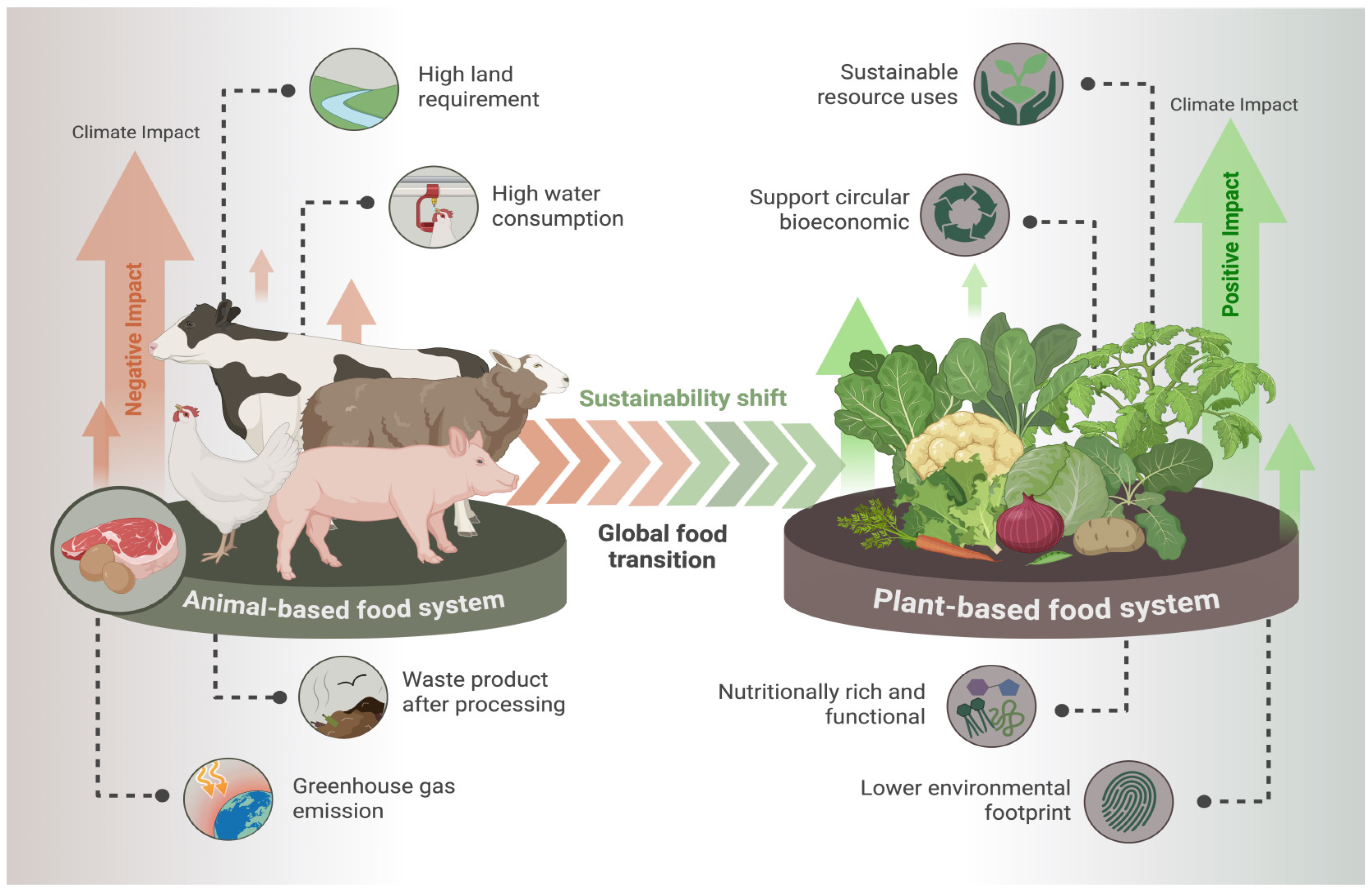
The alarming rise of global population, which is projected to reach up to 10 billion within the next 25 years, has emerged as an urgent challenge to ensure adequate and sustainable nutrition for all. This escalating figure demands an estimated 70% increase in food production to meet future needs [1]. The growing demand for food is not only driven by population expansion but also by increasing consumer awareness towards sustainable and plant-based foods. While animal-derived foods are nutritionally rich, their production is associated with considerable environmental burdens. This includes high land and water usage with elevated greenhouse gas emissions [2]. As a result, global priorities are shifting more towards sustainable, plant-based foods rather than animal-based sources. This trend has directed researchers’ interest towards underutilized tropical crops that possess higher nutritional and functional properties [3]. Figure 1 depicts the sustainability shift from animal-based to plant-based food systems, emphasizing environmental impacts and the circular bioeconomy benefits associated with plant-based diets.
Bactris gasipaes, commonly known as Pupunha, belonging to the Arecaceae family, is one such underutilized crop with significant potential for valorization in future food systems [4]. Its leaves, fruit, seeds, roots, and wood have been used traditionally for various purposes. For instance, the fruit is used to cure body aches, headaches, anti-inflammatory for gallbladder and eyes; leaves are employed for curing epilepsy; seeds are used in stomach aches; roots are used during urinary or menstrual problems, uterine infections, and many more [5]. Nutritionally, the fruit is a rich source of dietary fiber, carbohydrates, fats and bioactive compounds. The fruit possesses less protein but contains all essential amino acids [5]. It is also rich in essential minerals, with potassium, selenium and chromium being the dominating ones.
The fruits and by-products, which are dumped directly into the environment after processing, are rich in nutrients and bioactive compounds. These compounds can be effectively recovered through modern extraction and valorization techniques. Such strategies mirror the broader shift of the food industry toward circular bioeconomy principles, emphasizing clean label formulation and the expansion of plant-based protein alternatives. Notably, the valorization of residual fractions, including basal segments and both inner and outer sheaths, offers pathways for zero-waste processing, functional ingredient development, and integration within biorefinery systems [6].
Recent progress in technologies and advancements in extraction technologies has opened numerous ways to fully harness the potential of peach palm, including its by-products. Following protein fractionation, functional optimization can enable its incorporation into meat analog formulations, while starch fractions can be extracted and modified for texturizing or prebiotic purposes. Likewise, lipid and carotenoid isolates serve as natural colorants and antioxidant-rich ingredients in clean label food systems. However, several technical challenges remain, including the need to improve extraction efficiency, address safety risks linked to calcium oxalate crystals, and enhance the techno-functional performance of recovered compounds to satisfy industrial processing standards.
While our previous review ‘Unlocking the potential of peach palm for plant-based foods’ comprehensively summarized the nutritional composition, processing effects, and general food applications of peach palm, the present review is intentionally focused on extraction, fractionation, and valorization strategies for generating ingredient-grade fractions. Emphasis is placed on processing pathways, green extraction technologies, and the functional potential of isolated proteins, lipids/carotenoids, starch, and dietary fiber for sustainable food systems.
Therefore, the aim of the current review is to critically examine the current knowledge on the extraction, processing and valorization of peach palm and to explore its potential in future food applications. The discussion focuses on strategies for recovering high-value compounds from both fruits and processing by-products, evaluates their applicability in plant-based food systems, and identifies persistent research gaps and technological challenges. By integrating technological, nutritional, and sustainability perspectives, the review positions peach palm as a promising circular raw material capable of contributing to the evolving sustainable food industry.

2. Processing Potential for Plant-Based Food Applications

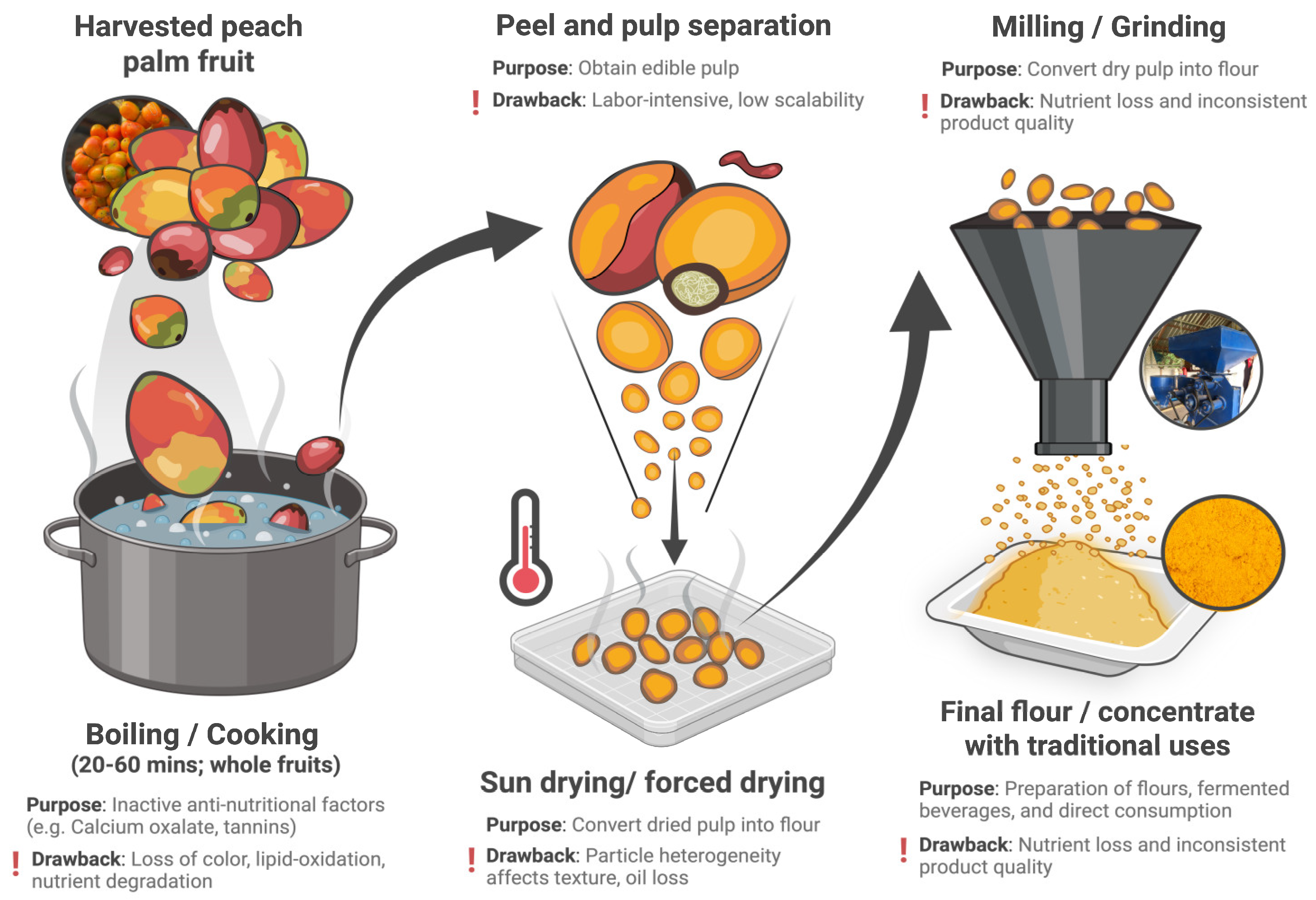
Peach palm has been used traditionally for various applications, making it a promising species for diversifying and modernizing plant-based food systems. The application of modern technologies can facilitate its scalability and sustainable processing. Historically, peach palm was consumed after cooking in the form of cooked fruit, slowly fermented silage and fermented chichi. This process inactivates the antinutritional factors, including phytates, trypsin inhibitors, tannins and majorly calcium oxalate crystals [5]. As the effects of traditional processing on nutritional quality and antinutritional factors have been comprehensively reviewed in our previous review, the current discussion is limited to aspects relevant to downstream ingredient processing and functionality. Cooking peach palm softens the texture of the fruit, thereby making the pulp suitable for direct consumption or for preparing flour. The flour thus obtained has attracted attention as a gluten-free ingredient for use in bakery applications, broadening the dietary choices for individuals with celiac disease or gluten intolerance. Functionally, peach palm flour shows high water- and oil-holding capacity, strong emulsifying ability, and good stability in complex food matrices. Nevertheless, conventional processing treatments can influence lipid and fiber content, promote Maillard reaction browning, and alter the sensory characteristics of the product. Such changes ultimately affect the nutritional quality and techno-functional performance of the resulting flours or starches [7]. Figure 2 illustrates the conventional processing pathway of peach palm fruit, highlighting each stage, from harvesting and boiling to drying and milling, along with its main purpose and associated drawbacks.
Different types of peach palm vary in terms of varieties, ecotypes, and physical and biochemical composition. Therefore, there is a need for industrial-scale utilization and product development, which will offer consistency in the product. According to González-Jaramillo et al. [5], adapting processing methods to the intrinsic properties of peach palm varieties, including starch and carotenoid content, is key to consistent and innovative product development. In addition, it was also observed that the optimization of hydrothermal and drying parameters enhances product safety and functionality during industrial production or large-scale manufacturing operations [5,7].
The processing strategies summarized in Table 1 illustrate the transition from conventional thermal treatments toward greener and more selective technologies for peach palm valorization. Although traditional processing ensures detoxification and basic functionality, the integration of green technologies is required to enhance both functional and economic value. Microwave- and ultrasound-assisted extractions have been reported to improve carotenoid and phenolic recovery from pulp and peel while reducing solvent consumption, thereby offering advantages in efficiency and sustainability [8,9]. Ionic liquid systems further demonstrate high selectivity and bioactive yields suitable for functional ingredient development, although their broader application requires careful solvent management [10]. In parallel, supercritical CO2 extraction combined with targeted physicochemical starch modification enables the design of ingredients with tailored techno-functional properties, such as low-digestibility starches for glycemic control and carotenoid-rich oils for natural coloration and antioxidant applications [11,12]. Collectively, these technological developments support the production of functional foods that align with the increasing consumer demand for health-oriented and sustainable products [5].

2.1. Protein Extraction and Fractionation Potential

(a)
Theoretical protein concentrate/isolate development
Peach palm has the potential of being a promising source of plant-based proteins. Peach palm’s several anatomical parts, most notably the fruit pulp, derived flour, and palm heart, contain a substantial number of proteins with balanced essential amino acid profiles. The protein contents in peach palm pulp ranges from 1.8 to 4.6 g/100 g on a dry basis, with higher values reported after dehydration and milling into flour, as reported in various studies. Evidence from Soares et al. [13] indicates that the protein content in peach palm flour can reach up to 20% on a dry matter basis. The high protein content in peach palm in comparison with other tropical fruits and starchy staples provides a strong basis for the production of protein concentrates and enrichment using peach palm. The development of protein concentrates and isolates typically entails mechanical disruption (grinding or milling), followed by aqueous or alkaline extraction and isoelectric precipitation or ultrafiltration to recover discrete protein fractions [16,17]. Some of the existing literature highlights that the nutritional value of flour derived from the fruit pulp and peel of peach palm is not only relatively rich in protein but also contains all essential amino acids in amounts that meet or exceed FAO reference patterns [18,19]. This unique nutritional profile of peach palm makes it suitable not just as a nutritional fortifier but also as a base for functional isolates with balanced amino acid profiles.
(b)
Functional protein modification opportunities
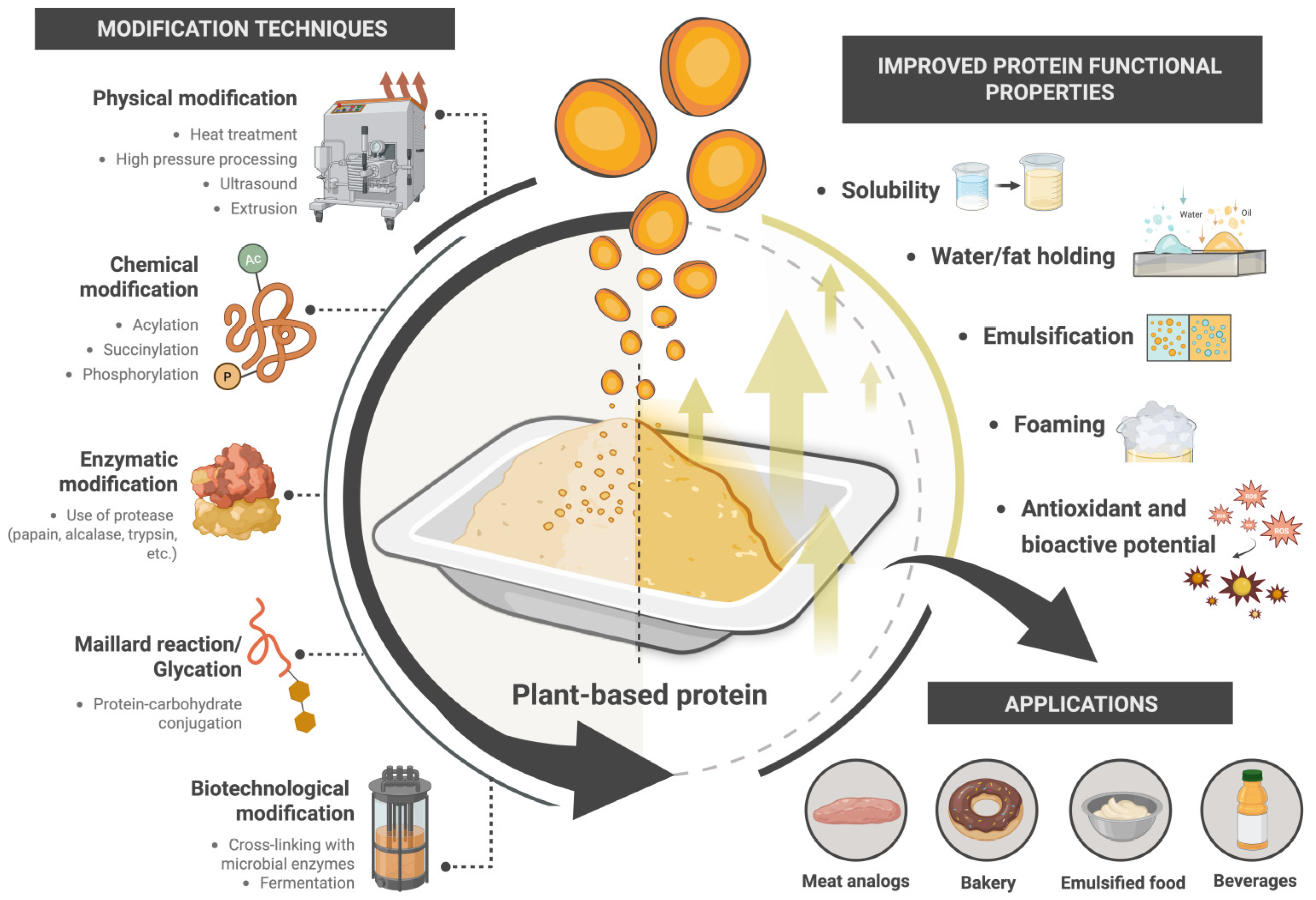
Functional protein modification aims to improve solubility, water-/oil-binding capacity, emulsification and foaming properties to expand their value in plant-based food systems [4,7,13]. Recent studies emphasize several innovative methods, including enzymatic hydrolysis, physical processes and thermal treatments to improve the techno-functional profile of peach palm proteins [13,15]. Enzymatic hydrolysis is one of the approaches to produce bioactive peptides with various functional and biological properties [20,21]. This has been well documented in various legumes and oil seeds, where enzymatic hydrolysis significantly enhanced the digestibility and solubility of the resulted peptides along with augmented antioxidant and antihypertensive activities [22,23]. Enzymatic hydrolysis is responsible for altering the size of the peptides and this in turn improves their emulsification properties. Consequently, such processes provide more ways for their incorporation into vegan dairy products, baking formulations, and beverage systems [5,13]. Physical processes like ultrasonication and high-pressure processing (HPP) and thermal treatments such as hydrothermal treatment also provide opportunities for improving functional properties by altering the shape of proteins [24]. Justino et al. [25] demonstrated that the use of ultrasound technology results in an effective breakdown of protein aggregates and a reduction in particle size. This results in enhanced dissolution and greater surface coverage. These properties make proteins suitable as natural stabilizers for emulsified and aerated systems [25]. Meanwhile, HPP causes compact protein structures (globular shape) to unfold, thereby exposing the hydrophobic domains that increase both foaming and emulsifying capacities [26]. Overall, enzymatic treatments mainly improve digestibility and bioactivity, physical processes (ultrasound and high-pressure processing) enhance solubility and interfacial properties, controlled chemical reactions influence flavor and thermal stability, and fermentation-based approaches reduce antinutritional factors while generating novel functional attributes.
Chemical modification offers another approach for altering protein functionality when conducted under controlled food-processing conditions. Non-enzymatic glycation (Maillard-type reactions) may occur between amino groups of proteins and carbonyl groups of reducing sugars during thermal treatment, influencing both functional properties and flavor development [21,27]. However, such reactions are not considered deliberate protein modification methodologies, as uncontrolled Maillard reactions can lead to nutritional losses and the formation of advanced glycation end products. Previous studies have shown that mild and controlled glycation can improve solubility and thermal stability in proteins from tropical and Amazonian crops [28,29]. In this context, carefully regulated glycation reactions could potentially be explored for peach palm proteins to modulate functional performance in plant-based formulations, while avoiding excessive thermal damage.
Overall, these diverse protein enhancement techniques, including enzymatic treatment, physical processing, chemical modification and fermentation-based methods, allow for the precise improvement of peach palm proteins. Each approach offers a way to adjust their structures or functions to suit modern food production needs. As a result, these proteins are finding a wider use in sustainable, plant-based foods that demand both performance and quality. Table 2 summarizes the recent advances in protein extraction and functional modification techniques from peach palm, whereas Figure 3 summarizes major physical, chemical, enzymatic and biotechnological modification strategies used to enhance the functional properties of plant-derived proteins, including solubility, emulsification and bioactivity.

2.2. Starch and Carbohydrate Utilization

Peach palm possesses high starch concentrations. Rosário et al. [35] reported that peach palm contains about 79% total starch, with approximately 12.4% amylose and 66.6% amylopectin in the fruit matrix. The low amylose content in peach palm aids in the production of starch with desirable properties. Therefore, such flours can be used for various food and industrial purposes where variable mechanical or functional properties of starch is required for product formulations [35]. The native starches from peach palm show varied granule shapes and sizes; however, this variation is strongly influenced by the maturation stage of the fruit. As such, starches from unripe fruits do not show distinct morphologies [4,35,36].
(a)
Starch isolation and modification
Peach palm starch is obtained from the peach palm pulp. It contains residual levels of ash, proteins, lipids and fibers. Starch extraction involves isolating starch granules from plant tissues through processes such as grinding, steeping, sieving, and centrifugation. The separated starch is then washed and dried to achieve high purity and yield [36]. Extraction methods like wet milling and alkaline treatment can influence starch quality, purity, and functional properties by affecting its molecular structure and amylose-to-amylopectin ratio. Extraction techniques, whether mechanical, chemical, or physical, are selected based on the raw material and the desired characteristics of the final product. Each method presents a trade-off between yield, purity, and functional properties [37,38].
The processing methods entail the extraction and alteration of starch, as the native form of starch is not suitable for direct use in industrial applications due to its unfavorable characteristics such as propensity towards retrogradation, high viscosity even at low concentrations, handling problems, poor freeze–thaw stability, low process tolerance, and gel opacity, which prevent its use in food processing [39]. To enhance starch’s physicochemical and functional properties to meet industrial standards, it must undergo various modifications, such as physical, chemical, and enzymatic modifications. Chemical modification is highly effective, but it does have disadvantages, such as the high cost of chemical residues, which makes it environmentally unfriendly. On the other hand, enzymatic methods are more intricate and time-consuming [40]. Conversely, physical modification techniques lack chemicals and do not produce wastewater with toxic residues. Furthermore, the wastewater treatment required after modification is minimal. Modern physical modification techniques such as cold plasma processing, irradiation, and hydrothermal treatment are used in the starch industry to produce starch with direct commercial applications that negatively impact the environment and consumer consumption. The experimental studies demonstrate that treatments like annealing, hydrothermal treatment (HMT), autoclaving, and cross-linking with citric acid can significantly improve starch characteristics such as crystallinity, thermal stability, and resistance to retrogradation. Thus, with the aid of these techniques, the starch of peach palm can be used in starch-based food systems and for developing biodegradable materials. For example, Soares et al. [4] reported the production and characterization of a peach palm starch-based biodegradable thermoplastic. This thermoplastic showed high tensile strength along with high thermal degradation ability. Consequently, it can be concluded that peach palm starch may serve as an important environmentally friendly alternative in the production of this type of material, which is of great interest to the packaging industry [40,41,42].
(b)
Fiber extraction and functionality
Peach palm pulp is classified as a fiber-rich food [4]. Dietary fiber plays an important role in food systems by enhancing food texture through water retention and supporting digestive health, functional properties, and nutritional quality. The key dietary fiber components, viz. cellulose, hemicellulose, and lignin, have been successfully obtained from the processing discards or by-products. Dietary fibers are not digested and absorbed in the human small intestine. They are threatened by complete or partial fermentation in the large intestine. Dietary fibers have beneficial physiological functions, including laxation and improving bowel health by stimulating the growth of beneficial gut micro-flora, lowering blood cholesterol and glucose levels, preventing obesity, coronary heart diseases, diabetes, blood pressure, and lowering energy intake [15]. Insoluble dietary fibers remain intact during digestion and are involved in reducing the risk of coronary heart disease and type 2 diabetes. Giombelli et al. [42] recovered dietary fiber concentrates from peach palm waste using subcritical water and low-pressure aqueous systems as extraction techniques. The fibers obtained using these methods possess high water- and oil-holding capacities. Under subcritical extraction conditions, the fibers become more fragmented and exhibit higher porosity. The substantial cellulose composition, combined with altered conformational attributes detected via FT-IR analysis, leads to improved hydration and emulsification capabilities, thereby expanding the potential applications of peach palm fibers in functional food systems. Furthermore, Giombelli et al. [42] reported that scanning electron microscopy revealed a more open, porous microstructure in starch after subcritical water treatment, which enhanced its functional properties, including oil-binding capacity and swelling index.
(c)
Prebiotic and functional carbohydrate applications
The carbohydrates in peach palm, mainly its soluble dietary fiber and processed starches, exhibit prebiotic potential. Šárka et al. [43] observed that pectic polysaccharides extracted from peach palm stimulate beneficial gut microbial fermentation in vitro. Their resistance to enzymatic degradation further enhances their prebiotic activity. Likewise, [44] also demonstrated that resistant starch fractions produced through controlled modification digest slowly and promote favorable fecal fermentation profiles. In addition to these components, xylooligosaccharides (XOS), composed of 2–20 D-xylose units linked by β (1 → 4) glycosidic bonds, can also contribute to prebiotic functionality. XOS are typically derived from the hydrolysis of xylan present in lignocellulosic biomass, and, because humans lack the enzymes to hydrolyze β-linkages, these oligosaccharides reach the large intestine intact, where they serve as substrates for beneficial microbes such as Bifidobacterium and Lactobacillus [15]. Their fermentation not only supports gut microbial balance but also provides secondary health benefits, including improved calcium absorption, better lipid metabolism, and reduced risk of chronic metabolic disorders. Collectively, these dietary components play vital roles in blood sugar regulation, colon health, and in sustaining probiotic bacteria that help maintain a balanced intestinal microbiome [40].

2.3. Lipid and Bioactive Compound Extraction

(a)
Oil extraction for food applications
Considering that the peach palm fruit generally has a high lipid content, it is important to consider its lipid profile, particularly the quantity and quality of the fatty acids present in the pulp. The fruit of peach palm is naturally rich in oils, making it a promising source for the production of edible oil. It is recognized for its high yield and impressive nutritional quality. The oil extracted from peach palm pulp can serve as an intermediate source of omega-6 fatty acids (4.9–8.6%). In addition, it also contains substantial proportions of oleic, linoleic, and linolenic acids, which are known for their cardiovascular benefits and oxidative stability. Refs. [4,15] show a clear move away from old solvent-based extraction methods toward cleaner, safer technologies for obtaining peach palm oil, and [45] also supported the transition to green extraction processes that meet the growing demand for clean label, sustainable ingredients while maintaining oil quality. Among these processes, ultrasound-assisted extraction combined with ethanol achieved oil yields of up to 8.9% while preserving key bioactive constituents like carotenoids and unsaturated fatty acids, particularly in red and yellow peach palm fruits. However, peach palm oil has been reported to be relatively susceptible to oxidation, likely due to its high omega-9 (oleic acid) content. Fatty acids are inherently prone to oxidative degradation because of the double bonds in their molecular structure, leading to free radical chain reactions that can compromise both the nutritional and the sensory quality of the oil. In parallel, supercritical CO2 extraction enables the recovery of high-purity oils with negligible solvent residues, making them ideal for health-oriented applications. These lipids, naturally rich in oleic, linoleic, and linolenic acids, are prized for their heart health benefits and resistance to oxidation, fitting neatly with the growing demand for nutritious, sustainable, plant-based foods [4,45]. Despite this, Soares et al. [4] also documented the antimicrobial characteristic of oil extracted using hexane from peach palm bark against strains of Staphylococcus aureus 24 h after the addition of 10 µL oil. Given the growing interest in peach palm as a potential sustainable lipid source for food applications, the fatty acid profile of peach palm pulp lipid extracts is summarized in Table 3. This profile highlights the relative proportions of saturated and unsaturated fatty acids and provides compositional information relevant to nutritional quality and oxidative stability.
(b)
Carotenoid concentration for natural coloring
Among the fat-soluble constituents of peach palm, carotenoids are also considered important bioactive nutrients and are present in high concentrations in the fruit. The intensely colored carotenoid compounds from peach palm constitute valuable natural colorants and bioactive substances. Various studies have found that yellow, orange, and red peach palms are rich in carotenoids, and the stage of fruit maturation strongly influences their total carotenoid content. Moreover, fresh fruits of the orange peach palm variety exhibit the highest total carotenoid content, followed by the red and yellow cultivars, demonstrating a clear relationship between color intensity and carotenoid concentration.
Spacki et al. [15] demonstrated that carotenoid-rich fractions from peach palm can be effectively extracted using ultrasound-assisted extraction (UAE), ionic liquid systems, and supercritical CO2 methods with recyclable, low-toxicity solvents. In addition, ref. [4,46] reported that the red and yellow cultivars possess the highest carotenoid concentrations, underscoring their potential in clean label product development and functional food formulation.
Carotenoids are subject to instability, which can be influenced by their chemical composition (carotene or xanthophyll), molecular structural configuration (cis or trans), esterification, and the cellular matrix, as well as by processing and storage conditions. Notably, higher contents of total carotenoids after cooking have been reported in peach palm fruit compared with fresh samples, possibly due to the release of carotenoids from cell walls. This thermal effect may also lead to the formation of isomers such as Z-β-carotene, Z-γ-carotene, and Z-lycopene, which have been identified in peach palm fruit and may contribute to variations in bioactivity. Furthermore, the bioaccessibility of carotenoids from peach palm can be enhanced by incorporating them into lipid-based matrices. For instance, carotenoids extracted from peach palm pulp by ultrasound and added to a mayonnaise emulsion were found to be 11 times more bioaccessible after in vitro digestion compared with those in freeze-dried fruit. The utilization of peel fractions also supports natural pigment recovery and promotes sustainability in ingredient procurement [4,15,45].
(c)
Antioxidant activity of peach palm extracts
Lipid and carotenoid-rich extracts from peach palm exhibit notable antioxidant activity resulting from their polyphenol, tocopherol, and phytosterol contents. Various extraction methods such as ultrasound and microwave assistance have been demonstrated to improve the extraction efficiency of phenols and antioxidant potential, exceeding the performance of traditional methods. These bioactive extracts contribute to functional food and nutraceutical development, corresponding with present-day demands for health-beneficial, sustainable ingredient sources [4,15]. An overview of advanced extraction technologies available for lipid and bioactive compound recovery from peach palm, including their process parameters, compositional highlights, and functional applications, is presented in Table 4. Unless otherwise stated, quantitative values are reported on the basis used in the original studies (fresh weight, dry weight, or extract basis), which is explicitly indicated to avoid misinterpretation.
Current advancements in extraction technology enable zero-waste processing approaches and circular ingredient development for the sustainable food industry, exploiting lipids and carotenoids from complete peach palm biomass fractions for innovative plant-based food applications.
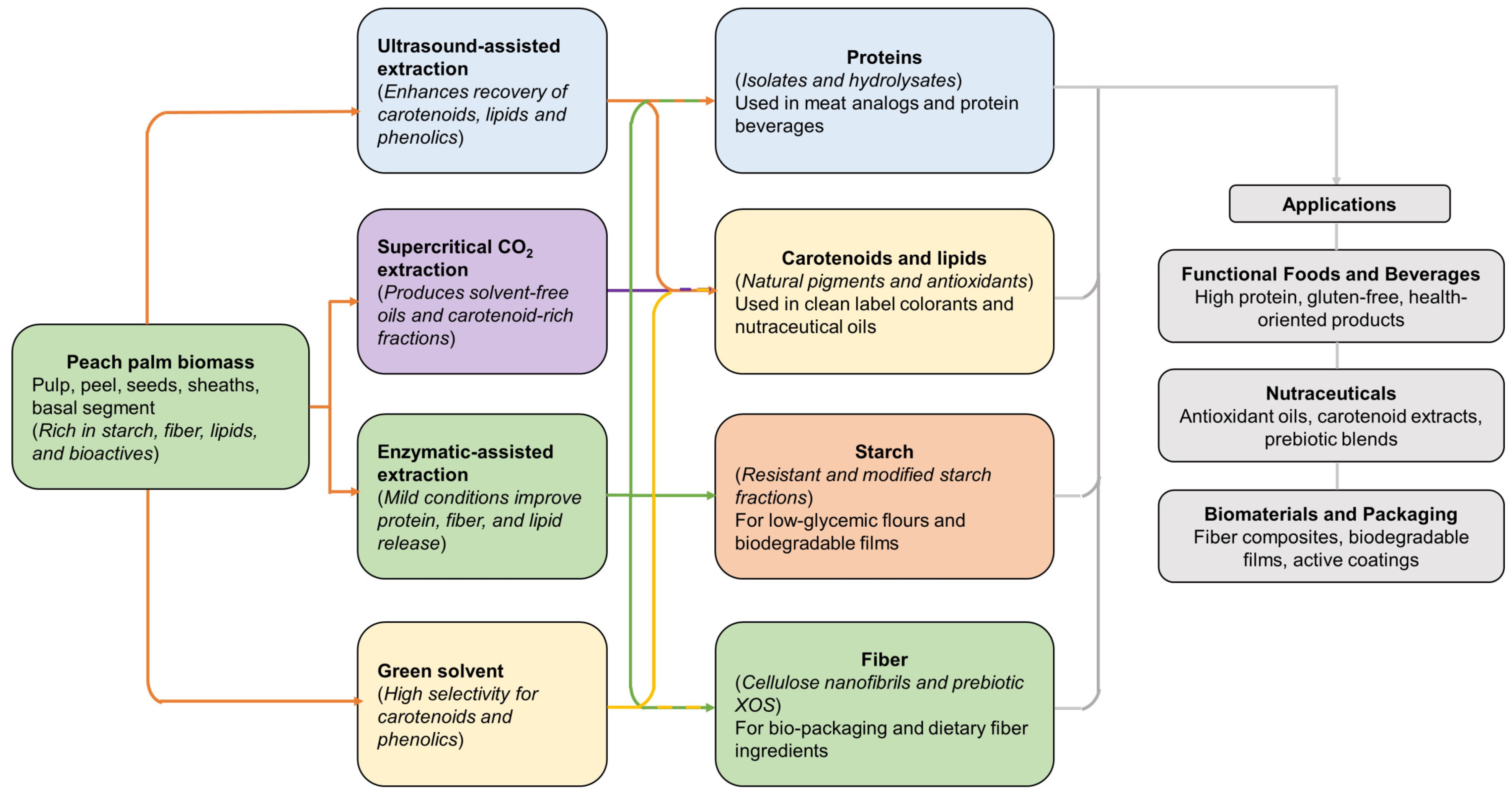
Figure 4 shows an integrated schematic of modern extraction technologies for peach palm, outlining how different green methods yield functional ingredients for food, nutraceuticals and biomaterial applications. Current advancements in extraction technology enable zero-waste processing approaches and circular ingredient development for the sustainable food industry, exploiting lipids and carotenoids from complete peach palm biomass fractions for innovative plant-based food applications.
(d)
Bioactive compounds identified in peach palm and their biological activities
Several studies have identified diverse classes of bioactive compounds in peach palm, including carotenoids, phenolic compounds, tocopherols, phytosterols, and organic acids. These compounds contribute to antioxidant, anti-inflammatory, antimicrobial, and cardioprotective activities, supporting the functional food potential of peach palm. Table 5 summarizes the main bioactive compounds reported in different peach palm fractions, together with their biological activities and supporting references.

2.4. Integrated Processing Approaches

(a)
Zero-waste processing concepts
Although the concept of “zero-waste” is frequently used to describe fully integrated biorefinery and valorization strategies, the complete elimination of waste is rarely achievable in practice due to unavoidable material losses, process residues, and energy demands. In the case of peach palm, a near zero-waste approach can nevertheless be pursued through the sequential utilization of different plant fractions. Edible pulp can be directed to food applications, while peels, sheaths, and basal portions can be converted into dietary fiber concentrates, carotenoid-rich extracts, fermentable substrates, or biopolymer precursors. Residual solids may further be valorized through fermentation or energy recovery processes. This cascading use of biomass reduces disposal streams and improves resource efficiency, even if true zero-waste conditions remain theoretical rather than absolute [6,15].
(b)
By-product valorization strategies
A wide range of peach palm by-products, including peels, inner sheaths, and stem segments, are currently acknowledged as abundant sources of dietary fiber, xylans (for prebiotic xylooligosaccharide production), cellulose (for nanofibril applications), phenolic compounds, and carotenoids [42]. Principal valorization approaches include the production of high-fiber flours for the application as functional food ingredients and emulsifying agents; extraction of natural pigments and antioxidant compounds, supporting food and nutraceutical sectors; alkaline or enzymatic hydrolysis of xylans for xylooligosaccharide (prebiotic) generation, producing antioxidant-rich fractions; and extraction with nanoprocessing of cellulose for bio-based packaging materials or rheological modifiers. Through proper process integration and sequencing, these methodologies reduce disposal expenses and establish new revenue opportunities for processing facilities and rural farming communities [15].
(c)
Multi-component extraction systems
Recent progress in multi-component extraction have made it possible to isolate lipids, carotenoids, dietary fibers, starch, and phenolic compounds, either sequentially or simultaneously, from both edible and inedible parts of peach palm. Using techniques such as ultrasound-assisted extraction, supercritical CO2, and ionic liquid-based extraction enables the targeted recovery of specific compounds without significant loss in biological activity. These compounds can be used in food, cosmetics, pharmaceutical, and biomaterial applications [4,14,15]. When combined with enzymatic or fermentation-based processes, for instance, fermentation using Trichoderma or Lentinula, these systems generate additional value through enzyme production (amylases, xylanases) and prebiotic oligosaccharide synthesis. [15].
For instance, Lima et al. [47] studied the performance of B. gasipaes residues as a substrate for the growth of a mycelium-based composite on Lentinula edodes. The composite formed displayed close values compared to other mycelium-based composites on compressive strength and elastic modulus. The authors concluded that pupunha residues are a potential alternative for mycelium-based composites. The production and commercialization of mushrooms (healthy functional foods) using peach palm residues could result in socio-environmental benefits by increasing the income of the involved individuals and by reducing environmental liability. Therefore, developing sustainable, integrated biorefinery models is essential for the full exploitation of peach palm resources. Such approaches not only minimize environmental impact but also enhance economic potential, positioning peach palm residues as key contributors to future zero-waste and circular bioeconomy systems. Table 6 summarizes the specialized valorization strategies for various peach palm by-products, highlighting the functional materials generated and their role in the circular bioeconomy. Sustainable, integrated biorefinery strategies are therefore critical for the comprehensive exploitation of peach palm resources, corresponding with global movements towards zero-waste systems and circular bioeconomy advancement. Such frameworks address environmental liabilities while enhancing economic value, establishing peach palm residues as essential resources in future food and bioproduct supply chains.

3. Valorization of By-Products and Circular Uses

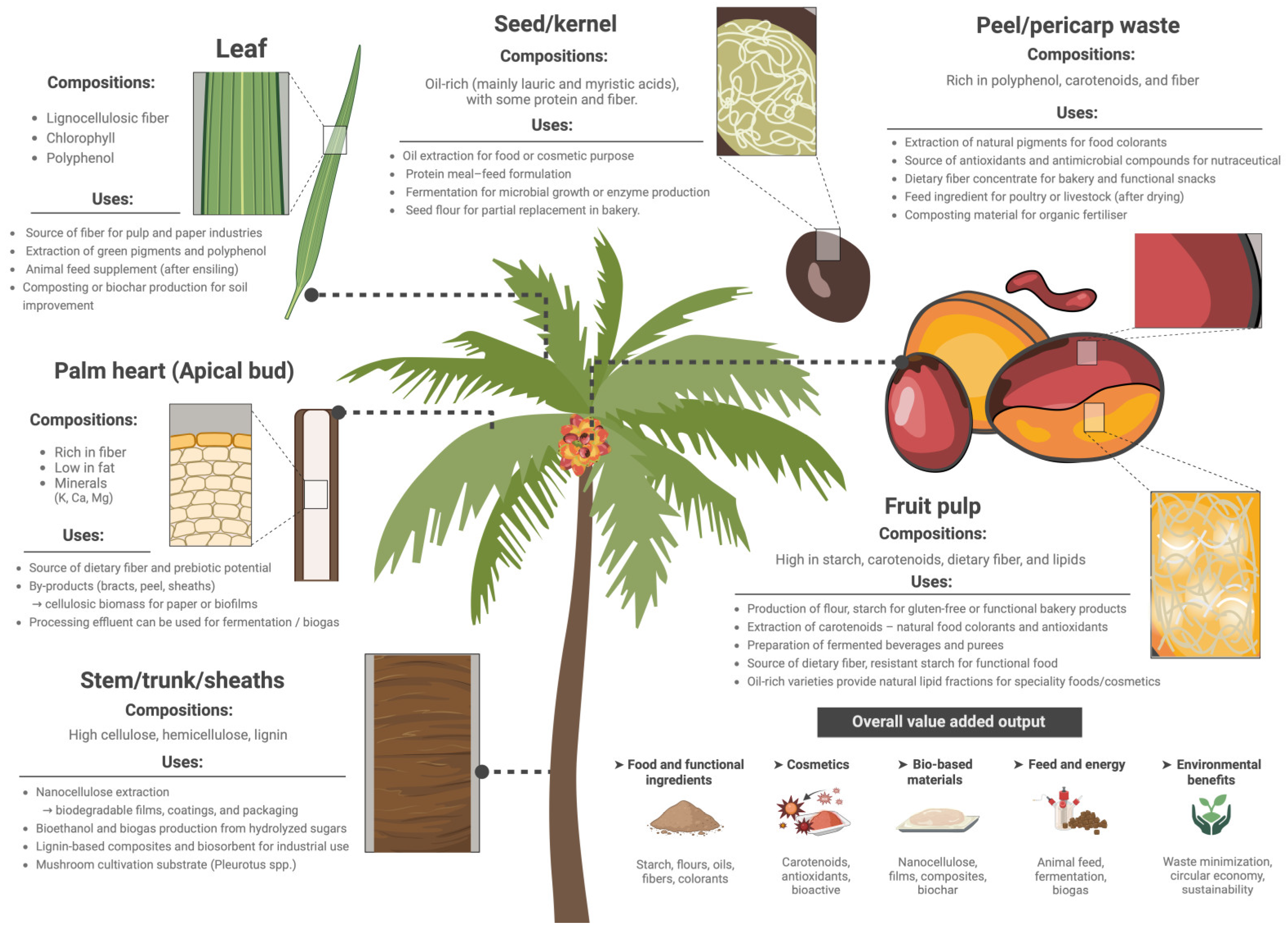
The valorization potential of different anatomical parts of peach palm, detailing their composition, principal uses, and value-added outputs within a circular bioeconomy framework, is shown in Figure 5. The production and consumption of peach palm generates a huge volume of by-products [48]. The utilization of processing by-products represents a key strategy for achieving the circular biomass management of peach palm within sustainable food systems. During peach palm extraction, it is estimated that approximately 84% of the total weight of the palm is wasted. Nevertheless, chemical analysis of these fractions reveals high dietary fiber contents ranging from 59% to 68%, alongside protein levels of 8–12%, confirming their potential as sustainable raw materials for high-fiber or protein-enriched functional ingredients [6,15].
In addition to the macronutrient composition of these by products, these so-called wastes (by-products) are also rich in nutraceutical compounds such as myo-inositol—a bioactive compound with documented metabolic and prebiotic functions—and a spectrum of organic acids that contribute to potential antioxidant and antimicrobial activities. Recent progress in extraction and processing has made it possible to transform the sheath and basal fractions into marketable products, including high-fiber flours and dietary supplements, xylooligosaccharide-based prebiotic formulations, and cellulose nanofibrils suitable for use in packaging materials or as food texture modifiers [6,15].
A number of valorization pathways have been established within circular economy frameworks, encompassing enzymatic hydrolysis for xylooligosaccharide production, solid-state fermentation for edible mushroom cultivation or enzyme biosynthesis, and nanoprocessing techniques designed to improve cellulose recovery from processing residues [54]. Implementing these strategies not only reduces environmental burden but also opens new avenues for ingredient innovation and economic benefits for processors and local producers [6,15].
In conclusion, the external and internal sheaths together with the basal segment of peach palm should no longer be considered waste but should be recognized as valuable co-products with transformative potential for the development of fiber- and protein-rich foods, nutraceutical formulations, and bio-based materials within modern sustainable food systems. A comparative overview of the valorization pathways for major peach palm by-product is provided in Table 7.

3.1. Potential Uses of Peach Palm By-Products

(a)
Dietary fiber ingredients
Peach palm residues, particularly those derived from the median sheaths and stem portions, are rich in non-starch polysaccharides and can be processed into fiber-enriched flours suitable for improving the nutritional profile of cereals, baked products, and similar food matrices [4,13]. The fractions of these flours predominantly consist of insoluble dietary fibers, known to support intestinal function, aid in cholesterol regulation, and contribute to glycemic control when consumed regularly. In addition, the flour obtained from pulp and peel retains substantial amounts of total dietary fiber and bioactive compounds. This extends the potential of peach palm as functional ingredients across a range of modern food formulations [15].
(b)
Functional food additives
The by-products of peach palm after processing can be used as food additive materials. The one such example includes the derived flour from peach palm. The flour exhibits remarkable water and oil absorption capacities, emulsifying ability, and structural stability properties. Due to these unique properties of flour, it can be employed as an effective natural emulsifier or textural modifier. It can also be used as the matrix for encapsulating bioactive molecules in baked goods, dairy formulations, and meat product applications [52]. In addition, the antioxidant properties and carotenoid concentrations in these by-products can often be used as natural coloring agents and provitamin A reservoirs. This contributes to nutritional value augmentation and conformity with clean label consumer preferences [4,13,15,45].
(c)
Mushroom substrates
Lignocellulosic materials such as leaf sheath and middle sheath components derived from peach palm act as suitable substrates for solid-state fermentation and edible or medicinal mushroom production systems [15]. Camilleri et al. [55] reported that peach palm residues create an optimal environment for fungal growth, particularly for Lentinula edodes and Pleurotus ostreatus, resulting in mycelium-based composites with notable structural strength and nutritional value. In parallel, findings from [13,15] highlighted the potential of fermentation-derived by-products as functional feed components that influence glycemic and lipid metabolism, as well as promising precursors for developing sustainable mycelium-based biomaterials [13,15]. As per [50], others evaluated P. ostreatus yield in peach palm leaves supplemented with rice bran and reached yields between 20.6 and 42.3% (w/w). They recorded the protein content of 24.1 g/100 g in P. ostreatus produced in peach palm leaves. The protein content is one of the desirable and most important parameters in mushrooms, especially when used in plant-based diets, due to the restrictions in the consumption of sources of proteins from animal origin [50].
(d)
Biomaterials
By-products from peach palm subjected to upcycling processes are gaining recognition for their applicability in biomaterial development and environmentally sustainable chemistry. Recent developments indicate that the peach palm’s lignocellulosic wastes hold great potential for being upcycled into valuable biotechnological products such as prebiotics, enzymes, cellulose and high fiber flours. Combination of chemical and mechanical treatments of peach palm sheaths led to the production of cellulose nanofibrils. Martins et al. [49] used these cellulose nanofibrils to improve the characteristics of cassava starch films. It was observed that physical reinforcement was the main effect observed in cassava starch films containing cellulose nanofibrils according to the analysis of mechanical strength and permeability. The spectroscopic data further revealed a possible formation of crosslinking between starch and cellulose nanofibrils, which can positively influence the tensile strength of such films. Additionally, starch extracted from non-traditional sources, including white peach palm varieties, displays distinctive functional characteristics and pasting behavior profiles, thereby broadening utilization prospects in biodegradable film technologies, pharmaceutical delivery systems, and as gel-forming or binding agent alternatives [4,13,15].
(e)
Biorefinery resources
Peach palm by-products are rich in lignocellulosic materials, mainly cellulose, hemicellulose, and lignin, which makes them suitable feedstocks for biorefinery-based processing systems. In a biorefinery context, biomass is fractionated into multiple value-added streams rather than treated as waste, allowing the sequential conversion of structural polysaccharides and associated compounds into food ingredients, chemicals, and energy carriers.
The effective application of this concept requires consideration of the macromolecular organization of peach palm tissues, in which cellulose and hemicellulose are embedded within lignin-rich matrices that limit enzymatic accessibility. Accordingly, fungal pretreatment has been reported to enhance enzymatic hydrolysis efficiency by partially disrupting these structural associations, thereby enabling the release of fermentable sugars for the production of second-generation bioethanol, organic acids, and other renewable chemicals [56].
Spacki et al. [6,15] and Soares et al. [13] further demonstrated that xylan derivatives obtained from the inner sheath can be converted into prebiotic xylooligosaccharides. Following carbohydrate recovery, the remaining fiber-rich residues may be directed toward energy recovery processes or used as feedstock for bio-based materials. Such a cascading utilization of peach palm fractions illustrates how understanding macromolecular connectivity can guide the selection of appropriate processing routes within a biorefinery framework. These integrated pathways support circular bioeconomy strategies by linking agricultural residues with value-added production systems. Table 8 provides a comparative overview of commercial and research-stage peach palm products applied in plant-based foods.

3.2. Commercial Perspectives of Peach Palm Valorization

Currently, the commercial exploitation of peach palm is mainly focused on edible fruits and heart-of-palm products, while most bioactive and functional ingredients derived from by-products remain at the research or pilot scale. Dietary fiber concentrates, starch-based ingredients, and carotenoid-rich extracts represent the most promising product categories for food and nutraceutical applications. Among the processing technologies discussed, conventional solvent extraction and mechanical pressing remain the most widely used methods at the industrial scale due to their operational simplicity, lower capital cost, and established regulatory acceptance. Emerging techniques such as ultrasound-assisted, enzymatic, and supercritical carbon dioxide extraction have demonstrated superior selectivity and product quality; however, their commercial adoption is still limited by equipment costs, scale-up constraints, and energy requirements. Nevertheless, increasing demand for clean label, sustainable, and plant-based ingredients is driving interest in greener extraction and fractionation technologies, suggesting that peach palm by-products could progressively transition from laboratory-scale valorization to industrial biorefinery-based applications.

4. Challenges and Research Needed

4.1. Toxicity Issues

The raw consumption of peach palm fruit is limited by the presence of calcium oxalate crystals, which induce irritation and necessitate prior processing. The sharp, needle-like crystals are concentrated in the pulp as well in the peel of peach palm fruit. When consumed raw, these crystals cause an immediate burning sensation, irritation, and pain in mouth or throat [15]. Soares et al. [4] documented that even small amounts of uncooked fruit can trigger airway swelling and, in severe cases, respiratory distress. Moreover, long-term or high-level exposure to these crystals may also affect kidney and liver health, underscoring the importance of proper processing before consumption [5].
Heat treatment, either cooking or boiling, serves as an effective way to make peach palm edible without any harmful effect [13]. Thermal processing not only solubilizes these crystals but also deactivates antinutritional and irritants present in the fruit. Santos et al. [59] claimed that cooking the fruit at 105 °C for 20 min eliminates these oxalate crystals from the peel. In addition, cooking also inhibits antinutritional factors such as trypsin inhibitors, inactivating peroxidase enzymes present in the pulp. These components can otherwise irritate the throat mucosa. Overall, it improves the safety and flavor profile of the fruit. In Amazonian cuisines, the fruits are often boiled in salted water. This enhances the taste while eliminating toxic elements, thereby providing complementary benefits. This essential step preserves the fruit’s valuable nutrients, including fiber, vitamins, and bioactive phytochemicals [4,5,13,15].
Despite the proven effectiveness of thermal processing in enhancing the safety of peach palm fruit, important research gaps persist. Optimized thermal parameters for cooking are still required to achieve complete detoxification without compromising nutritional or sensorial properties. As peach palm has emerged beyond its native regions as a plant-based food ingredient, there is a need to ensure safety and consistency under industrial scale processing conditions. Moreover, improved methods for detecting and quantifying calcium oxalate residues are necessary to support both regulation and quality control. Addressing these gaps will enhance consumer safety and help establish peach palm as a reliable, sustainable ingredient in future food innovations [15].

4.2. Nutritional Variability

There is variability in the nutritional values that can be explained by the different B. gasipaes varieties, size, and starch oil composition of the fruit [4,5]. The fruit also varies genetically and from region to region. The major macronutrients vary significantly among accessions [13]. Detailed discussions on nutritional composition, fatty acid profiles, and bioactive compounds have been comprehensively addressed in our previous review (‘Unlocking the potential of peach palm for plant-based foods’) and are therefore only briefly summarized here. For instance, peach palm is known for its high starch, fiber and carotenoid content with modest protein levels when compared with most cereal grains. In certain processed forms, such as flours from albino varieties or certain industrial by-products, protein content can increase to 16–20 g per 100 g (dry basis), though such cases are uncommon.
The variations in nutritional profiles among the varieties, particularly pigmented and albino varieties, present novel opportunities for selective breeding among the varieties. This will result in enhanced protein quality and overall nutritional value for specific food applications or population needs. Unlocking the full potential of peach palm will depend on detailed genetic studies, improved protein isolation methods, and thoughtful formulation strategies to achieve optimal amino acid balance in next-generation plant-based food systems [4,5].

4.3. Functional Limitation

The functional properties of peach palm are limited, majorly in terms of gelling and foaming ability. These properties restrict its direct use in products that rely on viscosity control, emulsification, or stable foam structures. The high gelatinization temperature, low oil absorption and emulsifying capacity of peach palm requires blending with certain other flours or use of certain modification methods (as detailed above) to improve texture and performance in bakery or processed food applications [4,5].

4.4. Scalability Barriers

The large-scale commercial utilization of peach palm as a food component is limited due to a number of factors, such as processing difficulties, sensory challenges, evolving regulations for novel plant proteins, etc. As stated earlier, optimized and effective processing is still required to reduce toxicity without compromising the nutritional and sensorial properties. Because peach palm is considered an emerging protein source, manufacturers may also face regulatory hurdles that demand thorough safety assessments, toxicological studies, and detailed compliance documentation before products can enter the market [15,60,61]. Table 9 summarizes the key scalability barriers and mitigation strategies that currently limit the large-scale valorization of peach palm in sustainable food systems.

4.5. In Silico Approaches for Bioactivity Prediction

In silico techniques, including molecular docking, quantitative structure–activity relationship (QSAR) modeling, and bioactivity prediction platforms, are increasingly used to elucidate the mechanistic interactions between food-derived bioactive compounds and biological targets. For peach palm, such computational tools could be applied to predict the binding affinity of carotenoids, phenolic acids, and phytosterols to key molecular targets involved in oxidative stress, inflammation, and lipid metabolism. These approaches may assist in prioritizing compounds for further in vitro and in vivo validation, reducing experimental cost and time while improving mechanistic understanding. Integration of computational modeling with experimental extraction and characterization data could therefore accelerate the development of peach palm-based functional ingredients and nutraceutical formulations.

5. Conclusions

Peach palm is emerging as a nutritionally rich crop with strong adaptability. Some research done on it states that it has adapted well to modern extraction and processing methods. Its extremely rich and diverse composition enables to produce the starches with desirable functional properties, i.e., lipid extracts rich in bioactive compounds and high-quality protein isolates. Such versatility positions peach palm as a promising raw material for the development of next-generation plant-based foods. Valorization of the entire plant, including the peel, pulp, and processing residues, not only enhances resource efficiency but also aligns with circular bioeconomy principles aimed at achieving zero-waste production. With recent advancements in sustainable extraction and green processing methods, the quality and commercial potential of peach palm-derived ingredients has improved considerably. Continued interdisciplinary research focusing on process optimization, functionality, and product innovation will further establish peach palm as a sustainable, high-value crop. Its integration into food, nutraceutical, and biomaterial applications reflects a step toward a more resource-efficient and environmentally responsible food system.

Author Contributions

K.S.: conceptualization, methodology, investigation, writing—original draft preparation. N.K., S.S.-U., E.O.; conceptualization, W.Z., S.W., J.-Q.H., Y.H.J.: writing—review and editing, S.R.: conceptualization, resources, visualization, writing—review and editing, supervision, project administration. All authors have read and agreed to the published version of the manuscript.

Funding

This research was funded by Mae Fah Luang University, grant number 09/2025 under the Postdoctoral Fellowship to Kartik Sharma. The authors also gratefully acknowledge the additional financial support from Mae Fah Luang University, Chiang Rai, Thailand via the Fundamental Fund: Basic Research [FRB690059/0187] and the Reinventing University Program Fund [F01-683R-04-045], The Office of the Permanent Secretary of the Ministry of Higher Education, Science, Research and Innovation.

Institutional Review Board Statement

Not applicable.

Informed Consent Statement

Not applicable.

Data Availability Statement

No new data were created or analyzed in this study.

Acknowledgments

The authors would like to thank Mae Fah Luang University, Chiang Rai, Thailand for facilities and supports.

Conflicts of Interest

The authors declare no conflicts of interest.

Abbreviations

The following abbreviations are used in this manuscript:
UAEUltrasound-Assisted Extraction
HPPHigh-Pressure Processing
HMTHydrothermal Treatment
XOSXylooligosaccharides
QSARQuantitative Structure–Activity Relationship

References

  1. Choręziak, A.; Rosiejka, D.; Michałowska, J.; Bogdański, P. Nutritional Quality, Safety and Environmental Benefits of Alternative Protein Sources—An Overview. Nutrients 2025, 17, 1148. [Google Scholar] [CrossRef] [PubMed]
  2. Hertzler, S.R.; Lieblein-Boff, J.C.; Weiler, M.; Allgeier, C. Plant Proteins: Assessing Their Nutritional Quality and Effects on Health and Physical Function. Nutrients 2020, 12, 3704. [Google Scholar] [CrossRef]
  3. Qin, P.; Wang, T.; Luo, Y. A Review on Plant-Based Proteins from Soybean: Health Benefits and Soy Product Development. J. Agric. Food Res. 2022, 7, 100265. [Google Scholar] [CrossRef]
  4. Soares, S.D.; Santos, O.V.D.; Nascimento, F.D.C.A.D.; Pena, R.D.S. A Review of the Nutritional Properties of Different Varieties and Byproducts of Peach Palm (Bactris gasipaes) and Their Potential as Functional Foods. Int. J. Food Prop. 2022, 25, 2146–2165. [Google Scholar] [CrossRef]
  5. González-Jaramillo, N.; Bailon-Moscoso, N.; Duarte-Casar, R.; Romero-Benavides, J.C. Peach Palm (Bactris gasipaes Kunth.): Ancestral Tropical Staple with Future Potential. Plants 2022, 11, 3134. [Google Scholar] [CrossRef]
  6. Spacki, K.; Novi, D.M.P.; de Oliveira-Junior, V.A.; Durigon, D.C.; Fraga, F.C.; dos Santos, L.F.O.; Helm, C.V.; de Lima, E.A.; Peralta, R.A.; de Fátima Peralta Muniz Moreira, R.; et al. Improving Enzymatic Saccharification of Peach Palm (Bactris gasipaes) Wastes via Biological Pretreatment with Pleurotus ostreatus. Plants 2023, 12, 2824. [Google Scholar] [CrossRef]
  7. Amorim, I.S.; Amorim, D.S.; Godoy, H.T.; Mariutti, L.R.B.; Chisté, R.C.; da Silva Pena, R.; Bogusz Junior, S.; Chim, J.F. Amazonian Palm Tree Fruits: From Nutritional Value to Diversity of New Food Products. Heliyon 2024, 10, e24054. [Google Scholar] [CrossRef]
  8. Menezes Silva, J.V.; Silva Santos, A.; Araujo Pereira, G.; Campos Chisté, R. Ultrasound-Assisted Extraction Using Ethanol Efficiently Extracted Carotenoids from Peels of Peach Palm Fruits (Bactris gasipaes Kunth) without Altering Qualitative Carotenoid Profile. Heliyon 2023, 9, e14933. [Google Scholar] [CrossRef]
  9. Han, K.N.; Meral, H.; Demirdöven, A. Recovery of Carotenoids as Bioactive Compounds from Peach Pomace by an Eco-Friendly Ultrasound-Assisted Enzymatic Extraction. J. Food Sci. Technol. 2024, 61, 2354–2366. [Google Scholar] [CrossRef]
  10. Santamarina, A.B.; de Souza Mesquita, L.M.; Casagrande, B.P.; Sertorio, M.N.; Vitor de Souza, D.; Mennitti, L.V.; Ribeiro, D.A.; Estadella, D.; Ventura, S.P.M.; de Rosso, V.V.; et al. Supplementation of Carotenoids from Peach Palm Waste (Bactris gasipaes) Obtained with an Ionic Liquid Mediated Process Displays Kidney Anti-Inflammatory and Antioxidant Outcomes. Food Chem. X 2022, 13, 100245. [Google Scholar] [CrossRef]
  11. Espinosa-Pardo, F.A.; Martinez, J.; Martinez-Correa, H.A. Extraction of Bioactive Compounds from Peach Palm Pulp (Bactris gasipaes) Using Supercritical CO2. J. Supercrit. Fluids 2014, 93, 2–6. [Google Scholar] [CrossRef]
  12. Doan, H.T.T.; Kim, T.; Cha, M.; Kim, S.-J. Synthesis and Potential Application of Slowly Digestible Starch. J. Funct. Foods 2025, 131, 106955. [Google Scholar] [CrossRef]
  13. Soares, S.D.; dos Santos, O.V.; da Conceição, L.R.V.; Costi, H.T.; Silva Júnior, J.O.C.; Nascimento, F.D.C.A.D.; Pena, R.D.S. Nutritional and Technological Properties of Albino Peach Palm (Bactris gasipaes) from the Amazon: Influence of Cooking and Drying. Foods 2023, 12, 4344. [Google Scholar] [CrossRef] [PubMed]
  14. Gillet, S.A.; Silva, M.N.; Carvalho, E.A.; da Silva, E.G.P.; dos Santos Moreau, P.; Uetanabaro, A.P.T.; da Costa, A.M. Utilization of Peach-Palm Waste for Cost-Effective Amylase Production by Trichoderma Stromaticum: Stability and Industrial Potential. Mycology 2024, 15, 690–701. [Google Scholar] [CrossRef]
  15. Spacki, K.; Corrêa, R.C.G.; Uber, T.M.; Barros, L.; Ferreira, I.C.F.R.; Peralta, R.A.; de Fátima Peralta Muniz Moreira, R.; Helm, C.V.; de Lima, E.A.; Bracht, A.; et al. Full Exploitation of Peach Palm (Bactris gasipaes Kunth): State of the Art and Perspectives. Plants 2022, 11, 3175. [Google Scholar] [CrossRef]
  16. Akyüz, A.; Tekin, İ.; Aksoy, Z.; Ersus, S. Plant Protein Resources, Novel Extraction and Precipitation Methods: A Review. J. Food Process Eng. 2024, 47, e14758. [Google Scholar] [CrossRef]
  17. Hadidi, M.; Aghababaei, F.; McClements, D.J. Enhanced Alkaline Extraction Techniques for Isolating and Modifying Plant-Based Proteins. Food Hydrocoll. 2023, 145, 109132. [Google Scholar] [CrossRef]
  18. Pinheiro, R.C.; Ballesteros, L.F.; Cerqueira, M.A.; Rodrigues, A.M.C.; Teixeira, J.A.; Silva, L.H.M. Peach Palm (Bactris gasipaes Kunth) and Mammee Apple (Mammea americana L.) Seeds: Properties and Potential of Application in Industry. LWT 2022, 170, 114089. [Google Scholar] [CrossRef]
  19. Llatas, A.Y.; Guzmán, H.; Tello, F.; Ruiz, R.; Vásquez, J.; Chiroque, G.; Mayta-Hancco, J.; Cruzado-Bravo, M.L.M.; Arteaga, H.; Saldaña, E.; et al. Exploring Pijuayo (Bactris gasipaes) Pulp and Peel Flours as Fat Replacers in Burgers: A Multivariate Study on Physicochemical and Sensory Traits. Foods 2024, 13, 1619. [Google Scholar] [CrossRef]
  20. Sharma, K.; Nilsuwan, K.; Zhang, B.; Hong, H.; Benjakul, S. Protein Hydrolysate from Salmon Frame Debittered by Plastein Reaction: Amino Acid Composition, Characteristics and Antioxidant Activities. Int. J. Food Sci. Technol. 2022, 58, 154–166. [Google Scholar] [CrossRef]
  21. Sharma, K.; Sukkapat, P.; Saetang, J.; Singh, P.; Ma, L.; Benjakul, S. Maillard Reaction Products Derived from Salmon Frame Protein Hydrolysate: Antioxidant Activities in Different Food Model Systems, Cytotoxicity and Bioavailability. Int. Aquat. Res. 2024, 16, 245–256. [Google Scholar] [CrossRef]
  22. Ashraf, Z.U.; Shah, A.; Gani, A.; Gani, A. Effect of Enzymatic Hydrolysis of Pulse Protein Macromolecules to Tailor Structure for Enhanced Nutraceutical Properties. LWT 2024, 205, 116502. [Google Scholar] [CrossRef]
  23. Tawalbeh, D.; Al-U’datt, M.H.; Wan Ahmad, W.A.N.; Ahmad, F.; Sarbon, N.M. Recent Advances in In Vitro and In Vivo Studies of Antioxidant, ACE-Inhibitory and Anti-Inflammatory Peptides from Legume Protein Hydrolysates. Molecules 2023, 28, 2423. [Google Scholar] [CrossRef] [PubMed]
  24. Kong, D.; Liu, Q.; Chen, Q.; Zhang, C.; Liu, H.; Kong, B. A Comprehensive Review on Physical Modifications of Plant Proteins: Mechanism, Influencing Factors, Structural and Functional Properties. Compr. Rev. Food Sci. Food Saf. 2025, 24, e70273. [Google Scholar] [CrossRef]
  25. Justino, H.D.F.M.; dos Santos, I.F.; de Souza, R.C.N.; Sanches, E.A.; Bezerra, J.D.A.; Lamarão, C.V.; Pires, A.C.D.S.; Campelo, P.H. Exploring Ultrasound-assisted Technique for Enhancing Techno-functional Properties of Plant Proteins: A Comprehensive Review. Int. J. Food Sci. Technol. 2024, 59, 498–511. [Google Scholar] [CrossRef]
  26. Baldelli, A.; Shi, J.; Singh, A.; Guo, Y.; Fathordoobady, F.; Amiri, A.; Pratap-Singh, A. Effect of High-Pressure on Protein Structure, Refolding, and Crystallization. Food Chem. Adv. 2024, 5, 100741. [Google Scholar] [CrossRef]
  27. Sharma, K.; Nilsuwan, K.; Hong, H.; Fan, X.; Benjakul, S. Debittering of Salmon Frame Protein Hydrolysate and Plastein Using Maillard Reaction as Affected by Types of Sugar. Int. J. Food Sci. Technol. 2024, 59, 1560–1571. [Google Scholar] [CrossRef]
  28. Schneider, A.A.; Bu, F.; Ismail, B.P. Enhancement of Pea Protein Solubility and Thermal Stability for Acidic Beverage Applications via Endogenous Maillard-Induced Glycation and Chromatography Purification. Curr. Res. Food Sci. 2023, 6, 100452. [Google Scholar] [CrossRef]
  29. Khan, H.; Mudgil, P.; Alkaabi, S.A.S.; AlRashdi, Y.H.S.; Maqsood, S. Maillard Reaction-Based Conjugation of Pea Protein and Prebiotic (Polydextrose): Optimization, Characterization, and Functional Properties Enhancement. Front. Sustain. Food Syst. 2024, 8, 1463058. [Google Scholar] [CrossRef]
  30. Abbaspour, N. Fermentation’s Pivotal Role in Shaping the Future of Plant-Based Foods: An Integrative Review of Fermentation Processes and Their Impact on Sensory and Health Benefits. Appl. Food Res. 2024, 4, 100468. [Google Scholar] [CrossRef]
  31. Fan, M.; He, X.; Cao, Y.; Woldemariam, K.Y.; Cai, M.; Wang, Z.; Jiao, Y.; Tang, W.; Wei, X.; Liu, Y.; et al. Sustainable Microbial Fermentation of Plant Proteins: Potential, Biological Resources, Fermentation Mechanisms, Applications and Challenges in Food Industry. Food Biosci. 2025, 68, 106727. [Google Scholar] [CrossRef]
  32. Chandran, A.S.; Suri, S.; Choudhary, P. Sustainable Plant Protein: An up-to-Date Overview of Sources, Extraction Techniques and Utilization. Sustain. Food Technol. 2023, 1, 466–483. [Google Scholar] [CrossRef]
  33. Ceyhan, T.; Tomar, G.S.; Can Karaca, A. Recent Advances in Modification of Plant-Based Proteins for Improved Encapsulation Performance. Colloids Surf. B Biointerfaces 2025, 253, 114691. [Google Scholar] [CrossRef]
  34. Tang, J.; Yao, D.; Xia, S.; Cheong, L.; Tu, M. Recent Progress in Plant-Based Proteins: From Extraction and Modification Methods to Applications in the Food Industry. Food Chem. X 2024, 23, 101540. [Google Scholar] [CrossRef] [PubMed]
  35. Rosário, R.C.; Pires, M.B.; do Nascimento, F.D.C.A.; Ribeiro Costa, R.M.; Faial, K.D.C.F.; da Costa Nunes, E.; Teixeira-Costa, B.E.; dos Santos, O.V. Novel Low-Amylose Starch from White Variety of Peach Palm (Bactris gasipaes Kunth) Fruit– Nutritional, Functional and Pasting Properties. LWT 2025, 218, 117531. [Google Scholar] [CrossRef]
  36. Kembabazi, S.; Mutambuka, M.; Shukri, R.; Anwar, F.; Zawawi, N. Unlocking the Potential of Resistant Starches from Underutilized Tropical Fruits as Substrates for Fermentation into Short-Chain Fatty Acids. J. Funct. Foods 2025, 124, 106630. [Google Scholar] [CrossRef]
  37. Neeraj; Siddiqui, S.; Dalal, N.; Srivastva, A.; Pathera, A.K. Physicochemical, Morphological, Functional, and Pasting Properties of Potato Starch as a Function of Extraction Methods. J. Food Meas. Charact. 2021, 15, 2805–2820. [Google Scholar] [CrossRef]
  38. Punia Bangar, S.; Ashogbon, A.O.; Singh, A.; Chaudhary, V.; Whiteside, W.S. Enzymatic Modification of Starch: A Green Approach for Starch Applications. Carbohydr. Polym. 2022, 287, 119265. [Google Scholar] [CrossRef]
  39. He, R.; Li, S.; Zhao, G.; Zhai, L.; Qin, P.; Yang, L. Starch Modification with Molecular Transformation, Physicochemical Characteristics, and Industrial Usability: A State-of-the-Art Review. Polymers 2023, 15, 2935. [Google Scholar] [CrossRef]
  40. Supreethee, S.; Vashishth, R. Unlocking the Potential of Palm Tree Starch: A Review on Modification Techniques and Its Application. Int. J. Food Sci. Technol. 2025, 60, vvaf009. [Google Scholar] [CrossRef]
  41. Costa, R.; Hickmann Flôres, S.; Brandelli, A.; Galarza Vargas, C.; Carolina Ritter, A.; Manoel da Cruz Rodrigues, A.; Helena Meller da Silva, L. Development and Properties of Biodegradable Film from Peach Palm (Bactris gasipaes). Food Res. Int. 2023, 173, 113172. [Google Scholar] [CrossRef] [PubMed]
  42. Giombelli, C.; Raspe, D.; Donadone, D.; da Silva, C.; Barros, B. Chemical Composition and Functional Properties of Dietary Fiber Concentrates Obtained from Peach Palm By-Product. J. Braz. Chem. Soc. 2023, 34, 927–936. [Google Scholar] [CrossRef]
  43. Šárka, E.; Smrčková, P.; Sluková, M. Crystallinity of Starch, Food Composition, and Digestibility of Starch. Czech J. Food Sci. 2025, 43, 90–104. [Google Scholar] [CrossRef]
  44. Wang, S.; Tian, H.; Du, Y.; Li, X.; Guo, L.; Gao, W. Type 5 Resistant Starch: Structure, Gut Microbiota Modulation, and Nutritional Applications. Food Hydrocoll. 2025, 169, 111629. [Google Scholar] [CrossRef]
  45. Santos, M.P.L.D.; Santos, O.V.D.; Conceição, L.R.V.D.; Teixeira-Costa, B.E.; Lourenço, L.D.F.H.; Sousa, C.L.L.D. Characterization of Lipid Extracts from Different Colors of Peach Palm Fruits—Red, Yellow, Green, and White—Obtained through Ultrasound-Assisted Green Extraction. Foods 2024, 13, 1475. [Google Scholar] [CrossRef]
  46. Senna, C.; Soares, L.; Egea, M.B.; Fernandes, S.S. The Techno-Functionality of Chia Seed and Its Fractions as Ingredients for Meat Analogs. Molecules 2024, 29, 440. [Google Scholar] [CrossRef]
  47. Lima, G.G.; Schoenherr, Z.C.P.; Magalhães, W.L.E.; Tavares, L.B.B.; Helm, C.V. Enzymatic Activities and Analysis of a Mycelium-Based Composite Formation Using Peach Palm (Bactris gasipaes) Residues on Lentinula Edodes. Bioresour. Bioprocess. 2020, 7, 58. [Google Scholar] [CrossRef]
  48. Vieira, T.F.; Corrêa, R.C.G.; de Fatima Peralta Muniz Moreira, R.; Peralta, R.A.; de Lima, E.A.; Helm, C.V.; Garcia, J.A.A.; Bracht, A.; Peralta, R.M. Valorization of Peach Palm (Bactris gasipaes Kunth) Waste: Production of Antioxidant Xylooligosaccharides. Waste Biomass Valorization 2021, 12, 6727–6740. [Google Scholar] [CrossRef]
  49. Martins, M.P.; Dagostin, J.L.A.; Franco, T.S.; de Muñiz, G.I.B.; Masson, M.L. Application of Cellulose Nanofibrils Isolated from an Agroindustrial Residue of Peach Palm in Cassava Starch Films. Food Biophys. 2020, 15, 323–334. [Google Scholar] [CrossRef]
  50. Valério, T.P.; Szeremeta, L.A.; Pacheco, J.T.M.R.; Barros, B.C.B.; Sydney, E.B.; Danesi, E.D.G. Production of Oyster Mushroom (Pleurotus ostreatus) in Peach Palm By-Products: Effects on Composition and Maximization of Antioxidants Extraction. Braz. Arch. Biol. Technol. 2024, 67, e24230467. [Google Scholar] [CrossRef]
  51. Nirmal, N.; Khanashyam, A.; Mundanat, A.; Shah, K.; Babu, K.; Thorakkattu, P.; Al-Asmari, F.; Pandiselvam, R. Valorization of Fruit Waste for Bioactive Compounds and Their Applications in the Food Industry. Foods 2023, 12, 556. [Google Scholar] [CrossRef] [PubMed]
  52. Martínez-Girón, J.; Morón-Ortiz, Á.; Osorio, C.; Ordoñez-Santos, L.E.; Mapelli-Brahm, P. Coconut Beverage Enriched with Carotenoids Extracted from Peach Palm (Bactris gasipaes) by-Product: Impact on Colour, Sensory Attributes, and Bioaccessibility. Int. J. Food Sci. Technol. 2025, 60, vvaf164. [Google Scholar] [CrossRef]
  53. Mohd Basri, M.S.; Abdul Karim Shah, N.N.; Sulaiman, A.; Mohamed Amin Tawakkal, I.S.; Mohd Nor, M.Z.; Ariffin, S.H.; Abdul Ghani, N.H.; Mohd Salleh, F.S. Progress in the Valorization of Fruit and Vegetable Wastes: Active Packaging, Biocomposites, By-Products, and Innovative Technologies Used for Bioactive Compound Extraction. Polymers 2021, 13, 3503. [Google Scholar] [CrossRef] [PubMed]
  54. Santos, C.A.; Morais, M.A.B.; Mandelli, F.; Lima, E.A.; Miyamoto, R.Y.; Higasi, P.M.R.; Araujo, E.A.; Paixão, D.A.A.; Junior, J.M.; Motta, M.L.; et al. A Metagenomic ‘Dark Matter’ Enzyme Catalyses Oxidative Cellulose Conversion. Nature 2025, 639, 1076–1083. [Google Scholar] [CrossRef]
  55. Camilleri, E.; Narayan, S.; Lingam, D.; Blundell, R. Mycelium-Based Composites: An Updated Comprehensive Overview. Biotechnol. Adv. 2025, 79, 108517. [Google Scholar] [CrossRef]
  56. Chaurasia, P.K.; Bharati, S.L.; Singh, S.; Sivalingam, A.M.; Shankar, S.; Mani, A. Fungal Pretreatment Methods for Organic Wastes: Advances and Challenges in Biomass Valorization. RSC Sustain. 2025, 3, 1234–1266. [Google Scholar] [CrossRef]
  57. Silva, A.C.G.; Modesto Junior, E.N.; de Medeiros, H.H.B.R.; Pena, R.D.S.; Chisté, R.C. Microcapsules of Carotenoids from Peels of Peach Palm Fruits (Bactris gasipaes Kunth): Optimization, Carotenoid Composition, and Stability over Storage. ACS Food Sci. Technol. J. 2025, 5, 274–283. [Google Scholar] [CrossRef]
  58. Ferrari, M.H.; Souza Costa, M.; Villas Boas, F.; Lopes Leivas, C.; Maria Landi Franco, C.; Michielon de Souza, S.; Pedrosa Silva Clerici, M.T.; Mach Côrtes Cordeiro, L. Characterization and Technological Properties of Peach Palm (Bactris gasipaes Var. Gasipaes) Fruit Starch. Food Res. Int. 2020, 136, 109569. [Google Scholar] [CrossRef]
  59. dos Santos, M.A.S.; Protázio, D.C.; da Costa, G.P.; Rebello, F.K.; Martins, C.M.; Bezerra, A.S.; da Silva Nogueira, A. Profile of Peach Palm Fruit Consumers in the Metropolitan Region of Belém, Pará, Brazilian Amazon. Int. J. Innov. Educ. Res. 2021, 9, 550–560. [Google Scholar] [CrossRef]
  60. Martínez, J.M.; Moreno-Caicedo, L.P.; Loaiza-Loaiza, O.A. Sensory Dimensions of Peach-Palm Fruit (Bactris gasipaes) and Implications for Future Genetics. Agron. Mesoam. 2021, 32, 77–92. [Google Scholar] [CrossRef]
  61. Hasan, M.M.; Islam, M.R.; Haque, A.R.; Kabir, M.R.; Khushe, K.J.; Hasan, S.M.K. Trends and Challenges of Fruit By-Products Utilization: Insights into Safety, Sensory, and Benefits of the Use for the Development of Innovative Healthy Food: A Review. Bioresour. Bioprocess. 2024, 11, 10. [Google Scholar] [CrossRef]
  62. Kramer, Y.V.; Clement, C.R.; de Carvalho, J.C.; Fernandes, A.V.; da Silva, C.V.A.; Koolen, H.H.F.; Aguiar, J.P.L.; Nunes-Nesi, A.; Ramos, M.V.; Araújo, W.L.; et al. Understanding the Technical-Scientific Gaps of Underutilized Tropical Species: The Case of Bactris gasipaes Kunth. Plants 2023, 12, 337. [Google Scholar] [CrossRef]
  63. Arantes, M.S.T.; Marques, G.S.; Hansel, F.A.; Zanoni, P.R.S.; Magalhães, W.L.E.; Silva, V.R.D.; Helm, C.V. Composition and Potential Utilization Strategies of By-Products from the Brazilian Peach Palm Industry. Ciência Agrotecnologia 2024, 48, 006224. [Google Scholar] [CrossRef]
Figure 1. Sustainability-driven transition in global food systems from animal-based to plant-based production. https://biorender.com/2btt43z. Accessed on 5 February 2026.
Foods 15 00736 g001
Figure 2. Traditional processing of peach palm fruit: main steps, purposes, and drawbacks. https://biorender.com/3axwi6v. Accessed on 5 February 2026.
Foods 15 00736 g002
Figure 3. Functional modification strategies to improve techno-functional properties of plant proteins. https://biorender.com/p7zdxpo. Accessed on 5 February 2026.
Foods 15 00736 g003
Figure 4. Modern extraction technologies for peach palm; from biomass to functional ingredients.
Foods 15 00736 g004
Figure 5. Valorization potential of peach palm parts and derived outputs. https://BioRender.com/v81vyht. Accessed on 5 February 2026.
Foods 15 00736 g005
Table 1. Processing methods for peach palm and their plant-based food applications.
MethodsParametersTargeted ComponentKey Quality/Yield (Basis as Reported)Food ApplicationsAdvantages
Traditional Boiling/CookingBoil whole fruit (20–60 min), peel, manual pulp separationPulp, cooked fruitReduced oxalate, increased starchDirect eating, flour, pureeInactivates antinutrients, ready for gluten-free use
Sun or Forced-Air DryingDry cooked pulp or flour at 50–60 °CFlour, pulpLower water activity, stableBaking, bread, extrudatesExtended shelf life, stable color/nutrients
Milling/GrindingMechanical grinding, post-cooking and drying, sieving (particle size control)Flour (pulp/peel), starchGluten-free, fiber-rich flourGluten-free bakery, cookies, extruded snacksDifferent mesh size for texture/functionality
Traditional/Conventional Oil ExtractionSolvent-based (hexane, ether) or mechanical pressingOil (pulp/seed), carotenoids7–21% w/w (oil yield, basis as reported)Spreads, enriched foods, functional oilsHigh vitamin A, tocopherols, phytosterols
Ultrasound-Assisted Extraction (UAE)Ethanol as solvent, 30 min, 20 kHz, 50 °C, variety-dependentLipids, carotenoids, polyunsaturates2–8% (variety), enriches caroteneNutraceutical oils, colorants, PUFA for health“Green”, less solvent, higher antioxidant retention
Supercritical CO2 ExtractionSupercritical CO2 at 300 bar, 40 °C, pulped fruit or peelCarotenoids, oilsMax carotenoid, low solvent residueFunctional/therapeutic food colors/ingredientsClean, scalable, preserves labile compounds
Ionic Liquid ExtractionImidazolium-based IL, recyclable solvent, 30–60 min, controlled recycleCarotenoids, phenolics172 μg/g, 94% IL recoveryEmulsified food, supplementsHigh yield, greener, repeated use
Starch Extraction and FractionationWater or acid extraction, sieving, separation of granulesAmylose, amylopectin, resistant starch55–72%, 14–20% amyloseLow glycemic breads, porridge, gluten-free flourProduces slow-digesting starch for metabolic health
Enzymatic/Physical Protein ExtractionSolubilization and precipitation post-cooking, mechanical pressingProtein concentrate/isolateUp to 4–7% protein in flourFortified flours, alternative protein foodsFunctionality as foaming/emulsifying agent
Modern Gluten-Free Flour ProductionCombined cooking, drying (forced air or freeze-drying), fine millingWhole flour, composite ingredientsHigh water- and oil-binding capacitiesGluten-free cakes, bread, pasta, battersProvides structure, color, fiber, minerals
Extrusion CookingHigh-temp, short-time, peach palm/corn blendsTexturized flour, enriched extrudateMaintains pigments, texture controlCereal, breakfast, snack extrudatesEnhances carotenoid retention, fiber enrichment
Microwave-Assisted ExtractionUse with solvent (e.g., ethanol), short bursts for extraction of bioactivesCarotenoids, phenolicsHigher yields, darker color oilFunctional oils, provitamin A concentratesEfficient, less time, gentle for sensitive compounds
Enzyme Production (from Waste/Peel)Solid-state fermentation with Trichoderma or Pleurotus spp., supplement N-sourceAmylase, hydrolytic enzymes29–53 U/g (amylase, optimized mix)Starch hydrolysis in baking/foods, fermentationWaste reduction and creates value for by-products
Color and Phytochemical ExtractionSequential solvent extraction, use of green solventsFlavonoids, tocopherols, carotenoids357 mg/kg oil for total carotenoidsNatural colorants, antioxidant-rich foods“Green” chemistry, for pigment/nutrient-rich foods
Formulation in Plant-Based FoodsBlending with other cereal or legume flours, texturization, color stabilizationFinal formulated ingredientHigh sensory acceptance (>70%)Cookies, breads, vegan spreads, health snacksIncreases micronutrient density, functional fibers
Note: Percentage values refer to yields as reported in the original studies (e.g., based on fresh material, dry material, or oil fraction). Source: [4,6,7,13,14,15].
Table 2. Recent advances in protein extraction, fractionation, and functional modification from peach palm and plant sources.
Extraction MethodSource Protein Content (%, Basis as Reported)Modification StepsFunctional Traits DevelopedFood Applications
Hydrothermal extraction/millingCooked pulp, flour1.8–4.6Cooking, milling, sievingIncreased solubility, partial denaturationGluten-free bakery, breads, snack powders
Dry fractionationDried flourUp to 17–20Fine grinding, dry sievingImproved water/oil holding, emulsificationCakes, biscuits, extruded cereals
Alkaline/aqueous protein extractionPulp, flour8–25 (concentrate)Homogenization, aqueous or alkali leaching, centrifugeHigher protein purity, reduced antinutrientsProtein concentrates, supplement blends
Enzymatic assisted modificationPulp or flourVariableProtease-assisted extraction, hydrolysisEnhanced solubility, antioxidant peptidesFunctional protein isolate, protein beverages
Ultrasound-assisted extractionPulp, flourUp to 25Acoustic-assisted aqueous extractionImproved yield and foamingProtein enrichment in bakery, snacks
Isoelectric precipitationAqueous extract40–60 (isolate)pH shift, protein separation, dryingConcentrated fractions, tailored gellingVegan cheese, meat analogues
Functional protein modificationProtein flour/extractApplication-specific (variable)Enzymatic or heat-induced changes, blendingWater and oil binding, improved emulsificationTexturizers, beverage stabilizers
Note: Protein contents are reported as provided in the cited studies and may be expressed on a fresh-weight (fw), dry-weight (dw), or isolate basis. Source: [4,5,7,13,14,15,16,30,31,32,33,34].
Table 3. Fatty acid composition of peach palm pulp lipid extract obtained by ultrasound-assisted extraction.
Fatty Acid (% Total FA)RedYellowGreenWhite
Lauric (C12:0)0.01 ± 0.000.02 ± 0.000.01 ± 0.000.01 ± 0.00
Myristic (C14:0)0.08 ± 0.000.15 ± 0.000.08 ± 0.000.10 ± 0.00
Palmitic (C16:0)23.77 ± 0.1528.96 ± 0.2333.86 ± 0.3442.62 ± 0.43
Stearic (C18:0)Nd0.70 ± 0.02Nd1.87 ± 0.23
Arachidic (C20:0)0.14 ± 0.020.10 ± 0.000.12 ± 0.030.19 ± 0.00
Palmitoleic (C16:1)9.89 ± 0.3413.23 ± 0.123.98 ± 0.914.99 ± 0.03
Oleic (C18:1n−9)60.20 ± 0.5044.85 ± 0.4157.62 ± 0.1440.73 ± 0.54
Linoleic (C18:2n−6)4.04 ± 0.618.05 ± 0.912.03 ± 0.146.95 ± 0.17
α-Linolenic (C18:3n−3)1.48 ± 0.242.50 ± 0.070.54 ± 0.232.14 ± 0.34
Note: Values are expressed as percentage of total fatty acids as reported in the original study. Nd= Not detected. Source: [45].
Table 4. Overview of advanced extraction technologies for lipid and bioactive compound recovery from peach palm.
Extraction MethodSolvent TypeMain CompoundExtraction Yield (%, as Reported in Original Studies)HighlightsFunctional PropertiesApplicationsDisadvantagesReference
Ultrasound-Assisted ExtractionEthanolCarotenoids, LipidsUp to 8.9 (red var.)High beta-carotene, unsat. FAPreserves thermolabile pigmentsClean label oil, natural pigmentLimited scalability; possible oxidation if ultrasound intensity is not controlled; higher equipment cost than conventional extraction[8,45]
Supercritical CO2 ExtractionCO2Carotenoids, Lipids6.1–8.2Strong antioxidant retentionSolvent-free, scalableFunctional oil, nutraceuticalsHigh capital and operating cost; requires high pressure; low efficiency for polar compounds without co-solvent[11]
Ionic Liquid ExtractionIonic liquidsCarotenoids, PhenolicsUp to 172 µg/g extractEnables selectivityHigh recyclability, green techHigh-value pigment fractionsSolvent recovery required; regulatory acceptance for food use is limited; potential toxicity depending on ionic liquid type[10]
Microwave-Assisted ExtractionEthanol/WaterLipids, Bioactives6–10Moderate yield, rapid processRetains bioactivityPigment/antioxidant extractsRisk of uneven heating; possible degradation of heat-sensitive compounds; scale-up challenges[15]
Enzymatic-Assisted ExtractionEnzyme-bufferPhenolics, Lipids5–9Increases extractabilityMild conditions, low residueAntioxidant/fat ingredientHigh enzyme cost; long processing time; sensitive to pH and temperature variations[6,9]
Conventional SolventHexane/EtherLipids7–21High yield, less selectivityFood-grade restrictionsBulk oil ingredientUse of toxic/flammable solvents; environmental burden; solvent residues; low selectivity[4,18]
[18] Mechanical PressingLipids3–8Preserves natural compositionLow yield, safe processWhole oil, unrefined ingredientLow extraction efficiency; requires pretreatment; not suitable for bound lipids[18]
Solid-State FermentationPhenolics, BioactivesVariableGenerates novel bioactivesNutritional and functionalEnriched flours, extractsLong processing time; contamination risk; batch-to-batch variability; difficult process control[6]
Note: Data are reported as provided in the original studies. Percentage values refer to extraction yield relative to the initial material or oil fraction, as specified in the cited sources.
Table 5. Bioactive compounds identified in peach palm and reported biological activities.
Compound ClassIdentified CompoundsPlant FractionReported Biological Activity
Carotenoidsβ-carotene, α-carotene, lutein, zeaxanthin, lycopeneFruit pulp, peelAntioxidant, provitamin A activity, immune modulation
Phenolic compoundsGallic acid, ferulic acid, caffeic acid, chlorogenic acidPeel, pulp, sheathAntioxidant, anti-inflammatory
Tocopherolsα-tocopherol, γ-tocopherolFruit oilLipid oxidation inhibition, cardiovascular protection
Phytosterolsβ-sitosterol, campesterol, stigmasterolFruit oil, seedCholesterol-lowering, anti-inflammatory
Organic acidsCitric acid, malic acid, succinic acidPulp, peelAntimicrobial, pH regulation, antioxidant synergy
PolysaccharidesPectin, hemicellulose, resistant starchPulp, by-productsPrebiotic, gut microbiota modulation
Myo-inositolMyo-inositolSheath, basal portionMetabolic regulation, prebiotic effect
Source: [4,7,9,10,11,15,42,43,44,45].
Table 6. Specialized valorization strategies for peach palm by-products; functional materials and circular bioeconomy innovations.
By-Product FractionMain ComponentProcessing TechnologyFunctionApplicationInnovationLimitationsReference
External SheathDietary fiber (cellulose, hemicellulose), low proteinAlkaline/enzymatic extraction, hydrothermal treatmentXOS (xylo-oligosaccharides), cellulose nanofibrilsPrebiotic blends, biopolymer composite materialsEdible packaging, XOS-based gut health supplementRequires chemical pretreatment; generation of alkaline wastewater; variability in fiber composition depending on maturity[14,48,49]
Internal SheathComplex fiber, pectin, trace mineralsEnzyme refinement, composting, microbial fermentationNatural pectin fraction, biofertilizerFunctional hydrocolloid, soil amendmentMicrobial valorization for organic farmingLow pectin yield compared with citrus sources; microbial processes require strict control; slow processing rate[14,42,50]
Basal SegmentLignocellulose, residual carbohydrateSaccharification, anaerobic digestion, dryingBiogas, resistant starch flourRenewable energy, specialty feedsCircular plant energy, starch for clean label bakingHigh lignin content limits enzymatic hydrolysis; requires energy-intensive pretreatment; limited food-grade applications[6,35,48]
Fruit ResiduePulp fiber, polyphenols, organic acidsAqueous extraction, enzyme hydrolysis, dryingPolyphenol-rich colorant, citric extractsFunctional colorant, natural acidulantActive packaging ingredient for shelf-life extensionPolyphenols are sensitive to heat and oxidation; aqueous extracts are dilute and require concentration; seasonal variability[7,51,52]
Seed/Kernel WasteOil, lignin, bioavailable micronutrientsCold pressing, pyrolysis, ultrafiltrationBio-oil, micronutrient concentrateBiolubricant/green solvent, fortificantMicronutrient delivery for new nutraceuticalsLow oil yield by pressing; pyrolysis products not suitable for food use; additional refining required for edible applications[18,53]
Table 7. Comparative overview of valorization pathways for major peach palm by-product fractions; composition, key nutraceuticals, functional applications and recent trends.
By-ProductFraction of BiomassFiber (%)Protein (%)Key NutraceuticalsAdvanced Valorization ProductsApplicationsRecent TrendsDisadvantagesReference
External sheath~83.659–688–12Myo-inositol, organic acids, polyphenolsFibrous flour, cellulose nanofibrils, polyphenol-rich extractsDietary fiber supplements, biodegradable packaging materialsGlobal growth in bio-based packaging; fiber used in active packagingHigh fiber content can reduce palatability; requires particle-size control and pretreatment; possible contamination if poorly handled[15,42,49]
Internal sheath~83.659–688–12Xylooligosaccharides, myo-inositolXOS, bioactive-rich flour, bioplastic precursorsPrebiotics, functional food fortification, bioplasticsXOS gaining market share as functional ingredientXOS production requires controlled hydrolysis; possible bitter taste at high concentrations; processing cost[15,48,49]
Basal portion~83.659–688–12N-acetyl-D-glucosamine, amino acidsSubstrate for fermentation, food hydrocolloid sourceFeedstocks, enzyme production, food thickenersNew bioprocessing for cell-cultured meat mediaComposition varies with plant maturity; fermentation efficiency depends on pretreatment; limited direct food applications[6,15,50]
Table 8. Comparison of major peach palm-based products for plant-based food applications.
Product TypeNutritional ProfileKey Functional PropertiesExample FoodsConsumer/Market RelevanceSustainability/Valorization Aspects
Peel Flour13–14% lipids, ~6% protein, ~62% carbohydrates, high fiberOil/water binding, texture, fiberGluten-free bread, cakes, snacksCeliac/health segmentProduced from waste streams, valorizes by-products
Protein Isolate40–60% protein, all essential AAsFoaming, emulsifying, textureAlt meat, dairy analogs, protein barsPremium/high-protein seekersLow amylose/high amylopectin aids processing, sustainable source
Lipid ExtractsHigh USFA (up to 70%), ω-3, ω-6, β-carotene up to 748 µg/100 g extractAntioxidant, cardiovascular functionMargarine, supplements, enriched drinksHeart health, wellness focusGreen extraction, edible oil from by-products
Colorant ExtractCarotenoids up to 172 µg/g (peels), up to 748 µg/100 g in oilNatural pigment, antioxidantCoconut drinks, baked goodsClean label, fortificationUtilization of epicarp waste, green solvent extraction
Starch Flour68–79% starch, low protein, gluten-freeBinder, texture, gelationCookies, cakes, meat product fillersProcessed food innovationSeasonal valorization, replaces wheat for GF options
Source: [4,10,45,52,57,58].
Table 9. Key scalability barriers and mitigation strategies for peach palm valorization in sustainable food systems.
Barrier TypeDescription/ExampleImpact on Scale-UpPotential Solutions/Strategies
Genetic and Raw Material VariabilityLimited development of high-yielding, high-quality varieties; genetic erosion; fragmented wild populationsInconsistent product qualityBreeding programs, in vitro culture protocols, conservation
Agro-Industrial Waste Management80–90% of the palm mass is by-product; waste disposal challenges impede processing scale-upIncreased costs and complexityCircular economy valorization, upcycling, fiber bioproducts
Processing Technology LimitationsSlow adoption of green extraction, enzymatic modification, and waste bioproduct tech; high energy/water useLow efficiency, high costsBiotechnological pretreatment, solid-state fermentation
Market and Supply Chain FragmentationMulti-stakeholder chains, price fluctuations, long farm-to-market chainsLow profitability for smallholdersProducer associations, direct marketing, fair trade models
Regulatory and Safety Hurdles“Novel food” status, need for toxicological and compositional data for non-traditional partsSlow approvals, compliance riskPrepare safety dossiers, harmonize with international regs.
Socio-Cultural Acceptance and SkillsConsumer unfamiliarity outside the Amazon, culinary barriers, limited scale of traditional marketLow consumer uptakeTargeted food innovation, education, tailored product dev.
Infrastructure and Value Chain GapsLack of logistics, post-harvest infrastructure, and continuous supply outside local regionsHigh costs, product lossSupply chain investment, regional processing hubs
Source: [4,6,13,15,36,62,63].
Disclaimer/Publisher’s Note: The statements, opinions and data contained in all publications are solely those of the individual author(s) and contributor(s) and not of MDPI and/or the editor(s). MDPI and/or the editor(s) disclaim responsibility for any injury to people or property resulting from any ideas, methods, instructions or products referred to in the content.