Wolffia globosa as an Emerging Plant-Based Protein Source for Functional and Nutraceuticals

 , , ,
, , ,  and
and 
Abstract
1. Introduction
2. Literature Search Strategy
3. Botanical Description and Cultivation
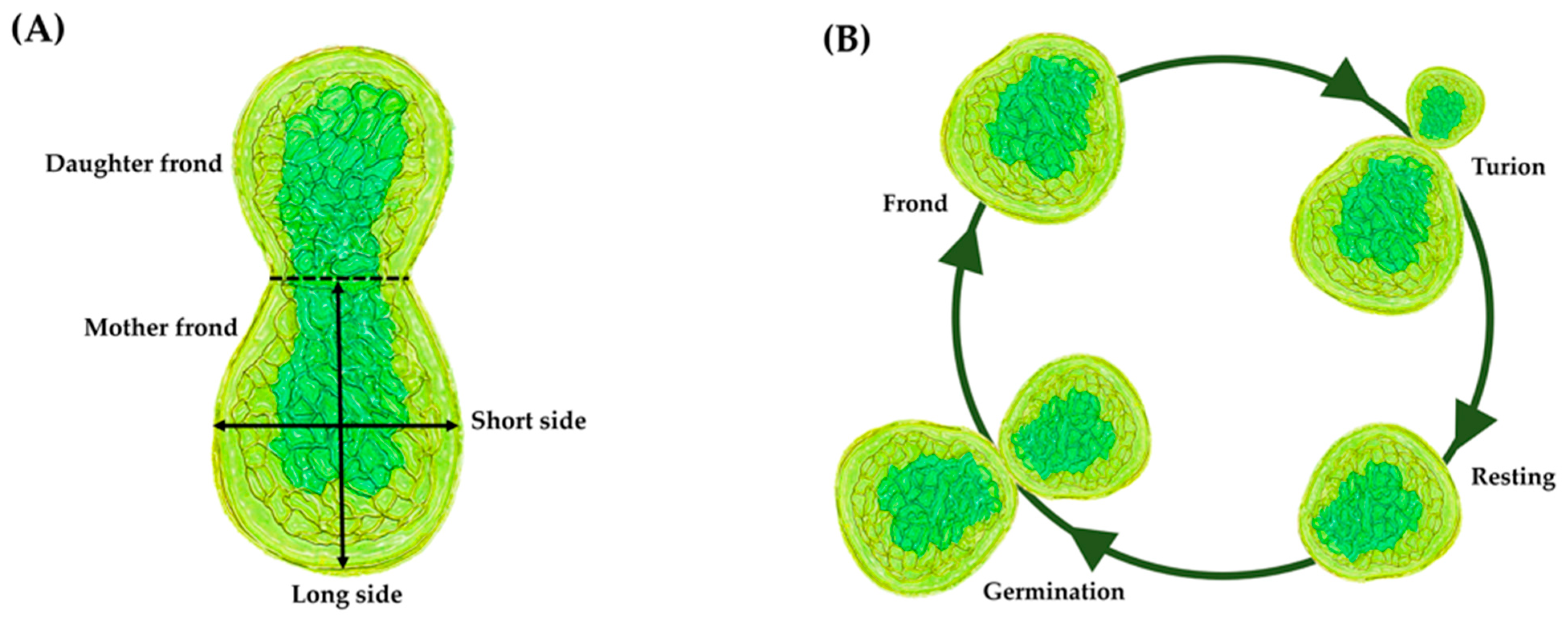
3.1. Taxonomy and Morphological Characteristics
3.2. Growth Physiology and Reproductive Characteristics

3.3. Cultivation and Production Systems
3.4. Environmental Tolerance and Ecological Benefits
3.5. Challenges in Cultivation
4. Nutritional and Phytochemical Composition
4.1. Proximate Composition
4.2. Amino Acid Profile and Protein Quality
4.3. Lipid Composition
4.4. Carbohydrates and Dietary Fiber
4.5. Micronutrients
4.6. Phytochemical Composition and Bioactive Compounds
4.7. Comparative Nutritional Perspective
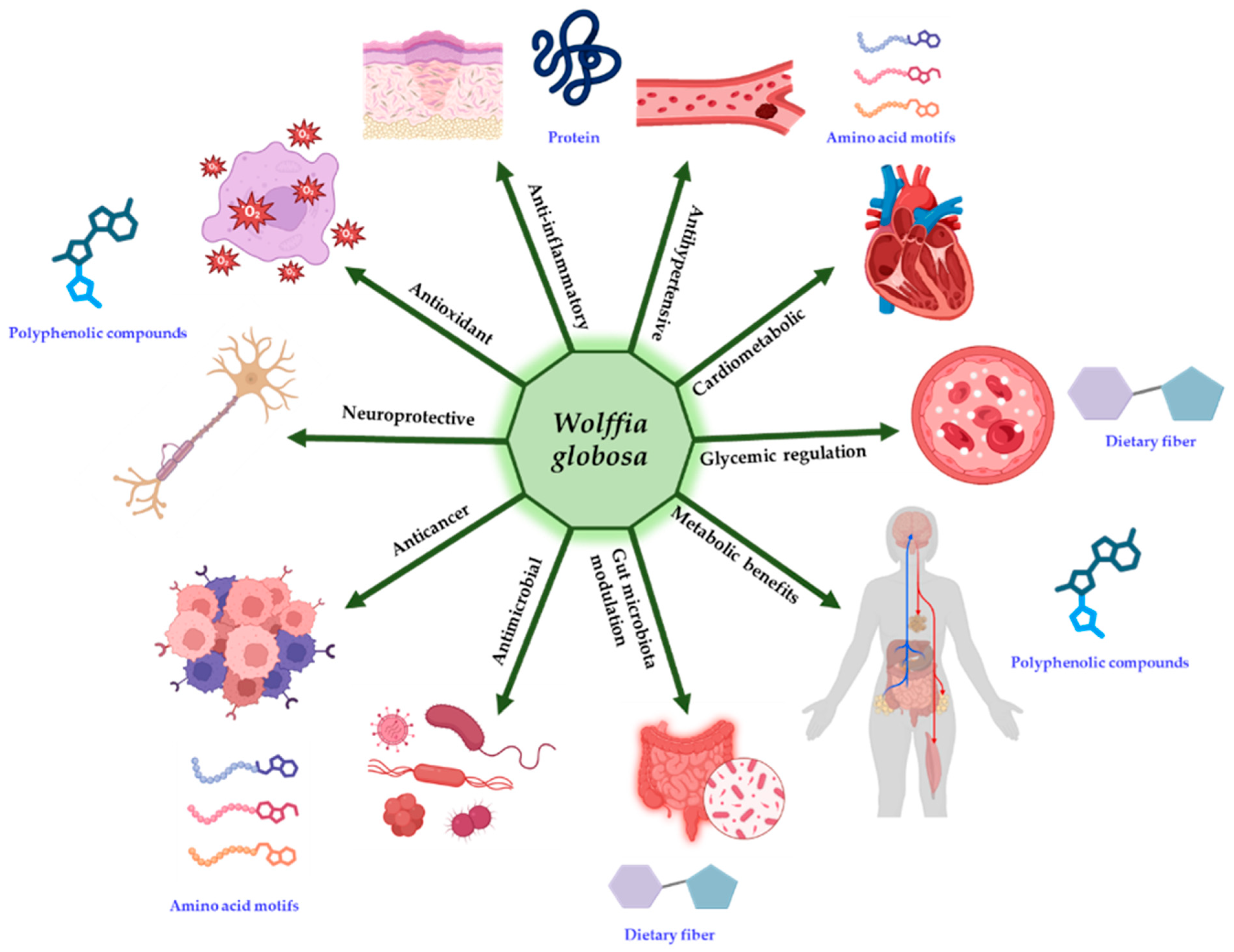
5. Bioactive and Functional Properties
5.1. Antioxidant and Anti-Inflammatory Activities
5.2. Antihypertensive and Cardiometabolic Effects
5.3. Glycemic Regulation and Metabolic Benefits
5.4. Gut Microbiota Modulation
5.5. Antimicrobial and Anticancer Potential
5.6. Functional Properties of Wolffia Proteins in Food Systems
6. Functional and Nutraceutical Ingredients
6.1. Potential Bioactive Compounds and Prospective Development Strategies
6.2. Bioactivities and Possible Mechanisms Associated with W. globosa Proteins

| Tested Compounds/Products | Activity | Possible Mechanisms/Effects | References |
|---|---|---|---|
| Selenopeptides | Antioxidants | Improving redox properties. | [54] |
| Anti-cancer (lung cancer cells; A549) | Slowing downregulation and reversing tumor progression. | [54] | |
| Extracted protein (non-hydrolyzed) | Anti-inflammatory (reduction of IL-1β) | Downregulating phospho-NF-κB, phospho-IκB-α, and COX-2, consistent with reduced NF-κB pathway activation. | [46] |
| Protein hydrolysates (hydrolyzed by Protamex with DH9%) | Anti-cancer (human ovarian cancer cell line; A2780) | Bioactive hydrophobic peptides increase the interactions between anti-cancer peptides and the membrane bilayers on the outer leaflets of tumor cells, inducing apoptosis and suppressing the cell cycle. | [1] |
| Protein hydrolysates (hydrolyzed by Alcalase) | Anti-microbial | Inhibition of V. parahaemolyticus and C. albicans by 0.43 ± 1.31 log reduction (66.21%) and 3.70 ± 0.11 log reduction (99.98%). | [33] |
| W. globosa extracts (rich in β-sitosterol and stigmasterol) | Anti-inflammatory | Inhibition of nitric oxide production in RAW 264.7 macrophage cells. | [6] |
| W. globosa-containing Mediterranean diet | Source of vitamin B12 | Increasing B12 level in serums. | [50] |
| W. globosa-containing shake | Glycemic control | Dietary fibers and polyphenols may contribute to beneficial postprandial glycemic effects. | [36] |
| W. globosa-containing Mediterranean diet (+physical activity) | Iron maintaining | Preserving iron-homeostasis in humans and efficient in reversal of anemia in rats. | [56] |
6.3. Impact of Processing on Nutritional and Functional Quality
7. Safety, Toxicology, and Regulatory Perspectives
7.1. Food Safety and Contaminant Considerations
7.2. Antinutritional Factors and Digestibility
7.3. Allergenicity Assessment
7.4. Toxicological Studies
7.5. Regulatory Status and Novel Food Approval
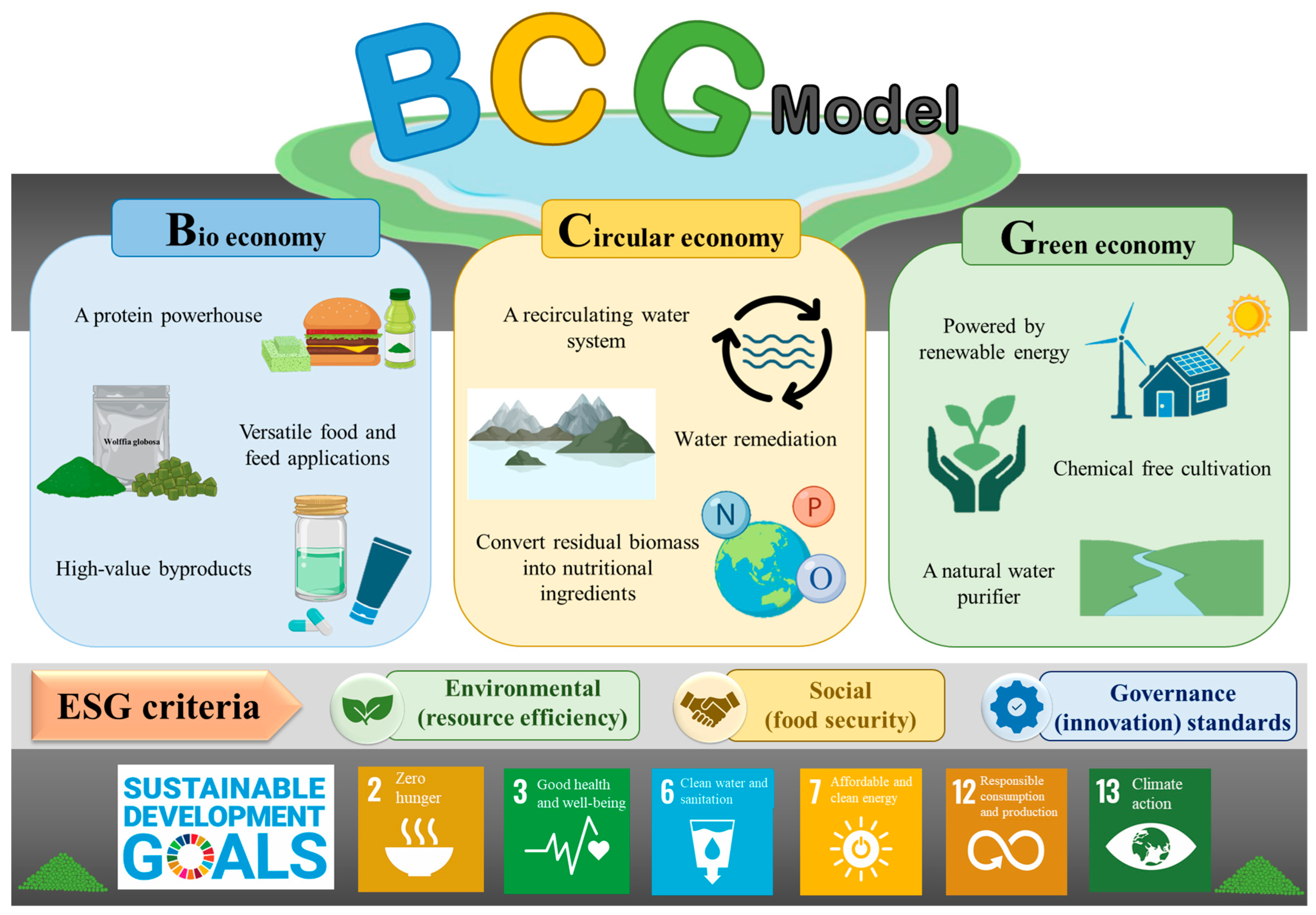
8. Sustainability and Environmental Impact
8.1. Bio-Economy
8.2. Circular Economy
8.3. Green Economy

9. Challenges, Gaps, and Future Perspectives
10. Conclusions
Author Contributions
Funding
Institutional Review Board Statement
Informed Consent Statement
Data Availability Statement
Acknowledgments
Conflicts of Interest
Abbreviations
| ABTS | 2,2′-Azino-bis(3-ethylbenzothiazoline-6-sulfonic acid |
| ACE | Angiotensin-converting enzyme |
| AN | Ammoniacal nitrogen |
| BCG | Biocircular-green economy |
| BOD | Biological oxygen demand |
| BPA | Bisphenol A |
| BPH | Benzophenone |
| Ca | Calcium |
| Cd | Cadmium |
| COD | Chemical oxygen demand |
| Cr | Chromium |
| Cu | Copper |
| DEET | N, N-Diethyl-m-toluamide |
| DPPH | 2,2-Diphenyl-1-picrylhydrazyl |
| DW | Dry weight |
| EAAs | Essential amino acids |
| EAI | Emulsifying activity index |
| EC50 | Half maximal effective concentration |
| EFSA | European food safety authority |
| END | Endosulfan |
| ESG | Environmental, Social, and Governance Criteria |
| FDA | The Food and Drug Administration |
| Fe | Iron |
| FRAP | Ferric reducing ability power assays |
| GAE | Gallic acid equivalent |
| GAP | Good Aquaculture Practices |
| GRAS | Generally Recognized As Safe |
| HACCP | Hazard analysis and critical control point |
| I | Iodine |
| Ile–Pro–Pro | Isoleucine–proline–proline |
| INFOODS | International Network of Food Data Systems |
| K | Potassium |
| LCA | Life Cycle Assessment |
| LDL | Low-density lipoprotein |
| Mg | Magnesium |
| Mn | Manganese |
| N | Nitrogen |
| Na | Sodium |
| ND | Not determined |
| NEAA | Non-essential amino acids |
| NF-κB | Nuclear Factor kappa-light-chain-enhancer of activated B cells |
| NOAEL | No observed adverse effect level |
| Nrf2–ARE | Nuclear factor erythroid 2-related factor 2 and Antioxidant Response Element |
| OHC | Oil holding capacity |
| OMPs | Organic micropollutants |
| P | Phosphorus |
| PDCAAS | The Protein Digestibility-Corrected Amino Acid Score |
| PE | Polyethylene |
| PPO | Polyphenol peroxidase |
| PUFAs | Polyunsaturated fatty acids |
| QE | Catechin equivalent |
| RCTs | Randomized controlled trials |
| RuBisCO | Ribulose-1,5-bisphosphate carboxylase oxygenase |
| SCFAs | Short-chain fatty acids |
| SDGs | The United Nations Sustainable Development Goals |
| Se | Selenium |
| SELENBP1 | Selenium-binding protein 1 |
| TFC | Total flavonoid content |
| TN | Total nitrogen |
| TP | Total phosphorus |
| TPC | Total phenolic content |
| TRC | Triclosan |
| TSS | Total suspended solids |
| USDA | United States Department of Agriculture |
| Val–Pro–Pro | Valine–proline–proline |
| WHC | Water holding capacity |
| Zn | Zinc |
References
- Siriwat, W.; Ungwiwatkul, S.; Unban, K.; Laokuldilok, T.; Klunklin, W.; Tangjaidee, P.; Potikanond, S.; Kaur, L.; Phongthai, S. Extraction, Enzymatic Modification, and Anti-Cancer Potential of an Alternative Plant-Based Protein from Wolffia globosa. Foods 2023, 12, 3815. [Google Scholar] [CrossRef]
- Prajapati, P.; Garg, M.; Singh, N.; Chopra, R.; Mittal, A.; Sabharwal, P.K. Transforming Plant Proteins into Plant-Based Meat Alternatives: Challenges and Future Scope. Food Sci. Biotechnol. 2024, 33, 3423–3443. [Google Scholar] [CrossRef]
- Pandey, A.; Verma, R.K. Nutritional Composition, Taxonomical and Phytoremediation Status of Duckweed (Wolffia): Review. Ann. Plant Sci. 2018, 7, 1928–1931. [Google Scholar] [CrossRef]
- Al-Qutob, M.A.; Nashashibi, T.S. Duckweed Lemna minor (Liliopsida, Lemnaceae) as a Natural Biofilter in Brackish and Fresh Closed Recirculating Systems. Aquacult. Aquar. Conserv. Legis. 2025, 5, 380–392. [Google Scholar]
- Munkit, J.; Nithikulworawong, N.; Mapanao, R.; Jiwyam, W. Biomass Production of Water-Meal (Wolffia globosa) and Its Chemical Composition and Amino Acid Profiles When Grown with Chemical Fertilizer in an Out-Door Polyethylene (PE) Tank Cultivation System. Aquac. Stud. 2025, 25, 236–244. [Google Scholar] [CrossRef]
- Tipnee, S.; Jutiviboonsuk, A.; Wongtrakul, P. The Bioactivity Study of Active Compounds in Wolffia globosa Extract for an Alternative Source of Bioactive Substances. Cosmetics 2017, 4, 53. [Google Scholar] [CrossRef]
- Seephua, N.; Boonarsa, P.; Li, H.; Thammapat, P.; Siriamornpun, S. Nutritional Composition and Bioactive Profiles of Farmed and Wild Watermeal (Wolffia globosa). Foods 2025, 14, 1832. [Google Scholar] [CrossRef] [PubMed]
- Ujong, A.; Naibaho, J.; Ghalamara, S.; Tiwari, B.K.; Hanon, S.; Tiwari, U. Duckweed: Exploring Its Farm-to-Fork Potential for Food Production and Biorefineries. Sustain. Food Technol. 2025, 3, 54–80. [Google Scholar] [CrossRef]
- Anyiam, P.N.; Phongthai, S.; Grossmann, L.; Jung, Y.H.; Sai-Ut, S.; Onsaard, E.; Rawdkuen, S. Potential Plant Proteins for Functional Food Ingredients: Composition, Utilization and Its Challenges. NFS J. 2025, 38, 100216. [Google Scholar] [CrossRef]
- Song, Y.; Hu, Z.; Liu, S.; Luo, S.; He, R.; Yang, X.; Li, S.; Yang, X.; An, Y.; Lu, Y. Utilization of Microalgae and Duckweed as Sustainable Protein Sources for Food and Feed: Nutritional Potential and Functional Applications. J. Agric. Food Chem. 2025, 73, 4466–4482. [Google Scholar] [CrossRef]
- Nandang, S.A.; Setiawan, P.B.; Purnomo, E.H.; Qin, S.; Ketnawa, S.; Wongsa, P.; Konsue, N. Comparative Effects of High-Pressure and Thermal Processing on the Nutritional and Functional Properties of Duckweed. Food Chem. Adv. 2025, 9, 101176. [Google Scholar] [CrossRef]
- Yang, J.; Zhao, X.; Li, G.; Hu, S.; Hou, H. Frond Architecture of the Rootless Duckweed, Wolffia globosa. BMC Plant biol. 2021, 21, 387. [Google Scholar] [CrossRef]
- Zhou, Y.; Stepanenko, A.; Kishchenko, O.; Xu, J.; Borisjuk, N. Duckweeds for the Phytoremediation of Polluted Water. Plants 2023, 12, 589. [Google Scholar] [CrossRef] [PubMed]
- Ziegler, P. The Developmental Cycle of Spirodela polyrhiza Turions: A Model for Turion-based Duckweed Overwintering? Plants 2024, 13, 2993. [Google Scholar] [CrossRef]
- Romano, L.E.; van Loon, J.J.; Izzo, L.G.; Iovane, M.; Aronne, G. Effects of Altered Gravity on Growth and Morphology in Wolffia globosa Implications for Bioregenerative Life Support Systems and Space-based Agriculture. Sci. Rep. 2024, 14, 410. [Google Scholar] [CrossRef]
- Appenroth, K.J.; Sree, K.S.; Bog, M.; Ecker, J.; Seeliger, C.; Böhm, V.; Lorkowski, S.; Sommer, K.; Vetter, W.; Tolzin-Banasch, K.; et al. Nutritional Value of the Duckweed Species of the Genus Wolffia (Lemnaceae) as Human Food. Front. Chem. 2018, 6, 483. [Google Scholar] [CrossRef]
- Ziegler, P.; Appenroth, K.J.; Sree, K.S. Survival Strategies of Duckweeds, the World’s Smallest Angiosperms. Plants 2023, 12, 2215. [Google Scholar] [CrossRef] [PubMed]
- Adamec, L. Ecophysiological Characteristics of Turions of Aquatic Plants: A Review. Aquat. Bot. 2018, 148, 64–77. [Google Scholar] [CrossRef]
- Petersen, F.; Demann, J.; Restemeyer, D.; Olfs, H.W.; Westendarp, H.; Appenroth, K.J.; Ulbrich, A. Influence of Light Intensity and Spectrum on Duckweed Growth and Proteins in A Small-scale, Re-circulating Indoor Vertical Farm. Plants 2022, 11, 1010. [Google Scholar] [CrossRef]
- Yang, G.L.; Feng, D.; Liu, Y.T.; Lv, S.M.; Zheng, M.M.; Tan, A.J. Research Progress of A Potential Bioreactor: Duckweed. Biomolecules 2021, 11, 93. [Google Scholar] [CrossRef]
- Titova, M.; Popova, E.; Nosov, A. Bioreactor Systems for Plant Cell Cultivation at The Institute of Plant Physiology of The Russian Academy of Sciences: 50 years of Technology Evolution from Laboratory to Industrial Implications. Plants 2024, 13, 430. [Google Scholar] [CrossRef] [PubMed]
- Sangpakdee, W.; Kaensa, W.; Sasopa, P.; Sangpakdee, T. Optimizing growth conditions for Wolffia (Wolffia globosa) using an AB hydroponic fertilizer culturing system. Udon Thani Rajabhat Univ. J. Sci. Technol. 2024, 12, 97–109. [Google Scholar]
- Xie, W.Y.; Huang, Q.; Li, G.; Rensing, C.; Zhu, Y.G. Cadmium Accumulation in The Rootless Macrophyte Wolffia globosa and Its Potential for Phytoremediation. Int. J. Phytoremediat. 2013, 15, 385–397. [Google Scholar] [CrossRef]
- Boonyapookana, B.; Upatham, E.S.; Kruatrachue, M.; Pokethitiyook, P.; Singhakaew, S. Phytoaccumulation and Phytotoxicity of Cadmium and Chromium in Duckweed Wolffia globosa. Int. J. Phytoremediat. 2002, 4, 87–100. [Google Scholar] [CrossRef]
- Mohd Said, N.S.; Zakaria, M.Z.; Samsuddin, N.I.; Barom, N.A.Z.; Murugiah, N.A.M.; Sheikh Abdullah, S.R. Reclaiming Wolffia arrhiza as Fish Feed for The Phytoremediation of Aquaculture Effluent. J. Environ. Manag. 2025, 382, 125405. [Google Scholar] [CrossRef]
- Kotowska, U.; Piotrowska-Niczyporuk, A.; Kapelewska, J.; Jasinska, L.L. The Impact of Organic Micropollutants on The Biochemical Composition and Stress Markers in Wolffia arrhiza. Molecules 2025, 30, 445. [Google Scholar] [CrossRef]
- On-Nom, N.; Promdang, P.; Inthachat, W.; Kanoongon, P.; Sahasakul, Y.; Chupeerach, C.; Suttisansanee, U.; Temviriyanukul, P. Wolffia globosa-Based Nutritious Snack Formulation with High Protein and Dietary Fiber Contents. Foods 2023, 12, 2647. [Google Scholar] [CrossRef]
- Sirison, J.; Ruangsomboon, S.; Jongput, B.; Aue-Umneoy, D.; Tongsri, P. Cultivation of Wolffia globosa and Its Application in Functional Food Development. Sci. Rep. 2025, 15, 38255. [Google Scholar] [CrossRef]
- Saranya, S.; Lincy, L.L.; Thamanna, L.; Dhayanithi, S.; Chellapandi, P. Wolffia: A Sustainable Aquatic Crop for Future Food Systems and Space Agriculture. Trends Food Sci. Technol. 2025, 161, 105069. [Google Scholar] [CrossRef]
- Heenatigala, P.P.M.; Yang, J.; Bishopp, A.; Sun, Z.; Li, G.; Kumar, S.; Hu, S.; Wu, Z.; Lin, W.; Yao, L.; et al. Development of Efficient Protocols for Stable and Transient Gene Transformation for Wolffia Globosa Using Agrobacterium. Front. Chem. 2018, 6, 227. [Google Scholar] [CrossRef] [PubMed]
- Kaplan, A.; Zelicha, H.; Tsaban, G.; Yaskolka Meir, A.; Rinott, E.; Kovsan, J.; Novack, L.; Thiery, J.; Ceglarek, U.; Burkhardt, R.; et al. Protein Bioavailability of Wolffia globosa Duckweed, a Novel Aquatic Plant—A Randomized Controlled Trial. Clin. Nutr. 2019, 38, 2576–2582. [Google Scholar] [CrossRef]
- Hu, Z.; Fang, Y.; Yi, Z.; Tian, X.; Li, J.; Jin, Y.; He, K.; Liu, P.; Du, A.; Huang, Y.; et al. Determining the Nutritional Value and Antioxidant Capacity of Duckweed (Wolffia arrhiza) under Artificial Conditions. LWT 2022, 153, 112477. [Google Scholar] [CrossRef]
- Duangjarus, N.; Chaiworapuek, W.; Rachtanapun, C.; Ritthiruangdej, P.; Charoensiddhi, S. Antimicrobial and Functional Properties of Duckweed (Wolffia globosa) Protein and Peptide Extracts Prepared by Ultrasound-Assisted Extraction. Foods 2022, 11, 2348. [Google Scholar] [CrossRef]
- Bernier, M.-È.; Thibodeau, J.; Bazinet, L. Enzymatic Hydrolysis of Water Lentil (Duckweed): An Emerging Source of Proteins for the Production of Antihypertensive Fractions. Foods 2024, 13, 323. [Google Scholar] [CrossRef] [PubMed]
- Dhamaratana, S.; Methacanon, P.; Charoensiddhi, S. Chemical Composition and in Vitro Digestibility of Duckweed (Wolffia globosa) and Its Polysaccharide and Protein Fractions. Food Chem. Adv. 2025, 6, 100867. [Google Scholar] [CrossRef]
- Zelicha, H.; Kaplan, A.; Yaskolka Meir, A.; Tsaban, G.; Rinott, E.; Shelef, I.; Tirosh, A.; Brikner, D.; Pupkin, E.; Qi, L.; et al. The Effect of Wolffia globosa Mankai, a Green Aquatic Plant, on Postprandial Glycemic Response: A Randomized Crossover Controlled Trial. Diabetes Care 2019, 42, 1162–1169. [Google Scholar] [CrossRef] [PubMed]
- Xu, J.; Shen, Y.; Zheng, Y.; Smith, G.; Sun, X.S.; Wang, D.; Zhao, Y.; Zhang, W.; Li, Y. Duckweed (Lemnaceae) for Potentially Nutritious Human Food: A Review. Food Rev. Int. 2023, 39, 3620–3634. [Google Scholar] [CrossRef]
- Acosta, K.; Sree, K.S.; Okamoto, N.; Koseki, K.; Sorrels, S.; Jahreis, G.; Watanabe, F.; Appenroth, K.J.; Lam, E. Source of Vitamin B12 in Plants of the Lemnaceae Family and Its Production by Duckweed-Associated Bacteria. J. Food Compos. Anal. 2024, 135, 106603. [Google Scholar] [CrossRef]
- Hou, Y.; Huang, L.; Xing, G.; Yuan, X.; Zhang, X.; Dai, D.; Yuan, X.; Chen, X.; Xue, C. Structure and Functional Properties of Proteins from Different Soybean Varieties as Affected by the 11S/7S Globulin Ratio. Foods 2025, 14, 755. [Google Scholar] [CrossRef]
- Harasym, J.; Paroń, O.; Pejcz, E. Pea Protein Isolates: From Extraction to Functionality. Molecules 2025, 30, 4650. [Google Scholar] [CrossRef]
- Rhoades, J.; Fotiadou, S.; Paschalidou, G.; Papadimitriou, T.; Ordóñez, A.Á.; Kormas, K.; Vardaka, E.; Likotrafiti, E. Microbiota and Cyanotoxin Content of Retail Spirulina Supplements and Spirulina Supplemented Foods. Microorganisms 2023, 11, 1175. [Google Scholar] [CrossRef] [PubMed]
- United States Department of Agriculture (USDA) FoodData Central. Soy Protein Isolate—Nutrient Composition per 100 g. Available online: https://www.nutrionio.com/en/food/soy-protein-isolate (accessed on 20 December 2025).
- Yadav, N.K.; Singh, D.P.; Choudhury, S.; Kaushik, D.; Pundir, C.S.; Bhunia, M. Characterization of Bioactive Metabolites and Antioxidant Activities in Solid and Liquid Fractions of Fresh Duckweed (Wolffia globosa) Subjected to Different Cell-Wall Rupture Methods. ACS Omega 2024, 9, 19940–19955. [Google Scholar] [CrossRef]
- Boonarsa, P.; Suttisansanee, U.; Charoensiddhi, S. Nutritional Quality, Functional Properties, and Biological Characterization of Watermeal (Wolffia globosa). Horticulturae 2024, 10, 1171. [Google Scholar] [CrossRef]
- Pakdeebamrung, P.; Phongthai, S.; Monkhai, T.; Singhadechachai, N.; Chaikaew, A.; Tangjaidee, P. Selenium Biotransformation and Phenolic Compound Extraction from Selenium-enriched Wolffia globosa: Antioxidant Potential and Anti-proliferative Effects on Human Ovarian Cancer Cells. Food Res. 2025, 9, 33–44. [Google Scholar] [CrossRef] [PubMed]
- Khonkarn, R.; Daowtak, K.; Kraseasintra, O.; Luetragoon, T.; Usuwanthim, K.; Taynawa, K.; Chanphong, K. Bioactive potential of protein extracts derived from dried Wolffia globosa on in vitro antioxidant activities and pro-inflammatory cytokine production. Molecules 2025, 30, 4092. [Google Scholar] [CrossRef]
- Wolffia globosa (Mankai). Available online: https://www.alzdiscovery.org/uploads/cognitive_vitality_media/Wolffia_globosa_(Mankai).pdf (accessed on 27 December 2025).
- Dhamaratana, S.; Methacanon, P.; Tunsagool, P.; Nakphaichit, M.; Mok, K.; Honwichit, O.; Charoensiddhi, S. Alterations in gut microbiome and metabolite profiling during in vitro fermentation of duckweed (Wolffia globosa) and its extracts by gut bacteria from obese adults. Future Foods 2025, 11, 100608. [Google Scholar] [CrossRef]
- Pachter, D.; Kaplan, A.; Tsaban, G.; Zelicha, H.; Meir, A.Y.; Rinott, E.; Levakov, G.; Salti, M.; Yovell, Y.; Huhn, S.; et al. Glycemic Control Contributes to The Neuroprotective Effects of Mediterranean and Green-Mediterranean Diets on Brain Age: The DIRECT PLUS Brain-magnetic Resonance Imaging Randomized Controlled Trial. Am. J. Clin. Nutr. 2024, 120, 1029–1036. [Google Scholar] [CrossRef]
- Sela, I.; Yaskolka Meir, A.; Brandis, A.; Krajmalnik-Brown, R.; Zeibich, L.; Chang, D.; Dirks, B.; Tsaban, G.; Kaplan, A.; Rinott, E.; et al. Wolffia globosa–Mankai Plant-Based Protein Contains Bioactive Vitamin B12 and is Well Absorbed in Humans. Nutrients 2020, 12, 3067. [Google Scholar] [CrossRef]
- Mirón-Mérida, V.A.; Ceballos-Torres, A.; Hernández-Zárate, C.I.; Sánchez-Herrera, K.; Vázquez-Landaverde, P.A.; Valdez-Ortiz, A. The Effect of Ultrasound on the Extraction and Functionality of Proteins from Duckweed (Lemna minor). Molecules 2024, 29, 1122. [Google Scholar] [CrossRef]
- Nitiwuttithorn, T.; Suvarnavich, Y.; Pongchaidecha, N. Effects of Alkaline and Ultrasonication Extraction Methods on Physicochemical and Techno-Functional Properties of Duckweed (Wolffia arrhiza) Proteins. Front. Sustain. Food Syst. 2024, 8, 1343615. [Google Scholar] [CrossRef]
- Nieuwland, M.; van der Goot, A.J.; Boom, R.M. Isolation and Gelling Properties of Duckweed Protein Concentrate. ACS Food Sci. Technol. 2021, 1, 161–171. [Google Scholar] [CrossRef]
- Pakdeebamrung, P.; Phongthai, S.; Kingwascharapong, P.; Issara, U.; Tian, J.; Jung, Y.H.; Rachtanapun, P.; Rawdkuen, S.; Tangjaidee, P. Selenopeptide with Antioxidant and Anticancer Activities from Se-enriched Wolffia globosa: Fractionation, Isolation and Identification. Appl. Food Res. 2025, 5, 101372. [Google Scholar] [CrossRef]
- Zhang, Q.Y.; Yan, Z.B.; Meng, Y.M.; Hong, X.Y.; Shao, G.; Ma, J.J.; Cheng, X.R.; Liu, J.; Kang, J.; Fu, C.Y. Antimicrobial Peptides: Mechanism of Action, Activity and Clinical Potential. Mil. Med. Res. 2021, 8, 48. [Google Scholar] [CrossRef]
- Yaskolka Meir, A.; Tsaban, G.; Zelicha, H.; Rinott, E.; Kaplan, A.; Youngster, I.; Rudich, A.; Shelef, I.; Tirosh, A.; Brikner, D.; et al. A Green-mediterranean Diet, Supplemented with Mankai Duckweed, Preserves Iron-homeostasis in Humans and is Efficient in Reversal of Anemia in Rats. J. Nutr. 2019, 149, 1004–1011. [Google Scholar] [CrossRef]
- Doungtip, P.; Srisorn, P.; Hunsakul, K. Effect of Salt Solution Combined with Blanching on Color Retention and Antioxidant Activity in Dried Wolffia arrhiza. Food Technol. Siam Univ. J. 2025, 20, 32–41. [Google Scholar]
- Ifie, I.; Olatunde, S.; Ogbon, O.; Umukoro, J.E. Processing Techniques on Phytochemical Content, Proximate Composition, and Toxic Components in Duckweed. Int. J. Veg. Sci. 2021, 27, 294–302. [Google Scholar] [CrossRef]
- Prosridee, K.; Oonsivilai, R.; Tira-Aumphon, A.; Singthong, J.; Oonmetta-Aree, J.; Oonsivilai, A. Optimum Aquaculture and Drying Conditions for Wolffia arrhiza (L.) Wimn. Heliyon 2023, 9, e19730. [Google Scholar] [CrossRef] [PubMed]
- Pattarayingsakul, W.; Uthailak, N.; Tanjor, S.; Limsangouan, N.; Udomrati, S.; Reamtong, O. Effects of Drum Drying on The Nutritional Composition, Proteomic Profile, and Functional Properties of Wolffia globosa. J. Sci. Food Agric. 2025, 20. [Google Scholar] [CrossRef]
- Phongthai, S.; Maitip, J.; Promsart, W.; Junla, W.; Ungwiwatkul, S. Optimization of Ultrasound-Assisted Protein Extraction from Khai-Nam (Wofflia globosa) Using Response Surface Methodology. CMUJ. Nat. Sci. 2025, 10. [Google Scholar] [CrossRef]
- EFSA NDA Panel (EFSA Panel on Nutrition, Novel Foods and Food Allergens); Turck, D.; Bohn, T.; Castenmiller, J.; De Henauw, S.; Hirsch-Ernst, K.I.; Maciuk, A.; Mangelsdorf, I.; McArdle, H.J.; Naska, A.; et al. Scientific Opinion on the Safety of Wolffia globosa Powder as a Novel Food Pursuant to Regulation (EU) 2015/2283. EFSA J. 2021, 19, 6938. [Google Scholar]
- U.S. Food and Drug Administration (FDA). GRAS Notice (GRN) No. 984: Wolffia globosa. 2021. Available online: https://hfpappexternal.fda.gov/scripts/fdcc/index.cfm?set=GRASNotices&id=984 (accessed on 5 December 2025).
- Pagliuso, D.; Grandis, A.; Fortirer, J.S.; Camargo, P.; Floh, E.I.S.; Buckeridge, M.S. Duckweeds as Promising Food Feedstocks Globally. Agronomy 2022, 12, 796. [Google Scholar] [CrossRef]
- Takács, K.; Végh, R.; Mednyánszky, Z.; Haddad, J.; Allaf, K.; Du, M.; Chen, K.; Kan, J.; Cai, T.; Molnár, P.; et al. New Insights into Duckweed as an Alternative Source of Food and Feed: Key Components and Potential Technological Solutions to Increase Their Digestibility and Bioaccessibility. Appl. Sci. 2025, 15, 884. [Google Scholar] [CrossRef]
- Kawamata, Y.; Shibui, Y.; Takumi, A.; Seki, T.; Shimada, T.; Hashimoto, M.; Inoue, N.; Kobayashi, H.; Narita, T. Genotoxicity and Repeated-Dose Toxicity Evaluation of Dried Wolffia globosa Mankai. Toxicol. Rep. 2020, 7, 1233–1241. [Google Scholar] [CrossRef] [PubMed]
- Edyvean, R.G.J.; Apiwatanapiwat, W.; Vaithanomsat, P.; Boondaeng, A.; Janchai, P.; Sophonthammaphat, S. The Bio-Circular Green Economy Model in Thailand—A Comparative Review. Agr. Nat. Resour. 2023, 57, 51–64. [Google Scholar]
- Meng, X.; Shaikh, G.M. Evaluating Environmental, Social, and Governance Criteria and Green Finance Investment Strategies Using Fuzzy AHP and Fuzzy WASPAS. Sustainability 2023, 15, 6786. [Google Scholar] [CrossRef]
- Luo, J.; Chien, Y.; Thephahudee, W.; Kitikiew, S.; Kantha, P. The Effect of Light-Emitting Diodes (LEDs) on the Development of Duckweed (Lemna minor) in Co-Culture with Red Tilapia (Oreochromis Spp.). J. Fish. Environ. 2023, 47, 99–115. [Google Scholar]
- Yongyod, R.; Kamolrat, N. Effects of Different Nitrogen and Phosphorus Ratios on the Growth, Nutritional Value, and Nutrient Removal Efficiency of Wolffia globosa. Sci 2025, 7, 53. [Google Scholar] [CrossRef]
- Zahari, M.I.N.; Bakar, L.; Mustafa, F.; Sadun, A.S. Investigation on the Performance of Solar Panels as Wind Turbine Blades for Sustainable Power Generation. PEAT 2024, 5, 149–158. [Google Scholar]
- Malila, Y.; Owolabi, I.O.; Chotanaphuti, T.; Sakdibhornssup, N.; Elliott, C.T.; Visessanguan, W.; Karoonuthaisiri, N.; Petchkongkaew, A. Current Challenges of Alternative Proteins as Future Foods. Npj Sci. Food. 2024, 8, 53. [Google Scholar] [CrossRef]
- López-Pozo, M.; Adams, W.W.; Demmig-Adams, B. Lemnaceae as Novel Crop Candidates for CO2 Sequestration and Additional Applications. Plants 2023, 12, 3090. [Google Scholar] [CrossRef]
- Kumar, M.; Patel, A.B.; Prusty, S. Determining the Nutrient Removal Capacity of Duckweed Wolffia globosa under Artificial Conditions. Int. J. Weed Sci. 2022, 54, 216–219. [Google Scholar] [CrossRef]
- Costa, M.R.; Moreira, M.C.; Silva, D.D.D.; Alencar, K.M.D.; Coelho, C.D. Water Footprint of Soybean, Cotton, and Corn Crops in the Western Region of Bahia State. Eng. Sanit. Ambient. 2021, 26, 971–978. [Google Scholar] [CrossRef]
- United Nations. The Sustainable Development Goals (SDGs). Available online: https://www.un.org/sustainabledevelopment/news/communications-material/ (accessed on 23 December 2025).

| Cultivation Systems | Natural Water Bodies | Open-Field Cultivation Systems [16] | Hydroponic Greenhouse Cultivation [22] | Indoor Vertical Farm (IVF) [19] | Bioreactor System [20,21] |
|---|---|---|---|---|---|
| System description | Stagnant freshwater bodies (ponds, natural wetlands) | Cultivation in polyethylene tanks with fertilizer application | Cultivation under fully or semi-controlled greenhouse conditions | Closed system using artificial lighting and nutrient solutions | Cultivation in controlled bioreactors |
| Production system | Outdoor, open system | Outdoor, open system | Indoor, fully or semi-controlled system | Indoor, closed system | Indoor, closed system |
| Level of production factor control | Limited | Moderate-High | Moderate-High | High | Very high |
| Fertilizer and environmental management | Uncontrolled | Basic fertilizer management (e.g., NPK) | Controlled fertilization and partial environmental control | Precise nutrient and environmental management | Strict control of nutrients and environmental conditions |
| Yield | Variable | High | High | High | High and high quality |
| Nutritional value and bioactive compounds | Inconsistent nutritional value | High protein content and amino acids | Relatively stable nutritional quality | Adjustable nutritional and bioactive profiles | Targeted bioactive compound production |
| Advantages | Low cost, traditional practice | Simple system, low investment, high biomass | Controlled environment; pest and disease protection | High safety, year-round production | High purity, suitable for high-value products |
| Limitations | High contamination risk, unstable supply | Low level of control over production factors (e.g., fertilizers, light, rainfall, water quality) | Higher cost than outdoor systems | High capital and energy costs, Requires skilled operators | High operational cost; contamination risk; requires multidisciplinary expertise |
| Suitability for application | Household consumption | Human food, animal feed | Commercial food production | High-quality food, industrial production | Pharmaceutical and biotechnological applications |
| Proximate Composition | g/100 g DW | Proximate Composition | g/100 g DW |
|---|---|---|---|
| Moisture | 3.73–4.25 | Ash | 6.76–7.84 |
| Protein | 20.55–22.74 | Fiber | 15.76–16.53 |
| Lipid | 3.23–4.08 | Carbohydrate | 50.73–52.44 |
| Essential amino acids | g/100 g DW | Non-Essential amino acids | g/100 g DW |
| Arginine | 1.32–2.13 | Alanine | 1.07–2.05 |
| Histidine | 0.24–0.42 | Asparagine | 0.36–0.99 |
| Isoleucine | 0.92–1.32 | Aspartic acid | 0.51–0.75 |
| Leucine | 0.871.24 | Cysteine | 0.03–0.07 |
| Lysine | 0.29–0.47 | Glutamine | 0.62–1.08 |
| Methionine | 0.14–0.18 | Glutamic acid | 0.49–0.77 |
| Phenylalanine | 1.01–1.36 | Glycine | 0.17–0.27 |
| Threonine | 0.12–0.22 | Proline | 0.03–1.00 |
| Tryptophan | 0.45–0.58 | Serine | 0.19–0.37 |
| Valine | 1.03–1.67 | Tyrosine | 1.45–1.66 |
| Phenolic acid content | µg/g DW | Phenolic acid content | µg/g DW |
| Gallic acid | 169.86–173.20 | Vanillin | ND |
| Protocatechuic acid | 166.94–172.49 | p-Coumaric acid | 55.36–59.80 |
| p-Hydroxybenzoic acid | ND | Ferulic acid | 18.02–22.63 |
| Vanillic acid | 78.90–86.20 | Sinapic acid | 129.26–137.05 |
| Caffeic acid | 12.62–13.69 | Cinnamic acid | 57.04–61.38 |
| Syringic acid | 9.61–10.71 | Gentisic acid | 20.72–26.64 |
| Flavonoid content | µg/g DW | Phytosterols | µg/100 g DW |
| Rutin | 81.30–89.73 | Campesterol | ND-212.45 |
| Catechin | ND | Stigmasterol | ND-212.90 |
| Quercetin | 176.77–195.36 | β-Sitosterol | 101.96–625.08 |
| Apigenin | 172.55–179.98 | Cycloartenol | ND-43.74 |
| Kaempferol | 38.40–42.46 | Brassicasterol | ND-29.88 |
| Total | 473.08–503.79 | ND: not determined | |
| Functional Category | W. globosa [7,8,9,10,11,12,13,14,15,16,17,18,19,20,21,22,23,24,25,26,27,28,29,30,31,32,33,34,35,36,37,38,39] | Soy [40] | Pea [41] | Spirulina [9] | Reference |
|---|---|---|---|---|---|
| Protein content | 20.55–31.50 g/100 g DW | ≈40% DB (whole seeds); ≈90% (protein isolate) | 20–30% DB (whole seeds); 81–89% (protein isolate) | 50–70% DB (≈65.3 g/100 g powder) | [7,27,40,41] |
| Amino acid profile/protein quality | Rich in arginine, valine, and leucine; PDCAAS ≈ 0.89 | Complete essential amino acid profile; PDCAAS ≈ 0.92–1.00 | Dominated by legumin (11S) and vicilin (7S) storage proteins | Rich in phycobiliproteins, particularly C-phycocyanin | [9,27,39,41] |
| Lipid composition | 3.23–5.18 g/100 g DW; high α-linolenic acid (C18:3 ω-3) | ≈0.8 g/100 g (isolate); residual plant oil | 5.1–55.0 g/kg (cultivar- and process-dependent isolates) | ≈0.8 g/100 g DW; enriched in ω-3 fatty acids | [7,40,41] |
| Carbohydrates | 50.73–52.59 g/100 g DW | Very low in isolate form due to removal during processing | 4–39 g/kg wb (isolate) | ≈12.8 g/100 g DW | [9,27,39,40] |
| Dietary fiber | 10.7–16.5 g/100 g DW; predominantly insoluble fiber | ~0 g/100 g in protein isolate | Low or trace levels in isolate form | Minor amounts; not nutritionally significant | [9,27,39,40] |
| Micronutrients | Vitamin B12, β-carotene, α-tocopherol; Fe, Ca, Mg, Zn | Ca (~178 mg), Fe (~14.5 mg), Mg (~39 mg), P (~776 mg)/100 g isolate; vitamin B12 absent | Trace minerals depending on processing; generally reduced in isolate form | Vitamin B12, vitamin A, Fe, Mg | [27,39,40,41,42] |
| Phytochemicals | Phenolics (gallic acid), flavonoids (rutin, quercetin, apigenin), phytosterols | Isoflavones largely removed in isolate form | Phenolics largely reduced during protein isolation | Chlorophyll, C-phycocyanin | [27,40,41,42] |
| Functional properties | Enzymatic hydrolysis improves solubility and emulsifying activity | EAI ≈ 38.6 m2/g; ESI ≈ 19.5 min (isolate) | EAI ≈ 31–39 m2/g; ESI ≈ 11 min (cultivar-dependent) | High-pressure homogenization (50 MPa) markedly improves EAI, oil-holding, and foaming capacity | [27,39,40,41] |
| Bioactive Compounds Identified | Functional and Biological Activities | Extraction/Modification Method | Microbial or Cell Line Target | References |
|---|---|---|---|---|
| Protein concentrate hydrolysate (PCH), protein extract (PE), and protein solution (PS) rich in aspartic acid and glutamic acid; peptides | Antimicrobial activity, antioxidant activity, and functional properties (high solubility, emulsifying capacity, and stability) | Ultrasound-assisted extraction (UAE), isoelectric precipitation, and Alcalase hydrolysis | Vibrio parahaemolyticus, Candida albicans, and other foodborne pathogens | [33] |
| Indole-3-acryloylglycine (I3AG), spiculosine (ES-285), and selenium-enriched phenolics | Antioxidant and anti-proliferative effects | Ultrasonic-assisted extraction (UAE) with 60% methanol | Human ovarian cancer cells (A2780 and SKOV3) | [45] |
| Essential amino acids (leucine, valine, phenylalanine) | Antioxidant, foaming, and emulsifying activities; anti-cancer potential | Ultrasonic-assisted extraction (UAE) and enzymatic hydrolysis (Alcalase and Protamex) | Human ovarian cancer cell lines (A2780) | [1] |
| Bioactive vitamin B12 (hydroxocobalamin, 5-deoxyadenosylcobalamin, methylcobalamin, cyanocobalamin) | Bioavailable B12 source (increases serum B12 levels in humans) | Cultivation in controlled greenhouse systems | Humans (clinical trial participants) | [50] |
| Protein extracts (precipitates and supernatants) and phenolic compounds | Antioxidant activities (ABTS/FRAP) and anti-inflammatory effects (reduced IL-1β and IL-6) | Alkaline extraction followed by acid (pH 3/5) or heat (85 °C) precipitation | THP-1 human monocytic cell line | [46] |
| 72 phenolic compounds (18 phenolic acids, 29 flavonoids, 25 polyphenols), carotenoids, and vitamin C | Antioxidant activity (DPPH, ABTS, FRAP) | Boiling, Freeze-thawing, and Mechanical crushing | Not in source | [43] |
| Essential amino acids (leucine, lysine, valine), dietary fiber, and phenolics | Antioxidant activity (ORAC/FRAP) and nutritional fortification | Freeze-dried powder (WP) in snack formulation | S. typhimurium (TA98, TA100, TA102, TA1535, TA1537) for Ames test | [27] |
| Phenolic acids (protocatechuic, vanillic, p-coumaric), rutin, and alpha-linolenic acid | Antioxidant activity (DPPH and FRAP assays) | Hot air oven drying at 60 °C | Not in source | [7] |
| Alpha-tocopherol, gamma-oryzanol, and vicilin-like protein | Antioxidant capacity, water/oil holding capacity, and emulsifying abilities | Freeze-drying | Not in source | [44] |
| Essential amino acids and Vitamin B12 | Protein bioavailability and amino acid intake | Not in source | Human subjects (randomized controlled trial) | [31] |
| Beta-sitosterol and stigmasterol | Anti-inflammatory activity (nitric oxide inhibition) | Not in source | Macrophage cells (RAW 264.7) and Human dermal fibroblast (HDFn) | [6] |
| Processing Method | Condition | Nutritional and Functional Quality | References |
|---|---|---|---|
| Drying | 50 °C for 6 h | Total phenolics, flavonoids, and chlorophylls contents of 55.28 ± 1.35 (μg gallic acid equivalent (GAE)/g dry weight), 159.84 ± 6.65 (μg catechin equivalent (QE)/g dry weight) and 22.91 ± 0.15 (mg/g dry weight), respectively. | [59] |
| Pre-treated with salt solution combined with blanching | Pre-treated with blanching (80 °C, 3 min) in the different salt solutions before drying in a hot air oven at 60 °C for 8 h | The number of antioxidants from DPPH and FRAP method were 11.64 and 22.55 mmol Trolox eq/kg, respectively and TPC was 454.26 mg GAE/100 g. | [57] |
| Boiling | 100 °C for 10 min before drying at 50 °C for 12 h. | The highest and most prominent leaching of crude lipid, mineral (ash), DPPH and FRAP antioxidant activities, TPC, total tannin content, and TFC. | [43] |
| Freeze–thawing | −20 °C for 12 h; thawing in tap water at room temperature for 2–3 h before being placed at 50 °C for 12 h. | The highest contents of crude protein, crude lipid, total carotenoids, vitamin C, Chl-a, and various phenolic compounds, flavonoids, and other polyphenols. | [43] |
| Mechanical crushing | Grounded/blended into batches of 500 g before during at 50 °C for 12 h. | The lowest leaching of TPC, TFC, and total tannin content but the highest leaching of the crude protein, total carotenoids, Chl-a, and Chl-b. | [43] |
| Drum drying | 120 °C–150 °C | Proteomic analysis identified 342 proteins, including ribulose-1,5-bisphosphate carboxylase oxygenase (RuBisCO), adenosine triphosphate (ATP) synthase, and antioxidant enzymes, reflecting its photosynthetic activity and functional potential. All essential amino acids were retained in dried samples, and the antioxidant activities increased after post-drying. | [60] |
| Ultrasound-assisted extraction (UAE) | At 120 kHz (power level 4) conducted at room temperature for 15 min before isoelectric precipitation (pH 3.5) | The highest protein solubility relative to the protein extract, total amino acids in the protein concentrate hydrolysate increased, whereas the protein solution contained lower totals of amino acids. | [33] |
| Ultrasound-assisted extraction | Solid–liquid ratio of 0.1:10 g/mL, ultrasound amplitudes of 100% and extraction time of 30 min | The maximum protein yield was found to be 39.65% w/w. The major amino acids were glutamate, aspartate and leucine. | [61] |
| High-pressure processing (HPP) | At 450 MPa for 5 min | Enhanced water holding capacity (WHC), oil holding capacity (OHC), and protein digestibility (up to 83.83%). Lowered phytic and oxalic acids, improving mineral bioavailability. | [11] |
| Steaming | At 100 °C for 10 min | Improved EAA content, steaming best preserved chlorophyll (2.02 ± 0.10 mg/g DW) and reduces magnesium (Mg2+) loss. | [11] |
| Boiling | At 100 °C for 10 min | Led to structural damage, loss of bioactives, and mineral leaching, reducing the overall nutritional value. | [11] |
| Tray drying | At 70 °C for 5 h | [11] |
| Assessment Category | Reported Findings | References |
|---|---|---|
| Heavy Metal Contamination | Accumulation risk: Duckweeds (Wolffia spp.) demonstrate high potential for the uptake and accumulation of heavy metals and organic pollutants, particularly Manganese (Mn). Water quality control during cultivation is critical to ensure final product safety. | [13,62] |
| Microbiological Safety | Process control required: Cultivation and processing must be strictly controlled to mitigate risks associated with microbial contamination and the potential presence of toxins such as microcystins. | [62] |
| Anti-nutritional Factors | Low levels & mitigation: Anti-nutritional factors (e.g., phytic acid, tannins, oxalates) are present at low concentrations. Processing techniques, such as specific extraction or fermentation, are effective in further reducing their content. | [52] |
| Allergenicity | Allergenic potential: The EFSA Panel noted a hypothetical concern that the high protein content might trigger allergic reactions (consistent with Novel Food principles for new protein sources) and recommended monitoring post-market. | [62] |
| Animal Toxicology | No adverse effects: A 90-day repeated-dose oral toxicity study in rats (GLP-compliant) established a No-Observed-Adverse-Effect-Level (NOAEL) at the highest tested dietary inclusion (20% w/w), demonstrating subchronic safety. | [35] |
| Genotoxicity Testing | Negative/non-genotoxic: Both in vitro (Ames test and micronucleus assay) using the primary Mankai product and screening of a finished snack formulation yielded negative results, indicating no genotoxic potential. | [27,35] |
| Human Safety Trials | Good tolerance & bioavailability: Short-term human randomized controlled trials (RCTs) reported good tolerance with no significant gastrointestinal adverse events, confirming the protein is bioavailable. Metabolic benefit: Short-term RCTs reported a metabolic benefit, specifically lower postprandial glucose peaks, without safety concerns during the trial period. | [16,36] |
| Regulatory Status | Approved as a novel food by the European Union (Regulation EU 2022/2223) and recognized as GRAS in the United States. In Thailand, it has long been traditionally consumed. | [62,66] |
Disclaimer/Publisher’s Note: The statements, opinions and data contained in all publications are solely those of the individual author(s) and contributor(s) and not of MDPI and/or the editor(s). MDPI and/or the editor(s) disclaim responsibility for any injury to people or property resulting from any ideas, methods, instructions or products referred to in the content. |
© 2026 by the authors. Licensee MDPI, Basel, Switzerland. This article is an open access article distributed under the terms and conditions of the Creative Commons Attribution (CC BY) license.
Share and Cite
Venkatachalam, K.; Phongthai, S.; Puttha, R.; Wongsa, J.; Charoenphun, N. Wolffia globosa as an Emerging Plant-Based Protein Source for Functional and Nutraceuticals. Foods 2026, 15, 543. https://doi.org/10.3390/foods15030543
Venkatachalam K, Phongthai S, Puttha R, Wongsa J, Charoenphun N. Wolffia globosa as an Emerging Plant-Based Protein Source for Functional and Nutraceuticals. Foods. 2026; 15(3):543. https://doi.org/10.3390/foods15030543
Chicago/Turabian StyleVenkatachalam, Karthikeyan, Suphat Phongthai, Ratchanee Puttha, Jittimon Wongsa, and Narin Charoenphun. 2026. "Wolffia globosa as an Emerging Plant-Based Protein Source for Functional and Nutraceuticals" Foods 15, no. 3: 543. https://doi.org/10.3390/foods15030543
APA StyleVenkatachalam, K., Phongthai, S., Puttha, R., Wongsa, J., & Charoenphun, N. (2026). Wolffia globosa as an Emerging Plant-Based Protein Source for Functional and Nutraceuticals. Foods, 15(3), 543. https://doi.org/10.3390/foods15030543