From Functional Ingredients to Functional Foods: Focus on Brassicales Plant Species and Glucosinolates



Abstract
1. Introduction
2. Methods
3. Raw Vegetables from Brassicales Order as Unprocessed Functional Foods
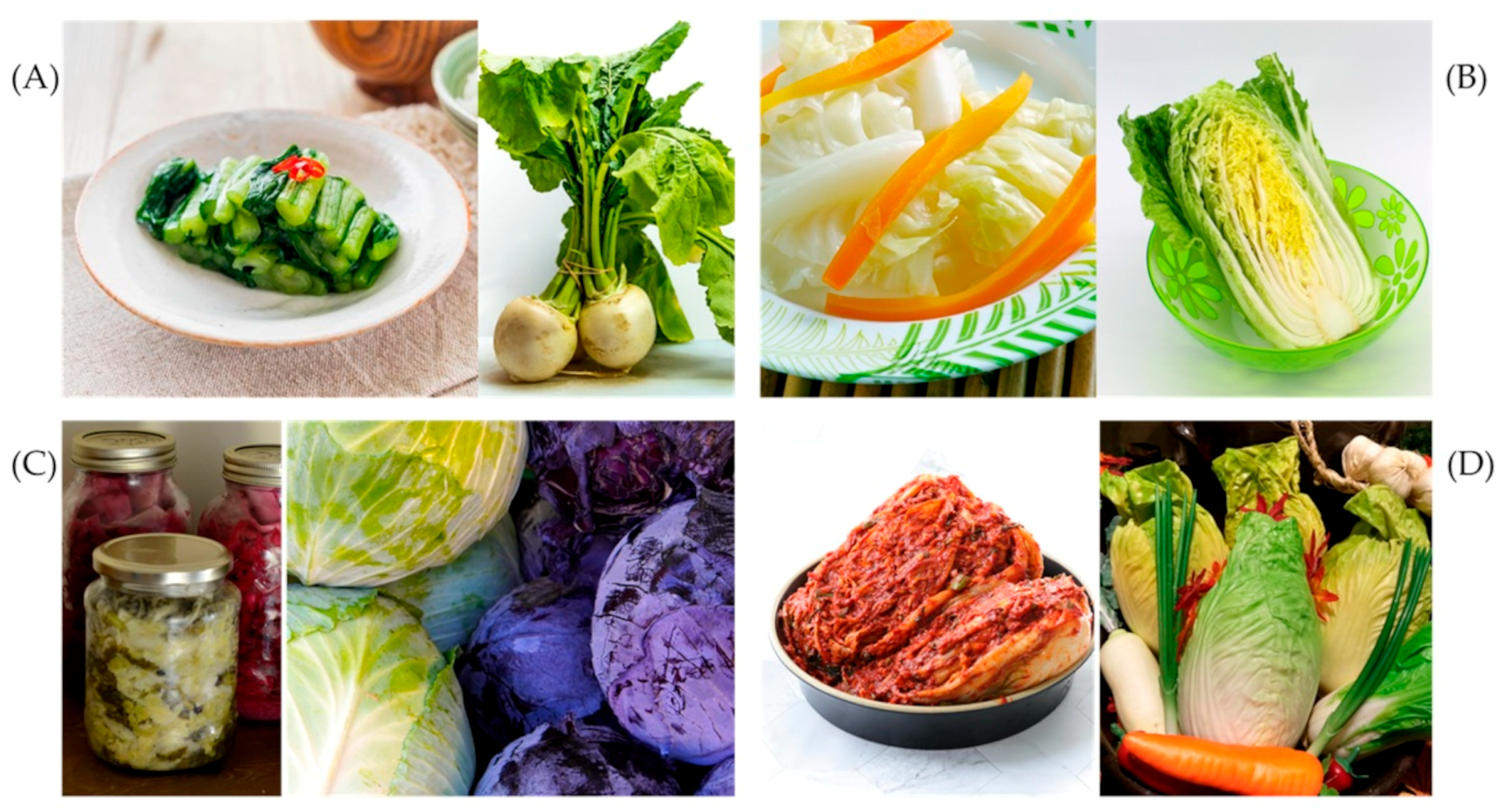
4. Fermented Foods or Fermented Ingredients from Brassicales Order as New Functional Options for Food Industry
5. By-Products from Brassicales Order Species as New Functional Ingredients
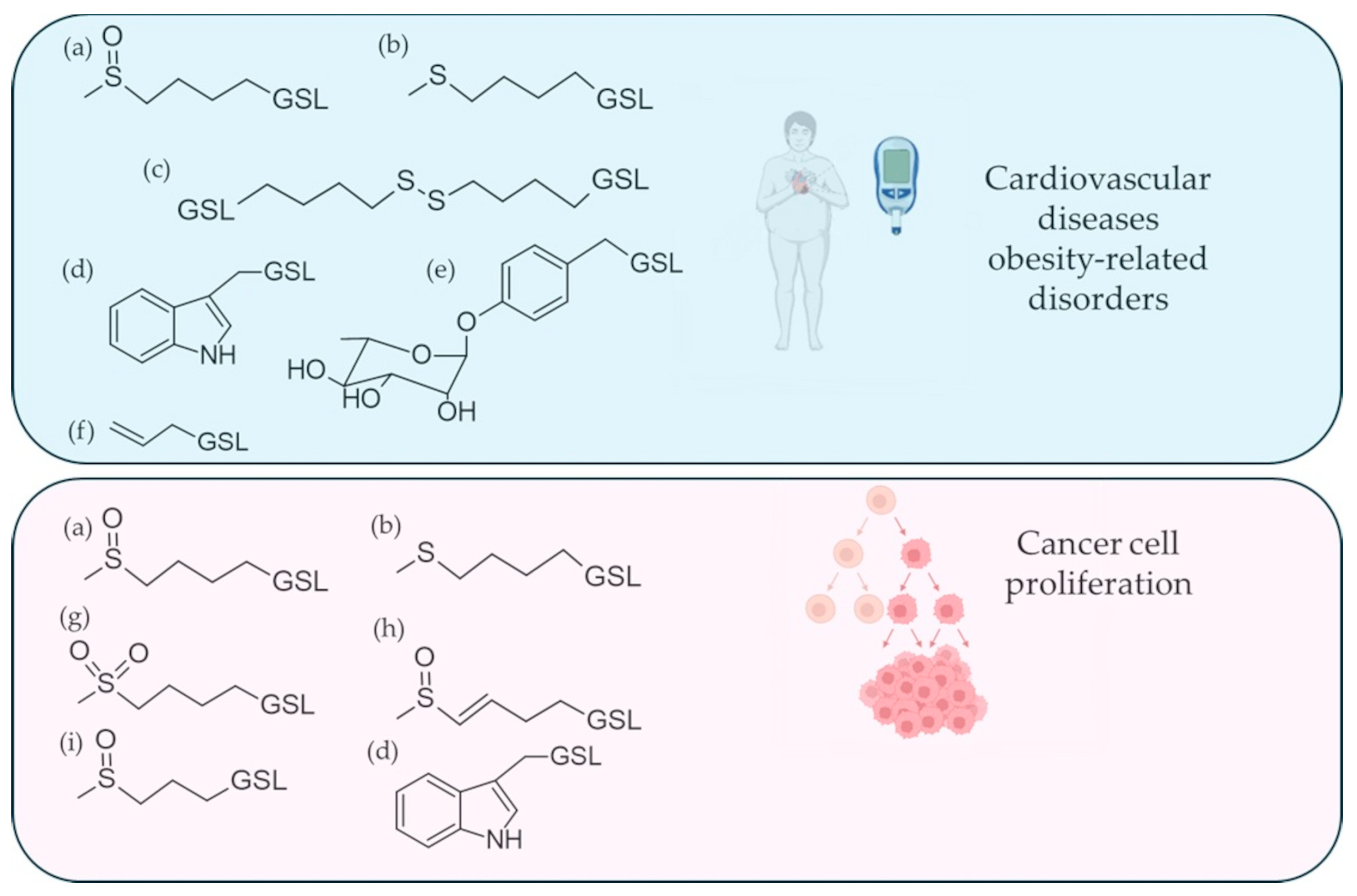
6. Main Glucosinolates and Their Hydrolysis Products Identifiable in Species of the Brassicales Order of Interest for Functional Nutrition
7. Conclusions
Author Contributions
Funding
Institutional Review Board Statement
Informed Consent Statement
Data Availability Statement
Conflicts of Interest
Abbreviations
| ACE | Angiotensin converting enzyme |
| GSL | Glucosinolate |
| ITC | Isothiocyanate |
Appendix A

| Brassicales Order Species | Processing | Nutraceutical Application | Ref. |
|---|---|---|---|
| Brassica rapa subsp. pekinensis (Lour.) Hanelt | Kimchi samples from conventional markets in Daegu, South Korea. | Integrated analysis of bioactive molecules and metagenomic characteristics of Korean fermented foods which may support gut health and exhibit antioxidant, anti-inflammatory, anti-cancer, antiviral, antidiabetic, antihypertensive, and anti-obesity properties. | [66] |
| Raphanus sativus L. | Kimchi samples from conventional markets in Daegu, South Korea. | See description above. | [66] |
| Brassica napus L. | Commercial canola meals was fermented with Bacillus licheniformis DY145. | Functional fermented foods aimed at promoting gut health, Lactobacillus proliferation, and reduced inflammation. | [67] |
| Carica papaya L. | The papaya pulp, having been deseeded and skinless, underwent a fermentation process with the following strains: Enterobacter xiangfangensis, Lactiplantibacillus plantarum, Limosilactobacillus fermentum, Lactococcus hircilactis, Lactococcus lactis, Lactococcus lactis subsp. Lactis, Levilactobacillus brevis, and Pedicoccus pentosaceus to produce a water kefir. | Antibacterial activity against foodborne pathogens (Escherichia coli, Staphylococcus aureus, Bacillus cereus, and Salmonella sp.); chemopreventive potential assessed in cancer cell lines. Mild alcohol content (1–3%). | [69] |
| Brassica oleracea var. capitata L. | Pieces of cabbage were pre-inoculated with non-pathogenic Escherichia coli ATCC 8739, and natural microbiota in fresh cabbage, and then divided into groups for UV, ultrasound and combined UV/ultrasound treatments. The fermentation was activated on shredded cabbage pretreated with UV or ultrasound adding Leuconostoc mesenteroides (KTCT3505) as starter culture. | Fermentation approach led to a significant increase in S-methylmethionine content, known as a molecule able to alleviate dyspeptic symptoms in patients with chronic gastritis, and to a significant increase in the amino acid content. | [68] |
| Brassica oleracea var. capitata L. | Commercial white cabbage was shredded and mixed with carrots and 3% (w/w) sodium chloride before spontaneous fermentation. The fermentation process was monitored for 17 weeks, with the jars kept in the dark at 5 °C. | GSL and their corresponding breakdown products were characterized both in white cabbage and sauerkraut juice, considered as a by-product of fermentation. The study evidenced that both sauerkraut and its juice are a good source of ascorbigen and ITCs, and that the juice, starting from 2 weeks of fermentation, can be considered a functional food with anticancer properties. | [70] |
| Brassica oleracea var. capitata L. | One strain of Enterobacter xiangfangensis isolated from fermented Thai fish and one strain of Enterococcus casseliflavus isolated from fermented Thai cabbage were tested for high myrosinase activity. The strains were used as starter cultures at 106 CFU/mL in cabbage head-rice water fermentation (25 °C for three days). | Myrosinase-positive bacteria, used as starter cultures, may enhance the production of effective ITCs such as sulforaphane and iberin, which have several health benefits. | [75] |
| Brassica oleracea L. | Raw and blanched sprouts were evaluated after spontaneous and Lactiplantibacillus plantarum-inoculated fermentation. | Safe functional food with minimum content of phytates, tannins, and oxalates. Blanched, L. plantarum inoculated fermentation showed the best performances. | [74] |
| Brassica oleracea L. | Fresh leaves of three cultivar were washed with tap water, air dried for 4 h at room temperature and subjected to fermentation with a starter culture (Lactiplantibacillus (Lpb.) plantarum 332, Lpb. paraplantarum G2114, and Pediococcus pentosaceus 2211, or spontaneous fermentation, for 14 days at room temperature. | Increase in bioactive molecules bioavailability and of antioxidant, cyto-protective properties and immunomodulatory activities. | [72] |
| Brassica oleracea L. | Fresh cabbage was cut and added to two low salt concentrations solution (0.5% or 1%) and inoculated with Lactobacillus plantarum, Leuconostoc mesenteroides or a combination, at room temperature for 5 days. Spontaneous fermentation in 2% salt solution was used as a control. | Enrichment of antioxidant activity and ITC content. Sauerkraut obtained at low salt concentrations thanks to L. mesenteroides culture exhibited the highest antioxidant activity and a higher content of sulforaphane in comparison to the control. | [113] |
| Brassica oleracea var. italica Plenck | Commercial broccoli heads were cut, sanitized, and ground to obtain homogeneous pieces of 2–4 mm thick. Spontaneous and induced fermentation with Levilactobacillus brevis (3M1) and Lactococcus lactis (3M8) strains as starter culture, were performed at 23° C for 10 days. Samples were stored at −80 °C and freeze-dried for final analysis. | Functional foods with protective effects against induced oxidative effects and antiproliferative and anti-inflammatory activities in colon cancer cells. The highest GSL content and antioxidant activity were detected in day 6 of fermentation (both spontaneous and induced). | [71] |
| Brassica oleracea var. italica Plenck | Broccoli stalks were cut into 6 mm slices and jar packed adding brine (6% w/v). Anaerobic, spontaneous fermentation was carried out at 25 °C in dark conditions for six days in the presence of garlic gloves (8 g/80 g broccoli stalks) or mustard seeds (10 g/80 gbroccoli stalks) as dressings. The samples were stored at 4 °C for further six days. | Functional fermented food with antioxidant activity and high content of phenolic compounds. GSLs were tested and decreased during fermentation, probably enriching covering liquid in ITCs, thanks to mustard seed dressing. The determination of these compounds is lacking but discussed in the manuscript. | [79] |
| Brassica oleracea var. italica Plenck | 1:1 Lactobacillus plantarum and Leuconostoc mesenteroides strains, previously isolated from broccoli, were used as a mixed starter culture for broccoli puree fermentation. Broccoli florets were homogenized with water in a ratio 3:2 and inoculated with 8 log CFU/g. Fermentation was carried out at 30 °C until pH 4 (4 days of incubation). Then one lot was stored at 4 °C, and a second lot at 25 °C. | Improving yield and stability of sulforaphane in a functional ingredient. | [77] |
| Brassica oleracea var. italica Plenck | Broccoli florets puree was prepared in ice-cold water with a ratio 1:1 broccoli/water and 1 min of homogenization, then it was immediately packed and autoclaved at 121 °C for 3 min. Broccoli puree was inoculated with 10% (v/v) suspension of lactic acid bacteria isolated from leaves (5 Lactobacillus plantarum strains) and florets of Broccoli (2 Leuconostoc mesenteroides strains). Fermentation was achieved after 15 h at 30 °C. | Enhancing bioactive molecules for the functional food industry. Fermentation increased GSL and glucoraphanin levels in broccoli puree with two strains of ferments, that is, the L. plantarum and L. mesenteroides with high capacity for glucose and fructose utilization. | [76] |
| Moringa oleifera Lam. | Leaves were pretreated with water at 90 °C to eliminate natural bacteria and after cooling were inoculated with ten different lactobacilli strains. | Pediococcus acidilactici, P. pentosaceus, L. Lactiplantibacillus plantarum, Levilactobacillus brevis, and Leuconostoc mesenteroides exhibited notable growth and viability in moringa leaves during the fermentation process, with P. acidilactici CECT 98, L. plantarum CECT 9567, and L. mesenteroides CECT 219 T able to increase antioxidant activities and change quali-quantitative profile in phenolic compounds. | [114] |
| Sisymbrium officinale (L.) Scop. | Artisanal beer: starting from a malt extract, S. officinalis (1 g/L) was added as commercial dried aerial parts (60 °C for 5 min). The solution (6 L) was inoculated with 5.5 g yeast and fermentation was kept at 20 °C for 7 days. Then sugar was added, and beer was bottled and stocked for 2 weeks at room temperature. Kombucha: 5 g of S. officinalis flowers and 40 g of sucrose were added in 1 L boiling water. The solution was left to infuse for 20 min and, after cooling and filtering, was transferred into sterile glass vessel and SCOBY was added. The jar was covered with a sterile gauze and left to ferment at room temperature for 12 days. | Treatment of respiratory discomfort, and airways pathologies. Kombucha had undetectable content of ITCs, while S. officinalis enriched beer had about 8 µg active ITC per portion. | [73] |
References
- Frumuzachi, O.; Flanagan, A.; Rohn, S.; Mocan, A. The Dichotomy between Functional and Functionalized Foods—A Critical Characterization of Concepts. Food Res. Int. 2025, 208, 116173. [Google Scholar] [CrossRef]
- Mannar, M.G.V.; Khan, N.A. Food Fortification: Rationale and Methods. In Encyclopedia of Food and Health; Elsevier: Amsterdam, The Netherlands, 2016; pp. 27–34. [Google Scholar]
- Bhardwaj, A.K.; Chejara, S.; Malik, K.; Kumar, R.; Kumar, A.; Yadav, R.K. Agronomic Biofortification of Food Crops: An Emerging Opportunity for Global Food and Nutritional Security. Front. Plant Sci. 2022, 13, 1055278. [Google Scholar] [CrossRef]
- Zhao, A.; Li, J.; Peterson, M.; Black, M.; Gaulke, C.A.; Jeffery, E.H.; Miller, M.J. Cooked Broccoli Alters Cecal Microbiota and Impacts Microbial Metabolism of Glucoraphanin in Lean and Obese Mice. Mol. Nutr. Food Res. 2025, 69, e202400813. [Google Scholar] [CrossRef] [PubMed]
- Blažević, I.; Montaut, S.; Burčul, F.; Olsen, C.E.; Burow, M.; Rollin, P.; Agerbirk, N. Glucosinolate Structural Diversity, Identification, Chemical Synthesis and Metabolism in Plants. Phytochemistry 2020, 169, 112100. [Google Scholar] [CrossRef] [PubMed]
- Connolly, E.L.; Sim, M.; Travica, N.; Marx, W.; Beasy, G.; Lynch, G.S.; Bondonno, C.P.; Lewis, J.R.; Hodgson, J.M.; Blekkenhorst, L.C. Glucosinolates from Cruciferous Vegetables and Their Potential Role in Chronic Disease: Investigating the Preclinical and Clinical Evidence. Front. Pharmacol. 2021, 12, 767975. [Google Scholar] [CrossRef] [PubMed]
- González-Trujano, M.E.; Déciga-Campos, M.; Tavares-Carvalho, J.C.; Moreno, D.A. Editorial: Metabolic and Neurological Modulation by Glucosinolates, Isothiocyanates, and Terpenes to Improve Health. Front. Pharmacol. 2022, 13, 915223. [Google Scholar] [CrossRef]
- Narra, F.; Galgani, G.; Harris, C.B.; Moreno, D.A.; Núñez-Gómez, V. Bioavailability, Human Metabolism, and Dietary Interventions of Glucosinolates and Isothiocyanates: Critical Insights and Future Perspectives. Foods 2025, 14, 2876. [Google Scholar] [CrossRef]
- Ayadi, J.; Debouba, M.; Rahmani, R.; Bouajila, J. Brassica Genus Seeds: A Review on Phytochemical Screening and Pharmacological Properties. Molecules 2022, 27, 6008. [Google Scholar] [CrossRef]
- Miękus, N.; Marszałek, K.; Podlacha, M.; Iqbal, A.; Puchalski, C.; Świergiel, A.H. Health Benefits of Plant-Derived Sulfur Compounds, Glucosinolates, and Organosulfur Compounds. Molecules 2020, 25, 3804. [Google Scholar] [CrossRef]
- Arab, Z.A.; Nouri, M.; Asadi, G. Optimization of Microwave-Assisted Extraction for Horseradish (Armoracia rusticana) Roots: Phytochemical Components and Bioavailability. Biomass Convers. Biorefinery 2025, 15, 27801–27816. [Google Scholar] [CrossRef]
- Gupta, K.; Biharee, A.; Bhatia, N.; Patil, U.K.; Thareja, S. A Comprehensive Insight into the Ethnopharmacology, Phytochemistry and Therapeutic Profile of Moringa oleifera Lam. Phytochem. Rev. 2025, 24, 4683–4729. [Google Scholar] [CrossRef]
- Alia, F.; Putri, M.; Anggraeni, N.; Syamsunarno, M.R.A.A. The Potency of Moringa oleifera Lam. as Protective Agent in Cardiac Damage and Vascular Dysfunction. Front. Pharmacol. 2022, 12, 724439. [Google Scholar] [CrossRef]
- Lopez-Rodriguez, N.A.; Gaytán-Martínez, M.; de la Luz Reyes-Vega, M.; Loarca-Piña, G. Glucosinolates and Isothiocyanates from Moringa oleifera: Chemical and Biological Approaches. Plant Foods Hum. Nutr. 2020, 75, 447–457. [Google Scholar] [CrossRef]
- Sun, Y.; Yang, T.; Wang, C. Capparis spinosa L. as a Potential Source of Nutrition and Its Health Benefits in Foods: A Comprehensive Review of Its Phytochemistry, Bioactivities, Safety, and Application. Food Chem. 2023, 409, 135258. [Google Scholar] [CrossRef]
- Grimalt, M.; Sánchez-Rodríguez, L.; Hernández, F.; Legua, P.; Carbonell-Barrachina, Á.A.; Almansa, M.S.; Amorós, A. Volatile Profile in Different Aerial Parts of Two Caper Cultivars (Capparis spinosa L.). J. Food Qual. 2021, 2021, 6620776. [Google Scholar] [CrossRef]
- Shinali, T.S.; Zhang, Y.; Altaf, M.; Nsabiyeze, A.; Han, Z.; Shi, S.; Shang, N. The Valorization of Wastes and Byproducts from Cruciferous Vegetables: A Review on the Potential Utilization of Cabbage, Cauliflower, and Broccoli Byproducts. Foods 2024, 13, 1163. [Google Scholar] [CrossRef]
- Wang, Q.; Zhao, Y.; Zhang, W.; Deng, J.; Yang, H. Valorization of Broccoli Waste: Unlocking Its Potential as a Functional Food Ingredient for Sustainable Nutrition. J. Adv. Res. 2025; in press. [Google Scholar] [CrossRef] [PubMed]
- Mabry, M.E.; Abrahams, R.S.; Al-Shehbaz, I.A.; Baker, W.J.; Barak, S.; Barker, M.S.; Barrett, R.L.; Beric, A.; Bhattacharya, S.; Carey, S.B.; et al. Complementing Model Species with Model Clades. Plant Cell 2024, 36, 1205–1226. [Google Scholar] [CrossRef] [PubMed]
- Ciriello, M.; Izzo, L.; Dopazo, A.N.; Campana, E.; Colla, G.; Corrado, G.; De Pascale, S.; Rouphael, Y.; El-Nakhel, C. Differential Effects of Non-Microbial Biostimulants on Secondary Metabolites and Nitrate Content in Organic Arugula Leaves. Foods 2025, 14, 2489. [Google Scholar] [CrossRef]
- Kilibarda, S.; Milinčić, D.D.; Vuković, S.; Pešić, M.B.; Jelačić, S.; Moravčević, Đ.; Kostić, A.Ž. Untargeted HPLC Metabolomic Profiling and Antioxidant Activity of Wild Rocket’s (Diplotaxis tenuifolia (L.) DC.) Edible Leaves Influenced by Biofortification, Hybrid Varieties and Harvest Time. Food Biosci. 2025, 69, 106898. [Google Scholar] [CrossRef]
- Tallarita, A.V.; Golubkina, N.; De Pascale, S.; Sękara, A.; Pokluda, R.; Murariu, O.C.; Cozzolino, E.; Cenvinzo, V.; Caruso, G. Effects of Selenium/Iodine Foliar Application and Seasonal Conditions on Yield and Quality of Perennial Wall Rocket. Horticulturae 2025, 11, 211. [Google Scholar] [CrossRef]
- Ressurreição, S.; Salgueiro, L.; Figueirinha, A. Diplotaxis muralis as an Emerging Food Crop: Chemical Composition, Nutritional Profile and Antioxidant Activities. Plants 2025, 14, 844. [Google Scholar] [CrossRef]
- Nazari, N.; Sadati Lamardi, S.N.; Sabzevari, O.; Taghipour, Z.; Hassani, S.; Karimi, M.; Rahimi, R. Biochemical and Histopathological Investigation of Nasturtium Officinale on Thyroid Function: An Experimental Study on Models of Hypothyroidism and Hyperthyroidism. Res. J. Pharmacogn. 2025, 12, 45–55. [Google Scholar]
- Nandasiri, R.; Semenko, B.; Siribaddanage, R.; Wijekoon, C.; Suh, M. Air-Frying Improves the Bioactive Compounds of Thermally Processed Brassica oleracea Vegetables. ACS Food Sci. Technol. 2025, 5, 1400–1412. [Google Scholar] [CrossRef]
- Vega-Galvez, A.; Gomez-Perez, L.S.; Zepeda, F.; Vidal, R.L.; Grunenwald, F.; Mejías, N.; Pasten, A.; Araya, M.; Ah-Hen, K.S. Assessment of Bio-Compounds Content, Antioxidant Activity, and Neuroprotective Effect of Red Cabbage (Brassica oleracea Var. Capitata Rubra) Processed by Convective Drying at Different Temperatures. Antioxidants 2023, 12, 1789. [Google Scholar] [CrossRef] [PubMed]
- Ibrahim, R.M.; El-Shiekh, R.A.; Mohamed, O.G.; Al-Karmalawy, A.A.; Tripathi, A.; Abdel-Baki, P.M. LC/MS-Based Metabolomics Reveals Chemical Variations of Two Broccoli Varieties in Relation to Their Anticholinesterase Activity: In Vitro and In Silico Studies. Plant Foods Hum. Nutr. 2024, 79, 359–366. [Google Scholar] [CrossRef]
- Orlando, P.; Nartea, A.; Silvestri, S.; Marcheggiani, F.; Cirilli, I.; Dludla, P.V.; Fiorini, R.; Pacetti, D.; Loizzo, M.R.; Lucci, P.; et al. Bioavailability Study of Isothiocyanates and Other Bioactive Compounds of Brassica oleracea L. Var. Italica Boiled or Steamed: Functional Food or Dietary Supplement? Antioxidants 2022, 11, 209. [Google Scholar] [CrossRef]
- Wei, L.; Liu, C.; Wang, L.; Wang, J.; Xia, Y.; Wang, Y.; Zheng, L. High-Pressure Processing Combined with Microwave Heating: A Potential Approach to Affect the Quality and Enhance Sulforaphane Production in Broccoli Florets. ACS Food Sci. Technol. 2021, 1, 1169–1179. [Google Scholar] [CrossRef]
- Zhang, S.; Ying, D.Y.; Cheng, L.J.; Bayrak, M.; Jegasothy, H.; Sanguansri, L.; Augustin, M.A. Sulforaphane in Broccoli-Based Matrices: Effects of Heat Treatment and Addition of Oil. LWT 2020, 128, 109443. [Google Scholar] [CrossRef]
- Xu, X.; Dai, M.; Lao, F.; Chen, F.; Hu, X.; Liu, Y.; Wu, J. Effect of Glucoraphanin from Broccoli Seeds on Lipid Levels and Gut Microbiota in High-Fat Diet-Fed Mice. J. Funct. Foods 2020, 68, 103858. [Google Scholar] [CrossRef]
- Papierska, K.; Ignatowicz, E.; Jodynis-Liebert, J.; Kujawska, M.; Biegańska-Marecik, R. Effects of Long-Term Dietary Administration of Kale (Brassica oleracea L. var. acephala DC) Leaves on the Antioxidant Status and Blood Biochemical Markers in Rats. Pol. J. Food Nutr. Sci. 2022, 72, 239–247. [Google Scholar] [CrossRef]
- Lim, J.-S.; Im, J.-H.; Han, X.; Men, X.; Oh, G.; Fu, X.; Hwang, W.; Choi, S.-I.; Lee, O.-H. The Mechanism of the Anti-Obesity Effects of a Standardized Brassica juncea Extract in 3T3-L1 Preadipocytes and High-Fat Diet-Induced Obese C57BL/6J Mice. Nutrients 2024, 16, 846. [Google Scholar] [CrossRef]
- Kwon, H.; Choi, S.; Han, X.; Men, X.; Jang, G.; Choi, Y.; Lee, O. Antiobesity Effect of Brassica juncea Cultivated in Jeongseon with Optimized Sinigrin Content Using 3T3-L1 Adipocytes. J. Food Biochem. 2021, 45, e13650. [Google Scholar] [CrossRef]
- Kim, S.-H.; Subramanian, P.; Hahn, B.-S. Glucosinolate Diversity Analysis in Choy Sum (Brassica rapa Subsp. chinensis Var. parachinensis) Germplasms for Functional Food Breeding. Foods 2023, 12, 2400. [Google Scholar] [CrossRef] [PubMed]
- Chen, G.-L.; Xu, Y.-B.; Wu, J.-L.; Li, N.; Guo, M.-Q. Hypoglycemic and Hypolipidemic Effects of Moringa oleifera Leaves and Their Functional Chemical Constituents. Food Chem. 2020, 333, 127478. [Google Scholar] [CrossRef] [PubMed]
- Palumbo, M.; Cozzolino, R.; Capozzi, V.; Di Cuia, G.; Malorni, L.; Pace, B.; Serio, F.; D’Imperio, M.; Cefola, M. Nutrient and Phytochemical Composition of Rocket and Cabbage Microgreens Grown under Varying Potassium Regimes. J. Food Compos. Anal. 2025, 148, 108125. [Google Scholar] [CrossRef]
- García-Pérez, P.; Tomas, M.; Rivera-Pérez, A.; Patrone, V.; Giuberti, G.; Capanoglu, E.; Lucini, L. Exploring the Bioaccessibility of Polyphenols and Glucosinolates from Brassicaceae Microgreens by Combining Metabolomics Profiling and Computational Chemometrics. Food Chem. 2024, 452, 139565. [Google Scholar] [CrossRef]
- Shibaeva, T.G.; Sherudilo, E.G.; Rubaeva, A.A.; Titov, A.F. Continuous LED Lighting Enhances Yield and Nutritional Value of Four Genotypes of Brassicaceae Microgreens. Plants 2022, 11, 176. [Google Scholar] [CrossRef] [PubMed]
- García-Pérez, P.; De Gregorio, M.A.; Capri, E.; Zengin, G.; Lucini, L. Unleashing the Nutritional Potential of Brassica Microgreens: A Case Study on Seed Priming with Vermicompost. Food Chem. 2025, 475, 143281. [Google Scholar] [CrossRef]
- Drozdowska, M.; Leszczyńska, T.; Koronowicz, A.; Piasna-Słupecka, E.; Domagała, D.; Kusznierewicz, B. Young Shoots of Red Cabbage Are a Better Source of Selected Nutrients and Glucosinolates in Comparison to the Vegetable at Full Maturity. Eur. Food Res. Technol. 2020, 246, 2505–2515. [Google Scholar] [CrossRef]
- Li, X.; Tian, S.; Wang, Y.; Liu, J.; Wang, J.; Lu, Y. Broccoli Microgreens Juice Reduces Body Weight by Enhancing Insulin Sensitivity and Modulating Gut Microbiota in High-Fat Diet-Induced C57BL/6J Obese Mice. Eur. J. Nutr. 2021, 60, 3829–3839. [Google Scholar] [CrossRef]
- Lu, Y.; Dong, W.; Yang, T.; Luo, Y.; Chen, P. Preharvest UVB Application Increases Glucosinolate Contents and Enhances Postharvest Quality of Broccoli Microgreens. Molecules 2021, 26, 3247. [Google Scholar] [CrossRef]
- Paśko, P.; Galanty, A.; Tyszka-Czochara, M.; Żmudzki, P.; Zagrodzki, P.; Gdula-Argasińska, J.; Prochownik, E.; Gorinstein, S. Health Promoting vs Anti-Nutritive Aspects of Kohlrabi Sprouts, a Promising Candidate for Novel Functional Food. Plant Foods Hum. Nutr. 2021, 76, 76–82. [Google Scholar] [CrossRef] [PubMed]
- Gunjal, M.; Khalangre, A.; Tosif, M.M.; Singh, J.; Kaur, S.; Ullah, R.; Rasane, P. Effect of Convective Drying Temperature and Tray Load Density on Bioactive Compounds, Antioxidant Properties, and Functional Quality of Radish Sango Microgreens. Food Chem. 2025, 488, 144810. [Google Scholar] [CrossRef] [PubMed]
- Poudel, P.; Jeffries, K.A.; Bai, J.; Dorado, C.; Rosskopf, E.; Di Gioia, F. Radish Microgreen Metabolomic Profile in Response to Zinc Biofortification and Light Intensity. J. Agric. Food Chem. 2025, 73, 16996–17013. [Google Scholar] [CrossRef]
- Ali, V.; Rashid, A.; Kumar, D.; Vyas, D. Stage-Specific Metabolomics Suggests a Trade-off between Primary and Secondary Metabolites for Nutritional Advantage in Lepidium latifolium L. Food Chem. 2023, 419, 136035. [Google Scholar] [CrossRef]
- Ali, V.; Khajuria, M.; Bhat, R.; Rashid, A.; Faiz, S.; Vyas, D. Comparative Phytochemical Analysis of Lepidium latifolium L. Sprouts from Ladakh Himalayas Suggest a Novel Combination of 2-Propenyl and Benzyl Glucosinolate. LWT 2021, 138, 110713. [Google Scholar] [CrossRef]
- Zhong, Y.; Xie, Y.; Lyu, J.; Xie, Y.; Zhao, C.; Yu, J. Foodomics Uncovers Functional Volatile and Non-Volatile Metabolite Dynamics in Mizuna (Brassica rapa L. Var. nipponsinica) at Microgreen and Baby Green Stages. Food Biosci. 2025, 66, 106258. [Google Scholar] [CrossRef]
- Bafumo, R.F.; Alloggia, F.P.; Ramirez, D.A.; Ferreyra, S.; Perez, M.B.; Fontana, A.; Manucha, W.; Camargo, A.B. Enhanced Bioaccessibility of Encapsulated Red Mizuna Microgreens: A Phytochemical Profile Approach. Food Biosci. 2025, 66, 106249. [Google Scholar] [CrossRef]
- Maru, R.N.; Wesonga, J.; Okazawa, H.; Kavoo, A.; Neondo, J.O.; Mazibuko, D.M.; Maskey, S.; Orsini, F. Evaluation of Growth, Yield and Bioactive Compounds of Ethiopian Kale (Brassica carinata A. Braun) Microgreens under Different LED Light Spectra and Substrates. Horticulturae 2024, 10, 436. [Google Scholar] [CrossRef]
- Markiewicz, M.; Galanty, A.; Kołodziejczyk, A.; Żmudzki, P.; Prochownik, E.; Zagrodzki, P.; Paśko, P. Bioactive Compounds Accumulation in Brassica Sprouts Grown under Microgravity and Darkness: A Novel Approach to Functional Foods. Food Chem. 2025, 491, 145324. [Google Scholar] [CrossRef] [PubMed]
- Xia, Y.; Li, M.-Y.; Wadood, S.A.; Hong, H.-J.; Liu, Y.; Luo, Y.-X.; Wang, Y.-Y.; Liu, H.-Y.; Gan, R.-Y. Identification of Volatile and Flavor Metabolites in Three Varieties of Broccoli Sprouts. Food Chem. X 2024, 24, 101862. [Google Scholar] [CrossRef]
- Che, G.; Chen, M.; Li, X.; Xiao, J.; Liu, L.; Guo, L. Effect of UV-A Irradiation on Bioactive Compounds Accumulation and Hypoglycemia-Related Enzymes Activities of Broccoli and Radish Sprouts. Plants 2024, 13, 450. [Google Scholar] [CrossRef]
- Li, C.; Song, S.; He, Y.; Zhang, X.; Liu, H. CaCl2-HCl Electrolyzed Water Affects Glucosinolate Metabolism and Improves the Quality of Broccoli Sprouts. Food Res. Int. 2021, 150, 110807. [Google Scholar] [CrossRef]
- Ortega-Hernández, E.; Antunes-Ricardo, M.; Cisneros-Zevallos, L.; Jacobo-Velázquez, D.A. Selenium, Sulfur, and Methyl Jasmonate Treatments Improve the Accumulation of Lutein and Glucosinolates in Kale Sprouts. Plants 2022, 11, 1271. [Google Scholar] [CrossRef] [PubMed]
- Yamaguchi, Y.; Sugiki, M.; Shimizu, M.; Ogawa, K.; Kumagai, H. Comparative Analysis of Isothiocyanates in Eight Cruciferous Vegetables and Evaluation of the Hepatoprotective Effects of 4-(Methylsulfinyl)-3-Butenyl Isothiocyanate (Sulforaphene) from Daikon Radish (Raphanus sativus L.) Sprouts. Food Funct. 2024, 15, 4894–4904. [Google Scholar] [CrossRef] [PubMed]
- Cannavacciuolo, C.; Cerulli, A.; Dirsch, V.M.; Heiss, E.H.; Masullo, M.; Piacente, S. LC-MS- and 1H NMR-Based Metabolomics to Highlight the Impact of Extraction Solvents on Chemical Profile and Antioxidant Activity of Daikon Sprouts (Raphanus sativus L.). Antioxidants 2023, 12, 1542. [Google Scholar] [CrossRef]
- Coello, K.E.; Frias, J.; Martínez-Villaluenga, C.; Cartea, M.E.; Abilleira, R.; Peñas, E. Potential of Germination in Selected Conditions to Improve the Nutritional and Bioactive Properties of Moringa (Moringa oleifera L.). Foods 2020, 9, 1639. [Google Scholar] [CrossRef]
- Luan, H.; Wang, Z.; Zhang, Z.; Hou, B.; Liu, Z.; Yang, L.; Yang, M.; Ma, Y.; Zhang, B. Brassica oleracea L. Extract Ameliorates Isoproterenol-Induced Myocardial Injury by Regulating HIF-1α-Mediated Glycolysis. Fitoterapia 2024, 172, 105715. [Google Scholar] [CrossRef]
- Gebrelibanos Hiben, M.; de Haan, L.; Spenkelink, B.; Wesseling, S.; Louisse, J.; Vervoort, J.; Rietjens, I.M.C.M. Effects of Maerua subcordata (Gilg) DeWolf on Electrophile-Responsive Element (EpRE)-Mediated Gene Expression in Vitro. PLoS ONE 2019, 14, e0215155. [Google Scholar] [CrossRef]
- Sangthong, S.; Weerapreeyakul, N.; Lehtonen, M.; Leppanen, J.; Rautio, J. High-Accuracy Mass Spectrometry for Identification of Sulphur-Containing Bioactive Constituents and Flavonoids in Extracts of Raphanus sativus Var. caudatus Alef (Thai Rat-Tailed Radish). J. Funct. Foods 2017, 31, 237–247. [Google Scholar] [CrossRef]
- Gebrelibanos Hiben, M.; Kamelia, L.; de Haan, L.; Spenkelink, B.; Wesseling, S.; Vervoort, J.; Rietjens, I.M.C.M. Hazard Assessment of Maerua subcordata (Gilg) DeWolf. for Selected Endpoints Using a Battery of in Vitro Tests. J. Ethnopharmacol. 2019, 241, 111978. [Google Scholar] [CrossRef]
- Sampsell, K.; Marcolla, C.S.; Tapping, S.; Fan, Y.; Sánchez-Lafuente, C.L.; Willing, B.P.; Reimer, R.A.; Burton, J.P. Current Research in Fermented Foods: Bridging Tradition and Science. Adv. Nutr. 2025, 16, 100554. [Google Scholar] [CrossRef]
- Fijan, S.; Fijan, P.; Wei, L.; Marco, M.L. Health Benefits of Kimchi, Sauerkraut, and Other Fermented Foods of the Genus Brassica. Appl. Microbiol. 2024, 4, 1165–1176. [Google Scholar] [CrossRef]
- Sliti, A.; Singh, V.; Fentie, E.G.; Lim, K.; Shin, J.-H. Comprehensive Characterization of Traditional Korean Fermented Foods via Integrated Physicochemical, Metagenomic, and Metabolomic Approaches. Food Biosci. 2025, 71, 107171. [Google Scholar] [CrossRef]
- Wang, Y.; Cao, K.; Zhang, X.; Li, C.; Wang, X.; Liu, X.; Ren, J.; Chen, L. Physicochemical and Microstructural Characteristics of Canola Meal Fermented by Autonomously Screened Bacillus licheniformis DY145 and Its Immunomodulatory Effects on Gut Microbiota. Food Chem. 2025, 484, 144291. [Google Scholar] [CrossRef] [PubMed]
- Cho, Y.-E.; Kim, J.-G.; Kim, D.-K. Bioconversion of Cabbage Juice: Enhanced S-Methylmethionine via Non-Thermal Treatment and Lactic Acid Bacteria Fermentation. Food Biosci. 2025, 64, 105860. [Google Scholar] [CrossRef]
- Chin, K.W.; Khoo, S.C.; Luang-In, V.; Tan, S.H.; Ma, N.L. Probiotic Fermented Carica papaya Water Kefir with Chemopreventive Potential. Food Biosci. 2025, 68, 106343. [Google Scholar] [CrossRef]
- Ciska, E.; Honke, J.; Drabińska, N. Changes in Glucosinolates and Their Breakdown Products during the Fermentation of Cabbage and Prolonged Storage of Sauerkraut: Focus on Sauerkraut Juice. Food Chem. 2021, 365, 130498. [Google Scholar] [CrossRef]
- Iga-Buitrón, D.; Torres-Maravilla, E.; Bermúdez-Humaran, L.G.; Ascacio-Valdes, J.A.; Rodríguez-Herrera, R.; Aguilar, C.N.; Flores-Gallegos, A.C. Lactic Fermentation of Broccoli (Brassica oleracea Var. italica) to Enhance the Antioxidant and Antiproliferative Activities. Fermentation 2023, 9, 122. [Google Scholar] [CrossRef]
- Michalak-Tomczyk, M.; Rymuszka, A.; Kukula-Koch, W.; Szwajgier, D.; Baranowska-Wójcik, E.; Jachuła, J.; Welman-Styk, A.; Kędzierska, K. Studies on the Effects of Fermentation on the Phenolic Profile and Biological Activity of Three Cultivars of Kale. Molecules 2024, 29, 1727. [Google Scholar] [CrossRef]
- De Nisi, P.; Borgonovo, G.; Tramontana, S.; Grassi, S.; Picozzi, C.; Scaglioni, L.; Mazzini, S.; Mangieri, N.; Bassoli, A. Sisymbrium officinale (the Singers’ Plant) as an Ingredient: Analysis of Somatosensory Active Volatile Isothiocyanates in Model Food and Drinks. Foods 2021, 10, 308. [Google Scholar] [CrossRef]
- Layla, A.; Syed, Q.A.; Zahoor, T.; Shahid, M. Investigating the Role of Lactiplantibacillus plantarum vs. Spontaneous Fermentation in Improving Nutritional and Consumer Safety of the Fermented White Cabbage Sprouts. Int. Microbiol. 2023, 27, 753–764. [Google Scholar] [CrossRef]
- Luang-In, V.; Deeseenthum, S.; Udomwong, P.; Saengha, W.; Gregori, M. Formation of Sulforaphane and Iberin Products from Thai Cabbage Fermented by Myrosinase-Positive Bacteria. Molecules 2018, 23, 955. [Google Scholar] [CrossRef]
- Ye, J.-H.; Huang, L.-Y.; Terefe, N.S.; Augustin, M.A. Fermentation-Based Biotransformation of Glucosinolates, Phenolics and Sugars in Retorted Broccoli Puree by Lactic Acid Bacteria. Food Chem. 2019, 286, 616–623. [Google Scholar] [CrossRef] [PubMed]
- Cai, Y.X.; Wang, J.H.; McAuley, C.; Augustin, M.A.; Terefe, N.S. Fermentation for Enhancing the Bioconversion of Glucoraphanin into Sulforaphane and Improve the Functional Attributes of Broccoli Puree. J. Funct. Foods 2019, 61, 103461. [Google Scholar] [CrossRef]
- del Carmen Razola-Díaz, M.; De-Montijo-Prieto, S.; Áznar-Ramos, M.J.; Martín-García, B.; Jiménez-Valera, M.; Ruiz-Bravo, A.; Guerra-Hernández, E.J.; García-Villanova, B.; Verardo, V.; Gómez-Caravaca, A.M. Integrated Biotechnological Process Based on Submerged Fermentation and Sonotrode Extraction as a Valuable Strategy to Obtain Phenolic Enriched Extracts from Moringa Leaves. Food Res. Int. 2025, 201, 115602. [Google Scholar] [CrossRef]
- Salas-Millán, J.-Á.; Aznar, A.; Conesa, E.; Conesa-Bueno, A.; Aguayo, E. Functional Food Obtained from Fermentation of Broccoli By-Products (Stalk): Metagenomics Profile and Glucosinolate and Phenolic Compounds Characterization by LC-ESI-QqQ-MS/MS. LWT 2022, 169, 113915. [Google Scholar] [CrossRef]
- Thomas, M.; Badr, A.; Desjardins, Y.; Gosselin, A.; Angers, P. Characterization of Industrial Broccoli Discards (Brassica oleracea Var. Italica) for Their Glucosinolate, Polyphenol and Flavonoid Contents Using UPLC MS/MS and Spectrophotometric Methods. Food Chem. 2018, 245, 1204–1211. [Google Scholar] [CrossRef] [PubMed]
- Villarreal-García, D.; Nair, V.; Cisneros-Zevallos, L.; Jacobo-Velázquez, D.A. Plants as Biofactories: Postharvest Stress-Induced Accumulation of Phenolic Compounds and Glucosinolates in Broccoli Subjected to Wounding Stress and Exogenous Phytohormones. Front. Plant Sci. 2016, 7, 45. [Google Scholar] [CrossRef]
- Martins, T.; Oliveira, P.A.; Pires, M.J.; Neuparth, M.J.; Lanzarin, G.; Félix, L.; Venâncio, C.; Pinto, M.d.L.; Ferreira, J.; Gaivão, I.; et al. Effect of a Sub-Chronic Oral Exposure of Broccoli (Brassica oleracea L. Var. Italica) By-Products Flour on the Physiological Parameters of FVB/N Mice: A Pilot Study. Foods 2022, 11, 120. [Google Scholar] [CrossRef]
- Serna-Barrera, M.A.; Bas-Bellver, C.; Seguí, L.; Betoret, N.; Barrera, C. Exploring Fermentation with Lactic Acid Bacteria as a Pretreatment for Enhancing Antioxidant Potential in Broccoli Stem Powders. AIMS Microbiol. 2024, 10, 255–272. [Google Scholar] [CrossRef]
- Costa-Pérez, A.; Sánchez-Bravo, P.; Medina, S.; Domínguez-Perles, R.; García-Viguera, C. Bioaccessible Organosulfur Compounds in Broccoli Stalks Modulate the Inflammatory Mediators Involved in Inflammatory Bowel Disease. Int. J. Mol. Sci. 2024, 25, 800. [Google Scholar] [CrossRef]
- Navarro-Hortal, M.D.; Romero-Márquez, J.M.; López-Bascón, M.A.; Sánchez-González, C.; Xiao, J.; Sumalla-Cano, S.; Battino, M.; Forbes-Hernández, T.Y.; Quiles, J.L. In Vitro and In Vivo Insights into a Broccoli Byproduct as a Healthy Ingredient for the Management of Alzheimer’s Disease and Aging through Redox Biology. J. Agric. Food Chem. 2024, 72, 5197–5211. [Google Scholar] [CrossRef]
- Bas-Bellver, C.; Melero-Carnero, N.; López-González, D.; Barrera, C.; Verdeguer, M.; Seguí, L. Bio-Products Obtained from Broccoli and Cabbage Wastes Are Proposed as Functional Food Ingredients and Bioherbicides for Sustainable Weed Management. Sustainability 2025, 17, 282. [Google Scholar] [CrossRef]
- Cano-Gonzalez, C.N.; Aguirre-Loredo, R.Y.; Ascacio Valdes, J.A.; Aguilar González, C.N.; Soriano-Melgar, L.d.A.A. Enzyme-Assisted Recovery of Phenolic Compounds from Broccoli Waste with Antioxidant and Antihyperglycemic Activities Evaluated through in Vitro and Molecular Docking Studies. Biocatal. Agric. Biotechnol. 2025, 67, 103632. [Google Scholar] [CrossRef]
- Yim, S.; Jeong, S.U.; Yoon, J.H.; Lee, H.-B.; Park, H.-Y.; Lee, E. Seasonal Variation in Bioactive Compounds and Anti-Adipogenic Effects of Radish Greens in 3T3-L1 Adipocytes. Mol. Cell. Toxicol. 2025, 21, 949–959. [Google Scholar] [CrossRef]
- Baky, M.H.; Shamma, S.N.; Xiao, J.; Farag, M.A. Comparative Aroma and Nutrients Profiling in Six Edible versus Nonedible Cruciferous Vegetables Using MS Based Metabolomics. Food Chem. 2022, 383, 132374. [Google Scholar] [CrossRef] [PubMed]
- Hiraga, Y.; Ara, T.; Sato, N.; Akimoto, N.; Sugiyama, K.; Suzuki, H.; Kera, K. Metabolic Analysis of Unripe Papaya (Carica papaya L.) to Promote Its Utilization as a Functional Food. Biosci. Biotechnol. Biochem. 2021, 85, 1194–1204. [Google Scholar] [CrossRef] [PubMed]
- Pagnotta, E.; Lisotti, A.; Ugolini, L.; Matteo, R.; Franco, P.; Roda, G.; Roda, A.; Roda, E. Bakery Products Enriched with Eruca sativa Mill Defatted Seed Meal Ameliorates Systemic Markers of Inflammation and Glucose and Lipid Metabolism in Adults-A Pilot Study. Acta Sci. Gastrointest. Disord. 2022, 5, 8–14. [Google Scholar] [CrossRef]
- Franco, P.; Spinozzi, S.; Pagnotta, E.; Lazzeri, L.; Ugolini, L.; Camborata, C.; Roda, A. Development of a Liquid Chromatography-Electrospray Ionization-Tandem Mass Spectrometry Method for the Simultaneous Analysis of Intact Glucosinolates and Isothiocyanates in Brassicaceae Seeds and Functional Foods. J. Chromatogr. A 2016, 1428, 154–161. [Google Scholar] [CrossRef]
- Lucarini, E.; Pagnotta, E.; Micheli, L.; Parisio, C.; Testai, L.; Martelli, A.; Calderone, V.; Matteo, R.; Lazzeri, L.; Di Cesare Mannelli, L.; et al. Eruca sativa Meal against Diabetic Neuropathic Pain: An H2S-Mediated Effect of Glucoerucin. Molecules 2019, 24, 3006. [Google Scholar] [CrossRef]
- Lucarini, E.; Micheli, L.; Pagnotta, E.; Matteo, R.; Parisio, C.; Toti, A.; Ferrara, V.; Ciampi, C.; Martelli, A.; Testai, L.; et al. Beneficial Effects of Eruca sativa Defatted Seed Meal on Visceral Pain and Intestinal Damage Resulting from Colitis in Rats. Foods 2022, 11, 580. [Google Scholar] [CrossRef] [PubMed]
- Turck, D.; Bohn, T.; Castenmiller, J.; De Henauw, S.; Hirsch-Ernst, K.I.; Maciuk, A.; Mangelsdorf, I.; McArdle, H.J.; Naska, A.; Pelaez, C.; et al. Safety of Whole Seeds of Oilseed Rape (Brassica napus L. Emend. Metzg.) as a Novel Food Pursuant to Regulation (EU) 2015/2283. EFSA J. 2023, 21, e07706. [Google Scholar] [CrossRef]
- Raffo, A.; Baiamonte, I.; De Nicola, G.R.; Melini, V.; Moneta, E.; Nardo, N.; Peparaio, M.; Saggia Civitelli, E.; Sinesio, F. Sensory Attributes Driving Preference for Wild Rocket (Diplotaxis tenuifolia) Leaves Tasted as a Single Ingredient and as a Part of a Recipe. Foods 2024, 13, 1699. [Google Scholar] [CrossRef] [PubMed]
- Pagnotta, E.; Righetti, L.; Micheletti, G.; Boga, C.; Massafra, A.; Ugolini, L.; Malaguti, L.; Matteo, R.; Nicoletti, F.; Colombo, R.; et al. Effect of Sodium Sulfate Treatment on the Modulation of Aliphatic Glucosinolates in Eruca sativa Mill Organs at Flowering Stage. Appl. Sci. 2025, 15, 8757. [Google Scholar] [CrossRef]
- Ahmed, N.A.; Allam, A.A.; Rudayni, H.A.; Alshabrmi, F.M.; Alkhayl, F.F.A.; Abdelrheem, D.A.; Lamsabhi, A.M.; Othman, S.I.; Kamel, E.M. Watercress-Derived Glucosinolates as Potential Allosteric PTP1B Inhibitors: A Dual in Silico and in Vitro Study on Insulin Signaling Modulation. BMC Chem. 2025, 19, 169. [Google Scholar] [CrossRef]
- Garcia, G.; Treccarichi, S.; Arena, D.; Ben Ammar, H.; Maggioni, L.; Branca, F. Capturing the Brassica oleracea L. Wild Relatives Diversity for Improving Nutraceutical Traits of Cole Crops. Genet. Resour. Crop Evol. 2025, 72, 8855–8871. [Google Scholar] [CrossRef]
- Giuffrida, F.; Agnello, M.; Mauro, R.P.; Ferrante, A.; Leonardi, C. Cultivation under Salt Stress Conditions Influences Postharvest Quality and Glucosinolates Content of Fresh-Cut Cauliflower. Sci. Hortic. 2018, 236, 166–174. [Google Scholar] [CrossRef]
- Sadowska-Rociek, A.; Doniec, J.; Kusznierewicz, B.; Dera, T.; Filipiak-Florkiewicz, A.; Florkiewicz, A. The Influence of Different Hydrothermal Processes Used in the Preparation of Brussels Sprouts on the Availability of Glucosinolates to Humans. Foods 2024, 13, 2988. [Google Scholar] [CrossRef]
- Han, N.; Su’udi, M.; Kim, J. The Major Aliphatic Glucosinolate Content in Korean Radish during Vegetative and Reproductive Growth. Hortic. Environ. Biotechnol. 2015, 56, 152–158. [Google Scholar] [CrossRef]
- Randall, J.; Popova, I. Kinetics of Brassicaceae Glucosinolates Sinigrin, Sinalbin, and Glucolimnanthin Hydrolysis by Myrosinase Isoenzymes for Biopesticide Development. J. Nat. Pestic. Res. 2023, 6, 100059. [Google Scholar] [CrossRef]
- Gil, V.; MacLeod, A.J. Benzylglucosinolate Degradation in Lepidium sativum: Effects of Plant Age and Time of Autolysis. Phytochemistry 1980, 19, 1365–1368. [Google Scholar] [CrossRef]
- Guardiola-Márquez, C.E.; Martínez-Ballesta, M.d.C.; García-Sánchez, C.V.; Bojorquez-Rodríguez, E.M.; Jacobo-Velázquez, D.A.; Martínez-Hernández, G.B. Effects of Foliar and Root Application of Zn and Fe Bio-Nanofertilizers on the Glucosinolate, Zn and Fe Contents of Pak Choi (Brassica rapa Subsp. Chinensis) Grown under Hydroponic and Pot Cultivation. Sci. Hortic. 2024, 338, 113654. [Google Scholar] [CrossRef]
- Đulović, A.; Popović, M.; Burčul, F.; Čikeš Čulić, V.; Marijan, S.; Ruščić, M.; Anđelković, N.; Blažević, I. Glucosinolates of Sisymbrium officinale and S. orientale. Molecules 2022, 27, 8431. [Google Scholar] [CrossRef] [PubMed]
- Montaut, S.; Barillari, J.; Iori, R.; Rollin, P. Glucoraphasatin: Chemistry, Occurrence, and Biological Properties. Phytochemistry 2010, 71, 6–12. [Google Scholar] [CrossRef]
- Buskov, S.; Hasselstrøm, J.; Olsen, C.E.; Sørensen, H.; Sørensen, J.C.; Sørensen, S. Supercritical Fluid Chromatography as a Method of Analysis for the Determination of 4-Hydroxybenzylglucosinolate Degradation Products. J. Biochem. Biophys. Methods 2000, 43, 157–174. [Google Scholar] [CrossRef] [PubMed]
- Pagnotta, E.; Agerbirk, N.; Olsen, C.E.; Ugolini, L.; Cinti, S.; Lazzeri, L. Hydroxyl and Methoxyl Derivatives of Benzylglucosinolate in Lepidium densiflorum with Hydrolysis to Isothiocyanates and Non-Isothiocyanate Products: Substitution Governs Product Type and Mass Spectral Fragmentation. J. Agric. Food Chem. 2017, 65, 3167–3178. [Google Scholar] [CrossRef]
- Hasapis, X.; MacLeod, A.J. Benzylglucosinolate Degradation in Heat-Treated Lepidium sativum Seeds and Detection of a Thiocyanate-Forming Factor. Phytochemistry 1982, 21, 1009–1013. [Google Scholar] [CrossRef]
- Lietzow, J. Biologically Active Compounds in Mustard Seeds: A Toxicological Perspective. Foods 2021, 10, 2089. [Google Scholar] [CrossRef]
- Testai, L.; Pagnotta, E.; Piragine, E.; Flori, L.; Citi, V.; Martelli, A.; Mannelli, L.D.C.; Ghelardini, C.; Matteo, R.; Suriano, S.; et al. Cardiovascular Benefits of Eruca sativa Mill. Defatted Seed Meal Extract: Potential Role of Hydrogen Sulfide. Phytother. Res. 2022, 36, 2616–2627. [Google Scholar] [CrossRef] [PubMed]
- Zubaidah, E.; Susanti, I.; Yuwono, S.S.; Rahayu, A.P.; Srianta, I.; Blanc, P.J. Effect of Lactobacillus Plantarum and Leuconostoc Mesenteroides Starter Cultures in Lower Salt Concentration Fermentation on the Sauerkraut Quality. Food Res. 2020, 4, 1038–1044. [Google Scholar] [CrossRef] [PubMed]
- Tran, T.H.M.; Lee, S.; Huh, J.-E.; Perumalsamy, H.; Renukadevi Balusamy, S.; Kim, Y.-J. Fermentation of Moringa oleifera Lam. Using Bifidobacterium Animalis Subsp. Lactis Enhances the Anti-Inflammatory Effect in RAW 264.7 Macrophages. J. Funct. Foods 2023, 109, 105752. [Google Scholar] [CrossRef]


| Kind of Functional Food | Brassicales Order Species | Agronomic Growth Strategy and/or Processing | Nutraceutical Application | Ref. |
|---|---|---|---|---|
| Raw vegetables | Diplotaxis tenuifolia (L.) DC. | Sorghum bicolor L. manure was applied prior to sowing, followed by solarization and standard input allowed in organic cultivation. Three non-microbial biostimulants were compared. | Enhancement of bioactive compound synthesis such as glucoerucin or ferulic acid for diverse dietary applications. | [20] |
| Diplotaxis tenuifolia (L.) DC. | Three commercial hybrids were sown in autumn and received different foliar fertilization treatment during the crop cycle consisting of three harvest cut and re-growth periods (autumn–winter, winter–spring, spring–summer). | Enhancement of bioactive compound synthesis and antioxidant activity for diverse dietary applications. | [21] | |
| Diplotaxis tenuifolia (L.) DC. | A commercial hybrid was sown in autumn and received several treatments (selenium, iodine, and selenium + iodine) during the crop cycle consisting of three harvest cut and re-growth periods (November–December, December–January, January–March). | Treatments increased both yield, antioxidant activity and accumulation of selenium, iodine, potassium, and calcium, useful to prevent human deficiency and to protect against cardiovascular disease. | [22] | |
| Diplotaxis muralis DC. | Grown in soil, leaves were harvested prior to the flowering stage. | Leaves are rich in dietary fibre, essential minerals, amino acids, and fatty acids, with α-linolenic acid being predominant; GSL and flavonols are present and make the plant interesting for the development of functional foods. | [23] | |
| Nasturtium officinale R.Br. | Dried aerial parts were extracted in boiling water. | Watercress extract could be a functional food for hyperthyroidism; however, it may worsen hypothyroidism by increasing both thyroid and body weight in animal mode. | [24] | |
| Brassica oleracea L. | Commercial samples were subjected to freeze-drying or air frying (160° for 10 min) thermal treatments. | Air frying enhanced linolenic acid and phytosterol levels, and maintained ACE inhibitory activity and α-Amylase inhibitory activity: air-frying represents a promising process for food product development. | [25] | |
| Raw vegetables (continued) | Brassica oleracea var. capitata L. | Fresh red cabbage was chopped into small pieces, blanched for 30 s in boiling water, and rapidly cooled in ice water. Then they were dried in a convective hot air dryer at different temperatures in the range of 50–90 °C. | Functional food ingredient with neuroprotective capacity against Parkinson’s disease. Drying at 50 and 90 °C allows the highest retention of GSL, flavonoid, and antioxidant activity (Orac assay) together with a significant effect on cytotoxicity triggered by α-synuclein accumulation in a cellular model of Parkinson’s disease. | [26] |
| Brassica oleracea var. gemmifera DC. | Commercial sample was subjected to freeze-drying or air frying (160° for 10 min) thermal treatments. | Air frying enhanced linolenic acid and phytosterol levels, and increased both ACE inhibitory activity and α-Amylase inhibitory activity: air-frying represents a promising process for food product development. | [25] | |
| Brassica oleracea var. italica Plenck | Grown and harvested in farm, freeze-dried, and powdered heads. | Prevention or treatment of Alzheimer’s disease thank to its enrichment in phenolic and GSL compounds; among these, kaempferol 7-glucoside and glucobrassicin are the main metabolites potentially involved in anticholinesterase activity. | [27] | |
| Brassica oleracea var. italica Plenck | Commercial florets were frozen at −20 °C for 15 days and boiled for 10 min or steamed in an oven by steam injection at 99 °C for 13 min. | Steaming preserved GSL in broccoli and promoted plasma bioavailability of ITCs and lipophilic antioxidants such as lutein and β-carotene. | [28] | |
| Brassica oleracea var. italica Plenck | Florets were processed at high pressure (3 min treatment at 400 MPa), combined with microwave treatment (460 W for 20 s). | Improvement of sulforaphane production after chewing. | [29] | |
| Brassica oleracea var. italica Plenck | Broccoli were processed at different temperatures, pH and in emulsion with oil, before freeze-drying. | Improvement of sulforaphane release and stability in freeze-dried broccoli powders. pH 5 or pH 6 were the optimum conditions for sulforaphane production and an oil enriched in omega-3 fatty acids could help preserve sulforaphane from degradation. | [30] | |
| Brassica oleracea var. italica Plenck | Broccoli heads were steamed in pre-heated oven for 5 min, freeze-dried and then mixed in high fat diet, in comparison to a normal diet and a high fat diet enriched with 150 µmol/kg body weight of pure glucoraphanin. | Modulation by dietary broccoli or glucoraphanin of obesity-related disorders in mice: focus on lipid levels, insulin resistance and gut microbiota. | [31] | |
| Raw vegetables (continued) | Brassica oleracea var. viridis L. | Freeze dried leaves of kale were mixed to a certified laboratory feed to produce pellets with 10, 30, and 60 g/kg kale enriched feed for long term nutrition experiment (90 days) in rats. | Safety assessment of a long-term continuous kale diet. An improvement of antioxidant defences was observed and verified by increased activities of catalase, superoxide dismutase, glutathione reductase and glutathione S-transferase in the liver, as well as enhanced antioxidant potential in the plasma. | [32] |
| Brassica juncea (L.) Czern | Commercial plants were washed, freeze dried, and extracted in 60% ethanol to obtain a powdered extract standardized in sinigrin (18 mg/g or 50 µmol/g). | Obesity control. The standardized B. juncea extract inhibited in vitro lipid accumulation and improved high fat diet induced obesity in animals by suppressing the formation of adipocytes and promoting fatty acid oxidation and thermogenesis related proteins. | [33] | |
| Brassica juncea (L.) Czern | Standardized B. juncea extract was produced with 60% ethanol at 70 °C for 3 h and tested in comparison with sinigrin. | Obesity control. Suppression of lipid accumulation and ROS production. | [34] | |
| Brassica rapa subsp. chinensis (L.) Hanelt | Screening of 23 accessions of the Choy sum germplasm available at the National Agrobiodiversity Center (RDA-Genebank) of the Rural Development Administration, Jeonju, Republic of Korea for their GSL content. | Identification of varieties rich in aliphatic GSL for breeding purposes. Varieties rich in glucobrassicanapin showed high content of progoitrin which may reduce functional food applications. | [35] | |
| Moringa oleifera Lam. | Dried powder of M. oleifera leaves were extracted by sonication in 90% ethanol. The resulting extract was concentrated and lyophilized to produce a dry powder. | Treatment of hyperglycemia and hyperlipidemia. Among GSL and phenolic compounds, the main bioactive components of the extract responsible for its hypoglycemic and hypolipidemic effects were found to be quercetin and kaempferol monoglycoside-based flavonoid glycosides. | [36] | |
| Microgreens (days form seeding to harvest 8–14) | Diplotaxis tenuifolia (L.) DC. | Microgreens were grown with reduced potassium K regimes. | Chronic kidney disease. | [37] |
| Eruca vesicaria subsp. sativa (Mill.) Hegi | Microgreens were grown in commercial micro-farm and harvested without roots. | Prediction of nutritional outcome through in vitro simulated digestion and human fermentation ex vivo. E. sativa exhibited a high content in flavonoids and stilbenes and a high percentage of bioaccessibility after simulated static gastrointestinal digestion and in vitro large intestine fermentation step for phenolic compounds. | [38] | |
| Eruca vesicaria subsp. sativa (Mill.) Hegi | Microgreens were grown in controlled conditions (22 °C temperature, 60% relative air humidity). Seeds were germinated for three days in darkness and then, until harvest time (12 days), were grown under fluorescent or LED lamps with a photoperiod of 16 h light/8 h dark or continuous light. | Continuous LED light (red:green:blue ratio was 50.3:21.1:17.6) may improve antioxidant properties in microgreens. | [39] | |
| Brassica oleracea L. | Microgreens were grown with reduced potassium K regimes. | Chronic kidney disease | [37] | |
| Brassica oleracea L. | Microgreens were grown in commercial micro-farm and harvested without roots. | Prediction of nutritional outcome through in vitro simulated digestion and human fermentation ex vivo. B. oleracea exhibited a high percentage of bioaccessibility after simulated static gastrointestinal digestion and in vitro large intestine fermentation step for GSL and ITC. | [38] | |
| Brassica oleracea var. capitata L. | Microgreens were cultivated in a vertical growth chamber under controlled light and temperature conditions. | Suppression of GSL and accumulation in polyphenols, and improvement in antioxidant activity large intestine fermentation step for GSL and ITC. | [40] | |
| Brassica oleracea var. capitata L. | Microgreens were grown in commercial micro-farm and harvested without roots. | Prediction of nutritional outcome through in vitro simulated digestion and human fermentation ex vivo. B. oleracea var. capitata exhibited a high percentage of bioaccessibility after simulated static gastrointestinal digestion and in vitro large intestine fermentation step for GSL and ITC. | [38] | |
| Brassica oleracea var. capitata L. | 14-day young shoots were grown in a greenhouse in sowing boxes, and the same seedlings were then planted in the ground to obtain mature vegetables. | Diet enrichment in vegetable proteins, minerals, and GSL in comparison to mature headed cabbages. | [41] | |
| Microgreens (continued) | Brassica Oleracea var. botrytis L. | Microgreens were grown in commercial micro-farm and harvested without roots. | Prediction of nutritional outcome through in vitro simulated digestion and human fermentation ex vivo. B. oleracea var. botrytis exhibited a high percentage of bioaccessibility after simulated static gastrointestinal digestion and in vitro large intestine fermentation step for GSL/ITC, anthocyanins, and stilbenes. | [38] |
| Brassica oleracea var. italica Plenck | Microgreens were grown in commercial microfarm an harvested without roots. | Prediction of nutritional outcome through in vitro simulated digestion and human fermentation ex vivo. B. oleracea var. italica exhibited a high percentage of bioaccessibility after simulated static gastrointestinal digestion and in vitro large intestine fermentation step for GSL/ITC. | [38] | |
| Brassica oleracea var. italica Plenck | Microgreens were grown in controlled conditions (22 °C temperature, 60% relative air humidity). Seeds were germinated for three days in darkness and then, until harvest (12 days), were grown under fluorescent or LED lamps with a photoperiod of 16 h light/8 h dark or continuous light. | Continuous LED light (red:green:blue ratio was 50.3:21.1:17.6) may improve antioxidant properties in microgreens. | [39] | |
| Brassica oleracea var. italica Plenck | Broccoli seeds were germinated in the dark for four days. The seedlings were then exposed to light (12 h/12 h light/dark) and sprayed once a day with H2O for six days. Finally, microgreens were harvested 10 days after sowing, roots were removed, and microgreen juice was produced, freeze and stored at −80 °C. | Prevention of obesity via gut microbiota-short chain fatty acids-LPS-inflammatory axis. Reduction in liver fat accumulation and improvement of liver antioxidant ability. | [42] | |
| Brassica oleracea var. italica Plenck | The seeds were left to germinate for four days in the dark. Then, the seedlings were exposed to a 12 h photoperiod (light cycle) until they were harvested 10 days after they were sown. Microgreens were treated for two days with two different UVB levels and sprayed with 10 mM CaCl2. | Maintaining levels of health compounds during postharvest storage. The combination of UVB treatment and 10 mM CaCl2 prolonged overall quality and GSL levels until three weeks of storage. | [43] | |
| Microgreens (continued) | Brassica oleracea var. gemmifera DC. | Microgreens were grown in commercial micro-farm and harvested without roots. | Prediction of nutritional outcome through in vitro simulated digestion and human fermentation ex vivo. B. oleracea var. gemmifera exhibited a high percentage of bio accessibility after simulated static gastrointestinal digestion and in vitro large intestine fermentation step for GSL/ITC. | [38] |
| Brassica oleracea var. gongylodes L. | Microgreens were grown for 8–12 days after seeding at 21 °C under natural light conditions or in total darkness. | Chemoprevention of gastrointestinal cancer. GSL levels may be modulated by the length of sprouting time and light availability. The antinutritional progoitrin decreased after long time of sprouting, while darkness increased glucoerucin content. Microgreens contained lower levels of erucic acid when sprouting for 12 days compared to shorter periods of time of sprouting. | [44] | |
| Raphanus sativus L. | Microgreens were grown at standard conditions; drying trials were performed at different temperatures (40–60 °C). | Retention of bioactive compounds and nutritional quality for diverse dietary applications. | [45] | |
| Raphanus sativus L. | Microgreens were growth under varying Zn concentration and light intensity. | Modulation of nitrogen and energy metabolism for microgreens with an articulated regulation of GSL in response to Zn stress for improved functional-food potential. | [46] | |
| Raphanus sativus L. | Microgreens were primed using a commercial vermicompost product and cultivated in a vertical growth chamber under controlled light and temperature conditions. | Accumulation of GSL, and improvement in antioxidant activity. | [40] | |
| Raphanus sativus L. | Microgreens were grown in controlled conditions (22 °C temperature, 60% relative air humidity). Seeds were germinated for three days in darkness and then, until harvest (12 days), were grown under fluorescent or LED lamps with a photoperiod of 16 h light/8 h dark or continuous light. | Continuous LED light (red:green:blue ratio was 50.3:21.1:17.6) may improve antioxidant properties in microgreens. | [39] | |
| Microgreens (continued) | Sinapis alba L. | Microgreens were cultivated in a vertical growth chamber under controlled light and temperature conditions. | Suppression of GSL and accumulation in polyphenols, and improvement in antioxidant activity. | [40] |
| Lepidium sativum L. | Microgreens were cultivated in a vertical growth chamber under controlled light and temperature conditions. | Accumulation of polyphenols, and improvement in antioxidant activity. | [40] | |
| Lepidium latifolium L. | Microgreens were grown for 1, 2, 3 weeks in glass trays in an artificial climate chamber under controlled temperature (25° C), humidity (70%) and using a 12/12 h photoperiod. Trays were watered daily, and a half-strength basal MS medium was applied twice a week. Mature plants were separately grown in pots under the same conditions. | Accumulation of GSL and GSL hydrolysis products in the first weeks of growth in comparison with mature plants. | [47] | |
| Lepidium latifolium L. | Microgreens were growth in controlled conditions into an artificial climate chamber using a 12/12 h photoperiod at 25 °C. The trays were watered daily, and a half strength basal MS medium was applied twice a week. Microgreens were harvested at 1, 2, 3, 4, and 8 weeks, then they were immediately frozen in liquid nitrogen and freeze-dried. | Improvement of nutraceutical quality with reference to GSL and other phytochemical content and myrosinase activity. 3 weeks old microgreens are recommended as functional food as the richest source of sinigrin and benzyl GSL. | [48] | |
| Brassica rapa subsp. nipposinica (L.H.Bailey) | Microgreens were grown in peat moss substrate for 9 days (microgreens) or 29 days (baby greens) without fertilizers or pesticides. | Identification of 16 GSL, with 9 being up-regulated and 7 down-regulated during the development from microgreens to baby green stage. Network pharmacology identified 10 key targets and 24 bioactive compounds; probable activity against obesity and type 2 diabetes mellitus. | [49] | |
| Brassica rapa subsp. nipposinica (L.H.Bailey) | Microgreens were grown under standard light and temperature conditions, harvested after 12 days, freeze-dried and encapsulated using alginate. | The encapsulated sample was found to protect allyl ITC and sulforaphane during simulated gastric digestion and release them in the intestine for various dietary applications. | [50] | |
| Brassica rapa L. | Microgreens were grown in commercial micro-farm and harvested without roots. | Prediction of nutritional outcome through in vitro simulated digestion and human fermentation ex vivo. B. rapa exhibited a high percentage of bio accessibility after simulated static gastrointestinal digestion and in vitro large intestine fermentation step for anthocyanins and GSL/ITC. | [38] | |
| Microgreens (continued) | Brassica juncea (L.) Czern | Microgreens were grown in commercial micro-farm and harvested without roots. | Prediction of nutritional outcome through in vitro simulated digestion and intestinal human fermentation ex vivo. B. juncea exhibited a high percentage of bioaccessibility after simulated static gastrointestinal digestion and in vitro large intestine fermentation step for lignans. | [38] |
| Brassica carinata A. Braun | Microgreens were grown in three substrates (cocopeat, sand and a mix of cocopeat and sand) under four LED light spectra (Blue, Red, White and the mix of the three wavelengths) in a factorial experiment. | Safety of functional foods and nitrate reduction. White light and sand, or blue light and cocopeat seem to be the best combinations for achieving a reduction in nitrates; however, both solutions were associated with a reduction in carotenoids. | [51] | |
| Sprouts (days from seeding to harvest 3–8) | Brassica oleracea var. italica Plenck | Sprouts were grown in microgravity and standard light/darkness conditions. | Enhancement of bioactive compound synthesis and antioxidant activity for diverse dietary applications. | [52] |
| Brassica oleracea var. italica Plenck | Commercial sprouts were subjected to freeze-drying or air frying (160° for 10 min) thermal treatments. | Air frying enhanced phenolic acids, flavonols, sulforaphane, linolenic acid and phytosterol levels, α-Amylase inhibitory activity and maintained ACE inhibitory activity: air-frying represent a promising process for food product development. | [25] | |
| Brassica oleracea var. italica Plenck | Three cultivars of seeds were germinated in incubators under controlled conditions for 7 days. | Germination was associated with a decrease in total GSL and in enhancement of umami and sweet free amino acids, even if sensory analysis revealed bitterness and astringency as the predominant flavours. Control of germination process is needed to satisfy health benefits and consumer acceptance. | [53] | |
| Brassica oleracea var. italica Plenck | Disinfected seeds were soaked in a water bath at 30 °C for four hours, then they were spread in vermiculite and left to germinate in the dark for one day. Finally, they were placed in UV-A incubators at different intensities for five days. | Prevention and treatment of type II diabetes mellitus. UV-A irradiation at 12 W significantly induced health bioactive compound accumulation, including anthocyanins, polyphenols, ascorbic acid, GSL and sulforaphane in sprouts; furthermore, broccoli sprouts showed a significant inhibitory activity on α-amylase, α-glucosidase and pancrelipase. | [54] | |
| Sprouts (Continued) | Brassica oleracea var. italica Plenck | Broccoli sprouts were cultivated in controlled conditions (25 °C and 80% relative humidity), receiving irrigation and treatments at different concentrations of CaCl2-HCl electrolyzed with a 3 A electrical current. Tap water was used as a control. | Improvement of antioxidant biomolecules and calcium in sprouts. The treatments at 5–15 mM CaCl2 progressively decreased epithiospecifier protein activity, while enhancing myrosinase activity, glucoraphanin and sulforaphane release. | [55] |
| Brassica oleracea L. | Sprouts were grown in microgravity and standard light/darkness conditions. | Enhancement of bioactive compound synthesis and antioxidant activity for diverse dietary applications. | [52] | |
| Brassica oleracea var. viridis L. | Kale seeds were treated and sprouted in the presence of different treatments using selenium, sulfur or methyl jasmonate at three doses. The seeds were germinated in dark chambers at 25 °C and 85% relative humidity for 7 days. | Enhancement of bioactive compound synthesis and antioxidant activity for diverse dietary applications. 25 µM methyl jasmonate, 40 mg/L Selenium, 120 mg/L Sulfur treatments increased the accumulation of healthy GSL such as glucoraphanin and glucoerucin, while reduced unsafe GSL such as progoitrin in Brassica oleracea. Increases in lutein were also reported. | [56] | |
| Brassica oleracea var. gongylodes L. | Sprouts were grown in microgravity and standard light/darkness conditions. | Enhancement of bioactive compound synthesis and antioxidant activity for diverse dietary applications. | [52] | |
| Brassica oleracea var. gemmifera DC. | Sprouts were grown in microgravity and standard light/darkness conditions. | Enhancement of bioactive compound synthesis and antioxidant activity for diverse dietary applications. | [52] | |
| Raphanus sativus L. | Sprouts were growth in comparison to Broccoli sprouts for three days. | Hepatoprotective effect and upregulation of detoxifying enzymes in the liver, thanks to the high concentration of sulforaphene ITC. | [57] | |
| Raphanus sativus L. | Disinfected seeds were soaked in a water bath at 30 °C for four hours, then they were spread in vermiculite and left to germinate in the dark for one day. Finally, they were placed in UV-A incubators at different intensities for five days. | Prevention and treatment of type II diabetes mellitus. UV-A irradiation at 12 W significantly induced health bioactive compound accumulation, including anthocyanins, polyphenols, ascorbic acid, GSL and sulforaphene in sprouts; furthermore, a decrease in progoitrin was also observed. | [54] | |
| Raphanus sativus L. | Commercial sprouts, freeze dried and extracted in methanol at room temperature and further subjected to butyl alcohol extraction to remove free sugars. Extraction in ethanol, or 50% and 70% ethanol/Water were also characterized. | The sprouts of R. sativus may represent a functional food with high nutritional value and antioxidant activity. Of all the extracts, the 50% ethanol/water extract had the highest GSL content. | [58] | |
| Moringa oleifera Lam. | Sprouts were germinated at different temperatures (28–36 °C) and times (24–96 h) were evaluated. | Enrichment of nutrients, of bioactive molecules such as γ-aminobutyric acid (GABA), GSL, and antioxidant activity. Proteins, GABA, and GSL may accumulate under higher germination temperatures and longer germination times. | [59] |
| Disease | Brassicales Order Species | References |
|---|---|---|
| cardiovascular disease | Diplotaxis tenuifolia (L.) DC. | [22] |
| Brassica oleracea L. | [60] | |
| cardiovascular disease and diabetes mellitus | Brassica oleracea L. | [25] |
| Brassica oleracea var. capitata L., Brassica oleracea var. gemmifera DC., Brassica oleracea var. italica Plenck | [54] | |
| hyperthyroidism | Nasturtium officinale R.Br. | [24] |
| Parkinson’s disease | Brassica oleracea var. capitata L. | [26] |
| Alzheimer’s disease | Brassica oleracea var. italica Plenck | [27] |
| obesity-related disorders | Brassica oleracea var. italica Plenck | [31,42] |
| Moringa oleifera Lam. | [36] | |
| Brassica juncea (L.) Czern | [33,34] | |
| Brassica rapa subsp. nipposinica (L.H.Bailey) | [49] | |
| cancer | Maerua subcordata (Gilg) DeWolf | [61] |
| Raphanus sativus var. caudatus (L.) Hook.f. & T.Anderson | [62] | |
| Brassica oleracea var. gongylodes L. | [44] | |
| kidney disease | Diplotaxis tenuifolia (L.) DC., Brassica oleracea L. | [37] |
| liver disease | Raphanus sativus L. | [57] |
| Brassica oleracea var. viridis L. | [32] | |
| Brassica oleracea var. italica Plenck | [42] |
| Disease | Brassicales Order Species | References |
|---|---|---|
| intestinal diseases | Brassica rapa subsp. pekinensis (Lour.) Hanelt, Raphanus sativus L. | [66] |
| Brassica napus L. | [67] | |
| Brassica oleracea var. capitata L. | [68] | |
| cancer | Carica papaya L. | [69] |
| Brassica oleracea var. capitata L. | [70] | |
| Brassica oleracea var. italica Plenck | [71] | |
| autoimmune inflammatory disease | Brassica oleracea L. | [72] |
| airways pathologies | Sisymbrium officinale (L.) Scop. | [73] |
| foodborne pathogens | Carica papaya L. | [69] |
| antinutritional compounds in plant matrices | Brassica oleracea L. and Lactiplantibacillus plantarum | [74] |
| Type of By-Product | Species | Nutraceutical Application | Ref. |
|---|---|---|---|
| Canola meals (fermented) | Brassica napus L. | Intestinal health and control of inflammation | [67] |
| Broccoli stalks (fermented) | Brassica oleracea var. italica Plenck | Functional foods with high antioxidant activity | [79] |
| Broccoli leaf | Neutralization of free radicals and regulation of postprandial blood glucose levels | [87] | |
| IV-range broccoli residues (mainly stems) | Functional foods with high antioxidant activity | [86] | |
| Broccoli florets and stems | Alzheimer’s disease | [85] | |
| Broccoli stalks | Human intestinal inflammation | [84] | |
| Functional foods with high antioxidant activity | [83] | ||
| Broccoli leaves, stems, and florets | Weight loss applications | [82] | |
| Non-marketable seeds, and industrial residues of packing and processing procedures | Glucoraphanin enriched ingredients | [80] | |
| Non-marketable broccoli heads | GSL extraction | [81] | |
| Leaf by-product | Raphanus sativus L. | obesity management | [88] |
| Leaf by-product | Brassica oleracea var. capitata L. | Functional foods with high antioxidant activity | [86] |
| Leaf by-product | Brassica rapa L. | Antibacterial and anticancer activities | [89] |
| Stems, roots, and peel | Carica papaya L. | Glucotropaeolin enriched ingredients and proteolytic activity in peel | [90] |
| Defatted seed meals | Eruca vesicaria subsp. sativa (Mill.) Hegi | Control of systemic markers of inflammation and lipid metabolism in adults | [91,92] |
| Treatment of abdominal pain and diabetic neuropathic pain in animal models of induced neuropathy | [93,94] |
| Brassicales Order Species | Main Glucosinolates | Main Hydrolysis Product | Ref. |
|---|---|---|---|
| Diplotaxis tenuifolia (L.) DC. | (RS)-4-(Methylsulfinyl)butyl GSL (Glucoraphanin) | Sulforaphane | [20] [96] |
| 4-(Methylthio)butyl GSL (Glucoerucin) | Erucin | ||
| Dimeric 4-mercaptobutyl GSL | bis(4-isothiocyanatobutyl) disulfide | ||
| Diplotaxis muralis DC. | (RS)-4-(Methylsulfinyl)butyl GSL (Glucoraphanin) | Sulforaphane | [23] |
| 4-(Methylthio)butyl GSL (Glucoerucin) | Erucin | ||
| Eruca vesicaria subsp. sativa (Mill.) Hegi | (RS)-4-(Methylsulfinyl)butyl GSL (Glucoraphanin) | Sulforaphane | [97] |
| Dimeric 4-mercaptobutyl GSL | bis(4-isothiocyanatobutyl) disulfide | ||
| Nasturtium officinale R.Br. | 2-Phenylethyl GSL (Gluconasturtiin) | Nasturtiin | [24] [98] |
| 4-(Methylthio)butyl GSL (Glucoerucin) | Erucin | ||
| Benzyl GSL (Glucotropaeolin) | Benzyl ITC | ||
| (RS)-3-(Methylsulfinyl)propyl GSL (Glucoiberin) | Iberin | ||
| Brassica oleracea L. | Indol-3-ylmethyl GSL (Glucobrassicin) | Indole-3-carbinol | [99] |
| Allyl GSL (Sinigrin) | Allyl ITC | ||
| Brassica oleracea var. capitata L. | Indol-3-ylmethyl GSL (Glucobrassicin) | Indole-3-carbinol | [70] [41] |
| Allyl GSL (Sinigrin) | Allyl ITC | ||
| (RS)-3-(Methylsulfinyl)propyl GSL (Glucoiberin) | Iberin | ||
| Brassica Oleracea var. botrytis L. | Indol-3-ylmethyl GSL (glucobrassicin) | Indole-3-carbinol | [100] |
| 2-Phenylethyl GSL (Gluconasturtiin) | Nasturtiin | ||
| Brassica oleracea var. gemmifera DC. | Indol-3-ylmethyl GSL (Glucobrassicin) | Indole-3-carbinol | [101] |
| Allyl GSL (Sinigrin) | Allyl ITC | ||
| (2R)-2-Hydroxybut-3-enyl GSL (Progoitrin) | (S)-5-vinyl-1,3-oxazolidine-2-thione (goitrin) | ||
| Brassica oleracea var. gongylodes L. | 4-(Methylthio)butyl GSL (Glucoerucin) | Erucin | [44] |
| (RS)-3-(Methylsulfinyl)propyl GSL (Glucoiberin) | Iberin | ||
| Brassica oleracea var. italica Plenck | (RS)-4-(Methylsulfinyl)butyl GSL (Glucoraphanin) | Sulforaphane | [31] |
| Indol-3-ylmethyl GSL (Glucobrassicin) | Indole-3-carbinol | ||
| Brassica oleracea var. viridis L. | (RS)-3-(Methylsulfinyl)propyl GSL (Glucoiberin) | Iberin | [32] |
| Indol-3-ylmethyl GSL (Glucobrassicin) | Indole-3-carbinol | ||
| (RS)-4-(Methylsulfinyl)butyl GSL (Glucoraphanin) | Sulforaphane | ||
| Brassica juncea (L.) Czern | Allyl GSL (Sinigrin) | Allyl ITC | [33] [34] |
| Brassica rapa subsp. chinensis (L.) Hanelt | But-3-enyl GSL (Gluconapin) | Napin | [35] |
| Pent-4-enyl GSL (Glucobrassicanapin) | 4-Pentenyl ITC | ||
| (2R)-2-Hydroxybut-3-enyl GSL (Progoitrin) | (S)-5-vinyl-1,3-oxazolidine-2-thione (goitrin) | ||
| Moringa oleifera Lam | 4′-O-acetyl-4-(α-l-rhamnopyranosyloxy)benzyl GSL (acetylated Isomer III Glucomoringin) | 4-acetyl moringin (III) | [14] |
| 4-(α-l-rhamnopyranosyloxy) benzyl GSL (Glucomoringin) | moringin | ||
| Raphanus sativus L. | (3E)-4-(Methylsulfanyl)but-3-enyl GSL (Glucoraphasatin or Dehydroglucoerucin) | 4-(Methylsulfanyl)but-3-enyl ITC a | [102] |
| (RS, 3E)-4-(Methylsulfinyl)but-3-enyl GSL (Glucoraphenin) | Sulforaphene | ||
| Sinapis alba L. (seeds) | 4-Hydroxybenzyl GSL (Sinalbin) | 4-Hydroxybenzyl ITC b | [103] |
| Lepidium sativum L. (microgreens and seeds) | Benzyl GSL (Glucotropaeolin) | Benzyl ITC, Benzyl cyanide c | [104] |
| Lepidium latifolium L. (microgreens) | Allyl GSL (Sinigrin) | 1-cyano-2,3-epithiopropane Allyl ITC | [47] [48] |
| Benzyl GSL (Glucotropaeolin) | Benzyl ITC | ||
| Brassica rapa subsp. nipposinica (L.H.Bailey) (microgreens) | Allyl GSL (Sinigrin) | Allyl ITC | [50] |
| (RS)-3-(Methylsulfinyl)propyl GSL (Glucoiberin) | Iberin | ||
| (RS)-4-(Methylsulfinyl)butyl GSL (Glucoraphanin) | Sulforaphane | ||
| Brassica rapa L. (microgreens) | 4-(Methylthio)butyl GSL (Glucoerucin) | Erucin | [38] [105] |
| Pent-4-enyl GSL (Glucobrassicanapin) | 4-Pentenyl ITC | ||
| (RS)-4-(Methylsulfinyl)butyl GSL (Glucoraphanin) | Sulforaphane | ||
| Brassica carinata A. Braun | Allyl GSL (Sinigrin) | Allyl ITC | [51] |
| Sisymbrium officinale (L.) Scop. | Isopropyl GSL (Glucoputranjivin) | Iso-propyl ITC | [73] [106] |
| Carica papaya L. | Benzyl GSL (Glucotropaeolin) | Benzyl ITC | [90] |
Disclaimer/Publisher’s Note: The statements, opinions and data contained in all publications are solely those of the individual author(s) and contributor(s) and not of MDPI and/or the editor(s). MDPI and/or the editor(s) disclaim responsibility for any injury to people or property resulting from any ideas, methods, instructions or products referred to in the content. |
© 2026 by the authors. Licensee MDPI, Basel, Switzerland. This article is an open access article distributed under the terms and conditions of the Creative Commons Attribution (CC BY) license.
Share and Cite
Pagnotta, E.; Matteo, R.; Ugolini, L. From Functional Ingredients to Functional Foods: Focus on Brassicales Plant Species and Glucosinolates. Foods 2026, 15, 537. https://doi.org/10.3390/foods15030537
Pagnotta E, Matteo R, Ugolini L. From Functional Ingredients to Functional Foods: Focus on Brassicales Plant Species and Glucosinolates. Foods. 2026; 15(3):537. https://doi.org/10.3390/foods15030537
Chicago/Turabian StylePagnotta, Eleonora, Roberto Matteo, and Luisa Ugolini. 2026. "From Functional Ingredients to Functional Foods: Focus on Brassicales Plant Species and Glucosinolates" Foods 15, no. 3: 537. https://doi.org/10.3390/foods15030537
APA StylePagnotta, E., Matteo, R., & Ugolini, L. (2026). From Functional Ingredients to Functional Foods: Focus on Brassicales Plant Species and Glucosinolates. Foods, 15(3), 537. https://doi.org/10.3390/foods15030537