Characterization of Infant Formulae Marketed in Italy and Virulence Potential of Bacillus cereus Isolates

 , , ,
, , ,  ,
,  , , , and
Abstract
1. Introduction
2. Materials and Methods
2.1. Microbiological Analyses
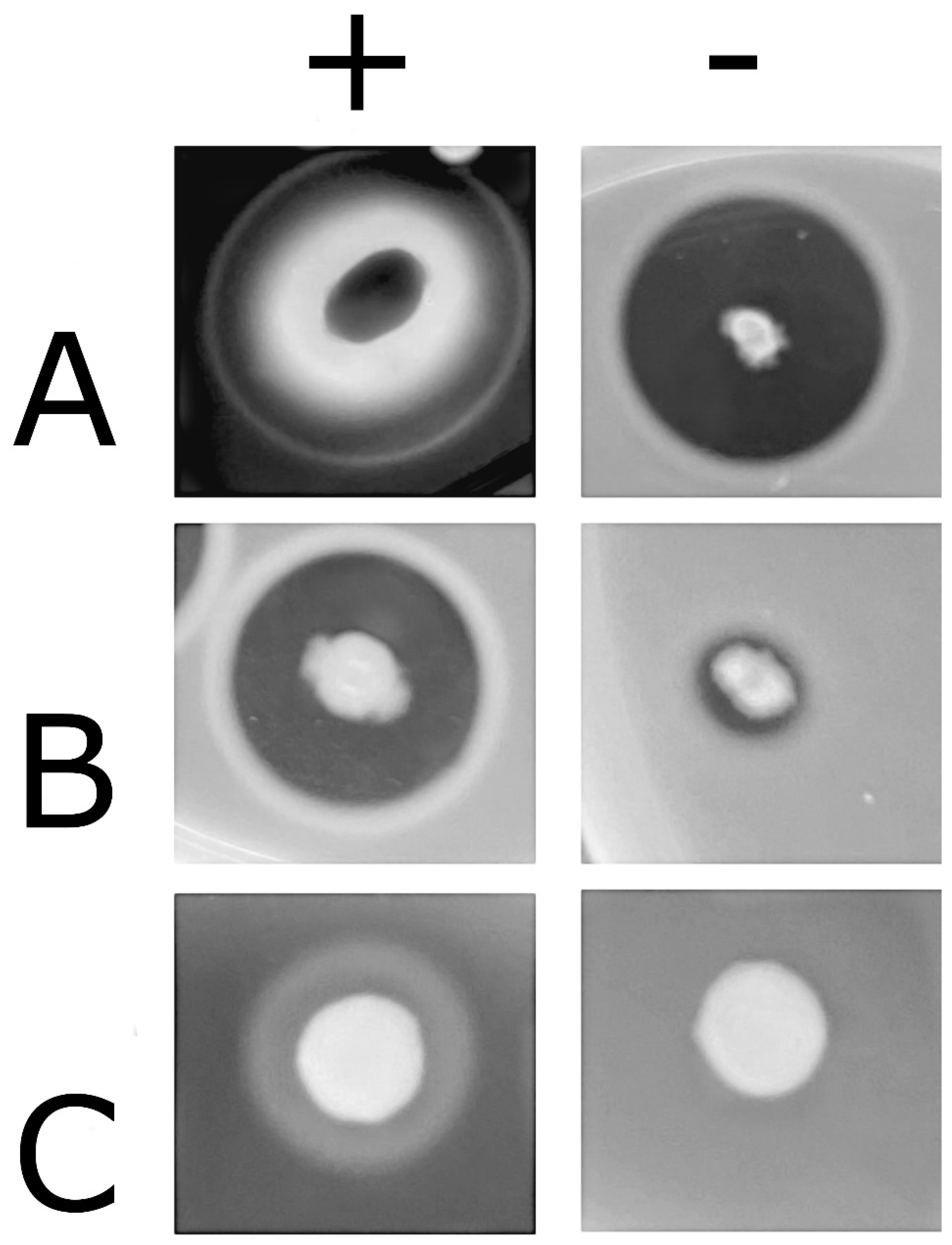
2.2. Phenotypic Detection of Virulence Factors
2.3. Molecular Detection of Toxin Genes
2.4. Antimicrobial Resistance
2.5. Physicochemical Analyses
2.6. Statistical Analyses
3. Results and Discussion
3.1. Microbiological Characterization
3.2. Detection of B. cereus Virulence Factors
Antibiotic Resistance
3.3. Physicochemical Characterization
4. Conclusions
Supplementary Materials
Author Contributions
Funding
Institutional Review Board Statement
Informed Consent Statement
Data Availability Statement
Conflicts of Interest
References
- WHO (World Health Organization)—FAO (Food and Agriculture Organization). Enterobacter sakazakii and Salmonella in Powdered Infant Formula. Meeting Report. Microbiological Risk Assessment Series No. 10. Available online: https://openknowledge.fao.org/items/42487f31-8ad6-40c0-8d3e-aa5cfa2ef981 (accessed on 13 January 2026).
- Beuchat, L.; Komitopoulou, E.; Betts, R.; Beckers, H.; Bourdichon, F.; Joosten, H.; Fanning, S.; Kuile, B. Persistence and survival of pathogens in dry foods and dry food processing environments. ILSI Eur. Rep. Ser. 2011, 1–48. Available online: https://www.researchgate.net/publication/312828843 (accessed on 13 January 2026).
- Farber, J.M.; Forsythe, S.J. Enterobacter sakazakii; ASM Press: Washington, DC, USA, 2008. [Google Scholar]
- Montagne, D.-H.; Van Dael, P.; Skanderby, M.; Hugelshofer, W. Infant formulae–powders and liquids. In Dairy Powders and Concentrated Products; Tamime, A.Y., Ed.; Wiley—Blackwell: Chichester, UK, 2009; pp. 294–331. [Google Scholar]
- Yuan, D.D.; Liu, G.C.; Ren, D.Y.; Zhang, D.; Zhao, L.; Kan, C.P.; Yang, Y.Z.; Ma, W.; Li, Y.; Zhang, L.B. A survey on occurrence of thermophilic bacilli in commercial milk powders in China. Food Control 2012, 25, 752–757. [Google Scholar] [CrossRef] [Scilit]
- Xiong, Z.Q.; Li, Y.Y.; Xiang, Y.W.; Xia, Y.J.; Zhang, H.; Wang, S.J.; Ai, L.Z. Short communication: Dynamic changes in bacterial diversity during the production of powdered infant formula by PCR-DGGE and high-throughput sequencing. J. Dairy Sci. 2020, 103, 5972–5977. [Google Scholar] [CrossRef] [Scilit]
- Larbi, M.; Chincha, A.I.A.; Vecchione, A.; Ghelardi, E.; Bonatto, J.M.C.; Marsaioli, A.J.; Campelo, P.H.; Benamar, I.; Allah, M.A.; Sant’Ana, A.S.; et al. Aerobic spore-forming bacteria in powdered infant formula: Enumeration, identification by MALDI-TOF mass spectrometry (MS), presence of toxin genes and rpoB gene typing. Int. J. Food Microbiol. 2022, 368, 109613. [Google Scholar] [CrossRef] [Scilit]
- Fusi, V.; Stella, S.; Bernardi, C.; Tirloni, E. Microbiological characteristics of powdered infant and follow-on formulae and safety concerns: A review. Heliyon 2025, 11, e42927. [Google Scholar] [CrossRef] [Scilit]
- Long, S.S. Clostridial spores in powdered infant formula. J. Pediatr. 2010, 156, A3. [Google Scholar] [CrossRef] [Scilit]
- Saad, N.M.; Amin, W.F.; Shaker, E.M. Detection of toxigenic Clostridium difficile in powdered infant and follow-up formulae in Egypt. Vet. World 2013, 6, 862–864. [Google Scholar] [CrossRef] [Scilit]
- Brett, M.M.; McLauchlin, J.; Harris, A.; O’Brien, S.; Black, N.; Forsyth, R.J.; Roberts, D.; Bolton, R.J. A case of infant botulism with a possible link to infant formula milk powder: Evidence for the presence of more than one strain of Clostridium botulinum in clinical specimens and food. J. Med. Microbiol. 2005, 54, 769–776. [Google Scholar] [CrossRef] [Scilit]
- Ibrahim, A.S.; Hafiz, N.M.; Saad, M.F. Prevalence of Bacillus cereus in dairy powders focusing on its toxigenic genes and antimicrobial resistance. Arch. Microbiol. 2022, 204, 339. [Google Scholar] [CrossRef] [Scilit]
- Pei, X.; Yang, S.; Zhan, L.; Zhu, J.; Song, X.; Hu, X.; Liu, G.; Ma, G.; Li, N.; Yang, D. Prevalence of Bacillus cereus in powdered infant and powdered follow-up formula in China. Food Control 2018, 93, 101–105. [Google Scholar] [CrossRef] [Scilit]
- Bursová, Š.; Necidová, L.; Haruštiaková, D. Growth and toxin production of Bacillus cereus strains in reconstituted initial infant milk formula. Food Control 2018, 93, 334–343. [Google Scholar] [CrossRef] [Scilit]
- EC—European Commission. Commission Regulation (EC) No 1441/2007 of 5 December 2007 Amending Regulation (EC) No 2073/2005 on Microbiological Criteria for Foodstuffs; European Union: Brussels, Belgium, 2007; pp. 12–29. [Google Scholar]
- Taylor, M.G.; Amerson-Brown, M.H.; Hulten, K.; Cameron, L.H.; Holzmann-Pazgal, G.; Edwards, M.S.; Foster, C.E. Two cases of Cronobacter sakazakii meningitis in infants: The importance of early advanced brain imaging and public health reporting. Pediatr. Infect. Dis. J. 2021, 40, E346–E348. [Google Scholar] [CrossRef] [Scilit]
- Haston, J.C.; Miko, S.; Cope, J.R.; Mckeel, H.; Walters, C.; Joseph, L.A.; Griswold, T.; Katz, L.S.; Andújar, A.A.; Tourdot, L.; et al. Cronobacter sakazakii infections in two infants linked to powdered infant formula and breast pump equipment-United States, 2021 and 2022. MMWR Morb. Mortal. Wkly. Rep. 2023, 72, 223–226. [Google Scholar] [CrossRef] [Scilit] [PubMed]
- Biering, G.; Karlsson, S.; Clark, N.C.; Jônsdôttir, K.E.; Ludvigsson, P.; Steingrimsson, O. Three cases of neonatal meningitis caused by Enterobacter sakazakii in powdered milk. J. Clin. Microbiol. 1989, 27, 2054–2056. [Google Scholar] [CrossRef] [Scilit] [PubMed]
- Coignard, B.; Vaillant, V.; Desenclos, J.C.; Vincent, J.P.; Lefleche, A.; Kurkdjian, P.M.; Bernet, C.; L’Heriteau, F.; Senechal, A.; Grimont, P.; et al. Infections sévères à Enterobacter sakazakii chez des nouveau-nés ayant consommé une préparation en poudre pour nourrissons, France, octobre–décembre 2004. Bull. Epidemiol. Hebd. 2006, 2–3, 10–13. [Google Scholar]
- Caubilla-Barron, J.; Hurrell, E.; Townsend, S.; Cheetham, P.; Loc-Carrillo, C.; Fayet, O.; Prère, M.F.; Forsythe, S.J. Genotypic and phenotypic analysis of Enterobacter sakazakii strains from an outbreak resulting in fatalities in a neonatal intensive care unit in France. J. Clin. Microbiol. 2007, 45, 3979–3985. [Google Scholar] [CrossRef] [Scilit] [PubMed]
- Himelright, I.; Harris, E.; Lorch, V.; Anderson, M.; Jones, T.; Craig, A.; Kuehnert, M.; Forster, T.; Arduino, M.; Jensen, B. Enterobacter sakazakii infections associated with the use of powdered infant formula—Tennessee, 2001. JAMA 2002, 287, 2204–2205. [Google Scholar] [CrossRef] [Scilit]
- Jarvis, C. Fatal Enterobacter sakazakii infection associated with powdered infant formula in a neonatal intensive care unit in New Zealand. Am. J. Infect. Control 2005, 33, E19. [Google Scholar] [CrossRef] [Scilit]
- Jones, G.; de la Gandara, M.P.; Herrera-Leon, L.; Herrera-Leon, S.; Martinez, C.V.; Hureaux-Roy, R.; Abdallah, Y.; Nisavanh, A.; Fabre, L.; Renaudat, C.; et al. Outbreak of Salmonella enterica serotype Poona in infants linked to persistent Salmonella contamination in an infant formula manufacturing facility, France, August 2018 to February 2019. Eurosurveillance 2019, 24, 1900161. [Google Scholar] [CrossRef] [Scilit]
- Rowe, B.; Begg, N.T.; Hutchinson, D.N.; Dawkins, H.C.; Gilbert, R.J.; Jacob, M.; Hales, B.H.; Rae, F.A.; Jepson, M. Salmonella ealing infections associated with consumption of infant dried milk. Lancet 1987, 2, 900–903. [Google Scholar] [CrossRef] [Scilit]
- El-Gamal, M.S.; El Dairouty, R.K.; Okda, A.Y.; Salah, S.H.; El-Shamy, S.M. Incidence and interrelation of Cronobacter sakazakii and other foodborne bacteria in some milk products and infant formula milks in Cairo and Giza area. World Appl. Sci. J. 2013, 26, 1129–1141. [Google Scholar] [CrossRef]
- Muytjens, H.L.; Roelofs-Willemse, H.; Jaspar, G.H.J. Quality of powdered substitutes for breast milk with regard to members of the family Enterobacteriaceae. J. Clin. Microbiol. 1988, 26, 743–746. [Google Scholar] [CrossRef] [Scilit]
- Lewin, A.; Delage, G.; Bernier, F.; Germain, M. Banked human milk and quantitative risk assessment of Bacillus cereus infection in premature infants: A simulation study. Can. J. Infect. Dis. Med. Microbiol. 2019, 2019, 348281. [Google Scholar] [CrossRef] [Scilit] [PubMed]
- Giammanco, G.M.; Aleo, A.; Guida, I.; Mammina, C. Molecular epidemiological survey of Citrobacter freundii misidenitified as Cronobacter spp. (Enterobacter sakazakii) and Enterobacter hormaechei isolated from powdered infant formula. Foodborne Path. Dis. 2011, 8, 517–525. [Google Scholar] [CrossRef] [Scilit]
- Di Pinto, A.; Bonerba, E.; Bozzo, G.; Ceci, E.; Terio, V.; Tantillo, G. Occurence of potentially enterotoxigenic Bacillus cereus in infant milk powder. Eur. Food Res. Technol. 2013, 237, 275–279. [Google Scholar] [CrossRef] [Scilit]
- Toscano, M.; Peroni, D.; De Vecchi, E.; Mattina, R.; Drago, L. Microbiological assessment of some powdered infant formulas: From quality to antibiotic resistance evaluation. J. Food Process. Technol. 2013, 4, 1000284. [Google Scholar] [CrossRef]
- ISO 6887-1:2024; Microbiology of the Food Chain—Preparation of Test Samples, Initial Suspension and Decimal Dilutions for Microbiological Examination—Part 1: General Rules for the Preparation of the Initial Suspension and Decimal Dilutions. ISO: Geneva, Switzerland, 2024.
- ISO 4833-2:2013/Amd 1:2022; Microbiology of the Food Chain—Horizontal Method for the Enumeration of Microorganisms—Part 2: Colony Count at 30 °C by the Surface Plating Technique—Amendment 1. ISO: Geneva, Switzerland, 2022.
- ISO 15214:1998; Microbiology of Food and Animal Feeding Stuffs—Horizontal Method for the Enumeration of Mesophilic Lactic Acid Bacteria—Colony-Count Technique at 30 °C. ISO: Geneva, Switzerland, 1998.
- ISO 13720:2010; Meat and Meat Products—Enumeration of Presumptive Pseudomonas spp. ISO: Geneva, Switzerland, 2010.
- ISO 21528-2:2017; Microbiology of the Food Chain—Horizontal Method for the Detection and Enumeration of Enterobacteriaceae—Part 2: Colony-Count Technique. ISO: Geneva, Switzerland, 2017.
- ISO 16649-1:2018; Microbiology of the Food Chain—Horizontal Method for the Enumeration of Beta-Glucuronidase-Positive Escherichia coli—Part 1: Colony-Count Technique at 44 Degrees C Using Membranes and 5-Bromo-4-chloro-3-indolyl beta-D-glucuronide. ISO: Geneva, Switzerland, 2018.
- ISO 15213-2:2023; Microbiology of the Food Chain—Horizontal Method for the Detection and Enumeration of Clostridium spp.—Part 2: Enumeration of Clostridium perfringens by Colony-Count Technique. ISO: Geneva, Switzerland, 2023.
- ISO 21527-1:2008; Microbiology of Food and Animal Feeding Stuffs—Horizontal Method for the Enumeration of Yeasts and Moulds. ISO: Geneva, Switzerland, 2008.
- ISO 6888-1:2021; Microbiology of the Food Chain—Horizontal Method for the Enumeration of Coagulase-Positive Staphylococci (Staphylococcus aureus and Other Species)—Part 1: Method Using Baird-Parker Agar Medium. ISO: Geneva, Switzerland, 2021.
- Maktabdar, M.; Wemmenhove, E.; Gkogka, E.; Dalgaard, P. Development of Extensive Growth and Growth Boundary Models for Mesophilic and Psychrotolerant Bacillus cereus in Dairy Products (Part 1). Front. Microbiol. 2025, 16, 1553885. [Google Scholar] [CrossRef] [Scilit] [PubMed]
- ISO 6579-1:2020; Microbiology of the Food Chain—Horizontal Method for the Detection, Enumeration and Serotyping of Salmonella—Part 1: Detection of Salmonella spp. ISO: Geneva, Switzerland, 2020.
- ISO 22964:2017; Microbiology of the Food Chain—Horizontal Method for the Detection of Cronobacter spp. ISO: Geneva, Switzerland, 2017.
- ISO 11290-1:2017; Microbiology of the Food Chain—Horizontal Method for the Detection and Enumeration of Listeria monocytogenes and of Listeria spp.—Part 1: Detection Method. ISO: Geneva, Switzerland, 2017.
- ISO 10273:2017; Microbiology of the Food Chain—Horizontal Method for the Detection of Pathogenic Yersinia enterocolitica. ISO: Geneva, Switzerland, 2017.
- Addis, M.F.; Locatelli, C.; Penati, M.; Poli, S.F.; Monistero, V.; Zingale, L.; Rota, N.; Gusmara, C.; Piccinini, R.; Moroni, P.; et al. Non-aureus staphylococci and mammaliicocci isolated from bovine milk in Italian dairy farms: A retrospective investigation. Vet. Res. Commun. 2023, 48, 547–554. [Google Scholar] [CrossRef] [Scilit] [PubMed]
- Senesi, S.; Ghelardi, E. Production, secretion and biological activity of Bacillus cereus enterotoxins. Toxins 2010, 2, 1690–1703. [Google Scholar] [CrossRef] [Scilit]
- Beecher, D.J.; Wong, A.C.L. Improved purification and characterization of hemolysin BL, a hemolytic dermonecrotic vascular permeability factor from Bacillus cereus. Infect. Immun. 1994, 62, 980–986. [Google Scholar] [CrossRef] [Scilit]
- Celandroni, F.; Ghelardi, E.; Pastore, M.; Lupetti, A.; Kolstø¸, A.-B.; Senesi, S. Characterization of the chemotaxis fliY and cheA genes in Bacillus cereus. FEMS Microbiol. Lett. 2000, 190, 247–253. [Google Scholar] [CrossRef]
- Calvigioni, M.; Cara, A.; Celandroni, F.; Mazzantini, D.; Panattoni, A.; Tirloni, E.; Bernardi, C.; Pinotti, L.; Stella, S.; Ghelardi, E. Characterization of a Bacillus cereus strain associated with a large feed-related outbreak of severe infection in pigs. J. Appl. Microbiol. 2022, 133, 1078–1088. [Google Scholar] [CrossRef] [Scilit]
- EUCAST—European Committee on Antimicrobial Susceptibility Testing. Clinical Breakpoints and Dosing of Antibiotics v. 15.0. 2025. Available online: https://www.eucast.org/clinical_breakpoints (accessed on 13 January 2026).
- Magiorakos, A.P.; Srinivasan, A.; Carey, R.B.; Carmeli, Y.; Falagas, M.E.; Giske, C.G.; Harbarth, S.; Hindler, J.F.; Kahlmeter, G.; Olsson-Liljequist, B.; et al. Multidrug-resistant, extensively drug-resistant and pandrug-resistant bacteria: An international expert proposal for interim standard definitions for acquired resistance. Clin. Microbiol. Infect. 2012, 18, 268–281. [Google Scholar] [CrossRef] [Scilit] [PubMed]
- Mills, E.; Sullivan, E.; Kovac, J. Comparative analysis of Bacillus cereus group isolates’ resistance using disk diffusion and broth microdilution and the correlation between antimicrobial resistance phenotypes and genotypes. Appl. Environ. Microbiol. 2022, 88, e02302-21. [Google Scholar] [CrossRef] [Scilit] [PubMed]
- Farina, D.; Bianco, A.; Manzulli, V.; Castellana, S.; Parisi, A.; Caruso, M.; Fraccalvieri, R.; Serrecchia, L.; Rondinone, V.; Pace, L.; et al. Antimicrobial and phylogenomic characterization of Bacillus cereus group strains isolated from different food sources in Italy. Antibiotics 2024, 13, 898. [Google Scholar] [CrossRef] [Scilit] [PubMed]
- Bradley, R.L.; Vanderwarn, M.A. Determination of moisture in cheese and cheese products. J. AOAC Int. 2001, 84, 570–592. [Google Scholar] [CrossRef] [Scilit]
- Tormo, M.; Izco, J.M. Alternative reversed-phase high-performance liquid chromatography method to analyse organic acids in dairy products. J. Chromatogr. A 2004, 1033, 305–310. [Google Scholar] [CrossRef] [Scilit]
- Tirloni, E.; Stella, S.; Bernardi, C.; Dalgaard, P.; Rosshaug, P.S. Predicting growth of Listeria monocytogenes in fresh ricotta. Food Microbiol. 2019, 78, 123–133. [Google Scholar] [CrossRef] [Scilit]
- FAO—Food and Agriculture Organization. Code of Hygienic Practice for Powdered Formulae for Infants and Young Children. CAC/RCP 66-2008. Available online: https://www.fao.org/fao-who-codexalimentarius/sh-proxy/tr/?lnk=1&url=https%253A%252F%252Fworkspace.fao.org%252Fsites%252Fcodex%252FStandards%252FCXC%2B66-2008%252FCXC_066e.pdf (accessed on 13 January 2026).
- Iversen, C.; Forsythe, S. Isolation of Enterobacter sakazakii and other Enterobacteriaceae from powdered infant formula milk and related products. Food Microbiol. 2004, 21, 771–777. [Google Scholar] [CrossRef] [Scilit]
- Koseki, S.; Nakamura, N.; Shiina, T. Comparison of desiccation tolerance among Listeria monocytogenes, Escherichia coli O157:H7, Salmonella enterica, and Cronobacter sakazakii in powdered infant formula. J. Food Prot. 2015, 78, 104–110. [Google Scholar] [CrossRef] [Scilit]
- Böhm, M.-E.; Huptas, C.; Krey, V.M.; Scherer, S. Massive horizontal gene transfer, strictly vertical inheritance and ancient duplications differentially shape the evolution of Bacillus cereus enterotoxin operons hbl, cytK and nhe. BMC Evol. Biol. 2015, 15, 246. [Google Scholar] [CrossRef] [Scilit] [PubMed]
- Zhai, Z.; Cui, C.; Li, X.; Yan, J.; Sun, E.; Wang, C.; Guo, H.; Hao, Y. Prevalence, antimicrobial susceptibility, and antibiotic resistance gene transfer of Bacillus strains isolated from pasteurized milk. J. Dairy Sci. 2022, 106, 75–83. [Google Scholar] [CrossRef] [Scilit] [PubMed]
- Nagmouchi, K.; Belguesmia, Y.; Bendali, F.; Spano, G.; Seal, B.S.; Drider, D. Lactobacillus fermentum: A bacterial species with potential for food preservation and biomedical applications. Crit. Rev. Food Sci. Nutr. 2020, 60, 3387–3399. [Google Scholar] [CrossRef] [Scilit] [PubMed]
- Mu, Q.; Tavella, V.J.; Luo, X.M. Role of Lactobacillus reuteri in human health and diseases. Front. Microbiol. 2018, 9, 757. [Google Scholar] [CrossRef] [Scilit]
- Cawthorn, D.M.; Botha, S.; Witthuhn, R.C. Evaluation of different methods for the detection and identification of Enterobacter sakazakii isolated from South African infant formula milks and the processing environment. Int. J. Food Microbiol. 2008, 127, 129–138. [Google Scholar] [CrossRef] [Scilit]
- Estuningsih, S.; Kress, C.; Hassan, A.A.; Akineden, O.; Schneider, E.; Usleber, E. Enterobacteriaceae in dehydrated powdered infant formula manufactured in Indonesia and Malaysia. J. Food Prot. 2006, 69, 3013–3020. [Google Scholar] [CrossRef] [Scilit]
- Oonaka, K.; Furuhata, K.; Hara, M.; Fukuyama, M. Powder infant formula milk contaminated with Enterobacter sakazakii. Jpn. J. Infect. Dis. 2010, 63, 103–107. [Google Scholar] [CrossRef] [Scilit]
- Xin, G.; Yinping, D.; Shaofei, Y.; Yujie, H.; Fanning, S.; Jiahui, W.; Fengqin, L. Contamination and characterization of multiple pathogens in powdered formula at retail collected between 2014 and 2015 in China. Food Control 2018, 87, 40–45. [Google Scholar] [CrossRef] [Scilit]
- Bijo, B.; Maçi, R.; Xinxo, A.; Shehu, F.; Memoçi, H. Prevalence of Salmonella spp. in imported powered infant formula (PIF). Albanian J. Agric. Sci. 2015, 14, 236–240. [Google Scholar]
- Parra-Flores, J.; Maury-Sintjago, E.; Rodriguez-Fernández, A.; Acuña, S.; Cerda, F.; Aguirre, J.; Holy, O. Microbiological quality of powdered infant formula in Latin America. J. Food Prot. 2020, 83, 534–541. [Google Scholar] [CrossRef] [Scilit]
- Santos, R.F.S.; Da Silva, N.; Junqueira, V.C.A.; Kajsik, M.; Forsythe, S.; Pereira, J.L. Screening for Cronobacter species in powdered and reconstituted infant formulas and from equipment used in formula preparation in maternity hospitals. Ann. Nutr. Metab. 2013, 63, 62–68. [Google Scholar] [CrossRef] [Scilit]
- Endoh, K. Some Japanese mothers do not follow package instructions of infant formula: A webbased analytical cross-sectional study. BMC Nutr. 2022, 8, 126. [Google Scholar] [CrossRef] [Scilit]
- Becker, H.; Schaller, G.; von Wiese, W.; Terplan, G. Bacillus cereus in infant foods and dried milk products. Int. J. Food Microbiol. 1994, 23, 1–15. [Google Scholar] [CrossRef] [Scilit] [PubMed]
- Lesley, M.B.; Ernie, S.R.; Kasing, A.; Son, R. Detection of Bacillus cereus in formula milk and ultra high temperature (UHT) treated milk products. Int. Food Res. J. 2017, 24, 985–989. [Google Scholar]
- Huang, Y.; Flint, S.H.; Palmer, J.S. Bacillus cereus spores and toxins—The potential role of biofilms. Food Microbiol. 2020, 103493. [Google Scholar] [CrossRef] [Scilit]
- Tirloni, E.; Stella, S.; Celandroni, F.; Mazzantini, D.; Bernardi, C.; Ghelardi, E. Bacillus cereus in dairy products and production plants. Foods 2022, 11, 2572. [Google Scholar] [CrossRef] [Scilit]
- Tirloni, E.; Stella, S.; Bernardi, C.; Mazzantini, D.; Celandroni, F.; Ghelardi, E. Identification and pathogenic potential of Bacillus cereus strains isolated from a dairy processing plant producing PDO Taleggio cheese. Microorganisms 2020, 8, 949. [Google Scholar] [CrossRef] [Scilit] [PubMed]
- Tirloni, E.; Bernardi, C.; Celandroni, F.; Mazzantini, D.; Massimino, M.; Stella, S.; Ghelardi, E. Prevalence, virulence potential, and growth in cheese of Bacillus cereus strains isolated from fresh and short-ripened cheeses sold on the Italian market. Microorganisms 2020, 11, 521. [Google Scholar] [CrossRef] [Scilit]
- Zhao, S.; Chen, J.; Fei, P.; Feng, H.; Wang, Y.; Ali, M.A.; Li, S.; Jing, H.; Yang, W. Prevalence, molecular characterization, and antibiotic susceptibility of Bacillus cereus isolated from dairy products in China. J. Dairy Sci. 2020, 103, 3994–4001. [Google Scholar] [CrossRef] [Scilit]
- Dierick, K.; Van Coillie, E.; Swiecicka, I.; Meyfroidt, G.; Devlieger, H.; Meulemans, A.; Hoedemaekers, G.; Fourie, L.; Heyndrickx, M.; Mahillon, J. Fatal family outbreak of Bacillus cereus-associated food poisoning. J. Clin. Microbiol. 2005, 43, 4277–4279. [Google Scholar] [CrossRef] [Scilit]
- Naranjo, M.; Denayer, S.; Botteldoorn, N.; Delbrassinne, L.; Veys, J.; Waegenaere, J.; Sirtaine, N.; Driesen, R.B.; Sipido, K.R.; Mahillon, J.; et al. Sudden death of a young adult associated with Bacillus cereus food poisoning. J. Clin. Microbiol. 2011, 49, 4379–4381. [Google Scholar] [CrossRef] [Scilit] [PubMed]
- Takabe, F.; Oya, M. An autopsy case of food poisoning associated with Bacillus cereus. Forensic Sci. 1976, 7, 97–101. [Google Scholar] [CrossRef] [Scilit]
- Sadek, Z.I.; Abdel-Rahman, M.A.; Azab, M.S.; Darwesh, O.M.; Hassan, M.S. Microbiological evaluation of infant foods quality and molecular detection of Bacillus cereus toxins relating genes. Toxicol. Rep. 2018, 5, 871–877. [Google Scholar] [CrossRef] [Scilit] [PubMed]
- European Food Safety Authority (EFSA). Risks for public health related to the presence of Bacillus cereus and other Bacillus spp. including Bacillus thuringiensis in foodstuffs. EFSA J. 2016, 14, 4524. [Google Scholar] [CrossRef] [Scilit]
- FSANZ—Food Standard Australia New Zealand. Bacillus cereus. Available online: https://www.foodstandards.gov.au/sites/default/files/food-standards-code/applications/Documents/A454_DAR.pdf (accessed on 13 January 2026).
- Chen, Y.; Succi, J.; Tenover, F.C.; Koehler, T.M. ß-lactamase genes of the penicillin-susceptible Bacillus anthracis Sterne strain. J. Bacteriol. 2003, 185, 823–830. [Google Scholar] [CrossRef] [Scilit]
- Li, N.; Siddique, A.; Liu, N.; Teng, L.; Ed-Dra, A.; Yue, M.; Li, Y. Global epidemiology and health risks of Bacillus cereus infections: Special focus on infant foods. Food Res. Int. 2025, 201, 115650. [Google Scholar] [CrossRef] [Scilit]
- Wang, P.; Zhao, X.; Qu, T.; Liang, L.; Ji, Q.; Chen, Y. Insight into Bacillus cereus associated with infant foods in Beijing. Foods 2022, 11, 719. [Google Scholar] [CrossRef] [Scilit]
- Schlegelova, J.; Brychta, J.; Klimova, E.; Napravnikova, E.; Babak, V. The prevalence of and resistance to antimicrobial agents of Bacillus cereus isolates from foodstuffs. Vet. Med. Czech 2003, 48, 331–338. [Google Scholar] [CrossRef] [Scilit]
- Jiang, H.; Gallier, S.; Feng, L.; Han, J.; Liu, W. Development of the digestive system in early infancy and nutritional management of digestive problems in breastfed and formula-fed infants. Food Funct. 2022, 13, 1062–1077. [Google Scholar] [CrossRef] [Scilit] [PubMed]
- Joosten, H.; Lardeau, A. Enhanced microbiological safety of acidified infant formulas tested in vitro. S. Afr. J. Clin. Nutr. 2004, 17, 87–92. [Google Scholar] [CrossRef] [Scilit]
- Back, S.Y.; Jin, H.H.; Lee, S.-Y. Inhibitory effect of organic acids against Enterobacter sakazakii in laboratory media and liquid foods. Food Control 2009, 20, 867–872. [Google Scholar] [CrossRef] [Scilit]
- Choi, M.J.; Kim, S.A.; Lee, N.Y.; Rhee, M.S. New decontamination method based on caprylic acid in combination with citric acid or vanillin for eliminating Cronobacter sakazakii and Salmonella enterica serovar Typhimurium in reconstituted infant formula. Int. J. Food Microbiol. 2013, 166, 499–507. [Google Scholar] [CrossRef] [Scilit] [PubMed]


| Gene | Specific Primers Pairs for Identification | |
|---|---|---|
| Sphingomyelinase (sph) | Ph1: cgtgccgatttaattggggc | Ph2: caatgttttaaacatggatgcg |
| Enterotoxin BceT (bceT) | ETF: ttacattaccaggacgtgctt | ETR: tgtttgtgattgtaattcagg |
| Enterotoxin S (entS) | TY123: ggtttagcagcagcttctgtagctggcg | TY125: gtttcgttagatacagcagaaccacc |
| Phosphatidyl inositol—specific phospholipase C (plcA) | PC105: cgctatcaatggaccatgg | PC106: ggactattccatgctgtacc |
| Enterotoxin FM (entFM) | ENTA: atgaaaaaagtaatttgcagg | ENTB: ttagtatgcttttgtgtaacc |
| Cytotoxin K (cytK) | F2: aacagatatcggtcaaaatgc | R7: cgtgcatctgtttcatgagg |
| Non-hemolytic enterotoxin components (nheA) | 344S: tacgctaaggaggggca | 843A: gtttttattgcttcatcggct |
| Non-hemolytic enterotoxin components (nheB) | 1500S: ctatcagcacttatggcag | 2269A: actcctagcggtgttcc |
| Non-hemolytic enterotoxin components (nheC) | 2820S: cggtagtgattgctggg | 3401A: cagcattcgtacttgccaa |
| Cereulide (ces) | cesF1: ggtgacacacattatcatataaggtg | cesR2: gtaagcgaacctgtctgtaacaaca |
| Parameter | Count Range (Log CFU/g) | SMP (%) | PIF (%) | FOF (%) |
|---|---|---|---|---|
| Total mesophilic bacteria | <2 | 83.3 | 87.0 | 90.5 |
| 2–3 | 16.7 | 0.0 | 7.1 | |
| 3–4 | 0.0 | 4.3 | 0.0 | |
| >4 | 0.0 | 8.7 | 2.4 | |
| Anaerobic bacteria | <2 | 100.0 | 82.6 | 83.3 |
| 2–3 | 0.0 | 0.0 | 4.8 | |
| 3–4 | 0.0 | 4.3 | 2.4 | |
| 4–5 | 0.0 | 4.3 | 0.0 | |
| ≥6 | 0.0 | 8.7 | 9.5 | |
| LAB | <2 | 100.0 | 82.6 | 85.7 |
| 2–3 | 0.0 | 0.0 | 0.0 | |
| 3–4 | 0.0 | 0.0 | 0.0 | |
| 4–5 | 0.0 | 0.0 | 0.0 | |
| ≥5 | 0.0 | 17.4 | 14.3 |
| Category | SMP | PIF | FOF | ||||||
|---|---|---|---|---|---|---|---|---|---|
| Parameter | Total Mesophilic Bacteria (3) * | Anaerobic Bacteria | LAB | Total Mesophilic Bacteria (3) * | Anaerobic Bacteria (5) * | LAB (4) * | Total Mesophilic Bacteria (4) * | Anaerobic Bacteria (7) * | LAB (6) * |
| Mean ± DS | 2.36 ± 0.10 | <LOD | <LOD | 5.45 ± 1.69 | 4.52 ± 2.23 | 6.51 ± 0.30 | 3.39 ± 2.59 | 4.98 ± 2.05 | 6.50 ± 0.45 |
| Min | 2.30 | <LOD | <LOD | 3.50 | 1.30 | 6.06 | 2.00 | 2.30 | 6.14 |
| Max | 2.48 | <LOD | <LOD | 6.46 | 6.65 | 6.73 | 7.26 | 7.27 | 7.37 |
| Strain | Phenotypic Assays | Gene Amplification Assays | ||||||||||
|---|---|---|---|---|---|---|---|---|---|---|---|---|
| Proteases | PC-PLC | HBL | ces | sph | entFM | entS | nheA | nheB | nheC | bceT | cytK | |
| 3 | + | + | - | - | + | + | + | + | + | + | + | + |
| 6 | + | + | - | - | + | + | + | + | + | + | - | - |
| 7 | + | - | + | - | + | + | + | + | + | + | + | - |
| 7b | + | - | + | + | + | + | + | + | + | + | + | - |
| 9 | + | + | + | + | + | + | + | + | + | + | + | - |
| 10 | + | + | - | + | + | + | + | + | + | + | + | - |
| 12 | + | + | + | - | + | + | - | + | - | + | - | - |
| 14 | + | - | + | - | + | + | + | + | + | + | + | - |
| 17 | + | + | + | - | + | + | + | + | + | + | - | - |
| 18 | + | - | + | - | + | + | + | + | + | + | + | - |
| 20 | +/- | - | + | - | + | - | - | + | + | + | + | - |
| 22 | + | - | + | + | - | - | + | - | - | - | - | - |
| 23 | + | - | + | + | + | + | + | + | + | + | + | - |
| 24 | + | - | + | - | + | + | + | + | + | + | + | - |
| 33 | + | + | + | - | + | + | - | - | - | + | - | - |
| 35a | + | - | + | - | + | + | + | + | + | + | + | + |
| 35b | + | + | - | - | + | - | - | + | + | + | - | - |
| 36 | + | + | - | - | + | - | - | - | + | + | - | - |
| 37 | + | + | + | - | + | + | + | + | + | + | + | + |
| 39 | + | - | - | - | + | + | + | + | + | + | - | - |
| 40 | + | + | - | - | + | - | - | + | + | - | - | - |
| 41 | + | - | + | - | + | + | - | + | + | + | - | - |
| 42 | + | - | + | + | + | + | - | + | + | + | - | - |
| 43 | + | + | - | + | + | + | - | + | + | + | + | - |
| 49a | + | - | + | - | + | + | + | + | + | + | + | - |
| 49b * | + | - | + | - | + | + | + | + | + | + | + | - |
| 54 | + | + | - | + | + | + | + | + | + | + | + | - |
| 55 | + | - | + | - | + | + | + | + | + | + | + | - |
| 57 | + | + | + | - | + | - | + | + | + | + | + | - |
| 58 | + | - | + | - | + | + | + | + | + | + | + | - |
| 64 | + | + | - | - | + | - | - | - | - | - | - | - |
| 65 | + | - | + | + | + | + | + | + | + | + | - | - |
| 66 | + | - | - | - | + | - | - | + | + | + | - | - |
| 68 | + | + | + | + | + | - | + | + | - | + | - | - |
| 73 | + | + | + | - | + | - | + | + | + | + | - | - |
| 74a | +/- | + | + | - | + | - | + | - | - | - | - | - |
| 74b * | + | - | - | - | + | - | + | - | - | - | - | - |
| 75a | + | - | - | + | + | + | - | + | + | + | - | - |
| 75b * | + | - | - | + | + | + | - | + | + | + | - | - |
| 77 | + | + | + | - | + | - | - | - | - | + | - | - |
| 78 | + | + | + | - | + | - | + | + | + | + | - | - |
| 79 | + | + | + | - | + | - | + | + | + | + | - | - |
| Antibiotic | S (%) | R (%) |
|---|---|---|
| Ciprofloxacin | 41 (97.6) | 1 (2.4) |
| Clindamycin | 41 (97.6) | 1 (2.4) |
| Erythromycin | 31 (73.8) | 11 (26.2) |
| Levofloxacin | 42 (100.0) | 0 |
| Linezolid | 42 (100.0) | 0 |
| Vancomycin | 42 (100.0) | 0 |
| Antibiotic Agent | Distribution (%) of MICs (mg/L) | Eucast Breakpoint R > (mg/L) | MIC50 (mg/L) | MIC90 (mg/L) | ||||||||||
|---|---|---|---|---|---|---|---|---|---|---|---|---|---|---|
| 0.03 | 0.06 | 0.12 | 0.25 | 0.5 | 1 | 2 | 4 | 8 | 16 | 32 | ||||
| Ampicillin | 2.4 | 9.5 | 33.3 | 14.3 | 40.5 | |||||||||
| Chloramphenicol | 74.4 | 23.3 | 2.3 | 2 | 4 | |||||||||
| Ciprofloxacin | 97.6 | 2.4 | 0.5 | |||||||||||
| Clindamycin | 97.6 | 2.4 | 1 | 0.25 | 0.25 | |||||||||
| Daptomycin | 25.6 | 9.3 | 30.2 | 34.9 | 2 | 4 | ||||||||
| Erythromycin | 69.7 | 4.7 | 11.6 | 9.3 | 4.7 | 0.5 | 0.25 | 2 | ||||||
| Gentamicin | 100 | 2 | 2 | |||||||||||
| Levofloxacin | 79.5 | 18.2 | 2.3 | 1 | 0.25 | 0.5 | ||||||||
| Linezolid | 100 | 2 | 1 | 1 | ||||||||||
| Moxifloxacin | 93.2 | 4.5 | 2.3 | 0.25 | 0.25 | |||||||||
| Nitrofurantoin | 100 | |||||||||||||
| Oxacillin + 2% NaCl | 7 | 2.3 | 90.7 | 4 | 4 | |||||||||
| Penicillin | 2.3 | 2.3 | 23.3 | 20.9 | 51.2 | 8 | 8 | |||||||
| Quinupristin/Dalfopristin | 14 | 83.7 | 2.3 | 1 | 1 | |||||||||
| Rifampin | 100 | 0.5 | 0.5 | |||||||||||
| Streptomycin 1000 ug/mL | ||||||||||||||
| Tetracycline | 79.1 | 14 | 2.3 | 4.6 | 2 | 4 | ||||||||
| Tigecycline | 2.3 | 23.3 | 65.1 | 9.3 | 0.12 | 0.12 | ||||||||
| Trimethoprim/Sulfamethoxazole | 60.5 | 7 | 2.3 | 30.2 | 0.5 | 4 | ||||||||
| Vancomycin | 21.4 | 76.2 | 2.4 | 2 | 1 | 1 | ||||||||
| SMP | PIF | FOF | |||||||
|---|---|---|---|---|---|---|---|---|---|
| pH | Aw | Moisture (%) | pH | Aw | Moisture (%) | pH | Aw | Moisture (%) | |
| Average ± DS | 6.34 b ± 0.29 | 0.2135 ± 0.0539 | 2.56 a ± 0.45 | 6.55 a ± 0.26 | 0.2256 ± 0.0699 | 2.17 b ± 0.62 | 6.66 a ± 0.23 | 0.2223 ± 0.0571 | 2.15 b ± 0.47 |
| Median | 6.35 | 0.2012 | 2.53 | 6.56 | 0.2564 | 2.22 | 6.67 | 0.2090 | 2.12 |
| Min | 5.80 | 0.1428 | 1.94 | 5.89 | 0.1327 | 0.94 | 5.97 | 0.1252 | 1.21 |
| Max | 6.74 | 0.3234 | 3.45 | 7.04 | 0.3166 | 3.09 | 7.24 | 0.3196 | 3.10 |
| Acid | Citric | Lactic | Acetic | Propionic | Butyric | |
|---|---|---|---|---|---|---|
| SMP | Average | 4784 B (18/18) | 2610 (18/18) | 782 * (3/18) | 3313 *,b,B (14/18) | 1902 *,b (10/18) |
| DS | 2070 | 1059 | 860 | 1.402 | 1330 | |
| PIF | Average | 6870 b (23/23) | 2529 * (9/23) | 582 * (2/23) | 4177 *,a (21/23) | 1255 * (14/23) |
| DS | 1667 | 1130 | 358 | 1.335 | 1093 | |
| FOF | Average | 9062 a,A (42/42) | 2329 * (16/42) | 248 * (2/42) | 4371 *,A (40/42) | 987 *,a (17/42) |
| DS | 3579 | 755 | 4 | 1793 | 460 |
Disclaimer/Publisher’s Note: The statements, opinions and data contained in all publications are solely those of the individual author(s) and contributor(s) and not of MDPI and/or the editor(s). MDPI and/or the editor(s) disclaim responsibility for any injury to people or property resulting from any ideas, methods, instructions or products referred to in the content. |
© 2026 by the authors. Licensee MDPI, Basel, Switzerland. This article is an open access article distributed under the terms and conditions of the Creative Commons Attribution (CC BY) license.
Share and Cite
Fusi, V.; Stella, S.; Ghelardi, E.; Celandroni, F.; Bernardi, C.; Addis, M.F.; Locatelli, C.; Scarano, C.; Piras, F.; Siddi, G.; et al. Characterization of Infant Formulae Marketed in Italy and Virulence Potential of Bacillus cereus Isolates. Foods 2026, 15, 536. https://doi.org/10.3390/foods15030536
Fusi V, Stella S, Ghelardi E, Celandroni F, Bernardi C, Addis MF, Locatelli C, Scarano C, Piras F, Siddi G, et al. Characterization of Infant Formulae Marketed in Italy and Virulence Potential of Bacillus cereus Isolates. Foods. 2026; 15(3):536. https://doi.org/10.3390/foods15030536
Chicago/Turabian StyleFusi, Viviana, Simone Stella, Emilia Ghelardi, Francesco Celandroni, Cristian Bernardi, Maria Filippa Addis, Clara Locatelli, Chistian Scarano, Francesca Piras, Giuliana Siddi, and et al. 2026. "Characterization of Infant Formulae Marketed in Italy and Virulence Potential of Bacillus cereus Isolates" Foods 15, no. 3: 536. https://doi.org/10.3390/foods15030536
APA StyleFusi, V., Stella, S., Ghelardi, E., Celandroni, F., Bernardi, C., Addis, M. F., Locatelli, C., Scarano, C., Piras, F., Siddi, G., & Tirloni, E. (2026). Characterization of Infant Formulae Marketed in Italy and Virulence Potential of Bacillus cereus Isolates. Foods, 15(3), 536. https://doi.org/10.3390/foods15030536