Listeria monocytogenes in Ready-to-Eat Foods: Risk Perspectives Across Different Regulatory Systems


Abstract
1. Introduction
2. Methods
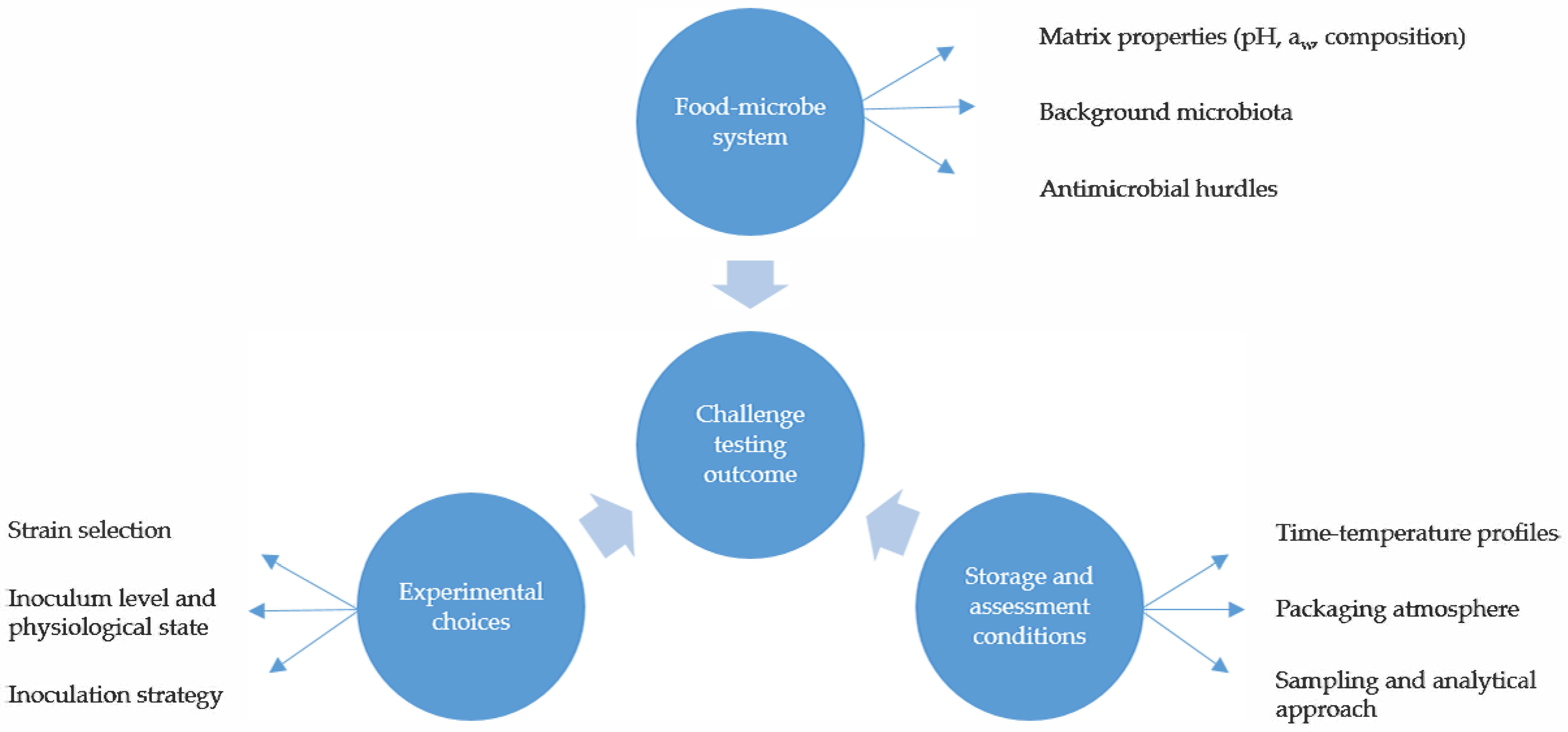
3. Conceptual Basis of Microbiological Challenge Testing
3.1. Product-Related Constraints
3.2. Biological Relevance of the Inoculum
3.3. Strain Selection and Inoculation Strategy
3.4. Storage Conditions and Study Duration
3.5. Interpretation of Outcomes
4. Regulatory Frameworks for L. monocytogenes in RTE Foods
4.1. European Regulations
4.2. United States Regulations
5. Role of Challenge Testing in Risk Management and Hazard Control
6. Technical Competence of Analytical Laboratories
- -
- portable biosensing devices (such as smartphone-based biosensors), capable of detecting foodborne pathogens through colorimetric, fluorescence, or amperometric changes [82];
- -
- CRISPR-Cas-based diagnostic tools, which enable high throughput, high sensitivity, and specificity even in composite foods [83];
- -
- spectrometric approaches (such as MALDI-TOF MS), with their fast and high rates of detection, which could be of great use as an antimicrobial resistance (AMR) screening tool [84].
7. Conclusions and Future Perspectives
Author Contributions
Funding
Institutional Review Board Statement
Informed Consent Statement
Data Availability Statement
Conflicts of Interest
References
- Maggio, F.; Rossi, C.; Chiaverini, A.; Ruolo, A.; Orsini, M.; Centorame, P.; Acciari, V.A.; Chaves-López, C.; Salini, R.; Torresi, M.; et al. Genetic relationships and biofilm formation of Listeria monocytogenes isolated from the smoked salmon industry. Int. J. Food Microbiol. 2021, 356, 109353. [Google Scholar] [CrossRef]
- Yangchen, J.; Sarkar, D.; Rood, L.; Vaskoska, R.; Kocharunchitt, C. A continuous global threat in ready-to-eat (RTE) foods. Foods 2025, 14, 3664. [Google Scholar] [CrossRef] [PubMed]
- Tirloni, E.; Centorotola, G.; Pomilio, F.; Torresi, M.; Bernardi, C.; Stella, S. Listeria monocytogenes in ready-to-eat (RTE) delicatessen foods: Prevalence, genomic characterization of isolates and growth potential. Int. J. Food Microbiol. 2024, 410, 110515. [Google Scholar] [CrossRef] [PubMed]
- EFSA BIOHAZ PANEL. Scientific Opinion on the Listeria monocytogenes contamination of ready-to-eat foods and the risk for human health in the EU. EFSA J. 2018, 16, 5134. [Google Scholar] [CrossRef]
- Manyi-Loh, C.E.; Lues, R. Listeria monocytogenes and listeriosis: The global enigma. Foods 2025, 14, 1266. [Google Scholar] [CrossRef]
- CDC Listeria Infection. Clinical Overview of Listeriosis. Available online: https://www.cdc.gov/listeria/hcp/clinical-overview/index.html?utm (accessed on 4 January 2025).
- Wilking, H.; Lachmann, R.; Holzer, A.; Halbedel, S.; Flieger, A.; Stark, K. Ongoing high incidence and case-fatality rates for invasive listeriosis, Germany, 2010–2019. Emerg. Infect. Dis. 2021, 27, 2485–2488. [Google Scholar] [CrossRef]
- Allen, V.; Alveyn, E.; Galloway, J. Invasive listeriosis in patients with immune-mediated inflammatory diseases on biologics and targeted therapies—A review of the literature. Rheumatology 2022, 61, i68–i69. [Google Scholar] [CrossRef]
- Elbehiry, A.; Abalkhail, A.; Marzouk, E.; Elmanssury, A.E.; Almuzaini, A.M.; Alfheeaid, H.; Alshahrani, M.T.; Huraysh, N.; Ibrahem, M.; Alzaben, F.; et al. An overview of the public health challenges in diagnosing and controlling human foodborne pathogens. Vaccines 2023, 11, 725. [Google Scholar] [CrossRef]
- Lakicevic, B.; Jankovic, V.; Pietzka, A.; Ruppitsch, W. Whole genome sequencing as the gold standard approach for control of Listeria monocytogenes in the food chain. J. Food Prot. 2022, 86, 100003. [Google Scholar] [CrossRef]
- EFSA (European Food Safety Authority); ECDC (European Centre for Disease Prevention and Control). The European Union One Health 2024 Zoonoses Report. EFSA J. 2025, 23, e9759. [Google Scholar]
- EFSA (European Food Safety Authority); ECDC (European Centre for Disease Prevention and Control). The European Union One Health 2023 Zoonoses Report. EFSA J. 2024, 22, e9106. [Google Scholar]
- EFSA (European Food Safety Authority); ECDC (European Centre for Disease Prevention and Control). The European Union One Health 2022 Zoonoses Report. EFSA J. 2023, 21, e8442. [Google Scholar] [PubMed]
- EFSA (European Food Safety Authority); ECDC (European Centre for Disease Prevention and Control). The European Union One Health 2021 Zoonoses Report. EFSA J. 2022, 20, 7666. [Google Scholar] [CrossRef]
- EFSA (European Food Safety Authority); ECDC (European Centre for Disease Prevention and Control). The European Union One Health 2020 Zoonoses Report. EFSA J. 2021, 19, 6971. [Google Scholar] [CrossRef] [PubMed]
- Viazis, S.; Conrad, A.; Palacios, A.; Busbee, A.L.; Kirchner, M.; Cataldo, N.; Wellman, A.; Weed, B.; Carstens, C.K.; Wagoner, V.; et al. An overview of listeriosis outbreak investigations in the United States to imported enoki mushrooms and associated regulatory activities, research, and food safety knowledge gaps. Compr. Rev. Food Sci. Food Saf. 2025, 24, e70292. [Google Scholar] [CrossRef] [PubMed]
- Su, Y.; Liu, A.; Zhu, M.-J. Mapping the landscape of listeriosis outbreaks (1998–2023): Trends, challenges, and regulatory responses in the United States. Trends Food Sci. Technol. 2024, 154, 104750. [Google Scholar] [CrossRef]
- FAO; WHO. Listeria monocytogenes in Ready-to-Eat (RTE) Foods: Attribution, Characterization and Monitoring—Meeting Report; Microbiological Risk Assessment Series No. 38; FAO: Rome, Italy; WHO: Geneva, Switzerland, 2022. [Google Scholar] [CrossRef]
- Russell, A.D. Challenge testing: Principles and practice. Int. J. Cosmetic Sci. 2003, 25, 147–153. [Google Scholar] [CrossRef]
- Serraino, A.; Giacometti, F. Introduction to challenge test and microbiological characterization of local products. Ital. J. Food Saf. 2014, 3, 2270. [Google Scholar] [CrossRef][Green Version]
- Notermans, S.; Veld, P.I.; Wijtzes, T.; Mead, G.C. A user’s guide to microbial challenge testing for ensuring the safety and stability of food products. Food Microbiol. 1993, 10, 145–157. [Google Scholar] [CrossRef]
- European Commission (EC). Commission Regulation (EU) No 2024/2895 of 20 November 2024 amending Regulation (EC) No 2073/2005 as regards Listeria monocytogenes. Off. J. Eur. Union 2024, L2024/2895, 1–3. [Google Scholar]
- European Commission (EC). Commission Regulation (EC) No 2073/2005 of 15 November 2005 on microbiological criteria for Foodstuffs. Off. J. Eur. Union 2005, L338, 1–32. [Google Scholar]
- Belias, A.; Bolten, S.; Wiedmann, M. Challenges and opportunities for risk- and systems-based control of Listeria monocytogenes transmission through food. Compr. Rev. Food Sci. Food Saf. 2024, 23, e70071. [Google Scholar] [CrossRef] [PubMed]
- Alvarez-Ordóñez, A.; Leong, D.; Hickey, B.; Beaufort, A.; Jordan, K. The challenge of challenge testing to monitor Listeria monocytogenes growth on ready-to-eat foods in Europe by following the European Commission (2014) Technical Guidance document. Food Res. Int. 2015, 75, 233–243. [Google Scholar] [CrossRef] [PubMed]
- Lanni, L.; Morena, V.; Scattareggia Marchese, A.; Destro, G.; Ferioli, M.; Catellani, P.; Giaccone, V. Challenge test as special tool to estimate the dynamic of Listeria monocytogenes and other Foodborne pathogens. Foods 2022, 11, 32. [Google Scholar] [CrossRef]
- Beaufort, A. The determination of ready-to-eat foods into Listeria monocytogenes growth and no growth categories by challenge tests. Food Control 2011, 22, 1498–1502. [Google Scholar] [CrossRef]
- Zhang, X.; Wang, S.; Chen, X.; Qu, C. Review controlling Listeria monocytogenes in ready-to-eat meat and poultry products: An overview of outbreaks, current legislations, challenges, and future prospects. Trends Food Sci. Technol. 2021, 116, 24–35. [Google Scholar] [CrossRef]
- Velebit, B.; Milojević, L.; Janković, V.; Lakićević, B.; Mitrović, R.; Mišić, D.; Baltić, T. Zero-tolerance Listeria in EU: Preparing for the stricter controls. Meat Technol. 2025, 66, 423–427. [Google Scholar] [CrossRef]
- Spanu, C.; Scarano, C.; Ibba, M.; Pala, C.; Spanu, V.; De Santis, E.P. Microbiological challenge testing for Listeria monocytogenes in ready-to-eat: A practical approach. Ital. J. Food Saf. 2014, 3, 4518. [Google Scholar] [CrossRef][Green Version]
- Van Paepeghem, C.; Taghlaoui, F.; De Loy-Hendrickx, A.; Vermeulen, A.; Devlieghere, F.; Jacxsens, L.; Uyttendaele, M. Prevalence and growth potential of Listeria monocytogenes in innovative, pre-packed, plant-based ready-to-eat food products on the Belgian market. Int. J. Food Microbiol. 2024, 410, 110506. [Google Scholar] [CrossRef]
- National Advisory Committee on Microbiological Criteria for Foods. Parameters for determining inoculated pack/challenge study protocols. J. Food Prot. 2010, 73, 140–202. [Google Scholar] [CrossRef]
- D’Onofrio, F.; Visciano, P.; Krasteva, I.; Torresi, M.; Tittarelli, M.; Pomilio, F.; Iannetti, L.; Di Febo, T.; Paparella, A.; Schirone, M.; et al. Immunoproteome profiling of Listeria monocytogenes under mild acid and salt stress conditions. Proteomics 2022, 22, e2200082. [Google Scholar] [CrossRef]
- Tarracchini, C.; Fontana, F.; Petraro, S.; Lugli, G.A.; Mancabelli, L.; Turroni, F.; Ventura, M.; Milani, C. Optimal Representative Strain selector-a comprehensive pipeline for selecting next-generation reference strains of bacterial species. NAR Genom. Bioinform. 2024, 6, lqae173. [Google Scholar] [CrossRef] [PubMed]
- Tarlak, F. The use of predictive microbiology for the prediction of the shelf life of food products. Foods 2023, 12, 4461. [Google Scholar] [CrossRef]
- Komitopoulou, E. Microbiological challenge testing of foods. In Food and Beverage Stability and Shelf Life; Kilcast, D., Subramaniam, P., Eds.; Woodhead Publishing: Cambridge, UK, 2011; Chapter 16; pp. 507–523. Available online: https://www.sciencedirect.com/science/chapter/edited-volume/abs/pii/B9781845697013500165?via%3Dihub (accessed on 12 December 2025).
- Romero de Castilla López, B.; Gómez Lozano, D.; Herrera Marteache, A.; Conchello Moreno, P.; Rota García, C. Control of persistent Listeria monocytogenes in the meat industry: From detection to prevention. Foods 2025, 14, 1519. [Google Scholar] [CrossRef] [PubMed]
- Augustin, J.C. Evaluation of the sensitivity of microbiological criteria for Listeria monocytogenes in detecting unsafe food according to the prevalence of the pathogen and the shelf-life of the food. Food Microbiol. 2003, 20, 681–689. [Google Scholar] [CrossRef]
- Codex Alimentarius Commission (CAC). Guidelines on the Application of General Principles of Food Hygiene to the Control of Listeria monocytogenes in Ready-to-Eat Foods—CAC/GL 61-2007; Codex Alimentarius Commission (CAC): Rome, Italy, 2007; Available online: https://www.fao.org/fao-who-codexalimentarius/sh-proxy/en/?lnk=1&url=https%253A%252F%252Fworkspace.fao.org%252Fsites%252Fcodex%252FStandards%252FCXG%2B61-2007%252FCXG_061e.pdf (accessed on 12 December 2025).
- EURL Lm (European Union Reference Laboratory for Listeria monocytogenes). Guidelines on Sampling the Food Processing Area and Equipment for the Detection of Listeria monocytogenes (Version 3—20/08/2012); EURL Lm: Paris, France, 2012; Available online: https://eurl-listeria.anses.fr/en/system/files/LIS-Cr-201213D1.pdf (accessed on 12 December 2025).
- EURL Lm (European Union Reference Laboratory for Listeria monocytogenes). Guidelines on Sampling the Food Processing Area and Equipment for the Detection of Listeria monocytogenes (Version 4—03/10/2023); EURL Lm: Paris, France, 2023; Available online: https://pta.agri.ee/sites/default/files/documents/2024-01/EURL_Lm_TGD_sampling%20processing%20areas_version4%202023-10-03_0.pdf (accessed on 12 December 2025).
- Dufour, C. Application of EC regulation No. 2073/2005 regarding Listeria monocytogenes in ready-to-eat foods in retail and catering sectors in Europe. Food Control 2011, 22, 1491–1494. [Google Scholar] [CrossRef]
- Muhterem-Uyar, M.; Dalmasso, M.; Bolocan, A.S.; Hernandez, M.; Kapetanakou, A.E.; Kuchta, T.; Manios, S.G.; Melero, B.; Minarovičová, J.; Nicolau, A.I.; et al. Environmental sampling for Listeria monocytogenes control in food processing facilities reveals three contamination scenarios. Food Control 2015, 51, 94–107. [Google Scholar] [CrossRef]
- Neri, D.; Antoci, S.; Iannetti, L.; Ciorba, A.B.; D’Aurelio, R.; Del Matto, I.; Di Leonardo, M.; Giovannini, A.; Prencipe, V.A.; Pomilio, F.; et al. EU and US control measures on Listeria monocytogenes and Salmonella spp. in certain ready-to-eat meat products: An equivalence study. Food Control 2019, 96, 98–103. [Google Scholar] [CrossRef]
- Antoci, S.; Iannetti, L.; Centorotola, G.; Acciari, V.A.; Pomilio, F.; Daminelli, P.; Romanelli, C.; Ciorba, A.B.; Santini, N.; Torresi, M.; et al. Monitoring Italian establishments exporting food of animal origin to third countries: SSOP compliance and Listeria monocytogenes and Salmonella spp. contamination. Food Control 2021, 121, 107584. [Google Scholar] [CrossRef]
- Rosset, P.; Cornu, M.; Noël, V.; Morelli, E.; Poumeyrol, G. Time-temperature profiles of chilled ready-to-eat foods in school catering and probabilistic analysis of Listeria monocytogenes growth. Int. J. Food Microbiol. 2004, 96, 49–59. [Google Scholar] [CrossRef][Green Version]
- Lee, J.C.; Daraba, A.; Voidarou, C.; Rozos, G.; Enshasy, H.A.E.; Varzakas, T. Implementation of food safety management systems along with other management tools (HAZOP, FMEA, Ishikawa, Pareto). The case study of Listeria monocytogenes and correlation with microbiological criteria. Foods 2021, 10, 2169. [Google Scholar] [CrossRef] [PubMed]
- Tamplin, M.L.; Ratkowsky, D.A. Pathogen growth when implementing “Time as a Public Health Control”. Food Microbiol. 2021, 96, 103718. [Google Scholar] [CrossRef] [PubMed]
- Shank, F.R.; Elliot, E.L.; Wachsmuth, I.K.; Losikoff, M.E. US position on Listeria monocytogenes in foods. Food Control 1996, 7, 229–234. [Google Scholar] [CrossRef]
- Klontz, K.C.; McCarthy, P.V.; Datta, A.R.; Lee, J.O.; Acheson, D.W.; Brackett, R.E. Role of the U.S. Food and Drug Administration in the regulatory management of human listeriosis in the United States. J. Food Prot. 2008, 71, 1277–1286. [Google Scholar] [CrossRef] [PubMed]
- Farber, J.M.; Zwietering, M.; Wiedmann, M.; Schaffner, D.; Hedberg, C.W.; Harrison, M.A.; Hartnett, E.; Chapman, B.; Donnelly, C.W.; Goodburn, K.E.; et al. Alternative approaches to the risk management of Listeria monocytogenes in low risk foods. Food Control 2021, 123, 107601. [Google Scholar] [CrossRef]
- Archer, D.L. The evolution of FDA’s policy on Listeria monocytogenes in ready-to-eat foods in the United States. Curr. Opin. Food Sci. 2018, 20, 64–68. [Google Scholar] [CrossRef]
- Elliot, E.L.; Kvenberg, J.E. Risk assessment used to evaluate the US position on Listeria monocytogenes in seafood. Int. J. Food Microbiol. 2000, 62, 253–260. [Google Scholar] [CrossRef]
- House of Representatives; Congress. 21 U.S.C. 342—Adulterated Food; U.S. Government Publishing Office: Washington, DC, USA, 2024. Available online: https://www.govinfo.gov/app/details/USCODE-2024-title21/USCODE-2024-title21-chap9-subchapIV-sec342 (accessed on 28 November 2025).
- House of Representatives; Congress. 21 U.S.C. 346—Tolerances for Poisonous or Deleterious Substances in Food; U.S. Government Publishing Office: Washington, DC, USA, 2024. Available online: https://www.govinfo.gov/app/details/USCODE-2024-title21/USCODE-2024-title21-chap9-subchapIV-sec346 (accessed on 28 November 2025).
- Blickem, E.R.; Bell, J.W.; Baumgartel, M.; DeBeer, J. USDA Food recalls for the period 2012–2023 compared with FDA regulated food recalls over the past two decades. J. Food Prot. 2025, 88, 100492. [Google Scholar] [CrossRef]
- Butts, J. Seek and Destroy: Identifying and Controlling Listeria monocytogenes Growth Niches. 2003. Available online: https://www.food-safety.com/articles/4802-seek-destroy-identifying-and-controlling-listeria-monocytogenes-growth-niches (accessed on 9 December 2025).
- Malley, T.J.; Butts, J.; Wiedmann, M. Seek and destroy process: Listeria monocytogenes process controls in the ready-to-eat meat and poultry industry. J. Food Prot. 2015, 78, 436–445. [Google Scholar] [CrossRef]
- Food Safety and Inspection Service (FSIS). FSIS Compliance Guideline: Controlling Listeria monocytogenes in Post-Lethality Exposed Ready-to-Eat Meat and Poultry Products; United States Department of Agriculture (USDA): Washington, DC, USA, 2014. Available online: https://www.fsis.usda.gov/sites/default/files/import/Controlling-Lm-RTE-Guideline.pdf (accessed on 12 December 2025).
- Food and Drug Administration (FDA). Control of Listeria monocytogenes in Ready-To-Eat Foods: Guidance for Industry (Draft Guidance); U.S. Department of Health and Human Services: Silver Spring, MD, USA, 2017. Available online: https://www.fda.gov/files/food/published/Draft-Guidance-for-Industry--Control-of-Listeria-monocytogenes-in-Ready-To-Eat-Foods-%28PDF%29.pdf (accessed on 12 December 2025).
- Health Canada. Policy on Listeria monocytogenes in Ready-to-Eat Foods; Health Canada: Ottawa, ON, Canada, 2023. Available online: https://www.canada.ca/content/dam/hc-sc/migration/hc-sc/fn-an/alt_formats/pdf/legislation/pol/listeria-monocytogenes-ready-eat-foods-eng.pdf (accessed on 9 January 2026).
- Food Standards Australia New Zealand (FSANZ). Australia New Zealand Food Standards Code—Standard 1.6.1: Microbiological Limits for Food; FSANZ: Canberra, Australia; Wellington, New Zealand, 2018. Available online: https://www.foodstandards.gov.au/sites/default/files/publications/Documents/Guidance%20on%20the%20application%20of%20limits%20for%20Listeria%20monocytogenes%20FINAL.pdf (accessed on 9 January 2026).
- National Health Commission of the People’s Republic of China; State Administration for Market Regulation. National Food Safety Standard—Pathogen Limits for Prepackaged Foods (GB 29921-2021); China Standards Press: Beijing, China, 2021.
- UK Health Security Agency (UKHSA). Guidelines for Assessing the Microbiological Safety of Ready-to-Eat Foods Placed on the Market: Interpretation of Test Results Generated by UKHSA Food, Water and Environmental Microbiology Services Laboratories; UKHSA: London, UK, 2024. Available online: https://assets.publishing.service.gov.uk/media/66debd72e87ad2f1218265e1/UKHSA-ready-to-eat-guidelines-2024.pdf (accessed on 9 January 2026).
- Shimojima, Y.; Ida, M.; Nakama, A.; Nishino, Y.; Fukui, R.; Kuroda, S.; Hirai, A.; Kai, A.; Sadamasu, K. Prevalence and contamination levels of Listeria monocytogenes in ready-to-eat foods in Tokyo, Japan. J. Vet. Med. Sci. 2016, 78, 1183–1187. [Google Scholar] [CrossRef]
- Introduction to Food Microbiology and Safety. Listeria monocytogenes: Risks, Regulations, and Effective Control in Ready-to-Eat Foods. Available online: https://foodmicrobe-basic.com/listeria-monocytogenes/ (accessed on 9 January 2026).
- Barlow, S.M.; Boobis, A.R.; Bridges, J.; Cockburn, A.; Dekant, W.; Hepburn, P.; Houben, G.F.; König, J.; Nauta, M.J.; Schuermans, J.; et al. The role of hazard- and risk-based approaches in ensuring food safety. Trends Food Sci. Technol. 2015, 46, 176–188. [Google Scholar] [CrossRef]
- Walls, I.; Buchanan, R.L. Use of food safety objectives as a tool for reducing foodborne listeriosis. Food Control 2005, 16, 795–799. [Google Scholar] [CrossRef]
- Vermeulen, A.; Devlieghere, F.; De Loy-Hendrickx, A.; Uyttendaele, M. Critical evaluation of the EU-technical guidance on shelf-life studies for L. monocytogenes on RTE-foods: A case study for smoked salmon. Int. J. Food Microbiol. 2011, 145, 176–185. [Google Scholar] [CrossRef] [PubMed]
- Scott, V.N.; Swanson, K.M.J.; Frier, T.A.; Pruett, W.P.; Sveum, W.H.; Hall, P.A.; Smoot, L.A.; Brown, D.J. Guidelines for conducting Listeria monocytogenes challenge testing of foods. Food Prot. Trends 2005, 25, 818–825. [Google Scholar]
- ISO 11290-1:2017; Microbiology of the Food Chain—Horizontal Method for the Detection and Enumeration of Listeria Monocytogenes and of Listeria spp.—Part 1: Detection Method. International Organization for Standardization: Geneva, Switzerland, 2017.
- ISO 11290-2:2017; Microbiology of the Food Chain—Horizontal Method for the Detection and Enumeration of Listeria Monocytogenes and of Listeria spp.—Part 2: Enumeration Method. International Organization for Standardization: Geneva, Switzerland, 2017.
- D’Ambrosio, G.; Maggio, F.; Serio, A.; Paparella, A. Tradition and innovation in raw meat products with a focus on the steak tartare case. Foods 2025, 14, 2326. [Google Scholar] [CrossRef]
- Food and Drug Administration (FDA); Bacteriological Analytical Manual (BAM). Chapter 10: Detection of Listeria monocytogenes in Foods and Environmental Samples, and Enumeration of Listeria monocytogenes in Foods; U.S. Department of Health and Human Services: Silver Spring, MD, USA, 2022. Available online: https://www.fda.gov/food/laboratory-methods-food/bacteriological-analytical-manual-bam (accessed on 12 December 2025).
- Food Safety and Inspection Service (FSIS). Isolation and Identification of Listeria monocytogenes and Listeria spp. from Ready-to-Eat Meat, Poultry, Siluriformes (Catfish), Egg Products, and Environmental Samples. In Microbiology Laboratory Guidebook (MLG) 8.15; United States Department of Agriculture (USDA): Washington, DC, USA, 2024. Available online: https://www.fsis.usda.gov/sites/default/files/media_file/documents/MLG-8.15.pdf (accessed on 12 December 2025).
- Gnanou Besse, N.; Lombard, B.; Guillier, L.; François, D.; Romero, K.; Pierru, S.; Bouhier, L.; Rollier, P. Validation of standard method EN ISO 11290—Part 1—Detection of Listeria monocytogenes in food. Int. J. Food Microbiol. 2019, 288, 13–21. [Google Scholar] [CrossRef]
- Rollier, P.; Lombard, B.; Guillier, L.; François, D.; Romero, K.; Pierru, S.; Bouhier, L.; Besse, N.G. Validation of standard method EN ISO 11290—Part 2 for the enumeration of Listeria monocytogenes in food. Int. J. Food Microbiol. 2019, 288, 22–31. [Google Scholar] [CrossRef]
- ANSES. EURL Lm Guidance Document to Evaluate the Competence of Laboratories Implementing Challenge Tests and Durability Studies Related to Listeria monocytogenes in Ready-to-Eat Foods. Version 3–10/02/2023; ANSES: Paris, France, 2023. Available online: https://food.ec.europa.eu/system/files/2023-02/biosafety_fh_mc_guidance-comp-labs.pdf (accessed on 15 December 2025).
- ISO 17025:2017; General Requirements for the Competence of Testing and Calibration Laboratories. International Organization for Standardization: Geneva, Switzerland, 2017.
- Accredia. Laboratories Accredited for Challenge Testing. 2025. Available online: https://services.accredia.it/accredia_labsearch.jsp?ID_LINK=1734&area=310&dipartimento=L&desc=Laboratori (accessed on 15 December 2025).
- Priyanka, B.; Patil, R.K.; Dwarakanath, S. A review on detection methods used for foodborne pathogens. Indian J. Med. Res. 2016, 144, 327–338. [Google Scholar] [CrossRef]
- Kabiraz, M.P.; Majumdar, P.R.; Mahmud, M.M.C.; Bhowmik, S.; Ali, A. Conventional and advanced detection techniques of foodborne pathogens: A comprehensive review. Heliyon 2023, 9, e15482. [Google Scholar] [CrossRef]
- Haddad, M.; Tarawneh, H.; Abu-Romman, S.; Al-Hadid, K.; Al-Rawashdeh, M.; Obeidat, N. Emerging analytical techniques for determination of foodborne pathogens and toxins: A review. Discov. Food 2025, 5, 370. [Google Scholar] [CrossRef]
- Liu, S.; Zhao, K.; Huang, M.; Zeng, M.; Deng, Y.; Li, S.; Chen, H.; Li, W.; Chen, Z. Research progress on detection techniques for point-of-care testing of foodborne pathogens. Front. Bioeng. Biotechnol. 2022, 10, 958134. [Google Scholar] [CrossRef]
- Skandamis, P.N. “Growth Predictor”: A new predictive modelling and quantitative microbial risk assessment tool. Food Res. Int. 2025, 209, 116329. [Google Scholar] [CrossRef]
- Taiwo, O.R.; Onyeaka, H.; Oladipo, E.K.; Oloke, J.K.; Chukwugozie, D.C. Advancements in Predictive Microbiology: Integrating New Technologies for Efficient Food Safety Models. Int. J. Microbiol. 2024, 2024, 6612162. [Google Scholar] [CrossRef]
- Lin, Z.; Qin, X.; Li, J.; Aslam, M.Z.; Sun, T.; Li, Z.; Wang, X.; Dong, Q. Machine learning approach for predicting single cell lag time of Salmonella Enteritidis after heat and chlorine treatment. Food Res. Int. 2022, 156, 111132. [Google Scholar] [CrossRef]



| Human Cases | Year | ||||
|---|---|---|---|---|---|
| 2020 | 2021 | 2022 | 2023 | 2024 | |
| Cases of illness | 1876 | 2183 | 2738 | 2952 | 3041 |
| Hospitalizations | 780 | 923 | 1330 | 1497 | 1715 |
| Deaths | 167 | 196 | 286 | 335 | 301 |
| Notification rates * | 0.42 | 0.49 | 0.62 | 0.66 | 0.69 |
| Infections acquired in the EU | 1285 | 1482 | 1778 | 2031 | 2062 |
| Infections acquired outside of the EU | 5 | 4 | 12 | 8 | 14 |
| Unknown travel/unknown country of infection | 586 | 697 | 948 | 913 | 965 |
| Total number of outbreaks | 16 | 23 | 35 | 19 | 38 |
| Regulatory Framework | Risk Philosophy | L. monocytogenes Limits (RTE) | Risk Management and Criteria | References |
|---|---|---|---|---|
| US (USDA-FSIS) | Zero-tolerance Lm = hazard; product adulterated if detected | Absence (not detected); detection triggers rework or destruction | Alternative 1–3 verification intensity based on PLTs and AMAPs | [59] |
| US (FDA) | Zero-tolerance—focus on environmental monitoring as primary control | Not detected (< 1 cfu/25 g); goal is consistent destruction of viable cells | Zone System (Zones 1–4) Monitoring based on proximity to FCSs | [60] |
| Canada (Health Canada) | Risk-based approach—RTE foods classified potential to support Lm growth | Categorised limits— Category 1 (supports growth): absence in 25 g; Category 2 (limited/no growth): limit of 100 cfu/g | Enforcement—sale considered contravention if limits exceeded; focus on environmental sampling in post-process | [61] |
| European Union (EC) | Preventive approach—distinguishes Food Safety Criteria (market) and Process Hygiene Criteria (production) | Absence in 25 g (Infants/Medical) or 100 cfu/g during shelf life if growth restricted; otherwise, absence in 25 g | FBOs responsibility—must conduct shelf life studies (Annex II) to ensure 100 cfu/g limit is not exceeded | [22,23] |
| Australia and New Zealand (FSANZ) | Risk-based approach—occasional low-level contamination may be unavoidable if growth not supported | Not detected in 25 g (if growth can occur); 100 cfu/g (if growth will not occur) | By growth potential—two endpoint values depending on food’s ability to support growth | [62] |
| China (NHCPRC) | Mandatory limits—FBOs must minimise pathogen risks in prepackaged foods | Not detected in 25 g (meat, dairy, vegetables/fruits, frozen drinks, aquatic products) | Sampling plans—uses n, c, m, and M (typically n = 5, c = 0) to define safety limits | [63] |
| United Kingdom (UKHSA) | Public health focus—guidelines complement statutory laws for interpreting results | Not detected in 25 g (Infants/Medical); satisfactory if < 20 cfu/g; unsatisfactory if >100 cfu/g | Sampling plans— 2-class plans for safety; 3-class plans (satisfactory/borderline/unsatisfactory) for indicators | [64] |
| Japan (MHLW) | Public health focus—primary responsibility on FBOs; safety ensured through voluntary inspections | ≤100 cfu/g for natural cheeses and non-heat-treated meat products; sale prohibited if contaminated | Approval system for comprehensive sanitation management; mandatory; Food Sanitation Supervisors for dairy and additives | [65,66] |
| Agency | Primary Goal/Concept | Inhibition/Listeriostatic Goal | Lethality/Listericidal Goal |
|---|---|---|---|
| EURL Lm (EU) | Validate shelf life of RTE food and determine Lm behaviour. Foods are categorised based on their ability to support growth | Growth potential (δ) must be less than or equal to 0.5 log10 cfu/g throughout the shelf life to be deemed unable to support growth | Not the primary metric. Focus on survival or growth potential rather than specific log reduction |
| FDA (US) | Validate listeriostatic formulations or listericidal processes, demonstrating compliance with regulatory limits | Less than a 1-log increase in Lm numbers throughout the product shelf life (replicate studies) | The process should consistently reduce Lm to less than 0.04 cfu/g (< 1 cfu/25 g). A 5-log to 6-log reduction may be needed for inactivation validation |
| USDA-FSIS (US) | Provide scientific justification for Post-Lethality Treatments (PLTs) and Antimicrobial Agents/Processes (AMAPs) to comply with the Listeria Rule (9 CFR §430) | No more than 2-log growth of Lm over the shelf life to be considered effective (for AMAP documentation) | At least a 1-log reduction before leaving the establishment (for PLT). For reprocessing contaminated product, at least a 5-log reduction is expected |
| Feature | EURL Lm Technical Guidance Document (TGD) | FDA Approach [70] |
|---|---|---|
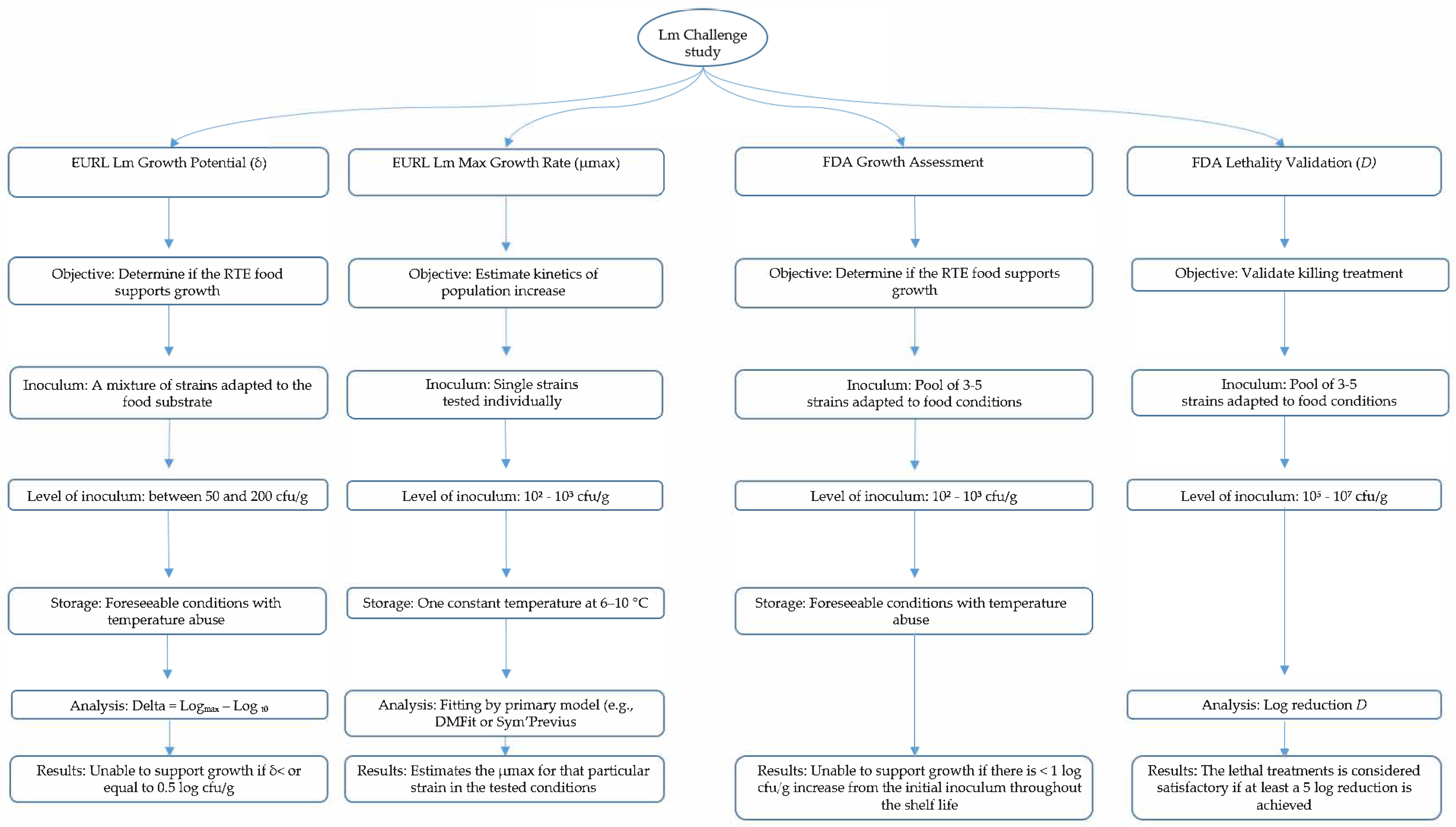
| Primary Focus and Study Types | Focuses on assessing RTE shelf life based on Lm growth and survival. Defines specific tests: Growth Potential (δ), Maximum Growth Rate (μmax), and Durability Study (verification of shelf life) | Describes challenge testing broadly as a tool to determine if a product supports growth (inhibition) or to validate lethal effects (inactivation of Lm by processes) |
| Strain Usage (δ test) | Requires a mixture of Lm strains (cocktail) to account for strain variability | Recommends using 3–5 strains of Lm, either individually or in combination, though a multiple-strain inoculum is usually preferred |
| Strain Usage (μmax test) | Typically uses a single strain per test, preferably one with known cardinal values | Allows screening to use a single, most resistant strain, but usually prefers a multiple-strain inoculum (3–5 strains) |
| Inoculum Level (Growth Studies) | Targets a contamination level of around 100 cfu/g (range 50 to 200 cfu/g) to minimise measurement uncertainty at low numbers | Typically uses an inoculum level between 100 and 1000 cfu/g of product to determine if a formulation supports growth |
| Inoculum Level (Lethality Studies) | Protocols focus on growth; lethality challenges are not a primary focus | Requires a high inoculum level (e.g., 106–107 cfu/g) for validating high-level lethality (like heat processing) to demonstrate the extent of reduction |
| Storage Conditions | Must reflect the foreseeable temperature range along the cold chain (e.g., multi-step time/temperature profiles) for growth potential (δ). μmax tests are conducted at one constant temperature (6 to 10 °C) | Often conducted at more than one temperature (e.g., 4.4–7 °C and 10–12 °C) or may incorporate temperature storage variations to simulate cold chain abuse |
| Duration and Sampling Frequency | The test period finishes at the end of the shelf life. Requires at least 4 sampling points (excluding t0) | Should extend over at least the desired shelf life, and preferably for the shelf life plus an additional margin (e.g., 1.25–1.5 times the length). Generally, requires a minimum of 5–7 sample intervals over the shelf life |
| Acceptance Criteria (Non-Growth) | A food is classified as unable to support growth if the growth potential (δ) is lower than or equal to 0.5 log10 cfu/g | An appropriate acceptance criterion for non-growth is a <1 log increase above the initial inoculum level throughout the shelf life |
| Laboratory Analytical Methods and Standards | Microbiological reference methods: EN ISO 11290-1 [71] (Detection) and EN ISO 11290-2 [72] (Enumeration). Recommends lowering the limit of enumeration to 10 cfu/g. Physical and chemical measurements: standard measurement of pH and aw; water phase salt content (WPS) to estimate aw if necessary. Modelling with commercial software (e.g., DMFit from ComBase or Sym’Previus) for fitting primary models to estimate μmax | Microbiological reference methods: Refers to the FDA (BAM) and USDA FSIS methods. Discusses using non-selective media but lists various selective chromogenic plating media (e.g., ALOA®, CHROMagar Listeria) for enumeration. Injured Cell Recovery: resuscitation steps or overlay methods may be required for cells injured by lethal treatments or antimicrobials. Physical and chemical measurements involve tracking product parameters like pH, aw, preservatives, salt level, and gas concentrations (for MAP) using standard methods |
| Procedural Aspects | EN ISO 11290-1 | EN ISO 11290-2 | USDA FSIS MLG 8.15 | FDA BAM Chapter 10 |
|---|---|---|---|---|
| Primary Target | Detection of Lm in food and food processing environments | Enumeration of Lm in food and food processing environments | Isolation and identification of Lm and Listeria spp. in RTE products and environmental samples | Detection and enumeration of Lm in foods and environmental samples |
| Enrichment Medium | Half-Fraser broth | Only initial suspension is required. Diluents like BPW or Half-Fraser broth base can be used | Uses BioMèrieux® LPT Listeria enrichment broth in a single-step enrichment process, replacing older two-step methods (UVM Broth and Morpholinepropanesulfonic acid-BLEB) | BLEB |
| Enrichment Procedure | Two steps: Primary enrichment in Half-Fraser (25 ± 1 h), followed by secondary enrichment in Fraser broth (reduced to 24 h duration). Refrigeration of broths or isolation plates is permissible before transfer or reading | No enrichment step required for enumeration/quantification methods | Single step: Incubation typically at 35±1 °C for 22–26 h for food or 18–24 h for environmental samples | Two steps: Basal BLEB (4 h at 30 °C), followed by addition of selective agents (acriflavin, cycloheximide, nalidixic acid), and further incubation at 30 °C for 24 to 48 h |
| Isolation Media | ALOA is the standard medium, often used alongside a second selective agar of choice (e.g., PALCAM, Oxford, RAPID’L.mono) | ALOA. Typical blue–green colonies with a white halo (L. monocytogenes or L. ivanovii). Plates containing < 100 characteristic colonies are preferred | HLCA replaced HBO agar and MOX agar | Esculin-based selective agars (e.g., Oxford, PALCAM, MOX, LPM) and chromogenic differential agars (L. monocytogenes-L. ivanovii differential agars, e.g., ALOA, R&F LMCPM, RAPID’L.mono) |
| Primary Screening/ Detection | Positive samples are most often detected after 24 h of Half-Fraser enrichment, but secondary enrichment is kept for efficiency, especially with highly stressed cells or competing microbial populations | Enumeration is achieved by surface plating decimal dilutions directly onto selective agar (ALOA) | Rapid screening of enriched samples for Listeria spp. using Neogen® Molecular Detection Assay 2 (PCR technology). Positive enrichments are then plated onto HLCA | Qualitative detection methods generally involve enrichment followed by isolation/identification. Alternative rapid methodologies (e.g., AOAC OMA kits, PCR) may be used for screening. Enumeration is carried through MPN or direct plating |
| Confirmation/ Identification | Classical tests (Gram stain, Haemolysis, Sugar Utilisation). Catalase and CAMP test are optional, unless required by commercial miniaturised galleries. All mandatory tests must be performed if using commercial kits | Classical tests are used for confirmation, though the Catalase and CAMP test became optional in the revised standard. Commercial biochemical galleries may be used | Proteomic confirmation: Bruker® MALDI Biotyper is the primary method, confirming isolates from Sheep Blood Agar (SBA) plates. PCR is used for screening presumptive L. monocytogenes colonies from HLCA | Standard: Haemolysis, CAMP test, Motility, Catalase, Gram stain, carbohydrate fermentation series. Alternate: Rapid biochemical kits (e.g., API® Listeria, MICRO-ID™) or real-time PCR |
| Method Category | Specific Technique | Key Principle | Primary Advantages | Main Limitations | References |
|---|---|---|---|---|---|
| Conventional | Culture-Based Plating | Growth on selective and differential agar media followed by biochemical tests | Considered the gold standard; cost-effective; confirms the presence of viable cells | Very slow turnaround time (18–24 h to several days); labour-intensive; cannot detect VBNC (viable but non-culturable) cells | [82,83] |
| Conventional | Standard ELISA | Antibody–antigen interaction detected via enzymatic colour changes on a microtiter plate | High throughput; enables the detection of bacterial toxins; less expensive than molecular methods | Subject to false positives due to cross-reactivity; requires specific antibody purity; limited sensitivity | [82,83,84] |
| Conventional | Standard PCR | Amplification of specific DNA fragments through thermal cycling (denaturation, annealing, extension) | Highly sensitive and specific; provides reliable results for genetic identification | Requires expensive equipment and specialised personnel; cannot distinguish between live and dead cells without viability dyes | [81,82,83] |
| Advanced | Isothermal (LAMP) | DNA amplification at a constant temperature (60–65 °C) using four to six primers | No thermal cycler needed; results often obtained in under one hour; high amplification efficiency | Primer design is complex; high risk of false-positive results if ring primers are used incorrectly | [82,83,84] |
| Advanced | Biosensors (Optical/Electrochemical) | Bioreceptors (antibodies, aptamers, or enzymes) coupled with transducers to produce a measurable signal | Rapid, real-time results; high specificity; portable; allows for small sample volumes | High initial instrument and software costs | [81,82,83] |
| Advanced | CRISPR-Cas-Based | Utilising Cas enzymes (Cas12/13) to target and cleave specific nucleic acid sequences | Extraordinary specificity for single nucleotide polymorphisms; operates at physiological temperatures; rapid detection | Requires further optimisation for complex food matrices; quantitative analysis can be complex | [82,83] |
| Advanced (New) | Mass Spectrometry (MALDI-TOF MS) | Identifying pathogens by analysing characteristic ions and protein fingerprints of ionised cells | Highest detection rate; extremely fast operation; avoids total dependence on traditional microbial databases | Very high initial instrument cost; requires constant calibration of flow rate and spray voltage | [84] |
Disclaimer/Publisher’s Note: The statements, opinions and data contained in all publications are solely those of the individual author(s) and contributor(s) and not of MDPI and/or the editor(s). MDPI and/or the editor(s) disclaim responsibility for any injury to people or property resulting from any ideas, methods, instructions or products referred to in the content. |
© 2026 by the authors. Licensee MDPI, Basel, Switzerland. This article is an open access article distributed under the terms and conditions of the Creative Commons Attribution (CC BY) license.
Share and Cite
D’Ambrosio, G.; Schirone, M.; Paparella, A. Listeria monocytogenes in Ready-to-Eat Foods: Risk Perspectives Across Different Regulatory Systems. Foods 2026, 15, 470. https://doi.org/10.3390/foods15030470
D’Ambrosio G, Schirone M, Paparella A. Listeria monocytogenes in Ready-to-Eat Foods: Risk Perspectives Across Different Regulatory Systems. Foods. 2026; 15(3):470. https://doi.org/10.3390/foods15030470
Chicago/Turabian StyleD’Ambrosio, Giovanni, Maria Schirone, and Antonello Paparella. 2026. "Listeria monocytogenes in Ready-to-Eat Foods: Risk Perspectives Across Different Regulatory Systems" Foods 15, no. 3: 470. https://doi.org/10.3390/foods15030470
APA StyleD’Ambrosio, G., Schirone, M., & Paparella, A. (2026). Listeria monocytogenes in Ready-to-Eat Foods: Risk Perspectives Across Different Regulatory Systems. Foods, 15(3), 470. https://doi.org/10.3390/foods15030470