Article

Efficacy of Chlorine, QAC, and UV-C Light Against Listeria monocytogenes Biofilms on Food Contact Surfaces


School of Nutrition and Food Sciences, Louisiana State University, Baton Rouge, LA 70803, USA
*
Author to whom correspondence should be addressed.
Foods 2026, 15(2), 347; https://doi.org/10.3390/foods15020347
Submission received: 17 December 2025 / Revised: 12 January 2026 / Accepted: 16 January 2026 / Published: 18 January 2026
(This article belongs to the Section Food Microbiology)

Abstract

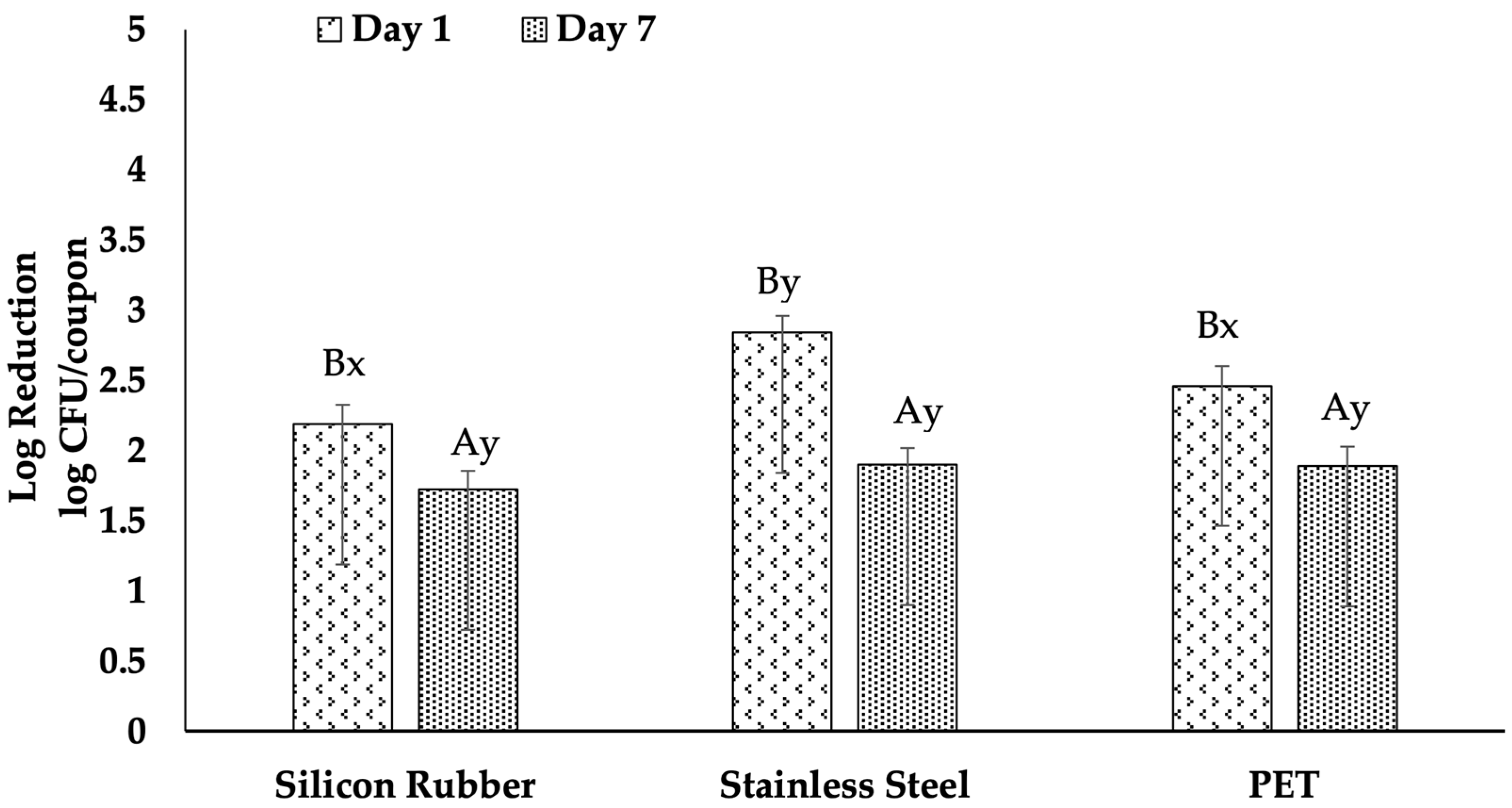
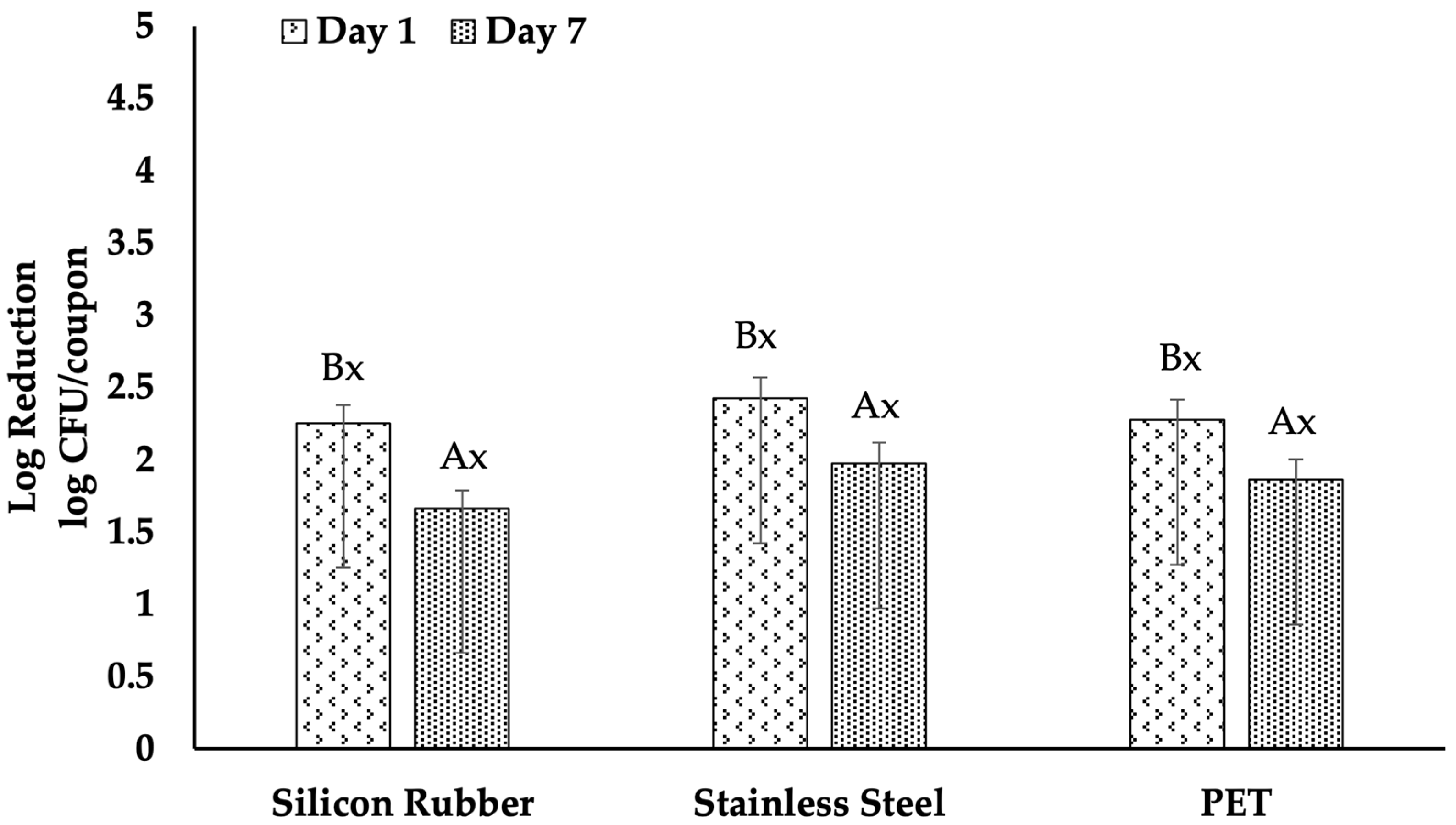
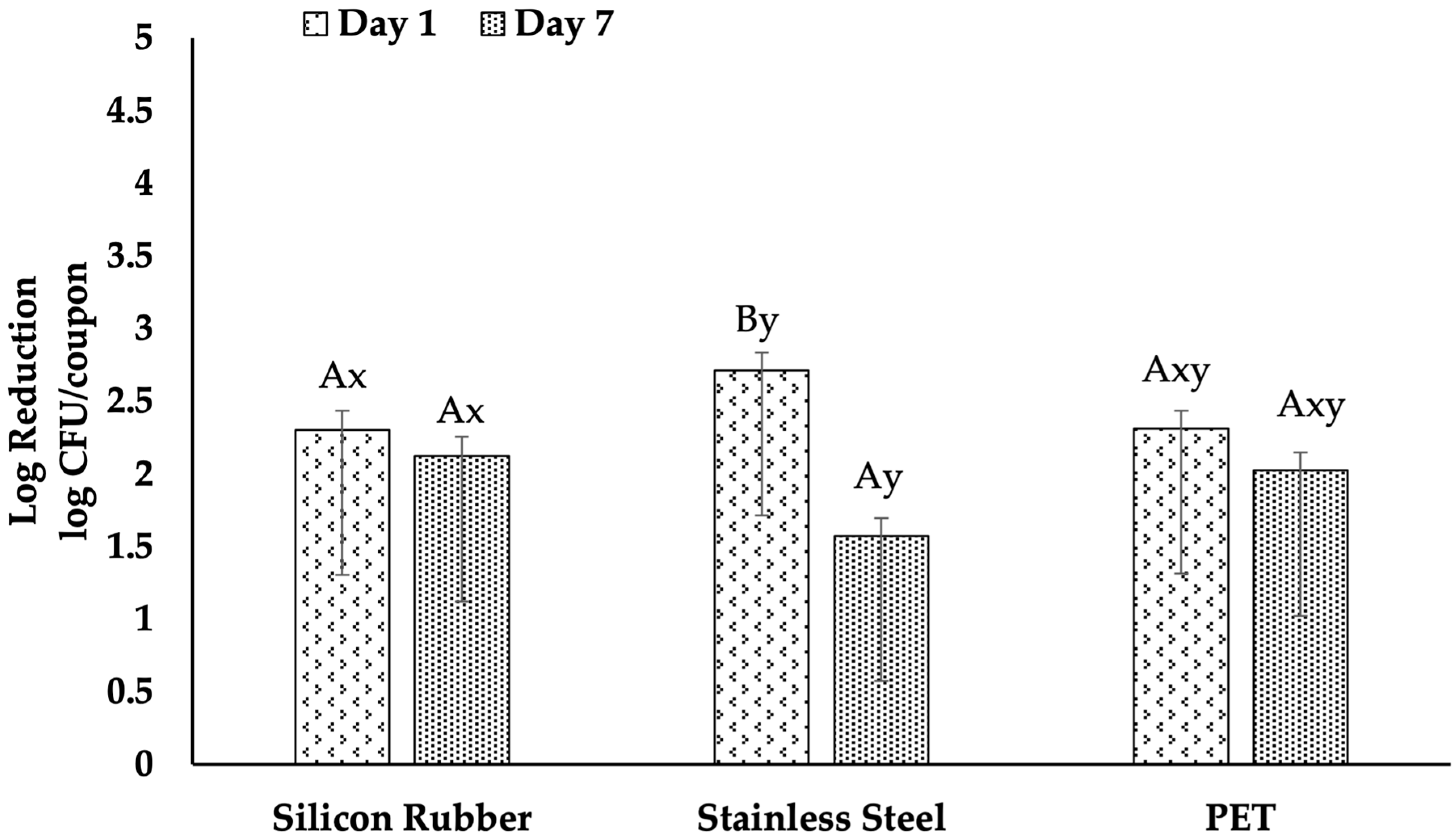
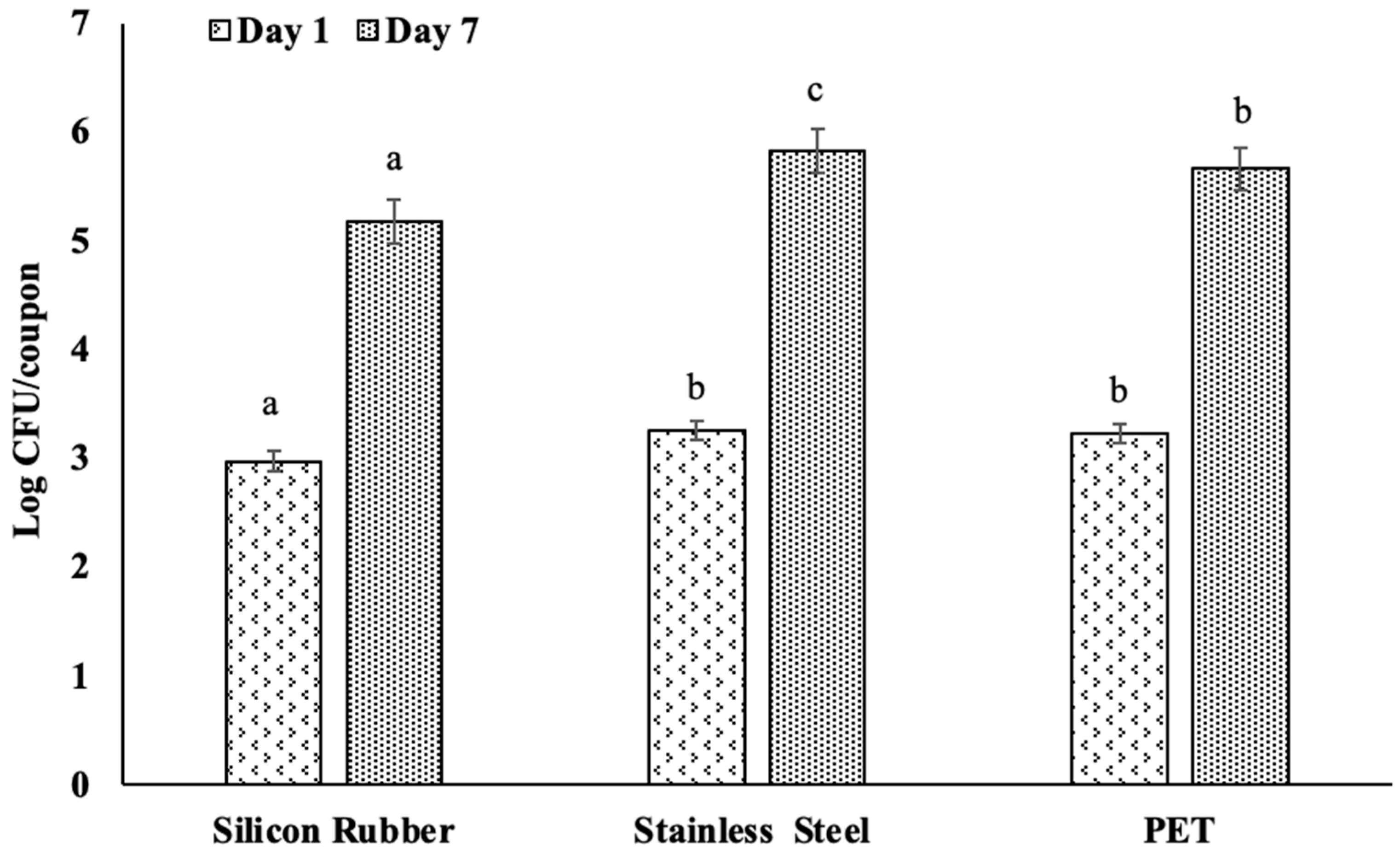
Listeria monocytogenes biofilms on surfaces that come into contact with food create ongoing challenges in produce-processing environments, highlighting the necessity for effective surface sanitation. This research examined the effectiveness of chlorine (200 ppm), quaternary ammonium compound (QAC, 400 ppm), and UV-C light (0.85 J/cm2) against L. monocytogenes biofilms developed on stainless steel, polyethylene terephthalate (PET), and silicone rubber materials frequently used in apple packing settings. Biofilms were cultivated using a mixture of LCDC and V7 strains in diluted apple juice and evaluated after 1 and 7 days of growth. The type of surface material and the age of the biofilm had a significant impact on the performance of the sanitizing agents (p < 0.05). Chlorine achieved a reduction of 2.84 ± 0.06 log CFU/coupon on 1-day-old biofilms on stainless steel, although its effectiveness dropped to 1.90 ± 0.07 log CFU/coupon on biofilms aged 7 days. Similar trends were noted for QAC (2.42 ± 0.05 to 1.73 ± 0.06 log CFU/coupon) and UV-C (2.71 ± 0.05 to 1.57 ± 0.08 log CFU/coupon) over time. PET and silicone rubber consistently exhibited lower log reductions than stainless steel for all treatments. The presence of organic matter from apple juice reduced the efficacy of sanitizers on all surfaces. These results emphasize the significant role of surface material, biofilm age, and organic load on sanitation effectiveness, offering practical recommendations for enhancing the control of L. monocytogenes in produce-processing facilities.
Keywords: Listeria monocytogenes; biofilm; food contact surfaces; UV-C Listeria monocytogenes; biofilm; food contact surfaces; UV-C