Review

Food Fraud in Plant-Based Proteins: Analytical Strategies and Regulatory Perspectives
Department of Food Science and Biotechnology, Kyung Hee University, Yongin 17104, Republic of Korea
*
Author to whom correspondence should be addressed.
Foods 2025, 14(9), 1548; https://doi.org/10.3390/foods14091548
Submission received: 7 April 2025 / Revised: 25 April 2025 / Accepted: 26 April 2025 / Published: 28 April 2025
(This article belongs to the Special Issue Advances of Novel Technologies in Food Analysis and Food Safety)

Abstract

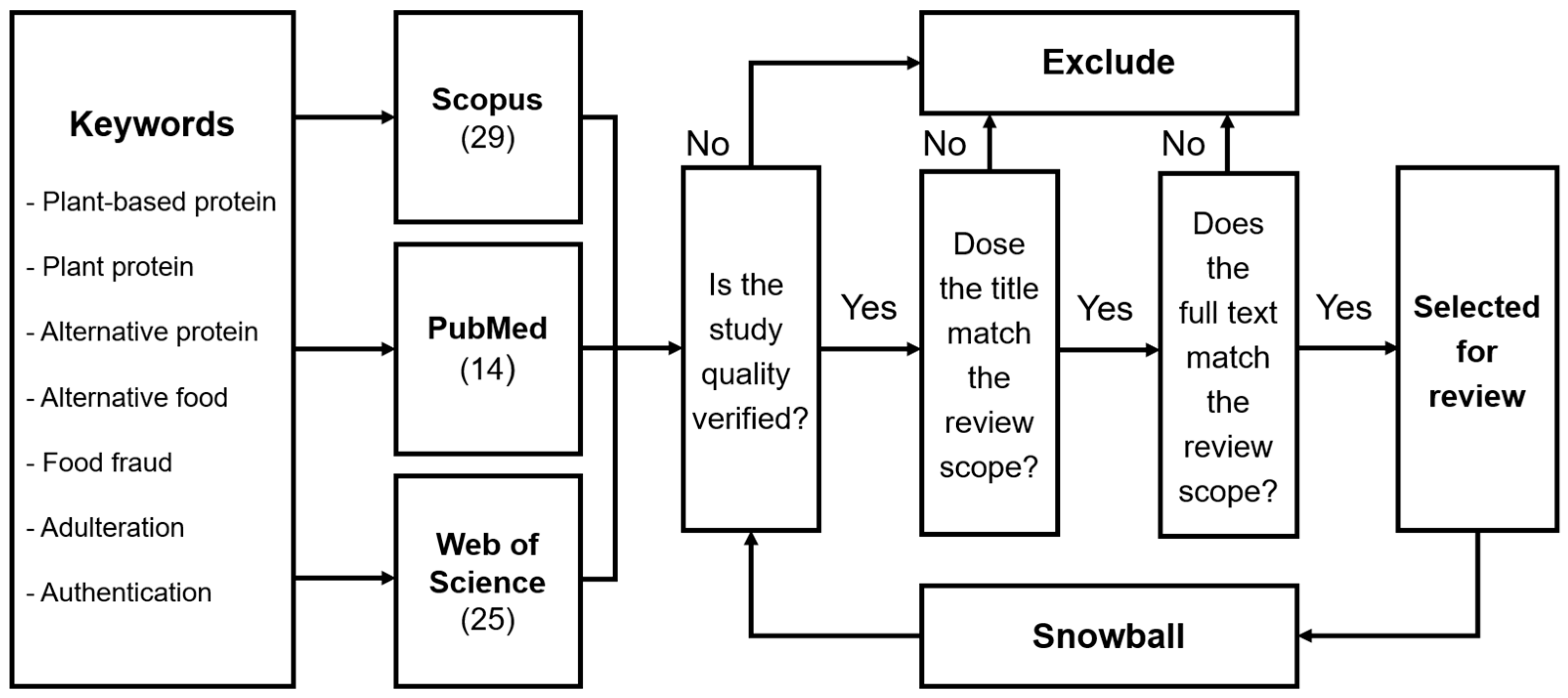
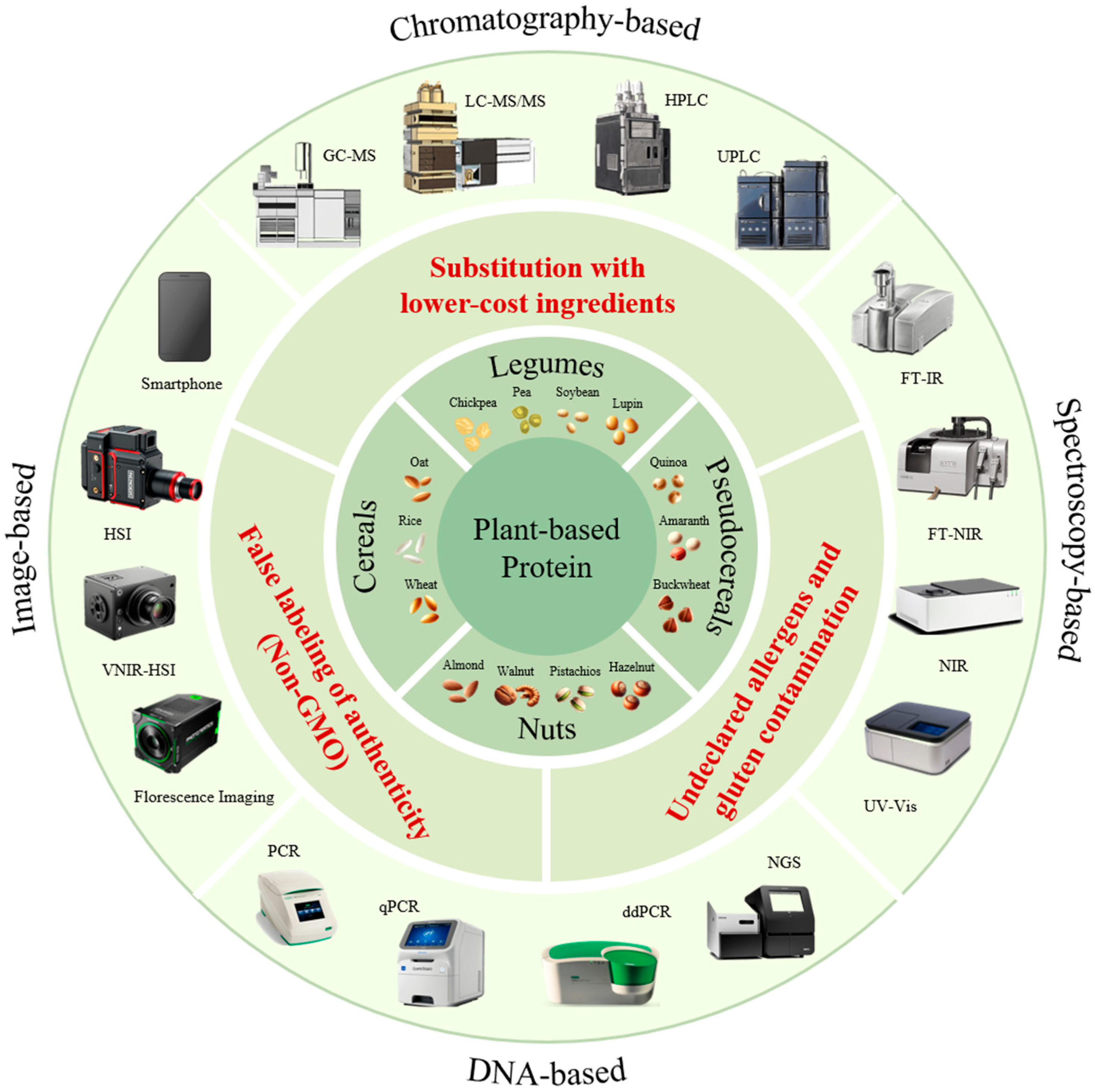
Food fraud and adulteration have been persistent issues affecting food supply chains throughout history. They intensify in parallel with the continuous growth in the global food market. Plant-based proteins, which are recognized as sustainable alternatives, face increased food fraud risks because of disparities in the cost of raw materials and complex processing methods. Despite these challenges, most efforts toward preventing food fraud and developing detection technologies have largely focused on animal-based products, with limited attention given to plant-based proteins. This comprehensive review systematically examines the characteristics of major plant protein sources and explores documented instances of food fraud (e.g., ingredient substitution, adulteration with lower-cost alternatives, and mislabeling) within this sector. Furthermore, we discuss key analytical techniques in detecting food fraud, including chromatography, DNA analysis, spectroscopy, and imaging-based approaches, examining their applications and effectiveness. A systematic literature review was conducted using structured search strategies across Scopus, Web of Science, and PubMed, covering publications from 2010 to 2025 and incorporating keywords related to plant-based proteins, food fraud, adulteration, and authentication, thereby ensuring methodological rigor and comprehensive coverage. This study provides a foundational framework to strengthen food fraud prevention strategies and uphold the integrity of the expanding plant-based protein market.
Keywords: plant-based proteins; food fraud; food authenticity; adulteration detection plant-based proteins; food fraud; food authenticity; adulteration detection