Review

Almond By-Products: A Comprehensive Review of Composition, Bioactivities, and Influencing Factors


1
Center for the Research and Technology of Agroenvironmental and Biological Sciences, CITAB, Inov4Agro, Universidade de Trás-os-Montes e Alto Douro, UTAD, Quinta de Prados, 5000-801 Vila Real, Portugal
2
Centro de Investigação de Montanha, CIMO, LA SusTEC, Instituto Politécnico de Bragança, Campus de Santa Apolónia, 5300-253 Bragança, Portugal
*
Author to whom correspondence should be addressed.
Foods 2025, 14(6), 1042; https://doi.org/10.3390/foods14061042
Submission received: 7 February 2025 / Revised: 5 March 2025 / Accepted: 16 March 2025 / Published: 19 March 2025

Abstract

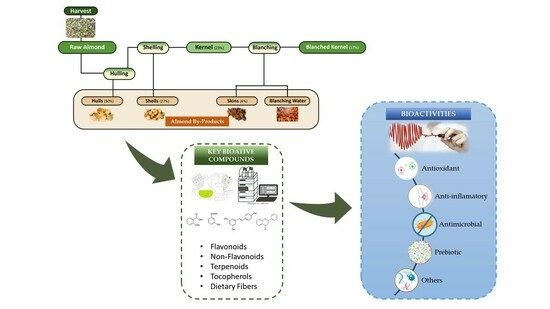
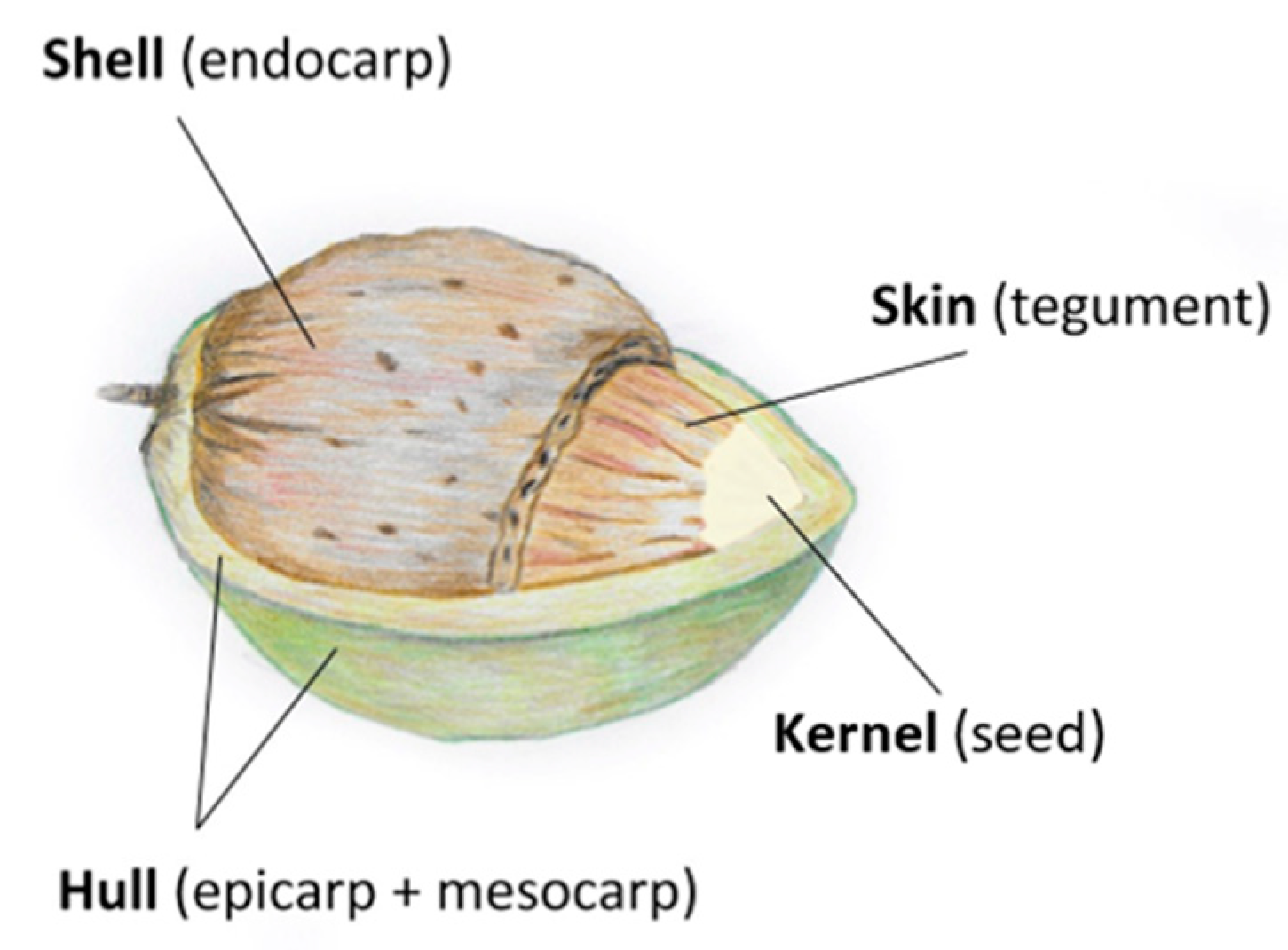
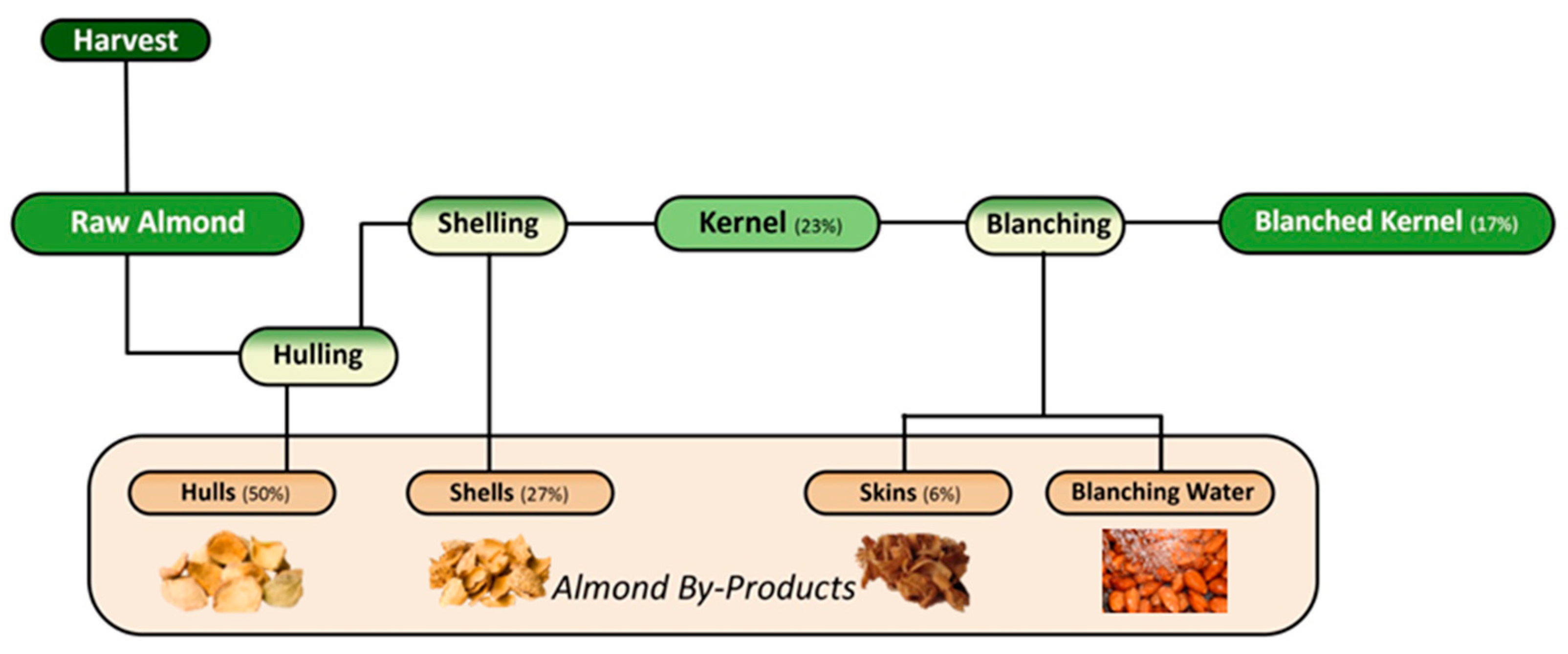
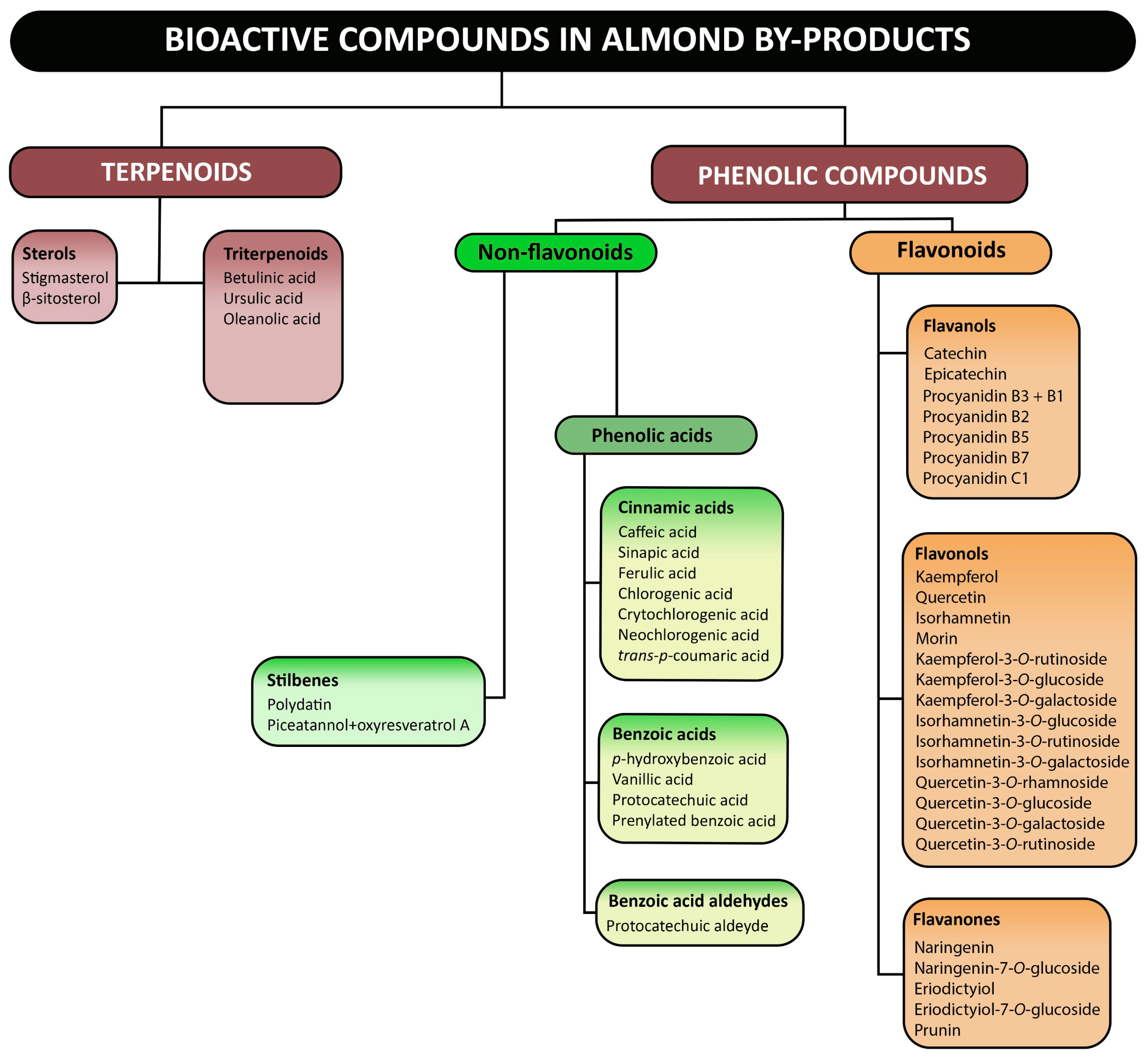
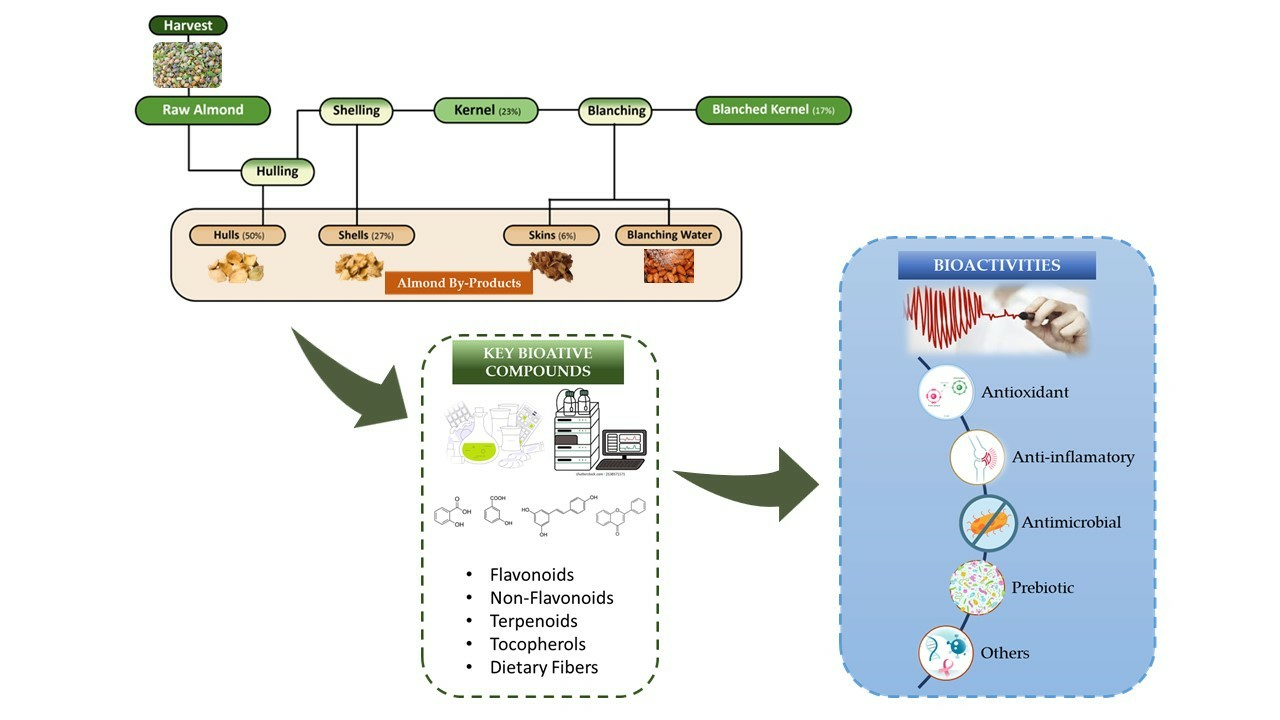
One of today’s major environmental and economic challenges is the fight against both agro- and industrial-waste. Almond production and industrial processing exemplifies this issue, as it generates tons of waste and by-products, with hulls and shells accounting for about 70% of the total fruit’s weight while skins represent about 6% of the shelled kernel. Since the edible kernel, about 23% of the total fruit weight, holds the highest commercial value, there has been growing interest within the scientific community in exploring the potential of these by-products. However, almond by-products contain a wide range of phytochemicals, mainly phenolic compounds (flavonoids and non-flavonoids), and triterpenoids, with great potential as antioxidant, antimicrobial, anti-inflammatory, and prebiotic properties. Although these by-products are being explored as alternative sources in the textile, pharmaceutical/cosmetic, and food industries, their primary use remains in livestock feed or bedding, or as biofuel. This review compiles recent scientific data on almond by-products’ phytochemical composition and bioactivities aiming to support sustainable and holistic agricultural practices.
Keywords: almond by-products; bioaccessibility; bioactive compounds; circular economy; sustainability almond by-products; bioaccessibility; bioactive compounds; circular economy; sustainability
Graphical Abstract