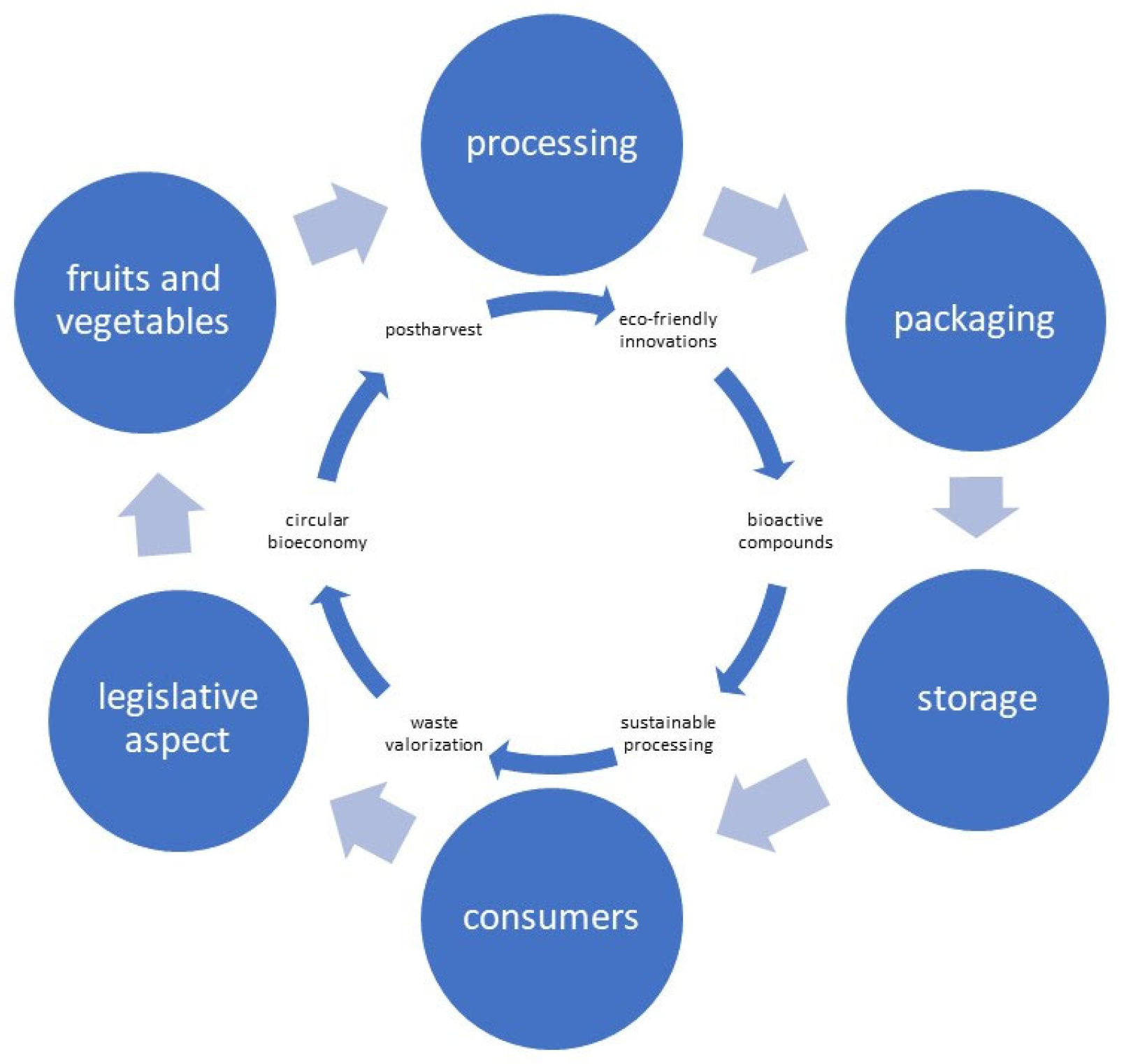
Sustainable Postharvest Innovations for Fruits and Vegetables: A Comprehensive Review


Abstract
1. Introduction
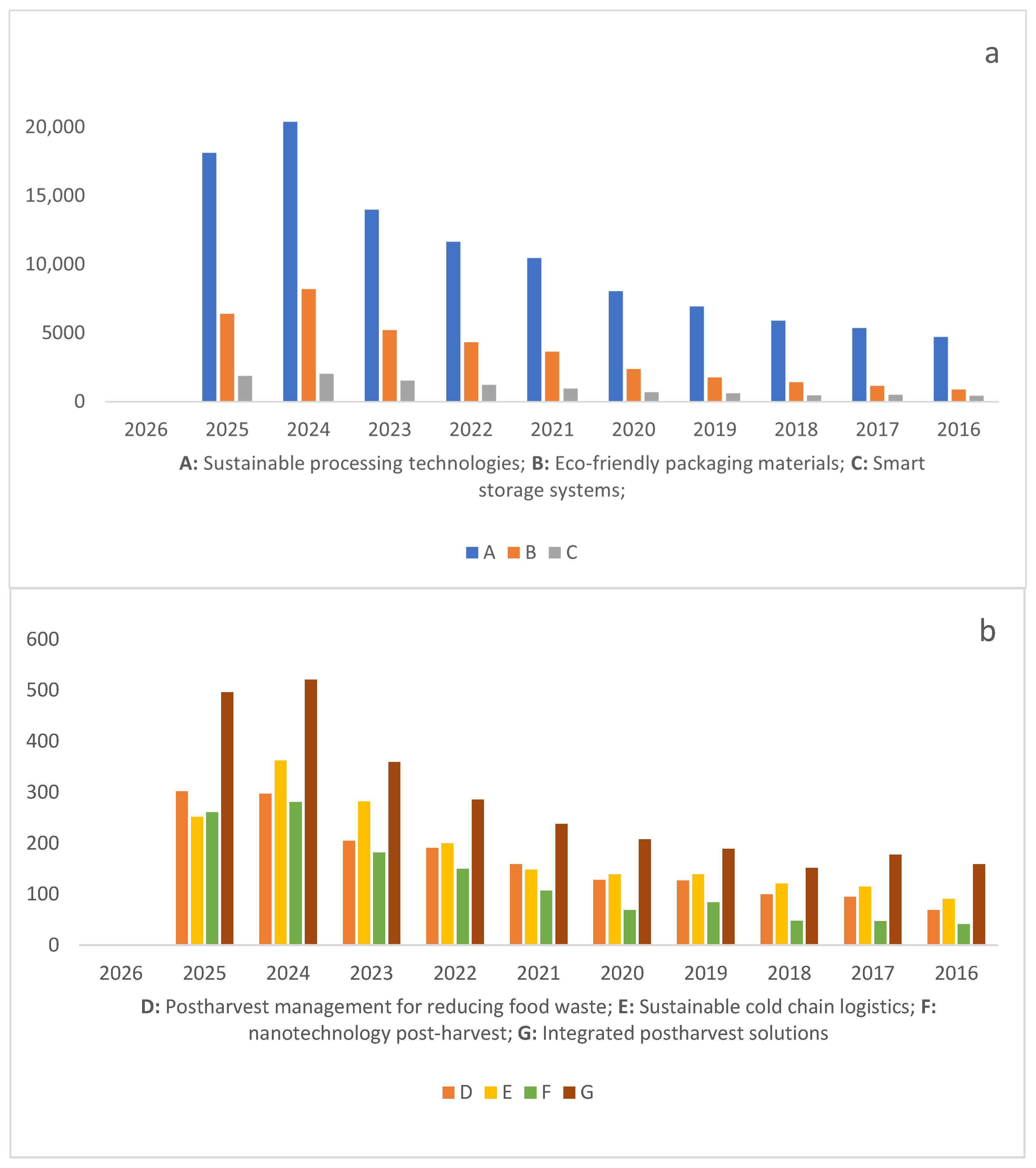
- Smart storage systems (10,290 articles).
- Integrated postharvest solutions (2787 articles).
- Postharvest management for reducing food waste (1850 articles).
- Sustainable cold chain logistics (1674 articles).
- The applications of nanotechnology post-harvest (1270 articles).
2. Sustainable Postharvest Technologies
Challenges, Opportunities and Critical Gaps
3. Innovations in Eco-Friendly Packaging and Regulatory Challenges
- Active packaging materials interact positively with the food or its environment to extend shelf life. This is achieved by incorporating bioactive compounds like antioxidants and antimicrobial agents, often sourced from agro-waste extracts, which are slowly released to the food surface [78].
- Intelligent packaging acts as an extension of the communication function, employing sensors and indicators (e.g., pH-sensitive dyes or bio-based sensors) to provide real-time, reliable information about the food’s condition, such as freshness, temperature, or spoilage status, directly to consumers [79].
4. The Circular Bioeconomy as an Integrated Approach to Waste and Bioactive Compound Valorization
5. Advanced Processing and New Evaluation Paradigms
5.1. Comparative Analysis of Sustainable Food Technologies
5.2. Highlighting Research Gaps and Challenges
- Scalability and Standardization: Despite its promise, ultrasound technology has limited reports at pilot or commercial scale. Key challenges include the lack of standardized methodologies, operational parameters, and data on thermophysical properties (e.g., density, heat capacity), making scale-up predictions unreliable. Research on the design, sizing, and modeling of ultrasound units, especially when integrated with other green technologies, is also scarce [87].
- Cost Prediction and Economic Viability: More studies are needed to assess the economic feasibility of green processing methods like ultrasound. Policymakers and technology providers require clearer information on relative advantages and costs to identify which technologies are suitable for promotion [88].
- Material Gaps in Packaging: Renewable packaging materials, such as lignocellulosic composites, face limitations in degradation behavior, migration properties, and commercial potential. Many biopolymer films exhibit low tensile strength, poor thermal stability, and low moisture resistance, constraining commercialization [14].
- Processing and Health Links: The direct role of specific processing techniques in linking Ultra-Processed Foods (UPFs) to adverse health outcomes remains unclear. Research is needed to refine or develop food evaluation and classification systems that incorporate processing factors impacting health and wellness [5].
6. Conclusions and Future Perspective
- Harmonized international regulatory frameworks for bioplastics and biodegradable packaging;
- Investment in infrastructure and technological capacity, particularly within low- and middle-income regions;
- Strengthened interdisciplinary collaboration spanning engineering, nutrition, microbiology, policy, and data science;
- Development of advanced decision-support systems integrating life-cycle assessment, artificial intelligence, and precision nutrition.
Funding
Institutional Review Board Statement
Informed Consent Statement
Data Availability Statement
Conflicts of Interest
Abbreviations
| UPFs | Ultra-Processed Foods |
| FLW | food loss and waste |
| SDGs | Sustainable Development Goals |
| FAO | Food and Agriculture Organization (of the United Nations) |
| EU | European Union |
| EFSA | European Food Safety Authority |
| PGR | plant growth regulators |
| HHP | High Hydrostatic Pressure |
| PEF | Pulsed Electric Fields |
| UV | ultraviolet |
| OC | organoclay |
| CMC | carboxymethyl cellulose |
| PLA | polylactic acid |
| CO2 | carbon dioxide |
| PHA | Polyhydroxyalkanoates |
| GFPec | Grapefruit peel pectin |
| MD-LPE | medium-density poly-ethylene |
| S-NCs | Starch NanoCrystals |
| NCC | Nanocrystalline Cellulose |
| CNW | Cellulose Nanowhiskers |
| HM | high-methoxyl |
| WVP | Water Vapor Permeability |
| UNEP | United Nations Environment Program |
References
- Ullah, Q.; Waqar, M.; Sajjad, N.; Awlqadr, F.H.; Arshad, M.T.; Maqsood, S.; Sağlam, K.; Maqsood, N.; Hossain, S.; Ikram, A.; et al. Innovative Strategies for Postharvest Disease Management in Fruits and Vegetables: A Comprehensive Treatise. Food Sci. Nutr. 2025, 13, e70850. [Google Scholar] [CrossRef] [Scilit] [PubMed]
- Palumbo, M.; Attolico, G.; Capozzi, V.; Cozzolino, R.; Corvino, A.; de Chiara, M.L.V.; Pace, B.; Pelosi, S.; Ricci, I.; Romaniello, R.; et al. Emerging postharvest technologies to enhance the shelf-life of fruit and vegetables: An overview. Foods 2022, 11, 3925. [Google Scholar] [CrossRef] [Scilit] [PubMed]
- Oyewole, O.S.; Raji, M.A.; Kazeem, A.A.; Ajao, T.O.; Ibitoye, O.; Abel, O.O.; Solomon-Ibuwunwa, O.M.; Famakinwa, J.O.; Adewunmi, E.O. Smart technological innovations for postharvest loss reduction: A review. FUDMA J. Sci. 2025, 9, 299–307. [Google Scholar] [CrossRef] [Scilit]
- Verma, S.; Kumar, S.; Kumar, V.; Yadav, S.; Singh, P.; Saurabh, A.; Kumar, A.; Jain, M. Recent Advancements and Innovations in Post-harvest Handling, Storage, and Technology for Vegetables: A Review. Arch. Curr. Res. Int. 2025, 25, 161–180. [Google Scholar] [CrossRef] [Scilit]
- Capozzi, F.; Magkos, F.; Fava, F.; Milani, G.P.; Agostoni, C.; Astrup, A.; Saguy, I.S. A Multidisciplinary Perspective of Ultra-Processed Foods and Associated Food Processing Technologies: A View of the Sustainable Road Ahead. Nutrients 2021, 13, 3948. [Google Scholar] [CrossRef] [Scilit]
- Capone, R.; Bennett, A.; Debs, P.; Bucatariu, C.A.; El Bilali, H.; Smolak, J.; Lee, W.T.K.; Bottalico, F.; Diei-Ouadi, Y.; Toppe, J. Food Losses and Waste: Global Overview from a Mediterranean Perspective; International Centre for Advanced Mediterranean Agronomic Studies (CIHEAM): Paris, France; Food and Agriculture Organization of the United Nations (FAO): Rome, Italy, 2016; Chapter 9. [Google Scholar]
- Second International Conference on Nutrition. Available online: www.fao.org/3/a-mm215e.pdf (accessed on 6 August 2025).
- FAO Strategy on Climate Change 2022–2031. Available online: https://knowledge4policy.ec.europa.eu/publication/fao-strategy-climate-change-2022-2031_en#:~:text=FAO%20Strategy%20on%20Climate%20Change%202022%2D2031%20%7C%20Knowledge%20for%20policy&text=We%20mobilise%20people%20and%20resources,to%20inform%20policymaking%20across%20Europe.&text=Climate%20change%20is%20a%20global,action%2C%20including%20across%20agrifood%20systems (accessed on 14 October 2025).
- Schiederig, T.; Tietze, F.; Herstatt, C. Green innovation in technology and innovation management—An exploratory literature review. R D Manag. 2012, 42, 180–192. [Google Scholar] [CrossRef] [Scilit]
- Ashraf, M.A.; Khan, A.S.; Azam, M.; Ayyub, S.; Kaleem, M.M.; Nawaz, S.; Abubakar, M.; Khalid, B.; Riaz, T.; Asim, M.; et al. Innovative technologies in postharvest management of fruits and vegetables: A review. Eur. Food Res. Technol. 2025, 251, 3445–3463. [Google Scholar] [CrossRef] [Scilit]
- Sibanda, S.; Workneh, T.S. Potential causes of postharvest losses, low-cost cooling technology for fresh produce farmers in Sub-Sahara Africa. Afr. J. Agric. Res. 2020, 16, 553–566. [Google Scholar] [CrossRef] [Scilit]
- Kalaïtzis, P.; Craita Bita, E.; Hilmi, M. Innovative Postharvest Technologies for Sustainable Value Chain; International Centre for Advanced Mediterranean Agronomic Studies (CIHEAM): Paris, France; Food and Agriculture Organization of the United Nations (FAO): Rome, Italy, 2016; Chapter 11. [Google Scholar]
- Nguyen, A.T.; Parker, L.; Brennan, L.; Lockrey, S. A consumer definition of eco-friendly packaging. J. Clean. Prod. 2020, 252, 119792. [Google Scholar] [CrossRef] [Scilit]
- Khandeparkar, A.S.; Paul, R.; Sridhar, A.; Lakshmaiah, A.A.; Nagella, P. Eco-friendly innovations in food packaging: A sustainable revolution. Sustain. Chem. Pharm. 2024, 39, 101579. [Google Scholar] [CrossRef] [Scilit]
- Weber, C.J.; Haugaard, V.; Festersen, R.; Bertelsen, G. Production and Applications of Biobased Packaging Materials for the Food Industry. Food Addit. Contam. 2002, 19, 172–177. [Google Scholar] [CrossRef] [Scilit] [PubMed]
- Kumar, S.; Mukherjee, A.; Dutta, J. Chitosan based nanocomposite films and coatings: Emerging antimicrobial food packaging alternatives. Trends Food Sci. Technol. 2020, 97, 196–209. [Google Scholar] [CrossRef] [Scilit]
- Ayyub, S.; Khan, A.S.; Anwar, R.; Ali, S.; Hasan, M.U. Aloe vera gel coating extends marketability and maintains quality by reducing rachis Browning and preserving bioactive compounds of commercial table grape cultivars. Appl. Fruit. Sci. 2024, 66, 1843–1853. [Google Scholar] [CrossRef] [Scilit]
- Matloob, A.; Ayub, H.; Mohsin, M.; Ambreen, S.; Khan, F.A.; Oranab, S.; Rahim, M.A.; Khalid, W.; Nayik, G.A.; Ramniwas, S.; et al. A review on edible coatings and films: Advances, composition, production methods, and safety concerns. ACS Omega 2023, 8, 28932–28944. [Google Scholar] [CrossRef] [Scilit]
- Fan, X.; Wang, W. Quality of Fresh and Fresh-Cut Produce Impacted by Nonthermal Physical Technologies Intended to Enhance Microbial Safety. Crit. Rev. Food Sci. Nutr. 2022, 62, 362–382. [Google Scholar] [CrossRef] [Scilit]
- Ganesan, A.R.; Tiwari, U.; Ezhilarasi, P.N.; Rajauria, G. Application of Cold Plasma on Food Matrices: A Review on Current and Future Prospects. J. Food Process. Preserv. 2021, 45, e15070. [Google Scholar] [CrossRef] [Scilit]
- Dar, A.H.; Shams, R.; ul Eain Hyder Rizvi, Q.; Majid, I. Microwave and Ohmic Heating of Fresh Cut Fruits and Vegetable Products; Elsevier Inc.: Amsterdam, The Netherlands, 2019; ISBN 9780128161845. [Google Scholar]
- Usall, J.; Ippolito, A.; Sisquella, M.; Neri, F. Physical Treatments to Control Postharvest Diseases of Fresh Fruits and Vegetables. Postharvest Biol. Technol. 2016, 122, 30–40. [Google Scholar] [CrossRef] [Scilit]
- Rux, G.; Gelewsky, R.; Schlüter, O.; Herppich, W.B. High Hydrostatic Pressure Treatment Effects on Selected Tissue Properties of Fresh Horticultural Products. Innov. Food Sci. Emerg. Technol. 2020, 61, 102326. [Google Scholar] [CrossRef] [Scilit]
- Ramos-Parra, P.A.; García-Salinas, C.; Rodríguez-López, C.E.; García, N.; García-Rivas, G.; Hernández-Brenes, C.; Díaz de la Garza, R.I. High Hydrostatic Pressure Treatments Trigger de Novo Carotenoid Biosynthesis in Papaya Fruit (Carica papaya Cv. Maradol). Food Chem. 2019, 277, 362–372. [Google Scholar] [CrossRef] [Scilit]
- Hu, X.; Ma, T.; Ao, L.; Kang, H.; Hu, X.; Song, Y.; Liao, X. Effect of High Hydrostatic Pressure Processing on Textural Properties and Microstructural Characterization of Fresh-cut Pumpkin (Cucurbita pepo). J. Food Process Eng. 2020, 43, e13379. [Google Scholar] [CrossRef] [Scilit]
- Hu, K.; Peng, D.; Wang, L.; Liu, H.; Xie, B.; Sun, Z. Effect of Mild High Hydrostatic Pressure Treatments on Physiological and Physicochemical Characteristics and Carotenoid Biosynthesis in Postharvest Mango. Postharvest Biol. Technol. 2021, 172, 111381. [Google Scholar] [CrossRef] [Scilit]
- Kundukulangara Pulissery, S.; Kallahalli Boregowda, S.; Suseela, S.; Jaganath, B.A. Comparative Study on the Textural and Nutritional Profile of High Pressure and Minimally Processed Pineapple. J. Food Sci. Technol. 2021, 58, 3734–3742. [Google Scholar] [CrossRef] [Scilit] [PubMed]
- Paciulli, M.; Rinaldi, M.; Rodolfi, M.; Ganino, T.; Morbarigazzi, M.; Chiavaro, E. Effects of High Hydrostatic Pressure on Physico-Chemical and Structural Properties of Two Pumpkin Species. Food Chem. 2019, 274, 281–290. [Google Scholar] [CrossRef] [Scilit] [PubMed]
- Paciulli, M.; Ganino, T.; Meza, I.G.M.; Rinaldi, M.; Rodolfi, M.; Morbarigazzi, M.; Chiavaro, E. High Pressure and Thermal Processing on the Quality of Zucchini Slices. Eur. Food Res. Technol. 2021, 247, 475–484. [Google Scholar] [CrossRef] [Scilit]
- Li, X.; Farid, M. A review on recent development in non-conventional food sterilization technologies. J. Food Eng. 2016, 182, 33–45. [Google Scholar] [CrossRef] [Scilit]
- Li, J.; Shi, J.; Huang, X.; Wang, T.; Zou, X.; Li, Z.; Zhang, D.; Zhang, W.; Xu, Y. Effects of Pulsed Electric Field Pretreatment on Frying Quality of Fresh-Cut Lotus Root Slices. LWT 2020, 132, 109873. [Google Scholar] [CrossRef] [Scilit]
- López-Gámez, G.; Elez-Martínez, P.; Martín-Belloso, O.; Soliva-Fortuny, R. Pulsed Electric Fields Affect Endogenous Enzyme Activities, Respiration and Biosynthesis of Phenolic Compounds in Carrots. Postharvest Biol. Technol. 2020, 168, 111284. [Google Scholar] [CrossRef] [Scilit]
- López-Gámez, G.; Elez-Martínez, P.; Martín-Belloso, O.; Soliva-Fortuny, R. Changes of Carotenoid Content in Carrots after Application of Pulsed Electric Field Treatments. LWT 2021, 147, 111408. [Google Scholar] [CrossRef] [Scilit]
- Vanga, S.K.; Wang, J.; Jayaram, S.; Raghavan, V. Effects of Pulsed Electric Fields and Ultrasound Processing on Proteins and Enzymes: A Review. Processes 2021, 9, 722. [Google Scholar] [CrossRef] [Scilit]
- González-Casado, S.; Martín-Belloso, O.; Elez-Martínez, P.; Soliva-Fortuny, R. Enhancing the Carotenoid Content of Tomato Fruit with Pulsed Electric Field Treatments: Effects on Respiratory Activity and Quality Attributes. Postharvest Biol. Technol. 2018, 137, 113–118. [Google Scholar] [CrossRef] [Scilit]
- Sotelo, K.A.G.; Hamid, N.; Oey, I.; Pook, C.; Gutierrez-Maddox, N.; Ma, Q.; Ying Leong, S.; Lu, J. Red Cherries (Prunus avium Var. Stella) Processed by Pulsed Electric Field—Physical, Chemical and Microbiological Analyses. Food Chem. 2018, 240, 926–934. [Google Scholar] [CrossRef] [Scilit] [PubMed]
- Ribas-Agustí, A.; Martín-Belloso, O.; Soliva-Fortuny, R.; Elez-Martínez, P. Enhancing Hydroxycinnamic Acids and Flavan-3-Ol Contents by Pulsed Electric Fields without Affecting Quality Attributes of Apple. Food Res. Int. 2019, 121, 433–440. [Google Scholar] [CrossRef] [Scilit] [PubMed]
- Bagheri, H.; Abbaszadeh, S. Effect of Cold Plasma on Quality Retention of Fresh-Cut Produce. J. Food Qual. 2020, 2020, 8866369. [Google Scholar] [CrossRef] [Scilit]
- Tappi, S.; Ragni, L.; Tylewicz, U.; Romani, S.; Ramazzina, I.; Rocculi, P. Browning Response of Fresh-Cut Apples of Different Cultivars to Cold Gas Plasma Treatment. Innov. Food Sci. Emerg. Technol. 2019, 53, 56–62. [Google Scholar] [CrossRef] [Scilit]
- Zhou, D.; Li, T.; Cong, K.; Suo, A.; Wu, C. Influence of Cold Plasma on Quality Attributes and Aroma Compounds in Fresh-Cut Cantaloupe during Low Temperature Storage. LWT 2022, 154, 112893. [Google Scholar] [CrossRef] [Scilit]
- Ahmadnia, M.; Sadeghi, M.; Abbaszadeh, R.; Ghomi Marzdashti, H.R. Decontamination of Whole Strawberry via Dielectric Barrier Discharge Cold Plasma and Effects on Quality Attributes. J. Food Process. Preserv. 2021, 45, e15019. [Google Scholar] [CrossRef] [Scilit]
- Rana, S.; Mehta, D.; Bansal, V.; Shivhare, U.S.; Yadav, S.K. Atmospheric Cold Plasma (ACP) Treatment Improved in-Package Shelf-Life of Strawberry Fruit. J. Food Sci. Technol. 2020, 57, 102–112. [Google Scholar] [CrossRef] [Scilit]
- Li, X.; Li, M.; Ji, N.; Jin, P.; Zhang, J.; Zheng, Y.; Zhang, X.; Li, F. Cold Plasma Treatment Induces Phenolic Accumulation and Enhances Antioxidant Activity in Fresh-Cut Pitaya (Hylocereus undatus) Fruit. LWT 2019, 115, 108447. [Google Scholar] [CrossRef] [Scilit]
- Zhang, Y.; Zhang, J.; Zhang, Y.; Hu, H.; Luo, S.; Zhang, L.; Zhou, H.; Li, P. Effects of In-package Atmospheric Cold Plasma Treatment on the Qualitative, Metabolic and Microbial Stability of Fresh-cut Pears. J. Sci. Food Agric. 2021, 101, 4473–4480. [Google Scholar] [CrossRef] [Scilit]
- Giannoglou, M.; Stergiou, P.; Dimitrakellis, P.; Gogolides, E.; Stoforos, N.G.; Katsaros, G. Effect of Cold Atmospheric Plasma Processing on Quality and Shelf-Life of Ready-to-Eat Rocket Leafy Salad. Innov. Food Sci. Emerg. Technol. 2020, 66, 102502. [Google Scholar] [CrossRef] [Scilit]
- Hu, X.; Sun, H.; Yang, X.; Cui, D.; Wang, Y.; Zhuang, J.; Wang, X.; Ma, R.; Jiao, Z. Potential Use of Atmospheric Cold Plasma for Postharvest Preservation of Blueberries. Postharvest Biol. Technol. 2021, 179, 111564. [Google Scholar] [CrossRef] [Scilit]
- Singh, S.P.; Thakur, R. Postharvest applications of cold plasma treatment for improving food safety and sustainability outcomes for fresh horticultural produce. Postharvest Biol. Technol. 2024, 209, 112694. [Google Scholar]
- Mandal, R.; Singh, A.; Singh, A.P. Recent developments in cold plasma decontamination technology in the food industry. Trends Food Sci. Technol. 2018, 80, 93–103. [Google Scholar] [CrossRef] [Scilit]
- Kitsiou, M.; Purk, L.; Ioannou, C.; Wantock, T.; Sandison, G.; Harle, T.; Gutierrez-Merino, J.; Klymenko, O.V.; Velliou, E. On the evaluation of the antimicrobial effect of grape seed extract and cold atmospheric plasma on the dynamics of Listeria monocytogenes in novel multiphase 3D viscoelastic models. Int. J. Food Microbiol. 2023, 406, 110395. [Google Scholar] [CrossRef] [Scilit] [PubMed]
- Nikzadfar, M.; Kazemi, A.; Abooei, R.; Abbaszadeh, R.; Firouz, M.S.; Akbarnia, A.; Rashvand, M. Application of cold plasma technology on the postharvest preservation of in packaged fresh fruit and vegetables: Recent challenges and development. Food Bioprocess Technol. 2024, 17, 4473–4505. [Google Scholar] [CrossRef] [Scilit]
- Perinban, S.; Orsat, V.; Raghavan, V. Influence of Plasma Activated Water Treatment on Enzyme Activity and Quality of Fresh-Cut Apples. Food Chem. 2022, 393, 133421. [Google Scholar] [CrossRef] [Scilit]
- Darré, M.; Vicente, A.R.; Cisneros-Zevallos, L.; Artés-Hernández, F. Postharvest ultraviolet radiation in fruit and vegetables: Applications and factors modulating its efficacy on bioactive compounds and microbial growth. Foods 2022, 11, 653. [Google Scholar] [CrossRef] [Scilit]
- Pizzichetti, R.; Martín-Gamboa, M.; Pablos, C.; Reynolds, K.; Stanley, S.; Dufour, J.; Marugán, J. Environmental life cycle assessment of UV-C leds vs. mercury lamps and oxidant selection for diclofenac degradation. Sustain. Mater. Technol. 2024, 41, e01002. [Google Scholar] [CrossRef] [Scilit]
- Kyere, E.O.; Popovich, D.G.; Palmer, J.; Wargent, J.J.; Fletcher, G.C.; Flint, S. Reduction of the attachment, survival and growth of L. monocytogenes on lettuce leaves by UV-C stress. LWT 2021, 145, 111528. [Google Scholar] [CrossRef] [Scilit]
- Phonyiam, O.; Ohara, H.; Kondo, S.; Naradisorn, M.; Setha, S. Postharvest UV-C irradiation influenced cellular structure, jasmonic acid accumulation, and resistance against green mold decay in Satsuma Mandarin fruit (Citrus unshiu). Front. Sustain. Food Syst. 2021, 5, 684434. [Google Scholar] [CrossRef] [Scilit]
- Le, T.T.N.; Liao, C.T.; Wu, C.S.; Cheng, N.-J.; Yang, T.-H.; Yu, Y.-W.; Sun, C.-C. Can UVC radiation be useful in prolonging the shelf life of mangoes? Smart Agric. Technol. 2024, 9, 100612. [Google Scholar] [CrossRef] [Scilit]
- Ramalingam, S.; Le Myint, Z.; Ahn, S.Y.; Ryu, J.A.; Lee, S.-M.; Yun, H.K. UV-C treatment elicits resistant responses against Botrytis cinerea infection and the improvement of fruit characteristics in grapevines. Hortic. Environ. Biotechnol. 2024, 65, 707–724. [Google Scholar] [CrossRef] [Scilit]
- Hwang, H.J.; Kim, J.W.; Choi, J.B.; Chung, M.S. Effects of the specific wavelength and intensity of intense pulsed light (IPL) on microbial inactivation. Food Bioprocess Technol. 2024, 18, 1719–1729. [Google Scholar] [CrossRef] [Scilit]
- Vargas-Ramella, M.; Pateiro, M.; Gavahian, M.; Franco, D.; Zhang, W.; Khaneghah, A.M.; Guerrero-Sánchez, Y.; Lorenzo, J.M. Impact of pulsed light processing technology on phenolic compounds of fruits and vegetables. Trends Food Sci. Technol. 2021, 115, 1–11. [Google Scholar] [CrossRef] [Scilit]
- Yao, J.; Chen, W.; Fan, K. Recent advances in light irradiation for improving the preservation of fruits and vegetables: A review. Food Biosci. 2023, 56, 103206. [Google Scholar] [CrossRef] [Scilit]
- Pinto, L.; Cefola, M.; Bonifacio, M.A.; Cometa, S.; Bocchino, C.; Pace, B.; De Giglio, E.; Palumbo, M.; Sada, A.; Logrieco, A.F.; et al. Effect of red thyme oil (Thymus vulgaris L.) vapours on fungal decay, quality parameters and shelf-life of oranges during cold storage. Food Chem. 2021, 336, 127590. [Google Scholar] [CrossRef] [Scilit]
- Pinto, L.; Palma, A.; Cefola, M.; Pace, B.; D’Aquino, S.; Carboni, C.; Baruzzi, F. Effect of modified atmosphere packaging (MAP) and gaseous ozone pre-packaging treatment on the physico-chemical, microbiological, and sensory quality of small fruit. Food Packag. Shelf Life 2020, 26, 100573. [Google Scholar] [CrossRef] [Scilit]
- Caleb, O.J.; Mahajan, P.V.; Al-Said, F.A.; Opara, U.L. Modified atmosphere packaging technology of fresh and fresh-cut produce and the microbial consequences: A review. Food Bioprocess Technol. 2013, 6, 303–329. [Google Scholar] [CrossRef] [Scilit]
- Carrasco, G.; Urrestarazu, M. Green chemistry in protected horticulture: The use of peroxyacetic acid as a sustainable strategy. Int. J. Mol. Sci. 2010, 11, 1999–2009. [Google Scholar] [CrossRef] [Scilit]
- Cengiz, M.F.; Certel, M. Effects of chlorine, hydrogen peroxide, and ozone on the reduction of mancozeb residues on tomatoes. Turk. J. Agric. For. 2013, 38, 371–376. [Google Scholar]
- Singla, M.; Sit, N. Application of Ultrasound in Combination with other Technologies in Food Processing: A Review. Ultrason. Sonochem. 2021, 73, 105506. [Google Scholar] [CrossRef] [Scilit] [PubMed]
- Starek, A.; Kobus, Z.; Sagan, A.; Chudzik, B.; Pawlat, J.; Kwiatkowski, M.; Terebun, P.; Andrejko, D. Influence of ultrasound on selected microorganisms, chemical and structural changes in fresh tomato juice. Sci. Rep. 2021, 11, 3488. [Google Scholar] [CrossRef] [Scilit] [PubMed]
- Darsana, K.; Sivakumar, P. Potential of Ultrasound in Food Processing: An Overview. Curr. J. Appl. Sci. Technol. 2023, 42, 14–34. [Google Scholar] [CrossRef] [Scilit]
- Kumar, K.; Srivastav, S.; Sharanagat, V.S. Ultrasound assisted extraction (UAE) of bioactive compounds from fruit and vegetable processing by-products: A review. Ultrason. Sonochem. 2020, 70, 105325. [Google Scholar] [CrossRef] [Scilit]
- Perera, C.O.; Alzahrani, M.A.J. Ultrasound as a pre-treatment for extraction of bioactive compounds and food safety: A review. LWT 2021, 142, 111114. [Google Scholar] [CrossRef] [Scilit]
- Gupta, A.K.; Sahu, P.P.; Mishra, P. Ultrasound aided debittering of bitter variety of citrus fruit juice: Effect on chemical, volatile profile and antioxidative potential. Ultrason. Sonochem. 2021, 81, 105839. [Google Scholar] [CrossRef] [Scilit]
- Esteban-Lustres, R.; Sanz, V.; Domínguez, H.; Torres, M.D. Ultrasound-Assisted Extraction of High-Value Fractions from Fruit Industrial Processing Waste. Foods 2022, 11, 2089. [Google Scholar] [CrossRef] [Scilit]
- Chemat, F.; Rombaut, N.; Sicaire, A.G.; Meullemiestre, A.; Fabiano-Tixier, A.S.; Abert-Vian, M. Ultrasound assisted extraction of food and natural products. Mechanisms, techniques, combinations, protocols and applications. A review. Ultrason. Sonochem. 2017, 34, 540–560. [Google Scholar] [CrossRef] [Scilit]
- Kruszewski, B.; Boselli, E. Blackcurrant Pomace as a Rich Source of Anthocyanins: Ultrasound-Assisted Extraction under Different Parameters. Appl. Sci. 2024, 14, 821. [Google Scholar] [CrossRef] [Scilit]
- Silva, J.V.M.; Santos, A.S.; Pereira, G.A.; Chisté, R.C. Ultrasound-assisted extraction using ethanol efficiently extracted carotenoids from peels of peach palm fruits (Bactris gasipaes Kunth) without altering qualitative carotenoid profile. Heliyon 2023, 9, e14933. [Google Scholar] [CrossRef] [Scilit]
- Bhargava, N.; Mor, R.S.; Kumar, K.; Sharanagat, V.S. Advances in application of ultrasound in food processing: A review. Ultrason. Sonochem. 2021, 70, 105293. [Google Scholar] [CrossRef] [Scilit] [PubMed]
- Kaushalya, R.A.N.C.; Dhanushka, M.K.D.T.; Samarasekara, A.M.P.B.; Weragoda, V.S.C. Development of biodegradable packaging materials using polylactic acid (PLA) and locally extracted starch. In Proceedings of the Moratuwa Engineering Research Conference (MERCon), Moratuwa, Sri Lanka, 3–5 July 2019. [Google Scholar] [CrossRef] [Scilit]
- Khalil, R.K.S.; Sharaby, M.R.; Abdelrahim, D.S. Novel active edible food packaging films based entirely on citrus peel wastes. Food Hydrocoll. 2023, 134, 107961. [Google Scholar] [CrossRef] [Scilit]
- Müller, P.; Schmid, M. Intelligent packaging in the food sector: A brief overview. Foods 2019, 8, 16. [Google Scholar] [CrossRef] [Scilit] [PubMed]
- Wu, F.; Misra, M.; Mohanty, A.K. Challenges and new opportunities on barrier performance of biodegradable polymers for sustainable packaging. Prog. Polym. Sci. 2021, 117, 101395. [Google Scholar] [CrossRef] [Scilit]
- Moustafa, H.; Youssef, A.M.; Darwish, N.A.; Abou-Kandil, A.I. Eco-friendly polymer composites for green packaging: Future vision and challenges. Compos. Part B Eng. 2019, 172, 16–25. [Google Scholar] [CrossRef] [Scilit]
- Bhardwaj, A.; Alam, T.; Sharma, V.; Alam, M.S.; Hamid, H.; Deshwal, G.K. Lignocellulosic Agricultural Biomass as a Biodegradable and Eco-friendly Alternative for Polymer-Based Food Packaging. J. Package Technol. Res. 2020, 4, 205–216. [Google Scholar] [CrossRef] [Scilit]
- Parker, L. Eight Million Tons of Plastic Dumped in Ocean Every Year. 2015. Available online: http://news.nationalgeographic.com/news/2015/02/150212-ocean-debris-plastic-garbage-patches-science (accessed on 24 August 2025).
- Rankin, J. Single-Use Plastics Ban Approved by European Parliament. The Guardian 27 March 2019. Available online: https://www.theguardian.com/environment/2019/mar/27/the-last-straw-european-parliament-votes-to-ban-single-use-plastics (accessed on 24 August 2025).
- Alizadeh, Z.; Yousefi, S.; Ahari, H. Optimization of bioactive preservative coatings of starch nanocrystal and ultrasonic extract of sour lemon peel on chicken fillets. Int. J. Food Microbiol. 2019, 300, 31–42. [Google Scholar] [CrossRef] [Scilit]
- Sathish Kumar, R.K.; Dhilipkumar, T.; Anita Jessie, J.; Gaayathri, K.K.; Arumugam, S. Advancements in bio-polymeric composite materials for active and intelligent food packaging: A comprehensive review. Mater. Today Proc. 2023. [Google Scholar] [CrossRef] [Scilit]
- Mgoma, S.T.; Basitere, M.; Mshayisa, V.V.; De Jager, D. A Systematic Review on Sustainable Extraction, Preservation, and Enhancement in Food Processing: The Advancement from Conventional to Green Technology Through Ultrasound. Processes 2025, 13, 965. [Google Scholar] [CrossRef] [Scilit]
- Fu, Y.; Kok, R.A.W.; Dankbaar, B.; Ligthart, P.E.M.; van Riel, A.C.R. Factors affecting sustainable process technology adoption: A systematic literature review. J. Clean. Prod. 2018, 205, 226–251. [Google Scholar] [CrossRef] [Scilit]
- Mady, N.E.; Hashem, M.M.; Khallaf, I.S.A.; Hamdan, D.I.; Elhawary, S.S. From waste to health: A review on benefits of certain food by-products. Discov. Appl. Sci. 2025, 7, 1008. [Google Scholar] [CrossRef] [Scilit]
- Sariñana-Núñez, P.H.; Rocha-Guzmán, N.E.; Rivas-Arreola, M.J.; González-Laredo, R.F.; Moreno-Jiménez, M.R.; Gallegos-Infante, J.A.; González-Herrera, S.M. Circular Bioeconomy in Functional Foods and Beverages Development: A Sustainable Holistic Approach. In The Food-Energy-Water Triangle for Sustainable Development, 1st ed.; Apple Academic Press: Palm Bay, FL, USA, 2025. [Google Scholar]



| Technology | Mechanism and Applications | Limitations/Challenges | Citations |
|---|---|---|---|
| High Hydrostatic Pressure (HHP)/High Pressure Processing (HPP) | A non-thermal process used to achieve microbial inactivation and enzyme denaturation. Applied to minimally processed horticultural commodities and whole produce. HHP can stimulate the accumulation of nutraceutical compounds. | Very high equipment cost; limited applicability for porous or gas-containing foods; potential changes in texture; scalability depends on batch systems. | [2,5,14,23,24,25,26,27,28,29] |
| Pulsed Electric Fields (PEF) | Uses short, high-intensity electric field pulses to ensure safe food with minimal heat production. Effective in reducing enzymatic activity and improving quality attributes. PEF can reduce browning index and acrylamide content in ready-to-eat foods. | High initial investment; only suitable for pumpable/liquid foods or homogeneous matrices; potential electrode corrosion; complex process optimization. | [30,31,32,33,34,35,36,37] |
| Cold Plasma | Non-thermal decontamination technology that produces reactive oxygen and nitrogen species (RONS) through gas ionization to eliminate surface microbes. Increasingly used as a replacement for conventional sanitation treatments because it preserves product quality. | Limited penetration depth (surface-only treatment); potential oxidation effects on sensitive compounds; equipment standardization still lacking; regulatory variability. | [38,39,40,41,42,43,44,45,46,47,48,49,50,51] |
| Ultraviolet-C (UV-C) | Postharvest management tool acting through microbial DNA disruption, induction of host defense (e.g., phytoalexin synthesis), and delayed ripening via interference with ethylene signaling. | Ineffective on shaded/irregular surfaces; risk of excessive tissue stress; requires safety precautions; dose uniformity can be challenging. | [52,53,54,55,56,57] |
| Pulsed Light (PL) | Non-thermal, non-chemical method that uses brief bursts of intense broad-spectrum light to inactivate surface microorganisms through photochemical and photothermal effects. | Limited penetration; potential surface heating or discoloration; strict safety requirements for operators; equipment costs moderate to high. | [58,59,60] |
| Ozone + Modified Atmosphere Packaging (MAP) | Ozone exposure combined with MAP can significantly extend the postharvest storage life of small berries by reducing microorganisms and delaying spoilage. | Residual ozone must be controlled to avoid off-flavors; regulatory limits vary by region; sensitive commodities may suffer oxidative damage. | [4,61,62,63,64,65] |
| Ultrasound Technology | Recognized as a green technique for food preservation. Effective for microbial inactivation and enzyme denaturation, improving quality while reducing reliance on thermal treatments. | Can cause tissue softening or cell damage at high intensities; limited penetration; energy efficiency depends on medium and equipment design. | [66,67,68,69,70,71,72,73,74,75,76] |
| Bioplastic | Origin/Source | Key Characteristics & Functionality | Barrier Properties | Biodegradability | Cost/Economic Factors | References |
|---|---|---|---|---|---|---|
| Polylactic Acid (PLA) | Derived from renewable resources (e.g., microbial fermentation of lactic acid from corn or sugar beets). | Biodegradable and bioactive polymer. Exhibits transparency. Offers high modulus and strength. Has good mechanical performance. Is thermoplastic and easily processable. Inherently brittle, limiting industrial use, but properties can be modified by adding fillers like starch. | Possesses excellent barrier properties. Good gas barrier properties. | Biodegradable. Degradable by the action of microorganisms under appropriate conditions. Recyclable back to lactic acid. | High cost, which significantly constrains commercial application. Blending with other biopolymers is a viable solution to lower costs. | [14,77] |
| Starch | Renewable, environmentally-friendly, and inexpensive. Extracted from agricultural products such as corn, cassava, and potato. | Highly available. Used as a filler to modify PLA properties. Characterized by its hydrophilic nature. Can be modified into starch nanocrystals (S-NCs) to improve barrier and physicochemical characteristics of bio-composites. Forms edible and biodegradable films. | Provides high mechanical strength and water-gas barrier. Generally, has a low water vapor barrier. | Biodegradable/Compostable. Biodegradability of PLA-blends increases as the starch content increases. | Inexpensive material. Low material cost when blended with chitosan. | [14,16,77,85,86] |
| Chitosan (CS) | A polysaccharide mainly obtained by the partial deacetylation of chitin. Primarily a byproduct of crustacean, fish, and seafood processing waste. | Biocompatible, non-toxic, and abundant. Cationic nature gives it strong antimicrobial activity against bacteria, fungi, and yeast. Possesses excellent film-forming properties, toughness, flexibility, and durability. Used extensively for edible coatings and films. | Forms outstanding barriers against oxygen and carbon dioxide. Generally, lacks resistance to moisture and has a low water vapor barrier. | Biodegradable. Some biopolymers like it can degrade in just a few weeks. | Low cost and readily available in nature. | [14,16] |
| Pectin | Complex anionic polysaccharide. Extracted from citrus peels (lemon, orange, grapefruit), apple pomace, cocoa husk, etc. Grapefruit peel pectin (GFPec) | Remarkable gelling, stabilizing, and thickening edible agent. Generally regarded as safe, multifunctional natural food additive (E440). GFPec is classified as high-methoxyl (HM) and high-ester, having strong film-forming capacity. | Good oxygen barrier. Active films of GFPec enriched with medium-density polyethylene (MD-LPE) show the ability to protect light-sensitive foods. Water Vapor Permeability (WVP) of neat GFPec film was higher than commercial pectin. | Biodegradable. Considered a desirable alternative to synthetic petrochemical-derived materials. | Cost-effective when mobilized from citrus peel wastes. | [78,82] |
| Polyhydroxyalkanoates (PHA) | A type of polyester produced naturally by bacteria (e.g., Bacillus megaterium). Produced in environments subjected to more carbon and nutrient limitation. | Biocompatibility and non-toxic qualities. Shows versatility in mechanical characteristics. Has a strong hydrophobic nature and thermoplasticity. Great potential to replace traditional plastics in food packaging. | High water vapor barrier. Strong barrier qualities against CO2 and oxygen. | Biodegradable. | High cost of initial supplies is a fundamental limitation in large-scale manufacture. | [14] |
| Alginate | Naturally derived anionic polymer from brown seaweed (marine macroalga). | Versatile biopolymer. Non-toxic, biocompatible, and inexpensive hydrocolloid. Widely used as a thickening agent, for gel formation, and as a colloidal stabilizing agent in beverages. Can form strong films. | Good barrier properties against lipids and gases. Inferior barrier against water vapor. | Fully biodegradable. | Low-cost. | [14,16] |
| Gelatin | A protein compound obtained from animal cartilage, bones, skin, and fish or seafood processing wastes. | Biocompatibility. Ability to form a transparent gel. Hydrophilic biopolymer showing good affinity and compatibility with chitosan. Protein-based films typically have low tensile strength and low heat endurance. | Provides good protection from oxygen and aromatic compounds. | Biodegradable. | Less expensive. | [14,16] |
| Cellulose | Abundantly found in plants and bacteria. Sources include lignocellulosic agricultural waste (e.g., rice straw, sugarcane bagasse, corn cob). | Biocompatibility and non-toxic. Cellulose nanocrystals (NCC/CNW) exhibit great tensile strength and high stiffness. Used in films, coatings, and bioplastics. | Offers low permeability to oxygen. Has a hydrophilic nature, resulting in low water vapor barrier. | Biodegradable. Used in the development of biodegradable and home compostable configurations. | Low density and relatively lower cost (when using lignocellulosic agricultural biomass). | [14,81,82,86] |
| Topic | Main Journal(s) | Start Year | Key Focus Areas |
|---|---|---|---|
| Sustainable processing technologies | Journal of Cleaner Production; Sustainability | 1993; 2009 | Sustainable industrial processes, food processing technologies, green innovation |
| Eco-friendly packaging materials | Sustainable Food Technology; Polymers | 2024; 2009 | Biodegradable packaging, bio-based materials, active and smart packaging |
| Smart storage systems | Sustainable Food Technology, arXiv (preprints); Foods | 2024; 2025; 2012 | Intelligent packaging, sensors, real-time monitoring of food shelf-life |
| Postharvest management for food waste | Sustainable Food Technology, Journal of Horticultural Science and Biotechnology; Foods | 2024; 2022; 2012 | Postharvest preservation, waste reduction, nanotechnology in storage |
| Sustainable cold chain logistics | Journal of Cleaner Production | 1993 | Environmentally friendly supply chains and refrigerated logistics |
| Nanotechnology in postharvest applications | Journal of Horticultural Science and Biotechnology, Sustainable Food Technology; Applied Sciences; Polymers | 2022; 2024; 2011; 2009 | Nanocoatings, nanosensors, smart packaging, shelf-life extension |
| Integrated postharvest solutions | Sustainable Food Technology, Journal of Cleaner Production | 2024/1993 | Combined solutions: processing, packaging, storage, logistics |
| Technology | Efficiency & Performance | Cost & Affordability | Scalability & Implementation |
|---|---|---|---|
| Conventional Processing (e.g., thermal treatment, traditional extraction, petroleum plastics) | Often compromises food quality due to high temperatures. Traditional drying is very energy-intensive and time-consuming. Extraction often requires high quantities of organic solvents and prolonged processing times [87] | Frequently cost-effective initially (e.g., manufacturing petroleum-based plastics) [14] | Established and widely available, but environmentally detrimental [14,87] |
| Ultrasound Technology (Green Processing) | High efficiency: Superior to conventional methods, offering reduced processing time, higher extraction yields, and reduced solvent consumption. High ultrasonic power effectively enhances bioactive compounds and achieves microbial inactivation. Can shorten drying time when used as pre-treatment [87]. | While green techniques are generally expensive, the advantages (e.g., food safety, higher nutrition, shorter times) often outweigh the expense. Considered a cost-effective and rapidly evolving technique that ensures quality retention while lowering energy consumption [87]. | Found to be a rapidly evolving and scalable technique, suggesting potential for industrial use. Optimization studies indicate specific parameters (e.g., medium power for extraction, higher power with mild heat for pasteurization) that could guide industrial scaling [87]. |
| Bioplastics Biocomposites | Offers favorable mechanical properties, transparency, and high barrier properties compared to other biopolymers (e.g., PLA). Innovations enhance performance in areas like mechanical strength, barrier properties, and antimicrobial activity [14]. | Raw materials and processes are generally more expensive than petroleum-based plastics. The high cost of materials like PLA constrains application, although blending with other polymers can reduce costs [14]. | Commercialization is limited by the large initial capital required. Challenges exist in scaling up due to the need for compatibility between materials (e.g., lignocellulosic materials often struggle with high moisture absorption and poor compatibility with biopolymers) [14]. |
Disclaimer/Publisher’s Note: The statements, opinions and data contained in all publications are solely those of the individual author(s) and contributor(s) and not of MDPI and/or the editor(s). MDPI and/or the editor(s) disclaim responsibility for any injury to people or property resulting from any ideas, methods, instructions or products referred to in the content. |
© 2025 by the author. Licensee MDPI, Basel, Switzerland. This article is an open access article distributed under the terms and conditions of the Creative Commons Attribution (CC BY) license (https://creativecommons.org/licenses/by/4.0/).
Share and Cite
Rizzo, V. Sustainable Postharvest Innovations for Fruits and Vegetables: A Comprehensive Review. Foods 2025, 14, 4334. https://doi.org/10.3390/foods14244334
Rizzo V. Sustainable Postharvest Innovations for Fruits and Vegetables: A Comprehensive Review. Foods. 2025; 14(24):4334. https://doi.org/10.3390/foods14244334
Chicago/Turabian StyleRizzo, Valeria. 2025. "Sustainable Postharvest Innovations for Fruits and Vegetables: A Comprehensive Review" Foods 14, no. 24: 4334. https://doi.org/10.3390/foods14244334
APA StyleRizzo, V. (2025). Sustainable Postharvest Innovations for Fruits and Vegetables: A Comprehensive Review. Foods, 14(24), 4334. https://doi.org/10.3390/foods14244334