The Nutritional, ACE Inhibition, and Antioxidant Properties of Hydrolysate Powders Derived from Different Stages of Thai Silkworm (Bombyx mori)

 ,
,  , ,
, ,  ,
,  , and
, and
Abstract
1. Introduction
2. Materials and Methods
2.1. Materials
- -
- Mature silkworms (MSs) were obtained by rearing silkworms until they reached the mature stage, corresponding to the final instar of larval development prior to cocoon spinning. The duration of this stage is approximately 20–25 days, depending on environmental conditions. MSs are characterized by a translucent yellowish coloration.
- -
- Silking silkworms (ASs) represent silkworms in the mature phase, which typically generate cocoons naturally. However, specific techniques can stimulate silk sheet production instead of cocoons, thereby preventing metamorphosis into pupae.
- -
- Pupae (PP) were obtained by allowing mature silkworms to spin cocoons for 3–5 days, during which they underwent metamorphosis into pupae enclosed within the cocoons.
2.2. Silkworms Hydrolysis Preparation
2.3. Proximate Analysis
2.4. Degree of Hydrolysis
2.5. Free Amino Acids
2.6. Determination of the Angiotensin-Converting Enzyme (ACE) Inhibitory
2.7. Silkworm Hydrolysate Fractions
2.8. Total Phenolic Content
2.9. Antioxidant Activity Assays
2.9.1. The 2,2-Diphenyl-1-picrylhydrazyl (DPPH) Free Radical Scavenging Assay
2.9.2. The 2,2′-Azino-bis(3-ethylbenzothiazoline-6-sulfonic Acid (ABTS) Assay
2.9.3. Ferric Reducing Antioxidant Power (FRAP) Assay
2.10. Statistical Analysis
3. Results
3.1. Proximate Analysis of Different Stage Silkworm Hydrolysate Powder
3.2. Free Amino Acid of Different Stages of Silkworm Powder
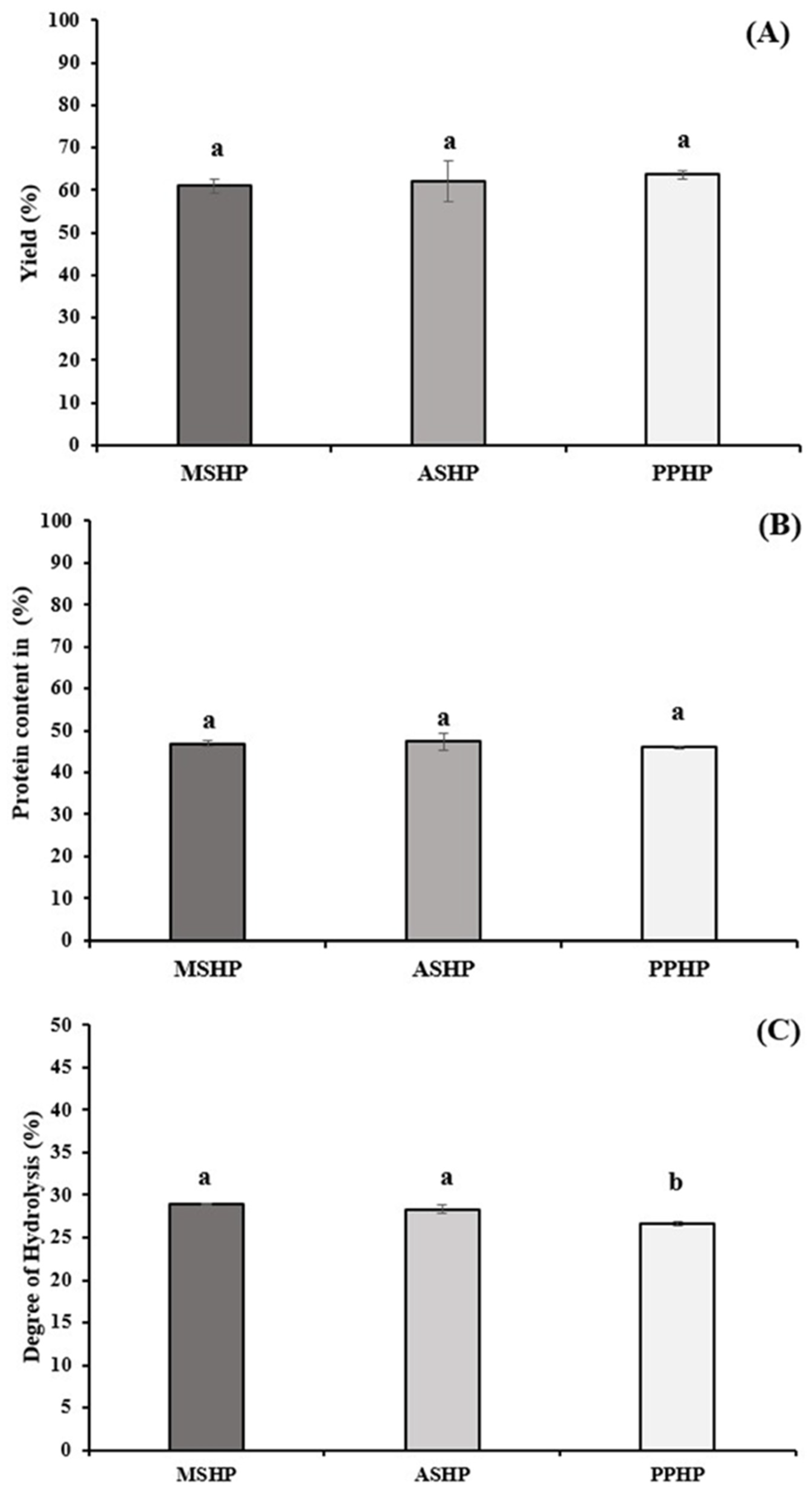
3.3. Yield, Protein Content, and Degree of Hydrolysis of Different Stage Silkworm Hydrolysate Powder
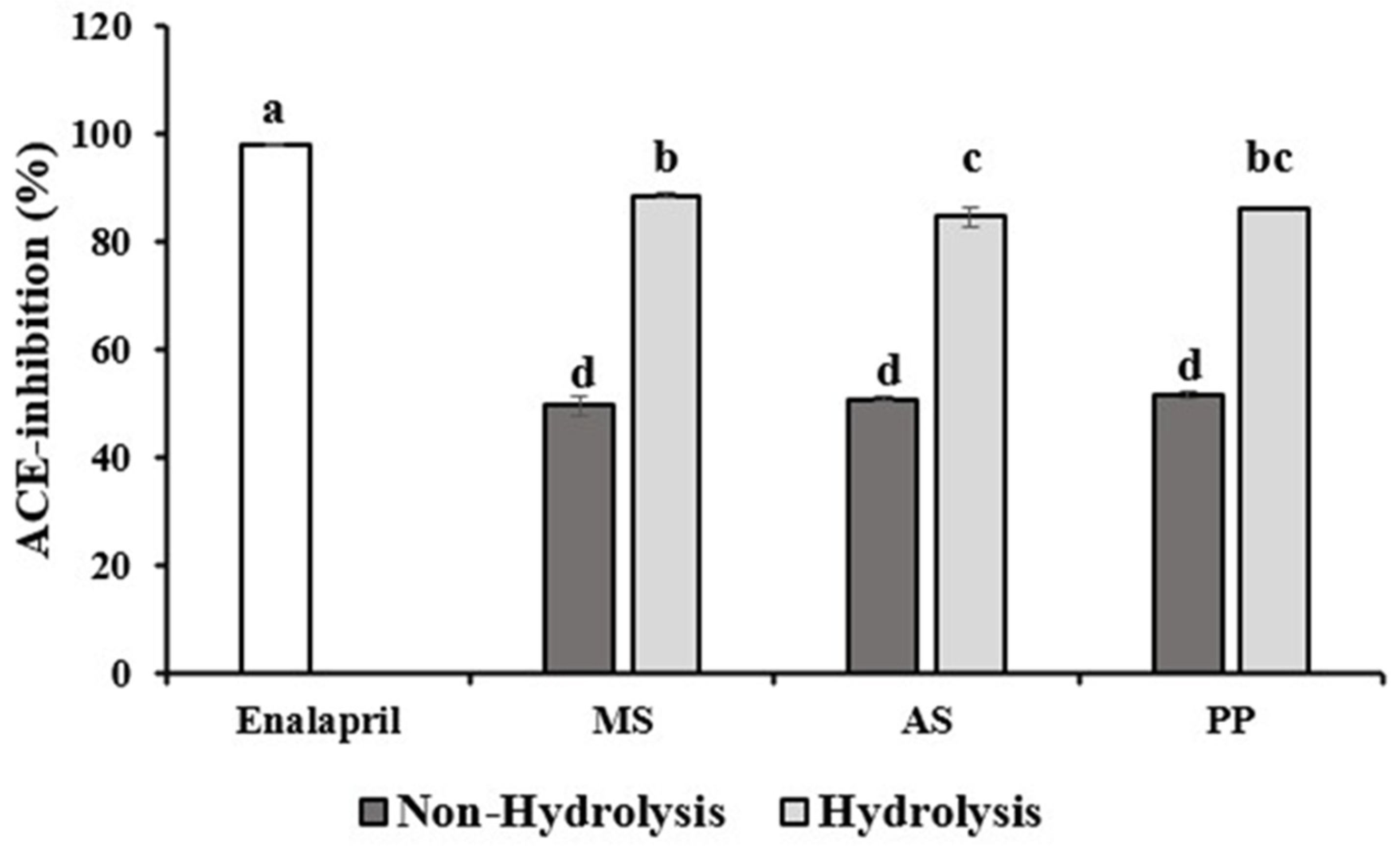
3.4. Inhibition of Angiotensin Converting Enzyme of Silkworm Powder and Silkworm Hydrolysate Powder from Different Stages of Silkworm
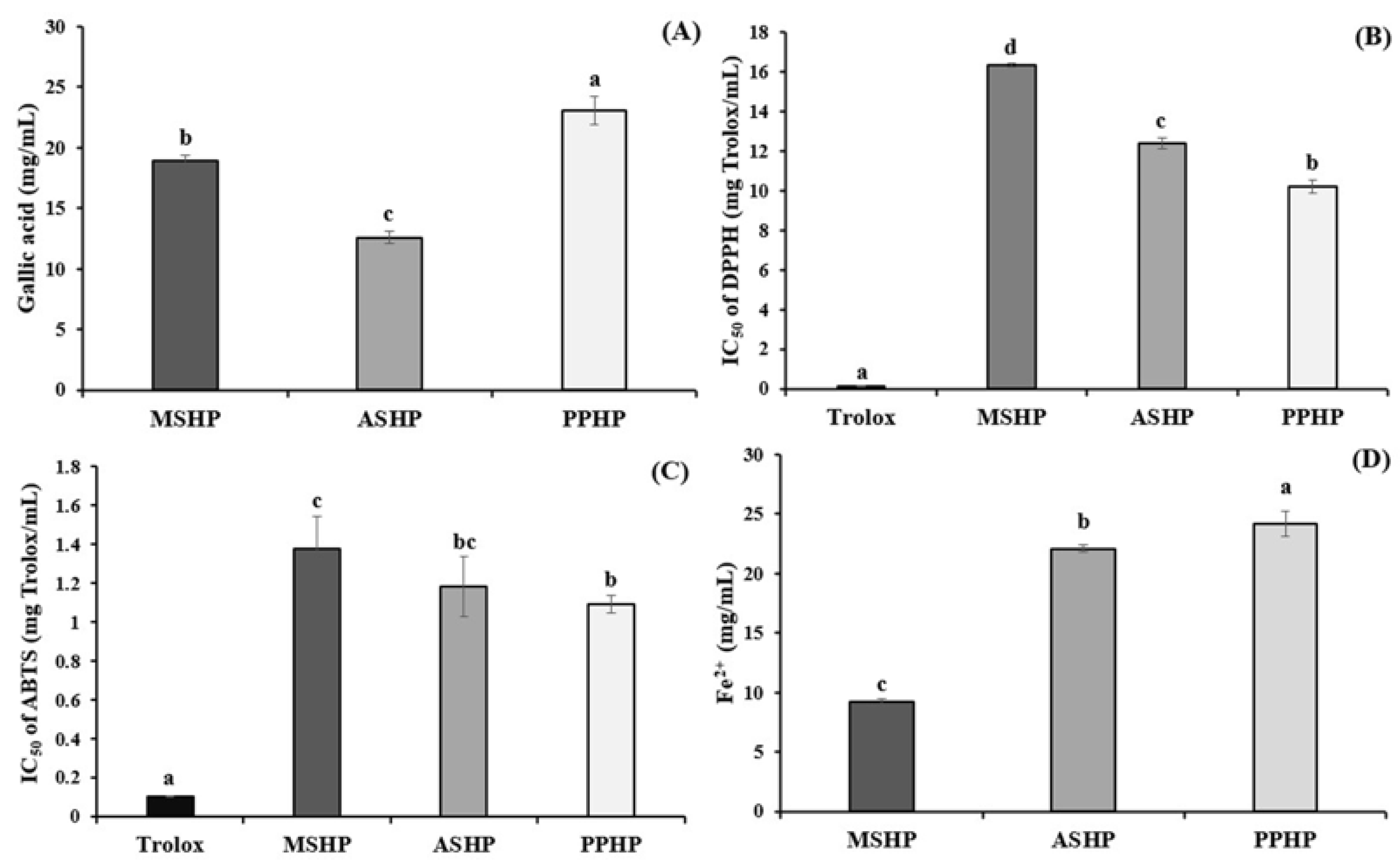
3.5. Total Phenolic Compounds and Antioxidant Activities of Silkworm Hydrolysate Powder from Different Stages of Silkworm
4. Discussion
4.1. Proximate Analysis of Different Stage Silkworm Hydrolysate Powder
4.2. Amino Acid Profile of Different Stages of Silkworm Powder
4.3. Yield, Protein Content, and Degree of Hydrolysis of Different Stage Silkworm Hydrolysate Powder
4.4. Inhibition of Angiotensin Converting Enzyme of Silkworm Powder and Silkworm Hydrolysate Powder from Different Stages of Silkworm
4.5. Total Phenolic Compounds and Antioxidant Activities of Silkworm Hydrolysate Powder from Different Stages of Silkworm
5. Conclusions
Supplementary Materials
Author Contributions
Funding
Institutional Review Board Statement
Informed Consent Statement
Data Availability Statement
Acknowledgments
Conflicts of Interest
References
- Acheampong, R.; Osei Tutu, C.; Akonor, P.T.; Asiedu, B.K.; Owusu-Bempah, J.; Mahama, S.; Kumador, D.K.; Appiadu, D.; Koranteng, A.F.; Wiafe-Kwagyan, M.; et al. Edible Insects for Food Security: Overcoming Cultural, Legal and Tech Barriers to Wider Adoption. Food Hum. 2025, 5, 100778. [Google Scholar] [CrossRef]
- Hăbeanu, M.; Gheorghe, A.; Mihalcea, T. Nutritional Value of Silkworm Pupae (Bombyx mori) with Emphases on Fatty Acids Profile and Their Potential Applications for Humans and Animals. Insects 2023, 14, 254. [Google Scholar] [CrossRef]
- Mahanta, D.K.; Komal, J.; Samal, I.; Bhoi, T.K.; Dubey, V.K.; Pradhan, K.; Nekkanti, A.; Gouda, M.N.R.; Saini, V.; Negi, N.; et al. Nutritional Aspects and Dietary Benefits of “Silkworms”: Current Scenario and Future Outlook. Front. Nutr. 2023, 10, 1121508. [Google Scholar] [CrossRef]
- Herman, R.A.; Yan, C.H.; Wang, J.Z.; Xun, X.M.; Wu, C.K.; Li, Z.N.; Ayepa, E.; You, S.; Gong, L.C.; Wang, J. Insight into the Silkworm Pupae: Modification Technologies and Functionality of the Protein and Lipids. Trends Food Sci. Technol. 2022, 129, 408–420. [Google Scholar] [CrossRef]
- Manosroi, A.; Boonpisuttinant, K.; Winitchai, S.; Manosroi, W.; Manosroi, J. Free radical scavenging and tyrosinase inhibition activity of oils and sericin extracted from Thai native silkworms (Bombyx mori). Pharm. Biol. 2010, 48, 855–860. [Google Scholar] [CrossRef] [PubMed]
- Li, Z.; Zhao, S.; Xin, X.; Zhang, B.; Thomas, A.; Charles, A.; Lee, S.K.; Jin, R.B.; Gui, Z. Purification, Identification and Functional Analysis of a Novel Immunomodulatory Peptide from Silkworm Pupa Protein. Int. J. Pept. Res. Ther. 2020, 26, 243–249. [Google Scholar] [CrossRef]
- Tao, M.; Wang, C.; Liao, D.; Liu, H.; Zhao, Z.; Zhao, Z. Purification, Modification and Inhibition Mechanism of an Angiotensin I-Converting Enzyme Inhibitory Peptide from Silkworm Pupa (Bombyx mori) Protein Hydrolysate. Process Biochem. 2017, 54, 172–179. [Google Scholar] [CrossRef]
- Vercruysse, L.; Smagghe, G.; Beckers, T.; Van Camp, J. Antioxidative and ACE Inhibitory Activities in Enzymatic Hydrolysates of the Cotton Leafworm, Spodoptera littoralis. Food Chem. 2009, 114, 38–43. [Google Scholar] [CrossRef]
- Cermeño, M.; Bascón, C.; Amigo-Benavent, M.; Felix, M.; FitzGerald, R.J. Identification of Peptides from Edible Silkworm Pupae (Bombyx mori) Protein Hydrolysates with Antioxidant Activity. J. Funct. Foods 2022, 92, 105052. [Google Scholar] [CrossRef]
- Anuduang, A.; Lim, S.J.; Jomduang, S.; Boonyapranai, K.; Phongthai, S.; Mustapha, W.A.W. ACE-Inhibitory Properties and Antioxidative Activities of Hydrolysate Powder Obtained from Thai’s Mature Silkworm (Bombyx mori). Int. J. Food Sci. Technol. 2024, 59, 3176–3186. [Google Scholar] [CrossRef]
- AOAC International. Official Methods of Analysis of AOAC International, 19th ed.; AOAC International: Gaithersburg, MD, USA, 2012. [Google Scholar]
- Chaipoot, S.; Wiriyacharee, P.; Pathomrungsiyounggul, P.; Kanthakat, G.; Somjai, C.; Boonyapranai, K.; Srinuanpan, S.; Wongwatcharayothin, W.; Phongphisutthinant, R. Antioxidant Activity and Chemical Alterations of Honeybee Brood Bio-Peptides Interacting with Honey under Moist-Dried Thermal Aging. Antioxidants 2025, 14, 254. [Google Scholar] [CrossRef]
- Phongthai, S.; D’Amico, S.; Schoenlechner, R.; Homthawornchoo, W.; Rawdkuen, S. Fractionation and Antioxidant Properties of Rice Bran Protein Hydrolysates Stimulated by In Vitro Gastrointestinal Digestion. Food Chem. 2018, 240, 156–164. [Google Scholar] [CrossRef]
- Ma, Y.; Zeng, W.; Ba, Y.; Luo, Q.; Ou, Y.; Liu, R.; Ma, J.; Tang, Y.; Hu, J.; Wang, H.; et al. A Single-Cell Transcriptomic Atlas Characterizes the Silk-Producing Organ in the Silkworm. Nat. Commun. 2022, 13, 3316. [Google Scholar] [CrossRef]
- David-Birman, T.; Moshe, H.; Lesmes, U. Impact of thermal processing on physicochemical properties of silk moth pupae (Bombyx mori) flour and in vitro gastrointestinal proteolysis in adults and seniors. Food Res. Int. 2019, 123, 11–19. [Google Scholar] [CrossRef] [PubMed]
- Banday, M.T.; Adil, S.; Sheikh, I.U.; Hamadani, H.; Qadri, F.I.; Sahfi, M.E.; Sait, H.S.A.W.; Abd El-Mageed, T.A.; Salem, H.M.; Taha, A.E.; et al. The Use of Silkworm Pupae (Bombyx mori) Meal as an Alternative Protein Source for Poultry. World’s Poult. Sci. J. 2023, 79, 119–134. [Google Scholar] [CrossRef]
- Pereira, N.R.; Ferrarese-Filho, O.; Matsushita, M.; de Souza, N.E. Proximate Composition and Fatty Acid Profile of Bombyx mori L. Chrysalis Toast. J. Food Compos. Anal. 2003, 16, 451–457. [Google Scholar] [CrossRef]
- Kunz, R.I.; Brancalhão, R.M.; Ribeiro, L.F.; Natali, M.R. Silkworm Sericin: Properties and Biomedical Applications. BioMed Res. Int. 2016, 2016, 8175701. [Google Scholar] [CrossRef]
- Martins, J.R.; Bitondi, M.M.G. Nuclear Immunolocalization of Hexamerins in the Fat Body of Metamorphosing Honey Bees. Insects 2012, 3, 1039–1055. [Google Scholar] [CrossRef] [PubMed]
- Perez-Santaescolastica, C.; de Pril, I.; van de Voorde, I.; Fraeye, I. Fatty Acid and Amino Acid Profiles of Seven Edible Insects: Focus on Lipid Class Composition and Protein Conversion Factors. Foods 2023, 12, 4090. [Google Scholar] [CrossRef]
- Anootthato, S.; Therdthai, N.; Ritthiruangdej, P. Characterization of protein hydrolysate from silkworm pupae (Bombyx mori). J. Food Process Preserv. 2019, 43, e14021. [Google Scholar] [CrossRef]
- Zhou, Y.; Zhou, S.; Duan, H.; Wang, J.; Yan, W. Silkworm pupae: A functional food with health benefits for humans. Foods 2022, 11, 1594. [Google Scholar] [CrossRef]
- Chewaka, L.S.; Park, C.S.; Cha, Y.S.; Desta, K.T.; Park, B.R. Enzymatic Hydrolysis of Tenebrio molitor (Mealworm) Using Nuruk Extract Concentrate and an Evaluation of Its Nutritional, Functional, and Sensory Properties. Foods 2023, 12, 2188. [Google Scholar] [CrossRef] [PubMed]
- Phuangjit, U.; Klinkesorn, U.; Tan, C.P.; Katekhong, W. Enhancing Silkworm Protein Yield, Extraction Efficiency, Structure, Functionality, and Antioxidant Activity Using Ultrasound-, Microwave-, and Freeze–Thaw-Assisted Methods. J. Sci. Food Agric. 2024, 104, 383–390. [Google Scholar] [CrossRef]
- Kang, H.-S.; Park, J.H.; Auh, J.-H. Effects of Protein Hydrolysate from Silkworm (Bombyx mori) pupae on the C2C12 Myogenic Differentiation. Foods 2023, 12, 2840. [Google Scholar] [CrossRef] [PubMed]
- Ghosh, A.; Ray, M.; Gangopadhyay, D. Evaluation of Proximate Composition and Antioxidant Properties in Silk-Industrial Byproduct. LWT–Food Sci. Technol. 2020, 132, 109900. [Google Scholar] [CrossRef]
- Yeerong, K.; Chantawannakul, P.; Anuchapreeda, S.; Wangtueai, S.; Chaiyana, W. Optimization of Hydrolysis Conditions, Isolation, and Identification of Biologically Active Peptides Derived from Acheta domesticus for Antioxidant and Collagenase Inhibition. Antioxidants 2024, 13, 367. [Google Scholar] [CrossRef]
- Lee, J.H.; Kim, T.K.; Yong, H.I.; Cha, J.Y.; Song, K.M.; Lee, H.G.; Je, J.G.; Kang, M.C.; Choi, Y.S. Peptides Inhibiting Angiotensin-I-Converting Enzyme: Isolation from Flavourzyme Hydrolysate of Protaetia brevitarsis Larva Protein and Identification. Food Chem. 2023, 399, 133897. [Google Scholar] [CrossRef]
- Teixeira, C.S.S.; Carriço-Sá, B.; Villa, C.; Costa, J.; Mafra, I.; Ferreira, I.M.P.L.V.O.; Faria, M.A.; Tavares, T.G. Uncovering the Potential Somatic Angiotensin-Converting Enzyme (sACE) Inhibitory Capacity of Peptides from Acheta domesticus: Insights from In Vitro Gastrointestinal Digestion. Foods 2024, 13, 3462. [Google Scholar] [CrossRef]
- Sonklin, C.; Alashi, M.A.; Laohakunjit, N.; Kerdchoechuen, O.; Aluko, R.E. Identification of Antihypertensive Peptides from Mung Bean Protein Hydrolysate and Their Effects in Spontaneously Hypertensive Rats. J. Funct. Foods 2020, 64, 103635. [Google Scholar] [CrossRef]
- Matheswaran, P.; Raja, L.; Gani, S.B. Anti-Hypertensive and Anti-Microbial Activity of Protein Hydrolysate Obtained from Seven Edible Insects. Bull. Pure Appl. Sci. Zool. 2020, 39, 206–216. [Google Scholar] [CrossRef]
- García-Mora, P.; Martín-Martínez, M.; Bonache, M.A.; González-Múniz, R.; Peñas, E.; Frías, J.; Martinez-Villaluenga, C. Identification, Functional Gastrointestinal Stability and Molecular Docking Studies of Lentil Peptides with Dual Antioxidant and Angiotensin I-Converting Enzyme Inhibitory Activities. Food Chem. 2017, 221, 464–472. [Google Scholar] [CrossRef]
- Tu, J.; Liu, G.; Jin, Y.; Tang, C.; Yao, T.; Zhuo, J.; Li, Q.; Liu, L.; Wang, J. Enrichment of γ-Aminobutyric Acid in Mulberry Leaves and the Inhibitory Effects of the Water Extract on ACE and α-Glucosidase Activity. Ind. Crops Prod. 2022, 177, 114485. [Google Scholar] [CrossRef]
- Youn, K.S.; Kim, J.W. Antioxidant and Angiotensin Converting Enzyme I Inhibitory Activities of Extracts from Mulberry (Cudrania tricuspidata) Fruit Subjected to Different Drying Methods. J. Korean Soc. Food Sci. Nutr. 2012, 41, 1388–1394. [Google Scholar] [CrossRef]
- Wang, W.; Wang, N.; Zhang, Y. Antihypertensive Properties on Spontaneously Hypertensive Rats of Peptide Hydrolysates from Silkworm Pupae Protein. Food Nutr. Sci. 2014, 5, 1202–1211. [Google Scholar] [CrossRef]
- Kim, J.H.; Jang, H.J.; Cho, W.Y.; Yeon, S.J.; Lee, C.H. In Vitro Antioxidant Actions of Sulfur-Containing Amino Acids. Arab. J. Chem. 2020, 13, 1678–1684. [Google Scholar] [CrossRef]
- Miliauskas, G.; Venskutonis, P.R.; van Beek, T.A. Screening of Radical Scavenging Activity of Some Medicinal and Aromatic Plant Extracts. Food Chem. 2004, 85, 231–237. [Google Scholar] [CrossRef]
- Bezalel, S.; Mahlab-Guri, K.; Asher, I.; Werner, B.; Sthoeger, Z.M. Angiotensin-Converting Enzyme Inhibitor-Induced Angioedema. Am. J. Med. 2015, 128, 120–125. [Google Scholar] [CrossRef]
- Yamamoto, K.; Yamada, N.; Endo, S.; Kurogi, K.; Sakakibara, Y.; Suiko, M. Novel Silkworm (Bombyx mori) Sulfotransferase swSULT ST3 Is Involved in Metabolism of Polyphenols from Mulberry Leaves. PLoS ONE 2022, 17, e0270804. [Google Scholar] [CrossRef]
- Yeruva, T.; Jayaram, H.; Aurade, R.; Shunmugam, M.M.; Shinde, V.S.; Venkatesharoa, S.R.B.; Azhiyakathu, M.J. Profiling of Nutrients and Bioactive Compounds in the Pupae of Silkworm (Bombyx mori). Food Chem. Adv. 2023, 3, 100382. [Google Scholar] [CrossRef]
- Chukiatsiri, S.; Wongsrangsap, N.; Kiatwuthinon, P.; Phonphoem, W. Purification and Identification of Novel Antioxidant Peptides Derived from Bombyx mori Pupae Hydrolysates. Biochem. Biophys. Rep. 2024, 38, 101707. [Google Scholar] [CrossRef]
- Kovačević, T.K.; Major, N.; Sivec, M.; Horvat, D.; Krpan, M.; Hruškar, M.; Ban, D.; Išić, N.; Goreta Ban, S. Phenolic Content, Amino Acids, Volatile Compounds, Antioxidant Capacity, and Their Relationship in Wild Garlic (Allium ursinum L.). Foods 2023, 12, 2110. [Google Scholar] [CrossRef] [PubMed]



| Properties | Type of Silkworm | ||
|---|---|---|---|
| MSP | ASP | PPP | |
| Moisture (%) | 2.51 a ± 0.24 | 1.54 b ± 0.06 | 1.77 b ± 0.16 |
| Protein (%) | 70.20 b ± 0.52 | 72.13 a ± 0.70 | 56.70 c ± 1.13 |
| Fat (%) | 17.81 c ± 0.19 | 21.10 b ± 0.44 | 30.44 a ± 0.89 |
| Ash (%) | 4.14 b ± 0.04 | 3.65 c ± 0.12 | 5.06 a ± 0.02 |
| Carbohydrate (%) | 5.34 a ± 0.38 | 1.50 b ± 0.96 | 6.03 a ± 1.50 |
| Amino Acids (mg/100 g) | MSP | MSHP | ASP | ASHP | PPP | PPHP |
|---|---|---|---|---|---|---|
| Histidine * | 290.38 bB ± 2.25 | 873.54 cA ± 3.92 | 240.77 cB ± 0.13 | 900.45 bA ± 0.05 | 319.69 aB ± 1.57 | 976.75 aA ± 0.71 |
| Isoleucine * | 25.95 cB ± 0.22 | 41.41 cA± 0.08 | 33.65 bB ± 0.23 | 56.07 bA ± 0.14 | 51.36 aB ± 0.00 | 77.36 aA ± 0.00 |
| Leucine * | 50.66 cB ± 0.43 | 94.45 bA ± 0.75 | 52.29 bB ± 0.22 | 89.24 cA ± 0.18 | 61.80 aB ± 0.19 | 152.28 aA ± 0.12 |
| Lysine * | 101.05 cB ± 0.04 | 104.04 cA ± 0.06 | 113.17 bB ± 0.31 | 164.07 bA ± 0.32 | 142.94 aB ± 0.36 | 185.94 aA ± 0.84 |
| Methionine * | 27.51 aB ± 0.30 | 64.90 aA ± 0.09 | 14.59 cB ± 0.12 | 46.15 cA ± 0.20 | 20.40 bB ± 0.01 | 55.13 bA ± 0.12 |
| Phenylalanine * | 363.08 aB ± 8.48 | 1234.61 aA ± 3.27 | 300.50 bB ± 0.17 | 844.37 cA ± 3.68 | 113.27 cB ± 0.62 | 962.40 bA ± 0.83 |
| Threonine * | 72.24 cB ± 1.15 | 80.43 cA ± 0.04 | 92.32 aB ± 0.49 | 129.14 aA ± 0.14 | 76.96 bB ± 0.11 | 115.83 bA ± 0.60 |
| Arginine * | 52.67 bB ± 4.79 | 59.11 cA ± 0.49 | 56.70 bB ± 0.06 | 81.61 bA ± 0.62 | 68.25 aB ± 1.12 | 95.54 aA ± 0.35 |
| Valine * | 65.88 cB ± 0.76 | 119.11 cA ± 0.31 | 95.48 aB ± 0.08 | 174.82 aA ± 0.38 | 88.00 bB ± 0.12 | 137.90 bA ± 0.25 |
| Alanine | 150.44 aB ± 0.51 | 225.18 aA ± 0.75 | 136.06 bB ± 0.27 | 191.00 bA ± 0.35 | 72.83 cB ± 0.26 | 104.20 cA ± 0.46 |
| Aspartic acid | 5.74 bA ± 0.14 | 2.27 cB ± 0.06 | 6.73 aB ± 0.01 | 38.34 aA ± 0.14 | 3.30 cB ± 0.03 | 8.30 bA ± 0.11 |
| Cystine | 59.23 bB ± 2.68 | 181.03 aA ± 0.95 | 55.55 aB ± 0.56 | 143.73 bA ± 0.08 | 23.49 bB ± 0.32 | 118.42 cA ± 1.93 |
| Glutamic acid | 320.72 aB ± 1.39 | 489.45 aA ± 2.49 | 165.89 bB ± 0.32 | 271.40 bA ± 0.72 | 166.05 bB ± 0.16 | 239.78 cA ± 1.21 |
| Glycine | 125.24 abB ± 2.43 | 150.02 bA ± 0.02 | 131.58 aB ± 0.02 | 157.20 aA ± 0.25 | 117.87 bB ± 0.17 | 143.43 cA ± 0.28 |
| Proline | 22.15 cB ± 0.66 | 29.51 cA ± 0.13 | 40.65 bB ± 0.07 | 55.57 bA ± 0.51 | 80.91 aB ± 0.10 | 94.16 aA ± 0.29 |
| Serine | 63.32 cB ± 1.36 | 96.69 bA ± 0.70 | 183.97 aB ± 0.02 | 300.00 aA ± 0.79 | 68.11 bB ± 0.50 | 98.05 bA ± 0.51 |
| Tyrosine | 56.33 cA ± 0.83 | 48.22 cB ± 0.47 | 171.22 aB ± 8.78 | 246.49 aA ± 0.57 | 120.35 bB ± 4.61 | 190.78 bA ± 2.85 |
| Total amino acids | 1852.59 | 3839.97 | 1891.12 | 3889.65 | 1595.58 | 3756.25 |
Disclaimer/Publisher’s Note: The statements, opinions and data contained in all publications are solely those of the individual author(s) and contributor(s) and not of MDPI and/or the editor(s). MDPI and/or the editor(s) disclaim responsibility for any injury to people or property resulting from any ideas, methods, instructions or products referred to in the content. |
© 2025 by the authors. Licensee MDPI, Basel, Switzerland. This article is an open access article distributed under the terms and conditions of the Creative Commons Attribution (CC BY) license (https://creativecommons.org/licenses/by/4.0/).
Share and Cite
Anuduang, A.; Mustapha, W.A.W.; Lim, S.J.; Jomduang, S.; Ounjaijean, S.; Chaipoot, S.; Kraseasintra, O.; Boonyapranai, K. The Nutritional, ACE Inhibition, and Antioxidant Properties of Hydrolysate Powders Derived from Different Stages of Thai Silkworm (Bombyx mori). Foods 2025, 14, 4018. https://doi.org/10.3390/foods14234018
Anuduang A, Mustapha WAW, Lim SJ, Jomduang S, Ounjaijean S, Chaipoot S, Kraseasintra O, Boonyapranai K. The Nutritional, ACE Inhibition, and Antioxidant Properties of Hydrolysate Powders Derived from Different Stages of Thai Silkworm (Bombyx mori). Foods. 2025; 14(23):4018. https://doi.org/10.3390/foods14234018
Chicago/Turabian StyleAnuduang, Artorn, Wan Aida Wan Mustapha, Seng Joe Lim, Somchai Jomduang, Sakaewan Ounjaijean, Supakit Chaipoot, Oranit Kraseasintra, and Kongsak Boonyapranai. 2025. "The Nutritional, ACE Inhibition, and Antioxidant Properties of Hydrolysate Powders Derived from Different Stages of Thai Silkworm (Bombyx mori)" Foods 14, no. 23: 4018. https://doi.org/10.3390/foods14234018
APA StyleAnuduang, A., Mustapha, W. A. W., Lim, S. J., Jomduang, S., Ounjaijean, S., Chaipoot, S., Kraseasintra, O., & Boonyapranai, K. (2025). The Nutritional, ACE Inhibition, and Antioxidant Properties of Hydrolysate Powders Derived from Different Stages of Thai Silkworm (Bombyx mori). Foods, 14(23), 4018. https://doi.org/10.3390/foods14234018