Article

Application of L-Cysteine Hydrochloride Delays the Ripening of Harvested Tomato Fruit

1
Longping Branch, College of Biology, Hunan University, Changsha 410125, China
2
Hunan Provincial Key Laboratory for Fruits and Vegetables Storage Processing and Quality Safety, Hunan Agricultural Product Processing Institute, Hunan Academy of Agricultural Sciences, Changsha 410125, China
3
South China Botanical Garden, Chinese Academy of Sciences, Guangzhou 510650, China
*
Author to whom correspondence should be addressed.
Foods 2024, 13(6), 841; https://doi.org/10.3390/foods13060841
Submission received: 18 February 2024 / Revised: 1 March 2024 / Accepted: 6 March 2024 / Published: 9 March 2024
(This article belongs to the Section Plant Foods)

Abstract

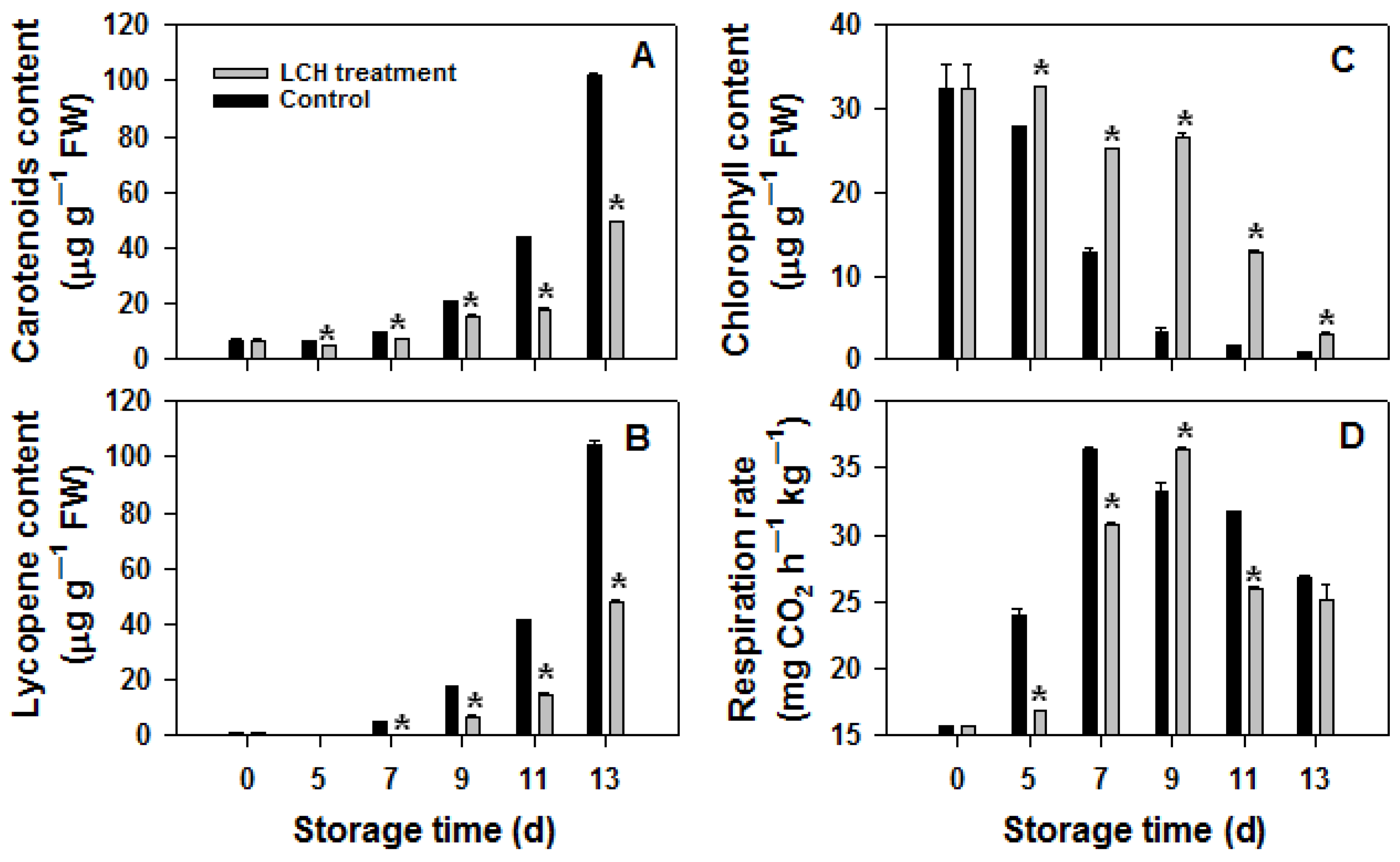
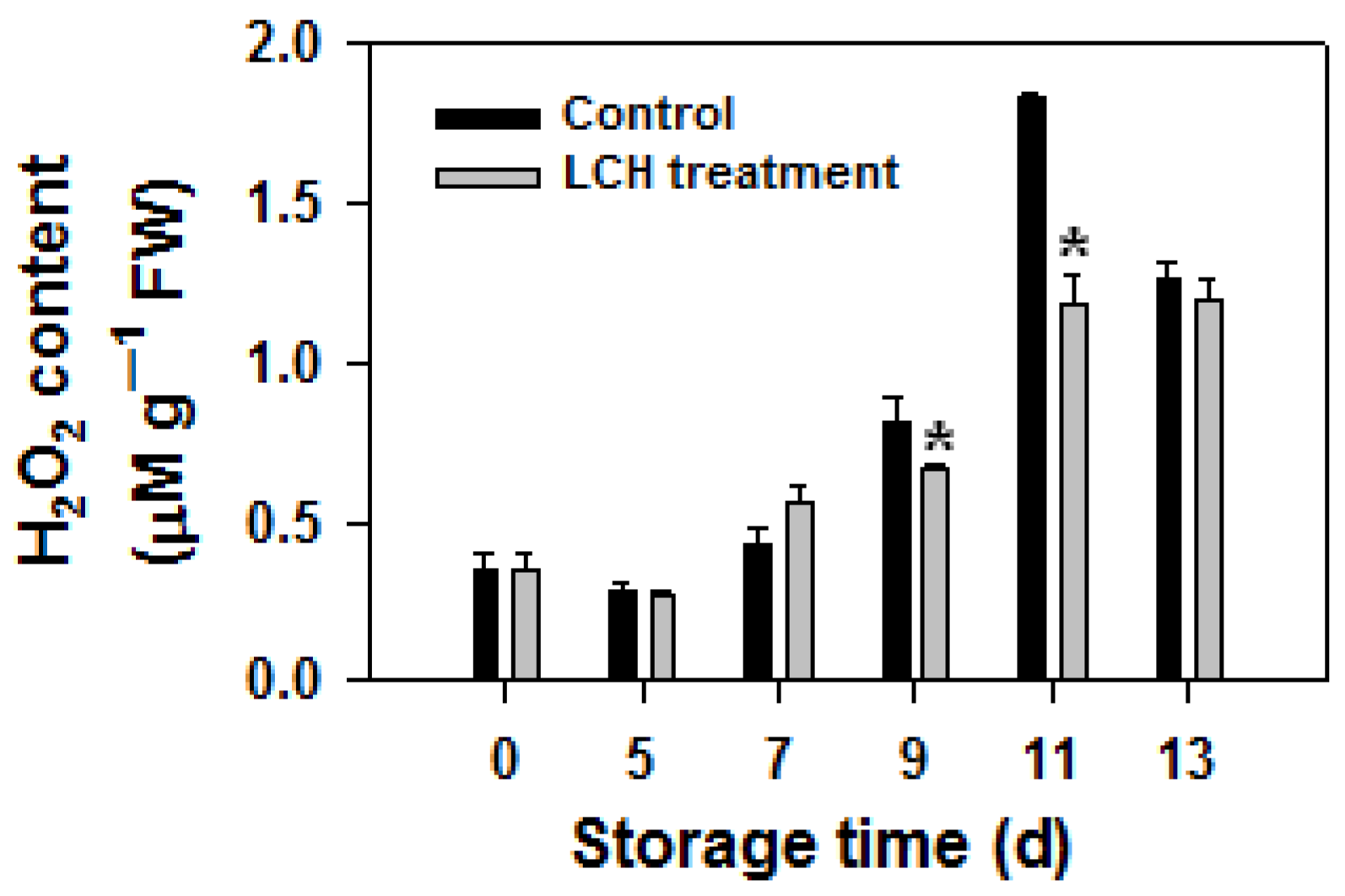
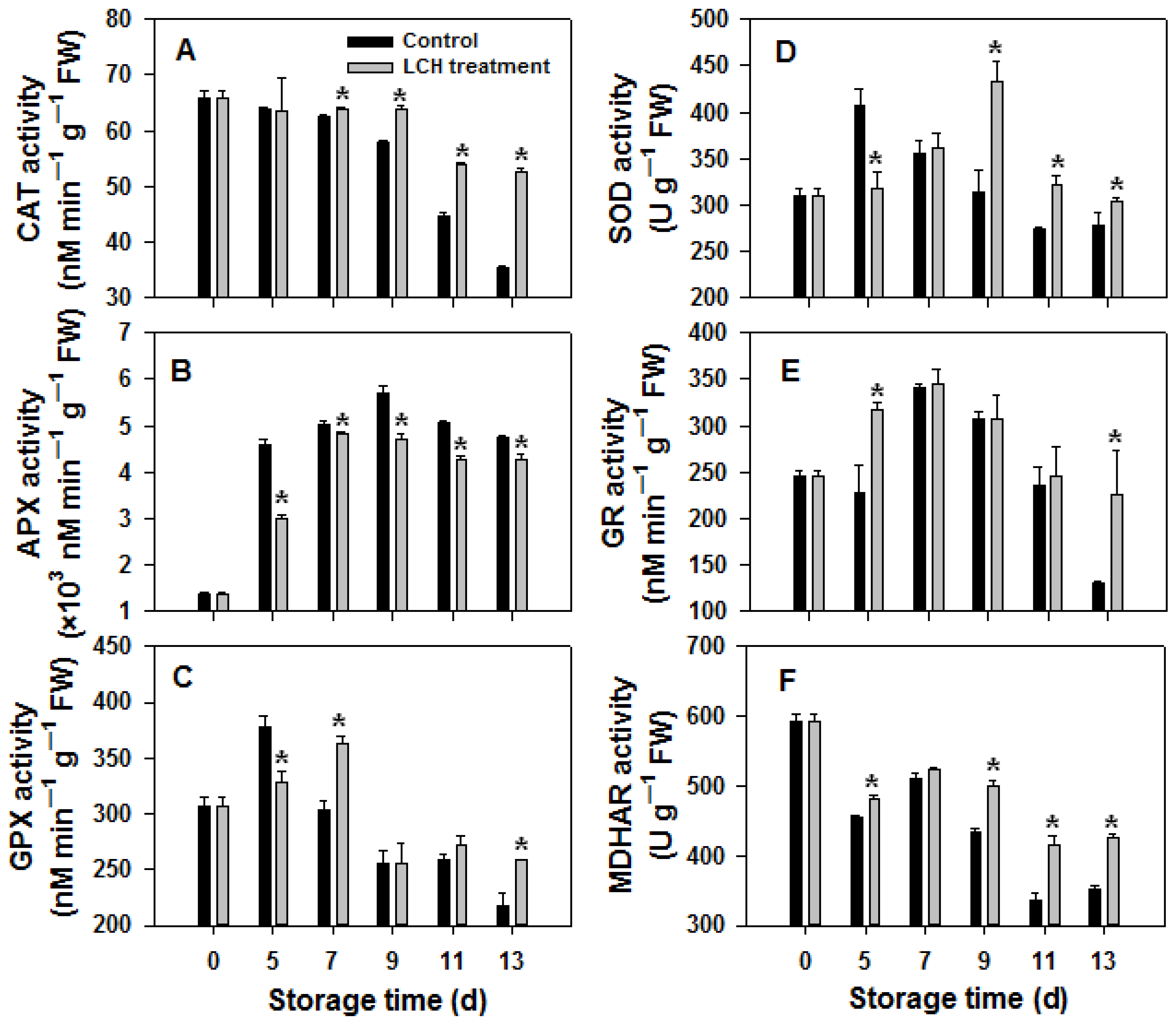
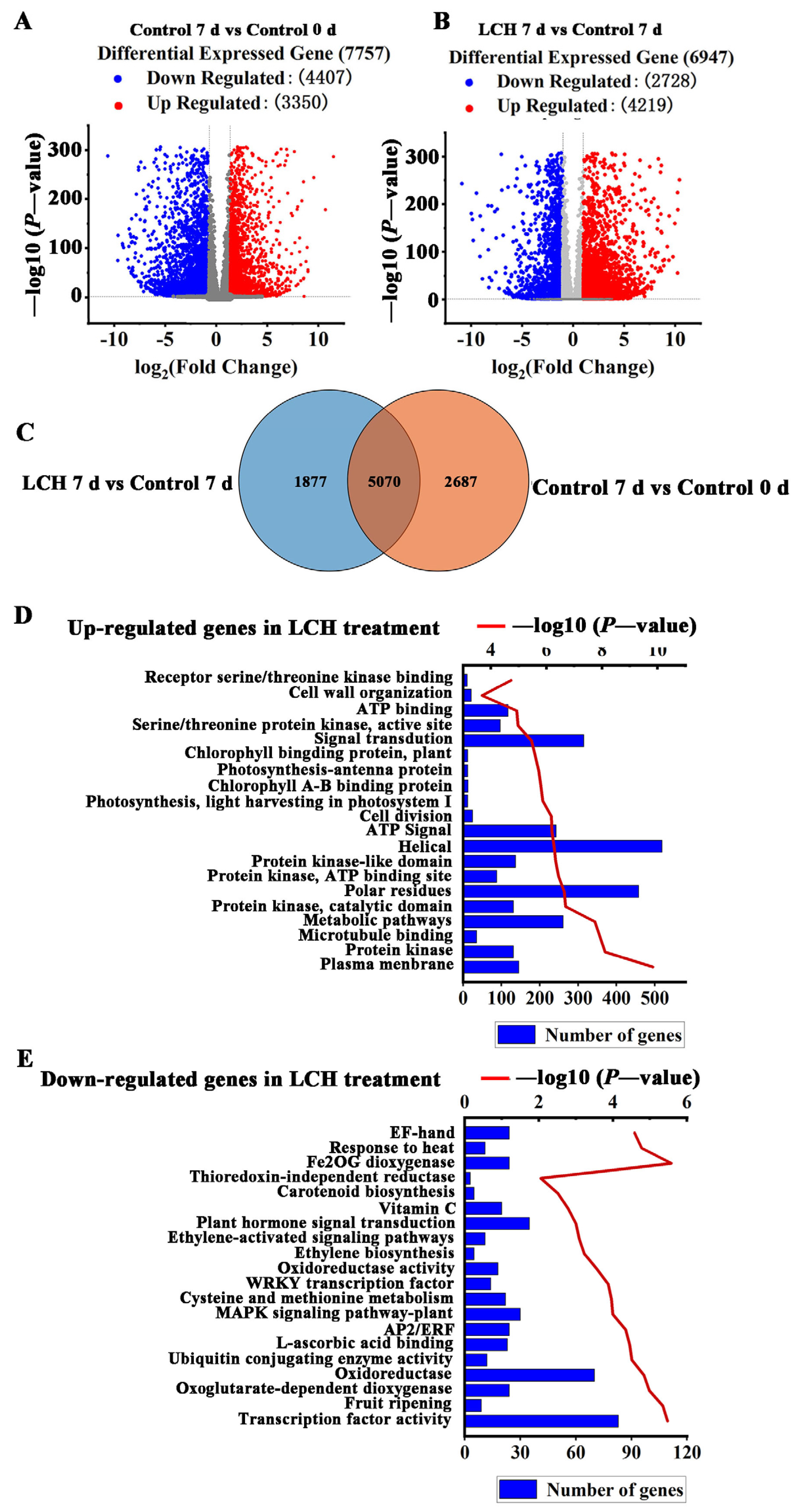
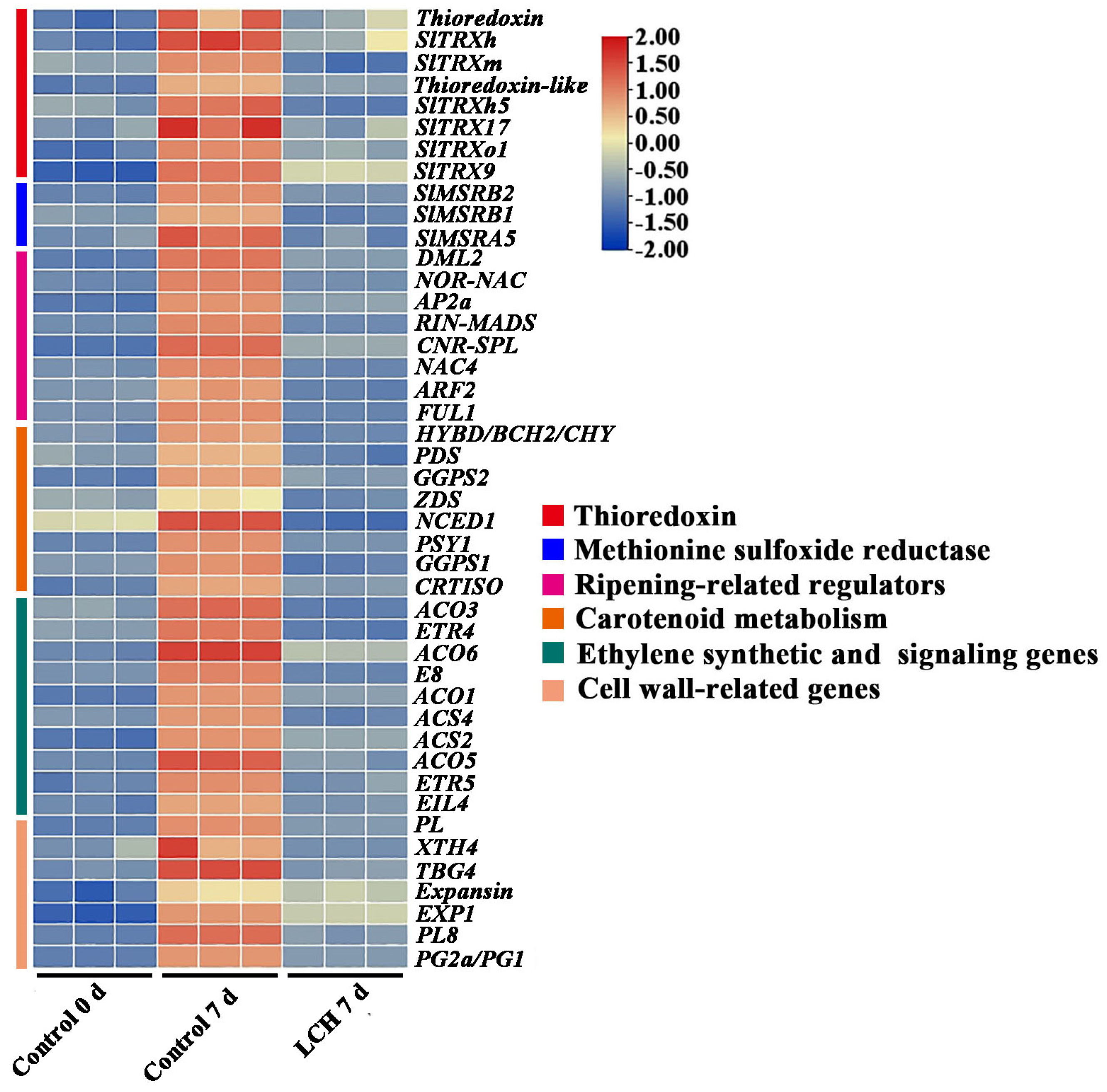
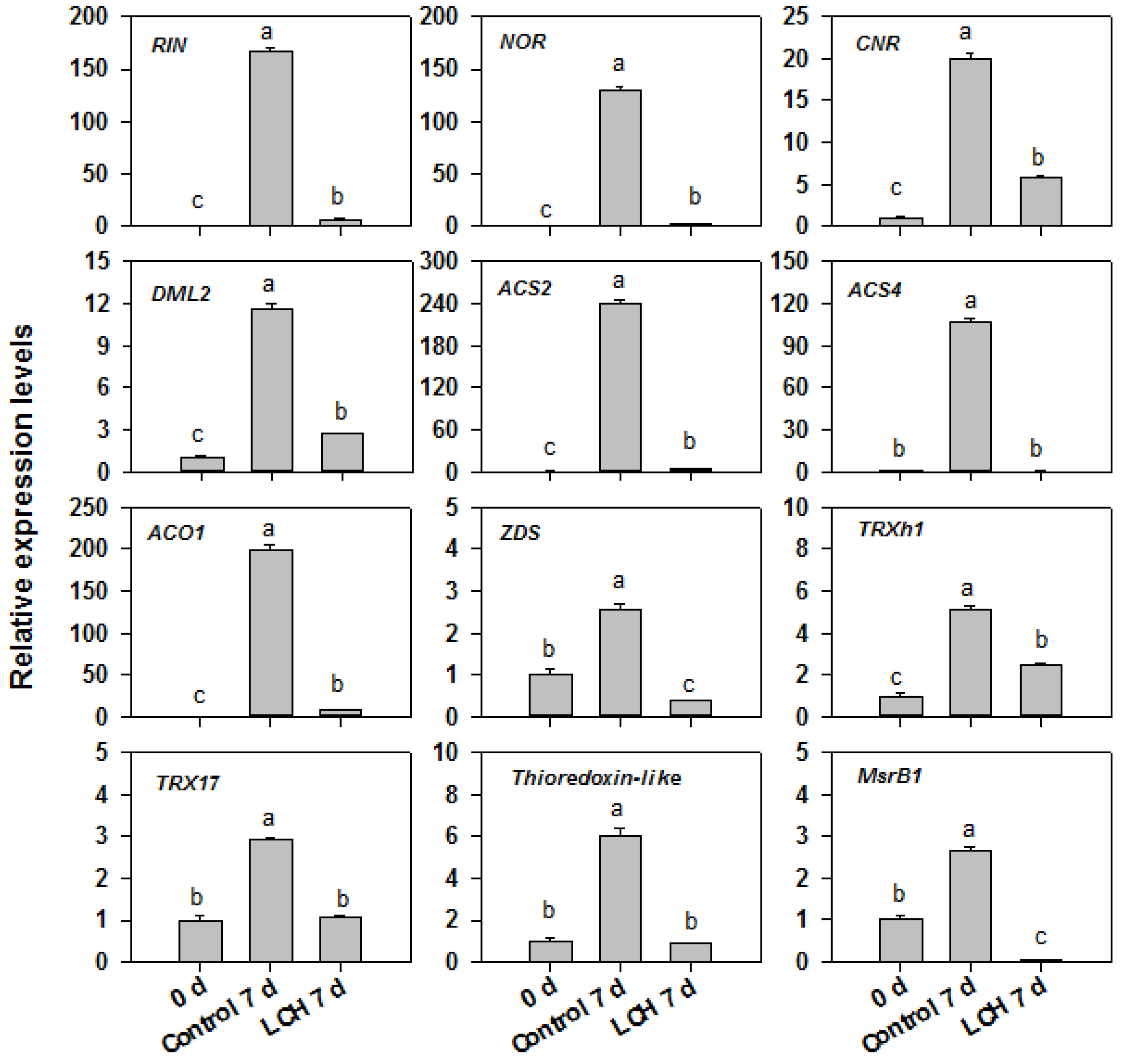
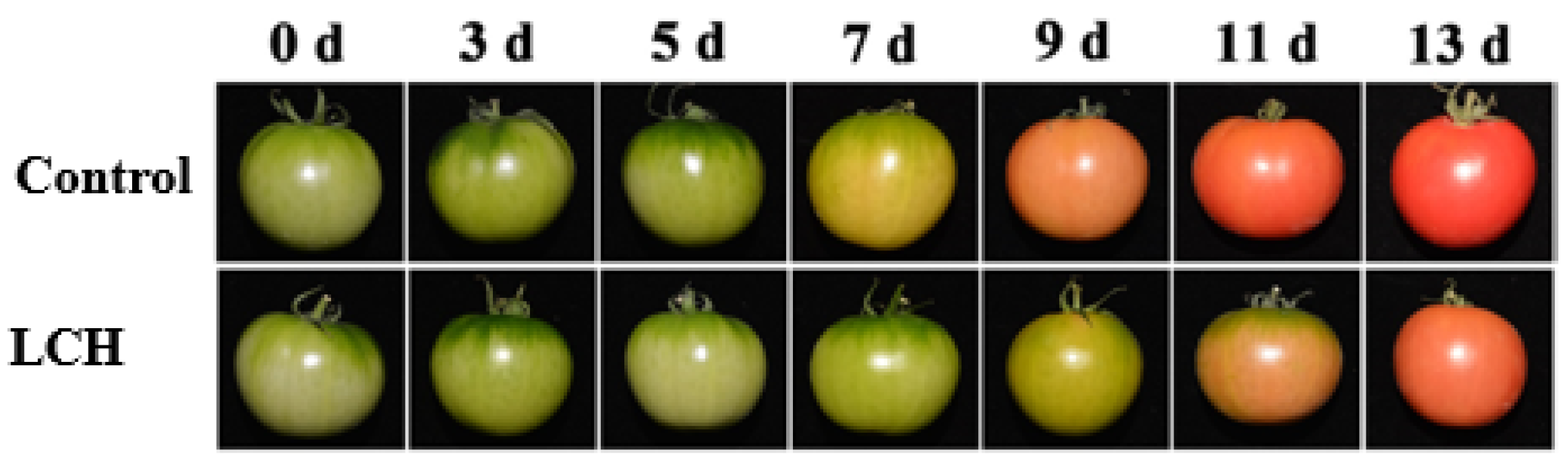
Fruit ripening is controlled by internal factors such as hormones and genetic regulators, as well as external environmental factors. However, the impact of redox regulation on fruit ripening remains elusive. Here, we explored the effects of L-cysteine hydrochloride (LCH), an antioxidant, on tomato fruit ripening and elucidated the underlying mechanism. The application of LCH effectively delayed tomato fruit ripening, leading to the suppression of carotenoid and lycopene biosynthesis and chlorophyll degradation, and a delayed respiration peak. Moreover, LCH-treated fruit exhibited reduced hydrogen peroxide (H2O2) accumulation and increased activities of superoxide dismutase (SOD), catalase (CAT), and monodehydroascorbate reductase (MDHAR), compared with control fruit. Furthermore, transcriptome analysis revealed that a substantial number of genes related to ethylene biosynthesis (ACS2, ACS4, ACO1, ACO3), carotenoid biosynthesis (PSY, PDS, ZDS, CRTISO), cell wall degradation (PG1/2, PL, TBG4, XTH4), and ripening-related regulators (RIN, NOR, AP2a, DML2) were downregulated by LCH, resulting in delayed ripening. These findings suggest that the application of LCH delays the ripening of harvested tomato fruit by modulating the redox balance and suppressing the expression of ripening-related genes.
Keywords: tomato; fruit ripening; L-cysteine hydrochloride; redox regulation; transcription regulation tomato; fruit ripening; L-cysteine hydrochloride; redox regulation; transcription regulation