Article

Different Nitrogen Consumption Patterns in Low Temperature Fermentations in the Wine Yeast Saccharomyces cerevisiae

1
Food Biotechnology Department, Instituto de Agroquímica y Tecnología de Alimentos (IATA), Consejo Superior de Investigaciones Científicas (CSIC), 46980 Paterna, Valencia, Spain
2
College of Enology, Northwest A&F University, Xianyang 712100, China
*
Author to whom correspondence should be addressed.
Foods 2024, 13(16), 2522; https://doi.org/10.3390/foods13162522
Submission received: 17 July 2024 / Revised: 31 July 2024 / Accepted: 7 August 2024 / Published: 13 August 2024
(This article belongs to the Special Issue Yeast Biotechnology for Food Industrial Processes)

Abstract

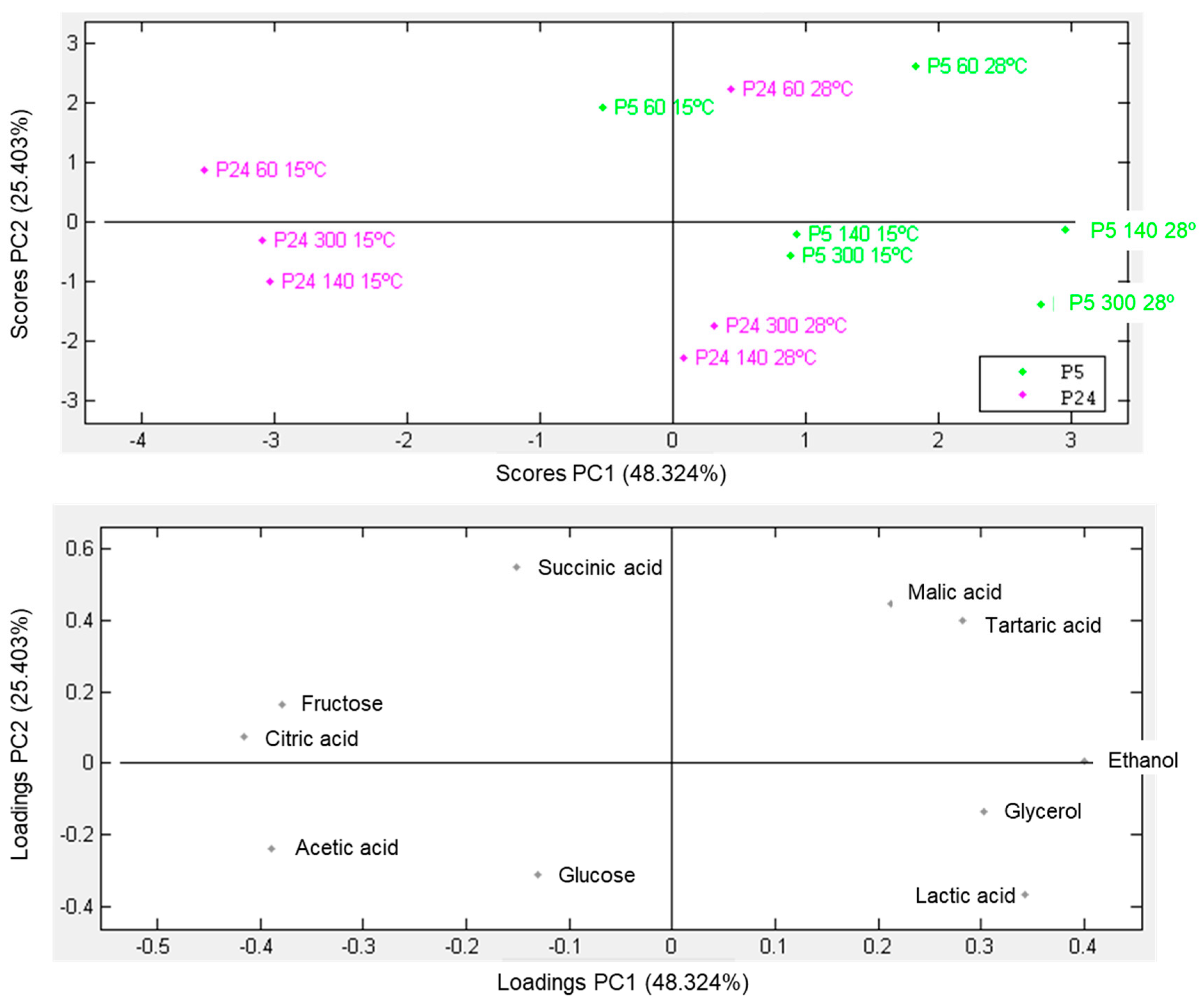
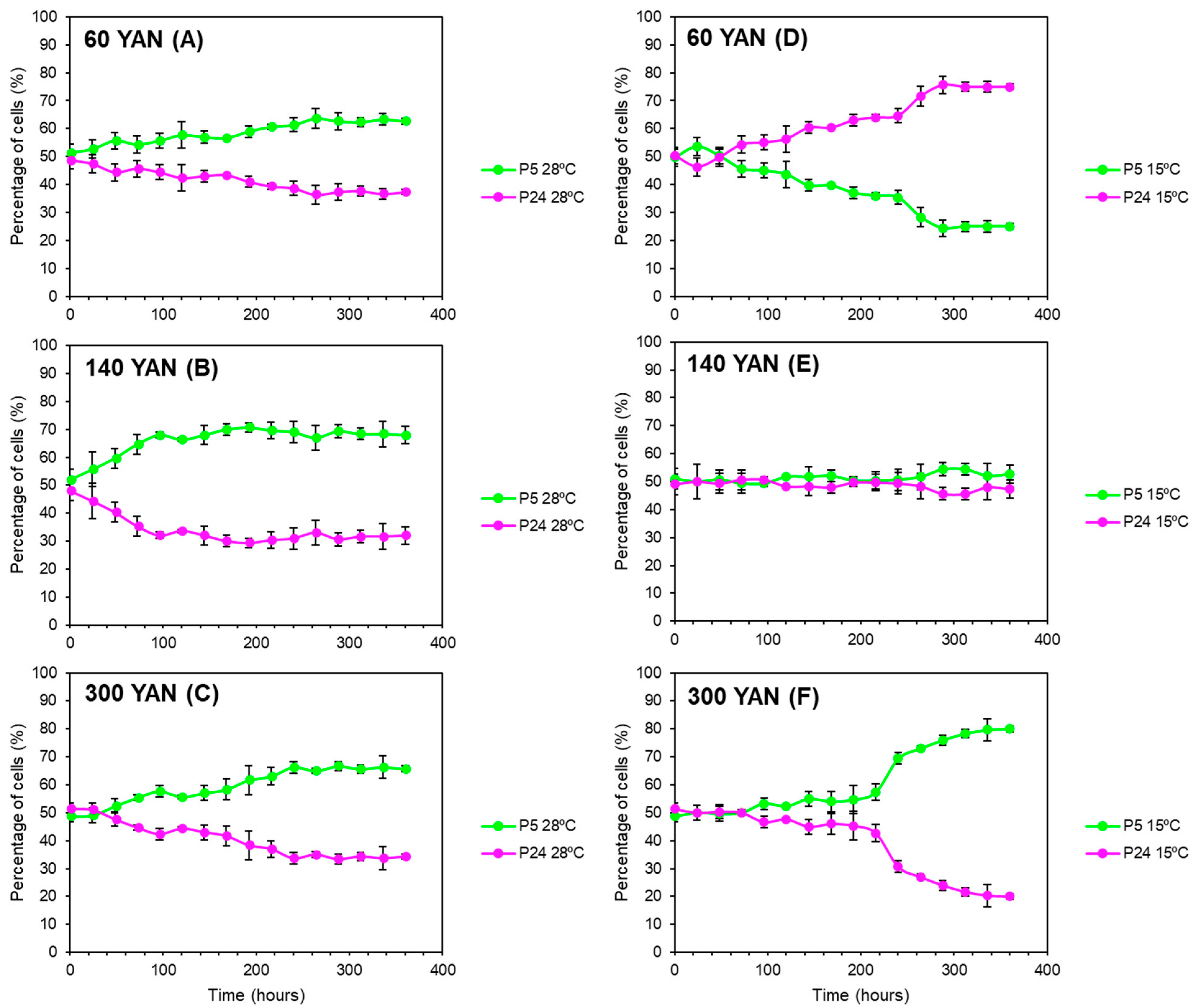
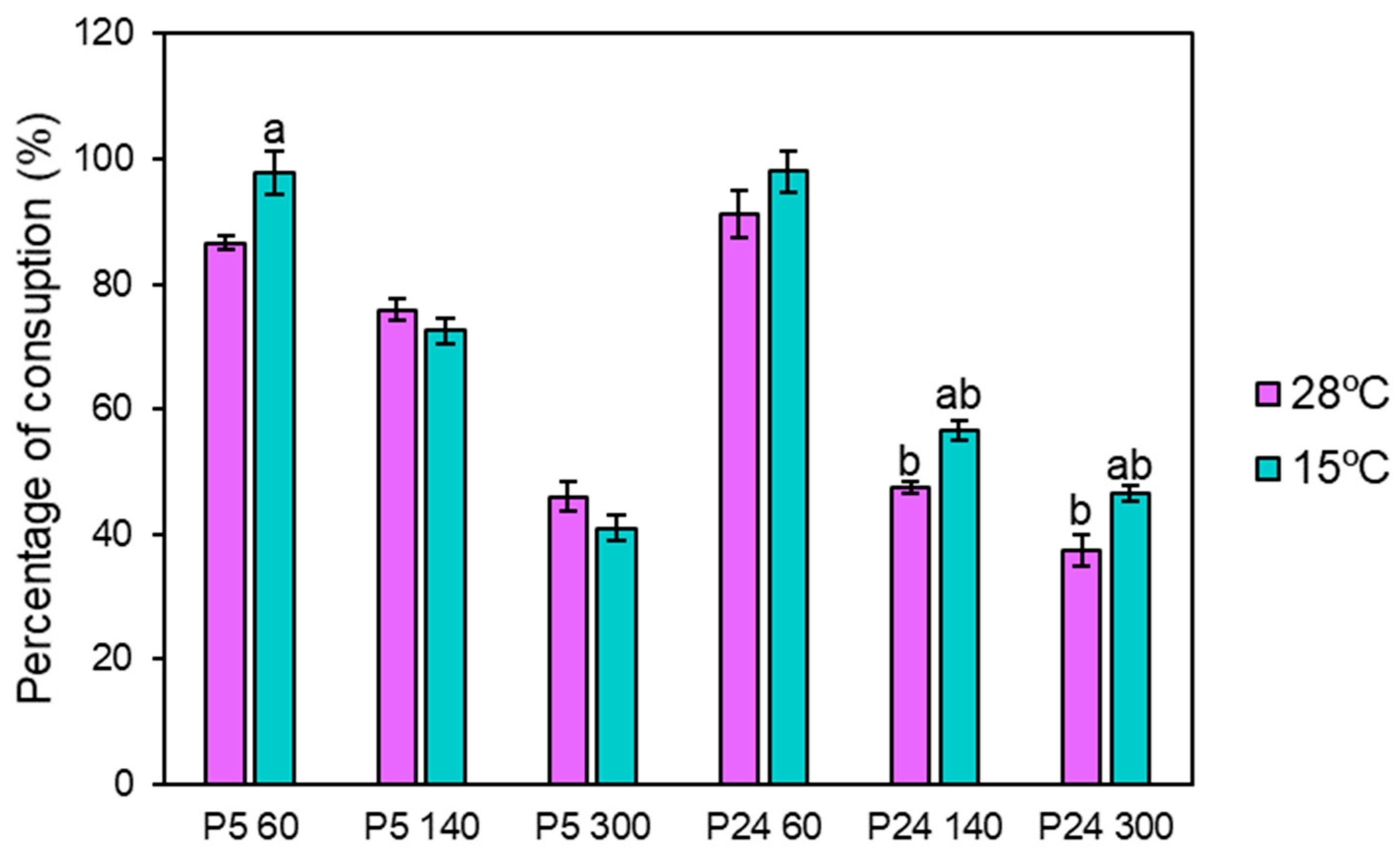
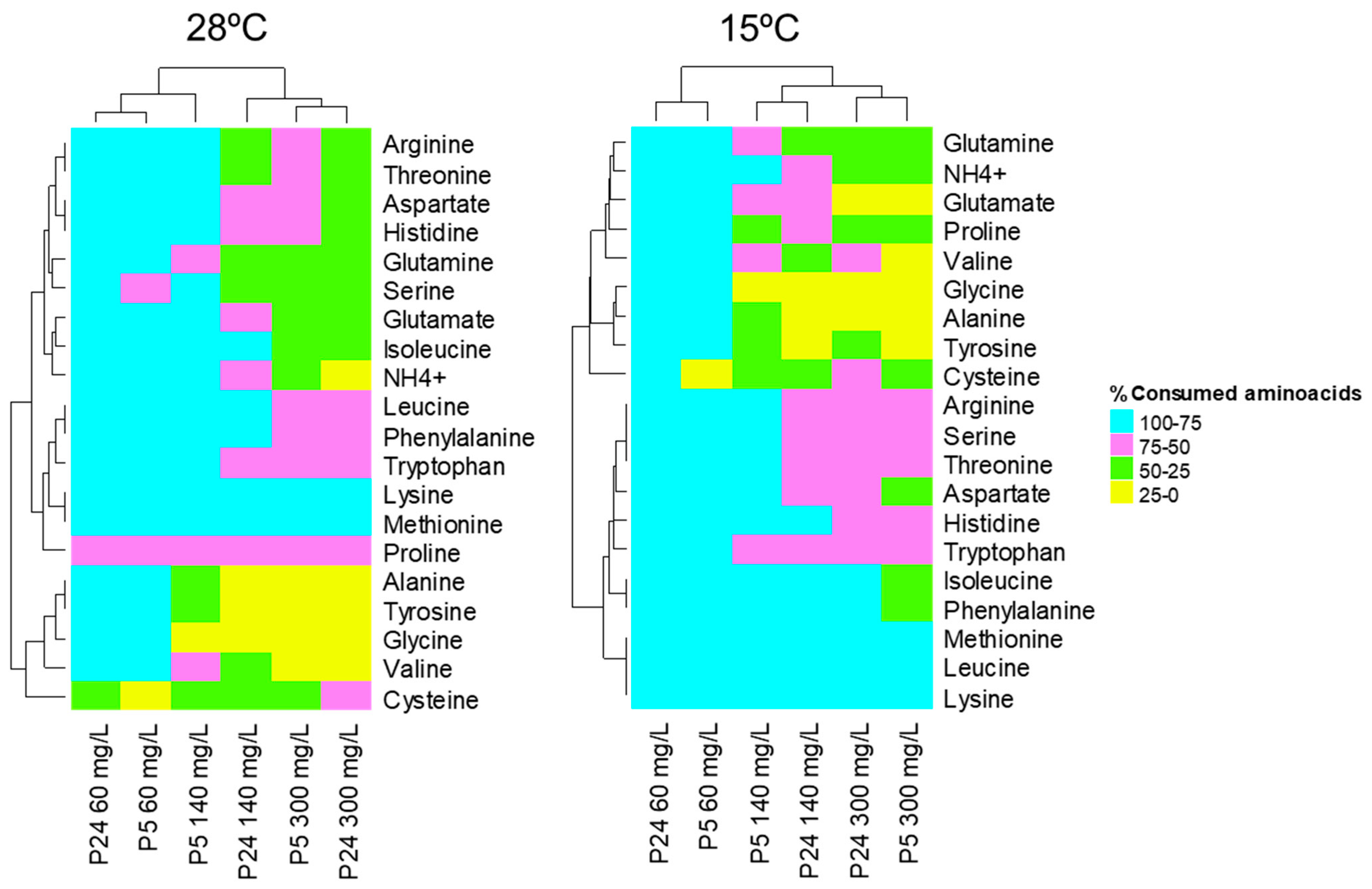
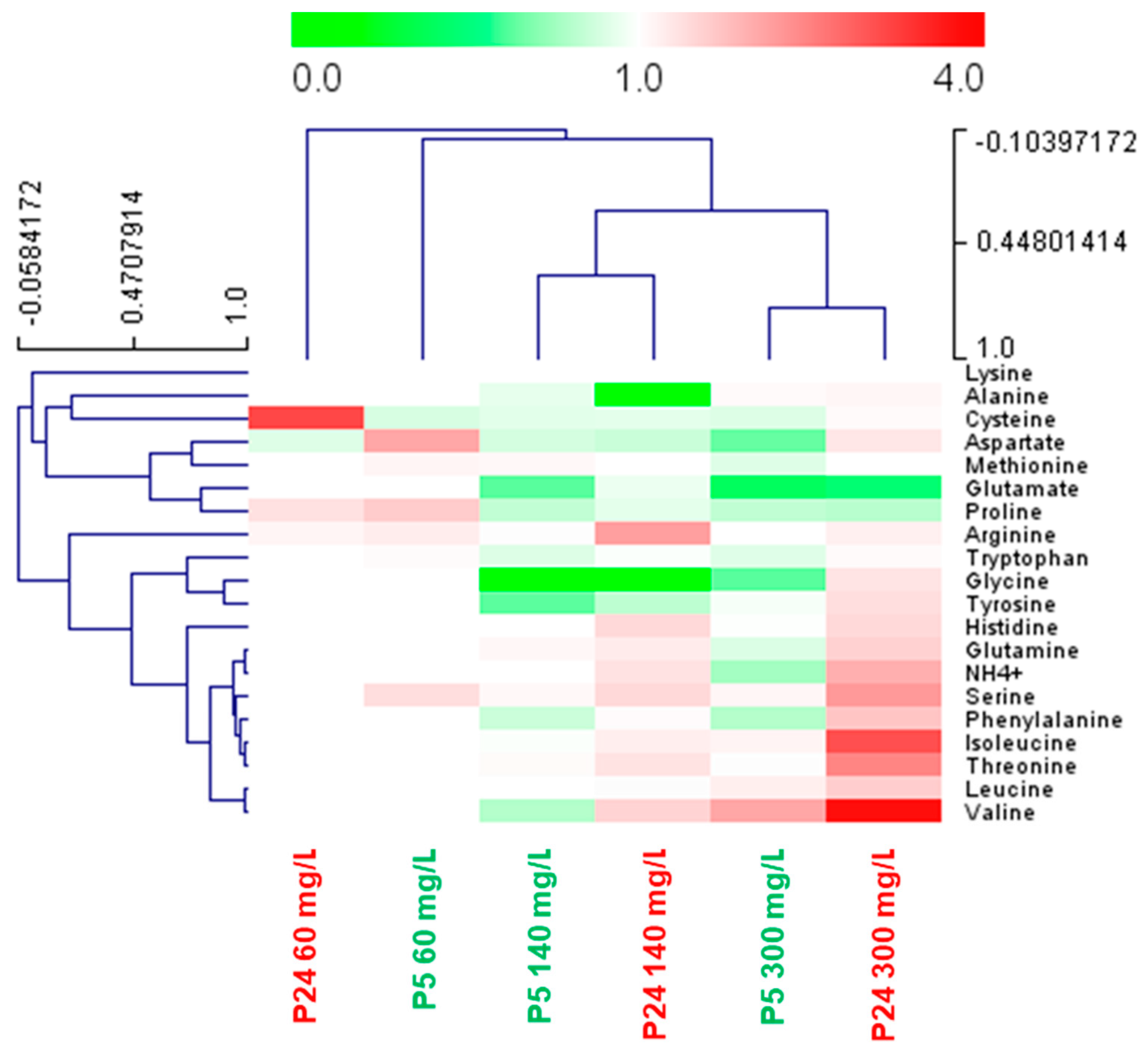
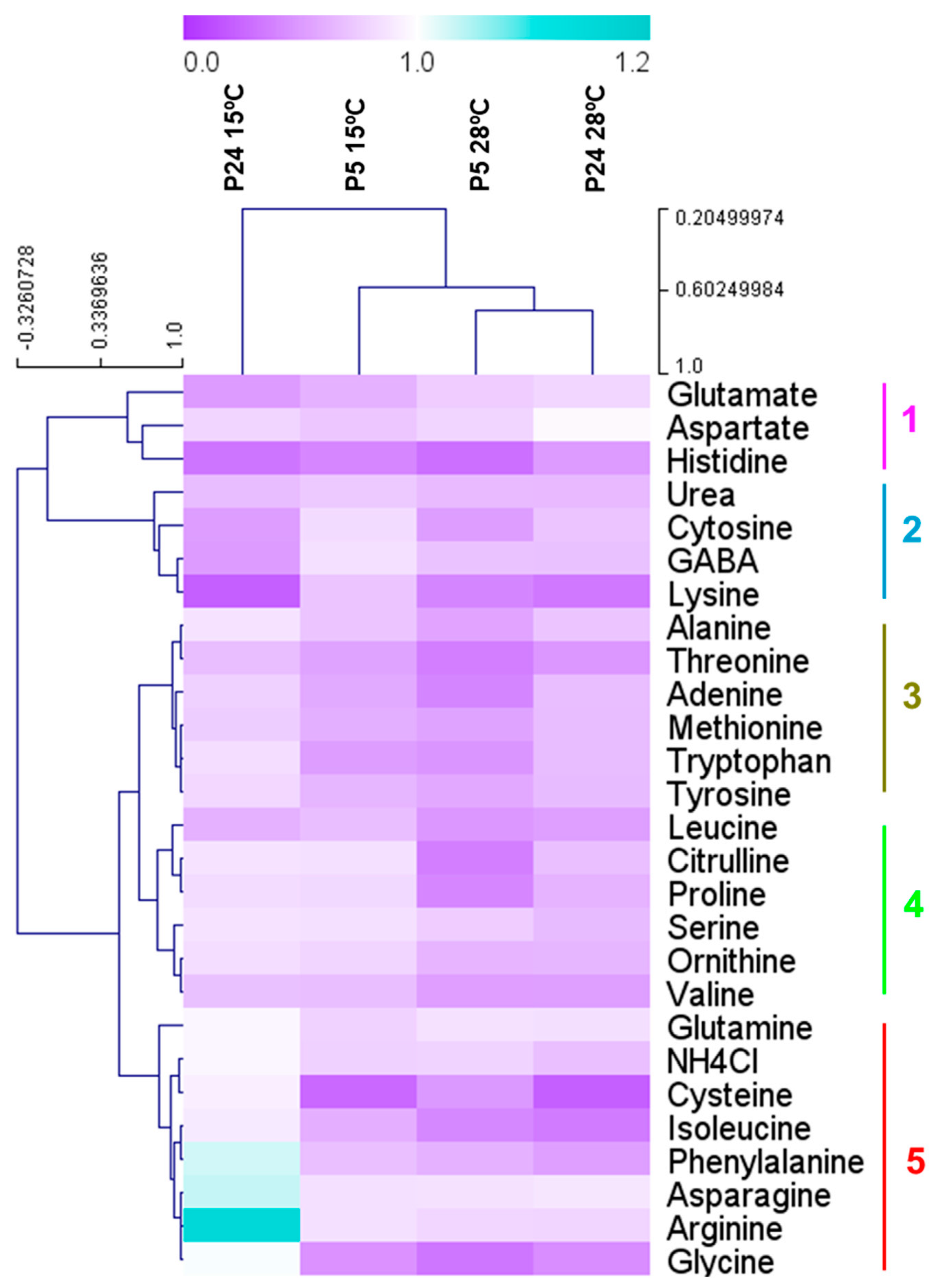
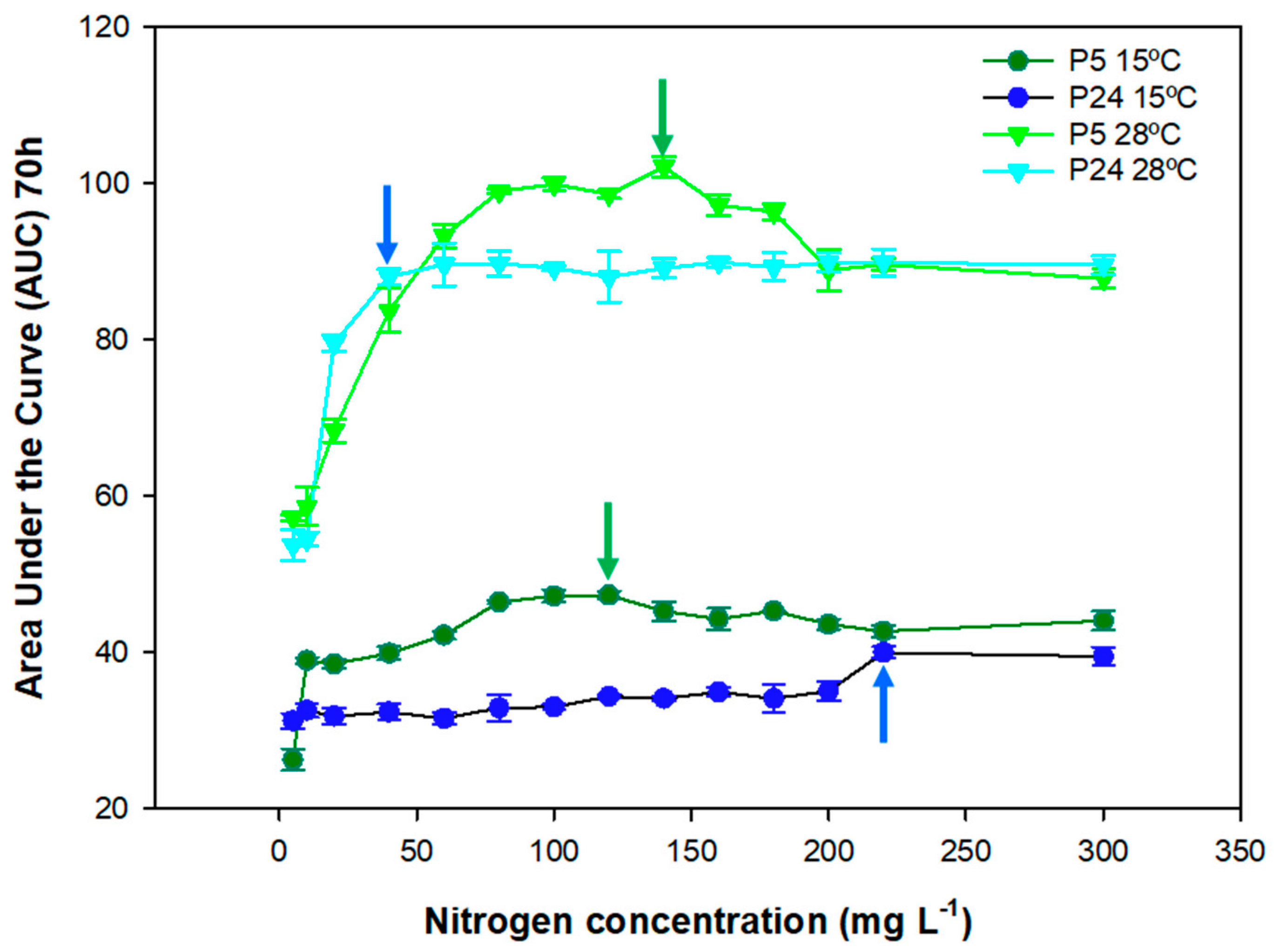
Nowadays, the wine industry carries out fermentations at low temperatures because this oenological practice clearly improves the aromatic complexity of the final wines. In addition, nitrogen content of the must also influences the quality of the wine. In this study, we carried out a phenotypic and fermentative analysis of two industrial wine Saccharomyces cerevisiae strains (P5 and P24) at 15 and 28 °C and three nitrogen concentrations (60, 140 and 300 mg N/L) in synthetic must. Our results show that both parameters, temperature and nitrogen, are interrelated and clearly determine the competitiveness of the wine strains and their ability to adapt at low temperatures. The best adapted strain at low temperatures decreased its competitiveness at lower nitrogen concentrations. In addition, our results show that it is not only the quantity of nitrogen transported that is important but also the quality of the nitrogen source used for wine yeast adaptation at low temperatures. The presence of some amino acids, such as arginine, branched chain amino acids, and some aromatic amino acids can improve the growth and fermentation activity of wine yeasts at low temperatures. These results allow us to better understand the basis of wine yeast adaptation to fermentation conditions, providing important information for winemakers to help them select the most appropriate yeast strain, thus reducing the economic costs associated with long and sluggish fermentations. The correlation between some amino acids and better yeast fermentation performance could be used in the future to design inactive dry yeast enriched in some of these amino acids, which could be added as a nutritional supplement during low temperature fermentations.
Keywords: low temperature; Saccharomyces; cell growth; fermentation rate; alcoholic fermentation; nitrogen preference; wine low temperature; Saccharomyces; cell growth; fermentation rate; alcoholic fermentation; nitrogen preference; wine