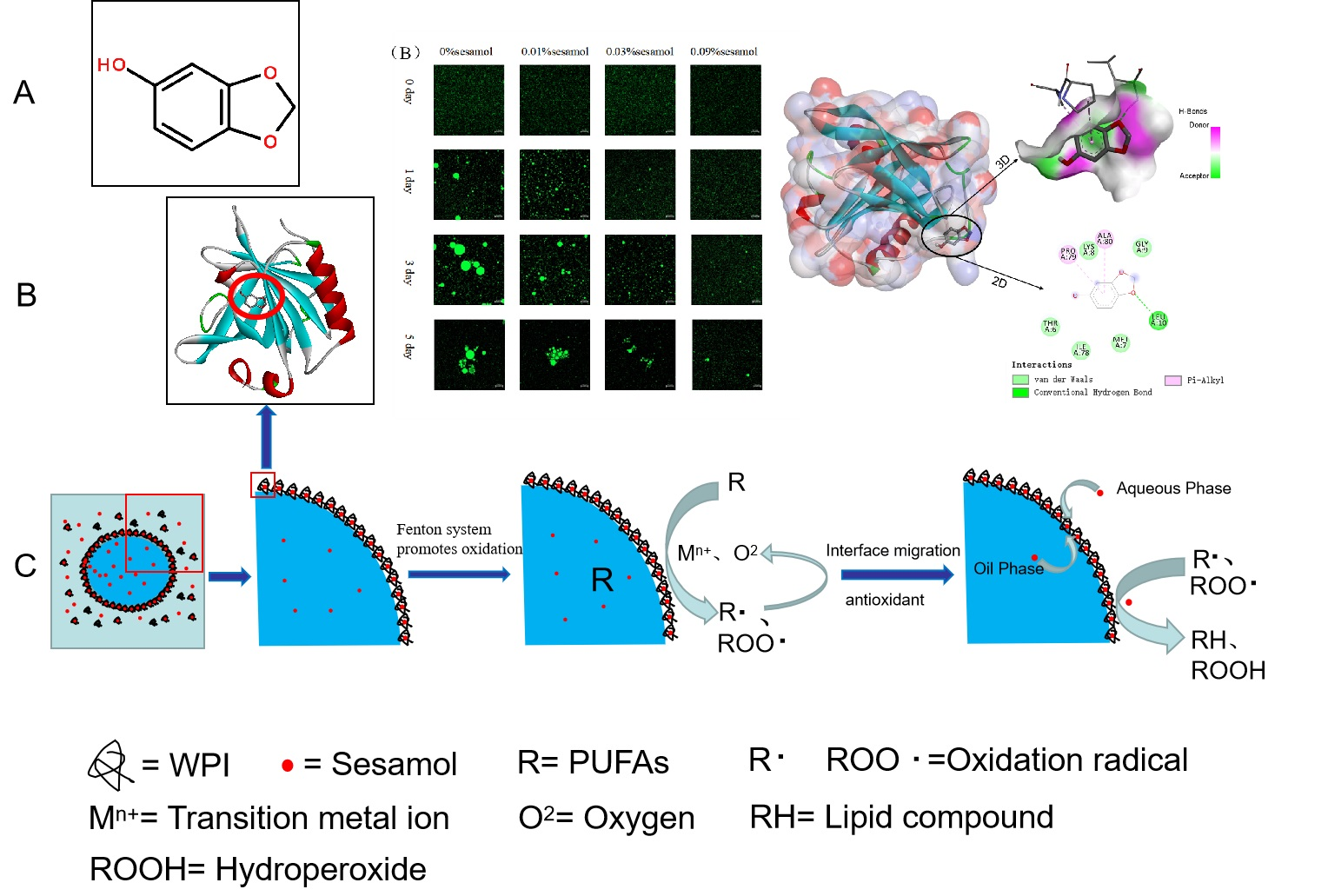
Improvement of Oxidative Stability of Fish Oil-in-Water Emulsions through Partitioning of Sesamol at the Interface


 ,
, Abstract
Share and Cite
Gao, Z.; Ji, Z.; Wang, L.; Deng, Q.; Quek, S.Y.; Liu, L.; Dong, X. Improvement of Oxidative Stability of Fish Oil-in-Water Emulsions through Partitioning of Sesamol at the Interface. Foods 2023, 12, 1287. https://doi.org/10.3390/foods12061287
Gao Z, Ji Z, Wang L, Deng Q, Quek SY, Liu L, Dong X. Improvement of Oxidative Stability of Fish Oil-in-Water Emulsions through Partitioning of Sesamol at the Interface. Foods. 2023; 12(6):1287. https://doi.org/10.3390/foods12061287
Chicago/Turabian StyleGao, Zhihui, Zhongyan Ji, Leixi Wang, Qianchun Deng, Siew Young Quek, Liang Liu, and Xuyan Dong. 2023. "Improvement of Oxidative Stability of Fish Oil-in-Water Emulsions through Partitioning of Sesamol at the Interface" Foods 12, no. 6: 1287. https://doi.org/10.3390/foods12061287
APA StyleGao, Z., Ji, Z., Wang, L., Deng, Q., Quek, S. Y., Liu, L., & Dong, X. (2023). Improvement of Oxidative Stability of Fish Oil-in-Water Emulsions through Partitioning of Sesamol at the Interface. Foods, 12(6), 1287. https://doi.org/10.3390/foods12061287