Article

Effects of Ultra-High Pressure Synergistic Enzymatic Hydrolysis on Flavor of Stropharia rugoso-annulata

School of Food Science and Engineering, Jilin Agricultural University, Changchun 130118, China
*
Author to whom correspondence should be addressed.
Foods 2023, 12(4), 848; https://doi.org/10.3390/foods12040848
Submission received: 18 December 2022 / Revised: 2 February 2023 / Accepted: 14 February 2023 / Published: 16 February 2023
(This article belongs to the Section Food Engineering and Technology)

Abstract

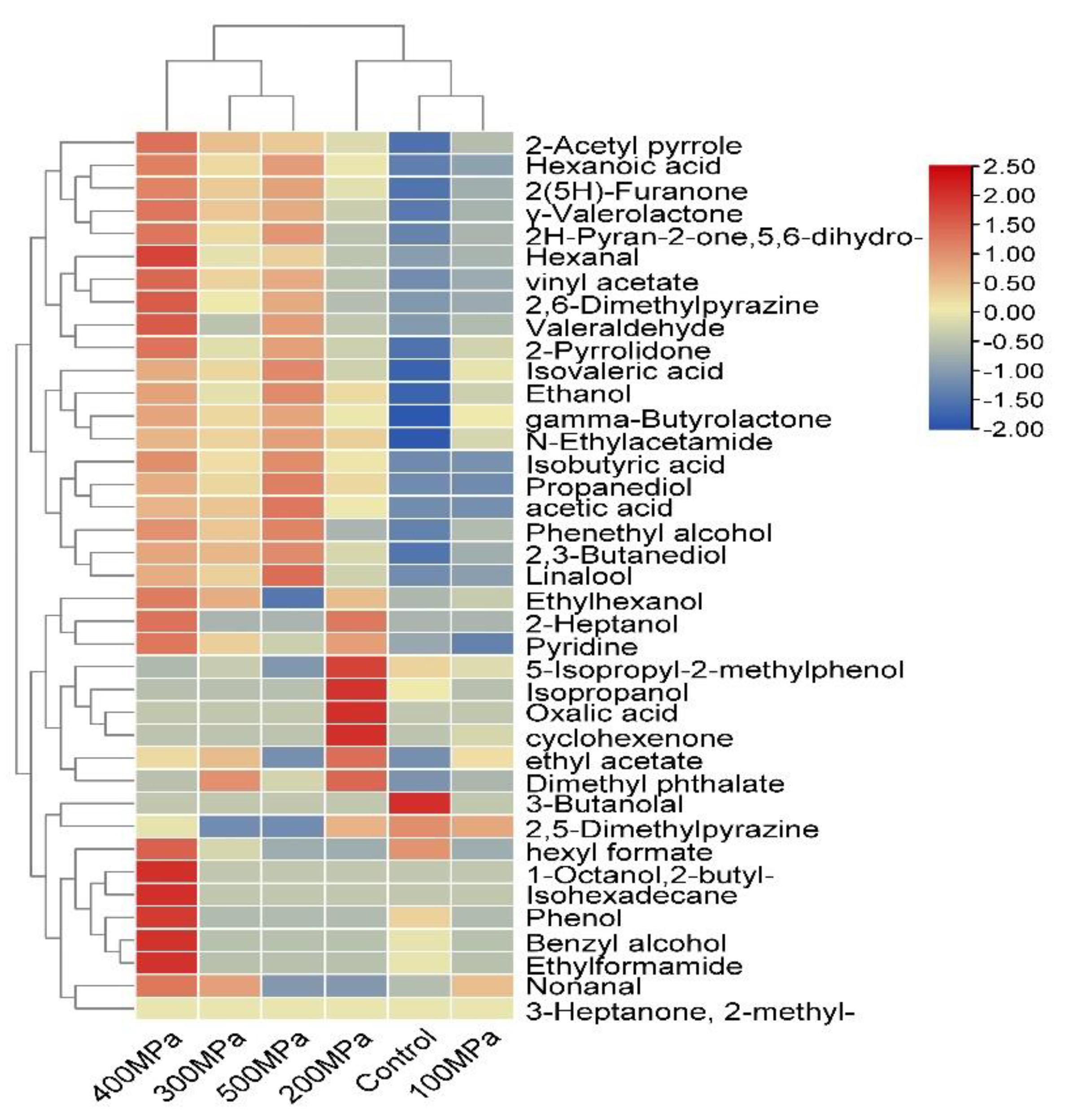
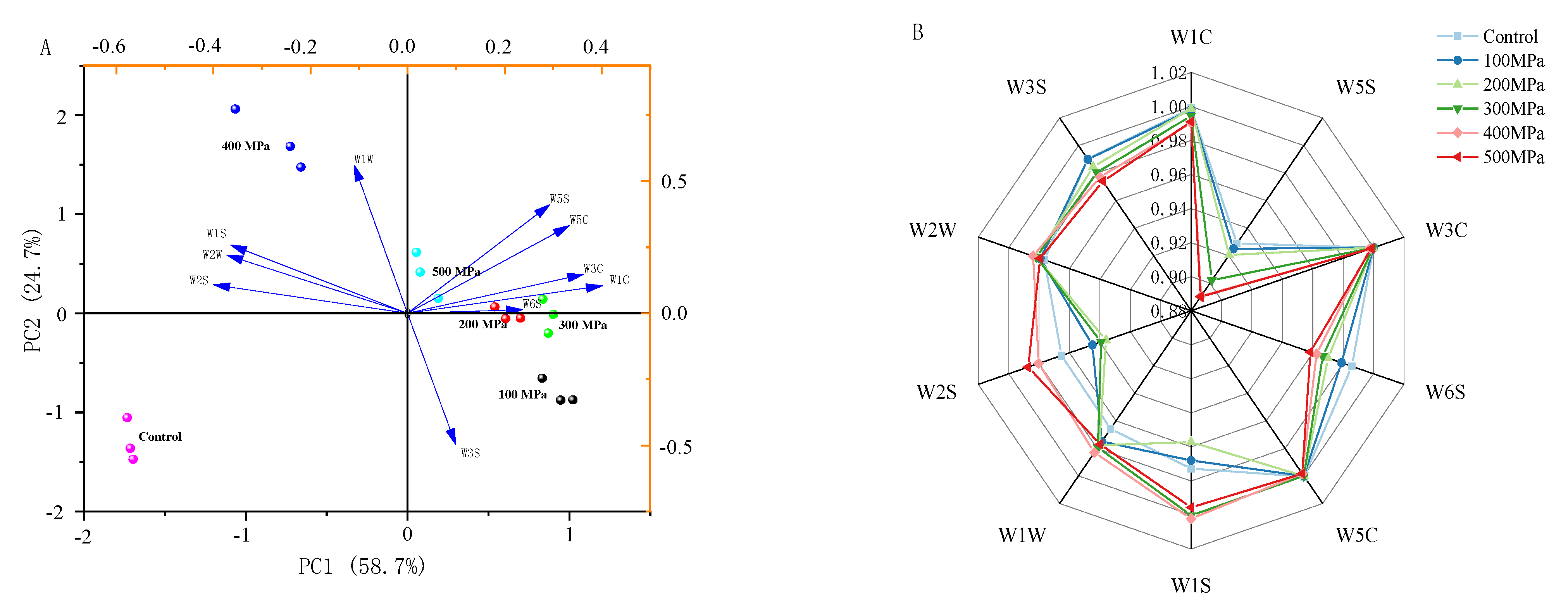
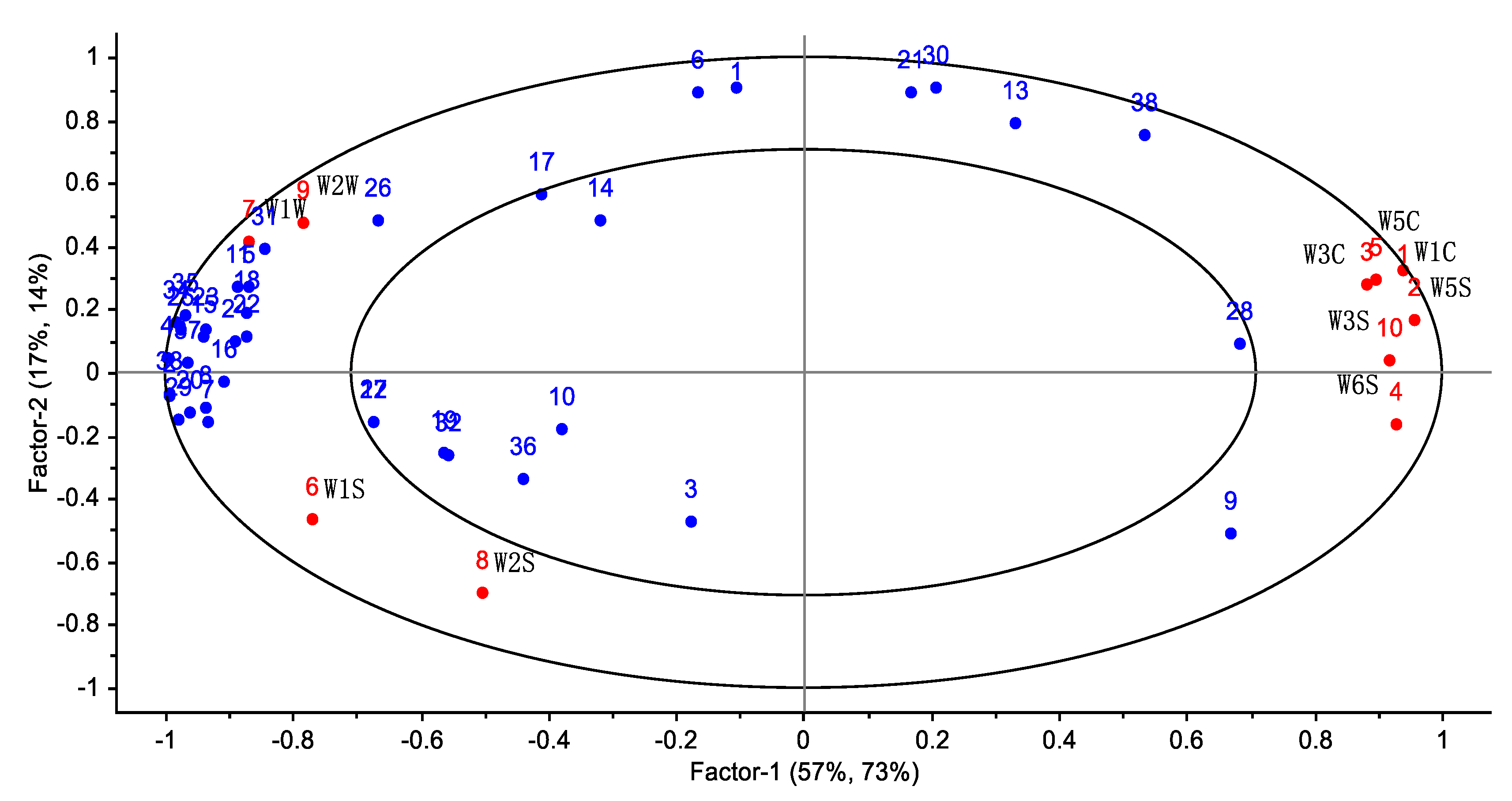
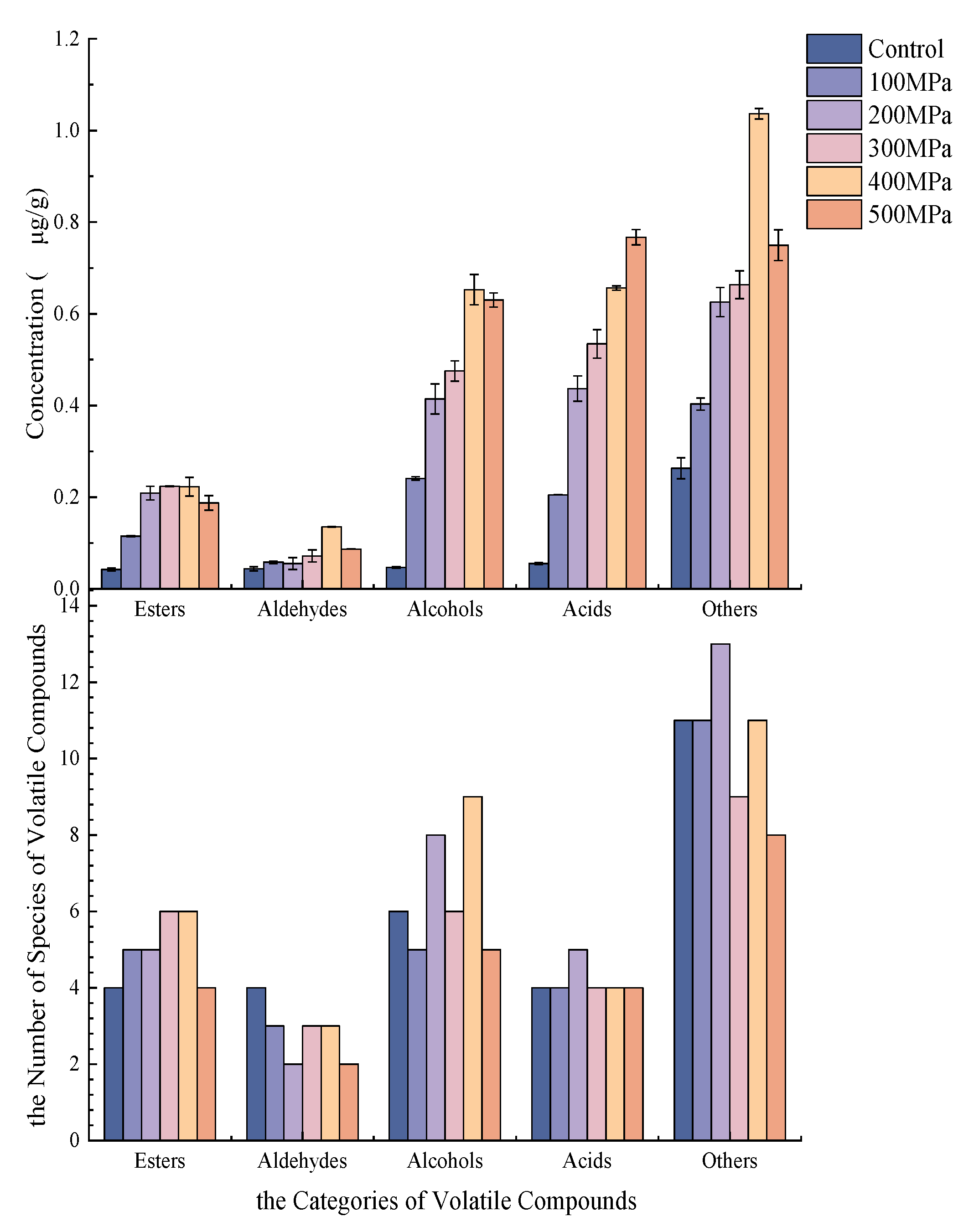
In this study, using gas chromatography-mass spectrometry (HS-SPME-GC-MS), electronic nose (E-nose), high performance liquid chromatography (HPLC), and electronic tongue (E-tongue) to analyze the effect of ultra-high pressure (UHP) synergistic enzymatic hydrolysis on the flavor compounds of enzymatic hydrolysates of S. rugoso-annulata. The results demonstrated that 38 volatile flavor substances were identified in the enzymatic hydrolysates of S. rugoso-annulata treated at atmospheric pressure and 100, 200, 300, 400, and 500 MPa, mainly 6 esters, 4 aldehydes, 10 alcohols, 5 acids, and 13 other volatile flavor substances, and the most kinds of flavor substances reached 32 kinds when the pressure was 400 MPa. E-nose can effectively distinguish the overall changes of enzymatic hydrolysates of S. rugoso-annulata treated with atmospheric pressure and different pressures. There was 1.09 times more umami amino acids in the enzymatic hydrolysates at 400 MPa than in the atmospheric pressure enzymatic hydrolysates and 1.11 times more sweet amino acids at 500 MPa than in the atmospheric pressure enzymatic hydrolysates. The results of the E-tongue indicate that the UHP treatment increased umami and sweetness and reduced bitterness, which was also confirmed by the results of amino acid and 5′-nucleotide analysis. In conclusion, the UHP synergistic enzymatic hydrolysis can effectively improve the overall flavor of the enzymatic hydrolysates of S. rugoso-annulata; this study also lays the theoretical foundation for the deep processing and comprehensive utilization of S. rugoso-annulata.
Keywords: Stropharia rugoso-annulata; ultra-high pressure; enzymatic hydrolysates; electronic nose; electronic tongue; flavor Stropharia rugoso-annulata; ultra-high pressure; enzymatic hydrolysates; electronic nose; electronic tongue; flavor