Article

Predictive Modeling Analysis for the Quality Indicators of Matsutake Mushrooms in Different Transport Environments

1
Beijing Laboratory of Food Quality and Safety, College of Engineering, China Agricultural University, Beijing 100083, China
2
College of Food Science, Tibet Agricultural and Animal Husbandry College, Linzhi 860000, China
*
Author to whom correspondence should be addressed.
Foods 2023, 12(18), 3372; https://doi.org/10.3390/foods12183372
Submission received: 26 July 2023 / Revised: 4 September 2023 / Accepted: 5 September 2023 / Published: 8 September 2023
(This article belongs to the Special Issue Recent Advances in the Food Safety and Quality Management Techniques)

Abstract

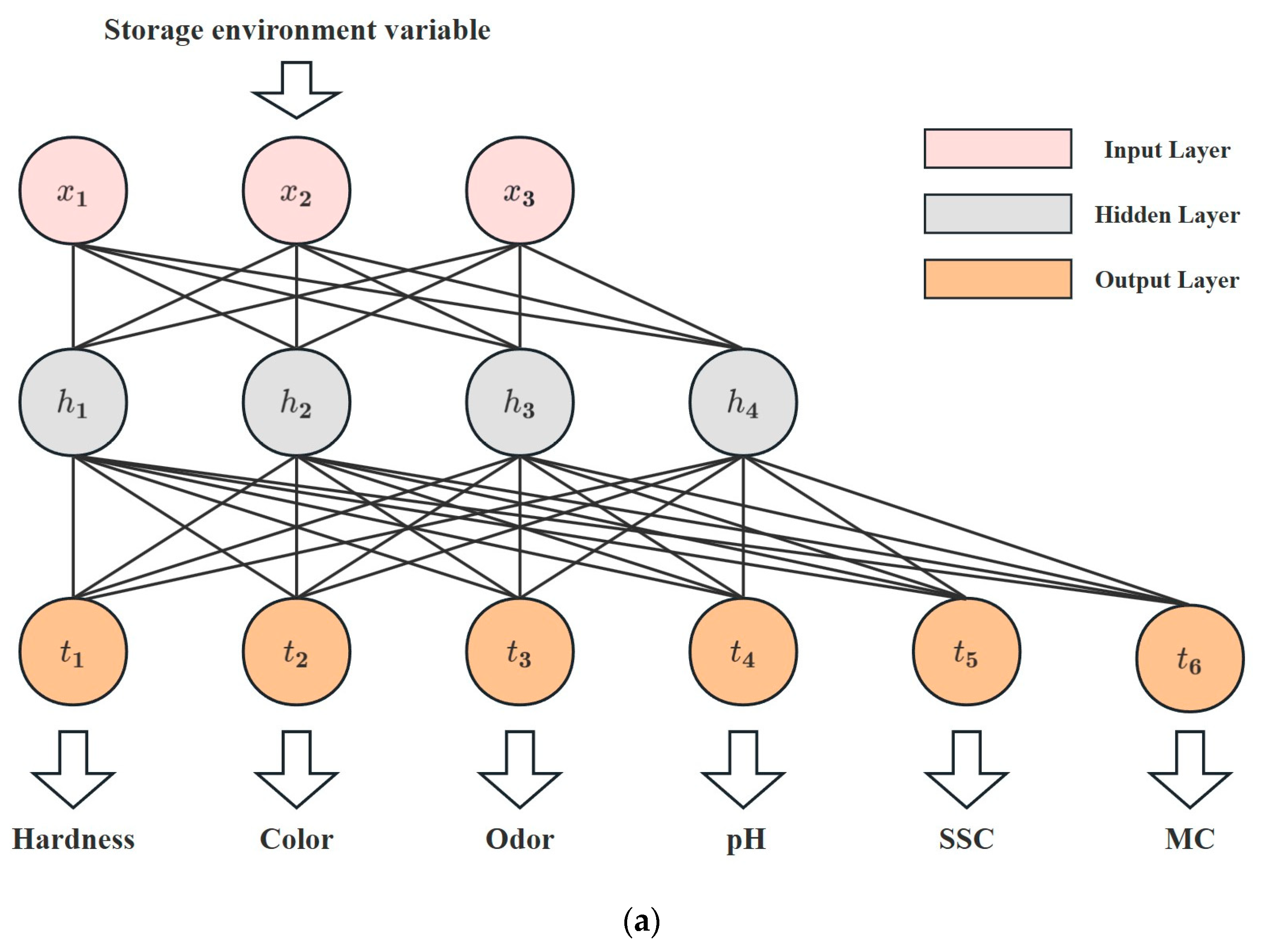
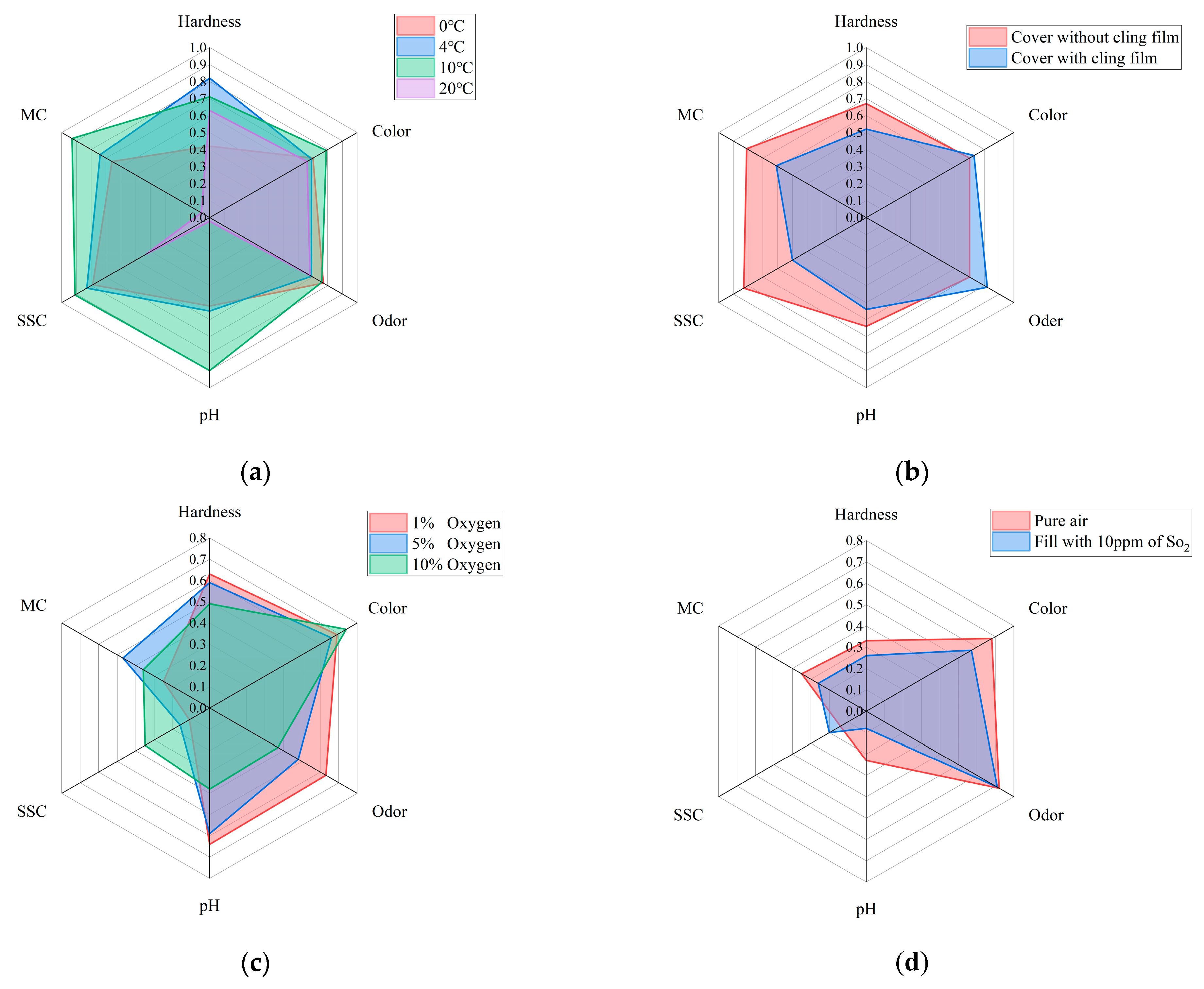
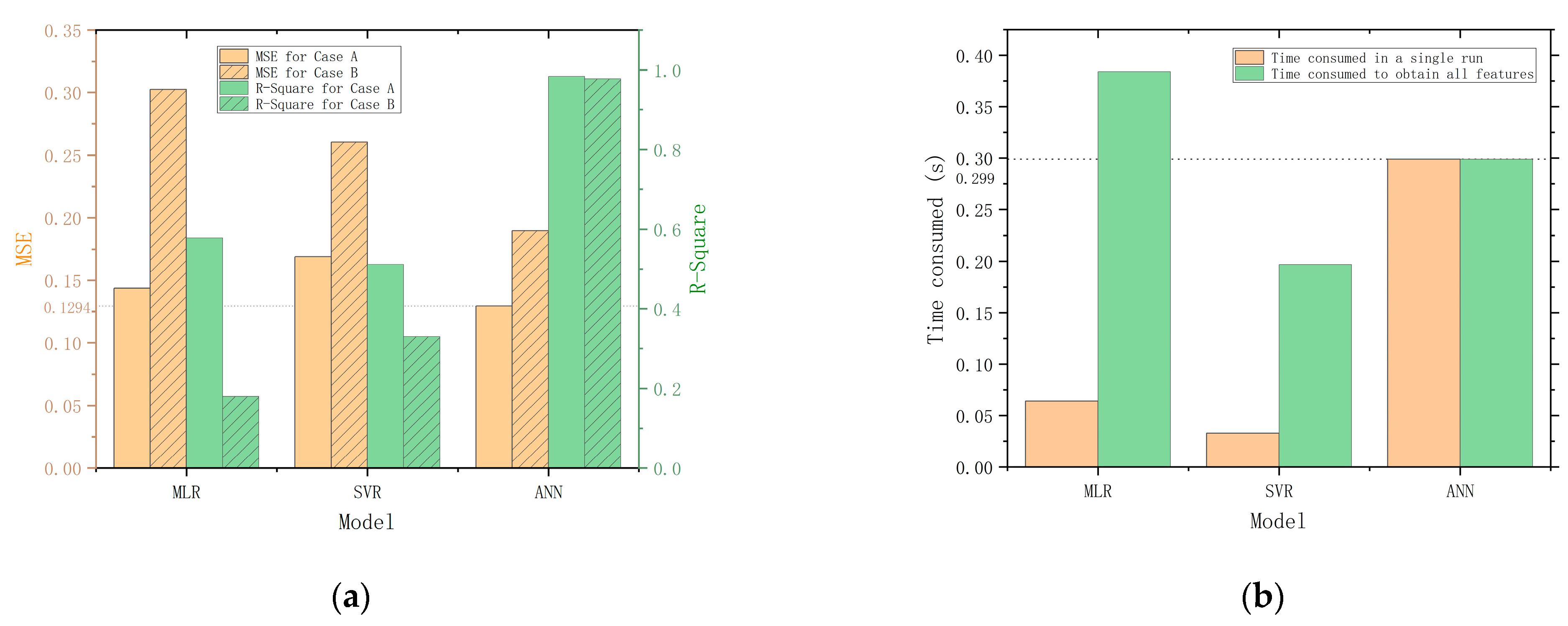
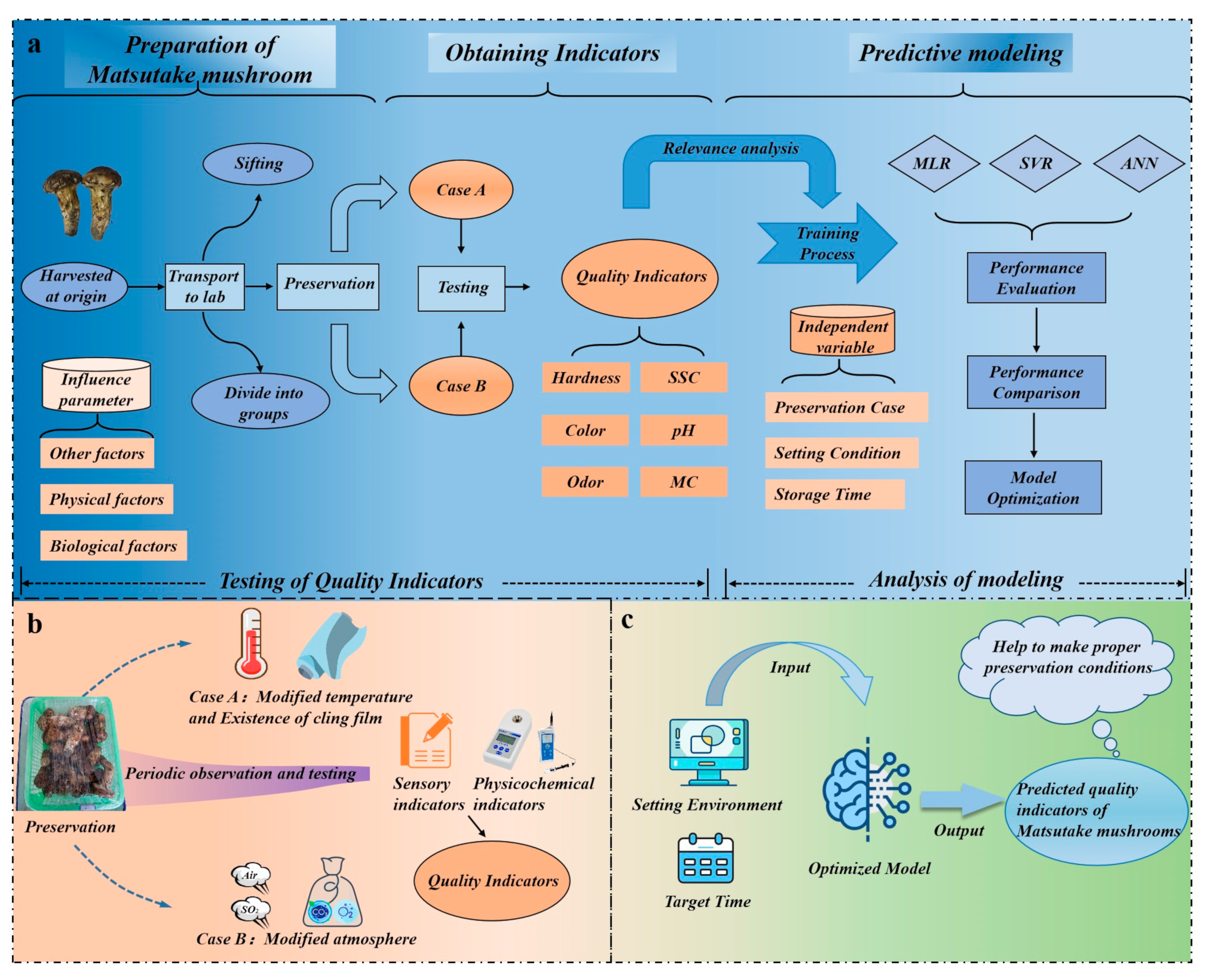
Matsutake mushrooms, known for their high value, present challenges due to their seasonal availability, difficulties in harvesting, and short shelf life, making it crucial to extend their post-harvest preservation period. In this study, we developed three quality predictive models of Matsutake mushrooms using three different methods. The quality changes of Matsutake mushrooms were experimentally analyzed under two cases (case A: Temperature control and sealing measures; case B: Alteration of gas composition) with various parameters including the hardness, color, odor, pH, soluble solids content (SSC), and moisture content (MC) collected as indicators of quality changes throughout the storage period. Prediction models for Matsutake mushroom quality were developed using three different methods based on the collected data: multiple linear regression (MLR), support vector regression (SVR), and an artificial neural network (ANN). The comparative results reveal that the ANN outperforms MLR and SVR as the optimal model for predicting Matsutake mushroom quality indicators. To further enhance the ANN model’s performance, optimization techniques such as the Levenberg–Marquardt, Bayesian regularization, and scaled conjugate gradient backpropagation algorithm techniques were employed. The optimized ANN model achieved impressive results, with an R-Square value of 0.988 and an MSE of 0.099 under case A, and an R-Square of 0.981 and an MSE of 0.164 under case B. These findings provide valuable insights for the development of new preservation methods, contributing to the assurance of a high-quality supply of Matsutake mushrooms in the market.
Keywords: Matsutake mushroom; cold chain; gas conditioning; food control; quality prediction Matsutake mushroom; cold chain; gas conditioning; food control; quality prediction