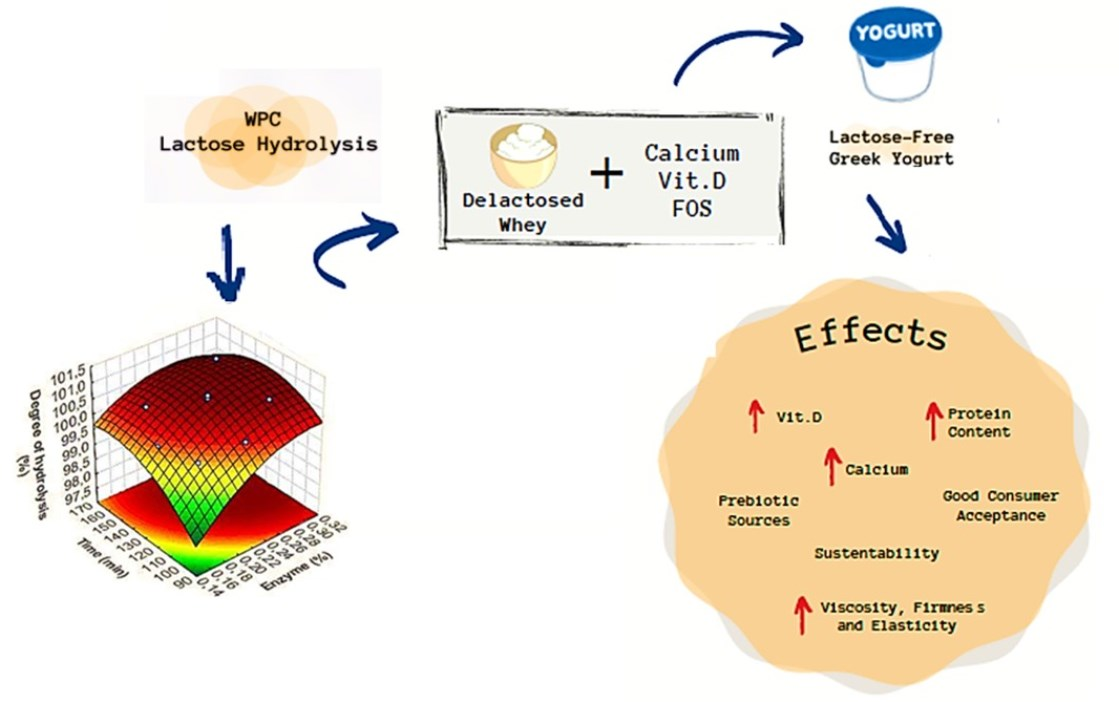
Application of Lactose-Free Whey Protein to Greek Yogurts: Potential Health Benefits and Impact on Rheological Aspects and Sensory Attributes

Abstract
Share and Cite
da Silva, A.T.; de Lima, J.J.; Reis, P.; Passos, M.; Baumgartner, C.G.; Sereno, A.B.; Krüger, C.C.H.; Cândido, L.M.B. Application of Lactose-Free Whey Protein to Greek Yogurts: Potential Health Benefits and Impact on Rheological Aspects and Sensory Attributes. Foods 2022, 11, 3861. https://doi.org/10.3390/foods11233861
da Silva AT, de Lima JJ, Reis P, Passos M, Baumgartner CG, Sereno AB, Krüger CCH, Cândido LMB. Application of Lactose-Free Whey Protein to Greek Yogurts: Potential Health Benefits and Impact on Rheological Aspects and Sensory Attributes. Foods. 2022; 11(23):3861. https://doi.org/10.3390/foods11233861
Chicago/Turabian Styleda Silva, Agatha Transfeld, Jair José de Lima, Priscila Reis, Maurício Passos, Catiucia Giraldi Baumgartner, Aiane Benevide Sereno, Cláudia Carneiro Hecke Krüger, and Lys Mary Bileski Cândido. 2022. "Application of Lactose-Free Whey Protein to Greek Yogurts: Potential Health Benefits and Impact on Rheological Aspects and Sensory Attributes" Foods 11, no. 23: 3861. https://doi.org/10.3390/foods11233861
APA Styleda Silva, A. T., de Lima, J. J., Reis, P., Passos, M., Baumgartner, C. G., Sereno, A. B., Krüger, C. C. H., & Cândido, L. M. B. (2022). Application of Lactose-Free Whey Protein to Greek Yogurts: Potential Health Benefits and Impact on Rheological Aspects and Sensory Attributes. Foods, 11(23), 3861. https://doi.org/10.3390/foods11233861