
Perspective

The Terthiophene Structural Motif: A Biological Asset or a Simple Ornament?

Institute of Chemistry, University of Neuchatel, Avenue de Bellevaux 51, CH-2000 Neuchatel, Switzerland
Inorganics 2026, 14(8), 201; https://doi.org/10.3390/inorganics14080201
Submission received: 30 June 2026 / Revised: 21 July 2026 / Accepted: 24 July 2026 / Published: 28 July 2026
(This article belongs to the Special Issue Feature Papers in Bioinorganic Chemistry 2026)

Abstract

The clinical advancement of the ruthenium complex [bis(4,4′-dimethyl-2,2′-bipyridin){2-(2,2′:5′,2″-terthiophen-5-yl)imidazo[4,5-f][1,10]phenanthroline}ruthenium]dichloride (TLD-1433) has provided a breath of fresh air to the bioinorganic chemistry of metal-based complexes, especially those developed around Ru(II). The success of TLD-1433 resides in its dual metal–ligand photodynamic therapy mechanism, which allows for the treatment of hypoxic cancer. The presence of α-terthiophene at the periphery of the polypyridyl complex positively modified the photophysical property of the ruthenium complex; however, it is unclear if it possesses other favorable attributes. Considering the tremendous structural and photophysical diversity of terthiophene derivatives (14 isomers), as well as α-terthiophene’s recognized nematocidal activity, the following questions can be asked: What is the main role of α-terthiophene in TLD-1433? Is it to act as a pharmacophoric element, a photo-physical modulator, or a simple structural motif? Can a terthiophene motif be beneficial for other metal-based or organic drugs?

Graphical Abstract

1. Introduction

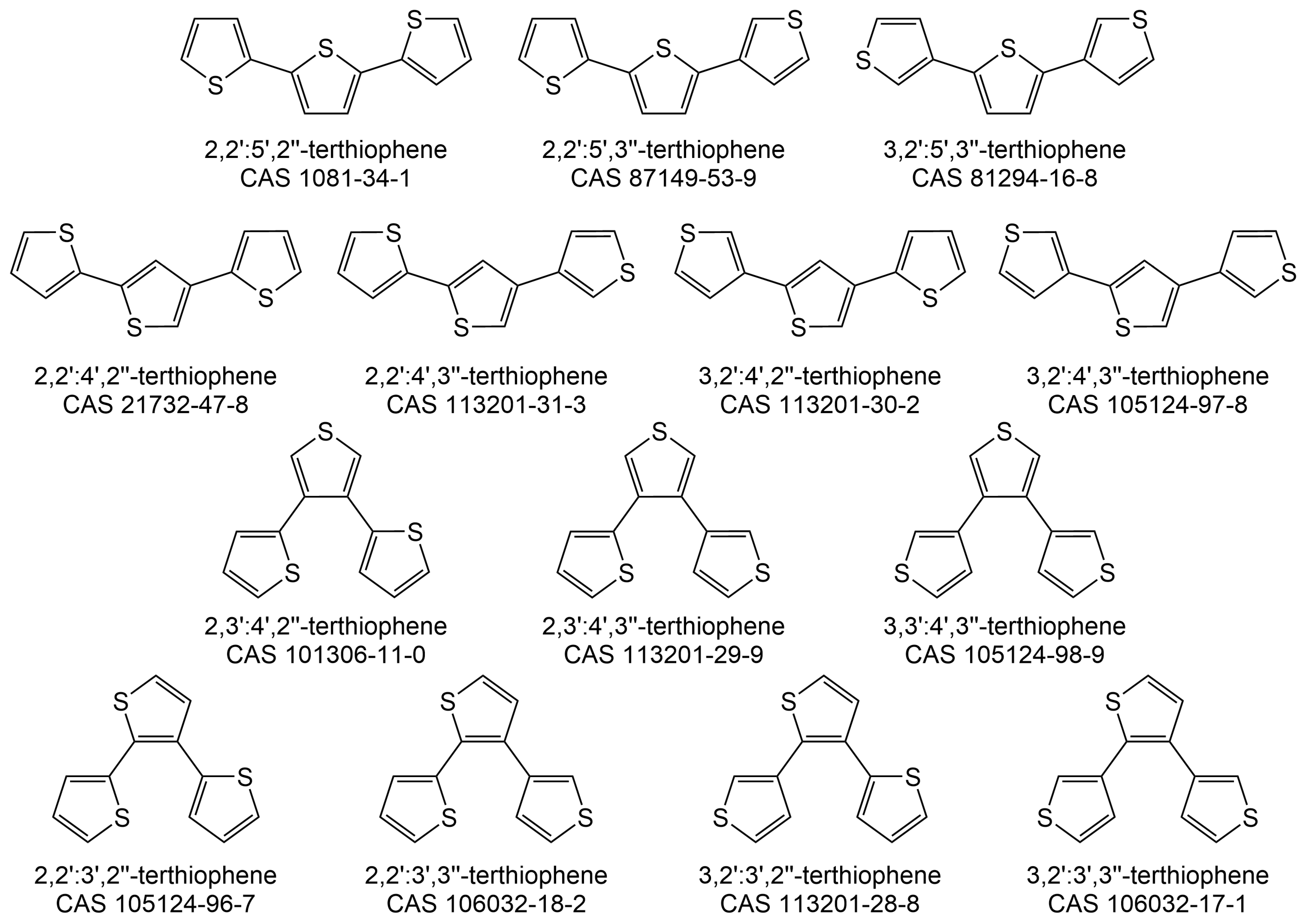
In the 1940s, a new class of natural products was isolated, identified and characterized by Zechmeister [1,2]. Based on the melting point, UV–visible spectrum, and elemental analysis (C12H8S3), the yellow crystalline compound extracted from African Marigold petals was identified as α-terthienyl [3]. Nowadays, α-terthienyl is more commonly known as α-terthiophene, and among the 14 isomers of terthiophene (Figure 1), 2,2′:5′,2″-terthiophene (α-terthiophene, CAS 1081-34-1) is not only the particular natural product isolated by Zechmeister 85 years ago; it is also the most-studied isomer of this fascinating family [1].
In plants, α-terthiophene was rapidly identified as a nematode repellant, protecting roots from external attacks [4,5,6,7]. Since then, other interesting properties have emerged, and biological tests have been performed by several groups to better understand the biological mechanism of action [8,9,10,11] and to establish the real value of this naturally occurring tris-thiophene conjugated molecule. The aromaticity of the thiophene ring provides stability and influences the electronic properties [12]. And in several terthiophene isomers, the three thiophene moieties can adopt a coplanar arrangement to maximize conjugation along the π-system [13], which is reflected in their UV–visible spectrum and their absorption maxima (λmax). These characteristics have led to terthiophene being put forward as a prospective functional group, being incorporated into opto-electronic materials and, to some extent, into organic and metal-based drugs.
In this perspective review, we want to emphasize the biological appeal of this pharmacophoric element and highlight its potential in drug design. As opposed to conjugated polymers [14], organic electronics [15], and materials [16], in which terthiophene moieties have been studied and exploited for decades, the introduction of terthiophene into drug design has scarcely been studied, despite being an extremely popular natural product in the 1980s. However, this can change rapidly, considering the clinical success of TLD-1433, in which terthiophene groups seem to be key players (see [17] and other recent publications, which will be discussed in other sections). Therefore, we want to focus this review on the terthiophene molecules and derivatives that have shown biological activity, providing, with selected examples, evidence that the terthiophene functional group should be considered a valuable pharmacophoric element in drug design [18], as opposed to simply an electronic modulating ornament.

2. The Terthiophene Molecules

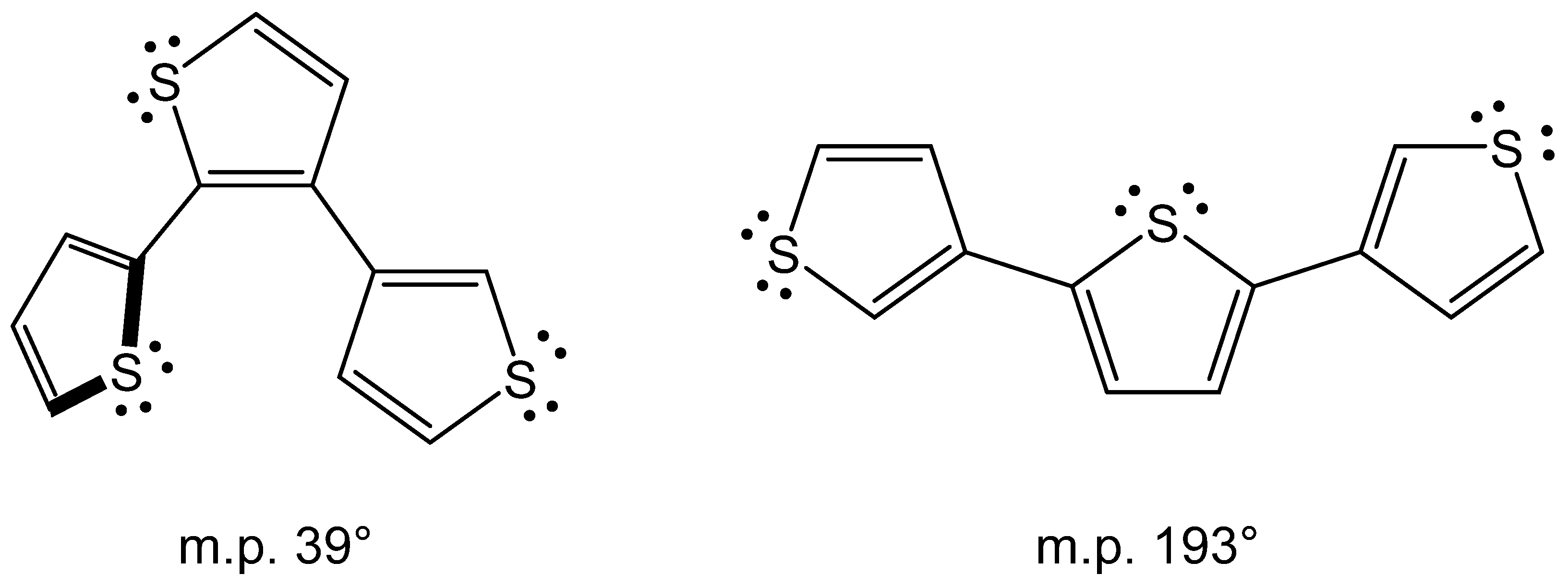
All 14 isomers of terthiophene have been synthesized, isolated, and characterized, mostly by Kagan and his coworkers [19,20,21,22,23], but also by other groups [24,25,26,27,28]. These organic molecules have been prepared in good yields from standard organic reactions, with the lowest yield being 61% for the 3,2′:4′,2″-terthiophene isomer [22]. While some isomers are potentially planar in the solid state, others, due to steric constraints, are not, which is further reflected in their physical properties (Table 1). Another factor influencing these physical properties is the relative position of the two peripheral sulfur atoms, which alters the polarity of the molecule, as well as the possibility of forming intramolecular (position 2) and intermolecular (position 3) or only intermolecular C–H···S interactions (Figure 2). These factors also explain the large difference in melting point (m.p.) between the 3,2′:5′,3″-terthiophene (≈193 °C) (no intramolecular C–H···S interaction, elongated and conjugated structure, with strong polarity) [19] and the 2,2′:3′,3″-terthiophene isomer (38–39 °C) (compact, non-planar and less polar) [23].
Electronically, conjugation between the three connected thiophene groups is the main factor influencing the UV–visible spectra and electronic transitions associated with the terthiophene isomers (Table 1), with the 2,2′:5′,2″-terthiophene isomer showing the highest wavelength maximum (λmax = 350 nm) as it is fully conjugated. As previously mentioned, the introduction of multiple consecutive units of thiophene into organic electronic materials has been studied extensively [15], being the focus of intensive research over the last 30 years [29]; however, exploiting the electronic properties of terthiophene for biological applications has largely been unexplored in the 21st century, despite the tremendous popularity of terthiophene and terthiophene derivatives in the 70s and 80s.
Indeed, the nematocidal activity of plant extracts containing α-terthiophene was first acknowledged in 1938 by Tyler [30], and later by Uhlenbroek and Bijloo in the 1960s [4]. However, the discovery of a mechanism linked to the phototoxic activity of α-terthiophene by Gommers was serendipitous; a Petri dish containing nematodes exposed to α-terthiophene was misplaced in a drawer [1]. Then, light activation was identified as the main mode of action of α-terthiophene, involving a singlet oxygen generation mechanism [31,32]. Following this discovery, the biological effect of α-terthiophene in the presence or absence of light was extensively studied on different targets (DNA, protein, bacteria, fungi, virus, nematode, fish, and plant). A critical review in 1991 by Kagan provides an exhaustive recap of these 70s and 80s biological studies; therefore, we will mainly focus on the most recent studies—i.e., those published in the 21st century.

3. Biological Activity of Terthiophenes and Terthiophene Derivatives

As previously discussed, the biological activity of α-terthiophene has been extensively studied in the 20th century. The first biological targets were identified as nematodes, i.e., plants producing terthiophene derivatives to protect roots from nematicidal aggressions [30]. Several studies have shown that α-terthiophene needs UV-A irradiation (320–400 nm) to fully deploy its arsenal via an oxygen-dependent mechanism [33]. 2,2′:5′,2″-Terthiophene possesses a strong absorbance peak at 350 nm (Table 1), with an emission in water at 412 nm after excitation [34]. Cellular membranes appear to be the main accumulation site for α-terthiophene [35,36]; however, DNA and protein interactions have also been identified as possible targets [37,38]. Inside membranes, upon irradiation, singlet oxygen reacts with fatty acids, thus destroying the membrane.
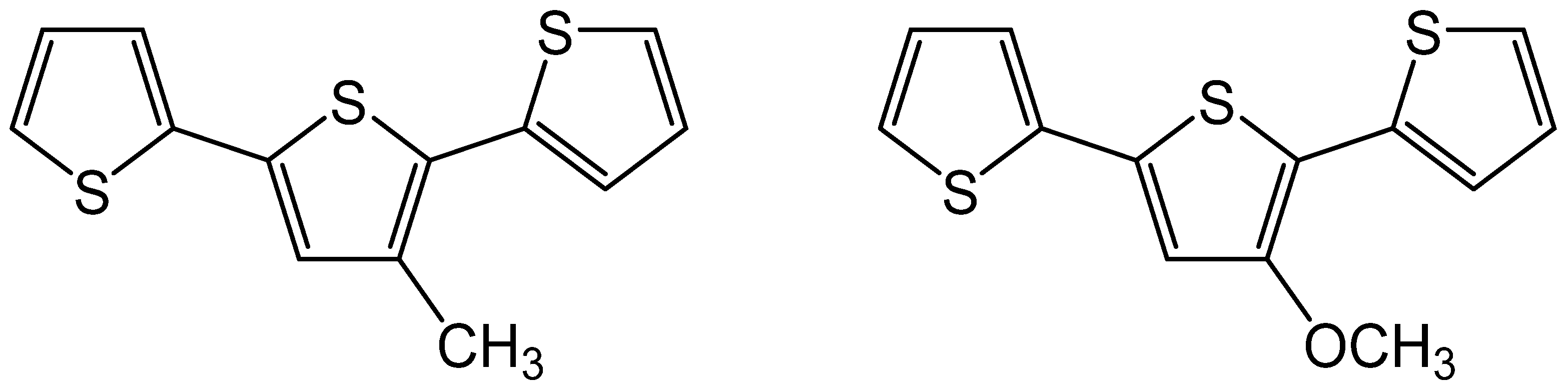
Several plant extracts composed of α-terthiophene and terthiophene derivatives have been tested against fungal infections and yeasts [39,40,41]. In the dark, these derivatives appear to be harmless; however, under UV-A irradiation, they show antifungal activity. Similarly, terthiophene-functionalized derivatives have been tested as antifungal agents [42]. The 3′-position of the central thiophene ring appeared to generate more active compounds (Figure 3), but with limited data, it might be hazardous to try to rationalize this observation.
Indeed, peripheral functionalized α-terthiophenes with pyridyl and pyridinium groups in position 5 have shown photodynamic antibacterial activity [43]. The α-terthiophene derivatives were incorporated into pegylated matrices, and the therapeutic dressing was applied directly on wounds. The multitask materials provide rapid hemostasis and, in case of bacterial infection, offer the possibility of illuminating the wound for localized photodynamic antibacterial treatments. Other peripheral functionalized α-terthiophene derivatives were evaluated for anti-human immunodeficiency virus activity [35,36]. Interestingly, it was observed that the most active compound was, in fact, α-terthiophene alone, suggesting that the benefit of α-terthiophene functionalization was unclear. Nevertheless, it was also concluded that UV-A activation was essential for antiviral activity, confirming that, so far, the best biological application for α-terthiophene, α-oligothiophene, and α-terthiophene derivatives is apparently in photodynamic therapy (PDT).
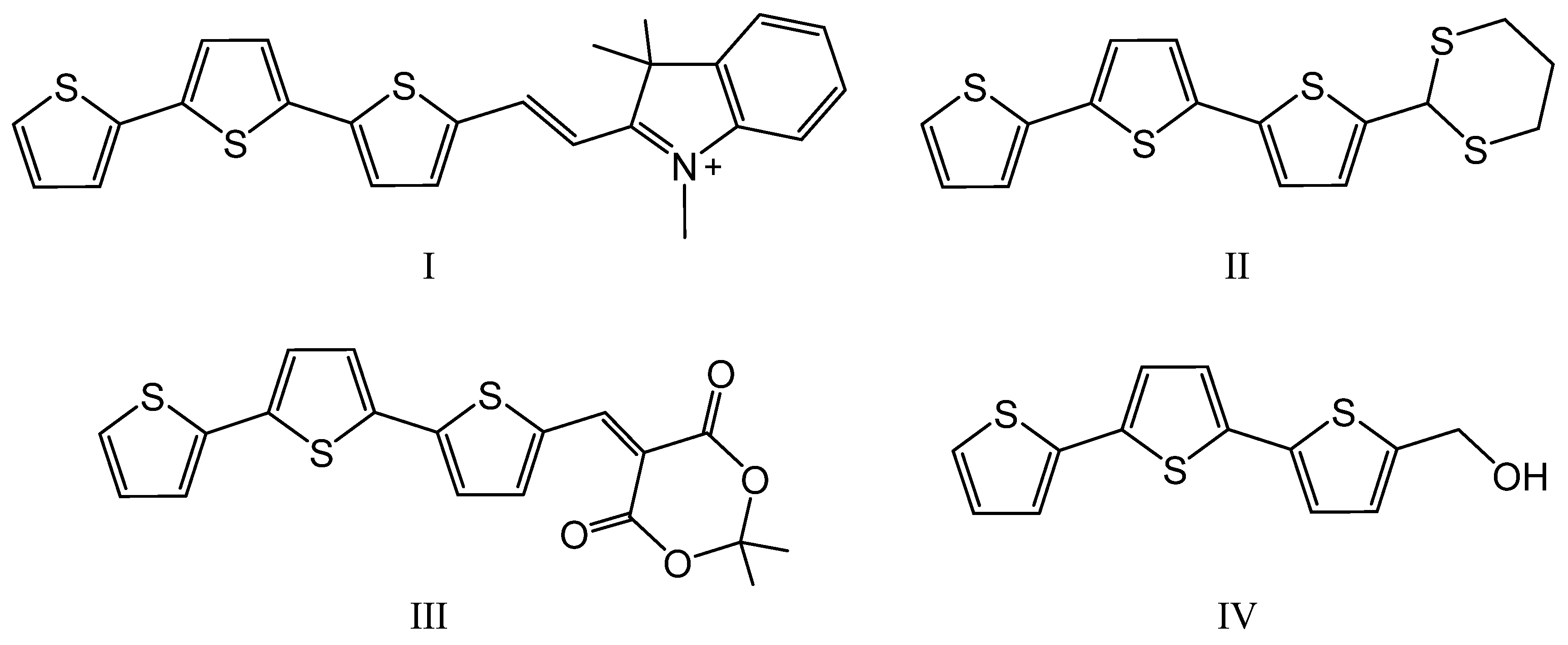
The fluorescent property of the α-terthiophene unit has been exploited for sensing and bioimaging via functionalization with different groups in position 5 of the terminal thiophene (Figure 4). For example, the tetramethyl indolium derivative (Structure I, Figure 4) reacts in the presence of cyanide, forming a highly fluorescent aggregate in aqueous solution [44,45]. The detection limit was estimated at 0.1 μM, and the fluorescence upon aggregation was strong enough for monitoring CN in biological samples. The sensing of Hg2+ in biological samples was achieved using a thioacetal derivative (Structure II, Figure 4) [46]. The detection limit was estimated at 62 nM, able to operate in a 5–9 pH working range. An analogous terthiophene–phenylamine derivative was used to detect Hg2+ in various biological samples, confirming the role of the terthiophene motif in producing an on–off signal in the presence of Hg2+ ions (detection limit: 0.23 μM) [47]. The insertion of Meldrum’s acid into α-terthiophene (Structure III, Figure 4) has allowed for the sensing of CN and ClO in cells and zebrafish [48]. The fluorescence changes are attributed to the nucleophilic addition (CN) and oxidation (ClO) of the ethylenic linkage. The limits of detection in DMSO/H2O mixtures were estimated at 6.5 nM for CN (1/99, DMSO/H2O, v/v) and 4.2 nM for ClO (1/8, DMSO/H2O, v/v).
The 2,2′:5′,2″-terthiophen-5-ylmethanol (Structure IV, Figure 4), which is a natural product isolated from the plant Tagetes minuta, appears to be a good inhibitor of tumor angiogenesis [37]. The α-terthiophene derivative targets protein kinase C isozymes (PKC-α and PKC-ẞ2) and, to a lesser extent, VEGFR-2 (Vascular Endothelial Growth Factor Receptor). Docking and molecular dynamic simulations were performed, showing that α-terthiophenylmethanol prefers PKC-ẞ2 over PKC-α by about 6 kcal·mol−1, thus being in the middle range of known PKC inhibitors. This recent study shows that the α-terthiophene motif can fit in protein cavities and pockets, thus opening new perspectives in drug design and the development of biological compounds.

4. Biological Activity of Terthiophene-Based Oligomers and Polymers

Oligothiophene derivatives and terthiophene-containing oligomers and polymers have mainly found applications in the field of organic electronics [14,15]. Increasing the number of thiophene units is a common strategy in molecular design for altering the electronic and photophysical properties of materials [16,33]. This strategy was applied to a dual functional probe, targeting autolysosome/autophagy in cells, together with the production of reactive oxygen species upon irradiation [49]. The PDT effect was provided by the introduction of α-terthiophene structural motifs into a conjugated poly(phenylene-ethynylene) polymer.
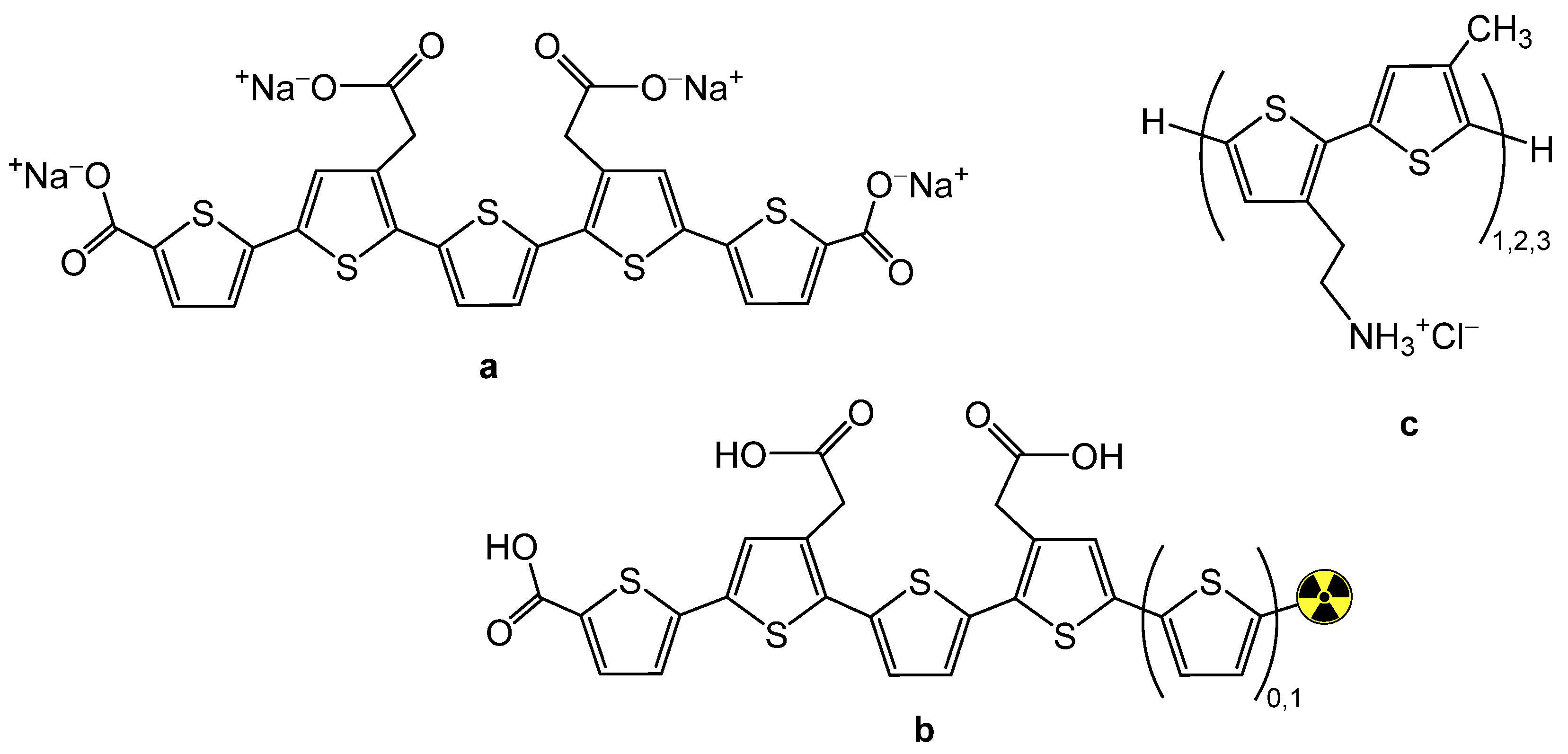
The introduction of oligothiophene units into oligonucleotides, proteins, and nanoparticles has been the subject of multiple studies. In supramolecular bio-probes, the oligothiophenes can act as fluorescent markers for bio-imaging [50], or it can add a π-conjugated electronic function to biomaterials [51,52]. In such supramolecular systems, conformation, aggregation, and intermolecular interactions are key factors in the photophysical process involved. Indeed, interactions with biomacromolecules have allowed for luminescent changes in a penta-oligothiophene derivative (Figure 5a), showing a monomeric–dimeric equilibrium which is disrupted by the presence of biomolecules [53]. Similar tetrameric and pentameric oligothiophenes (Figure 5b) have been used as radiolabeled trackers for amyloid proteins [54]; upon aggregation with amyloid proteins, the oligothiophenes provide visualization of systemic and localized amyloidosis, a condition associated with multiple diseases, including Alzheimer’s [55].
To introduce lysine-like residues for targeting host defense peptides in bacteria, a series of cationic oligothiophenes have also been prepared (Figure 5c) [56]. Under visible light, the oligothiophenes show antibacterial activity with potency in the nanomolar range. On the other hand, the compounds appear to have almost no photodynamic activity on red blood cells, suggesting preferential bacterial cell binding and reactive oxygen species production when the cationic oligothiophene is bound to bacterial host defense peptides.

5. Metal-Based Terthiophene Derivatives

Combining metal-based complexes with terthiophene or oligothiophene derivatives is another strategy to modulate the photophysical properties of both, the complex and the terthiophene moiety [57], or to create a synergy between an inorganic (metal complex) and an organic compound (terthiophene). The α-terthiophene structural motif, like α-oligothiophene chromophores, when coordinated to metals, can lead to dual systems with type I and type II photosensitizing mechanisms, thus increasing PDT efficiency [58,59], as well as altering other properties such as solubility, stability, and mode of action [60].
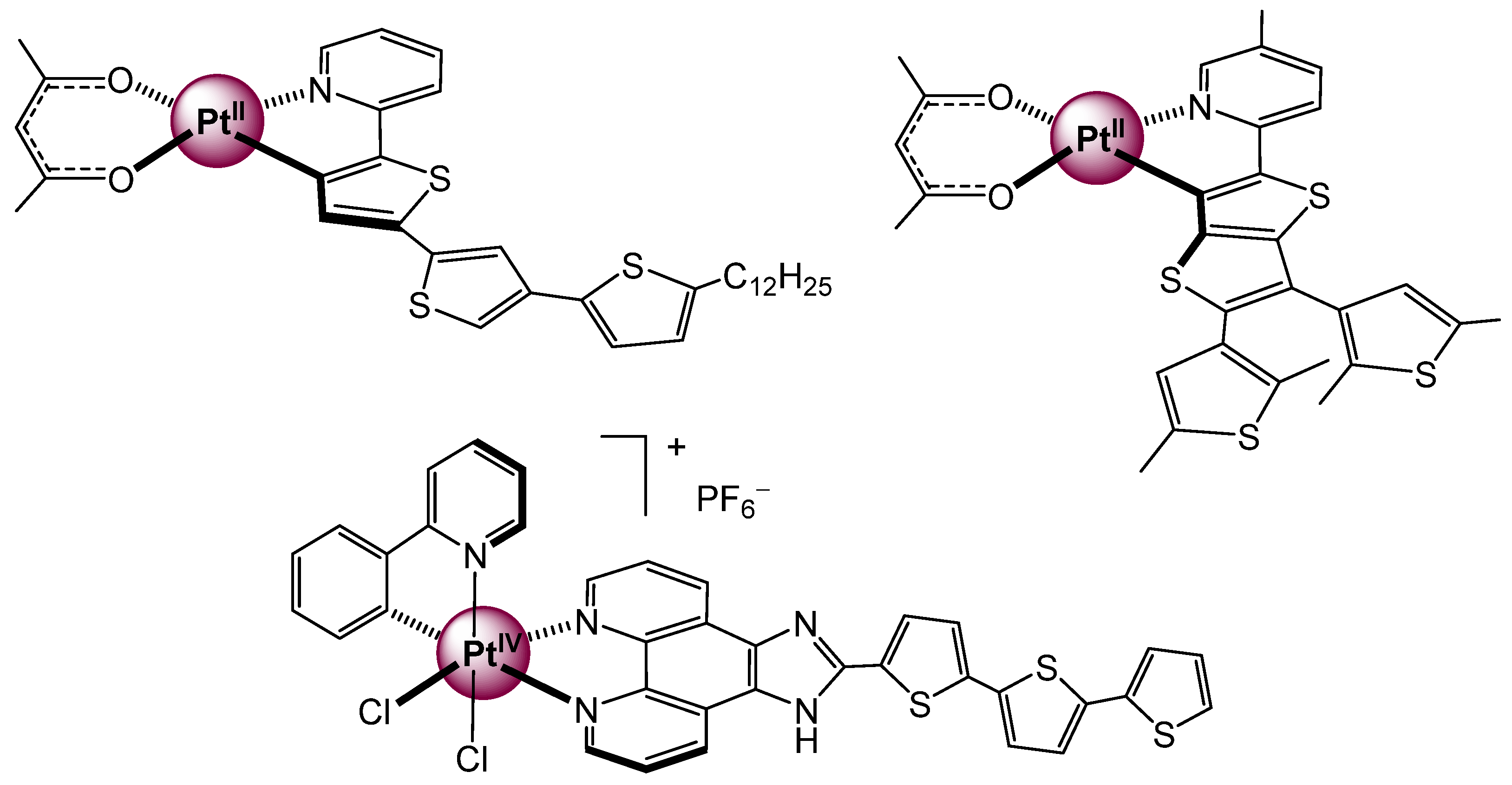
Considering the tremendous success of cisplatin and other platinum–based drugs in the treatment of cancer [61], an obvious metal–terthiophene combination is between platinum complexes and terthiophene pyridyl–based ligands. Pt(II) and Pt(IV) complexes were both combined to terthiophene pyridyl-derived ligands (Figure 6). In the acetylacetonate Pt(II) complex, the N,C-cyclometalated coordination of 2-(5″-dodecyl-[2,2′:4′,2″-terthiophen]-5-yl)pyridine shifts the maximum fluorescence to the near-infrared region, potentially increasing the PDT efficiency [62]. Photochromism was also observed in the analogous acetylacetonate Pt(II) complex bonded to the dithienylethene thienylpyridine ligand [63], confirming the electronic benefits of incorporating terthiophene motif to ligand design. In the case of the Pt(IV) phenanthroline–terthiophene derivative (Figure 6), the complex disrupts zinc homeostasis and induces DNA damage, activating an endogenous metal ion–mediated antitumor immunity in vivo [64]. Interestingly, light does not play a particular role here, suggesting that α-terthiophene is not only a valuable pharmacophore for PDT.
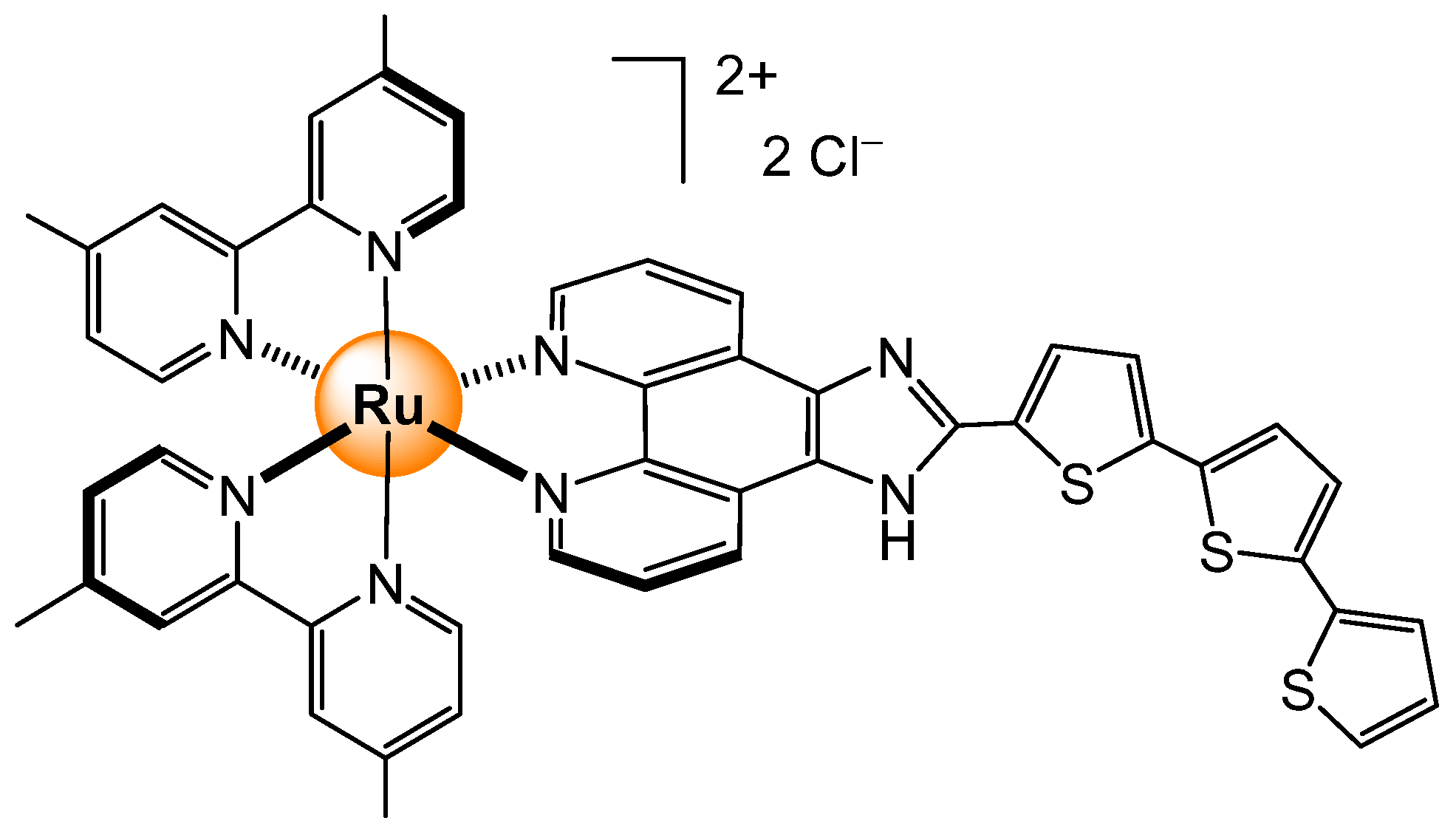
The most-studied system involving coordination complexes and α-terthiophene is the ruthenium(II) salt, [bis(4,4′-dimethyl-2,2′-bipyridin){2-(2,2′:5′,2″-terthiophen-5-yl)imidazo[4,5-f][1,10]phenanthroline}ruthenium]dichloride, commercially named TLD-1433 (Figure 7) [65,66,67,68]. This complex has undergone a phase I clinical trial in Canada for non-muscle–invasive bladder cancer and is now undergoing a phase II clinical trial [66]. Upon irradiation (green light), the polypyridyl complex shows a longer excited–state lifetime than non-functionalized polypyridyl ruthenium complexes, and due to the presence of the conjugated α-terthiophene unit, a dual PDT mechanism is at work, thus allowing for treatment of hypoxic tumors [57]. In TLD-1433, the α-terthiophene unit clearly impacts the photophysical properties of the complex for PDT of cancer, but recently, it was also shown to be efficient against bacterial infections [69]. In the study, TLD-1433 appears to target bacterial DNA located in the lungs, and upon sonodynamic therapy (ultrasound), ROS–mediated injuries are produced, killing the bacteria.
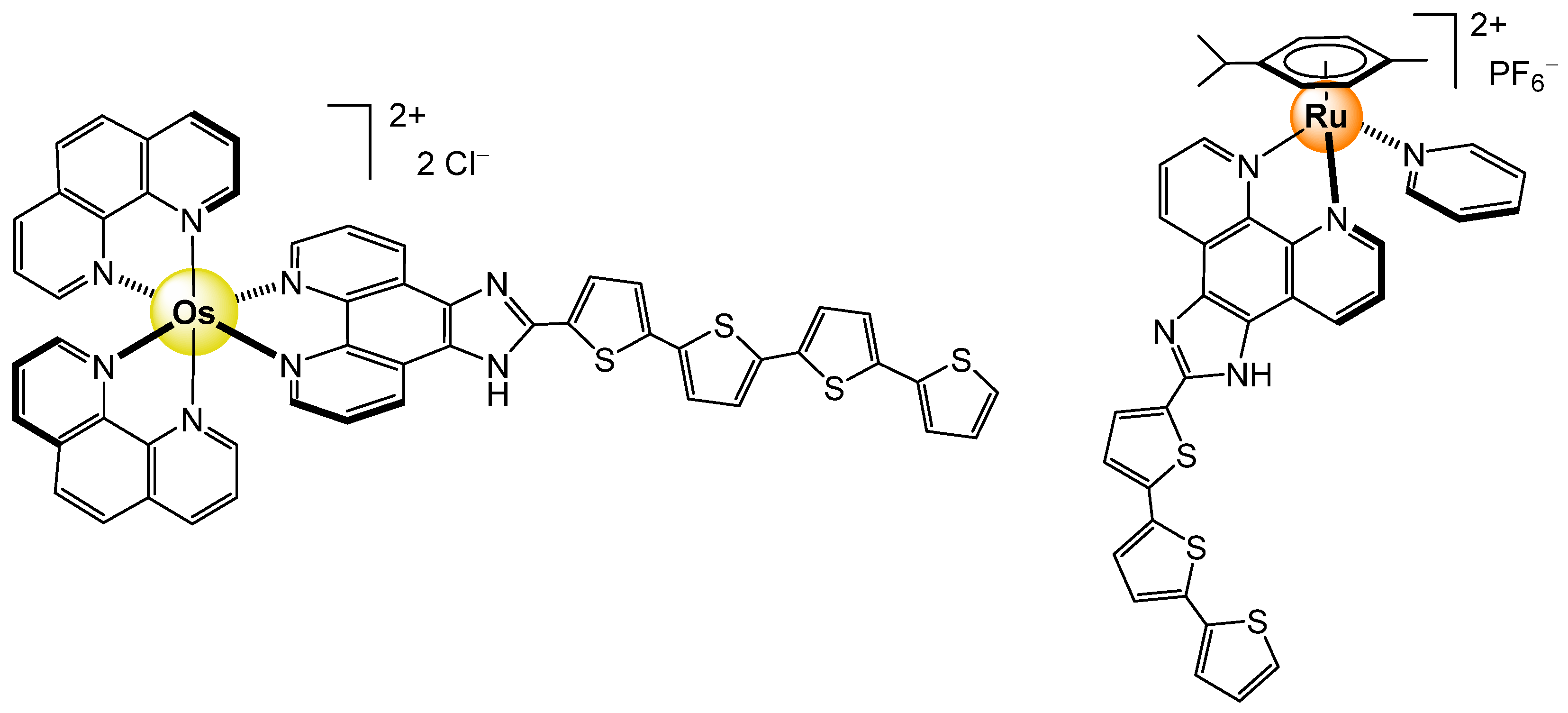
For PDT comparison, similar phenanthroline α-terthiophene ligands have been coupled to osmium polypyridyl [70] and arene ruthenium complexes (Figure 8) [71]. In both systems, the phenanthroline and terthiophene units appear to interact with DNA, through intercalation in DNA strands. The osmium phenanthroline complex was also incorporated into micelles and liposomes to limit aggregations [72]. Lipid formulations have indeed increased the solubility and ability of the osmium-based hydrophobic photosensitizer to reach cancer cells, keeping or even increasing the photoactivity of the photosensitizer, mostly by annihilating aggregations. Nevertheless, replacing ruthenium with osmium brings additional advantages like greater stability, different redox potentials, and unique photophysical properties, suggesting that osmium derivatives are more than simple ruthenium replicas [73].
In the case of arene ruthenium phenanthroline α-terthiophene complexes [71], the metal and ligand excited states are photochemically dissociated, providing a different mode of action to that of polypyridyl metal-based derivatives. Interestingly, the photo-cytotoxicity of the complex was not driven by photochemical reactions or sensitization of 1O2 but rather by another process, suggesting that the α-terthiophene group attached to the phenanthroline ligand operated in a different fashion to that in TLD-1433.

6. Conclusions

It is clear from several studies that α-terthiophene can modulate the photophysical properties of organic and inorganic compounds. Likewise, it is undeniable that nematocidal activity can be associated with the photo-toxicity of α-terthiophene, confirming its pharmacophoric value. Therefore, it is surprising that other isomers of terthiophene have almost never been used as pharmacophores, especially 2,2′:5′,3′-, 3,2′:5′,3″-, 2,2′:4′,3″-, 3,2′:4′,2″-, and 3,2′:4′,3″-terthiophene (Figure 1), which show similar electronic and structural properties to α-terthiophene (Table 1). This might be explained by the commercial availability of several functionalized 2,2′:5′,2″-terthiophene compounds, while functionalized derivatives of the others must be custom-made. The structural characteristics of the non-planar isomers, i.e., their low melting points (Table 1), might limit their potential as photo-physical modulators; however, they are able to interact with proteins and to limit aggregations. Indeed, the presence of thiophene moieties in a non-planar arrangement might fit perfectly in the pockets of proteins, thus becoming targeting agents or inhibitors [74,75]. Moreover, the exact target of α-terthiophene in living organisms remains unclear, despite some leads such as DNA and RNA intercalations and lipid membrane and protein interactions (PKC-α, PKC-ẞ2, amyloid proteins, VEGFR-2). Therefore, the main question that remains is; should α-terthiophene be considered a pharmacophoric element, a photo-physical modulator, or a simple structural motif? Nonetheless, it is evident that the use of α-terthiophene—and possibly some of the 13 other isomers—can lead to positive outcomes in drug design, and in my opinion, it should be considered a highly valuable pharmacophoric element when developing biologically active materials.

Funding

This research was funded by the University of Neuchatel.

Data Availability Statement

No new data were created or analyzed in this study. Data sharing is not applicable.

Conflicts of Interest

The author declares no conflict of interest.

Abbreviations

The following abbreviations are used in this manuscript:
PDTPhoto-Dynamic Therapy
PKCProtein Kinase C
TLDTheralase’s® Lead Compound
DNADeoxyribo-Nucleic Acid
RNARiboNucleic Acid
VEGFRVascular Endothelial Growth Factor Receptor

References

  1. Wynberg, H. The unsolicited biography of α-terthienyl. Rec. Trav. Chim. Pays-Bas 1996, 115, 119–123. [Google Scholar] [CrossRef]
  2. Sease, J.W.; Zechmeister, L. Chromatographic and spectral characteristics of some polythienyls. J. Am. Chem. Soc. 1947, 69, 270–273. [Google Scholar] [CrossRef]
  3. Zechmeister, L.; Sease, J.W. A blue-fluorescing compound, terthienyl, isolated from Marigolds. J. Am. Chem. Soc. 1947, 69, 273–275. [Google Scholar] [CrossRef] [PubMed]
  4. Uhlenbroek, J.H.; Bijloo, J.D. Investigations on nematicides. Rec. Trav. Chim. Pays-Bas Belg. 1960, 79, 1181–1196. [Google Scholar] [CrossRef]
  5. Downum, K.R.; Towers, G.H.N. Analysis of thiophenes in the Tageteae (Asteraceae) by HPLC. J. Nat. Prod. 1983, 46, 98–103. [Google Scholar] [CrossRef]
  6. Muzzoli, M.; Sacchetti, G. Biological activity of four thiophene compounds in resting Saccharamyces cerevisiae cells. Pharm. Biol. 2001, 39, 40–42. [Google Scholar]
  7. Bakker, J.; Gommers, F.J.; Nieuwenhuis, I.; Wynberg, H. Photoactivation of the nematicidal compound α-terthienyl from roots of Marigolds (Tagetes species). J. Biol. Chem. 1979, 254, 1841–1844. [Google Scholar] [CrossRef] [PubMed]
  8. Campbell, G.; Lambert, J.D.H.; Arnason, T.; Towers, G.H.N. Allelopathic properties of α-terthienyl and phenylheptatriyne, naturally occurring compounds from species of Asteraceae. J. Chem. Ecol. 1982, 8, 961–972. [Google Scholar] [CrossRef] [PubMed]
  9. Cooper, G.K.; Nitsche, C.I. α-Terthienyl. Phototoxic Allelochem. 1985, 13, 362–374. [Google Scholar] [CrossRef]
  10. Hudson, J.B.; Graham, E.A.; Miki, N.; Towers, G.H.N.; Hudson, L.L.; Rossi, R.; Carpita, A.; Neri, D. Photoactive antiviral and cytotoxic activities of synthetic thiophenes and their acetylenic derivatives. Chemosphere 1989, 19, 1329–1343. [Google Scholar] [CrossRef]
  11. Ebermann, R.; Alth, G.; Kreitner, M.; Kubin, A. Natural products derived from plants as potential drugs for the photodynamic destruction of tumor cells. J. Photochem. Photobiol. B Biol. 1996, 36, 95–97. [Google Scholar] [CrossRef]
  12. Ahara, J.-I. Chemical evolution, biosynthesis, and aromaticity. Bull. Chem. Soc. Jpn. 1990, 63, 2899–2903. [Google Scholar] [CrossRef]
  13. Grazioli, C.; Baseggio, O.; Stener, M.; Fronzoni, G.; de Simone, M.; Coreno, M.; Guarnaccio, A.; Santagata, A.; D’Auria, M. Study of the electronic structure of short chain oligothiophene. J. Chem. Phys. 2017, 146, 054303. [Google Scholar] [CrossRef] [PubMed]
  14. Scheuble, M.; Goll, M.; Ludwigs, S. Branched terthiophenes in organic electronics: From small molecules to polymers. Macromol Rapid Commun. 2015, 36, 115–137. [Google Scholar] [PubMed]
  15. Gidron, O.; Bendikov, M. α-Oligofurans: An emerging class of conjugated oligomers for organic electronics. Angew. Chem. Int. Ed. 2014, 53, 2546–2555. [Google Scholar] [CrossRef]
  16. Yue, W.; Tian, H.; Hu, N.; Geng, Y.; Wang, F. Crystal packing motifs of oligothiophenes end-capped with N-containing aryls. Cryst Growth Des. 2008, 8, 2352–2358. [Google Scholar] [CrossRef]
  17. Manjunatha, M.A.; Manalac, A.; Weersink, M.; McFarland, S.A.; Lilge, L. Ru(II) containing photosensitizers for photodynamic therapy: A critique on reporting and an attempt to compare efficacy. Coord. Chem. Rev. 2022, 470, 214712. [Google Scholar] [CrossRef]
  18. Goldberg, F.W.; Kettle, J.G.; Kogej, T.; Perry, M.W.D.; Tomkinson, N.P. Designing novel building blocks is an overlooked strategy to improve compound quality. Drug Discov. Today 2015, 20, 11–17. [Google Scholar] [CrossRef] [PubMed]
  19. Beny, J.-P.; Dhawan, S.N.; Kagan, J.; Sundlass, S. Synthesis of 3,2′:5′,3″-terthiophene and other terthiophene by the thiophenecarboxaldehyde—Ethynylthiophene—Dithienylbutadiyne route. J. Org. Chem. 1982, 47, 2201–2204. [Google Scholar] [CrossRef]
  20. Kagan, J.; Arora, S.K.; Prakash, I.; Üstünol, A. The synthesis of 2,2′:5,3″-terthiophene. Heterocycles 1983, 20, 1341–1345. [Google Scholar] [CrossRef]
  21. Kagan, J.; Kagan, E.D.; Seigneurie, E. Alpha-terthienyl, a powerful fish poison with light-dependent activity. Chemosphere 1986, 15, 49–57. [Google Scholar] [CrossRef]
  22. Jayasuriya, N.; Kagan, J. The synthesis of 2,3′:2′,3″-, 2,3′:4′,3″-, 2,3′:5′,3″-, and 2,2′:4′,3″-terthienyls. Heterocycles 1986, 24, 2901–2904. [Google Scholar] [CrossRef]
  23. Jayasuriya, N.; Kagan, J. The synthesis of bithienyls and terthienyls by nickel-catalyzed coupling of Grignard reagents. Heterocycles 1986, 24, 2261–2264. [Google Scholar] [CrossRef]
  24. Wynberg, H.; Logothetis, A.; VerPloeg, D. The synthesis of di- and terthienyls. J. Am. Chem. Soc. 1957, 79, 1972–1975. [Google Scholar] [CrossRef]
  25. Kooreman, H.J.; Wynberg, H. The chemistry of polythienyls. Rec. Trav. Chim. Pays-Bas 1967, 86, 37–55. [Google Scholar] [CrossRef]
  26. Wynberg, H.; Metselaar, J. A convenient route to polythiophenes. Synt Commun. 1984, 14, 1–9. [Google Scholar] [CrossRef]
  27. Nakayama, J.; Murabayashi, S.; Hoshino, M. Preparation of an α,β-type of ter- and septhiophenes. Heterocycles 1987, 26, 2599–2602. [Google Scholar] [CrossRef]
  28. Nakayama, J.; Nakamura, Y.; Murabayashi, S.; Hoshino, M. Preparation of an α-quinone- and α-septithiophenes and their positional isomers. Heterocycles 1987, 26, 939–942. [Google Scholar] [CrossRef]
  29. Zhang, C.; Zhu, X. Thieno[3,4-b]thiophene-based novel small-molecule optoelectronic materials. Acc. Chem. Res. 2017, 50, 1342–1350. [Google Scholar] [CrossRef] [PubMed]
  30. Kagan, J. Naturally occurring di- and trithiophenes. Prog. Chem. Org. Nat. Prod. 1991, 56, 87–169. [Google Scholar] [CrossRef]
  31. Arnason, T.; Chan, G.F.Q.; Wat, C.K.; Downum, K.; Towers, G.H.N. Oxygen requirement for near-UV mediated cytotoxicity of α-terthienyl to Escherichia coli and Saccharomyces cerevisiae. Photochem. Photobiol. 1981, 33, 821–824. [Google Scholar] [CrossRef]
  32. Greer, A. Christopher Foote’s discovery of the role of singlet oxygen [1O2(1Δg)] in photosensitized oxidation reactions. Acc. Chem. Res. 2006, 39, 797–804. [Google Scholar] [CrossRef] [PubMed]
  33. Hong, J.S.; Shim, H.S.; Kim, T.-J.; Kang, Y. (N-7-Azaindolyl)oligothiophenes: Synthesis, characterization, and photophysical properties. Tetrahedron 2007, 63, 8761–8769. [Google Scholar] [CrossRef]
  34. Reyftmann, J.P.; Kagan, J.; Santus, R.; Morliere, P. Excited state properties of α-terthienyl and related molecules. Photochem. Photobiol. 1985, 41, 1–7. [Google Scholar] [CrossRef] [PubMed]
  35. Hudson, J.B.; Harris, L.; Marles, R.J.; Arnason, J.T. The anti-HIV activities of photoactive terthiophenes. Photochem. Photobiol. 1993, 58, 246–250. [Google Scholar] [CrossRef] [PubMed]
  36. Hudson, J.B.; Harris, L.; Teeple, A.; Towers, G.H.N. The anti-HIV activity of the phytochemical α-terthienyl. Antivir. Res. 1993, 20, 33–43. [Google Scholar] [CrossRef] [PubMed]
  37. Llorens de Los Rios, M.C.; Lanza, P.A.; Barbieri, C.L.; González, M.L.; Funes Chabán, M.; Soria, G.; Vera, D.M.A.; Carpinella, M.C.; Joray, M.B. The thiophene α-terthienylmethanol isolated from Tagetes minuta inhibits angiogenesis by targeting protein kinase C isozymes α and β2. Front. Pharmacol. 2022, 13, 1007790. [Google Scholar] [CrossRef] [PubMed]
  38. Vallan, L.; Istif, E.; Gómez, I.J.; Alegret, N.; Mantione, D. Thiophene-based trimers and their bioapplications: An overview. Polymers 2021, 13, 1977. [Google Scholar] [CrossRef] [PubMed]
  39. DiCosmo, F.; Towers, G.H.N.; Lam, J. Photo-induced fungicidal activity elicited by naturally occurring thiophene derivatives. Pestic Sci. 1982, 13, 589–594. [Google Scholar] [CrossRef]
  40. Giacone, L.; Cordisco, E.; Garrido, M.C.; Petenatti, E.; Sortino, M. Photodynamic activity of Tagetes minuta extracts against superficial fungal infections. Med. Mycol. 2020, 58, 797–809. [Google Scholar] [PubMed]
  41. Postigo, A.; Funes, M.; Petenatti, E.; Bottai, H.; Pacciaroni, A.; Sortino, M. Antifungal photosensitive activity of Porophyllum obscurum (Spreng.) DC.: Correlation of the chemical composition of the hexane extract with the bioactivity. Photodyn. Ther. 2017, 20, 263–272. [Google Scholar] [CrossRef]
  42. Mares, D.; Romagnoli, C.; Rossi, R.; Carpita, A.; Ciofalo, M.; Bruni, A. Antifungal activity of some 2,2′:5′,2″-terthiophene derivatives. Mycoses 1994, 37, 377–383. [Google Scholar] [CrossRef] [PubMed]
  43. Yang, H.; Liang, Y.; Wang, J.; Li, Q.; Li, Q.; Tang, A.; Liu, Y.; Liu, H.-B. Multifunctional wound dressing for rapid hemostasis, bacterial infection monitoring and photodynamic antibacterial therapy. Acta Biomater. 2021, 135, 179–190. [Google Scholar] [CrossRef] [PubMed]
  44. Sun, Y.; Li, Y.; Ma, X.; Duan, L. A turn-on fluorescent probe for cyanide based on aggregation of terthienyl and its application for bioimaging. Sens. Actuators B 2016, 224, 648–653. [Google Scholar] [CrossRef]
  45. Yin, P.; Niu, Q.; Yang, Q.; Lan, L.; Li, T. A new “naked-eye” colorimetric and ratiometric fluorescent sensor for imaging Hg2+ in living cells. Tetrahedron 2019, 75, 130687. [Google Scholar] [CrossRef]
  46. Monti, F.; Aloisio, L.; Spallacci, N.; Zangoli, M.; Treglia, A.; Garcìa Fleitas, A.; Guizzardi, M.; Flammini, S.; Moschetta, M.; Paternò, G.M.; et al. From molecules to bioaggregates: Unraveling the photoexcitation dynamics of intracellularly self-assembled thiophene-based fibers. Small Sci. 2025, 5, 2500241. [Google Scholar] [CrossRef] [PubMed]
  47. Li, Y.; Huang, Y.; Shen, Q.; Yu, W.; Yang, Z.; Gao, Z.; Lv, F.; Bai, H.; Wang, S. Utilizing microbial metabolite in catalytic cascade synthesis of conjugated oligomers for in-situ regulation of biological activity. Bioorg. Chem. 2024, 145, 107188. [Google Scholar] [CrossRef] [PubMed]
  48. Ma, W.; Chen, R.; Hu, T.; Xing, S.; Zhou, G.; Qin, X.; Ren, H.; Zhang, Z.; Chen, J.; Niu, Q. New dual-responsive fluorescent sensor for hypochlorite and cyanide sensing and its imaging application in live cells and zebrafish. Talanta 2023, 265, 124910. [Google Scholar] [CrossRef] [PubMed]
  49. Wu, P.; Xu, N.; Tan, C.; Liu, L.; Tan, Y.; Chen, Z.; Jiang, Y. Light-induced translocation of a conjugated polyelectrolyte in celles: From fluorescent probe to anticancer agent. ACS Appl. Mater. Interfaces 2017, 9, 10512–10518. [Google Scholar] [CrossRef] [PubMed]
  50. Capobianco, M.L.; Barbarella, G.; Manetto, A. Oligothiophenes as fluorescent markers for biological applications. Molecules 2012, 17, 910–933. [Google Scholar] [CrossRef] [PubMed]
  51. Tovar, J.D. Supramolecular construction of optoelectronic biomaterials. Acc. Chem. Res. 2013, 46, 1527–1537. [Google Scholar] [CrossRef] [PubMed]
  52. Bendrea, A.-D.; Simionescu, N.; Hitruc, E.-G.; Cianga, L.; Cianga, I.; Pintela, M. Combining oligothiophene with oligo-(D,L-lactide) into a complex, branched topology toward a functional interface aimed at biomedical applications. Chem. Proc. 2024, 16, 74. [Google Scholar] [CrossRef]
  53. Hevekerl, H.; Wigenius, J.; Persson, G.; Inganäs, O.; Widengren, J. Dark state in ionic oligothiophene bioprobes—Evidence from fluorescence correlation spectroscopy and dynamic light scattering. J. Phys. Chem. B 2014, 118, 5924–5933. [Google Scholar] [CrossRef] [PubMed]
  54. Nordeman, P.; Johasson, L.B.G.; Bäck, M.; Estrada, S.; Hall, H.; Sjölander, D.; Westermark, G.T.; Westermark, P.; Nilsson, L.; Hammarström, P.; et al. 11C and 18F Radiolabeling of tetra- and pentathiophenes as PET-ligands for amyloid protein aggregates. ACS Med. Chem. Lett. 2016, 7, 368–373. [Google Scholar] [CrossRef] [PubMed]
  55. Rasmussen, J.; Mahler, J.; Beschorner, N.; Kaeser, S.A.; Häsler, L.M.; Baumann, F.; Nyström, S.; Portelius, E.; Blennow, K.; Lashley, T.; et al. Amyloid polymorphisms constitute distinct clouds of conformational variants in different etiological subtypes of Alzheimer’s disease. Proc. Nat. Acad. Sci. USA 2017, 117, 13018–13023. [Google Scholar] [CrossRef]
  56. Zhou, Z.; Ergene, C.; Lee, J.Y.; Shirley, D.J.; Carone, B.R.; Caputo, G.A.; Palermo, E.F. Sequence and dispersity are determinants of photodynamic antibacterial activity exerted by peptidomimetic oligo(thiophene)s. ACS Appl. Mater. Interfaces 2019, 11, 1896–1906. [Google Scholar] [PubMed]
  57. Shi, G.; Monro, S.; Hennigar, R.; Colpitts, J.; Fong, J.; Kasimova, K.; Yin, H.; DeCoste, R.; Spencer, C.; Chamberlain, L.; et al. Ru(II) dyads derived from α-oligothiophenes: A new class of potent and versatile photosensitizers for PDT. Coord. Chem. Rev. 2015, 282–283, 127–138. [Google Scholar] [CrossRef]
  58. Li, B.; Wang, J.; Wang, X.; Jiang, B.; Niu, Q. A new oligothiophene-derivatized fluorescent sensor for detecting and imaging Hg2+ in water/soil/urine/tea/seafood samples and living plants. Spectrochim. Acta A Mol. Biomol. Spectrosc. 2025, 329, 125585. [Google Scholar] [CrossRef] [PubMed]
  59. Li, M.; Xiong, J.; Zhang, Y.; Yu, L.; Yue, L.; Yoon, C.; Kim, Y.; Zhou, Y.; Chen, X.; Xu, Y.; et al. New guidelines and definitions for type I photodynamic therapy. Chem. Soc. Rev. 2025, 54, 7025–7057. [Google Scholar] [CrossRef] [PubMed]
  60. Policar, C. Bioinorganic chemistry: Where from and where to? J. Biol. Inorg. Chem. 2025, 30, 313–328. [Google Scholar] [CrossRef] [PubMed]
  61. Johnstone, T.C.; Suntharalingam, K.; Lippard, S.J. The next generation of platinum drugs: Targeted Pt(II) agents, nanoparticle delivery, and Pt(IV) prodrugs. Chem. Rev. 2016, 116, 3436–3486. [Google Scholar] [CrossRef] [PubMed]
  62. Kozhevnikov, D.N.; Kozhevnikov, V.N.; Shafikov, M.Z.; Prokhorov, A.M.; Bruce, D.W.; Williams, J.A.G. Phosphorescence vs fluorescence in cyclometalated platinum(II) and iridium(III) complexes of (oligo)thienylpyridines. Inorg. Chem. 2011, 50, 3804–3815. [Google Scholar] [CrossRef] [PubMed]
  63. Ko, C.-C.; Yam, V.W.-W. Coordination compounds with photochromic ligands: Ready tunability and visible light-sensitized photochromism. Acc. Chem. Res. 2018, 51, 149–159. [Google Scholar] [PubMed]
  64. Su, X.; Liu, B.; Wang, W.-J.; Peng, K.; Liang, B.-B.; Zheng, Y.; Cao, Q.; Mao, Z.-W. Disruption of zinc homeostasis by a novel platinum(IV)-terthiophene complex for antitumor immunity. Angew. Chem. Int. Ed. 2023, 62, e202216917. [Google Scholar] [CrossRef]
  65. Chettri, A.; Roque, J.A., III; Schneider, K.R.A.; Cole, H.D.; Cameron, C.G.; McFarland, S.A.; Dietzek, B. It takes three to tango: The length of the oligothiophene chain determines the nature of the long-lived excited state and the resulting phototoxicity of a ruthenium(II) photodrug. ChemPhotoChem 2021, 5, 421–425. [Google Scholar] [CrossRef] [PubMed]
  66. Kargers, J. Clinical development of metal complexes as photosensitizers for photodynamic therapy of cancer. Angew. Chem. Int. Ed. 2022, 61, e202112236. [Google Scholar]
  67. Talgatov, A.; Shi, G.; Kaur, G.; Sun, X.; Gamage, K.D.; Afrin, H.; Rahmon, J.; Ramasamy, E.; Cole, H.D.; Cameron, C.G.; et al. Conjugation-driven modulation of excited-state dynamics and photobiological activity in Ru(II) bis-terpyridyl oligothienyl complexes. J. Inorg. Biochem. 2026, 277, 113190. [Google Scholar] [CrossRef] [PubMed]
  68. Coombs, K.; Glover, K.K.M.; Russell, R.; Kaspler, P.; Roufaiel, M.; Graves, D.; Pelka, P.; Kobasa, D.; DuMoulin-White, R.; Mandel, A. Nanomolar concentrations of the photodynamic compound TLD-1433 effectively inactivate numerous human pathogenic viruses. Heliyon 2024, 10, e32140. [Google Scholar] [CrossRef] [PubMed]
  69. Xu, Y.; Yan, L.; Li, C.; Zhao, L.; Mei, L.; Zhang, J.; Liang, S.; Li, J.; Zhang, R.; Sun, Y.; et al. DNA-targeted sonodynamic activation enhances antibacterial efficacy in deep and hypoxic infections. J. Am. Chem. Soc. 2026, 148, 23254–23267. [Google Scholar] [CrossRef] [PubMed]
  70. Schneider, K.R.A.; Chettri, A.; Cole, H.D.; Reglinski, K.; Brückmann, J.; Roque, J.A., III; Stumper, A.; Nauroozi, D.; Schmid, S.; Lagerholm, C.B.; et al. Intracellular photophysics of an osmium complex bearing an oligothiophene extended ligand. Chem. Eur. J. 2020, 26, 14844–14851. [Google Scholar] [CrossRef] [PubMed]
  71. Spiconardi, J.; Havrylyuk, D.; Shi, G.; Talgatov, A.; Cameron, C.G.; Heidary, D.K.; McFarland, S.A.; Glazer, E.C. Multifaceted Ru(II) arene systems for phototherapy display activity in lung cancer and melanoma. Photochem. Photobiol. 2026, 102, 615–624. [Google Scholar] [PubMed]
  72. Cole, H.D.; Eroy, M.; Roque, J.A., III; Shi, G.; Guirguis, M.; Kakhry, J.; Cameron, C.G.; Obaid, G.; McFarland, S.A. Establishing a robust and reliable response from a potent osmium-based photosensitizer via lipid nanoformulation. Photochem. Photobiol. 2023, 99, 751–760. [Google Scholar] [PubMed]
  73. Chen, Z.; Culot, C.; Zhou, L.; Cariou, K.; Berger, G.; Gasser, G. Recent advances in the use of osmium complexes as anticancer phototherapeutics. Acc. Chem. Res. 2026, 59, 1801–1812. [Google Scholar] [CrossRef] [PubMed]
  74. Alrashdi, K.S. Chemosensing applications of thiophene derivatives and anticancer potential of their platinum-group metal complexes: A review. Comments Inorg. Chem. 2025, 45, 402–445. [Google Scholar]
  75. Negi, A.; Murphy, P.V. Development of Mcl-1 inhibitors for cancer therapy. Eur. J. Med. Chem. 2021, 210, 113038. [Google Scholar] [CrossRef] [PubMed]
Figure 1. Molecular structures and CAS numbers of the 14 isomers of terthiophene.
Inorganics 14 00201 g001
Figure 2. Molecular structures of the non-planar 2,2′:3′,3″-terthiophene (left) and the planar 3,2′:5′,3″-terthiophene (right).
Inorganics 14 00201 g002
Figure 3. 3′-Functionalized α-terthiophene derivatives.
Inorganics 14 00201 g003
Figure 4. Functionalized α-terthiophene sensors (IIV).
Inorganics 14 00201 g004
Figure 5. Selected oligothiophene derivatives (ac).
Inorganics 14 00201 g005
Figure 6. Platinum–based complexes incorporating a terthiophene structural motif.
Inorganics 14 00201 g006
Figure 7. Molecular structure of TLD-1433.
Inorganics 14 00201 g007
Figure 8. Thiophene-based ligands linked to osmium polypyridyl and arene ruthenium complexes.
Inorganics 14 00201 g008
Table 1. Melting points (m.p.) and UV–visible data of the terthiophene isomers.
Namem.p.λmax (nm) 1ε (L·mol−1·cm−1)
2,2′:5′,2″-terthiophene93–95°251
350
9200
24,000
2,2′:5′,3″-terthiophene158–160°243
331
n.a.
3,2′:5′,3″-terthiophene193°210
324
19,700
24,700
2,2′:4′,2″-terthiophene53–54°28224,800
2,2′:4′,3″-terthiophene101–102°210
263
310
29,000
23,600
9800
3,2′:4′,2″-terthiophene103–104°205
272
9700
14,700
3,2′:4′,3″-terthiophene156–158°222
262
24,000
22,400
2,3′:4′,2″-terthiophene64°245
272
22,100
16,700
2,3′:4′,3″-terthiophene68–69°210
242
17,300
14,900
3,3′:4′,3″-terthiophene82–85°210
250
32,400
15,900
2,2′:3′,2″-terthiophene59–61°205
254
296
18,600
13,400
9400
2,2′:3′,3″-terthiophene38–39°203
250
292
18,600
12,500
7900
3,2′:3′,2″-terthiophene39–40°207
244
292
14,400
14,800
10,900
3,2′:3′,3″-terthiophene49–50°210
255
275
20,400
11,300
10,700
1 in methanol.
Disclaimer/Publisher’s Note: The statements, opinions and data contained in all publications are solely those of the individual author(s) and contributor(s) and not of MDPI and/or the editor(s). MDPI and/or the editor(s) disclaim responsibility for any injury to people or property resulting from any ideas, methods, instructions or products referred to in the content.