Article

Facile Synthesis of High-Purity Nanostructured Hafnium Carbide via Pectin-Assisted Carbothermal Reduction: Structural Evolution and Morphological Insight


by
Laura G. Ceballos-Mendívil
1,*,
Eric Manzanarez-Salazar
1,
Jonathan C. Luque-Ceballos
2,
Rody Soto-Rojo
1,
Francisco Baldenebro-López
1,
Adriana Cruz-Enríquez
1 and
Jesús Baldenebro-López
1,*
1
Facultad de Ingeniería Mochis, Universidad Autónoma de Sinaloa, Prol. Ángel Flores y Fuente de Poseidón, S/N, Los Mochis 81223, Mexico
2
Departamento de Investigación en Física, Universidad de Sonora, Blvd. Luis Encinas y Rosales, Hermosillo 83000, Mexico
*
Authors to whom correspondence should be addressed.
Inorganics 2026, 14(4), 92; https://doi.org/10.3390/inorganics14040092
Submission received: 24 February 2026 / Revised: 13 March 2026 / Accepted: 24 March 2026 / Published: 26 March 2026
(This article belongs to the Special Issue Novel Ceramics and Refractory Composites)

Abstract

Hafnium carbide (HfC) ceramics are of growing interest due to their exceptional mechanical properties and ultra-high melting points, making them ideal for extreme environmental applications. In this study, we present a synthesis route for HfC nanoparticles via carbothermal reduction of an organic–inorganic hybrid precursor derived from hafnium tetrachloride (HfCl4) and pectin, followed by thermal treatment at 1500 °C for 1.5 h under an argon atmosphere. According to TGA/DSC analysis of the hybrid precursor, hafnia phases initially formed during pyrolysis and were subsequently converted into HfC at 1500 °C, with the endothermic carbothermal reduction reaction initiating near 1200 °C. Comprehensive characterization using Fourier-transform infrared spectroscopy (FTIR), thermogravimetric analysis/differential scanning calorimetry (TGA/DSC), X-ray diffraction (XRD) with Rietveld refinement, scanning electron microscopy (SEM), and transmission electron microscopy (TEM) confirmed the synthesis of hafnium carbide (HfC) exhibiting predominantly cubic morphology. XRD analysis determined a lattice parameter of a = 4.63 Å and an interplanar spacing of d = 2.68 Å. Rietveld refinement revealed a phase composition of 98.08% HfC and 1.92% monoclinic hafnium dioxide (m-HfO2). Debye–Scherrer analysis indicated an average crystallite size of 67.6 nm. SEM and TEM images showed uniformly distributed nanoparticles with an average particle size of approximately 65–70 nm.

1. Introduction

The development of aerospace technology is closely associated with advances in materials science, as the sharp edges and wings of hypersonic vehicles can reach temperatures of up to 2000 °C during flight. This extreme thermal environment makes it essential to develop suitable materials, such as ultra-high temperature ceramics (UHTCs) [1]. UHTCs include carbides, nitrides, and borides of transition metals such as hafnium, tantalum, and zirconium, which are widely used in thermal protection systems due to their exceptional mechanical properties and extremely high melting points [2]. Among them, hafnium carbide (HfC) stands out as one of the materials with the highest melting point (~3900 °C). It exhibits high hardness, excellent wear resistance, low electrical resistivity, remarkable chemical stability, and a cubic crystal structure (rock-salt type) [3,4]. Consequently, HfC is employed for thermal protection in spacecraft, engines, and hypersonic vehicles, acting as a barrier against severe aerodynamic heating and high-temperature oxidative environments [5].
Conventional methods for synthesizing HfC powders typically involve intensive mechanical processing and heat treatments at extremely high temperatures. Although these techniques are generally effective, they require significant energy input and may lead to microstructural inconsistencies due to variations in reaction kinetics and the properties of solid precursors [6]. The most widely employed methods include carbothermal reduction [7,8,9,10], mechanochemical synthesis [11,12], chemical vapor deposition (CVD) [13,14], arc plasma processing [15,16], pulsed-laser synthesis [17], catalyst-assisted pyrolysis [18], the metallothermal method [19], and high-pressure solid−solid reactions [20], among others. The use of liquid precursors to obtain nanometric ceramic powders is a promising alternative, promoting a more uniform particle-size distribution in UHTCs and enabling a reduction in synthesis temperature, thereby improving process control and potentially reducing energy consumption [21,22]. Pectin is a natural polysaccharide copolymer extracted from fruits and vegetables. It is water-soluble and acts as a reducing agent in nanoparticle synthesis. The emulsifying capacity of pectin depends on hydrophobic groups such as methoxyl and acetyl, with its effectiveness determined by the specific plant species and molecular structure [23,24]. HfCl4 functions as an efficient hafnium precursor, reacting with appropriate organic ligands or polymeric matrices to generate a hybrid network that ensures uniform dispersion of hafnium species within a carbon-rich framework [25,26,27,28]. The carbothermal reduction route is commonly employed for carbide synthesis, as metal-containing precursors initially decompose into oxide intermediates that subsequently react with carbon in an inert atmosphere to yield the carbide phase. This method is commonly employed in the preparation of carbides, where, during graphitization, metal precursors decompose to form metal oxides, which subsequently react with the carbon-reducing agent [29]. In this context, recent studies have reported hybrid organic–inorganic precursors as an effective strategy for hafnium carbonitride synthesis, as they enable intimate mixing of hafnium and carbon at the molecular level and promote the phase and microstructural evolution during the carbothermal reduction process [30,31,32]. Mujib et al. [33,34] and Hu et al. [35] reported that liquid single-source precursors enable the low-temperature formation of HfC-based nanostructures, underscoring the critical role of precursor chemistry in controlling phase evolution and particle growth. Rajpoot et al. [36] showed that hybrid organic–inorganic precursors enable molecular-level mixing of Hf and C, promote early Hf–C bond formation, lower the energy barrier for carbothermal conversion, and facilitate controlled phase evolution toward nanostructured hafnium-based ceramics. HfC whiskers were synthesized via the pyrolysis of a tailored organic–inorganic hybrid precursor, underscoring the potential of preceramic polymer routes for the precision manufacturing of high-purity ceramic nanostructures [37,38].
This study presents an effective method for producing hafnium carbide powders through carbothermal reduction of an organic–inorganic hybrid precursor synthesized from HfCl4 and pectin. The findings indicate the formation of high-purity ceramics characterized by predominantly cubic morphology and nanometric particle size.

2. Results and Discussion

2.1. Synthesis of HfC Precursors

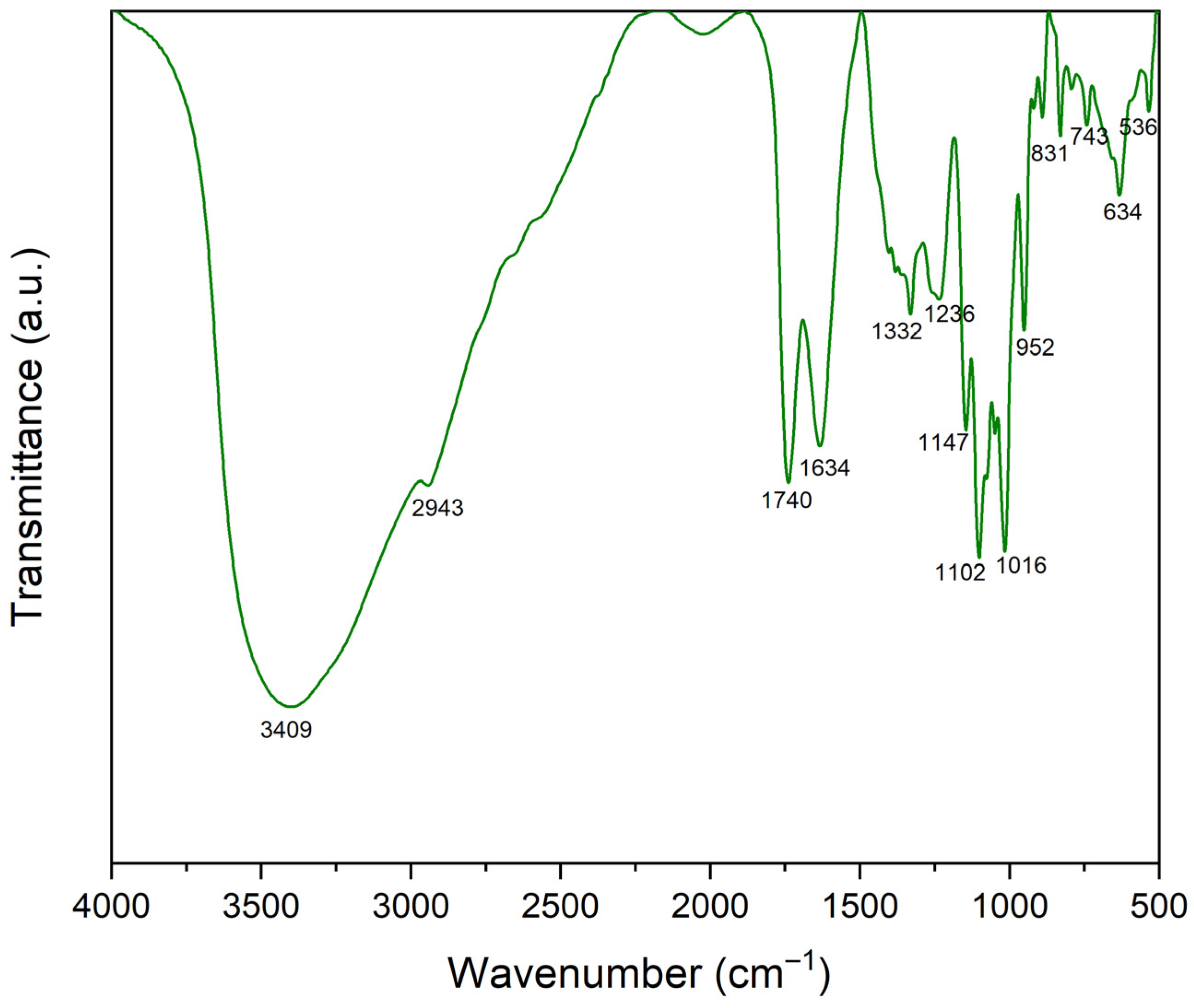
Figure 1 presents the Fourier-transform infrared spectrum of the precursor powder obtained at 110 °C, which identifies structural changes resulting from the interaction between pectin and hafnium ions. The broad band at 3409 cm−1 is attributed to O–H stretching vibrations of physisorbed water, while the band at 1634 cm−1 corresponds to the bending mode of water molecules coordinated to Hf cations [34,39]. The bands at 2943 and 1332 cm−1 are associated with C–H stretching and bending vibrations of methine groups in pectin [32,40]. The peak at 1740 cm−1 corresponds to the C=O stretching vibration of methyl-esterified carboxyl groups (chelating hafnium ions) [41]. The bands observed at 1236, 1147, 1102, 1049, 1016, and 952 cm−1 are associated with C–O, Hf–O–C, and C–O–C vibrations. In contrast, the band at 865 cm−1 and the features at 743, 634, and 536 cm−1 are attributed to Hf–O vibrations [42,43]. These results support the coordination of hafnium species within the pectin-based precursor network [40]. The ionotropic gelation mechanism between Hf4+ cations and the backbone of pectin determines the structural integrity of the hybrid precursor. This interaction aligns with a model in which high-valence hafnium ions are incorporated into electronegative cavities created by the arrangement of pectin chains. Shifts in the C=O and COO infrared bands toward lower wavenumbers indicate a reduction in the double-bond character of the carbonyl group, reflecting a strong chelation effect where oxygen atoms from both carboxylate and secondary hydroxyl groups coordinate to the hafnium center [44]. This molecular-level entrapment is essential for the subsequent carbothermal process because it inhibits the aggregation of hafnium species and maintains a stoichiometric distribution of carbon and metal atoms throughout the pre-ceramic matrix.
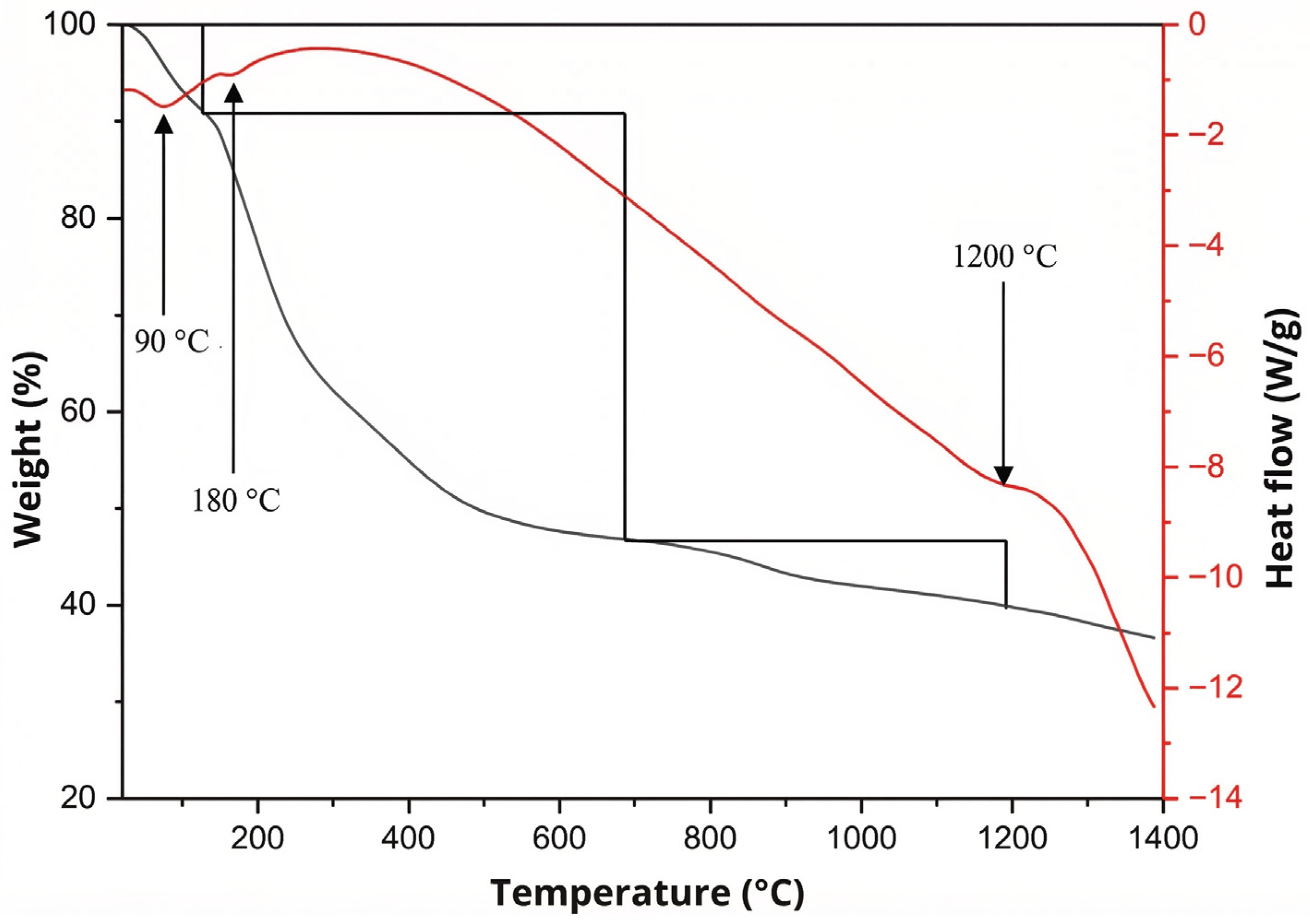
Figure 2 shows the thermal behavior of the precursor powders from room temperature to 1400 °C under argon flow, including two curves: thermogravimetric analysis (black) and differential scanning calorimetry (red). The TGA profile exhibits a four-stage weight loss: (1) below 140 °C, a mass loss of approximately 9% is observed, mainly due to the evaporation of physisorbed water; (2) a significant 43% mass loss occurs between 140 and 700 °C, attributed to the thermal decomposition of pectin sugars, which leads to the transformation of the organic precursor into an inorganic framework [41]; (3) between 700 and 1200 °C, an additional 8% mass loss is associated with the evaporation of residual impurities; and (4) above 1200 °C, carbothermal reduction begins, resulting in HfC formation and a further 2% mass loss up to 1400 °C. The total mass loss is approximately 62%. The DSC profile exhibits three characteristic endothermic events: a peak at 90 °C attributed to the evaporation of physically adsorbed water; a second peak at 180 °C associated with the thermal decomposition of pectin sugars, and an endothermic signal near 1200 °C, indicating the onset of carbothermal reduction leading to HfC formation. In summary, the precursor undergoes successive stages involving thermal decomposition, organic–inorganic transformation, and subsequent ceramization [30]. Initiating endothermic carbothermal reduction at 1200 °C demonstrates a substantially lower energy barrier than conventional solid-state synthesis methods, which generally require temperatures above 1600 °C to transform HfO2 to HfC [34]. This process likely involves the formation of metastable hafnium oxycarbides (HfCxOy) as intermediate species between 1200 and 1400 °C [8,10]. As the temperature increases toward 1500 °C, enhanced CO evolution and oxygen removal drive the transition from these Hf–O–C networks to the final HfC phase. During the initial pyrolysis stages (below 700 °C), a high-surface-area carbon framework forms and closely envelops the HfO2 nuclei, promoting efficient solid-state diffusion and CO gas evolution as temperature rises [41]. The observed total mass loss of 62% is consistent with the theoretical ceramic yield for stoichiometric conversion from the organometallic complex to the carbide phase, underscoring the effectiveness of pectin as both a chelating agent and a renewable carbon source [45]. These thermal events establish a direct link between processing temperature and the resulting phase and microstructure. The onset of carbothermal reduction near 1200 °C defines the minimum temperature required for Hf–C bond formation, while further heating promotes oxygen removal and crystallization of the cubic HfC phase. Consequently, the thermal profile of the precursor serves as a predictive tool for tailoring phase purity and crystallite size through temperature control.
The hafnium content in the hybrid precursor matches the stoichiometric ratio used in synthesis (1:4 molar ratio of HfCl4 to pectin). This is reflected in its thermal behavior. FTIR analysis confirms the successful coordination of Hf ions to the pectin backbone. This is shown by shifts in carboxyl group vibrations and the appearance of Hf–O–C and Hf–O bands. TGA/DSC data show a total mass loss of 62%. This closely matches the theoretical ceramic yield for the conversion of the hybrid precursor to the HfC phase. The agreement between experimental weight loss and theoretical predictions confirms the uniform distribution and concentration of hafnium species within the pre-ceramic matrix.

2.2. Synthesis of HfC

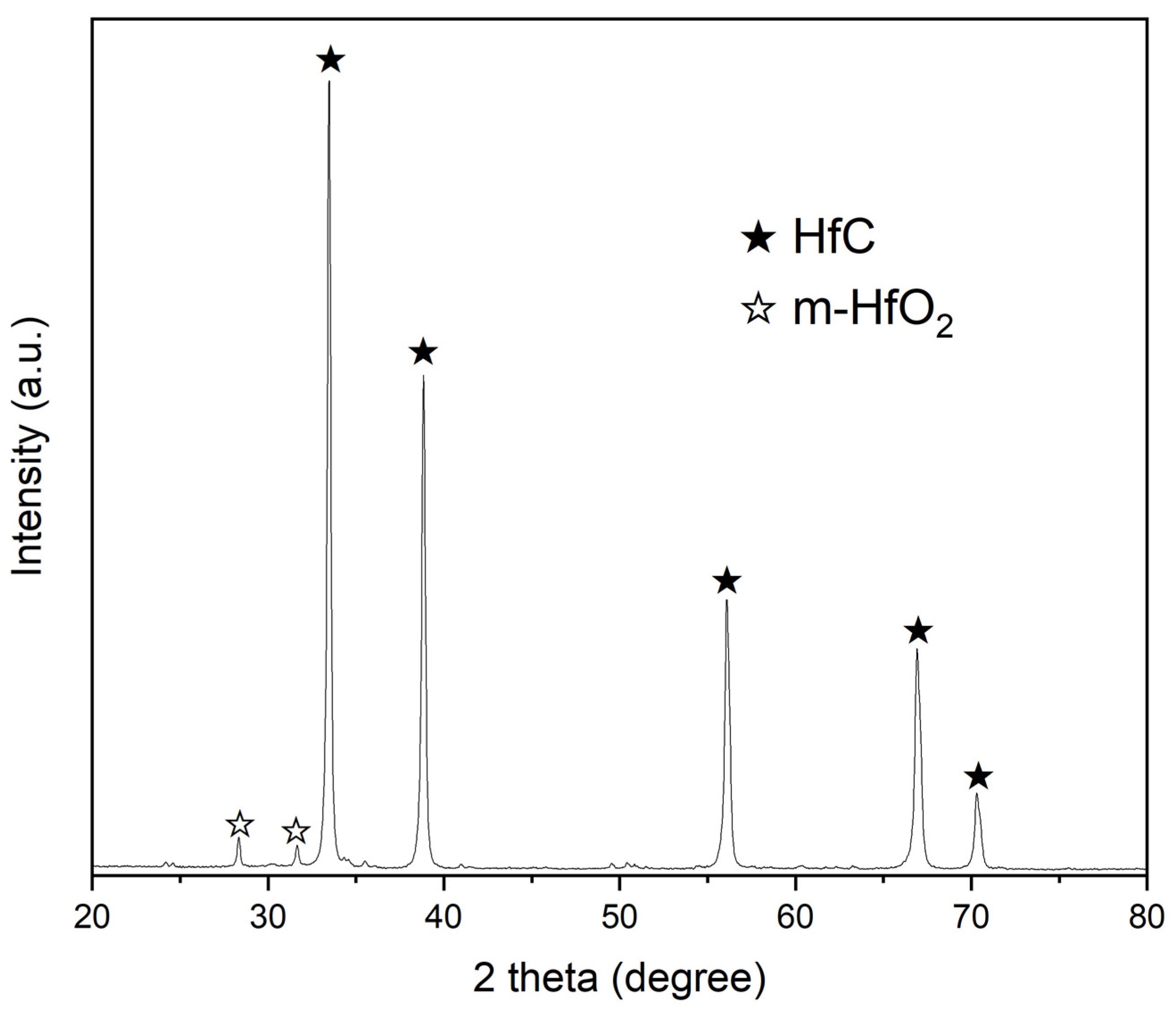
Based on the thermal analysis discussed in Section 2.1, a pyrolysis temperature of 1500 °C was selected to ensure complete carbothermal reduction while limiting excessive grain growth. This temperature lies well above the onset of HfC formation identified by DSC, allowing for sufficient diffusion kinetics for phase completion and crystallization. X-ray diffraction analysis was performed to determine the phase composition and crystallinity of the products obtained after pyrolysis of the precursor powder at 1500 °C. The corresponding diffraction pattern is shown in Figure 3. A cubic phase with space group Fm-3m was identified. The XRD pattern exhibits intense and well-defined peaks at 33.4°, 38.8°, 56.0°, 66.8°, 70.2°, and 83.2°, corresponding to the (111), (200), (220), (311), (222), and (400) planes of cubic hafnium carbide, consistent with JCPDS card No. 39-1491. The sample also exhibits two minor peaks at 28.3° and 31.7°, which were indexed to the (−111) and (111) planes of monoclinic hafnia (m-HfO2), in accordance with JCPDS card No. 34-0104. The presence of a small amount of m-HfO2 is attributed to partial oxidation during processing, likely caused by residual oxygen in the precursor or the reaction environment [36]. This oxide phase may form when trace oxygen remains bound within the precursor structure, persists as Hf–O–C intermediates, or is introduced from the atmosphere despite inert conditions. At elevated temperatures, unconverted Hf–O species can segregate and crystallize as monoclinic HfO2—the thermodynamically stable phase at room temperature—particularly in regions where local carbon activity is insufficient for complete carbothermal reduction to HfC. X-ray diffraction (XRD) analysis revealed a lattice parameter of a = 4.63 Å and an interplanar spacing of d = 2.68 Å. The diffraction pattern demonstrates that hafnium carbide (HfC) is the predominant phase, with only a minor contribution from monoclinic hafnium dioxide (HfO2). The synthesized powder appeared black, and the average crystallite size, calculated using the Scherrer equation, was 67.6 nm. The near-complete conversion to HfC is attributed to the atomic-scale homogeneity of the precursor, which facilitates intimate mixing of hafnium and carbon species and reduces diffusion distances during carbothermal reduction. Such uniformity is critical in carbothermal reduction systems, as it minimizes solid-state diffusion distances and accelerates reaction kinetics, enabling efficient transformation into hafnium monocarbide [41]. This efficiency is further supported by the high phase purity observed in the XRD patterns, which stems from the chemical homogeneity of the starting hybrid precursor. Since no separation steps (such as filtration) were performed, the stoichiometric ratio between the metal precursor and the biopolymer was strictly preserved. This total recovery method prevents the depletion of non-coordinated organic chains, which are essential to prevent the grain growth of HfO2 intermediates and to ensure a uniform distribution of carbon for the final solid-state reaction.
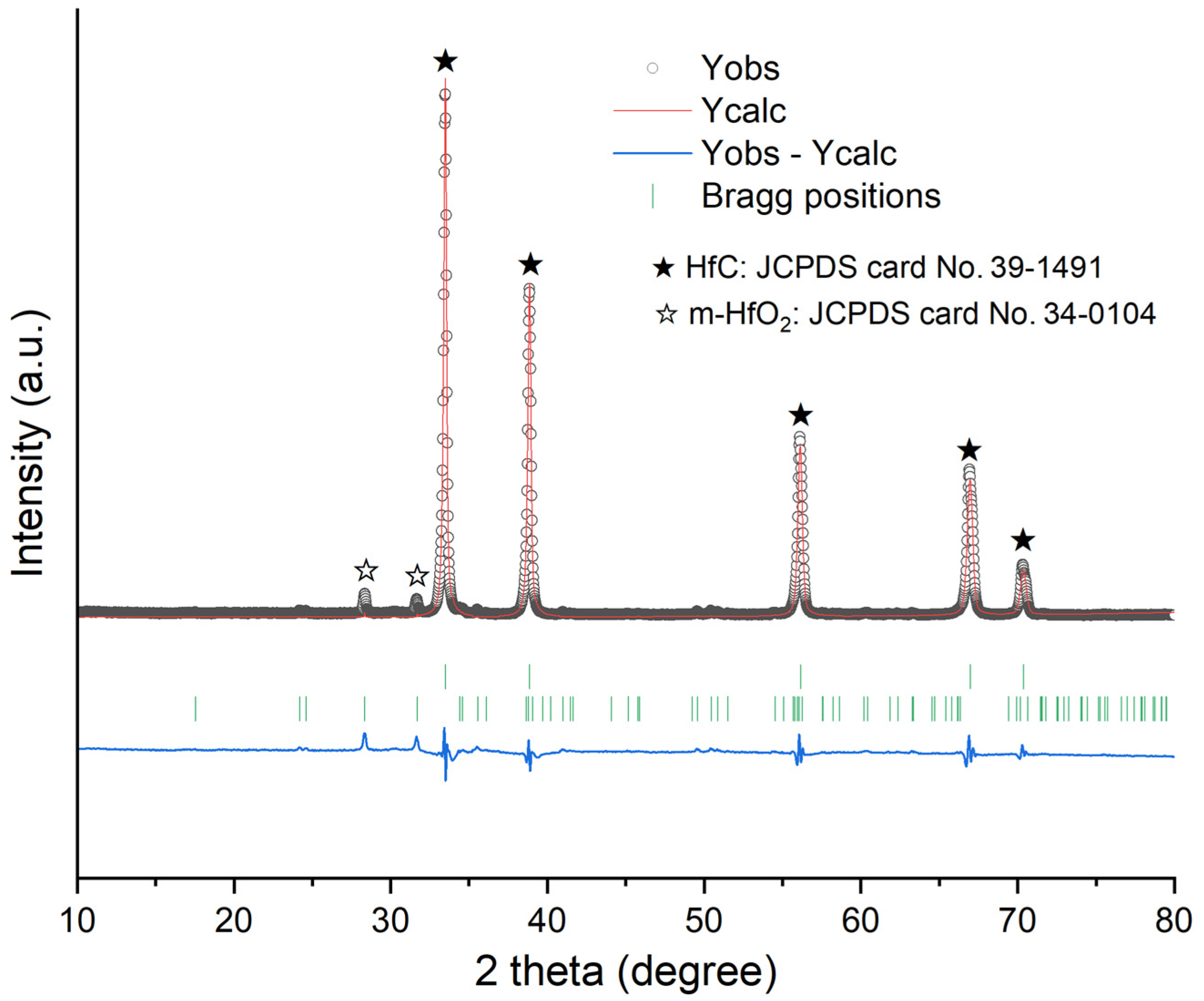
Rietveld refinement of the XRD pattern for HfC was performed using the FullProf software (version 8.20) to refine the crystal structure further. Peak profiles were modeled with a pseudo-Voigt function. The refinement results are shown in Figure 4, where the black circles represent the observed diffractogram (Yobs), the red solid line corresponds to the calculated pattern (Ycalc), the vertical bars indicate the Bragg positions (ǀ), and the bottom trace displays the difference between the experimental and calculated patterns (Yobs–Ycalc). According to the Rietveld analysis, the synthesized powder consisted of 98.08% crystalline HfC nanoparticles, with the remaining 1.92% corresponding to m-HfO2. This composition closely matches the 98.31% HfC estimated from the XRD peak-area analysis presented in Figure 3. The presence of a minor fraction of m-HfO2 (~2%) is attributed to residual oxygen in the organic–inorganic precursor or to localized carbon-deficient regions during carbothermal reduction. From an application perspective, particularly for aerospace thermal protection systems, this low oxide content is not considered detrimental. In fact, HfO2 is a highly refractory phase that can form a stable, protective oxide scale in extreme oxidative environments, potentially enhancing the ablation resistance of the UHTC composite [46,47]. However, to achieve higher phase purity, the synthesis parameters could be further optimized. The lattice parameter and interplanar spacing were determined to be a = 4.632 Å and d = 2.68 Å, values that are consistent with those obtained from the XRD analysis (a = 4.63 Å, d = 2.68 Å). The lattice parameter is almost the same as the reported values for HfC by Liu et al. (4.634 Å) [10], Vassilyeva et al. (4.634 Å) [15], Svinukhova et al. (4.63 Å) [16], Liang et al. (4.63 Å) [20], Patra et al. (4.63015 Å) [41], and JCPDS card No. 39-1491 (4.6376 Å).
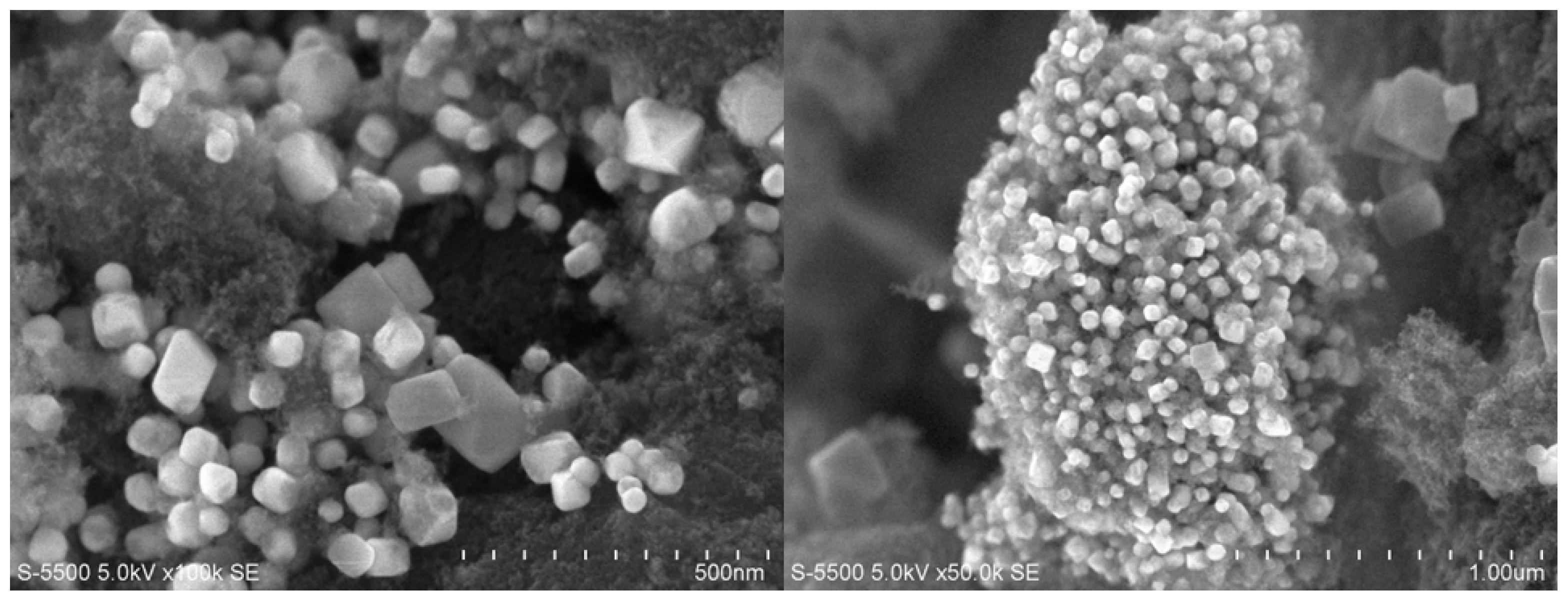
To examine the morphology and particle size of the HfC ceramics obtained after heat treatment at 1500 °C for 1.5 h, scanning electron microscopy analysis was performed. As shown in Figure 5, the SEM images reveal a homogeneous distribution of HfC grains with predominantly cubic morphology. This observation can be explained by the carbothermal reduction of HfO2 to HfC during high-temperature pyrolysis. Specifically, the elevated pyrolysis temperature (1500 °C) promotes rapid atomic diffusion and crystallite growth [34], resulting in the observed microstructure. Consequently, after treatment at 1500 °C, the precursor powder exhibited particles with well-defined cubic shapes. The observed cubic morphology and narrow particle size distribution are a direct consequence of the selected thermal profile and the homogeneous carbon distribution within the hybrid precursor. At 1500 °C, the carbonaceous matrix derived from pectin acts as a transient diffusion barrier, suppressing particle coalescence and enabling controlled crystal growth. This demonstrates a clear correlation between thermal processing conditions and the resulting particle size and morphology.
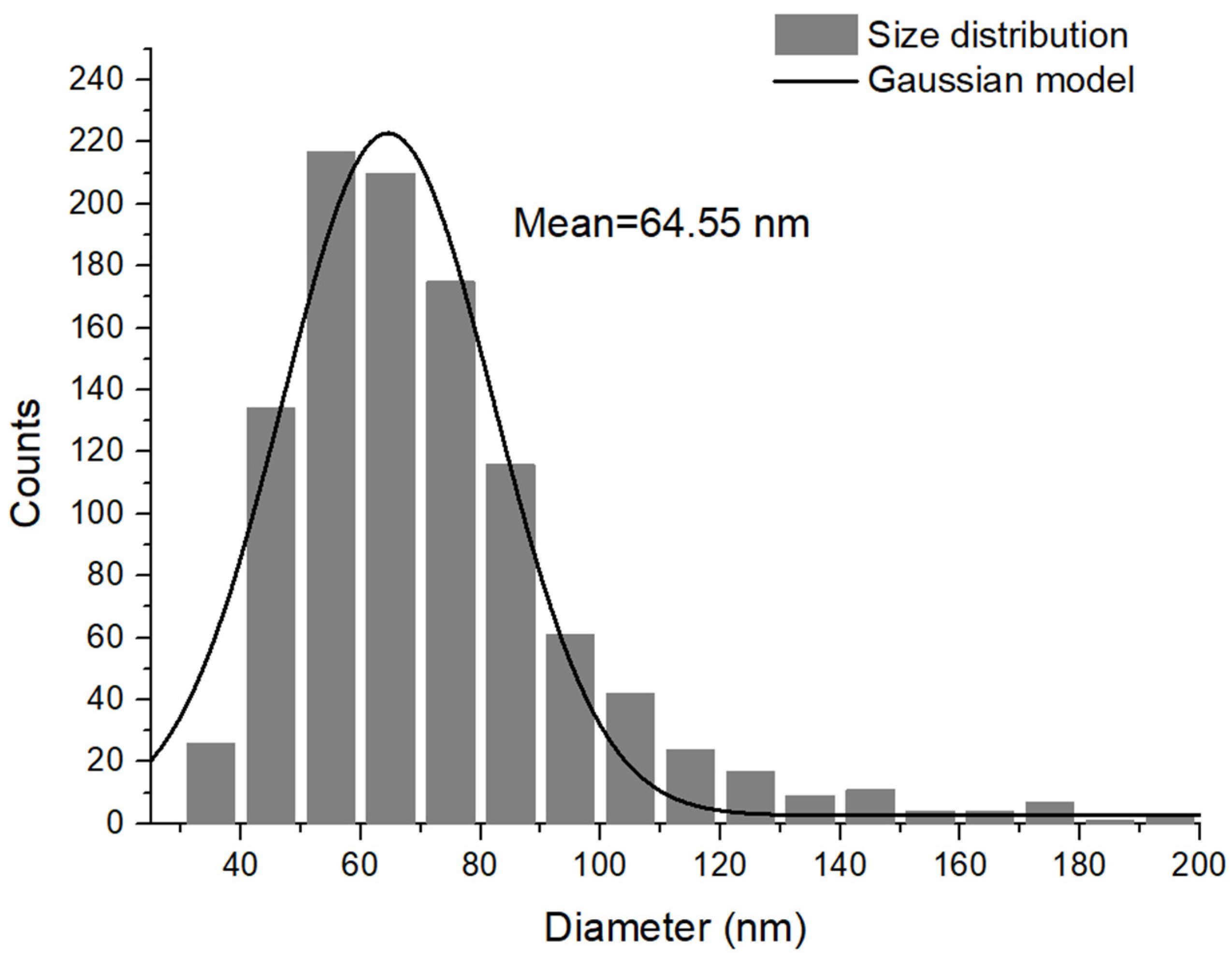
Figure 6 shows the particle-size distribution determined by image analysis of over 1000 particles. The most common size classes were 50, 60, and 70 nm, accounting for approximately 22%, 21%, and 18% of the measured particles, respectively. A small proportion of particles exhibited sizes approaching 250 nm. The mean particle size of HfC nanoparticles synthesized at 1500 °C for 1.5 h under flowing argon was 64.55 ± 16 nm.
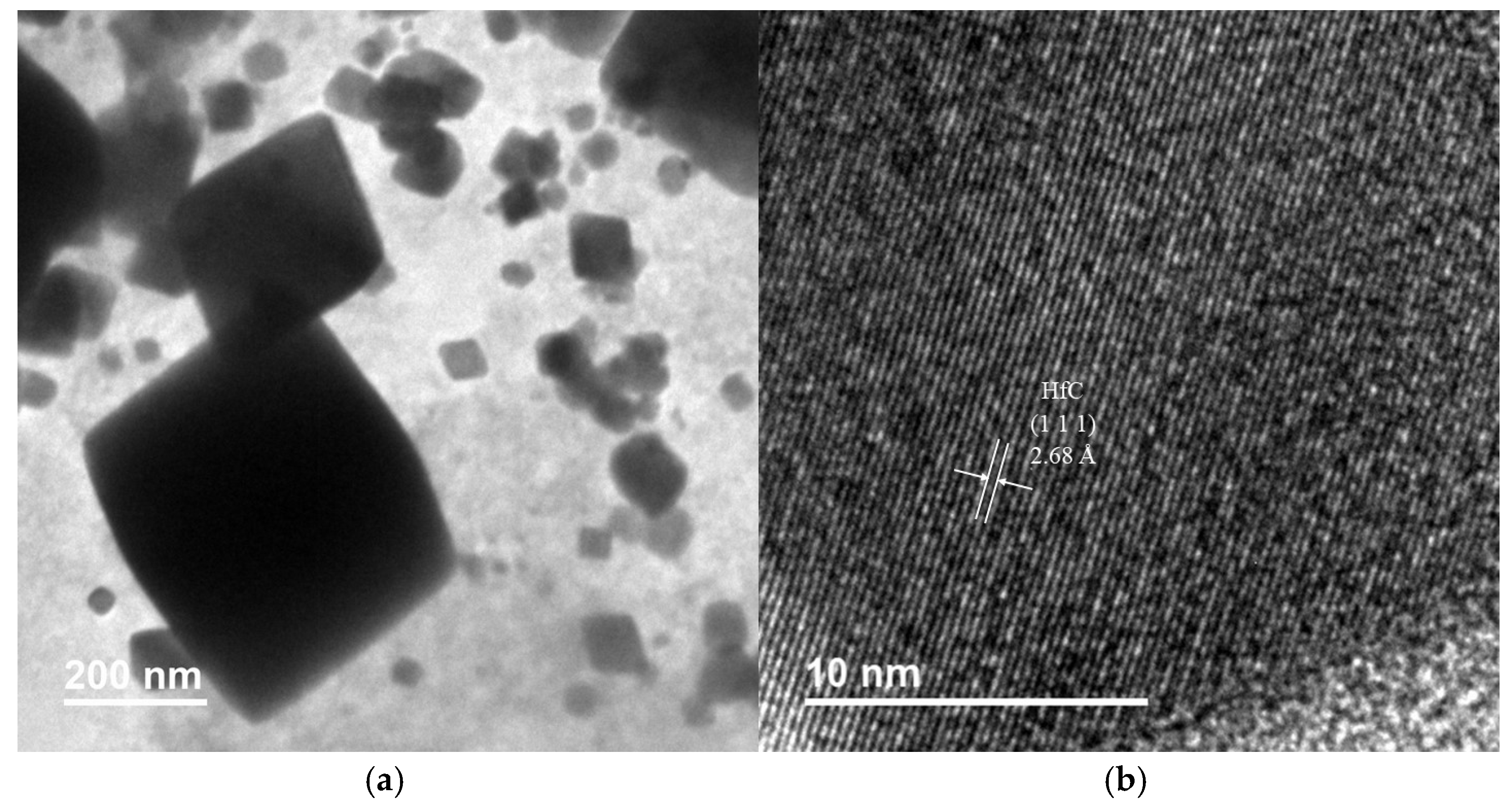
To evaluate the morphology and microstructure formed at high temperature, transmission electron microscopy analysis was performed on HfC synthesized at 1500 °C. Figure 7a presents a bright-field TEM micrograph revealing nanoparticles with predominantly cubic morphology and a broad size distribution, with an average particle size of approximately 64.55 nm. The image indicates that the particles are highly crystalline and predominantly single-crystalline. This observation is consistent with the crystallite size determined by XRD (67.6 nm), suggesting that the synthesized powder mainly consists of fully crystalline domains. The high-resolution transmission electron microscopy (HRTEM) micrograph shown in Figure 7b exhibits well-defined lattice fringes with an interplanar spacing of 2.68 Å, corresponding to the (111) plane of the HfC phase (JCPDS No. 39-1491). These results confirm that the synthesized hafnium carbide crystallizes in the cubic phase at the nanometer scale. The predominantly cubic morphology of the synthesized nanoparticles reflects the Fm-3m symmetry and the particle size distribution remains narrow, centered at approximately 64.55 nm, even at a processing temperature of 1500 °C. This observation suggests that the carbonaceous matrix derived from pectin may help limit excessive grain growth during pyrolysis. The high crystallinity and single-crystalline nature of the particles, as demonstrated by high-resolution lattice fringes (2.68 Å) corresponding to the (111) planes, are critical for optimizing the mechanical performance of the material under high-enthalpy aerodynamic flows [48]. Nanostructured UHTCs are predicted to exhibit superior thermal shock resistance compared to micro-scale analogues, as the increased grain boundary density enhances phonon scattering and more effectively accommodates localized thermal expansion gradients.
Furthermore, the scalability of this pectin-assisted route presents several industrial advantages. The exothermic nature of the HfCl4 addition to the aqueous pectin solution and the subsequent HCl release can be effectively managed in larger reactor volumes through controlled, stepwise dosing, ensuring both safety and chemical homogeneity. From a processing standpoint, the 1500 °C synthesis temperature is well within the operational range of standard industrial high-temperature furnaces. Scaling up would involve optimizing the hearth capacity and maintaining a proportional argon flow to ensure the efficient removal of CO/CO2 byproducts. Compared to traditional high-pressure or laser-sintering methods, this sustainable approach—utilizing a bio-derived carbon source and moderate temperatures—offers a lower energy footprint and reduced production costs for UHTC manufacturing.
The novelty of this study lies in the synergistic combination of a bio-derived precursor with a comprehensive structural and morphological characterization. While previous studies have explored pectin as a carbon source for HfC synthesis [41], our work diverges by providing a precise stoichiometric optimization of the Hf:Pectin ratio to maximize phase purity. Furthermore, the implementation of Rietveld refinement enabled rigorous structural validation and phase quantification (98.08% purity), addressing a gap in previous qualitative reports. HRTEM analysis further confirms the high crystallinity at the atomic scale, identifying specific crystallographic planes that corroborate the effectiveness of this pectin-assisted route. These advancements offer a more rigorous framework for the reproducible synthesis of high-purity ultra-high-temperature ceramics.

3. Materials and Methods

3.1. Materials

Hafnium tetrachloride and citrus-peel pectin supplied by Sigma-Aldrich® (Toluca, State of Mexico, Mexico) were used as raw materials for HfC synthesis. The pectin (P9135) has a galacturonic acid content of ≥74.0% (dried basis), a molecular weight of 485 kDa, and a degree of methoxylation of 57.86%.

3.2. HfC Synthesis

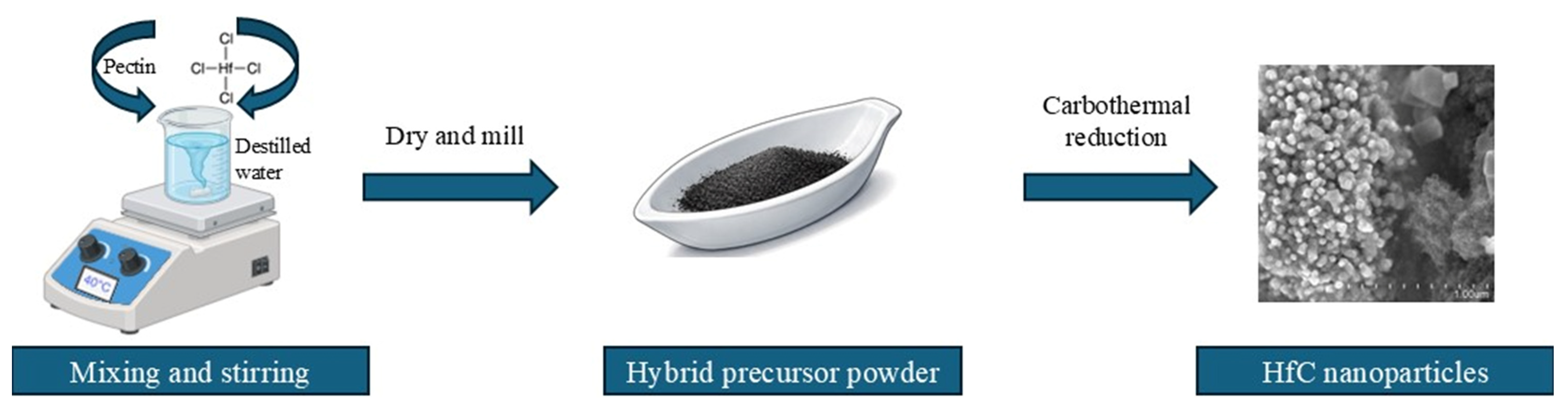
The synthesis process for HfC is schematically illustrated in Figure 8 and consists of two main stages. The first stage involves obtaining organic–inorganic hybrid precursor powders via the sol–gel method, while the second stage comprises pyrolysis and carbothermal reduction of the precursors to produce HfC. In the first stage, pectin was dissolved in distilled water under continuous stirring at 40 °C, followed by the addition of HfCl4 at a 1:4 molar ratio of hafnium tetrachloride to pectin, leading to the formation of a hybrid organic–inorganic precursor. The mixture was then dried in an oven at 110 °C for 24 h to remove excess water, yielding the precursor powders. The hybrid organic–inorganic precursor was obtained via total solvent evaporation at the same temperature, ensuring the quantitative recovery of all reacting species. This approach prevents the selective loss of pectin fractions or partially hydrolyzed hafnium intermediates, thereby maintaining the targeted 1:4 molar ratio required for precise stoichiometric control during the subsequent carbothermal reduction. In the second stage, the powders were pyrolyzed in a tube furnace at 1500 °C for 1.5 h at a heating rate of 5 °C min−1 under a 50 mL min−1 flow of high-purity argon (99.99%) to ensure complete carbothermal reduction into HfC.

3.3. Characterization Techniques

The Fourier transform infrared (FTIR) spectra of the precursor powder were obtained using a Bruker Alpha spectrometer (Bruker Optik GmbH, Ettlingen, Germany) in the 4000–500 cm−1 range using the KBr pellet method. The thermal behavior of the precursor powder was analyzed by simultaneous thermogravimetric analysis and differential scanning calorimetry TGA/DSC, SDT Q600 (TA Instruments, New Castle, DE, USA) under a flowing argon atmosphere, using a heating rate of 10 °C min−1 from room temperature to 1400 °C. X-ray powder diffraction patterns were recorded using a diffractometer RIGAKU DMAX-2200 (Rigaku Corporation, Tokyo, Japan) equipped with Cu Kα radiation (λ = 1.54178 Å). The XRD data were processed using the Rietveld refinement method for quantitative phase analysis with the FullProf software (version 8.20). Microstructure and morphology were examined by high-resolution transmission electron microscopy HRTEM, JEOL 2010F (Ltd., Tokyo, Japan), and field-emission scanning electron microscopy FESEM, Hitachi S-5500 (Ltd., Tokyo, Japan), operated at 10 kV.

4. Conclusions

This study demonstrates an efficient and sustainable route to the synthesis of nanostructured hafnium carbide using a pectin-derived organic–inorganic hybrid precursor and a carbothermal reduction process. In contrast to previously reported pectin-assisted approaches, the present method enables the direct formation of highly crystalline HfC nanoparticles with predominantly cubic morphology at 1500 °C, achieving a well-defined lattice parameter of ~4.63 Å, as confirmed by X-ray diffraction and Rietveld refinement. Thermal analysis (TGA/DSC) indicated that the reaction begins at approximately 1200 °C, highlighting the enhanced reactivity and atomic-scale homogeneity achieved through the proposed precursor chemistry.
SEM and TEM characterization revealed uniformly dispersed nanoparticles with a well-defined cubic morphology and nanometric dimensions, consistent with crystallite sizes estimated by XRD. The use of pectin as a renewable carbon source not only reduces environmental impact but also promotes superior metal–carbon mixing, enabling efficient reaction kinetics and near-complete conversion to HfC under comparatively moderate thermal conditions. These results establish an environmentally friendly, reproducible, and potentially scalable strategy for producing high-purity HfC nanostructures with only a minimal residual oxide phase (~2%). This minor m-HfO2 content, typical of precursors treated at 1500 °C, does not compromise the material’s refractory potential and can be further reduced by fine-tuning the carbon excess or the thermal soaking time. Consequently, the synthesized powder offers significant potential for applications in the aerospace sector.
The proposed synthesis strategy leverages pectin’s unique coordination properties to develop a molecularly tailored hybrid precursor that substantially reduces the thermal requirements for hafnium carbide production. The resulting 98.31% pure cubic nanoparticles represent a significant advancement in the field of ultra-high temperature ceramics, providing a scalable, environmentally sustainable alternative to conventional high-temperature processing. The dual function of pectin as both a structural scaffold and a highly reactive carbon source enables precise nanometric control and high crystallinity, positioning these HfC powders as promising candidates for advanced thermal protection systems and ceramic matrix composites.

Author Contributions

Conceptualization, L.G.C.-M., E.M.-S. and J.B.-L.; methodology, L.G.C.-M., E.M.-S., J.C.L.-C., R.S.-R. and F.B.-L.; software, J.C.L.-C., R.S.-R. and J.B.-L.; validation, L.G.C.-M., A.C.-E., F.B.-L. and J.B.-L.; formal analysis, L.G.C.-M., E.M.-S., J.C.L.-C., A.C.-E., R.S.-R., F.B.-L. and J.B.-L.; investigation, L.G.C.-M., E.M.-S. and J.B.-L.; resources, L.G.C.-M. and J.B.-L.; data curation, J.C.L.-C., A.C.-E., R.S.-R. and F.B.-L.; writing—original draft preparation, L.G.C.-M., E.M.-S. and J.B.-L.; writing—review and editing, L.G.C.-M., A.C.-E. and J.B.-L.; visualization, J.C.L.-C., A.C.-E., R.S.-R. and F.B.-L.; supervision, L.G.C.-M. and J.B.-L. All authors have read and agreed to the published version of the manuscript.

Funding

This research received no external funding.

Institutional Review Board Statement

Not applicable.

Informed Consent Statement

Not applicable.

Data Availability Statement

The original contributions presented in this study are included in the article. Further inquiries can be directed to the corresponding authors.

Acknowledgments

The authors gratefully acknowledge the technical assistance provided by M.L. Ramón García for the XRD analysis and by R. Morán Elvira for the SEM analysis, both from IER-UNAM. The authors also thank J.C. Tánori Córdova from the MET-UNISON Laboratory at the University of Sonora for granting access to the facilities.

Conflicts of Interest

The authors declare no conflicts of interest.

Abbreviations

The following abbreviations are used in this manuscript:
HfChafnium carbide
HfCl4hafnium tetrachloride
TGAthermogravimetric analysis
DSCdifferential scanning calorimetry
FTIRFourier transform infrared
XRDX-ray diffraction
SEMscanning electron microscopy
TEMtransmission electron microscopy
Åangstrom
UHTCsultra-high temperature ceramics
CVDchemical vapor deposition
a.u.arbitrary units
JCPDSjoint committee on powder diffraction standards
m-HfO2monoclinic hafnia
Yobsobserved diffractogram
Ycalccalculated pattern
HRTEMhigh-resolution transmission electron microscopy
KBrpotassium bromide
FESEMfield-emission scanning electron microscope
NPsnanoparticles

References

  1. Yu, D.; Yin, J.; Zhang, B.; Liu, X.; Huang, Z. Recent development of high-entropy transitional carbides: A review. J. Ceram. Soc. Jpn. 2020, 128, 329–335. [Google Scholar] [CrossRef]
  2. Zheng, J.; He, P.; Jiang, F.; Sun, C.; Hu, S.; Xing, Y.; Duan, X.; Liang, X.; Hu, Z. Thick and dense nitrogen-doped hafnium carbide ultra-high temperature thermal protection coating for outstanding ablation resistance up to 2600 °C. J. Alloys Compd. 2025, 1010, 177379. [Google Scholar] [CrossRef]
  3. Zagorac, J.; Schön, J.C.; Matović, B.; Butulija, S.; Zagorac, D. Hafnium carbide: Prediction of crystalline structures and investigation of mechanical properties. Crystals 2024, 14, 340. [Google Scholar] [CrossRef]
  4. Gürgenç, E.; Öztop, H.F.; Şenocak, Ş.M.; Aktemur, C.; Gürgenç, T.; Varol, Y.; Yamaç, H.I.; Gür, M. Hafnium carbide as a novel nanofiller for RT64HC phase change materials: Enhancing thermal conductivity, heat capacity, and cycling stability. Therm. Sci. Eng. Prog. 2026, 69, 104257. [Google Scholar] [CrossRef]
  5. Nisar, A.; Lou, L.; Boesl, B.; Agarwal, A. Enhanced flexibility and thermal conductivity of HfC decorated carbon nanofiber mats. Carbon 2023, 205, 573–582. [Google Scholar] [CrossRef]
  6. Bokhonov, B.B.; Dudina, D.V. Synthesis of ZrC and HfC nanoparticles encapsulated in graphitic shells from mechanically milled Zr-C and Hf-C powder mixtures. Ceram. Int. 2017, 43, 14529–14532. [Google Scholar] [CrossRef]
  7. Lu, D.; Wang, W.; Wang, H.; Zhang, J.; Wang, Y.; Zhang, F.; Fu, Z. Synthesis of ultra-fine hafnium carbide powders combining the methods of liquid precursor conversion and plasma activated sintering. Ceram. Int. 2016, 42, 8108–8114. [Google Scholar] [CrossRef]
  8. Feng, L.; Lee, S.H.; Wang, H.; Lee, H.S. Synthesis and densification of nano-crystalline hafnium carbide powder. J. Eur. Ceram. Soc. 2015, 35, 4073–4081. [Google Scholar] [CrossRef]
  9. Cheng, J.; Wang, J.; Wang, X.; Wang, H. Preparation and high-temperature performance of HfC-based nanocomposites derived from precursor with Hf-(O,N) bonds. Ceram. Int. 2017, 43, 7159–7165. [Google Scholar] [CrossRef]
  10. Liu, J.X.; Kan, Y.M.; Zhang, G.J. Synthesis of ultra-fine hafnium carbide powder and its pressureless sintering. J. Am. Ceram. Soc. 2010, 93, 980–986. [Google Scholar] [CrossRef]
  11. Lyakhov, N.; Grigoreva, T.; Šepelák, V.; Tolochko, B.; Ancharov, A.; Vosmerikov, S.; Devyatkina, E.; Udalova, T.; Petrova, S. Rapid mechanochemical synthesis of titanium and hafnium carbides. J. Mater. Sci. 2018, 53, 13584–13591. [Google Scholar] [CrossRef]
  12. Grigoreva, T.F.; Tolochko, B.P.; Logachev, P.V.; Ancharov, A.I.; Vosmerikov, S.V.; Devyatkina, E.T.; Udalova, T.A.; Vorsina, I.A.; Pastukhov, E.A.; Lyakhov, N.Z. Synthesis of hafnium carbide by mechanochemistry and irradiation. Russ. Metall. 2017, 2017, 660–663. [Google Scholar] [CrossRef]
  13. Tian, S.; Zhang, Y.; Ren, J.; Qiang, X.; Zhang, S.; Li, H. High-aspect-ratio HfC nanobelts accompanied by HfC nanowires: Synthesis, characterization and field emission properties. Appl. Surf. Sci. 2017, 402, 344–351. [Google Scholar] [CrossRef]
  14. Yuan, J.; Zhang, H.; Tang, J.; Shinya, N.; Nakajima, K.; Qin, L.C. Synthesis and characterization of single crystalline hafnium carbide nanowires. J. Am. Ceram. Soc. 2012, 95, 2352–2356. [Google Scholar] [CrossRef]
  15. Vassilyeva, Y.Z.; Povalyaev, P.V.; Korchagina, A.P.; Yankovsky, S.A.; Pak, A.Y. Synthesis of hafnium carbide powder in atmospheric arc plasma. Tech. Phys. 2024, 69, 1434–1441. [Google Scholar] [CrossRef]
  16. Svinukhova, A.A.; Shekhovtsov, V.V.; Nassyrbayev, A. Plasma synthesis of hafnium carbide and production of a bulk ceramic sample based on it. High Energy Chem. 2024, 58, S253–S256. [Google Scholar] [CrossRef]
  17. Lopez, O.; Magaña, A.; Zhang, J.; Mehrabi, H.; Hunter, B.M. Effects of liquid environments on the distribution of hafnium oxide and hafnium carbide nanoparticles from pulsed-laser synthesis: Implications for high-melting ceramics. ACS Appl. Nano Mater. 2024, 7, 5085–5092. [Google Scholar] [CrossRef]
  18. Sun, B.; Li, C.; Ouyang, H.; Gao, R.; Shen, T.; Li, Y. Synthesis of HfC nanowires on carbon fibers by a novel catalyst-assisted pyrolysis using HfCl4 as precursor. Ceram. Int. 2024, 50, 24901–24906. [Google Scholar] [CrossRef]
  19. Yudin, S.N.; Kasimtsev, A.V.; Volodko, S.S.; Alimov, I.A.; Markova, G.V.; Sviridova, T.A.; Tabachkova, N.Y.; Buinevich, V.S.; Nepapushev, A.A.; Moskovskikh, D.O. Low-temperature synthesis of ultra-high-temperature HfC and HfCN nanoparticles. Materialia 2022, 22, 101415. [Google Scholar] [CrossRef]
  20. Liang, H.; Fang, L.; Guan, S.; Peng, F.; Zhang, Z.; Chen, H.; Zhang, W.; Lu, C. Insights into the bond behavior and mechanical properties of hafnium carbide under high pressure and high temperature. Inorg. Chem. 2021, 60, 515–524. [Google Scholar] [CrossRef]
  21. Cai, T.; Liu, D.; Qiu, W.F.; Han, W.J.; Zhao, T. Polymer precursor-derived HfC–SiC ultrahigh-temperature ceramic nanocomposites. J. Am. Ceram. Soc. 2018, 101, 20–24. [Google Scholar] [CrossRef]
  22. Tian, S.; Li, H.; Zhang, Y.; Liu, S.; Fu, Y.; Li, Y.; Qiang, X. Synthesis and characterization of hafnium carbide microcrystal chains with a carbon-rich shell via CVD. J. Alloys Compd. 2013, 580, 407–411. [Google Scholar] [CrossRef]
  23. Devasvaran, K.; Lim, V. Green synthesis of metallic nanoparticles using pectin as a reducing agent: A systematic review of the biological activities. Pharm. Biol. 2021, 59, 492–501. [Google Scholar] [CrossRef]
  24. Wang, W.; Feng, Y.; Chen, W.; Adie, K.; Liu, D.; Yin, Y. Citrus pectin modified by microfluidization and ultrasonication: Improved emulsifying and encapsulation properties. Ultrason. Sonochem. 2021, 70, 105322. [Google Scholar] [CrossRef]
  25. Zhang, M.; Dong, X.; Jiang, J.; Liu, Y.; Yang, X.; Luan, X.; Yu, Z. One-pot synthesis and polymer-to-ceramic transformation of a novel HfC precursor. J. Am. Ceram. Soc. 2025, 108, e20581. [Google Scholar] [CrossRef]
  26. Wang, X.; Zhang, L.; Wang, Y. Preparation of HfC-SiC ultra-high-temperature ceramics by the copolycondensation of HfC and SiC precursors. J. Mater. Sci. 2022, 57, 4467–4480. [Google Scholar] [CrossRef]
  27. Cheng, J.; Wang, X.; Wang, J.; Wang, H. Synthesis of a novel single-source precursor for HfC ceramics and its feasibility for the preparation of Hf-based ceramic fibres. Ceram. Int. 2018, 44, 7305–7309. [Google Scholar] [CrossRef]
  28. Jing, L.; Yang, L.; Liang, Y.; Shen, S.; Zhang, J.; Liu, L.; Zhao, C.; Ma, H.; Wang, G. Oxidation mechanism of carbon fiber reinforced hafnium carbide composite in plasma wind tunnel. Ceram. Int. 2023, 49, 3088–3093. [Google Scholar] [CrossRef]
  29. Zhao, X.; Kong, X.; Li, G.; Zhao, Y.; Jia, Z.; He, F.; Yang, P.; Ge, K.; Zhang, M.; Liu, Z. Ru-based catalysts for hydrogenation of N-ethylcarbazole: Progress and prospects. Fuel 2024, 360, 130605. [Google Scholar] [CrossRef]
  30. Li, X.; Zhang, Y.; Fu, Y.; Zhao, J.; Meng, J. From molecular precursors to ultra-high temperature ceramics: A novel synthesis of hafnium carbonitride nanoceramics. J. Mater. Sci. Technol. 2025, 223, 11–21. [Google Scholar] [CrossRef]
  31. Zeng, G.; Xu, P.; Zeng, C.; Huang, Q.; Su, Z. Preparation of HfCxN1−x nanoparticles derived from a multifunction precursor with Hf-O and Hf-N bonds. Materials 2023, 16, 4426. [Google Scholar] [CrossRef]
  32. Jin, W.; Moon, C.; Shin, D.G.; Jung, J.; Riu, D.H. Aqueous-phase synthesis of hafnium carbonitride precursors via bidentate ligand coordination. Int. J. Refract. Met. Hard Mater. 2026, 136, 107633. [Google Scholar] [CrossRef]
  33. Mujib, S.B.; Rasheed, M.; Arunachalam, S.R.; Singh, G. Hybrid HfC-SiCN matrix for improved oxidation resistance of carbon fiber–reinforced mini-composites. Int. J. Ceram. Eng. Sci. 2024, 6, 10209. [Google Scholar] [CrossRef]
  34. Mujib, S.B.; Arunachalam, S.R.; Singh, G. Low-temperature synthesis of HfC/HfO2 nanocomposites from a commercial single-source precursor. Int. J. Ceram. Eng. Sci. 2023, 5, e10187. [Google Scholar] [CrossRef]
  35. Hu, W.; Han, C.; Zhao, Z.; Yang, Y.; Wang, X. Synthesis of HfBCN single-source precursor and its spinning feasibility for deriving ultra-high temperature ceramic fibers. J. Eur. Ceram. Soc. 2026, 46, 117842. [Google Scholar] [CrossRef]
  36. Rajpoot, S.; Nonavinakere Vinod, K.; Fang, T.; Xu, C. Synthesis of hafnium carbide (HfC) via one-step selective laser reaction pyrolysis from liquid polymer precursor. J. Am. Ceram. Soc. 2025, 108, e20650. [Google Scholar] [CrossRef]
  37. Zhang, B.; Zhong, F.; Qiu, X.; Xu, J.; Hu, M.; Ou-Yang, J.; Zhang, Y.; Zhu, B.; Yang, X.; Chen, S. Hydrothermal synthesis of HfC whiskers and its toughening effect on ZrB2-HfO2 coatings. J. Solid State Chem. 2024, 329, 124384. [Google Scholar] [CrossRef]
  38. Fu, Y.; Zhang, Y.; Yan, H.; Li, J.; Yin, X.; Sun, J.; Fu, Q.; Riedel, R. Microstructure and evolution of hafnium carbide whiskers via polymer-derived ceramics: A novel formation mechanism. J. Adv. Ceram. 2023, 12, 578–586. [Google Scholar] [CrossRef]
  39. Jiang, Y.; Ni, D.; Ding, Q.; Chen, B.; Chen, X.; Kan, Y.; Dong, S. Synthesis and characterization of nano-crystalized HfC based on an aqueous solution-derived precursor. RSC Adv. 2018, 8, 39284–39290. [Google Scholar] [CrossRef]
  40. Zhang, H.; Sun, X.; Lan, H.; Ge, M.; Yu, S.; Sun, Q.; Zhang, H.; Zhang, W. Pyrolysis synthesis and microstructure of yttrium modified hafnium carbide from polymer precursor. J. Am. Ceram. Soc. 2025, 108, e20300. [Google Scholar] [CrossRef]
  41. Patra, N.; Al Nasiri, N.; Jayaseelan, D.D.; Lee, W.E. Low-temperature solution synthesis of nanosized hafnium carbide using pectin. Ceram. Int. 2016, 42, 1959–1963. [Google Scholar] [CrossRef]
  42. Wang, W.; Wu, Z.; Song, S.; You, Q.; Cui, S.; Shen, W.; Wang, G.; Zhang, X.; Zhu, X. Facile preparation of a novel HfC aerogel with low thermal conductivity and excellent mechanical properties. Gels 2023, 9, 839. [Google Scholar] [CrossRef] [PubMed]
  43. Cheng, J.; Dong, Z.; Zhu, H.; Yuan, G.; Westwood, A.; Cong, Y.; Li, B.; Guo, J.; Li, X. Synthesis and ceramisation of organometallic precursors for Ta4HfC5 and TaHfC2 ultra-fine powders through a facile one-pot reaction. J. Alloys Compd. 2022, 898, 162989. [Google Scholar] [CrossRef]
  44. Pablo, A.G.P.; Klinkesorn, U.; Tongchitpakdee, S. Optimized microencapsulation of phenolic-and vitamin C-rich juice from Indian gooseberry by calcium-alginate ionic-crosslinking. J. Agric. Food Res. 2025, 22, 102024. [Google Scholar] [CrossRef]
  45. Patra, N.; Lee, W.E. Facile precursor synthesis of HfC–SiC ultra-high-temperature ceramic composite powder for potential hypersonic applications. ACS Appl. Nano Mater. 2018, 1, 4502–4508. [Google Scholar] [CrossRef]
  46. Stolyarova, V.L.; Vorozhtcov, V.A. Thermal stability of hafnia-containing ceramics for high temperature coatings. Acta Astronaut. 2025, 229, 866–873. [Google Scholar] [CrossRef]
  47. Mergia, K.; Liedtke, V.; Speliotis, T.; Apostolopoulos, G.; Messoloras, S. Thermo-mechanical behaviour of HfO2 coatings for aerospace applications. Adv. Mater. Res. 2009, 59, 87–91. [Google Scholar] [CrossRef]
  48. Gao, R.; Wang, S.; Zhou, T.; Jiang, T.; Lu, L.; Wen, Q.; Tao, S.; Xiong, X. Research progress on ultrahigh-temperature ceramics modified C/C composites. Materials 2025, 18, 3891. [Google Scholar] [CrossRef]
Figure 1. Fourier transform infrared spectrum of hybrid precursor powder obtained at 110 °C.
Inorganics 14 00092 g001
Figure 2. TGA/DSC curves of the hybrid precursor under an argon atmosphere.
Inorganics 14 00092 g002
Figure 3. XRD pattern of the HfC ceramic powders for 1.5 h under a flowing argon atmosphere.
Inorganics 14 00092 g003
Figure 4. Rietveld refinement of the XRD pattern of the synthesized HfC powder.
Inorganics 14 00092 g004
Figure 5. SEM micrographs of HfC synthesized at 1500 °C for 1.5 h under a flowing argon atmosphere.
Inorganics 14 00092 g005
Figure 6. Particle-size distribution histogram of the synthesized HfC nanoparticles with Gaussian fitting. The mean particle diameter was 64.55 nm.
Inorganics 14 00092 g006
Figure 7. Micrographs of HfC powders synthesized at 1500 °C: (a) TEM, (b) HRTEM.
Inorganics 14 00092 g007
Figure 8. Schematic representation of the synthesis route for HfC nanoparticles.
Inorganics 14 00092 g008
Disclaimer/Publisher’s Note: The statements, opinions and data contained in all publications are solely those of the individual author(s) and contributor(s) and not of MDPI and/or the editor(s). MDPI and/or the editor(s) disclaim responsibility for any injury to people or property resulting from any ideas, methods, instructions or products referred to in the content.