Article

A Robust Zn-MOF Integrating Selective Luminescence Detection and On-Site Visual Monitoring of PNP and BNPP in Water


School of Chemistry and Chemical Engineering, Henan University of Technology, Zhengzhou 450001, China
*
Author to whom correspondence should be addressed.
Inorganics 2026, 14(4), 108; https://doi.org/10.3390/inorganics14040108 (registering DOI)
Submission received: 7 March 2026 / Revised: 28 March 2026 / Accepted: 9 April 2026 / Published: 11 April 2026
(This article belongs to the Section Coordination Chemistry)

Abstract

p-Nitrophenol (PNP) and bis(4-nitrophenyl) phosphate (BNPP), as typical persistent and toxic organic contaminants, present significant risks to both ecological systems and human health. Accurately quantifying these compounds using luminescent sensors remains a formidable task. In this study, we successfully synthesized a zinc-based metal–organic framework (Zn-MOF) that functions as a luminescent sensing material. The synthesized Zn-MOF demonstrates exceptional dual-response luminescent detection toward PNP and BNPP, with detection limits as low as 3.49 × 10⁻⁶ and 8.43 × 10⁻⁶ mol/L, respectively. The sensor maintains high selectivity and functionality even in the presence of various potentially interfering substances commonly found in complex environmental samples. Moreover, the material can be fabricated into a visual sensing film, greatly facilitating its application in on-site rapid detection scenarios. Overall, this work introduces a novel luminescent sensor platform that enables fast and reliable monitoring of PNP and BNPP in environmental contexts, demonstrating strong potential for integration into real-time surveillance and early warning systems.

1. Introduction

PNP is one of the most widely utilized phenolic compounds globally, playing a key role in the production of analgesics, dyes, organophosphorus pesticides, and leather processing [1,2,3]. Recognized as an endocrine disruptor with both estrogenic and anti-androgenic effects, PNP contamination in aquatic systems poses serious concerns for public health and ecological safety [4,5,6]. As a result, it has been classified as a priority water pollutant by the U.S. Environmental Protection Agency [7,8]. BNPP as an organophosphorus compound (Figure S1) holds significant value in biological and chemical research. It is commonly employed as a selective substrate for phosphoric esterases in biochemical assays to assess phosphatase activity [9] and as an aryl phosphorylation agent for introducing phosphate ester moieties into target molecules. Despite its utility, BNPP is environmentally persistent and resists natural degradation [10]. Upon entering the human body through the food chain, residual BNPP can lead to severe health complications, including blindness, cancer, liver damage, neurological impairment, respiratory diseases, and endocrine disruption [11]. Hence, monitoring PNP and BNPP levels in water environments is essential for safeguarding human health [12]. Several analytical techniques are currently available for detecting these contaminants, such as gas chromatography [13], high-performance liquid chromatography [14], and liquid chromatography tandem mass spectrometry [15]. While these methods offer high precision, their practical deployment is often hindered by the need for specialized operators, expensive instrumentation, and labor-intensive sample preparation procedures [16]. Therefore, there is an urgent need to develop novel detection materials that are not only efficient and cost-effective but also simple to operate, an emerging priority in the field of environmental analysis.
To overcome this challenge, we explored metal–organic frameworks (MOFs) as platforms for luminescence sensing [17,18,19]. MOFs are porous crystalline materials formed via the self-assembly of metal ions or clusters with organic linkers [20,21,22,23]. Owing to their large surface areas, adjustable pore structures, and chemical tunability, MOFs are highly attractive for the sensitive and selective detection of aquatic pollutants [24,25,26,27,28]. Nevertheless, the complexity of real-world environmental samples introduces significant hurdles for luminescence-based detection [29,30,31]. A major concern is the coexistence of various interfering species, such as competing ions and biological molecules, that can compromise both the sensitivity and selectivity of the sensing platform [32,33,34,35,36,37,38,39,40]. In light of these challenges, the development of luminescent sensors that combine high sensitivity with robust stability under complex conditions has become a critical research priority.
In this work, we successfully synthesized and characterized a novel zinc-based metal–organic framework, Zn-BTB (1), assembled from the ligand 1,3,5-tri(4-carboxyphenyl)benzene (BTB). The compound exhibits distinct luminescent responses toward both PNP and BNPP. Through concentration-dependent luminescence titration experiments, a linear correlation was established between the luminescence intensity ratio (I/I0) and the concentration of each analyte. The detection limits were determined to be as low as 3.49 × 10⁻⁶ mol/L for PNP and 8.43 × 10⁻⁶ mol/L for BNPP. To facilitate on-site visual detection, we further developed a sensing film based on this material, significantly enhancing its practicality for rapid field analysis. The sensor also demonstrates excellent anti-interference capability in complex environmental matrices. These findings highlight the potential of compound 1 as a high-performance luminescent probe for real-time monitoring, early warning, and pollution control of trace organic contaminants in environmental systems.

2. Results and Discussion

2.1. Structure Description and Characterization

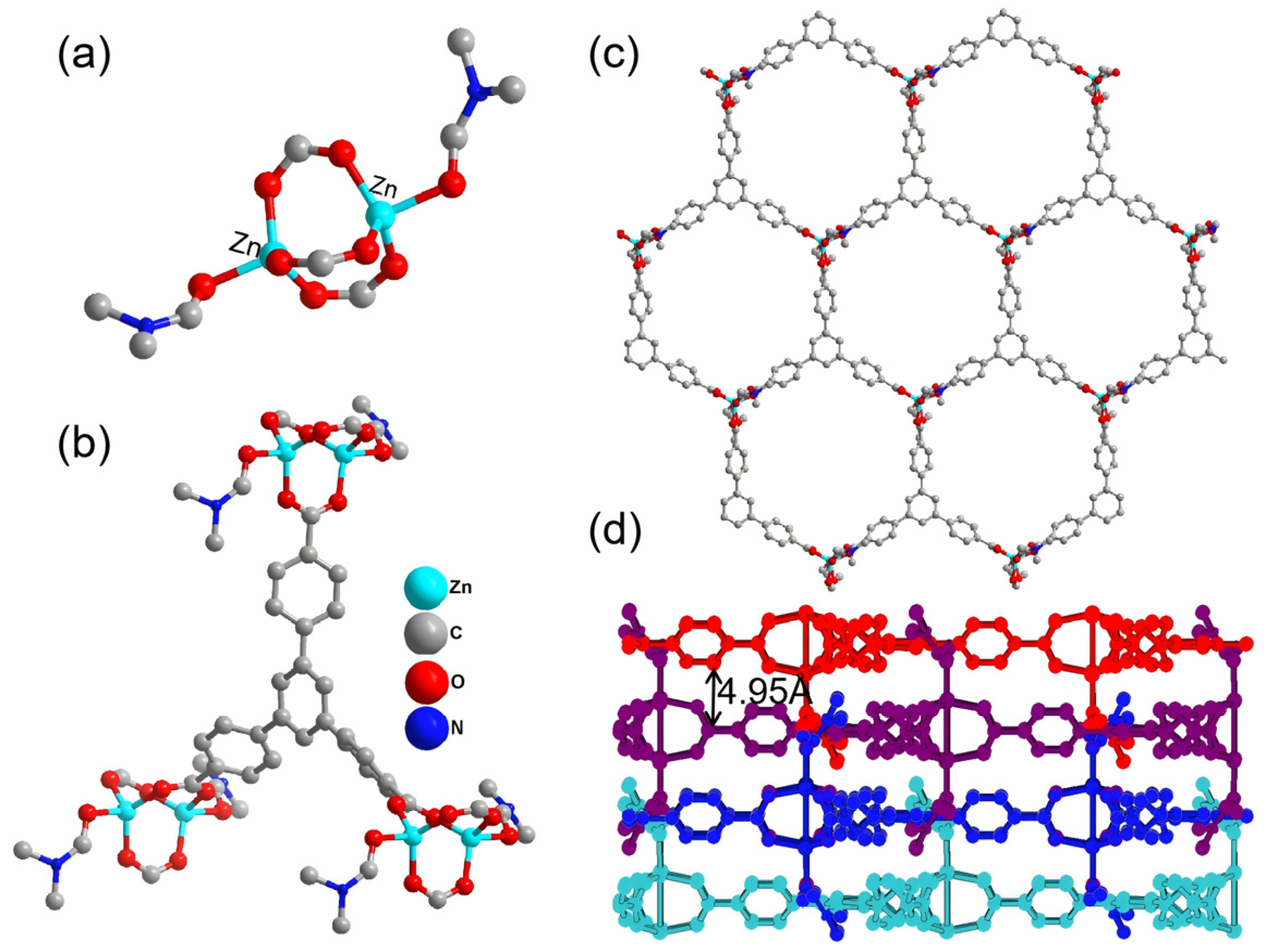
Compound 1 was obtained by volatilization from a mixed DMF/water solution containing zinc acetate and the BTB ligand at room temperature, with lithium hydroxide serving as the acid-base regulator. Single-crystal X-ray diffraction reveals that compound 1 crystallizes in the monoclinic space group I2/a (Table S1). In the asymmetric unit of 1, there is one crystallographically independent Zn2+ ion. The Zn2+ center is coordinated by three oxygen atoms from three carboxylate groups of three different ligands and one oxygen atom from a coordinating DMF molecule (Figure 1a). Each carboxylate group of the BTB ligand connects two Zn2+ ions, propagating a two-dimensional layered MOF structure (Figure 1b). Viewed along the a-axis, the structure of 1 exhibits one hexagonal channel with dimensions of 18.10 × 16.55 Å (Figure 1c). The two-dimensional layers are stacked along the crystallographic (101) direction with an interlayer distance of approximately 4.95 Å (Figure 1d), and adjacent layers are stabilized by electrostatic interactions and weak van der Waals forces.
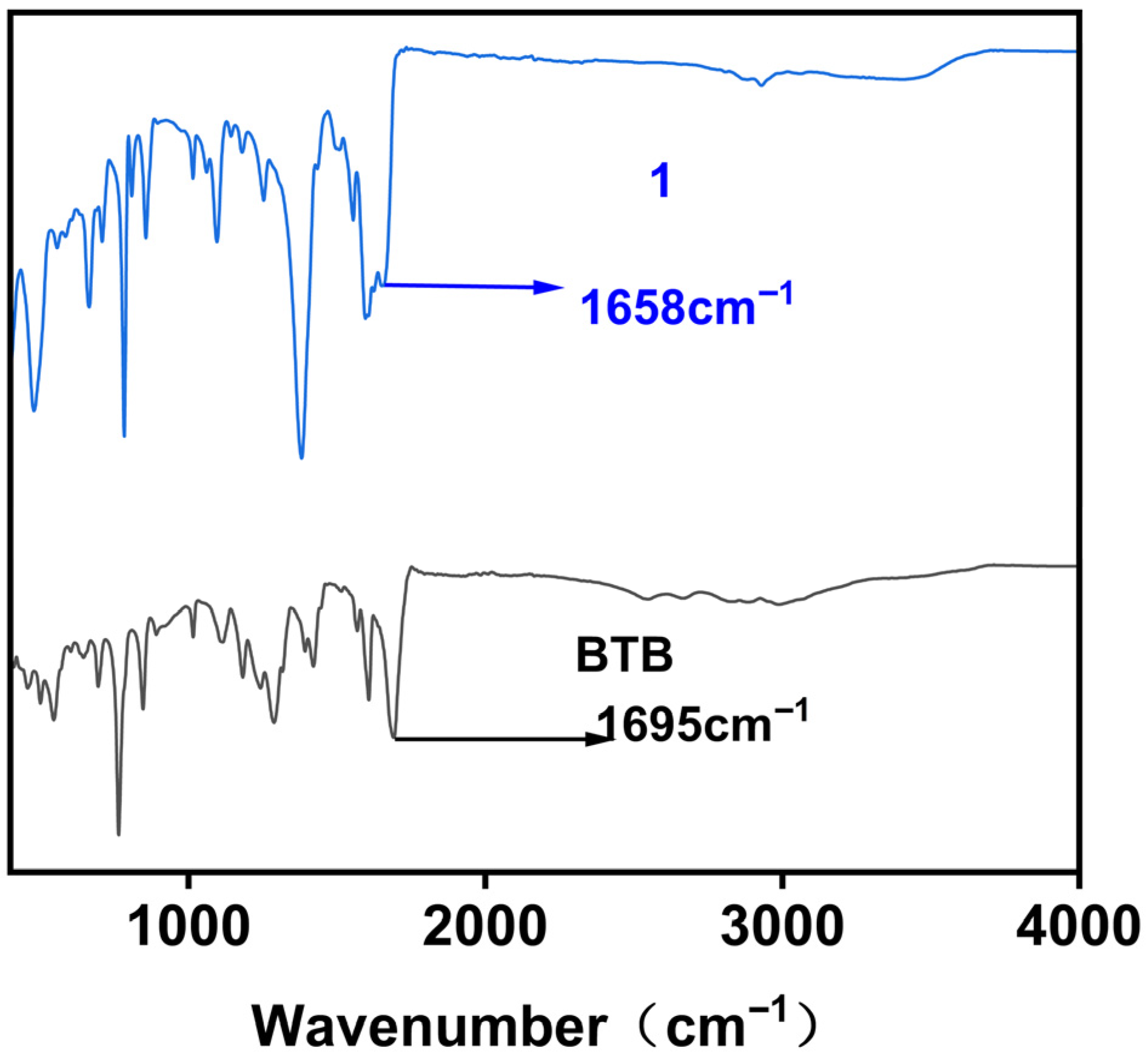
To explore the fundamental properties of the synthesized material, the crystalline product obtained via solvent evaporation method was first characterized by Fourier-transform infrared (FT-IR) spectroscopy. As shown in Figure 2, the characteristic carbonyl stretching vibration of the free BTB ligand appears at 1695 cm−1, while in compound 1 this band shifts to 1658 cm−1. The significant red shift indicates strong coordination between the carboxylate groups of BTB and the Zn2+ centers, which alters the electron density distribution of the carbonyl moiety and leads to the observed shift in its absorption frequency. These results confirm the formation of robust metal-ligand coordination bonds and support the structural integrity of the crystalline framework. The phase purity and crystallinity of compound 1 were further evaluated by powder X-ray diffraction (PXRD) analysis. As illustrated in Figure S2, the experimental diffraction patterns of the as-synthesized sample closely match the simulated patterns derived from single-crystal X-ray data. This agreement confirms that compound 1 is obtained as a pure crystalline phase, with structural consistency maintained throughout the bulk material.
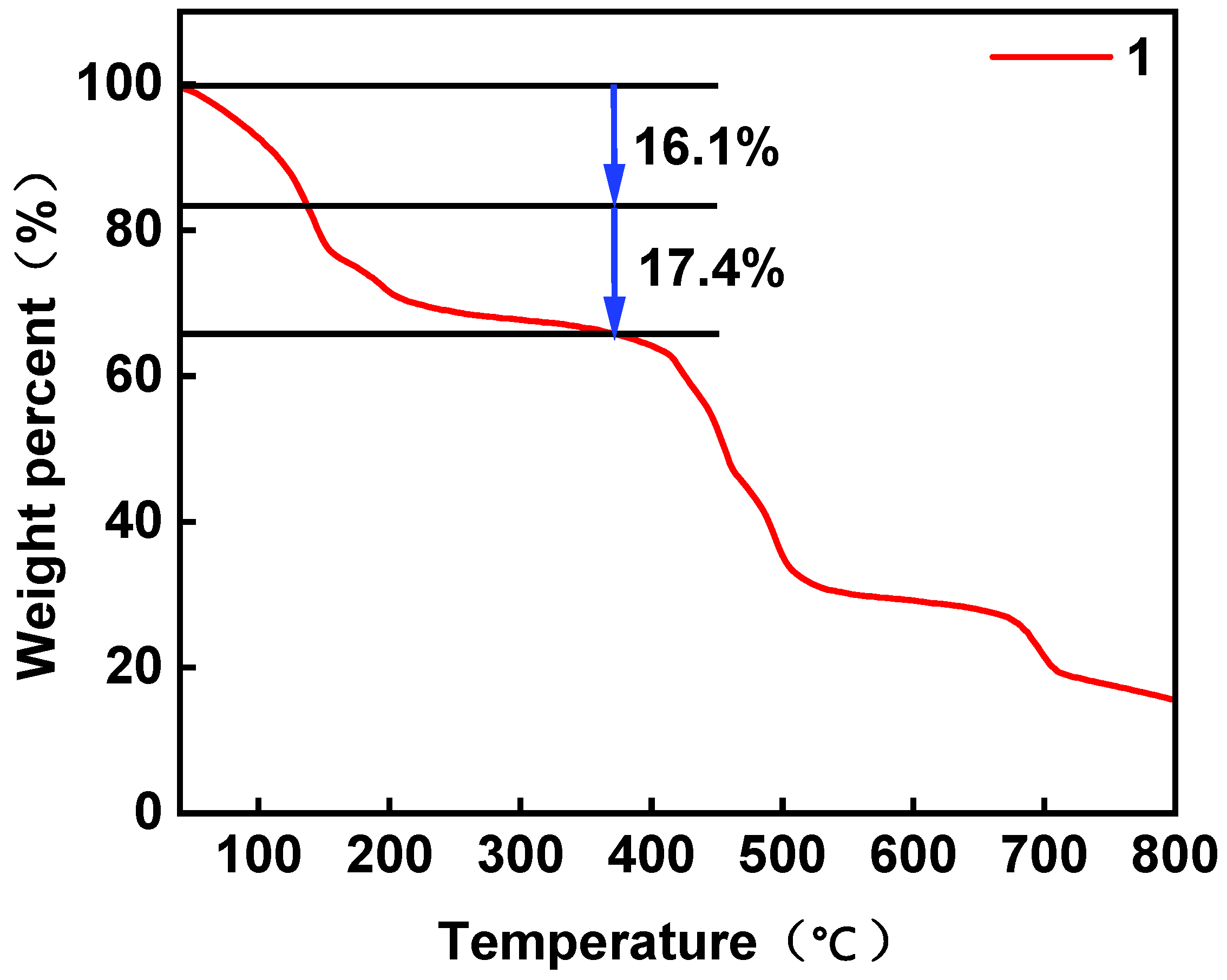
The thermal stability of compound 1 was investigated by thermogravimetric analysis (TGA) under a nitrogen atmosphere from 40 to 800 °C at a heating rate of 10 °C·min−1 (Figure 3). An initial mass loss of approximately 16.1% (calcd: 16.3%) occurred below 135 °C, corresponding to the release of free solvent molecules occluded within the pores, as supported by elemental analysis. A subsequent weight loss of about 17.4% (calcd: 17.2%) up to 340 °C is attributed to the removal of coordinated DMF molecules. Beyond 390 °C, a sharp decline in mass indicates the decomposition of the framework. These findings suggest that compound 1 maintains good thermal stability and retains its structural integrity over a broad temperature range following guest removal.
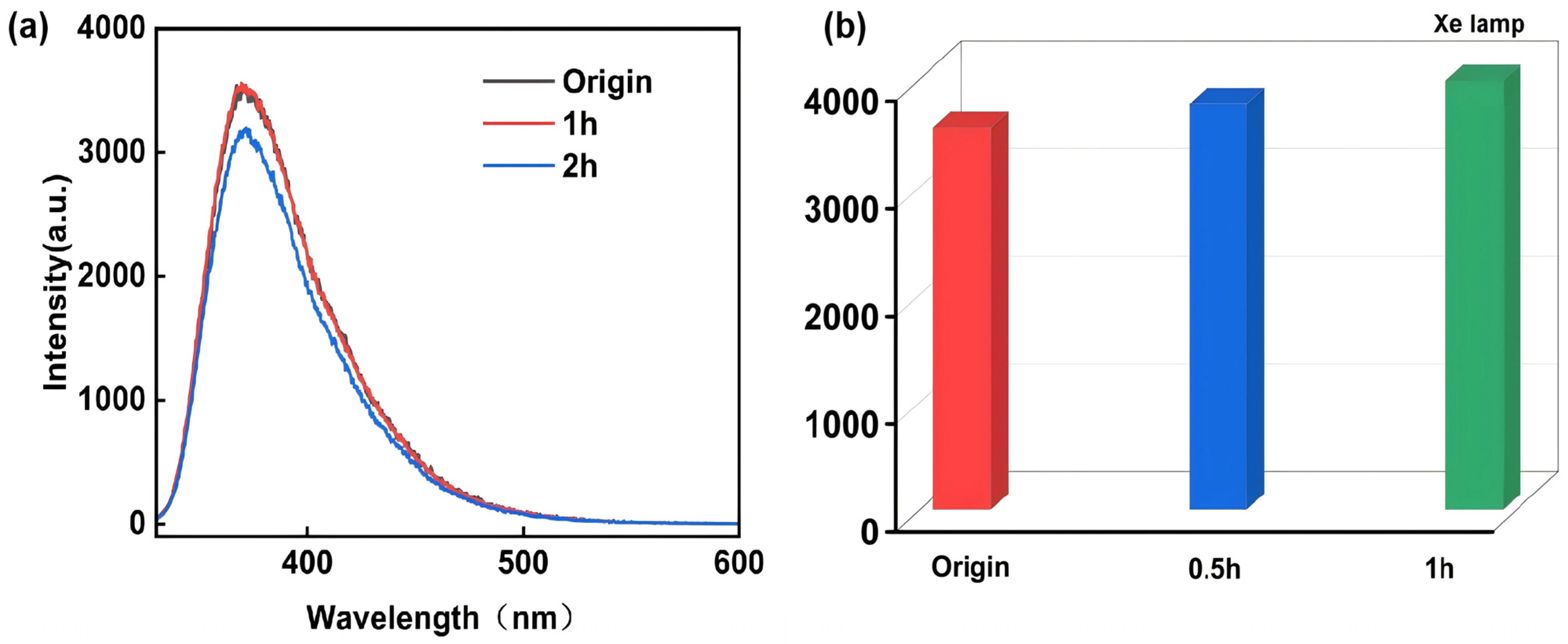
The stability of compound 1 in aqueous media and under light exposure was further evaluated by monitoring its luminescence behavior. A suspension was prepared by dispersing 3 mg of the sample in 3 mL of distilled water, and luminescence spectra were recorded at intervals. As shown in Figure 4a, the emission profiles remained virtually unchanged after prolonged immersion, indicating excellent structural retention in aqueous environments. Photostability was assessed by exposing a freshly prepared suspension to continuous irradiation from a xenon lamp and recording luminescence intensity over time. According to Figure 4b, no significant decrease in emission intensity was observed for compound 1, reflecting outstanding resistance to photobleaching. Additionally, we performed PXRD measurements on the samples after immersion in water and exposure to a xenon lamp for 6 h. The PXRD patterns (Figure S3) show that the crystallinity of compound 1 is well maintained under both conditions, confirming its stability. Collectively, these results confirm that compound 1 possesses robust structural and luminescent stability under complex conditions, underscoring its suitability for applications in luminescence-based sensing.

2.2. Luminescence Properties

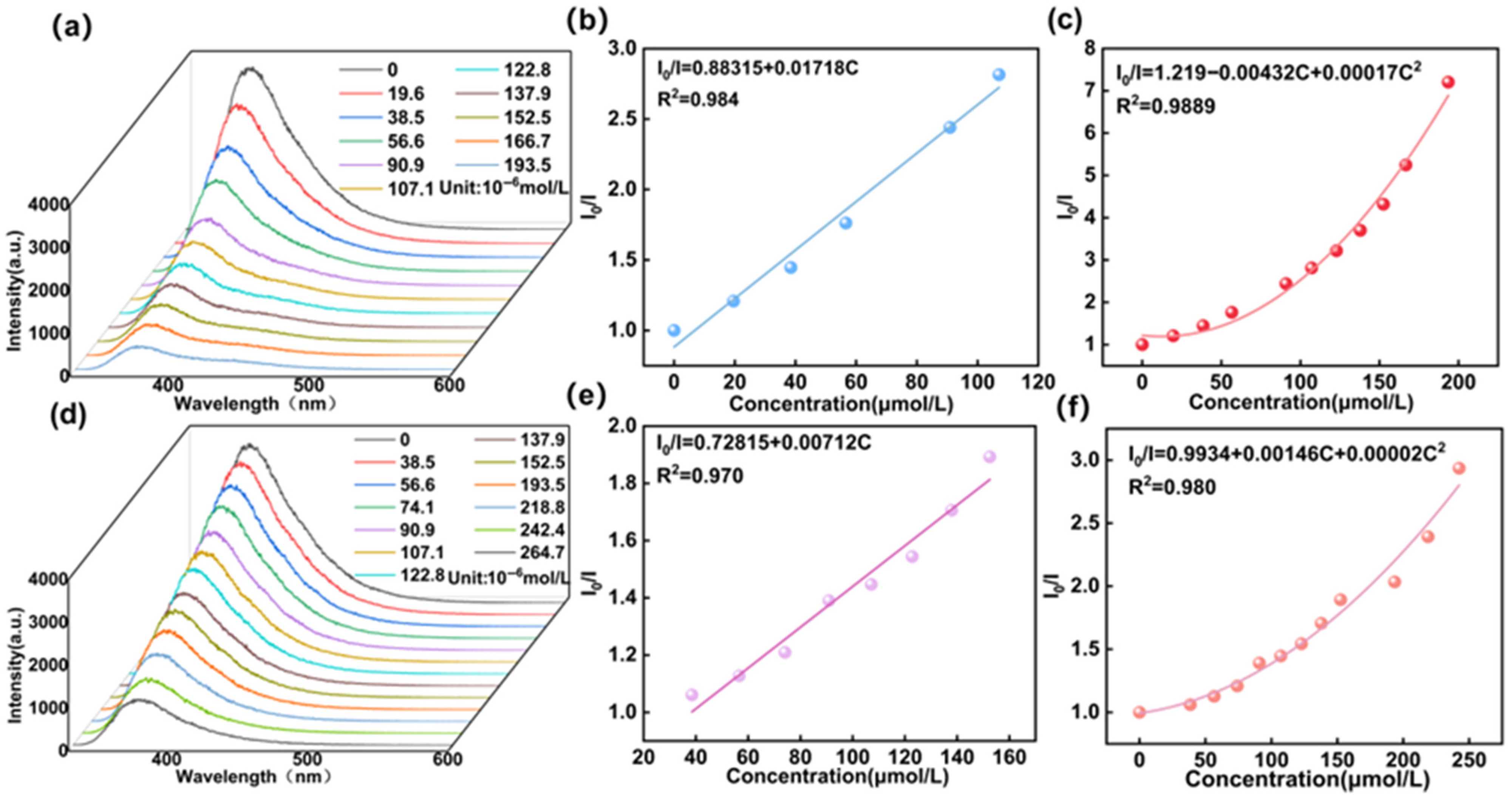
Given the excellent stability of compound 1, its luminescence properties were further examined in aqueous solution (Figure S4). Upon excitation at 320 nm, compound 1 displayed an emission band centered at approximately 375 nm. In contrast, the free BTB ligand showed a broad emission near 400 nm, but with considerably lower intensity. This enhancement indicates that the framework architecture and coordination interactions in compound 1 play a key role in boosting its luminescence efficiency relative to the free ligand. To quantitatively evaluate the sensing performance of compound 1 toward PNP and BNPP, concentration-dependent luminescence titration experiments were carried out (Figure 5a,d). With increasing concentrations of each analyte, the emission intensity of the suspension gradually decreased, revealing a distinct quenching effect. The detection limits for PNP and BNPP were calculated to be 3.49 × 10⁻⁶ mol/L and 8.43 × 10⁻⁶ mol/L, respectively, based on the 3σ method. The corresponding Stern-Volmer quenching constants (KSV) were determined to be 1.72 × 10⁻² L/µmol for PNP and 7.12 × 10⁻³ L/µmol for BNPP, indicating high sensitivity. In the low concentration range, the relationship between analyte concentration (C) and luminescence intensity ratio (I0/I) followed a linear trend, consistent with the Stern-Volmer model: I0/I = 0.883 + 0.01718C for PNP (Figure 5b) and I0/I = 0.728 + 0.0071C for BNPP (Figure 5e). Here, I0 represents the initial emission intensity before analyte addition, and I is the intensity after exposure to PNP or BNPP. In addition to the quantitative response, the quenching process was accompanied by visible changes in luminescence color under UV irradiation (Figure S5), highlighting the material’s potential for visual detection applications.
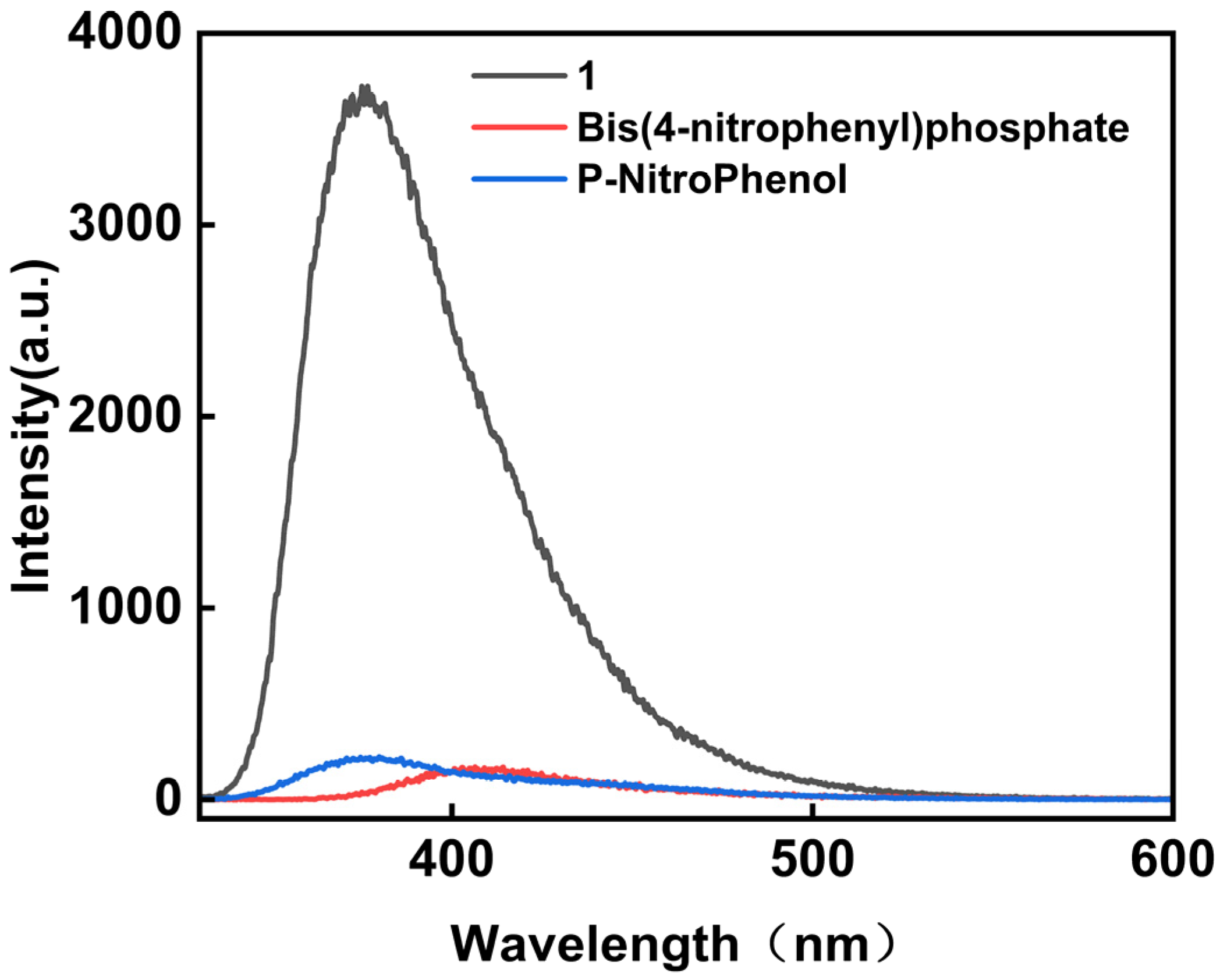
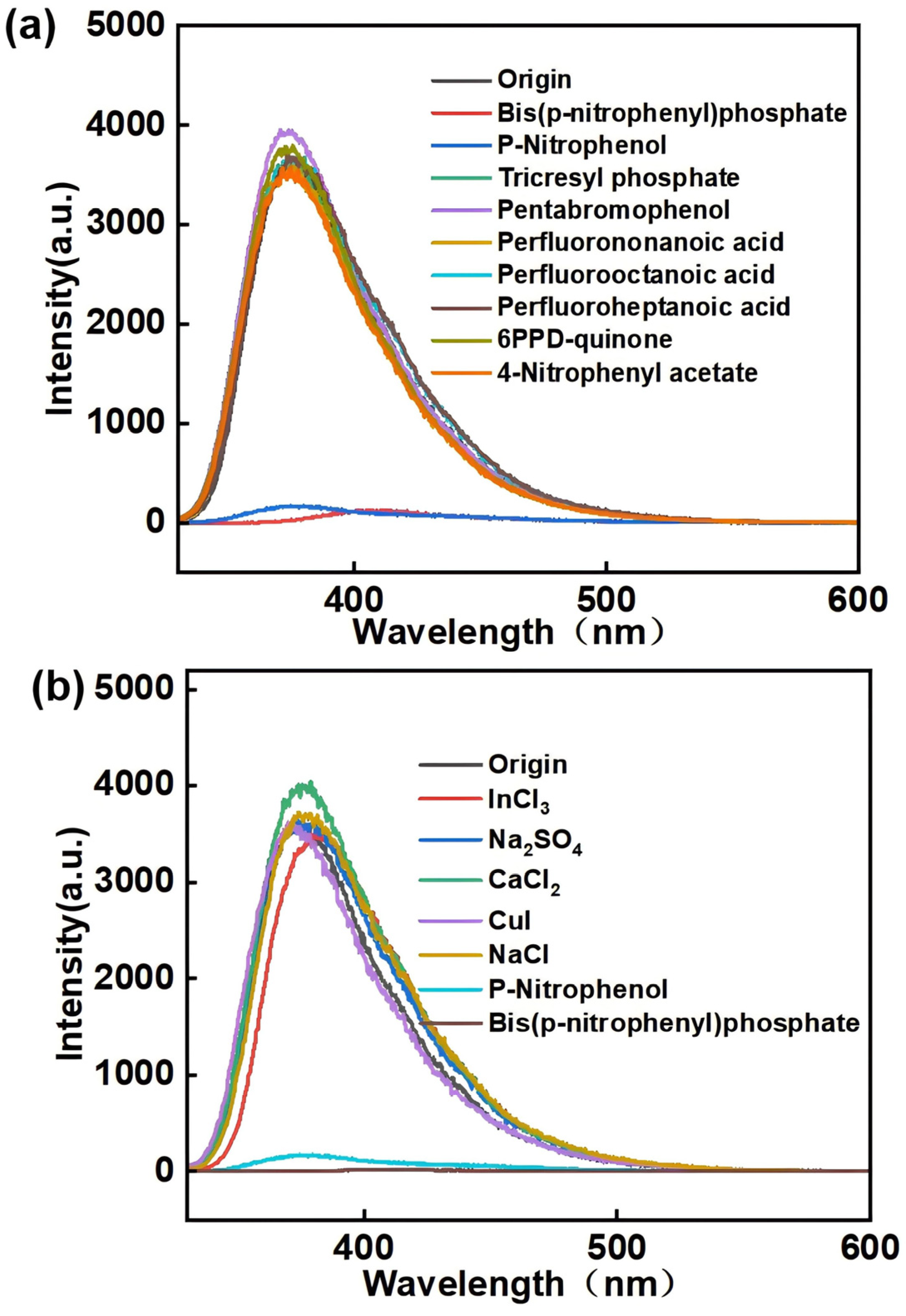
To assess the selectivity of compound 1 toward PNP and BNPP in the presence of commonly coexisting substances, given their widespread use as organic intermediates and pesticide components, a series of interference experiments was conducted. An aqueous suspension of compound 1 was prepared following the established procedure, and its luminescence spectrum was recorded as a reference (Figure 6). Various potential interferents were then introduced individually into the system. As illustrated in Figure 7a, slight changes in luminescence intensity were observed upon the addition of any interfering species. However, when equivalent amounts of PNP or BNPP were introduced, marked luminescence quenching occurred. These findings clearly indicate that compound 1 possesses high selectivity toward PNP and BNPP, enabling effective discrimination against a broad range of coexisting substances in a complex.
To assess the anti-interference capability of compound 1 in complex aqueous environments, its luminescence response was first evaluated in the presence of common inorganic ions. An aqueous suspension of compound 1 was prepared following the standard procedure, and its initial luminescence intensity was recorded. Aliquots of solutions containing InCl3, Na2SO4, CaCl2, CuI, and NaCl were then introduced individually, and the corresponding luminescence spectra were collected. As shown in Figure 7b, the emission intensity remained minorly changed upon the addition of these salts, whereas significant quenching occurred following the introduction of PNP or BNPP. These results indicate that common cations and anions do not interfere with the sensing performance of compound 1, highlighting its strong anti-interference capability and suitability for practical applications in real water samples.
To further evaluate the practical applicability of compound 1, its sensing performance toward PNP and BNPP was examined in tap water and lake water matrices. Tap water, after membrane filtration to remove suspended solids, was used to prepare 1 mg·mL−1 suspensions of compound 1, and luminescence measurements were conducted following the same protocol used in distilled water. As illustrated in Figures S6–S11, the compound exhibited pronounced and concentration-dependent luminescence quenching upon incremental addition of PNP and BNPP in tap water, with sensitivity comparable to that observed under ideal laboratory conditions. These findings confirm that compound 1 retains reliable detection capability in domestic water environments. To extend this evaluation to more complex natural matrices, lake water was subjected to the same filtration pretreatment and used to prepare compound suspensions (1 mg·mL−1). Luminescence responses to PNP and BNPP were then recorded (Figures S12–S17). The material continued to display high sensitivity and effective quenching behavior, even in the presence of diverse constituents typical of natural water bodies. Collectively, these results demonstrate that compound 1 not only performs well in idealized laboratory settings but also maintains excellent sensitivity and reliability for detecting PNP and BNPP in real-world water samples, underscoring its strong potential for environmental monitoring applications.

2.3. Visual Luminescence Recognition

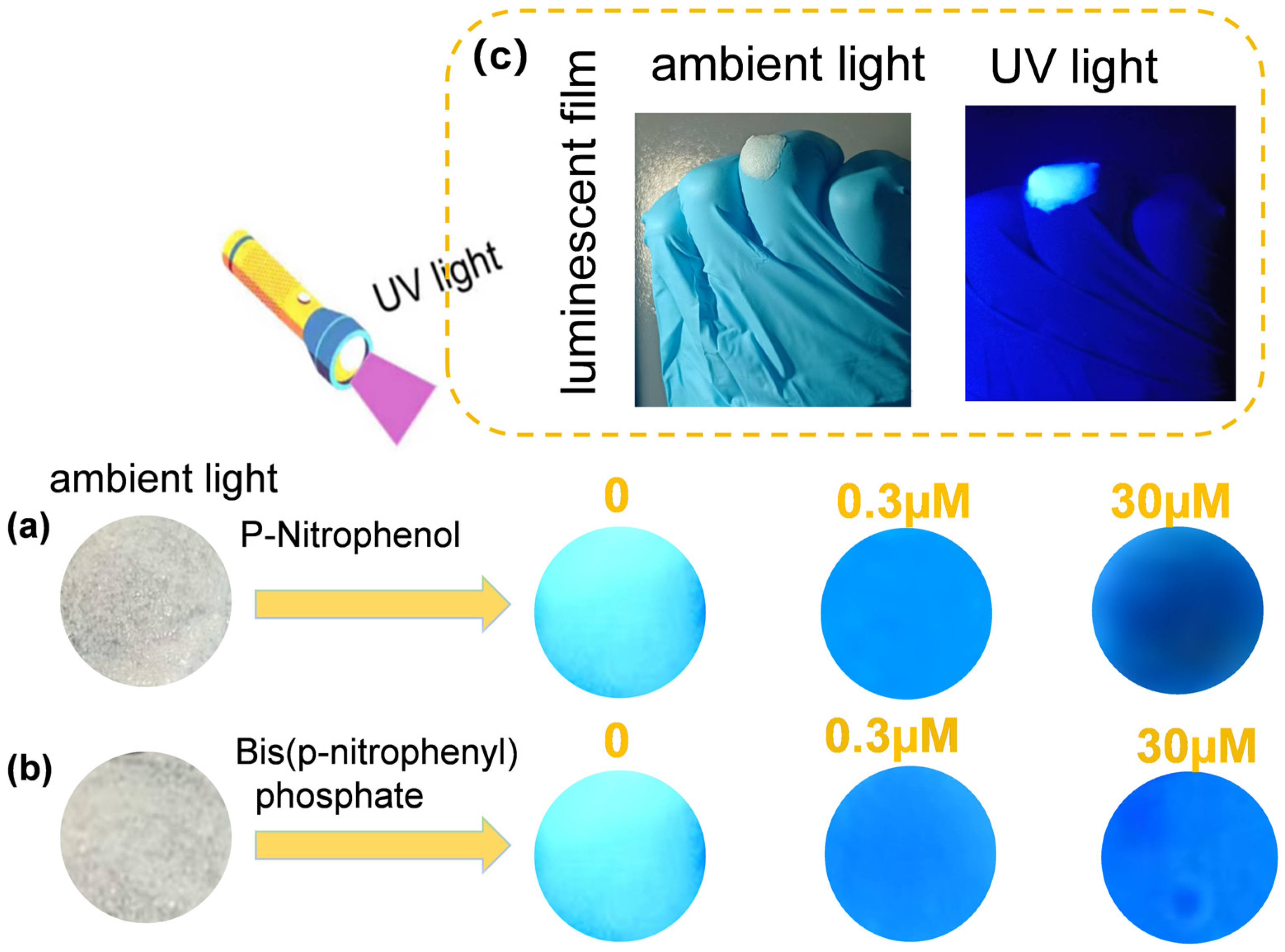
To enable portable and visual detection of BNPP and PNP, a functional sensing film was developed by integrating compound 1 with carrageenan (CRG). Leveraging the strong luminescence and excellent aqueous stability of the MOF, a finely ground suspension of compound 1 was mixed with an appropriate amount of CRG. The mixture was heated in a water bath to fully dissolve the CRG and ensure homogeneous dispersion of the MOF particles within the polymer matrix. The resulting uniform blend was then cast into a mold. Upon cooling, gelation, and subsequent solvent evaporation, semi-transparent white composite hydrogel films, denoted as 1@CRG, were successfully obtained. As shown in Figure 8, the films emitted bright blue luminescence under 365 nm UV irradiation. Notably, when exposed to increasing concentrations of BNPP or PNP, the luminescence intensity of the films decreased progressively in a dose-dependent manner, demonstrating clear quenching behavior. These results indicate that the 1@CRG composite films offer a promising platform for on-site visual detection of target pollutants, combining portability with effective sensing performance for practical environmental monitoring applications.

2.4. Luminescence Quenching Mechanisms

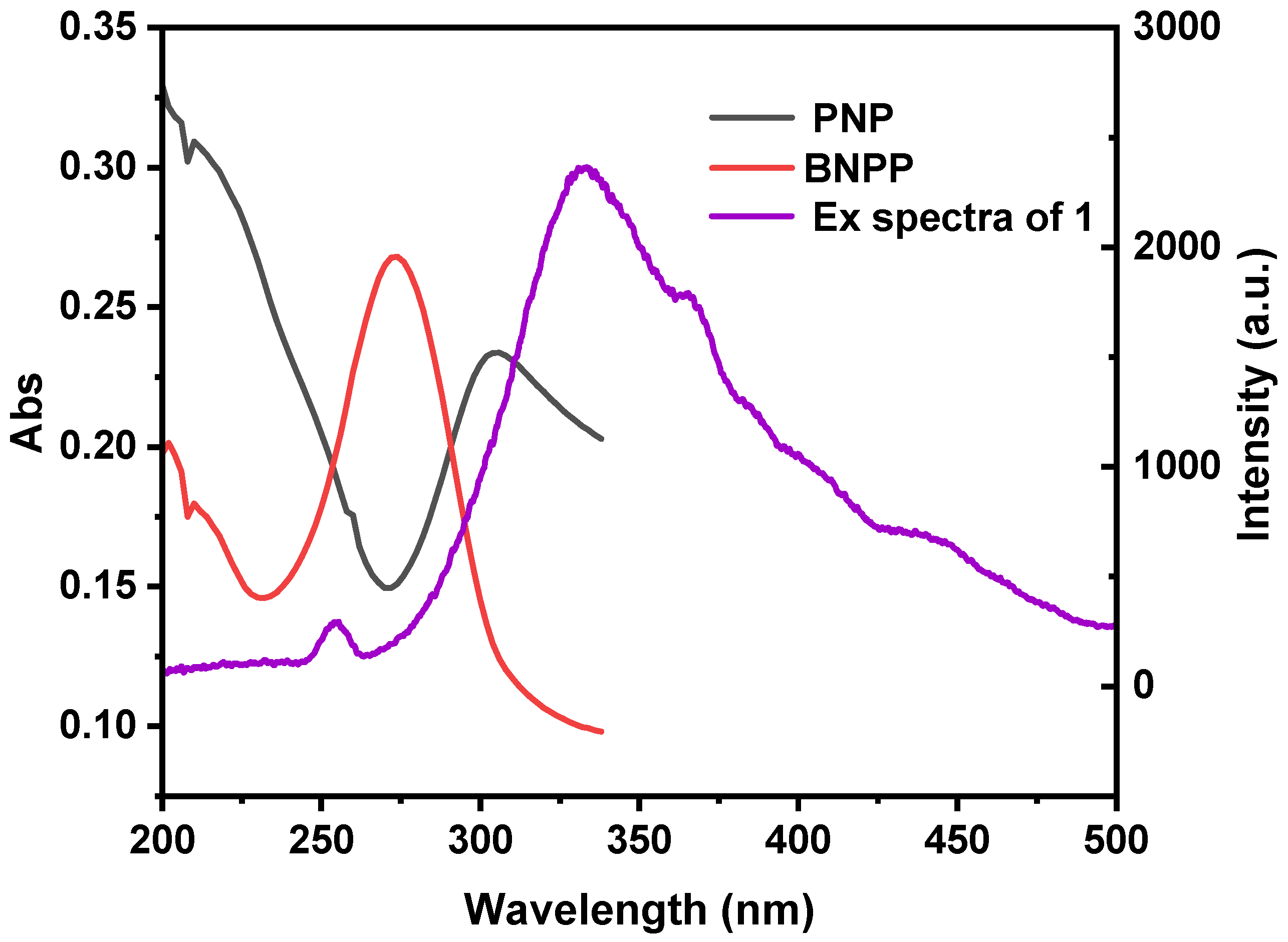
To elucidate the underlying sensing mechanism, a series of control experiments was conducted. As previously demonstrated (Figure 4 and Figure S3), compound 1 exhibits excellent photostability in aqueous media and under continuous light exposure, ruling out framework collapse or metal-node degradation as contributors to any observed changes in sensing performance. The excitation spectrum of 1 shows strong absorption between 270 and 400 nm (Figure 9). Notably, significant spectral overlap was observed around 304 nm and 272 nm between the emission of compound 1 and the UV absorption bands of PNP and BNPP. This overlap suggests that the quenching mechanism primarily arises from competitive absorption of excitation energy by the analytes. This overlap suggests that competitive absorption of excitation energy by the analytes is the primary quenching mechanism. Furthermore, when the test substances are added to the solution of compound 1, an increase in the concentration of PNP or BNPP leads to greater absorption of excitation energy by the analyte, resulting in progressive luminescence attenuation and eventual quenching of compound 1 (Figures S18 and S19). Additionally, the molecular dimensions of PNP (6.05 × 4.32 Å) and BNPP (11.22 × 4.99 Å) are both smaller than the channel apertures of compound 1 (18.10 × 16.55 Å). This size compatibility facilitates the diffusion of analyte molecules into the MOF channels, enabling rapid and efficient fluorescence response during sensing.

3. Materials and Methods

All reagents and chemicals were purchased commercially (J&K Chemical and Alfa, Beijing, China) and used as received without further purification.
The synthesized materials were characterized using the following techniques. Powder X-ray diffraction (PXRD) patterns were collected on a Rigaku SmartLab diffractometer (Rigaku Corporation, Tokyo, Japan) at a scanning rate of 5° min−1, with the sample ground and uniformly spread on a holder to assess crystallinity and phase purity. Thermogravimetric analysis (TGA) was performed on a NETZSCH TG 209 instrument (NETZSCH-Gerätebau GmbH, Selb, Germany) under a nitrogen atmosphere at a heating rate of 10 °C min−1 to evaluate the thermal stability of air-dried samples. Infrared (IR) spectra were recorded using a Nicolet iS10 spectrometer (Thermo Fisher Scientific, Waltham, MA, USA) by placing the powdered sample directly on the sampling stage. Photoluminescence (PL) measurements were conducted on a HITACHI F-4600 fluorescence spectrometer (Hitachi High-Technologies Corporation, Tokyo, Japan). For solid-state measurements, the finely ground sample was loaded into a solid sample holder; for solution-based measurements, the sample was uniformly dispersed in distilled water and transferred to a quartz cuvette for analysis.

3.1. Synthesis of {Zn2(BTB)(DMF)2·(OH)·6.75(H2O)}n (1)

A solution of 4.2 mg (0.17 mmol) of lithium hydroxide in 1 mL of deionized water and a solution of 18.3 mg (0.08 mmol) of zinc acetate in 1 mL of N, N-dimethylformamide (DMF) were prepared. These solutions were added to 43.8 mg (0.1 mmol) of the BTB ligand. Subsequently, 2.5 mL of DMF was added to the mixture in a glass vial. The resulting mixture was stirred until homogeneous. The sealed vial was then allowed to stand at room temperature for three days. After the reaction period, the mixture was filtered to obtain colorless transparent block-shaped crystals. The product was washed repeatedly with DMF and subsequently air-dried, with a yield of 86% [based on zinc acetate]. Elem anal. Calcd for compound 1: C, 46.58; H, 5.11; N, 3.29. Found: C, 46.09; H, 4.97; N, 3.21.

3.2. Luminescence Experiment

In a typical procedure, 10 mg of compound 1 was dispersed in 10 mL of deionized water and ultrasonicated for 30 min to obtain a homogeneous suspension. A 1 mL aliquot of this suspension was transferred to a sample vial, and the corresponding target analyte was added. The resulting mixture was then placed in a quartz cuvette for luminescence measurement. Time-dependent changes in emission intensity were recorded using a fluorescence spectrometer. Instrumental parameters for compound 1 were set as follows: excitation wavelength (λₑₓ) = 320 nm, excitation slit width = 1 nm, emission slit width = 2.5 nm, and detection wavelength = 375 nm. To assess the luminescence response behavior, intensity variations over time were monitored at 375 nm for compound 1, allowing evaluation of its emission stability under the experimental conditions. All measurements were conducted at room temperature.

3.3. Interference Resistance Test

To evaluate the selectivity of compound 1 toward PNP and BNPP, a series of interference experiments was carried out. Under the same experimental conditions, various potentially interfering substances, including perfluoroheptanoic acid, perfluorooctanoic acid, perfluorononanoic acid, pentabromophenol, tricresyl phosphate, p-nitrophenyl acetate, 6PPD-quinone, InCl3, Na2SO4, CaCl2, CuI, and NaCl with the concentration of 1 × 10⁻³ mol/L, were individually introduced into suspensions of compound 1. Luminescence spectra were recorded after each addition, and the corresponding intensity changes at 375 nm were monitored to assess the impact of each interferent on the detection of PNP and BNPP.

3.4. The Method for Preparing 1@CRG

250 mg of carrageenan was added in 10 mL of distilled water and fully dissolved under stirring in a water bath at 90 °C. Subsequently, 5 mg of finely ground compound 1 powder was added to the carrageenan solution and stirred to ensure thorough mixing. Then, 0.8 mL of the resulting 1@CRG mixture was evenly spread onto a plastic test box and allowed to cool to room temperature to solidify into a thin film. After standing at room temperature for one day, a dehydrated 1@CRG transparent sheet was obtained.

4. Conclusions

In summary, a zinc-organic framework (1) was successfully synthesized under mild conditions using the BTB ligand. The material exhibits excellent thermal stability and photostability. Benefiting from its strong and stable luminescence, compound 1 serves as an efficient luminescent sensor for the simultaneous detection of PNP and BNPP. It demonstrates outstanding selectivity and high sensitivity, with detection limits as low as 3.49 × 10⁻⁶ mol/L for PNP and 8.43 × 10⁻⁶ mol/L for BNPP, along with strong anti-interference performance in complex matrices such as tap water and lake water. To enable practical on-site applications, portable composite films (1@CRG) were fabricated by integrating the MOF with carrageenan, allowing for visual and real-time luminescence monitoring of the target analytes. This work presents a robust and adaptable platform for the rapid, sensitive, and visual detection of trace PNP and BNPP, highlighting its significant potential for environmental monitoring and early warning systems.

Supplementary Materials

The following supporting information can be downloaded at: https://www.mdpi.com/article/10.3390/inorganics14040108/s1, Table S1: The crystallographic parameters of compound 1; Figure S1: Molecular structures of bis(4-nitrophenyl) phosphate (a) and p-nitrophenol (b); Figure S2: The PXRD pattern of 1; Figure S3: The PXRD pattern of 1 after immersion in water and exposure to a xenon lamp; Figure S4: The luminescence emission spectra of compound 1 and ligand H3BTB (λₑₓ = 320 nm); Figure S5: Photographs of compound 1 exposed to p-nitrophenol and bis(4-nitrophenyl) phosphate under ultraviolet light (365 nm); Figure S6: Luminescence spectral changes of compound 1 upon the addition of different concentrations for PNP in tap water (λₑₓ = 320 nm); Figure S7: Stern-volmer fitting (I0/I) at 375 nm for compound 1 with PNP in tap water (low concentration range); Figure S8: Relationship between I0/I of compound 1 and the concentrations of PNP in tap water; Figure S9: Luminescence spectral changes of compound 1 upon the addition of different concentrations for BNPP in tap water (λₑₓ = 320 nm); Figure S10: Stern-volmer fitting (I0/I) at 375 nm for compound 1 with BNPP in tap water (low concentration range); Figure S11: Relationship between I0/I of compound 1 and the concentrations of BNPP in tap water; Figure S12: Luminescence spectral changes of compound 1 upon the addition of different concentrations for PNP in lake water (λₑₓ = 320 nm); Figure S13: Stern-volmer fitting (I0/I) at 375 nm for compound 1 with PNP in lake water (low concentration range); Figure S14: Relationship between I0/I of compound 1 and the concentrations of PNP in lake water; Figure S15: Luminescence spectral changes of compound 1 upon the addition of different concentrations for BNPP in lake water (λₑₓ = 320 nm); Figure S16: Stern-volmer fitting (I0/I) at 375 nm for compound 1 with BNPP in lake water (low concentration range); Figure S17: Relationship between I0/I of compound 1 and the concentrations of BNPP in lake water; Figure S18: UV absorption spectra of compound 1 with the concentration changes of PNP; Figure S19: UV absorption spectra of compound 1 with the concentration changes of BNPP.

Author Contributions

Conceptualization, J.D.; Methodology, X.X. and M.Y.; Investigation, X.-Y.T., N.W. and J.-Z.L.; Writing—original draft, X.X. and M.Y.; Writing—review & editing, J.D., X.X., M.Y., X.-Y.T., N.W. and J.-Z.L.; Project administration, J.D. All authors have read and agreed to the published version of the manuscript.

Funding

This work was supported by the National Natural Science Foundation of China (22475109, 21901182), Natural Science Foundation of Henan Province (252300423110), Science and Technology Research Project of the Education Department of Henan Province (252102320072), Doctoral Research Project of Henan University of Technology (2023BS036), Cultivation Project of Tuoxin Team in Henan University of Technology, China (No. 2024TXTD11).

Institutional Review Board Statement

Not applicable.

Informed Consent Statement

Not applicable.

Data Availability Statement

The original contributions presented in this study are included in the article. Further inquiries can be directed to the corresponding authors.

Conflicts of Interest

The authors declare no conflict of interest.

References

  1. Jordan, N.; Kelling, J.; Starke, S.; Brendler, V. A Critical Review of the Solution Chemistry, Solubility, and Thermodynamics of Europium: Recent Advances on the Eu (III) Hydrolysis. Coord. Chem. Rev. 2024, 510, 215702. [Google Scholar] [CrossRef]
  2. Qatan, M.S.; Arshad, F.; Miskam, M.; Naikoo, G.A. Trends in bimetallic nanomaterials and methods for the removal of p-nitrophenol and its derivatives from wastewater. Int. J. Environ. Sci. Technol. 2024, 21, 5247–5268. [Google Scholar] [CrossRef]
  3. Musarurwa, H.; Tavengwa, N.T. Smart metal-organic framework (MOF) composites and their applications in environmental remediation. Mater. Today Commun. 2022, 33, 104823. [Google Scholar] [CrossRef]
  4. Rodrigues, C.S.D.; Aziz, S.N.A.; Pereira, M.F.R.; Soares, O.S.G.P.; Madeira, L.M. Degradation of p-Nitrophenol by activated persulfate with carbon-based materials. J. Environ. Manag. 2023, 343, 118140. [Google Scholar] [CrossRef] [PubMed]
  5. Ali, M.A.M.; ElSayed, M.; ElShamy, O.A.A.; Khedr, G.E.; Sabaa, M.W.; Mohamed, R.R.M.; Mubarak, F. Zinc-based metal-organic frameworks for sustainable water desalination and anti-scaling solutions. Environ. Sci. Pollut. Res. 2025, 32, 12809–12826. [Google Scholar] [CrossRef]
  6. Dong, J.; Yu, M.; Xiong, X.; Tian, X.Y.; Wang, N.; Wang, X.S.; Xie, Y.; Hou, S.L. An acid-resistant Hf6-MOF for the luminescence sensing of biomarkers with high sensitivity and selectivity. Inorg. Chem. 2026, 65, 3155–3161. [Google Scholar] [CrossRef]
  7. Geng, T.M.; Wang, F.Q.; Fang, X.C.; Xu, H. Dual functional N,O,P containing covalent organic frameworks for adsorping iodine and fluorescence sensing to p-nitrophenol and iodine. Micropor. Mesopor. Mater. 2021, 317, 111001. [Google Scholar] [CrossRef]
  8. Zhu, H.; Geng, T.M.; Tang, K.B. Fully flexible covalent organic frameworks for fluorescence sensing 2,4,6-trinitrophenol and p-Nitrophenol. Polymers 2023, 15, 653. [Google Scholar] [CrossRef]
  9. Catley-Carlson, M. The non-stop waste of water. Nature 2019, 565, 426–427. [Google Scholar] [CrossRef]
  10. Li, X.S.; Zhao, J.; Jiao, Z.H.; Zhao, X.Y.; Hou, S.L.; Zhao, B. Portably and visually sensing cytisine through smartphone scanning based on a post-modified luminescence center strategy in zinc-organic frameworks. Angew. Chem. Int. Ed. 2024, 63, e202401880. [Google Scholar] [CrossRef] [PubMed]
  11. Issabekova, S.; Belgibayeva, D.; Amerkhanova, S.; Satayeva, Z.; Abilova, Z.; Almuratova, K.; Aikenova, N.; Sharipova, L. Coordination behavior of Eu(III) complexes with tartrate and oxalate ligands: Study using NMR and potentiometry methods. Inorganics 2026, 14, 47. [Google Scholar] [CrossRef]
  12. Cruchter, T.; Larionov, V.A. Asymmetric catalysis with octahedral stereogenic-at-metal complexes featuring chiral ligands. Coord. Chem. Rev. 2018, 376, 95–113. [Google Scholar] [CrossRef]
  13. Mikata, Y.; Yasuda, S.; Hagiwara, T.; Konno, H.; Shoji, S. Alkyl substituents control the Cd2+-selectivity of fluorescence enhance-ment in N,N′-bis(2-quinolylmethyl)ethylenediamine derivatives. Inorg. Chim. Acta 2024, 571, 122218. [Google Scholar] [CrossRef]
  14. Ajiboye, T.O.; Oladoye, P.O.; Olanrewaju, C.A.; Akinsola, G.O. Organophosphorus pesticides: Impacts, detection and removal strategies. Environ. Nanotechnol. Monit. Manag. 2022, 17, 100655. [Google Scholar] [CrossRef]
  15. Liu, L.; Zheng, X.; Wei, X.; Zhang, K.; Xu, Y. Excessive application of chemical fertilizer and organophosphorus pesticides induced total phosphorus loss from planting causing surface water eutrophication. Sci. Rep. 2021, 11, 23015. [Google Scholar] [CrossRef]
  16. Shi, J.X.; Zhang, B.G.; Cheng, Y.T.; Peng, K.J. Microbial vanadate reduction coupled to co-metabolic phenanthrene biodegradation in groundwater. Water Res. 2020, 186, 116354. [Google Scholar] [CrossRef]
  17. Zaguzin, A.S.; Abramov, P.A.; Rakhmanova, M.I.; Usoltsev, A.N.; Sokolov, M.N.; Fedin, V.P.; Adonin, S.A. Luminescent sensors based on Ln(III) 2,5-diiodoterephthalate coordination polymers. Polyhedron 2024, 253, 116908. [Google Scholar] [CrossRef]
  18. Lunev, A.M.; Belousov, Y.A. Luminescent sensor materials based on rare-earth element complexes for detecting cations, anions, and small molecules. Russ. Chem. Bull. 2022, 71, 825–857. [Google Scholar] [CrossRef]
  19. Zaguzin, A.S.; Bondarenko, M.A.; Abramov, P.A.; Rakhmanova, M.I.; Zherebtsov, D.A.; Fedin, V.P.; Adonin, S.A. A series of three-dimensional homoligand Ln(III) 2-iodoterephthalates: Structural features and luminescent behavior. Opt. Mater. 2025, 158, 116468. [Google Scholar]
  20. Lian, L.; Jiang, B.; Xing, Y.; Zhang, N. Identification of photodegradation product of organophosphorus pesticides and elucidation of transformation mechanism under simulated sunlight irradiation. Ecotoxicol. Environ. Saf. 2021, 224, 112655. [Google Scholar] [CrossRef]
  21. Jokanović, M.; Oleksak, P.; Kuca, K. Multiple neurological effects associated with exposure to organophosphorus pesticides in man. Toxicology 2023, 484, 153407. [Google Scholar] [CrossRef]
  22. Chen, L.; Liu, D.H.; Peng, J.; Du, Q.Z.; He, H. Ratiometric fluorescence sensing of metal-organic frameworks: Tactics and perspectives. Coord. Chem. Rev. 2020, 404, 213113. [Google Scholar] [CrossRef]
  23. López-Fernández, O.; Domínguez, R.; Pateiro, M.; Munekata, P.E.S. Determination of polyphenols using liquid chromatography-tandem mass spectrometry technique (LC–MS/MS): A review. Antioxidants 2020, 9, 479. [Google Scholar] [CrossRef]
  24. Siddique, I. High-performance liquid chromatography: Comprehensive techniques and cutting-edge innovations. Eur. J. Adv. Eng. Technol. 2023, 10, 66–70. [Google Scholar] [CrossRef]
  25. Barsoum, M.L.; Fahy, K.M.; Morris, W.; Dravid, V.P.; Hernandez, B.; Farha, O.K. The road ahead for metal-organic frameworks: Current landscape, challenges and future prospects. ACS Nano 2025, 19, 13–20. [Google Scholar] [CrossRef]
  26. Ortín-Rubio, B.; Rostoll-Berenguer, J.; Vila, C.; Proserpio, D.M.; Guillerm, V.; Juanhuix, J.; Imaz, I.; Maspoch, D. Net-clipping as a top-down approach for the prediction of topologies of MOFs built from reduced-symmetry linkers. Chem. Sci. 2023, 14, 12984–12994. [Google Scholar] [CrossRef]
  27. Amombo Noa, F.M.; Svensson Grape, E.; Brülls, S.M.; Cheung, O.; Malmberg, P.; Inge, A.K.; McKenzie, C.J.; Mårtensson, J.; Öhrström, L. Metal-organic frameworks with hexakis(4-carboxyphenyl)benzene: Extensions to reticular chemistry and introducing foldable nets. J. Am. Chem. Soc. 2020, 142, 9471–9481. [Google Scholar] [CrossRef]
  28. Åhlén, M.; Amombo Noa, F.M.; Öhrström, L.; Hedbom, D.; Strømme, M.; Cheung, O. Pore size effect of 1,3,6,8-tetrakis(4-carboxyphenyl)pyrene-based metal-organic frameworks for enhanced SF6 adsorption with high selectivity. Microporous Mesoporous Mater. 2022, 343, 112161. [Google Scholar] [CrossRef]
  29. Zhang, W.; Yang, R.N.; Yang, J.M.; Ji, S.S.; Jiang, X.; Mi, S.Z.; Song, X.L.; Wang, W.W.; Wang, Q. Highly sensitive and selective detection of 2,4-dinitrophenol by a fluorescent amine-functionalized carbon quantum dot@metal-organic framework. Russ. J. Phys. Chem. 2019, 93, 2452–2457. [Google Scholar] [CrossRef]
  30. Yang, N.; Kang, L.; Yao, W.; Xu, B.; Feng, Y.; Fedin, V.P.; Gao, E. A ratiometric fluorescent probe consisting of Zn-MOF and calcium ion for sensitive and visual detection of doxycycline. Anal. Chim. Acta 2026, 1395, 345232. [Google Scholar] [CrossRef]
  31. Zhong, X.; Guo, S.; Li, X.X.; Pu, C.Y.; Wang, J.; Lu, L.; Kushwaha, A.; Kumar, A.; Pan, Y. Europium/Terbium metal-organic frameworks for multifaceted luminescent sensing: A comprehensive review. Sustain. Mater. Technol. 2026, 47, e01805. [Google Scholar] [CrossRef]
  32. Moghadam, P.Z.; Chung, Y.G.; Snurr, R.Q. Progress toward the computational discovery of new metal-organic framework adsorbents for energy applications. Nat. Energy 2024, 9, 121–133. [Google Scholar] [CrossRef]
  33. Wang, J.; Liu, J.; Wang, H.; Zhou, M.; Ke, G.; Zhang, L.; Wu, J.; Gao, Z.; Lu, D. A comprehensive transformer-based approach for high-accuracy gas adsorption predictions in metal-organic frameworks. Nat. Commun. 2024, 15, 1904. [Google Scholar] [CrossRef]
  34. Han, Z.; Huang, W.; Cheng, P.; Shi, W. Functional guest in metal-organic frameworks. Chin. J. Chem. 2025, 43, 956–966. [Google Scholar] [CrossRef]
  35. Wang, X.; Gopalsamy, K.; Clavier, G.; Maurin, G.; Ding, B.; Tissot, A.; Serre, C. Lanthanide MOF-based luminescent sensor arrays for the detection of castration-resistant prostate cancer curing drugs and biomarkers. Chem. Sci. 2024, 15, 6488–6499. [Google Scholar] [CrossRef]
  36. Wu, X.L.; Zhao, J.S.; Chen, X.Z.; Gu, Y.; Luo, X.L. Design of Zn-MOFs with rhombic channels via mixed-ligand approach for targeted removal of carcinogenic dyes BR9 and BV14. J. Mol. Struct. 2025, 1348, 143489. [Google Scholar] [CrossRef]
  37. Wang, S.; Tian, Z.; Gong, G.; Zhao, J.; Dong, H.; Bai, X.; Wang, L.; Chen, S. An imidazole-based halogen-bonded organic framework for the high-sensitive detection of nitrofuran antibiotics. Chin. J. Chem. 2025, 43, 1824–1832. [Google Scholar] [CrossRef]
  38. Björck, H.; Reinholdsson, W.; Cheung, O.; Zhou, G.; Huang, Z.; Amombo Noa, F.M.; Öhrström, L. Extending hexagon-based metal-organic frameworks-Mn(II) and Gd(III) MOFs with hexakis(4-(4-carboxyphenyl)phenyl)benzene. Inorganics 2026, 14, 12. [Google Scholar] [CrossRef]
  39. Lian, C.; Guo, X.; Long, Y.S.; Yang, L.R. Two novel coordination polymers: Synthesis, structure, luminescent properties, and selective sensing of Cu2+ and Mn2+ ions. Russ. J. Coord. Chem. 2017, 43, 338–344. [Google Scholar] [CrossRef]
  40. da Silva, K.R.M.; Viana, R.S.; dos Santos, M.V.; Caiut, J.M.A.; Silva, U.R.; Barbosa, C.D.A.E.S. Nanostructured neodymium-based metal-organic framework for near-infrared luminescent temperature sensor. Mater. Lett. 2025, 401, 139206. [Google Scholar] [CrossRef]
Figure 1. Structure analysis of 1. Coordination mode of Zn2+ ions (a) and BTB ligand (b). (c) Two-dimensional MOF structure viewed along the a-axis. (Blue, red, gray, and cyan balls represent N, O, C, and Zn atoms, respectively). (d) Stacking arrangement between adjacent layers. (Hydrogen atoms and free solvent molecules are omitted for clarity).
Inorganics 14 00108 g001
Figure 2. IR spectra of compound 1 and ligand H3BTB.
Inorganics 14 00108 g002
Figure 3. TGA curve of compound 1.
Inorganics 14 00108 g003
Figure 4. (a) The luminescence emission spectra of compound 1 after immersion in water for different time (λₑₓ = 320 nm). (b) The luminescence emission spectra of compound 1 after xenon lamp irradiation for different times (λₑₓ = 320 nm).
Inorganics 14 00108 g004
Figure 5. Luminescence spectral changes of 1 upon the addition of PNP (a) and BNPP (d) in distilled water (λₑₓ = 320 nm). Fitted curves of I0/I (at 375 nm) for low concentrations of PNP (b) and BNPP (e). Relationship between I0/I of compound 1 and the concentrations of PNP (c) and BNPP (f).
Inorganics 14 00108 g005
Figure 6. Luminescence spectra of compound 1 before and after the addition of PNP and BNPP, respectively (λₑₓ = 320 nm).
Inorganics 14 00108 g006
Figure 7. Luminescence spectral changes of 1 toward PNP and BNPP in the presence of organic (a) and inorganic interfering species (b) (λₑₓ = 320 nm).
Inorganics 14 00108 g007
Figure 8. Visual fluorescence detection based on 1@CRG composite. Color changes in the composite film under UV light after immersion in solutions of PNP (a) and BNPP (b) at different concentrations. (c) Photos of luminescent film under daylight and ultraviolet light.
Inorganics 14 00108 g008
Figure 9. The luminescence excitation spectrum of compound 1 and the ultraviolet absorption spectra of PNP and BNPP.
Inorganics 14 00108 g009
Disclaimer/Publisher’s Note: The statements, opinions and data contained in all publications are solely those of the individual author(s) and contributor(s) and not of MDPI and/or the editor(s). MDPI and/or the editor(s) disclaim responsibility for any injury to people or property resulting from any ideas, methods, instructions or products referred to in the content.