Article

Facile Synthesis of Modified Single-Crystal NCM811 Cathode Materials and the Electrochemical Performance for Lithium-Ion Batteries

1
School of Materials Science and Engineering, Guilin University of Technology, Guilin 541010, China
2
Guangxi Key Laboratory of Eco-Aluminum Green Manufacturing, Baise University, Baise 533000, China
3
Guangxi Aluminum-Based New Materials Engineering Technology Research Center, Baise University, Baise 533000, China
*
Authors to whom correspondence should be addressed.
Inorganics 2026, 14(3), 86; https://doi.org/10.3390/inorganics14030086
Submission received: 24 February 2026 / Revised: 13 March 2026 / Accepted: 18 March 2026 / Published: 20 March 2026
(This article belongs to the Section Inorganic Materials)

Abstract

To address the capacity decay of NCM811 caused by microcracks and cation disorder during cycling, La, Al, and F tri-doped micron-sized single-crystal NCM811 material with a LiNbO3 coating was synthesized via a facile co-solvent method. Using a mixed glucose–urea thermal solution as the reaction medium, metal salts were incorporated, followed by step-wise sintering, ball-milling, heat treatment, and wet-chemical coating. This approach enables atomic-level precursor mixing and ensures homogeneous element distribution. La3+ enlarges the lithium layer spacing to enhance ion diffusion and Al3+ suppresses Ni3+ reduction to Ni2+, mitigating cation mixing and improving conductivity, while F stabilizes the crystal structure via its strong electronegativity. The LiNbO3 coating protects the interface from electrolyte attack, and the single-crystal morphology effectively suppresses microcracking. Compared to unmodified single-crystal NCM811 prepared identically, the modified material exhibits reduced cation disorder, improved crystallinity, and superior thermal stability. Electrochemical tests in half-cells with 1 M LiPF6/(EC/EMC/DMC) electrolyte (2.8–4.3 V) show an initial discharge capacity of 208.32 mAh/g at 0.1 C and 194.05 mAh/g at 1 C. After 200 cycles at 1 C, the capacity retention remains at 92.21%, exceeding the market average. Rate performance is also notably enhanced, with the 5 C discharge capacity increasing from 141.12 mAh/g (unmodified) to 166.81 mAh/g, demonstrating improved kinetics and structural stability.

1. Introduction

Lithium-ion batteries, as efficient energy storage and conversion devices, are widely used in portable electronics, electric vehicles, and large-scale energy storage systems [1]. With the increasing societal demand for longer endurance and lighter materials, enhancing the energy density of battery materials has become a focal point in lithium-ion battery development [2]. The cathode material, being a core component, directly determines the battery’s energy density, cycle life, and cost. Compared to common cathode materials such as LFP, LCO, and LMO, the high-nickel ternary layered material LiNi0.8Co0.1Mn0.1O2(NCM811) is considered a promising candidate for achieving high-energy-density lithium-ion batteries due to its high specific capacity (theoretical capacity~200 mAh/g) and relatively lower cost [3]. However, NCM811 still faces challenges in practical applications, including cation mixing and microcrack propagation [4].
During synthesis and operation, the similar ionic radii of Li+ (0.76 Å) and Ni2+ (0.69 Å) facilitate the migration of Ni2+ from the transition metal layer (3b sites) to the Li layer (3a sites) [5]. This phenomenon, known as Li/Ni mixing, occupies active Li+ sites, obstructs Li+ diffusion pathways, and traps Li+ within the transition metal layer, thereby reducing the material’s reversible capacity [6]. The high nickel content in NCM811 makes it more susceptible to severe Li/Ni mixing compared to lower-nickel counterparts like NCM622 and NCM523. Recent studies have employed ion doping to mitigate this issue. For instance, Hwang et al. [7] successfully achieved Mg2+ doping modification of NCM cathode materials using MgHPO4. Owing to the similar ionic radius of Mg2+ (0.72 Å) to that of Li+ (0.76 Å), the incorporated Mg2+ preferentially occupies vacancies in the Li layer. This occupancy effectively mitigates the migration of Ni2+ (0.69 Å) into the Li layer, thereby suppressing Li/Ni cation mixing. Furthermore, the higher bond energy of Mg-O compared to Ni-O results in stronger bonding, which inhibits structural distortion during electrochemical cycling. Acting as a “pillar” within the structure, Mg2+ also alleviates anisotropic shrinkage along the c-axis, contributing to enhanced structural stability. The resulting MgHPO4 modified NCM cathode achieved a high initial discharge capacity of 203.5 mAh/g and exhibited an excellent rate capability with a maximum capacity retention of 89.4% at 6.0 C. Moreover, it demonstrated superior cycling stability, retaining 86.3% of its initial capacity after 100 cycles at 25 °C, which highlights the effectiveness of MgHPO4 modification in improving the electrochemical performance of NCM materials. He et al. [8] systematically investigated the modification effects of incorporating different alkali metal ions into Li sites, specifically doping NCM811 with Na+, K+, and Ru+. Although all are alkali metal ions, Na+ demonstrated significantly superior modification efficacy, achieving a capacity retention of 96.8% after 200 cycles at 1 C. In contrast, K+ and Ru+ yielded lower capacity retentions of 88.7% and 92.9%, respectively, under identical conditions, both falling below the 93.2% retention of the pristine NCM811. Rietveld refinement results further confirmed that Na+ doping effectively reduces the degree of cation mixing in the material. The authors attribute this performance disparity primarily to the ionic radii of the dopants. Na+, with an appropriate ionic radius (1.02 Å), acts as a pillar within the Li layer upon incorporation, effectively expanding the interlayer spacing and mitigating Li/Ni cation mixing. Conversely, the larger ionic radii of K+ (1.38 Å) and Ru+ (1.52 Å) induce lattice distortion and impede Li+ diffusion. Tang et al. [9] applied V co-doping to ultra-high-nickel LiNi0.90Co0.05Mn0.05O2, where V enhanced bond strength and increased the migration energy barrier for Ni2+, significantly reducing cation mixing. The 2% V-doped sample retained 72.53% capacity after 200 cycles at 5 C. Additionally, Gao et al. [10] doped NCM811 with Zr4+, which stabilized the layered structure by inhibiting the layered-to-spinel phase transformation. An optimal doping level of 1% delivered a specific discharge capacity of 192 mAh/g at 0.1 C.
Furthermore, microcrack propagation in NCM811 remains a critical issue. Polycrystalline NCM811 typically consists of agglomerates of nano- or submicron-sized primary particles. Repeated Li+ insertion/extraction induces lattice expansion or contraction, generating internal stress that concentrates at grain boundaries, leading to boundary fragmentation and microcrack formation [11]. These microcracks facilitate electrolyte penetration, exacerbating interfacial degradation and accelerating capacity fade. Recent research has turned to single-crystal synthesis to address microcracking. Single-crystal NCM811 comprises micron-sized, boundary-free monolithic particles. This grain-boundary-free structure effectively prevents the initiation and propagation of microcracks, significantly enhancing structural integrity and interfacial stability. Moreover, the absence of grain boundaries reduces stress concentration-induced fracture, endowing single-crystal materials with higher tap density and energy density compared to their polycrystalline counterparts [12]. Therefore, developing well-ordered single-crystal NCM811 cathode materials is crucial for achieving lithium-ion batteries with high energy density and long cycle life. For example, Gao et al. [13] synthesized single-crystal NCM811 via a molten salt method, which exhibited a high initial Coulombic efficiency of 90.74% at 0.2 C and a capacity retention of 80.79% after 300 cycles at 1 C within 2.8–4.3 V. Song et al. [14] successfully synthesized single-crystal LiNi0.8Co0.1Mn0.1O2 via solid-state sintering, achieving an initial discharge capacity of 191 mAh/g and 74% capacity retention after 100 cycles. They also noted that sintering temperatures above 900 °C led to rapid particle growth, lengthening Li+ diffusion paths and reducing discharge capacity. Furthermore, Xu et al. [15] successfully achieved scalable synthesis of a Ni-rich NCM811 cathode material composed of radially aligned primary single-crystal particles (denoted as RASC-NCM) using a modified coprecipitation method combined with solid-state reaction. This configuration enables direct linear lithium-ion diffusion from the particle core to the surface without crossing grain boundaries, thereby establishing an efficient three-dimensional lithium-ion transport network. The crystallographically aligned radial primary particles mitigate intergranular stress caused by volume changes through coordinated expansion or contraction, effectively suppressing secondary particle pulverization and enhancing cycling stability. Furthermore, the inherently low specific surface area of the single-crystal morphology minimizes electrolyte–electrode contact, significantly suppressing detrimental side reactions at the cathode/electrolyte interface and further improving structural stability. Consequently, the RASC-NCM electrode demonstrates outstanding reversible capacity (203.4 mAh/g at 0.1 C), excellent rate capability (152.7 mAh/g at 5 C), and superior cycling stability with 95.5% capacity retention after 300 cycles at 1 C.
Based on the aforementioned research background, this study employs a facile co-solvent method, using a mixed glucose–urea thermal solution as the reaction medium. La, Al, and F were selected for bulk doping, and niobium ethoxide was applied to construct a LiNbO3 coating layer on the material surface. Through continuous optimization of process parameters, single-crystal NCM811 cathode material with enhanced structural and electrochemical performance was successfully synthesized. Compared to conventional solid-state methods, the co-solvent process enables atomic-level mixing of reactants due to its liquid-phase reaction nature, resulting in more uniform elemental distribution in the product. Furthermore, relative to coprecipitation and molten-salt methods, the co-solvent route eliminates the water-washing step, thereby preventing material loss during washing and offering a simpler overall synthesis procedure.

2. Results and Discussion

2.1. Structural Analysis

2.1.1. Crystal Structure Analysis

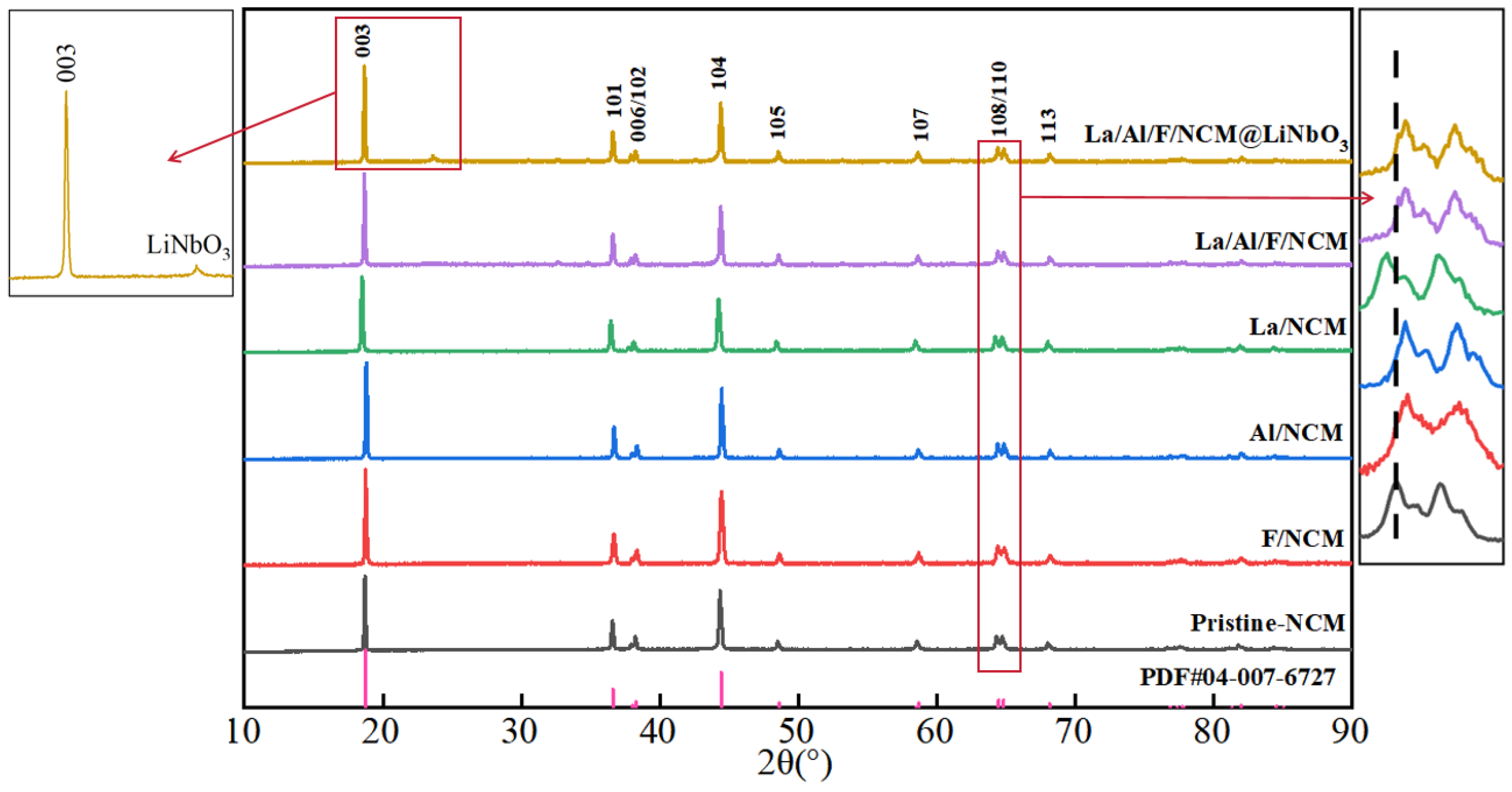
XRD analysis indicates that the diffraction patterns of all six material groups (Figure 1), Pristine-NCM, F/NCM, Al/NCM, La/NCM, La/Al/F/NCM, and La/Al/F/NCM@LiNbO3, are consistent with the standard PDF card (#04-007-6727), exhibiting the characteristic α-NaFeO2-type layered structure belonging to the R-3m space group [16]. This confirms that the doping/coating modifications did not significantly alter the host crystal structure of the materials. In layered NCM materials, the intensity ratio R = I(003)/I(104) of the (003) and (104) diffraction peaks serves as a key indicator for evaluating the degree of Li+/Ni2+ cation mixing. Generally, an R value greater than 1.2 suggests a low level of Li/Ni mixing and a well-ordered layered structure [17]. Quantitative analysis of the XRD patterns yielded the following R values for the six samples: Pristine-NCM (1.22), F/NCM (1.27), Al/NCM(1.35), La/NCM(1.41), La/Al/F/NCM(1.53), and La/Al/F/NCM@LiNbO3(1.61). These results demonstrate that single-element doping, multi-element co-doping, and the introduction of a LiNbO3 coating layer can effectively suppress Li+/Ni2+ cation mixing and further enhance the structural ordering of the material. Moreover, the synergistic modification strategy exhibits a more pronounced effect on improving crystallographic ordering.
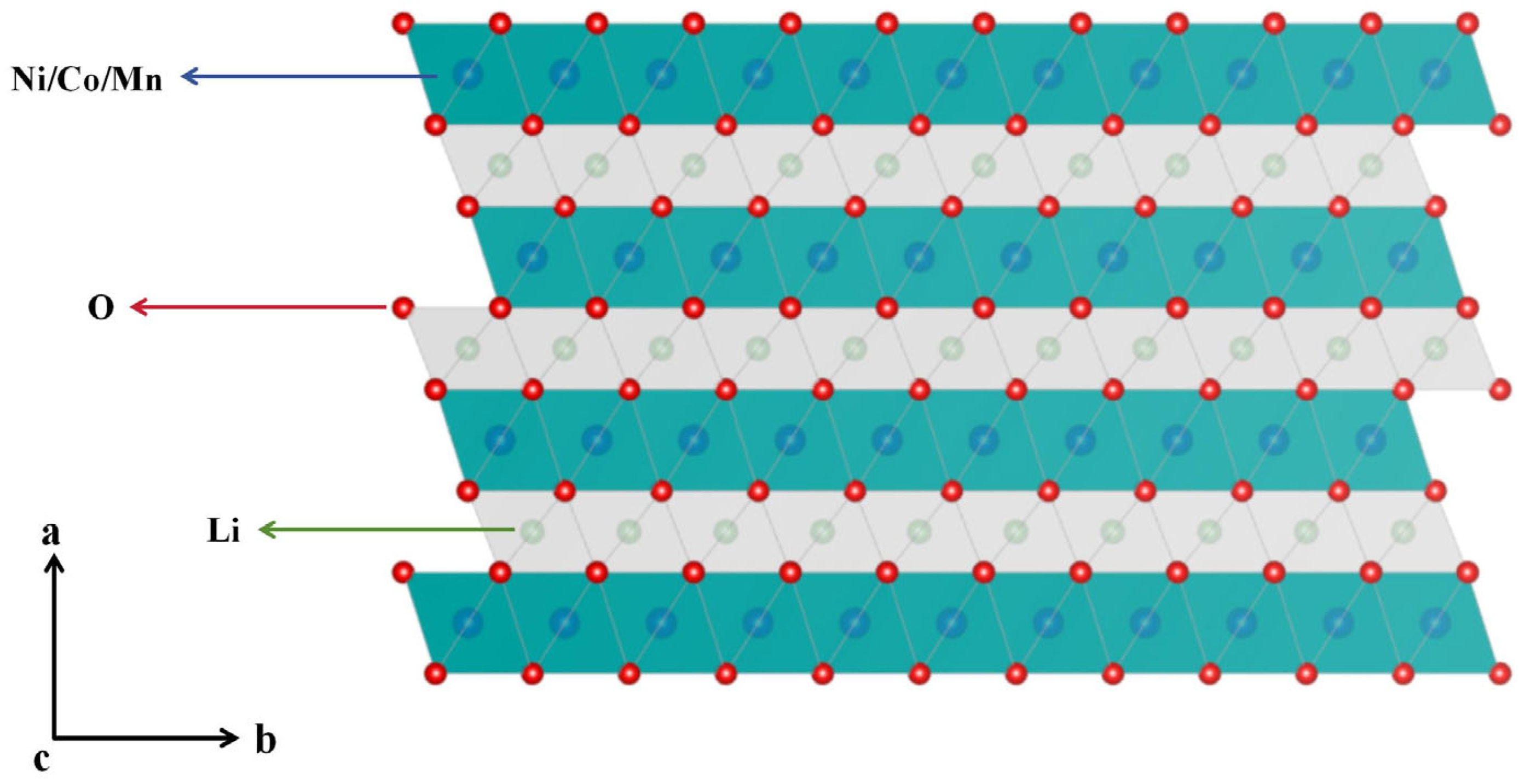
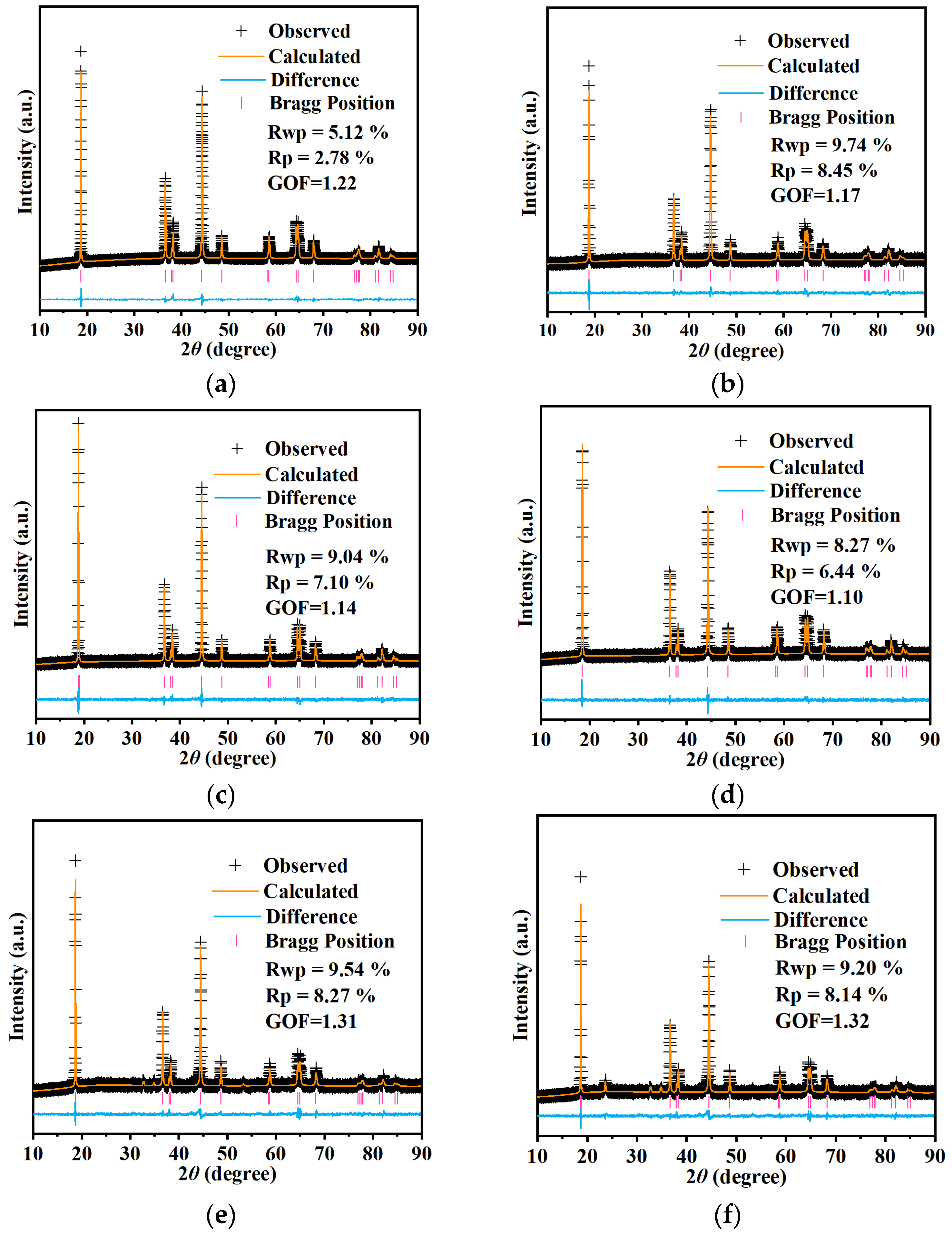
Compared to the pristine material, the R value of F/NCM increases from 1.22 to 1.27, indicating a reduced degree of Li+/Ni2+ cation mixing. This structural improvement is attributed to the formation of F–M bonds (M = Ni, Co, Mn) upon substitution of O by F, which possess significantly higher bond energy than O–M bonds (Figure 2). During lattice formation, these stronger bonds more effectively suppress the migration of transition metal ions into the Li layers, thereby reducing native cation disorder [18,19]. Moreover, the (108)/(110) diffraction peaks of the F/NCM sample are sharper and slightly shifted to higher angles compared to Pristine-NCM. This shift is closely related to the lattice parameter changes induced by successful F incorporation into the lattice. The highly electronegative F (3.98) partially replaces O2− (3.44), forming stronger Li–F (574 kJ/mol) and F–M bonds [18,19]. These strong ionic bonds exert a “pinning effect,” stabilizing the transition metal layer and inhibiting its migration during deep delithiation or high-temperature treatment. Simultaneously, the stronger F–M bonding pulls the transition metal ions closer to the F sites, resulting in a slight contraction along the a- and b-axes and a reduction in the interplanar spacing (d). According to Bragg’s law (nλ = 2dsinθ) [20], a decrease in d at fixed wavelength λ directly leads to an increase in the diffraction angle θ, manifesting as a high-angle peak shift. The refined lattice parameters (a, b, c) further confirm the successful doping of F and its structural modification effect (Figure 3, Table 1).
Al3+, as a dopant with a relatively small ionic radius, has been shown in previous studies to occupy Ni lattice sites when successfully incorporated into the transition metal (TM) layer. The strong Al–O bonds formed exhibit higher bond energy and shorter bond lengths compared to Ni–O bonds, thereby enhancing local structural stability and mitigating Li+/Ni2+ cation disorder [6]. Furthermore, Al3+ acts as an electrochemically inert ion within the structure. To maintain charge balance, the conversion of Ni3+ to Ni2+—which is prone to cation mixing—is kinetically suppressed, further reducing the extent of Li/Ni mixing. The shorter Al–O bond induces lattice contraction, primarily reflected in a reduction in the a- and b-axis parameters. Rietveld refinement of Al-doped NCM materials confirmed significant contraction along the a- and b-axes (Table 1). Combined with the observed sharpening and high-angle shift in the (108)/(110) diffraction peaks in XRD patterns, along with the increased R value (Figure 1), these results further verify the successful incorporation of Al into the crystal lattice.
La3+, as a rare-earth doping element, preferentially occupies the Ni2+ sites at the lattice surface in NCM materials and scarcely enters the bulk lattice due to its large ionic radius (1.16 Å) [21]. With its stable +3 valence state, La3+ does not readily undergo valence changes during electrochemical cycling. This helps lock the Ni2+ sites, effectively suppressing cation mixing caused by Ni2+ migration into the Li+ layers. Moreover, the substitution of the smaller Ni2+ (0.69 Å) by the larger La3+ exerts a significant “pillaring effect” on the lithium interlayer spacing. This expands the interplanar distance, widens Li+ transport channels, optimizes the Li+ diffusion pathway, and reduces resistance during (de)intercalation, thereby playing a key role in improving the rate capability. According to Bragg’s law (nλ = 2dsinθ) [20], an increase in the lithium interlayer spacing (d-value) leads to a corresponding shift in diffraction peaks toward lower angles, which aligns with the low-angle shift in the (108)/(110) peaks observed in Figure 1. Rietveld refinement further reveals a significant increase in the c-axis parameter after doping, while the a- and b-axis parameters show little change. This result corroborates the unique surface doping behavior of La3+: its tendency to substitute surface Ni2+ sites without penetrating deeply into the lattice induces pronounced expansion along the c-axis while minimally affecting the in-plane structure.
Based on the aforementioned preparation process, La/Al/F co-doped single-crystal NCM811 material can be synthesized by introducing La, Al, and F elements during the mixing stage and adjusting their doping ratios. In this study, synergistic modification was achieved with 0.5% La3+, 0.5% Al3+, and 1% F co-doping. XRD results show that the co-doped sample exhibits an increased I(003)/I(104) peak intensity ratio of 1.53, which is higher than that of the unmodified and other singly doped samples, indicating a lower degree of Li+/Ni2+ cation mixing due to the synergistic doping. Meanwhile, a clear splitting of the (108)/(110) diffraction peaks suggests further improvement in the layered structure and structural ordering [5,6]. Subsequently, a LiNbO3 coating layer was applied to the co-doped single-crystal material. XRD combined with Rietveld refinement revealed that, compared with the uncoated material, the lattice parameters (a, b, c) and the splitting degree of the (108)/(110) peaks showed no significant change after coating, indicating that no substantial foreign ions entered the lattice during the coating process. Characteristic peaks of LiNbO3 were observed near 24° in the XRD pattern without additional impurity peaks, confirming the formation of LiNbO3 [22] during the heat treatment. Moreover, a higher I(003)/I(104) intensity ratio was noted after coating, suggesting that the LiNbO3 coating process further mitigated cation mixing to some extent. This improvement may be attributed to trace amounts of Nb5+ entering the lattice during the heat treatment associated with coating, which helps suppress Li/Ni disorder.

2.1.2. Morphological and Elemental Analysis

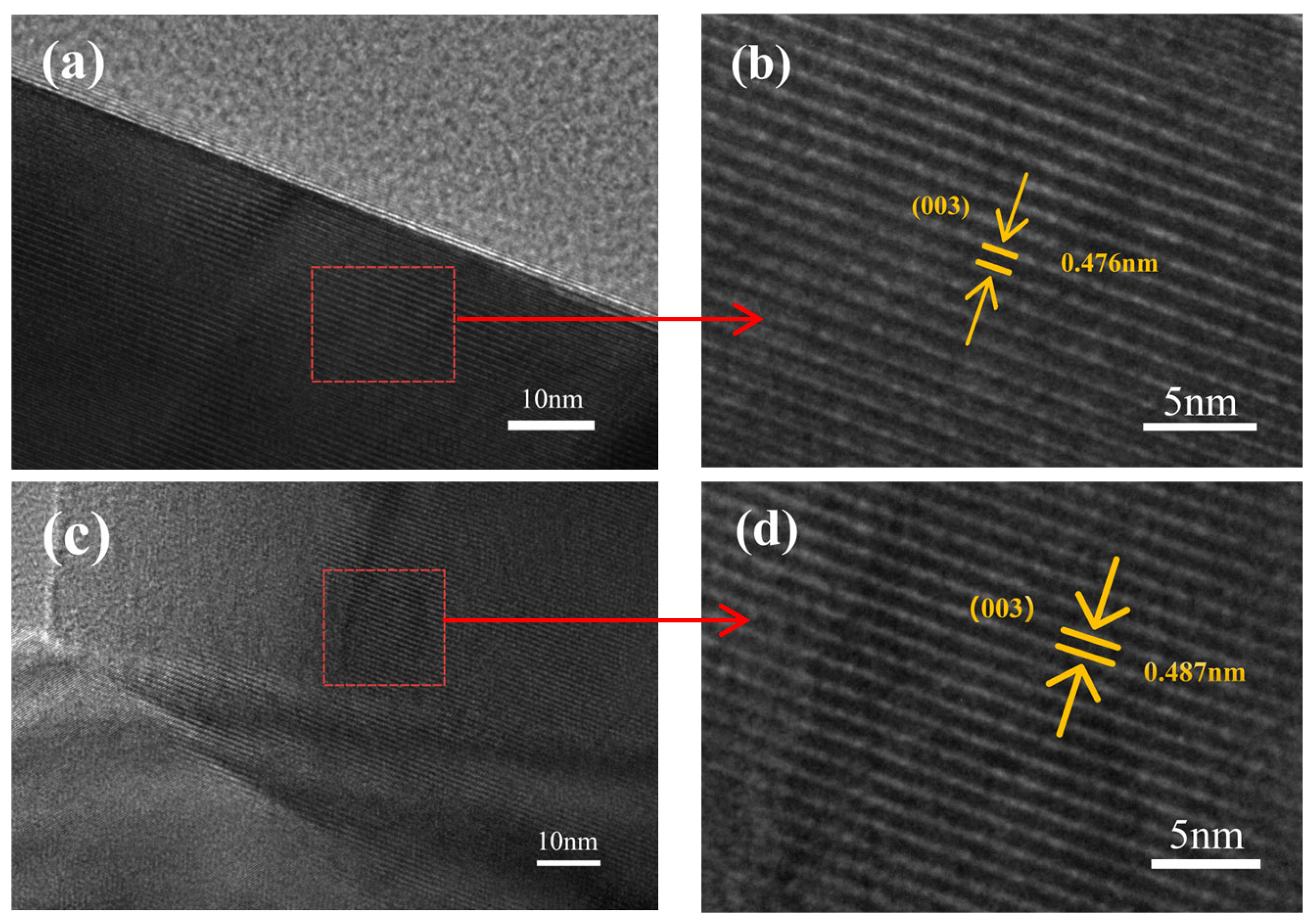
Figure 4 shows a comparison of TEM images of pristine-NCM and La/Al/F/NCM@LiNbO3. It can be seen that the modified material has a larger lithium layer spacing, and the wider ion diffusion channels mean a greater ion diffusion rate. The reason is that La3+ has a larger ionic radius (1.16 Å) and, during doping, it preferentially occupies the surface Ni2+ sites in the NCM lattice and rarely enters the interstitial phase. The larger La3+ substitution for the smaller Ni2+ (0.69 Å) has a significant “pillar effect” on the lithium layer, which expands the layer spacing and widens the lithium-ion transmission channels. Moreover, the +3 valence state of La3+ is less likely to undergo valence state changes during electrochemical cycling. La3+ locks the Ni2+ sites and inhibits their migration to the lithium layer, thereby effectively suppressing the ionic mixture [23]. This optimizes the lithium-ion diffusion path. These are precisely the key factors that contribute to the improved ion diffusion rate of the modified material in this study [23].
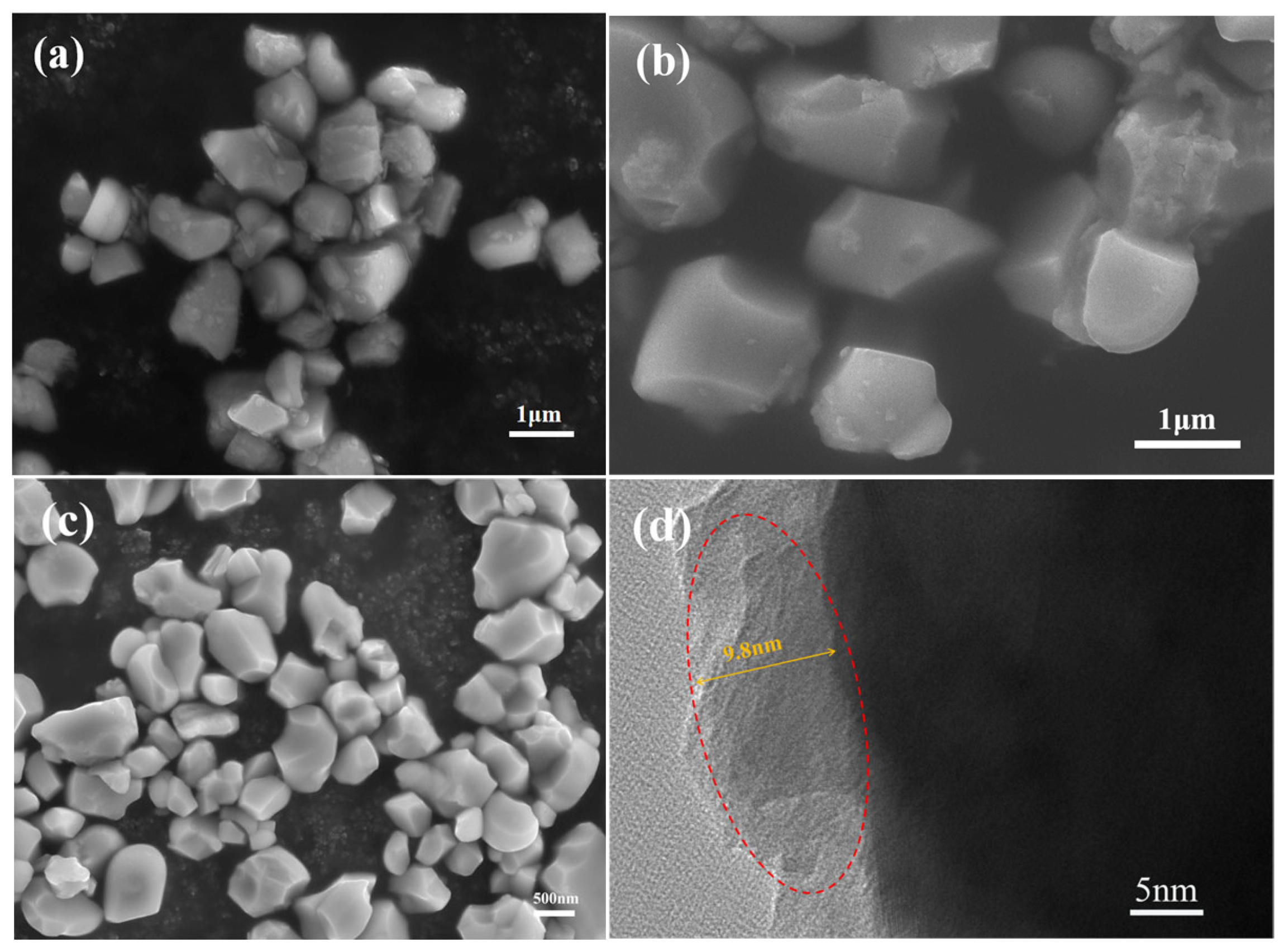
Figure 5 displays SEM images of three single-crystal NCM811 samples with different compositions. Neither doping nor coating significantly alters the particle size, as all materials remain micron-scale single crystals. However, closer inspection reveals that the two uncoated samples exhibit obvious residual lithium on the particle surfaces. This is primarily attributed to the instability of Ni3+ within the material, which tends to reduce to Ni2+ with oxygen release, causing lithium to migrate to the surface and react with H2O/CO2 to form lithium residues—a phenomenon more pronounced in high-nickel materials [24]. Furthermore, an excess of 5–10% lithium precursor is typically used during sintering to compensate for high-temperature lithium loss, leading to the accumulation of residual LiOH or Li2CO3 on the surface [25]. These residual compounds pose significant issues: Li2CO3 decomposes during electrochemical cycling, releasing CO2 and potentially causing cell failure or short circuits, while the alkaline LiOH reacts with PVDF in the slurry via dehydrofluorination, resulting in binder cross-linking and severely hindering electrode processing [26]. In contrast, the coated sample shows a smooth surface with no noticeable lithium residues. Combined with the presence of LiNbO3 characteristic peaks in the XRD pattern and TEM observations, it is evident that the niobium ethoxide coating agent reacted with the surface lithium residues during the coating process, forming a LiNbO3 layer and thereby consuming the residual lithium compounds.
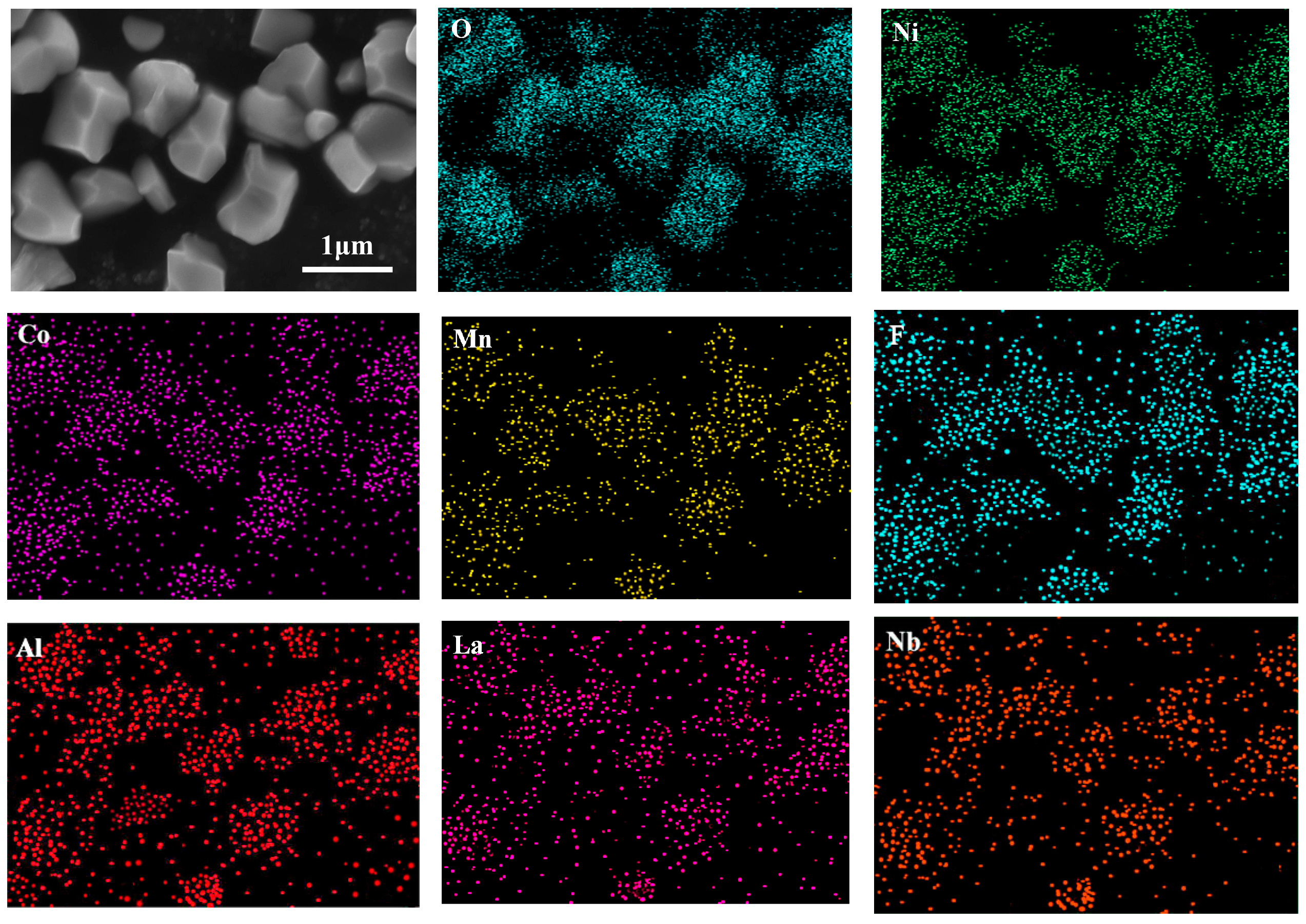
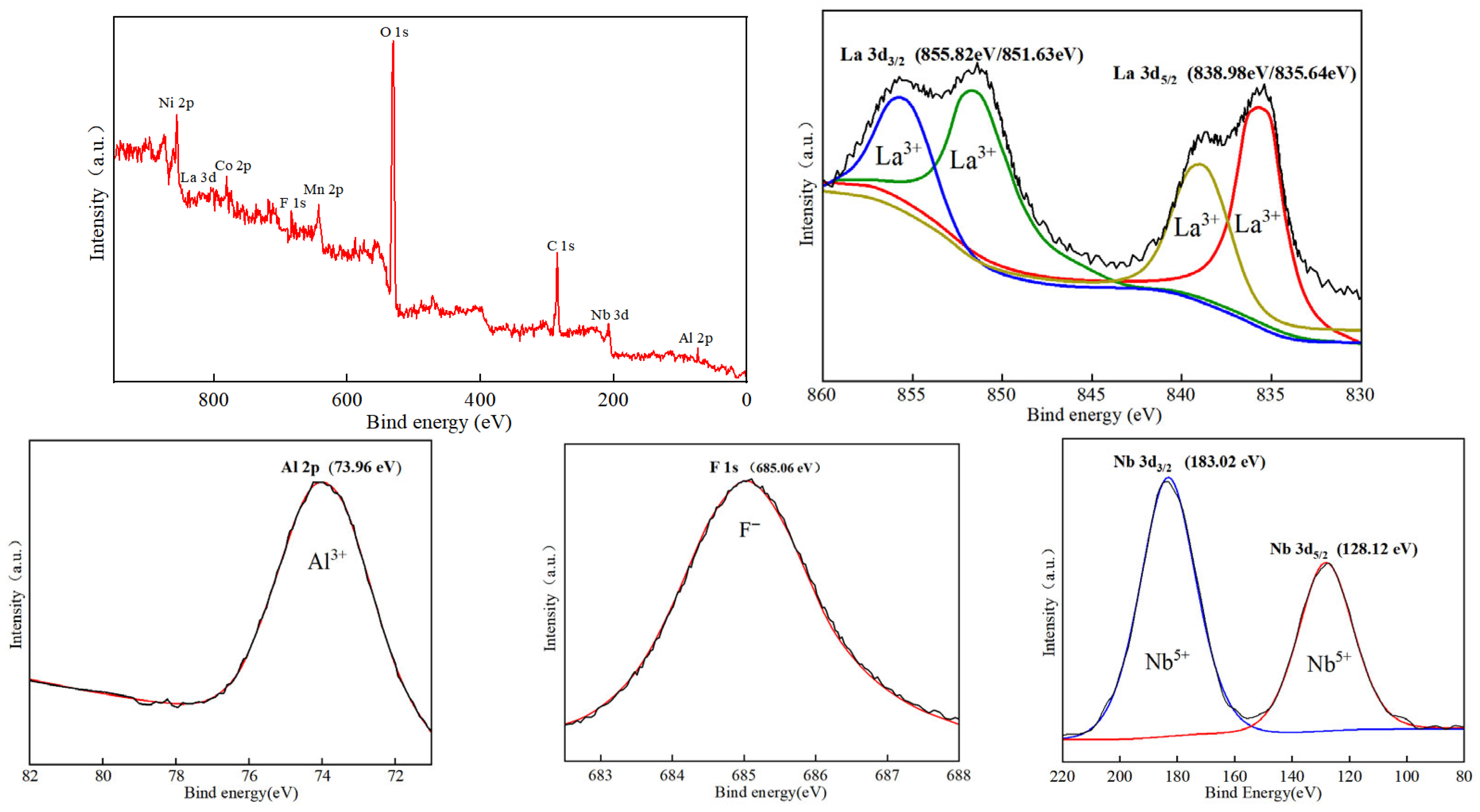
EDS analysis confirms the uniform distribution of all elements within the system (Figure 6). XPS results further verify that La, Al, F, and Nb exist in the chemical states of La3+, Al3+, F, and Nb5+, respectively (Figure 7). Combined with the aforementioned characterization methods, it is demonstrated that during the heat treatment, Nb(OC2H5)5 consumed the residual lithium on the particle surface while simultaneously generating a LiNbO3 coating shell, successfully achieving liquid-phase coating and surface modification of the original ternary-doped material.

2.1.3. Thermal Stability Analysis

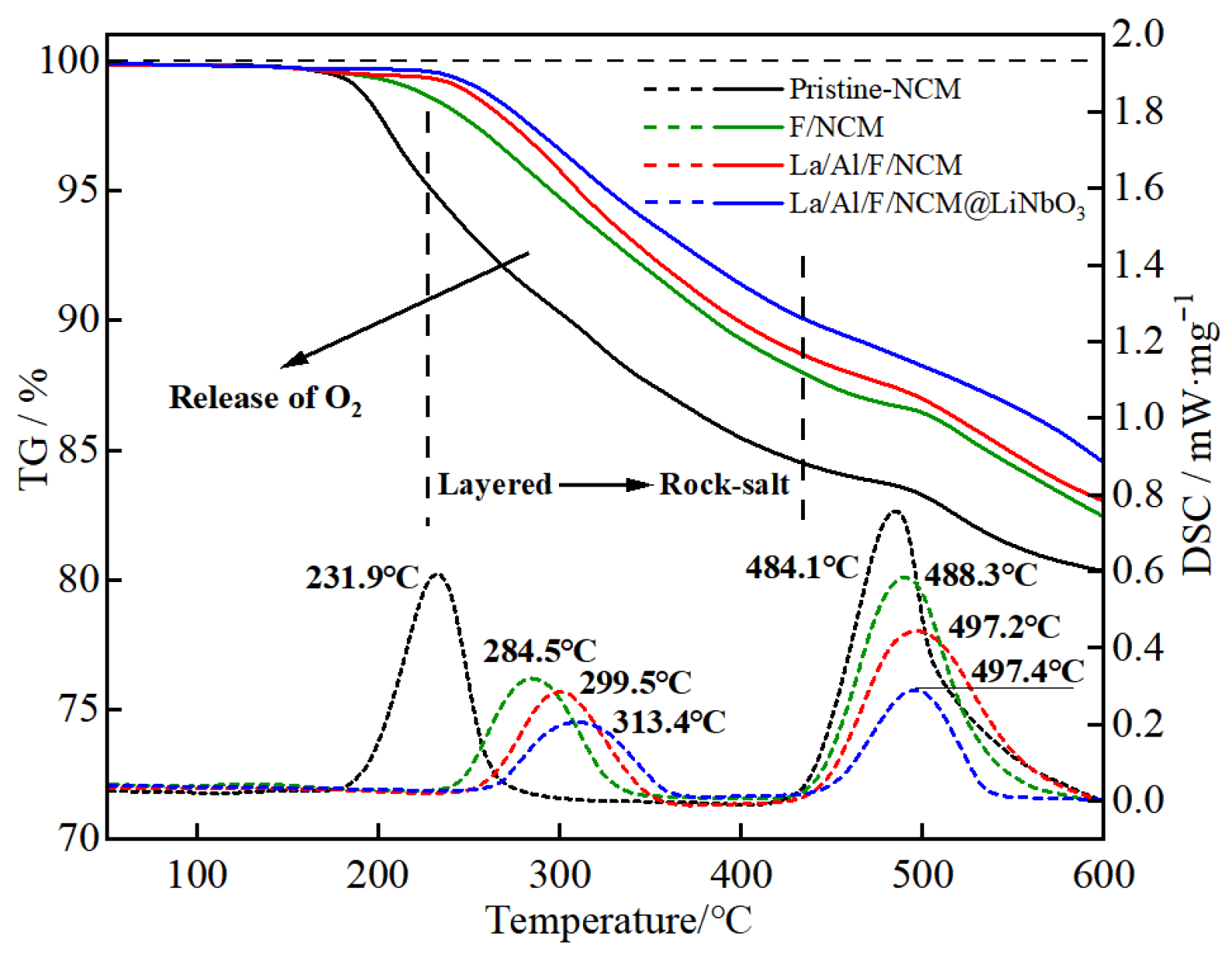
Under high temperatures (>200 °C) or overcharge conditions, NCM811 readily undergoes a transition from a layered to a rock-salt structure, releasing oxygen that can trigger violent redox reactions with the electrolyte and significantly increase thermal runaway risk [27]. The strong electronegativity of fluorine enables it to replace oxygen and form F–M bonds, theoretically enhancing the thermal stability of NCM811, which is the foundation of this study’s modification strategy [18,19]. To evaluate the effect of F-doping/coating on thermal stability, thermogravimetric analysis (TGA) was performed in a nitrogen atmosphere (99.9%). Cathode materials were first charged to 4.3 V to achieve a deeply delithiated state, then disassembled, rinsed with DMC, and dried to remove residual electrolyte. TGA was conducted from 50 to 600 °C at a heating rate of 5 °C/min.
As shown in Figure 8 and Table 2, all four material groups exhibited minor mass loss (less than 1%) in the initial 50–150 °C range. This slight loss is attributed to the evaporation of residual electrolyte solvents or trace moisture after washing, as no significant oxygen release occurs in this temperature interval. A distinct inflection point in the TG curves appears between 180 and 250 °C, marking the onset of major mass loss. This is due to the phase transition of NCM811 from a layered structure to rock-salt phases [27], which involves extensive removal of lattice oxygen. Since the test is conducted in a nitrogen atmosphere, the oxygen loss directly contributes to the sample’s mass decrease. Concurrently, the spontaneous reduction of Ni3+ to Ni2+ in the bulk occurs at high temperatures, where Ni3+ extracts electrons from the coordinating O2−, oxidizing it to O2 that escapes [27]. This redox reaction intensifies above 300 °C, leading to continued mass loss, which is corroborated by the first exothermic peak in the corresponding DSC curves.
As the temperature further increases to around 500 °C, a second inflection point appears in the TG curves with a slightly accelerated mass loss rate. This is likely caused by the reaction of the conductive carbon (Super P) with the released oxygen to form CO2, an exothermic process that exacerbates the mass loss rate. The appearance of a second exothermic peak near 500 °C in the DSC curves supports this hypothesis.
According to Table 2, the onset temperature of the initial thermal mass loss follows the order Pristine-NCM < F/NCM < La/Al/F/NCM < La/Al/F/NCM@LiNbO3. The delayed onset temperature confirms the positive role of F-doping in enhancing thermal stability [18]. Furthermore, in the triple-element (La/Al/F) co-doped sample, the strong La–O and Al–O bonds form a stable network that enhances the binding of lattice oxygen [23]. This suppresses oxygen release triggered by the high-temperature reduction of Ni3+, reducing overall mass loss, which is manifested by the lowered exothermic peak and postponed inflection point in the DSC curve. The LiNbO3 coating layer consumes surface residual lithium compounds (e.g., LiOH, Li2CO3) during its formation, minimizing the release of H2O and CO2 from their decomposition upon heating. Moreover, the perovskite-derived structure of LiNbO3 exhibits certain lattice compatibility with the layered structure of NCM811. The coating can induce a more ordered surface lattice arrangement, reduce Li/Ni mixing defects, and thus contribute to structural stability. Compared to the triple-doped sample, this is reflected in a slightly further delayed exothermic onset and a reduced exothermic peak.

2.2. Electrochemical Performance Analysis

The cathode sheets, prepared from materials of different compositions, were assembled into half-cells with lithium foil as the counter electrode and a 1 M LiPF6 in (EC/EMC/DMC) for electrochemical evaluation. A specific capacity of 200 mAh/g was used for current normalization. All tests were conducted within a voltage range of 2.8–4.3 V. The cells were initially activated at 0.05 C for the first five cycles, followed by cycling and rate-performance tests.
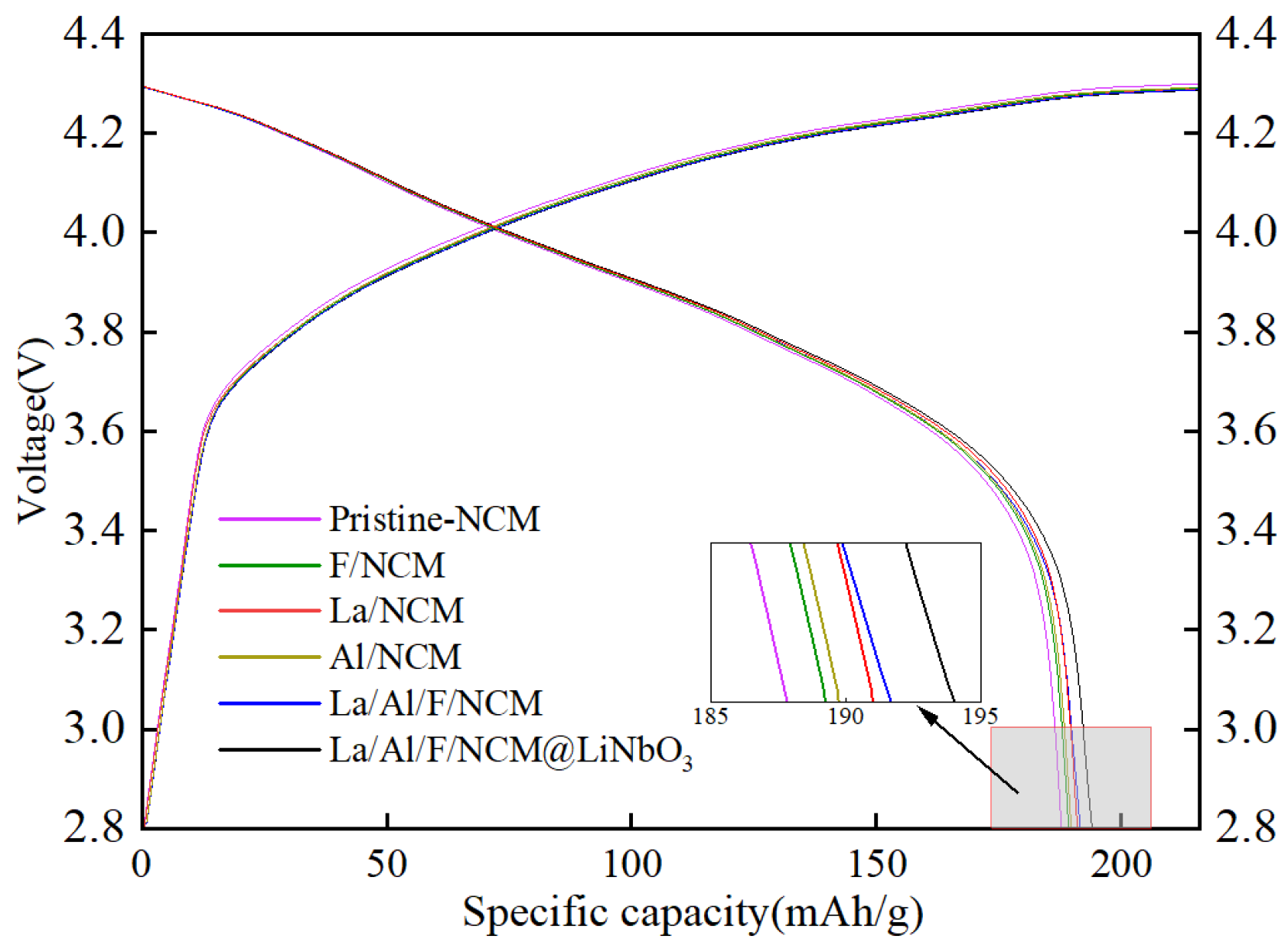
As shown in Figure 9, the six material groups exhibited similar initial charge specific capacities at 1 C (≈215–216 mAh/g), while their first-cycle discharge capacity and coulombic efficiency (CE) differed slightly. The values of unmodified samples were 187.84 mAh/g and 86.96%, respectively. The initial discharge specific capacity of this material was higher than that of the single-crystal NCM811 material prepared by the molten salt method by Hu et al. (178.34mAh/g) [28]. The modified samples showed slightly improved performance: F-doped (189.25 mAh/g, 87.61%), Al-doped (189.90 mAh/g, 87.91%), La-doped (190.01 mAh/g, 87.96%), La/Al/F tri-doped(191.76 mAh/g, 88.78%), and LiNbO3-coated tri-doped La/Al/F/NCM@LiNbO3 (194.05 mAh/g, 89.83%). This indicates that both doping and coating modifications benefitted the initial reversible capacity.
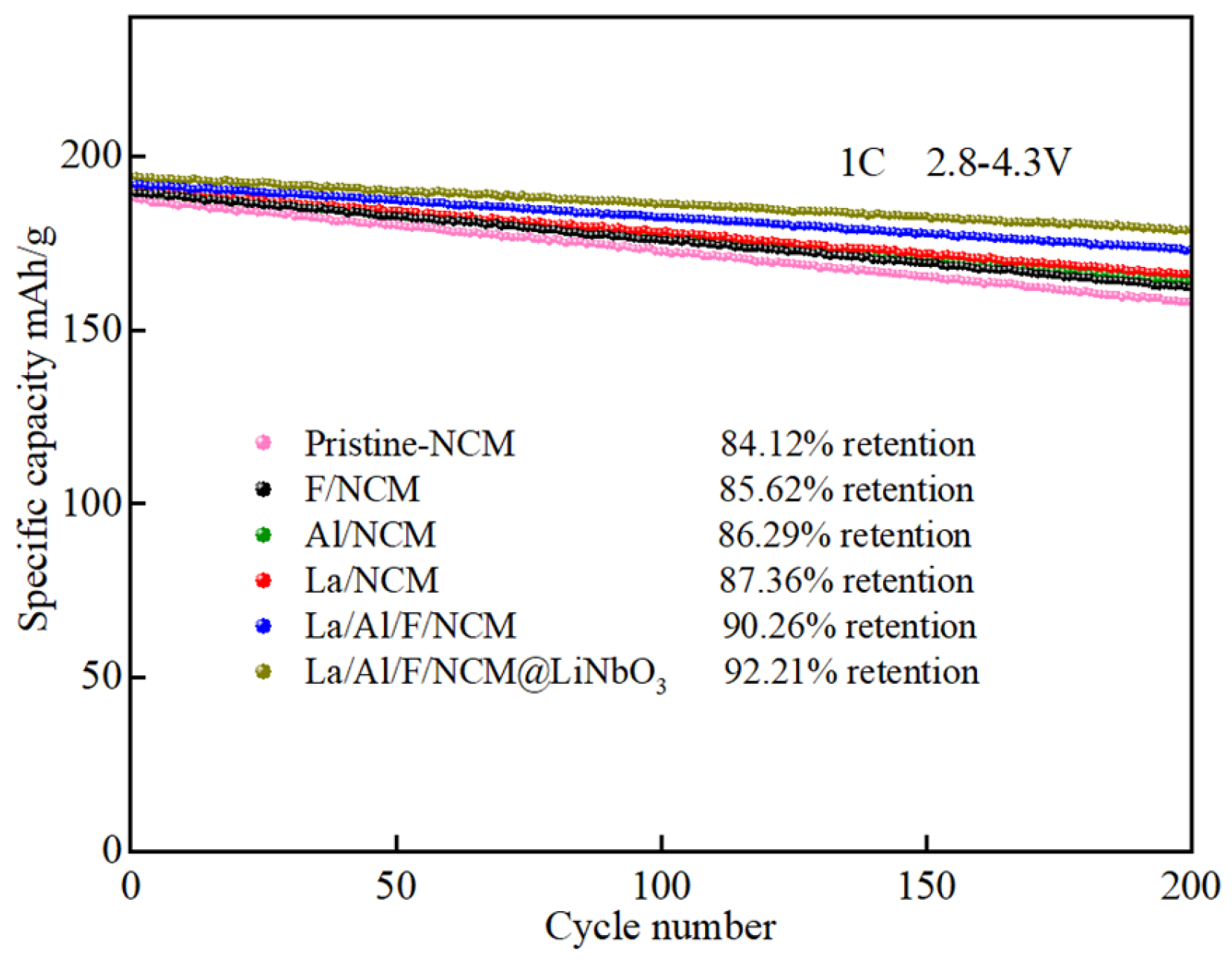
Upon extended cycling at 1 C, the capacity fading rates diverged significantly. After 200 cycles, the capacity of the unmodified sample dropped to 158.01 mAh/g, with a retention of 84.12%. In contrast, the single-element doped samples (F/NCM, Al/NCM, La/NCM) demonstrated better cyclability, retaining 162.04, 163.87, and 166.01 mAh/g, respectively, corresponding to capacity retentions of 85.62%, 86.29%, and 87.36% (Figure 10).
The La/Al/F tri-doped sample further improved long-term cyclability, maintaining 173.09 mAh/g (90.26% retention) after 200 cycles. The best performance was observed for the LiNbO3-coated tri-doped sample (La/Al/F/NCM@LiNbO3), which retained 178.93 mAh/g and a highest retention of 92.21%. This enhancement is attributed to the synergistic stabilization of the crystal structure and optimization of Li+ transport pathways by multi-element doping, coupled with the LiNbO3 coating that improves interfacial stability and ion conduction.
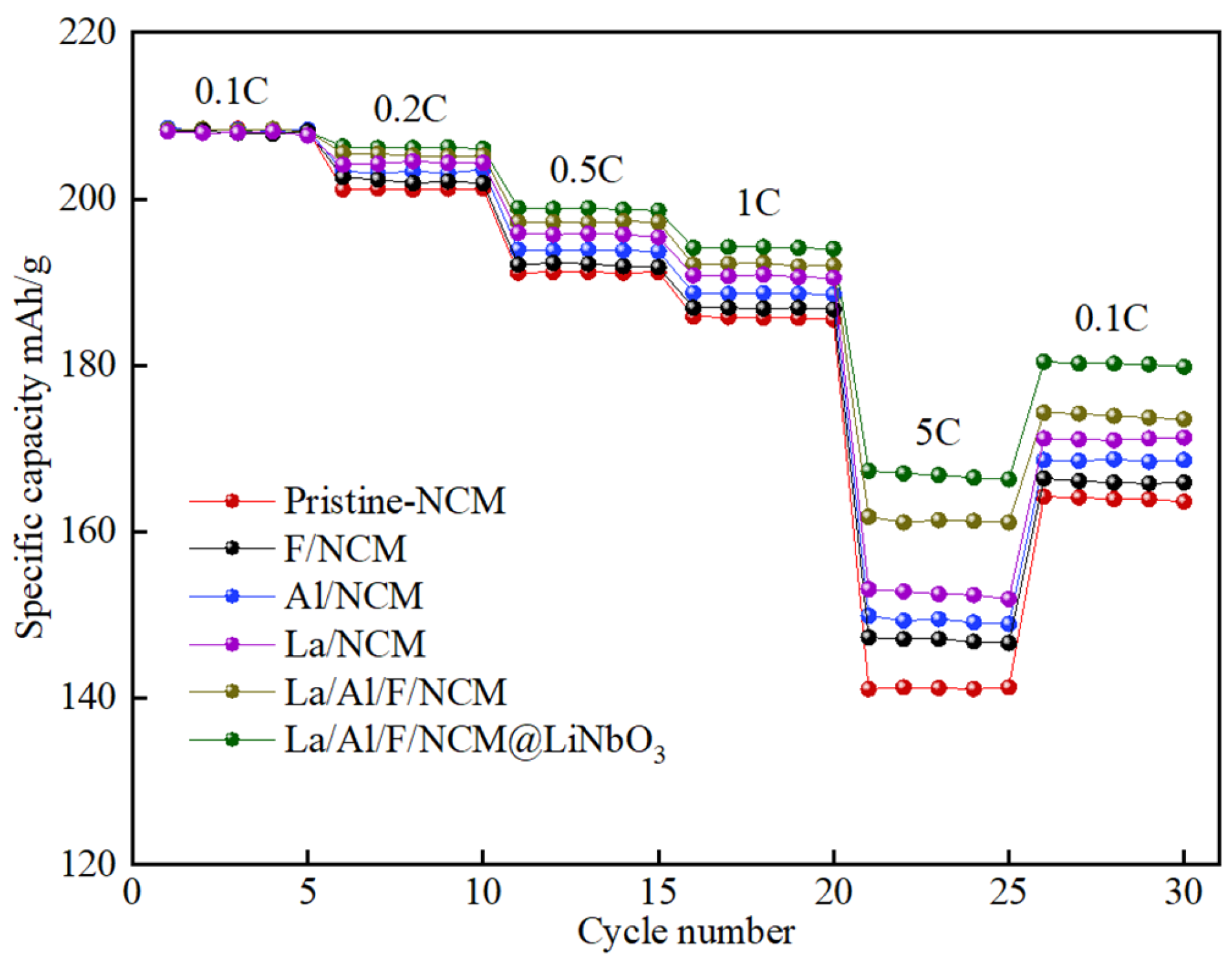
As shown in Figure 11, the rate capabilities of the different material groups were evaluated. At a low current density of 0.1 C, all six materials delivered similar initial discharge capacities of around 208 mAh/g. However, as the current density progressively increased, the La/Al/F/NCM@LiNbO3 composite demonstrated superior rate performance. This enhancement is attributed to the synergistic effects of its multi-component design: the large-radius La3+ ions expanded the interlayer spacing, thereby widening the Li+ diffusion channels [23]; the Al3+ ions, with their stable octahedral coordination, raised the energy barrier for Ni2+ migration, effectively suppressing Li/Ni cation mixing during cycling [23]; and the highly electronegative F anions contributed to maintaining structural stability [18].
Furthermore, the LiNbO3 coating, serving as a fast-ion-conductive shell, provided a dual benefit [22]: it physically separated the cathode material from direct electrolyte contact, significantly mitigating interfacial degradation, and simultaneously enhanced ionic transport. Consequently, this composite retained a high discharge capacity of approximately 166.8 mAh/g even at a high rate of 5 C. This value is significantly higher than those of the other five materials and represents an increase of 25.7 mAh/g compared to the unmodified sample (141.1 mAh/g).
After 200 cycles at a 1 C rate, the cells with different compositions were charged to the same cutoff voltage under constant-voltage conditions, followed by Cyclic Voltammetry (CV) and electrochemical impedance spectroscopy (EIS) measurements. The CV tests were performed within a voltage window of 2.8 V to 4.3 V at a scan rate of 0.1 mV/s, allowing for the assessment of electrochemical reversibility within the cell. EIS measurements were conducted over a frequency range of 0.01 Hz to 10,000 Hz with an amplitude of 5 mV. The resulting impedance spectra were used to evaluate the internal resistance and estimate the lithium-ion diffusion coefficient of the battery.
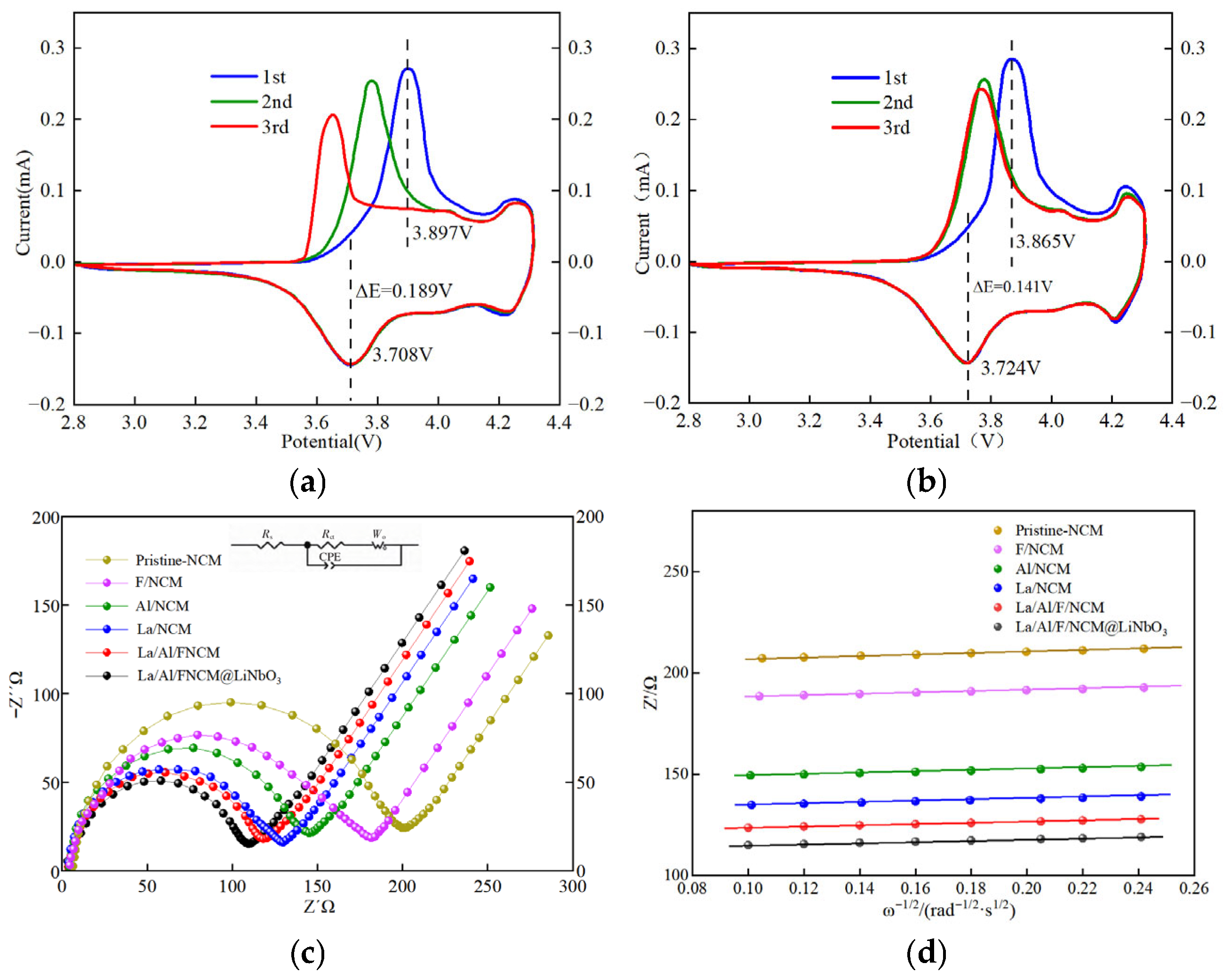
Cyclic Voltammetry (CV) measures the current response while cycling the electrode potential at a constant scan rate, thereby investigating the electrochemical reaction processes occurring at the electrode. For the NCM811 material, the characteristic peaks within the 3.7–4.0 V range correspond to the redox process of Ni2+/Ni3+ within the material. Studies have indicated that a smaller peak potential separation (ΔE) of these redox peaks reflects lower charge transfer resistance and enhanced reversibility of the material [29,30]. As shown in Figure 12, the peak potential differences for the two material groups are: La/Al/F/NCM@LiNbO3 (0.141 V) and Pri-NCM (0.189 V). The comparison clearly shows that the modified material exhibits a smaller redox peak separation, indicating superior reversibility. Furthermore, in contrast to the pristine material, the modified sample demonstrates higher overlap between the second and third cycles, suggesting less irreversible damage during cycling. This observation highlights the significant optimizing effect of ternary synergistic doping combined with LiNbO3 coating in reducing internal polarization and suppressing irreversible phase transitions in the material.
Figure 12c displays the electrochemical impedance spectroscopy (EIS) plots for various materials. As observed, all six spectra exhibit a typical structure comprising a semicircle in the high-/mid-frequency region followed by a sloped line at approximately 45° in the low-frequency region. The semicircle corresponds to the combined interfacial impedance from the solid–electrolyte interphase (SEI) at high frequencies and the charge transfer resistance at mid-frequencies, whereas the inclined line represents the Warburg impedance associated with solid-state diffusion of lithium-ions. An equivalent circuit model was constructed and fitted to the experimental data to quantify the ohmic resistance (Rs) and charge transfer resistance (Rct) for each material group, with the specific numerical results summarized in Table 3.
A comparative analysis of multiple material sets reveals that, relative to the unmodified material, single-element doping effectively reduces both interfacial and charge transfer impedance through its distinct modification mechanism. Furthermore, compared to La/Al/F/NCM, La/Al/F/NCM@LiNbO3 exhibits a more significant reduction in both interfacial and charge transfer resistance. This improvement is attributed to the fast-ion-conducting LiNbO3 coating layer, which lowers the energy barrier for lithium-ion transport across the electrode–electrolyte interface [22].
In addition, residual lithium present on the material surface during synthesis can react with the electrolyte, forming a thick, porous, high-resistance, and unstable cathode–electrolyte interphase (CEI) layer. Such an inferior layer acts as a major obstacle to lithium-ion diffusion. The LiNbO3 coating process consumes the surface residual lithium, thereby optimizing the CEI formation at its source. Consequently, the coated material demonstrates lower impedance compared to the uncoated La/Al/F/NCM sample [22].
To further analyze the kinetic properties of six material groups, specifically their internal lithium-ion diffusion coefficients, we first extract Warburg impedance data from the high-frequency range. Plotting the inverse square root of the angular frequency (ω−1/2) on the x-axis against Z′ on the y-axis, we perform linear fitting. For the low-frequency range where Z′ = σω−1/2, the slope of the fitted line corresponds to the Warburg coefficient σ [31]. Using the given formula, the lithium-ion diffusion coefficient can be derived as follows:
D L i + = R 2 T 2 2 A 2 n 4 F 4 C 2 σ 2
R is the gas constant, with a value of 8.314 J/(mol·K). T represents temperature, set to 298.15 K at room temperature. A denotes the electrode contact area in cm2. The experiment used a 14 mm diameter aluminum foil disk, and (n) indicates the number of electrons transferred per single molecule reaction. For the NCM811 material, (n) equals 1 during Li+ intercalation/deintercalation. F is the Faraday constant, with a fixed value of 96,485 C/mol. C refers to the lithium-ion bulk concentration in mol/cm3.
Figure 12d presents the fitting results for the low-frequency region of the six material sets. The Warburg coefficient (σ) was derived from the slope of the fitted line, and the lithium-ion diffusion coefficients for the different material compositions were subsequently calculated using the relevant formula, as summarized in Table 3.
Compared to the Pristine-NCM sample, all modified materials exhibit varying degrees of improvement in their lithium-ion diffusion coefficients. Combined with the peak shifts observed in the XRD patterns and the variations in the lattice parameters (a, b, and c) obtained from Rietveld refinement, it can be concluded that the doping and coating modifications positively influence lithium-ion diffusion by altering the material’s structure. Specifically, La3+ doping, which uniquely substitutes for Ni at the lattice surface without integrating into the bulk lattice, effectively suppresses cation mixing while significantly widening the lithium-ion diffusion channels [23]. This leads to a substantial increase in lithium-ion diffusion kinetics. Among the single-element doped samples, La3+ demonstrates the most pronounced effect in enhancing the ion diffusion coefficient and reducing impedance. The ternary doping strategy combines the advantages of individual elements, and their synergistic effect further strengthens the material’s kinetic performance. Moreover, compared to the ternary-doped composition, the additional LiNbO3 coating layer imparts superior properties due to its nature as a fast-ion conductor [22]. This grants the La/Al/F/NCM@LiNbO3 composite the highest lithium-ion diffusion coefficient and the most enhanced structural stability.
After testing, open the battery, use DMC to rinse and dry the positive electrode sheet, removing residual electrolyte to the greatest extent, and then inspect the surface particles.
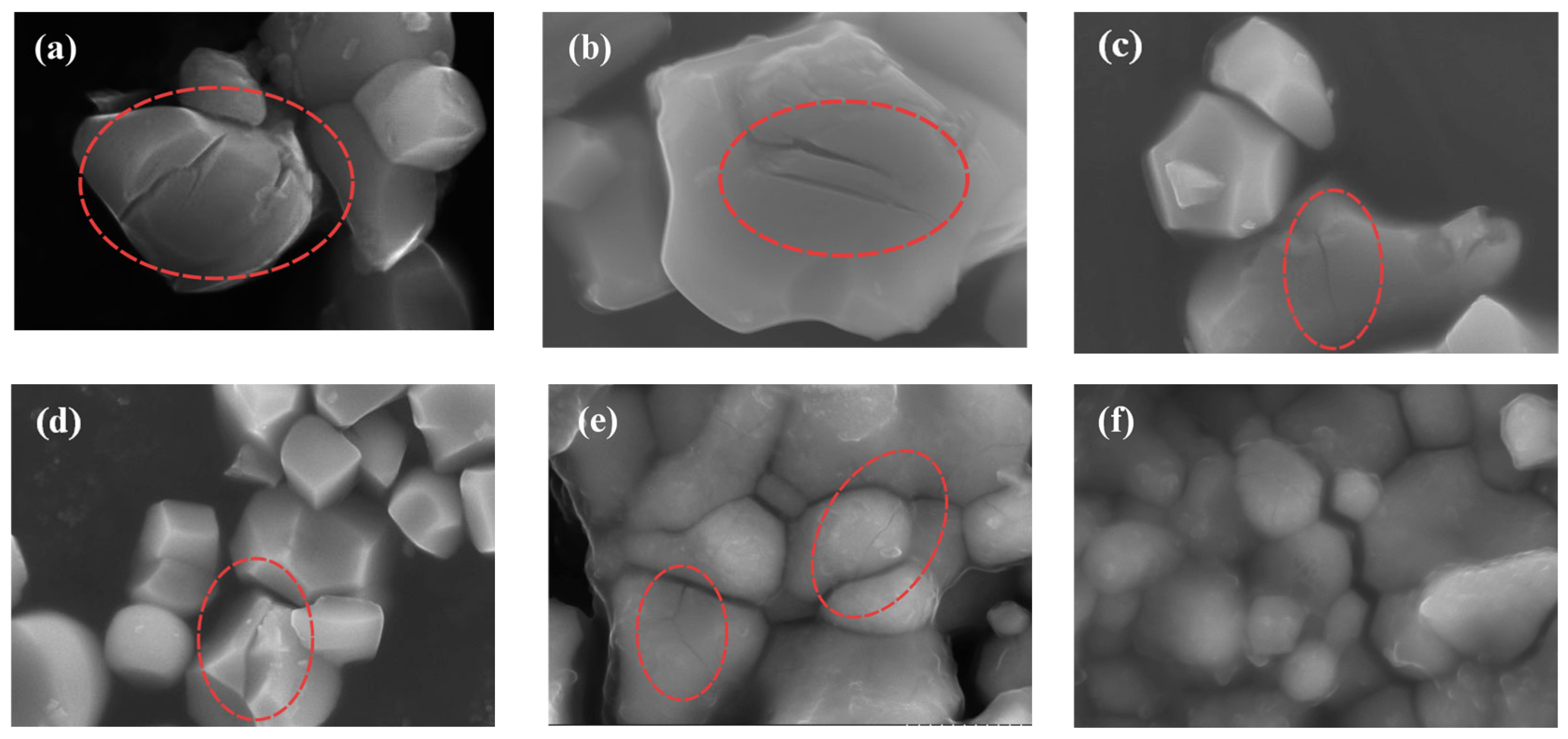
Figure 13 presents the surface morphology of electrode particles for the six material groups after cycling tests. Intragranular cracks of varying severity are observed on particles from five of the groups. The Pristine-NCM sample exhibits the most severe cracking. This phenomenon can be attributed to the repeated, high-rate insertion and extraction of Li+ ions during charge/discharge cycles, which induces significant cyclical expansion and contraction along the c-axis; moreover, there may also be surface sliding. The associated lattice strain generates substantial stress within the particles, leading to the formation of severe intragranular cracks [32].
In contrast to Pristine-NCM, the four single- and co-doped materials show mitigated microcracking due to the structural modifications imparted by the dopant elements. Remarkably, observation of the La/Al/F/NCM@LiNbO3 composite reveals smooth and intact particle surfaces with no obvious cracks after cycling. This superior structural integrity is attributed to the synergistic effects of the La, Al, and F dopants, each contributing its unique properties to enhance the structural stability during cycling. Analysis of Li/Ni cation mixing from XRD patterns further confirms that the synergistic doping offers a more pronounced improvement to the material’s structure. Additionally, the LiNbO3 coating layer physically isolates the active material from direct electrolyte contact. This isolation significantly mitigates interfacial degradation during cycling [27], including phenomena such as transition metal dissolution, electrolyte decomposition, and oxygen release.

3. Materials and Methods

3.1. Synthesis

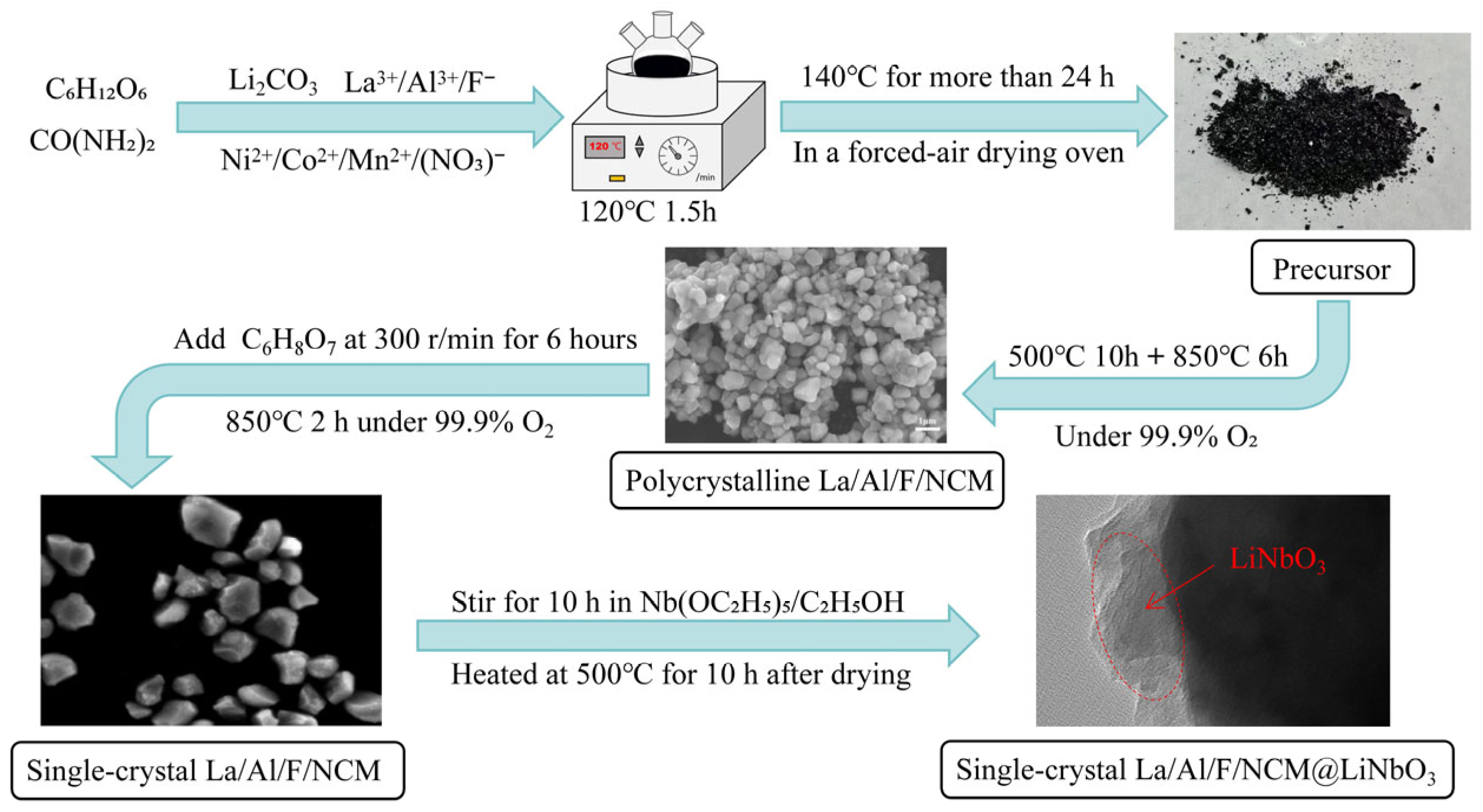
In this study, the co-solvent method was employed. A mixed hot solution of glucose and urea was used as the reaction medium. Through processes such as stepwise sintering, ball milling, heat treatment, and wet chemical coating, a micron-sized single-crystal NCM811 material with La, Al and F element phase doping and a LiNbO3 coating layer was successfully synthesized (Figure 14).
First, appropriate amounts of glucose and urea were weighed at a mass ratio of 3:5, mixed, and ground. The mixture was then transferred to a three-necked flask and gradually heated to 120 °C, forming a translucent pale-yellow liquid phase. Subsequently, a wet-milled mixture of Li2CO3, nickel–cobalt–manganese nitrates, and the desired doping metal salts was added dropwise to the flask. The stoichiometric ratios of the elements in the wet-milled mixture were controlled as Li (105):Ni (80):Co (10):Mn (10):F (1):Al (0.5):La (0.5). The mixture was continuously stirred and maintained at 120 °C for 1.5 h to ensure thorough mixing of the metal salts in the liquid phase, during which the solution transformed from a translucent pale-yellow to a viscous black liquid. The resulting mixture was then transferred to a forced-air drying oven and dried at 140 °C under ventilation for more than 24 h, ultimately yielding the NCM811 precursor.
During this drying process, the fluidity of the glucose syrup at this temperature facilitated the mobility of ions within the reaction environment. Simultaneously, urea slowly decomposed at this temperature, releasing ammonia molecules, which created an alkaline environment conducive to the formation of NCM811. The release of gas further enhanced the uniformity of mixing among the metal ions dissolved in the glucose syrup, enabling combination at the atomic level and avoiding inhomogeneity in the material phases during preparation. After drying, a black porous foam-like precursor was obtained. This precursor was ground and transferred into a tube furnace for stepwise sintering under a high-purity oxygen atmosphere. The low-temperature stage at 500 °C was held for 10 h to promote the formation of a layered structure, followed by a high-temperature stage at 850 °C for 6 h to facilitate crystal growth.
SEM analysis of the sintered material revealed that the material predominantly consisted of secondary particles formed by the aggregation of numerous primary particles, with clear grain boundaries visible, indicating a polycrystalline structure. Subsequently, the polycrystalline material was subjected to wet grinding in anhydrous ethanol with citric acid as a dispersant. By adjusting the rotation speed and grinding duration, the polycrystalline material was fractured along the grain boundaries and dispersed into primary particles. After drying, the material was transferred to a tube furnace and heat-treated at 850 °C under a high-purity oxygen atmosphere to repair surface defects introduced during ball milling. SEM observations showed that the heat-treated material consisted of dispersed micrometer-sized primary particles without grain boundaries.
To address the issue of residual lithium on the surface of the material particles, a wet chemical coating process was performed using niobium ethoxide as the raw material in an anhydrous ethanol liquid-phase environment. After drying, the material was heat-treated at 500 °C for 10 h (Figure 14). During this process, lithium niobate reacted with the surface residual lithium to form a lithium niobate coating layer, which not only resolved the residual lithium issue but also added a fast-ion conductor coating to protect the interface.

3.2. Sample Characterization

In this study, a comprehensive suite of characterization techniques was employed to systematically analyze the physicochemical properties of the materials. X-ray diffraction (XRD) was utilized to determine the crystal structure, and Rietveld refinement was performed to quantitatively calculate the lattice parameters and the degree of cation mixing, thereby assessing the influence of dopants on the crystal structure. Scanning electron microscopy (SEM) was used to examine the particle surface morphology. Energy-dispersive X-ray spectroscopy (EDS) and X-ray photoelectron spectroscopy (XPS) were applied to determine the spatial distribution and chemical states of the elements, respectively. The results from these techniques were correlated with XRD data to collectively validate the effectiveness of the doping process. Transmission electron microscopy (TEM) was employed to measure the lithium interlayer spacing, evaluating the impact of large-radius ions on the interlayer structure, and to confirm the formation of the surface coating layer. Furthermore, thermogravimetric analysis (TGA) was conducted to detect differences in the thermal stability of the various material compositions, elucidating the effects of doping and surface coating modifications on their thermodynamic behavior.

4. Conclusions

In summary, the La, Al, and F tri-doped, micron-sized single-crystal NCM811coated by LiNbO3 was successfully prepared using the co-solvent method of glucose and urea to synthesize the NCM811 precursors, then stepwise sintering together with ball milling to develop single-crystal, and then LiNbO3 wet-chemical coating processes. The resultant NCM811 cathodes exhibit excellent electrochemical performance with an initial discharge specific capacity of 208.32 mAh/g at 0.1 C and 194.05 mAh/g at 1 C with a capacity retention rate of 92.21% after 200 cycles, and even a high-rate performance of 166.81 mAh/g at 5 C, outperforming the level of market commercialization. This good performance is attributed to the stable phase structure brought about by element doping, the LiNbO3 surface coating that prevents the electrolyte from eroding, and the reduction in microcracks in the single-crystal, thereby getting refined internally and externally. The synergistic strategies are the future research direction for high-nickel layered transition metal cathode materials. It is noteworthy that the anhydrous co-solvent method of glucose–urea thermal liquid is facile and time-saving to guarantee uniform element distribution at atomic levels, which facilitates scalable production.

Author Contributions

Conceptualization, J.W.; methodology, J.W.; validation, Z.W.; formal analysis, Z.W.; investigation, Z.W.; resources, J.W.; data curation, Z.W.; writing—original draft preparation, Z.W.; writing—review and editing, S.L.; visualization, B.L.; supervision, K.N.; project administration, J.W.; funding acquisition, J.W. All authors have read and agreed to the published version of the manuscript.

Funding

This work was supported by National Natural Science Foundation of China (Grant No. 52161032), Key Research and Development Project of Guangxi Science and Technology Plan (Grant No. AB25069330), Guangxi Natural Science Foundation (Grant No. 2020GXNSFAA159095) and High-Level Talent Fund of Baise University (2RZ022500027).

Institutional Review Board Statement

Not applicable.

Informed Consent Statement

Not applicable.

Data Availability Statement

The original contributions presented in this study are included in the article. Further inquiries can be directed to the corresponding authors.

Acknowledgments

The authors sincerely thank National Natural Science Foundation of China (Grant No. 52161032), Key Research and Development Project of Guangxi Science and Technology Plan (Grant No. AB25069330), Guangxi Natural Science Foundation (Grant No. 2020GXNSFAA159095) and High-Level Talent Fund of Baise University (2RZ022500027), for their administrative and technical support, and donations in kind.

Conflicts of Interest

The authors declare no conflicts of interest.

Abbreviations

The following abbreviations are used in this manuscript:
LFPLiFePO4
LCOLiCoO2
LMOLiMnO2
NCMLiNixCoyMnzO2 X + Y + Z = 1
NCM811LiNi0.8Co0.1Mn0.1O2
Pristine-NCMThe unmodified and unaltered single-crystal NCM811 material
F/NCMF-element doped modified single-crystal NCM811 material
Al/NCMAl-element doped modified single-crystal NCM811 material
La/NCMLa-element doped modified single-crystal NCM811 material
La/Al/F/NCMSingle-crystal NCM811 materials modified by doping with La, Al, and F elements
La/Al/F/NCM@LiNbO3A single-crystal NCM811 material with a lithium niobate coating and modified by doping with La, Al, and F elements

References

  1. Zhou, Q.-Q.; Xiang, L.-S.; Guo, H.-C.; Xiao, H.; Zhao, H.-Y.; Jiang, Y.-Y.; Wei, F.-F.; Yang, D.-H.; Tu, F.-F.; Zhang, Y.-H.; et al. Study on the Influence of PMMA-Coated Separator on the Manufacturing Process and Performance of Pouch-Type Lithium-Ion Batteries. CIESC J. 2025. Available online: https://link.cnki.net/urlid/11.1946.TQ.20251222.1546.004 (accessed on 17 March 2026).
  2. Wen, J.; Yu, Y.; Chen, C. A Review on Lithium-Ion Batteries Safety Issues: Existing Problems and Possible Solutions. Mater. Express 2012, 2, 197–212. [Google Scholar] [CrossRef]
  3. Song, W.; Huang, X.; Qin, X. Research Progress on Doping Modification of High-Nickel NMC Cathode Materials. Biochem. Eng. 2025, 11, 252–256. [Google Scholar]
  4. Li, P.; Li, W.; Xu, C.; Cui, X. Research Progress on Doping and Modification of Lithium-ion Battery Ternary Cathode Materials. J. Zhengzhou Univ. (Sci. Ed.) 2024, 56, 80–87. [Google Scholar]
  5. Mao, G.; Yang, Y.; Jiao, W.; Yu, W.; Yuan, X.; Tian, Q.; Zeng, L.; Jiang, L.; Tong, H.; Guo, X. Alkali Metal Na+ Doped LiNi0.8Co0.1Mn0.1O2 Cathode Material with a Stable Structure and High Performance for Lithium-Ion Batteries. J. Mater. Sci 2022, 57, 19892–19901. [Google Scholar] [CrossRef]
  6. Verbrugge, M.W.; Baker, D.R.; Chen, S.; He, M.; Cai, M. Cation Mixing and Capacity Loss in li||Ni0.6Mn0.2Co0.2O2 Cells: Experimental Investigation and Application of the Multi-Site, Multi-Reaction Model. Front. Energy Res. 2022, 10, 889176. [Google Scholar] [CrossRef]
  7. Hwang, D.-Y.; Kim, H.-S.; Lee, S.-H. Highly Stable and High-Performance MgHPO4 Surface-Modified Ni-Rich Cathode Materials for Advanced Lithium Ion Batteries. J. Mater. Chem. A 2022, 10, 16555–16569. [Google Scholar] [CrossRef]
  8. He, T.; Chen, L.; Su, Y.; Lu, Y.; Bao, L.; Chen, G.; Zhang, Q.; Chen, S.; Wu, F. The effects of alkali metal ions with different ionic radii substituting in Li sites on the electrochemical properties of Ni-rich cathode materials. J. Power Sources 2019, 441, 227195. [Google Scholar] [CrossRef]
  9. Tang, Y. Preparation and Modification of Ultra-High-Nickel NMC Cathode Materials for Lithium-Ion Batteries. Master’s Thesis, Jianghan University, Wuhan, China, 2025. [Google Scholar]
  10. Gao, S.; Zhan, X.; Cheng, Y.-T. Structural, Electrochemical and Li-Ion Transport Properties of Zr-Modified LiNi0.8Co0.1Mn0.1O2 Positive Electrode Materials for Li-Ion Batteries. J. Power Sources 2019, 410–411, 45–52. [Google Scholar] [CrossRef]
  11. Su, T.; Li, Y.; Zhang, Z.; Zhang, K.; Zhan, F.; Pan, J. Failure Mechanism and Stability Enhancement Strategies of Nickel-Rich Layered Oxide Cathode Materials. Chem. Commun. (Chin. Engl.) 2025, 88, 925–932. [Google Scholar]
  12. Huang, Y.; Wang, Y.; Tang, R.; Xiao, F.; Zeng, L.; Huang, H. Preparation and electrochemical performance of single-crystal high-nickel LiNi0.83Co0.11Mn0.06O2 cathode materials. Mater. Guide 2025, 39, 14–21. [Google Scholar]
  13. Gao, T.; Zhou, S.-Y.; Dai, P.; Song, J.; Liao, J.; Sun, Y.; Yu, C.; Zhao, S.-X.; Cao, G. Regulating the Charge Distribution of Oxygen by High-Entropy Doping to Stabilize Single-Crystal Ni-Rich Cathode Materials. ACS Appl. Energy Mater. 2024, 7, 6961–6971. [Google Scholar] [CrossRef]
  14. Song, J.; Huang, L.; Yang, G.; Cong, G.; Zhang, X.; Liu, Z.; An, Q.; Geng, L. Solid-State Approach for Synthesizing Single -Crystal LiNi0.8Co0.1Mn0.1O2 Cathode of Lithium-Ion Batteries. J. Alloys Compd. 2023, 946, 169358. [Google Scholar] [CrossRef]
  15. Xu, X.; Huo, H.; Jian, J.; Wang, L.; Zhu, H.; Xu, S.; He, X.; Yin, G.; Du, C.; Sun, X. Radially oriented single-crystal primary nanosheets enable ultrahigh rate and cycling properties of LiNi0.8Co0.1Mn0.1O2 cathode material for lithium-ion batteries. Adv. Energy Mater. 2019, 9, 1803963. [Google Scholar] [CrossRef]
  16. Qin, Z.; Wang, J.; Guan, M.; Xin, B.; Tian, B. Research Progress on Leaching of Cathode Materials for Lithium-Ion Batteries. Nonferrous Met. (Extr. Metall.) 2025, 11, 42–57. [Google Scholar]
  17. Kim, K.J.; Jo, Y.N.; Lee, W.J.; Subburaj, T.; Prasanna, K.; Lee, C.W. Effects of inorganic salts on the morphological, structural, and electrochemical properties of prepared nickel-rich Li[Ni0.6Co0.2Mn0.2]O2. J. Power Sources 2014, 268, 349–355. [Google Scholar] [CrossRef]
  18. Kim, H.; Kim, S.-B.; Park, D.-H.; Park, K.-W. Fluorine-Doped LiNi0.8Mn0.1Co0.1O2 Cathode for High-Performance Lithium-Ion Batteries. Energies 2020, 13, 4808. [Google Scholar] [CrossRef]
  19. Zhang, X.-H.; Yang, G.-C.; Lu, S.-R.; Liang, L.-B.; Yang, X.-F. Enhanced Electrochemical Performance of LiNi0.6Co0.2Mn0.2O2 Cathode Material via LiF Surface Modification and F Doping. Power Technol. 2023, 47, 1254–1258. [Google Scholar]
  20. Yang, P.; Zhang, S.; Wei, Z.; Guan, X.; Xia, J.; Huang, D.; Xing, Y.; He, J.; Wen, B.; Liu, B.; et al. A Gradient Doping Strategy toward Superior Electrochemical Performance for Li-Rich Mn-Based Cathode Materials. Small 2023, 19, 2207797. [Google Scholar] [CrossRef]
  21. Li, K.; Cheng, H.-T.; Liang, Y.; Zhao, C. Preparation and Properties of MnLa0.02Co1.58Cu0.4O4 Spinel Coating for SOFC Metal Interconnect. Hot Work. Technol. 2025, 54, 49–55. [Google Scholar]
  22. Xin, F.; Zhou, H.; Zong, Y.; Zuba, M.; Chen, Y.; Chernova, N.A.; Bai, J.; Pei, B.; Goel, A.; Rana, J.; et al. What Is the Role of Nb in Nickel-Rich Layered Oxide Cathodes for Lithium-Ion Batteries? ACS Energy Lett. 2021, 6, 1377–1382. [Google Scholar] [CrossRef]
  23. Wang, B.; Xue, T.; Zou, Z.; Wang, Q. Effect of La doping on electrochemical performance of 523-type LiNi0.5Co0.2Mn0.3O2 cathode material. Renew. Energy 2018, 36, 1849–1853. [Google Scholar]
  24. Park, S.J.; Lee, H.; Lee, H.B.; Kweon, H.; Park, B.K.; Kim, J.W.; Yun, F.; Zhang, F.; Kim, J.; Kim, Y.M.; et al. A Trailblazing Quenching Strategy for Simultaneous LiF Formation at Surface and Intergranular Interfaces for Enhanced Stability of High-Ni NCM Cathodes. Small 2025, 21, e07292. [Google Scholar] [CrossRef] [PubMed]
  25. Zheng, H.; Guo, W.; Song, Z.; Wang, Z.; Li, X.; Guo, H.; Yan, G.; Duan, H.; Li, G.; Wu, B.; et al. Growth mechanism and controllable preparation of single dispersed granular LiNi0.90Co0.06Mn0.04O2. China Nonferrous Met. J. 2025, 35, 3625–3636. [Google Scholar]
  26. Ross, G.J.; Watts, J.F.; Hill, M.P.; Morrissey, P. Surface Modification of Poly(Vinylidene Fluoride) by Alkaline Treatment1. The Degradation Mechanism. Polymer 2000, 41, 1685–1696. [Google Scholar] [CrossRef]
  27. Duan, Z.; Zhai, P.; Zhao, N.; Guo, X. Two-dimensional graphitic carbon-nitride (g-C3N4)-coated LiNi0.8Co0.1Mn0.1O2 cathodes for high-energy-density and long-life lithium batteries. Energy Environ. Mater. 2024, 7, 144–153. [Google Scholar] [CrossRef]
  28. Hu, B. Synthesis and Modification Study of Single-Crystal NCM811 Cathode Material. Master’s Dissertation, Guilin University of Technology, Guilin, China, 2023. [Google Scholar]
  29. He, P.; Zhang, M.; Wu, J.; Li, Y.; Wang, Y.; Yan, Y.; Zhang, D.; Sun, X. Enhanced Cyclic Stability and Discharge Capacity of NCM811 Cathode by Coating Ferroelectric-Type LiNbO3 Ionically Conductive Layer. J. Alloys Compd. 2023, 967, 171822. [Google Scholar] [CrossRef]
  30. Niu, Q.-X.; Du, Y.-F.; Shen, X.; Geng, M.; Zhao, Y.-X.; Liu, X.-S.; Jin, H.; Cheng, X. In situ dual-crosslinked gel polymer electrolyte enabling synergistic cation-anion regulation for high-performance lithium metal batteries. Sci. China (Chem.) 2025, 68, 6735–6743. [Google Scholar] [CrossRef]
  31. Wei, Z.-B.; Xu, S.-B.; Pan, M.-Y.; Yin, F.-L.; Wei, D.; Jia, Y.-G.; Tan, J.; Mao, A.-Q. Enhancing Lithium Storage Performance of Perovskite-Type High-Entropy Oxides through Li+ Doping-Induced Defect Engineering. CIESC J. 2025. Available online: https://link.cnki.net/urlid/11.1946.TQ.20251229.1128.004 (accessed on 17 March 2026).
  32. Yin, Y.; Qiu, X.; Li, M.; Zhang, T.; Dai, Z. Research Progress on Ni-rich Single-Crystal Cathode Materials for Lithium-Ion Batteries. New Chem. Mater. 2024, 52, 60–66. [Google Scholar]
Figure 1. XRD spectra of 6 groups of modified/non-modified materials.
Inorganics 14 00086 g001
Figure 2. The conformational structure of LiMO2 (M = Co, Ni, Mn) crystal.
Inorganics 14 00086 g002
Figure 3. Rietveld refinement results of six groups of materials: (a) Pristine-NCM, (b) F/NCM, (c) Al/NCM, (d) La/NCM, (e) La/Al/FNCM, (f) La/Al/FNCM@LiNbO3.
Inorganics 14 00086 g003
Figure 4. (a,b) TEM of Pristine-NCM; (c,d) TEM of La/Al/F/NCM@LiNbO3.
Inorganics 14 00086 g004
Figure 5. (a) SEM image of Pristine-NCM; (b) SEM image of La/Al/F/NCM; (c) SEM image of La/Al/F/NCM@LiNbO3; (d) TEM image of La/Al/F/NCM@LiNbO3.
Inorganics 14 00086 g005
Figure 6. SEM and EDS of La/Al/F/NCM@LiNbO3.
Inorganics 14 00086 g006
Figure 7. XPS of La/Al/F/NCM@LiNbO3.
Inorganics 14 00086 g007
Figure 8. TGA test results of four groups of single-crystal materials.
Inorganics 14 00086 g008
Figure 9. First charge–discharge curves of six materials at 1 C rate.
Inorganics 14 00086 g009
Figure 10. Test results of six materials under 1 C rate for 200 cycles.
Inorganics 14 00086 g010
Figure 11. Rate performance test of six groups.
Inorganics 14 00086 g011
Figure 12. (a) CV profile of Pristine; (b) CV profile of La/Al/F/NCM@LiNbO3; (c) EIS profiles of six material groups; (d) low-frequency region fitting results.
Inorganics 14 00086 g012
Figure 13. SEM images of the cathode material surface after 200 cycles at 1 C rate: (a) Pristine-NCM, (b) Al/NCM, (c) F/NCM, (d) La/NCM, (e) La/Al/F/NCM, (f) La/Al/F/NCM@LiNbO3.
Inorganics 14 00086 g013
Figure 14. Material production process flow chart.
Inorganics 14 00086 g014
Table 1. Lattice parameters of six materials after refinement.
Sample Namea (Å)b (Å)c (Å)c/aI(003)/I(104)
Pri-NCM2.8752.87514.2234.9471.22
F/NCM2.8742.87414.2254.9491.27
Al/NCM2.7832.87314.2234.9501.35
La/NCM2.8752.87514.2274.9481.41
La/Al/F/NCM2.8742.87414.2274.9501.53
La/Al/F/NCM@LiNbO32.8742.87414.2274.9501.61
Table 2. Thermodynamic parameters of different components materials after de-lithium.
Cathode MaterialMass Loss (%)Thermal Decomposition Initiation Temperature (°C)
Pristine-NCM19.71186.2
F/NCM17.58223.5
La/Al/F/NCM16.95232.6
La/Al/F/NCM@LiNbO315.43240.1
Table 3. Impedance and diffusion coefficient of lithium-ions in six materials.
Cathode MaterialRsRctσDLi+/(cm2/s)
Pristine-NCM6.41201.1234.023.23 × 10−14
F/NCM4.56183.7530.693.96 × 10−14
Al/NCM4.04145.5730.454.03 × 10−14
La/NCM3.92129.2529.874.19 × 10−14
La/Al/F/NCM3.65120.3929.084.42 × 10−14
La/Al/F/NCM@LiNbO33.29112.4828.294.67 × 10−14
Disclaimer/Publisher’s Note: The statements, opinions and data contained in all publications are solely those of the individual author(s) and contributor(s) and not of MDPI and/or the editor(s). MDPI and/or the editor(s) disclaim responsibility for any injury to people or property resulting from any ideas, methods, instructions or products referred to in the content.