
Skip to Content
InorganicsInorganics
  • Article
  • Open Access

25 February 2026

Study on Secondary Electron Emission from Silver Oxide Coatings and the Effect of Surface Oxidation on Changes in Secondary Electron Emission of Silver
,
,
and
School of Artificial Intelligence and Big Data, Chongqing Industry Polytechnic University, Chongqing 401120, China
*
Author to whom correspondence should be addressed.

Abstract

Metal surfaces exposed to air environments invariably undergo various surface modifications, altering their secondary electron emission coefficient (SEEC). However, the physical mechanisms underlying these surface modifications differ across metals, yielding distinct effects on SEEC. To investigate the SEEC properties of silver oxide and the impact of surface oxidation on the SEEC of silver, silver oxide and silver coatings were prepared by sputtering, followed by studies of their physical properties and SEEC. Results indicate that under conditions where preparation, storage, and testing were kept as consistent as possible, the SEEC of oxidized silver surfaces is not much different from that of silver-coated surfaces. The SEEC maximum values of silver oxide and silver coatings are 1.7 and 1.6, and the values decreased to 1.5 and 1.4 after ion-sputtering treatment. To validate the impact of surface oxidation on the SEEC of silver, various surface states were achieved on silver substrates. Elemental analysis revealed that vacuum heating effectively removes contaminants from silver coating surfaces, resulting in a significant reduction in SEEC values. Ion sputtering removed contaminants, etched the oxidation layer, and modified the morphology of the silver surface effectively. After 5 min of ion sputtering, the SEEC maximum of the original silver sample decreased from 2.6 to 1.73, and after 15 min of ion sputtering, it further decreased to 1.7. This result indicates that surface oxidation contributes minimally to the SEEC variation of silver exposed to air. The findings revealed in this work hold engineering significance for understanding alterations in the SEEC properties of silver surfaces under different surface conditions.

1. Introduction

When particles strike a solid surface with a certain energy and angle, they excite electrons within the solid to emit, a phenomenon known as secondary electron emission (SEE). The SEE phenomenon is prevalent in various electron-vacuum devices and vacuum scenarios involving particle irradiation. For instance, various electron multipliers exploit the characteristic of certain functional materials possessing a high SEE coefficient (SEEC) to achieve exponential electron multiplication [1,2,3], thereby amplifying signals. Typical materials exhibiting high SEEC include magnesium oxide, aluminum oxide [2], cesium oxides, and various materials suitable for cathode emission [4,5,6,7]. However, in specific scenarios, the SEE phenomenon may also induce detrimental effects. Examples include electron cloud formation in particle accelerators [8,9,10], secondary electron multiplication discharges in space high-power microwave systems [11,12,13,14], and electrostatic discharge behavior on spacecraft surface materials [15,16]. For these SEE-induced harmful effects, reducing the SEEC is typically sought to prevent discharge phenomena at their source [17,18]. For these reasons, selecting materials with suitable SEEC or regulating SEEC through surface modification is crucial for meeting diverse SEE requirements in vacuum operating environments [19,20,21,22]. Examples include employing alumina and oxide films as functional coatings on the anode in electron multipliers to enhance device gain [23,24] and utilizing titanium compound films as functional layers in accelerators to suppress SEE multiplication [25,26,27].
In the signal acquisition and transmission systems of space spacecraft, microwave transmission modules constitute a vital component. To minimize surface losses in microwave system components, silver-plated aluminum alloy is typically employed as the device substrate due to its low impedance characteristics. In practical applications, silver-plated substrates inevitably undergo surface modification, leading to degraded electrical properties. During microwave system operation, they also face deteriorating SEE performance, increasing the risk of secondary electron multiplication discharge within the microwave field environment. Indeed, when materials are exposed to specific environments, their surface states undergo various alterations, leading to changes in SEEC characteristics. For instance, pure metals such as aluminum and magnesium react immediately with oxygen when exposed to air, forming a thin oxide layer on the surface that dramatically enhances surface SEEC. Research on SEEC variations with surface changes in various materials has also been reported. For instance, in 2003, Castaneda et al. investigated the effects of air exposure on ion beam-assisted TiN:O coatings [28]. They deposited TiN coatings by evaporating titanium within a metal vacuum chamber. Following air exposure, XPS quantitative analysis revealed reduced nitrogen content alongside increased oxygen and carbon content, attributable to titanium oxidation and contamination by hydrocarbons and water vapor. Subsequently, surface SEY exhibited a marked increase. In 2013, Baglin et al. investigated the impact of surface modification on the SEEC of aluminum, copper, and niobium materials [29]. The literature confirms that glow discharge treatment and baking are two effective methods for removing surface adsorbates and contaminants, significantly reducing the SEEC values of metals exposed to air. In 2015, Gineste et al. researched the SEEC evolution from an original silver sample (exposed to air for four years) to a sample considered pure silver after ion cleaning [30]. An overall decrease in SEEC was observed, indicating that ion cleaning effectively eliminates surface contamination and restores the inherently low SEEC characteristics of pure silver. In 2007, Ruiz et al. investigated the relationship between the SEEC on titanium nitride films and exposure duration to air [31]. Based on surface elemental analysis, researchers observed that titanium nitride coatings progressively adsorb gases and undergo organic contamination during prolonged storage, concurrently exhibiting a sustained increase in surface SEEC. Following 59 days of exposure, the SEEC peak rose from approximately 1.0 to around 1.5, subsequently stabilizing under extended exposure conditions. In practice, the contributions of contamination and oxidation to SEEC enhancement differ significantly among various pure metals after several days of air exposure. For instance, the environmentally induced increase in copper’s SEEC primarily stems from adsorption effects [32]. Concerning silver materials, although surface modification has been investigated for its impact on surface SEEC, the respective contributions of surface contamination and oxidation to SEEC remain insufficiently studied. In particular, the influence of surface oxidation on silver SEEC remains unclear, necessitating systematic research.
To investigate the dependence of silver surface SEEC on surface oxidation, we prepared a series of silver and silver oxide coatings via sputtering. Subsequently, we examined their morphology, elemental composition, and SEEC characteristics, assessing the impact of ion cleaning on surface state and SEEC. Findings revealed minimal differences in SEEC between silver oxide and pure silver. To further validate the influence of surface oxidation on silver SEEC, five silver samples with distinct surface states were prepared via heating, organic sputtering, and ion sputtering. By comparing sample cleanliness, the efficacy of each surface treatment technique in removing contaminants and oxide layers was summarized. Analysis revealed a correlation between surface cleanliness and SEEC, separately establishing the dependence of SEEC on surface contaminants and oxide layers.

2. SEEC Properties of Silver Oxide Coating

2.1. Microscopic Analysis of the Silver Oxide and Silver Coatings

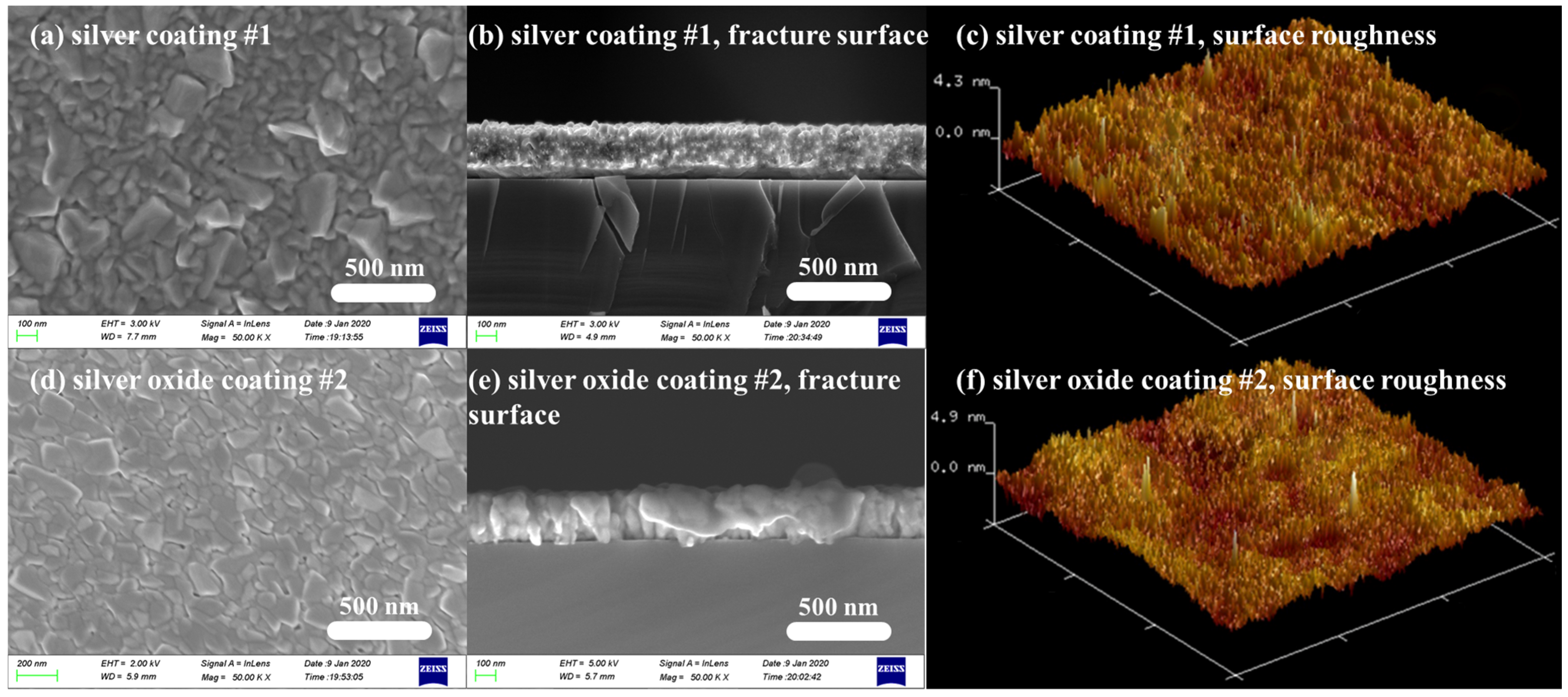
Figure 1a,d presents the surface morphologies of the freshly prepared silver coating and the silver oxide coating, respectively, characterized by a scanning electron microscope (SEM); the corresponding fracture surface images are displayed in Figure 1b,e. The fracture surface views indicate that the silver coating has a thickness of approximately 285 ± 14 nm, while the silver oxide coating thickness is about 252 ± 12 nm. SEM images reveal that both the sputtered silver and silver oxide coatings exhibit uneven surfaces, with distinct grain boundaries distributed across the entire coating area. Additionally, Figure 1c,f presents surface roughness images for two sets of coated samples, obtained using an atomic force microscope (AFM). The AFM images reveal that, within the tested areas, the roughness of both sets of thin film samples is on the order of several nanometers.
Figure 1. Surface morphology images of the samples characterized by SEM: (a) silver coating SEM image, (b) fracture surface of the silver coating, (c) silver coating AFM image, (d) silver oxide coating SEM image, (e) fracture surface of the silver oxide coating, and (f) silver oxide coating AFM image.
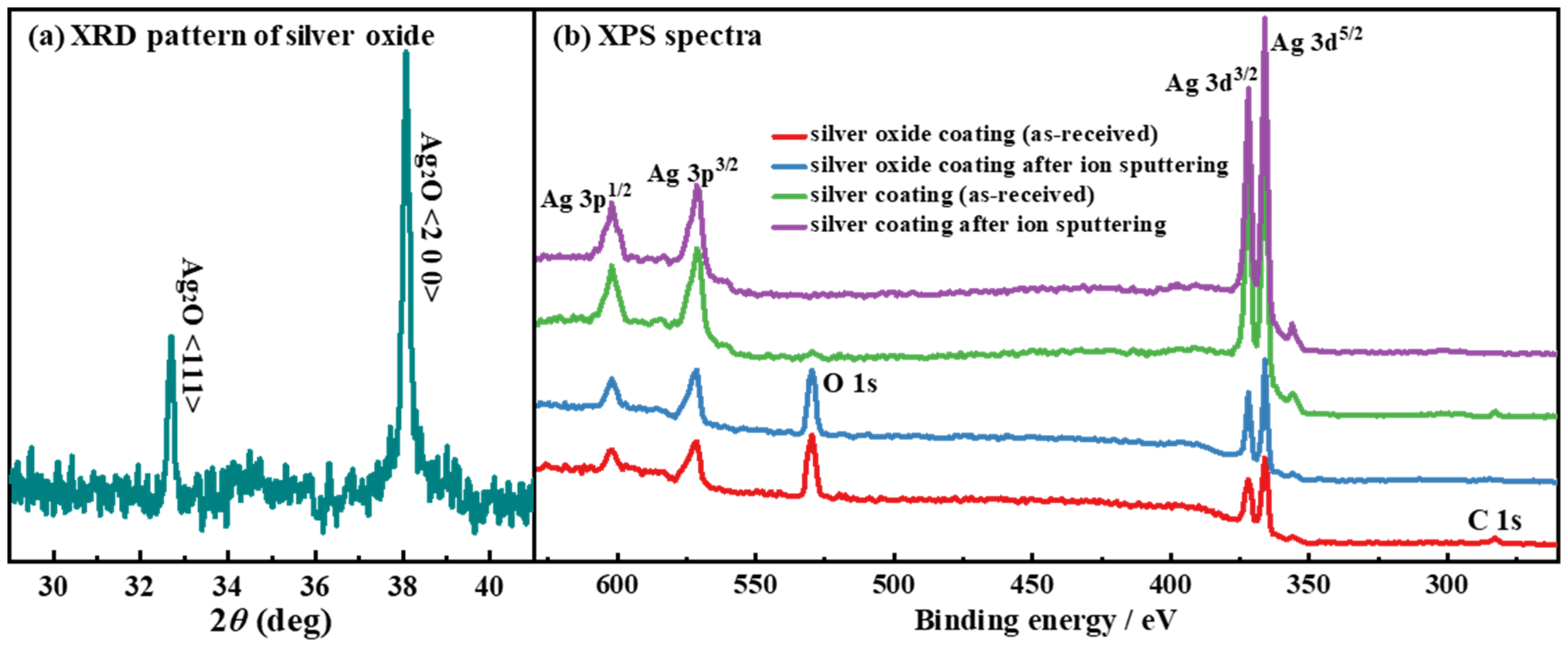
Figure 2a shows the X-ray diffraction (XRD) pattern of the silver oxide coating, and Figure 2b shows the X-ray photoelectron spectroscopy (XPS) measurement results of the sputtered silver and silver oxide coatings. As can be seen from the XRD pattern in Figure 2a, the prepared silver oxide coating exhibits two crystalline phases: Ag2O<111> and Ag2O<200>. In addition, to investigate the impact of surface contaminants on the surface condition and SEEC, we employed the ion-sputtering apparatus within the XPS system to perform sputter modification on the coating sample surfaces. The sputtering method can partly remove contaminants adhering to the sample surface while simultaneously exerting a certain influence on the surface topography of the sample. The sputtering conditions were bombarding the sample surface with argon ions of 2000 eV energy for 5 min. From Figure 2b, we see that the freshly prepared silver oxide coating and silver coatings are slightly contaminated before the ion-sputtering treatment. Direct evidence lies in the presence of minor carbon contamination on the surface of the silver oxide coating. Moreover, prior to ion cleaning, the presence of certain oxygen-containing elements on the silver-coated surface indicates that water vapor or other oxygen-containing gases have adsorbed onto the surface. Following ion sputtering, the carbon elements on the silver oxide coating surface and the oxygen elements on the silver coating surface have been removed, indicating that ion sputtering effectively cleans contaminants from the sample surface.
Figure 2. (a) Phase structure diagram of silver oxide coating characterized by XRD; (b) element composition characterized by XPS of the silver oxide and silver coatings before and after ion sputtering. The sputtering condition was to bombard the sample surface with argon ions of 2000 eV energy for 5 min.
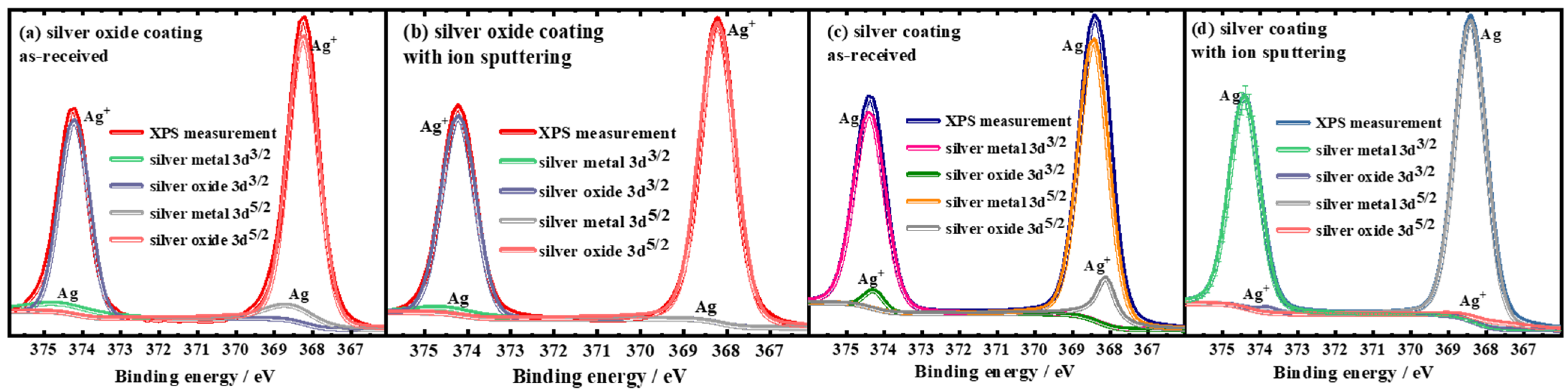
To gain a deeper understanding of the surface state of the prepared silver coating and silver oxide coating, we conducted detailed characterization of the surface elements in both samples before and after ion sputtering. The XPS characterization results for specific elements of the coating samples are shown in Figure 3. The peak separation for silver 3d in this work was primarily based on references provided in the literature [33]. The binding energy of elemental silver is approximately 0.5 eV higher than that of the silver ion. In this study, the 3d3/2 and 3d5/2 binding energies for free silver were determined to be 374.6 eV and 368.6 eV, respectively; for the compound silver, these values were 374.1 eV and 368.1 eV. As for the elemental analysis of the silver oxide coating sample, we can refer to the characterization results in Figure 3a,b. Figure 3a demonstrates that trace amounts of free silver existed on the silver oxide sample surface prior to ion sputtering, indicating that a small quantity of silver atoms remained unreacted during preparation within the XPS depth-resolved range. Figure 3b reveals that free silver on the silver oxide surface was removed following ion-sputtering treatment within the XPS depth-resolved range. Concurrently, analysis results from Figure 2 confirm that carbon-containing contaminants on the surface were also eliminated post-ion sputtering. These results demonstrate that sputtering restored the pristine silver oxide surface. Figure 3c indicates that for the silver coating sample, a small portion of silver was oxidized within the XPS depth-resolved range before the surface underwent ion sputtering. As also indicated by the XPS spectrum results in Figure 2, a small amount of carbon contamination is also present on the surface. Merely, after the ion-sputtering treatment, from Figure 3d, we see the content of silver oxide almost decreases to 0 within the XPS depth-resolved range, which reveals that the silver oxide on the surface has been effectively removed.
Figure 3. The detailed chemical shift in silver 3d lines of silver oxide coating and silver coating before and after the ion sputtering: (a) silver oxide coating as-received, (b) silver oxide coating after ion sputtering, (c) silver coating as-received, and (d) silver coating after ion sputtering.

2.2. SEEC Characterization of the Silver Oxide Coating and Silver Coating

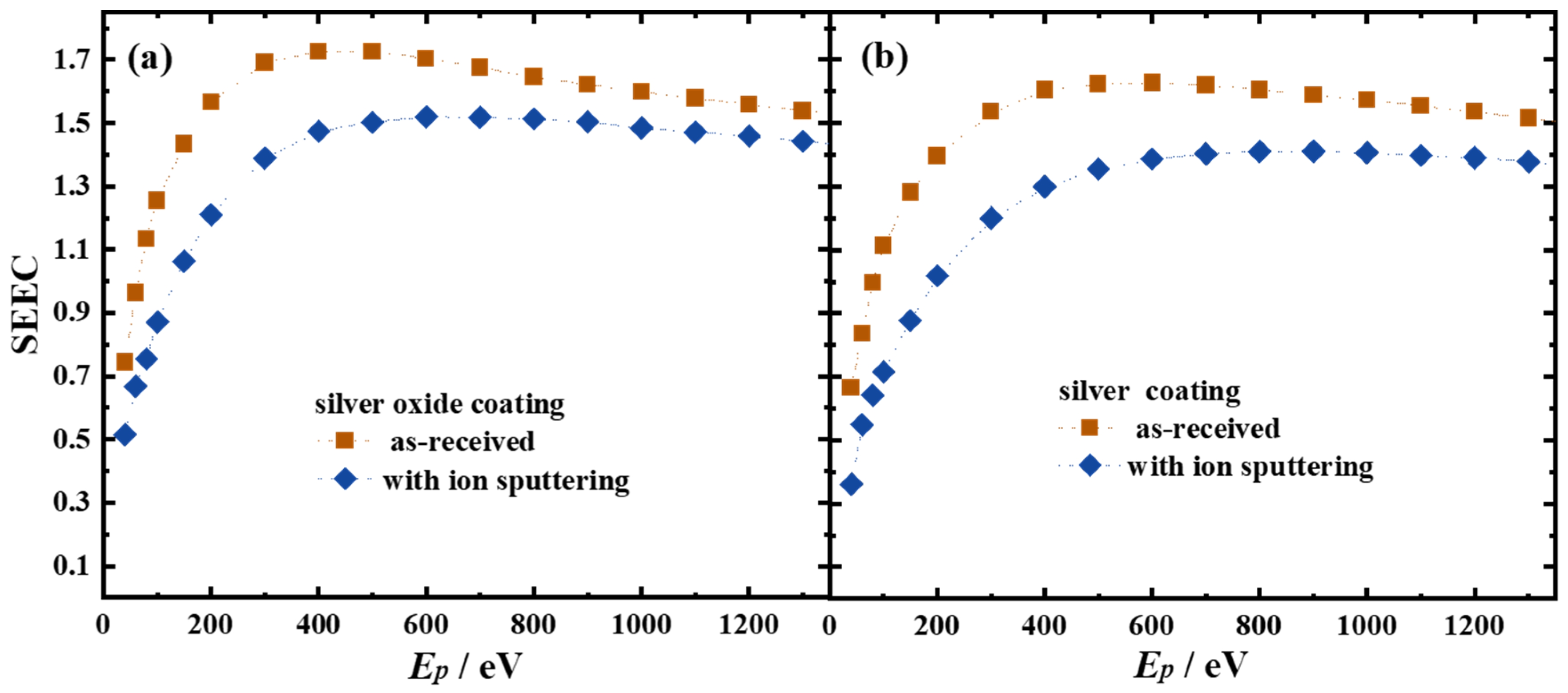
Figure 4 presents the SEEC test results measured for silver and silver oxide coatings before and after ion sputtering (with the horizontal axis representing primary electron energy, denoted as Ep). Figure 4 demonstrates that the SEEC values for both coatings decreased significantly following ion sputtering. From Figure 4a,b, we see that prior to ion sputtering, the silver oxide coating exhibited a maximum SEEC value of approximately 1.7 at Ep = 400 eV, while the silver coating achieved a peak SEEC value of approximately 1.6 at Ep = 600 eV. Following ion sputtering, the SEEC value of the silver oxide coating decreased to approximately 1.5 at Ep = 600 eV, while that of the silver coating decreased to approximately 1.4 at Ep = 900 eV. The aforementioned data indicate that regardless of whether ion sputtering was applied, the SEEC value of the silver oxide coating was only approximately 0.1 higher than that of the silver coating. Considering that during the experiment we ensured sample preparation, storage, and testing conditions were as consistent as possible, we may consider that the SEEC of silver oxide is not significantly different from that of silver.
Figure 4. Experimental SEEC values of the (a) silver oxide coatings and (b) silver coatings.

2.3. Characterization of Surface Morphology of the Silver Samples with Various Surface Conditions

To further investigate the effect of silver surface oxidation on SEEC through a controlled variable approach, several sets of silver samples with differing surface conditions were prepared, with the specific surface treatment methods detailed in Section 3.2. In brief, our selected samples were a series of silver-plated specimens designated silver #C, which had been stored in a drying cabinet (temperature 25 °C, humidity 15%) for 4 years and exhibited substantial surface contamination and oxidation. Subsequently, we subjected several silver #C specimens to distinct surface treatments. The first group subjected silver #C to heating at 400 °C for 3 h in ambient air, yielding silver #D. Typically, high-temperature heating effectively removes volatile substances adsorbed on the sample surface, including water vapor and organic contaminants. The second group subjected silver #C to heating at 500 °C for 3 h within a pure oxygen atmosphere at 10 kPa pressure, yielding silver #E samples. This process effectively removed surface-adsorbed contaminants via high-temperature heating while preserving the surface silver oxide layer by oxygen protection. Group Three: the silver #C was subjected to ultrasonic cleaning in acetone, alcohol, ultrapure water, and nitrogen drying in turn to obtain silver #F. This effectively removed surface-contaminating organic matter. Group 4: silver #C was subjected to 2000 eV argon ion sputtering within a vacuum chamber for 5 min, yielding silver #G. This process partly removed various contaminants and oxidation present on the surface. Group 5: similar to Group 4, but with a cleaning duration extended to 15 min for deeper surface sputtering, yielding silver #H.
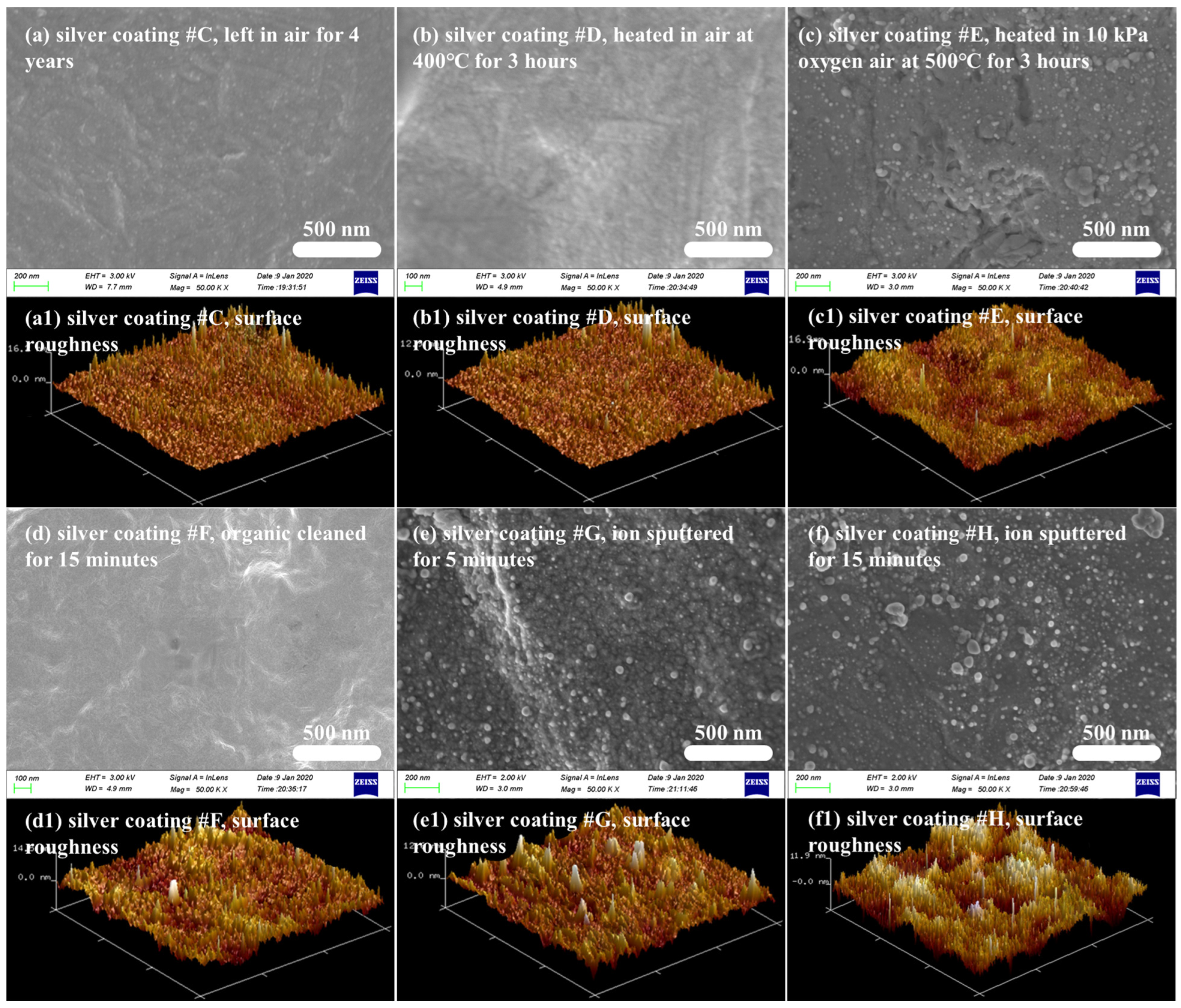
Figure 5 displays surface morphology images of silver samples, including the silver sample exposed to air for 4 years (silver #C in Figure 5a), the heat-treated silver samples (silver #D and #E in Figure 5b,c), the organic solvent-cleaned sample (silver #F in Figure 5d), and the ion-sputtering silver samples (silver #G and #H in Figure 5e,f). The corresponding AFM images of all the samples are also presented in Figure 5. Comparing the SEM images of the various samples in Figure 5a,b,d, we observe that sample #D, heated in air at 400 °C, and sample #F, cleaned with organic solvents, exhibit little morphological difference from the original sample #C. However, as can be seen from the comparison in Figure 5a,c,e,f, the sample #E obtained by heating in oxygen, along with the two ion-sputtered samples #G and #H, exhibits distinct morphological changes compared to sample #C. Figure 5c reveals numerous randomly distributed particles and depressions on the sample surface after heating at 500 °C in an oxygen atmosphere, suggesting that heating in an oxygen environment may induce certain chemical reactions. Table 1 presents the elemental composition data for each sample, measured using the energy-dispersive X-ray spectroscopy (EDS). The elemental contents in Table 1 indicate that the original silver sample was severely contaminated, exhibiting relatively high C and O contents. The C element primarily originates from contamination, while the O element likely stems from adsorbed water vapor, organic pollutants, or surface oxidation. Furthermore, comparing the silver element content measured in Table 1, it increases after heating, while the relative C and O contents decrease. This phenomenon indicates that the heating treatment partially removes surface contaminants.
Figure 5. Surface morphology images of the silver samples characterized by SEM: (a) silver #C exposed to air for 4 years; (b) silver #D heated at 400 °C for 3 h in ambient air; (c) silver #E heated at 500 °C for 3 h within a pure oxygen atmosphere at 10 kPa pressure; (d) silver #F having undergone ultrasonic cleaning in acetone, alcohol, ultrapure water, and nitrogen drying; (e) silver #G having undergone a 2000 eV argon ion sputtering within a vacuum chamber for 5 min; (f) silver #H having undergone 2000 eV argon ion sputtering within a vacuum chamber for 15 min, and (a1f1) are the AFM images of the corresponding samples.
Table 1. Element composition via EDS of silver samples treated by various treatments.
Regarding the effects of organic cleaning and ion-sputtering cleaning on samples, reference may be made to the test results for samples silver #F, #G, and #H. Observation of Figure 5d reveals that organic solvent cleaning exerts a negligible influence on surface morphology, with only slight alterations in elemental composition. Table 1 indicates a partial reduction in carbon content following organic solvent cleaning, suggesting that organic cleaning partially removes contaminants. However, oxygen content remains virtually unchanged post-organic cleaning, indicating that adsorbed oxides prove difficult to eliminate via wet cleaning methods. Moreover, in terms of removing surface carbon contaminants, the efficacy of organic solvent cleaning proved even weaker than that of thermal treatment. To achieve the most thorough cleaning of the silver sample surfaces and obtain pristine surfaces, we employed ion sputtering for surface cleaning and modification. Figure 5e,f presents the surface topography of the silver #C sample after 5 and 15 min of ion sputtering, respectively. This SEM characterization demonstrates that ion sputtering significantly alters the surface morphology, with numerous silver nanoparticles randomly distributed across the cleaned surface. Referring to the elemental composition of silver #G and #H samples in Table 1, the post-ion-sputtering surfaces exhibit markedly reduced C and O content, indicating that ion sputtering effectively strips away various surface contaminants. It should be noted that while argon ion sputtering removes surface contaminants and oxide layers, the high-energy ion bombardment also significantly modifies the surface. As shown in Figure 5e,f, a nanoscale feature structure forms on the post-sputtering surface, potentially arising from surface atomic rearrangement, defect generation, or even a slight preferential sputtering effect during the process. These microstructural alterations themselves may influence secondary electron emission characteristics. This study primarily focuses on the contribution of surface chemical composition (contamination and oxidation), without independently quantifying defects or structural changes introduced by sputtering. Consequently, the observed SEEC variations result from the combined effects of surface chemical cleaning and physical topographical modification.

2.4. Surface Element Analysis for the Silver Samples After Various Treatments

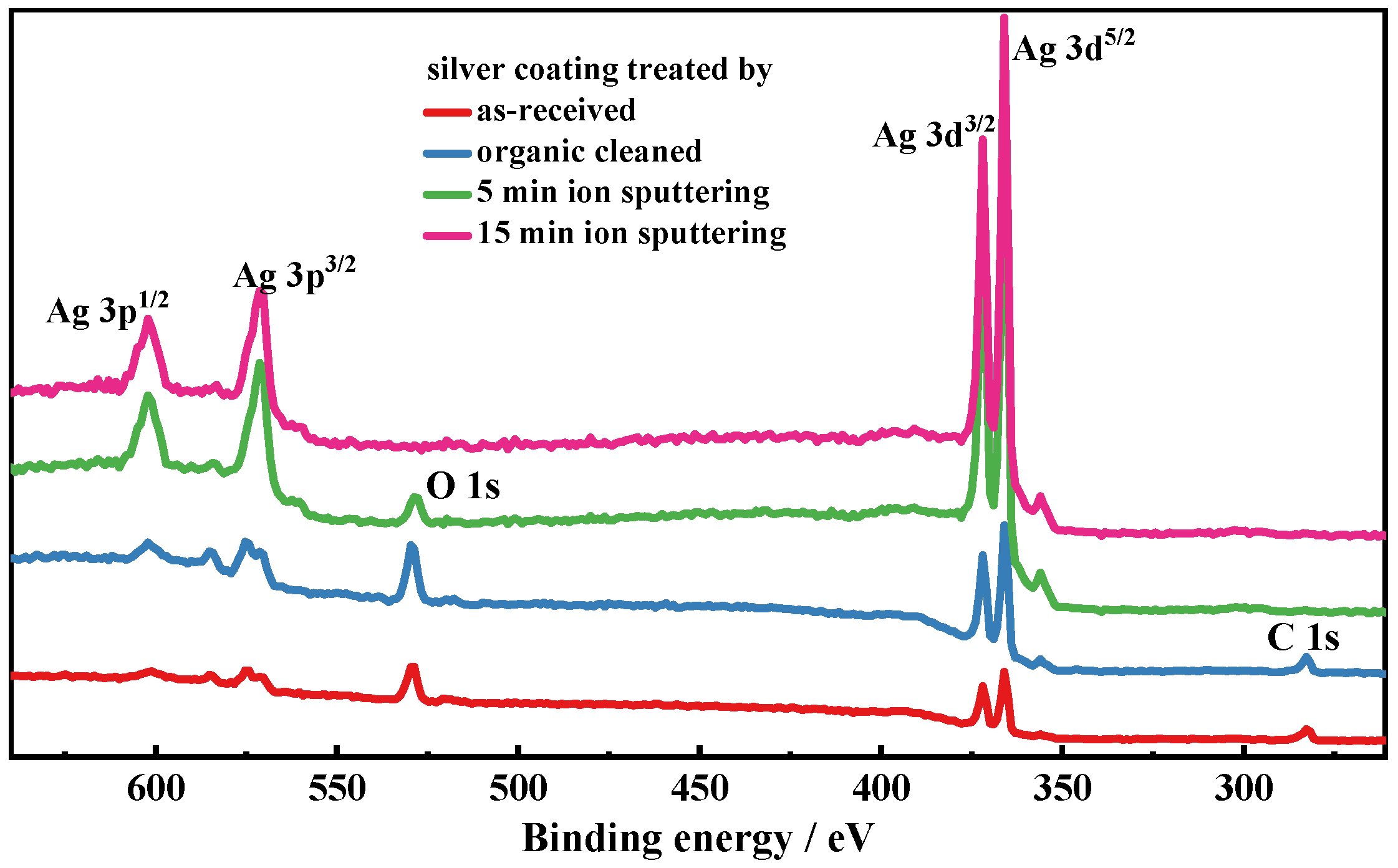
For further validation of the effect of organic cleaning and ion-sputtering treatment on the silver surface conditions, we utilized XPS to characterize the surface elements of samples silver #C, #F, #G, and #H. Figure 6 presents the XPS measurement results for the four silver samples. As is evident from Figure 6, following organic cleaning, the intensity of the silver peak partially increased, the oxygen peak intensity showed a slight rise, while the carbon peak intensity remained largely unchanged. Referring to the elemental peak intensity in Figure 6, it can be concluded that organic cleaning removed only a negligible amount of organic contaminants. This phenomenon indicates that organic cleaning is insufficient for effectively removing surface-adsorbed substances and contaminants. Regarding the ion-sputtered silver samples, Figure 6 reveals that the C peak has almost disappeared, indicating that surface contaminants have been removed. Furthermore, after 5 min of the ion-sputtering treatment (silver sample #G), the silver peak significantly intensified while the O peak partially weakened, suggesting residual oxides remain on the silver surface. Silver sample #H, subjected to 15 min of ion sputtering, exhibited the highest cleanliness. XPS results confirmed the removal of both surface contaminants and the oxide layer. In summary, ion sputtering proves to be an effective method for eliminating contaminants adhering to silver surfaces. However, constrained by the brief interaction duration, this technique struggles to fully eliminate the oxide layer present on the silver surface.
Figure 6. Elemental analysis of the silver samples characterized by XPS for the air-exposed sample silver #C, the organically cleaned sample silver #F, and the ion-sputtered samples silver #G and silver #H.
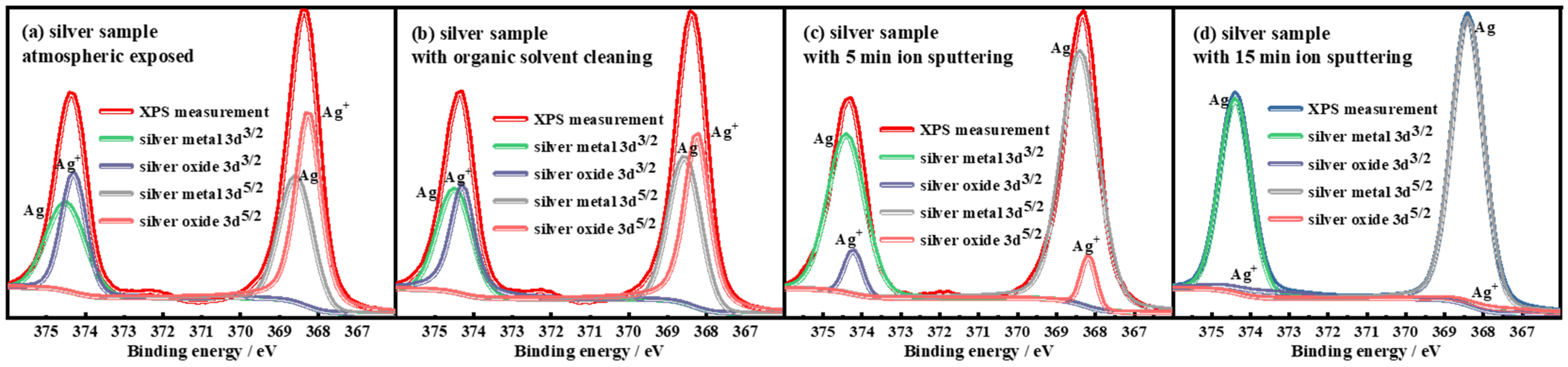
To further analyze the impact of surface treatment methods on the surface condition of silver samples, we conducted detailed XPS analysis of the chemical states of silver elements on the surfaces of the four sample groups depicted in Figure 6, and the results are shown in Figure 7. Figure 7 confirms through chemical shift analysis of the silver 3d orbitals that the residual oxides on the sample surfaces are silver oxide, as depicted in Figure 7a–d. Furthermore, regarding the distinction between free and compound silver, we have consulted relevant literature [33], and the peak separation of the silver 3d orbit is identical to that in Section 2.1. Figure 7a demonstrates that the surface of the silver-plated sample, exposed to air for 4 years, has undergone significant oxidation, with the content of compound silver even exceeding that of free silver. Figure 7b demonstrates that the silver content in the compound state remains high on the surface of the silver-plated sample after organic cleaning, indicating that organic cleaning is ineffective at removing the oxide layer from the surface of the silver-plated sample. Figure 7c reveals residual silver oxide on the surface of the sample treated with a 5 min ion-sputtering cleaning (silver #G). This indicates that a 5 min ion-sputtering process is insufficient to completely remove the oxide layer from the silver #C surface. Furthermore, Figure 6 and Figure 7d demonstrate that the silver #H sample, subjected to 15 min of ion-sputtering cleaning, exhibits the highest cleanliness, and XPS results indicate that, within the detection limit of the technique (typically a few nanometers in depth), surface contaminants and the oxide layer have been removed for silver #H. In summary, ion sputtering proves to be an effective method for eliminating surface contamination.
Figure 7. XPS fine spectrum analysis results for the silver 3d orbitals: (a) silver #C exposed to air for 4 years; (b) silver #F having undergone ultrasonic cleaning in acetone, alcohol, ultrapure water, and nitrogen drying; (c) silver #G having undergone 2000 eV argon ion sputtering within a vacuum chamber for 5 min; and (d) silver #H having undergone 2000 eV argon ion sputtering within a vacuum chamber for 15 min.

2.5. SEEC of the Silver Samples with Various Surface Conditions

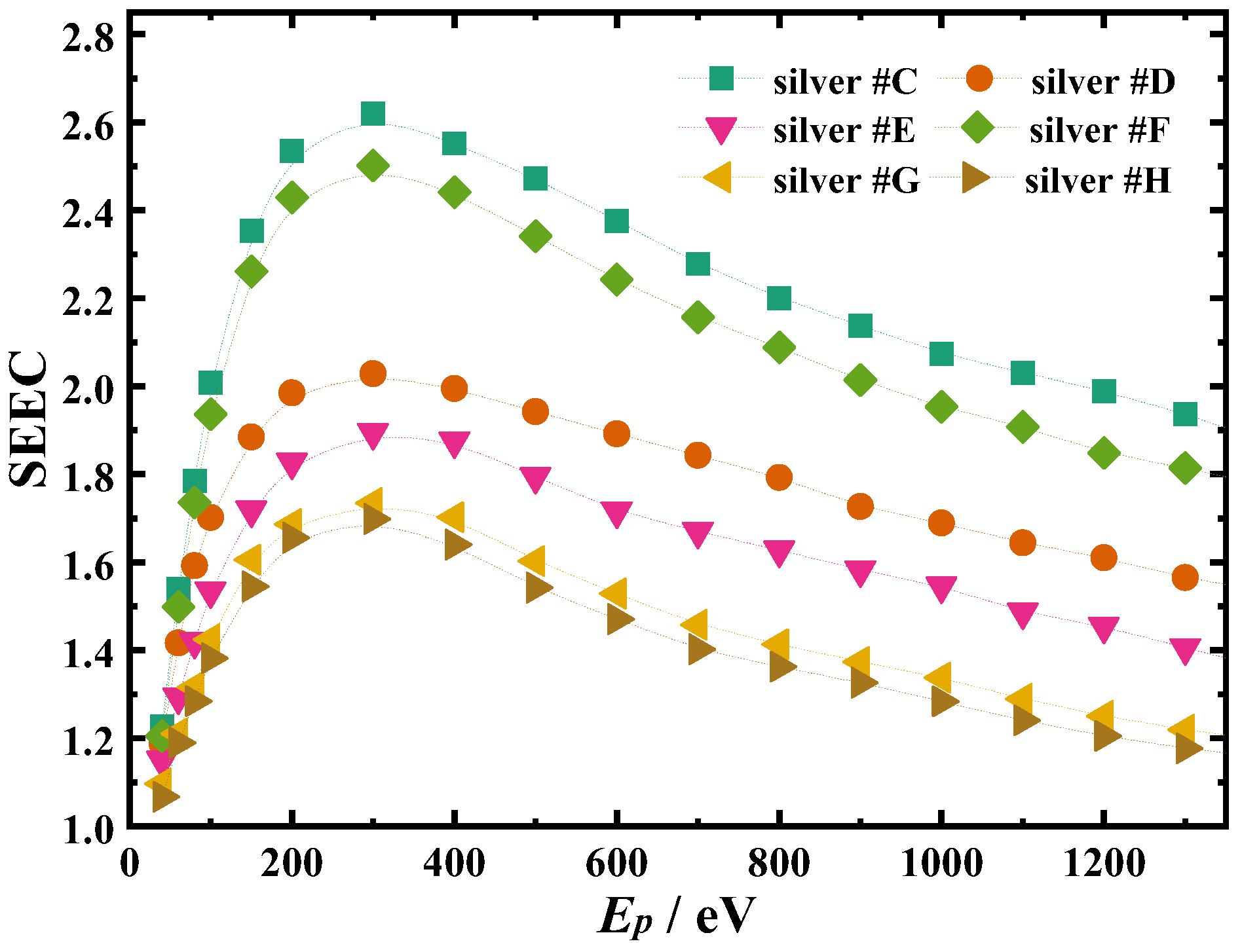
Figure 8 presents the SEEC test results for all silver samples #C~#H. As is evident from Figure 8, the original silver sample, silver #C, exhibits the highest SEEC, reaching a maximum value of 2.6 at Ep = 300 eV. For this silver #C sample, the elevated SEEC value is primarily attributed to its prolonged exposure to atmospheric conditions over four years, resulting in significant surface contamination and oxidation. For the treated samples, all surface treatment methods partially removed surface contaminants. However, the degree of achieved cleanliness varied between processes, resulting in differing SEEC. For the treated samples, the SEEC test results in Figure 8 reveal that all surface-treated specimens exhibit a consistent trend of reduced SEEC compared to silver #C, though the extent of reduction varies. The organically solvent-cleaned silver #F sample achieved its maximum SEEC value of approximately 2.5 at Ep = 300 eV, only marginally lower than silver #C’s value. This indicates that organic cleaning provides only marginal improvement to the surface SEEC of the samples. Referring to the elemental characterization results in Figure 6, the improvement in surface elements for silver #F compared to silver #C is also very limited. For the two categories of heat-treated samples, the test results in Figure 8 show that both samples exhibit significant SEEC improvement after heating. At Ep = 300 eV, silver #D and #E both achieve peak SEEC values of 2.0 and 1.9, respectively.
Figure 8. SEEC values various silver samples, silver #C~#H, silver #C, exposed to air for 4 years; silver #D heated at 400 °C for 3 h in ambient air; silver #E heated at 500 °C for 3 h within a pure oxygen atmosphere at 10 kPa pressure; silver #F having undergone ultrasonic cleaning in acetone, alcohol, ultrapure water and nitrogen drying; silver #G having undergone 2000 eV argon ion sputtering within a vacuum chamber for 5 min; silver #H having undergone 2000 eV argon ion sputtering within a vacuum chamber for 15 min.
Regarding the silver samples subjected to ion sputtering, the SEEC test results in Figure 8 reveal that silver #G and #H exhibit the lowest SEEC values among all samples. For silver #G, the SEEC peak was attained at an incident energy Ep = 300 eV, registering 1.73; for silver #H, the SEEC peak at Ep = 300 eV was merely 1.7. Comparing the silver valence state analysis in Figure 7 reveals that silver #G samples retain trace amounts of silver oxide residue on the surface, whereas silver #H is pristine silver. Consequently, the disparity in SEEC between the two samples is attributed to differences in surface silver oxide content and a slight distinction in surface morphology. Nevertheless, the SEEC test results indicate that the SEEC of silver #G differs only slightly from that of silver #H. These findings demonstrate that surface oxidation has a negligible effect on the SEEC of silver-plated surfaces. In summary, for silver samples, the reduction in SEEC resulting from different surface treatments is positively correlated with surface cleanliness; that is, higher cleanliness yields lower SEEC values. It should also be noted that although silver #1 with ion sputtering in Section 2.1 and silver #H are both ion-sputtered silver samples, their values exhibit significant differences (silver #1’s SEEC peak value is only 1.4). We attribute this discrepancy to the influence of surface roughness, as SEEC exhibits sensitivity to topography at both the micrometer and nanometer scales. The specimens in this study all featured randomly roughened structures, and the impact of random roughness on SEEC is as referenced in Reference [34]. Silver #1 featured a polished silicon substrate with roughness in the tens of nanometers, whereas silver #H comprised an aluminum alloy substrate with an electroplated silver layer exhibiting roughness in the micrometer range. In fact, owing to the considerable disparity in substrate roughness between these two sample sets, the comparability of their SEEC results is limited. A brief qualitative description is provided here.

3. Experimental Methods

3.1. Fabrication Process of Silver Coating and Silver Oxide Coating

Silver oxide coatings and silver coatings were deposited using the radio frequency reactive magnetron sputtering technique. The radio frequency magnetron sputtering equipment employed here constitutes a non-standard product. The apparatus incorporates two sputtering sources: a direct current source and a radiofrequency source. The direct current source is utilized for sputtering conductive target materials, while the radiofrequency source is employed for sputtering non-conductive target materials. The equipment is equipped with multiple gas lines, primarily utilizing argon, oxygen, and nitrogen gases. The experimental vacuum chamber achieves an ultimate vacuum of approximately 9 × 10⁻⁵ Pa.
The preparation process for the silver oxide coating follows a procedure from Reference [35]. Low-resistivity (≤3 × 10⁻⁴ Ω·m) n-type silicon <100> wafers served as substrates. All substrates underwent sequential ultrasonic cleaning in acetone, ethanol, and ultrapure water to eliminate surface contaminants. A high-purity silver target (99.999%; diameter: 2 inches; thickness: 3 mm) was used as the sputtering source, with high-purity argon (99.999%) and oxygen (99.999%) employed as the working and reactive gases, respectively. Prior to introducing the gases, the vacuum chamber was evacuated to a base pressure of 4 × 10⁻⁴ Pa. The gas flow rates were precisely regulated using mass flow controllers. The detailed coating preparation parameters are summarized in Table 2.
Table 2. Detailed sputtering parameters of silver oxide coating and silver coating.

3.2. Fabrication Process of the Silver Samples with Various Surface Conditions

To systematically evaluate the impact of organic contamination and surface oxidation on the SEEC of silver surfaces, various surface treatments were applied to a set of silver samples that had been stored for an extended period. The primary specimens consisted of silver-plated samples (20 μm electrodeposited silver layer on an aluminum alloy substrate; dimensions 20 × 20 mm2) that had been exposed to ambient air for four years while stored in a drying cabinet at room temperature. Different surface conditions were created on these samples using several treatment methods. The specific procedures, along with the corresponding background environments and durations, are detailed in Table 3. Through the surface treatment methods listed in Table 3, we obtained six sets of silver samples with distinct surface conditions. By comparing the variations in surface states, we investigated the influence of surface conditions on the SEEC.
Table 3. Different surface treatment methods for silver samples.

3.3. Physical Properties and SEEC Characterization Methods

To investigate the thickness and elemental composition of the coatings, silver oxide and silver layers were fabricated on silicon substrates. These coated samples, particularly those based on silver-plated substrates, were further used to examine surface morphology and assess SEE characteristics. Surface and fracture surface morphological features of the coatings were examined using SEM (GeminiSEM 500, Jena, Germany). The surface roughness of the samples was determined by AFM (Bruker Innova, Karlsruhe, Germany). XRD (Rigaku Corporation 2400, Tykyo, Japan) was employed to characterize the phase structure of the prepared silver oxide samples. The XRD data analysis software employed was Jade 6.5. Elemental analysis within the coatings was performed via EDS (accessory of SEM, Oxford Instruments, Abingdon, UK). Here, the software employed for EDS analysis is AZtec (version 5.1). For samples subjected to ion cleaning, SEM and EDS analyses were conducted after the SEEC measurements. Additionally, XPS (Kratos AXIS-Ultra-DLD, Manchester, UK) was employed to obtain more precise data on surface composition and chemical states, and the analytical software employed is Avantage (version 5.9931).
The SEEC of the coatings is characterized using an SEE measurement system maintained under ultrahigh vacuum conditions (below 10−5 Pa). Given that the fabricated silver oxide and metallic silver coatings exhibit good electrical conductivity, the conventional sample current method is employed to determine their SEEC. The fundamental principles of this technique and a detailed discussion of its associated measurement are available in other references [36,37]. Briefly, the sample current method involves a two-step biasing procedure. First, a positive bias of +1000 V is applied to the sample, and the resulting current from the sample to ground (Iprimary), which represents the total primary beam current, is measured using a picometer (Keithley 6487, Cleveland, Ohio, USA). Subsequently, a negative bias of −30 V is applied to the sample to suppress the escape of secondary electrons, and the current from the sample to ground (Isample) is measured again. Under this retarding field condition, Isample equals the primary current minus the total emitted electron current. The secondary electron current is thus calculated as IprimaryIsample. The SEEC at a given primary electron energy is then determined using the following equation:
SEEC = I primary I sample I primary
For the SEEC measurements, the primary electron beam current (namely, incident electron beam current) is maintained at 2 μA. The beam spot size varies with primary electron energy, typically exhibiting better beam focusing and a smaller spot size at higher energies. Within the measurement range in this work, the electron beam spot measures approximately 80 μm at 1500 eV primary electron energy, whereas at 60 eV primary electron energy, the beam spot diameter is approximately 900 μm. The incident electron beam current is stationary. At each Ep point, SEEC was measured five times. The SEEC data presented in the paper represent the average value obtained from these five measurements. The typical relative standard deviation of the SEEC value under these experimental conditions was assessed to be less than 5%.
Furthermore, the testing accuracy of SEEC also requires clarification. Based on the aforementioned testing principle, it is evident that measurement errors in SEEC primarily stem from two sources: the precision of current measurement and the collection efficiency of secondary electrons. The accuracy of current measurement depends on the ammeter employed, while the efficiency of secondary electron collection is chiefly determined by the surface potential. For a detailed error analysis, reference may be made to relevant literature concerning the measurement of SEEC using the current method [37].
To minimize the impact of random factors, freshly prepared or treated samples (except for #C samples) are stored in glass vacuum containers at a vacuum level of several pascals prior to SEM, XPS, SEEC, and other analyses. Following sample preparation (or surface treatment), SEEC testing is completed within 30 min to reduce the influence of random factors on the results. As samples are stored in vacuum containers prior to testing, the results of XPS, SEEC, and similar analyses are minimally affected by environmental conditions.

4. Conclusions

In this study, we investigated the surface SEE characteristics of silver oxide and examined the influence of various surface treatment methods on the SEEC of silver surfaces. The research findings may be summarized in the following four points. (1) The SEEC of the sputtered silver oxide coating differs little from that of the silver coating, with peak values of 1.7 and 1.6 for silver oxide and silver coatings, respectively. (2) Silver samples exposed to air for four years exhibited severe surface contamination, with the SEEC maximum reaching 2.6. Surface contamination can be removed, and SEEC can be reduced, through methods such as organic cleaning, heating, and ion sputtering. (3) Ion sputtering effectively removed surface contaminants, etched the surface oxide layer, and modified the surface roughness, decreasing the SEEC maximum from 1.7 to 1.5 for the silver oxide coating and from 2.6 to 1.7 for the air-exposed silver. (4) Silver surface oxidation only causes a slight increase in SEEC, while contaminants adhered to the silver surface are the primary factors responsible for the SEEC increase.

Author Contributions

Conceptualization, Y.G.; methodology, W.F. and J.L.; software, Y.G.; validation, Y.G. and S.G.; formal analysis, S.G.; investigation, Y.G.; resources, Y.G.; data curation, J.L. and S.G.; writing—original draft preparation, Y.G. and W.F.; writing—review and editing, Y.G.; visualization, Y.G.; supervision, J.L.; project administration, S.G.; funding acquisition, J.L. All authors have read and agreed to the published version of the manuscript.

Funding

This work was supported by the Project of Science and Technology Research Program of Chongqing Education Commission of China (No. KJQN202403217), the Key Projects of Chongqing Science and Technology (No. CSTB2024TIAD-STX0036), and the Chongqing Vocational Education Teaching Reform Research Project (No. Z2241009).

Data Availability Statement

The original contributions presented in the study are included in the article; further inquiries can be directed to the corresponding authors.

Acknowledgments

We would like to thank Dan Wang from Xi’an Jiaotong University for his assistance in the experimental testing.

Conflicts of Interest

The authors declare no conflicts of interest.

References

  1. Gorelikov, D.; Sullivan, N.; Rouffignac, P.; Li, H.; Narayanamoorthy, J.; Tremsin, A.S. Development of atomic layer deposition-activated microchannel plates for single particle detection at cryogenic temperatures. J. Vac. Sci. Technol. A 2014, 32, 020605. [Google Scholar] [CrossRef]
  2. Lian, Z.X.; Wang, D.; Zhu, X.P.; He, Y.N. High-performance microchannel plates based on atomic layer deposition for the preparation of functional layers. J. Phys. D Appl. Phys. 2025, 58, 115106. [Google Scholar] [CrossRef]
  3. Popecki, M.A.; Adams, B.; Craven, C.A.; Cremer, T.; Foley, M.R.; Lyashenko, A.; O’MAhony, A.; Minot, M.J.; Aviles, M.; Bond, J.L.; et al. Microchannel plate fabrication using glass capillary arrays with atomic layer deposition films for resistance and gain. J. Geophys. Res.-Spac. 2016, 121, 7449–7460. [Google Scholar] [CrossRef]
  4. Vink, T.J.; Balkenende, A.R.; Verbeek, R.G.F.A.; van Hal, H.A.M.; de Zwart, S.T. Materials with a high secondary-electron yield for use in plasma displays. Appl. Phys. Lett. 2002, 80, 2216. [Google Scholar] [CrossRef]
  5. Schächter, L.; Dobrescu, S.; Badescu-Singureanu, A.I.; Baltateanu, N. High secondary electron emission for an enhanced electron density in election cyclotron resonance plasma. Rev. Sci. Instrum. 1998, 69, 706. [Google Scholar] [CrossRef]
  6. Zhang, F.; Smith, H.I.; Dai, J.F. Fabrication of high-secondary-electron-yield grids for spatial-phase-locked electron-beam lithography. J. Vac. Sci. Technol. B 2005, 23, 3061. [Google Scholar] [CrossRef]
  7. Ohtsu, Y.; Fujita, H. Production of high-density capacitively coupled radio-frequency discharge plasma by high-secondary-electron-emission oxide. Appl. Phys. Lett. 2004, 85, 4875. [Google Scholar] [CrossRef]
  8. Suetsugu, Y.; Fukuma, H.; Ohmi, K.; Tobiyaina, M.; Flanagan, J.; Ikeda, H.; Mulyani, E.; Shibata, K.; Ishibashi, T.; Shirai, M.; et al. Mitigating the electron cloud effect in the Super KEKB positron ring. Phys. Rev. Accel. Beams 2025, 28, 120101. [Google Scholar] [CrossRef]
  9. Cimino, R.; Demma, T. Electron cloud in accelerators. Int. J. Mod. Phys. A 2014, 29, 1430023. [Google Scholar] [CrossRef]
  10. Li, K.W.; Liu, Y.D. Simulation on buildup of electron cloud in a proton circular accelerator. Chin. Phys. C 2015, 39, 107002. [Google Scholar] [CrossRef]
  11. Vaughan, J.R.M. Multipactor. IEEE Trans. Electron Dev. 1988, 35, 1172. [Google Scholar] [CrossRef]
  12. Wang, J.L.; Meng, X.C.; Liu, H.J.; Lian, Z.X.; Yao, K.W.; Li, J.L.; Li, R.B.; Zhang, G.H.; Wang, D. Circular coaxial filters with organic dielectric-loaded for secondary electron multiplication modulation and multipactor verification. IEEE Trans. Microw. Theory Technol. 2025, 73, 8415–8427. [Google Scholar] [CrossRef]
  13. Fil, N.; Belhaj, M.; Hillairet, J.; Puech, J. Multipactor threshold sensitivity to total electron emission yield in small gap waveguide structure and TEEY models accuracy. Phys. Plasmas 2016, 23, 123118. [Google Scholar] [CrossRef]
  14. Meng, X.C.; Wang, D.; Cai, Y.H.; Ye, Z.; He, Y.N.; Xu, Y.N. Secondary electron emission suppression on alumina surface and its application in multipactor suppression. Acta Phys. Sin. 2023, 72, 107901. [Google Scholar] [CrossRef]
  15. Lai, S.T. Fundamentals of Spacecraft Charging: Spacecraft Interactions with Space Plasmas; Princeton University Press: Princeton, NJ, USA, 2011; pp. 2–9. [Google Scholar]
  16. Lian, Z.X.; Yao, K.W.; Wang, D.; Zhang, K.Y.; Wang, R.; He, Y.N. Surface potential evolution and DC discharge measurement of the microstrip antenna dielectric under electron beam irradiation. Vacuum 2025, 138, 114270. [Google Scholar] [CrossRef]
  17. Wang, C.; Chen, Z.Q.; Yang, Y.L.; Chen, S.L.; Shi, X.R.; Jin, X.; Yang, X.; Ran, S.L.; Sun, G.Y.; Zhang, G.J. Design and 3D printing of ceramic insulation for surface flashover mitigation in vacuum. High Volt. 2024, 10, 1593–1601. [Google Scholar] [CrossRef]
  18. Nistor, V.; Gonzalez, L.A.; Aguilera, L.; Montero, I.; Galan, L.; Wochner, U.; Raboso, D. Multipactor suppression by micro-structured gold/silver coatings for space applications. Appl. Surf. Sci. 2014, 315, 445. [Google Scholar] [CrossRef]
  19. Meng, X.C.; Xu, Y.N.; Lian, Z.X.; Wang, J.Y.; Wang, D.; Qi, K.C. Secondary roughness effect of surface microstructures on secondary electron emission and multipactor threshold for PTFE-filled and PI-filled single ridge waveguides. J. Phys. D Appl. Phys. 2024, 57, 265301. [Google Scholar] [CrossRef]
  20. Valizadeh, R.; Malyshev, O.B.; Wang, S.; Sian, T.; Cropper, M.D.; Sykes, N. Reduction of secondary electron yield for E-cloud mitigation by laser ablation surface engineering. Appl. Surf. Sci. 2017, 404, 370. [Google Scholar] [CrossRef]
  21. Michizono, S.; Kinbara, A. TiN Film Coatings on Alumina Radio-Frequency Windows. J. Vac. Sci. Technol. A 1992, 10, 1180. [Google Scholar] [CrossRef]
  22. Wang, C.; Yang, Y.L.; Shi, X.R.; Li, W.D.; Sun, G.Y.; Chen, S.L.; Ran, S.L.; Zhang, G.J.; Chen, Z.Q. Secondary electron emission characteristics of 3D-printed ceramic insulators with functionally graded lattice structures. Appl. Phys. Lett. 2025, 126, 121601. [Google Scholar] [CrossRef]
  23. Li, W.Q.; Zhou, N.; Lian, Z.X.; Wang, S.Z.; Wang, D.; Zhang, G.H. Evolution impact of key parameters on device gain for the microchannel plates with secondary electron emission functional layer. Vacuum 2025, 241, 114703. [Google Scholar] [CrossRef]
  24. Lian, Z.X.; Zhu, X.P.; Wang, D.; Meng, X.C.; He, Y.N. Effect of atmospheric environment on the stability of secondary electron emission from magnesium oxide and alumina surfaces. J. Phys. D Appl. Phys. 2024, 57, 125302. [Google Scholar] [CrossRef]
  25. Henrist, B.; Hilleret, N.; Scheuerlein, C.; Taborelli, M. The secondary electron yield of TiZr and TiZrV non-evaporable getter thin film coatings. Appl. Surf. Sci. 2001, 172, 95. [Google Scholar] [CrossRef]
  26. Le Pimpec, F.; Kirby, R.E.; King, F.K.; Pivi, M. The effect of gas ion bombardment on the secondary electron yield of TiN, TiCN and TiZrV coatings for suppressing collective electron effects in storage rings. Nucl. Instrum. Methods Phys. Res. Sect. A 2006, 564, 44. [Google Scholar] [CrossRef]
  27. Lian, Z.X.; Xu, Y.N.; Meng, X.C.; Wang, D.; Chen, J.X.; Qi, K.C.; He, Y.N. Secondary electron emission reduction from boron nitride composite ceramic surfaces by the artificial microstructures and functional coating. J. Phys. D Appl. Phys. 2024, 57, 315304. [Google Scholar] [CrossRef]
  28. Castaneda, S.I.; Diaz, N.; Raboso, D.; Montero, I. Effects of air exposure on ion beam assisted TiN:O coatings to prevent multipactor. J. Vac. Sci. Technol. A 2003, 21, 2007–2012. [Google Scholar] [CrossRef]
  29. Baglin, V.; Bojko, J.; Grbner, O.; Henrist, B.; Taborelli, M. The Secondary Electron Yield of Technical Materials and its Variation with Surface Treatments. In Proceedings of the 7th European Particle Accelerator Conference (EPAC 2000), Vienna, Austria, 26–30 June 2000. [Google Scholar]
  30. Gineste, T.; Belhaj, M.; Teyssedre, G.; Puech, J. Investigation of the electron emission properties of silver: From exposed to ambient atmosphere Ag surface to ion-cleaned Ag surface. Appl. Surf. Sci. 2015, 359, 398. [Google Scholar] [CrossRef]
  31. Ruiz, A.; Roman, E.; Lozano, P.; Garcia, M.; Galan, L.; Montero, I.; Raboso, D. UHV reactive evaporation growth of titanium nitride thin films, looking for multipactor effect suppression in space applications. Vacuum 2007, 81, 1493. [Google Scholar] [CrossRef]
  32. Hu, X.C.; Zhang, H.B.; Cao, M.; Zhang, N.; Cui, W.Z. Heating-induced variations of secondary electron emission from ion-cleaned copper samples. Micron 2014, 64, 52. [Google Scholar] [CrossRef]
  33. Bock, F.X.; Christensen, T.M.; Rivers, S.B.; Doucette, L.D.; Lad, R.J. Growth and structure of silver and silver oxide thin films on sapphire. Thin Solid Film. 2004, 468, 57–64. [Google Scholar] [CrossRef]
  34. Ye, M.; Feng, P.; Li, Y.; Wang, D.; He, Y.N.; Cui, W.Z. The total secondary electron yield of a conductive random rough surface. J. Appl. Phys. 2019, 125, 043301. [Google Scholar] [CrossRef]
  35. Zhao, X.L.; He, Y.N.; Peng, W.B.; Chen, L. Electrical and optical characterization of AgxO films deposited by RF reactive magnetron sputtering. Thin Solid Film. 2017, 636, 333. [Google Scholar] [CrossRef]
  36. Hu, X.C.; Cao, M.; Cui, W.Z. Influence of surface topography on the secondary electron yield of clean copper samples. Micron 2016, 90, 71. [Google Scholar] [CrossRef]
  37. Ye, M.; Wang, D.; Li, Y.; He, Y.N.; Cui, W.Z.; Daneshmand, M. Positive bias and vacuum chamber wall effect on total electron yield measurement: A re-consideration of the sample current method. J. Appl. Phys. 2017, 121, 074902. [Google Scholar] [CrossRef]
Disclaimer/Publisher’s Note: The statements, opinions and data contained in all publications are solely those of the individual author(s) and contributor(s) and not of MDPI and/or the editor(s). MDPI and/or the editor(s) disclaim responsibility for any injury to people or property resulting from any ideas, methods, instructions or products referred to in the content.

Article Metrics

Citations

Article Access Statistics

Multiple requests from the same IP address are counted as one view.