Article

The Synthesis of Tetrakis(N,N-dimethylaminomethyl)ferrocene and Its Bimetallic Nickel(II) Dichloride Complex: The Search for Precursors for Methoxycarbonylation Ligands


1
Department of Chemistry, Bangor University, Bangor LL57 2UW, UK
2
Department of Chemistry and Chemical Engineering, University of Southampton, Highfield, Southampton SO17 1BJ, UK
3
Chemistry, School of Natural and Environmental Sciences, Newcastle University, Newcastle upon Tyne NE1 7RU, UK
*
Author to whom correspondence should be addressed.
Inorganics 2026, 14(2), 37; https://doi.org/10.3390/inorganics14020037
Submission received: 22 December 2025 / Revised: 7 January 2026 / Accepted: 12 January 2026 / Published: 26 January 2026
(This article belongs to the Section Organometallic Chemistry)

Abstract

The family of N,N-dimethylaminomethylferrocene compounds is one of the most important in ferrocene chemistry. They serve as precursors for a range of anti-malarial and anti-tumour medicinal compounds, in addition to being key precursors for ferrocene ligands in the Lucite alpha process. A brief discussion on the importance and synthesis of N,N-dimethylaminomethyl-substituted ferrocenes preludes the synthesis of the new ligand, 1,1′,2,2′-tetrakis-(N,N-dimethylaminomethyl)ferrocene. The crystal structure of this compound is reported, and a comparison is made with its disubstituted analogue, 1,2-bis-(N,N-dimethylaminomethyl)ferrocene. The tetrahedral nickel dichloride complexes of both these ligands have been crystallographically characterised. Finally, a pointer to future research in the area is given, which includes a discussion of a new method to extract ferrocenylmethylamines from mixtures using additives and a new synthetic avenue from substituted cyclopentadiene itself.

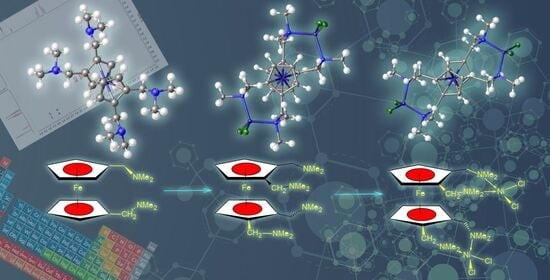
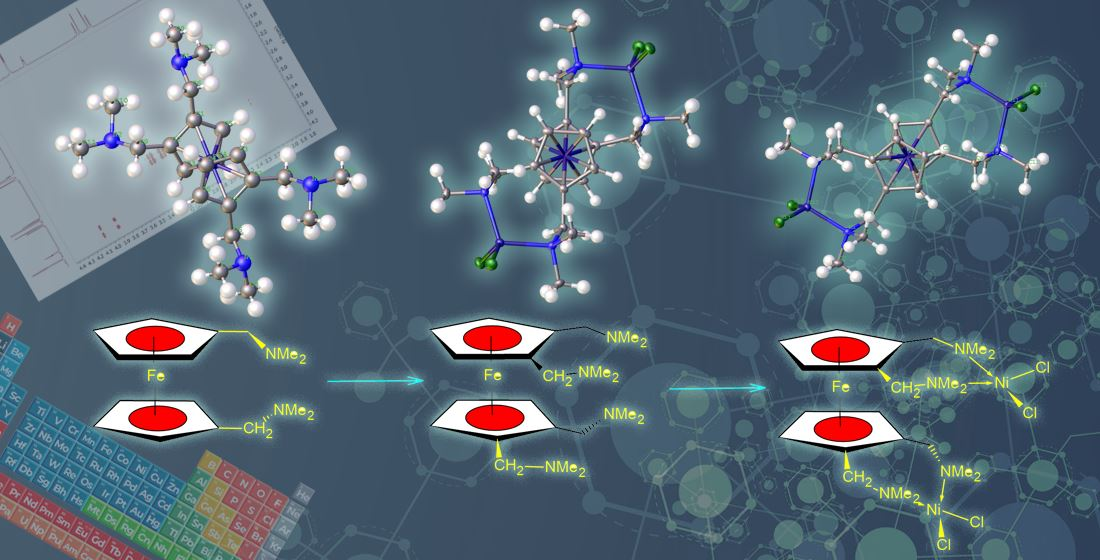
Graphical Abstract

1. Introduction

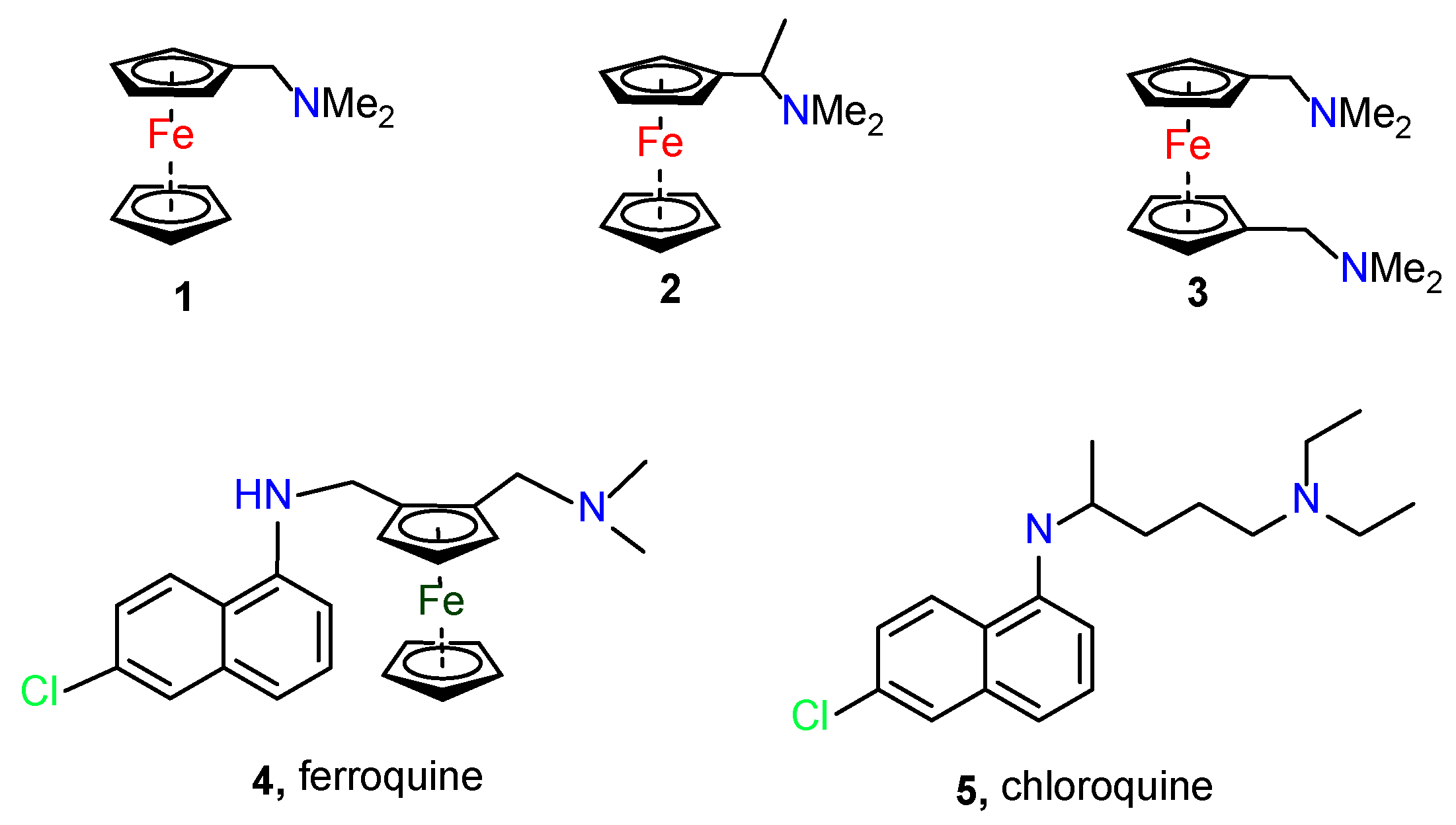
Metallocenes have applications in a broad range of materials and medicinal science [1,2,3,4,5,6,7,8,9,10,11,12]. We have a longstanding interest in these compounds and have sought to facilitate the rapid synthesis of ferrocene derivatives. We have developed the synthesis of a range of tetra-substituted ferrocenes such as haloferrocenes [13,14], trimethylsilyferrocenes [15], lithioferrocenes [16], and phosphinoferrocenes [17]. One related subclass of compounds in the metallocene family is the class of ferrocenylalkylamines. We have a particular interest in this compound class because it is the one that led to the development and synthesis of literally thousands of ferrocene-based ligands. Refining this class of compounds further still, one compound stands out in importance partly due to the simplicity of its structure and its ease of synthesis. This is the commonly used precursor compound N,N-dimethylaminomethylferrocene, 1 [18,19] (Figure 1), which was one of the original ferrocenylalkylamines, made in the pioneering days of ferrocene chemistry research. Its synthesis is a simple Friedel–Crafts reaction using a phosphoric acid “catalyst” and bis-N,N-(dimethylamino)methane [18]. Simple substitution of this compound led to the family of chiral alkylamines developed by Ugi and co-workers [20], followed by others [21,22,23,24,25,26,27], which in turn led to the family of chiral phosphines [28,29]. As a commercial precursor, it is relatively inexpensive, and it may be used as a substitute for the more expensive chiral α-N,N-dimethylaminoethylferrocene, 2 in synthetic route development. In these compounds, the fuctionalised nitrogen-containing group may also be changed readily. There are several anti-tumour and anti-malarial compounds that derive from compound 1 which have been under investigation for many years. The anti-malarial family of ferroquine compounds 4, which are essentially ferrocene analogues of the anti-malarial drug chloroquine (CQ), stand out in their importance in medicinal chemistry [30,31,32]. Chloroquine (CQ) 5 (Figure 1) was used for the treatment of people infected by the Plasmodium falciparum (Pf) parasite that causes malaria; however, due to widespread use, strains of the parasite that are resistant to the drug have formed across the world [33]. Many researchers have worked on these and related compounds; however, the main research in the ferrocene area has been championed by research groups in France, primarily by Biot and coworkers [34,35,36,37,38,39,40,41]. Ferroquines and chloroquines were also among the earliest compounds examined in the fight against COVID-19 [42,43].
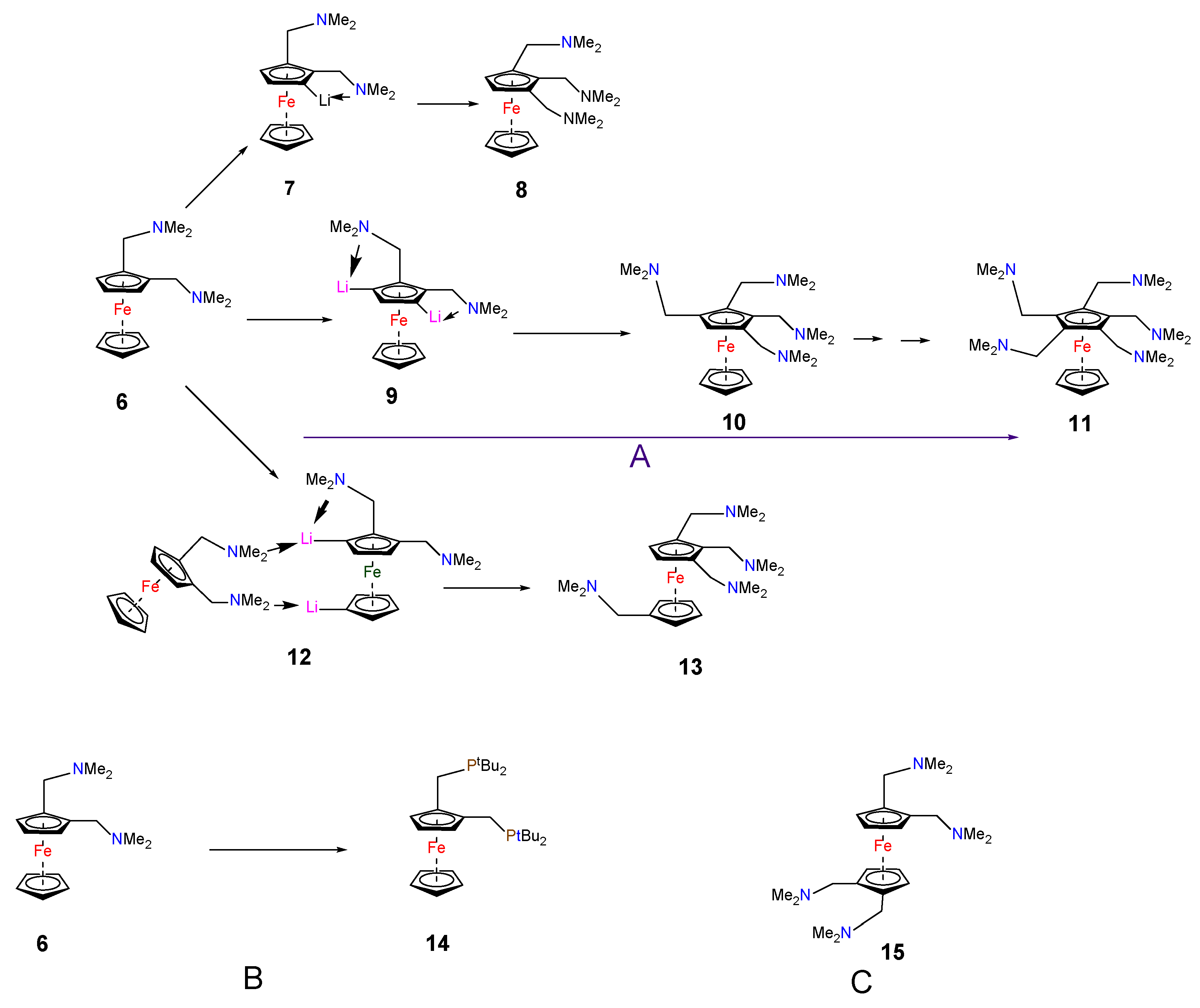
We have used compound 1 in many applications, the most important of which is as a synthon on the route to ferrocene-based ligands used in the alpha process [44,45,46]. The related 1,1′-bis-(N,N-dimethylaminomethyl)ferrocene 3 (Figure 1) was reported by Glidewell and coworkers [47], and we have reported the synthesis of the related 1,2-bis-(N,N-dimethylaminomethyl)ferrocene 6 and 1,2,3-tris-(N,N-dimethylaminomethyl)ferrocenes 8 (Figure 2) [48,49]. Compound 6 is converted to its phosphine analogue butphos 14, which is the parent ligand in the ferrocene family of “alpha” ligands. The natural progression of the work is the preparation of 1,1′,2,2′-tetrakis-(N,N-dimethylaminomethyl)ferrocene 15 (Figure 2). The clean synthesis of this compound would be expected to be simple using lithiation methods, but product mixtures, which were extremely difficult to separate using conventional chromatography, were invariably formed. The newly developed methods are considered unsuitable, because the quench reagent in the preparation of these methylamines is Eschenmosser’s salt, which has a very low solubility in non-polar solvents; changing the solvent would lead to isomerisation. This compound was sought as a precursor to a range of compounds including the 1,1′,2,2′-{tetrakis-(tert-butyl-methyl)phosphino}ferrocene, which will be an excellent ligand for palladium-catalysed alkoxycarbonylation.
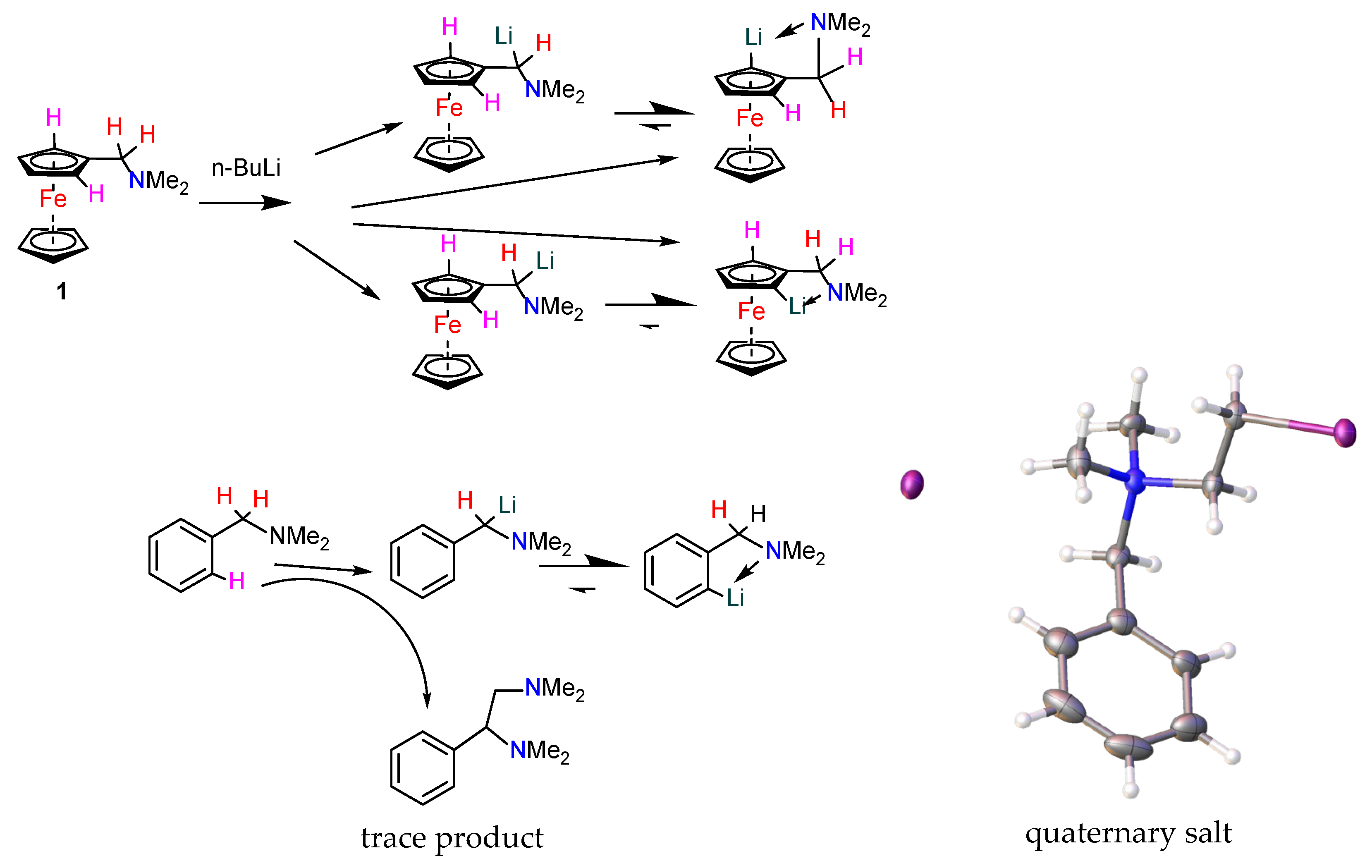
The lithiation of N,N-dimethylaminoalkylferrocenes has been studied extensively because of its importance to ligand chemistry [50,51,52,53,54]. It is a simple synthesis, in that it is one of the first studied directed lithiations of ferrocene compounds. Mechanistically, it is possible the lithiation can take place on the alpha carbon before the lithium is transferred to the alpha position on the ferrocene ring, or more likely directly on the ring, like that of N,N-dimethylbenzylamine (Figure 3). We should also be aware that Eschenmoser’s salt, being a quasi-alkyl halide, can quaternize the amine or take part in more complex reactions as we have observed previously; see the structure in Figure 3. At the outset, it is important to recognise that there are several inherent problems in the use of lithiation methodology for the preparation of multiply substituted ferrocenes containing a directing group: the first problem is that of over- or poly-lithiation, i.e., the preparation of mixtures of more highly substituted products are formed, which may be difficult to separate. For example, in the lithiation of compound 6, additional lithiated compounds such as 9 and 12 can form. A second problem is that the products become more air-sensitive due to iron oxidation as the degree of substitution increases.
Finally, the products may be oils at room temperature, making purification very difficult, although it may be possible to crystallise, if not separate, their ammonium salts reasonably easily. These ferrocenyl-alkylamines tend to elute when using column chromatography as overlapping diffuse bands, even on a basic alumina support, making compound separation difficult, if not impossible. Given that we have spent an inordinate time attempting the synthesis of pure ferrocenylmethylamines, it was felt that finding a simple synthetic solution to the problem would be a good objective. The target compound was set as compound 15, Figure 2, as it was felt that once the synthesis was achieved, the method could be easily generalised to other multiply substituted derivatives.

2. Results and Discussion

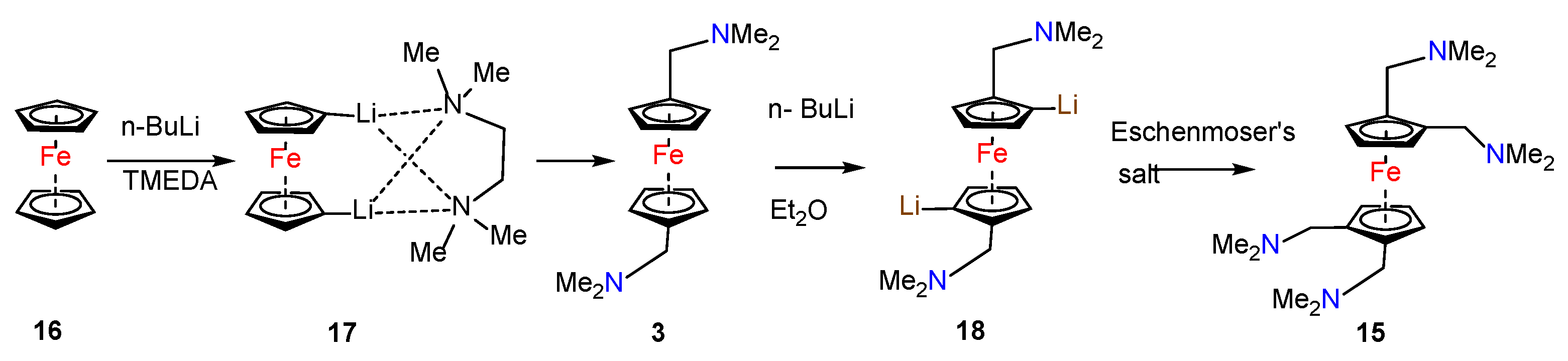
Initially, it was thought that the synthesis should be reasonably routine (Figure 4), as it combines both the previously reported synthetic methods. However, the problems mentioned in the introduction have played a part in the delayed reporting of this synthetic method. Part of the problem is ensuring that the intermediate compounds are pure. Based on the deceptively simple synthetic route shown in Figure 4, we had attempted the synthesis many times, over many years, but the recurrent problem of the difficult final purification of mixtures obtained by over/under-lithiation thwarted the publication of the results. Typically, mixtures of products were obtained that were similar to those that also plagued the attempted synthesis of 1,2,3,4-tetrakis-(N,N-dimethylaminomethyl)ferrocene 10 and 1,2,3,4,5-pentakis-(N,N-dimethylaminomethyl)ferrocene 11.
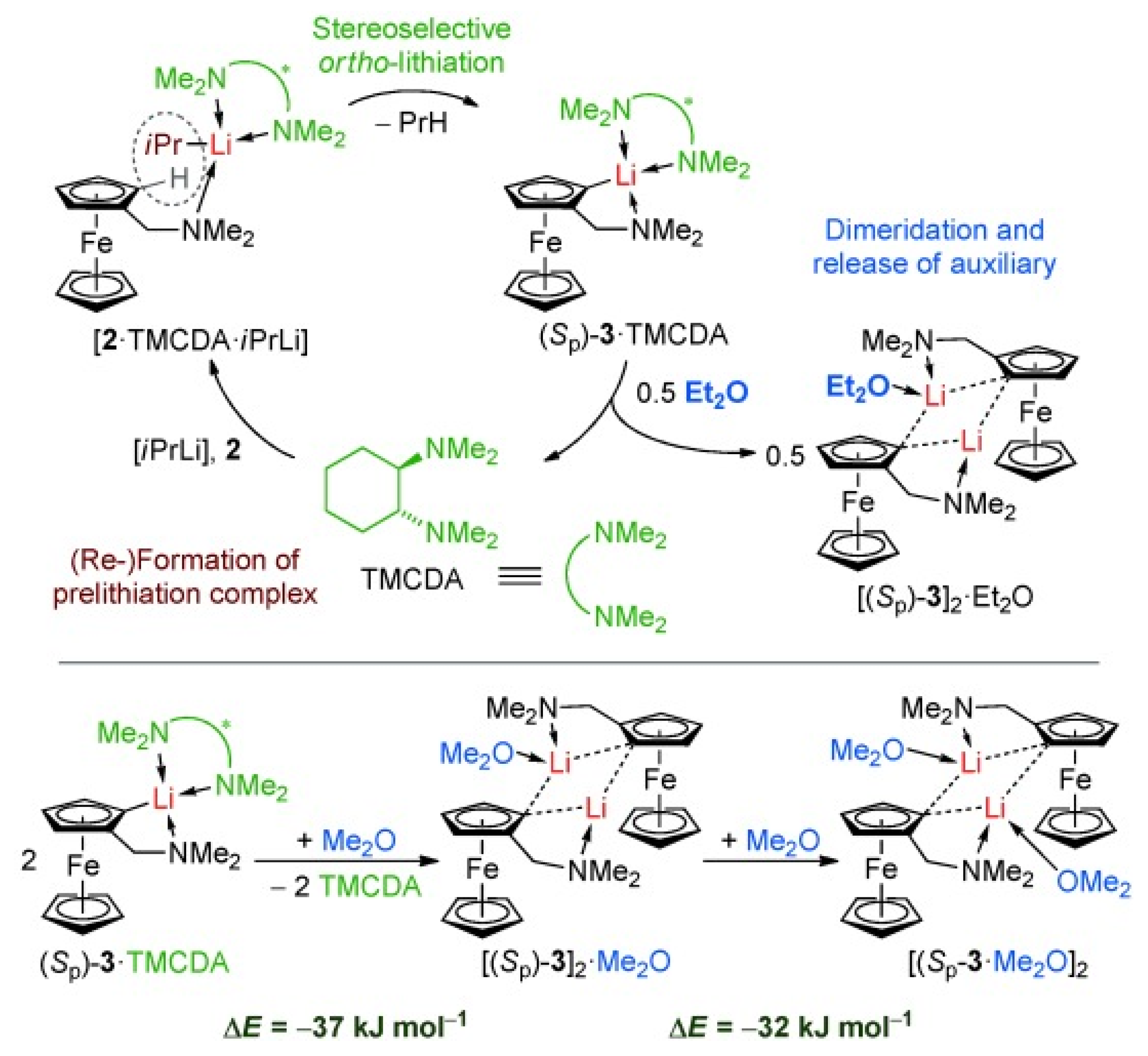
The problem is that all the amino groups may act as lithium directors as well as coordinating groups, just as TMEDA does (Figure 4), so both cyclopentadienyl rings may be multiply lithiated. As an example, in the preparation of compound 4 from 3, many different lithiations may take place dictated by kinetics, including the formation of bimolecular intermediates such as 12. There is direct evidence for this type of intermediate as Sp-3, as shown by Strohmann and co-workers [55,56], who proved that a dimeric complex is present during the asymmetric lithiation of 3 in pentane using iso-propyllithium as the lithiating reagent (Figure 5, reproduced with permission).
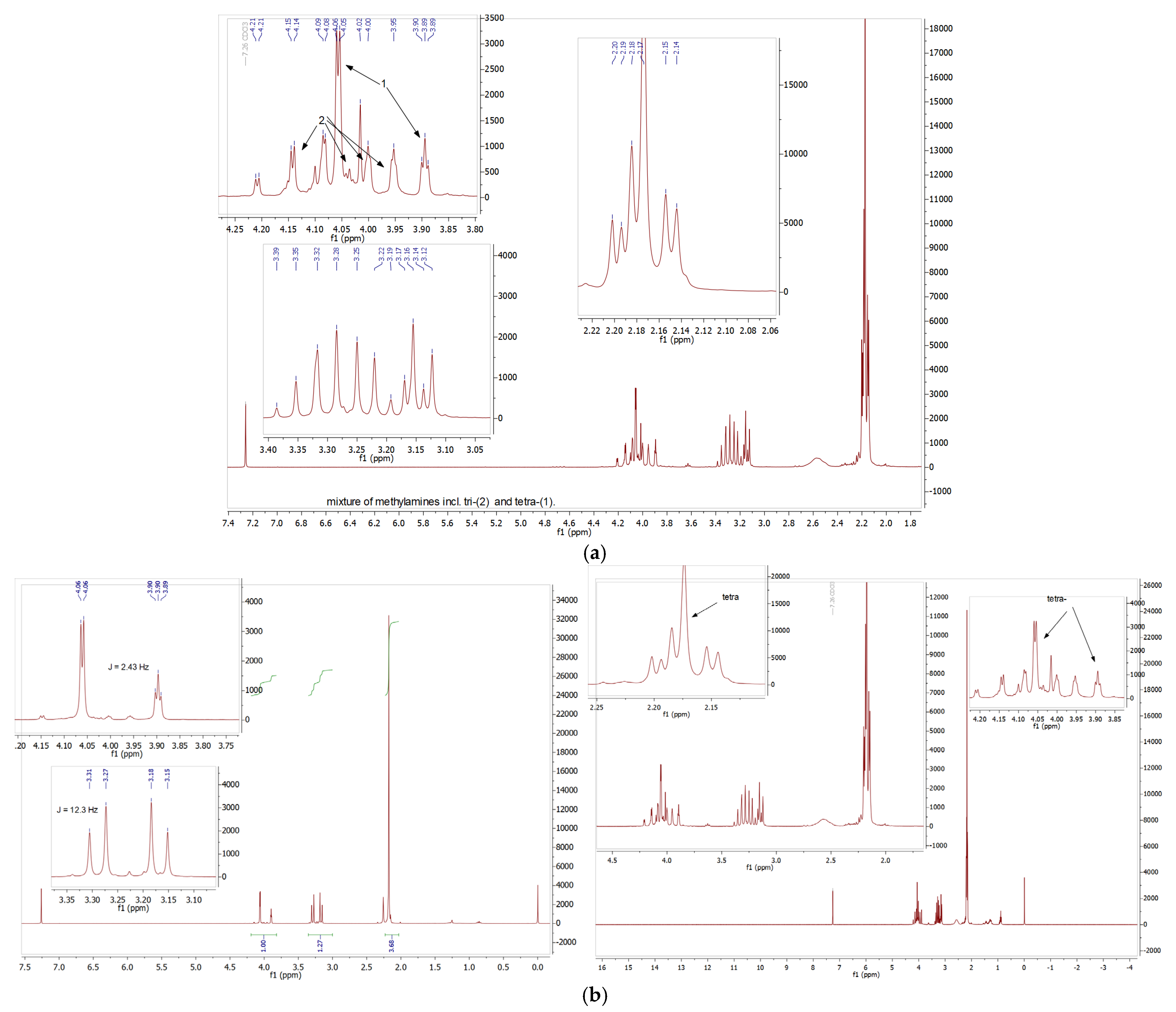
When the synthesis is carried out according to the synthetic route shown in Figure 4, compound 15 is the major product (46% based on integration); however, many by-products in which both rings were substituted are clearly present and, not surprisingly, these are almost impossible to separate on any meaningful scale using standard column chromatographic techniques.
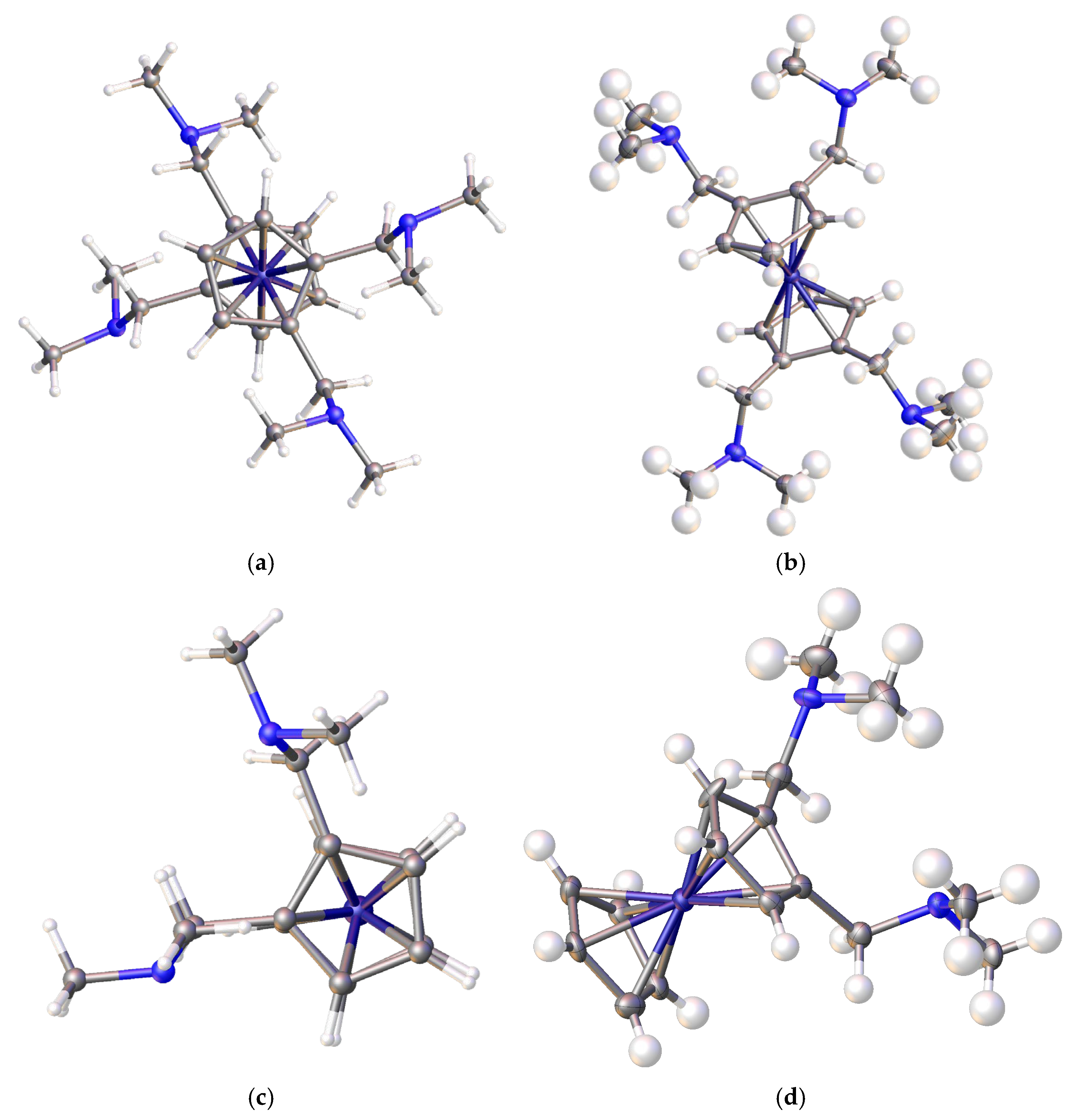
This can be seen in a typical NMR spectrum of the product mixture, which is shown in Figure 6. In the top left of Figure 6a, the N-methyl region of the spectrum may be used as a diagnostic where there are several singlets. When compounds 3 or 6 are used as precursors, we know such complications result in the formation of a range of mixed products. After considering all these problems, it was possible to develop a high-yielding synthesis of compound 15. The answer, which came about after numerous methodological adaptations, was simply to control the lithiation and use hexane or hexanes as the solvent with only a small quantity of diethyl ether added: the lithiation takes place slowly because of the solvent change, but has the effect of precipitating the bright yellow di-lithium adduct 18, which may then be effectively quenched (Figure 4). Here again, the di-lithium product is likely to be much more complicated than is depicted in the figure, but from a practical perspective, this representation serves the purpose. Compound 15 is a solid at room temperature and may be crystallised, although traces of the starting material and trisubstituted compound tend to co-crystallise. Its NMR spectrum is essentially as anticipated, with the typical ferrocene doublet and triplet resonances at 3.88 and 4.04 ppm, respectively, and is shown in Figure 6b (left). For reference, a sample of a typical preparation in diethyl ether is shown for comparison. In the latter preparation, there are six -NMe2 singlets, which essentially equates to three products, one of which is compound 15. The other products are isomers of tris-methylamines and tetrakis-methylamines, such as 13. We will briefly discuss which chemical modifications may be carried out on mixtures in a later section. However, because in the new synthesis, the target compound 15 is formed essentially pure, the crystallisation is now an easy process. Its crystal structure is shown in Figure 7, in which the nitrogen atoms lie above the cyclopentadienyl rings, which are essentially fully staggered.
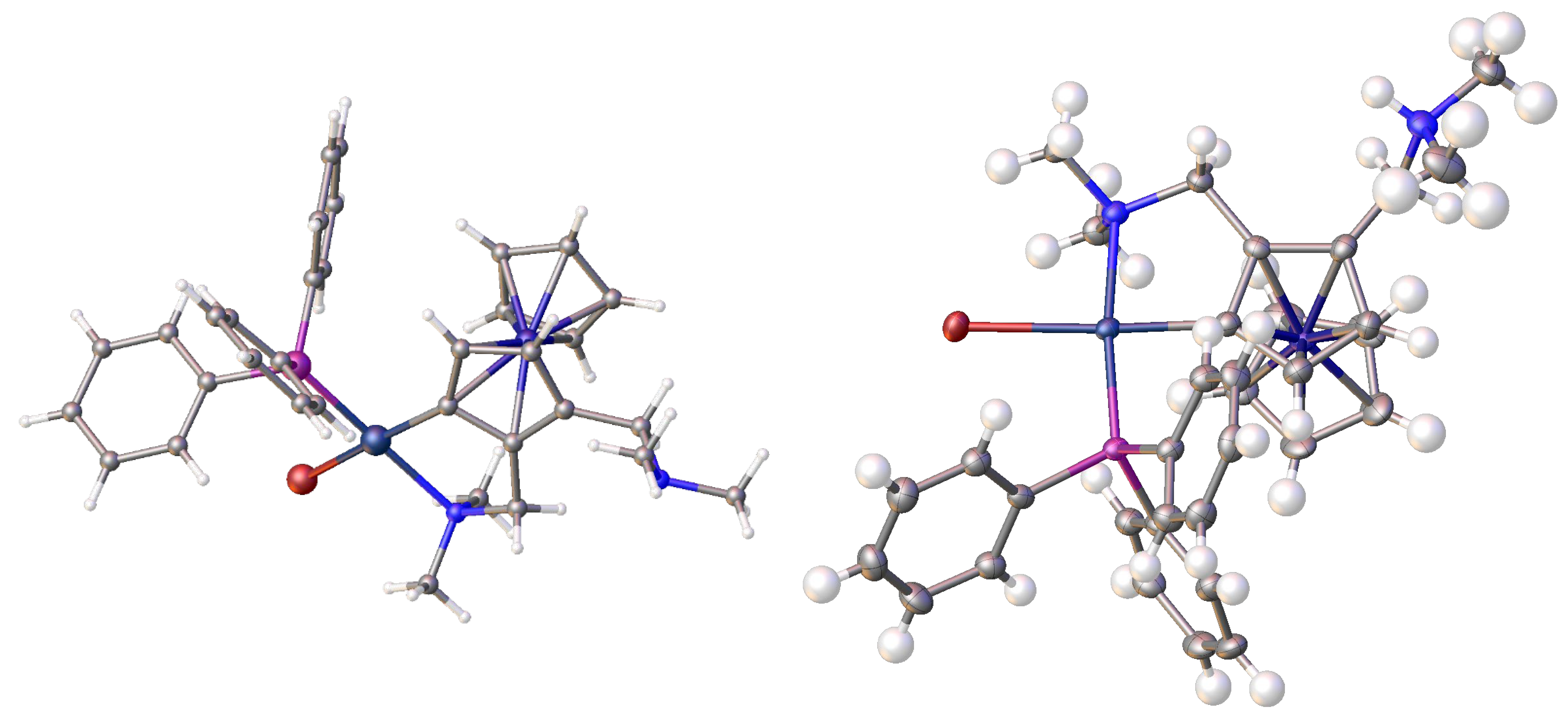
The present synthetic method is effective essentially because the di-lithium salt precipitates from solution, therefore isomerisation cannot take place. The use of these conditions will thus allow access to the range of all poly-substituted dimethylaminomethylferrocenes. There is no adverse steric crowding. In turn, this should open the door to the facile synthesis of corresponding phosphine derivatives of these poly-dimethylaminoferrocenes. In the interim, it was decided to prepare the nickel complex of compound 15, rather than the palladium derivative, because the synthesis should be relatively more straightforward, i.e., avoiding ortho-metalation (previously, we have observed ortho-metallation of 6 with palladium [44]; see Figure 8).
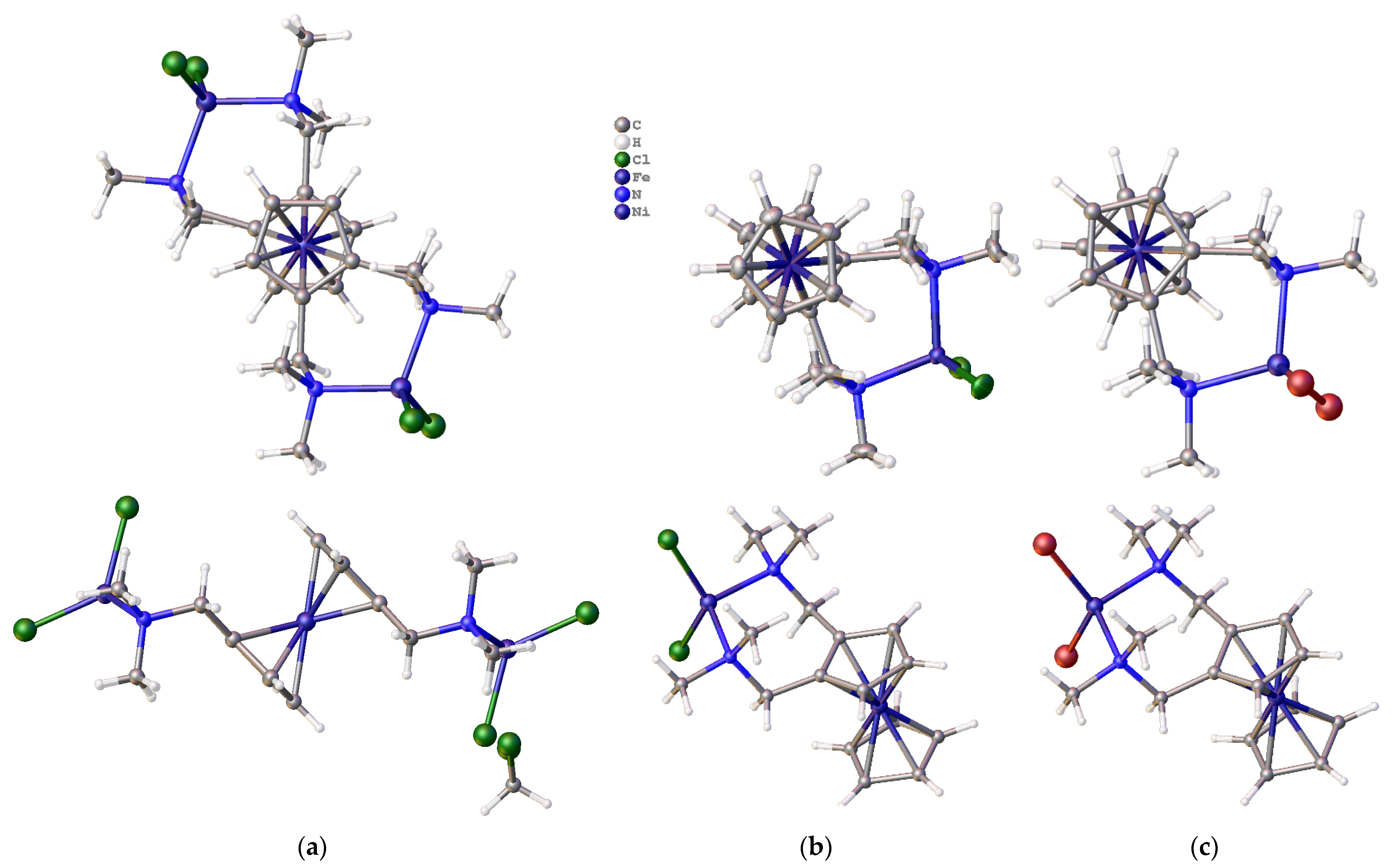
As a model for the co-ordination chemistry for the alpha process (the industrial synthesis of methyl methacrylate), it might be hoped that this would be square planar rather than tetrahedral. The nickel dichloride complex of the ligand 15 was prepared by reaction with [Ni(DME)Cl2], and this is shown in Figure 9, together with the structure of the previously known nickel complex of ligand 6. The solvated violet nickel complex was very easy to prepare at ambient temperature and was structurally characterised. The coordination chemistry around the nickel was tetrahedral, as could be predicted from the colour alone. Interestingly, the top view shows the nickel dichloride units located opposite each other, and the cyclopentadienyl rings are staggered. The conformation of the metalacyclic rings in all three complexes are almost identical.
This means the catalysts that derive from these complexes should have similar activities or better activities. There is no adverse steric crowding.

Additional Information and Future Pointers

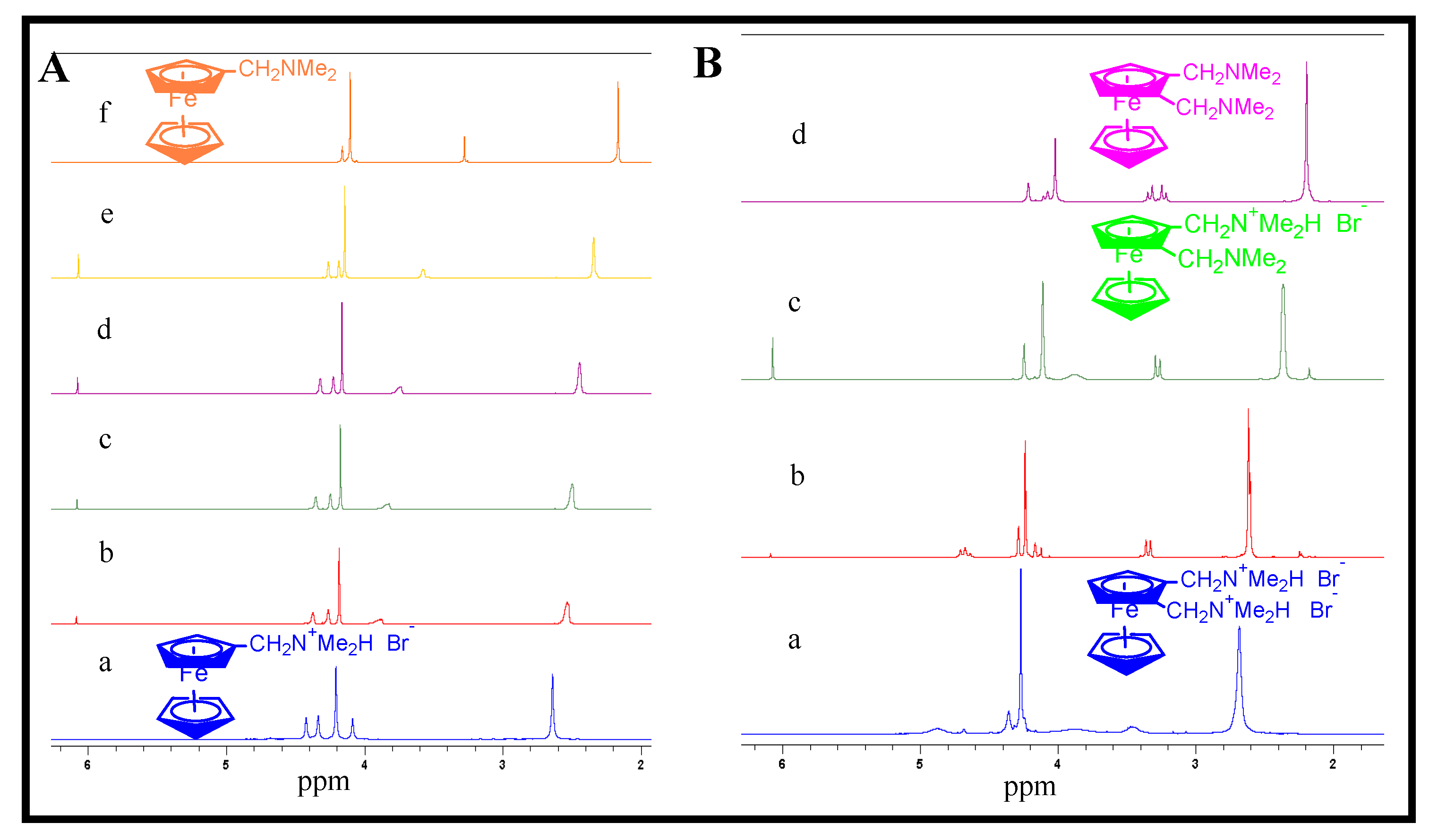
As discussed earlier, when mixtures of N,N-dimethylaminomethylferrocenes are formed, compound separation using column chromatography is rarely successful; however, it is possible to obtain lower yields of individual compounds using chemical additives to derivatise the amines and hence crystallise the products. Firstly, quaternisation using methyl iodide has long been the standard method used in extracting salts of ferrocenylmethylamines. This is not discussed in detail here, as it has been successfully used for over 40 years or so, and the product methiodides are easily crystallised from solution. In the case of compound 3, the mono methiodide readily crystallises from solution. For reference, the crystal structure of a typical methylated salt is shown in the Supplementary Materials. The second method is to use HBr to prepare the related hydrobromide salt, but rather than using HBr directly, which can be messy, we have developed the technique of adding tetrabromoethane to an ether solution of the mixed amines. This has the effect of slowly adding HBr from the decomposing tetrabromoethane, which normally results in a crystalline product. The in situ NMR reaction monitoring of the parent dimethylaminomethyl ferrocene and 1,1,2,2-tetrabromoethane in deuterochloroform indicated that the substituted aminoferrocene resonances are shifted progressively downfield during the reaction, indicating that the formation of a new product involved a rapid equilibrium (see Figure 10A), rather than the growth of new resonances into the spectrum, which would indicate the formation of new compounds. The resonances of the dimethylaminomethyl ferrocene did not shift in deuterochloroform in the absence of 1,1,2,2-tetrabromoethane, showing that this was not a reaction of the amine with chloroform. This data was consistent with the formation of the protonated amine through deprotonation of 1,1,2,2-tetrabromoethane to give the N,N-(dimethylammonium)methylferrocenyl bromide salt.
A similar result is shown for compound 6, which forms the mono HBr salt rapidly, which subsequently changes into the less soluble bis HBr salt (Figure 10B). Both these results have been confirmed by crystallography. The most interesting feature of the structures is that in the mono-protonated salt of compound 6 (green in Figure 10), the proton sits between both pendant methylamine arms. The simplified methodology is universal: a solution of the appropriate amine (200 mg) in diethyl ether (10 mL) was allowed to stand with an excess (0.5 mL) of 1,1,2,2-tetrabromoethane for 4–5 days in the case of the ferrocenylethylamines. The crystals formed are removed by filtration and are washed with ether. To obtain crystals for structural work, the crystals can be re-dissolved in the minimum quantity of dichloromethane or chloroform and then layered with petroleum ether (bp 40–60). Slow diffusion results in the formation of crystals suitable for diffraction experiments. To complete this discussion, the last method we have used to extract ferrocenylmethylamines is to add borane as its THF complex, which binds to the nitrogen to form the adduct(s), which may be crystallised. The borane adduct(s) are, again, easily crystallised and therefore structurally characterised.
As discussed in the introduction, the next step in this work would be the preparation of the phosphine ligands that derive from these alkyl amines and their testing as ligands in the industrial methoxycarbonylation process. As we are no longer in the position to carry out this work in our own laboratories, we welcome online collaborations/interactions and would be delighted to help other research groups. We have interesting preliminary data that we can share. At the time this work was carried out, a concurrent project on the preparation of 1,2-diphosphinoalkylferrocenes was running in our laboratory, which has been published [17]. Both projects come together where mixed amine phosphine complexes are prepared, such as the one shown below.
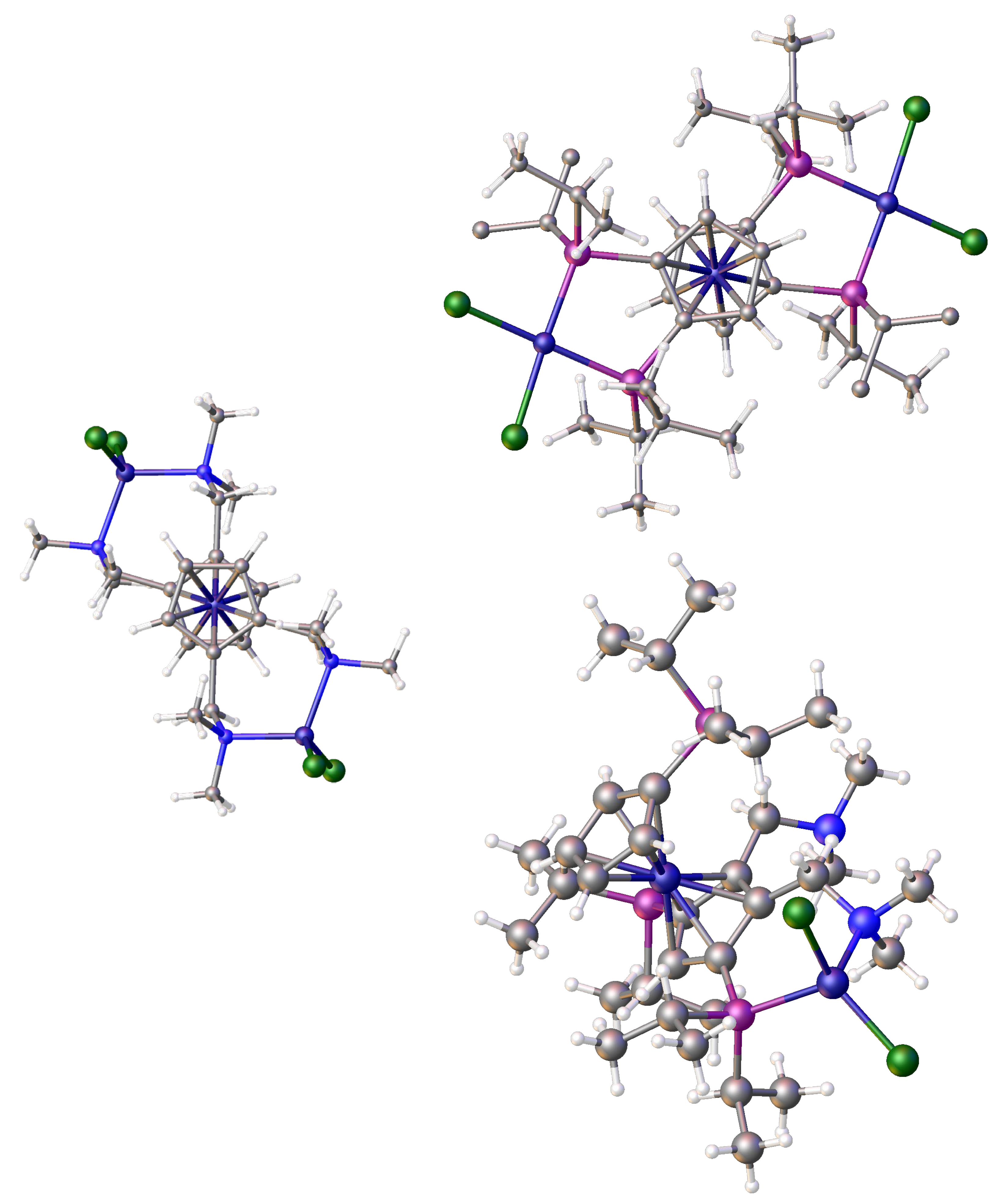
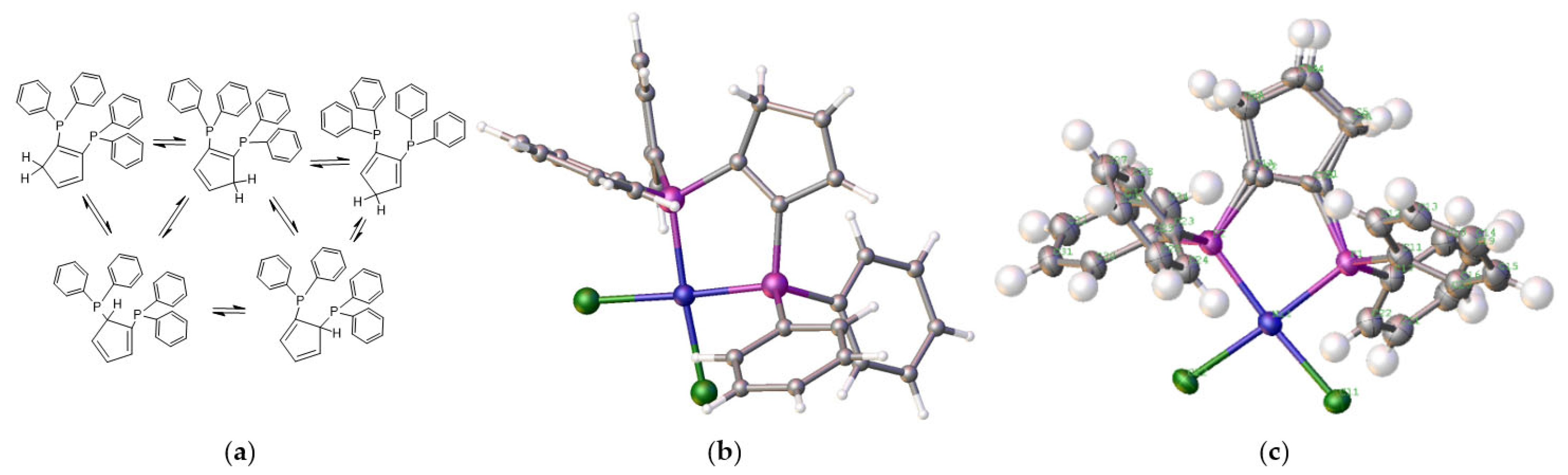
This work involves common precursor compounds, generally 1,2-dithioferrocenes or 1,2-di-substituted cyclopentadienes, which are key precursors in the synthesis of metallocenes, but themselves are rare. Related to the 1,2-bis-(N,N-dimethylaminomethyl)ferrocenes discussed here are the corresponding 1,2-bis-(disubstitutedphosphino)ferrocenes, as both have common precursors; see Figure 11 for ligand comparisons. Additional crystallographic data are given in the Supplementary Materials. In this context, we, and many others, have been particularly interested in ferrocenylphosphines, which can be synthesised from ferrocene itself or from the appropriately substituted cyclopentadiene. In the former synthetic method, ferrocenylphosphines have been primarily prepared from the reaction of chlorophosphines with ferrocenyllithiums, but the latter synthetic method uses preformed cyclopentadiene salts. We can report that we have been able to isolate the naked 1,2-bis-(diphenylphosphino)cyclopentadiene as its nickel dichloride complex, where clearly, iron has been removed, leaving a substituted cyclopentadiene, i.e., the decomposition of the ferrocene had occurred on complexation. This occurred during our complexation studies in strong magnetic fields [58], but without further evidence, we cannot be sure the magnetic field played a role. What is evident, however, is the isolation of a crystalline sample of the nickel dichloride complex of 1,2-bis-(diphenylphosphino)cyclopentadiene, 19. The structure of this complex is shown in Figure 12. It is essentially a mixture of two conformers/resonance forms. Essentially, this means that the metal-complexed substituted cyclopentadienes themselves may be isolated and used to build the corresponding metallocene complexes. This is an interesting future research challenge that we hope others will now take forward.
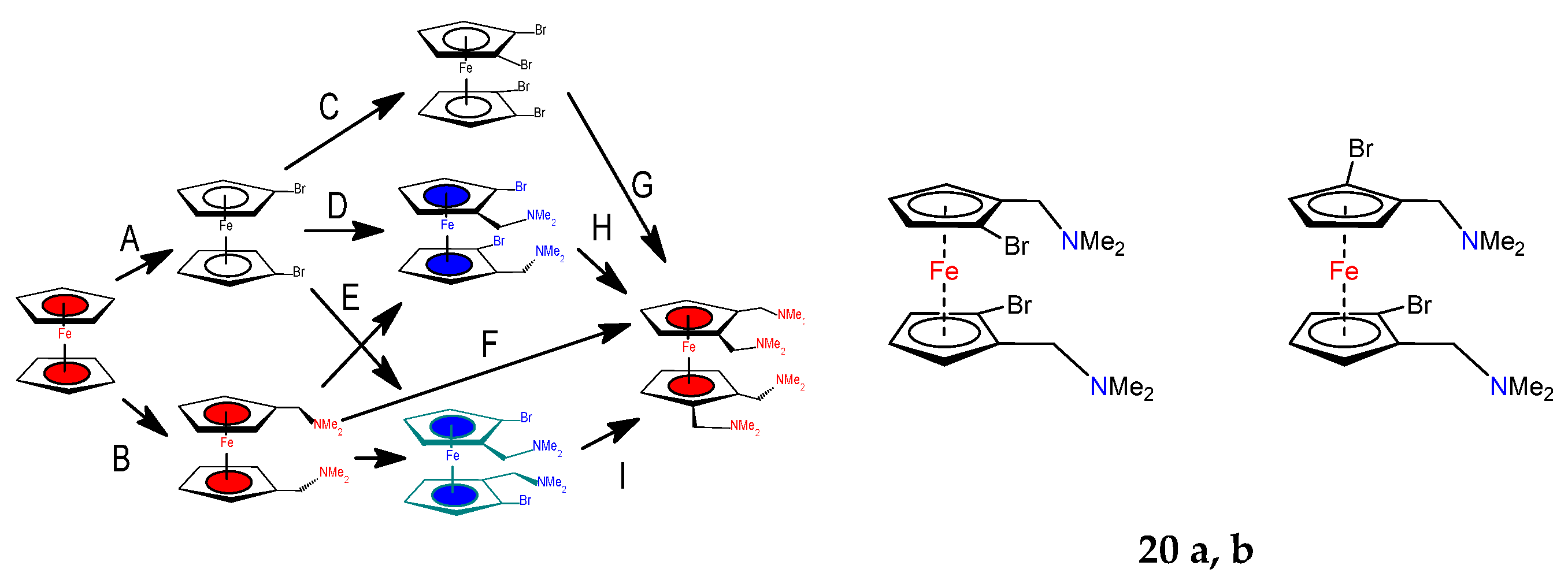
Finally, we note that an alternative precursor compound, 1,1′-dibromo-[2,2′-bis-(N,N-dimethylaminomethyl)]-ferrocene 20, as shown in Figure 13, is now available in our laboratories since the present work was carried out, and it may be a convenient reagent that may be used as a mixture of diastereomers. Further details of these compounds are available in the Supplementary Materials.
Since the completion of this work in 2017, we have collaborated with the ferrocene research group in Rennes, headed by William Erb and Florence Mongin, and they have carried out excellent work directed at the preparation of chiral versions of our ligands. This work was recently published and bodes well for a successful future in the use of naturally occurring prochiral alkenes in alkoxycarbonylation reactions [59].

3. Materials and Methods

3.1. 1,2-Bis-(N,N-Dimethylaminomethyl)ferrocene (6) [44,45]

N,N-dimethylaminomethylferrocene 1 (24.3 g, 100 mmol) was added to a solution of hexane (100 mL) and dry ether (200 mL) in a 3-necked round-bottom flask equipped with a stopper, septum, nitrogen bubbler, and magnetic stirrer. N-Butyllithium (40 mL of a 2.5 molar solution) was added by syringe and the reaction mixture was stirred overnight. The reaction vessel was cooled in an acetone/liquid nitrogen bath to below −50 °C, before quenching with Eschenmoser’s salt (18.5 g, 100 mmol). Without removal from the bath, the mixture was allowed to warm slowly to room temperature. The solution/slurry was then diluted with 200 mL water and the aqueous and organic layers separated, and the organic layer was washed with 3 × 100 mL water. The organic solution was dried over MgSO4, the solvent removed, and the product dried under high vacuum to yield the product as a dark red oil. The oil was then crystallised in petrol (−20 °C) to give 27.3 g, 91% product. 1H NMR (CDCl3) δ = 4.21 (d, 2H), 4.08 (t, 1H), 4.02 (s, 5H), 3.38 (dd, 4H), 2.20 (s, 12H). 13C NMR—DEPTQ (CDCl3), δ, 45.47 (N-CH3), 57.56 (-CH2-), 68.14 (cp), 68.61 (cp), 69.39 (cp), 70.52 (cp); MS: 300.07 [M]+, 287.24 [M-CH3]+., 255.22 [M-N(Me)2]+., 240.27 [M-N(Me)2,-CH3]+. N.B. this compound, like ferrocene, is easy to sublime under high vacuum conditions and is obtained as a highly crystalline compound [44,45].

3.2. 1,1′-Bis-(N,N-Dimethylaminomethyl)-ferrocene 5 (Prepared from 1,1′-Dilithioferrocene)

This compound is ideally obtained from a pure solid sample of 1,1′-dilithioferrocene. TMEDA, (1,1′-dilithioferrocene. TMEDA, when powdered, is a very pale orange colour), which is suspended in an ether/hexane 50/50 mixture and reacted with Eschenmoser’s salt in the general manner. We normally prepared bulk samples of the dithium salt and stored them in a large Schlenk tube. However, for researchers without such Schlenkware, simply dilithiating ferrocene in the presence of 0.5 equivalents of TMEDA in hexane overnight will give a satisfactory source of this compound. Under these conditions, on quenching the product, it is likely to contain some ferrocene and some monoamine product. The ferrocene is easy to remove by extracing the amine products into an aqueous solution of 10% phosphoric acid and then discarding the organic layer containing ferrocene. After fresh ether is added, the aqueous amine salt solution can then be back-extracted into ether carefully with 10% aqueous sodium carbonate before the ether solution is separated and dried over magnesium sulfate. 1H NMR: 2.15 (s, 12H), 3.25 (s, 4H), 4.05 (dd, 4H), 4.07 (dd, 4H). 13C: 44.86 (NCH3), 59.30 (CH2)), [68.76 (s) 70.73 (s) subs. Cp] 83.54 (ipso-Cp).

3.3. 1,2,1′,2′-Tetrakis(N,N-dimethylaminomethyl)ferrocene 15 (Original Method)

Note: Since Eschenmoser’s salt is essentially insoluble in hexane, any quench requires the use of diethyl ether or even thf as a solvent; however, the lithiation must be carried out in predominantly hexane to avoid the formation of isomers.
1,1′-bis-(N,N-dimethylaminomethyl)-ferrocene 5 (2.65 g, 8.83 mmol) [47] was added to a solution of hexane (100 mL) in a 3-necked round-bottom flask equipped with a stopper, septum, nitrogen bubbler, and magnetic stirrer. N-Butyllithium (8 mL, 20 mmol) was added by syringe. A few mL of diethyl ether (ca 5 mL) is added, and the reaction is stirred for 24 h. This should result in the formation of a bright yellow precipitate of the dilithium salt. If there is no obvious change to the initial solution colour, add a few more mL of diether ether and again stir until the yellow precipitate forms. It may be necessary to repeat the addition of ether up to 3 times. Diethyl ether (10 mL) was added, and the solution was stirred for a further 1 h. The solution was then diluted with 100 mL water and the phases were separated. The organic layer was washed with 3 × 100 mL water and then dried over MgSO4. After the removal of volatiles, the product was dried under high vacuum to yield the product as a dark red oil (86.1% yield). This oil was recrystallized from hexane* to give the pure product. 1H NMR (CDCl3) δ, 4.07 (d, 4H), 3.91 (t, 2H), 3.30 (d, 4H), 3.17 (d, 4H), 2.19 (s, 24H). 13C NMR—DEPTQ (CDCl3) δ, 45.27 (N-CH3), 56.90 (-CH2-), 69.04 (cp), 71.85 (cp); 84.15 (ipso-Cp). MS: 414.03 [M]+, 383.14 [M-(CH3)2]+, 369.19 [M-N(Me)2]+, 268.32 [M-((CH2N(Me)2)2-(Me)2). (*the product crystallises at room temperature from a few mL of hexane if left to stand for 24 h; if crystallisation does not begin, the vessel may be cooled to −20 °C to facilitate crystallisation, but the product may contain trace impurities).

3.4. Preparation of Nickel Complex of 1,2,1′,2′-Tetra-(N,N-dimethylaminomethyl)ferrocene

In dichloromethane (20 mL), nickel(dimethoxyethane) dichloride (1.0 g) was treated with 1,2,1′,2′-tetrakis-(N,N-dimethylaminomethyl)ferrocene 9 (1.0 g, excess). The mixture was rapidly agitated and then left to settle. Over the course of 24–48 h, a violet colour developed. A layer of diethyl ether (20 mL) was added on top, taking care that the layers do not mix initially, and the layers were allowed to diffuse over 5 days. The product was filtered to give deep violet crystals that were separated from the powdered material residue in approx. 80% yield based on the ligand. (To obtain a quantitative yield, stir the mixture for 2 weeks and then filter off the solid product, which can be extracted with dichloromethane and dried to give the product, which in this case contains microcrystals).

3.5. Alternative Synthetic Method for Compound 15

The second method used to form lithio-ferrocenylmethylamines is the exchange reaction of brominated ferrocenes. As we were working on the direct lithiation outlined in part 1, we were also examining the formation of brominated ferrocenylmethylamines for use as precursors in our work, as well as the range of bromoferrocenes we had previously developed. We were also able to use 1,1′-dibromo-2,2′-bis-(N,N-dimethylaminomethyl)ferrocene, which may be made either by dilithiation of 1,1′-bis-(N,N-dimethylaminomethyl)ferrocene (quenched with dibromohexafluoropropane) or from dilithiated 1,1′-dibromoferrocene [57] quenched with Eschenmoser’s salt. Note that 1,1′-dibromo-2,2′-bis-(N,N-dimethylaminomethyl)ferrocene was used as a mixture of diastereomers.
Thus, the compounds 3, 6, and 15 may be additionally obtained from analytically pure samples of the corresponding bromine analogues, i.e., 1,1′-dibromoferrocene, 1,2-dibromoferrocene, and 1,1′,2,2′-tetrabromoferrocene by complete halogen exchange with t-butyllithium (slight stoichiometric excess with respect to the number of bromines in the starting material) at −30 °C in a 50/50 hexane/ether mixture, followed by the addition of a slight stoichiometric excess of Eschenmoser’s salt and warming to room temperature and holding at room temperature for 4–5 h. The workup involves quenching with a dilute sodium bicarbonate solution, ether extraction and drying with MgSO4. The yields range between 85 and 95%.

3.6. General Synthetic Note

As previously noted, our research work was cut short through a departmental closure so we were unable to carry out some of the experiments which would naturally follow. For those researchers taking this work forward we would recommend the following general synthetic method for the di-lithiation of 1,1’-bis-(dimethylaminomethyl)ferrocene or 1,1’,2,2’-tetrakis-(dimethylaminomethyl)ferrocene and other more highly substituted compounds: (all under a nitrogen atmosphere). In a large round bottom flask place 2.1 equivalents of either n-butyllithium or n-butyllithium/TMP (1:1) in a large volume of hexane, then simply add the dimethylaminomethyl)ferrocene compound you wish to dilithiate at room temperature. Allow the dilithium salt to precipitate (this may take up to between 1 and 40 h depending on the concentration and scale) and then add the reagent you wish to use as the quenching reagent. (in this work we used the poorly soluble Eschenmoser’s salt, so it was necessary to add a small quantity of co-solvent such as diethyl ether for the reaction to occur). For quenching reagents soluble in hexane this is not necessary and for some quenching reagents solvents such as thf may be required. As a rule of thumb, if the quench reagent is dissolved in the minimum volume of co-solvent for complete solution and this added slowly then this is the ideal experimental method.

4. Conclusions

In general, the synthesis of multiply substituted ferrocenylmethylamines is complicated by the fact that the precursor compounds themselves are normally also ferrocenylmethylamines, with methylated amine groups which themselves function as lithium directing groups. We conclude that it is better not to add additional reagents such as TMEDA unless the precursor is ferrocene itself, i.e., not an amine precursor. The solvent of choice is hexane because the product lithiated salts themselves will precipitate in a pure form, although a small amount of ether is generally required to provide the solubility necessary to drive the reaction.

Supplementary Materials

The following are available online at https://www.mdpi.com/article/10.3390/inorganics14020037/s1. Part A: Figures and crystal structural data for 9 compounds, and Part B: NMR spectra of the products including lithiation studies. Structure of compound 15, 1,1′,2,2′-tetrakis-(N,N-dimethylaminomethyl)ferrocene. Date Code: 2016ncs0380; C22H38FeN4. CCDC No 2481501. Structure of compound 6, (lit) 1,2-bis-(N,N-dimethylaminomethyl)ferrocene. Date Code: 02src144; C16H24FeN2. CCDC No 236435 Structure of tetrachloro-dinickel complex of compound 15, (dichloromethane solvate), Date Code: 2016ncs0370; C24H42Cl8FeN4Ni2. CCDC No 2481502. Structure of dichloro-nickel complex of compound 6, Structure Code: ssf1245; C16H24Cl2FeN2Ni. CCDC No 2121223. Structure of dibromo-nickel complex of compound 6, Structure Code: ssf1244; C16H24Br2FeN2Ni CCDC No 1966126. Structure of methiodide salt of compound 6: Structure Code: 02src283; C17H27FeIN2 CCDC No 2481503. Structure of dichloro-nickel complex of the bis-(trimethylsilyl)- compound 6, Structure Code ssf0791; C52H52Br2FeN2NiSi2·CH2Cl2 CCDC No 1965846. Structure of the [N,P]-Dichloro-nickel complex of 1,2-bis-(N,N-dimethylaminomethyl-tris-3,5-1′-tris-diisopropylphosphino)ferrocene, Structure Code: 2016ncs0373.CCCD No 2522878. Structure of the NiCl2 complex of 1,2-Cp(PPh2), compound 19, C29H24Cl2NiP2, CCDC No. 2514742. Total number of Crystallographic Tables: 75.

Author Contributions

P.N.H.: Crystallographic analysis, crystal data handling, and data deposition. W.C.: Crystallographic analysis and director of synchrotron crystallographic facilities. S.J.C.: Director of laboratory-based National Crystallographic Services and project overseer. I.R.B.: Conceptualization, methodology, synthetic work, writing, review, and editing. S.E.: synthetic work, literature research, and paper drafting. L.M. manuscript proofing project supervision. All authors have read and agreed to the published version of the manuscript.

Funding

We thank EPSRC for funding the National Crystallography Service (both Southampton and Daresbury: the grant number for the synchrotron work was EP/D07746X/1). We thank Bangor University for the provision of chemicals and materials. No external funding was received for the synthetic work.

Data Availability Statement

The original contributions presented in this study are included in the article/Supplementary Materials. Further inquiries can be directed to the corresponding author.

Acknowledgments

The authors thank David Hughes for unhindered support with NMR, mass spectroscopy, and analysis, and Ross Harrington for assistance with synchrotron data collection. Finally, we thank all the staff and students in the 6th floor research laboratory for day-to-day help and keeping a convivial working atmosphere.

Conflicts of Interest

The authors declare no conflicts of interest.

References

  1. Jaouen, G.; Vessières, A.; Top, S. Ferrocifen type anti-cancer drugs. Chem. Soc. Rev. 2015, 44, 8802–8817. [Google Scholar] [CrossRef]
  2. Neuse, E.W. Macromolecular ferrocene compounds as cancer drug models. J. Inorg. Organomet. Polym. Mater. 2005, 215, 3–31. [Google Scholar] [CrossRef]
  3. Gasser, G.; Ott, I.; Metzler-Nolte, N. Organometallic Anticancer Compounds. J. Med. Chem. 2011, 54, 3–25. [Google Scholar] [CrossRef] [PubMed]
  4. Gielen, M.; Tiekink, E.R. (Eds.) Metallotherapeutic Drugs and Metal-Based Diagnostic Agents: The Use of Metals in Medicine; John Wiley & Sons: Hoboken, NJ, USA, 2005. [Google Scholar] [CrossRef]
  5. Ornelas, C. Application of ferrocene and its derivatives in cancer research. New J. Chem. 2011, 35, 1973–1985. [Google Scholar] [CrossRef]
  6. Paprocka, R.; Wiese-Szadkowska, M.; Janciauskiene, S.; Kosmalski, T.; Kulik, M.; Helmin-Basa, A. Latest developments in metal complexes as anticancer agents. Coord. Chem. Rev. 2022, 452, 214307. [Google Scholar] [CrossRef]
  7. Meléndez, E. Metallocenes as Target Specific Drugs for Cancer Treatment. Inorg. Chim. Acta 2012, 393, 36–52. [Google Scholar] [CrossRef][Green Version]
  8. Dombrowski, K.E.; Baldwin, W.; Sheats, J.E. Metallocenes in biochemistry, microbiology & medicine. J. Organomet. Chem. 2020, 905, 281–306. [Google Scholar] [CrossRef]
  9. Sansook, S.; Storm, H.-H.; Ocasio, C.; Spencer, J. Ferrocenes in medicinal chemistry; a personal perspective. J. Organomet. Chem. 2020, 905, 121017. [Google Scholar] [CrossRef]
  10. Peter, S.; Aderibigbe, B.A. Ferrocene-Based Compounds with Antimalaria/Anticancer Activity. Molecules 2019, 24, 3604. [Google Scholar] [CrossRef]
  11. Blackie, M.A.L.; Chibale, K. Metallocene antimalarials: The continuing quest. In Metal-Based Drugs; Metal-Containing Proteins, Macrocycles, and Coordination Complexes in Therapeutic Applications and Disease; Wiley: Hoboken, NJ, USA, 2007. [Google Scholar] [CrossRef]
  12. Anthony, M.P.; Burrows, J.N.; Duparc, S.; Moehrle, J.; Wells, T.N. The global pipeline of new medicines for the control and elimination of malaria. Malar. J. 2012, 11, 316. [Google Scholar] [CrossRef]
  13. Evans, D.M.; Hughes, D.D.; Murphy, P.J.; Horton, P.N.; Coles, S.J.; de Biani, F.F.; Corsini, M.; Butler, I.R. Synthetic Route to 1, 1′,2,2′-Tetraiodoferrocene That Avoids Isomerization and the Electrochemistry of Some Tetrahaloferrocenes. Organometallics 2021, 40, 2496–2503. [Google Scholar] [CrossRef]
  14. Butler, I.R.; Beaumont, M.; Bruce, M.I.; Zaitseva, N.N.; Iggo, J.A.; Robertson, C.; Horton, P.N.; Coles, S.J. Synthesis and Structures of 1, 1′, 2-Tribromoferrocene, 1, 1′, 2, 2′-Tetrabromoferrocene, 1,1′,2,2′-Tetrabromoruthenocene: Expanding the Range of Precursors for the Metallocene Chemist’s Toolkit. Aust. J. Chem. 2020, 74, 204–210. [Google Scholar] [CrossRef]
  15. Butler, I.R. Sitting Out the Halogen Dance. Room-Temperature Formation of 2,2′-Dilithio-1,1′-dibromoferrocene. TMEDA and Related Lithium Complexes: A Synthetic Route to Multiply Substituted Ferrocenes. Organometallics 2021, 40, 3240–3244. [Google Scholar] [CrossRef]
  16. Butler, I.R.; Evans, D.M.; Horton, P.N.; Coles, S.J.; Murphy, P.J. 1, 1′,2,2′-Tetralithioferrocene and 1,1′ 2,2′ 3 3′-Hexalithioferrocene: Useful Additions to Ferrocene Precursor Compounds. Organometallics 2021, 40, 600–605. [Google Scholar] [CrossRef]
  17. Horton, P.N.; Coles, S.J.; Clegg, W.; Harrington, R.W.; Butler, I.R. A Rapid General Synthesis and the Spectroscopic Data of 2,2′-Bis-(di-isopropylphosphino)-1, 1′-dibromoferrocene,(bpdbf), 1,1′,2,2′-Tetrakis-(di-isopropylphosphino) Ferrocene, (tdipf) and Related Ligands: Taking dppf into the Future. Inorganics 2025, 13, 10. [Google Scholar] [CrossRef]
  18. Lindsay, J.K.; Hauser, C.R. Aminomethylation of Ferrocene to Form N, N-Dimethylaminomethylferrocene and Its Conversion to the Corresponding Alcohol and Aldehyde. J. Org. Chem. 1957, 22, 355–358. [Google Scholar] [CrossRef]
  19. Lednicer, D.; Hauser, C.R. N, N-Dimethylaminomethylferrocene Methiodide: Iron, cyclopentadienyl [(dimethylaminomethyl) cyclopentadienyl]-, methiodid. Org. Synth. 2003, 40, 31. [Google Scholar] [CrossRef]
  20. Gokel, G.W.; Ugi, I.K. Preparation and resolution of N, N-dimethyl-o-ferrocenylethylamine. An advanced organic experiment. J. Chem. Ed. 1972, 49, 294. [Google Scholar] [CrossRef]
  21. Herrmann, R.; Hübener, G.; Ugi, I. Chiral sulfoxides from (R)-α-dimethylaminoethylferrocene. Tetrahedron 1985, 41, 941–947. [Google Scholar] [CrossRef]
  22. Jain, S.C.; Rivest, R. Coordination complexes of some group (IV) halides: Preparation and ir spectra of the complexes of group (IV) halides with ferrocene acetonitrile and N, N-dimethylaminomethylferrocene as ligands. J. Inorg. Nucl. Chem. 1970, 32, 1579–1584. [Google Scholar] [CrossRef]
  23. Grelaud, G.; Roisnel, T.; Dorcet, V.; Humphrey, M.G.; Paul, F.; Argouarch, G. Synthesis, reactivity, and some photochemistry of ortho-N, N-dimethylaminomethyl substituted aryl and ferrocenyl pentamethylcyclopentadienyl dicarbonyl iron complexes. J. Organomet. Chem. 2013, 741, 47–58. [Google Scholar] [CrossRef]
  24. Picart-Goetgheluck, S.; Delacroix, O.; Maciejewski, L.; Brocard, J. High yield synthesis of 2-substituted (N, N-dimethylaminomethyl) ferrocenes. Synthesis 2000, 10, 1421–1426. [Google Scholar] [CrossRef]
  25. Butler, I.R.; Cullen, W.R. The synthesis of primary, secondary, and tertiary ferrocenylethylamines. Can. J. Chem. 1983, 61, 2354–2358. [Google Scholar] [CrossRef]
  26. Butler, I.R.; Cullen, W.R.; Herring, F.G.; Jagannathan, N.R. α-N, N-Dimethylaminoethylferrocene. A nuclear magnetic resonance study relating to stereoselective metalation. Can. J. Chem. 1986, 64, 667–669. [Google Scholar] [CrossRef]
  27. Colbert, M.C.; Lewis, J.; Long, N.J.; Raithby, P.R.; Bloor, D.A.; Cross, G.H. The synthesis of chiral ferrocene ligands and their metal complexes. J. Organomet. Chem. 1997, 531, 183–190. [Google Scholar] [CrossRef]
  28. Blaser, H.U.; Brieden, W.; Pugin, B.; Spindler, F.; Studer, M.; Togni, A. Solvias Josiphos ligands: From discovery to technical applications. Top. Catal. 2002, 19, 3–16. [Google Scholar] [CrossRef]
  29. Blaser, H.U.; Pugin, B.; Spindler, F.; Mejía, E.; Togni, A. Josiphos ligands: From discovery to technical applications. In Privileged Chiral Ligands and Catalysts; Wiley: Hoboken, NJ, USA, 2011; pp. 93–136. [Google Scholar] [CrossRef]
  30. Treiber, M.; Wernsdorfer, G.; Wiedermann, U.; Congpuong, K.; Sirichaisinthop, J.; Wernsdorfer, W.H. Sensibilität von Plasmodium vivax gegenüber Chloroquin, Mefloquin, Artemisinin und Atovaquon im Nordwesten Thailands. Wien. Klin. Wochenschr. 2011, 123, 20–25. [Google Scholar] [CrossRef]
  31. Bray, P.G.; Martin, R.E.; Tilley, L.; Ward, S.A.; Kirk, K.; Fidock, D.A. Defining the role of PfCRT in Plasmodium falciparum chloroquine resistance. Mol. Microbiol. 2005, 56, 323–333. [Google Scholar] [CrossRef]
  32. Held, J.; Supan, C.; Salazar, C.L.; Tinto, H.; Bonkian, L.N.; Nahum, A.; Moulero, B.; Sié, A.; Coulibaly, B.; Sirima, S.B.; et al. Ferroquine and artesunate in African adults and children with Plasmodium falciparum malaria: A phase 2, multicentre, randomised, double-blind, dose-ranging, non-inferiority study. Lancet Infect. Dis. 2015, 15, 1409–1419. [Google Scholar] [CrossRef]
  33. Ecker, A.; Lehane, A.M.; Clain, J.; Fidock, D.A. PfCRT and its role in antimalarial drug resistance. Trends Parasitol. 2012, 28, 504–514. [Google Scholar] [CrossRef]
  34. Biot, C.; Castro, W.; Botté, C.Y.; Navarro, M. The therapeutic potential of metal-based antimalarial agents: Implications for the mechanism of action. Dalton Trans. 2012, 41, 6335–6349. [Google Scholar] [CrossRef]
  35. Dive, D.; Biot, C. Ferrocene conjugates of chloroquine and other antimalarials: The development of ferroquine, a new antimalarial. ChemMedChem 2007, 3, 383–393. [Google Scholar] [CrossRef] [PubMed]
  36. Biot, C.; Taramelli, D.; Forfar-Bares, I.; Maciejewski, L.A.; Boyce, M.; Nowogrocki, G.; Brocard, J.S.; Basilico, N.; Olliaro, P.; Egan, T.J. Insights into the mechanism of action of ferroquine. Relationship between physicochemical properties and antiplasmodial activity. Mol. Pharm. 2005, 2, 185–193. [Google Scholar] [CrossRef] [PubMed]
  37. Faustine, D.; Sylvain Bohic, S.; Slomianny, C.; Morin, J.-C.; Thomas, P.; Kalamou, H.; Guérardel, Y.; Cloetens, P.; Jamal Khalife, J.; Biot, C. In situ nanochemical imaging of label-free drugs: A case study of antimalarials in Plasmodium falciparum-infected erythrocytes. Chem. Commun. 2012, 48, 910–912. [Google Scholar] [CrossRef]
  38. Biot, C.; Nosten, F.; Fraisse, L.; Ter-Minassian, D.; Khalife, J.; Dive, D. The antimalarial ferroquine: From bench to clinic. Parasite J. Société Française Parasitol. 2011, 18, 207–214. [Google Scholar] [CrossRef]
  39. Delhaes, L.; Biot, C.; Berry, L.; Delcourt, P.; Maciejewski, L.A.; Camus, D.; Brocard, J.S.; Dive, D. Synthesis of ferroquine enantiomers: First investigation of effects of metallocenic chirality upon antimalarial activity and cytotoxicity. ChemBioChem 2002, 3, 418–423. [Google Scholar] [CrossRef]
  40. Keiser, J.; Vargas, M.; Rubbiani, R.; Gasser, G.; Biot, C. In vitro and in vivo antischistosomal activity of ferroquine derivatives. Parasites Vectors 2014, 7, 424. [Google Scholar] [CrossRef]
  41. Wani, W.A.; Jameel, E.; Baig, U.; Mumtazuddin, S.; Hun, L.T. Ferroquine and its derivatives: New generation of antimalarial agents. Eur. J. Med. Chem. 2015, 101, 534–551. [Google Scholar] [CrossRef]
  42. Meo, S.A.; Klonoff, D.C.; Akram, J. Efficacy of chloroquine and hydroxychloroquine in the treatment of COVID-19. Eur. Rev. Med. Pharmacol. Sci. 2020, 24, 4539–4547. Available online: https://www.talkingaboutthescience.com/studies/HCQ/Meo2020.pdf (accessed on 11 January 2026).
  43. Gasmi, A.; Peana, M.; Noor, S.; Lysiuk, R.; Menzel, A.; Gasmi Benahmed, A.; Bjørklund, G. Chloroquine and hydroxychloroquine in the treatment of COVID-19: The never-ending story. Appl. Microbiol. Biotech. 2021, 105, 1333–1343. [Google Scholar] [CrossRef]
  44. Butler, I.R.; Baker, P.K.; Eastham, G.R.; Fortune, K.M.; Horton, P.N.; Hursthouse, M.B. Ferrocenylmethylphosphines ligands in the palladium-catalysed synthesis of methyl propionate. Inorg. Chem. Commun. 2004, 7, 1049–1052. [Google Scholar] [CrossRef]
  45. Fortune, K.M.; Castel, C.; Robertson, C.M.; Horton, P.N.; Light, M.E.; Coles, S.J.; Waugh, M.; Clegg, W.; Harrington, R.W.; Butler, I.R. Ferrocenylmethylphosphanes and the Alpha Process for Methoxycarbonylation: The Original Story. Inorganics 2021, 9, 57. [Google Scholar] [CrossRef]
  46. Morris, K. An Investigation into the Synthesis of Phosphine-Based Ligands and Their Application in Pd-Catalysed Processes in the Production of Polymethylmethacrylate. Ph.D. Thesis, Bangor University, Bangor, UK, 2008. [Google Scholar]
  47. Glidewell, C.; Royles, B.J.; Smith, D.M. A simple high-yielding synthesis of ferrocene-1,1′-diylbis-(methyltrimethylammonium iodide). J. Organomet. Chem. 1997, 527, 259–261. [Google Scholar] [CrossRef]
  48. Fortune, K.M. Nitrogen Donor Complexes of Molybdenum and Tungsten and New Routes to bis-1,2 & tris-1,2,3 Substituted Ferrocenes. Ph.D. Thesis, Bangor University, Gwynedd, UK, 2004. [Google Scholar]
  49. Butler, I.R.; Horton, P.N.; Fortune, K.M.; Morris, K.; Greenwell, C.H.; Eastham, G.R.; Hursthouse, M.B. The first 1, 2, 3-tris (phosphinomethyl) ferrocene. Inorg. Chem. Commun. 2004, 7, 923–928. [Google Scholar] [CrossRef]
  50. Rausch, M.D.; Ciappenelli, D.J. Organometallic π-complexes XII. The metalation of benzene and ferrocene by n-butyllithium-N, N, N′, N′-tetramethylethylenediamine. J. Organomet. Chem. 1967, 10, 127–136. [Google Scholar] [CrossRef]
  51. Meijboom, R.; Beagley, P.; Moss, J.R.; Roodt, A. Lithiated dimethylaminomethyl ferrocenes and ruthenocenes. J. Organomet. Chem. 2006, 691, 916–920. [Google Scholar] [CrossRef]
  52. Bolton, E.S.; Pauson, P.L.; Sandhu, M.D.; Watts, W.E. Ferrocene derivatives. Part XXI. Lithiation of 1,1′-bis-(NN-dimethylaminomethyl)ferrocene. J. Chem. Soc. C Org. 1969, 2260–2263. [Google Scholar] [CrossRef]
  53. Butler, I.R.; Cullen, W.R.; Rettig, S.J. Synthesis of derivatives of [.alpha. (dimethylamino) ethyl] ferrocene via lithiation reactions and the structure of 2-[.alpha.-(dimethylamino) ethyl]-1, 1’, 3-tris (trimethylsilyl) ferrocene. Organometallics 1986, 5, 1320–1328. [Google Scholar] [CrossRef]
  54. Butler, I.R.; Cullen, W.R.; Reglinski, J.; Rettig, S.J. Ferrocenyllithium derivatives: Lithiation of α-N, N-deimethylaminoethylferrocene and the single crystal X-ray structure of [(η5-C5H4Li) Fe (η5-C5H3LiCH (Me) NMe2)] 4 [LiOEt] 2 (TMED) 2. J. Organomet. Chem. 1983, 249, 183–194. [Google Scholar] [CrossRef]
  55. Steffen, P.; Unkelbach, C.; Christmann, M.; Hiller, W.; Strohmann, C. Catalytic and stereoselective ortho-lithiation of a ferrocene derivative. Angew. Chem. Int. Ed. 2013, 52, 9836–9840. [Google Scholar] [CrossRef]
  56. Krupp, A.; Wegge, J.; Otte, F.; Kleinheider, J.; Wall, H.; Strohmann, C. Crystal structures of [(N,N-dimethylamino) methyl] ferrocene and (Rp, Rp)-bis {2-[(dimethylamino) methyl] ferrocenyl} dimethylsilane. Acta Crystallogr. Sect. E Crystallogr. Commun. 2020, 76, 1437–1441. [Google Scholar] [CrossRef]
  57. Klotz, F.D.; Felipe, C.A.; Villafañe, F.; Strohmann, C. Synthesis and crystal structure study of (R,R)-TMCDA ethanol derivatives doubly protonated with FeCl4− and Cl− as counter-ions. Acta Crystallogr. 2025, E81, 372–376. [Google Scholar] [CrossRef]
  58. Butler, I.R.; Williams, R.M.; Heeroma, A.; Horton, P.N.; Coles, S.J.; Jones, L.F. The Effect of Localized Magnetic Fields on the Spatially Controlled Crystallization of Transition Metal Complexes. Inorganics 2025, 13, 117. [Google Scholar] [CrossRef]
  59. Boussandel, S.; Erb, W.; Roisnel, T.; Blot, M.; Hurvois, J.-P.; Butler, I.; Samarat, A.; Mongin, F. Hexafluoroisopropanol-Promoted Substitution Toward the Synthesis of Enantiopure Ferrocene Phosphines. Synthesis 2025, 57, 3211–3226. [Google Scholar] [CrossRef]
Figure 1. Key ferrocenylalkylamines 13 and a structural comparison with the anti-malarial compounds ferroquine 4 and chloroquine 5.
Inorganics 14 00037 g001
Figure 2. (A): Schematic of the lithiation of compound 6 to compound 11, showing problems with the synthetic route, as the formation of lithium adducts such as 12 can result in the formation of 13. (B): Formation of butphos, 14, from compound 6. (C): The target compound 15 for this work.
Inorganics 14 00037 g002
Figure 3. The mechanism of lithiation of ferrocene and benzene methylamines. In the left section, the lithiation of N,N-dimethylaminomethylferrocene indicates that the Cp-ring protons and the methylene protons may be exchanged with lithium directly or indirectly, ultimately leading to the lithioferrocenes. In the lower left, the analogous benzylamine may also be alpha-lithiated in the normal fashion, or the Eschenmoser’s reagent can act as an alkyl iodide to give the quaternary salt, as shown by the crystal structure on the right-hand side.
Inorganics 14 00037 g003
Figure 4. Synthetic route to target compound 15.
Inorganics 14 00037 g004
Figure 5. Reproduced in full, with thanks, with permission from “Stereoselective ortho-Lithiation of a Ferrocene Derivative,” Strohmann et al. [55], Angewandte Chemie., Original Caption: Postulated catalytic cycle for the stereoselective ortho-lithiation involving dimerization of the lithiated substrate [(Sp)-3] to the etherate [(Sp)-3]2·Et2O under release of the chiral auxiliary TMCDA. Below: Computed energies for ligand exchange/dimerization processes of (Sp)-3 under release of TMCDA [M052X/6 − 31 + G(d)]. Note: TMCDA = (R,R)-Tetramethylcyclohexane-1,2-diamine [57].
Inorganics 14 00037 g005
Figure 6. 1H NMR spectrum of (a) tetrakis-1,2,1′,2′-(N,N,-dimethylaminomethyl)ferrocene when prepared in ether, compared with (b) left, preparation in hexane; and right, the analogous ether preparation.
Inorganics 14 00037 g006
Figure 7. (a) Top and (b) side views of 1,1′,2,2′-tetrakis(N,N-dimethylaminomethyl)ferrocene 15, together with top (c,d) side views of the structure of 1,2-bis-(N,N-dimethylaminomethyl)ferrocene 6, shown for comparison [44]. (nitrogen atoms are mid-blue, iron atoms are dark blue).
Inorganics 14 00037 g007
Figure 8. An example where ortho-metalation occurs on reaction with palladium in preference to bidentate ligation. Crystal structure of the ortho-metallated palladium salt complex of compound 6, which was trapped as a triphenylphosphine derivative [44]. Red atoms are bromine.
Inorganics 14 00037 g008
Figure 9. Comparison of the crystal structures of (a) the bis-(nickel dichloride) complex of compound 15 together with the crystal structures of the (b) nickel dichloride and (c) nickel dibromides of compound 6. Green atoms are chlorine, red atoms are bromine.
Inorganics 14 00037 g009
Figure 10. (A): In situ NMR reaction monitoring in deuterochloroform indicates the formation of the dimethylmethyl(ferrocenyl)ammonium bromide salt. The resonances are shifted and some resonances become broader, as a result of exchange in the sample that is too fast on the NMR timescale. Starting at (f) with gradual addition of TBE through to product (a). (B): (d) 1,2-bis amine 6 in CHCl3 (no TBE); (c) 60 min after addition of TBE; (b) 120 min after addition of TBE; and (a) ex situ-prepared 1,2-bis amine.2HBr crystals dissolved in CHCl3. All spectra are referenced to the shift of tetramethylsilane (TMS) (δ = 0 ppm).
Inorganics 14 00037 g010
Figure 11. Left, NiCl2 complex of compound 15, tetrahedral; top right, NiCl2 complex of 1,1′,2,2′-tetraphenylphosphinoferrocene, square planar [57]; and bottom right, NiCl2 complex of a mixed 1,2-dimethylaminomethyl-ferrocenyltriphosphine complex, tetrahedral, showing binding between the amine and one phosphine group.
Inorganics 14 00037 g011
Figure 12. (a) isomerisation in 1,2-bis-diphenylphosphinocyclopentadiene. (b) crystal structure of the nickel dichloride complex of 1,2-bis-diphenylphosphinocyclopentadiene, one isomer. (c) crystal structure of the nickel dichloride complex of 1,2-bis-diphenylphosphinocyclopentadiene, both conformers. (purple atoms are phosphorus, blue atoms are nickel, green atoms are chlorine).
Inorganics 14 00037 g012
Figure 13. Synthetic routes to the tetramethylamine 15: shown in red, this paper; route via dibromoferrocenes, shown in blue, from the compounds 20a and b, which are possible to use.
Inorganics 14 00037 g013
Disclaimer/Publisher’s Note: The statements, opinions and data contained in all publications are solely those of the individual author(s) and contributor(s) and not of MDPI and/or the editor(s). MDPI and/or the editor(s) disclaim responsibility for any injury to people or property resulting from any ideas, methods, instructions or products referred to in the content.