Article

Study of the Optical Properties of Multi-Particle Phosphors by the FDTD and Ray Tracing Combined Method

National and Local Joint Engineering Research Center of Semiconductor Display and Optical Communication Devices, South China University of Technology, Guangzhou 510641, China
*
Author to whom correspondence should be addressed.
Photonics 2020, 7(4), 126; https://doi.org/10.3390/photonics7040126

Submission received: 27 October 2020 / Revised: 24 November 2020 / Accepted: 2 December 2020 / Published: 6 December 2020
(This article belongs to the Section Optoelectronics and Optical Materials)

Abstract

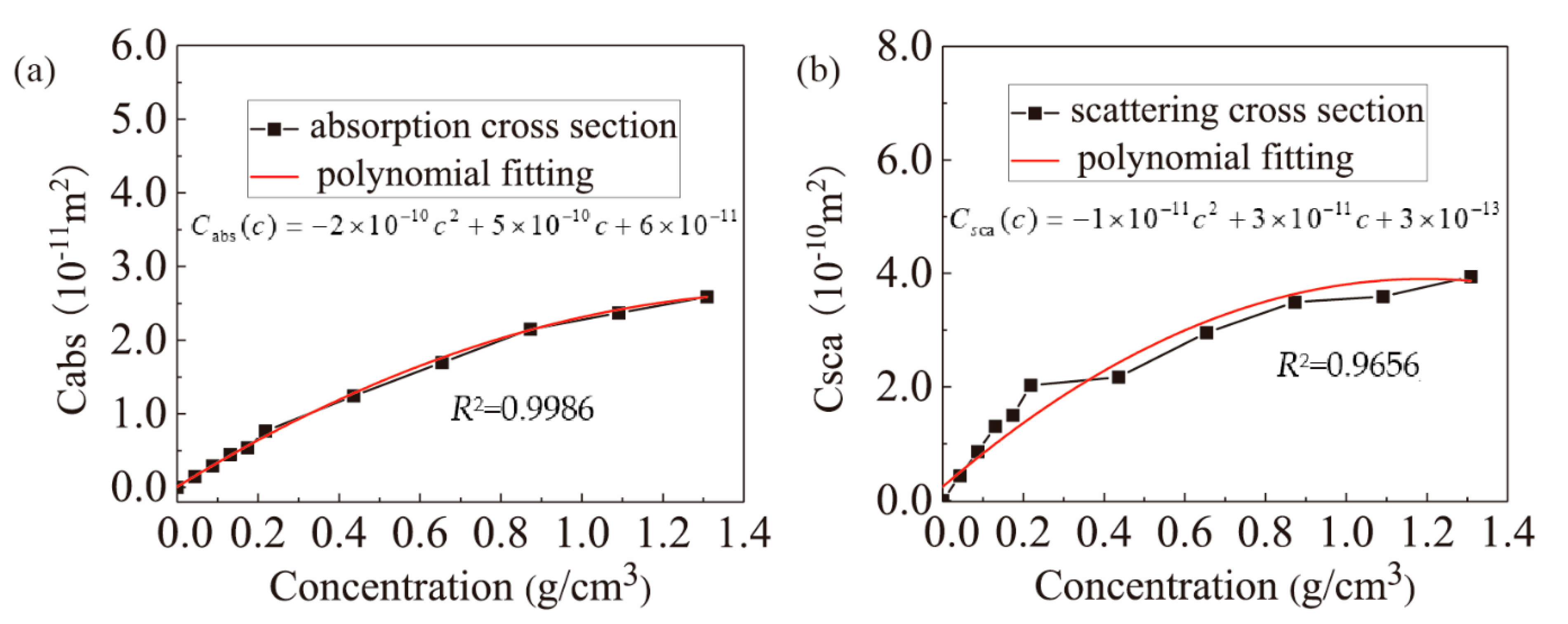
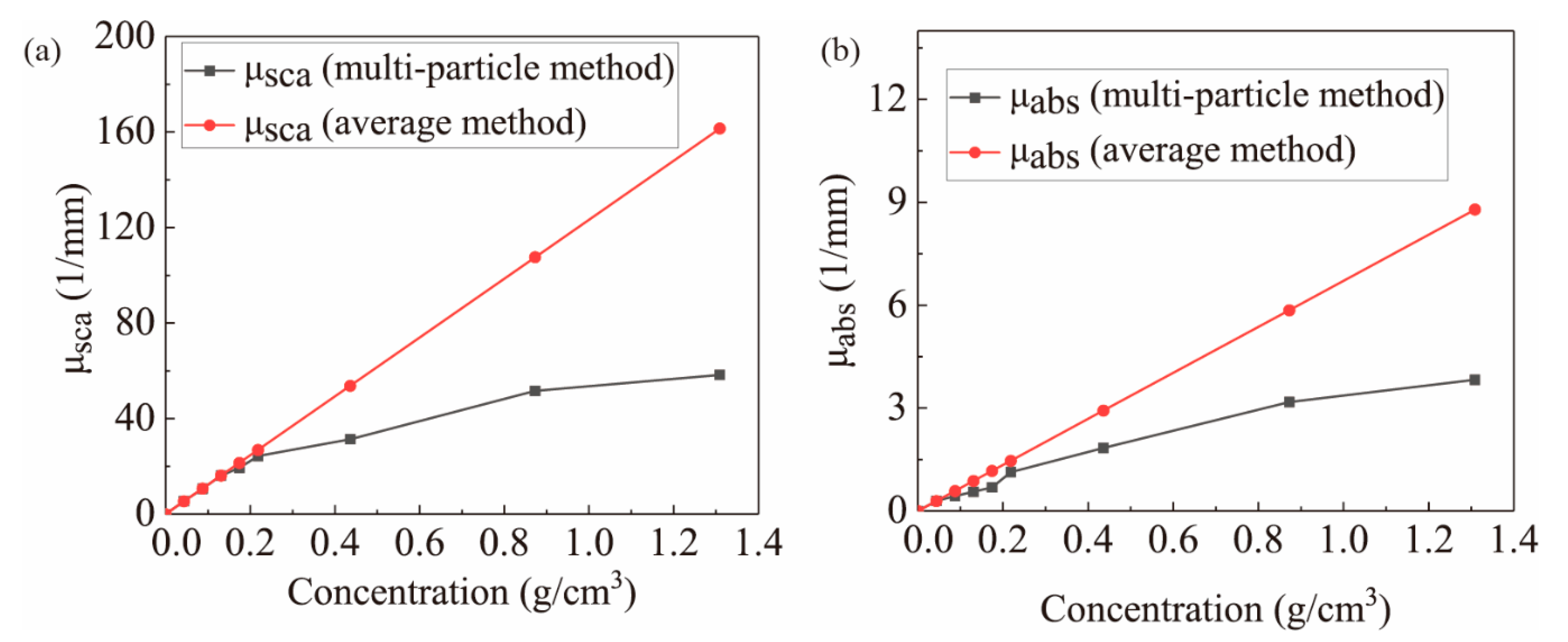
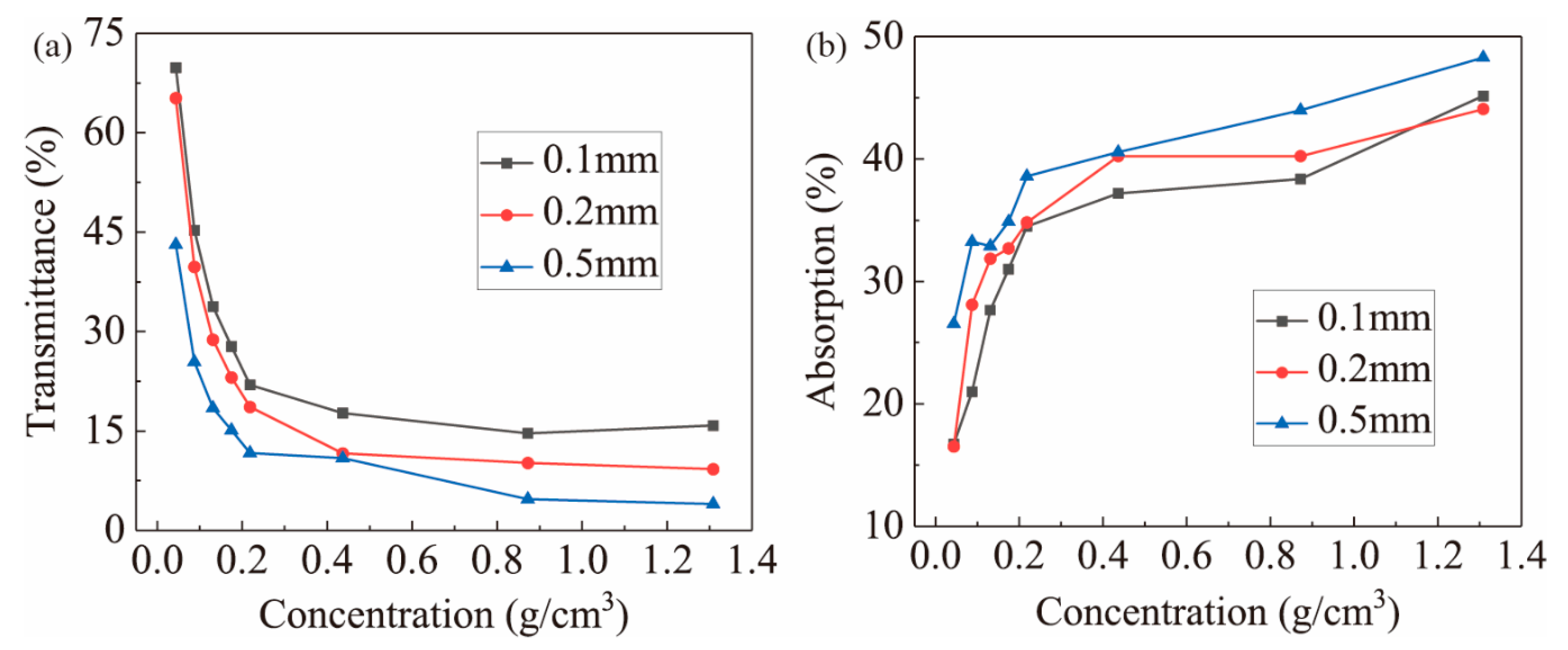
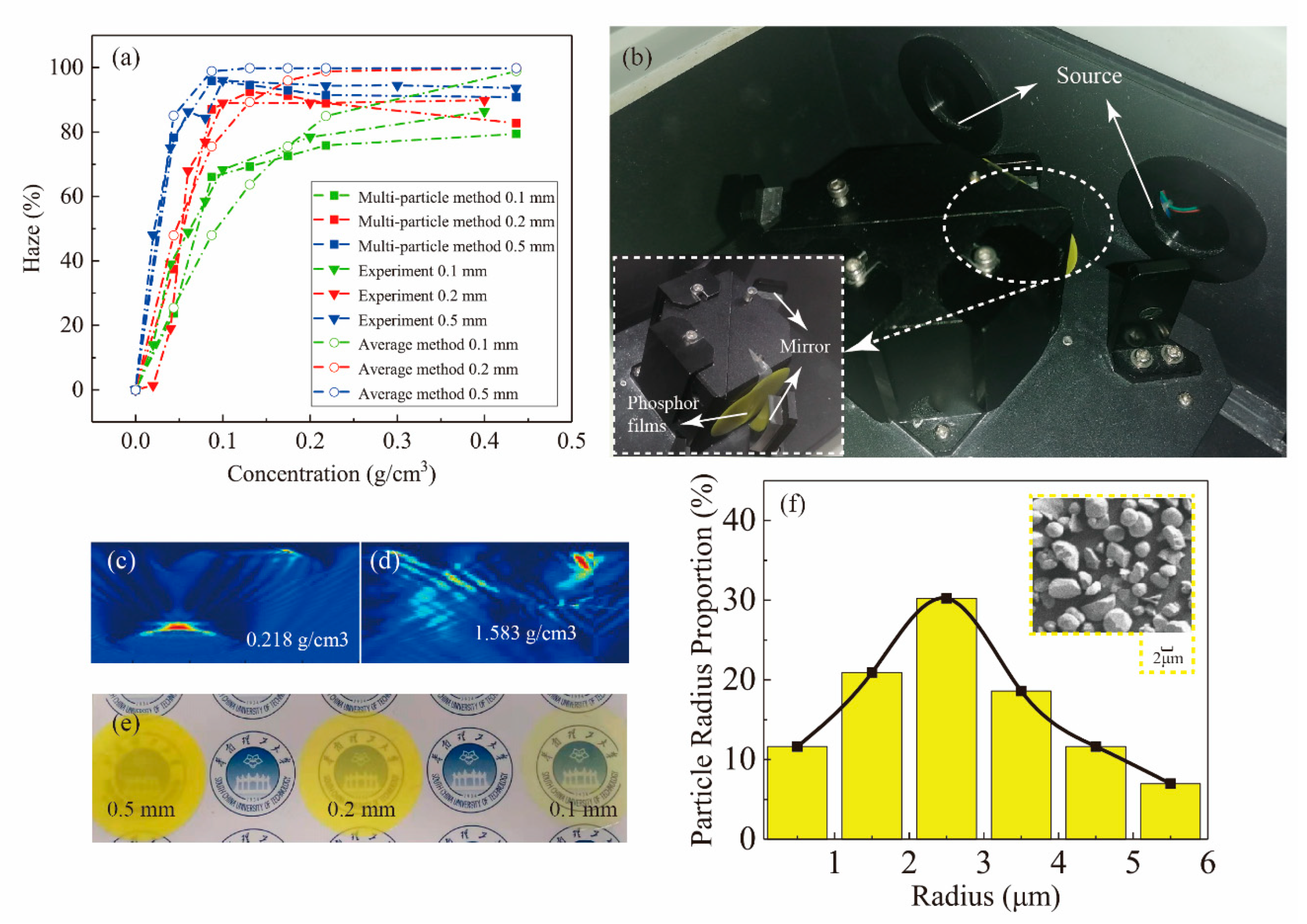
It is well known that the optical properties of multi-particle phosphor are crucial to the light performance of white light-emitting diodes (LEDs). Note that the optical properties including scattering or absorption properties for a single particle are easy to be calculated. However, due to the large computation considering the complicated re-scattering and re-absorption, it is difficult to calculate the scattering behaviors of the multi-particles. A common method to reduce the computation, which can cause unknown deviations, is to replace the multi-particle scattering properties by using the average scattering data of single particles. In this work, a cluster of multi-phosphor particles are directly simulated by the finite-difference time-domain (FDTD) method. The total scattering data of the cluster was processed as a bulk scattering parameter and imported to the Monte-Carlo ray-tracing (RT) method to realize a large-scale multi-particle scattering calculation. A polynomial mathematical model was built according to the multi-particle scattering data. An experiment was carried out for verifying the accuracy of the method in this work. The mean absolute percentages of the previous method are 1.68, 2.06, and 1.22 times larger than the multi-particle method compared with the experimental curves, respectively.
Keywords: optical simulation; light-emitting diodes (LEDs); finite-difference time-domain (FDTD); multi-phosphor configuration; Monte-Carlo ray-tracing method (RT) optical simulation; light-emitting diodes (LEDs); finite-difference time-domain (FDTD); multi-phosphor configuration; Monte-Carlo ray-tracing method (RT)