Article

Three-Dimensional Exploding Light Wave Packets


by
Marcos G. Barriopedro
1,*,
Manuel Holguín
2,
Pablo de Lara-Montoya
2,
Nilo Mata-Cervera
3 and
Miguel A. Porras
1,*
1
Complex Systems Group, Escuela Técnica Superior de Minas y Energía (ETSIME), Universidad Politécnica de Madrid, Ríos Rosas 21, 28003 Madrid, Spain
2
Departamento de Energía y Combustibles, Escuela Técnica Superior de Minas y Energía (ETSIME), Universidad Politécnica de Madrid, Ríos Rosas 21, 28003 Madrid, Spain
3
Centre for Disruptive Photonic Technologies, School of Physical and Mathematical Sciences & The Photonics Institute, Nanyang Technological University, Singapore 637371, Singapore
*
Authors to whom correspondence should be addressed.
Photonics 2024, 11(7), 652; https://doi.org/10.3390/photonics11070652

Submission received: 22 May 2024 / Revised: 1 July 2024 / Accepted: 8 July 2024 / Published: 11 July 2024
(This article belongs to the Special Issue Structured Light Beams: Science and Applications)

Abstract

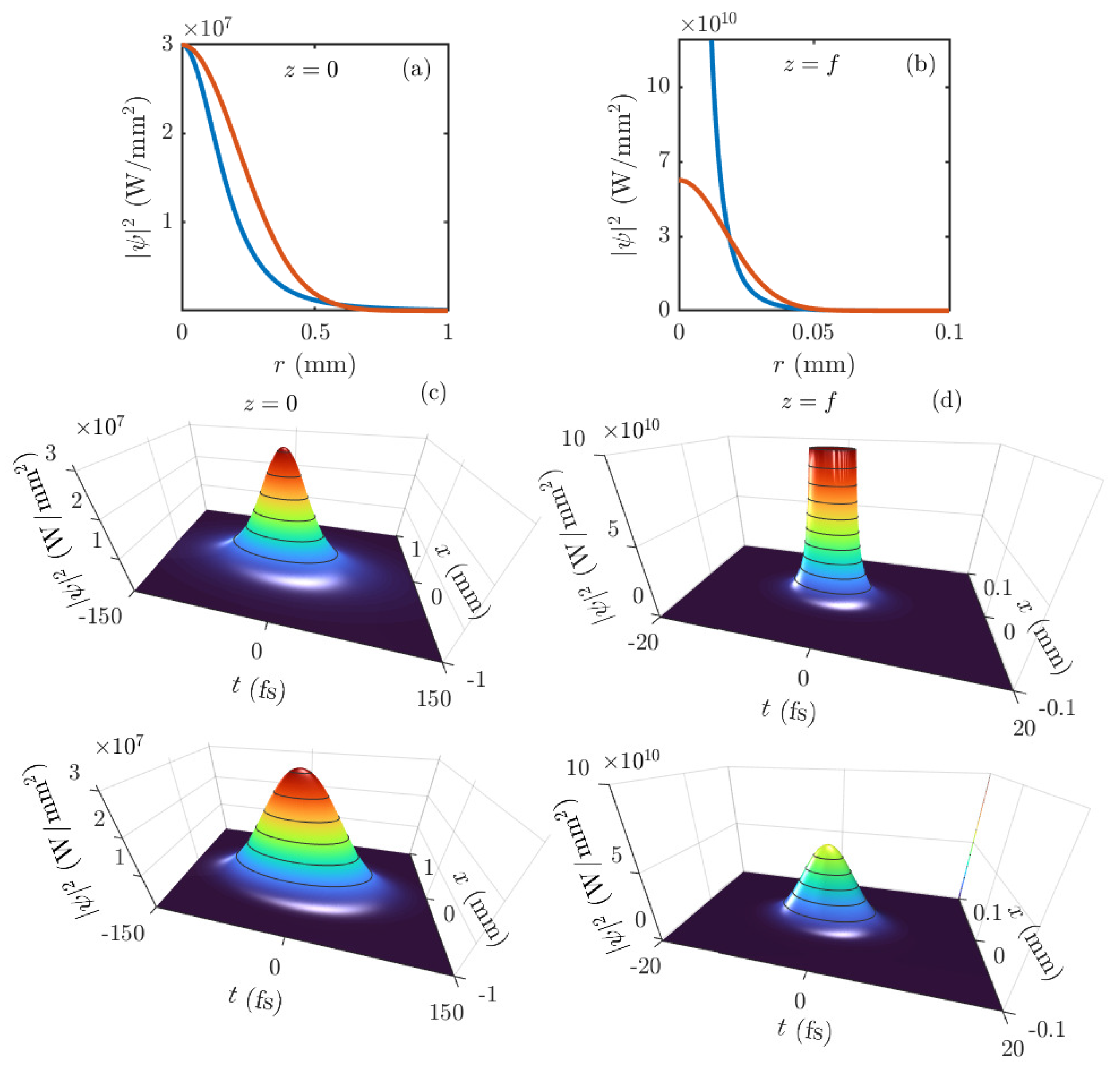
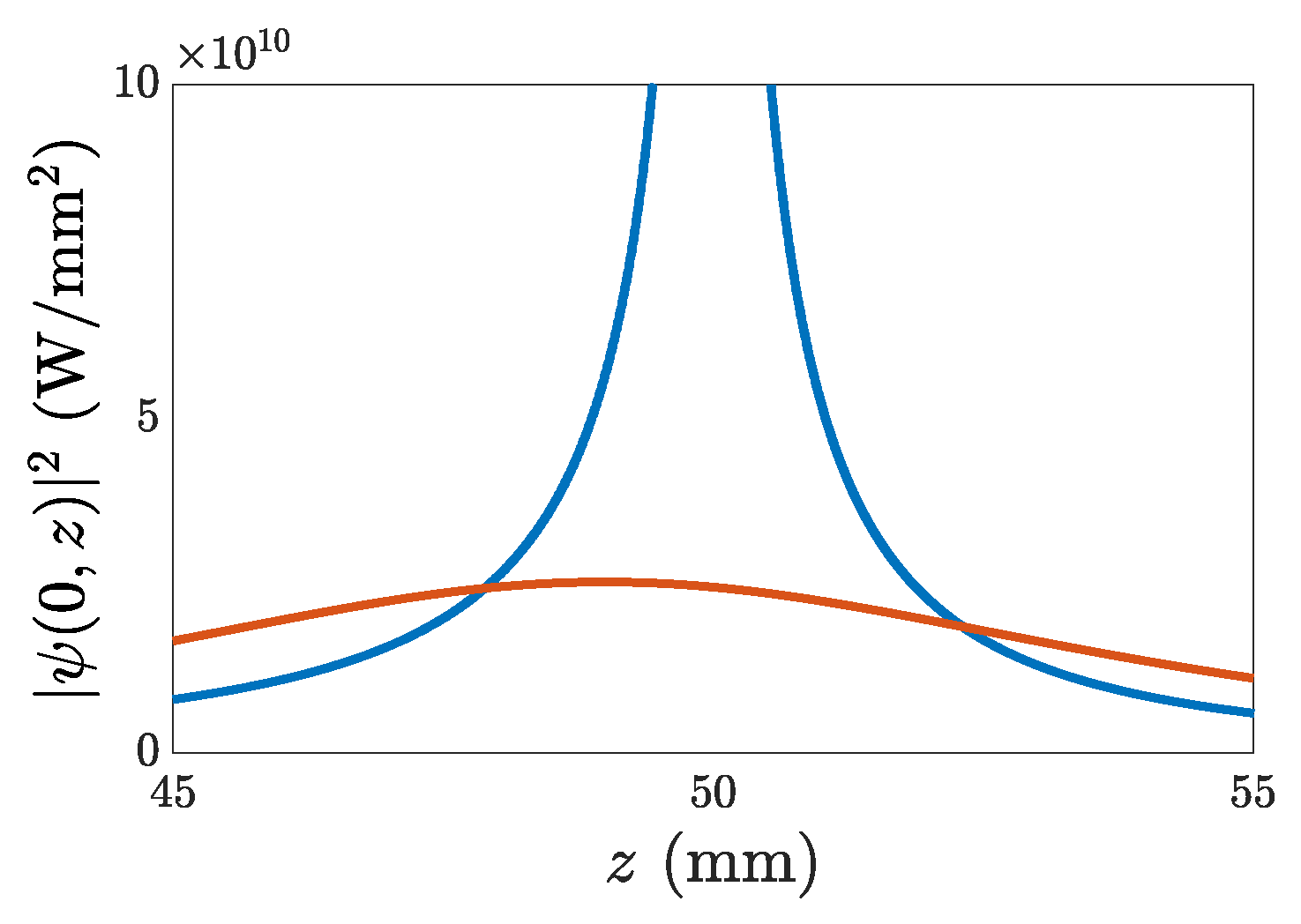
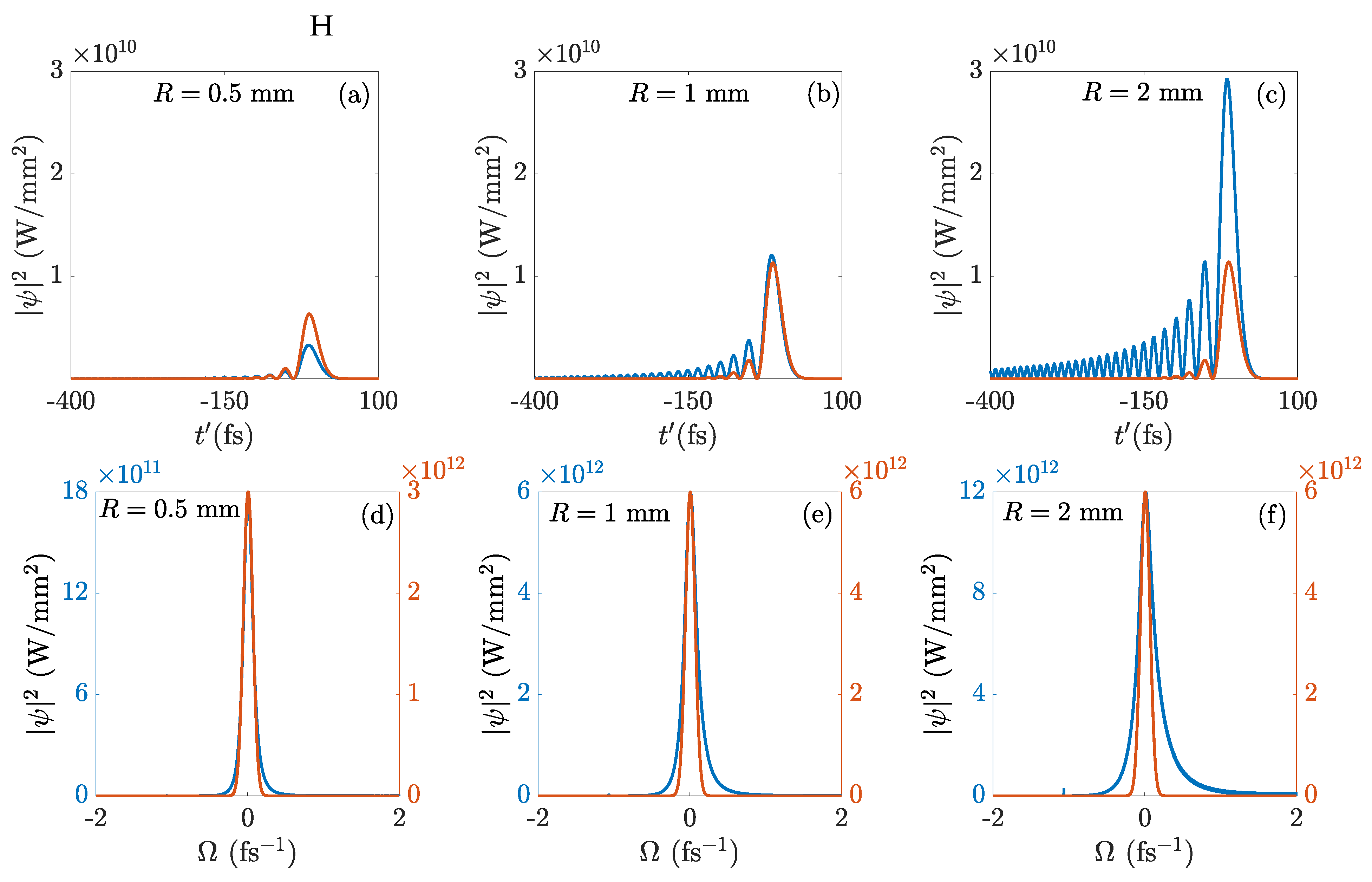
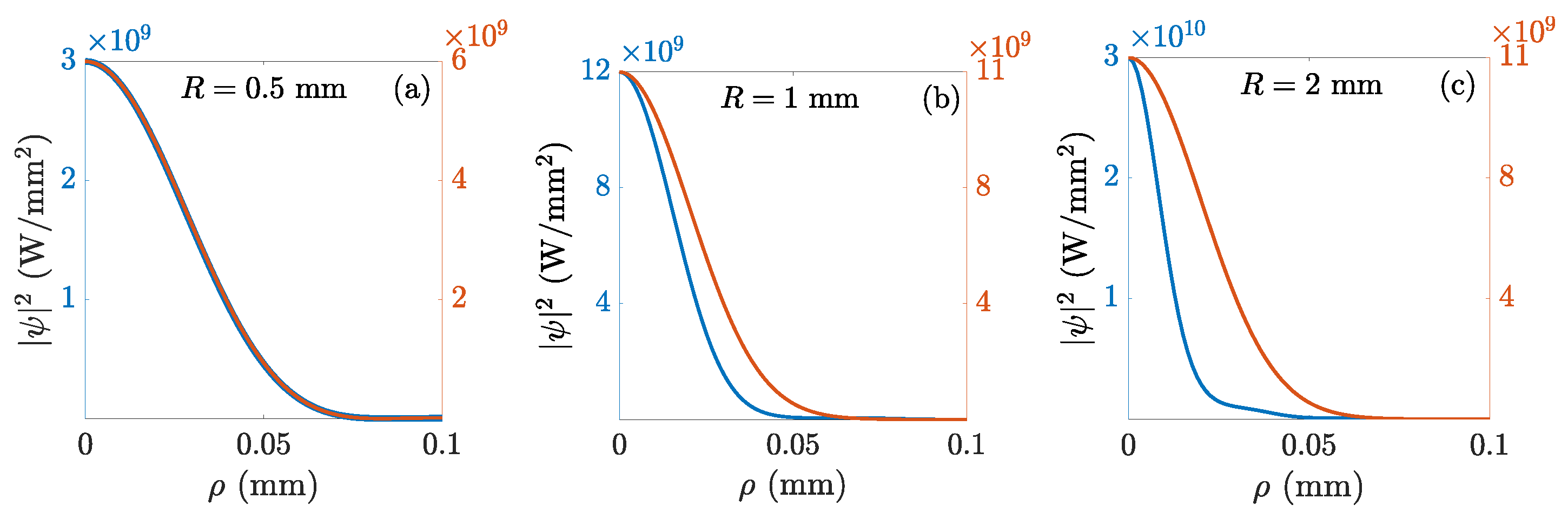
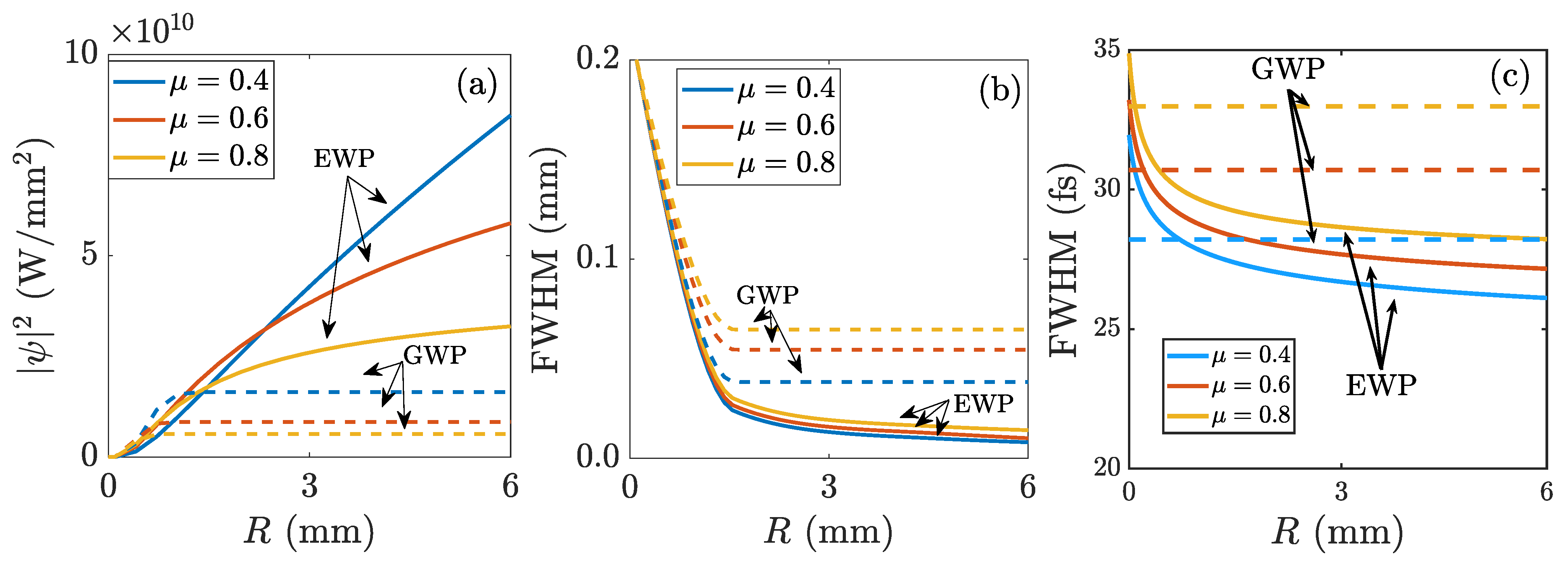
We describe a family of paraxial and quasi-monochromatic optical wave packets with finite energy and smoothly shaped amplitude in space and time that develops a singularity in the intensity when spatio-temporally focused by imparting a converging spherical wavefront and a negative temporal chirp. This singular behavior upon ideal focusing is manifested in actual focusing with finite apertures and in media with high-order dispersion with “exploding” behavior featuring an indefinitely increasing concentration of the energy when opening the aperture radius, thus exercising continuous control on the focal intensity and spatial and temporal resolution. These wave packets offer a new way of focusing that outperforms what can be achieved with standard Gaussian wave packets in terms of focal intensity and resolution, providing new possibilities in applications where energy concentration and its control are crucial.
Keywords: structured light; beam shaping; pulse shaping; ultrafast optics structured light; beam shaping; pulse shaping; ultrafast optics