Article

Cu-Ni Captures Platinum Group Metals from Spent Automotive Exhaust Catalysts

1
Kunming Institute of Precious Metals, Kunming 650106, China
2
Sino-Platinum Metals Resources (Yi men) Co., Ltd., Yuxi 653100, China
3
State Key Laboratory of Precious Metal Functional Materials, Kunming 650106, China
4
National Engineering Research Center of Vacuum Metallurgy, Kunming University of Science and Technology, Kunming 650093, China
*
Authors to whom correspondence should be addressed.
These authors contributed equally to this work.
Separations 2026, 13(3), 89; https://doi.org/10.3390/separations13030089
Submission received: 6 February 2026 / Revised: 28 February 2026 / Accepted: 4 March 2026 / Published: 6 March 2026
(This article belongs to the Special Issue Separation Techniques in Recovery of Valuable Metal Resources)

Abstract

Platinum group metals (PGMs) are strategic metals, and recycling PGMs in spent automobile exhaust catalysts (SACs) is a key path to alleviate the contradiction between resource supply and demand. This paper proposes a new Cu-Ni capture process and conducts research on the recovery of PGMs from SACs. Through the binary phase diagram analysis of Cu, Ni and PGMs and the thermodynamic calculation of the system reduction reaction, the feasibility of this technology was theoretically confirmed. Experimental results show that under the conditions of a temperature of 1450 °C, a holding time of 90 min, a Cu-Ni ratio of 1:1, and a basicity of 0.58, the recovery rates of Pt, Pd, and Rh reached 99.2%, 99.34%, and 98.48% respectively. Combined with orthogonal experiments, it was verified that temperature is the most influential factor on the recovery rate, and the four-stage capture mechanism of “initial diffusion—droplet aggregation—sedimentation and wetting—slag–metal separation” was clarified. This process reduces the melting temperature and provides new technology for green and efficient recycling of PGMs.

1. Introduction

Platinum group metals (PGMs), as a very important strategic metal, are widely used in the defense industry, medical equipment, aerospace and other fields, and are known as “industrial vitamins” [1]. According to data from the Ministry of Natural Resources of China, China’s platinum group metal mineral reserves are only 80.9 t, accounting for 0.12% of the world’s total reserves, and its external dependence is as high as 85% [2,3]. In order to alleviate the contradiction between supply and demand of PGMs, recycling PGMs from secondary resources has received widespread attention. Johnson Matthey’s report shows that 40% of the world’s Pt, 85% of Pd and 90% of Rh are used in the automotive industry [4]. Spent automobile exhaust catalysts (SACs) contain a large amount of PGMs, containing 1000–4000 g/t, and are vividly called “moving platinum group metal mines” [5].
Currently, there are two main methods for recovering platinum (Pt), palladium (Pd), and rhodium (Rh) from spent automobile exhaust purification catalysts: hydrometallurgy and pyrometallurgy. The hydrometallurgical process will produce a large amount of waste liquid and gas, and the reaction rate is slow [6,7], resulting in a low overall recovery rate and high post-processing costs, which limits its large-scale industrial application. Pyrometallurgy is currently the most widely used method for recovering PGMs in industry, mainly including the chlorination method, metal vapor treatment method and metal capture method [8]. Among them, the chlorination method [3] and the metal vapor treatment method have strict requirements on the sealing of the reaction vessel and may cause potential harm to human health, so they have not been promoted on a large scale. The metal capture method effectively avoids the above defects [9,10,11]. Currently, companies such as Umicore, Johnson Matthey, BASF, and Guiyan Platinum have all applied this method to industrial production [12,13,14]. This method utilizes the principle of lattice matching between collectors and PGMs to achieve efficient enrichment of PGMs by forming solid solutions or intermetallic compounds [15]. Traditional collectors include iron, copper, lead, bismuth and nickel. The application of lead capture will produce toxic smoke such as PbO, which poses a serious threat to the environment and the health of operators. The capture effect on Rh is not good, and it has gradually been withdrawn from the field of PGM recycling [16]. As a collector, bismuth can form a continuous solid solution with the PGMs in SACs, and the recovery rates of Pt, Pd, and Rh are 95.02%, 98.9%, and 97% respectively. However, the price of bismuth is relatively high and the production cost is high [17]. Iron capture is widely used in industry due to its advantages of a good capture effect and low cost. Although this method can recover more than 99% of Pt and Pd and 97% of Rh, the melting temperature of this method is high, and it is easy to generate high ferrosilicon [14], which affects the subsequent refining efficiency. The copper capture smelting temperature is low and the collector can be recycled, but copper has a low affinity for Rh, resulting in an unsatisfactory Rh capture effect (recovery rate is less than 97%) [3]. Nickel capture generally takes the form of nickel matte to participate in the capture of PGMs. Nickel matte has a better capture effect on Rh, but the capture effect on Pt and Pd needs to be improved [18]. In general, a single metal collector cannot meet the requirements for efficient and green recovery of PGMs in SACs due to issues such as insufficient selectivity. However, the synergistic effect of a capture system provides a feasible way to solve this problem.
Based on this, a Cu-Ni capture method is proposed in this paper. The key process parameters are screened by a single-factor experiment, the weight of each factor affecting the capture process is clarified by an orthogonal experiment, and the capture mechanism is revealed by thermodynamic analysis and SEM characterization. The purpose is to make up for the single metal capture defects, reduce the melting temperature, and provide new technology and theoretical support for green and efficient recovery of PGMs.

2. Materials and Methods

2.1. Raw Materials

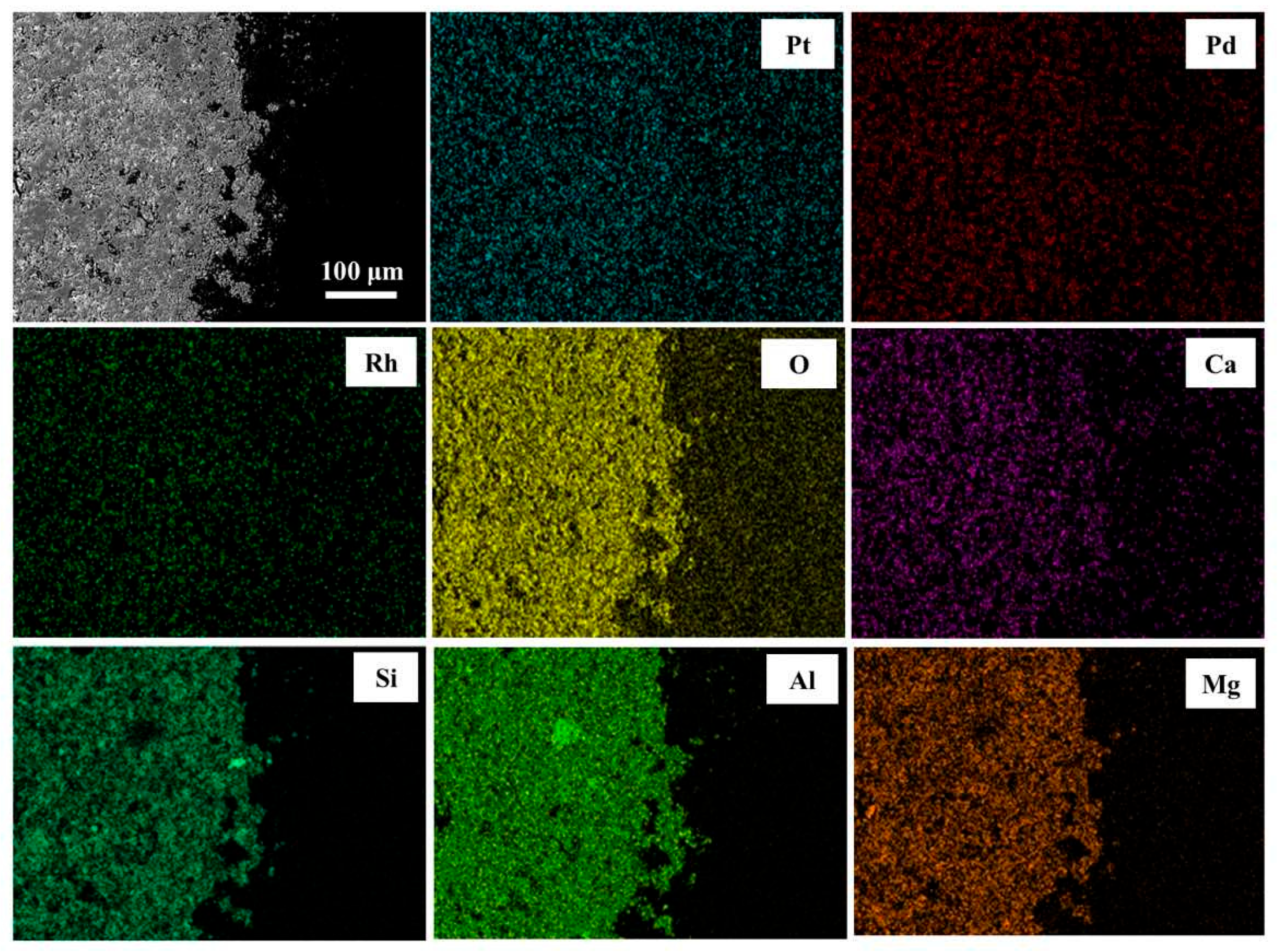
The catalyst consists of carrier, coating and active components. The carrier is mainly cordierite, the coating is γ-Al2O3 uniformly coated on the carrier substrate, PGMs are loaded on the active sites of the coating as active components, and ZrO2 and CeO2 rare earth oxides are introduced into the coating to provide oxygen for oxidation reaction and improve the catalytic activity at the metal carrier interface, thus improving the catalytic efficiency of the catalyst. However, if the catalyst is used in a high-temperature environment for a long time, the main phase γ-Al2O3 of its coating will undergo phase transformation to form α-Al2O3 [18], which is accompanied by the evolution of the crystal structure from an open type to a dense closed network structure, and some PGM atoms will be wrapped by an α-Al2O3 lattice and lose catalytic activity. The raw material used in the experiment is a “Pd-rich automobile three-way catalyst” provided by an enterprise in Yunnan Province, and its carrier is mainly cordierite carrier (2MgO·2Al2O3·5SiO2); its XRD characterization is shown in Figure 1. Figure 2 shows the SEM characterization results of the spent catalyst. From the microscopic morphology, it can be observed that in addition to being wrapped by α-Al2O3, some PGM atoms will also diffuse into the matrix metal through thermal movement, which will not only lead to catalyst deactivation but also increase the difficulty of PGM recovery. Energy spectrum analysis shows that the distribution positions of oxygen elements and PGMs are highly coincident, indicating that PGMs in the spent catalyst mainly exist in the form of oxides, and their common occurrence forms are PtO2, PdO and Rh2O3. Quantitative analysis of PGMs in SACs was carried out. The results are shown in Table 1. The main components in SACs are Al2O3, SiO2 and MgO, with contents of 50%, 30% and 7% respectively, and a small amount of ZrO2 and CeO2. The contents of Pt, Pd and Rh are 467 g/t, 2938 g/t and 231 g/t respectively.

2.2. Experimental Procedure

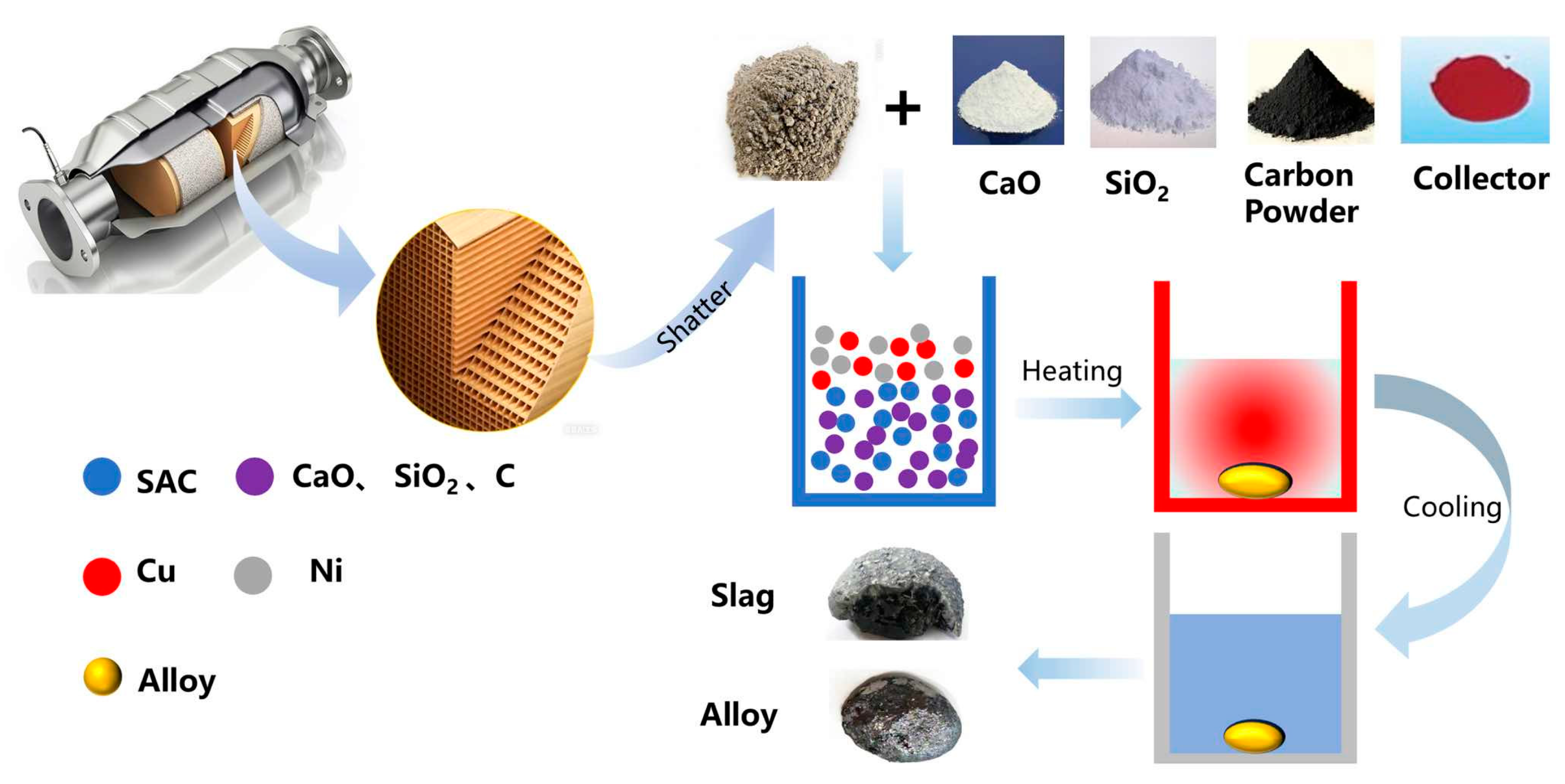
The experimental process is shown in Figure 3. First, SAC is broken into small pieces by a jaw crusher, and then ground into powder with a particle size ≤75 µm. Second, weigh SAC powder, collector (Cu and Ni powder), slagging agent (CaO, SiO2) and reducing agent (carbon powder) according to the preset proportions, where the reagents are all AR. The above materials are put into a graphite crucible (material: graphite clay, dimensions: outer diameter 100 mm, inner diameter 90 mm, height 200 mm) together, and uniformly mix by mechanical stirring to ensure that all components are fully contacted; then, the graphite crucible filled with the mixed materials is placed in a high-temperature resistance furnace (SIGMA, resistance heating). Start the resistance furnace, set the temperature rise program, and carry out the high-temperature smelting reaction (heating rate 10 °C/min) and holding time according to the experimental scheme. After the smelting is finished, when the system is naturally cooled to room temperature, the slag is separated from metal to obtain the PGM-enriched alloy phase and smelting slag. Prepare samples and detect the separated smelting slag, and calculate the recovery rate of PGMs according to Formula (1) using the detection result [19].
R = ( 1 C 1 × m 1 C 0 × m 0 ) × 100 %
In the formula, R is the recovery rate of PGMs; C1 is the platinum group metal content in unit mass slag; m1 is the mass of smelting slag; C0 is the platinum group metal content in unit mass spent catalyst; and m0 is the mass of spent catalyst added in the experiment.

2.3. Characterization

The platinum group metal contents in the catalyst were quantitatively analyzed by inductively coupled plasma emission spectrometry (ICP-OES, Agilent5900, Agilent Technologies LDA Sdn Bhd, Penang, Malaysia), and the platinum group metal contents in the conventional components were determined by X-ray fluorescence spectrometry (XRF, GZZJ-004, SPECTRO, Kleve, Germany). For the sample preparation of XRF, a vibration grinder (ZDM-2 × 100, Hebi Xianfeng Instrument Co., Ltd., Hebi, China) was used to grind the smelting slag to a particle size ≤75 µm, and then the powder particles were placed in the XRF instrument for elemental analysis. The phase analysis of the raw material samples was carried out by X-ray diffraction (XRD, MiniFlex 600, Rigaku Corporation, Akishima, Tokyo, Japan). The elemental distribution of the alloy and slag samples was characterized by scanning electron microscopy (SEM, ZEISS Sigma 300, Carl Zeiss Microscopy GmbH, Oberkochen, Germany).

3. Results and Discussion

3.1. Theoretical Analysis

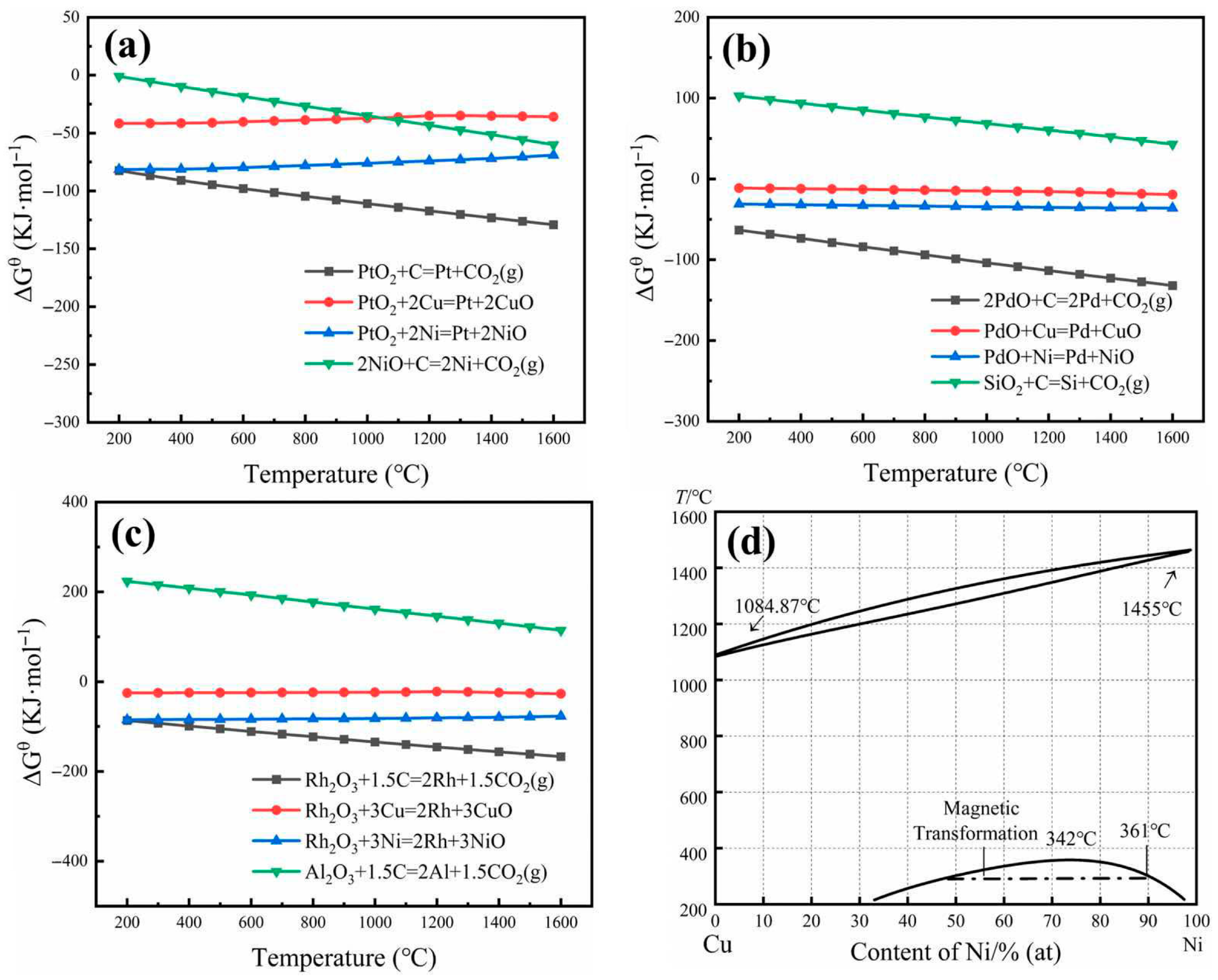
Platinum group metal oxides are difficult to combine with Cu and Ni collectors during the smelting and collection process, so thermodynamic calculations are needed to clarify the feasibility of the reduction reaction in the system. This paper uses HSC 6.0 software to analyze the Gibbs free energy changes in related reactions during the smelting process.
Figure 4a–c are the standard Gibbs free energy–temperature curves of Pt, Pd, Rh oxides and other oxides (Al2O3, SiO2) in the system respectively. It can be seen from the figure that at all experimental temperatures, Pt, Pd, and Rh undergo oxide reduction reaction ΔG < 0, indicating that carbon can reduce them to elemental substances, laying the foundation for subsequent capture reactions; meanwhile, the ΔG of the reaction of Cu, Ni, and platinum group metal oxides are all higher than carbon, indicating that they basically do not participate in the reduction reaction in the system and only function as capture carriers. In addition, the reduction reaction of Al2O3 and SiO2 still maintains ΔG > 0 when the temperature rises to 1500 °C. There is no need to worry about Al and Si being reduced into the alloy phase and affecting the later refining process.
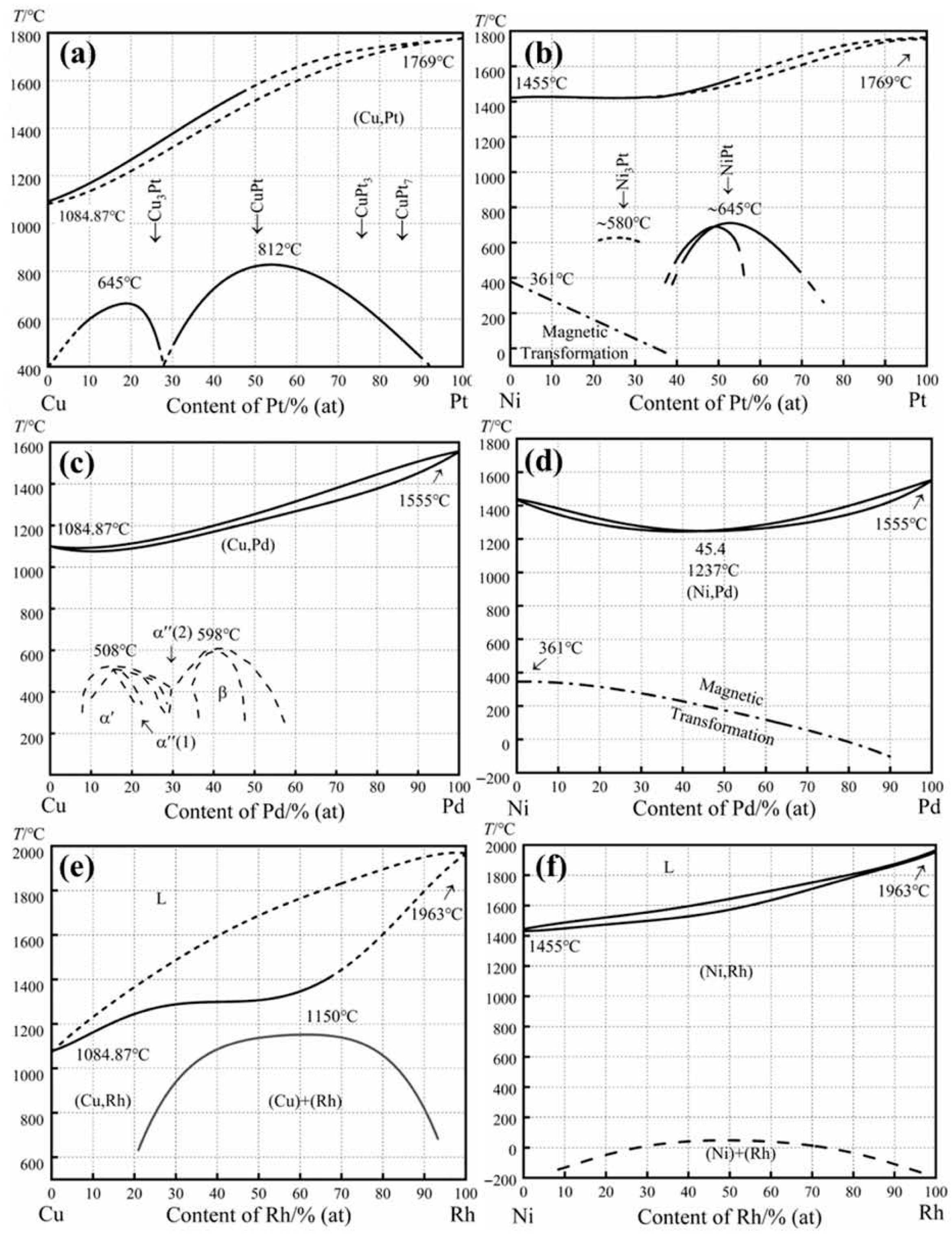
Combining the binary phase diagram of Cu, Ni and PGMs (Figure 5), it can be seen [21,22,23,24,25,26] that during the melting and collection process, Cu, Ni and PGMs can form solid solutions or intermetallic compounds through mutual dissolution or combination. Among them, Pd and Rh can form continuous or limited solid solutions with Cu and Ni, while the combination of Pt, Cu and Ni depends on the relative composition of the metal. Intermetallic compounds such as Cu3Pt, CuPt, CuPt3, CuPt7, Ni3Pt, and NiPt can be formed at different relative contents. Considering that the PGM content in SAC is less than 1%, Pt, Cu and Ni tend to form intermetallic compounds with a low Pt content (mainly Cu3Pt, Ni3Pt). This characteristic provides theoretical support for the synergy of Cu-Ni captures.

3.2. Single-Factor Experiment and Result Analysis

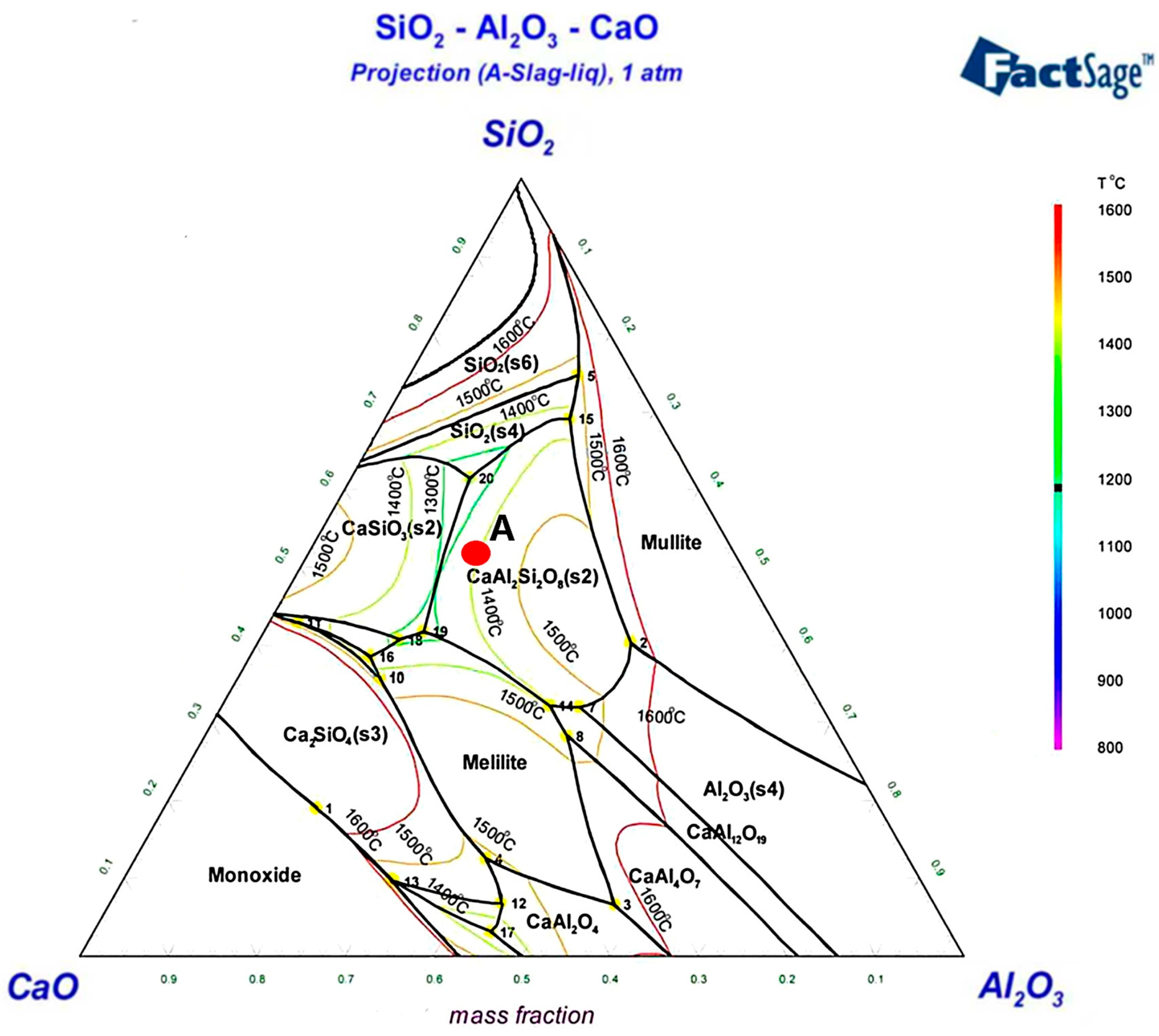
The experiment was based on the main chemical components of SAC (50 wt% Al2O3, 30 wt% SiO2 and 7 wt% MgO) design slag type, and MgO can improve the critical cooling rate of melt, and promote the melt to raise the fluidity of glass state transformation, in order to improve the separation effect of slag and metal [27]. Therefore, a CaO-SiO2-Al2O3-MgO quaternary slag system is adopted, and the MgO content is fixed at 5.5 wt%. Figure 6 shows the phase diagram of a CaO-SiO2-Al2O3-MgO quaternary slag system drawn using Factsage7.2. The slag system should meet the requirement that its temperature range is lower than the melting point of Cu-Ni capture, so as to ensure that the collector and slag phase are in a molten state during the melting process, so as to avoid the incomplete melting of the system, thus affecting the collection effect. The effects of the smelting temperature, holding time, total amount of collector, ratio of Cu and Ni and basicity (wCaO/wSiO2) on PGM recovery were systematically investigated by the controlling variable method.

3.2.1. Effect of Temperature on PGM Recovery

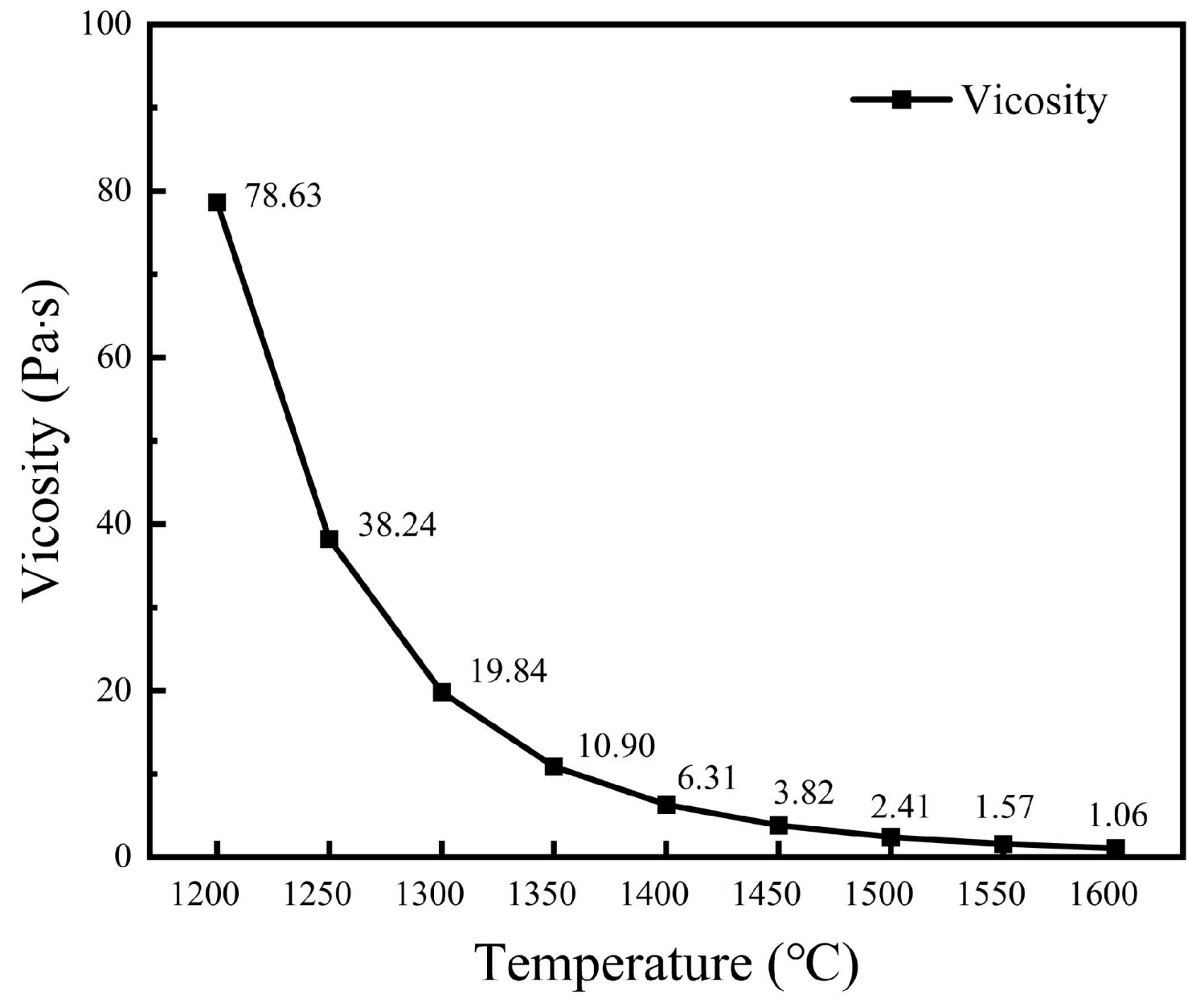
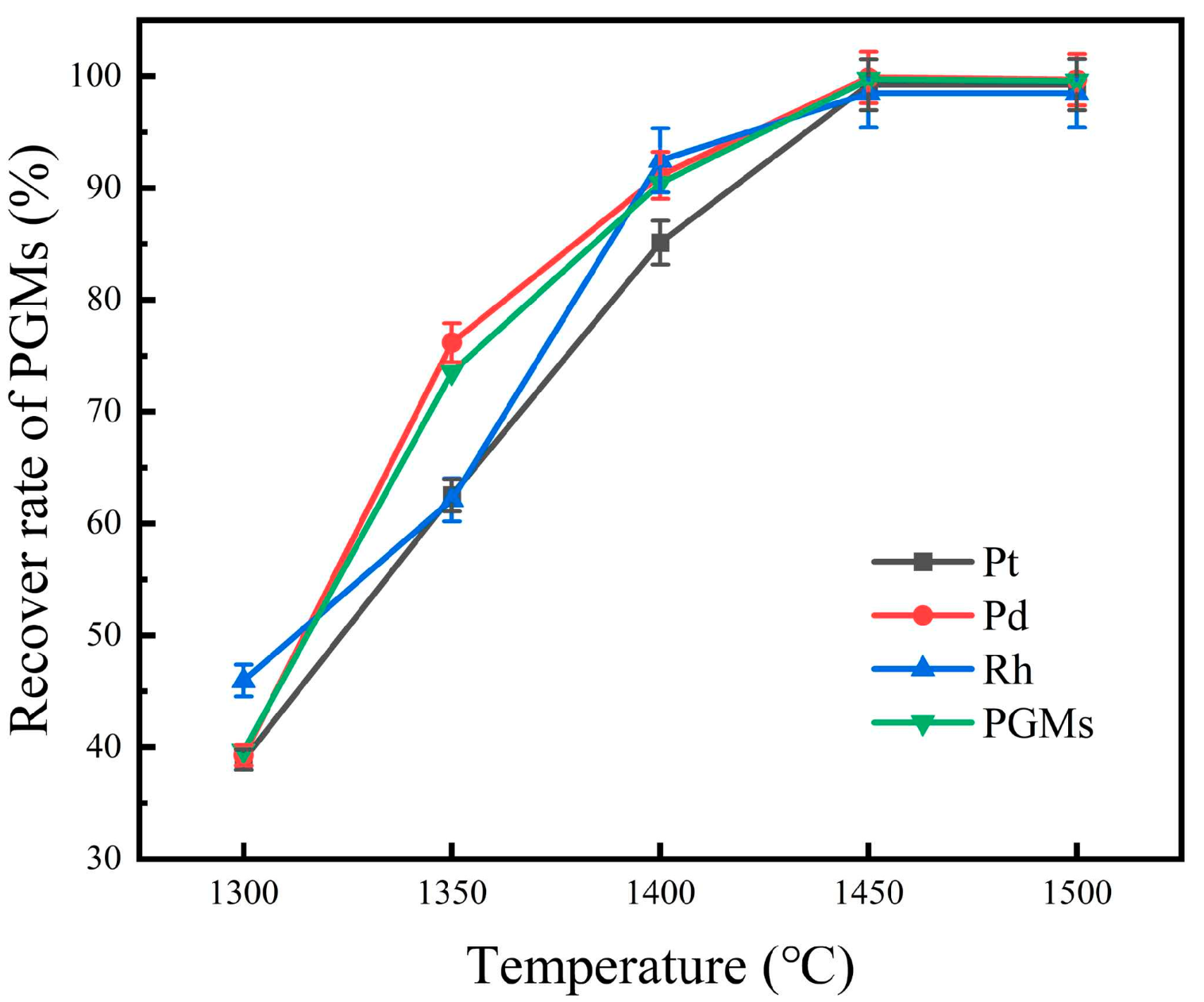
Temperature directly affects the viscosity of slag and has a great influence on the melting and trapping of PGMs. Figure 7 shows the slag viscosity–temperature curve calculated by the Vicinity module of Factsage7.2 software. It can be seen from the figure that when the temperature is lower than 1300 °C, the slag viscosity drops sharply from 78.63 Pa·s to 19.84 Pa·s, which is a large drop. When the temperature is 1300 °C, the decrease narrows. At 1450 °C and 1500 °C, the viscosity decreases to 3.82 Pa·s and 2.41 Pa·s, respectively, indicating that the slag has been completely melted at this time and the system structure tends to be stable. For this purpose, the selected experimental temperature range is 1300~1500 °C. Other conditions were fixed as SAC 100 g, CaO 35 g, SiO2 30 g, MgO 8 g, basicity (wCaO/wSiO2) 0.58, reduced carbon powder 3%, holding time 90 min, Cu-Ni ratio 1:1, and total amount of collector 15% (mass ratio to SAC). The influence of the melting temperature on the PGM recovery rate is investigated. The experimental results are shown in Figure 8.
It can be seen from Figure 8 that when the temperature rises from 1300 °C to 1450 °C, the recovery rates of Pt, Pd and Rh increase from 38.89%, 39.29%, and 45.95% to 99.25%, 99.88%, and 98.47%, respectively. When the temperature continues to rise to 1500 °C, the recovery rate of PGMs does not change much. The recovery rate is closely related to the viscosity of slag, which decreases with the increase in temperature. The lower slag viscosity can improve the fluidity of melt, promote the collision combination of Cu-Ni capture and PGMs, and improve the collection efficiency. When the melting temperature reaches 1450 °C, the viscosity of molten slag has been reduced to a low level, and the fluidity of melt is enough to ensure that the capture reaction is fully carried out. At this time, the melt viscosity does not change clearly when the temperature is continuously increased, so the recovery rate is essentially stable at the experimental temperature of 1500 °C. Too high of a melting temperature will increase energy consumption and equipment loss, and it will increase the process cost. Considering the economic cost and energy consumption control, the optimal melting temperature of Cu-Ni capture technology is determined to be 1450 °C.

3.2.2. Effect of Holding Time on PGM Recovery Rate

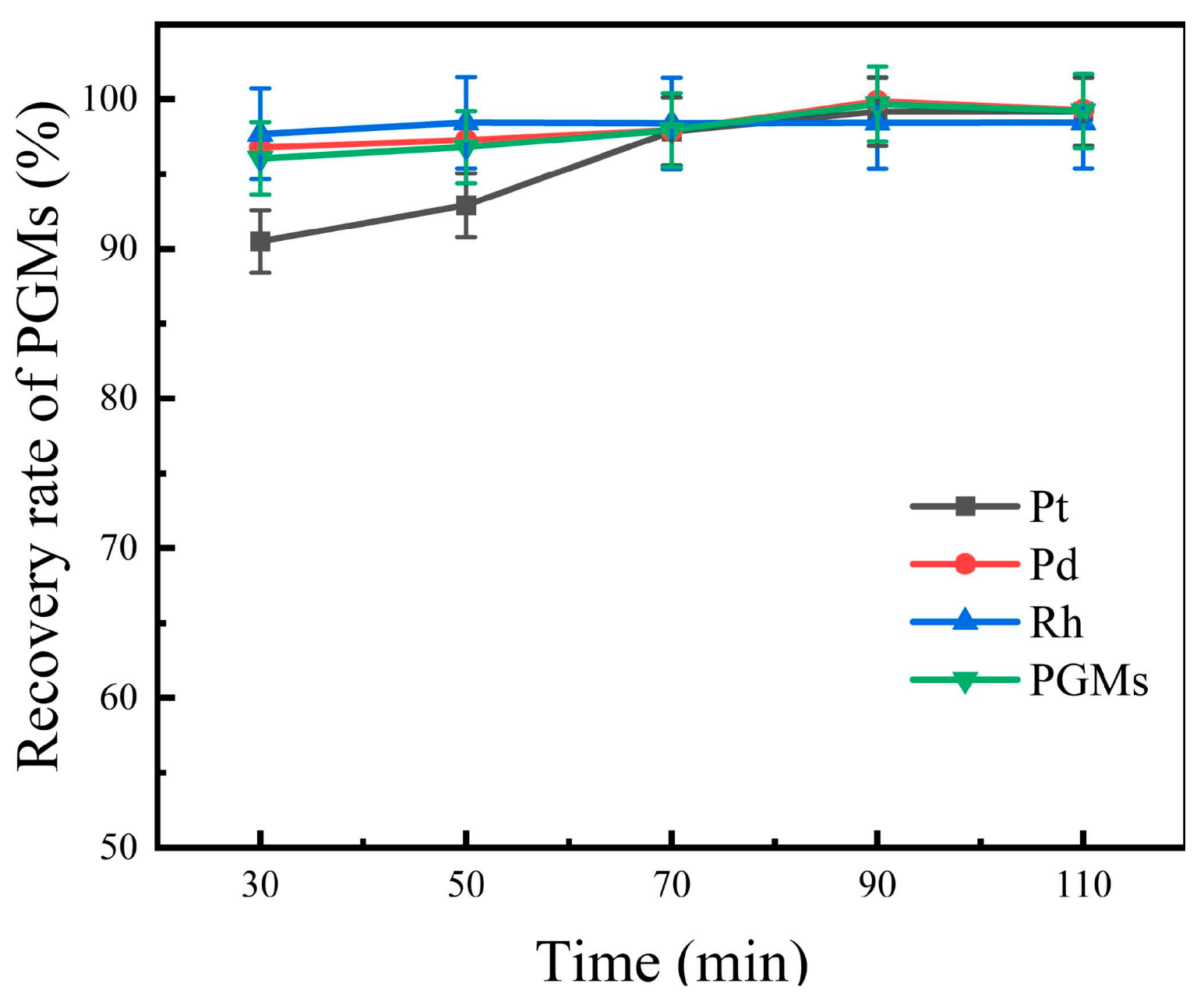
Under the conditions of a melting temperature of 1450 °C, basicity of 0.58, Cu-Ni ratio of 1:1, total amount of collector of 15% and amount of reduced carbon powder of 3%, the effects of holding times of 30 min, 50 min, 70 min, 90 min and 110 min on the PGM recovery rate were investigated respectively. The experimental results are shown in Figure 9.
As shown in Figure 9, when the incubation time is increased from 30 min to 70 min, the recovery rate of platinum increases from 89.55% to 97.84%, and the recovery rates of palladium and rhodium also increase from 96.45% and 97.44% to 97.91% and 98.38% respectively. When the incubation time is 90 min, the recovery rate reaches the highest, wherein the recovery rates of platinum, palladium and rhodium are 99.09%, 99.85% and 98.3% respectively. Therefore, 90 min is determined as the optimal holding time for Cu-Ni capture.

3.2.3. Effect of Total Amount of Collector on PGM Recovery Rate

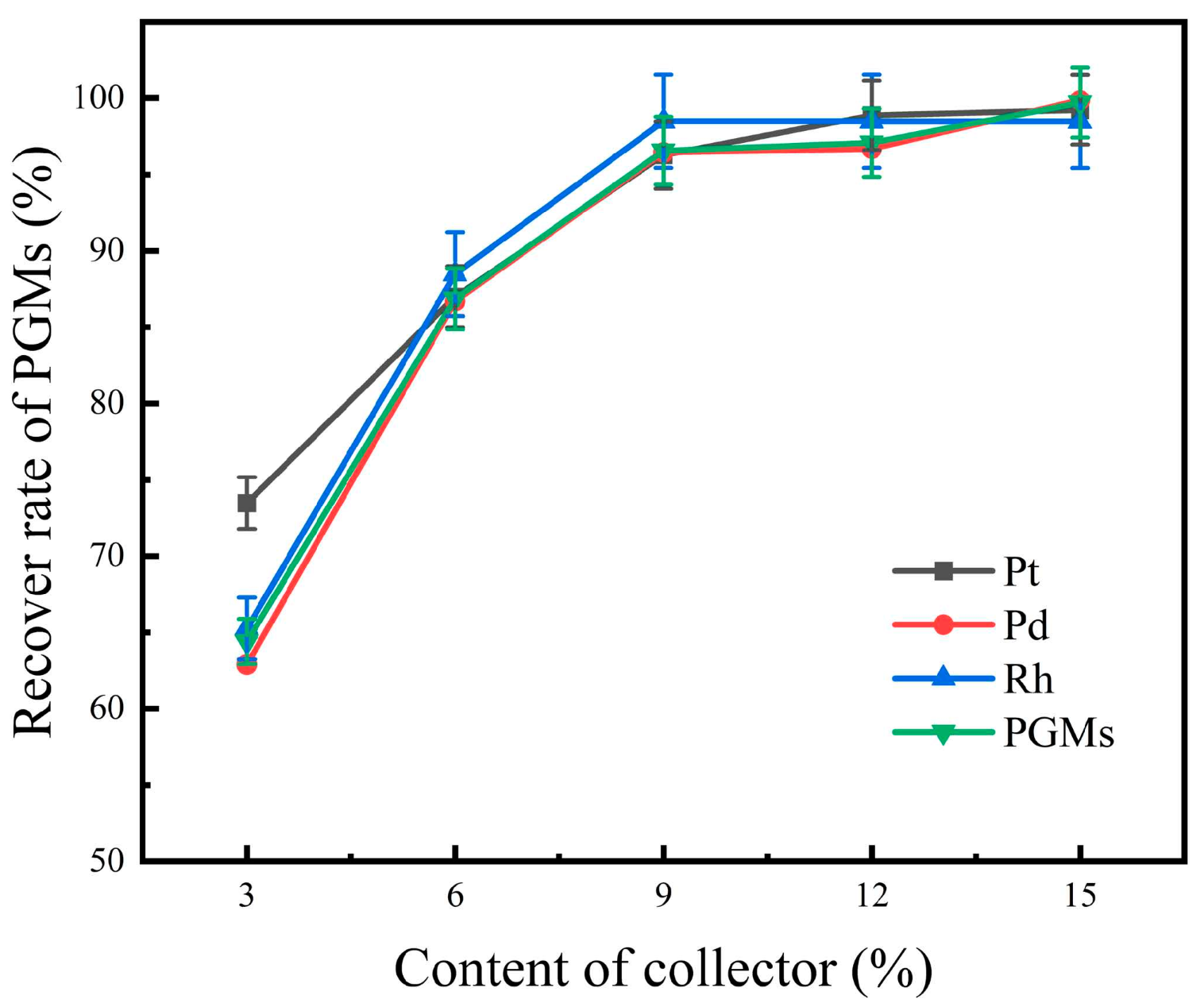
In actual production, the amount of collector added will affect the treatment amount of the subsequent refining process, and then directly determine the production cost. For a fixed experimental temperature of 1450 °C, holding time of 90 min, reduced carbon powder of 3%, basicity of 0.58, and copper and nickel ratio of 1:1, respectively, when testing total amounts of collector at 3%, 6%, 9%, 12%, and 15% (mass ratio to SAC) on the PGM recovery rate, the results are shown in Figure 10.
It can be seen from Figure 10 that the impact of the total amount of collector on the recovery rate of PGMs shows a trend of “rapid increase first and then slow increase”. When the total amount of collector is 3%, the recovery rates of Pt, Pd, and Rh are 73.48%, 62.89%, and 65.27% respectively; when the total amount of collector is 6%, the recovery rates of Pt, Pd, and Rh are 87%, 86.72%, and 88.48% respectively; when the total amount of collector increases to 9%, the recovery rates increased to 96.28%, 96.45% and 98.49% respectively; when the total amount of collector continued to be increased to 15%, there was little room for improvement in the recovery rates. Considering the comprehensive cost and efficiency, the recommended total amount of collector is 9%.

3.2.4. Effect of Cu-Ni Ratio on PGM Recovery Rate

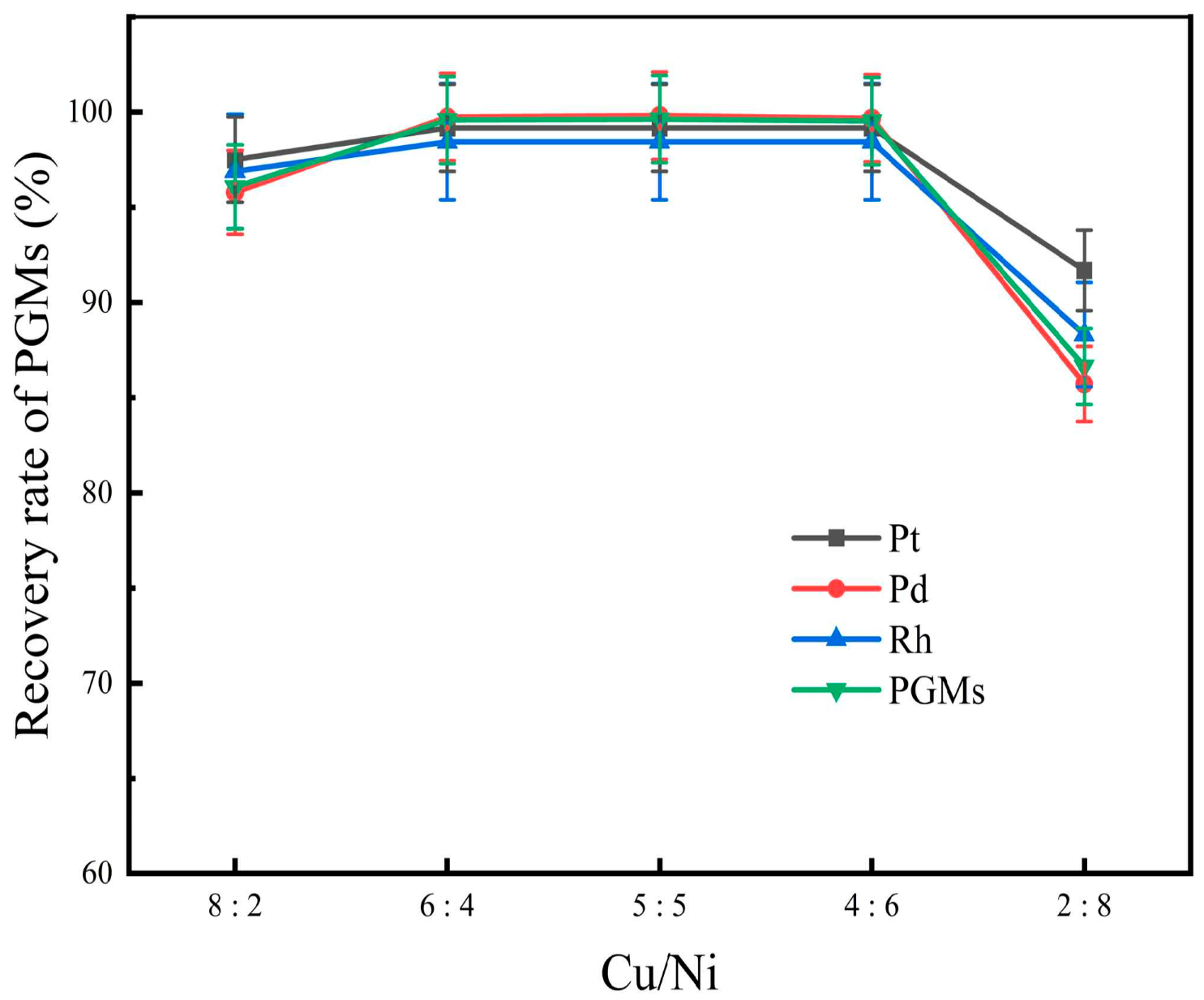
The ratio of collector directly determines the microstructure of the system and the binding ability of collector and platinum group metal. Therefore, the single-factor experiment of Cu-Ni ratio is preferred to determine the optimal ratio. The experimental conditions are a melting temperature of 1450 °C, holding time of 90 min, basicity of 0.58, reduced carbon powder of 3% and total amount of collector of 9%. The PGM recovery rate when the ratio of Cu and Ni is 8:2, 6:4, 1:1, 4:6 or 2:8 is investigated respectively. The experimental results are shown in Figure 11.
It can be seen from Figure 11 that the ratio of Cu and Ni has a great impact on the recovery rate of PGMs. When the proportion of Cu in the collector decreases from 80% to 60%, the recovery rate of PGMs increases from 96.07% to 99.58%. Continue to reduce the proportion of Cu to 40%, and the recovery rate remains basically stable; when the Cu content is reduced to 20%, the PGM recovery rate drops to 86.65%, mainly due to the difference in crystal structure and lattice constant between Cu and Ni. Although both of them are FCC lattices, they can theoretically form a continuous solid solution with PGMs, but there is a slight difference in lattice constant. When the Cu and Ni content ratio difference is large, it is difficult for them to form a uniform composite lattice structure, and the solid solution formation is insufficient [28]. When the ratio of Cu and Ni is 1:1, a composite system with a uniform structure can be formed, which provides sufficient collection sites for PGMs and ensures efficient collection. In conclusion, the optimal ratio of Cu-Ni capture is determined to be 1:1.

3.2.5. Effect of Basicity on PGM Recovery Rate

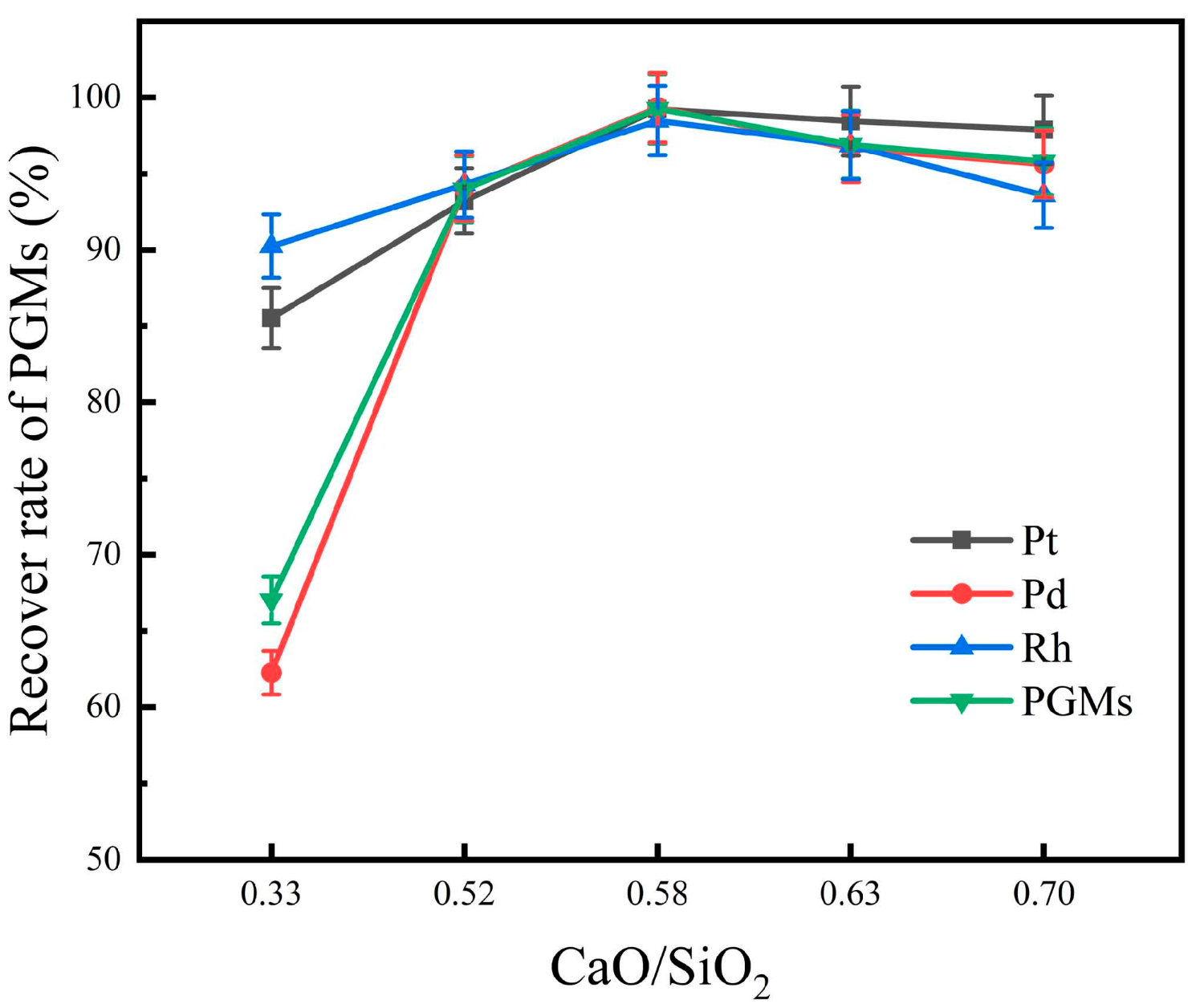
Basicity (wCaO/wSiO2) is one of the key factors affecting the physicochemical properties of melt [29]. In the recovery process of PGMs, the melt fluidity can be changed by adjusting the basicity of slag, thus affecting the collection efficiency. Good melt fluidity can improve the collision and combination probability of Cu-Ni capture and PGMs, thus improving the recovery effect. The influence of basicity (0.33, 0.52, 0.58, 0.63, 0.71) on the recovery effect of PGMs was investigated under the conditions of melting temperature 1450 °C, holding time 90 min, total collector dosage 9%, Cu-Ni ratio 1:1 and reduced carbon powder dosage 3%. The experimental results are shown in Figure 12.
It can be seen from Figure 12 that basicity has a great influence on the PGM recovery rate. When basicity is 0.33, the PGM recovery rate is relatively low, and Pt, Pd and Rh recovery rates are 85.53%, 62.26% and 90.25% respectively; with the addition of alkali metal oxides such as CaO, basicity gradually increases, the PGM recovery rate continuously increases; when basicity is 0.58, the PGM recovery rate is the highest, and Pt, Pd and Rh recovery rates reach 99.2%, 99.34% and 98.48% respectively; when basicity exceeds 0.58, the recovery decreases a little, especially in the range of 0.58 to 0.63. The effect of basicity on PGM recovery can be explained by a slag structure depolymerization mechanism: alkali metal oxides such as CaO and MgO are ionized at high temperature to generate non-bridging oxygen ions, which can destroy the stable [SiO4]4− tetrahedral structure (Formulas (2)–(4)) in slag, depolymerize the complex network structure of slag, reduce melt viscosity and improve fluidity, thus improving the collision combination probability between collectors and PGMs and improving the recovery rate [30]. When basicity exceeds 0.58, the recovery decreases slightly, which is attributed to the increase in slagging agent dosage caused by too high of a basicity and too large of a slag phase; some of PGMs are wrapped by excessive slag and fail to fully contact with the collector, resulting in the loss of a small amount of PGMs, resulting in a slight decrease in recovery.
CaO + MgO = Ca 2 + + Mg 2 + + 2 O 2
[ Si 3 O 9 ] 6 ( ring ) + O 2 = [ Si 3 O 10 ] 8 ( chain )
[ Si 3 O 10 ] 8 + O 2 = [ Si 2 O 7 ] 6 ( dimer ) + [ SiO 4 ] 4 ( monomer )
In summary, the single-factor experiment determined that the optimal process parameters for Cu-Ni capture are a temperature of 1450 °C, holding time of 90 min, total collector amount of 9%, copper–nickel ratio of 1:1 and basicity of 0.58. At this time, the recovery rates of Pt, Pd, and Rh are 99.25%, 99.34%, and 98.48% respectively, achieving efficient capture of PGMs.

3.3. Orthogonal Experiment

3.3.1. Orthogonal Experimental Design

Single-factor experiments have clarified the optimal levels of each factor in Cu-Ni capture. In order to further explore the impact of each factor on the recovery rate of PGMs, orthogonal experiments need to be carried out. Before the orthogonal experiment, first determine the influencing factors, levels and appropriate orthogonal experiment tables. The general expression of the orthogonal experiment table is Ln(rm), where n is the number of experimental groups to be carried out, r is the number of levels of influencing factors, and m is the number of influencing factors. Combined with the needs of multi-factor impact analysis, this experiment selected the L9(34) orthogonal table to systematically study the impact of each factor on the recovery rate of PGMs. The specific orthogonal experimental table and corresponding experimental results are shown in Table 2.
The fixed addition amounts of raw materials and auxiliary materials for the orthogonal experiment were SAC 100 g, CaO 35 g, SiO2 30 g, MgO 8 g, and reduced carbon powder 3%. Based on the key influencing factors determined by the single-factor experiment, the copper–nickel ratio, smelting temperature, holding time and total amount of collector were taken as the four influencing factors of the orthogonal experiment. Each factor was set to three levels. A total of nine sets of parallel experiments were carried out. After the experiment, the PGM recovery rate of each group was calculated. Two methods of range analysis and variance analysis are commonly used in the analysis of orthogonal experiment results. In order to explore the most significant factors affecting the effect of Cu-Ni capture PGMs, only the range analysis method is used to process the nine groups of experimental results. By calculating the range of recovery rate under different levels of each factor, the order of influence of each factor on the PGM recovery rate can be clarified according to the analysis results [31].

3.3.2. Analysis of Orthogonal Experiment Results

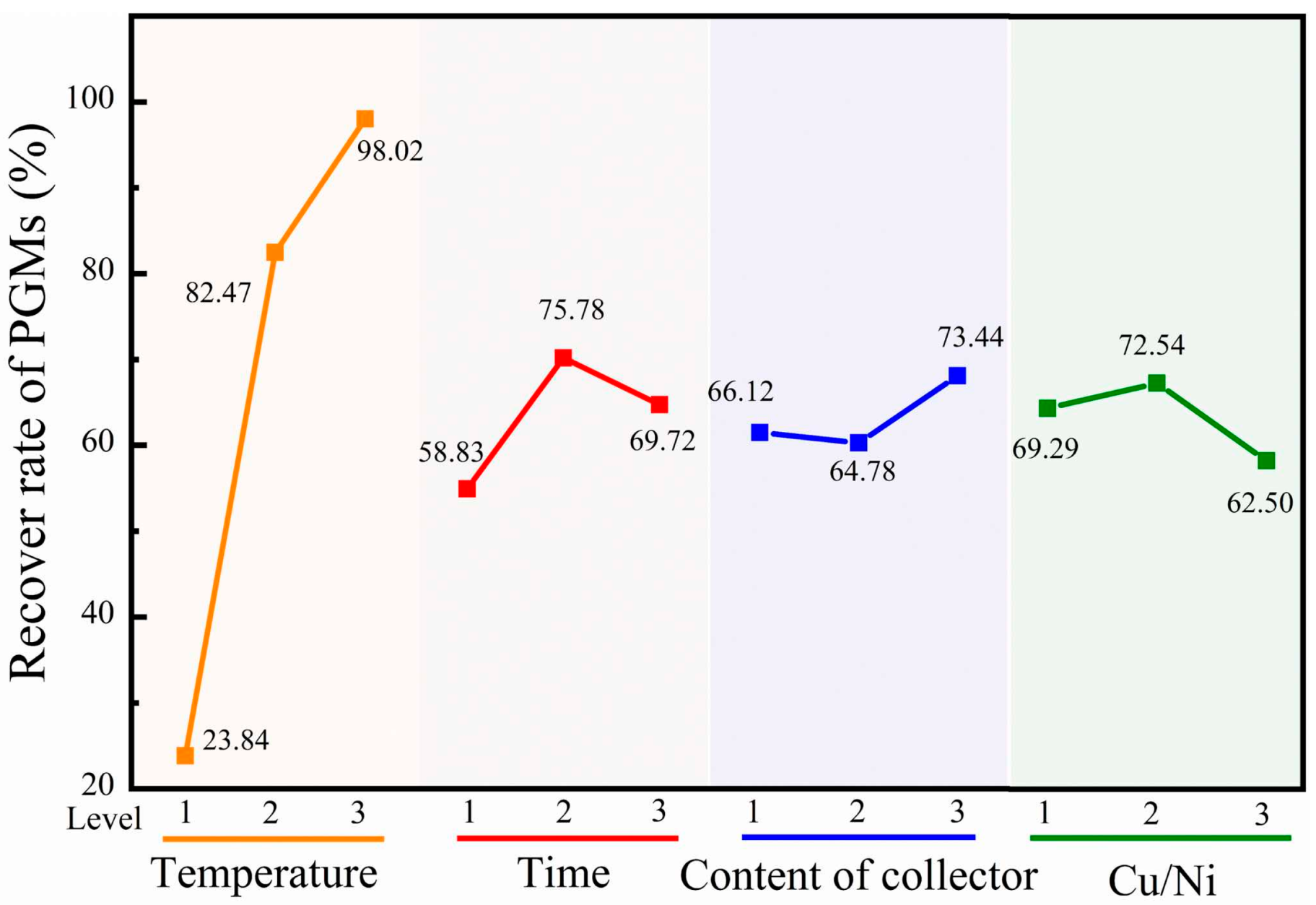
According to the orthogonal experimental design and results shown in Table 2, the K value is the sum of the recovery rates of the same factor at the same level, the Kavg value is the average recovery rate of the same factor at the same level, R is the extreme difference, and the PGM recovery rate is the main evaluation index. The larger the K value and Kavg value, the higher the recovery rate of the factor at that level. The value ranges of the four influencing factors in this orthogonal experiment are a smelting temperature of 1350~1450 °C, holding time of 30~110 min, total collector dosage of 3~15%, and Cu content in the collector of 20~80%, and the PGM recovery rate is the core evaluation index. The range analysis results (Table 3, Figure 13) show that the order of influence of each factor on the recovery rate is the smelting temperature (R = 74.17) > holding time (R = 16.94) > Cu-Ni ratio (R = 10.04) > total amount of collector (R = 8.66). There are significant differences in the influence of various factors on the recovery rate of PGMs. Among them, the factors with greater influence are the melting temperature and the holding time. The recovery rate increases with the increase in the melting temperature and the extension of the holding time. This is consistent with the conclusion in the single-factor experiment that the increase in temperature improves the fluidity of the melt, and the extension of the holding time ensures that the reaction is fully carried out. Compared with the temperature and holding time, the impact of the other two factors on the recovery rate of PGMs is relatively weak. The range analysis results show that the range of the two factors is lower than the first two factors, indicating that within the value range set in this experiment, changes in these two factors have no significant effect on the recovery rate. During the experiment, it was observed that some CaO in the slag at 1350 °C was not completely melted, resulting in part of the SiO2 and Al2O3 grid structures not being broken, and the PGM wrapping phenomenon being serious, which directly confirmed that the impact of temperature on the recovery rate of PGMs is much higher than the other three factors. Based on the results of orthogonal experiments, it can be seen that in the Cu-Ni capture PGM process, the melting temperature and holding time are key process parameters that need to be controlled. Subsequent process optimization should prioritize these two factors to achieve precise control of the recovery rate and reasonable control of production costs.
The proposed Cu-Ni capture process for the recovery of PGMs from SACs has good potential for industrial application. The Cu-Ni-PGM alloy phase obtained after smelting can be further processed through traditional hydrometallurgical routes, including selective leaching, solution purification and solvent extraction to separate Pt, Pd and Rh. During high-temperature smelting, the volatilization loss of platinum group metals is usually limited under the conditions adopted (1450 °C, 90 min), and trapping can be ignored. Carbon consumption mainly comes from reducing agent carbon powder, which is emitted in the form of CO2. It can be treated through a mature flue gas treatment system to meet industrial emission standards. The structure of the remaining slag is relatively stable and can be recycled as construction raw materials or metallurgical additives, thereby improving the overall resource utilization efficiency. Future research will focus on reducing reagent consumption, enhancing process stability, and validating technical and economic feasibility under continuous industrial conditions.

4. Mechanism Analysis

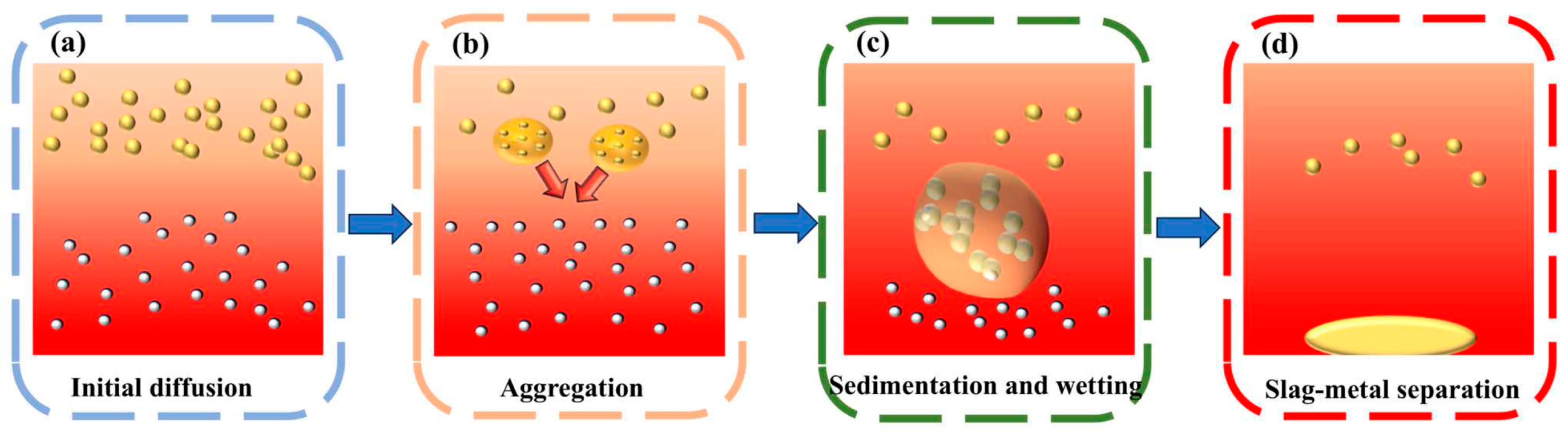
The process of Cu-Ni capture PGMs in melt can be divided into four stages: initial stage, aggregation stage, sedimentation and wetting stage and slag–metal separation, as shown in Figure 14.
In the initial stage (Figure 14a), that is, when the collector transforms from solid to liquid, the collector is mainly distributed in the upper layer of the slag in the form of fine metal droplets in the melt. Under the action of slag convection, random diffusion occurs, causing some small droplets to collide and fuse with each other to form larger metal droplets. During this process, the PGMs in the slag will also collide with and combine with the metal droplets, and eventually merge with the droplets to form larger metal droplets, which is in accordance with Machado’s research [32].
The second stage is the aggregation stage (Figure 14b). During this stage, the fine metal droplets continue to move irregularly. In order to reduce the free energy of the system, the larger metal droplets aggregate with other metal droplets by virtue of their larger surface tension and gravity. In this process, the fine metal droplets continue to merge, eventually forming larger metal droplets.
The third stage is the settling and wetting stage (Figure 14c). This stage is where the most PGMs are recovered. As the metal droplets fuse and become larger, the large metal droplets begin to settle downward under the action of gravity. In this process, the metal droplets and their surrounding platinum group metal atoms fuse with each other under the action of wetting and surface tension, and combine with Cu and Ni atoms to form a solid solution. According to the research results of Kolliopoulos et al. [33], there are clear differences in the recycling mechanisms of Pt, Pd and Rh. Pt mainly relies on its own gravity to settle to the alloy phase below, while the recycling of Pd and Rh is mainly introduced into the alloy phase through the wetting of metal droplets.
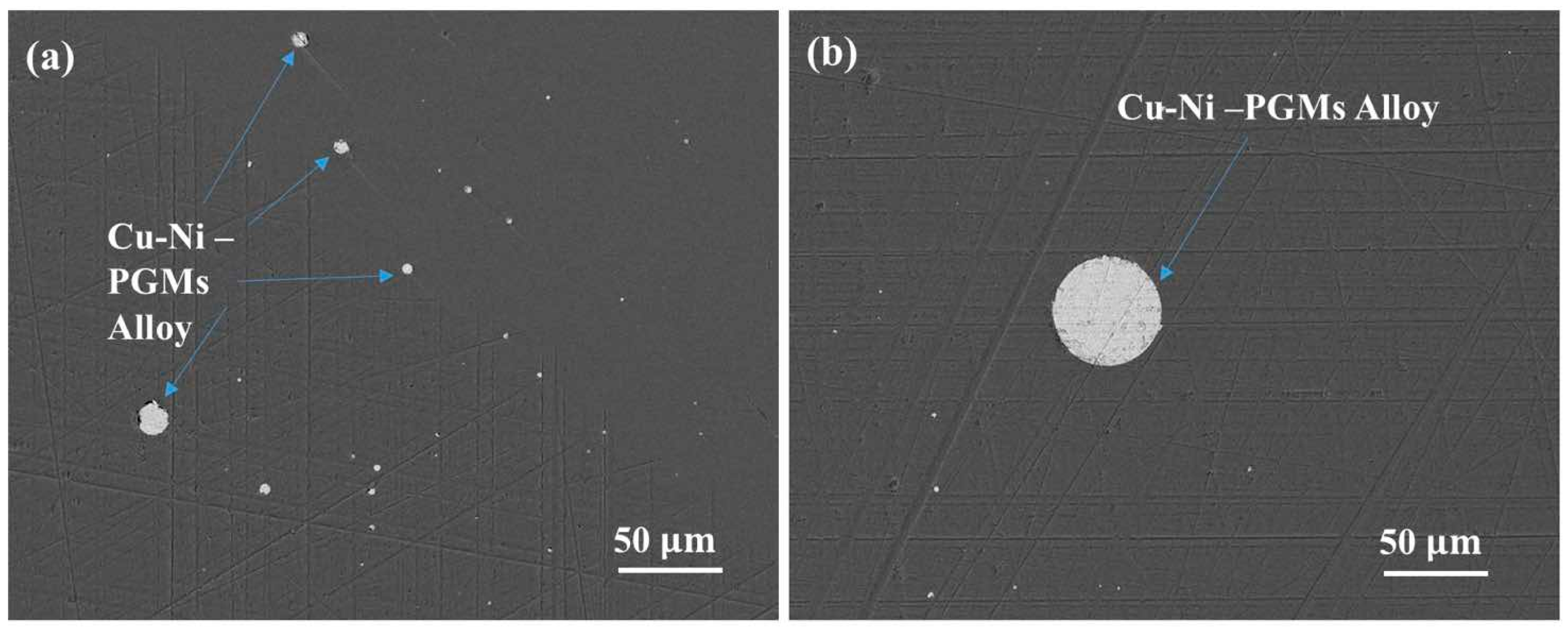
The fourth stage is the slag–metal separation stage (Figure 14d). After the heat preservation process is completed, as the temperature in the furnace decreases, and the slag and metal droplets begin to cool and shrink. Due to the density difference between the alloy phase and the slag, during the cooling shrinkage process, the alloy and the slag body appear to be stratified, thereby achieving separation. The slag–metal separation effect is closely related to the slag viscosity and the density difference between the two phases. The smaller the slag viscosity, the greater the density difference with the alloy, and the more significant the slag–metal separation effect [33]. It is worth noting that in the experiment, there were a small number of extremely small metal droplets carrying some PGMs remaining in the slag phase. These droplets were difficult to settle due to their extremely small size, and thus remained in the slag, as shown in Figure 15.
SEM observation of the slag found that there were still a large number of tiny metal droplets with a diameter of less than 1 μm in the slag sample held for 30 min (Figure 15a). The gravity settling rate of droplets of this size was lower than the cooling rate of the slag, causing some PGMs to remain in the slag phase. This was the main reason why the recovery rate did not reach 100%. In the slag sample held for 110 min, the proportion of tiny droplets decreased significantly (Figure 15b). This shows that during the experiment, the collision and fusion between fine metal droplets and platinum group metal atoms continued. Some metal droplets were unable to effectively settle due to their small diameter, and eventually stayed in the slag. This is the key reason for the low recovery rate of PGMs. Therefore, parameters such as melt temperature and holding time need to be reasonably controlled in the experiment to increase the degree of aggregation between fine metal droplets in the melt, thereby improving the efficiency of Cu-Ni capture of PGMs.

5. Conclusions

Aiming at the problem that it is difficult for a single metal collector to efficiently recover Pt, Pd, and Rh, this paper proposes a Cu-Ni capture process. Based on the phase diagram and thermodynamic calculation of the CaO-SiO2-Al2O3-MgO quaternary slag system, the effects of the Cu-Ni ratio, temperature, holding time, total amount of collector, and basicity on the recovery rate of PGMs are systematically studied. The results show that under the conditions of a temperature of 1450 °C, holding time of 90 min, Cu-Ni ratio of 1:1, total collector amount of 9%, and basicity of 0.58, the recovery rates of Pt, Pd, and Rh reached 99.2%, 99.34%, and 98.48% respectively. Combined with orthogonal experimental analysis, the synergistic mechanism of Cu-Ni trapping PGMs was clarified. The lattice matching of Cu and Ni can complement the selective defects of trapping PGMs. Cu improves the binding efficiency of Pt and Pd, and Ni strengthens the Rh trapping ability. The capture process follows a four-stage mechanism of “initial diffusion—droplet aggregation—sedimentation and wetting—slag–metal separation”. The temperature affects the degree of droplet coalescence by regulating the slag viscosity, which is a key factor in determining the recovery rate of PGMs.

Author Contributions

J.L. and J.H.: Methodology, Formal Analysis, Investigation, Writing—Original Draft, Visualization. H.Y. and G.W.: Data Curation, Writing—Review and Editing. K.L.: Formal Analysis, Writing—Review. Y.L. and B.Y.: Writing—Review and Editing. L.L. and H.D.: Resources, Writing—Review and Editing. J.G. and Q.X.: Supervision, Project Administration, Funding Acquisition. All authors have read and agreed to the published version of the manuscript.

Funding

This research was funded by the Advanced Materials-National Science and Technology Major Project grant number 2024ZD0606300.

Data Availability Statement

Data is contained within the article.

Acknowledgments

The authors sincerely acknowledge the anonymous reviewers for their insights and comments to further improve the quality of this manuscript.

Conflicts of Interest

The authors declare that they have no known competing financial interests or personal relationships that could have appeared to influence the work reported in this paper. Authors Jiahao Li, Jibiao Han, Han Yang, Guozhen Wang, Kuo Liu, Lang Liu, Yong Li, Qingfeng Xiong, and Haigang Dong were employed by the company Sino-Platinum Metals Resources (Yi men) Co., Ltd., Yuxi 653100, China. The remaining authors declare that the research was conducted in the absence of any commercial or financial relationships that could be construed as a potential conflict of interest.

References

  1. Han, J.B.; Yang, Q.; Wang, X.L.; Yang, H.; Ma, W.R.; Li, Y.; Xiao, X. Enrichment of platinum from spent propane dehydrogenation catalyst by pyrometallurgical smelting. Precious Met. 2025, 46, 1–6, 49. (In Chinese) [Google Scholar]
  2. Yang, Z.; Guo, Y.F.; Wang, S.; Dong, H.G.; Yang, L.Z.; Chen, F. Present Situation and Progress of Pyrometallurgical Recovery Technology of Platinum Group Metal Secondary Resources. Precious Met. 2022, 43, 76–85. (In Chinese) [Google Scholar]
  3. Li, M.G.; Gao, Y.X.; Guo, X.Y. Research progress in recovery of platinum group metals from spent automobile exhaust catalysts. Precious Met. 2024, 45, 78–89. (In Chinese) [Google Scholar]
  4. Matthey, J. PGM Market Report 2024. Available online: https://matthey.com/documents/161599/509428/PGM_Market_Report_25.pdf (accessed on 10 December 2025).
  5. Tang, H.; Peng, Z.; Tian, R.; Ye, L.; Zhang, J.; Rao, M.; Li, G. Platinum-group metals: Demand, supply, applications and their recycling from spent automotive catalysts. J. Environ. Chem. Eng. 2024, 11, 110237. [Google Scholar] [CrossRef]
  6. You, L.; Chang, Y.C.; Li, L.; Wu, C. Research status of platinum group metals recovery process from waste Al2O3 catalyst. Ship Electr. Technol. 2019, 39, 61–64. (In Chinese) [Google Scholar]
  7. Xv, B.; Li, Z.; Zha, G.; Liu, D.; Yang, B.; Jiang, W. Recovery of platinum group metals from spent automotive catalysts: Review of conventional techniques and vacuum metallurgy. Resour. Conserv. Recycl. 2025, 215, 108103. [Google Scholar]
  8. Sun, S.; Jin, C.; He, W.; Li, G.; Zhu, H.; Huang, J. A review on management of waste three-way catalysts and strategies for recovery of platinum group metals from them. J. Environ. Manag. 2022, 305, 114383. [Google Scholar] [CrossRef]
  9. Taninouchi, Y.K.; Sunagawa, K.; Okabe, T.H.; Nakano, H. Iron chloride vapor treatment for leaching platinum group metals from spent catalysts. J. Sustain. Metall. 2024, 10, 2227–2240. [Google Scholar] [CrossRef]
  10. Sasaki, H.; Maeda, M. Zn-vapor pretreatment for acid leaching of platinum group metals from automotive catalytic converters. Hydrometallurgy 2014, 147, 59–67. [Google Scholar] [CrossRef]
  11. Kayanuma, Y.; Okabe, T.H.; Maeda, M. Metal vapor treatment for enhancing the dissolution of platinum group metals from automotive catalyst scrap. Metall. Mater. Trans. B 2004, 35, 817–824. [Google Scholar] [CrossRef]
  12. Espinosa, D.C.R.; Moraes, V.T.; Tenório, J.A.S. Pyrometallurgical processing. In Electronic Waste: Recycling Techniques; Springer International Publishing: Cham, Switzerland, 2015; pp. 81–85. [Google Scholar]
  13. Zhang, L.H.; Xiao, F.X.; Sun, S.C.; YanZi, J.; GanFeng, T. Overview of platinum group metal recovery process in automobile exhaust catalyst. Precious Met. 2021, 42, 77–84. (In Chinese) [Google Scholar]
  14. He, X.T.; Li, Y.; Wu, X.L.; Zha, Y.; Wang, H.; Liu, W. Preliminary Study on Enrichment of Platinum Group Metals by Plasma Melting Technology. Precious Met. 2016, 37, 1–5. (In Chinese) [Google Scholar]
  15. Liu, S.J. Platinum Group Metal Metallurgy; Central South University Press: Changsha, China, 2013. (In Chinese) [Google Scholar]
  16. Dong, H.; Zhao, J.; Chen, J.; Wu, Y.; Li, B. Recovery of platinum group metals from spent catalysts: A review. Int. J. Miner. Process. 2015, 145, 108–113. [Google Scholar] [CrossRef]
  17. Zhang, F.Y.; Zhang, G.A.; Xu, L.; Zhao, Z. Pyrometallurgical Bi captures Pd, Pt and Rh in waste automobile catalysts. Trans. Nonferrous Met. Soc. China 2020, 30, 7–11. (In Chinese) [Google Scholar]
  18. You, G.; Fang, W.; Li, Q.; Ma, Y.; Yang, X.T.; Yang, H. Study on enrichment method of platinum, palladium and rhodium in spent auto-catalysts. Metall Anal. 2016, 36, 7–11. [Google Scholar]
  19. Ding, Y.; Zheng, H.; Zhang, S.; Liu, B.; Wu, B.; Jian, Z. Highly efficient recovery of platinum, palladium, and rhodium from spent automotive catalysts via iron melting collection. Resour. Conserv. Recycl. 2020, 155, 104644. [Google Scholar] [CrossRef]
  20. Straumal, B.B.; Protasova, S.G.; Mazilkin, A.A.; Rabkin, E.; Goll, D.; Schütz, G.; Baretzky, B.; Valiev, R.Z. Deformation-driven formation of equilibrium phases in the Cu–Ni alloys. J. Mater. Sci. 2012, 47, 360–367. [Google Scholar] [CrossRef]
  21. Abe, T.; Sundman, B.; Onodera, H. Thermodynamic assessment of the Cu− Pt system. J. Phase Equilibria Diffus. 2006, 27, 5–13. [Google Scholar] [CrossRef]
  22. Popov, A.A.; Shubin, Y.V.; Plyusnin, P.E.; Sharafutdinov, M.R.; Korenev, S.V. Experimental redetermination of the Cu–Pd phase diagram. J. Alloys Compd. 2019, 777, 204–212. [Google Scholar] [CrossRef]
  23. Courtois, X.; Perrichon, V. Distinct roles of copper in bimetallic copper–rhodium three-way catalysts deposited on redox supports. Appl. Catal. B: Environ. 2005, 57, 63–72. [Google Scholar] [CrossRef]
  24. Nash, P.; Singleton, M.F. The Ni-Pt (nickel-platinum) system. Bull. Alloy Phase Diagr. 1989, 10, 258–262. [Google Scholar] [CrossRef]
  25. Nash, A.; Nash, P. The Ni− Pd (Nickel-Palladium) System. Bull. Alloy Phase Diagr. 1984, 5, 446–450. [Google Scholar] [CrossRef]
  26. Nash, A.; Nash, P. The Ni-Rh (nickel-rhodium) system. Bull. Alloy Phase Diagr. 1984, 5, 403–405. [Google Scholar] [CrossRef]
  27. Wang, Y.; Sukenaga, S.; Tashiro, M.; Zhang, H.; Ni, H.; Shibata, H. Crystallization Behavior of the CaO-SiO2-Al2O3-MgO System Inclusions. Steel Res. Int. 2024, 96, 2400253. [Google Scholar] [CrossRef]
  28. Turchanin, M.A.; Agraval, P.G.; Abdulov, A.R. Phase equilibria and thermodynamics of binary copper systems with 3 d-metals. VI. Copper-nickel system. Powder Metall. Met. Ceram. 2007, 46, 467–477. [Google Scholar] [CrossRef]
  29. He, X.F.; Yin, X.P.; Ding, Y.J.; Shi, Z.S.; Zhao, B.H.; Zheng, H.D.; Jian, J.X.; Zhang, S.G.; Chang, C.C. Slag design and optimization for iron capturing platinum group metals from alumina-based spent catalysts. Rare Met. 2023, 42, 2093–2103. [Google Scholar] [CrossRef]
  30. Zhang, S.; Zhang, X.; Liu, W.; Lv, X.; Bai, C.; Wang, L. Relationship between structure and viscosity of CaO–SiO2–Al2O3–MgO–TiO2 slag. J. Non-Cryst. Solids 2014, 402, 214–222. [Google Scholar] [CrossRef]
  31. Shen, S.; Gao, J.L.; Zhou, C.Y.; Liu, S.M. Analysis of influencing factors of natural electric field of embankment hidden danger based on orthogonal experiment. J. Eng. Geophys. 2025, 22, 655–663. (In Chinese) [Google Scholar]
  32. Machado, N.M.P.; Pereira, L.; Neyret, M.; Lemaitre, C.; Marchal, P. Influence of platinum group metal particle aggregation on the rheological behavior of a glass melt. J. Nucl. Mater. 2022, 563, 153618. [Google Scholar] [CrossRef]
  33. Kolliopoulos, G.; Balomenos, E.; Giannopoulou, I.; Yakoumis, I.; Panias, D. Behavior of platinum group metals during their pyrometallurgical recovery from spent automotive catalysts. Open Access Libr. J. 2014, 1, e736. [Google Scholar]
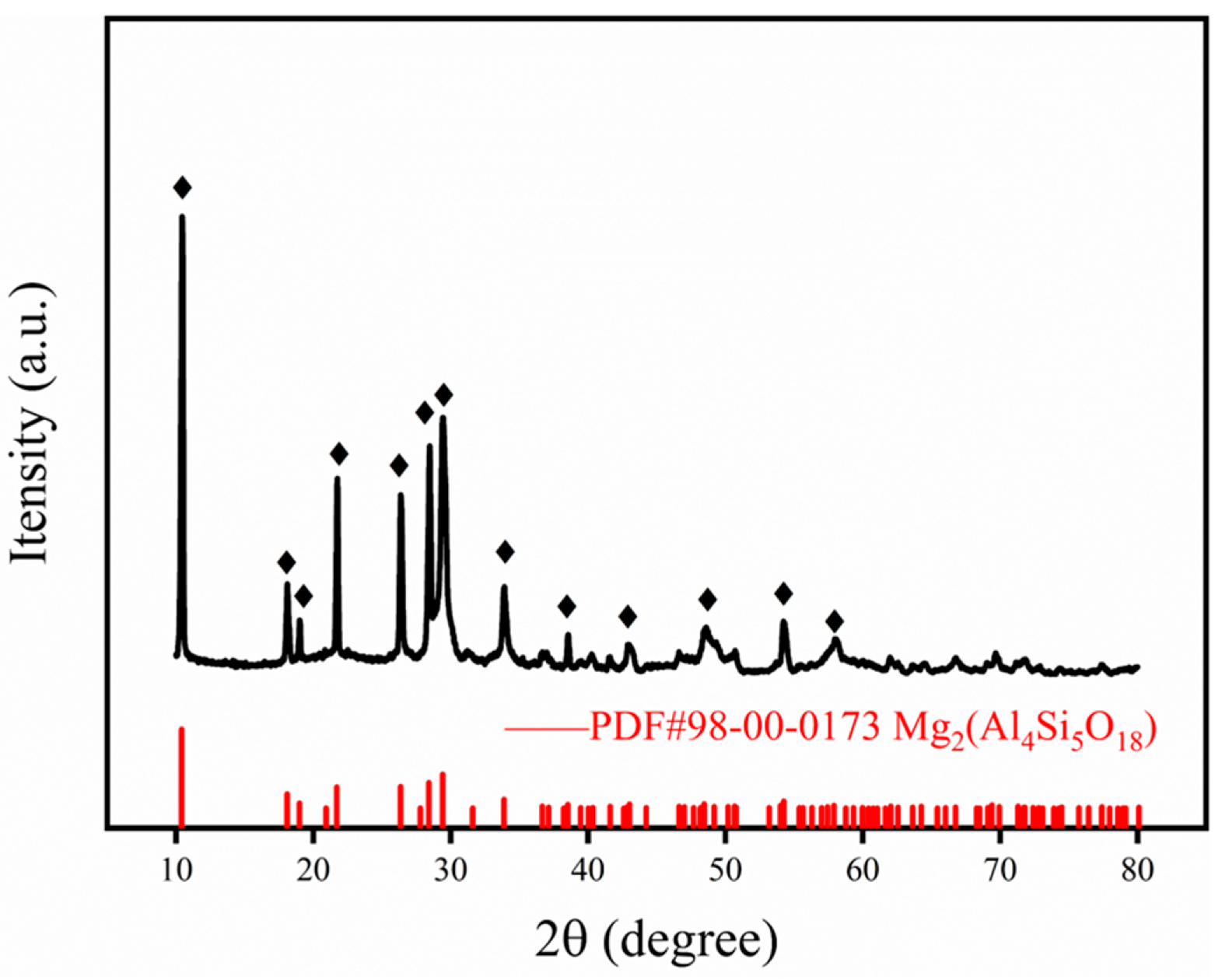
Figure 1. XRD analysis of SAC.
Separations 13 00089 g001
Figure 2. SEM images of SACs.
Separations 13 00089 g002
Figure 3. Experimental steps of metal capture method.
Separations 13 00089 g003
Figure 4. (ac) ΔG-T relationship at different temperatures; (d) Cu-Ni binary phase diagram [20].
Separations 13 00089 g004
Figure 5. Binary phase diagram of Cu, Ni and PGMs [21,22,23,24,25,26]. (a) Cu-Pt, (b) Ni-Pt, (c) Cu-Pd, (d) Ni-Pd, (e) Cu-Rh, (f) Ni-Rh phase diagram.
Separations 13 00089 g005
Figure 6. CaO-SiO2-Al2O3-MgO quaternary phase diagram.
Separations 13 00089 g006
Figure 7. Viscosity curve of slag with temperature.
Separations 13 00089 g007
Figure 8. PGM recovery at different temperatures.
Separations 13 00089 g008
Figure 9. PGM recovery rate at different holding times.
Separations 13 00089 g009
Figure 10. PGM recovery at different collector amounts.
Separations 13 00089 g010
Figure 11. Recovery of PGMs with different Cu-Ni ratios.
Separations 13 00089 g011
Figure 12. Recovery rates of PGMs under different basicity.
Separations 13 00089 g012
Figure 13. Average value diagram of each factor level.
Separations 13 00089 g013
Figure 14. (ad) Process diagram of the capture mechanism.
Separations 13 00089 g014
Figure 15. SEM images of slag with different holding times: (a) 30 min, (b) 110 min.
Separations 13 00089 g015
Table 1. Chemical compositions of SACs used for the experiments.
ComponentsAl2O3SiO2MgOZrO2CeO2P2O5Fe2O3BaOPt *Pd *Rh *
Concentration (wt%)50307441114672938231
* g/t.
Table 2. The design and results of orthogonal experiment.
No.Temperature (°C)Holding Time (min)Total Amount of Collector (%)Cu Content in Collector (%)Recovery of PGMs (%)
132 (70)1 (3)398.08
23 (1450)1 (30)3 (15)298.50
31 (1350)3 (110)33 (80)25.17
42 (1400)23196.64
5122 (9)2 (50)32.61
6212364.25
71111 (20)13.75
8231286.52
9332197.47
Table 3. Range analysis of orthogonal experiment.
ItemLevelTemperatureHolding TimeTotal Amount of CollectorCu Content in Collector
K value3--198.35-
9--194.33-
15--220.31-
20---207.86
30-176.5--
50---217.63
70-227.33--
80----
110-209.16--
135071.53---
1400247.41---
1450294.05---
Kavg value3--66.12-
9--64.78-
15--73.44-
20---69.29
30-58.83--
50---72.54
70-75.78--
80---62.5
110-69.72--
135023.84---
140082.47---
145098.02---
Optimal level1450701550
R74.1716.948.6610.04
Number of levels3333
Replicates per level r3333
Disclaimer/Publisher’s Note: The statements, opinions and data contained in all publications are solely those of the individual author(s) and contributor(s) and not of MDPI and/or the editor(s). MDPI and/or the editor(s) disclaim responsibility for any injury to people or property resulting from any ideas, methods, instructions or products referred to in the content.