Next Article in Journal
Four New Terpenoids from Fufang Yinhua Jiedu Granules and Their Anti-Influenza A Virus Activity
Previous Article in Journal
Schinus terebinthifolia Raddi: Compounds Isolated by Countercurrent Chromatography and Biological Activities
Previous Article in Special Issue
Efficient and Rapid Removal of Cationic Methylene Blue from Aqueous Solution by Alkali-Treated Bamboo Powders as Biosorbents
 
 
Due to scheduled maintenance work on our servers, there may be short service disruptions on this website between 11:00 and 12:00 CEST on March 28th.
Article

Removal Performance and Mechanism of Iron–Phosphorus-Based Composite Biochar for Pb(II) and Sb(III) from Water


1
Guangxi Key Laboratory of Environmental Pollution Control Theory and Technology, Guilin University of Technology, Guilin 541006, China
2
University Engineering Research Center of Watershed Protection and Green Development, Guangxi, Guilin University of Technology, Guilin 541006, China
3
Guangxi Bossco Environmental Protection Technology Co., Ltd., Nanning 530007, China
4
College of Light Industry and Food Engineering, Guangxi University, Nanning 530004, China
*
Author to whom correspondence should be addressed.
Separations 2026, 13(4), 104; https://doi.org/10.3390/separations13040104 (registering DOI)
Submission received: 15 February 2026 / Revised: 12 March 2026 / Accepted: 23 March 2026 / Published: 25 March 2026

Abstract

In this work, iron–phosphorus-based composite biochar (FPBC) was prepared by modification with the leachate of spent LiFePO4 batteries. The effects of solution pH, dosage, adsorption time, initial concentration, and temperature on the adsorption performance of FPBC were investigated by batch adsorption experiments with Pb(II) and Sb(III) as the target pollutants, and the adsorption mechanism was explored using SEM, BET, XPS, FTIR and XRD characterization. The results indicated that as the initial pH of the solution increased, the removal efficiency of FPBC for Pb(II) gradually increased, while the removal efficiency for Sb(III) remained largely unchanged. The removal of Pb(II) and Sb(III) by FPBC fitted the pseudo-second-order kinetic model and the three-step intraparticle diffusion model, indicating that their removal was primarily controlled by chemical adsorption. Isothermal adsorption studies revealed that FPBC adsorption of Pb(II) better fitted the Langmuir and D-R models, suggesting a monolayer-dominated adsorption process. In contrast, adsorption of Sb(III) fitted the Langmuir, Freundlich, and Temkin models, suggesting a combination of monolayer and multilayer adsorption characteristics. The maximum adsorption capacities of FPBC for Pb(II) and Sb(III) were 312.54 mg·g−1 and 219.20 mg·g−1 at 30 °C, which were approximately 12.85 and 3.37 times those of commercial corn stalk biochar (BC). Thermodynamic analysis confirmed that the removal of Pb(II) and Sb(III) by FPBC was a spontaneous and endothermic process. In addition, FPBC demonstrated strong selective adsorption of Pb(II) in the binary co-adsorption system of Pb(II) and Sb(III). Mechanism studies indicated that Pb(II) removal primarily occurred through co-precipitation, complexation, ion exchange, and electrostatic adsorption, while Sb(III) was mainly adsorbed by FPBC via redox reactions and complexation. Therefore, this work not only provides a low-cost, high-performance adsorbent for the remediation of water contaminated with Pb(II) and Sb(III), but also opens up new avenues for the resource recovery of the leachate of spent LiFePO4 batteries.

1. Introduction

Heavy metal pollution in water has become a significant environmental issue globally. Lead (Pb) and antimony (Sb) composite contamination is commonly found in water bodies near mining, smelting, and shooting ranges, posing a serious threat to ecosystems and human health [1]. Pb inhibits the activity of soil microorganisms and enzyme functions [2,3], and exhibits potent toxicity to the human nervous system and hematopoietic function [4,5]. In contrast, the environmental toxicity and mobility of Sb are highly dependent on its chemical valence states. Compared with Sb(V), Sb(III) has higher toxicity and stronger bioavailability. Moreover, it mainly exists in the form of H3SbO3 in water and is difficult to remove through conventional electrostatic interactions [6,7]. Therefore, developing technologies for the simultaneous and synergistic removal of Pb(II) and Sb(III) is of urgent practical significance.
As a low-cost and environmentally friendly adsorbent material, biochar has attracted extensive attention in heavy metal pollution remediation due to its wide range of precursor sources and abundant pore structure [8,9]. However, biochar suffers from low adsorption capacity and poor selectivity, making it difficult to achieve simultaneous efficient removal of both heavy metals in a complex pollution system. Our group’s previous research indicates that at 30 °C, corn stalk biochar exhibits adsorption capacities of 24.33 mg·g−1 for Pb(II) and 65 mg·g−1 for Sb(III). Therefore, enhancing the adsorption performance of biochar toward heavy metals is a prerequisite for its practical application. Owing to the significant differences in the physicochemical properties of Pb(II) and Sb(III), conventionally modified biochar materials are predominantly designed to target a single heavy metal. For Pb(II), researchers mostly introduce anionic sites such as phosphate groups to achieve high-efficiency adsorption through mechanisms like precipitation. Yang et al. [10] prepared composite mycelial pellets assembled from phosphorus-rich biochar and PC, which significantly enhanced the lead removal efficiency with a theoretical maximum adsorption capacity of 192.11 mg·g−1. Zhang et al. [11] used ASR leachate and DDS as low-cost precursors to synthesize nHAP@biochar, whose Pb(II) adsorption capacity was 16.25 times higher than that of pristine biochar, with a theoretical maximum adsorption capacity of 1250 mg·g−1. The removal of antimony mostly relies on the specific binding of iron- and manganese-based materials or the synergistic effect of oxidation and adsorption. Xu et al. [12] employed a redox/co-precipitation method to prepare iron–manganese composite oxides (FMBO) for Sb(III) removal and analyzed their adsorption mechanism. Results indicated that manganese oxide played a dominant role in oxidizing Sb(III) to Sb(V), while iron oxide primarily contributed to the adsorption process; Shan et al. [13] fabricated a hematite-modified magnetic nanomaterial (MNP@hematite) by coating Fe2O3 on the surface of Fe3O4 through heterogeneous nucleation technology, whose antimony adsorption capacity reached 36.7 mg·g−1, approximately twice that of Fe3O4. However, in Pb(II)-and-Sb(III) pollution systems, the above single-modification strategies usually lead to adverse interferences in adsorption performance and unsatisfactory total removal efficiency. As a result, current biochar-based materials still cannot overcome the bottleneck of “being efficient for a single pollutant yet inefficient for simultaneous removal” in the remediation of Pb(II)-and-Sb(III) combined pollution.
At the same time, the large-scale application of adsorption technology is still constrained by both cost and resource utilization efficiency. The preparation of high-performance composite adsorbents mostly relies on high-purity chemical reagents, which leads to excessively high material costs. Therefore, an increasing number of researchers have begun to use environmental wastes rich in target elements as modifiers to achieve the dual goals of treating waste with waste and cost control [14,15]. The rapid development of the new energy industry has generated a huge number of spent LiFePO4 batteries [16,17]. The current recycling processes only focus on lithium recovery and battery regeneration, failing to achieve high-value utilization of elements such as iron and phosphorus [18,19,20]. A prominent contradiction exists between the urgent demand for low-cost and multifunctional adsorbents in water pollution remediation and the wasted potential of spent battery resources. In recent years, scholars have begun to utilize the valuable components of spent batteries to prepare new materials for wastewater treatment, opening up a promising new pathway for the resource utilization of waste batteries [21,22]. Xu et al. [21] prepared an iron hydroxyphosphate-based composite (FPOH) via a hydrothermal method using spent LiFePO4 batteries as raw material. This material could adsorb Pb(II) and degrade methylene blue, with a maximum Pb(II) adsorption capacity of 43.203 mg·g−1 and effective degradation of methylene blue within 12 h. However, most of these studies are limited to the removal of heavy metals with similar properties, and fail to directionally design a synergistic adsorption system suitable for both Pb(II) and Sb(III).
In this study, the leachate of spent LiFePO4 batteries was uniquely employed as the iron and phosphorus source, and a dual-functional adsorbent with both phosphate precipitation sites and iron-based active sites was successfully fabricated on a biochar carrier via a co-precipitation method. This novel design provides an efficient adsorbent for the simultaneous removal of Pb(II)-and-Sb(III) composite pollution in water, overcoming the limitation of single-functional adsorbents. The preparation strategy aims to achieve three objectives: (1) Phosphorus in the leachate forms phosphate precipitation sites for Pb(II), while iron provides adsorption/oxidation sites for Sb(III). (2) Biochar serves as a support to provide synergistic adsorption sites and mitigate the agglomeration of Fe-P components, thereby improving the dispersibility and stability of the adsorbent. (3) Li is effectively enriched and recovered during the preparation process.
This study not only provides a low-cost and high-performance biochar-based adsorbent for the treatment of Pb(II)-and-Sb(III)-contaminated water, but also achieves the dual goals of pollution control and resource recycling through a “treating waste with waste” strategy, thereby providing new insights for the resource recovery of spent LiFePO4 batteries. The study involves three main components: (1) Preparing high-performance FPBC via the co-precipitation method; (2) Evaluating FPBC’s adsorption capacity for Pb(II) and Sb(III) through batch adsorption experiments and relevant adsorption models; (3) Deeply elucidating the fixation mechanisms of Pb(II) and Sb(III) on the material using characterization methods such as SEM, BET, XPS, XRD and FTIR.

2. Materials and Methods

2.1. Materials and Reagents

The commercial corn stalk biochar was purchased from Xuchang, Henan province. The black mass from spent LiFePO4 batteries was obtained from Guangxi Bossco Environmental Protection Technology Co., Ltd. (Nanning, China). Lead chloride (PbCl2, AR) and reduced iron power (Fe, AR) were provided by Tianjin Damao chemical reagent factory (Tianjin, China). Antimony potassium tartrate hemihydrate (C4H4KO7Sb·0.5H2O, AR) was provided by Tianjin Kermel Chemical Reagent Co., Ltd. (Tianjin, China). Sodium hydroxide (NaOH, AR), hydrochloric acid (HCl, AR), sulfuric acid (H2SO4, AR) and nitric acid (HNO3, AR) were obtained from Sinopharm Chemical Reagent Co., Ltd. (Shanghai, China).

2.2. Preparation of Modified Biochar

A total of 20 mg of the black mass from spent LiFePO4 batteries was weighed and added to 20 mL of hydrochloric acid (1 + 1) for thermal digestion on an electric hot plate. After volume adjustment and filtration of the digestion solution, the mass fractions of Fe, P, Li, Cu and Al in the sample were determined to be 16.53%, 10.51%, 2.94%, 1.33%, and 0.97%, respectively. A certain amount of black mass from spent LiFePO4 batteries was placed in a beaker. A 1.2-fold excess of concentrated sulfuric acid was added, and water was supplemented to adjust the solid–liquid ratio to 1:10 (g/mL). The mixture was stirred into a slurry with a glass rod, placed in a constant-temperature water bath, and reacted at 80 °C for 2 h. Subsequently, a 1.2-fold excess of reduced iron powder was added to remove copper ions, followed by the addition of 30% H2O2 to oxidize Fe2+ to Fe3+ in the solution. In this way, the leachate of spent LiFePO4 batteries was obtained.
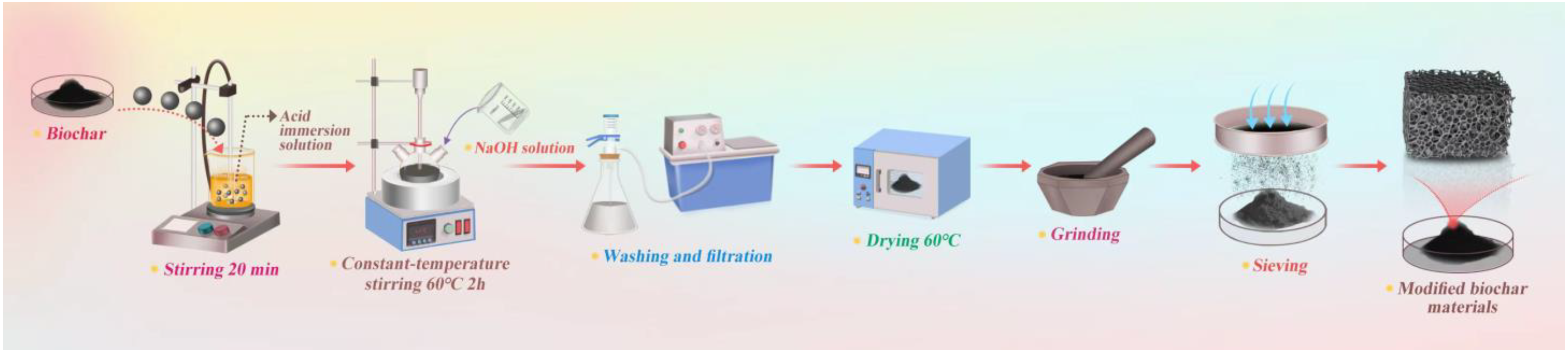
Figure 1 depicts the modified biochar preparation procedure. To be specific, 1 g commercial corn stalk biochar was mixed with 50 mL of the leachate of spent LiFePO4 batteries under stirring for 20 min. Then the pH of the biochar-concentrated leachate mixture was adjusted to 9 by adding NaOH solution for co-precipitation. After magnetic stirring at 60 °C for 2 h, the filtered powder was repeatedly washed and dried at 60 °C to constant weight. Following grinding through a 100-mesh sieve, the modified biochar material was obtained. As shown in Table 1, most of the Fe and P were successfully loaded onto the modified biochar, while Li was enriched in the filtrate. In this paper, commercial corn stalk biochar and the modified biochar material by the leachate of spent LiFePO4 batteries are labeled as BC and FPBC, respectively.

2.3. Characterization and Analysis

This information is provided in the Supplementary Materials.

2.4. Adsorption Experiment

In this study, PbCl2 and C4H4KO7Sb·0.5H2O were used to prepare heavy metal solutions for conducting bath adsorption experiments. All batch adsorption experiments were carried out in 150 mL Erlenmeyer flasks. The initial concentrations of Pb(II) and Sb(III) were set at 200 mg·L−1 and 20 mg·L−1, respectively. Mixtures of FPBC and the above heavy metal solutions were placed on a thermostatic shaker at 30 °C (set to 150 rpm). After sampling at predetermined times intervals, the supernatants were filtered through syringe filters to separate FPBC prior to analysis.
To investigate the effects of solution pH and adsorbent dosage on Pb(II) and Sb(III) adsorption, the initial concentrations were fixed at 200 mg·L−1 for Pb(II) and 20 mg·L−1 for Sb(III). For the pH experiments, the pH of the Pb(II) system was adjusted to 2.0–5.0 and that of the Sb(III) system to 2.0–9.0 using 0.1 M HCl and NaOH, with 20 mg of FPBC and a shaking time of 18 h. For the dosage experiments, the pH was fixed at 5.0 for Pb(II) and 2.0 for Sb(III). The FPBC dosage varied from 10 to 50 mg for Pb(II) and from 10 to 80 mg for Sb(III), with a shaking time of 18 h. All other experimental conditions were kept constant. The formulas used to calculate the adsorption capacity (qe) and removal efficiency of Pb(II) and Sb(III) during the experiment are as follows:
q e = C 0 C e V m
r e m o v a l = ( C 0 C e ) C 0 × 100%
where C0 and Ce (mg·g−1) are the initial and equilibrium concentration of Pb(II) and Sb(III); m (mg) is the mass of the FPBC; and V (L) is the volume of the Pb(II) and Sb(III) solutions.
For adsorption kinetics, 20 mg of FPBC was added to 50 mL of 200 mg·L−1 Pb(II) solution (pH = 5.0) and 50 mL of 20 mg·L−1 Sb(III) solution (pH = 2.0), respectively. The mixtures were shaken in a thermostatic shaker at 30 °C with a stirring speed of 150 rpm. Samples were collected at 5, 10, 20, 30, 40, 50, 60, 120, 240, 360, 480, 720, 1080, and 1440 min. Subsequently, the residual concentrations of Pb(II) and Sb(III) in the supernatants were determined to analyze the adsorption rate and kinetic characteristics. We used three kinetics models to fit the adsorption equilibrium data of Pb(II) and Sb(III) on FPBC.
The pseudo-first-order kinetics model:
q t = q e 1 e k 1 t
The pseudo-second-order kinetics model:
q t = k 2 q e 2 t 1 + k 2 q e t
The intraparticle diffusion model:
q t = k i t 0.5 + C i
where qt is the adsorption amount at time t (mg·g−1); k1 is the pseudo-first-order rate constant (min−1); k2 is the pseudo-second-order rate constant (g·mg−1·min−1); ki (mg·g−1·min−0.5) is the intraparticle diffusion coefficient; Ci is the intercept for phase i.
For adsorption isotherms, 20 mg of FPBC was added to 50 mL of Pb(II) and Sb(III) solutions, respectively. The initial concentrations of Pb(II) were set at 53.5, 103.5, 157.5, 204.5, 255 and 305 mg·L−1 at pH = 5.0, while those of Sb(III) were set at 4.79, 9, 18.3, 48, 76.5, 97.5, 150.5, 188.5, 280, 369 and 474 mg·L−1 at pH = 2.0. The suspensions were stirred at 150 rpm in a thermostatic shaker at 30, 40, and 50 °C for 18 h to reach adsorption equilibrium. After the reaction, the concentrations of Pb(II) and Sb(III) in the supernatants were determined. The equations for the four isotherm models are given below:
Langmuir model:
q e = q m a x K L C e 1 + K L C e
Freundlich model:
q e = K F C e 1 n
Temkin model:
q e = b l n K T + b l n C e
D-R model:
q e = q m a x e x p β R T l n 1 + 1 C e 2
E = 1 2 β
where qmax (mg·g−1) is the maximum adsorption capacity; KL (L·mg−1) and KF [(mg1−1/n·L1/n)·g−1] are the Langmuir and Freundlich model constants, respectively; KT (L·mg−1) and b (J·mol−1) are the Temkin constants; β is a constant related to adsorption energy, mol2·kJ−2; R is the ideal gas constant (8.314 J·mol−1·K−1); E represents the mean free adsorption energy (kJ·mol−1).
The energy conversion during adsorption was used to calculate the associated changes in free energy (ΔG), enthalpy (ΔH), and entropy (ΔS).
K d = q e C e
Δ G = R T l n K d
l n K d = Δ S R Δ H R T
where Kd (L·g−1) is the thermodynamic equilibrium constant.
To study the competitive adsorption process, 50 mL of mixed solutions of Pb(II) and Sb(III) with different concentrations (20, 50 and 100 mg·L−1) were prepared in Erlenmeyer flasks with pH adjusted to 5.0. Then, 20 mg of FPBC was added, and the suspensions were shaken in a thermostatic shaker at 150 rpm and 30 °C.
The point of zero charge (pHpzc) of FPBC was determined using the common “drift method” [23,24]. For this, 100 mL of 0.01 mol·L−1 NaNO3 solution was added into 150 mL Erlenmeyer flasks, and the initial pH values were adjusted to 2.10, 3.06, 4.00, 5.30, and 6.00 with NaOH and HNO3 solutions, respectively. Then, 100 mg of FPBC was added to each suspension, followed by shaking at 30 °C for 24 h. The final pH values of the supernatants were then measured. The pHpzc was determined as the intersection of the ΔpH vs. initial pH curve with the horizontal axis.

3. Results

3.1. Effect of Solution pH on Adsorption

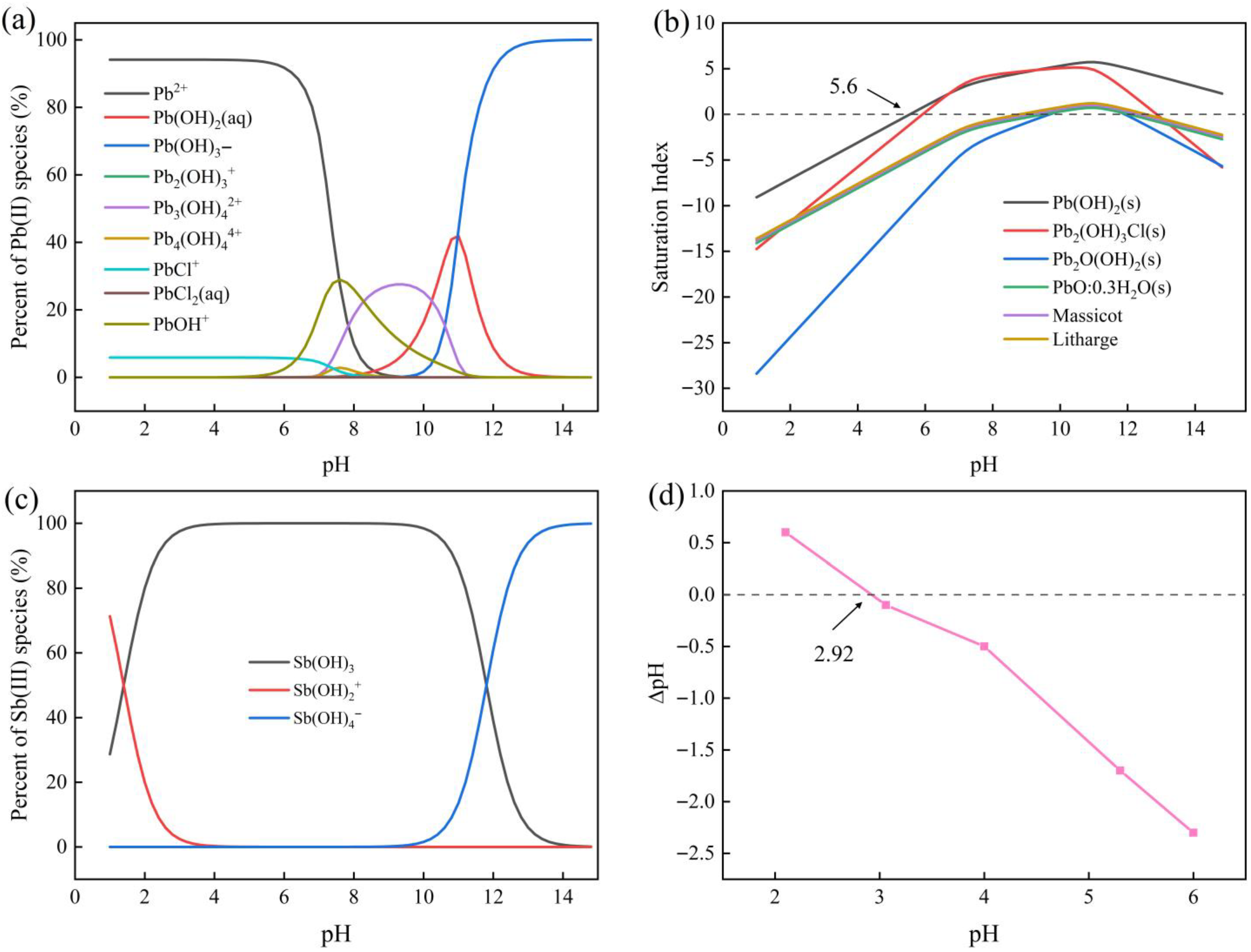
Solution pH is a key factor influencing the adsorption process, which determines the adsorption efficiency by regulating the surface charge properties of the adsorbent and the speciation of the adsorbate. Prior to the adsorption experiments, the speciation of Pb(II) and Sb(III) at different pH values at 30 °C was calculated using Visual MINTEQ software 3.1, with initial concentrations of 200 mg·L−1 for Pb(II) and 20 mg·L−1 for Sb(III), respectively. As shown in Figure 2a–c, the speciation of Pb in aqueous solution was significantly affected by pH. When the solution pH was below 6.0, free Pb(II) was the dominant species, accounting for more than 90%. When pH exceeds 5.6, precipitates such as Pb(OH)2 might form in the solution. Meanwhile, Sb primarily existed as Sb(OH)3. The point of zero charge (pHpzc) is a crucial parameter for characterizing the surface properties of materials and elucidating the electrostatic attraction mechanism. As shown in Figure 2d, the pHpzc of FPBC was 2.92. When the solution pH was below 2.92, the surface functional groups of the material were protonated and thus positively charged; when the solution pH exceeded 2.92, the material surface was deprotonated and consequently negatively charged.
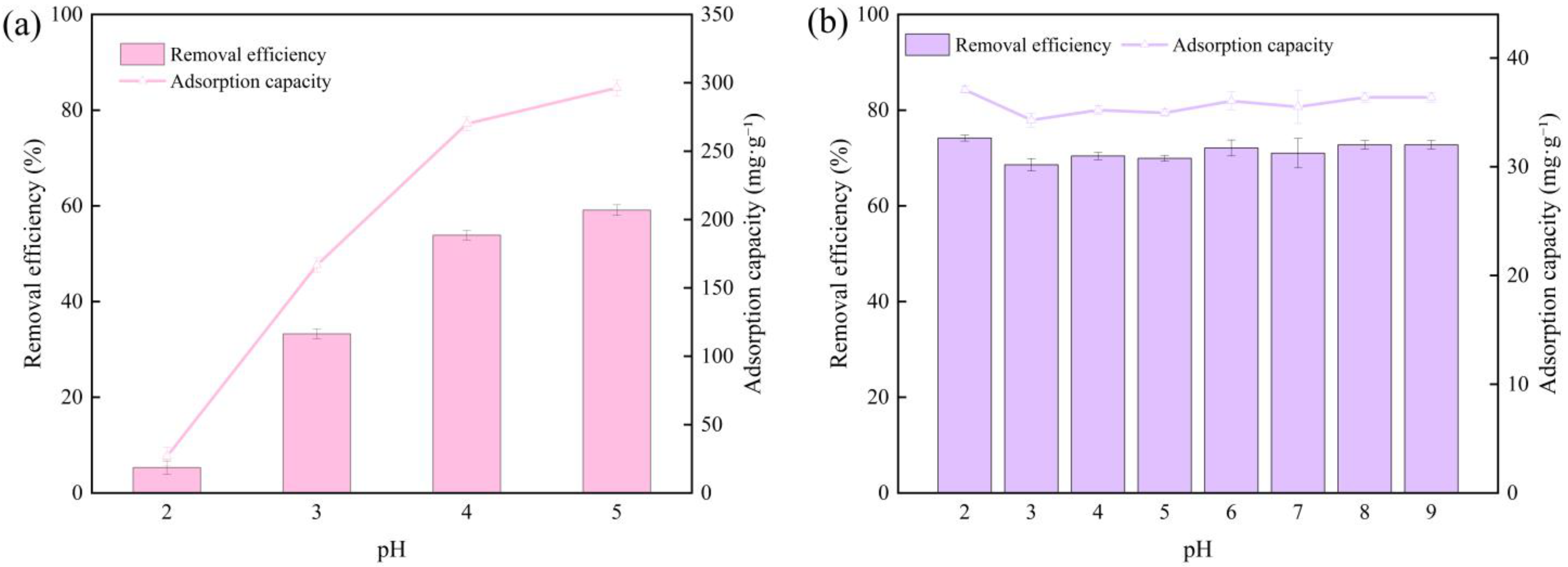
Based on the speciation of Pb(II) and Sb(III) in the solution, the effects of pH (2–5) and pH (2–9) on the adsorption of Pb(II) and Sb(III) in water were investigated, respectively. As can be seen from Figure 3a, the adsorption of Pb(II) by FPBC was significantly dependent on pH. As pH increased from 2 to 5, the removal efficiency and adsorption capacity increased sharply. A possible explanation is that when the solution pH is below 2.92, the functional groups on the material surface become positively charged, generating electrostatic repulsion toward Pb(II). Furthermore, high H+ concentration competed with Pb(II) for adsorption sites, severely inhibiting adsorption [25]. With the increase in pH, the material surface was deprotonated and negatively charged, leading to enhanced electrostatic attraction with Pb(II). At the same time, the competition effect of H+ was weakened, resulting in a significant improvement in adsorption capacity.
As shown in Figure 3b, the adsorption of Sb(III) by FPBC exhibited minimal pH dependence, with slightly enhanced adsorption capacity at pH = 2.0. The possible reason is that the dominant speciation of Sb(III) is the electroneutral Sb(OH)3 molecule, and its adsorption mainly relies on surface complexation or ligand exchange, which are chemical processes scarcely affected by electrostatic forces [26].

3.2. Effect of Dosage of FPBC on Adsorption

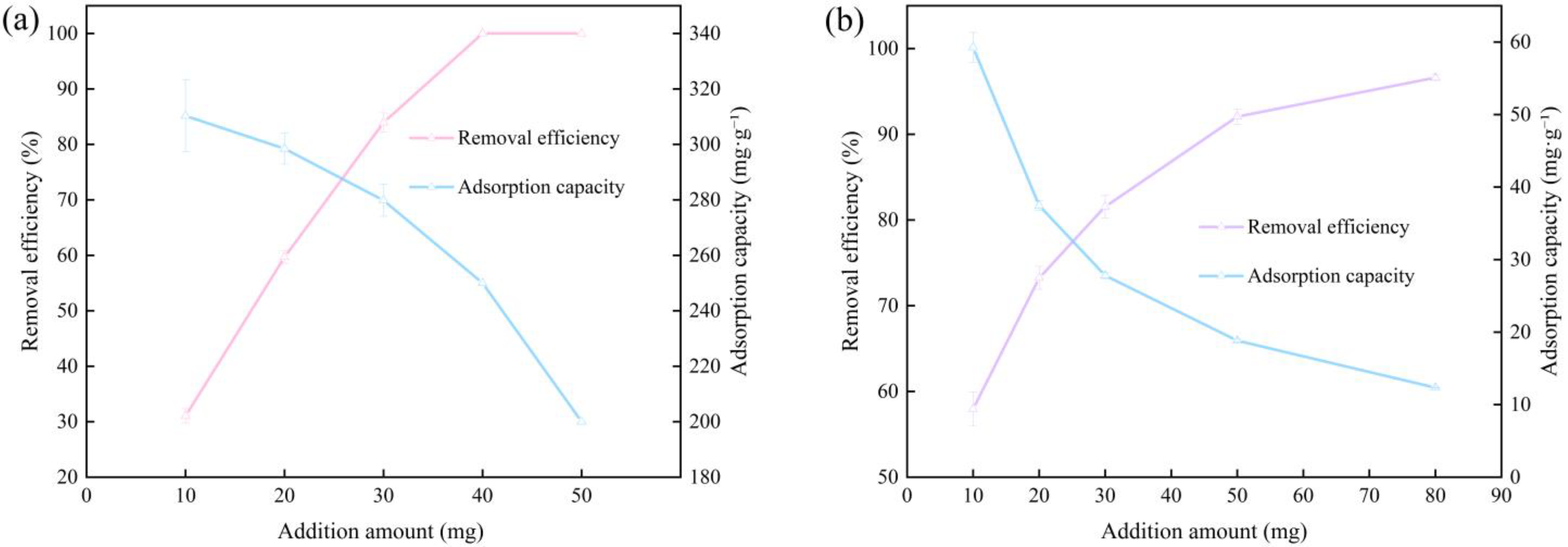
The dosage of adsorbent is a key factor determining the cost and efficiency of pollution remediation. As shown in Figure 4, as the dosage of FPBC increased, the removal efficiency of Pb(II) and Sb(III) by FPBC both showed a continuous upward trend, increasing from 31.0% and 57.9% to 100.0% and 96.6%, while the adsorption capacities decreased continuously, dropping from 307.5 mg·g−1 and 59.3 mg·g−1 to 200.0 mg·g−1 and 12.3 mg·g−1. A possible explanation is that a higher adsorbent dosage provides more abundant active adsorption sites, thereby capturing more Pb(II) and Sb(III). However, an excessively high dosage leads to a large surplus of adsorption sites, resulting in decreased site utilization efficiency per unit mass of adsorbent. Meanwhile, particle aggregation is intensified, which reduces the total specific surface area and further diminishes the effective adsorption capacity [27]. Therefore, the optimal dosage of adsorbent in this experimental system was determined to be 20 mg.

3.3. Adsorption Kinetic

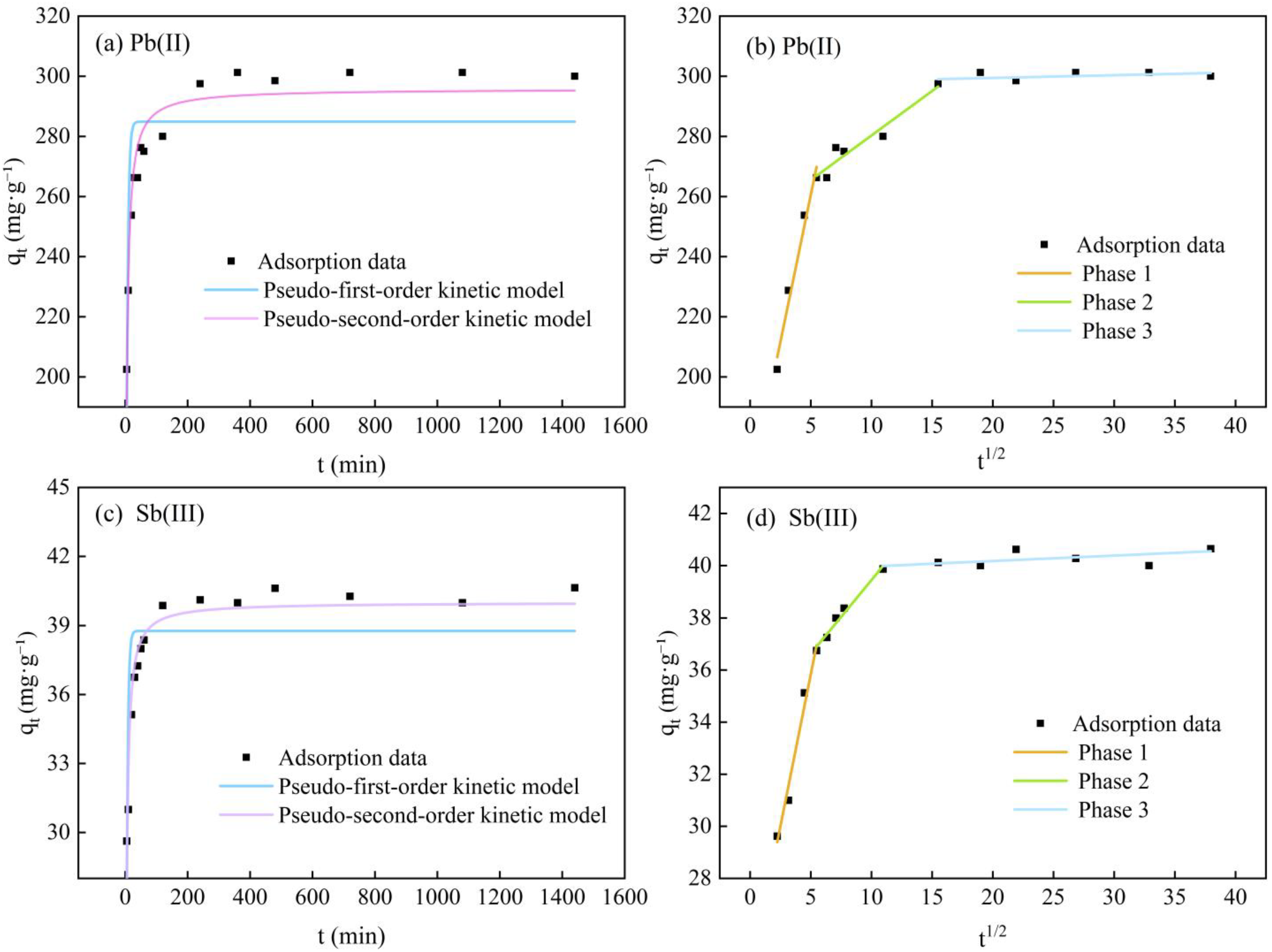
As adsorption time increased, the removal efficiency of FPBC for Pb(II) and Sb(III) increased. The adsorption process can be roughly divided into three stages: In the first 30 min, the adsorption proceeded rapidly, and the removal efficiency and adsorption capacity of Pb(II) and Sb(III) increased sharply. The removal efficiency rose from 40.4% and 56.0% to 53.1% and 69.5%, respectively, while the adsorption capacity increased from 202.5 mg·g−1 and 29.6 mg·g−1 to 266.3 mg·g−1 and 36.8 mg·g−1. This is because at the initial adsorption stage, the high concentrations of Pb(II) and Sb(III) provided a strong mass-transfer driving force in the solution, and the abundance of active sites on the surface facilitated their adsorption. Subsequently, the removal rate slowed down in the periods of 30–240 min for Pb(II) and 30–120 min for Sb(III). The removal efficiency increased from 53.1% and 69.5% to 60.1% and 75.9%, respectively, and the adsorption capacity rose from 266.3 mg·g−1 and 36.8 mg·g−1 to 297.5 mg·g−1 and 40.1 mg·g−1. This is attributed to the fact that the active sites on the material surface were largely occupied and gradually approached saturation, and the concentration gradient between the solid and liquid interfaces decreased accordingly, thereby slowing the adsorption rate [28]. After 4 h for Pb(II) and 2 h for Sb(III), the removal rates remained almost stable at 60.1% and 75.9%, with adsorption capacity reaching 297.5 mg·g−1 and 40.1 mg·g−1.
The adsorption kinetic data were fitted using the pseudo-first-order and the pseudo-second-order kinetic models to elucidate the adsorption mechanism of Pb(II) and Sb(III) onto FPBC. The nonlinear fitting results are shown in Table 2 and Figure 5a,c. The higher R2 values indicate that the pseudo-second-order kinetic model better described the adsorption kinetics of Pb(II) and Sb(III) onto FPBC than the pseudo-first-order kinetic model, suggesting that the rate-limiting step of the adsorption process is chemical adsorption [29].
To further elucidate the specific diffusion mechanisms during the adsorption process, an intraparticle diffusion model was also fitted. The linear fitting results are shown in Table 3 and Figure 5b,d. The adsorption process tended to follow three distinct phases, and the linear portion of each stage did not pass through the origin. This indicates that although intraparticle diffusion was involved in the adsorption process, it was not the only rate-limiting step. K1 > K2 > K3 indicated that at the initial adsorption stage, Pb(II) and Sb(III) diffused rapidly to the active sites of the material, after which intraparticle diffusion gradually slowed down and became stable. By comparing the kinetic parameters of the two heavy metals, it was found that although the initial concentration of Pb(II) was much higher than that of Sb(III), which provided a stronger mass-transfer driving force, its intraparticle diffusion rate constants at each phase were significantly larger than those of Sb(III), indicating that the diffusion and migration capacity of Pb(II) on FPBC was superior to that of Sb(III). A possible explanation is the strong electrostatic attraction between Pb(II) and FPBC, which greatly accelerated its diffusion. Meanwhile, the potential rapid precipitation reaction between Pb(II) and the phosphorus component maintained a high concentration gradient at the pore entrance, further facilitating intraparticle diffusion. To evaluate the relative importance of boundary-layer diffusion and intraparticle diffusion, a relative coefficient (RC, RC = C/Qe × 100%) was adopted from the literature [30], which is defined as the ratio of the intercept to the equilibrium adsorption capacity. The RC values of Pb(II) and Sb(III) were all above 50% at all phases, indicating that boundary-layer diffusion was the dominant rate-limiting step. Notably, Sb(III) attained a higher RC value than Pb(II) at a lower initial concentration, suggesting that the adsorption process of Sb(III) was more significantly restricted by boundary-layer diffusion than that of Pb(II). This may be attributed to the effective size and electroneutrality of Sb, whose transport to the material surface depended on slow molecular diffusion without electrostatic attraction [31,32]. Thus, Sb(III) encountered much greater diffusion resistance.

3.4. Adsorption Isotherm

As shown in Supplementary Materials Figure S1, as the initial concentration increased, the adsorption capacity of FPBC for Pb(II) and Sb(III) gradually increased, while the removal efficiency gradually decreased. The possible reason is that the increase in the Pb(II) and Sb(III) concentrations led to a larger concentration gradient between the heavy metal ions and the material surface, strengthening the mass-transfer driving force. Consequently, the contact probability between the adsorbent and adsorbate was improved, and the active sites on the material surface were fully occupied, thus increasing the adsorption capacity.
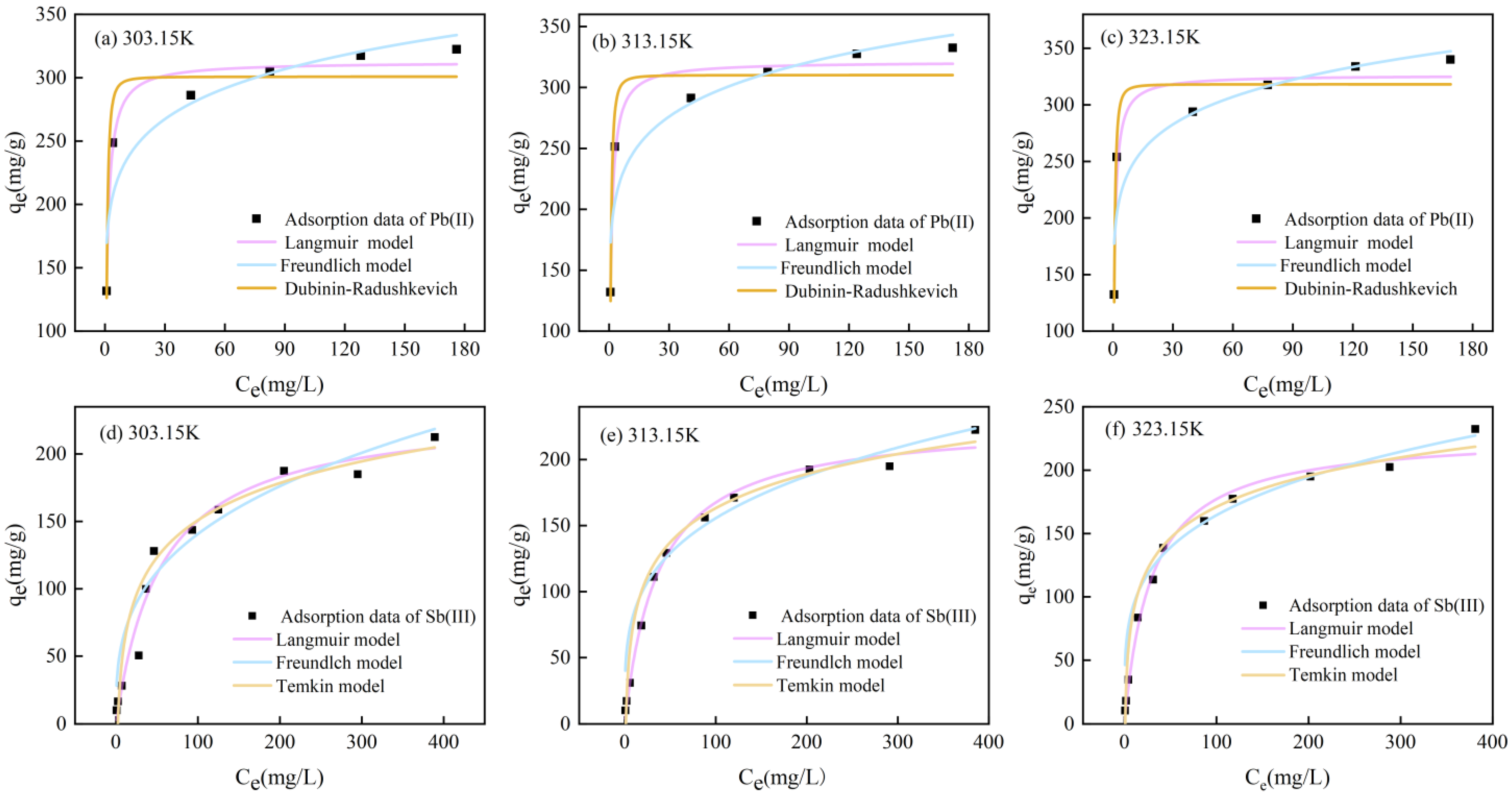
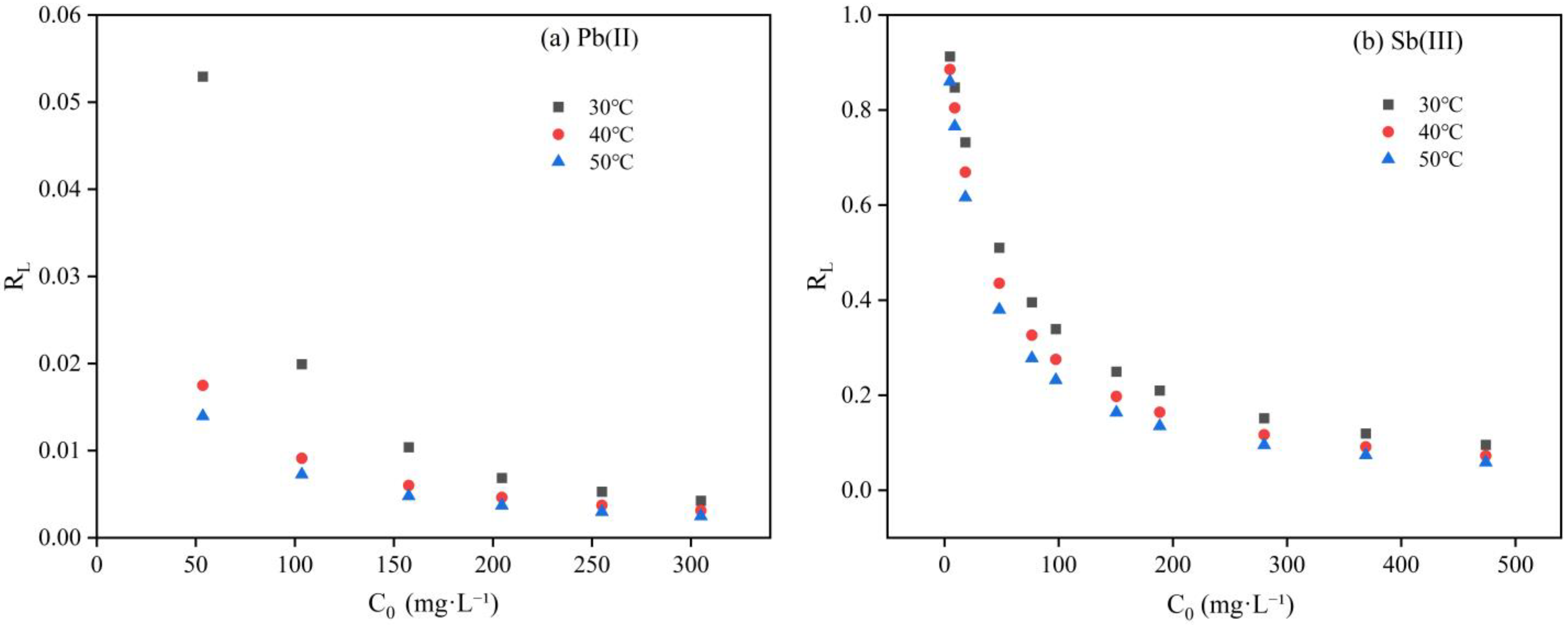
To better understand the adsorption process of FPBC, its adsorption data for Pb(II) and Sb(III) were fitted using Langmuir, Freundlich, D-R, and Temkin isotherm models. The fitting results are shown in Figure 6 and Table 4 and Table 5. The fitting results showed that the correlation coefficients of the Langmuir model for Pb(II) at the three temperatures were higher than those of the Freundlich model, indicating that the Langmuir isotherm better described this adsorption process, which was dominated by monolayer adsorption. For Sb(III), both the Langmuir and Freundlich models could well describe this process, suggesting that adsorption occurred via a synergistic combination of monolayer and multilayer adsorption [33]. With increasing temperature, the adsorption capacity of FPBC for Pb(II) and Sb(III) also increased. The maximum adsorption capacities calculated from the Langmuir model were 312.54–326.28 mg·g−1 for Pb(II) and 219.20–236.61 mg·g−1 for Sb(III). This phenomenon indicates that increasing temperatures provide sufficient energy for the adsorption process, promoting mass transfer and immobilization of the adsorbate at the solid–liquid interface. Meanwhile, the Langmuir constant KL represents the ratio of adsorption rate to desorption rate. A higher KL value indicates stronger binding stability between the adsorbent and adsorbate. With increasing temperature, the KL values for Pb(II) and Sb(III) rose from 0.92 and 0.02 to 1.32 and 0.03, respectively. This further confirms that elevated temperatures not only enhance adsorption capacity but also strengthen the binding stability between adsorbent and adsorbate. Notably, the KL values of Pb(II) were consistently much higher than those of Sb(III), indicating that FPBC had a higher adsorption affinity for Pb(II) than for Sb(III), which was more favorable for Pb(II) removal. The E values calculated from the D-R model were below 8 kJ·mol−1 at all temperatures, implying that physical adsorption played a significant role in Pb(II) adsorption. Combined with the conclusions of adsorption kinetics, it could be concluded that the adsorption process was jointly controlled by physical and chemical adsorption. For Sb(III), the Temkin model also fitted well at all temperatures, indicating that the adsorption heat during Sb(III) removal decreased with increasing coverage on the material surface, suggesting that chemical adsorption might play a significant role. Combined with the Langmuir and Freundlich models, the satisfactory fitting performance of the Temkin model further validated that Sb(III) adsorption was dominated by chemical interactions on the heterogeneous surface, accompanied by physical adsorption. As can be seen from Figure 7, the separation factor (RL) values were between 0 and 1 under all temperature conditions, and the 1/n values in the Freundlich model were much lower than 1. These results collectively indicate that the adsorption of Pb(II) and Sb(III) onto FPBC is a favorable and easily achievable process.

3.5. Thermodynamics Analysis

Thermodynamics analysis can describe the change in heat released or absorbed during the adsorption process. Supplementary Materials Figure S2 illustrates the relationship between temperature and thermodynamic equilibrium constants. The corresponding thermodynamic-constant calculations are presented in Table 6. ΔG < 0 under all conditions, indicating that the adsorption of Pb(II) and Sb(III) onto FPBC was spontaneous. Importantly, the ΔG values decreased with increasing temperature, indicating that the adsorption of Pb(II) and Sb(III) onto FPBC was more favorable at higher temperatures. ΔH > 0 indicated that the adsorption process was endothermic. Increasing temperature was favorable for the improvement of adsorption capacity, which was consistent with the finding that Qmax increased with rising temperature in the isotherm study. It is commonly accepted that the adsorption process is primarily physical adsorption when ΔH is less than 20 kJ·mol−1, and the adsorption process is primarily chemical adsorption when ΔH is larger than 20 kJ·mol−1, based on the kind of dominant reaction [34]. In this study, the ΔH value for Pb(II) adsorption was below 20 kJ·mol−1. The adsorption process fitted well with the pseudo-second-order kinetic model, the Langmuir model, and the D-R model (E < 8 kJ·mol−1), indicating that Pb(II) adsorption onto FPBC was a mixed adsorption process dominated by physical adsorption with partial chemical adsorption. For Sb(III), the ΔH value was above 20 kJ·mol−1, suggesting typical chemical adsorption. The process followed the pseudo-second-order, Langmuir, Freundlich, and Temkin models, suggesting that the adsorption was dominated by chemisorption. Moreover, the ΔS value of Sb(III) was much higher than that of Pb(II), indicating an entropy-driven spontaneous process [35]. The greater entropy increase may stem from the destruction of Sb(III) hydration shells and increased surface disorder after adsorption.

3.6. Investigation of Adsorption Performance in Binary Systems of Heavy Metals

According to the literature [36], the adsorption capacity ratio (Rq) has evaluated the impact of simultaneous adsorption:
R q , i = q B , i q s , i
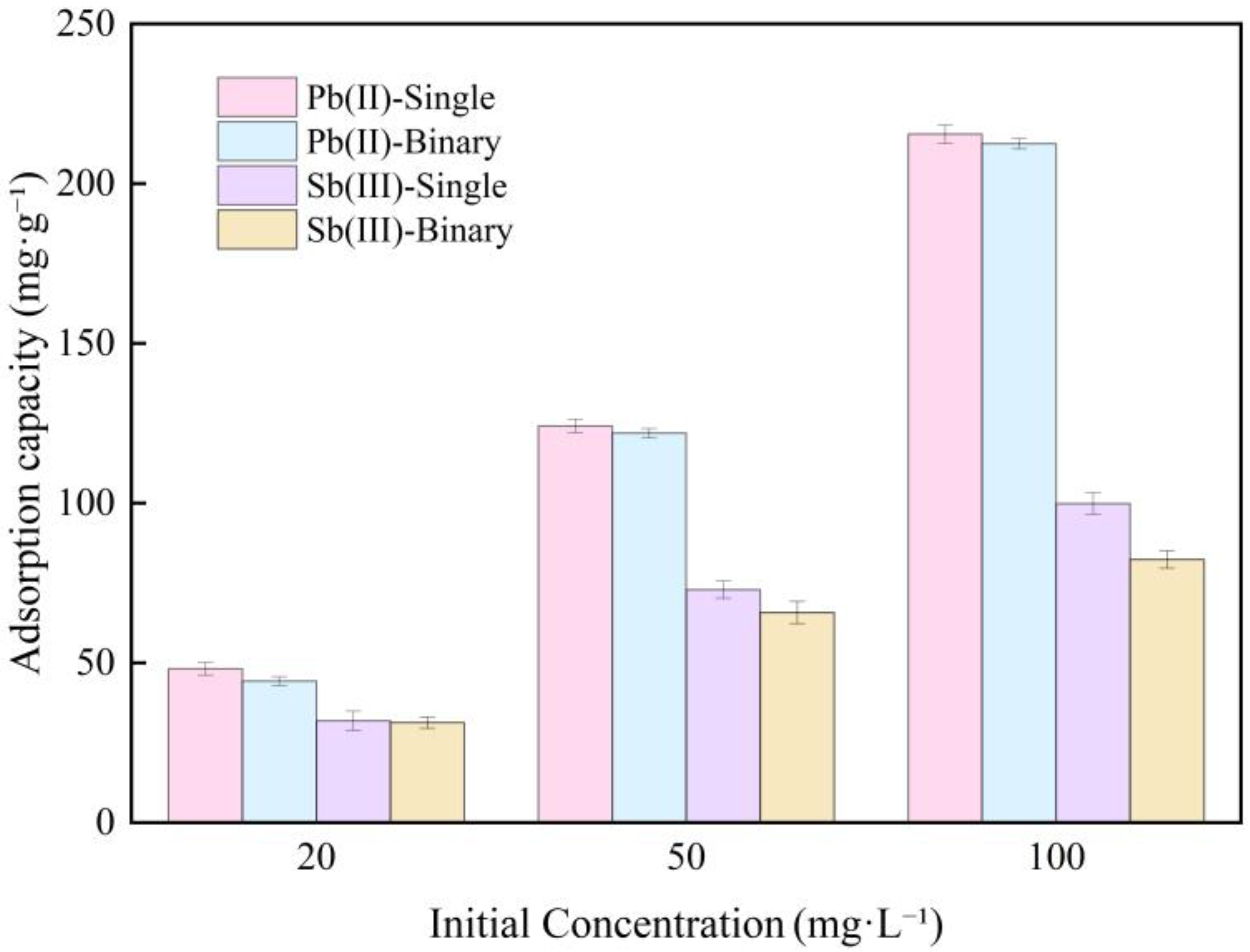
where qs,i and qB,i represent the uptake capacities of FPBC for pollutant i (Pb(II) or Sb(III)) in the single and binary system at the same adsorption conditions, respectively, under the same adsorption conditions. Based on the Rq,i value, the adsorption process of the binary system can be divided into the following three cases [37]: When Rq,i > 1, the coexisting contaminant enhances the adsorption of contaminant i; when Rq,i = 1, the adsorption of contaminant i is unaffected by the coexisting contaminant; when Rq,i < 1, the adsorption of contaminant i is inhibited due to the presence of the coexisting contaminant. As shown in Figure 8, in the binary systems of Pb(II) and Sb(III) with initial concentrations of 20, 50, and 100 mg·L−1, the adsorption capacity of Pb(II) was close to those in the single-component systems. The relative adsorption ratios (R = 0.925–0.995) consistently remained near 1. This indicates that Pb(II) adsorption behavior on FPBC is scarcely affected by Sb(III) coexistence. A probable explanation is that phosphorus in the material undergoes specific chemical interactions with Pb(II), indicating a higher affinity of FPBC for Pb(II). In contrast, the adsorption capacity of Sb(III) in the coexistent system decreased with the increase in total concentration, with its adsorption capacity ratio dropping from 0.992 to 0.825. The possible reason is that at low concentrations, Pb(II) and Sb(III) mainly occupied their respective preferential adsorption sites, resulting in an insignificant competitive effect. However, with the increase in concentration, Pb(II) began to compete with Sb(III) for the limited iron-containing active sites, which reduced the number of effective sites available for Sb(III) and thus led to a decrease in the adsorption capacity of Sb(III).

3.7. Comparison with Other Reported Materials

To evaluate the adsorption performance of FPBC for Pb(II) and Sb(III) in aqueous solutions, it was compared with other adsorbents reported in the literature, and the results are presented in Table 7. The results demonstrate that FPBC possesses high adsorption capacities for both Pb(II) and Sb(III), which are superior to many reported materials. The adsorption of Pb(II) by FPBC is optimized at a moderate pH of 5. For Sb(III), FPBC can maintain stable and efficient adsorption over a wide pH range. Although the reported adsorbents show more favorable equilibrium time for Pb(II) adsorption, the 4 h achieved in this study is also satisfactory. More notably, Sb(III) achieves adsorption equilibrium in only 2 h, which is much shorter than that of many conventional adsorbents, indicating the rapid adsorption ability of FPBC for Sb(III). In contrast to most adsorbents that show high efficiency only for a single heavy metal, FPBC displays excellent simultaneous removal performance for both Pb(II) and Sb(III). Using leachate from spent LiFePO4 batteries as the raw material, FPBC can be prepared at low cost and achieve efficient simultaneous removal of Pb(II) and Sb(III).
Overall, FPBC exhibits satisfactory comprehensive adsorption performance in terms of adsorption capacity, pH adaptability, adsorption rate, and simultaneous removal performance.

3.8. Adsorption Mechanism

3.8.1. SEM-EDS

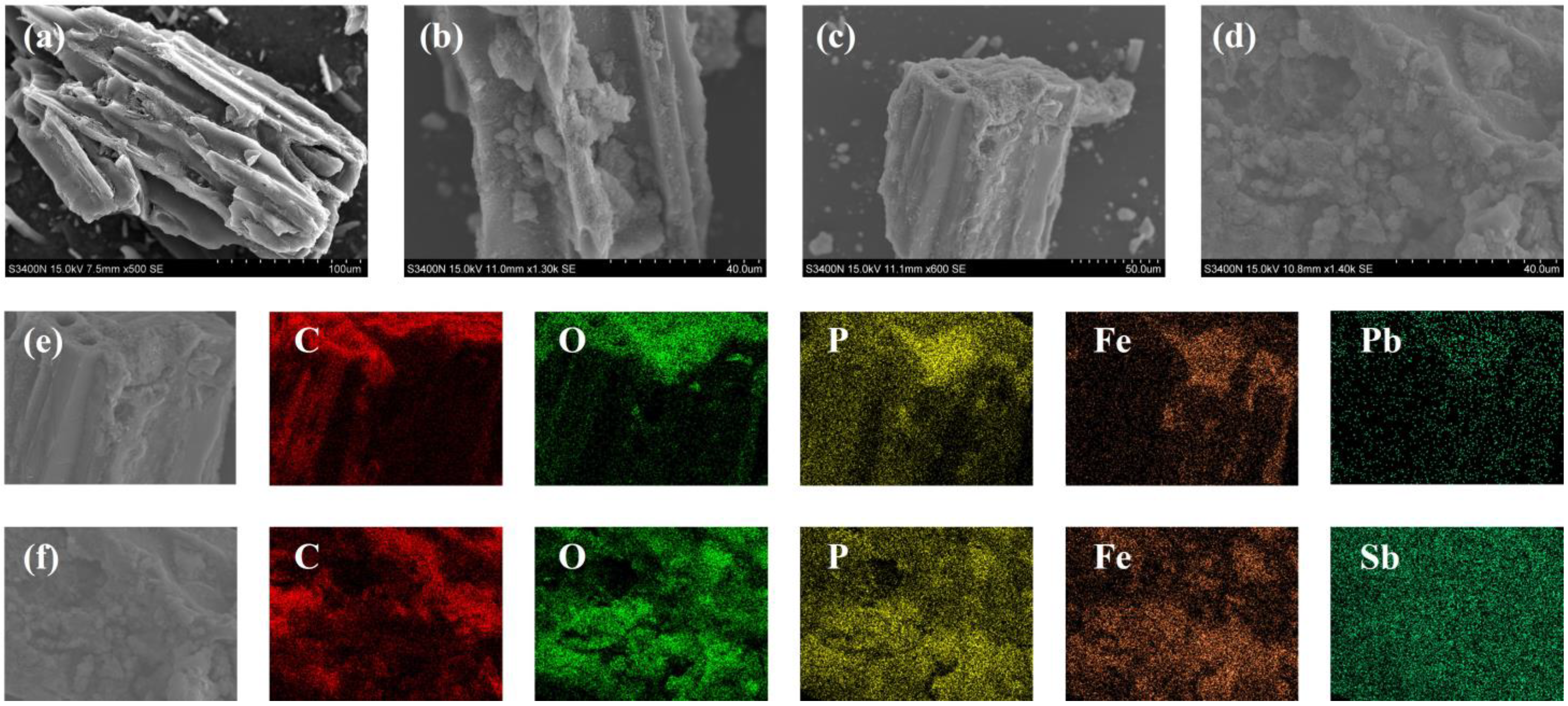
BC exhibited a fibrous and layered stacked structure with a rough surface, abundant pores and an overall loose and porous morphology. This morphological characteristic likely stems from the retention of lignin fiber structure during biomass pyrolysis, thus providing ample active sites and diffusion pathways for subsequent modification processes and heavy metal ion adsorption. FPBC retained the skeletal structure of BC, while its micromorphology and elemental composition exhibited significant differences after modification. As can be seen from Figure 9b, the surface roughness of FPBC was significantly enhanced, the particulate components underwent partial agglomeration, and the structure became more compact. This complex surface may generate more diverse adsorption sites and enhanced surface reactivity. As shown in Table 8, the elements Fe and P were detected in FPBC, providing strong evidence from an elemental composition perspective that Fe and P were successfully loaded onto the BC. After FPBC adsorbed Pb(II), its surface tended to become smooth, with partial agglomeration observed at individual sites, indicating that Pb had covered and filled the pore structure of the material. After FPBC adsorbed Sb(III), its surface was coated with irregular flocculent or agglomerated particles, with obvious agglomeration between the particles and the original porous structure being covered. The adsorbed material exhibited Pb and Sb elements in the EDS spectrum, with mass fractions of 53.46% and 24.45% respectively, indicating successful immobilization of Pb and Sb on the material surface. After the adsorption of Pb(II), the mass fractions of P, O, and Fe decreased, indicating that Pb complexed with oxygen-containing functional groups such as PO43− and −OH on the material surface, and insoluble lead phosphate precipitates might have been formed. After the adsorption of Sb(III), the mass fraction of the Fe element exhibited a negligible change. The possible reason is that the iron-based sites on the material surface acted as oxidation carriers to oxidize Sb(III) to Sb(V), while Fe3+ was simultaneously reduced to Fe2+. The Sb(V) generated by oxidation immediately complexed with the iron-based sites and was immobilized on the material surface. Furthermore, following the adsorption of Pb(II) and Sb(III), the mass fraction of Na decreased from 5.40% to 0.12% and 0.15% respectively, suggesting ion exchange between Pb(II) and Sb(III) and Na+.

3.8.2. BET

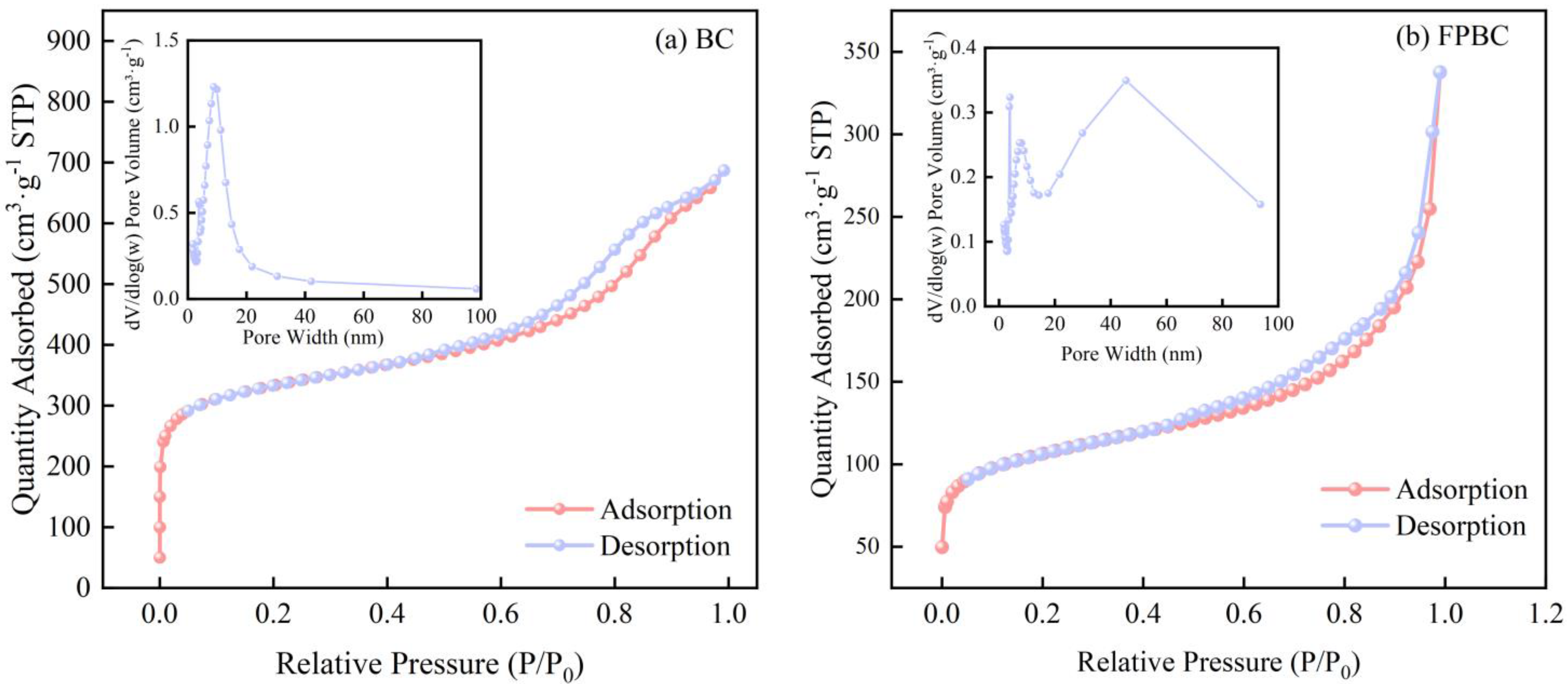
Table 9 indicates that BC exhibits a high specific surface area of 1219.73 m2·g−1, with a total pore volume of 0.99 cm3·g−1 and an average pore diameter of 6.69 nm. After iron–phosphorus modification, the specific surface area of FPBC decreased to 388.35 m2·g−1, the total pore volume decreased to 0.38 cm3·g−1, and the average pore diameter increased to 10.19 nm. This transformation indicates that the iron–phosphorus complex has filled portions of the BC’s micropores and mesoporous channels, thus triggering a restructuring of the pore architecture.
The N2 adsorption–desorption isotherms of the prepared BC and FPBC are presented in Figure 10. It is evident that these curves correspond to the type IV isotherm [45]. The adsorption capacity of BC increased sharply at a relative pressure of P/P0 = 0–0.2, demonstrating the presence of a certain number of micropores in the material, whereas an obvious hysteresis loop appeared at P/P0 = 0.4–1.0, indicating the existence of mesoporous structures [46]. FPBC displayed a distinct H3 hysteresis loop in the high-relative-pressure region, which is typically ascribed to slit-shaped pores formed by the stacking of flake-like particles. This structural variation can be attributed to the iron–phosphorus composite blocking part of the micropore channels, accompanied by an overall increase in the mesopore size of the material. As can be seen from the pore size distribution curve in the inset, BC exhibited a maximum peak at 8.8 nm, while FPBC showed a maximum peak at 45.5 nm. This observation can be attributed to the deposition and filling of iron–phosphorus particles within the biochar pores on the one hand, and to the interstitial pores formed by the agglomeration of iron–phosphorus particles as well as the reconstruction of the biochar pore walls on the other hand. Although the specific surface area and pore volume of FPBC decreased, the larger average pore size effectively reduced mass transfer resistance for Pb(II) and Sb(III) within the pore channels. Combined with the introduction of active functional groups via iron–phosphorus modification, this compensates for the loss of adsorption sites caused by the reduced specific surface area, providing key structural support for the efficient adsorption of Pb(II) and Sb(III) in water.

3.8.3. XRD

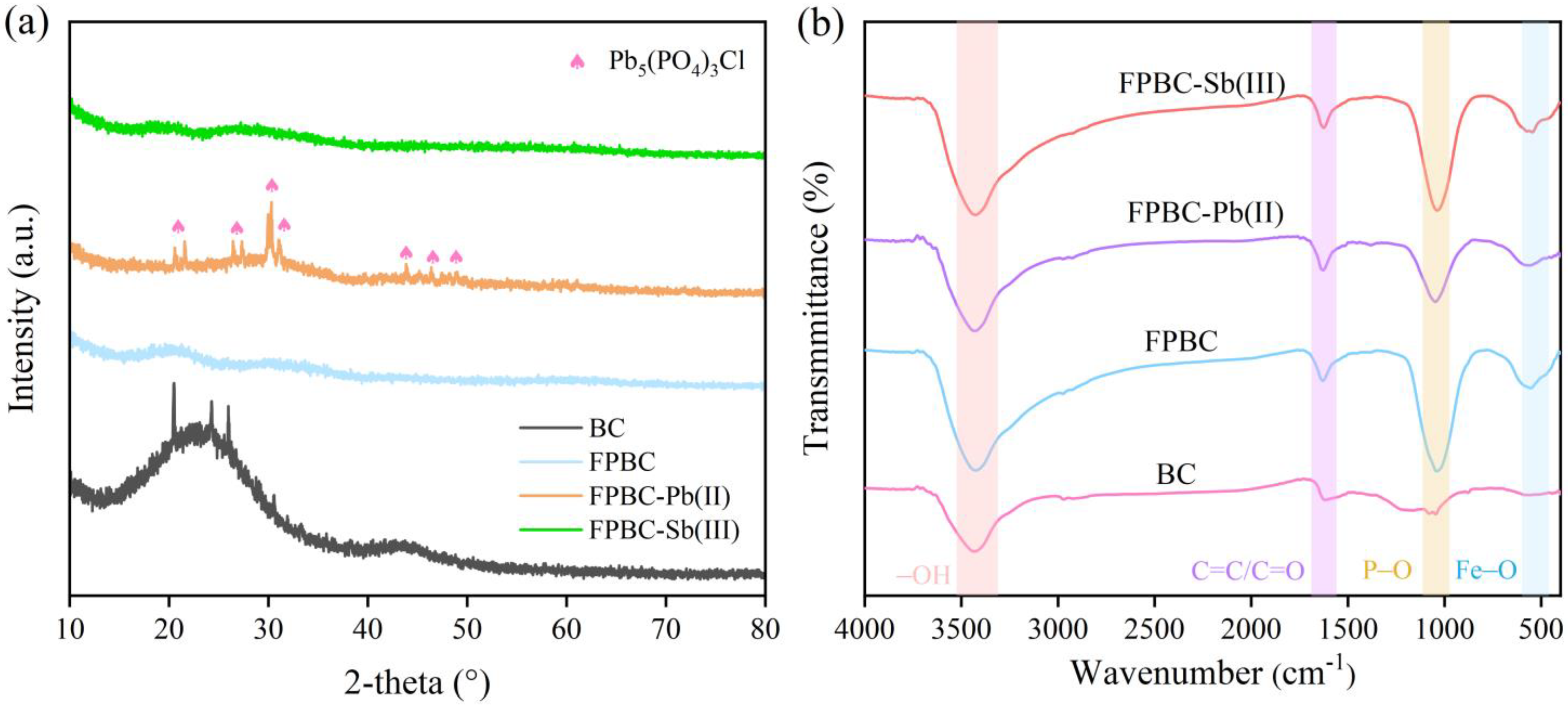
The XRD patterns of BC and FPBC before and after adsorption are presented in Figure 11a. The characteristic carbon peaks of FPBC were weaker than those of BC, which was attributed to the loading of amorphous Fe and P components onto BC. After Pb(II) adsorption, a series of new diffraction peaks appeared in the XRD pattern of FPBC-Pb(II). According to the PDF card (No. 89-4339) [47], these peaks could be assigned to synthetic pyromorphite (Pb5(PO4)3Cl), indicating that Pb5(PO4)3Cl was formed on FPBC. This result demonstrated that Pb(II) was mainly immobilized via reaction with phosphate groups to form stable pyromorphite precipitates. After Sb(III) adsorption, no new crystalline-phase diffraction peaks appeared in the XRD pattern of FPBC-Sb(III). This may be ascribed to the formation of poorly crystalline Sb species or surface complexation between Sb species and oxygen-containing functional groups on the material surface.

3.8.4. FTIR

The results of functional group changes in BC and FPBC before and after adsorption are presented in Figure 11b. The broad peak at 3432.86 cm−1 in BC is attributed to the stretching vibrations of –OH [48]. The peak at 1617.20 cm−1 is typically associated with C=C vibrations and possible C=O stretching vibrations. The peak located at 1045 cm−1 corresponds to C–O stretching vibrations, indicating the presence of aromatic structures and oxygen-containing functional groups.
After iron–phosphorus modification, the characteristic –OH peak shifted to 3424.43 cm−1 and intensified, indicating the introduction of new hydroxyl groups that enhanced surface hydrophilicity. The characteristic peak of C=O/C=C shifted to 1629.65 cm−1 with a sharper peak shape, which indicates that the aromaticity of BC was enhanced and the introduction of more oxygen-containing functional groups increased the vibration intensity of the C=O/C=C peak. A new P–O absorption peak appeared at 1041.68 cm−1 [49], indicating successful loading of phosphorous–oxygen groups onto BC and enhanced precipitation ability of the material. A new absorption peak at 553.56 cm−1 was attributed to Fe–O stretching vibrations [50], indicating that abundant iron oxides or iron complexes were loaded on the surface of BC. Iron–phosphorus modification created active sites on the surface of BC, primarily consisting of Fe–O, P–O, and abundant –OH groups, providing abundant ligands and precipitation sites for heavy metal adsorption.
After Pb(II) adsorption, the characteristic –OH peak shifted to higher wavenumbers with decreased intensity, indicating partial coordination of hydroxyl groups with Pb(II) [51]. The C=O/C=C peak shifted to 1626.02 cm−1, suggesting interaction between C=C or C=O via π electrons or oxygen atoms [52]. The P–O peak shifted to higher wavenumbers with a significant change in peak shape, indicating that phosphorus–oxygen groups participated in the Pb(II) adsorption process [53]. These groups reacted with Pb(II) to form more insoluble lead phosphate precipitates, which is consistent with the XRD results. The Fe–O peak shifted to higher wavenumbers compared to the modified sample, indicating a changed chemical environment of the Fe–O bond caused by interaction with Pb(II), further confirming that iron active sites were involved in adsorption.
After Sb(III) adsorption, the O–H peak shifted to higher wavenumbers and showed decreased intensity, indicating substantial consumption of –OH groups, likely due to coordination complex formation with Sb(III). The stretching vibration peak of the C=O also weakened, which may be attributed to the complexation of the C=O functional group with Sb(III) through cation–π bonding interactions [54]. The intensity of the Fe–O stretching vibration peak did not change significantly, likely due to the oxidizing property of Fe3+ on the surface of FPBC, which oxidizes Sb(III) to Sb(V) while being reduced to Fe2+. The oxidized Sb(V) exists in aqueous solution as Sb(OH)6, which subsequently forms complexation reactions with Fe sites, resulting in the formation of Fe–O–Sb structures [55].

3.8.5. XPS

As shown in Supplementary Materials Figure S3, XPS analysis was conducted on FPBC before and after the Pb(II) and Sb(III) adsorption to determine their surface chemical states. C 1s, O 1s, Fe2p, P 2p, and Na 1s peaks were detected on the FPBC surface, indicating successful loading of Fe and P onto the FPBC surface. Following adsorption, new Pb 4f and Sb 3d peaks appeared, while the Na 1s peak became almost undetectable. This indicates that Pb(II) and Sb(III) were effectively immobilized by FPBC, suggesting that ion exchange is one of the key adsorption mechanisms for heavy metals [56], which is consistent with the SEM results. The C 1s spectrum of FPBC could be fitted into three peaks, with binding energies at 284.80 eV, 286.29 eV, 289.15 eV and 291.38 eV corresponding to C–C/C–H, C–O, C=O/O–C=O, and π-π satellite peak, respectively. After Pb(II) adsorption, the binding energies of C−O and C=O/O−C=O exhibited positive shifts, indicating decreased electron cloud density around bonded carbon atoms, which may be due to Pb(II) coordination with lone-pair electrons of oxygen in functional groups [57]. The π−π satellite peak shifted from 291.38 eV to 292.16 eV, further suggesting that Pb(II) adsorption affected the surface-conjugated aromatic system via cation−π interactions or inductive effects [58]. After Sb(III) adsorption, the binding energies of all C 1s peaks shifted to varying degrees, indicating that functional groups such as C–O and C=O/O–C=O participated in the surface complexation of Sb(III), acting as key active sites for Sb(III) adsorption. The O 1s spectrum of FPBC could be fitted into four peaks centered at 530.19 eV,531.27 eV,532.23 eV and 533.79 eV, which corresponded to P–O, Fe–O, C–OH and C=O, respectively. After adsorption of Pb(II), all oxygen-containing species showed a slight negative shift, confirming that multiple oxygen-containing sites jointly acted as active sites for Pb immobilization [59]. Following Sb(III) adsorption, Sb 3d5/2–O and Sb 3d3/2–O peaks appeared at 531.53 eV and 540.73 eV, respectively, indicating that part of the Sb(III) was oxidized to Sb(V) during adsorption and immobilized via complexation with oxygen-containing functional groups [60]. The Fe 2p spectrum showed that iron in the material existed in mixed valence states of Fe2+ and Fe3+. After Pb(II) adsorption, the Fe2+ content decreased from 44.67% to 33.09%, while Fe3+ increased from 55.33% to 66.91%, indicating partial oxidation of Fe2+ to Fe3+. This may be because biochar can mediate the redox cycle of iron in solution through an electron transfer mechanism [61]. Meanwhile, all characteristic peaks showed negative binding energy shifts, consistent with the O 1s trend, suggesting the formation of Fe–O–Pb complexes. After Sb(III) adsorption, the Fe2+ and Fe3+ contents were 53.40% and 46.60%, respectively, indicating that part of the Fe2+ was reduced to Fe3+. This may be attributed to a redox reaction between Fe3+ and Sb3+. After Pb(II) adsorption, the signal intensity of the P 2p characteristic peak decreased significantly, which may be due to the formation of an insoluble lead phosphate precipitate layer covering the material surface. In the Pb 4f spectrum, two peaks were located at 139.72 eV and 144.62 eV, which can be assigned to Pb(II) coordinated with oxygen-containing functional groups and precipitated lead bound to phosphorus, respectively [62].
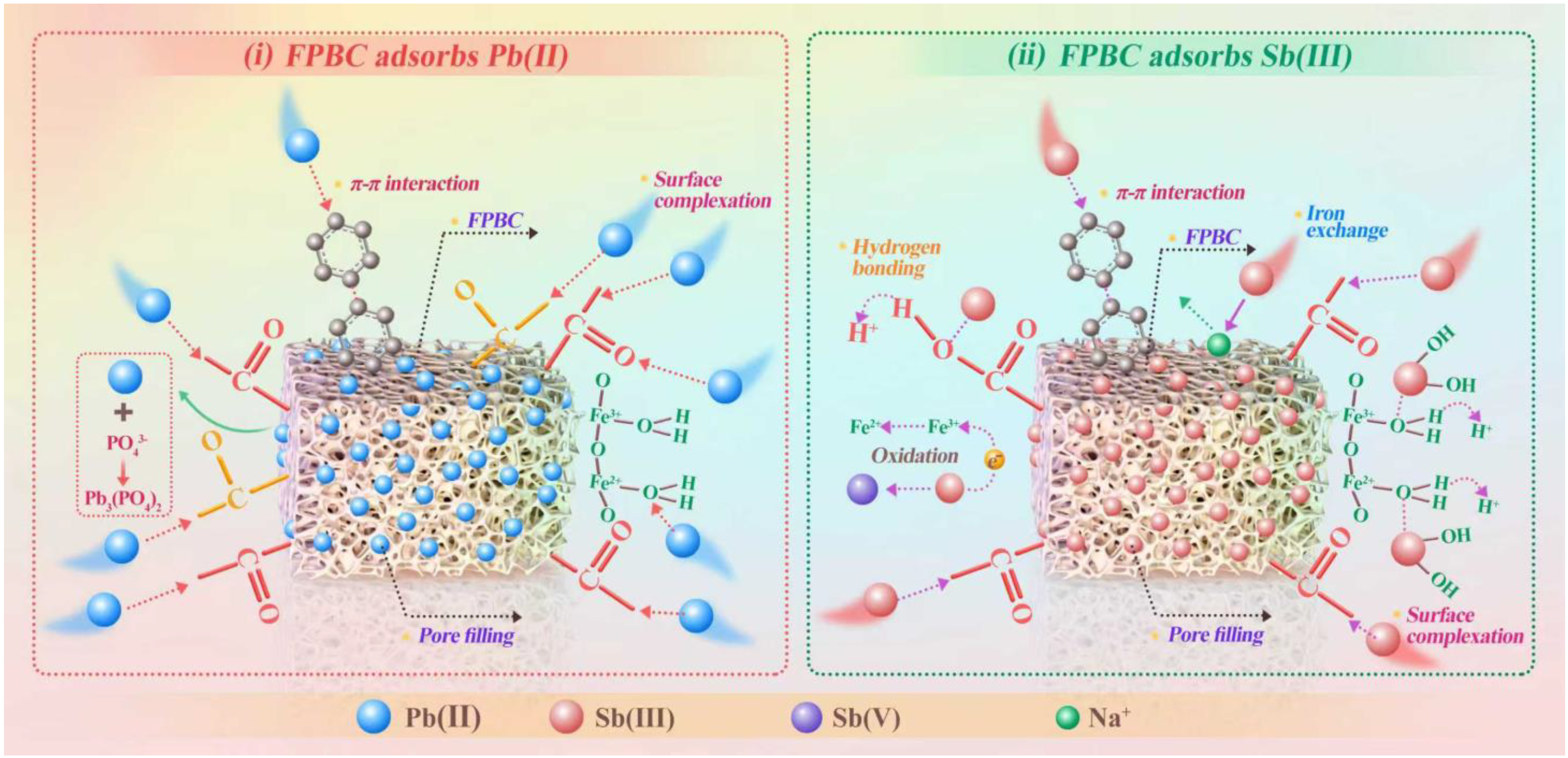
As shown in Figure 12, the efficient removal of Pb(II) from water by FPBC is a synergistic chemical process involving multiple mechanisms. Pb(II) preferentially forms coordination complexes with abundant oxygen-containing functional groups such as C=O and C–O on the FPBC surface, leading to rapid enrichment on the material surface. Subsequently, the enriched Pb(II) further reacts with active phosphate components to form lead phosphate precipitates with higher thermodynamic stability and extremely low solubility, achieving long-term stabilization of lead. Meanwhile, Fe–O also acts as an important adsorption site for Pb(II) complexation, and cation–π interactions and ion exchange also contribute to Pb(II) adsorption. For Sb(III) adsorption by FPBC, Fe–O complexation plays a key role, accompanied by mechanisms such as redox and ion exchange. The pore structure of the FPBC enables physical enrichment of Sb(III), and then Sb(III) preferentially coordinates with Fe–O groups, which is the core step for the rapid immobilization of Sb(III). Sb(III) complexed with Fe–O bonds further undergoes redox reactions with Fe3+, where Sb(III) is oxidized to Sb(V) and forms more stable Fe–O–Sb complexes with Fe–O sites, greatly improving the immobilization efficiency. In addition, oxygen-containing functional groups such as C–O and C=O on the FPBC surface complex with Sb, and the ion exchange between Na+ on the material surface and Sb(III) in the solution also contributes to Sb(III) adsorption.

4. Conclusions

This study successfully prepared low-cost modified biochar FPBC using leachate of spent LiFePO4 batteries as iron and phosphorus sources, and applied it for the efficient removal of Pb(II) and Sb(III) from water.
Adsorption influencing factor analysis showed that the adsorption capacity of Pb(II) gradually increased with increasing pH, with an optimal adsorption pH of 5. The adsorption capacity of Sb(III) was less affected by pH changes, with an optimal adsorption pH of 2. Both Pb(II) and Sb(III) adsorption achieved the best performance at a dosage of 20 mg, where adsorbent utilization and adsorption efficiency reached a balance. Adsorption kinetic studies indicated that the adsorption processes of Pb(II) and Sb(III) on FPBC both followed the pseudo-second-order kinetic model, with adsorption equilibrium times of 4 h and 2 h, respectively. This demonstrated that chemical adsorption was the rate-limiting step for the adsorption of both heavy metals. Isothermal analysis indicated that the Pb(II) adsorption process fitted well with the Langmuir and D-R models, suggesting that Pb(II) adsorption by FPBC was dominated by homogeneous monolayer adsorption and jointly controlled by the synergistic effects of physical and chemical adsorption. Sb(III) adsorption was well fitted by the Langmuir, Freundlich, and Temkin models, indicating coexistence of monolayer and multilayer adsorption on the heterogeneous surface of FPBC, with chemisorption as the dominant mechanism. At 30 °C, the theoretical maximum adsorption capacities of FPBC for Pb(II) and Sb(III) were 312.54 mg·g−1 and 219.50 mg·g−1, which were 12.85 and 3.37 times higher than those of BC, respectively. Adsorption thermodynamic analysis indicated that both Pb(II) and Sb(III) adsorption on FPBC were spontaneous and endothermic, and higher temperatures were more favorable for adsorption. Adsorption experiments in binary coexistence systems revealed that FPBC exhibited stronger adsorption affinity toward Pb(II), and its adsorption behavior toward Pb(II) was largely unaffected by the coexistence of Sb(III). Based on characterizations before and after adsorption, the removal mechanisms of Pb(II) and Sb(III) by FPBC were clarified: Pb(II) was mainly immobilized through co-precipitation, complexation, ion exchange, and electrostatic adsorption, while Sb(III) removal was dominated by Fe-O complexation, accompanied by redox reactions and ion exchange.
This study not only provides a novel strategy for the high-value resource utilization of leachate from spent LiFePO4 batteries, but also offers a promising low-cost material for the remediation of water contaminated with Pb(II) and Sb(III).

Supplementary Materials

The following supporting information can be downloaded at https://www.mdpi.com/article/10.3390/separations13040104/s1. Figure S1: Effect of different concentrations on the adsorption performance for (a) Pb(II) and (b) Sb(III); Figure S2: lnKd versus 1/T for Pb(II) and Sb(III) adsorption by FPBC; Figure S3: XPS spectra of FPBC before and after adsorption. (a) Full spectrum; (b) C 1s fine spectrum; (c) O 1s fine spectrum; (d) Fe 2p fine spectrum; (e) P 2p fine spectrum and (f) Pb 4f fine spectrum. Reference [63] is cited in the supplementary materials.

Author Contributions

Conceptualization, T.R.; Methodology, J.T.; Validation, Z.Z.; Formal analysis, Q.Q.; Resources, H.Z. and Z.Z.; Data curation, T.R. and Q.Q.; Writing—original draft, T.R.; Writing—review and editing, J.T.; Visualization, Q.Q.; Supervision, H.Z. and J.T.; Project administration, H.Z.; Funding acquisition, H.Z. and Z.Z. All authors have read and agreed to the published version of the manuscript.

Funding

This work was supported by the National Natural Science Foundation of China (22368009, 22368010, 22378085), the Guangxi Natural Science Foundation (2024GXNSFDA010053, 2024GXNSFBA010430), the Innovative Development Special Academician Team Fund of Guangxi University (2022WSF0902), the Guangxi Province Talent Project (Financial support from Science and Technology Department), the Natural Science and Technology Innovation Development Doubling Plan of Guangxi University (2023BZJL026), the Guangxi Natural Science Foundation of China (GKAD25069076), the Guangxi Science and Technology Program (Guike AD25069074), and the Technology Development Project of Guangxi Bossco Environmental Protection Technology Co., Ltd. (202100039, 202100041).

Data Availability Statement

Data are contained within the article.

Conflicts of Interest

Author Jian Tan was employed by the Guangxi Bossco Environmental Protection Technology Co., Ltd. The authors declare that this study received funding from the Technology Development Project of Guangxi Bossco Environmental Protection Technology Co., Ltd (202100039, 202100041). All authors declare that they have no known personal relationships or competing financial interests that could have appeared to influence the work reported in this paper.

References

  1. Ettler, V.; Tejnecký, V.; Mihaljevič, M.; Šebek, O.; Zuna, M.; Vaněk, A. Antimony mobility in lead smelter-polluted soils. Geoderma 2009, 155, 409–418. [Google Scholar] [CrossRef]
  2. Sun, X.; Sun, M.; Chao, Y.; Shang, X.; Wang, H.; Pan, H.; Yang, Q.; Lou, Y.; Zhuge, Y. Effects of lead pollution on soil microbial community diversity and biomass and on invertase activity. Soil Ecol. Lett. 2022, 5, 118–127. [Google Scholar] [CrossRef]
  3. Gupta, M.; Dwivedi, V.; Kumar, S.; Patel, A.; Niazi, P.; Yadav, V.K. Lead toxicity in plants: Mechanistic insights into toxicity, physiological responses of plants and mitigation strategies. Plant Signal. Behav. 2024, 19, 2365576. [Google Scholar] [CrossRef]
  4. Dragana, J.; Katarina, B.; Đurđica, M.; Stefan, M.; Danijela, Đ.; Zorica, B.; Buha, D.A. Exploring the endocrine disrupting potential of lead through benchmark modelling—Study in humans. Environ. Pollut. 2022, 316, 120428. [Google Scholar] [CrossRef]
  5. Nahid, K.; Nahid, A.; Sadegh, H.M.; Mansour, S.; Kazem, N.; Vahide, O. Blood lead level monitoring related to environmental exposure in the general Iranian population: A systematic review and meta-analysis. Environ. Sci. Pollut. Res. Int. 2021, 28, 32210–32223. [Google Scholar] [CrossRef]
  6. Lianhua, L.; Xavier, S.T.R.; Mengchang, H.; Wei, O.; Qingwen, Z.; Miguel, H.Y.C.; Cristhian, C.O. Antimony pollution threatens soils and riverine habitats across China: An analysis of antimony concentrations, changes, and risks. Crit. Rev. Environ. Sci. Technol. 2024, 54, 797–816. [Google Scholar] [CrossRef]
  7. Zheng, J.; Ohata, M.; Furuta, N. Studies on the speciation of inorganic and organic antimony compounds in airborne particulate matter by HPLC-ICP-MS. Analyst 2000, 125, 1025–1028. [Google Scholar] [CrossRef]
  8. Zubair, M.; Ihsanullah, I.; Aziz, H.A.; Ahmad, M.A.; Al-Harthi, M.A. Sustainable wastewater treatment by biochar/layered double hydroxide composites: Progress, challenges, and outlook. Bioresour. Technol. 2020, 319, 124128. [Google Scholar] [CrossRef]
  9. Meng, K.; Dong, Y.; Liu, J.; Xie, J.; Jin, Q.; Lu, Y.; Lin, H. Advances in selective heavy metal removal from water using biochar: A comprehensive review of mechanisms and modifications. J. Environ. Chem. Eng. 2025, 13, 116099. [Google Scholar] [CrossRef]
  10. Yang, Z.; Liang, L.; Yang, W.; Shi, W.; Tong, Y.; Chai, L.; Gao, S.; Liao, Q. Simultaneous immobilization of cadmium and lead in contaminated soils by hybrid bio-nanocomposites of fungal hyphae and nano-hydroxyapatites. Environ. Sci. Pollut. Res. Int. 2018, 25, 11970–11980. [Google Scholar] [CrossRef]
  11. Zhang, L.; Li, Q.; Yan, Y.; Jiang, X.; Shen, J. Development of nano-hydroxyapatite@biochar composite from low-cost precursors for enhanced immobilization of lead and cadmium. J. Hazard. Mater. 2025, 500, 140535. [Google Scholar] [CrossRef]
  12. Xu, W.; Wang, H.; Liu, R.; Zhao, X.; Qu, J. The mechanism of antimony(III) removal and its reactions on the surfaces of Fe–Mn Binary Oxide. J. Colloid Interface Sci. 2011, 363, 320–326. [Google Scholar] [CrossRef]
  13. Shan, C.; Ma, Z.; Tong, M. Efficient removal of trace antimony(III) through adsorption by hematite modified magnetic nanoparticles. J. Hazard. Mater. 2014, 268, 229–236. [Google Scholar] [CrossRef]
  14. Alessia, C.; Silvano, M.; Vincenzo, F. Removal of Lead, Copper, Zinc and Cadmium from Water Using Phosphate Rock. Acta Geol. Sin.-Engl. Ed. 2010, 82, 1223–1228. [Google Scholar] [CrossRef]
  15. Wang, C.; Zhou, Y.; Yu, F.; Zhu, X.; Dong, M.; Li, Q. Recovery of phosphate from aqueous solution by modified biochar with concentrated seawater and its potential application as fertilizer. J. Environ. Chem. Eng. 2024, 12, 112646. [Google Scholar] [CrossRef]
  16. Kang, D.H.P.; Chen, M.; Ogunseitan, O.A. Potential environmental and human health impacts of rechargeable lithium batteries in electronic waste. Environ. Sci. Technol. 2013, 47, 5495–5503. [Google Scholar] [CrossRef] [PubMed]
  17. Kallitsis, E.; Korre, A.; Kelsall, G.H. Life cycle assessment of recycling options for automotive Li-ion battery packs. J. Clean. Prod. 2022, 371, 133636. [Google Scholar] [CrossRef]
  18. Li, H.; Xing, S.; Liu, Y.; Li, F.; Guo, H.; Kuang, G. Recovery of Lithium, Iron, and Phosphorus from Spent LiFePO4 Batteries Using Stoichiometric Sulfuric Acid Leaching System. ACS Sustain. Chem. Eng. 2017, 5, 8017–8024. [Google Scholar] [CrossRef]
  19. Li, X.; Zhang, J.; Song, D.; Song, J.; Zhang, L. Direct regeneration of recycled cathode material mixture from scrapped LiFePO4 batteries. J. Power Sources 2017, 345, 78–84. [Google Scholar] [CrossRef]
  20. Bian, D.; Sun, Y.; Li, S.; Tian, Y.; Yang, Z.; Fan, X.; Zhang, W. A novel process to recycle spent LiFePO4 for synthesizing LiFePO4/C hierarchical microflowers. Electrochim. Acta 2016, 190, 134–140. [Google Scholar] [CrossRef]
  21. Xu, L.; Chen, C.; Huo, J.-B.; Chen, X.; Yang, J.-C.E.; Fu, M.-L. Iron hydroxyphosphate composites derived from waste lithium-ion batteries for lead adsorption and Fenton-like catalytic degradation of methylene blue. Environ. Technol. Innov. 2019, 16, 100504. [Google Scholar] [CrossRef]
  22. Wu, D.Y.; Pan, X.C.; Liu, Z.Q.; Rao, S.; Zhang, K.F. Study on Adsorption Performance of Spent Lithium Iron Phosphate Oxygen Pressure Leaching Residue for Heavy Metals. Nonferrous Met. (Extr. Metall.) 2021, 117–122. [Google Scholar]
  23. Tran, H.N.; Wang, Y.-F.; You, S.-J.; Chao, H.-P. Insights into the mechanism of cationic dye adsorption on activated charcoal: The importance of π–π interactions. Process Saf. Environ. Prot. 2017, 107, 168–180. [Google Scholar] [CrossRef]
  24. Kosmulski, M. Surface Charging and Points of Zero Charge; CRC Press: Boca Raton, FL, USA, 2009. [Google Scholar]
  25. Liu, L.; Yue, T.; Liu, R.; Lin, H.; Wang, D.; Li, B. Efficient absorptive removal of Cd(II) in aqueous solution by biochar derived from sewage sludge and calcium sulfate. Bioresour. Technol. 2021, 336, 125333. [Google Scholar] [CrossRef]
  26. Chen, H.; Gao, Y.; Fang, Z.; Li, J.; Pillai, S.C.; Song, H.; Sun, C.; Bolan, N.; Yang, X.; Vithanage, M.; et al. Investigating the electron-scale adsorption mechanisms using DFT calculations and experimental studies in self-assembly magnetic biochar gel incorporated with graphene nanosheets for enhanced Sb(III) removal. Chem. Eng. J. 2024, 487, 150740. [Google Scholar] [CrossRef]
  27. Liu, L.; Zhao, J.; Liu, X.; Bai, S.; Lin, H.; Wang, D. Reduction and removal of As(V) in aqueous solution by biochar derived from nano zero-valent-iron (nZVI) and sewage sludge. Chemosphere 2021, 277, 130273. [Google Scholar] [CrossRef]
  28. Long, Y.; Jiang, J.; Hu, J.; Hu, X.; Yang, Q.; Zhou, S. Removal of Pb(II) from aqueous solution by hydroxyapatite/carbon composite: Preparation and adsorption behavior. Colloids Surf. A Physicochem. Eng. Asp. 2019, 577, 471–479. [Google Scholar] [CrossRef]
  29. Wei, S.; Tao, Y.; Ma, M.; Tong, W.; Bi, F.; Wang, L.; Qu, J.; Zhang, Y. One-step microwave-assisted synthesis of MgO-modified magnetic biochar for enhanced removal of lead and phosphate from wastewater: Performance and mechanisms. Sep. Purif. Technol. 2025, 354, 128936. [Google Scholar] [CrossRef]
  30. Apiratikul, R.; Pavasant, P. Sorption of Cu2+, Cd2+, and Pb2+ using modified zeolite from coal fly ash. Chem. Eng. J. 2008, 144, 245–258. [Google Scholar] [CrossRef]
  31. Park, J.-H.; Ok, Y.S.; Kim, S.-H.; Cho, J.-S.; Heo, J.-S.; Delaune, R.D.; Seo, D.-C. Competitive adsorption of heavy metals onto sesame straw biochar in aqueous solutions. Chemosphere 2016, 142, 77–83. [Google Scholar] [CrossRef] [PubMed]
  32. Chen, S.B.; Ma, Y.B.; Chen, L.; Xian, K. Adsorption of aqueous Cd2+, Pb2+, Cu2+ ions by nano-hydroxyapatite: Single- and multi-metal competitive adsorption study. Geochem. J. 2010, 44, 233–239. [Google Scholar] [CrossRef]
  33. Zhang, Y.; Xia, M.; Wang, F.; Ma, J. Experimental and theoretical study on the adsorption mechanism of Amino trimethylphosphate (ATMP) functionalized hydroxyapatite on Pb(II) and Cd(II). Colloids Surf. A Physicochem. Eng. Asp. 2021, 626, 127029. [Google Scholar] [CrossRef]
  34. Chen, J.; Tang, C.; Li, X.; Sun, J.; Liu, Y.; Huang, W.; Wang, A.; Lu, Y. Preparation and Modification of Rape Straw Biochar and Its Adsorption Characteristics for Methylene Blue in Water. Water 2022, 14, 3761. [Google Scholar] [CrossRef]
  35. Yalasangi, V.; Mayilswamy, N.; Kandasubramanian, B. Biochar-derived adsorbents for removal of Rhodamine B from wastewater. Bioresour. Technol. Rep. 2024, 28, 101987. [Google Scholar] [CrossRef]
  36. Xianhong, D.; Wenbin, W.; Shuangqin, T.; Yi, H.; Shujie, W.; Bifang, Z.; Kai, X.; Ziqin, Z.; Lihong, T. Composite adsorbents of aminated chitosan @ZIF-8 MOF for simultaneous efficient removal of Cu(II) and Congo Red: Batch experiments and DFT calculations. Chem. Eng. J. 2024, 479, 147634. [Google Scholar] [CrossRef]
  37. Verma, M.; Borah, R.; Kumar, A.; Chae, S.-H.; Pan, S.-Y.; Kumar, V.; Vlaskin, M.S.; Kim, H. Capturing of inorganic and organic pollutants simultaneously from complex wastewater using recyclable magnetically chitosan functionalized with EDTA adsorbent. Process Saf. Environ. Prot. 2022, 167, 56–66. [Google Scholar] [CrossRef]
  38. Zhang, X.; Liu, H.; Yang, J.; Zhang, L.; Cao, B.; Liu, L.; Gong, W. Removal of cadmium and lead from aqueous solutions using iron phosphate-modified pollen microspheres as adsorbents. Rev. Adv. Mater. Sci. 2021, 60, 365–376. [Google Scholar] [CrossRef]
  39. Tuyiringire, D.; Liu, X.; Zheng, Q.; Wang, S.; Zhang, W.; Bi, F.; Zhang, Y.; Wang, Y.; Qu, J.; Zhang, Y. Ball-milled phosphate/micro zero-valent iron/biochar for lead and cadmium removal and stabilization in water and soil: Performance, mechanisms, and environmental applications. Sep. Purif. Technol. 2025, 362, 131895. [Google Scholar] [CrossRef]
  40. Fan, G.; Xu, X.; Huang, Y.; Zhu, X.; Chen, X. The Sorption of Lead and Cadmium by Hydroxyapatite-Biochar Nanocomposite from Aqueous Solution. Int. J. Environ. Res. 2024, 19, 37. [Google Scholar] [CrossRef]
  41. Nan, L.; Zhang, Y.; Liu, M.; Zhao, L.; Zhu, Y.; Zhang, X. Application of Magnetic Aquatic Plant Biochar for Efficient Removal of Antimony from Water: Adsorption Properties and Mechanism. Separations 2024, 12, 2. [Google Scholar] [CrossRef]
  42. Wang, Y.; Zhang, X.; Ju, N.; Jia, H.; Sun, Z.; Liang, J.; Guo, R.; Niu, D.; Sun, H.-B. High capacity adsorption of antimony in biomass-based composite and its consequential utilization as battery anode. J. Environ. Sci. 2023, 126, 211–221. [Google Scholar] [CrossRef]
  43. Yang, B.; Fan, W.; Yanyan, G. Oxidation and adsorption of antimony(iii) from surface water using novel Al2O3-supported Fe-Mn binary oxide nanoparticles: Effectiveness, dynamic quantitative mechanisms, and life cycle analysis. Environ. Sci.-Nano 2020, 7, 3047–3061. [Google Scholar] [CrossRef]
  44. Teng, F.; Zhang, Y.; Wang, D.; Shen, M.; Hu, D. Iron-modified rice husk hydrochar and its immobilization effect for Pb and Sb in contaminated soil. J. Hazard. Mater. 2020, 398, 122977. [Google Scholar] [CrossRef]
  45. Sing, K.S.W. Reporting physisorption data for gas/solid systems with special reference to the determination of surface area and porosity (Recommendations 1984). Pure Appl. Chem. 2013, 57, 603–619. [Google Scholar] [CrossRef]
  46. Luo, F.; Feng, X.; Li, Y.; Zheng, G.; Zhou, A.; Xie, P.; Wang, Z.; Tao, T.; Long, X.; Wan, J. Magnetic amino-functionalized lanthanum metal-organic framework for selective phosphate removal from water. Colloids Surf. A Physicochem. Eng. Asp. 2021, 611, 125906. [Google Scholar] [CrossRef]
  47. Kabekkodu, S.N.; Dosen, A.; Blanton, T.N. PDF-5+: A comprehensive Powder Diffraction FileTM for materials characterization. Powder Diffr. 2024, 39, 47–59. [Google Scholar] [CrossRef]
  48. Hannan, F.; Huang, Q.; Farooq, M.A.; Ayyaz, A.; Ma, J.; Zhang, N.; Ali, B.; Deyett, E.; Zhou, W.; Islam, F. Organic and inorganic amendments for the remediation of nickel contaminated soil and its improvement on Brassica napus growth and oxidative defense. J. Hazard. Mater. 2021, 416, 125921. [Google Scholar] [CrossRef] [PubMed]
  49. Kwaśniak-Kominek, M.; Matusik, J.; Bajda, T.; Manecki, M.; Rakovan, J.; Marchlewski, T.; Szala, B. Fourier transform infrared spectroscopic study of hydroxylpyromorphite Pb10(PO4)6OH2–hydroxylmimetite Pb10(AsO4)6(OH)2 solid solution series. Polyhedron 2015, 99, 103–111. [Google Scholar] [CrossRef]
  50. Ain, Q.U.; Zhang, H.; Yaseen, M.; Rasheed, U.; Liu, K.; Subhan, S.; Tong, Z. Facile fabrication of hydroxyapatite-magnetite-bentonite composite for efficient adsorption of Pb(II), Cd(II), and crystal violet from aqueous solution. J. Clean. Prod. 2020, 247, 119088. [Google Scholar] [CrossRef]
  51. Cheng, C.; Zhang, J.; Mu, Y.; Gao, J.; Feng, Y.; Liu, H.; Guo, Z.; Zhang, C. Preparation and evaluation of activated carbon with different polycondensed phosphorus oxyacids (H3PO4, H4P2O7, H6P4O13 and C6H18O24P6) activation employing mushroom roots as precursor. J. Anal. Appl. Pyrolysis 2014, 108, 41–46. [Google Scholar] [CrossRef]
  52. Wang, Z.; Liu, G.; Zheng, H.; Li, F.; Ngo, H.H.; Guo, W.; Liu, C.; Chen, L.; Xing, B. Investigating the mechanisms of biochar’s removal of lead from solution. Bioresour. Technol. 2015, 177, 308–317. [Google Scholar] [CrossRef] [PubMed]
  53. Lu, H.; Zhang, W.; Yang, Y.; Huang, X.; Wang, S.; Qiu, R. Relative distribution of Pb2+ sorption mechanisms by sludge-derived biochar. Water Res. 2011, 46, 854–862. [Google Scholar] [CrossRef] [PubMed]
  54. Cui, X.; Ni, Q.; Lin, Q.; Khan, K.Y.; Li, T.; Khan, M.B.; He, Z.; Yang, X. Simultaneous sorption and catalytic oxidation of trivalent antimony by Canna indica derived biochars. Environ. Pollut. 2017, 229, 394–402. [Google Scholar] [CrossRef] [PubMed]
  55. Xie, Z.L.; Shen, J.J.; Li, Z.C.; Lv, C.W.; He, J. Kinetics mechanisms of Sb(III)adsorbed by three synthesized Schwertmannites. Environ. Chem. 2024, 43, 4182–4194. [Google Scholar]
  56. Tice, L.; Hersey, J.; Karla, S.; Sorci, M.; Plawsky, J.; Giglia, S.; Belfort, G. Impact of pH, ionic strength, and operating conditions on capture mechanisms in nanoparticle filtration. J. Membr. Sci. 2024, 706, 122926. [Google Scholar] [CrossRef]
  57. Lin, J.-Y.; Kim, M.; Li, D.; Kim, H.; Huang, C.-P. The removal of phosphate by thermally treated red mud from water: The effect of surface chemistry on phosphate immobilization. Chemosphere 2020, 247, 125867. [Google Scholar] [CrossRef]
  58. Zhou, X.; Liu, Y.; Zhou, J.; Guo, J.; Ren, J.; Zhou, F. Efficient removal of lead from aqueous solution by urea-functionalized magnetic biochar: Preparation, characterization and mechanism study. J. Taiwan Inst. Chem. Eng. 2018, 91, 457–467. [Google Scholar] [CrossRef]
  59. Zhang, M.; Song, L.; Jiang, H.; Li, S.; Shao, Y.; Yang, J.; Li, J. Biomass based hydrogel as an adsorbent for the fast removal of heavy metal ions from aqueous solutions. J. Mater. Chem. A 2017, 5, 3434–3446. [Google Scholar] [CrossRef]
  60. Zou, J.P.; Liu, H.L.; Luo, J.; Xing, Q.J.; Du, H.M.; Jiang, X.H.; Luo, X.B.; Luo, S.L.; Suib, S.L. Three-Dimensional Reduced Graphene Oxide Coupled with Mn3O4 for Highly Efficient Removal of Sb(III) and Sb(V) from Water. ACS Appl. Mater. Interfaces 2016, 8, 18140–18149. [Google Scholar] [CrossRef]
  61. Jiang, W.; Wang, S.; Lv, J.; Nie, Y.; Shi, W. High-Efficiency Adsorption of Cadmium from Water and Soil by Iron and Phosphorus Co-Doped Biochar Modified Geopolymer Composite: Performance and Mechanisms. Water Air Soil Pollut. 2026, 237, 388. [Google Scholar] [CrossRef]
  62. Zhang, L.; Guo, J.; Huang, X.; Wang, W.; Sun, P.; Li, Y.; Han, J. Functionalized biochar-supported magnetic MnFe2O4 nanocomposite for the removal of Pb(II) and Cd(II). RSC Adv. 2019, 9, 365–376. [Google Scholar] [CrossRef] [PubMed]
  63. HJ 776-2015; Water Quality—Determination of 32 Elements—Inductively Coupled Plasma Optical Emission Spectrometry. Ministry of Ecology and Environment of the People’s Republic of China: Beijing, China, 2015.
Figure 1. The preparation process of the modified biochar.
Separations 13 00104 g001
Figure 2. Percent of (a) Pb(II) and (c) Sb(III) species at different pH values. (b) Saturation index of Pb(II) precipitates at different pH values. (d) pHpzc of FPBC.
Separations 13 00104 g002
Figure 3. Effect of solution pH on (a) Pb(II) and (b) Sb(III) adsorption.
Separations 13 00104 g003
Figure 4. Effect of dosage of FPBC on (a) Pb(II) and (b) Sb(III) adsorption.
Separations 13 00104 g004
Figure 5. Pseudo-first-order and pseudo-second-order kinetic model for (a) Pb(II) and (b) Sb(III) and intraparticle diffusion model for (c) Pb(II) and (d) Sb(III).
Separations 13 00104 g005
Figure 6. (ac) Fitting results for Pb(II) at different temperatures using various models and (df) fitting results for Sb(III) at different temperatures using various models.
Separations 13 00104 g006
Figure 7. Separation factor constants (RL) for (a) Pb(II) and (b) Sb(III) at all initial concentrations.
Separations 13 00104 g007
Figure 8. Competitive adsorption of Pb(II) and Sb(III) in single and binary systems.
Separations 13 00104 g008
Figure 9. SEM images of (a) BC, (b) FPBC, (c) FPBC-Pb(II), and (d) FPBC-Sb(III); elemental mapping images for C, O, P, Fe, Pb, and Sb in (e) and (f) respectively.
Separations 13 00104 g009
Figure 10. N2 adsorption–desorption isotherm and pore size distribution curve of BC (a) and FPBC (b).
Separations 13 00104 g010
Figure 11. (a) XRD patterns and (b) FTIR spectra of BC and FPBC before and after adsorption.
Separations 13 00104 g011
Figure 12. Adsorption mechanism of FPBC for Pb(II) and Sb(III).
Separations 13 00104 g012
Table 1. Element mass variation and loading efficiency.
ElementsFePLiAl
Samples
Leachate/mg882.81364.06101.2533.75
Filtrate/mg2.4288.2199.750.14
Loading efficiency/%99.7375.771.4899.58
Table 2. Pseudo-first-order and pseudo-second-order model adsorption kinetic parameters of FPBC for Pb(II) and Sb(III).
ModelParameterFPBC-Pb(II)FPBC-Sb(III)
Pseudo-first-order kinetic modelqt (mg·g−1)284.8938.77
K1 (min−1)0.210.23
R20.658610.62260
Pseudo-second-order kinetic modelqt (mg·g−1)295.7940.01
K2 (g·mg−1·min−1)0.010.01
R20.936540.92507
Table 3. Intraparticle diffusion model adsorption kinetic parameters of FPBC for Pb(II) and Sb(III).
PhaseParameterFPBC-Pb(II)FPBC-Sb(III)
Phase 1K1 (mg·g−1·min−0.5)19.542.33
C1162.8524.17
RC154.0660.41
R20.963170.97045
Phase 2K2 (mg·g−1·min−0.5)2.960.57
C2250.6733.80
RC283.2184.48
R20.916570.96984
Phase 3K3 (mg·g−1·min−0.5)0.090.02
C3297.6439.76
RC398.8099.38
R20.227660.22108
Table 4. Langmuir, Freundlich, and D-R adsorption isotherm parameters for Pb(II).
ModelParameterFPBC-Pb(II)
30 °C40 °C50 °C
LangmuirQmax (mg·g−1)312.54321.22326.28
KL (L·mg−1)0.921.051.32
R20.972840.961840.93920
FreundlichKF [(mg1−1/n·L1/n)·g−1]174.00180.74188.53
1/n0.130.120.12
R20.841450.838090.81631
D-RQmax (mg·g−1)300.78310.12318.19
E (kJ·mol−1)1.541.711.96
R20.899810.90520.93196
Table 5. Langmuir, Freundlich, and Temkin adsorption isotherm parameters for Sb(III).
ModelParameterFPBC-Sb(III)
30 °C40 °C50 °C
LangmuirQmax (mg·g−1)219.20224.18236.61
KL (L·mg−1)0.020.030.03
R20.967260.992360.99653
FreundlichKF [(mg1−1/n·L1/n)·g−1]31.0745.0853.13
1/n0.320.270.24
R20.946350.923890.95877
TemkinKT (L·mg−1)39.7837.3335.47
b (J·mol−1)0.440.791.24
R20.957010.970350.93160
Table 6. Thermodynamic parameters of FPBC for Pb(II) and Sb(III).
SamplesΔHΔSΔG (kJ·mol−1)
(kJ·mol−1)(kJ·mol−1·K−1)30 °C40 °C50 °C
Pb(II)4.190.03−3.3−3.56−3.79
Sb(III)28.030.10−3.55−4.38−5.63
Table 7. FPBC compared to other reported adsorbents.
AdsorbentsSamplespHEquilibrium Time (h)Qmax (mg·g−1)
Pollen@FePO4 [38]Pb(II)5.920.561.35
P-mZVIBC500 [39]71243.57
HAP/BC [40]4.52826.25
LMBC [41]Sb(III)81226.07
Fe3O4-CS/EDTA [42]34–5657.1
Fe–Mn@Al2O3 [43]6.44272.2
HC12.5-180 [44]Pb(II)6–71264.69
Sb(V)3–81291.54
This workPb(II)54312.54
Sb(III)22219.20
Table 8. Element contents of FPBC before and after adsorption of Pb(II) and Sb(III).
ElementsFPBCFPBC-Pb(II)FPBC-Sb(III)
Atomic %Weight %Atomic %Weight %Atomic %Weight %
C41.6826.5746.9716.2942.0320.59
O39.6733.6831.6614.6335.7623.34
Na4.425.400.170.120.160.15
P5.929.735.975.347.449.40
Fe8.3124.626.3010.169.6922.07
Pb8.9353.46
Sb4.9224.45
Total100100100100100100
Table 9. Specific surface area and pore structure parameters of BC and FPBC.
MaterialsSpecial Surface AreaTotal Pore VolumeAverage Pore Diameter
m2·g−1cm3·g−1nm
BC1219.730.996.69
FPBC388.350.3810.19
Disclaimer/Publisher’s Note: The statements, opinions and data contained in all publications are solely those of the individual author(s) and contributor(s) and not of MDPI and/or the editor(s). MDPI and/or the editor(s) disclaim responsibility for any injury to people or property resulting from any ideas, methods, instructions or products referred to in the content.