Article

Isolation and Identification of a Strain of Isaria cateniobliqua, Culture Condition Optimization and the Effect of Subculture on Its Active Compounds

1
Key Laboratory of Integrated Pest Management on the Loess Plateau of Ministry of Agriculture and Rural Affairs, Northwest A&F University, Xianyang 712100, China
2
Key Laboratory of Plant Protection Resources and Pest Management of Ministry of Education, College of Plant Protection, Northwest A&F University, Xianyang 712100, China
*
Author to whom correspondence should be addressed.
Separations 2026, 13(2), 52; https://doi.org/10.3390/separations13020052
Submission received: 21 December 2025 / Revised: 28 January 2026 / Accepted: 29 January 2026 / Published: 2 February 2026

Abstract

The genus Isaria is a group of abundant and widely distributed entomopathogenic fungi that plays an important role in the history of traditional Chinese medicine. Entomopathogenic fungi with medicinal value were collected from the field, and optimal temperature and growth media compositions were investigated to establish a theoretical foundation for the future development of these strains. A strain of Isaria cateniobliqua, designated ICF, was isolated from soil in the Hualongshan National Nature Reserve in southern Shaanxi. The optimal cultivation temperature and nutrient solution were screened, and the effects of subcultivation on mycelium production, metabolite production, and hydroxyl radical scavenging activity of strain ICF were investigated. The optimal growth temperature for strain ICF was determined to be 21 °C, with the ideal culture medium consisting of glucose and tussah silkworm pupa powder supplemented with KH2PO4 and MgSO4. Mycelium production and cordycepin content peaked in the fourth generation (G4), whereas peak metabolite production and cordycepic acid production occurred in the fifth generation (G5). Polysaccharide content was highest in the first generation (G1), and hydroxyl radical scavenging activity was optimal in G4. Exploring the optimal culture conditions of the strain provides a theoretical basis for its development, utilization, and industrial production for medicinal applications.

1. Introduction

The fungal genus Isaria, belonging to the phylum Ascomycota, class Ascomycetes, order Hypocreales, and family Clavicipitaceae, encompasses several species with demonstrated medicinal activities. For instance, I. cicadae has been confirmed to possess sedative, hypnotic, and hypoglycemic effects [1,2]; the fungus–insect complex derived from it also exhibits various biological activities, including anticonvulsant, antitumor, and antioxidant properties [3,4,5]. I. tenuipes primarily parasitizes the pupae of lepidopteran insects to form a fungus–insect complex [6,7]; its fruiting bodies and mycelia exhibit activities such as antioxidant, tyrosinase inhibition, and extracellular matrix protection [8]. Studies have shown that this fungus contains a variety of active compounds, including cordycepin, cordycepic acid, polysaccharides, and flavonoids [9,10], which confer pharmacological effects such as hypoglycemic, anticancer, and anti-aging activities [11]. I. fumosorosea is widely distributed and can be commonly found in various habitats including soil, on Ophiocordyceps sinensis, and in lepidopteran larvae [12,13]; its metabolites include bioactive components like cordycepin, cordycepic acid, and terpenoids [14], which demonstrate application potential in fields including cancer therapy, antioxidation, biosynthesis, and biotransformation [15,16]. Furthermore, I. felina has potential applications in hepatocellular carcinoma treatment via the enhancement of vascular endothelial growth factor expression and also possesses immunomodulatory properties [17,18]. Additionally, the mycelium and fermentation broth of I. cateniannulata both inhibit tumor cell proliferation [19].
Different cultivation methods and nutritional conditions can significantly influence both the types and concentrations of fungal metabolites. For instance, when Lecanicillium catenulatum was subjected to both solid-state and liquid shake-flask cultivation, the liquid-cultured mycelium contained 32 types of volatile substances. Carboxylic acids were exclusive to the liquid-cultured mycelium, and phenolic compounds were significantly more abundant than in the solid mycelium. Conversely, solid mycelium contained 41 types, with esters, quinones, and oximes exclusive to this cultivation method [20,21]. Cultivation of I. javanica with glucose and soybean flour can effectively enhance its sporulation quantity [22], while liquid fermentation of L. psalliotae at 26 °C using mannitol and glucose as carbon sources and yeast extract as the nitrogen source significantly enhances sporulation quantity [23]. Comparative cultivation of I. cicadae via four distinct methods revealed that fruiting bodies derived from soil-covered tussah pupae cultivation exhibited higher cordycepin content, whereas those from semi-synthetic solid media cultivation displayed elevated cordycepic acid content [24]. Following five successive generations of subculturing on PDA medium supplemented with cicada slough and Bemisia tabaci, L. lecanii showed significantly enhanced sporulation yield, virulence against B. tabaci, and chitinase activity compared to cultures grown on additive-free standard PDA medium under identical conditions [25]. Serial subculturing of Paecilomyces hepiali revealed that by the 8th generation, the strain exhibited a decline in growth rate, sporulation quantity, bioactive compound content, and antioxidant capacity [26].
Hualongshan National Nature Reserve, located in Ankang City, southern Shaanxi Province, represents the second highest peak of the Daba Mountain range. As a northern subtropical forest ecosystem, the reserve is predominantly covered by evergreen and deciduous broad-leaved forests with rich vegetation diversity, providing an optimal habitat for insects. Owing to extensive vegetation coverage and abundant rainfall, the area also supports particularly rich soil fungal diversity [27]. The main objective of this study was to isolate and identify entomopathogenic fungi from the reserve’s soil using insect-baiting techniques, to investigate their optimal culture conditions, and to determine the effects of successive subculturing on strain viability. These findings establish a theoretical foundation for exploiting the medicinal potential of the isolated fungal strains.

2. Materials and Methods

2.1. Culture Media

CTAB medium (g/L): yeast extract 10.0, peptone 10.0, glucose 40.0, cetyltrimethylammonium bromide (CTAB) 0.6, ampicillin 0.6, streptomycin 0.6, agar powder 10.0; 1/4 SDAY (g/L): peptone 2.5, yeast extract 2.5, glucose 10.0, agar powder 10.0.

2.2. Specimen Collection and Isolation

Soil samples were collected from the Hualongshan National Nature Reserve (Zhenping County, Ankang City, Shaanxi Province) in September 2020. Entomopathogenic fungi were isolated from these samples using third-instar larvae of Galleria mellonella as bait insects, following the protocol described by Masoudi [28]. Mummified insects were transferred from the soil to 24-well plates for individual culture. The mummified insects from individual cultures were rinsed under running tap water to remove soil debris, dissected into 0.5 × 0.5 cm fragments using sterile scalpels, and inoculated onto CTAB medium. After incubation at 24 °C, under a relative humidity of (70 ± 6)%, and in complete darkness until the colonies reached 3–5 cm in diameter, agar blocks (1 × 0.5 cm) were excised from the colony periphery. These blocks were homogenized in sterile distilled water to prepare spore suspensions for single-spore isolation.

2.3. Strain Identification

2.3.1. Morphological Observation of Strain

The purified strain was cultured on 1/4 SDAY medium at 24 °C, under a relative humidity of (70 ± 6)%, and in the dark for 30 days. Colony morphology, mycelial color, and exudate color were observed. Microscopic characteristics, including mycelial structure, sporulation apparatus, and spore morphology and dimensions, were examined using microscope (Model SOP TOP, S/N: C1709110263; Ningbo Sunny Instruments Co., Ltd., Ningbo, China).

2.3.2. Molecular Identification of Strain

Genomic DNA was extracted using the method described by Meng [29]. The purified DNA was used as a template to amplify the ITS, TEF, nrLSU, and nrSSU genes by polymerase chain reaction (PCR). The PCR amplification was performed in 20 µL volumes containing 10 µL 2× Rapid Taq Master Mix (Vazyme, Nanjing, China), 8 µL of double-distilled water, 0.5 µL of each primer, and 1 µL DNA template. The PCR products were sequenced by Sangon Biotech (Shanghai, China).
The resulting sequences were submitted to GenBank (accession numbers: ITS: PQ394643, TEF: PQ411032, nrLSU: PQ516873, nrSSU: PQ516872) and compared with available sequences in the GenBank (National Center for Biotechnology Information website; https://www.ncbi.nlm.nih.gov/ (accessed on 15 January 2026)). Phylogenetically relevant reference sequences for the ITS, TEF, nrLSU, and nrSSU genes were obtained from GenBank. These sequences were used for phylogenetic analysis to confirm the fungal identification. The sequences were aligned using MEGA 7. A maximum likelihood (ML) phylogenetic tree was constructed using PhyloSuite v1.2.3. All reference sequences were downloaded from NCBI using their respective accession numbers.

2.4. Determination of Optimized Culture Temperature for the Fungus

Following morphological and molecular identification, a strain of I. cateniobliqua (designated ICF) was isolated and characterized. The purified strain was cultured until the colony was a regular circle with a diameter of about 60.0 mm. Then, a 7 mm punch was used to excise agar plugs from the edge of the colony, which were transferred onto fresh 1/4 SDAY medium and incubated at 15 °C, 18 °C, 21 °C, 24 °C, and 27 °C under a relative humidity of (70 ± 6)% in complete darkness for 15 days. Colony diameters were measured daily by averaging two perpendicular diameters. Radial growth rates (mm/d) were calculated according to the formula: Growth rate = Colony radius (mm)/Incubation time (d) [30]. Every sample was processed in triplicate.

2.5. Determination of Optimized Liquid Medium for the Fungus

The purified strain ICF was inoculated onto 1/4 SDAY medium and incubated at 21 °C until the colony diameter reached 60.0 mm. Agar plugs (7.0 mm diameter) were excised using a sterile punch and transferred into 250 mL flasks containing liquid culture media, with five discs per flask. Cultures were shaken at 145 rpm and 21 °C in the dark for 15 days. Every 72 h, 3 mL culture medium was taken to quantify changes in mycelium production and metabolite production during fermentation [29], thereby determining the optimal culture medium for strain ICF. The compositions of the five liquid media used in this study are detailed in Table 1. Each medium was carried out in triplicate.

2.6. Effect of Subculture on the Activity of Strain ICF

Based on the optimized culture medium and conditions for strain ICF, five consecutive generations (G1–G5) were cultured. For each generation, the mycelium from the previous culture was homogenized into a uniform suspension, which was then aseptically inoculated into fresh optimized medium and cultured for 15 days under consistent conditions. At 72-h intervals during cultivation, 3 mL culture medium was sampled to quantify mycelium production and water content. After 15 days of fermentation, cordycepin and cordycepic acid concentrations were quantified by LC-MS [30,31,32], polysaccharide content was determined by the phenol-sulfuric acid method [33], and hydroxyl radical scavenging activity was assessed via the Fenton method [34], thereby evaluating the effect of serial subculturing on the activity of strain ICF.
Liquid chromatography–mass spectrometry (LC-MS) was performed using an LTQ XL mass spectrometer (Thermo Scientific, Waltham, MA, USA) coupled to an XTerra MS C18 column (5 μm, 150 mm × 4.6 mm; Waters Corp., Milford, MA, USA) maintained at 30 °C. The mobile phase comprised (A) ultrapure water with 0.5% (v/v) acetic acid and (B) acetonitrile. A gradient elution program was employed: 0–7 min, 95% A; 7–8 min, 95% A to 20% A (linear); 8–13 min, 20% A; 13–14 min, 20% A to 95% A (linear); 14–21 min, 95% A. The flow rate was set at 0.5 mL/min with an injection volume of 10 μL. Mass spectrometric conditions were as follows: ion source, electrospray ionization (ESI) in positive ion mode; spray voltage, 4.5 kV; capillary temperature, 275 °C; sheath gas (N2) flow rate, 20 arbitrary units. Quantification was performed in multiple reaction monitoring (MRM) mode using the following transitions: cordycepin, m/z 252 → 136; cordycepic acid, m/z 183 → 69. The collision energy was set at 35 eV.

2.7. Statistical Analysis

All experiments were conducted with three independent replicates. Data were analyzed using SPSS 26.0. Results are expressed as the mean ± standard error of the mean (SEM). Differences were considered statistically significant at p < 0.05. Line graphs were generated using GraphPad Prism 8.0 (GraphPad Software, San Diego, CA, USA).

3. Results

3.1. Isolation and Identification of Strain

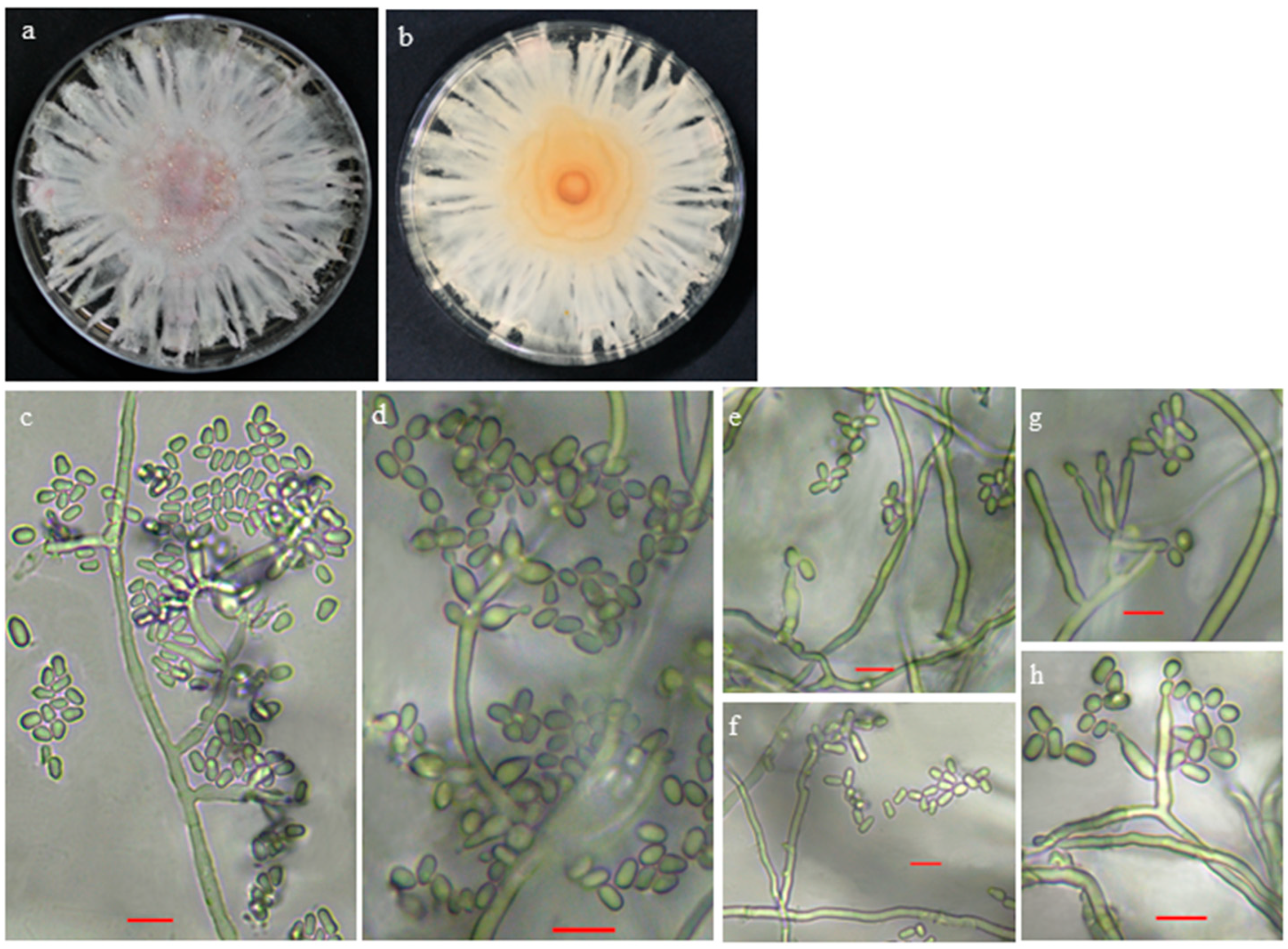
Strain ICF was isolated from soil collected in the Hualongshan National Nature Reserve. After 30 days of cultivation on 1/4 SDAY at 24 °C under a relative humidity of (70 ± 6)% and in complete darkness, the colony of strain ICF exhibited white mycelia on the obverse side, and the central region transitioned to pink over time and produced transparent exudates (Figure 1a,b). The mycelia were covered with white spores and a powdery substance. The reverse side of the colony was yellow with a white edge. Mycelia were colorless, smooth, septate, branching, and 2.0–4.0 µm in diameter. The conidiophores were cylindrical and bore 1–6 phialides; these phialides exhibited diverse morphologies, typically with cylindrical, finger-like, or swollen basal portion, each culminating in a constricted neck at the apex. The conidia were cylindrical to fusiform, measuring 2.0–10.0 × 1.5–2.5 µm (Figure 1c–h). These morphological characteristics align with descriptions of I. cateniobliqua in Volume 43 of Flora Fungorum Sinicorum [35]. Consequently, strain ICF was preliminarily identified as I. cateniobliqua.
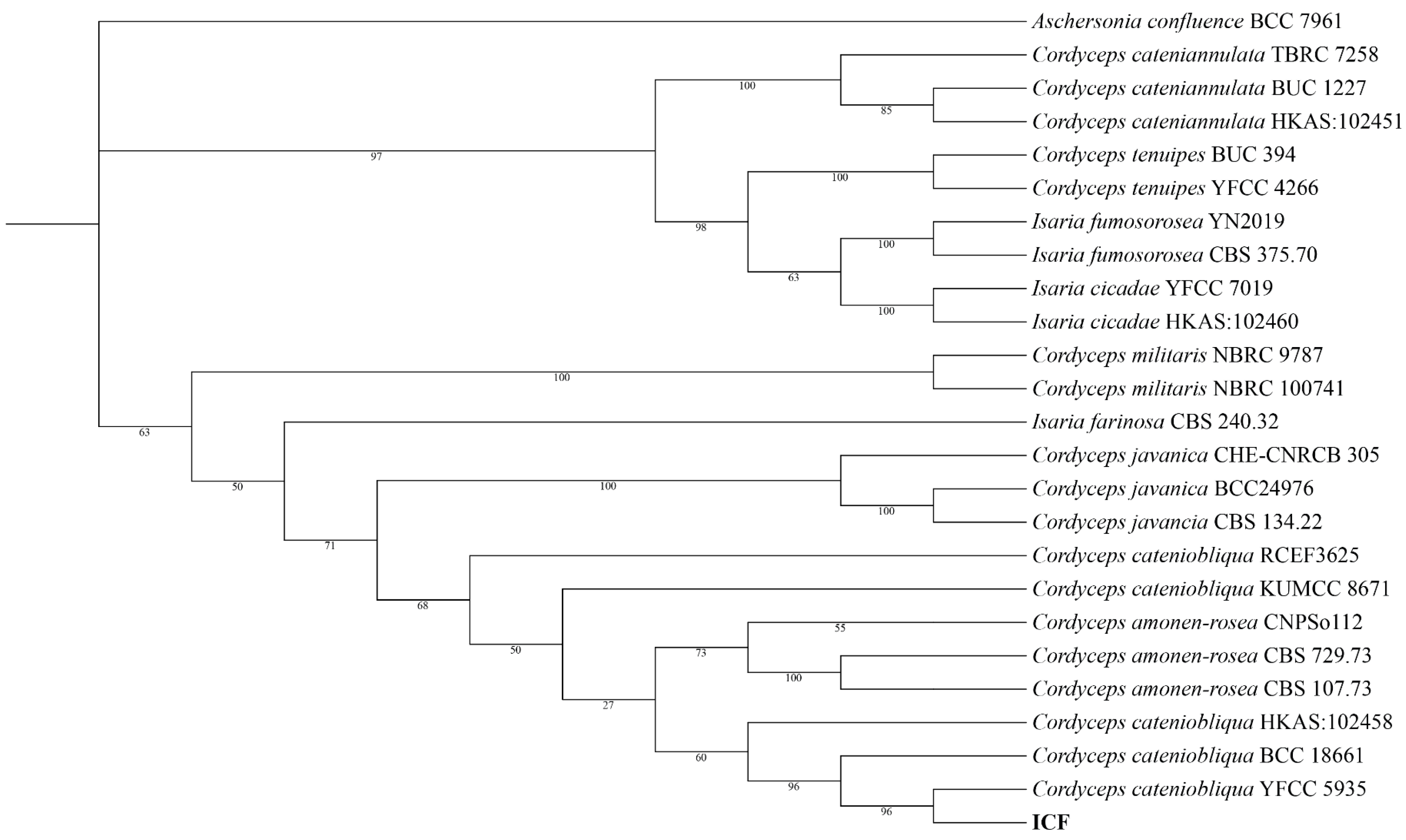
The phylogenetic tree was established with Aschersonia confluence BCC 7961 as the outgroup. The strain ICF and Cordyceps cateniobliqua YFCC 5935 were clustered in the same branch (Figure 2). After morphological and molecular identification, ICF was I. cateniobliqua.

3.2. Optimum Culture Temperature for the ICF

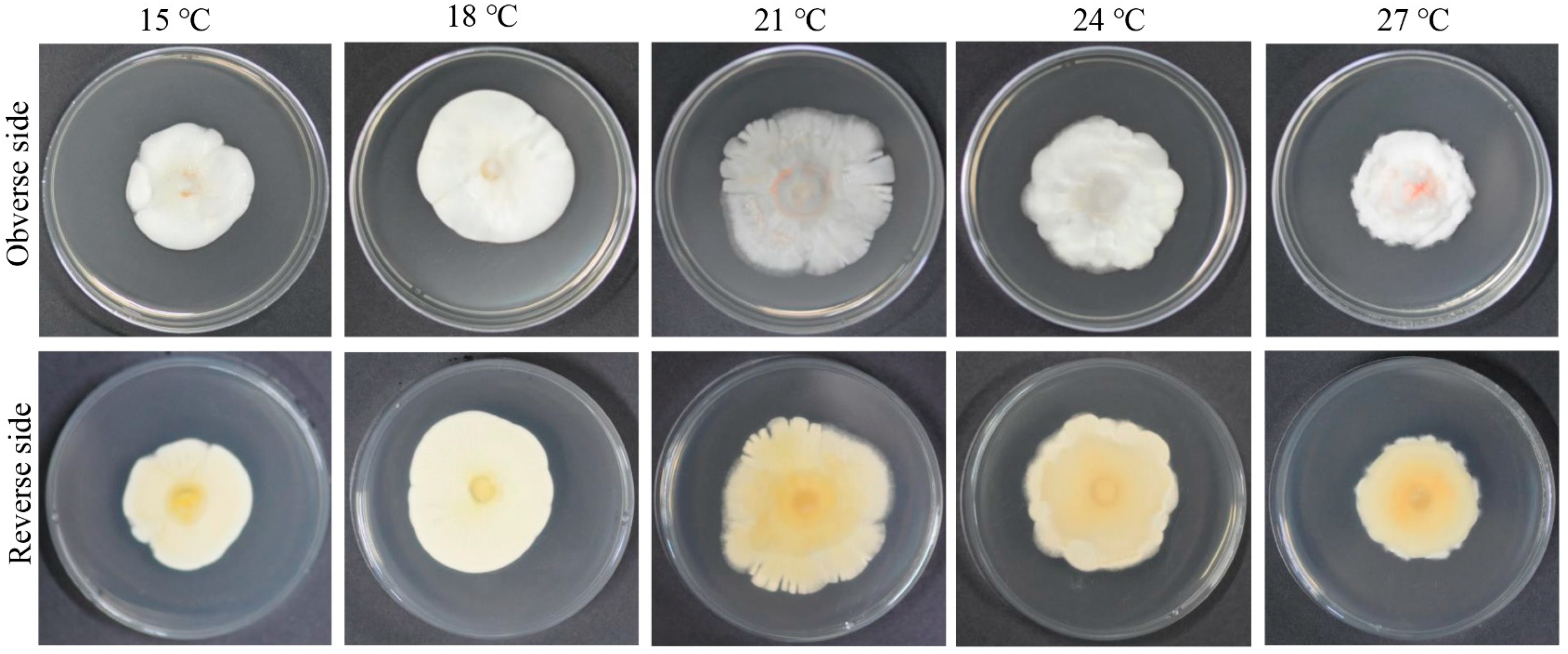
The colony morphology of strain ICF cultured at 15–27 °C under a relative humidity of (70 ± 6)% and in complete darkness for 15 days is shown in Figure 3. The growth rate of strain ICF at 15–21 °C increased in a temperature-dependent manner. At 21 °C, the strain exhibited the highest growth rate of 2.67 ± 0.153 mm/d, while inhibition was observed at 27 °C. When the temperature was 15 °C and 18 °C, the obverse side of the colony was white, and the reverse side was milky-white. At 21–27 °C, the obverse side of the colony was white with some pink mycelium in the middle, the colony edge exhibited a petal-like pattern, and the reverse side was yellow.

3.3. Optimum Liquid Medium for the ICF

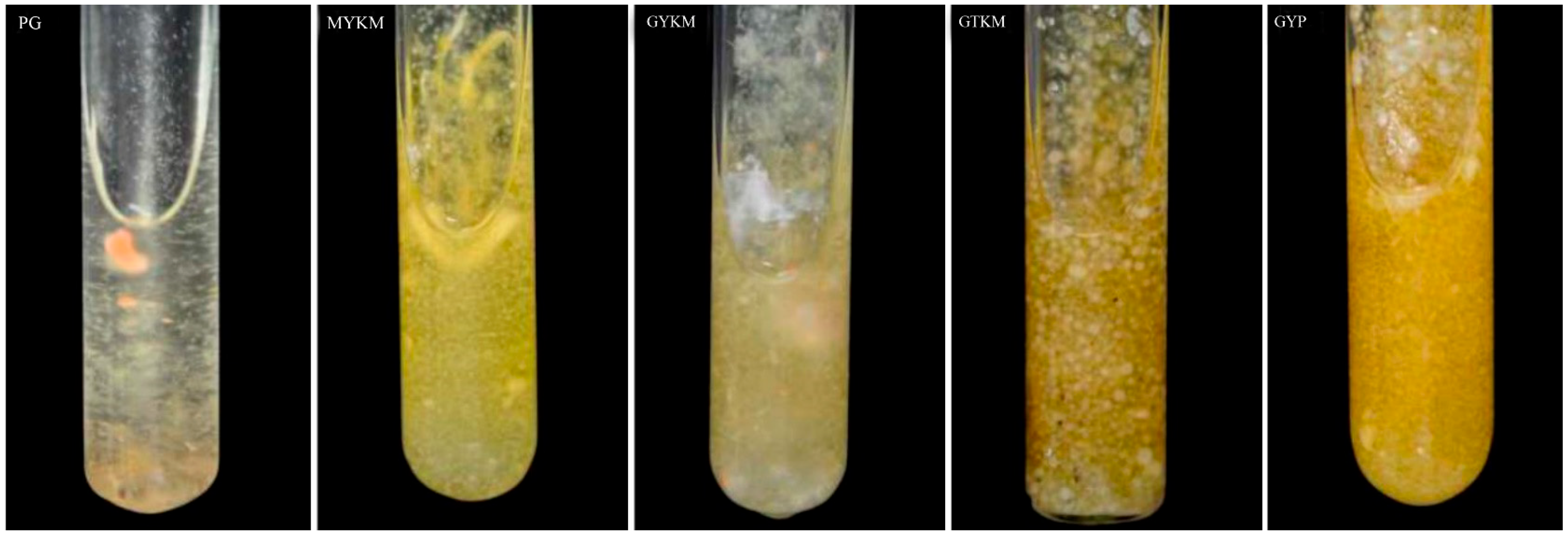
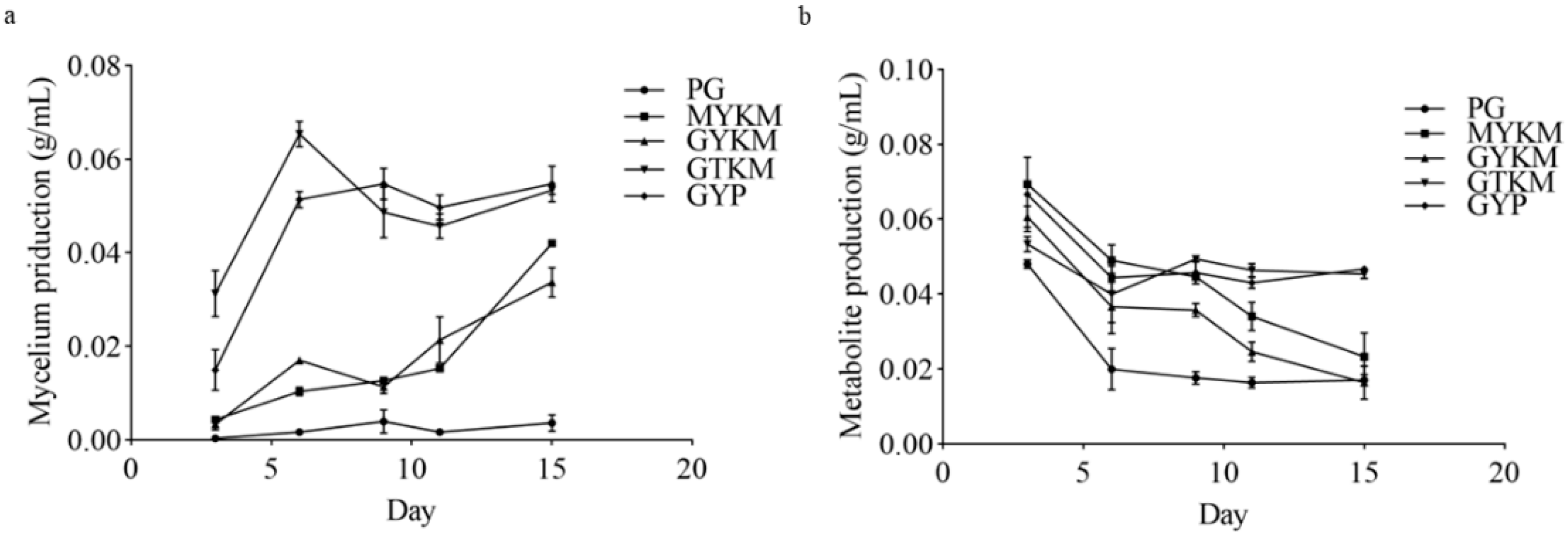
After 15 days of cultivation in five liquid media, the colonial morphology of strain ICF is shown in Figure 4. Significant differences in mycelial color and density were observed across the media. In Potato-Glucose (PG) medium, the culture appeared to be beige with sparse, primarily granular mycelia exhibiting a pink hue. In Glucose-Tussah silkworm pupa powder (GTKM) and Glucose-Yeast Extract-Peptone (GYP) media, the cultures were yellow with dense, spherical granular mycelia. The mycelium and metabolite production of strain ICF in different media is shown in Figure 5. Mycelium production peaked in GTKM medium, reaching 0.065 ± 0.0046 g/mL on day 6; thereafter, it exhibited an initial decline followed by a subsequent increase with prolonged cultivation time. Metabolite production was significantly higher in GTKM medium than in the other media, reaching 0.048 ± 0.0016 g/mL on day 9, then declined with prolonged cultivation. These results indicate that the Glucose-Tussah silkworm Pupa Powder (GTKM) medium is optimal for the growth of strain ICF.

3.4. Effect of Subculture in GTKM Culture Medium on the Activity of Strain ICF

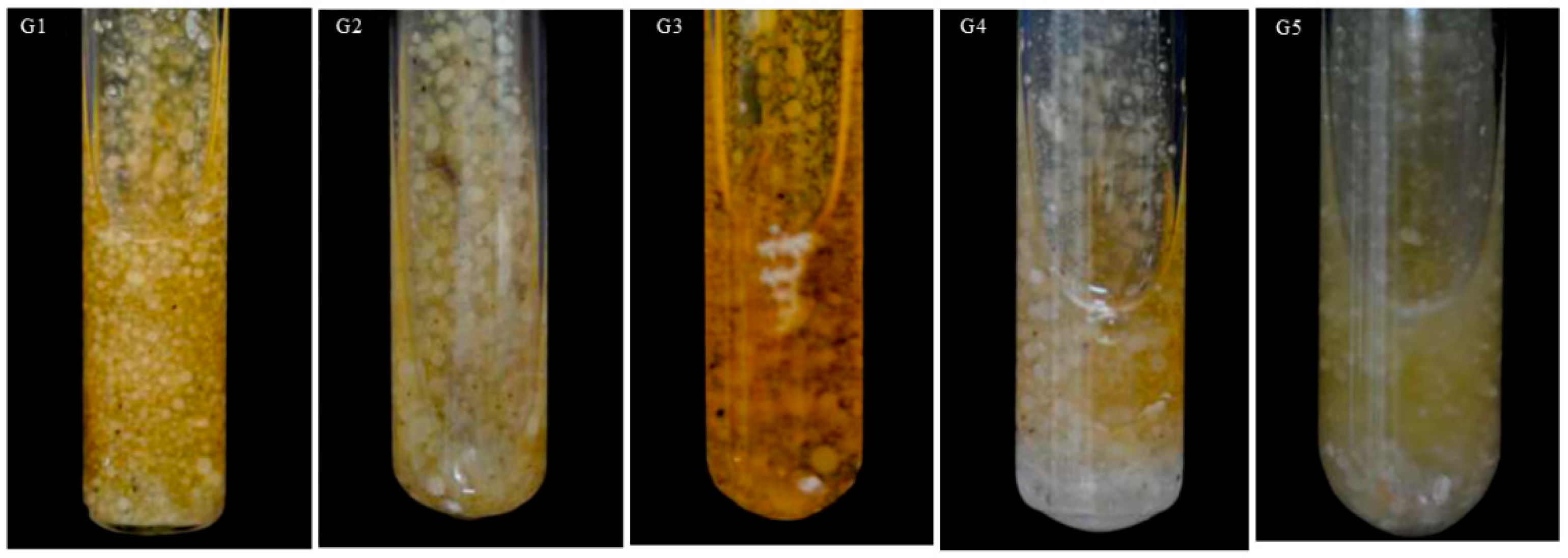
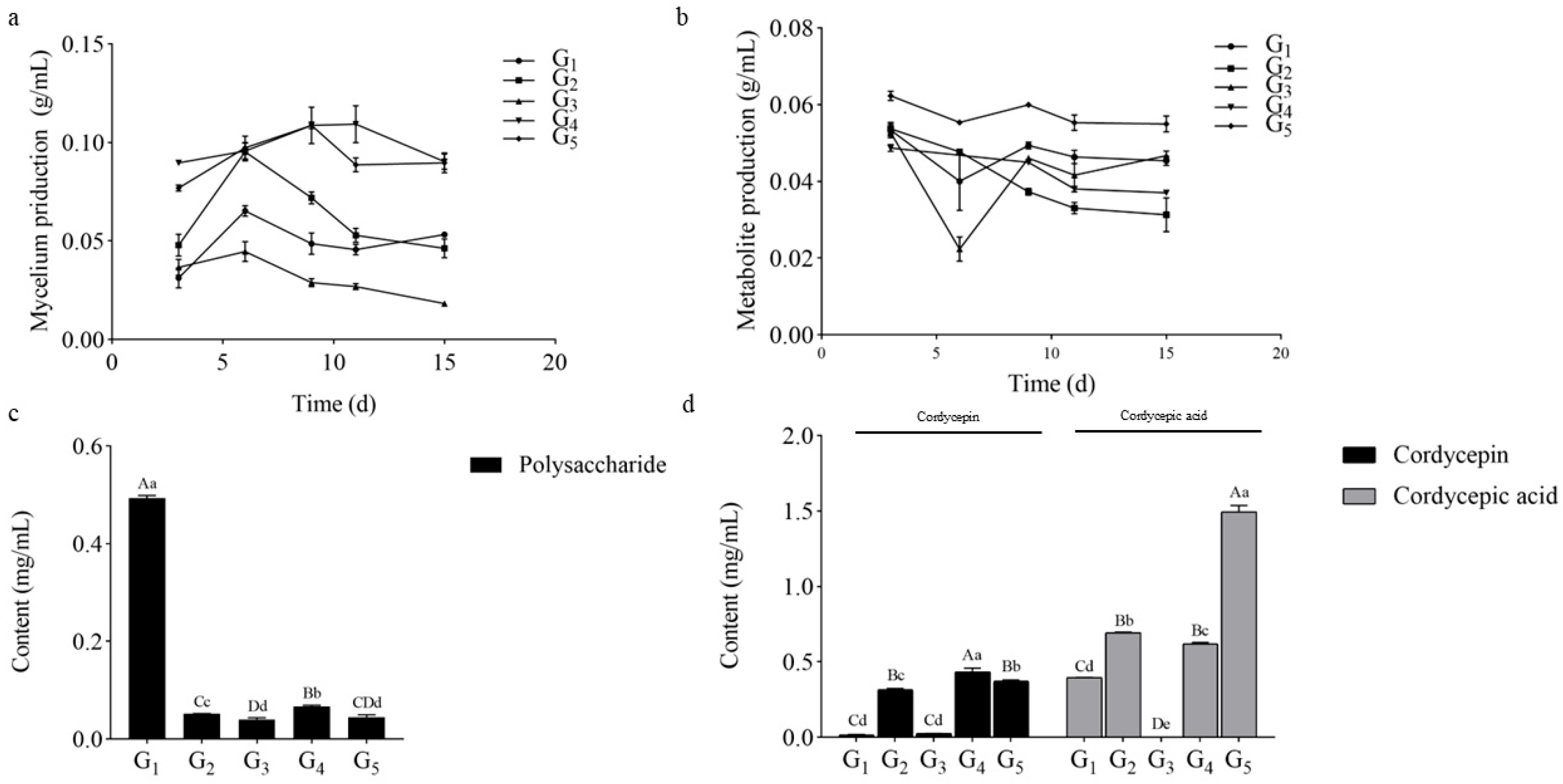
Based on the mycelium and metabolite production of strain ICF in different culture media, the GTKM medium was identified as optimal for its growth. Consequently, strain ICF was subjected to five successive subcultures in GTKM medium. Figure 6 shows the morphological characteristics of strain ICF across the five generations, revealing variations in colony color and density. Mycelium production is presented in Figure 7a. The highest mycelium production was observed in the fourth generation (G4), with values of 0.1087 ± 0.00289 g/mL on day 9 and 0.109 ± 0.0162 g/mL on day 12; no significant difference was found between these values. The timing of peak mycelium production was delayed in later generations. For generations G1 to G3, the highest mycelium production occurred at day 6 of cultivation, whereas for G4 and G5, it was observed at day 12. Metabolite production is shown in Figure 7b. The metabolite production in G5 was significantly higher than in the other generations, reaching 0.06 ± 0.00152 g/mL on day 9. Across all generations, the lowest metabolite production occurred on day 6, and the highest on day 9. The concentrations of cordycepin and cordycepic acid in the 15-day fermentation broth were determined by LC-MS. The standard curves were as follows: for cordycepin, y = 1.14064e + 006x, R2 = 0.9980; for cordycepic acid, y = 813.217x, R2 = 0.9988. The contents of cordycepin and cordycepic acid in relation to subculture generation are shown in Figure 7d. The highest cordycepin content was observed in G4 at 0.434 ± 0.0439 mg/mL, and the highest cordycepic acid content was observed in G5 at 1.494 ± 0.321 mg/mL. A standard curve for polysaccharide quantification was established using glucose as the standard: y = 0.0065x + 0.0972, R2 = 0.9953. The highest polysaccharide content was observed in G1 at 0.494 ± 0.00493 mg/mL, and it subsequently decreased with increasing subculture generations.
The hydroxyl radical scavenging activity of metabolites from generations G1 to G5 is shown in Table 2. From G1 to G4, the IC50 values for hydroxyl radical scavenging activity progressively decreased, reaching the lowest value of 1.807 mg/mL in G4.

4. Discussion

Isaria fungi are highly diverse and globally distributed. They are widely recognized both as traditional Chinese medicinal materials and entomopathogenic fungi. The I. cateniobliqua strain ICF investigated in this study was isolated from soil using third-instar Galleria mellonella larvae as bait. Active components including cordycepic acid, cordycepin, and polysaccharides were detected in its mycelium, providing a foundation for the subsequent development and utilization of I. cateniobliqua.
The mycelium production, spore production, and bioactive compound production of Isaria strains are influenced by multiple cultivation factors, including the types and ratios of carbon and nitrogen sources, inoculation density, fermentation temperature, cultivation duration, agitation speed, light quality, and photoperiod [36]. In this study, the soil-isolated strain ICF was used as the experimental material. The optimum growth temperature for strain ICF was determined to be 21 °C based on the average mycelial growth rate, providing a reference temperature for the cultivation of I. cateniobliqua. As temperature increased, the average mycelial growth rate of strain ICF initially increased and then decreased. This trend is consistent with observations reported by Li [37] for I. cicadae, whose mycelium growth rate also exhibited initial acceleration followed by deceleration with increasing temperature. Following temperature optimization, the selection of carbon and nitrogen sources—key components of the culture medium—was investigated. The medium yielding the highest mycelium and metabolite production for the strain ICF was the glucose-tussah silkworm pupa powder formulation. This may be attributed to the fact that tussah pupa powder serves as a complex nitrogen source, rich in proteins, free amino acids, vitamins, and growth factors, which aligns more closely with the natural nutritional requirements of entomopathogenic fungi, thereby providing I. cateniobliqua with comprehensive nitrogen and growth-promoting substances.
With successive subculture generations, the yields of both mycelia and metabolites, the contents of active substances such as cordycepin, cordycepic acid, and polysaccharides, respectively, as well as the antioxidant and insecticidal activities of the metabolites, undergo corresponding alterations [23,26]. This study investigated changes in mycelium production, metabolite production, cordycepin content, cordycepic acid content, polysaccharide content, and metabolite antioxidant activity during the subculture of strain ICF. Under identical cultivation conditions, the mycelium production of I. cateniobliqua strain ICF increased, and its growth activity gradually rose during the cultivation of generations G1 to G4. Subsequently, with further increases in subculture generations, the mycelium production gradually decreased, and the growth activity of the strain declined. This is consistent with reports on edible fungi [38] and O. sinensis [39], where mycelium production during subculture initially increased and then decreased with increasing generations. The production of metabolites during subculture demonstrated that metabolite production in G5 was significantly higher than in other generations. Furthermore, within each generation, the yield was lowest on day 6 and highest on day 9. These findings indicate that the growth rate of I. cateniobliqua mycelium is not entirely consistent with the accumulation of metabolites. This conclusion is consistent with the findings of Wang [40] on the variation patterns of nucleoside during the subculture of O. sinensis.
By comparing the changes in polysaccharides, cordycepin, and cordycepic acid contents revealed that mycelium polysaccharide content was highest in G1 and gradually decreased with increasing subculture generations. The decline in the content of active components such as polysaccharides during subculturing is a common form of latent degeneration in filamentous fungi, representing a physiological decline process that ultimately leads to continuously decreasing polysaccharide content in later subculture stages [26,41]. Under the same conditions, the mycelium production of strain ICF was the highest at G4, indicating the highest mycelial activity and the most vigorous growth at this generation. Cordycepin content peaked in G4, whereas cordycepic acid content peaked in G5, suggesting that cordycepic acid accumulation in I. cateniobliqua requires a longer metabolic cycle. The antioxidant activity of strain ICF during subculturing was relatively high in G4, after which hydroxyl radical scavenging ability gradually decreased with increasing subculture generations. Qian [42] demonstrated that the in vitro antioxidant activity of Morchella importuna mycelium initially increased and then decreased with increasing subculture generations, a trend that is generally consistent with the performance of strain ICF in this study. When subcultured to G4, the strain was likely subjected to environmental stress, which typically triggers a shift in metabolic focus from growth-oriented primary metabolism to defense- or competition-oriented secondary metabolism. The synthesis of cordycepin requires substantial precursors such as adenosine and energy consumption, creating metabolic fluxes that directly compete with polysaccharide biosynthesis. Consequently, resources are preferentially allocated to cordycepin production, leading to its peak accumulation at G4. In contrast, polysaccharide synthesis is inhibited due to resource limitation, resulting in decreased content during this period. This metabolic shift aligns with reports on P. hepiali during subculturing, where adenosine and polysaccharide contents declined in the mid-to-late stages [26]. This pattern reflects a common trade-off between primary and secondary metabolite accumulation in filamentous fungi under continuous cultivation stress; however, the specific molecular mechanisms require further investigation. Continuous subculturing induces alterations in the content of bioactive components. Therefore, in large-scale industrial production, the number of subculture generations should be regulated in accordance with product specifications, and targeted measures should be adopted during subculturing and strain preservation to mitigate strain degeneration. This study has initially elucidated the effects of subculture cycles on the bioactive components of I. cateniobliqua. Nevertheless, variations in metabolic phenotypes among strains subjected to different subculture cycles, as well as their intrinsic regulatory mechanisms, remain to be further investigated. Subsequent research will focus on I. cateniobliqua strains subjected to varying subculture cycles, conduct systematic metabolic profiling, screen key metabolic markers closely associated with bioactive component biosynthesis and strain stability, and thereby provide a robust scientific basis for the long-term preservation, standardized subculturing, and efficient industrial utilization of this strain.

5. Conclusions

The optimum growth temperature for I. cateniobliqua strain ICF was 21 °C. In GTKM liquid medium containing glucose-tussah silkworm pupa powder supplemented with KH2PO4 and MgSO4, both mycelium production and metabolite production performed optimally. During continuous subcultivation, mycelium production and cordycepin content peaked in the fourth generation; metabolite production and cordycepic acid content reached their highest levels in the fifth generation; polysaccharide content reached its highest level in the first generation; hydroxyl radical scavenging activity was strongest in the fourth generation. These findings provide a theoretical basis for subsequent strain preservation, degeneration prevention, and scaled fermentation. Nevertheless, this study has certain limitations: the fermentation experiments were conducted only at the shake-flask scale, and the conclusions therefore require further validation when scaled up to a bioreactor level. Future work should thus focus on verifying the optimal cultivation and subculturing strategies in fermenters, laying the groundwork for eventual industrial application.

Author Contributions

Conceptualization, D.W.; methodology, J.S. and D.W.; software, H.Z. and J.S.; validation, J.S. and D.W.; formal analysis, J.S.; investigation, J.S.; resources, D.W.; data curation, H.Z. and J.S.; writing—original draft preparation, H.Z.; writing—review and editing, H.Z. and D.W.; visualization, H.Z. and D.W.; supervision, D.W.; project administration, D.W.; funding acquisition, D.W. All authors have read and agreed to the published version of the manuscript.

Funding

This research was funded by the National Key Research and Development Program of China (2022YFD1401001).

Data Availability Statement

The original contributions presented in this study are included in the article. Further inquiries can be directed to the corresponding author.

Acknowledgments

The authors thank all members from Lab of Insect Related Resources (LIRR) in Northwest A&F University.

Conflicts of Interest

The authors declare no conflicts of interest.

References

  1. Qin, L.X.; Wang, Y.Q.; Li, C.R.; Wang, J.C.; Sun, C.S.; Wang, C.L. The content of main chemical constituents of coremium in different cultivation period of Isaria cicadae and the effects of compound prescription containing I. cicadae coremium on improving sleep of mice. Mycosystema 2020, 39, 362–371. [Google Scholar]
  2. Sun, C.S.; Wang, Y.Q.; Zhang, Z.L.; Liou, Y.; Zhou, H.H. Distinctive quality control method for solid-state fermented Isaria cicadae from strain Ic-17-7 and application in a rat model of type 2 diabetes. Chin. J. Nat. Med. 2021, 19, 921–929. [Google Scholar] [CrossRef]
  3. Xu, J.; Tan, Z.C.; Shen, Z.Y.; Shen, X.J.; Tang, S.M. Cordyceps cicadae polysaccharides inhibit human cervical cancer hela cells proliferation via apoptosis and cell cycle arrest. Food. Chem. Toxicol. 2021, 148, 111971. [Google Scholar] [CrossRef] [PubMed]
  4. Zhang, X.; Li, J.; Yang, B.; Leng, Q.; Li, J.; Wang, X.; Lu, J.; Olatunji, O.J.; Tang, J. Alleviation of Liver Dysfunction, Oxidative Stress, and Inflammation Underlines the Protective Effects of Polysaccharides from Cordyceps cicadae on High Sugar/High Fat Diet-Induced Metabolic Syndrome in Rats. Chem. Biodivers. 2021, 18, e2100065. [Google Scholar] [CrossRef] [PubMed]
  5. Mascarin, G.M.; Dunlap, C.A.; Barrigossi, J.A.; Quintela, E.D.; de Noronha, N.C., Jr. First record of epizootics in the ocola skipper, Panoquina ocola (Lepidopera: Hesperiidae), caused by Isaria tenuipes in flooded rice fields of Central Brazil. J. Appl. Microbiol. 2017, 122, 1020–1028. [Google Scholar] [CrossRef]
  6. Paulina, V.A.; Sergio, S.P.; Blanco, C.A. Activity of oil-formulated conidia of the fungal entomopathogens Nomuraea rileyi and Isaria tenuipes against lepidopterous larvae. J. Invertebr. Pathol. 2010, 103, 145–149. [Google Scholar] [CrossRef]
  7. Supothina, S.; Srisanoh, U.; Nithithanasilp, S.; Tasanathai, K.; Luangsa-Ard, J.J.; Li, C.R.; Isaka, M. Beauvericin production by the Lepidoptera pathogenic fungus Isaria tenuipes: Analysis of natural specimens, synnemata from cultivation, and mycelia from liquid-media fermentation. Nat. Prod. Bioprospect. 2011, 1, 112–115. [Google Scholar] [CrossRef]
  8. Prommaban, A.; Sriyab, S.; Marsup, P.; Neimkhum, W.; Sirithunyalug, J.; Anuchapreeda, S.; To-Anun, C.; Chaiyana, W. Comparison of chemical profiles, antioxidation, inhibition of skin extracellular matrix degradation, and anti-tyrosinase activity between mycelium and fruiting body of Cordyceps militaris and Isaria tenuipes. Pharm. Biol. 2022, 60, 225–234. [Google Scholar] [CrossRef]
  9. Chang, C.; Qin, L.W.; Yu, W.J.; Liu, F.X.; Wu, X.L.; Wang, Q.; Fan, Y.G. Optimization of ultrasound extraction of N6-(2-hydroxyethyl)-adenosine from Isaria tenuipes using response surface methodology. Mycosystema 2019, 38, 1559–1569. [Google Scholar]
  10. Seo, D.S.; Kang, J.K.; Jeong, M.H.; Kwon, M.; Park, C.B. Anti-diabetic Effects of Isaria tenuipes in OLETF Rats as an Animal Model of Diabetes Mellitus Type II. J. Food Hyg. Saf. 2013, 28, 152–157. [Google Scholar] [CrossRef]
  11. Takano, F.; Yahagi, N.; Yahagi, R.; Takada, S.; Yamaguchi, M.; Shoda, S.; Murase, T.; Fushiya, S.; Ohta, T. The liquid culture filtrates of Paecilomyces tenuipes (Peck) Samson (=Isaria japonica Yasuda) and Paecilomyces cicadae (Miquel) Samson (=Isaria sinclairii (Berk.) Llond) regulate Th1 and Th2 cytokine response in murine Peyer’s patch cells in vitro and ex vivo. Int. Immunopharmacol. 2005, 5, 903–916. [Google Scholar]
  12. Purnima, D.; Binita, B.; Priyanka, S.; Kanta, H.L.; Sharma, K.K.; Mohanasundaram, A.; Chandra, B.B.; Ratna, K.; Trishnamoni, G. Molecular characterization of an Isaria fumosorosea (Wize) native strain, and its pathogenicity on Eublemma amabilis (Lepidoptera: Noctuidae). Egypt. J. Biol. Pest Control 2022, 32, 122. [Google Scholar]
  13. Zhang, J.; Liu, S.S.; Yuan, W.Y.; Wei, J.J.; Zhao, Y.X.; Luo, D.Q. Carotane-type sesquiterpenes from cultures of the insect pathogenic fungus Isaria fumosorosea. J. Asian Nat. Prod. Res. 2019, 21, 234–240. [Google Scholar] [CrossRef]
  14. Dymarska, M.; Grzeszczuk, J.; Urbaniak, M.; Janeczko, T.; Pląskowska, E.; Stępień, Ł.; Kostrzewa-Susłow, E. Glycosylation of 6-methylflavone by the strain Isaria fumosorosea KCH J2. PLoS ONE 2017, 12, e0184885. [Google Scholar] [CrossRef] [PubMed]
  15. Dymarska, M.; Janeczko, T.; Kostrzewa-Susłow, E. Glycosylation of Methoxylated Flavonoids in the Cultures of Isaria fumosorosea KCH J2. Molecules 2018, 23, 2578. [Google Scholar] [CrossRef]
  16. Liu, F.; Xiang, M.C.; Guo, Y.L.; Wu, X.L.; Lu, G.X.; Yang, Y.; Liu, X.Z.; Chen, S.J.; Zhang, G.Z.; Shi, W.P. Culture conditions and nutrition requirements for the mycelial growth of Isaria farinosa (Hypocreales: Cordycipitaceae) and the altitude effect on its growth and metabolome. Sci. Rep. 2018, 8, 15623. [Google Scholar] [CrossRef] [PubMed]
  17. Yang, X.H.; Yang, Y.M.; Zhao, L.L.; Chen, L.X.; Wang, J.; Yan, L.; Ma, J.F. Enrichment of Isaria felina culture with selenium enhances its in vivo antitumor effects on H22 hepatoma via decreasing the expression of VEGF. Anti-Cancer Agents Med. Chem. 2023, 23, 1689–1696. [Google Scholar] [CrossRef]
  18. Shi, X.W.; Chen, J.J.; Yu, G.Y.; Zhang, Y.Y.; Chen, L.X.; Zhao, L.L.; Yang, Y.M.; Wang, J.; Yan, L.; Yang, X.H. Therapeutic effects of Isaria felina combined with cyclophosphamide in hepatoma H22 tumor-bearing mice. Acta Lab. Anim. Sci. Sin. 2024, 32, 362–368. [Google Scholar]
  19. Tang, Y.; Meng, Y.; Wang, D.; Feng, J.N. Identification of four entomogenous fungi and the inhibitory effect of their ethanol extracts on Hela cells. Microbiol. China 2021, 48, 797–810. [Google Scholar]
  20. Zhang, D.L.; Wang, X.D.; Lu, R.L.; Li, K.L.; Hu, F.L. Influence of liquid or solid culture conditions on the volatile components of mycelia of Isaria cateinannulata. Acta Microbiol. Sin. 2011, 51, 1616–1624. [Google Scholar]
  21. Zhang, J.; Wang, C.R.; Yao, T. Active components in extract from Isaria cateinannulata fermentative liquid. Mycosystema 2019, 38, 545–559. [Google Scholar]
  22. Du, D.C.; Liu, S.M.; Pu, Z.X.; Lv, J.; Lu, L.M. Virulence determination of Isaria javanica MSC-F1 against Panonychus citri and optimization of the liquid fermentation process. Chin. J. Biol. Control 2025, 41, 44–53. [Google Scholar]
  23. Huang, Y.; Li, M.Y.; Liu, S.; Liu, M.K.; Ding, C.Y.; Qi, Y.Z.; Yan, X.L.; Qian, Y.B.; Xu, Y.F.; Yan, F.F. Optimization of culture conditions for a Highly virulent Lecanicillium psalliotae and its pathogenicity against green peach aphid. Chin. J. Biol. Control 2021, 37, 349–355. [Google Scholar]
  24. Shi, H.L. Study on Semi-Artificial Cultivation of Cordyceps cicadae. Master’s Thesis, Northwest A&F University, Yangling, China, 2025. [Google Scholar]
  25. Jing, L.L.; Jiang, L.; Xie, T.; Zhang, X.X.; Hong, B.; Jia, Y.X. Influences of subculture on the virulence to Bemisia tabaci and conidial production of the entomopathogenic fungus Verticillium lecanii. Plant Prot. 2020, 46, 70–76. [Google Scholar]
  26. He, H. Study on the Degradation Mechanism of Samsoniella hepiali Strains During Subculture. Master’s Thesis, Qinghai University, Xining, China, 2024. [Google Scholar]
  27. Li, D.X.; Shi, J.D.; Li, H.J.; Wang, D. Diversity and vertical distribution of Lepidoptera insect communities in the Hualong Mountain National Nature Reserve, Shaanxi. J. Northwest For. Univ. 2022, 37, 177–182+266. [Google Scholar]
  28. Masoudi, A.; Koprowski, J.L.; Bhattarai, U.R.; Wang, D. Elevational distribution and morphological attributes of the entomopathogenic fungi from forests of the Qinling Mountains in China. Appl. Microbiol. Biotechnol. 2018, 102, 1483–1499. [Google Scholar] [CrossRef]
  29. Meng, Y.; Wellabada, H.D.P.; Wang, D. A New Strain of Lecanicillium uredinophilum Isolated from Tibetan Plateau and Its Insecticidal Activity. Microorganisms 2022, 10, 1832. [Google Scholar] [CrossRef]
  30. Meng, Y.; Tang, H.Y.; Shi, J.D.; Wang, D. Three fungal strains isolated from stroma of Ophiocordyceps sinensis and their culture conditions. Mycosystema 2021, 40, 1991–2007. [Google Scholar]
  31. Zhang, M.Y.; Zhu, Z.M.; Yao, D.; Chen, Q.H.; Bao, X.W.; Chen, J.W.; Zhu, J.W.; Ma, B. Simultaneous detection of cordycepin, D-mannitol, adenosine and inosine in Cordyceps militaris by HILIC-MS/MS. Chin. J. Bioproc. Eng. 2019, 17, 430–436. [Google Scholar]
  32. Wang, Q.; Hao, W.; Guo, C.; Cao, H.; Wang, B.; Li, X.; Yu, R.; Xu, L.; Li, J. The regenerative wound healing effects and molecular mechanism of Isaria cicadae Miquel rice fermentation extract. Appl. Microbiol. Biotechnol. 2025, 109, 40. [Google Scholar] [CrossRef]
  33. DuBois, M.; Gilles, A.K.; Hamilton, K.J.; Rebers, P.A.; Smith, F. Colorimetric Method for Determination of Sugars and Related Substances. Anal. Chem. 2002, 28, 350–356. [Google Scholar] [CrossRef]
  34. Zhou, S.Y.; Huang, G.L.; Chen, G.Y. Extraction, structural analysis, derivatization and antioxidant activity of polysaccharide from Chinese yam. Food Chem. 2021, 361, 130089. [Google Scholar] [CrossRef]
  35. Liang, Z.Q.; Liu, A.Y.; Liu, Z.Y. Paecilomyces Isaria Taifanglania. In Flora Fungorum Sinicorum; Science Press: Beijing, China, 2013; Volume 43, pp. 106–108. [Google Scholar]
  36. Lei, B.X.; He, J.; Kang, J.C.; Yu, X.; Gui, J.W.; Wen, T.C. Optimization of selected parameters affecting N6-(2-Hydroxyethyl)-adenosine production by Isaria tenuipes strain E3 grown in submerged culture. Acta Edulis Fungi 2014, 21, 63–66. [Google Scholar]
  37. Li, H.J. Investigation and Utilization of Cicada Fungi in Sichuan Province. Master’s Thesis, Northwest A&F University, Yangling, China, 2022. [Google Scholar]
  38. Zhang, Z. The Degeneration of Volvariella volvacea Spawn Preservation by Mycelium Subculture. Master’s Thesis, Kunming University of Science and Technology, Kunming, China, 2016. [Google Scholar]
  39. Zhang, W.P.; Chen, W.X.; Wang, N.; Zhang, H.S.; Zhang, W.; Zhang, J.S. Effect of subculture on quality and antioxidant activity of Ophiocordyceps sinensis mycelia. Food Res. Dev. 2024, 45, 1–7+98. [Google Scholar]
  40. Wang, N. Analysis of Nucleoside Changes and Antioxidant Activity During Subculture of Ophiocordyceps sinensis. Master’s Thesis, Guizhou Normal University, Guiyang, China, 2023. [Google Scholar]
  41. Liu, J.; Zhou, Y.; Wang, Q.; Zhang, C.Y.; Xue, Q.; Zhu, C.J. Variation of active substance of stroma in subculture of Cordyceps militaris on Antheraea pernyi. Mycosystema 2020, 39, 2328–2337. [Google Scholar]
  42. Qian, K.Q.; Cheng, P.P.; Fan, J.P.; Xu, A.R.; Yang, D.; Zhang, B.; Li, X. Relationship Between the Subculture Times and Strain Degradation of Morchella importuna. J. Fungal Res. 2021, 19, 277–284. [Google Scholar]
Figure 1. Morphological characteristics of strain ICF. (a,b): The obverse and reverse of the strain ICF cultured for 30 d; (ch): The microscopic features of the strain ICF. Bar = 10 μm.
Separations 13 00052 g001
Figure 2. Phylogenetic tree based on ITS, TEF, nrLSU and nrSSU sequences by using PhyloSuite.
Separations 13 00052 g002
Figure 3. Colony characteristics of ICF at different temperatures.
Separations 13 00052 g003
Figure 4. ICF growth in different culture media. The composition of PG culture medium was composed of potato and glucose; MYKM culture medium was composed of mannitol and yeast extract; GYKM culture medium was composed of glucose and yeast extract; GTKM culture medium was composed of glucose and tussah silkworm pupa powder; and GYP culture medium was composed of glucose, yeast extract, and peptone.
Separations 13 00052 g004
Figure 5. Mycelium and metabolite production of strain ICF in different media. (a): Mycelium production, (b): Metabolite production.
Separations 13 00052 g005
Figure 6. Morphological characteristics of strain ICF across generations (G1–G5) under GTKM subculture.
Separations 13 00052 g006
Figure 7. Effect of GTKM subculture on ICF activity of strains. (a): Mycelium production, (b): Metabolite production, (c): Polysaccharide content, (d): Cordycepin and Cordycepic acid content. In figures (c,d), lowercase letters indicate significant differences in value at p < 0.05, and uppercase letters indicate significant differences in value at p < 0.01.
Separations 13 00052 g007
Table 1. The constituents of five culture media.
MediumIngredient (g/L)
PGPotato 200.0, glucose 20.0
MYKMMannose 22.0, yeast extract 2.0, KH2PO4 1.0, MgSO4 0.5
GYKMGlucose 22.0, yeast extract 2.0, KH2PO4 1.0, MgSO4 0.5
GTKMGlucose 20.0, tussah silkworm pupa powder 10.0, KH2PO4 1.0, MgSO4 0.5
GYPGlucose 20.0, yeast extract 10.0, peptone 10.0
Table 2. OH scavenging capacity of GTKM subculture metabolites of strain ICF.
Generation of CultivateRegression EquationΧ2IC50 (mg/mL)95% Confidence IntervalIC90
(mg/mL)
95% Confidence Interval
G1y = −1.207 + 1.232x7.5979.5467.876–12.351104.69360.227–239.851
G2y = −0.871 + 1.935x4.7322.8022.514–3.13312.96410.932–16.026
G3y = −0.695 + 1.817x11.9592.4122.119–2.70712.23510.232–15.315
G4y = −0.494 + 1.923x15.1931.8071.410–2.1928.3886.630–11.654
G5y = −0.845 + 2.178x8.4112.4442.191–2.6999.4738.241–11.208
Disclaimer/Publisher’s Note: The statements, opinions and data contained in all publications are solely those of the individual author(s) and contributor(s) and not of MDPI and/or the editor(s). MDPI and/or the editor(s) disclaim responsibility for any injury to people or property resulting from any ideas, methods, instructions or products referred to in the content.