Article

Adsorption of Nystatin from Aqueous Solutions Using Nanoclay: Performance, Mechanisms, and Sustainability Aspects


by
Anna Karoline Freires de Sousa
1,
Anna Katharina Medeiros de Brito
1,
Hugo Guimarães Matos
1,
José Lázaro da Silva Fernandes
1,
Francisco Lucas de Lima Carneiro
1,
Francimarcio Geraldo da Silva Gambarra
1,
Wagner Brandão Ramos
1,
Tellys Lins Almeida Barbosa
2 and
Meiry Gláucia Freire Rodrigues
1,*
1
Development Laboratory of New Materials, Academic Unit of Chemical Engineering, Center for Science and Technology, Federal University of Campina Grande, Aprígio Veloso, 882—Bodocongó, Campina Grande 58429-970, PB, Brazil
2
Instituto SENAI de Inovação em Energias Renováveis, Av. Capitão-Mor Gouveia, 2770—Lagoa Nova, Natal 59063-400, RN, Brazil
*
Author to whom correspondence should be addressed.
Separations 2026, 13(2), 53; https://doi.org/10.3390/separations13020053
Submission received: 30 December 2025 / Revised: 22 January 2026 / Accepted: 27 January 2026 / Published: 2 February 2026

Abstract

The continuous release of pharmaceutical compounds into aquatic environments poses significant challenges to environmental sustainability, as conventional wastewater treatment plants are often ineffective in removing recalcitrant and bioactive molecules. In this study, the adsorption performance of nanoclay was systematically evaluated for the removal of nystatin, a polyene antifungal of emerging environmental concern, from aqueous solutions. The effects of solution pH, adsorption kinetics, equilibrium isotherms, and adsorption mechanisms were investigated under environmentally relevant conditions. Nanoclay exhibited outstanding removal efficiency, exceeding 98% across a wide pH range (3–11), thereby demonstrating strong operational robustness and minimal sensitivity to pH variations. Structural and spectroscopic analyses (XRD and FTIR) confirmed that adsorption occurred predominantly on the external surface of the nanoclay, without significant disruption of its lamellar structure, and was governed mainly by hydrophobic interactions and hydrogen bonding. Kinetic data were best described by the pseudo-second-order model, with rapid equilibrium achieved within approximately 20 min, indicating high affinity between nystatin and the adsorbent surface. Equilibrium data were best fitted by the Sips isotherm model, reflecting surface heterogeneity and a favorable adsorption process, with a high maximum adsorption capacity of approximately 911 mg/g. A preliminary cost analysis revealed low raw material costs, while energy consumption, particularly during drying, was identified as the main economic limitation. Overall, the results highlight Nanoclay as an efficient, robust, and promising adsorbent for the sustainable removal of hydrophobic pharmaceutical contaminants from water and wastewater.

1. Introduction

The continuous release of pharmaceutical compounds into aquatic environments represents a growing challenge for environmental sustainability. Increased pharmaceutical consumption, driven by population growth and expanded access to healthcare, has resulted in the widespread detection of residual drugs in surface waters, groundwater, and treated effluents. Because many pharmaceuticals are only partially metabolized, they reach wastewater treatment plants (WWTPs) that are not specifically designed to remove such micropollutants, allowing their persistence in aquatic environments and raising concerns regarding ecological impacts and long-term human exposure [1,2].
Pharmaceutical contaminants (PCs), particularly active pharmaceutical compounds (PhACs), are classified as emerging contaminants (ECs) due to their persistence, bioactivity, and adverse effects at very low concentrations (ng/L to µg/L). Their chemical stability and structural complexity hinder biodegradation, contributing to accumulation in aquatic systems and emphasizing the need for treatment strategies that combine high removal efficiency with low energy consumption, reduced operational costs, and minimal secondary pollution [3,4].
Conventional WWTPs remain limited in their ability to remove recalcitrant organic pollutants, including pharmaceuticals and heavy metals [3]. Although advanced treatment technologies—such as oxidation processes, membrane filtration, and enhanced biodegradation—can improve removal efficiencies, they are often associated with high energy demands, costly reagents, membrane fouling, and complex infrastructure [5]. These limitations restrict their widespread application, particularly in decentralized or resource-limited settings, highlighting the need for sustainable and cost-effective alternatives.
Among available treatment approaches, adsorption has emerged as a promising and resource-efficient option due to its operational simplicity, low energy requirements, potential for adsorbent regeneration, and compatibility with small-scale treatment systems [6]. The use of natural or modified low-cost adsorbents is also aligned with circular economy principles and sustainable wastewater management strategies [7].
Clays, particularly organophilic nanoclays, have attracted considerable attention as sustainable adsorbents owing to their natural abundance, low cost, and tunable surface properties. Montmorillonite-based organoclays modified with quaternary ammonium salts exhibit enhanced affinity for organic and hydrophobic contaminants, resulting from increased surface charge and amphiphilic character [8]. Cloisite 30B, an organophilic nanoclay derived from montmorillonite and modified with a methyl tallow bis(2-hydroxyethyl) quaternary ammonium salt, has demonstrated promising adsorption performance for organic pollutants while presenting a lower environmental footprint compared to conventional adsorbents such as activated carbon [9,10,11].
Despite the increasing interest in adsorption-based removal of pharmaceutical contaminants, studies specifically addressing the adsorption of polyene antifungal compounds, such as nystatin, using organophilic nanoclays remain scarce. Moreover, the influence of solution chemistry and adsorption mechanisms governing nystatin–nanoclay interactions has not been systematically evaluated under environmentally relevant conditions, representing a clear gap in the current literature.
Nystatin is widely used in human and veterinary medicine, and a significant fraction of the administered drug is excreted in its active form, reaching WWTPs and subsequently aquatic environments. Due to its chemical stability and bioactive nature, nystatin may exert ecotoxicological effects, disrupt microbial communities, and contribute to the development of antifungal resistance, raising environmental and public health concerns [12,13,14]. Conventional treatment technologies, including coagulation–flocculation, chlorination, and membrane filtration, show limited effectiveness for the removal of structurally complex antifungal compounds and may lead to high operational costs or the formation of toxic byproducts [15,16,17].
Nystatin generally exhibits low toxicity and good tolerability, particularly in topical and oral formulations, due to its poor gastrointestinal absorption and limited systemic bioavailability. Adverse effects are typically mild and transient, with nausea and gastrointestinal discomfort being the most commonly reported, although rare hypersensitivity reactions and severe dermatological responses have been documented. Early attempts at parenteral administration were discontinued because of significant systemic toxicity, including renal impairment, electrolyte imbalance, and infusion-related reactions. Nystatin also displays immunomodulatory activity, inducing pro-inflammatory cytokine release via toll-like receptor–dependent pathways, which contributes to its infusion-related toxicity. Additionally, self-aggregation and interactions with plasma lipoproteins further exacerbate systemic and renal toxicity, highlighting the need for improved formulations that reduce aggregation and inflammatory responses [18].
In this context, the present study evaluates the adsorption performance of Cloisite 30B nanoclay for the removal of nystatin from aqueous solutions, with a particular focus on sustainability-oriented treatment strategies. The effects of solution pH were investigated, and adsorption kinetics and equilibrium isotherms were analyzed to elucidate the adsorption mechanism. By employing a low-cost and efficient adsorbent, this work contributes to the development of environmentally responsible approaches for mitigating pharmaceutical contamination in water systems.

2. Materials and Methods

2.1. Materials

The adsorbent used was the nanoclay supplied by Southern Clay Products Inc., Gonzales, TX, USA [19,20,21].
The pharmaceutical compound evaluated was Nystatin (Sigma-Aldrich, St. Louis, MO, USA) and was used as received without any additional purification. All solutions were prepared using distilled water.
The main physicochemical properties of Nystatin are presented in Table 1.
The main physicochemical characteristics of Nanoclay are summarized in Table 2.

2.2. Preparation of Nystatin Solution

Nystatin was used for the preparation of a stock solution with a concentration of 0.25 mmol/L. The appropriate mass of nystatin was accurately weighed using an analytical balance (±0.1 mg) and transferred to a 500 mL volumetric flask. Distilled water was employed as the solvent. The mixture was magnetically stirred at room temperature (25 ± 2 °C) for a sufficient period to ensure complete dissolution and homogeneous dispersion of the compound. The resulting solution was visually inspected to confirm the absence of undissolved particles and was used immediately in subsequent experiments unless otherwise stated.
Initially, an absorbance vs. concentration calibration curve was constructed. Multiple dilutions of nystatin (0–0.108 mmol/L) were previously prepared, and their absorbances were measured at 273 nm in the spectrophotometer (UV-1600 Pró-Análise, Pró-Análise, Navegantes, Brazil).

2.3. Characterization

XRD analyses were performed using a Shimadzu XRD-6000 diffractometer (Shimadzu, Kyoto, Japan) operating with Cu Kα radiation (λ = 1.5406 Å) at 40 kV and 30 mA. Diffractograms were recorded within the 2θ range of 3° to 50°, with a step size of 0.02° and a scan rate of 2°/min.
Bragg’s Law
n λ = 2 d   s i n   ( θ )
was used to calculate the d-spacing gallery of the silicate layers [22].
Note: n: Diffraction order (an integer: 1, 2, 3…); λ (lambda): Wavelength of the incident radiation; d: Distance between atomic planes in the crystal; θ (theta): Angle of incidence (angle between the incident beam and the crystal plane).
FTIR spectra were obtained using a Bruker VERTEX 70 spectrometer (Bruker, Billerica, MA, USA) operating within the spectral range of 4000–500 cm−1. Samples were prepared as KBr pellets consisting of 0.007 g of clay homogenized with 0.10 g of KBr and pressed under 5 tons of pressure for 30 s.

2.4. Effect of pH

The influence of pH on Nystatin adsorption was evaluated by means of batch experiments performed across a pH range of 1–13. For each condition, 0.5 g of the nanoclay as introduced into 50 mL of a Nystatin solution at a concentration of 0.05 mmol/L. The suspensions were kept under agitation at 200 rpm and 25 °C for 1 h. Subsequently, suspension was immediately centrifuged at 4000 rpm for 30 min, and the supernatants were analyzed by visible spectrophotometry.
The removal percentage (%R) was obtained using Equation (2) [23].
% R = C i C f C i
where %R: Removal percentage; Ci: Initial concentration of Nystatin solution (mg/L); Cf: Final concentration remaining after the batch process (mg/L).

2.5. Adsorption Kinetics

The kinetic evaluation of Nystatin adsorption was carried out through controlled batch experiments employing aqueous solutions prepared at an initial concentration of 0.05 mmol/L. In each assay, 0.5 g of the nanoclay was carefully dispersed in 50 mL of the Nystatin solution, previously transferred to 125 mL flasks. The suspensions were maintained under constant orbital agitation at 200 rpm to ensure adequate solid–liquid contact, while temperature was strictly controlled at 25 °C during 30 min. After, throughout the entire procedure and were centrifuged at 4000 rpm for 30 min. Supernatants were removed and analyzed by UV–Vis spectrophotometry allowing the determination of the residual Nystatin concentration at each sampling point and, consequently, the construction of kinetic adsorption profiles.

2.6. Adsorption Isotherms

Adsorption equilibrium experiments were carried out in batch mode using aqueous Nystatin solutions prepared at initial concentrations ranging from 0.004 to 2.0 mmol/L. For each experimental condition, 0.5 g of the nanoclay was accurately weighed and added to 50 mL of the Nystatin solution, which was previously transferred to 125 mL flasks to ensure adequate headspace for homogeneous mixing. The suspensions were then subjected to orbital agitation at 200 rpm, while the temperature was rigorously maintained at 25 °C for a total contact time of 60 min to promote the attainment of adsorption equilibrium.
The pH of the solutions was not externally adjusted and remained close to the natural pH of the system (approximately 6), consistent with the conditions identified in the pH-effect assessment as the most representative for Nystatin–nanoclay interactions. At the end of the equilibration period, each suspension was immediately centrifuged at 4000 rpm for 30 min. Supernatants were analyzed by UV–Vis spectrophotometry.

3. Results

3.1. Characterization

3.1.1. X-Ray Diffraction

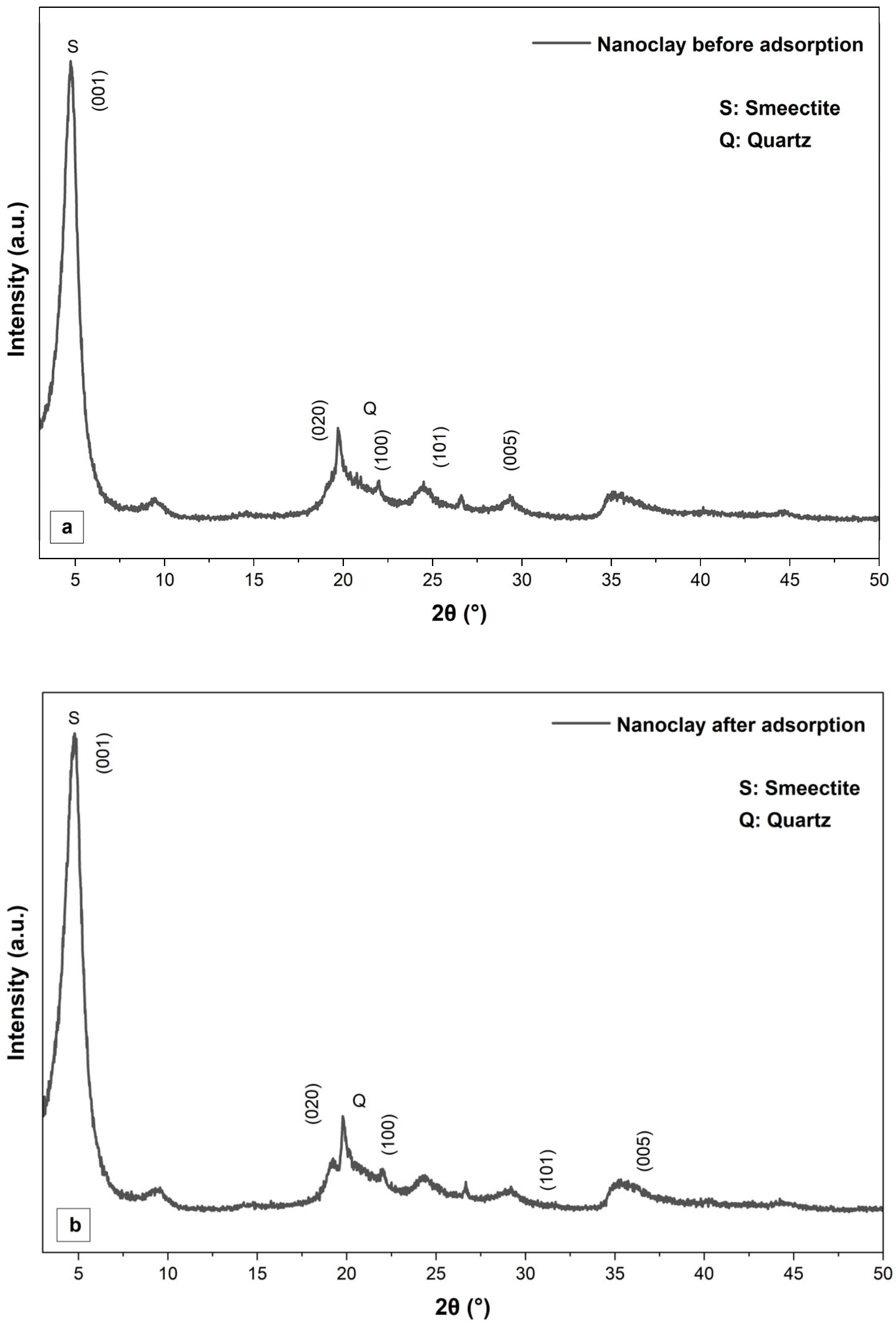
X-ray diffraction (XRD) was employed to analyze the crystalline structure of the nanoclay before and after Nystatin adsorption. The corresponding results are displayed in Figure 1.
The diffractogram of the clay presented in Figure 1, prior to the adsorption process, displays a well-defined basal reflection at 2θ ≈ 5°, characteristic of the lamellar arrangement typical of smectite minerals. Secondary reflections observed in the range of ~20–30° correspond to the (020), (100), (101), and (105) crystallographic planes, whereas the peak at 2θ ≈ 26° is attributed to quartz, indicating the presence of a silicate impurity phase. In studies addressing the adsorption of pharmaceutical compounds onto organophilic clays, the literature reports that modifications in lamellar stacking, particularly shifts in the (001) reflection or decreases in peak intensity, are commonly associated with intercalation or partial delamination triggered by the incorporation of the adsorbate [24].
The diffractogram obtained after adsorption reveals an intense and well-defined reflection associated with the basal (001) plane, located at approximately 2θ ≈ 5°, which is characteristic of the lamellar structure of the organophilic clay. The basal spacing (d001) of the nanoclay increased, from 1.773 nm to 1.855 nm, following Nystatin adsorption. This expansion is sufficient to indicate the intercalation of drug molecules within the interlayer region.
Similar observations were reported by other authors [25], who examined the behavior of Cloisite 30B incorporated into a poly(methacrylic acid-co-acrylamide) nanocomposite hydrogel. In that study, a characteristic reflection at 2θ ≈ 4.25°, assigned to the (001) basal plane, was identified, corresponding to a basal spacing of approximately 1.94 nm as determined by Bragg’s Law. Following incorporation into the polymeric matrix, the disappearance of this peak indicated complete exfoliation of the silicate layers, confirming homogeneous dispersion of the lamellae and the formation of a stable nanocomposite system.
The interlayer (basal) spacing constitutes a fundamental structural parameter of organophilic clays and must be carefully considered in the design of adsorbent materials. In bentonite, this spacing can be expanded through organophilization processes, during which molecules exhibiting physical affinity for the lamellar structure are incorporated into the interlayer region. Such modification may promote molecular intercalation and/or exfoliation of the clay layers, thereby altering the basal spacing. These structural transformations exert a direct influence on the adsorption performance of the clay mineral [26].
In the study conducted by other authors [27], Cloisite 30B was combined with ZnO/Ag2O for dye degradation, and XRD analysis confirmed the presence of the expected crystalline phases while demonstrating that the basal reflection of the clay remained detectable after modification. This result indicates a reorganization primarily at the surface level, without extensive exfoliation of the lamellar structure. A similar behavior was observed in the present study, in which the characteristic reflections of nanoclay were preserved following contact with the adsorbate, thereby supporting the interpretation that adsorption proceeded predominantly through surface interactions rather than through interlayer intercalation.
Additionally, the secondary reflections observed within the 2θ interval of 15° to 30° remained essentially unaltered after adsorption, further indicating that the lamellar framework of the clay did not experience meaningful structural modifications. A slight decrease in the intensity of certain reflections was, however, detected, an effect commonly associated with partial surface coverage of the clay layers by adsorbed molecules, which form a disordered superficial film and mildly attenuate the diffracted signal. Recent investigations involving organophilic clay-based composites and metal–organic hybrid systems have reported comparable behavior, attributing the reduction in peak intensity to surface coating and localized disorder rather than to loss of crystallinity [28]. This response is characteristic of surface-dominated adsorption mechanisms, wherein the molecules interact primarily with the external surfaces of the clay rather than promoting interlayer intercalation.

3.1.2. Fourier-Transform Infrared Spectroscopy (FTIR)

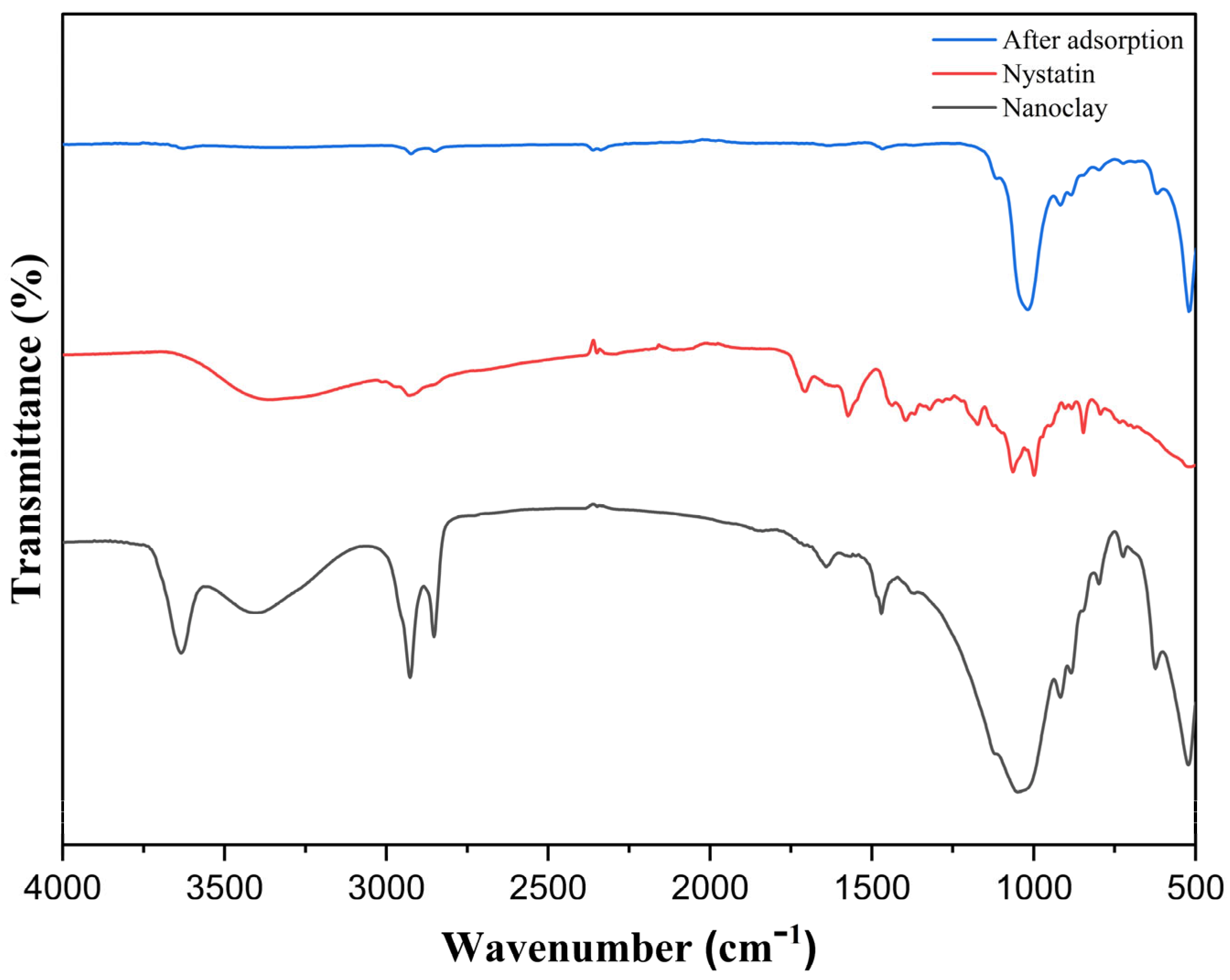
Fourier-transform infrared (FTIR) spectroscopy was employed to characterize the nanoclay and to assess possible structural modifications resulting from the adsorption of Nystatin. Figure 2 displays the FTIR spectra of the nanoclay prior to adsorption and after adsorption of Nystatin.
In the spectrum of the pristine clay, a sharp band is observed in the 3620–3630 cm−1 region, which is attributed to the structural O–H stretching of Al-rich octahedral lamellae, accompanied by a broader absorption band between 3400 and 3450 cm−1, which is associated with interlayer water and physisorbed surface water. The band located near 1640 cm−1 corresponds to the H–O–H bending vibration of this molecular water. Additionally, signals in the 1030–1040 cm−1 range are assigned to Si–O–Si stretching vibrations of the tetrahedral sheets, with contributions from Si–O–Al linkages at slightly lower frequencies, as consistently reported for organophilic smectites [29].
The bands observed at approximately 2920 and 2850 cm−1 correspond to the asymmetric and symmetric C–H stretching vibrations of the alkyl chains associated with the intercalated quaternary ammonium salt, thereby confirming the organophilic character of the material. Comparable spectral features have been widely reported for organophilic clays and clay–carbon composites employed in the removal of organic contaminants, including pharmaceuticals and dyes. In these systems, the concurrent presence of O–H, Si–O, and C–H vibrational modes is recognized as a reliable indicator of the inorganic–organic hybrid framework characteristic of such matrices [30].
After adsorption, a noticeable broadening of the band in the 3400 cm−1 region is observed, indicating the superposition of multiple hydroxyl groups from Nystatin with the O–H groups of the clay and the adsorbed water. This behavior is consistent with systems in which polyphenolic or polyhydroxylated organic compounds are adsorbed onto clays [31].
Moreover, a noticeable increase in the relative intensity of the bands at approximately 2920 and 2850 cm−1, corresponding to aliphatic C–H stretching vibrations, is observed. This enhancement is attributed to the additional contribution of the hydrocarbon chains from the hydrophobic polyene segment of Nystatin, which aligns at the interface with the alkyl groups of the quaternary ammonium salt intercalated in nanoclay. Recent investigations involving natural and modified clays, including attapulgite-based composites and functionalized clay systems, have similarly reported that the adsorption of dyes or pharmaceutical compounds with extensive hydrophobic domains results in intensified C–H stretching bands and subtle alterations within the O–H region. These spectral changes are commonly associated with a denser packing of organic chains on the external surface or within accessible interlayer regions of the clay matrix [32].
Another indication of Nystatin adsorption onto the clay surface is the appearance of a weak band or shoulder in the 1730–1700 cm−1 region, which is attributed to the C=O stretching vibrations of the lactone ring and other carbonyl groups present in the drug’s macrocyclic structure. Studies involving structurally related polyene antibiotics, such as roseofungin, have reported intense peaks near 1737 and 1700 cm−1 associated with lactone and keto carbonyl functionalities, as well as C–O vibrational modes within the 1260–1000 cm−1 range and a broad O–H absorption band spanning 3250–3400 cm−1. These findings reinforce the interpretation that the newly observed bands and shoulders in this region arise from the adsorption of a polyhydroxylated, macrolide-type molecule onto the clay surface [33].
The FTIR spectrum of the NYS powder (Figure 2) exhibits a broad absorption band at 3367 cm−1, which is attributed to O–H stretching vibrations. The band observed at 2937 cm−1 corresponds to C–H2 stretching vibrations. The absorption peaks at 1709 and 1620 cm−1 are characteristic of C=O stretching vibrations associated with carboxylic groups and asymmetric C=C stretching, respectively. The peak at 1575 cm−1 is assigned to C=C vibrational modes related to heptane. Additionally, the bands located at 1439, 1382, and 1175 cm−1 can be attributed to C–O and C–O–H stretching vibrations. Peaks observed at 1069, 848, and 795 cm−1 are associated with =C–H, –CH2, and –C–H stretching vibrations, respectively [34].

3.2. Adsorption

Influence of pH

The pH of the solution is considered one of the principal parameters governing the efficiency of contaminant adsorption, as it influences both the ionization state of the contaminant and the surface charge of the adsorbent’s active sites [35]. In this study, the adsorption behavior of Nystatin onto the nanoclay was examined across a broad pH interval (1–13) to elucidate the system’s response under distinctly acidic and basic conditions.
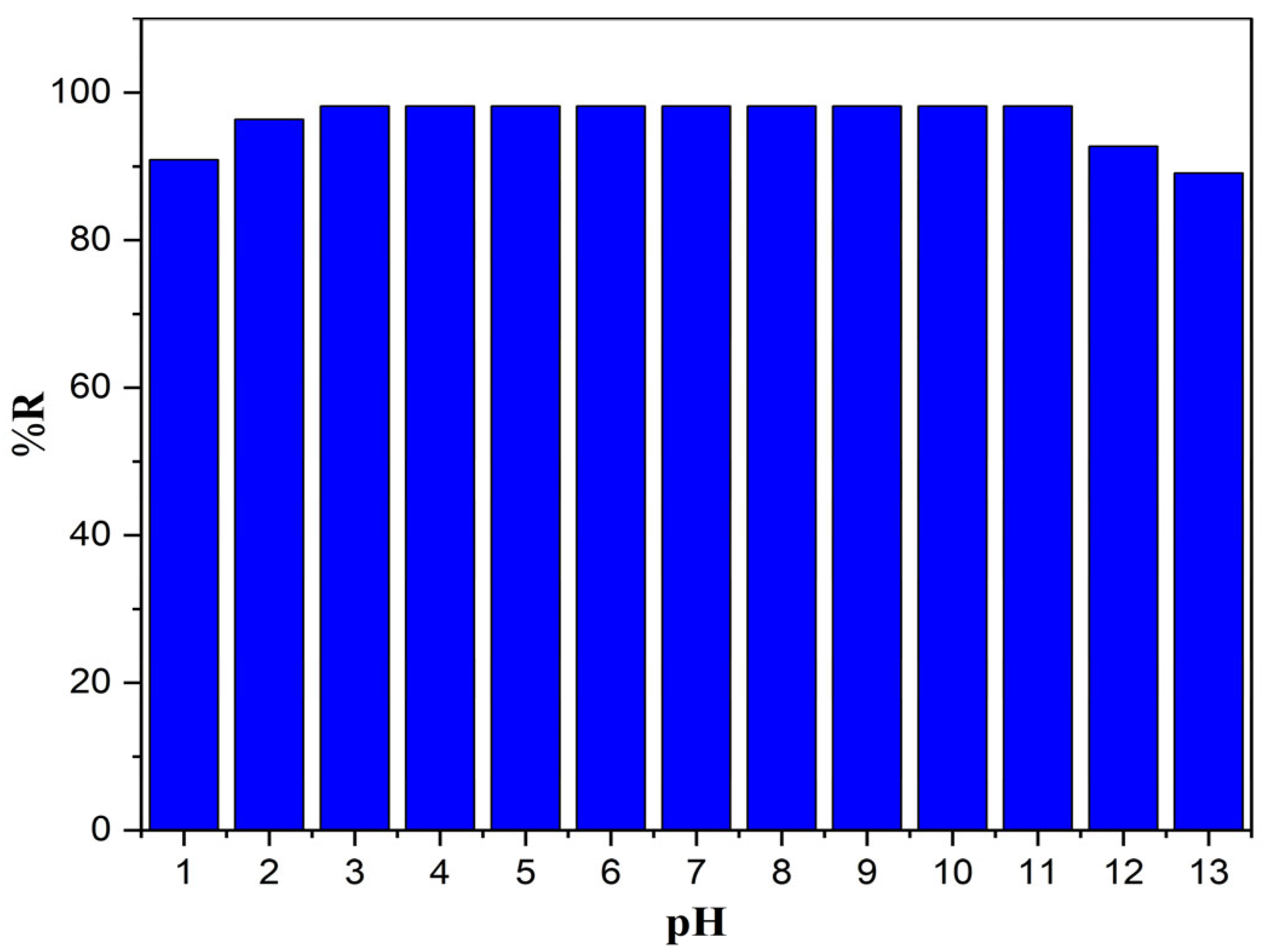
Figure 3 illustrates the experimental results showing the variation in Nystatin removal as a function of pH.
The removal efficiency of nystatin remained high and nearly constant over the pH range from 3 to 11, with an average value of approximately 98.18%. A decrease in performance was observed under strongly acidic conditions (pH < 3). Under highly alkaline conditions (pH 13), a modest reduction in efficiency was also detected, with the removal efficiency decreasing to 89.09%. Overall, the adsorption capacity exhibited minimal sensitivity to pH variations, indicating the robust performance of Cloisite 30B nanoclay across a wide pH range. Similar behavior has been reported for the adsorption of other pharmaceutical compounds onto modified clays in the literature [15].
The stability observed for Nystatin removal aligns with trends reported for other pharmaceutical–clay adsorption systems, wherein pH influences both the acid–base speciation of the adsorbate and the surface charge properties of the adsorbent. For pharmaceuticals that are neutral or weakly ionizable, hydrophobic interactions typically prevail near neutral pH, while strongly acidic or highly alkaline environments may disturb the balance between electrostatic interactions and short-range forces such as hydrogen bonding and van der Waals interactions [36]. This framework helps explain the behavior of Nystatin, an amphiphilic and poorly soluble molecule whose structural characteristics promote hydrophobic and dipolar interactions with the organophilic surface of Cloisite 30B.
For molecules exhibiting a predominantly hydrophobic character, such as carbamazepine and other polycyclic pharmaceuticals, adsorption onto organophilic clays is governed chiefly by hydrophobic packing and other nonelectrostatic interactions, which remain effective even under moderately alkaline conditions [37]. In this context, the consistently high removal efficiency observed for Nystatin across the entire pH range suggests that the dominant adsorption mechanisms are likewise nonelectrostatic in nature, involving hydrophobic interactions and hydrogen bonding. This behavior is consistent with the findings of [38], who reported comparable interaction patterns when assessing the simultaneous removal of ionic dyes using composites containing Cloisite 30B.
Typical pH-dependent adsorption behaviors, characterized by enhanced uptake under mildly acidic conditions followed by a decline in alkaline media, have been extensively reported in studies involving antibiotics and dyes [39,40]. These works demonstrate that, as the pH shifts away from the point of zero charge of the clay, electrostatic repulsion between the adsorbate and the surface becomes increasingly relevant, accompanied by the deprotonation of functional groups, which collectively diminish the adsorption capacity. In contrast, the stability observed in the present study across a broad pH interval indicates that the predominant adsorption mechanism is driven primarily by physicochemical interactions rather than by changes in surface charge.
Moreover, organophilic modification with quaternary ammonium salts, as in the case of Cloisite 30B, alters the point of zero charge of the material and expands its effective pH operating range [41]. This treatment increases the hydrophobic character of the clay and reduces its dependence on electrostatic interactions, which explains the consistently high adsorption performance of Cloisite 30B even under extreme pH conditions. As a result, the material maintains elevated adsorption efficiency under pH values commonly found in real pharmaceutical effluents, which typically vary between 5 and 9.
From a practical perspective, this behavior is highly advantageous, as it eliminates the need for additional pH-adjustment steps, lowers operational costs, and enhances the environmental applicability of the adsorbent. In agreement with these findings, other authors [42] note that organophilic adsorbents tend to perform more effectively when used at the natural pH of the effluent, demonstrating stable efficiency and reduced interference from competing ions.

3.3. Adsorption Kinetics

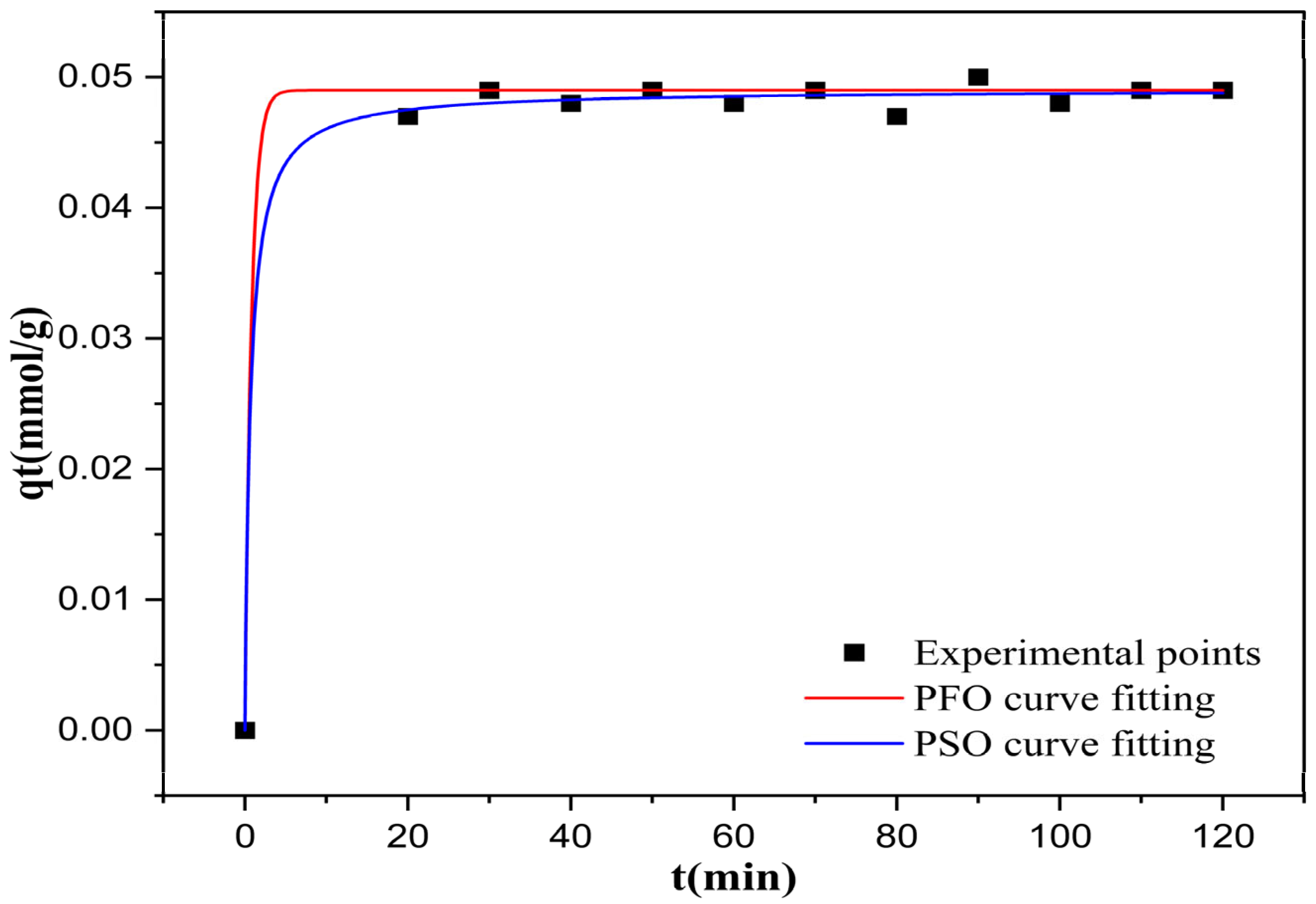
To clarify the mechanisms governing the adsorption process, the pseudo-first-order (PFO) and pseudo-second-order (PSO) kinetic models were employed, with their respective equations (Equations (3) and (4)) presented [43,44].
q t = q e . e x p K 1 .   t
q t = K 2 . q e 2 .   t ( 1 + t . K 2 . q e )
where K 1 is the rate constant of the pseudo-first-order model (min); K 2 is the rate constant of the pseudo-second-order model (g/mmol·min); q e is the amount of drug adsorbed at equilibrium (mmol/g); and q t is the amount of drug adsorbed at time t (mmol/g).
The application of the pseudo-first-order (PFO) and pseudo-second-order (PSO) kinetic models, in their nonlinear forms, enabled a detailed analysis of the adsorption rate and the interactions between the adsorbate and the adsorbent for the pharmaceutical compound Nystatin. Figure 4 present the corresponding kinetic fittings, highlighting the trends observed in the experimental profiles and contributing to the understanding of the kinetic behavior of the adsorption process.
Both kinetic models applied to evaluate the adsorption process showed good agreement with the experimental data, with coefficients of determination higher than 0.9944. However, the pseudo-second-order (PSO) model exhibited superior performance, presenting an R2 value of 0.9967 and equilibrium adsorption capacities (qₑ) consistent with the experimentally determined values. The pseudo-second-order model presents a lower χ2 value and is therefore considered the most appropriate for describing the kinetics of the process. This result indicates that the process is controlled by the amount of solute adsorbed and the availability of active sites over time, a characteristic behavior of systems in which specific interactions between the adsorbent and the adsorbate predominate.
Moreover, equilibrium was reached rapidly, reinforcing that the adsorption of Nystatin onto nanoclay is governed by surface-driven interactions such as hydrogen bonding, van der Waals forces, and hydrophobic interactions rather than by intraparticle diffusion–limited mechanisms. Similar findings have been reported in studies conducted by other authors [45], also reported rapid equilibrium and superior fitting to the PSO model in the adsorption of organic contaminants using organophilic clays, attributing this behavior to the high accessibility of active sites and to the organophilic nature of the modified surface.
Thus, the predominance of the pseudo-second-order model observed in this study suggests that the adsorption kinetics are governed by a mechanism consistent with localized chemisorption, in which higher-energy specific interactions may occur, such as partial chemical bond formation or complexation-type interactions between the drug molecules and the functional groups of Cloisite 30B. This behavior has been widely reported for adsorption systems based on modified clays, reinforcing the strong affinity between the organophilic material and nystatin molecules. Nevertheless, it is important to emphasize that the pseudo-second-order model primarily indicates that the adsorption rate is dependent on surface site occupancy rather than unequivocally confirming the formation of chemical bonds.
Table 3 presents the kinetic parameters derived from the pseudo-first-order and pseudo-second-order model fittings for nanoclay.
As presented in Table 3, both models exhibited a good fit, with coefficients of determination (R2) higher than 0.9972. However, the pseudo-second-order model showed the best performance (R2 = 0.9967) and equilibrium capacity (qₑ) values closer to the experimental data. The pseudo-second-order model presents a lower χ2 value and is therefore considered the most appropriate for describing the kinetics of the process. The results indicate that the adsorption of Nystatin onto the clay nanocargo is predominantly controlled by chemical interactions involving the transfer or sharing of electrons between the drug and the active sites of the clay. This behavior is consistent with the results reported by other authors [46], who also observed a superior fit to the pseudo-second-order model in the adsorption of pharmaceuticals such as ibuprofen and ketoprofen onto organophilic clays.
In addition to the strong statistical fit, rapid equilibrium (~20 min) was observed, indicating a high affinity between Nystatin and the active sites of nanoclay. This suggests that the rate-determining step occurs on the external surface, with hydrogen bonding, hydrophobic interactions, and van der Waals forces prevailing over diffusional limitations. Similar results have been reported when nanoclay was incorporated into hydrogels or composite materials; the authors attributed the rapid equilibrium to the high accessibility of active sites and the organophilic nature of the modified surface, which facilitates adsorbate approach and reduces film-diffusion resistance [47].
The superior fit to the PSO model is consistent with studies involving clays and clay-based hybrids for the removal of organic pollutants and pharmaceuticals, in which researchers commonly report (i) a better fit of the PSO model, (ii) equilibrium times ranging from a few minutes to a few tens of minutes, and (iii) a mixed contribution of rapid physical adsorption combined with specific fixation at higher-energy sites. In clay composites and organophilic clays applied to organic contaminants, several recent works have confirmed PSO as the dominant kinetic model and have attributed the performance to heterogeneous surfaces containing multiple site-energy domains [48].
This model indicates that electron transfer or sharing occurs between the adsorbate and the adsorbent, suggesting the presence of electronic interactions between the emerging contaminant Nystatin and the active sites of the nanoclay.
The kinetic analysis demonstrated that the pseudo-second-order model provided the best fit to the experimental data, confirming that the mechanism of the process is controlled by the amount of chemical species adsorbed on the surface of the adsorbent and by the quantity retained at equilibrium [49].

3.4. Adsorption Isotherms

Adsorption isotherms are essential for describing the relationship between the amount of adsorbate retained on the adsorbent surface (qe) and its equilibrium concentration in solution (Ce). These isotherm models allow the estimation of the maximum adsorption capacity of the material, providing relevant information for assessing its efficiency and performance in the adsorption process [50].
Several isotherm models, including the Langmuir, Freundlich, Sips and Redlich–Peterson models, were employed to investigate the interaction mechanisms between the drug and the surface of the nanoclay. The corresponding equations that govern these models are presented as Equations (5)–(8) [51,52,53].
The Langmuir equation is as follows:
q e q =   q m a x K L C e 1 +   K L C e
where q e q is the amount of drug adsorbed per gram of adsorbent at equilibrium (mmol/g); q m a x is the maximum adsorption capacity (mmol/g); K L is the Langmuir constant related to the drug/organophilic clay interaction (mmol/g); and C e is the equilibrium drug concentration (mmol/L).
Freundlich Isotherm Model:
q e q =   K F C e 1 n
where q e q is the amount of solute adsorbed (mmol/g); C e is the equilibrium concentration in a solution (mmol/L); n is the constant associated with surface heterogeneity; and K F is the Freundlich adsorption capacity constant (mmol/g)·(L/mmol).
Redlich–Peterson Isotherm Model:
q e q =   A C e 1 +   B C e β
where A is the Redlich–Peterson isotherm constant (L/mmol); B is the constant (L/mmol); β is an exponent between 0 and 1; C e is the equilibrium concentration in the liquid phase (mmol/L); and q e q is the equilibrium loading of the adsorbate on the adsorbent (mmol/g).
Sips Isotherm Model:
q e q =   q m a x K S C e γ 1 + K S C e γ
where q e q is the amount of drug adsorbed per gram of adsorbent at equilibrium (mmol/g); q m a x is the maximum adsorption capacity (mmol/g); K S is the equilibrium constant (L/mmol); C e is the equilibrium drug concentration (mmol/L); and γ is the heterogeneity parameter of the system.
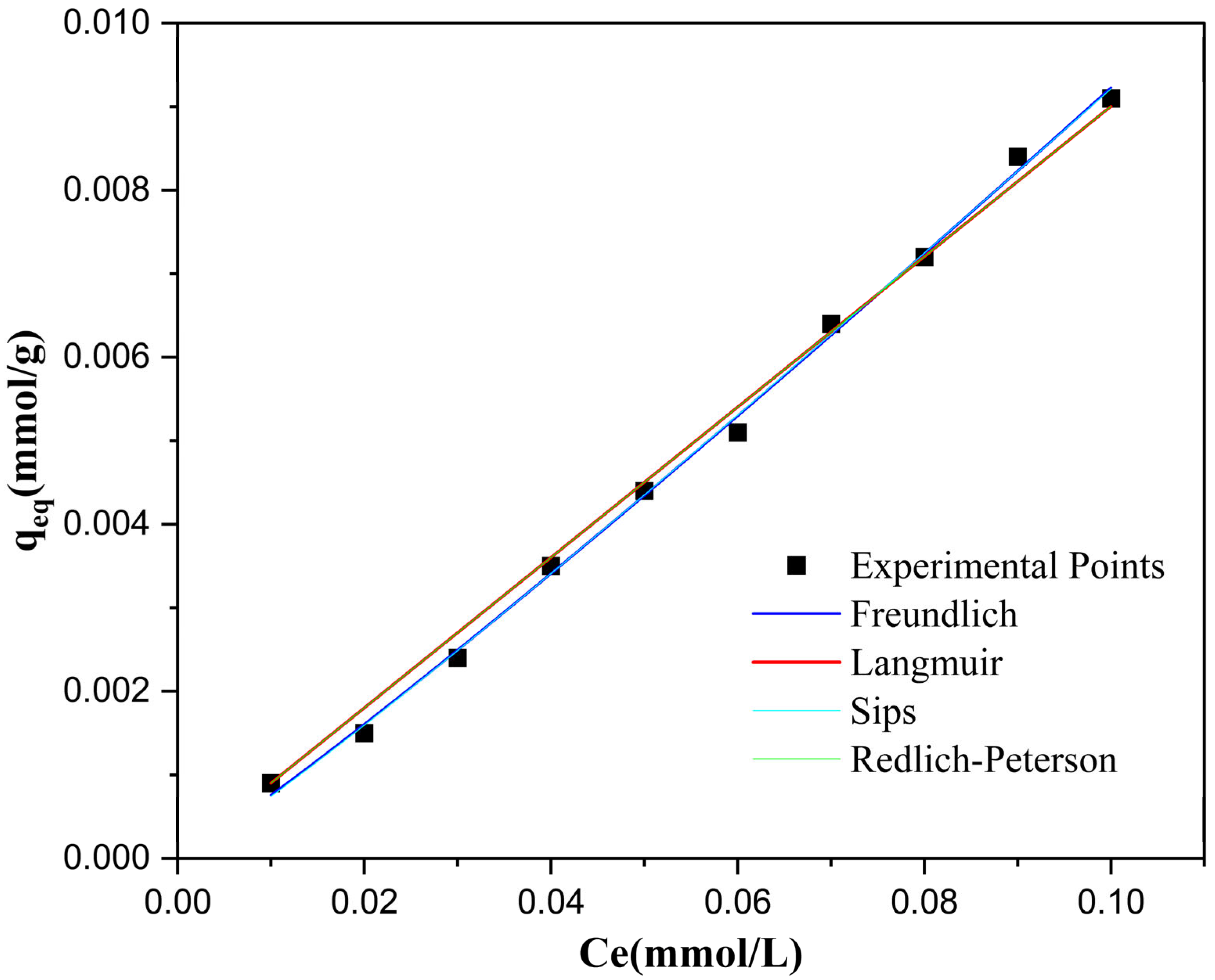
The behavior of the Nystatin adsorption system on nanoclay, in response to variations in drug concentration, was evaluated through the analysis of adsorption isotherm curves. The obtained results were fitted to the nonlinear Langmuir, Freundlich, Redlich–Peterson, and Sips models and are presented in Figure 5.
Evaluating the curves obtained from the experimental data for Nystatin adsorption, it is observed that, according to the classification proposed by other authors [54]. The isotherms can be classified as type L1. This type of isotherm is characterized by a downward-concave curvature, indicating a progressive decrease in the availability of active sites as the solute concentration increases. Such behavior suggests a high initial affinity between the adsorbent and the adsorbate at low concentrations, followed by a gradual reduction in the adsorption rate due to the occupation of the available sites [55].
After the fitting procedures, it was possible to determine the parameters corresponding to each model equation. The parameters in their nonlinear forms were obtained through nonlinear curve fitting using the OriginPro software, version 8.0® (OriginLab Corporation, Northampton, MA, USA), as presented in Table 4.
The adsorption constants indicate that the Sips model exhibited an excellent fit to the experimental data obtained for Nystatin adsorption onto nanoclay. This behavior is evidenced by the high correlation coefficient (R2 = 0.9979), which was the closest to unity among all evaluated models.
Similar results were reported by other authors [56], who investigated the adsorption of dyes onto a graphene–CuO composite and found that the Sips model provided the best fit to the experimental data (R2 between 0.9981 and 0.9994). This behavior confirms the effectiveness of the Sips model in describing adsorption systems on heterogeneous surfaces, in agreement with the observations made in the present study.
The Sips isotherm combines the characteristics of the Langmuir and Freundlich models, providing a more comprehensive description of the adsorption process. At low adsorbate concentrations, the isotherm behaves similarly to the Freundlich model, reflecting the heterogeneity of the adsorption sites. At higher concentrations, however, the Sips isotherm approaches the Langmuir model, describing the formation of a monolayer on the surface of the adsorbent [57].
Thus, the Sips model provides a more accurate representation of adsorption in heterogeneous systems, such as that observed for Nystatin removal by nanoclay, in which hydrophilic and hydrophobic regions coexist and enable multiple interactions between the drug and the organic functional groups of the clay. This behavior confirms the mixed and favorable nature of the adsorption process, characterized by the combination of physical and chemical interactions occurring at the material’s surface.
Moreover, the dimensionless parameter of the Sips model (n > 1), together with the separation factor (RL) within the range 0 < RL < 1, confirms that the adsorption of Nystatin onto nanoclay was favorable across the entire concentration range evaluated. This behavior indicates high affinity and thermodynamic stability of the system, reflecting a process governed by high-energy surface interactions and a tendency toward the formation of a uniform monolayer on the organophilic surface [58]. The value of n greater than 1 highlights the relative homogeneity of the Cloisite 30B surface and the predominance of cooperative interactions, in which the adsorption of one Nystatin molecule facilitates the fixation of additional molecules, thereby increasing the overall capacity of the system [59]. These characteristics reinforce the efficiency of the material even at low initial drug concentrations and confirm the potential of the organophilic clay as a versatile and effective adsorbent for the removal of bioactive compounds from aqueous solution [60].

3.5. Mechanism Analysis

Understanding the adsorption mechanism of Nystatin onto nanoclay requires correlating the structural features of the drug, the properties of the adsorbent, and the spectroscopic, kinetic, and equilibrium results obtained in this study. Structurally, Nystatin is a polyene macrolide composed of a polyketide-derived macrolactone ring containing multiple conjugated double bonds, a large number of hydroxyl and carbonyl groups, and an aminodeoxyglycan unit (mycosamine). This molecular morphology confers an amphipathic character, combining an extensive hydrophobic region (the conjugated polyene chain) with hydrophilic domains rich in O–H and C=O groups capable of participating in hydrogen bonding [61,62]. This structural duality directly influences the manner in which the drug organizes itself on organophilic surfaces.
Nanoclay consists of a montmorillonite modified with quaternary ammonium salts, whose intercalated alkyl chains generate hydrophobic microdomains alongside residual polar regions of the inorganic matrix. Organophilized materials of this nature exhibit an energetically heterogeneous surface composed of sites capable of stabilizing bulky organic molecules through hydrophobic, dipole–dipole, and hydrogen-bonding interactions [63,64].
The nearly unchanged performance of nanoclay across the studied pH range suggests that the dominant mechanism involves nonelectrostatic interactions, primarily hydrophobic forces and hydrogen bonding. Organophilized clays treated with quaternary ammonium salts are known to exhibit stable hydrophobic domains and low sensitivity to protonation variations, maintaining high affinity for organic compounds even over a broad pH range [65]. Moreover, Nystatin possesses an amphipathic structure and functional groups whose protonation state does not change significantly between pH 5 and 7, resulting in an essentially constant overall charge. Recent studies involving polyene and macrolide antibiotics have reported chemical stability and structural preservation of these compounds within this pH range [66,67], which explains the experimentally observed stability and further reinforces the nonelectrostatic nature of the interactions.
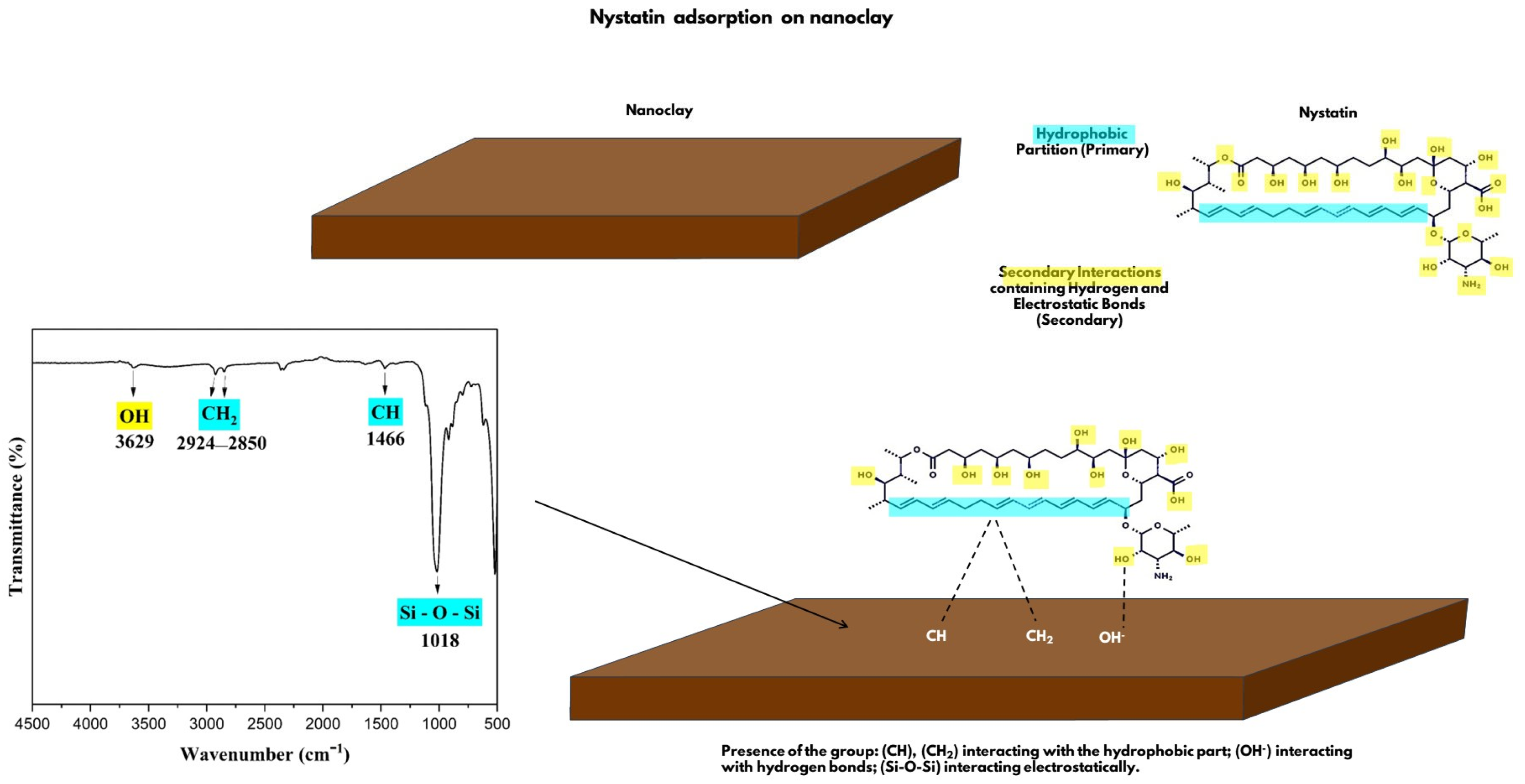
FTIR analyses indicate the formation of hydrogen bonds between Nystatin and the O–H groups of Cloisite 30B (as evidenced by changes in the O–H and C=O regions), as well as an intensification of the C–H bands, demonstrating hydrophobic interactions between the polyene chain of the drug and the alkyl domains of the clay [68]. The absence of changes in the structural bands of the clay and in the basal spacing observed by XRD confirms the lack of intercalation, characterizing a surface-driven mechanism [69]. The kinetics fitted to the PSO model further reinforce the presence of high-affinity interactions governed by surface sites [66,70], while the superior fit to the Sips model indicates sites with different adsorption energies, consistent with the coexistence of polar and nonpolar domains observed in the FTIR analysis [70].
The interaction between Nystatin and nanoclay, as represented in the proposed mechanistic model, is illustrated in Figure 6.
In summary, the integration of the pH, FTIR, XRD, kinetic, and equilibrium results demonstrates that the adsorption of Nystatin onto nanoclay occurs through a surface mechanism dominated by hydrophobic interactions and hydrogen bonding, which act on energetically heterogeneous sites. The stable response to pH, the absence of structural intercalation, and the strong fit to the PSO and Sips models reinforce the affinity between the amphipathic structure of the drug and the organophilic domains of the modified clay. Altogether, these findings characterize a process consistent with the expected behavior of bulky antibiotics adsorbed onto modern organophilic clays.

3.6. Comparison with Other Adsorbents

Table 5 summarizes the adsorption capacity of the nanoclay for pharmaceuticals, together with corresponding values reported in the literature.
Table 5 compares the maximum adsorption capacity (qₘₐₓ) derived from the Langmuir model for different pharmaceuticals adsorbed onto modified and unmodified clay-based materials. The results reveal a wide variation in qₘₐₓ values, which strongly depends on both the physicochemical properties of the adsorbent and the chemical nature of the target pharmaceutical [73].
The nanoclay evaluated in this study exhibited a qₘₐₓ value of 396.25 mg/g for nystatin adsorption, which is within the values reported for tetracycline adsorption onto Na-montmorillonite, even when modified with various organic cations (TMA, DDTMA, and HDTMA), for which qₘₐₓ values ranged from 341.77 to 888.87 mg/g. This result demonstrates a competitive or superior adsorption performance compared with widely used organophilic clay systems.
The remarkably high adsorption capacity observed can be attributed to the expanded layered structure of the nanoclay, the availability of accessible active sites, and the strong affinity between nystatin—a polyfunctional and relatively hydrophobic molecule—and the adsorbent surface [74]. These interactions likely involve a combination of hydrophobic interactions, hydrogen bonding, and electrostatic forces.
In contrast, bentonite modified with DMA showed a substantially lower adsorption capacity (36.58 mg/g) for diclofenac removal, highlighting that adsorption efficiency is not governed solely by surface modification but also by the compatibility between the organic modifier and the molecular structure of the pharmaceutical compound. This finding underscores the importance of adsorbent–adsorbate selectivity and surface engineering in optimizing adsorption performance.
Overall, the comparative analysis indicates that the nanoclay investigated in this work exhibits an exceptionally high adsorption capacity, positioning it as a highly promising material for the removal of high-molecular-weight and hydrophobic pharmaceutical contaminants, while demonstrating strong competitiveness relative to clay-based adsorbents reported in the literature.

3.7. Preliminary Cost Analysis

Estimation of Raw Material Costs and Energy Cost

Table 6 and Table 7 present a preliminary cost assessment for the laboratory-scale production of 30 g of organoclay using the method described by the authors [75] while separately considering raw material expenses and energy consumption. This distinction allows a clearer identification of the main contributors to the overall production cost.
As shown in Table 6, the total raw material cost is relatively low (R$ 1.271), indicating that the reagents required for organoclay synthesis do not represent a major economic barrier at the laboratory scale. Although sodium carbonate (Na2CO3) exhibits a high unit price per kilogram, its absolute contribution to the final cost remains limited due to the small quantity used. Similarly, the quaternary ammonium salt, despite being a higher-value reagent, contributes only modestly to the total cost, supporting the economic feasibility of clay organophilization under the evaluated conditions.
In contrast, Table 7 shows that the energy cost (R$ 9.638) is substantially higher than the raw material cost and constitutes the dominant contribution to the total production expense. This cost is largely associated with the drying step, which accounts for the majority of energy consumption due to its prolonged operating time (24 h). The agitation and vacuum filtration steps contribute comparatively little, indicating that mixing and separation processes are not the primary cost drivers.
The predominance of energy-related costs, particularly those linked to drying, highlights energy consumption as the main limiting factor in the economic performance of organoclay production. This finding suggests that process optimization strategies—such as reducing drying time, improving thermal efficiency, or adopting alternative dewatering methods—could significantly decrease overall costs. Furthermore, the reported energy costs exclude ICMS (Tax on Circulation of Goods and Services), implying that actual expenses at larger scales may be even higher.
Overall, the combined analysis of Table 6 and Table 7 demonstrates that while organoclay synthesis is economically accessible in terms of raw materials, energy efficiency emerges as a critical aspect for improving cost-effectiveness and sustainability in future scale-up studies.
This study evaluated the costs associated with bulk raw materials using pricing information obtained from supplier websites. The manufacturing cost estimate for organoclay synthesis was based on a laboratory-scale production process.

4. Conclusions

This study demonstrated that Cloisite 30B organophilic nanoclay is a highly efficient adsorbent for nystatin removal from aqueous solutions, achieving removal efficiencies above 98% over a wide pH range (3–11). Adsorption occurred predominantly on the external surface of the material without significant structural alteration and was mainly governed by hydrophobic interactions and hydrogen bonding.
The adsorption process was rapid, reaching equilibrium within approximately 20 min, and was best described by the pseudo-second-order kinetic model, indicating a strong affinity between nystatin molecules and the active sites of the nanoclay. Equilibrium data were well fitted by the Sips isotherm model, confirming surface heterogeneity and the favorable nature of the adsorption process, with a high maximum adsorption capacity (~911 mg/g) that surpasses many adsorbents reported in the literature.
Preliminary cost analysis indicated low raw material costs, while energy consumption—particularly during the drying step—was identified as the main economic constraint. Overall, the results highlight Cloisite 30B as a promising, efficient, and potentially sustainable adsorbent for the removal of nystatin and other hydrophobic pharmaceutical contaminants in water and wastewater treatment applications.

Author Contributions

Conceptualization, A.K.F.d.S., A.K.M.d.B. and H.G.M.; methodology, A.K.F.d.S., A.K.M.d.B. and H.G.M.; validation, A.K.F.d.S., J.L.d.S.F. and F.G.d.S.G.; formal analysis, J.L.d.S.F. and F.L.d.L.C.; investigation, A.K.F.d.S. and F.G.d.S.G.; resources, M.G.F.R.; data curation, A.K.F.d.S.; writing—original draft preparation, A.K.F.d.S., F.G.d.S.G. and F.L.d.L.C.; writing—review and editing, M.G.F.R. and A.K.F.d.S.; visualization, T.L.A.B. and W.B.R.; supervision, W.B.R. and T.L.A.B.; project administration, M.G.F.R.; funding acquisition, M.G.F.R. All authors have read and agreed to the published version of the manuscript.

Funding

This research was funded by the Federal University of Campina Grande (UFCG) and Coordenação de Aperfeiçoamento de Pessoal de Nível Superior (CAPES) under grant 88882.455464/2019-01, grant 88887.950458/2024-00, and grant 88887.134112/2025-00.

Data Availability Statement

The original contributions presented in this study are included in the article. Further inquiries can be directed to the corresponding author.

Acknowledgments

The authors gratefully acknowledge the Coordenação de Aperfeiçoamento de Pessoal de Nível Superior (CAPES) for their financial support. A.K.F.d.S. acknowledges CAPES. A.K.M.d.B. acknowledges CAPES. H.G.M. acknowledges CAPES. We thank the Laboratory of Multifunctional Materials and Nanocomposites LAMMEN-ECT UFRN for the FTIR analysis. We thank the Membrane Development and Characterization Laboratory (LCDM UFCG) for the FTIR analysis.

Conflicts of Interest

The authors declare no conflicts of interest.

References

  1. Park, J.; Kim, C.; Hong, Y.; Lee, W.; Chung, H.; Jeong, D.H.; Kim, H. Distribution and Removal of Pharmaceuticals in Liquid and Solid Phases in the Unit Processes of Sewage Treatment Plants. Int. J. Environ. Res. Public Health 2020, 17, 687. [Google Scholar] [CrossRef]
  2. Mazhandu, Z.; Mashifana, T. Active pharmaceutical contaminants in drinking water: Myth or fact? DARU J. Pharm. Sci. 2024, 32, 925–945. [Google Scholar] [CrossRef]
  3. Hussain, E.; Ahtesham, A.; Shahadat, M.; Ibrahim, M.N.M.; Ismail, S. Recent Advances of Clay/Polymer-Based Nanomaterials for the Treatment of Environmental Contaminants in Wastewater: A Review. J. Environ. Chem. Eng. 2024, 12, 112401. [Google Scholar] [CrossRef]
  4. Chakraborty, A.; Adhikary, S.; Bhattacharya, S.; Dutta, S.; Chatterjee, S.; Banerjee, D.; Ganguly, A.; Rajak, P. Pharmaceuticals and Personal Care Products as Emerging Environmental Contaminants: Prevalence, Toxicity, and Remedial Approaches. ACS Chem. Health Saf. 2023, 30, 362–388. [Google Scholar] [CrossRef]
  5. Monapathi, M.E.; Oguegbulu, J.C.; Adogo, L.; Klink, M.; Okoli, B.; Mtunzi, F.; Modise, J.S. Pharmaceutical Pollution: Azole Antifungal Drugs and Resistance of Opportunistic Pathogenic Yeasts in Wastewater and Environmental Water. Appl. Environ. Soil Sci. 2021, 2021, 9985398. [Google Scholar] [CrossRef]
  6. Nishi, L.; Ribeiro, A.C.; Paraíso, C.M.; Cusioli, D.A.G.; Beltran, L.B.; Cusioli, L.F.; Bergamasco, R. Low-Cost Adsorbents for Water Treatment: A Sustainable Alternative for Pollutant Removal. Processes 2025, 13, 4088. [Google Scholar] [CrossRef]
  7. Akhtar, M.; Sarfraz, M.; Ahmad, M.; Raza, N.; Zhang, L. Use of low-cost adsorbent for waste water treatment: Recent progress, new trend and future perspectives. Desalin. Water Treat. 2025, 321, 100914. [Google Scholar] [CrossRef]
  8. Lagaly, G.; Bergaya, F.; Theng, B.K.G. Handbook of Clay Science. In Developments in Clay Science; Elsevier Science: Amsterdam, The Netherlands, 2006; Volume 1. [Google Scholar]
  9. Maia, G.S.; de Andrade, J.R.; da Silva, M.G.C.; Vieira, M.G.A. Adsorption of diclofenac sodium onto commercial organoclay: Kinetic, equilibrium and thermodynamic study. Powder Technol. 2019, 345, 140–150. [Google Scholar] [CrossRef]
  10. Omrani, S.; Gamoudi, S.; Viseras, C.; Moussaoui, Y.; Sainz-Díaz, C.I. The Use of Organoclays as Excipient for Metformin Delivery: Experimental and Computational Study. Molecules 2024, 29, 4612. [Google Scholar] [CrossRef]
  11. Bessaha, F.; Bessaha, G.; Benhouria, A.; Benalioua, B.; Mahrez, N.; Boucif, F.; Ziane, S.; Bendahma, F.; Çoruh, A.; Khelifa, A. Efficient removal of a pharmaceutical compound on organoclay: Batch experiment, DFT calculation, statistical physics, and modeling. Chem. Eng. Commun. 2024, 212, 695–712. [Google Scholar] [CrossRef]
  12. Mahdavi, P.; Siol, A.; Thöming, J. Adsorption-Based Removal of Pharmaceutical from Water: A Critical Review on Adsorbent Performance. J. Environ. Chem. Eng. 2025, 13, 117520. [Google Scholar] [CrossRef]
  13. Wang, P.; Shen, X.; Qiu, S.; Zhang, L.; Ma, Y.; Liang, J. Clay-Based Materials for Heavy Metals Adsorption: Mechanisms, Advancements, and Future Prospects in Environmental Remediation. Crystals 2024, 14, 1046. [Google Scholar] [CrossRef]
  14. Wroński, M.; Trawiński, J.; Skibiński, R. Antifungal drugs in the aquatic environment: A review on sources, occurrence, toxicity, health effects, removal strategies and future challenges. J. Hazard. Mater. 2024, 465, 133167. [Google Scholar] [CrossRef] [PubMed]
  15. de Sousa, A.K.F.; Ramos, W.B.; Marques, A.V.S.; Barbosa, T.L.A.; Rodrigues, M.G.F. Adsorption of the Drug Chlorhexidine Using Organoclay. Processes 2025, 13, 2036. [Google Scholar] [CrossRef]
  16. Semreen, M.H.; Shanableh, A.; Semerjian, L.; Alniss, H.; Mousa, M.; Bai, X.; Acharya, K. Simultaneous Determination of Pharmaceuticals by Solid-phase Extraction and Liquid Chromatography—Tandem Mass Spectrometry: A Case Study from Sharjah Sewage Treatment Plant. Molecules 2019, 24, 633. [Google Scholar] [CrossRef]
  17. Suarez, E.G.P.; Siciliano, A.; Spampinato, M.; Maione, A.; Guida, M.; Libralato, G.; Galdiero, E. Ecotoxicity and Mutagenicity Assessment of Novel Antifungal Agents VT-1161 and T-2307. Molecules 2024, 29, 4739. [Google Scholar] [CrossRef]
  18. Steinbach, W.J.; Stevens, D.A. Review of Newer Antifungal and Immunomodulatory Strategies for Invasive Aspergillosis. Clin. Infect. Dis. 2003, 37, S157–S187. [Google Scholar] [CrossRef]
  19. Najafi, M.; Rahimi, R.; Bräse, S. Synthesis of Porphyrin-based MOF/Cloisite-30B nanocomposite for selective dye adsorption: Optimization by Design-Expert, Adsorption, and Kinetic Study. J. Inorg. Organomet. Polym. Mater. 2024, 34, 3817–3830. [Google Scholar] [CrossRef]
  20. Dhanasekar, S.; Baskar, S.; Vishvanathperumal, S. Cure characteristics, compression set, swelling behaviors, abrasion resistance and mechanical properties of nanoclay (Cloisite 15A, Cloisite 20A and Cloisite 30B) filler filled EPDM/NBR blend system. J. Polym. Res. 2023, 30, 375. [Google Scholar] [CrossRef]
  21. Roth, E.A. Nanoclay-Based Solid-Amine Adsorbents for Carbon Dioxide Capture. Ph.D. Thesis, West Virginia University, Morgantown, WV, USA, 2013. [Google Scholar]
  22. Bertin, E.P. Introduction to X-Ray Spectrometric Analysis; Plenum: New York, NY, USA, 1978; p. 152. [Google Scholar]
  23. Von Sperling, M. Princípios do Tratamento Biológico de Águas Residuarias. In Introdução a Qualidade das Águas e ao Tratamento de Esgotos; Universidade Federal de Minas Gerais, Ed.; Universidade Federal de Minas Gerais: Belo Horizonte, Brazil, 2014; Volume 1. [Google Scholar]
  24. Mahmoudian, M.; Abdali, A.; Eskandarabadi, S.M.; Nozad, E.; Enayati, M. The Performance of an Efficient Polymer and Nanoclay Derivatives in the Adsorption Desulfurization Process. Polym. Bull. 2020, 78, 795–812. [Google Scholar] [CrossRef]
  25. Safarzadeh, H.; Peighambardoust, S.J.; Mousavi, S.H.; Foroutan, R.; Mohammadi, R.; Peighambardoust, S.H. Adsorption Ability Evaluation of the Poly(Methacrylic Acid-Co-Acrylamide)/NANOCLAY Nanocomposite Hydrogel as a New Adsorbent for Cationic Dye Removal. Environ. Res. 2022, 212, 113349. [Google Scholar] [CrossRef] [PubMed]
  26. Capelezzo, A.P.; Celuppi, L.C.M.; Macuvele, D.L.P.; Zeferino, R.C.F.; Zanetti, M.; Bender, J.P.; de Mello, J.M.M.; Fiori, M.A.; Riella, H.G. Obtaining and Characterization of Bentonite Organophilic Incorporated with Geranyl Acetate and Its Application as Mycotoxins’ Binder in Simulated Gastrointestinal Fluids. Appl. Clay Sci. 2023, 237, 106915. [Google Scholar] [CrossRef]
  27. Foroutan, R.; Peighambardoust, S.J.; Boffito, D.C.; Ramavandi, B. Sono-Photocatalytic Activity of Nanoclay/ZnO/Ag2O Nanocomposite for the Simultaneous Degradation of Crystal Violet and Methylene Blue Dyes in Aqueous Media. Nanomaterials 2022, 12, 3103. [Google Scholar] [CrossRef] [PubMed]
  28. Mouafo-Tchinda, E.; Kemmegne-Mbouguen, J.C.; Nanseu-Njiki, C.P.; Langmi, H.W.; Kowenje, C.; Musyoka, N.M.; Mokaya, R. Solvothermal Synthesis of Organoclay/Cu-MOF Composite and Its Application in Film Modified GCE for Simultaneous Electrochemical Detection of Deoxyepinephrine, Acetaminophen and Tyrosine. RSC Adv. 2023, 13, 20816. [Google Scholar] [CrossRef]
  29. Antonelli, R.; Pointer Malpass, G.R.; Teixeira, A.C.S.C. Adsorption and In-Situ Electrochemical Regeneration in a Clay-Packed Continuous Reactor for the Removal of the Antibiotic Sulfamethoxazole. Sep. Purif. Technol. 2024, 330, 125290. [Google Scholar] [CrossRef]
  30. Subba Reddy, Y.; Rotte, N.K.; Sudhakar, B.K.; Ramakrishna Chand, N.; Naik, R.J.; Mandal, S.; Ravi Chandra, M. Biomass-Derived Sustainable Mesoporous Activated Carbon as an Efficient and Recyclable Adsorbent for the Adsorption of Hazardous Dyes. Hybrid Adv. 2024, 6, 100218. [Google Scholar] [CrossRef]
  31. Lazaratou, C.V.; Rosoglou, J. Table Olive Wastewater Treatment Using the Clay Mineral Palygorskite as Adsorbent. Minerals 2025, 15, 861. [Google Scholar] [CrossRef]
  32. Wang, Y.; Wu, Y.; Xiong, Y.; Feng, J.; Wang, D.; Zhang, Y. Functionalization of Attapulgite with Fluorescent Ortho-Phenanthroline Side-Chain Polymer for Cu(II) Ion Sensing and Adsorption. J. Solid State Chem. 2024, 338, 124831. [Google Scholar] [CrossRef]
  33. Sadanov, A.; Berillo, D.; Bagimbayeva, A.; Baimakhanova, G.; Ibragimova, L.N.; Kulmaganbetov, I.R.; Nurmaganbetova, F.; Sarsenbaeva, G.; Orazymbet, S.; Baimakhanova, B.; et al. Pharmaco-Technological Characterization, Structural Analysis, and Toxicological Evaluation of the Novel Polyene Antibiotic Roseofungin for Drug Development. Pharmaceutics 2025, 17, 430. [Google Scholar] [CrossRef]
  34. Mohammadi, G.; Namadi, E.; Mikaeili, A.; Mohammadi, P.; Adibkia, K. Preparation, physicochemical characterization and anti-fungal evaluation of the Nystatin-loaded Eudragit RS100/PLGA nanoparticles. J. Drug Deliv. Sci. Technol. 2017, 38, 90–96. [Google Scholar] [CrossRef]
  35. Peqini, A.; Diagboya, P.N.; Brahushi, F.; Düring, R.A. Sustainable Removal of Aqueous Naproxen Using a Ternary Magneto-Biochar-Clay Composite: Competition with Carbamazepine and Influence of Dissolved Organic Matter. Chem. Eng. J. Adv. 2025, 23, 100784. [Google Scholar] [CrossRef]
  36. Allaoui, I.; El Mourabit, M.; Arfoy, B.; Hadri, M.; Barhoun, A.; Draoui, K. Adsorption Equilibrium, Kinetic, and Thermodynamic Studies on the Removal of Paracetamol from Wastewater Using Natural and HDTMA-Modified Clay. Desalin. Water Treat. 2024, 318, 100345. [Google Scholar] [CrossRef]
  37. Viegas, R.M.A.; Melo, M.L.; Brandão Lima, L.C.; Garcia, R.R.P.; Filho, E.C.S.; Osajima, J.A.; Chiavone-Filho, O. Carbamazepine Adsorption with a Series of Organoclays: Removal and Toxicity Analyses. Appl. Water Sci. 2024, 14, 133. [Google Scholar] [CrossRef]
  38. Kandil, H.; Ali, H. Simultaneous Removal of Cationic Crystal Violet and Anionic Reactive Yellow Dyes Using Eco-Friendly Chitosan Functionalized by Talc and Nanoclay. J. Polym. Environ. 2023, 31, 1456–1477. [Google Scholar] [CrossRef]
  39. Shi, Y.; Wang, X.; Feng, C.; Yang, S. Nano-Clay Montmorillonite Removes Tetracycline in Water: Factors and Adsorption Mechanism in Aquatic Environments. iScience 2024, 27, 108952. [Google Scholar] [CrossRef]
  40. Borthakur, P.; Aryafard, M.; Zara, Z.; David, Ř.; Minofar, B.; Das, M.R.; Vithanage, M. Computational and Experimental Assessment of PH and Specific Ions on the Solute Solvent Interactions of Clay-Biochar Composites towards Tetracycline Adsorption: Implications on Wastewater Treatment. J. Environ. Manag. 2021, 283, 111989. [Google Scholar] [CrossRef]
  41. Mostafa, A.G.; Abd El-Hamid, A.I.; Akl, M.A. Surfactant-Supported Organoclay for Removal of Anionic Food Dyes in Batch and Column Modes: Adsorption Characteristics and Mechanism Study. Appl. Water Sci. 2023, 13, 163. [Google Scholar] [CrossRef]
  42. Deng, H.; Song, Y.; Li, W.; Fatima, M.N.; Bibi, H.; Ye, S. Performance and Economy of Antibiotic Adsorption by the Composite of Plant Decomposed Liquid, Chemical Modifier, and Clay. Process Saf. Environ. Prot. 2024, 192, 1408–1419. [Google Scholar] [CrossRef]
  43. Lagergren, S. About the theory of so-called adsorption of soluble substances. K. Sven. Vetenskapsakademiens Handl. 1898, 24, 1–39. [Google Scholar]
  44. Ho, Y.S.; McKay, G. Pseudo-Second Order Model for Sorption Processes. Process Biochem. 1999, 34, 451–465. [Google Scholar] [CrossRef]
  45. de Farias, M.B.; Silva, M.G.C.; Vieira, M.G.A. Adsorption of Bisphenol A from Aqueous Solution onto Organoclay: Experimental Design, Kinetic, Equilibrium and Thermodynamic Study. Powder Technol. 2022, 395, 695–707. [Google Scholar] [CrossRef]
  46. Streit, A.F.M.; Collazzo, G.C.; Druzian, S.P.; Verdi, R.S.; Foletto, E.L.; Oliveira, L.F.S.; Dotto, G.L. Adsorption of Ibuprofen, Ketoprofen, and Paracetamol onto Activated Carbon Prepared from Effluent Treatment Plant Sludge of the Beverage Industry. Chemosphere 2021, 262, 128322. [Google Scholar] [CrossRef] [PubMed]
  47. Giannoulia, S.; Triantaphyllidou, I.-E.; Tekerlekopoulou, A.G.; Aggelopoulos, C.A. Mechanisms of Individual and Simultaneous Adsorption of Antibiotics and Dyes onto Halloysite Nanoclay and Regeneration of Saturated Adsorbent via Cold Plasma Bubbling. Nanomaterials 2023, 13, 341. [Google Scholar] [CrossRef] [PubMed]
  48. Shekhawat, H.; Kumari, A.; Raol, H.; Choudhury, T. Preparation and Characterization of Clay Hybrid Adsorbents for the Removal of Paracetamol from Model Wastewater: A Comparative Study. Appl. Clay Sci. 2024, 258, 107469. [Google Scholar] [CrossRef]
  49. Ho, Y.S.; McKay, G. Sorption of Dye from Aqueous Solution by Peat. Chem. Eng. J. 1998, 70, 115–124. [Google Scholar] [CrossRef]
  50. Barhdadi, I.; Seddik, N.B.; Allaoui, I.; Boumhidi, B.; El Kharim, Y.; Hadri, M.; Draoui, K. Detailed Study of Safranin-O Adsorption on Sepiolite Clay: Kinetics, Thermodynamics, Isotherms and Theoretical Calculations for Optimal Water Treatment Efficiency. J. Mol. Struct. 2024, 1308, 138130. [Google Scholar] [CrossRef]
  51. Sadeghalvad, B.; Khosravi, S.; Azadmehr, A.R. Nonlinear Isotherm and Kinetics of Adsorption of Copper from Aqueous Solutions on Bentonite. Russ. J. Phys. Chem. 2016, 90, 2285–2291. [Google Scholar] [CrossRef]
  52. Ayawei, N.; Ebelegi, A.N.; Wankasi, D. Modelling and Interpretation of Adsorption Isotherms. J. Chem. 2017, 2017, 3039817. [Google Scholar] [CrossRef]
  53. Bulut, E.; Özacar, M.; Şengil, I.A. Adsorption of Malachite Green onto Bentonite: Equilibrium and Kinetic Studies and Process Design. Micropor. Mesopor. Mat. 2008, 115, 234–246. [Google Scholar] [CrossRef]
  54. Giles, C.H.; MacEwan, T.H.; Nakhwa, S.N.; Smith, D. 786. Studies in Adsorption. Part XI. A System of Classification of Solution Adsorption Isotherms, and Its Use in Diagnosis of Adsorption Mechanisms and in Measurement of Specific Surface Areas of Solids. J. Chem. Soc. 1960, 725, 3973–3993. [Google Scholar] [CrossRef]
  55. Lins, P.V.S.; Gabriel, R.; Brandão, R.J.; Meili, L. Efficient Removal of Triarylmethane Biocide from Aqueous Solutions Using ZnAl/LDH: Adsorption Kinetics, Isotherms, and Thermodynamic Insights. Colloids Surf. C Physicochem. Eng. Asp. 2025, 725, 137598. [Google Scholar] [CrossRef]
  56. Najafi, H.; Ashouri Maklavani, N.; Asasian-Kolur, N.; Sharifian, S.; Harasek, M. Copper Oxide-Incorporated Pillared Clay Granular Nanocomposite for Efficient Single and Binary, Batch and Fixed Bed Column Adsorption of Levofloxacin and Crystal Violet. Chem. Eng. Sci. 2024, 295, 120184. [Google Scholar] [CrossRef]
  57. Et-Tanteny, R.; Allaoui, I.; Manssouri, I.; El Amrani, B.; Draoui, K. Kinetic and Isotherm Studies of Nickel and Cadmium Ions Adsorption onto Clay-Chitosan Composite. Results Chem. 2025, 13, 102056. [Google Scholar] [CrossRef]
  58. Nippes, R.P.; Macruz, P.D.; Coslop, T.F.; Molinari, D.; Scaliante, M.H.N.O. Removal of Ivermectin from Aqueous Media Using Commercial, Bentonite-Based Organophilic Clay as an Adsorbent. Clay Miner. 2022, 57, 21–30. [Google Scholar] [CrossRef]
  59. Osman, A.I.; Ayati, A.; Farghali, M.; Krivoshapkin, P.; Tanhaei, B.; Karimi-Maleh, H.; Krivoshapkina, E.; Taheri, P.; Tracey, C.; Al-Fatesh, A.; et al. Advanced Adsorbents for Ibuprofen Removal from Aquatic Environments: A Review. Environ. Chem. Lett. 2023, 22, 373–418. [Google Scholar] [CrossRef]
  60. Khan, S.; Ajmal, S.; Hussain, T.; Rahman, M.U. Clay-Based Materials for Enhanced Water Treatment: Adsorption Mechanisms, Challenges, and Future Directions. J. Umm Al Qura Univ. Appl. Sci. 2023, 11, 219–234. [Google Scholar] [CrossRef]
  61. Sousa, F.; Nascimento, C.; Ferreira, D.; Reis, S.; Costa, P. Reviving the Interest in the Versatile Drug Nystatin: A Multitude of Strategies to Increase Its Potential as an Effective and Safe Antifungal Agent. Adv. Drug Deliv. Rev. 2023, 199, 114969. [Google Scholar] [CrossRef]
  62. Haro-Reyes, T.; Díaz-Peralta, L.; Galván-Hernández, A.; Rodríguez-López, A.; Rodríguez-Fragoso, L.; Ortega-Blake, I. Polyene Antibiotics Physical Chemistry and Their Effect on Lipid Membranes; Impacting Biological Processes and Medical Applications. Membranes 2022, 12, 681. [Google Scholar] [CrossRef]
  63. Scapan, P.; Hassler, J.; Piribauer, C.; Pavón, S.; Aubel, I.; Werner, J.; Bertau, M. Organo-Pillared-Clay: Synthesis, Characterization, and Applications for Treatment of Perfluoroalkyl Substances. Chem. Ing. Tech. 2023, 95, 2015–2021. [Google Scholar] [CrossRef]
  64. Hakim, Y.M.; Mardiyanto; Royani, I.; Mohadi, R. Organobentonite Fabrication Assisted by Surfactant Octadecylamine Intercalation under Hydrothermal/Solvothermal Condition for Effective Direct Yellow Dye Removal. Kuwait J. Sci. 2024, 51, 100292. [Google Scholar] [CrossRef]
  65. Siyal, A.A.; Saphira Radin Mohamed, R.M.; Ahmad, F.; Malek, M.A.; Alsubih, M.; Shamsuddin, R.; Hussain, S.; Musa, S. A Review of the Developments in Adsorbents for the Efficient Adsorption of Ibuprofen from Wastewater. RSC Adv. 2025, 15, 17843–17861. [Google Scholar] [CrossRef] [PubMed]
  66. Aydin, S.; Celik Karakaya, M.; Karakaya, N.; Aydin, M.E. Effective Removal of Selected Pharmaceuticals from Sewerage Treatment Plant Effluent Using Natural Clay (Na-Montmorillonite). Appl. Water Sci. 2023, 13, 129. [Google Scholar] [CrossRef] [PubMed]
  67. Perelomov, L.; Gertsen, M.; Mandzhieva, S.; Sychev, V.; Dudnikova, T.; Khaidanov, I.; Perelomova, I.; Minkina, T.; Atroshchenko, Y. Adsorption of Antibiotics by Natural Clay Minerals. Minerals 2025, 15, 733. [Google Scholar] [CrossRef]
  68. Gezmis-Yavuz, E.; Cansoy, C.E.; Koseoglu-Imer, D.Y. Fabrication of Mixed Matrix Nanofibers with Electrospraying and Electrospinning Techniques and Their Application to Gas Toluene Removal. J. Environ. Chem. Eng. 2023, 11, 110067. [Google Scholar] [CrossRef]
  69. Hacıosmanoğlu, G.G.; Mejías, C.; Martín, J.; Santos, J.L.; Aparicio, I.; Alonso, E. Antibiotic Adsorption by Natural and Modified Clay Minerals as Designer Adsorbents for Wastewater Treatment: A Comprehensive Review. J. Environ. Manag. 2022, 317, 115397. [Google Scholar] [CrossRef]
  70. Jang, S.H.; Pope, G.A. Microemulsion Phase Behavior of Live Crude Oil and Revisiting the EACN Framework for Crude Oils. Colloids Surf. A Physicochem. Eng. Asp. 2023, 670, 131565. [Google Scholar] [CrossRef]
  71. Liu, N.; Wang, M.-x.; Liu, M.-m.; Liu, F.; Weng, L.; Koopal, L.K.; Tan, W.-F. Sorption of tetracycline on organo-montmorillonites. J. Hazard. Mater. 2012, 225–226, 28–35. [Google Scholar] [CrossRef]
  72. Maia, G.S. Adsorção de Diclofenaco de Sódio em Material Argiloso. Master’s Thesis, University of Campinas, Campinas, Brazil, 2017. [Google Scholar]
  73. de Andrade, J.R.; Oliveira, M.F.; da Silva, M.G.C.; Vieira, M.G.A. Adsorption of Pharmaceuticals from Water and Wastewater Using Nonconventional Low-Cost Materials: A Review. Ind. Eng. Chem. Res. 2018, 57, 3103–3127. [Google Scholar] [CrossRef]
  74. Benavent, C.; Torrado-Salmerón, C.; Torrado-Santiago, S. Development of a Solid Dispersion of Nystatin with Maltodextrin as a Carrier Agent: Improvements in Antifungal Efficacy against Candida spp. Biofilm Infections. Pharmaceuticals 2021, 14, 397. [Google Scholar] [CrossRef]
  75. Rodrigues, S.C.G.; Rodrigues, M.G.F.; Pereira, K.R.O.; Valenzuela-Díaz, F.R. Performance of organophilic clay as adsorbent in the oil/water separation process. Braz. J. Petr. Gas. 2010, 4, 49. [Google Scholar]
Figure 1. XRD pattern of nanoclay before (a) and after Nystatin adsorption (b).
Separations 13 00053 g001
Figure 2. Infrared spectrum of nanoclay before and after adsorption and nystatin.
Separations 13 00053 g002
Figure 3. %Removal of Nystatin versus pH.
Separations 13 00053 g003
Figure 4. Adsorption kinetics of Nystatin on nanoclay, including nonlinear adjustments for pseudo- first- order (PFO) and pseudo-second-order models (PSO).
Separations 13 00053 g004
Figure 5. Nystatin adsorption isotherm and nonlinear fitting using the Langmuir, Freundlich, Sips and Redlich–Peterson models.
Separations 13 00053 g005
Figure 6. Schematic and qualitative representation of the proposed adsorption mechanism (interaction of Nystatin with nanoclay; the mechanism model with the functional groups (CH, CH2, OH, and Si-O-Si)).
Separations 13 00053 g006
Table 1. Physicochemical properties of Nystatin.
CharacteristicsProperties
NameNystatin
CAS no.1400–61-9
Molecular formulaC47H75NO17
Chemical structureSeparations 13 00053 i001
Molecular mass (g/mol)926.09
Solubility in water (g/L)insoluble
Absorbance (nm)279
Table 2. Physicochemical properties of Nanoclay.
CharacteristicsProperties
NameCloisite 30B
Chemical structureSeparations 13 00053 i002
Cation Exchange Capacity (CEC) meq/g96
Specific Surface Area (m2/g)32
Basal spacing (nm)1.855
Organic modifierBis-2-hydroxyethyl, tallow, methyl, quaternary ammonium group
Table 3. Parameters obtained for the pseudo-first-order and pseudo-second-order models in the Nystatin adsorption assays.
Pseudo-first-order
qtmmol/g0.049 ± 3.46411 × 10⁻⁴
K1g/mmol·min1.24666 ± 7.89669 × 10⁻⁷
R2 0.9944
χ2 1.26 × 10⁻⁶
Pseudo-second-order
qtmmol/g0.04906 ± 4.87789 × 10⁻⁴
K2g/mmol·min31.11555 ± 21.90301
R2 0.9967
χ2 7.15133 × 10⁻⁷
Table 4. Parameters obtained for the nonlinear Langmuir, Freundlich, Sips and Redlich–Peterson equations for Nystatin.
ModelParametersNystatin
LangmuirKL (mmol/g)9.81461 × 10−4 ± 0.62478
qmax (mmol/g)91.75927
R20.99455
FreundlichKF (mmol/g)·(L/mmol)1/n0.11264 ± 0.0073
n1.7966 ± 0.06632
R20.9976
A (L/mmol)0.09829 ± 0.00031
Redlich–Petersonβ (L/mmol)0.09152 ± 0.00012
R20.9930
SipsKL (L/mmol) γ0.34896 ± 1.76761
qmax (mmol/g)0.39625 ± 1.76761
γ1.10964 ± 0.12232
R20.9979
Table 5. Langmuir maximum adsorption capacity of pharmaceuticals using different materials.
AdsorbentModificationPharmaceuticalsqmax
(mg/g)
Specific Area
(m2/g)
Ref.
Nanoclay Nystatin396.2532This work
Na-
montmorillonite
Nonmodified
Cation TMA
Cation DDTMA
Cation HDTMA
Tetracycline341.77
554.54
888.87
740.43
84[71]
BentoniteCation DMAdiclofenac36.580.31[72]
Table 6. Cost estimates for obtaining 30 g of organoclay.
MaterialRaw Material Value
(Kg)
Synthesis Organoclay
Clay0.850.025
Na2CO380.000.800
Bis-2-hydroxyethyl, tallow, methyl, quaternary ammonium group22.300.446
Total raw material cost (R$) 1.271
Table 7. Energy cost estimates for obtaining 30 g of organoclay.
EquipmentPower
(Kw/h)
Usage Time
(h)
Tariff (R$/Kw/h)* Cost
Energetic (R$)
Agitator with rotations0.151 0.073
Filter, vacuum pump 0.48605
Drying (stove)0.8224 9.565
Total raw material cost (R$) 9.638
* Cost energetic without ICMS (Brazilian Tax on the Circulation of Goods and Services).
Disclaimer/Publisher’s Note: The statements, opinions and data contained in all publications are solely those of the individual author(s) and contributor(s) and not of MDPI and/or the editor(s). MDPI and/or the editor(s) disclaim responsibility for any injury to people or property resulting from any ideas, methods, instructions or products referred to in the content.