


Current Research on NO2 Removal from Flue Gas Using Adsorption Methods

 ,
,
Abstract
1. Introduction
2. Research on NO2 Adsorbent Materials
2.1. Zeolites
2.2. Activated Carbons
2.3. Metal Oxides

| Metal Oxides | Weight Fraction (wt%) | Adsorption Test Conditions | NO2 Adsorption Capacity (mmol/g) | Refs. |
|---|---|---|---|---|
| Pt/Al2O3 | 1wt% Pt | 300 ppm NO, 5% O2, Ar, 0.12 L/min, 393 K | 0.16 | [33] |
| Pt/La-Al2O3 | 1wt% Pt+1wt% La | 300 ppm NO, 5% O2, Ar, 0.12 L/min, 393 K | 0.11 | |
| NaxMnO2 | / | 100–500 ppm NO2, N2, 0.1 L/min, 298 K | 0.53 | [14] |
| Na0.4MnO2 | / | 100 ppm NO2, wet air, 0.2 L/min, 298 K | 0.92 | [36] |
| Na0.4MnO2 | / | 100 ppm NO2, air, 0.2 L/min, 298 K | 0.62 | |
| ZnO+MnO2+ZnMn2O4+Mn3O4 | / | 100 ppm NO2, air, 0.2 L/min, 293 K | 0.22 | [37] |
| ZnO+MnO2+ZnMn2O4+Mn3O4 | / | 100 ppm NO2, 80%RH air, 0.2 L/min, 293 K | 0.26 | |
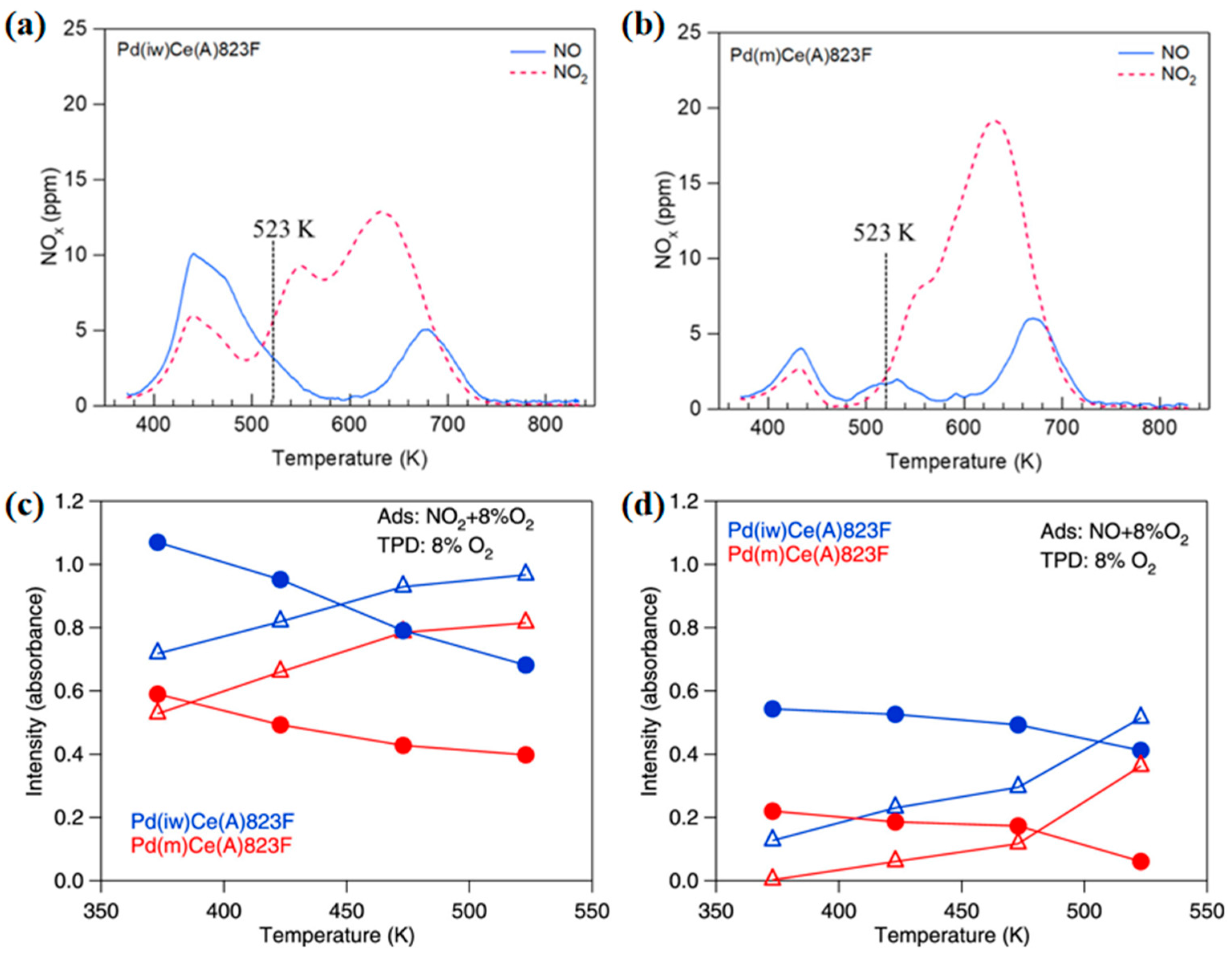
| Pd/CeO2 | 1wt% Pd | 100 ppm NO, 100 ppm NO2, 8% O2, 10% CO2, 5% H2O, N2, 0.4 L/min, 373 K | 0.39 | [38] |
3. Application Research on the NO2 Purification Process Using the Adsorption Method
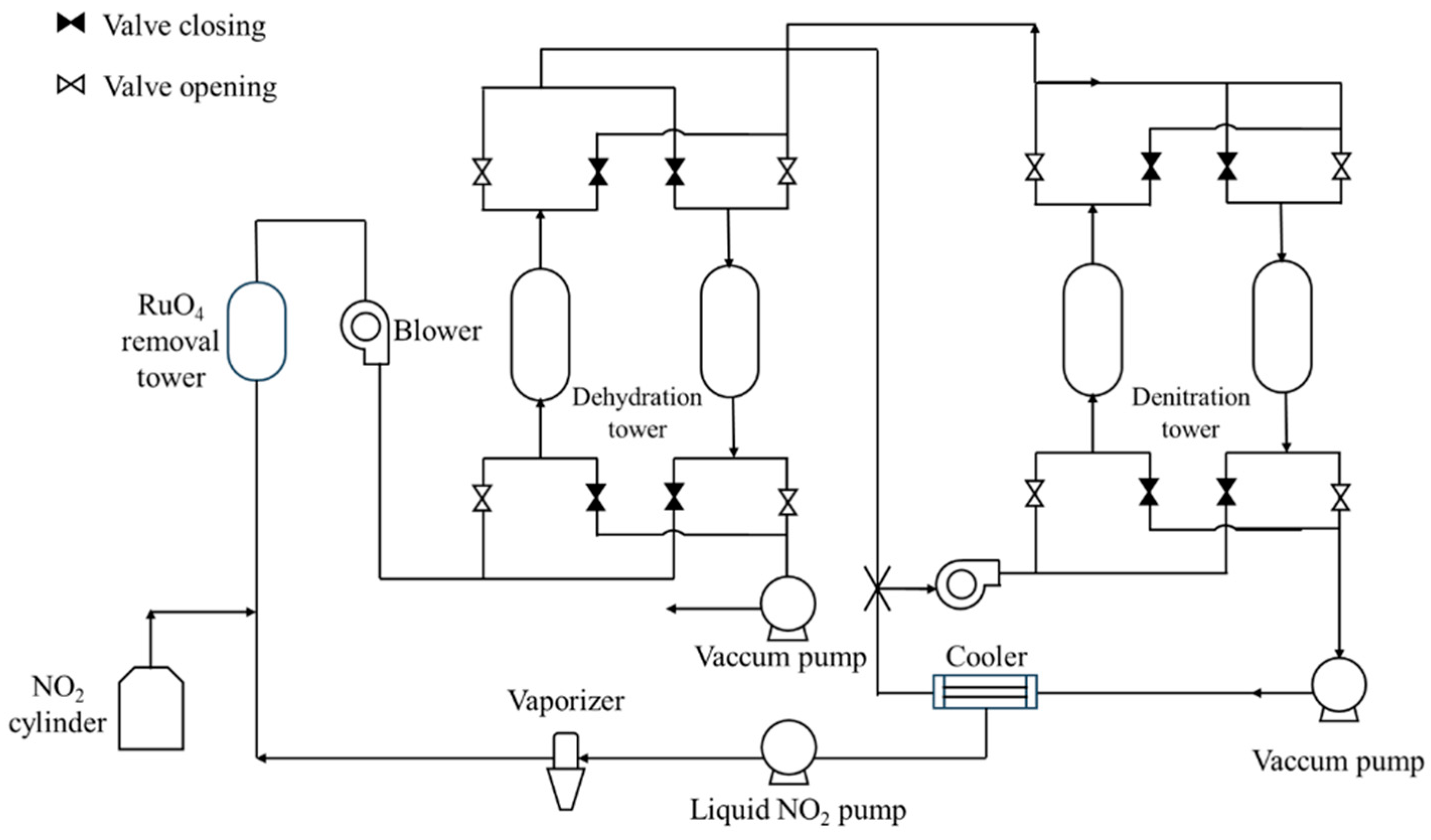
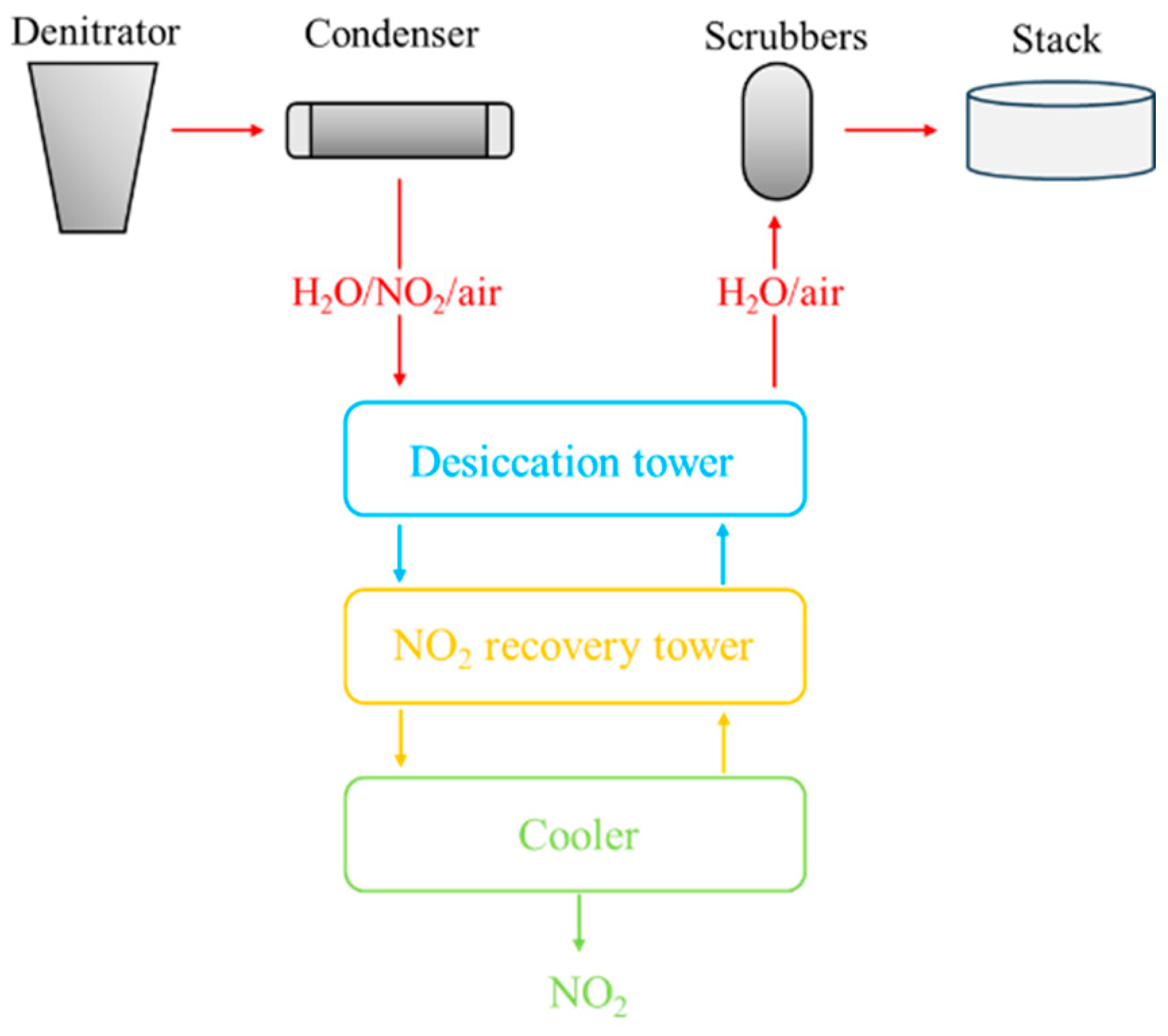
3.1. Pressure Swing Adsorption
- Adsorption: Under elevated pressure, feed gas is introduced into the adsorption bed. Strongly adsorbed (or rapidly diffusing) components are selectively captured, while weakly adsorbed components elute as product. An adsorption front forms within the bed and advances over time.
- Pressure Reduction: Upon adsorption saturation, the bed pressure is reduced to a lower level through pressure equalization recovery or direct venting. Partially adsorbed components are desorbed. This stage may incorporate co-current venting, counter-current venting, or multi-stage pressure equalization steps to recover energy.
- Desorption/Regeneration: Under low pressure, the partial pressure of the adsorbed components is further reduced through countercurrent flushing or vacuum extraction, enabling complete desorption and restoring the adsorbent’s adsorption capacity.
- Pressure Build-up: The bed pressure is raised to adsorption pressure using feed gas or product gas to prepare for the next cycle. In multi-bed systems, pressure is often initially increased using vent gas from other beds to enhance energy efficiency.
3.2. Vacuum Pressure Swing Adsorption
3.3. Temperature Swing Adsorption
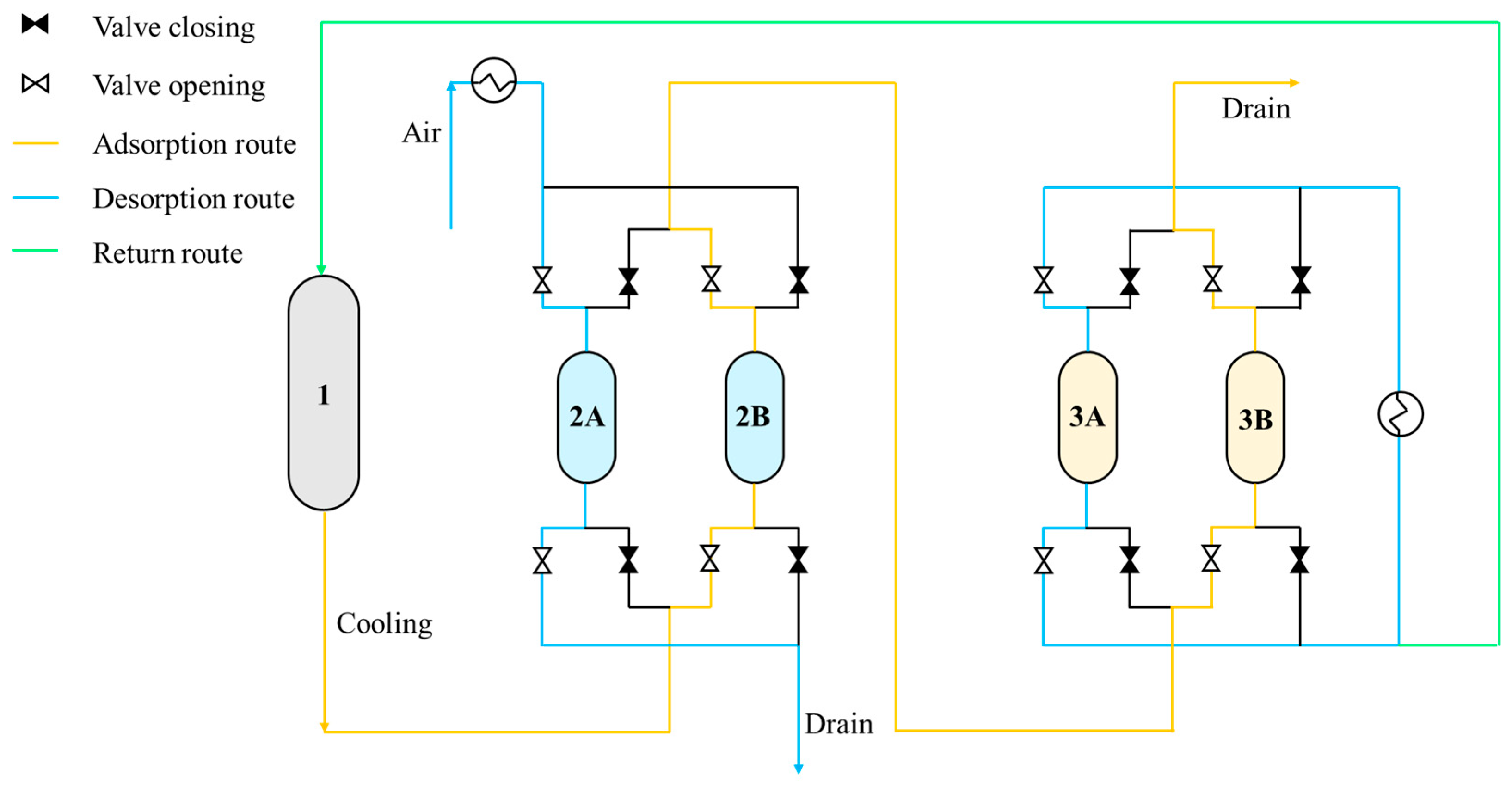
- Adsorption: The pretreated feed gas passes through the adsorption bed at ambient or lower temperatures. Strongly adsorbable impurities (such as water, organic solvents, and high-boiling-point components) are selectively retained, with the purified gas discharged as product. This stage constitutes an isothermal or near-isothermal exothermic process, requiring careful consideration of the bed temperature rise’s impact on adsorption performance.
- Heating Desorption: When the adsorption front approaches the bed outlet, the process switches. High-temperature regeneration gas (such as hot nitrogen, steam, or superheated air) is introduced into the saturated adsorption bed. Heat is transferred to the adsorbent, providing the energy required for desorption. This imparts sufficient kinetic energy to the impurity molecules to dislodge them from the adsorption sites. The desorbed impurities are carried out of the bed by the regeneration gas stream.
- Cooling: After thermal regeneration, the bed temperature remains significantly higher than the adsorption temperature. Clean gas at ambient or low temperatures must be introduced to cool the bed down to the required adsorption temperature. This cooling process also serves to purge residual desorbed components.
- Pressure Adjustment and Standby: Following cooling, pressure adjustment may be necessary to match adsorption conditions. The bed then enters standby mode, awaiting transition to the next adsorption cycle.
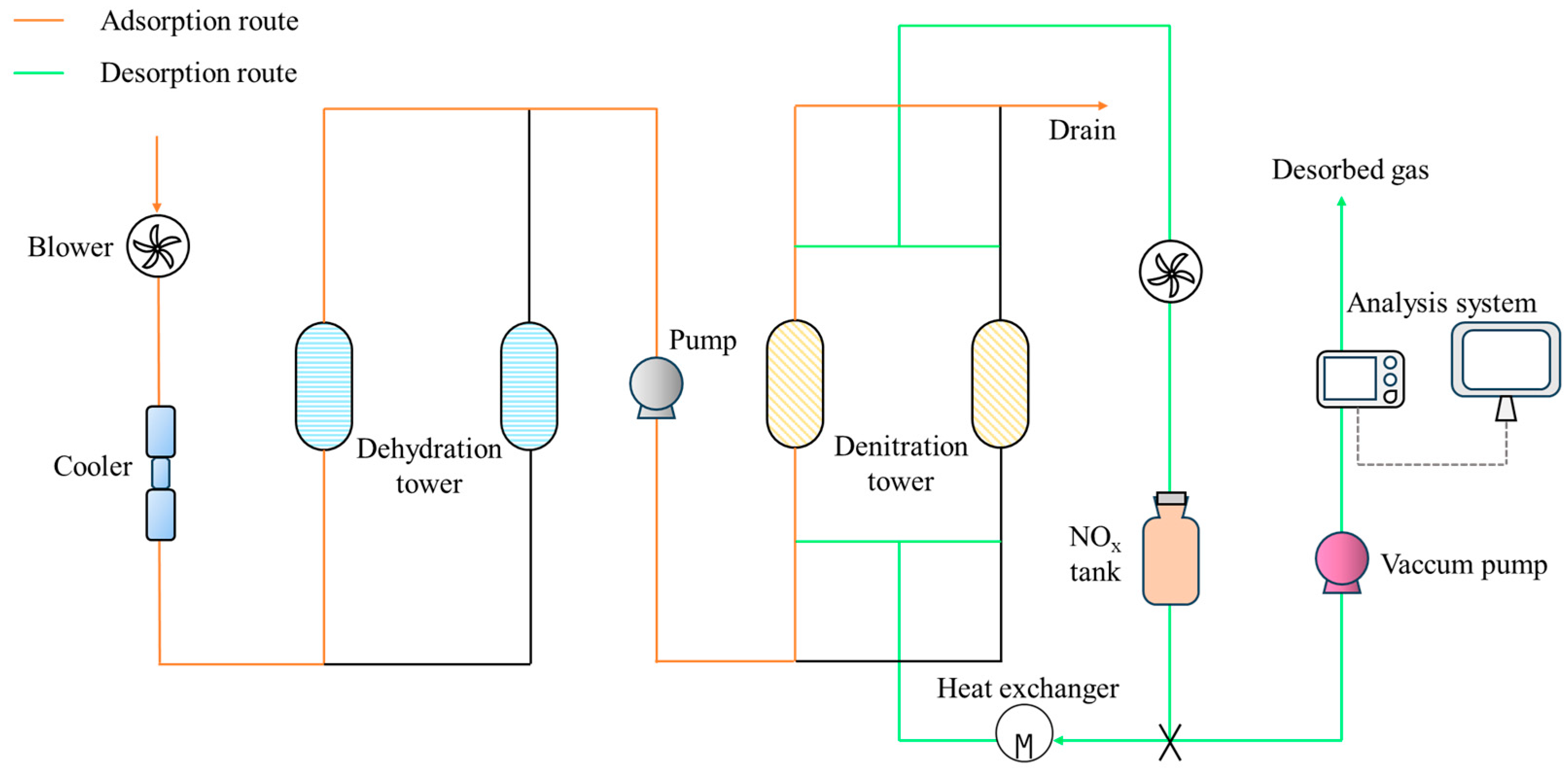
- Pre-treatment: High-concentration, fluctuating raw tail gas undergoes primary denitrification in a urea absorption tower with >90% efficiency, significantly reducing inlet concentration.
- Deep purification: Post-urea-treated tail gas, still at elevated concentration, undergoes cooling and deep drying using 3A molecular sieves before entering a ZSM-5 zeolite adsorption tower for deep adsorption purification.
- Regeneration and Closed-Loop: After adsorption saturation, the ZSM-5 bed undergoes optimized variable-temperature desorption at 200 °C with system pressure reduced to −50 kPa, yielding high-concentration NOx desorption gas (>40,000 mg/m3).
3.4. Temperature-Pressure Synergistic Strategy
- Adsorption: Flue gas passes through the adsorption tower, where Na-ZSM-5 catalyzes the oxidation of NO to NO2 and adsorbs it.
- Heating: Close the tower inlet and outlet, activate the closed-loop system, and heat the circulating gas via the heat exchanger to raise the bed temperature to the target desorption temperature of 493K.
- Gas Circulation: During the first gas circulation (GC), the thermal circulation gas flows continuously while desorption occurs at a constant standard pressure of −50 kPa within the system. When the NO2 concentration in the desorption gas exceeds 2%, the desorbed NO2 gas passes through a buffer tank and heat exchanger for temperature adjustment. The high-concentration NO2 exceeding 2% is then recovered as desorption gas. For the nth GC, fresh NOx-free gas from another tower in the adsorption phase is introduced to initiate a new cycle, further driving deep desorption.
- Purge: Slowly purge the bed with a small volume of dry, cold purified gas to cool and carry out residual high-concentration NOx gas for recovery.
- Purification: Rapidly purge with a large volume of purified gas to cool the bed to the adsorption temperature of 308 K. The purge gas is directly vented.
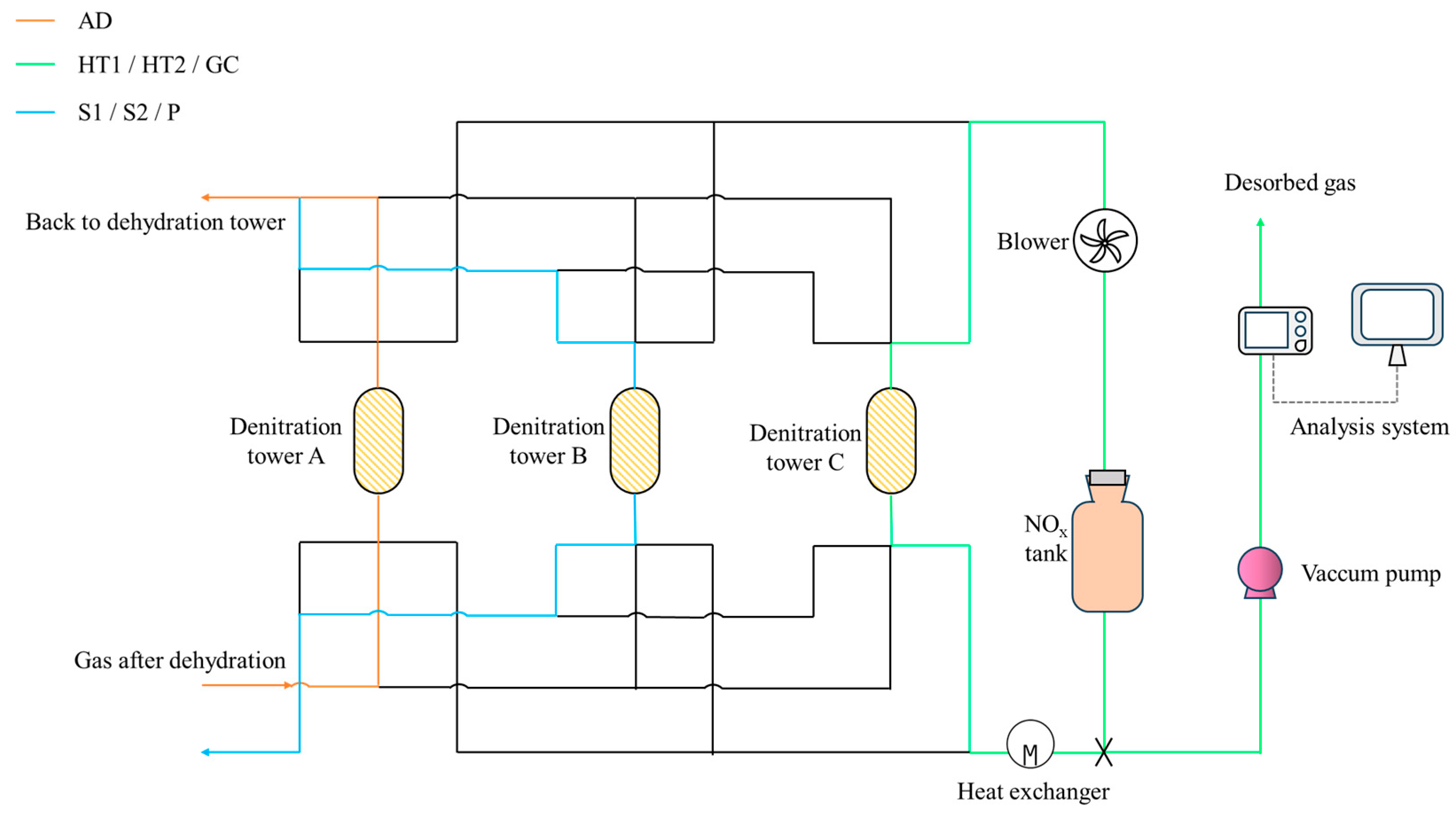
- Adsorption Stage: Flue gas (308 K) treated for desulfurization and dehydration (RH < 1%) enters the denitrification tower. Na-ZSM-5 zeolite catalyzes the oxidation of NO to NO2 and selectively adsorbs it, maintaining outlet NO2 concentration below ultra-low emission standards (≤25 ppm) for approximately 14 h.
- Desorption Stage: Includes heating (HT) and multi-stage gas circulation (GC), with the core being enhanced NO2 desorption through closed-loop circulation.
- Heating (HT, 3 h): Gas circulating within the closed loop is heated via a heat exchanger to 493 K. This preheats the bed (HT1, 2 h) before maintaining temperature for initial NO2 enrichment (HT2, 1 h).
- Gas Circulation (GC, 3 h): Comprises three 60-min cycles (G1–G3). Circulating gas is drawn from the exhaust of another denitrification tower in adsorption phase (NOx-free), supplemented into the closed loop for continuous circulation. This disrupts NOx adsorption equilibrium, promoting desorption of strongly adsorbed NO2 from zeolite into the gas phase. Part of the desorbed NO2 enrichment gas is diverted to the condensation recovery system, with the remainder recycled.
- Cooling stage: Includes purging (S) and purification (P), balancing bed cooling with residual NO2 recovery.
- Purge (S, 3 h): Low-flow (1/5 feed gas volume) clean gas is introduced into the bed to gradually cool it and purge residual NO3. Enriched gas is diverted for recovery (S1 phase), while subsequent makeup gas is used for desorption in the next tower (S2 phase).
- Purification (P, 3 h): High-flow (≥1/2 feed gas volume) clean gas rapidly cools the bed to adsorption temperature (308 K). Tail gas is directly vented, and the bed enters the next adsorption cycle.
4. Conclusions and Outlook
Author Contributions
Funding
Data Availability Statement
Conflicts of Interest
References
- Wang, Q.; Liu, Y.; Pan, X. Atmosphere pollutants and mortality rate of respiratory diseases in Beijing. Sci. Total Environ. 2008, 391, 143–148. [Google Scholar] [CrossRef]
- Jion, M.M.M.F.; Jannat, J.N.; Mia, M.Y.; Ali, M.A.; Islam, M.S.; Ibrahim, S.M.; Pal, S.C.; Islam, A.; Sarker, A.; Malafaia, G.; et al. A critical review and prospect of NO2 and SO2 pollution over Asia: Hotspots, trends, and sources. Sci. Total Environ. 2023, 876, 162851. [Google Scholar] [CrossRef]
- Zheng, C.; Zhao, C.; Li, Y.; Wu, X.; Zhang, K.; Gao, J.; Qiao, Q.; Ren, Y.; Zhang, X.; Chai, F. Spatial and temporal distribution of NO2 and SO2 in Inner Mongolia urban agglomeration obtained from satellite remote sensing and ground observations. Atmos. Environ. 2018, 188, 50–59. [Google Scholar] [CrossRef]
- Wei, S.; Hong, Q.; Tan, W.; Chen, J.; Li, T.; Wang, X.; Xue, J.; Fang, J.; Liu, C.; Tanvir, A.; et al. Spatiotemporal Distribution, Sources, and Impact on Atmospheric Oxidation of Reactive Nitrogen Oxides in the North China Plain Agricultural Regions in Summer. Remote Sens. 2024, 16, 3192. [Google Scholar] [CrossRef]
- Elkaee, S.; Phule, A.D.; Yang, J.H. Advancements in (SCR) technologies for NOx reduction: A comprehensive review of reducing agents. Process Saf. Environ. Prot. 2024, 184, 854–880. [Google Scholar] [CrossRef]
- Mao, Y.; Wang, H.-F.; Hu, P. Theoretical investigation of NH3-SCR processes over zeolites: A review. Int. J. Quantum Chem. 2015, 115, 618–630. [Google Scholar] [CrossRef]
- Anichkov, S.N.; Zykov, A.M.; Tumanovskii, A.G.; Kulish, O.N.; Zaporozhski, K.I. Development of SNCR Technology and Prospects of Its Application. Therm. Eng. 2021, 68, 510–515. [Google Scholar] [CrossRef]
- Yang, W. Summary of flue gas denitration technology for coal-fired power plants. IOP Conf. Ser. Earth Environ. Sci. 2019, 300, 032054. [Google Scholar] [CrossRef]
- Zhang, S.; Liu, F.; Zhu, H.; Lv, S.; Wang, B. Simultaneous nitrate and phosphorus removal in novel steel slag biofilters: Optimization and mechanism study. J. Environ. Manag. 2024, 349, 119558. [Google Scholar] [CrossRef] [PubMed]
- Chen, P. Desulfurization and Denitrification of Ship Exhaust Gas with Low Temperature Plasma. IOP Conf. Ser. Earth Environ. Sci. 2020, 558, 042011. [Google Scholar] [CrossRef]
- Sun, M.; Ku, C.; Tao, Z.; Wang, T.; Wen, C.; Aamir, H.; Wang, C.; Gu, Q.; Sit, P.; Shang, J. Ambient temperature NO2 removal by adsorption on transition metal ion-exchanged chabazite zeolites. Results Eng. 2023, 18, 101134. [Google Scholar] [CrossRef]
- Matsuoka, S.; Kodama, T.; Izumi, J.; Tsutaya, H.; Kurosu, K.; Someya, H. Development of NOx Recycle Process for Practical Use at Reprocessing Plant. J. Nucl. Sci. Technol. 2004, 41, 466–472. [Google Scholar] [CrossRef]
- Li, Z.; Yang, X.; Wang, Y.; Yang, H.; Song, Q. Characteristics and mechanism of low-temperature NO adsorption by activated carbon. Chem. Eng. J. 2024, 495, 153639. [Google Scholar] [CrossRef]
- Gupta, N.K.; Achary, S.N.; Viltres, H.; Bae, J.; Kim, K.S. Novel application of sodium manganese oxide in removing acidic gases in ambient conditions. Sci. Rep. 2023, 13, 2330. [Google Scholar] [CrossRef] [PubMed]
- Wang, Y.; Wang, T.; Gu, Q.; Shang, J. Adsorption Removal of NO2 Under Low-Temperature and Low-Concentration Conditions: A Review of Adsorbents and Adsorption Mechanisms. Adv. Mater. 2025, 37, 2401623. [Google Scholar] [CrossRef] [PubMed]
- Gupta, N.K.; Vikrant, K.; Kim, K.S.; Kim, K.-H.; Giannakoudakis, D.A. Regeneration strategies for metal–organic frameworks post acidic gas capture. Coord. Chem. Rev. 2022, 467, 214629. [Google Scholar] [CrossRef]
- Fang, M.-L.; Chang, H.-Y.; Chen, C.-H.; Chang, H.-Y.; Chen, C.-H.; Lin, S.-L.; Hsieh, Y.-K. Chemical Adsorption of Nitrogen Dioxide with an Activated Carbon Adsorption System. Aerosol Air Qual. Res. 2019, 19, 2568–2575. [Google Scholar] [CrossRef]
- Salahudeen, N. A Review on Zeolite: Application, Synthesis and Effect of Synthesis Parameters on Product Properties. Chem. Afr. 2022, 5, 1889–1906. [Google Scholar] [CrossRef]
- Zheng, M.W.; Tsuyoshi, A.; Kumagai, M. Adsorption Separation of Low Concentrations of CO2 and NO2 by Synthetic Zeolites. Energy Fuels 1998, 12, 1055–1060. [Google Scholar] [CrossRef]
- Delachaux, F.; Vallières, C.; Monnier, H.; Lecler, M.-T. Experimental study of NO and NO2 adsorption on a fresh or dried NaY zeolite: Influence of the gas composition by breakthrough curves measurements. Adsorption 2019, 25, 95–103. [Google Scholar] [CrossRef]
- Despres, J.; Koebel, M.; Kröcher, O.; Elsener, M.; Wokaun, A. Adsorption and desorption of NO and NO2 on Cu-ZSM-5. Microporous Mesoporous Mater. 2003, 58, 175–183. [Google Scholar] [CrossRef]
- Sun, L.M.; Wang, T.; Ku, C.; Hanif, A.; Tian, T.; Johannessen, B.; Gu, Q.; Li, Z.; Sit, P.; Shang, J. Regulating NO2 adsorption at ambient temperature by manipulating copper species as binding sites in copper-modified SSZ-13 zeolites. J. Mater. Chem. A 2024, 12, 30329. [Google Scholar] [CrossRef]
- Tao, Z.; Tian, Y.; Wang, R.; Zhang, T.; Wang, T.; Zhang, H.; Li, M.; Qiao, J.; Kong, M.; Feng, S.; et al. Zero-emission NO2 capture using divalent metal cation-exchanged zeolites for air purification. Nat. Commun. 2025, 16, 10102. [Google Scholar] [CrossRef]
- Tao, H.; Liu, Y.; Li, J.; Zhang, C.; Zhao, C.; Yang, X.; Yang, R.T.; Li, Z. Oxidative adsorption mechanism-based screening of zeolites for deep purification and recycling of NOx from humid gases. Chem. Eng. J. 2023, 475, 146148. [Google Scholar] [CrossRef]
- Tan, X.-F.; Liu, S.-B.; Liu, Y.-G.; Gu, Y.-L.; Zeng, G.-M.; Hu, X.-J.; Wang, X.; Liu, S.-H.; Jiang, L.-H. Biochar as potential sustainable precursors for activated carbon production: Multiple applications in environmental protection and energy storage. Bioresour. Technol. 2017, 227, 359–372. [Google Scholar] [CrossRef] [PubMed]
- Denmark, I.; Alam, A.; Ahsan, R.; Watanabe, F.; Viswanathan, T.; Siraj, N. Comparative Study of Chemical Activation and Physical Activation Approach to Optimize Biomass-Based Doped Carbons for Energy Applications. ECS J. Solid State Sci. Technol. 2024, 13, 061003. [Google Scholar] [CrossRef]
- Pasadakis, N.; Romanos, G.; Perdikatsis, V.; Foscolos, A.E. The Production of Activated Carbons Using Greek Lignites by Physical and Chemical Activation Methods: A Comparative Study. Energy Sources Part A Recovery Util. Environ. Eff. 2011, 33, 713–723. [Google Scholar]
- Belala, Z.; Belhachemi, M.; Jeguirim, M. Activated Carbon Prepared from Date Pits for the Retention of NO2 at Low Temperature. Int. J. Chem. React. Eng. 2014, 12, 717–726. [Google Scholar] [CrossRef]
- Ghouma, I.; Jeguirim, M.; Sager, U.; Limousy, L.; Bennici, S.; Däuber, E.; Asbach, C.; Ligotski, R.; Schmidt, F.; Ouederni, A. The Potential of Activated Carbon Made of Agro-Industrial Residues in NOx Immissions Abatement. Energies 2017, 10, 1508. [Google Scholar] [CrossRef]
- Silas, K.; Ghani, W.A.W.A.K.; Choong, T.S.Y.; Rashid, U. Breakthrough studies of Co3O4 supported activated carbon monolith for simultaneous SO2/NOx removal from flue gas. Fuel Process. Technol. 2018, 180, 155–165. [Google Scholar] [CrossRef]
- Deliyanni, E.; Bandosz, T.J. Effect of Carbon Surface Modification with Dimethylamine on Reactive Adsorption of NOx. Langmuir 2011, 27, 1837–1843. [Google Scholar] [CrossRef]
- Bazan-Wozniak, A.; Nosal-Wiercińska, A.; Cielecka-Piontek, J.; Yilmaz, S.; Pietrzak, R. Adsorption of Nitrogen Dioxide on Nitrogen-Enriched Activated Carbons. Int. J. Mol. Sci. 2024, 25, 4421. [Google Scholar] [CrossRef]
- Ji, Y.; Bai, S.; Crocker, M. Al2O3-based passive NOx adsorbers for low temperature applications. Appl. Catal. B Environ. 2015, 170, 283–292. [Google Scholar] [CrossRef]
- Li, X.; Gao, F.; Li, W.; Shen, M.; Wang, J.; Shen, G. Mechanistic insights and application potentials for CeO2-Al2O3 passive NOx adsorber (PNA) materials. J. Environ. Chem. Eng. 2024, 12, 113468. [Google Scholar] [CrossRef]
- Kim, H.; Jung, H.; Han, J.W.; Lee, K.B. Experimental and density functional theory studies on Cu/Ba-coimpregnated γ-Al2O3 for low-temperature NOx storage and adsorbent regeneration. Chem. Eng. J. 2022, 429, 132112. [Google Scholar] [CrossRef]
- Gupta, N.K.; Rajput, K.; Achary, S.N.; Dhavale, R.P.; Mehta, B.R.; Roy, D.R.; Kim, K.S. Chemisorption of SO2 and NO2 gas over Na0.4MnO2 in ambient conditions: An experimental and theoretical study. New J. Chem. 2024, 48, 4670–4674. [Google Scholar] [CrossRef]
- Gupta, N.K.; Rajput, K.; Achary, S.N.; Kim, E.J.; Mehta, B.R.; Roy, D.R.; Kim, K.S. Reactive Adsorption of SO2 and NO2 Gases over Black Mass Derived from Discarded Alkaline Batteries. Energy Fuels 2024, 38, 545–554. [Google Scholar] [CrossRef]
- Toso, A.; Danielis, M.; De Leitenburg, C.; Boaro, M.; Trovarelli, A.; Colussi, S. Key Properties and Parameters of Pd/CeO2 Passive NOx Adsorbers. Ind. Eng. Chem. Res. 2022, 61, 3329–3341. [Google Scholar] [CrossRef]
- Choi, Y.; Mun, S.; Lee, K.B. Direct synthesis of vertically oriented Co-Mg-Al layered double hydroxide on spherical γ-Al2O3 for passive NOx adsorber. Appl. Surf. Sci. 2025, 687, 162248. [Google Scholar] [CrossRef]
- Sultana, A.; Habermacher, D.D.; Kirschhock, C.E.A.; Martens, J.A. Adsorptive separation of NOx in presence of SOx from gas mixtures simulating lean burn engine exhaust by pressure swing process on Na–Y zeolite. Appl. Catal. B Environ. 2004, 48, 65–76. [Google Scholar] [CrossRef]
- Matsuoka, S.; Kodama, T.; Kumagai, M.; Tamura, T.; Izumi, J.; Someya, H. Development of Adsorption Process for NOx Recycling in a Reprocessing Plant. J. Nucl. Sci. Technol. 2003, 40, 410–416. [Google Scholar] [CrossRef][Green Version]
- Wang, Z.; Jiang, Z.; Tang, Y.; Shen, Y.; Sun, N.; Li, Z.; Liu, J. Pilot-Scale Study on Advanced Purification of High-Concentration NOx Exhaust from Nuclear Facilities Using ZSM-5 Temperature-Swing Adsorption. Chem. Ind. Eng. Prog. 2025, 12, 1113. (In Chinese) [Google Scholar]
- Liu, Y.; You, Y.; Li, Z.; Yang, X.; Wu, X.; Zhao, C.; Xing, Y.; Yang, R.T. NOx removal with efficient recycling of NO2 from iron-ore sintering flue gas: A novel cyclic adsorption process. J. Hazard. Mater. 2021, 407, 124380. [Google Scholar] [CrossRef] [PubMed]
| Zeolite | Si/Al Ratio | Framework | Adsorption Test Conditions | NO2 Adsorption Capacity (mmol/g) | Refs. |
|---|---|---|---|---|---|
| 4A | 1 | LTA | 800 ppm NO2, 950 ppm CO2, 0.11 L/min, 333 K | 0.36 | [19] |
| 5A | 1 | LTA | 800 ppm NO2, 950 ppm CO2, 0.11 L/min, 333 K | 0.87 | |
| 13X | 1.6 | FAU | 800 ppm NO2, 950 ppm CO2, 0.11 L/min, 333 K | 2.99 | |
| HM | 5 | MOR | 800 ppm NO2, 950 ppm CO2, 0.11 L/min, 333 K | 1.24 | |
| NaM | 5 | MOR | 800 ppm NO2, 950 ppm CO2, 0.11 L/min, 333 K | 1.78 | |
| NaY | 2.4 | FAU | 800 ppm NO2, 950 ppm CO2, 0.11 L/min, 333 K | 1.78 | |
| USY | 6.1 | FAU | 800 ppm NO2, 950 ppm CO2, 0.11 L/min, 333 K | 0.43 | |
| NaY(wet) | 2.55 | FAU | 350 ppm NO2, 8.5% O2, N2, 1.17 L/min, 303 K | 3.31 | [20] |
| NaY(wet) | 2.55 | FAU | 350 ppm NO2, N2, 1.17 L/min, 303 K | 2.89 | |
| NaY(dry) | 2.55 | FAU | 350 ppm NO2, 8.5% O2, N2, 1.17 L/min, 303 K | 2.03 | |
| CuZSM-5 | 40 | MFI | 500 ppm NO2, 10% O2, N2, 5.0 L/min, 473 K | 0.165 | [21] |
| CuZSM-5 | 40 | MFI | 500 ppm NO2, 5% H2O, 10% O2, N2, 5.0 L/min, 473 K | 0.139 | |
| Cun+SSZ-13-190-R | 12 | CHA | 1000 ppm NO2, He, 0.06 L/min, 298 K | 1.79 | [22] |
| HSSZ-13 | 12 | CHA | 1000 ppm NO2, He, 0.06 L/min, 298 K | 1.17 | |
| Ca-LTA | 3 | LTA | 500 ppm NO2, Air, 0.2 L/min, 298 K | 3.94 | [23] |
| Mn-LTA | 3 | LTA | 500 ppm NO2, Air, 0.2 L/min, 298 K | 3.13 | |
| Na-LTA | 3 | LTA | 500 ppm NO2, Air, 0.2 L/min, 298 K | 3.87 |
| Precursor | Preparation Method | Adsorption Test Conditions | NO2 Adsorption Capacity (mmol/g) | Refs. |
|---|---|---|---|---|
| / | Degassing at 200 °C for 2 h | 200 ppm NO2, N2, 0.5 L/min, 303 K | 1.26 | [13] |
| / | Degassing at 200 °C for 2 h | 200 ppm NO2, N2, 0.5 L/min, 253 K | 2.16 | |
| Date pits | Activated for 2 h at 850 °C | 500 ppm NO2, N2, 0.33 L/min, 293 K | 2.32 | [28] |
| Date pits | Activated for 2 h at 850 °C | 500 ppm NO2, N2, 0.33 L/min, 333 K | 1.85 | |
| Olive pomace | 50% phosphoric acid solution stirred at 110 °C for 9 h | 5 ppm NO2, 50%RH air, 23.5 L/min, 296 K | 0.183 | [29] |
| Olive pomace | Pure CO2 gas flow, 750 °C activation for 6 h | 5 ppm NO2, 50%RH air, 23.5 L/min, 296 K | 0.313 | |
| Olive pomace | Water vapor flow, activated at 750 °C for 6 h | 5 ppm NO2, 50%RH air, 23.5 L/min, 296 K | 0.348 | |
| Wood | Dimethylamine (DMA)-modified commercial BAX-1500 | 1000 ppm NO2, air, 0.45 L/min, 296 K | 1.07 | [31] |
| Orthocoking coal | Chemical activation with NaOH at 800 °C, accompanied by ammonia oxidation | 1000 ppm NO2, air, 0.45 L/min, 298 K | 0.51 | [32] |
| Orthocoking coal | Chemical activation with NaOH at 800 °C, accompanied by ammonia oxidation | 1000 ppm NO2, air, 0.45 L/min, 298 K | 1.63 |
| Conditions | Temperature (℃) | Adsorption/Desorption Cycle (min) | Adsorption/Desorption Space Velocity (h−1) | Regenerated Gas |
|---|---|---|---|---|
| Parameters | 255 | 10/10 | 30,000/15,000 | 5%H2O+ 10%O2+ He |
| Route | Adsorbents | Specifications |
|---|---|---|
| Remove RuO4 | USY200 | Si/Al ratio = 200 |
| Desiccation | Silica-gel + H-type Mordenite | Si/Al ratio = 20 |
| NOx Recovery | Pentasil (3000) zeolite | Si/Al ratio = 3000 |
| Chemical Engineering Device | Adsorption/Desorption Pressure (kPa) | Temperature (K) |
|---|---|---|
| Ruthenium removal Tower | 120 | 343 |
| Desiccation tower | 120/60 | 343 |
| NOx recovery tower | 120/5 | 298 |
| Cooler | 110 | 260 |
| Process | Advantages | Disadvantages |
|---|---|---|
| PSA | High cycle rate and automation level | The desorption driving force is limited |
| VPSA | Complete desorption, high product purity, suitable for complex mixtures | Long cycle times and potential thermal aging of adsorbents |
| TSA | More thorough than PSA desorption with higher recovery rates | Requires a vacuum system, increasing equipment investment and energy consumption |
| GVTSA | High desorption efficiency | Complex manufacturing processes, challenging control requirements, and high equipment investment costs |
Disclaimer/Publisher’s Note: The statements, opinions and data contained in all publications are solely those of the individual author(s) and contributor(s) and not of MDPI and/or the editor(s). MDPI and/or the editor(s) disclaim responsibility for any injury to people or property resulting from any ideas, methods, instructions or products referred to in the content. |
© 2026 by the authors. Licensee MDPI, Basel, Switzerland. This article is an open access article distributed under the terms and conditions of the Creative Commons Attribution (CC BY) license.
Share and Cite
Ma, X.; Tong, Y.; Su, Z.; Tang, H.; He, H.; Chang, S.; Chang, Y.; Wang, B.; Li, G. Current Research on NO2 Removal from Flue Gas Using Adsorption Methods. Separations 2026, 13, 24. https://doi.org/10.3390/separations13010024
Ma X, Tong Y, Su Z, Tang H, He H, Chang S, Chang Y, Wang B, Li G. Current Research on NO2 Removal from Flue Gas Using Adsorption Methods. Separations. 2026; 13(1):24. https://doi.org/10.3390/separations13010024
Chicago/Turabian StyleMa, Xibin, Yulin Tong, Zhe Su, Hongbin Tang, Hui He, Shangwen Chang, Yulong Chang, Bangda Wang, and Gaoliang Li. 2026. "Current Research on NO2 Removal from Flue Gas Using Adsorption Methods" Separations 13, no. 1: 24. https://doi.org/10.3390/separations13010024
APA StyleMa, X., Tong, Y., Su, Z., Tang, H., He, H., Chang, S., Chang, Y., Wang, B., & Li, G. (2026). Current Research on NO2 Removal from Flue Gas Using Adsorption Methods. Separations, 13(1), 24. https://doi.org/10.3390/separations13010024

