
Chromium Removal by Dunaliella salina in High-Salinity Environments: An Investigation Based on Microalgal Cytotoxic Responses and Adsorption Capacity




Abstract
1. Introduction
2. Materials and Methods
2.1. Cultivation and Treatment of Microalgal Materials
2.2. Chromium Ion Contamination Exposure Experiment
2.3. Measurement of Algal Cell Density and Quantification of Half-Maximal Effective Concentration (EC50) of Toxicant
2.4. Measurement of Pigment Content
2.5. Measurement of Chl a Fluorescence Transient
2.6. Liquid-Solid Adsorption Equilibrium of Chromium on Algal Cell Surface
2.7. Adsorption Kinetics Studies
2.8. Statistical Analysis
3. Results
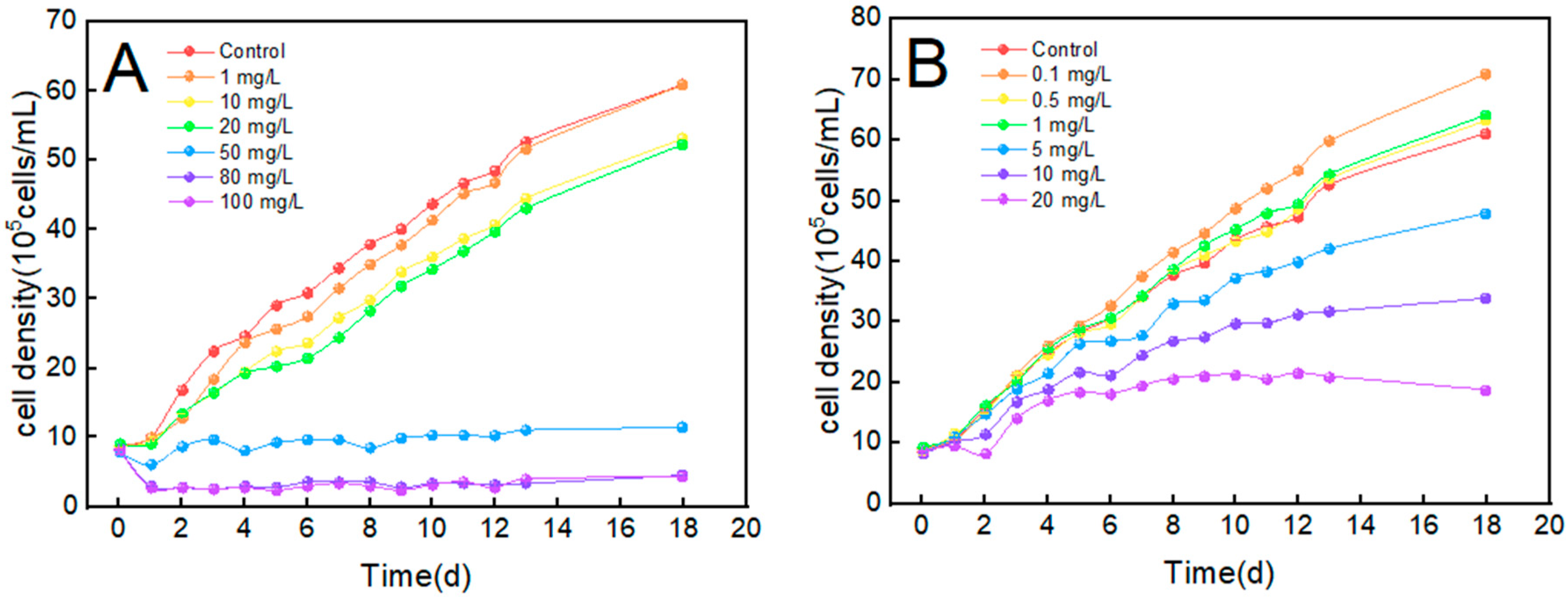
3.1. The Growth Effects of Varying Concentrations of Cr(III) and Cr(VI) on Algal Cells
3.2. EC50 of Cr on D. salina
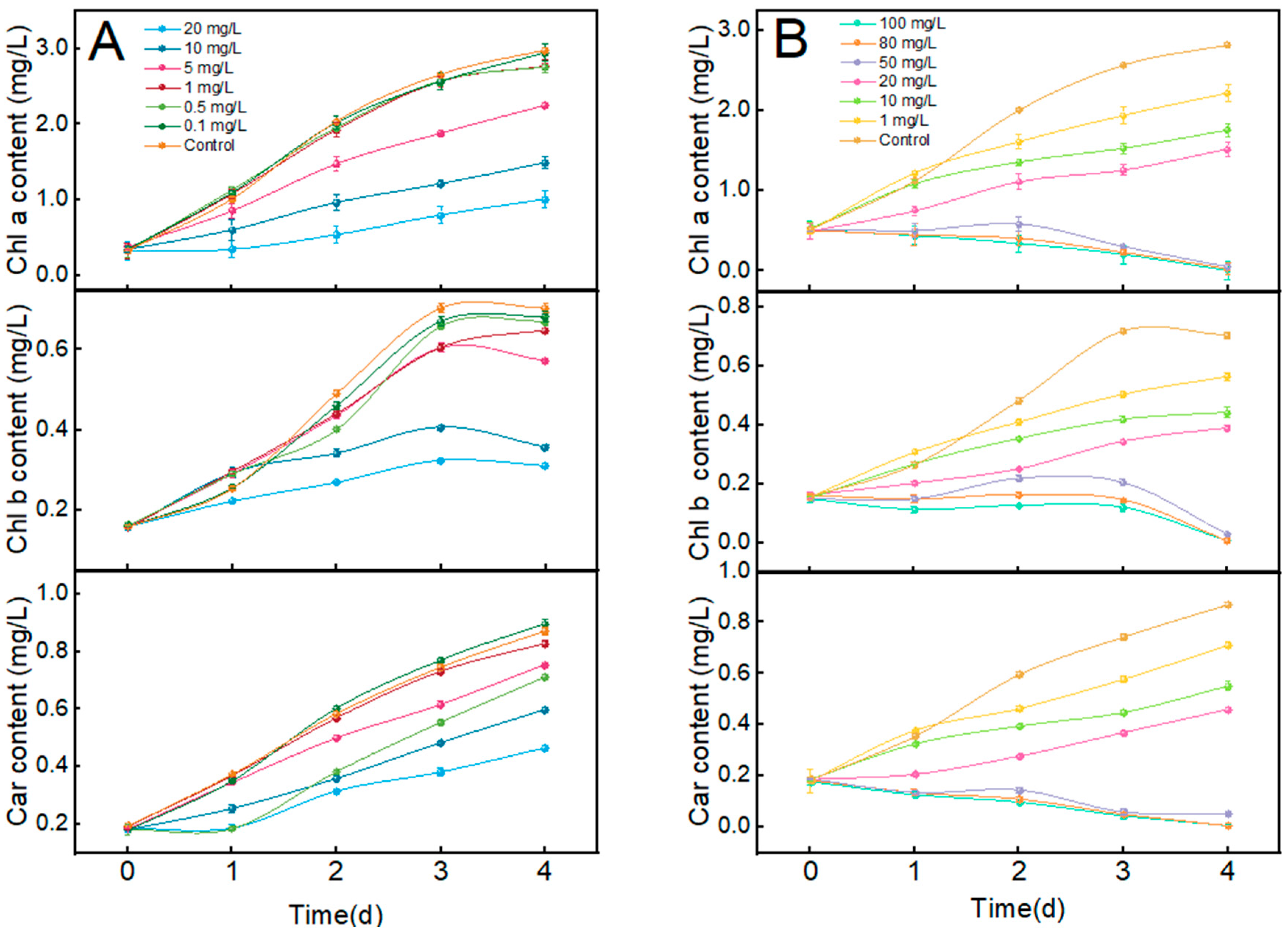
3.3. Effects of Chromium on Pigment Contents
3.4. Effects of Chromium on Primary Photochemical Reactions in D. salina
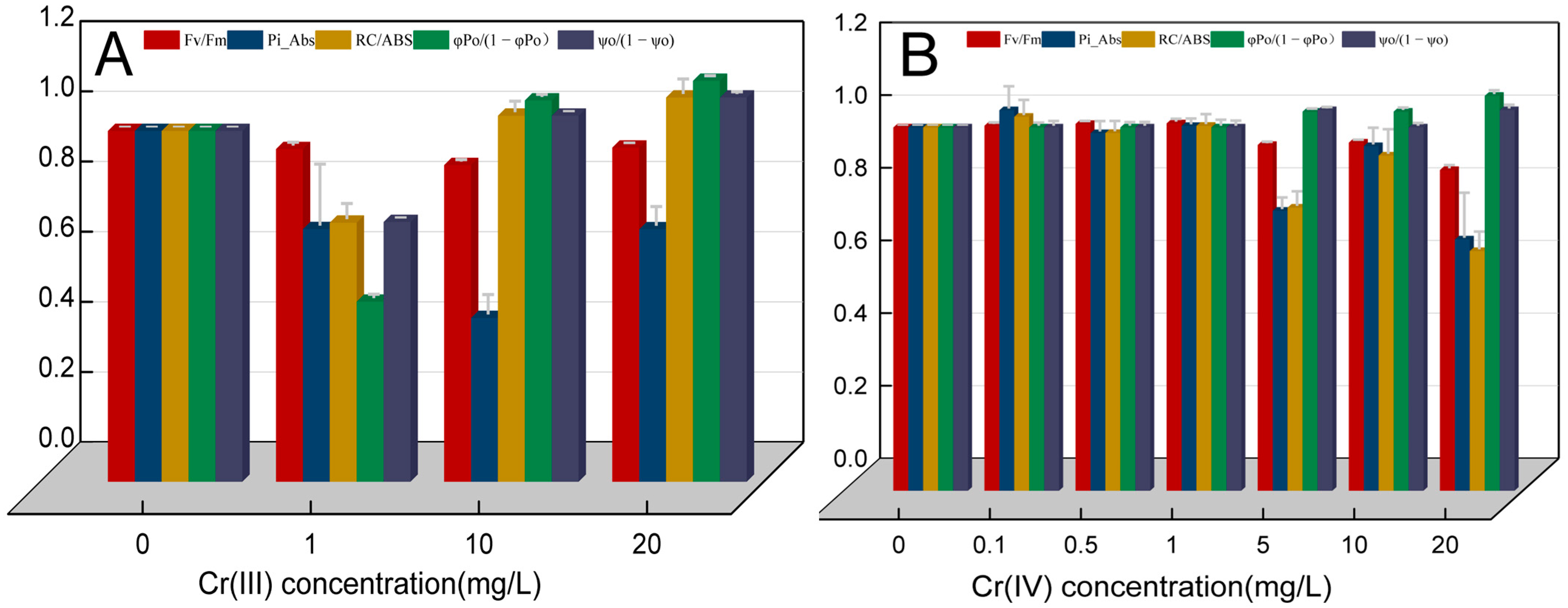
3.4.1. Photochemical Efficiency
3.4.2. PSII Reaction Centers
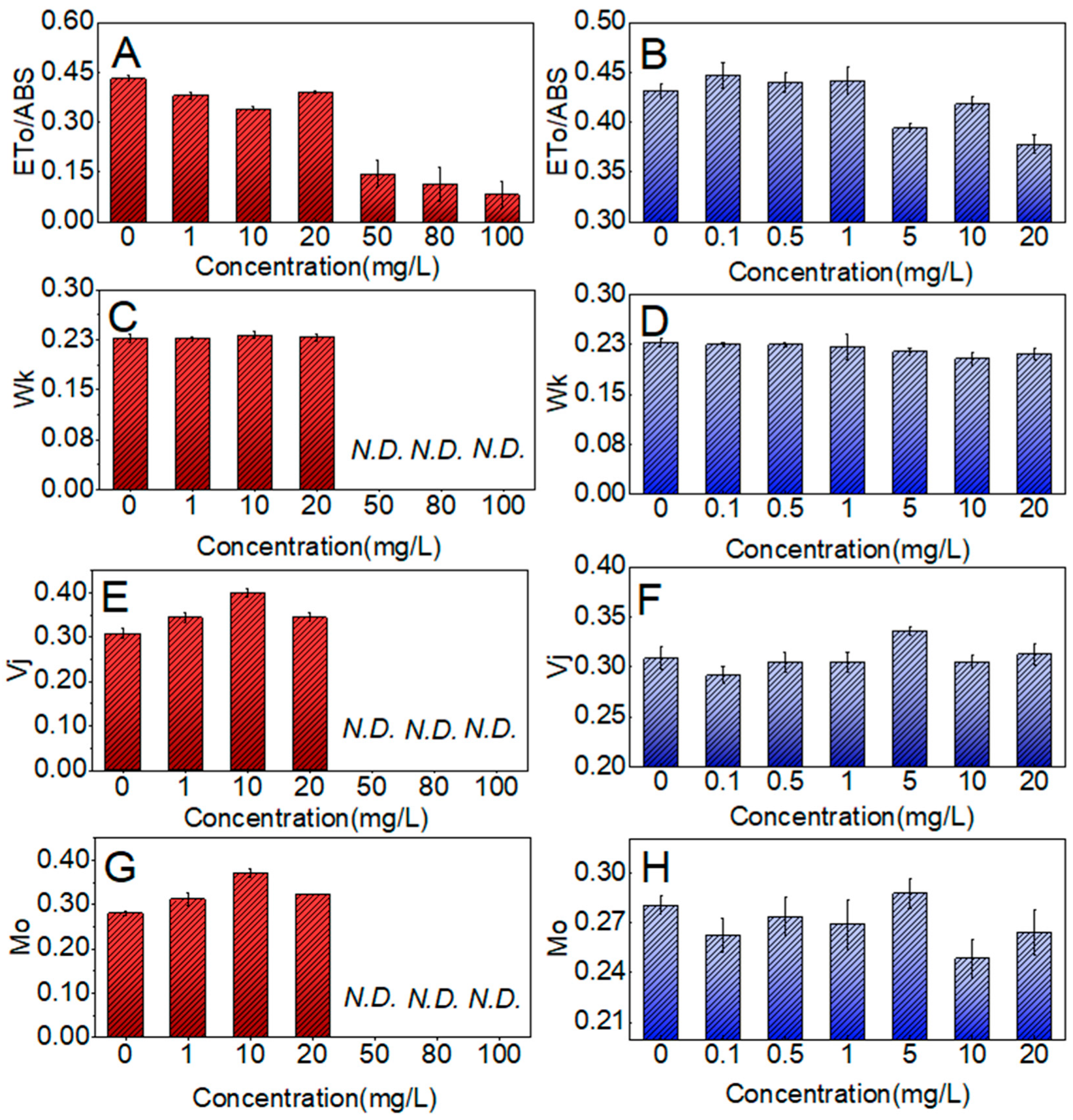
3.4.3. Donor and Acceptor Sides of PSII
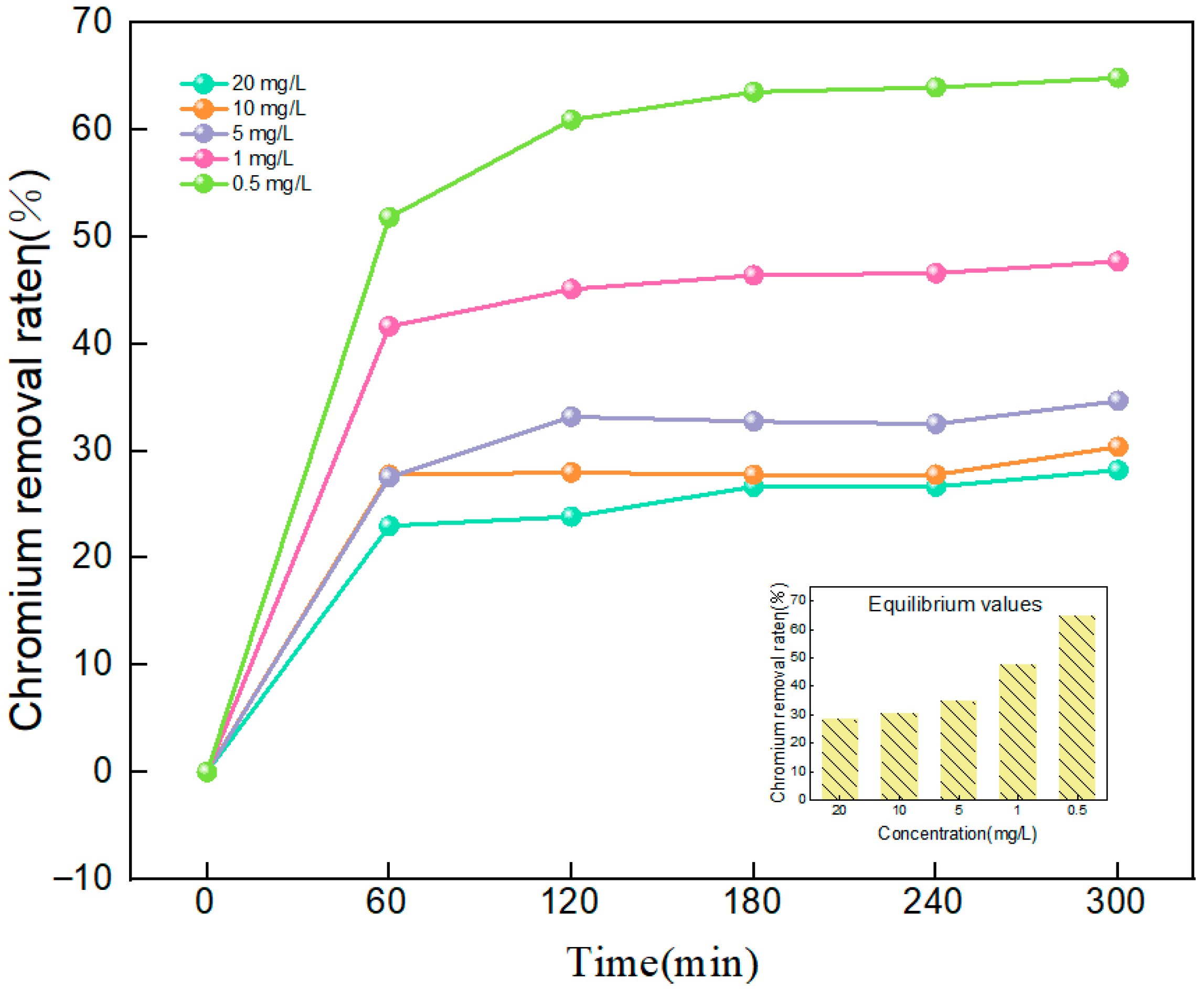
3.5. Analysis of Adsorption Equilibrium and Kinetics
4. Discussion
4.1. The Effects of Cr(III) and Cr(VI) on the Growth of D. salina
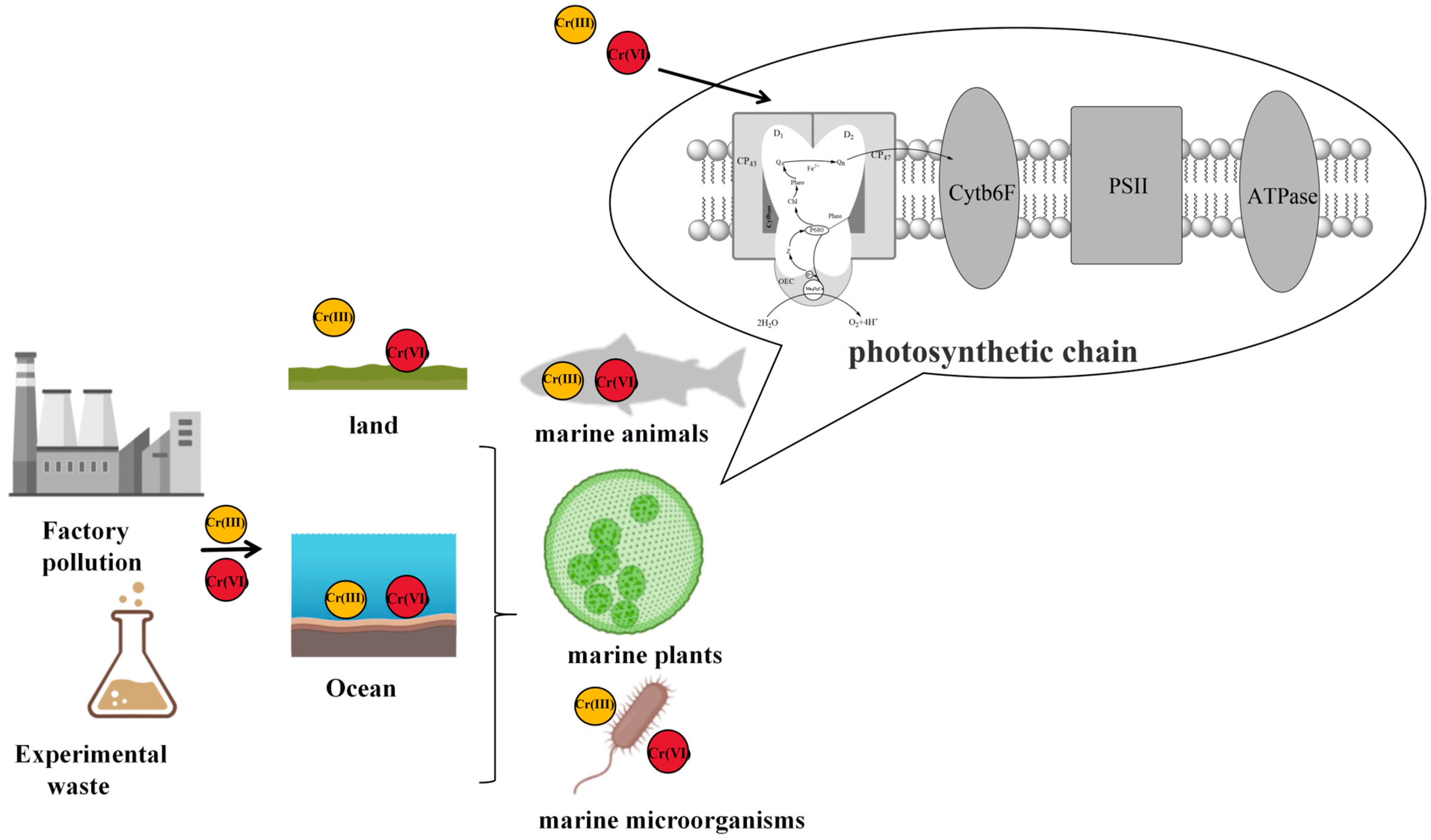
4.2. Cr(III) and Cr(VI) Induced Damage to Photosynthesis in D. salina
4.3. Analysis of Cr(VI) Adsorption Isotherms and Adsorption Kinetics by D. salina
5. Conclusions
Author Contributions
Funding
Data Availability Statement
Acknowledgments
Conflicts of Interest
References
- Yi, T.; Juan, H.; Xuena, Y.; Yongdong, X.; Lijin, L.; Guochao, S.; Huanxiu, L.; Mingan, L.; Hui, X.; Xun, W. Intercropping with Solanum nigrum and Solanum photeinocarpum from two ecoclimatic regions promotes growth and reduces cadmium uptake of eggplant seedlings. Pedosphere 2017, 27, 638–644. [Google Scholar] [CrossRef]
- Nikookar, K.; Moradshahi, A.; Hosseini, L. Physiological responses of Dunaliella salina and Dunaliella tertiolecta to copper toxicity. Biomol. Eng. 2005, 22, 141–146. [Google Scholar] [CrossRef]
- Ku, H.-H.; Lin, P.; Ling, M.-P. Assessment of potential human health risks in aquatic products based on the heavy metal hazard decision tree. BMC Bioinform. 2021, 22, 620. [Google Scholar] [CrossRef] [PubMed]
- Hosseini Tafreshi, A.; Shariati, M. Dunaliella biotechnology: Methods and applications. J. Appl. Microbiol. 2009, 107, 14–35. [Google Scholar] [CrossRef]
- Younis, A. Biosorption of Heavy Metals by Algae: Recent Advances, Mechanisms, and Applications in Wastewater Treatment-A review. J. Qassim Univ. Sci. 2025, 4, 1. [Google Scholar]
- Mehta, S.; Gaur, J. Use of algae for removing heavy metal ions from wastewater: Progress and prospects. Crit. Rev. Biotechnol. 2005, 25, 113–152. [Google Scholar] [CrossRef]
- Goher, M.E.; Abd El-Monem, A.M.; Abdel-Satar, A.M.; Ali, M.H.; Hussian, A.-E.; Napiórkowska-Krzebietke, A. Biosorption of some toxic metals from aqueous solution using non-living algal cells of Chlorella vulgaris. J. Elem. 2016, 21, 703–714. [Google Scholar]
- Balali-Mood, M.; Naseri, K.; Tahergorabi, Z.; Khazdair, M.R.; Sadeghi, M. Toxic mechanisms of five heavy metals: Mercury, lead, chromium, cadmium, and arsenic. Front. Pharmacol. 2021, 12, 643972. [Google Scholar] [CrossRef]
- Greeshma, K.; Kim, H.-S.; Ramanan, R. The emerging potential of natural and synthetic algae-based microbiomes for heavy metal removal and recovery from wastewaters. Environ. Res. 2022, 215, 114238. [Google Scholar] [CrossRef]
- Parmar, K.S.; Patel, K.M. Biosorption and bioremediation of heavy metal ions from wastewater using algae: A comprehensive review. World. J. Microbiol. Biotechnol. 2025, 41, 262. [Google Scholar] [CrossRef]
- Chen, Z.; Osman, A.I.; Rooney, D.W.; Oh, W.-D.; Yap, P.-S. Remediation of heavy metals in polluted water by immobilized algae: Current applications and future perspectives. Sustainability 2023, 15, 5128. [Google Scholar] [CrossRef]
- Thabet, J.; Elleuch, J.; Martínez, F.; Abdelkafi, S.; Hernández, L.E.; Fendri, I. Characterization of cellular toxicity induced by sub-lethal inorganic mercury in the marine microalgae Chlorococcum dorsiventrale isolated from a metal-polluted coastal site. Chemosphere 2023, 338, 139391. [Google Scholar] [CrossRef]
- Zhu, Q.-L.; Guo, S.-N.; Wen, F.; Zhang, X.-L.; Wang, C.-C.; Si, L.-F.; Zheng, J.-L.; Liu, J. Transcriptional and physiological responses of Dunaliella salina to cadmium reveals time-dependent turnover of ribosome, photosystem, and ROS-scavenging pathways. Aquat. Toxicol. 2019, 207, 153–162. [Google Scholar] [CrossRef]
- Elleuch, J.; Thabet, J.; Ghribi, I.; Jabeur, H.; Hernández, L.E.; Fendri, I.; Abdelkafi, S. Responses of Dunaliella sp. AL-1 to chromium and copper: Biochemical and physiological studies. Chemosphere 2024, 364, 143133. [Google Scholar] [CrossRef] [PubMed]
- Musah, B.I.; Xu, Y.; Liang, C.; Peng, L. Biosorption of chromium (VI), iron (II), copper (II), and nickel (II) ions onto alkaline modified Chlorella vulgaris and Spirulina platensis in binary systems. Environ. Sci. Pollut. Res. 2022, 29, 62514–62536. [Google Scholar] [CrossRef]
- Elleuch, J.; Amor, F.B.; Chaaben, Z.; Frikha, F.; Michaud, P.; Fendri, I.; Abdelkafi, S. Zinc biosorption by Dunaliella sp. AL-1: Mechanism and effects on cell metabolism. Sci. Total. Environ. 2021, 773, 145024. [Google Scholar] [CrossRef] [PubMed]
- Kaushik, G.; Raza, K. Potential of novel Dunaliella salina from sambhar salt lake, India, for bioremediation of hexavalent chromium from aqueous effluents: An optimized green approach. Ecotox. Environ. Safe. 2019, 180, 430–438. [Google Scholar]
- Leong, Y.K.; Chang, J.-S. Bioremediation of heavy metals using microalgae: Recent advances and mechanisms. Bioresour. Technol. 2020, 303, 122886. [Google Scholar] [CrossRef]
- Fan, W.-J.; Feng, Y.-X.; Li, Y.-H.; Lin, Y.-J.; Yu, X.-Z. Unraveling genes promoting ROS metabolism in subcellular organelles of Oryza sativa in response to trivalent and hexavalent chromium. Sci. Total. Environ. 2020, 744, 140951. [Google Scholar] [CrossRef]
- Balaji, S.; Kalaivani, T.; Sushma, B.; Pillai, C.V.; Shalini, M.; Rajasekaran, C. Characterization of sorption sites and differential stress response of microalgae isolates against tannery effluents from Ranipet industrial area—An application towards phycoremediation. Int. J. Phytoremediation 2016, 18, 747–753. [Google Scholar] [CrossRef]
- Mathur, S.; Kalaji, H.; Jajoo, A. Investigation of deleterious effects of chromium phytotoxicity and photosynthesis in wheat plant. Photosynthetica 2016, 54, 185–192. [Google Scholar] [CrossRef]
- Jo, C.R.; Cho, K.; An, S.M.; Do, J.-M.; Hong, J.W.; Kim, J.H.; Kim, S.Y.; Jeong, H.G.; Kang, N.S. Taxonomical, Physiological, and Biochemical Characteristics of Dunaliella salina DSTA20 from Hypersaline Environments of Taean Salt Pond, Republic of Korea. Microorganisms 2024, 12, 2467. [Google Scholar] [CrossRef]
- Ritchie, R. Universal chlorophyll equations for estimating chlorophylls a, b, c, and d and total chlorophylls in natural assemblages of photosynthetic organisms using acetone, methanol, or ethanol solvents. Photosynthetica 2008, 46, 115–126. [Google Scholar] [CrossRef]
- Che, X.; Ding, R.; Li, Y.; Zhang, Z.; Gao, H.; Wang, W. Mechanism of long-term toxicity of CuO NPs to microalgae. Nanotoxicology 2018, 12, 923–939. [Google Scholar] [CrossRef]
- Strasser, B.J.; Strasser, R.J. Measuring Fast Fluorescence Transients to Address Environmental Questions: The JIP-Test; Springer: Berlin/Heidelberg, Germany, 1995. [Google Scholar]
- Zhang, W.; Tan, N.G.; Li, S.F. NMR-based metabolomics and LC-MS/MS quantification reveal metal-specific tolerance and redox homeostasis in Chlorella vulgaris. Mol. Biosyst. 2014, 10, 149–160. [Google Scholar] [CrossRef]
- Leeuwen, K.V. Technical Guidance Document on Risk Assessment in Support of Commission Directive 93/67/EEC on Risk Assessment For New Notified Substances And Commission Regulation (EC) No1488/94 on Risk Assessment For Existing Substances Part II; European Commission: Brussels, Belgium, 1996. [Google Scholar]
- Gokhale, S.; Jyoti, K.; Lele, S. Kinetic and equilibrium modeling of chromium (VI) biosorption on fresh and spent Spirulina platensis/Chlorella vulgaris biomass. Bioresour. Technol. 2008, 99, 3600–3608. [Google Scholar] [CrossRef] [PubMed]
- Singh, S.K.; Bansal, A.; Jha, M.; Dey, A. An integrated approach to remove Cr (VI) using immobilized Chlorella minutissima grown in nutrient rich sewage wastewater. Bioresour. Technol. 2012, 104, 257–265. [Google Scholar] [CrossRef]
- Shokri Khoubestani, R.; Mirghaffari, N.; Farhadian, O. Removal of three and hexavalent chromium from aqueous solutions using a microalgae biomass-derived biosorbent. Environ. Prog. Sustain. 2015, 34, 949–956. [Google Scholar] [CrossRef]
- Revathi, S.; Amanullah, M.; Al-Samghan, A.S.; Joseph, J.J.; Pazhanisamy, P.; Lavanya, R.; Gomathi, T. Green engineering of chitosan-bioactive glass for efficient removal of Cr (VI) and Cu (II) ions from aqueous systems. Environ. Monit. Assess. 2025, 197, 797. [Google Scholar] [CrossRef] [PubMed]
- Zouboulis, A.; Loukidou, M.; Matis, K. Biosorption of toxic metals from aqueous solutions by bacteria strains isolated from metal-polluted soils. Process. Biochem. 2004, 39, 909–916. [Google Scholar] [CrossRef]
- Verma, P.; Krishnan, S.; Seleyi, S.C.; Jaiswal, R.; Peter, M.; Dharani, G. Harnessing melanin from deep-sea yeast Hortaea werneckii NIOT129A8: Heavy Metal Adsorption Potential. Mar. Environ. Res. 2025, 209, 107192. [Google Scholar] [CrossRef]
- Kayalvizhi, K.; Vijayaraghavan, K.; Velan, M. Biosorption of Cr (VI) using a novel microalga Rhizoclonium hookeri: Equilibrium, kinetics and thermodynamic studies. Desalin. Water. Treat. 2015, 56, 194–203. [Google Scholar] [CrossRef]
- Nithya, K.; Sathish, A.; Pradeep, K.; Baalaji, S.K. Algal biomass waste residues of Spirulina platensis for chromium adsorption and modeling studies. Environ. Chem. Eng. 2019, 7, 103273. [Google Scholar] [CrossRef]
- Aeini, K.; Zoghi, A.; Khosravi-Darani, K. Application of Yeasts as Pollutant Adsorbents. Curr. Microbiol. 2025, 82, 368. [Google Scholar] [CrossRef] [PubMed]
- Tripathi, S.; Arora, N.; Gupta, P.; Pruthi, P.A.; Poluri, K.M.; Pruthi, V. Microalgae: An emerging source for mitigation of heavy metals and their potential implications for biodiesel production. In Advanced Biofuels; Woodhead Publishing: Cambridge, UK, 2019; pp. 97–128. [Google Scholar]
- Nowicka, B. Heavy metal–induced stress in eukaryotic algae—Mechanisms of heavy metal toxicity and tolerance with particular emphasis on oxidative stress in exposed cells and the role of antioxidant response. Environ. Sci. Pollut. Res. 2022, 29, 16860–16911. [Google Scholar] [CrossRef] [PubMed]
- Kwak, H.W.; Kim, M.K.; Lee, J.Y.; Yun, H.; Kim, M.H.; Park, Y.H.; Lee, K.H. Preparation of bead-type biosorbent from water-soluble Spirulina platensis extracts for chromium (VI) removal. Algal. Res. 2015, 7, 92–99. [Google Scholar] [CrossRef]
- Park, D.; Lim, S.-R.; Yun, Y.-S.; Park, J.M. Reliable evidences that the removal mechanism of hexavalent chromium by natural biomaterials is adsorption-coupled reduction. Chemosphere 2007, 70, 298–305. [Google Scholar] [CrossRef]
- Hassen, R. Biosorption of chromium by using Spirulina sp. Arab. J. Chem. 2013, 9, 846–853. [Google Scholar]
- Hedayatkhah, A.; Cretoiu, M.S.; Emtiazi, G.; Stal, L.J.; Bolhuis, H. Bioremediation of chromium contaminated water by diatoms with concomitant lipid accumulation for biofuel production. J. Environ. Manag. 2018, 227, 313–320. [Google Scholar] [CrossRef] [PubMed]
- Aharchaou, I.; Rosabal, M.; Liu, F.; Battaglia, E.; Vignati, D.A.; Fortin, C. Bioaccumulation and subcellular partitioning of Cr (III) and Cr (VI) in the freshwater green alga Chlamydomonas reinhardtii. Aquat. Toxicol. 2017, 182, 49–57. [Google Scholar] [CrossRef]
- Lee, L.; Hsu, C.-Y.; Yen, H.-W. The effects of hydraulic retention time (HRT) on chromium (VI) reduction using autotrophic cultivation of Chlorella vulgaris. Bioprocess. Biosyst. Eng. 2017, 40, 1725–1731. [Google Scholar] [CrossRef] [PubMed]
- Ardila, L.; Godoy, R.; Montenegro, L. Sorption Capacity Measurement of Chlorella Vulgaris and Scenedesmus Acutus to Remove Chromium From Tannery Waste Water; IOP Conference Series: Earth and Environmental Science, 2017; IOP Publishing: Bristol, UK, 2017; p. 012031. [Google Scholar]



| Calculation Formula | Biological Significance | |
|---|---|---|
| RC/ABS | =1/[MO·(1/VJ)·(1/φPo)] | RC/ABS reflects the efficiency of the reaction center. |
| φPO/(1 − φPO) | =[1 − (Fo/FM)]/(Fo/FM) | It indicates the light energy absorption efficiency of the antenna system. |
| ψO/(1 − ψO) | =(1 − VJ)/VJ | It represents the acceptance efficiency of electron acceptors. |
| Pi_Abs | =(RC/ABS)·[φPo/(1 − φPo)]·[ψo/(1 − ψo)] | The performance index, based on absorbed light energy, consists of three components: (RC/ABS), [φPo/(1 − φPo)], and [ψo/(1 − ψo)]. |
| Fv/Fm | =(Fm − Fo)/Fm | Fv/Fm represents the maximum photochemical efficiency of PSII under dark-adapted conditions. |
| VJ | =(FJ − Fo)/(Fm − Fo) | On the fluorescence induction curve, the variable fluorescence at the J-point reflects the extent of QA− accumulation. |
| Mo | =4(FK − Fo)/(FM − Fo) | It describes the maximum rate of QA reduction, specifically the rate at which QA is reduced during the O-J phase. |
| Wk | =(FK − Fo)/(FJ − Fo) | It indicates changes in the PSII oxygen-evolving complex (OEC). |
| ETo/RC | =MO·(1/VJ) | It represents the energy captured per reaction center that is utilized for electron transport. |
| Time (h) | Standard Curve | R2 | EC50 (mg/L) | |
|---|---|---|---|---|
| Cr(III) | 72 | y = 0.25271x + 4.5552 | 0.9795 | 57.54 |
| 96 | y = 0.58351x + 4.08244 | 0.9919 | 37.15 | |
| Cr(VI) | 72 | y = 1.09266x + 3.74654 | 0.9386 | 13.8 |
| 96 | y = 1.00122x + 3.63591 | 0.9891 | 22.9 |
| C0 (mg/L) | k1 (min−1) | k2 (g/(mg·min)) | R2 | qe (mg/g) | χ2 | |
|---|---|---|---|---|---|---|
| Pseudo-first-order reaction | 20 | 0.0083 | - | 0.9505 | 10.25 | 1.05 |
| Pseudo-second-order kinetics | 0.5 | - | 0.0481 | 0.9862 | 2.1436 | 0.3701 |
| 1 | - | 0.3405 | 0.9955 | 3.0512 | 0.0471 | |
| 5 | - | 0.0083 | 0.9949 | 11.9617 | 1.1935 | |
| 10 | - | 0.0073 | 0.9928 | 20.3915 | 1.1104 | |
| 20 | - | 0.0029 | 0.9969 | 37.4672 | 2.3515 |
| Langmuir Isotherm | Freundlich Isotherm | |||||
|---|---|---|---|---|---|---|
| Parameter | qmax (mg/g) | KL (mg/L) | R2 | KF | n | R2 |
| 38.09 | 0.1649 | 0.9958 | 5.7364 | 1.5230 | 0.9838 | |
| Microalgae Strain | Chemical Species | Temp (°C) | Optimal pH | Salinity g/L | Initial Metal Conc. (mg/L) | Time (min) | Max. Sorption (mg/g) | Removal Efficiency (%) | References |
|---|---|---|---|---|---|---|---|---|---|
| Spirulina platensis | CrO42− | 25 | 1.5 | 0.5 | 250 | 600 | 148.64 | 59.5 | [28] |
| Immobilized Chlorella minutissima | Cr2O72− | 30 | 2 | 0.85 | 100 | 2160 | 57.33 | 99.7 | [29] |
| Scenedesmus quadricauda | Cr2O72− | 25 | 6 | 2.5 | 100 | 120 | - | 98.3 | [30] |
| Chitosan/bioactive glass | Cr2O72− | - | 4 | 50 | 300 | 188.71 | - | [31] | |
| Bacillus laterosporus | Cr2O72− | 25 | 7 | - | 120 | - | [32] | ||
| Hortaea werneckii | - | 20 | 7 | - | 180 | - | 75 | [33] | |
| D. salina | Cr2O72− | 20 | 8.5 | 30 | 150 | 480 | 38.9 | - | This study |
| Rhizoclonium hookeri | Cr2O72− | - | 2 | - | 1000 | 45 | 67.3 | - | [34] |
| Spirulina platensis | Cr2O72− | 60 | 1 | 0.6 | 500 | 90 | 59.6 | - | [35] |
| D. salina | - | 20 | 8.6 | 6 | - | 120 h | - | 66.4 | [17] |
Disclaimer/Publisher’s Note: The statements, opinions and data contained in all publications are solely those of the individual author(s) and contributor(s) and not of MDPI and/or the editor(s). MDPI and/or the editor(s) disclaim responsibility for any injury to people or property resulting from any ideas, methods, instructions or products referred to in the content. |
© 2026 by the authors. Licensee MDPI, Basel, Switzerland. This article is an open access article distributed under the terms and conditions of the Creative Commons Attribution (CC BY) license.
Share and Cite
Li, Y.; Fan, D.; Li, D.; Wang, L.; Chen, K.; Che, X. Chromium Removal by Dunaliella salina in High-Salinity Environments: An Investigation Based on Microalgal Cytotoxic Responses and Adsorption Capacity. Separations 2026, 13, 23. https://doi.org/10.3390/separations13010023
Li Y, Fan D, Li D, Wang L, Chen K, Che X. Chromium Removal by Dunaliella salina in High-Salinity Environments: An Investigation Based on Microalgal Cytotoxic Responses and Adsorption Capacity. Separations. 2026; 13(1):23. https://doi.org/10.3390/separations13010023
Chicago/Turabian StyleLi, Yongfu, Dingning Fan, Delong Li, Lu Wang, Kexin Chen, and Xingkai Che. 2026. "Chromium Removal by Dunaliella salina in High-Salinity Environments: An Investigation Based on Microalgal Cytotoxic Responses and Adsorption Capacity" Separations 13, no. 1: 23. https://doi.org/10.3390/separations13010023
APA StyleLi, Y., Fan, D., Li, D., Wang, L., Chen, K., & Che, X. (2026). Chromium Removal by Dunaliella salina in High-Salinity Environments: An Investigation Based on Microalgal Cytotoxic Responses and Adsorption Capacity. Separations, 13(1), 23. https://doi.org/10.3390/separations13010023