Article

Study on Homogeneous Reduction Technology in Gas Samples for Oil and Gas Loss

1
Technical Test Centre of Sinopec Shengli OilField, Dongying 257000, China
2
Testing and Evaluation Research Co., Ltd. of Sinopec Shengli OilField, Dongying 257000, China
3
College of Oceanography and Space Informatics, China University of Petroleum (East China), Qingdao 266580, China
*
Author to whom correspondence should be addressed.
Separations 2023, 10(5), 294; https://doi.org/10.3390/separations10050294

Submission received: 29 December 2022 / Revised: 7 April 2023 / Accepted: 9 April 2023 / Published: 5 May 2023
(This article belongs to the Topic Oil, Gas and Water Separation Research)

Abstract

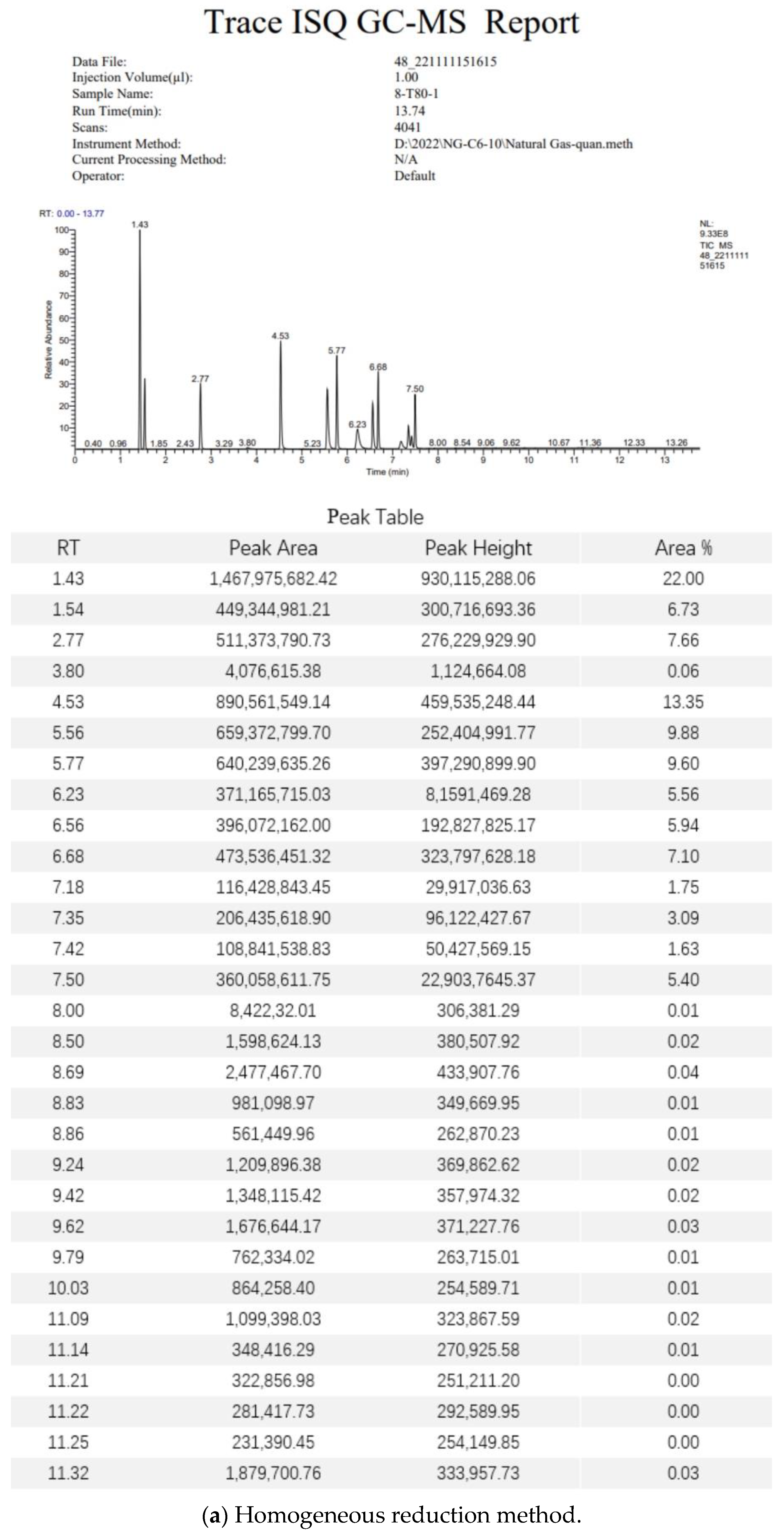
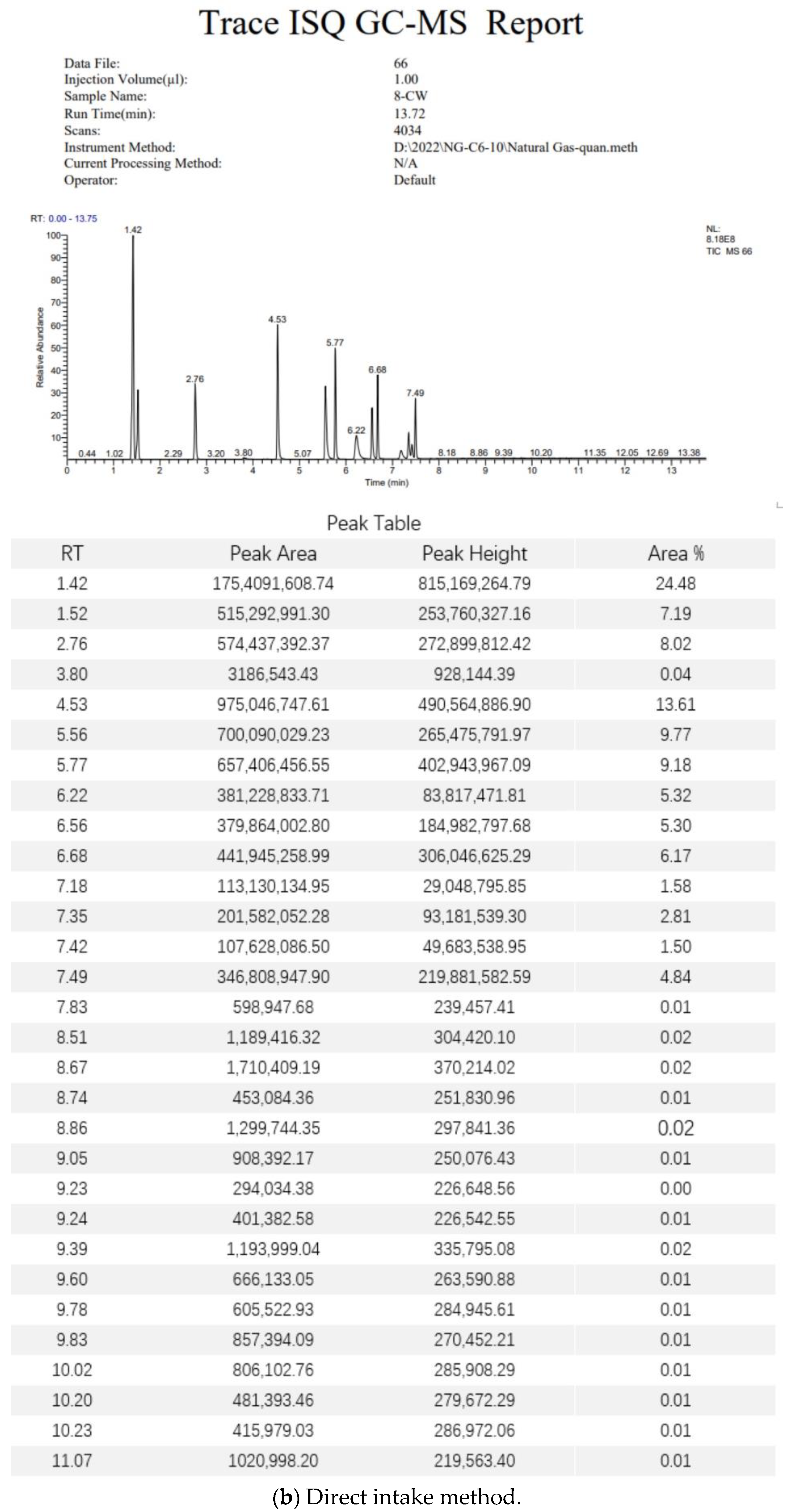
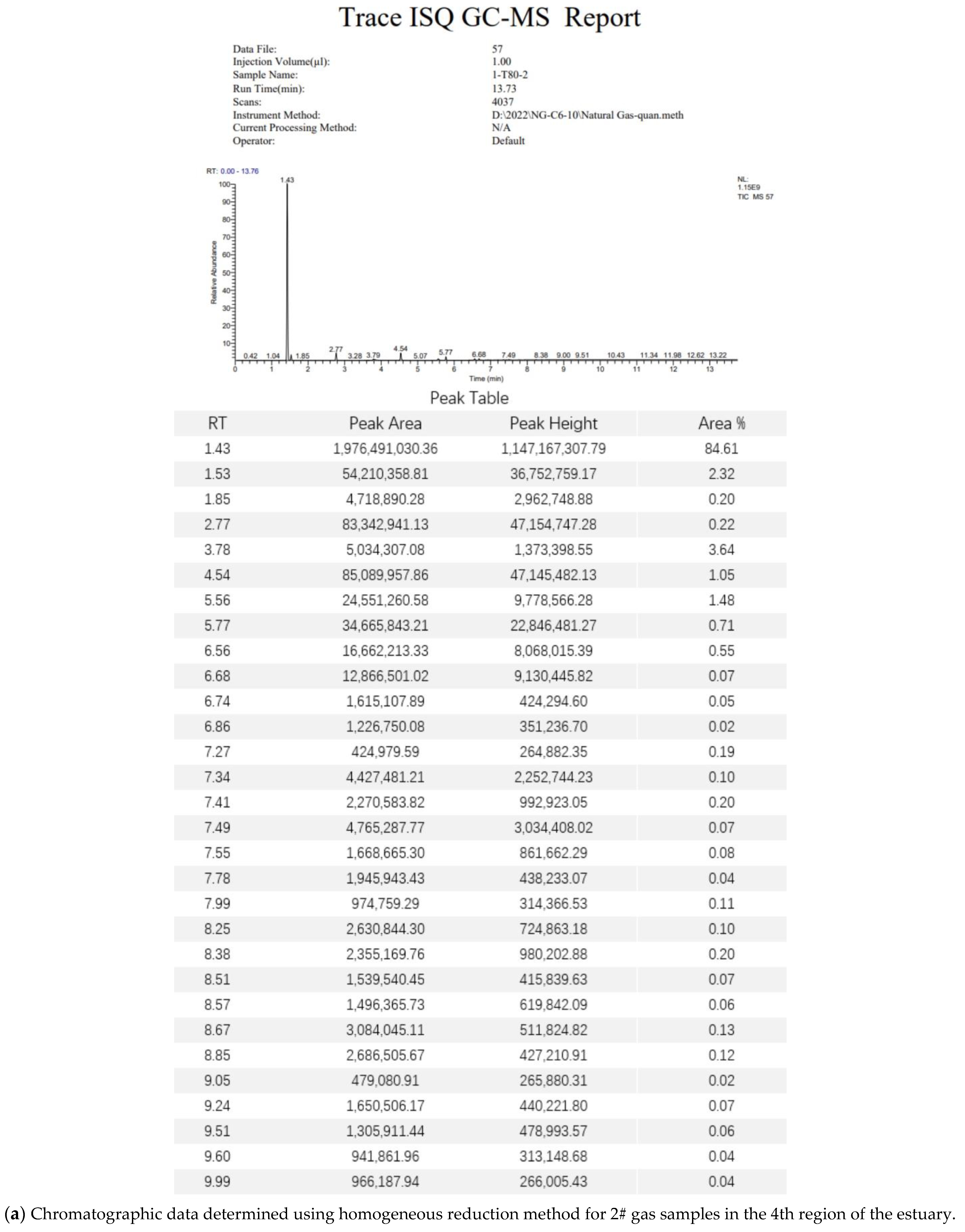
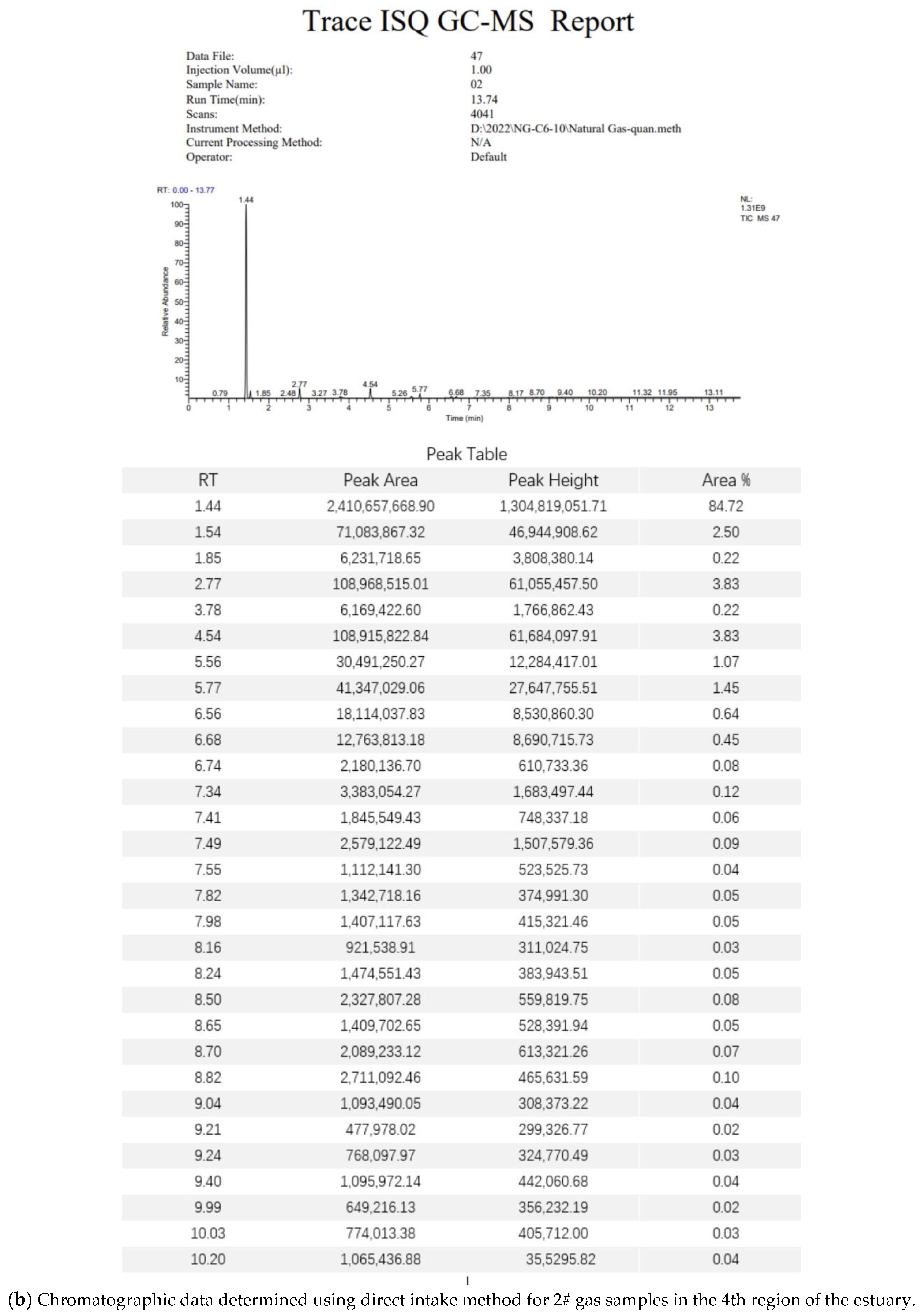
The process of storing oil depots and combined station tanks is affected by factors such as process technology, equipment, and management methods. Inevitably, some heavy hydrocarbon components will condense. According to the available literature, the existing detection methods are not enough to accurately measure the component composition so that the proportion of heavy hydrocarbon substances in the lost gas is reduced. In this paper, by inventing a homogeneous reduction device, the lost gas in the entire laboratory process was kept in a homogeneous state so that the gas components were well-retained. Using the homogeneous reduction method and a traditional inspection method, gas chromatography was performed on a standard gas and the on-site lost gas, respectively. The standard gas measurement results show that the mean deviations of the homogeneous reduction method and the traditional test method were −3.45% and −11.62%, respectively, and the reduction degree reached 96.55% with the homogeneous reduction method. The results of the on-site gas loss measurements show that the proportions of most hydrocarbon substances in each lost gas increase to varying degrees after using the homogeneous reduction technology. Therefore, it is proved that these components can be better preserved using the homogeneous reduction method. It can effectively avoid the condensation of components, which is of great significance to the study of oil and gas loss.
Keywords: homogeneous reduction method; loss of gas; transmission device; direct intake method homogeneous reduction method; loss of gas; transmission device; direct intake method