

Mapping Anxiety, Stress, Depression, Resilience and Happiness in the Adolescent Population: A Network Analysis and Comparison by Sex

 ,
,  ,
, 

Abstract
1. Introduction
Hypotheses
2. Materials and Methods
2.1. Participants
2.2. Sample Size and Power Analysis
2.3. Measures
2.3.1. Demographic Information
2.3.2. Connor–Davidson Resilience Scale (CDRS)
2.3.3. Subjective Happiness Scale (SHS)
2.3.4. Depression, Anxiety and Stress Scale–21 (DASS-21)
2.4. Statistical Analysis
2.5. Ethical Considerations
3. Results
3.1. Global Network Properties
3.2. Descriptive and Local Network Properties
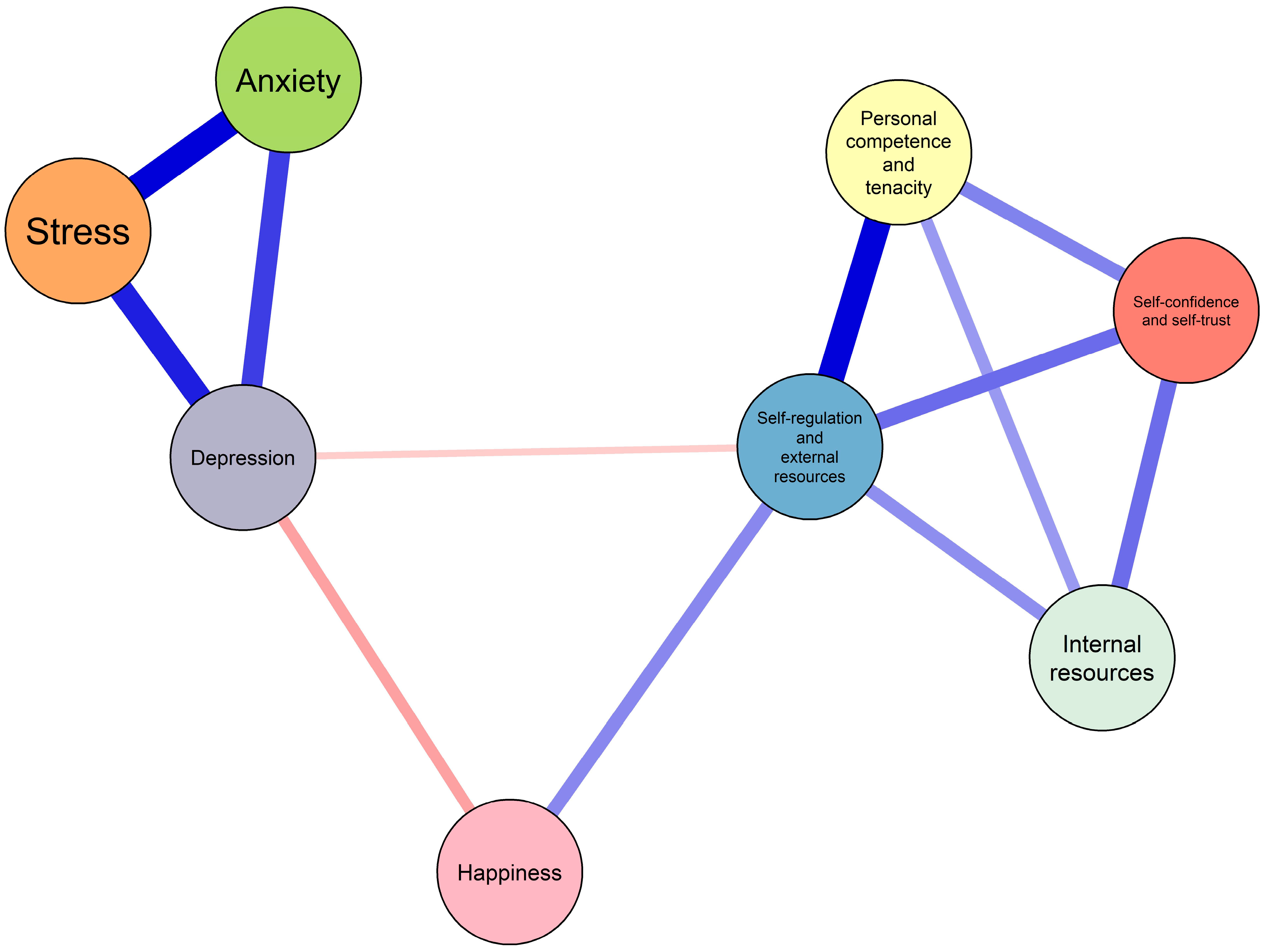
3.3. Association Between Nodes and Relational Structure
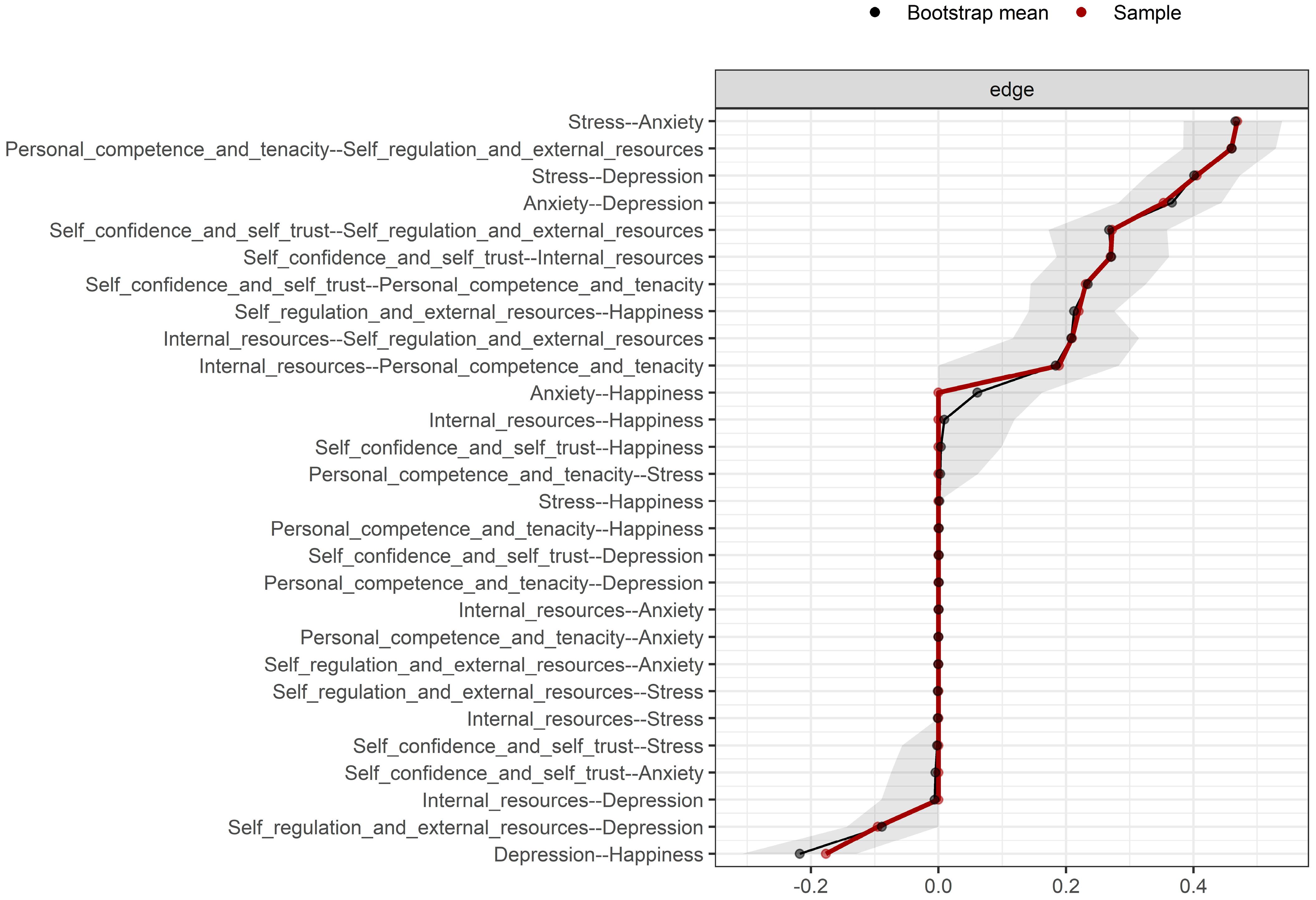
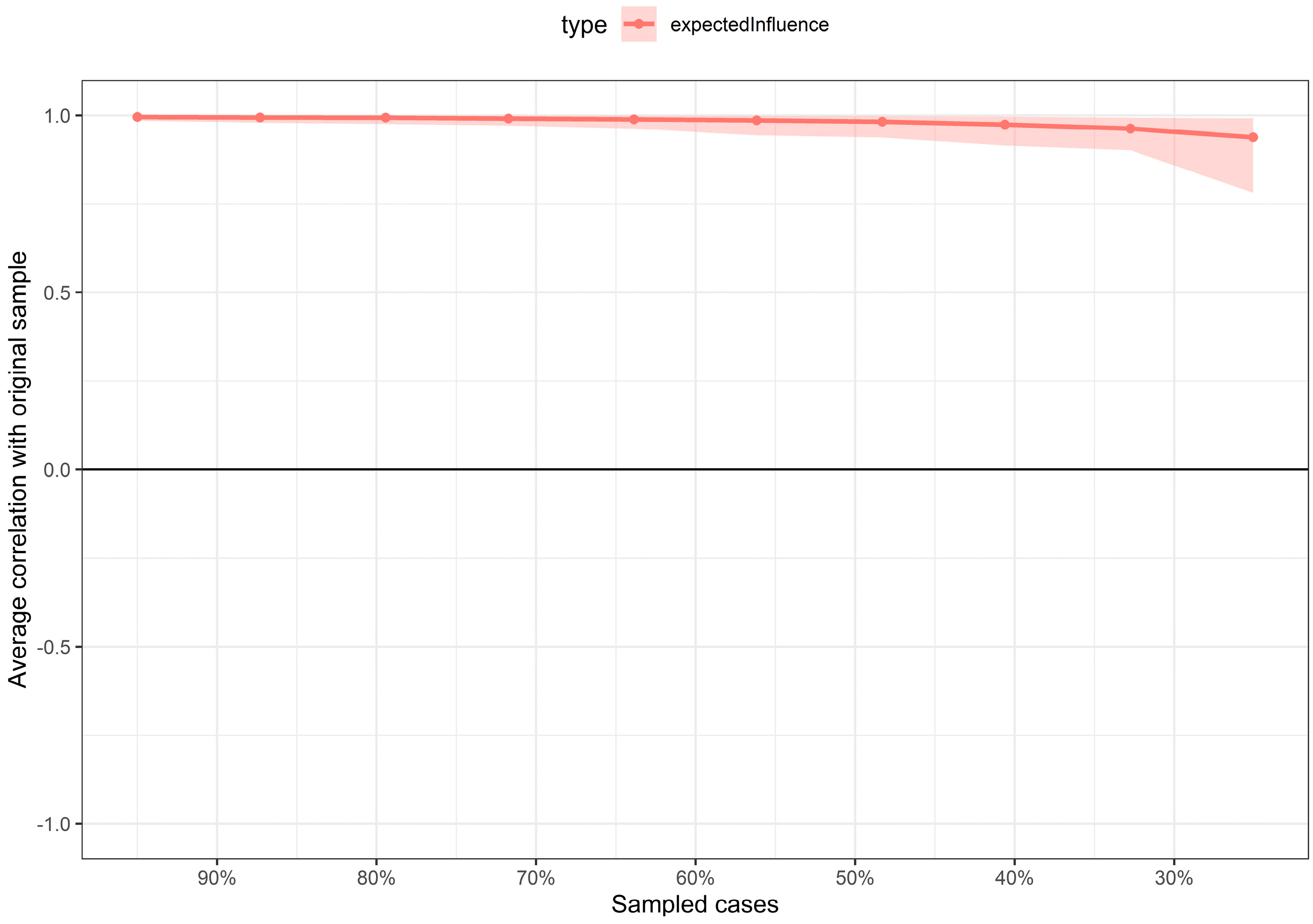
3.4. Network Accuracy and Stability
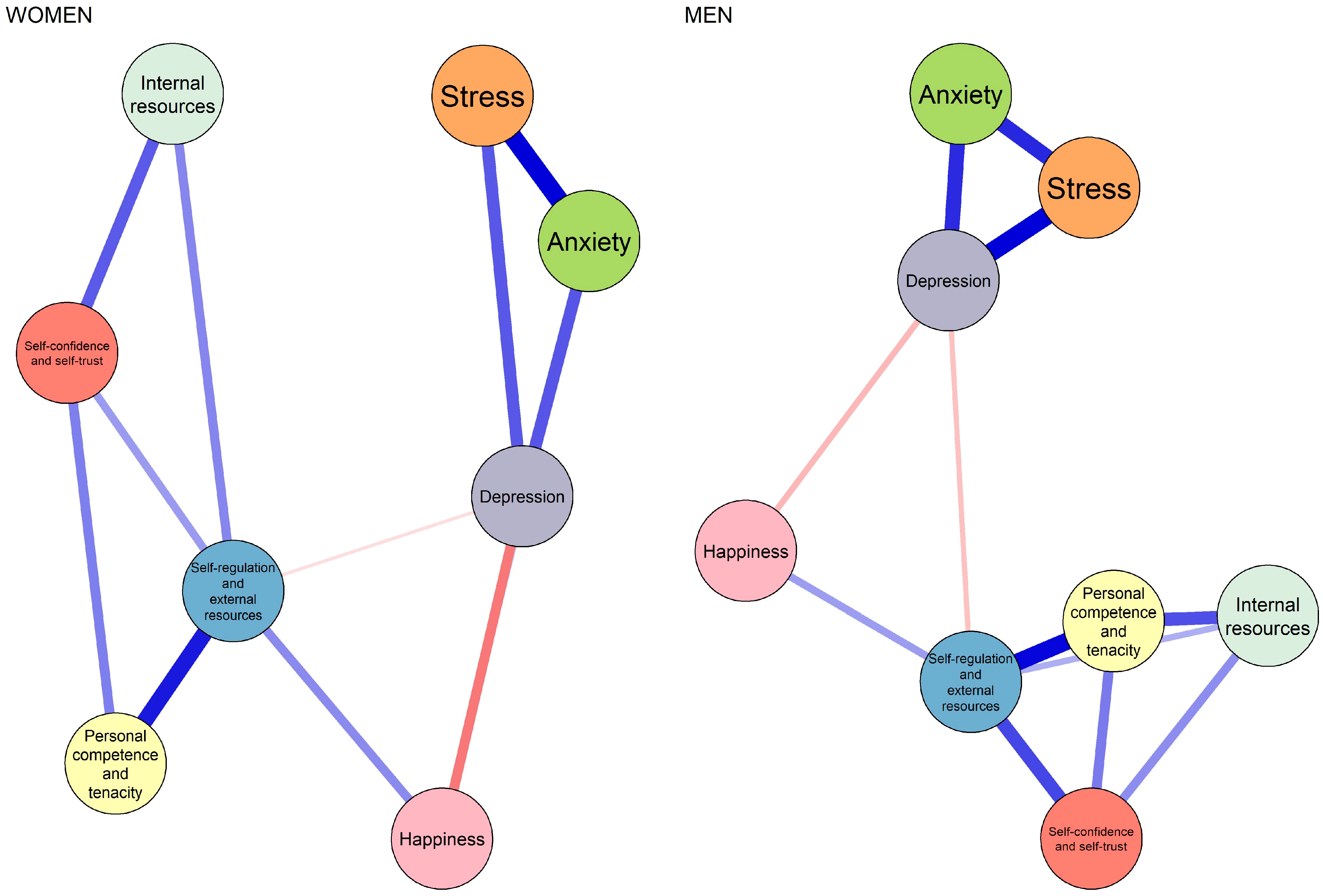
3.5. Network Comparison by Sex
4. Discussion
Limitations
5. Conclusions
Supplementary Materials
Author Contributions
Funding
Institutional Review Board Statement
Informed Consent Statement
Data Availability Statement
Acknowledgments
Conflicts of Interest
References
- American Psychological Association [APA]. (2017). Ethical principles of psychologists and code of conduct (Including 2010 and 2016 amendments). American Psychological Association. Available online: https://www.apa.org/ethics/code (accessed on 15 August 2025).
- Blasco-Belled, A. (2022). Character strengths and mental health as complex systems: A network analysis to identify bridge strengths. Current Psychology, 42(29), 25832–25842. [Google Scholar] [CrossRef]
- Bohlmeijer, E., & Westerhof, G. (2021). The model for sustainable mental health: Future directions for integrating positive psychology into mental health care. Frontiers in Psychology, 12, 747999. [Google Scholar] [CrossRef] [PubMed]
- Borsboom, D., & Cramer, A. O. J. (2013). Network analysis: An integrative approach to the structure of psychopathology. Annual Review of Clinical Psychology, 9(1), 91–121. [Google Scholar] [CrossRef] [PubMed]
- Borsboom, D., Deserno, M. K., Rhemtulla, M., Epskamp, S., Fried, E. I., McNally, R. J., Robinaugh, D. J., Perugini, M., Dalege, J., Costantini, G., Isvoranu, A.-M., Wysocki, A. C., van Borkulo, C. D., van Bork, R., & Waldorp, L. J. (2021). Network analysis of multivariate data in psychological science. Nature Reviews Methods Primers, 1(1), 58. [Google Scholar] [CrossRef]
- Briganti, G., Scutari, M., Epskamp, S., Borsboom, D., Hoekstra, R. H. A., Golino, H. F., Christensen, A. P., Morvan, Y., Ebrahimi, O. V., Costantini, G., Heeren, A., de Ron, J., Bringmann, L. F., Huth, K., Haslbeck, J. M. B., Isvoranu, A.-M., Marsman, M., Blanken, T., Gilbert, A., … McNally, R. J. (2024). Network analysis: An overview for mental health research. International Journal of Methods in Psychiatric Research, 33(4), e2034. [Google Scholar] [CrossRef]
- Burger, J., Isvoranu, A.-M., Lunansky, G., Haslbeck, J. M. B., Epskamp, S., Hoekstra, R. H. A., Fried, E. I., Borsboom, D., & Blanken, T. F. (2023). Reporting standards for psychological network analyses in cross-sectional data. Psychological Methods, 28(4), 806–824. [Google Scholar] [CrossRef] [PubMed]
- Burns, R. A., Crisp, D. A., Chng, J., & Murray, K. (2022). Community members prioritise indicators of both mental health and wellbeing to define flourishing and quality of life: Towards the total psychological health framework. Applied Research in Quality of Life, 17(6), 3475–3502. [Google Scholar] [CrossRef]
- Carreno, D. F., Eisenbeck, N., Pérez-Escobar, J. A., & García-Montes, J. M. (2021). Inner Harmony as an essential facet of well-being: A multinational study during the COVID-19 pandemic. Frontiers in Psychology, 12, 648280. [Google Scholar] [CrossRef]
- Chidoluo Vitus, O. (2024). Understanding the intersection of mental health, academic performance, and psychological wellness in adolescents. Mental Health and Psychological Wellness, 1(1), 1–3. [Google Scholar] [CrossRef]
- Connor, K. M., & Davidson, J. R. T. (2003). Development of a new resilience scale: The Connor-Davidson Resilience Scale (CD-RISC). Depression and Anxiety, 18(2), 76–82. [Google Scholar] [CrossRef]
- Constantin, M. A., Schuurman, N. K., & Vermunt, J. K. (2023). A general Monte Carlo method for sample size analysis in the context of network models. Psychological Methods. [Google Scholar] [CrossRef]
- Contreras-Mendoza, I., Olivas-Ugarte, L. O., & De La Cruz-Valdiviano, C. (2021). Escalas abreviadas de Depresión, Ansiedad y Estrés (DASS-21): Validez, fiabilidad y equidad en adolescentes peruanos. Revista de Psicología Clínica con Niños y Adolescentes, 8(1), 24–30. [Google Scholar] [CrossRef]
- Dominguez-Cancino, K. A., Calderon-Maldonado, F. L., Choque-Medrano, E., Bravo-Tare, C. E., & Palmieri, P. A. (2022). Psychometric properties of the connor-davidson resilience scale for South America (CD-RISC-25SA) in Peruvian adolescents. Children, 9(11), 1689. [Google Scholar] [CrossRef]
- Epskamp, S., Cramer, A. O. J., Waldorp, L. J., Schmittmann, V. D., & Borsboom, D. (2012). qgraph: Network visualizations of relationships in psychometric data. Journal of Statistical Software, 48(4), 1–18. [Google Scholar] [CrossRef]
- Epskamp, S., & Fried, E. I. (2018). A tutorial on regularized partial correlation networks. Psychological Methods, 23(4), 617–634. [Google Scholar] [CrossRef] [PubMed]
- Epskamp, S., & Isvoranu, A.-M. (2022). New trends in network modeling of psychopathology. World Psychiatry: Official Journal of the World Psychiatric Association (WPA), 21(3), 463–464. [Google Scholar] [CrossRef]
- Extremera, N., & Fernández-Berrocal, P. (2014). The subjective happiness scale: Translation and preliminary psychometric evaluation of a Spanish version. Social Indicators Research, 119(1), 473–481. [Google Scholar] [CrossRef]
- Fruchterman, T. M. J., & Reingold, E. M. (1991). Graph drawing by force-directed placement. Software: Practice & Experience, 21(11), 1129–1164. [Google Scholar] [CrossRef]
- Galderisi, S. (2024). The need for a consensual definition of mental health. World Psychiatry: Official Journal of the World Psychiatric Association (WPA), 23(1), 52–53. [Google Scholar] [CrossRef]
- Haslbeck, J. M. B., & Waldorp, L. J. (2018). How well do network models predict observations? On the importance of predictability in network models. Behavior Research Methods, 50(2), 853–861. [Google Scholar] [CrossRef]
- Haslbeck, J. M. B., & Waldorp, L. J. (2020). Mgm: Estimating time-varying mixed graphical models in high-dimensional data. Journal of Statistical Software, 93(8), 1–46. [Google Scholar] [CrossRef]
- He, Y., Wu, C., LeMoult, J., Huang, J., Zhao, Y., Liang, K., Chen, S., Wang, E., Huang, L., & Chi, X. (2023). Exploring symptom-level associations between anxiety and depression across developmental stages of adolescence: A network analysis approach. BMC Psychiatry, 23(1), 941. [Google Scholar] [CrossRef]
- Higueras, P. H., Navarro, M. M. G., Fernández, A. M. M., Mascaraque, P. S., & Lauffer, J. C. (2022). Salud mental en la adolescencia (I). Ansiedad y depresión. Medicine, 13(61), 3581–3589. [Google Scholar] [CrossRef]
- Hittner, J. B., May, K., & Silver, N. C. (2003). A Monte Carlo evaluation of tests for comparing dependent correlations. The Journal of General Psychology, 130(2), 149–168. [Google Scholar] [CrossRef]
- Hu, Y., Wang, L., Tang, X., Zhang, Q., Wang, Q., & Yang, H. (2025). A network analysis of depression, anxiety, and stress symptoms in Chinese adolescents. Psychopathology, 58(6), 405–416. [Google Scholar] [CrossRef]
- Iannattone, S., Mignemi, G., Pivetta, E., Gatta, M., Sica, C., Cardi, V., Canale, N., Spoto, A., & Bottesi, G. (2024). Are anxiety, depression, and stress distinguishable in Italian adolescents? an examination through the Depression Anxiety Stress Scales-21. PLoS ONE, 19(2), e0299229. [Google Scholar] [CrossRef] [PubMed]
- Institute for Health Metrics and Evaluation [IHME]. (2024). Global burden of disease (GBD) 2021 results tool [Data set]. University of Washington. Available online: https://vizhub.healthdata.org/gbd-results/ (accessed on 17 August 2025).
- Iorio, C., Barlattani, T., Pacitti, F., Iorio, P., & Pompili, A. (2024). The role of affective temperaments as a factor of vulnerability to seasonal affective disorder. Journal of Affective Disorders, 364, 96–103. [Google Scholar] [CrossRef]
- Isvoranu, A. M., & Epskamp, S. (2023). Which estimation method to choose in network psychometrics? Deriving guidelines for applied researchers. Psychological Methods, 28(4), 925–946. [Google Scholar] [CrossRef] [PubMed]
- Isvoranu, A. M., Epskamp, S., Waldorp, L. J., & Borsboom, D. (2022). Network psychometrics with R. Routledge. [Google Scholar]
- Jones, P. (2021). Tools for identifying important nodes in networks [R package networktools version 1.4.0]. Comprehensive R Archive Network (CRAN). Available online: https://CRAN.R-project.org/package=networktools (accessed on 17 August 2025).
- Jongerling, J., Epskamp, S., & Williams, D. R. (2023). Bayesian uncertainty estimation for Gaussian graphical models and centrality indices. Multivariate Behavioral Research, 58(2), 311–339. [Google Scholar] [CrossRef] [PubMed]
- Kanougiya, S., Daruwalla, N., & Osrin, D. (2024). Mental health on two continua: Mental wellbeing and common mental disorders in a community-based cross-sectional study with women in urban informal settlements in India. BMC Women’s Health, 24(1), 555. [Google Scholar] [CrossRef]
- Keyes, K. M., & Platt, J. M. (2023). Annual Research Review: Sex, gender, and internalizing conditions among adolescents in the 21st century—Trends, causes, consequences. Journal of Child Psychology and Psychiatry, and Allied Disciplines, 65(4), 384–407. [Google Scholar] [CrossRef]
- Li, Y., & Kwok, S. Y. C. L. (2023). A longitudinal network analysis of the interactions of risk and protective factors for suicidal potential in early adolescents. Journal of Youth and Adolescence, 52(2), 306–318. [Google Scholar] [CrossRef]
- Lovibond, S. H., & Lovibond, P. F. (1995). Manual for the depression anxiety stress scales (2nd ed.). Psychology Foundation. [Google Scholar]
- Lyubomirsky, S., & Lepper, H. S. (1999). A measure of subjective happiness: Preliminary reliability and construct validation. Social Indicators Research, 46(2), 137–155. [Google Scholar] [CrossRef]
- Martínez-Líbano, J., & Yeomans-Cabrera, M.-M. (2024). Depression, anxiety, and stress in the Chilean Educational System: Children and adolescents post-pandemic prevalence and variables. Frontiers in Education, 9, 1407021. [Google Scholar] [CrossRef]
- Masten, A. S., Lucke, C. M., Nelson, K. M., & Stallworthy, I. C. (2021). Resilience in development and psychopathology: Multisystem perspectives. Annual Review of Clinical Psychology, 17(1), 521–549. [Google Scholar] [CrossRef]
- Mesman, E., Vreeker, A., & Hillegers, M. (2021). Resilience and mental health in children and adolescents: An update of the recent literature and future directions. Current Opinion in Psychiatry, 34(6), 586–592. [Google Scholar] [CrossRef] [PubMed]
- Milovanska-Farrington, S., & Farrington, S. (2022). Happiness, domains of life satisfaction, perceptions, and valuation differences across genders. Acta Psychologica, 230, 103720. [Google Scholar] [CrossRef]
- Moreta-Herrera, R., Zumba-Tello, D., Jaisalmer de Frutos, L., Llerena-Freire, S., Salinas-Palma, A., & Trucharte-Martínez, A. (2023). The role of negative affects as mediators in the relationship between stress and mental health in Ecuadorian adolescents. Health Psychology Report, 11(3), 241–251. [Google Scholar] [CrossRef]
- Nakhostin-Khayyat, M., Borjali, M., Zeinali, M., Fardi, D., & Montazeri, A. (2024). The relationship between self-regulation, cognitive flexibility, and resilience among students: A structural equation modeling. BMC Psychology, 12(1), 337. [Google Scholar] [CrossRef] [PubMed]
- Nima, A. A., Garcia, D., Sikström, S., & Cloninger, K. M. (2024). The ABC of happiness: Validation of the tridimensional model of subjective well-being (affect, cognition, and behavior) using Bifactor Polytomous Multidimensional Item Response Theory. Heliyon, 10(2), e24386. [Google Scholar] [CrossRef]
- Piao, J., Huang, Y., Han, C., Li, Y., Xu, Y., Liu, Y., & He, X. (2022). Alarming changes in the global burden of mental disorders in children and adolescents from 1990 to 2019: A systematic analysis for the Global Burden of Disease study. European Child & Adolescent Psychiatry, 31(11), 1827–1845. [Google Scholar] [CrossRef] [PubMed]
- Pinto, T. M., Laurence, P. G., Macedo, C. R., & Macedo, E. C. (2021). Resilience programs for children and adolescents: A systematic review and meta-analysis. Frontiers in Psychology, 12, 754115. [Google Scholar] [CrossRef]
- Sacco, R., Camilleri, N., Eberhardt, J., Umla-Runge, K., & Newbury-Birch, D. (2024). A systematic review and meta-analysis on the prevalence of mental disorders among children and adolescents in Europe. European Child & Adolescent Psychiatry, 33(9), 2877–2894. [Google Scholar] [CrossRef]
- Shi, W., Zhao, L., Liu, M., Hong, B., Jiang, L., & Jia, P. (2022). Resilience and mental health: A longitudinal cohort study of Chinese adolescents before and during COVID-19. Frontiers in Psychiatry, 13, 948036. [Google Scholar] [CrossRef]
- Sisk, L. M., & Gee, D. G. (2022). Stress and adolescence: Vulnerability and opportunity during a sensitive window of development. Current Opinion in Psychology, 44, 286–292. [Google Scholar] [CrossRef] [PubMed]
- Sotiropoulou, K., Patitsa, C., Giannakouli, V., Galanakis, M., Koundourou, C., & Tsitsas, G. (2023). Self-compassion as a key factor of subjective happiness and psychological well-being among Greek adults during COVID-19 lockdowns. International Journal of Environmental Research and Public Health, 20(15), 6464. [Google Scholar] [CrossRef] [PubMed]
- Suvitha, S., Kanimozhi, S., Kanimozhi, S., Kathiyayani, M., & Madhuri, K. (2023). Literature review related to association between mental health and academic performance among adolescents. A and V Pub International Journal of Nursing and Medical Research, 2, 130–132. [Google Scholar] [CrossRef]
- Uccella, S., Cordani, R., Salfi, F., Gorgoni, M., Scarpelli, S., Gemignani, A., Geoffroy, P. A., De Gennaro, L., Palagini, L., Ferrara, M., & Nobili, L. (2023). Sleep deprivation and insomnia in adolescence: Implications for mental health. Brain Sciences, 13(4), 569. [Google Scholar] [CrossRef]
- van Borkulo, C. D., van Bork, R., Boschloo, L., Kossakowski, J. J., Tio, P., Schoevers, R. A., Borsboom, D., & Waldorp, L. J. (2023). Comparing network structures on three aspects: A permutation test. Psychological Methods, 28(6), 1273–1285. [Google Scholar] [CrossRef] [PubMed]
- Wang, Y., Li, Z., & Cao, X. (2024). Investigating the network structure and causal relationships among bridge symptoms of comorbid depression and anxiety: A Bayesian network analysis. Journal of Clinical Psychology, 80(6), 1271–1285. [Google Scholar] [CrossRef]
- Wen, L., Yang, K., Chen, J., He, L., Xiu, M., & Qu, M. (2023). Associations between resilience and symptoms of depression and anxiety among adolescents: Examining the moderating effects of family environment. Journal of Affective Disorders, 340, 703–710. [Google Scholar] [CrossRef]
- Williams, D. R., Rhemtulla, M., Wysocki, A. C., & Rast, P. (2019). On nonregularized estimation of psychological networks. Multivariate Behavioral Research, 54(5), 719–750. [Google Scholar] [CrossRef] [PubMed]
- World Medical Association. (2025). World medical association declaration of Helsinki: Ethical principles for medical research involving human participants. JAMA: The Journal of the American Medical Association, 333(1), 71. [Google Scholar] [CrossRef]
- Yang, X., Fang, Y., Wang, Y., Liu, S., Cai, J., Li, H., & Chen, Z. (2024). Multidimensional stressors and depressive and anxiety symptoms in adolescents: A network analysis through simulations. Journal of Affective Disorders, 347, 364–374. [Google Scholar] [CrossRef]
- Zhang, Z., Lin, R., Qiu, A., Wu, H., Wu, S., Zhang, L., Wu, Z., Li, M., Zhang, X., & Zhou, J. (2024). Application of DASS-21 in Chinese students: Invariance testing and network analysis. BMC Public Health, 24(1), 2934. [Google Scholar] [CrossRef] [PubMed]
- Zumba-Tello, D., & Moreta-Herrera, R. (2022). Afectividad, Regulación Emocional, Estrés y Salud Mental en adolescentes del Ecuador en tiempos de pandemia. Revista de Psicología de la Salud, 10(1), 117–129. [Google Scholar] [CrossRef]



| Variable | Categories | n | % |
|---|---|---|---|
| Sex | Male | 279 | 49.91 |
| Female | 280 | 50.09 | |
| Age (years) | Mean ± SD | 14.72 ± 1.43 | |
| Peer relationship | Poor | 20 | 3.58 |
| Fair | 269 | 48.12 | |
| Good | 270 | 48.3 | |
| Family relationship | Poor | 12 | 2.15 |
| Fair | 211 | 37.75 | |
| Good | 336 | 60.11 | |
| Study resources | No | 53 | 9.48 |
| Yes | 506 | 90.52 | |
| Recreational activities | No | 101 | 18.07 |
| Yes | 458 | 81.93 | |
| Psychological treatment | No | 285 | 50.98 |
| Yes | 274 | 49.02 | |
| Nodes | Descriptive | Local Properties | ||||
|---|---|---|---|---|---|---|
| M | SD | g1 | g2 | EI | P | |
| Self-confidence and self-trust | 7.96 | 2.79 | −0.54 | −0.23 | 0.77 | 54.10% |
| Internal resources | 11.64 | 4.12 | −0.18 | −0.27 | 0.67 | 49.50% |
| Personal competence and tenacity | 11.33 | 4.28 | −0.09 | −0.41 | 0.88 | 62.00% |
| Self-regulation and external resources | 21.54 | 7.56 | −0.27 | −0.29 | 1.06 | 66.70% |
| Stress | 7.46 | 4.34 | 0.5 | −0.42 | 0.87 | 63.90% |
| Anxiety | 6.75 | 4.66 | 0.63 | −0.34 | 0.82 | 63.20% |
| Depression | 7.11 | 5.13 | 0.65 | −0.34 | 0.49 | 63.40% |
| Happiness | 19.08 | 4.59 | −0.26 | 0.06 | 0.04 | 23.30% |
Disclaimer/Publisher’s Note: The statements, opinions and data contained in all publications are solely those of the individual author(s) and contributor(s) and not of MDPI and/or the editor(s). MDPI and/or the editor(s) disclaim responsibility for any injury to people or property resulting from any ideas, methods, instructions or products referred to in the content. |
© 2026 by the authors. Published by MDPI on behalf of the University Association of Education and Psychology. Licensee MDPI, Basel, Switzerland. This article is an open access article distributed under the terms and conditions of the Creative Commons Attribution (CC BY) license.
Share and Cite
Angulo-Salas, R.; Baños-Chaparro, J.; Garcilazo, G.A.; Medina, J.Y.J.; Santos-Chuquispuma, D. Mapping Anxiety, Stress, Depression, Resilience and Happiness in the Adolescent Population: A Network Analysis and Comparison by Sex. Eur. J. Investig. Health Psychol. Educ. 2026, 16, 31. https://doi.org/10.3390/ejihpe16020031
Angulo-Salas R, Baños-Chaparro J, Garcilazo GA, Medina JYJ, Santos-Chuquispuma D. Mapping Anxiety, Stress, Depression, Resilience and Happiness in the Adolescent Population: A Network Analysis and Comparison by Sex. European Journal of Investigation in Health, Psychology and Education. 2026; 16(2):31. https://doi.org/10.3390/ejihpe16020031
Chicago/Turabian StyleAngulo-Salas, Roger, Jonatan Baños-Chaparro, Geraldinne Ayala Garcilazo, Jeremy Yovani Juarez Medina, and Delly Santos-Chuquispuma. 2026. "Mapping Anxiety, Stress, Depression, Resilience and Happiness in the Adolescent Population: A Network Analysis and Comparison by Sex" European Journal of Investigation in Health, Psychology and Education 16, no. 2: 31. https://doi.org/10.3390/ejihpe16020031
APA StyleAngulo-Salas, R., Baños-Chaparro, J., Garcilazo, G. A., Medina, J. Y. J., & Santos-Chuquispuma, D. (2026). Mapping Anxiety, Stress, Depression, Resilience and Happiness in the Adolescent Population: A Network Analysis and Comparison by Sex. European Journal of Investigation in Health, Psychology and Education, 16(2), 31. https://doi.org/10.3390/ejihpe16020031