Article

Demulsification Treatment of Spent Metalworking Fluids by Metal Cations: The Synergistic Effect and Efficiency Evaluation
1
School of Environmental and Municipal Engineering, Qingdao University of Technology, Qingdao 266033, China
2
Jiangsu ATK Environmental Engineering Co., Ltd., Wuxi 214214, China
*
Author to whom correspondence should be addressed.
These authors contributed equally to this work.
Processes 2021, 9(10), 1807; https://doi.org/10.3390/pr9101807
Submission received: 30 August 2021 / Revised: 22 September 2021 / Accepted: 30 September 2021 / Published: 12 October 2021
(This article belongs to the Special Issue Advanced Liquid Waste and Gas Waste Treatment Processes)

Abstract

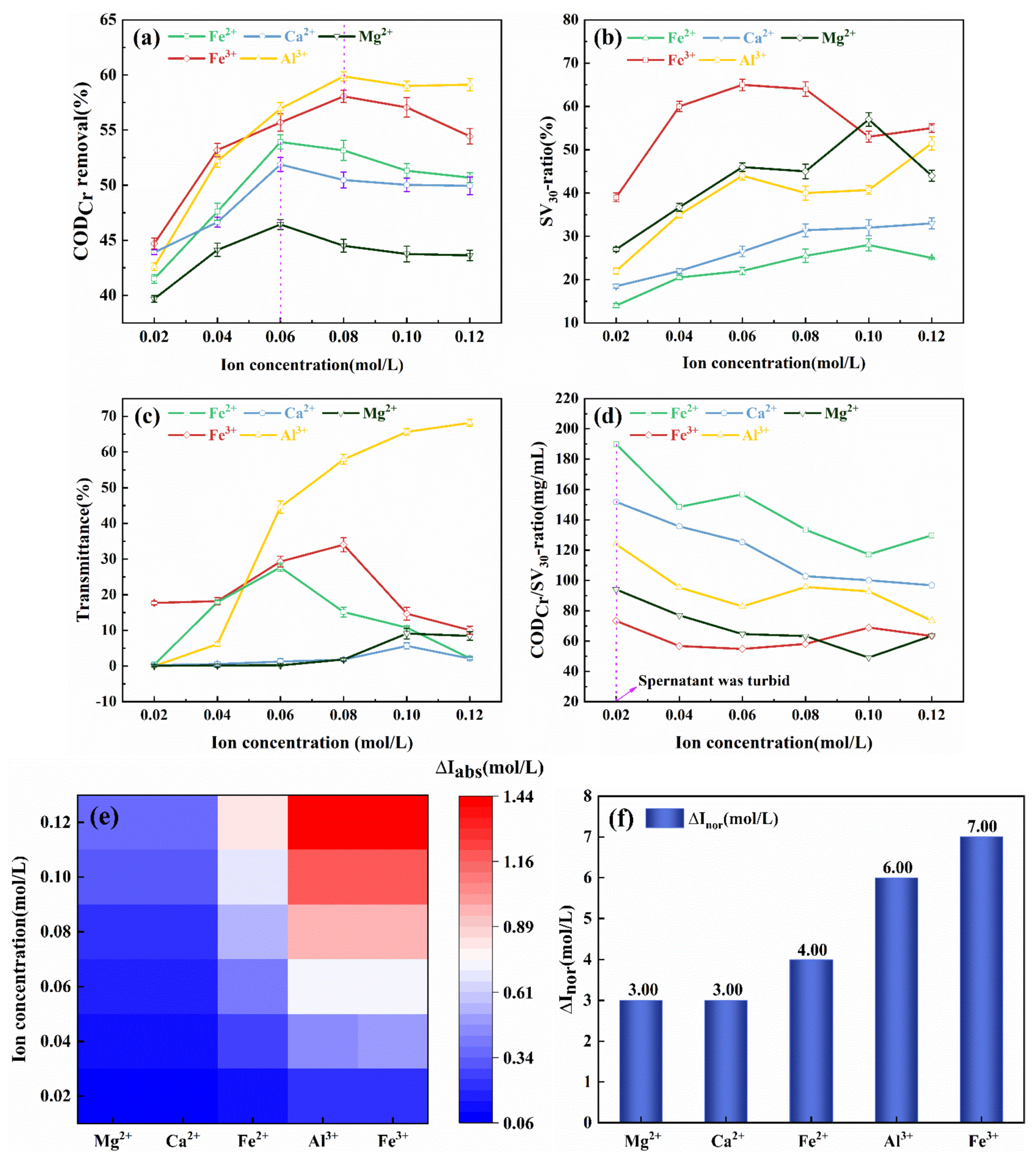
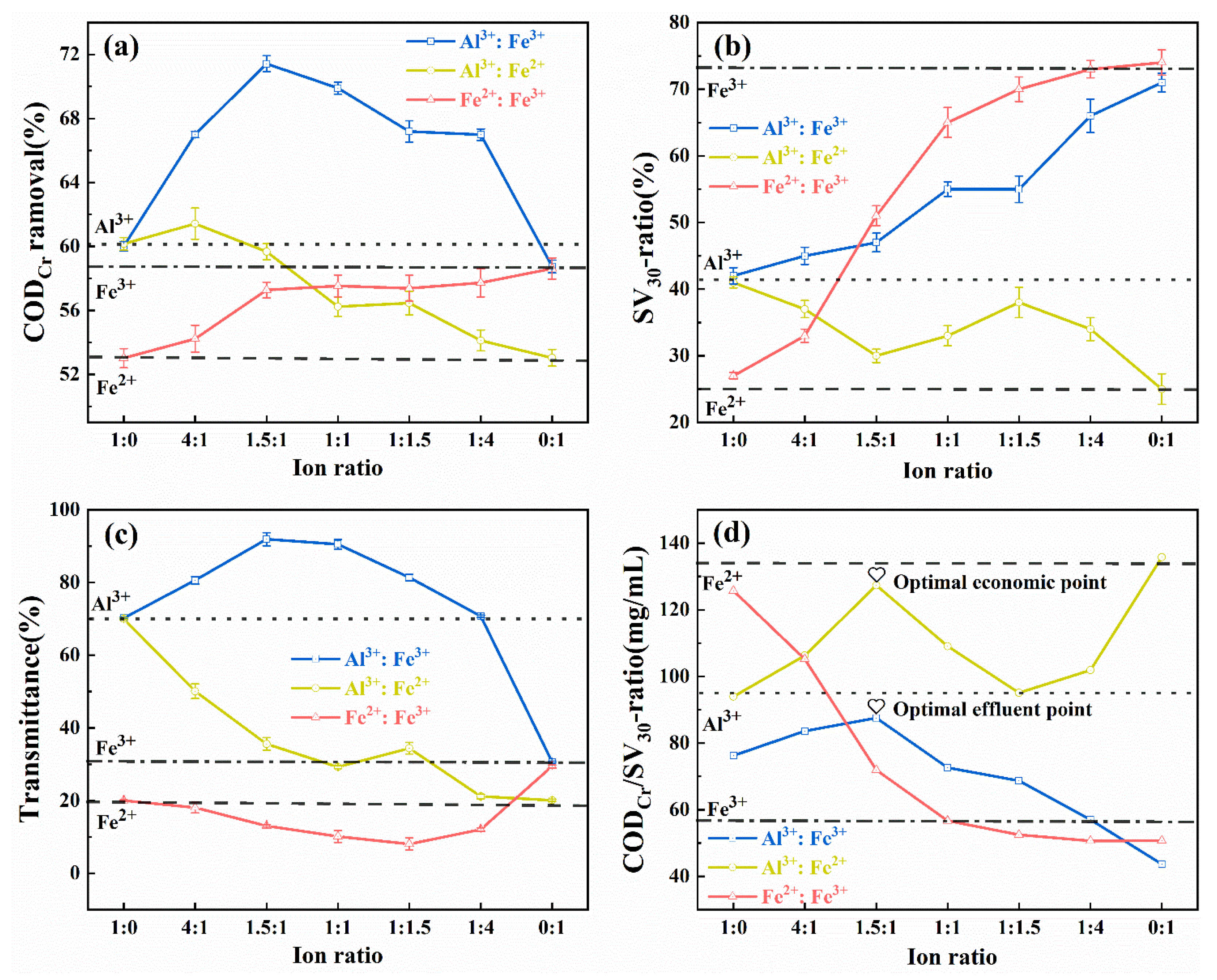
In this paper, various metal ions were utilized for the demulsification of spent metalworking fluids discharged from an automobile parts workshop. Five types of metal ions, i.e., Fe3+, Al3+, Fe2+, Ca2+ and Mg2+, combined with coagulant were systematically evaluated, and the synergistic effect as well as the optimum operating conditions were studied. The results indicated that the Ca2+ as well Mg2+ possessed hardly efficiency for the demulsification, on the contrary, Fe2+ reduced the yield of the by-product sludge and lowered the SV30 ratio, and Al3+ boosted the CODCr removal. Furthermore, Fe3+ and Al3+ had a significant synergistic effect to achieve a better transmittance and a higher CODCr/SV30 ratio which revealed that more CODCr was removed, as well as less by-product sludge was generated. For a better demulsification of spent metalworking fluids, the optimum operating conditions were gathered as follows: the dosage of metal ions was 0.08 mol/L with Al3+:Fe3+ ratio was 1.5:1, the reaction pH was 6.00, the reaction time was 18.00 min and the temperature was 323.00 K. Based on this, the CODCr removal, the SV30 ratio and the transmittance and CODCr/SV30 ratio of the spent metalworking fluids were 80.21%, 40.00%, 95.20% and 128.33 mg/mL, respectively. This combined metal ion demulsification method possessed an advantageous minimization of spent metalworking fluids, which greatly benefited the automobile parts workshops in cutting down the operating cost in environmental protection.
Keywords: spent metalworking fluids; demulsification; synergistic effect; efficiency evaluation; hazardous waste minimization spent metalworking fluids; demulsification; synergistic effect; efficiency evaluation; hazardous waste minimization