Article

Scheduling Two Identical Parallel Machines Subjected to Release Times, Delivery Times and Unavailability Constraints

Industrial Engineering Department, College of Engineering, King Saud University, Riyadh 11421, Saudi Arabia
*
Author to whom correspondence should be addressed.
Processes 2020, 8(9), 1025; https://doi.org/10.3390/pr8091025
Submission received: 17 July 2020 / Revised: 13 August 2020 / Accepted: 17 August 2020 / Published: 21 August 2020
(This article belongs to the Special Issue Optimization Algorithms Applied to Sustainable Production Processes)

Abstract

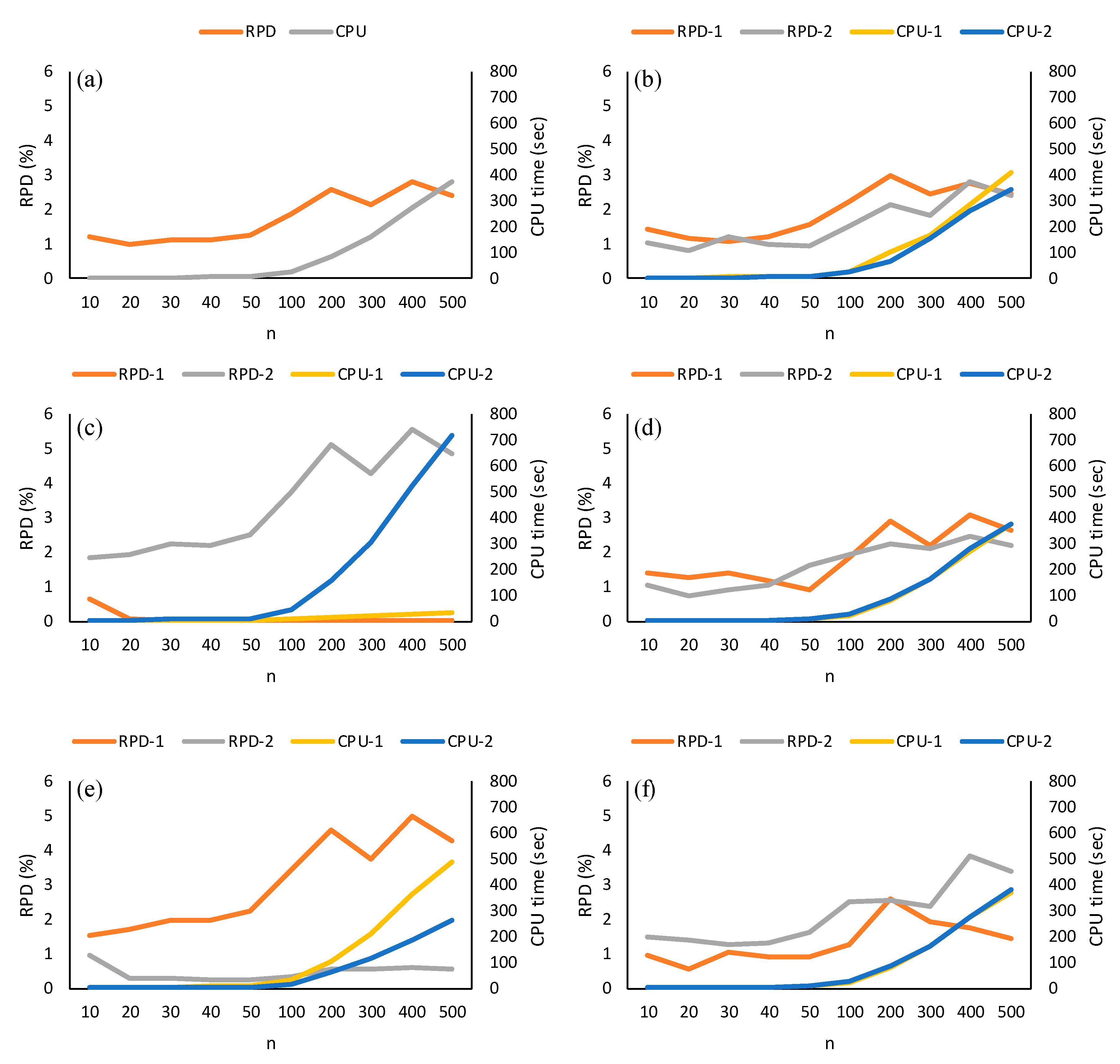
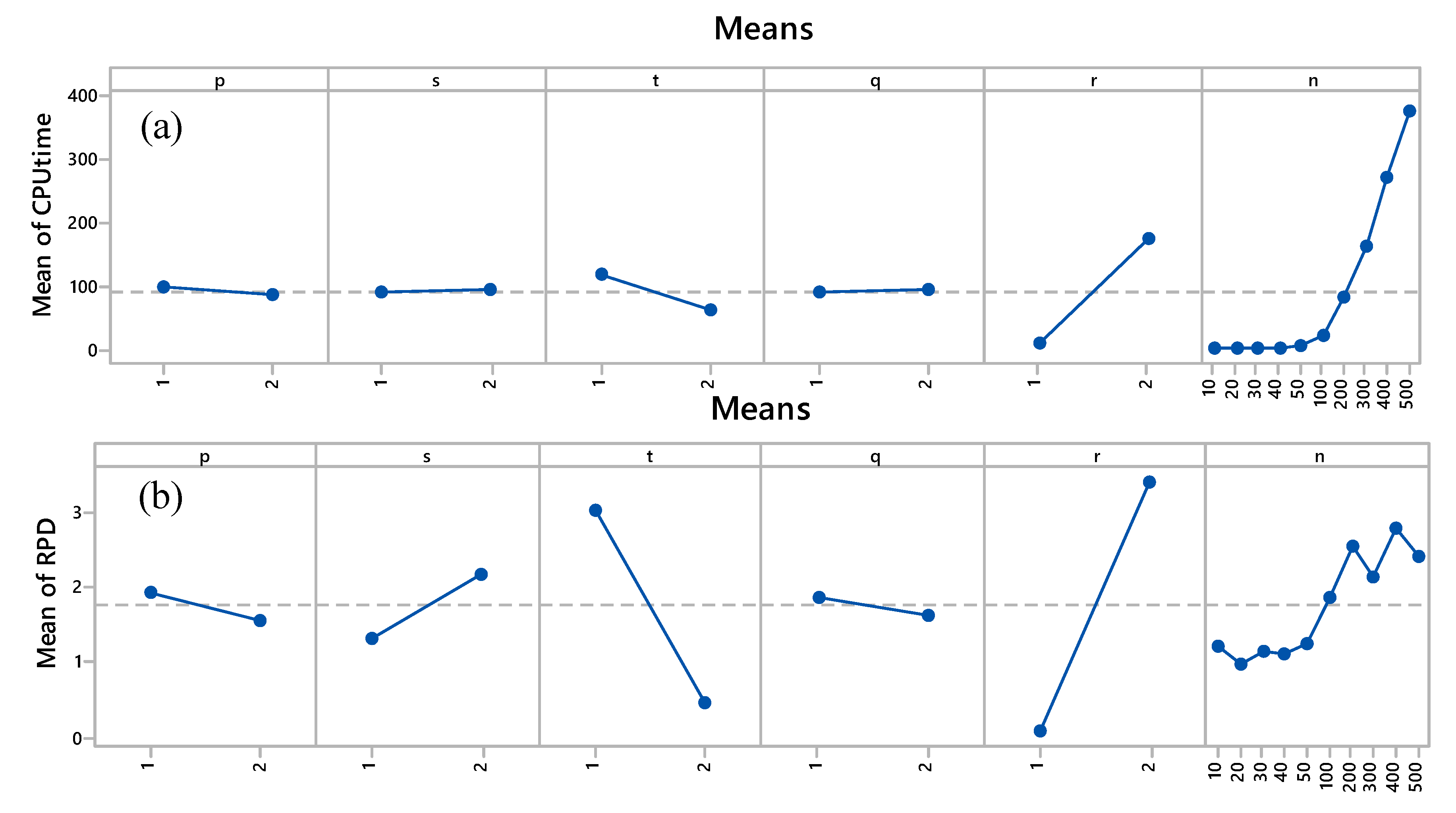
This paper proposes a genetic algorithm (GA) for scheduling two identical parallel machines subjected to release times and delivery times, where the machines are periodically unavailable. To make the problem more practical, we assumed that the machines are undergoing periodic maintenance rather than making them always available. The objective is to minimize the makespan (Cmax). A lower bound (LB) of the makespan for the considered problem was proposed. The GA performance was evaluated in terms of the relative percentage deviation (RPD) (the relative distance to the LB) and central processing unit (CPU) time. Response surface methodology (RSM) was used to optimize the GA parameters, namely, population size, crossover probability, mutation probability, mutation ratio, and pressure selection, which simultaneously minimize the RPD and CPU time. The optimized settings of the GA parameters were used to further analyze the scheduling problem. Factorial design of the scheduling problem input variables, namely, processing times, release times, delivery times, availability and unavailability periods, and number of jobs, was used to evaluate their effects on the RPD and CPU time. The results showed that increasing the release time intervals, decreasing the availability periods, and increasing the number of jobs increase the RPD and CPU time and make the problem very difficult to reach the LB.
Keywords: parallel machine scheduling; preventive maintenance; release times; delivery times; genetic algorithm (GA); optimization; Cmax parallel machine scheduling; preventive maintenance; release times; delivery times; genetic algorithm (GA); optimization; Cmax