Article

High Cell Density Cultivation of Saccharomyces cerevisiae with Intensive Multiple Sequential Batches Together with a Novel Technique of Fed-Batch at Cell Level (FBC)


by
Kwanruthai Malairuang
1,2,3,
Morakot Krajang
1,
Jatuporn Sukna
1,2,3,
Krongchan Rattanapradit
3,4,* and
Saethawat Chamsart
1,2,3,*
1
Biological Science Program, Faculty of Science, Burapha University, Chon Buri 20131, Thailand
2
Department of Biology, Faculty of Science, Burapha University, Chon Buri 20131, Thailand
3
Biochemical Engineering Pilot Plant, Faculty of Science, Burapha University, Chon Buri 20131, Thailand
4
Department of Biotechnology, Faculty of Science, Burapha University, Chon Buri 20131, Thailand
*
Authors to whom correspondence should be addressed.
Processes 2020, 8(10), 1321; https://doi.org/10.3390/pr8101321
Submission received: 28 August 2020 / Revised: 4 October 2020 / Accepted: 14 October 2020 / Published: 21 October 2020
(This article belongs to the Special Issue Advances in Microbial Fermentation Processes)

Abstract

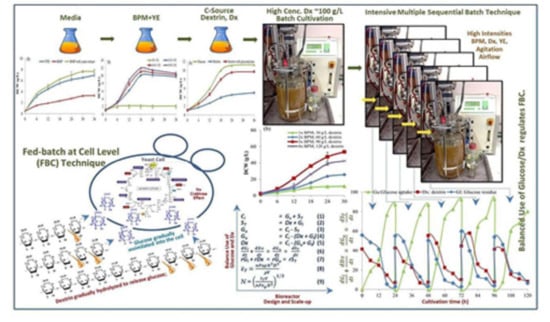
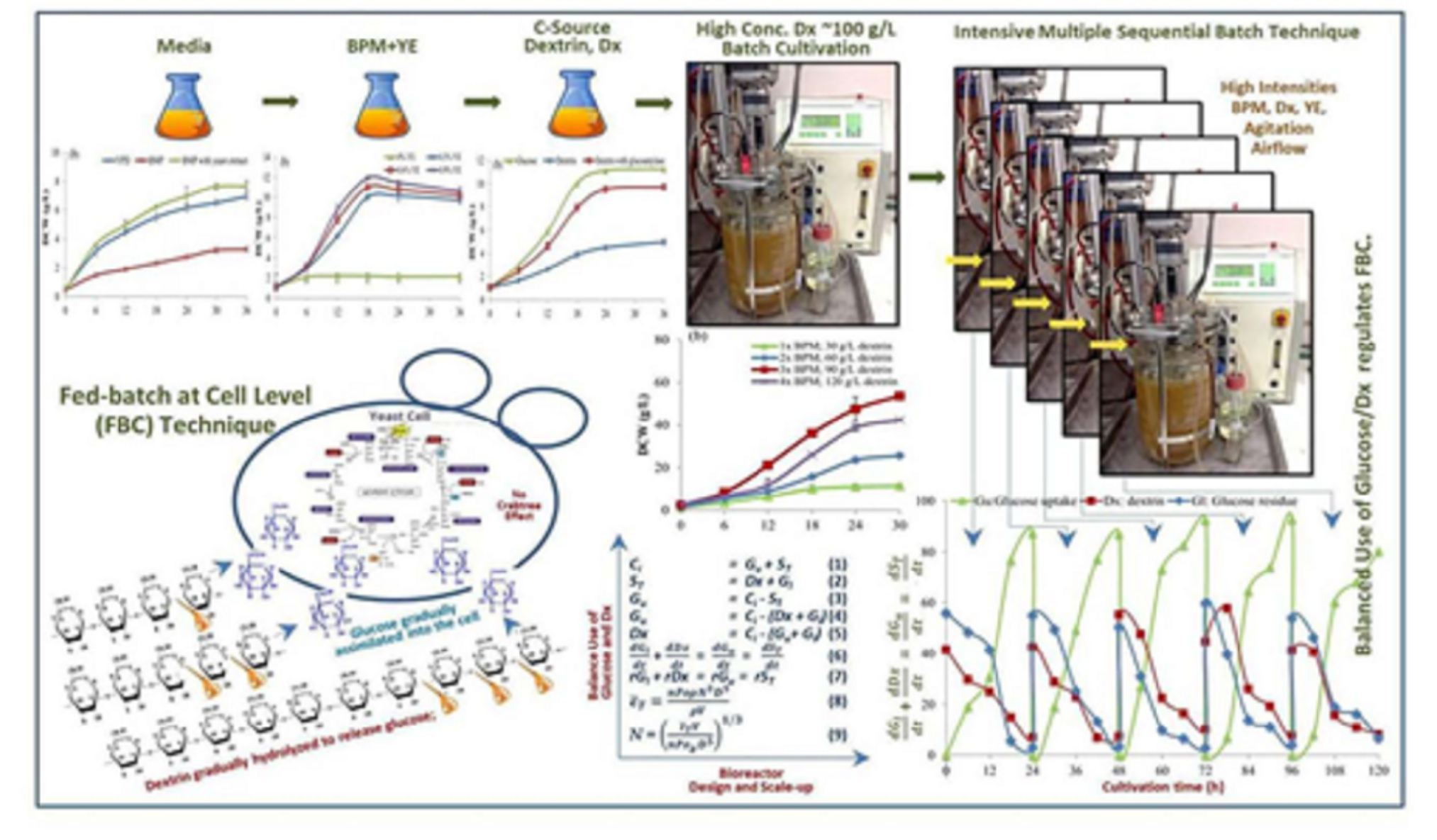
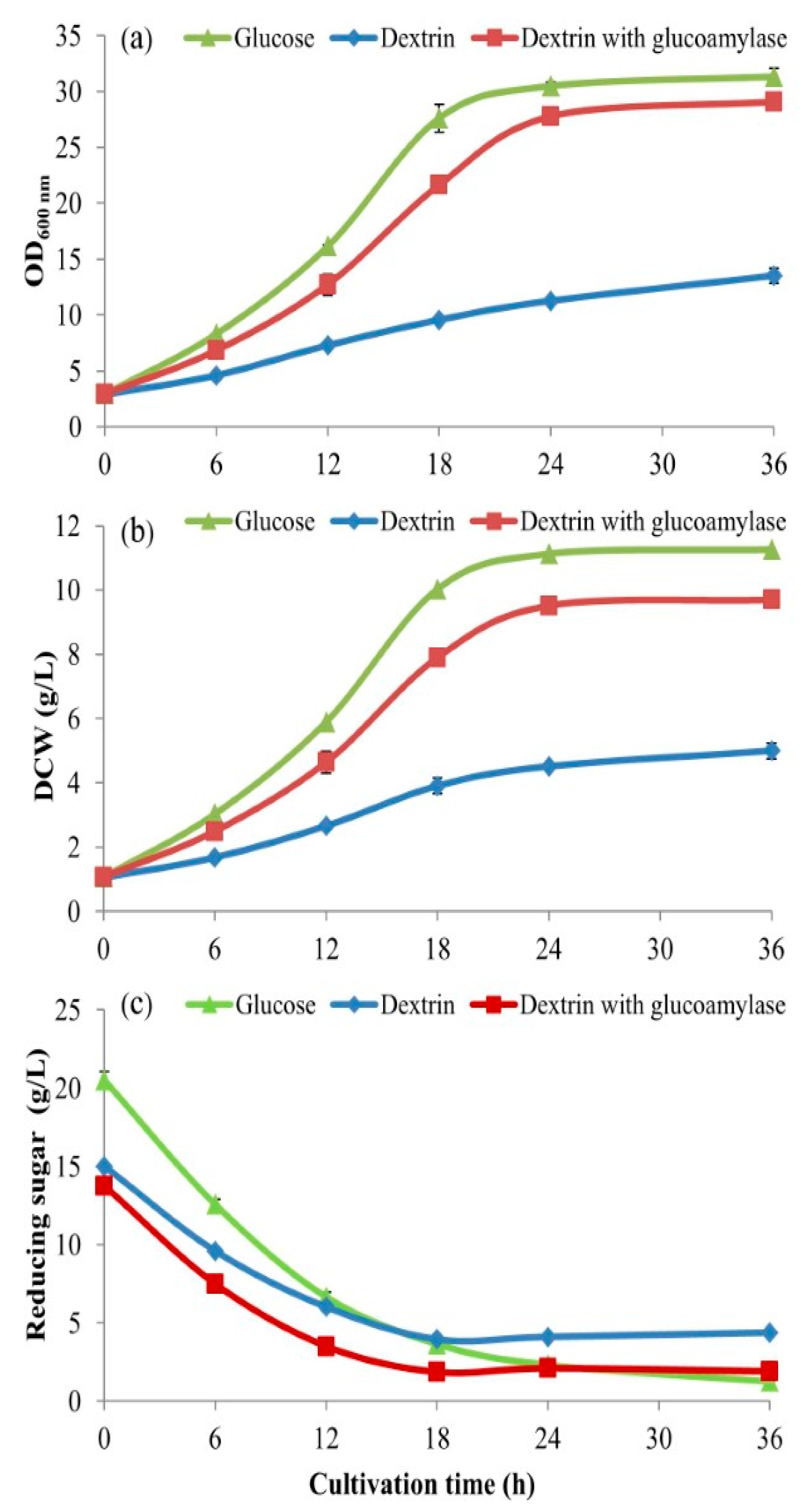
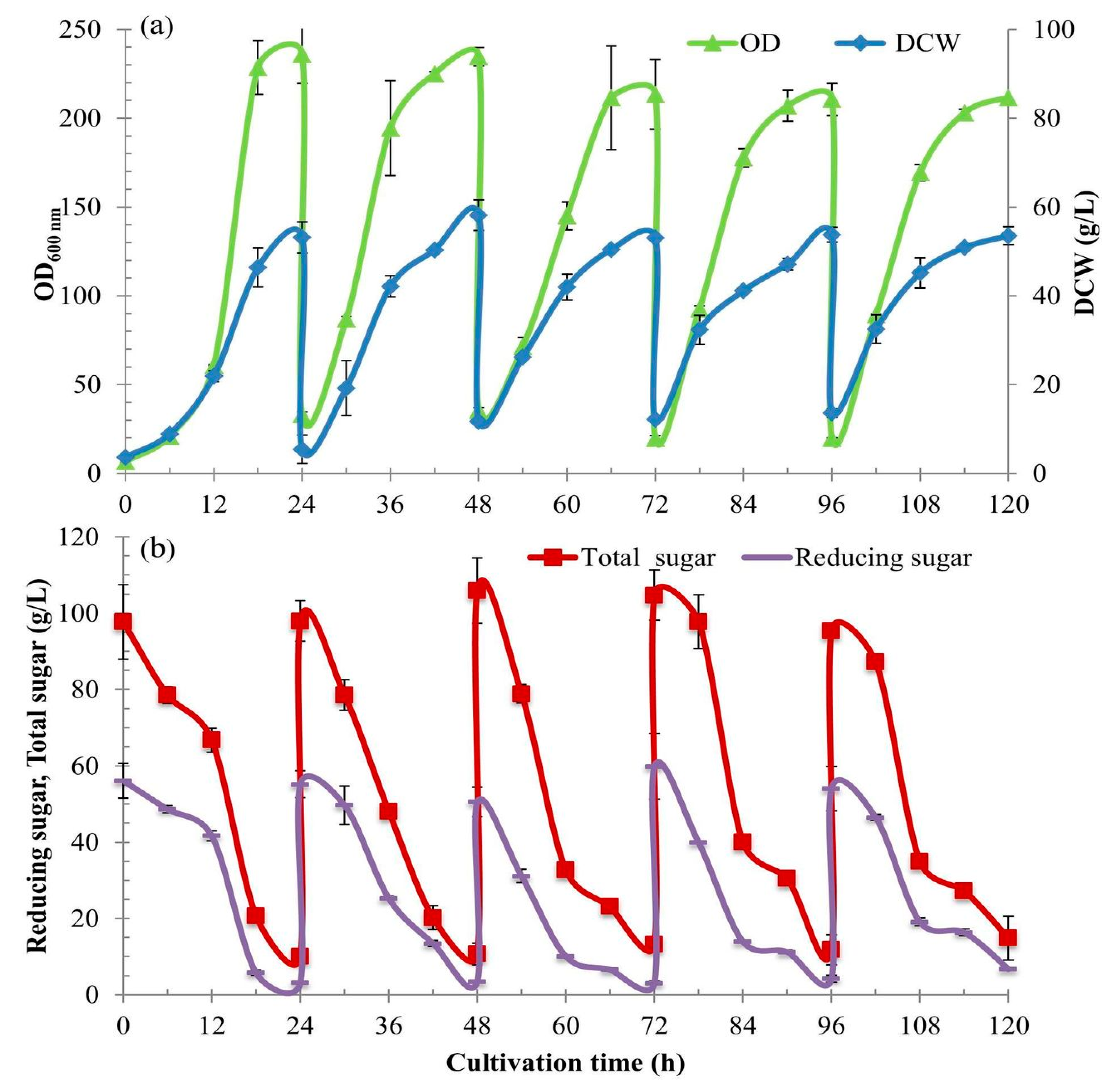
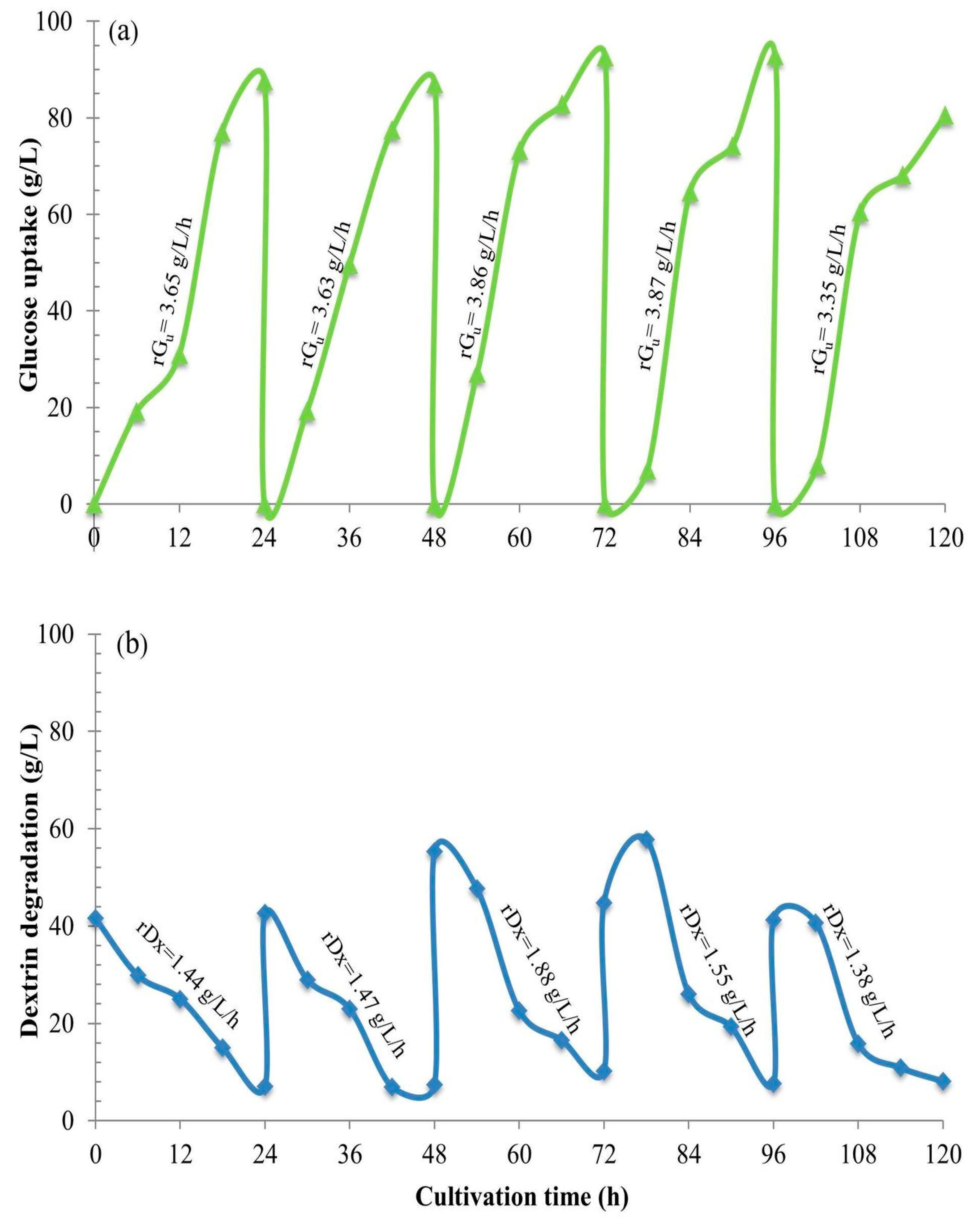
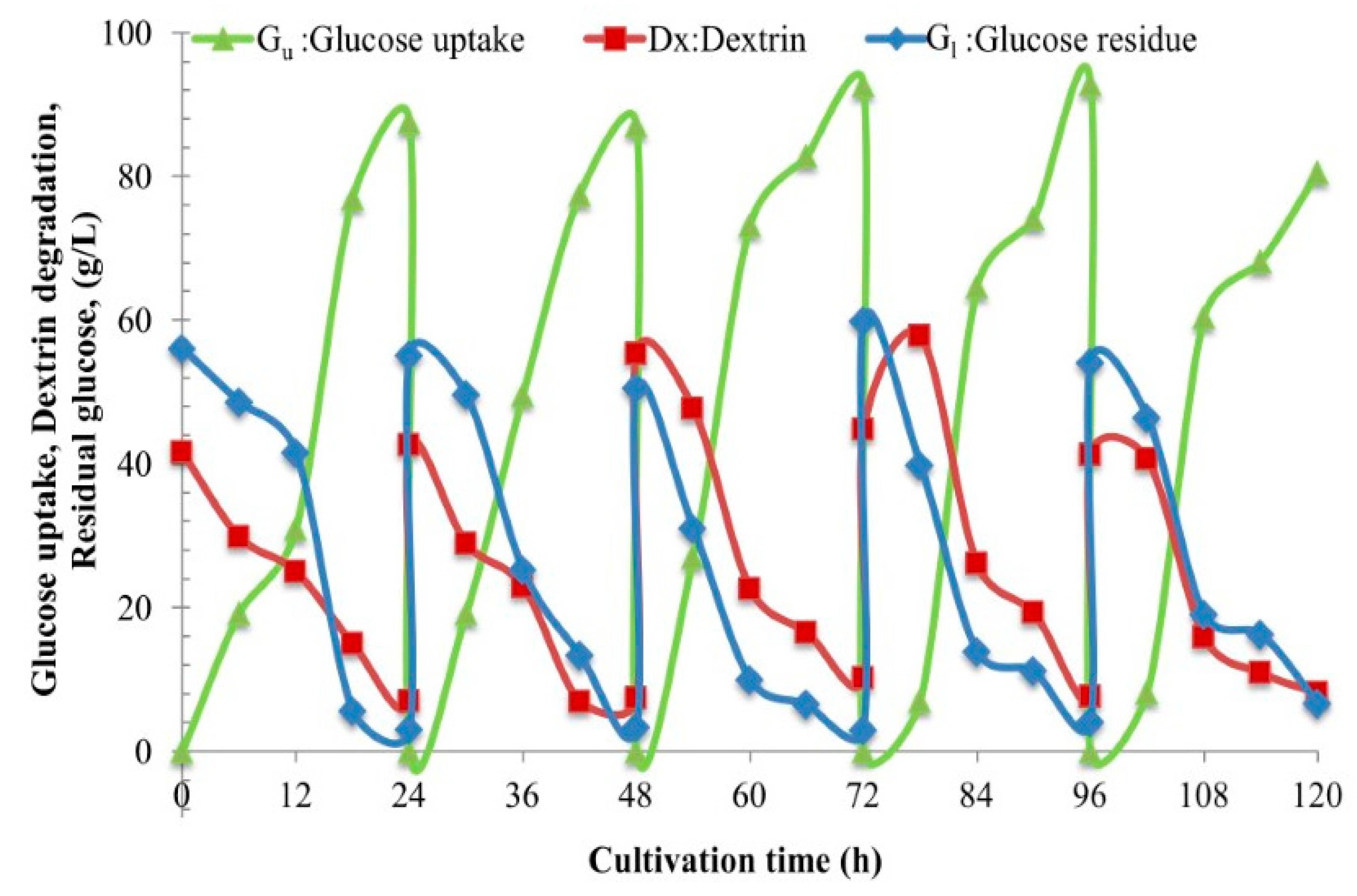
High cell density cultivation (HCDC) is developed for the production of microbial biomasses and their products. They must be produced from high concentrations of substrate, e.g., glucose or sucrose. In batch culture, a high concentration of those sugars >40–50% (w/v) cannot efficiently be utilized because of a dissolved O2 limitation causing the Crabtree effect that produces toxic by-products, i.e., ethanol and/or acetate, that inhibit cell growth. To prevent this effect, the HCDC is conducted with the fed-batch strategies. However, it has many disadvantages, i.e., complicated operations. To overcome those problems, this study was designed to use a new, efficient C-source (carbon source) substrate, namely dextrin, an oligomer of glucose. It can be utilized by yeast at a very high concentration of ~100 g/L although using just batch cultivation. As it is gradually hydrolyzed to release glucose molecules and gradually assimilated into the cells as “fed-batch at the cell level” (FBC), it prevents the yeast cell system from undergoing the Crabtree effect. In this research, the types of medium, the types of sugar compared with dextrin, and the concentrations of yeast extract (YE) were studied. The batch production medium (BPM) with dextrin and YE performed very good results. The concentrations of dextrin for yeast cultivation were studied in the aerobic batch 5-L bioreactors. Its optimum concentration was at 90 g/L with 9 g/L of YE in 3× BPM. It was operated at 3 W/kg energy dissipation rate per unit mass (ε¯T) and 3 vvm airflow rate. Further, the intensive multiple sequential batch (IMSB) technique of high intensities of agitation speed and airflow was developed to achieve higher yield and productivity. The maximum values of cell biomass, specific growth rate, yield coefficient, productivity, and efficiency were at 55.17 g/L, 0.21 h−1, 0.54 g/g, 2.30 g/L/h, and 98.18%, respectively. The studies of cell growth kinetics, biochemical engineering mass balances, and fluid dynamics for the design of impeller speeds of the 5-L bioreactors during the cultivations of yeast using dextrin at the high concentrations were successful. The results can be used for the scale-up of bioreactor for the industrial production of yeast cell biomass at high concentrations.
Keywords: high cell density cultivation (HCDC); intensive multiple sequential batch (IMSB); cell cultivation; fed-batch at cell level (FBC); S. cerevisiae; dextrin; bioreactor high cell density cultivation (HCDC); intensive multiple sequential batch (IMSB); cell cultivation; fed-batch at cell level (FBC); S. cerevisiae; dextrin; bioreactor
Graphical Abstract