Review

A Review of Thermochemical, Physical, and Chemical Conversion Pathways of Coconut and Açaí Residues: Technological Progress and Readiness Assessment


Grupo de Investigación en Innovaciones Tecnológicas para Agregar Valor a Recursos Agrícolas (ITAV), Centro de Investigación Tibaitatá, Corporación Colombiana de Investigación Agropecuaria—AGROSAVIA, Kilómetro 14 Vía Mosquera Bogotá, Mosquera 250040, Colombia
*
Authors to whom correspondence should be addressed.
Processes 2026, 14(8), 1314; https://doi.org/10.3390/pr14081314
Submission received: 18 March 2026 / Revised: 9 April 2026 / Accepted: 10 April 2026 / Published: 21 April 2026
(This article belongs to the Special Issue Biomass Pyrolysis Characterization and Energy Utilization)

Abstract

The growing demand for sustainable energy sources has intensified research on the valorization of biomass residues as feedstocks for energy production. This scoping review provides a comprehensive analysis of recent technological approaches for converting coconut and açaí residues into energy carriers and bioenergy products. A systematic review was conducted in accordance with the Preferred Reporting Items for Systematic Reviews and Meta-Analyses (PRISMA) guidelines. In addition to synthesizing the existing literature, this study evaluates the technology readiness level (TRL) of the reported conversion pathways based on the experimental evidence provided in the reviewed studies. The literature search was conducted using Scopus, Web of Science, and ScienceDirect, focusing on peer-reviewed publications between 2015 and 2025 that reported experimental or pilot-scale research on thermochemical, chemical, and physical conversion processes for coconut and açaí residues. The TRL assessment indicates that most technologies remain at laboratory validation stages, with only a limited number reaching pilot or prototype demonstration levels. Nevertheless, several pathways—particularly thermochemical and densification processes—show promising potential for decentralized bioenergy applications. These findings are especially relevant for regions where coconut and açaí value chains generate significant volumes of agricultural residues. Their valorization could support decentralized energy systems, improve residue management, and contribute to sustainable bioeconomy strategies. Overall, this review identifies the main technological advances, limitations, and research gaps associated with the energy conversion of coconut and açaí residues, providing insights for future technological development and deployment.

1. Introduction

The sustainable supply of energy for agro-industrial processes is critical for enabling local value creation and supporting transformation processes in rural regions [1]. Energy is a key enabler for agroindustry development, which encompasses a wide range of technologies and operations, including drying, pasteurization, frying, and steam generation. However, in many rural areas, particularly in developing countries, access to reliable and affordable energy remains limited. This situation reduces the competitiveness of rural enterprises, reinforces territorial inequalities, and restricts the capacity to process and add value to primary agricultural products at the local level.
In agricultural territories, the availability of large quantities of biomass represents a promising opportunity for local value generation and agro-industrial development. After agricultural processing activities, significant proportions of plant-derived materials (e.g., including husks, shells, fibers, and seeds) are generated. For example, the usable fraction of coconut fruit represents nearly 40% of the total weight, while it is less than 5% for cashew fruit [2], less than 30% for açaí fruit [3], and less than 40% for cocoa fruit [4]. These residues can be densified, combusted, gasified, or converted into higher-value energy products within sustainability and circular bioeconomy frameworks. Nevertheless, the selection of the most suitable conversion process depends strongly on biomass composition, local resource availability, and technological feasibility under real operating conditions. The valorization of these residues for renewable energy generation can reduce environmental impacts while contributing to economic and social development, particularly when integrated into circular bioeconomy strategies.
Agricultural residues are primarily composed of lignocellulosic biomass, which consists of cellulose, hemicellulose, and lignin in varying proportions depending on the biomass source and plant fraction [5]. The renewable nature and widespread availability of lignocellulosic biomass have attracted significant attention in the energy generation field, particularly in the context of decentralized energy systems. The energy content of typical agricultural residues ranges from approximately 14 to 19 MJ/kg (lower heating value) [6], representing a relevant and often underutilized energy resource. Despite this potential, lignocellulosic biomass is frequently discarded or underexploited, highlighting the need for studies that evaluate technological trends and territorial suitability to support long-term sustainable development strategies.
Among tropical crops, coconut (Cocos nucifera) and açaí (Euterpe oleracea) are particularly relevant due to their economic importance in countries of the Global South, especially in coastal and Amazonian regions [7,8]. In Colombia, these crops are primarily cultivated by small-scale producers or managed by indigenous communities, which increases their social relevance for rural development. The processing of coconut and açaí fruits generates large quantities of lignocellulosic residues that are often underutilized, despite their potential as feedstocks for thermochemical conversion into energy and value-added products in rural territories [9]. However, in Colombia and other tropical regions, the adoption of technologies for coconut and açaí residue valorization remains limited.
Thermochemical conversion technologies such as combustion, pyrolysis, torrefaction, and carbonization, enable the transformation of biomass into energy carriers such as biochar, syngas, and bio-oil [10]. Although these technologies have been widely studied, their levels of technological maturity, scalability potential, and suitability for decentralized rural contexts vary significantly across the literature. In addition, chemical conversion pathways, such as transesterification, enable the transformation of edible and non-edible vegetable oils into biodiesel [11], extending the useful life of feedstocks that may not meet food or cosmetic industry standards. Physical densification processes, including briquetting and pelletization, offer lower energy-demanding alternatives by converting biomass residues into standardized solid fuels using pressure and binding agents, while also improving storage, transport, and handling properties.
In this context, the evaluation of TRLs provides a useful framework for identifying the most viable technological pathways for real-world implementation. Rather than focusing exclusively on laboratory performance, TRL analysis allows for the assessment of technological maturity, operational robustness, and deployment feasibility under realistic supply chain and socio-technical conditions.
Despite the growing interest in biomass valorization, few studies have systematically reviewed the application of thermochemical, chemical, and physical conversion technologies specifically for coconut and açaí residues, particularly from the perspective of technological maturity and energy autonomy. This represents a critical knowledge gap, especially considering the need to promote decentralized renewable energy systems adapted to local biomass availability and socio-technical contexts.
Accordingly, this review addresses three main research questions related to the conversion of coconut and açaí residues into energy: (1) Which thermochemical, chemical, and physical technologies have been applied?; (2) Which Technology Readiness Levels have been reported?; and (3) What are the main limitations and opportunities for implementation in rural and decentralized contexts?
To address this gap, this review analyzes peer-reviewed literature on the thermochemical and related conversion of coconut and açaí agricultural residues. The most common energy products, key transformation technologies, and reported TRLs were identified and evaluated based on experimental setups, operational conditions, and reported deployment contexts. Furthermore, this work synthesizes research trends and proposes development pathways for implementing these technologies to support agro-industrial energy supply, particularly for small- and medium-scale actors. This review aims to inform researchers, practitioners, and policymakers about both the opportunities and limitations associated with the valorization of coconut and açaí residues for sustainable energy production, while highlighting critical technical, contextual, and infrastructural considerations that should guide future innovation and policy design in this field.

2. Methods

2.1. Literature Search Strategy and Scope Definition

This review was conducted in accordance with the Preferred Reporting Items for Systematic Reviews and Meta-Analyses (PRISMA) extension for Scoping Reviews (PRISMA-ScR) guidelines to ensure transparency, reproducibility, and methodological rigor in the identification, screening, and synthesis of the scientific literature. The objective of the review was to identify, classify, and critically assess thermochemical, chemical, and physical conversion technologies applied to coconut and açaí residues for energy production, with particular emphasis on technological maturity, reported operational conditions, and potential applicability in decentralized rural contexts. A systematic literature search was performed using three major scientific databases: Web of Science (WoS), Scopus, and ScienceDirect. The search covered peer-reviewed articles published between 2015 and 2025, a period selected to capture recent technological developments while ensuring sufficient maturity evidence for technology assessment. Although the search covered the period from 2015 to 2025, no studies published in 2015 met the inclusion criteria. Therefore, the final set of selected studies, as reflected in the results and figures, corresponds to the period 2016–2025. Only peer reviewed articles written in English were considered.
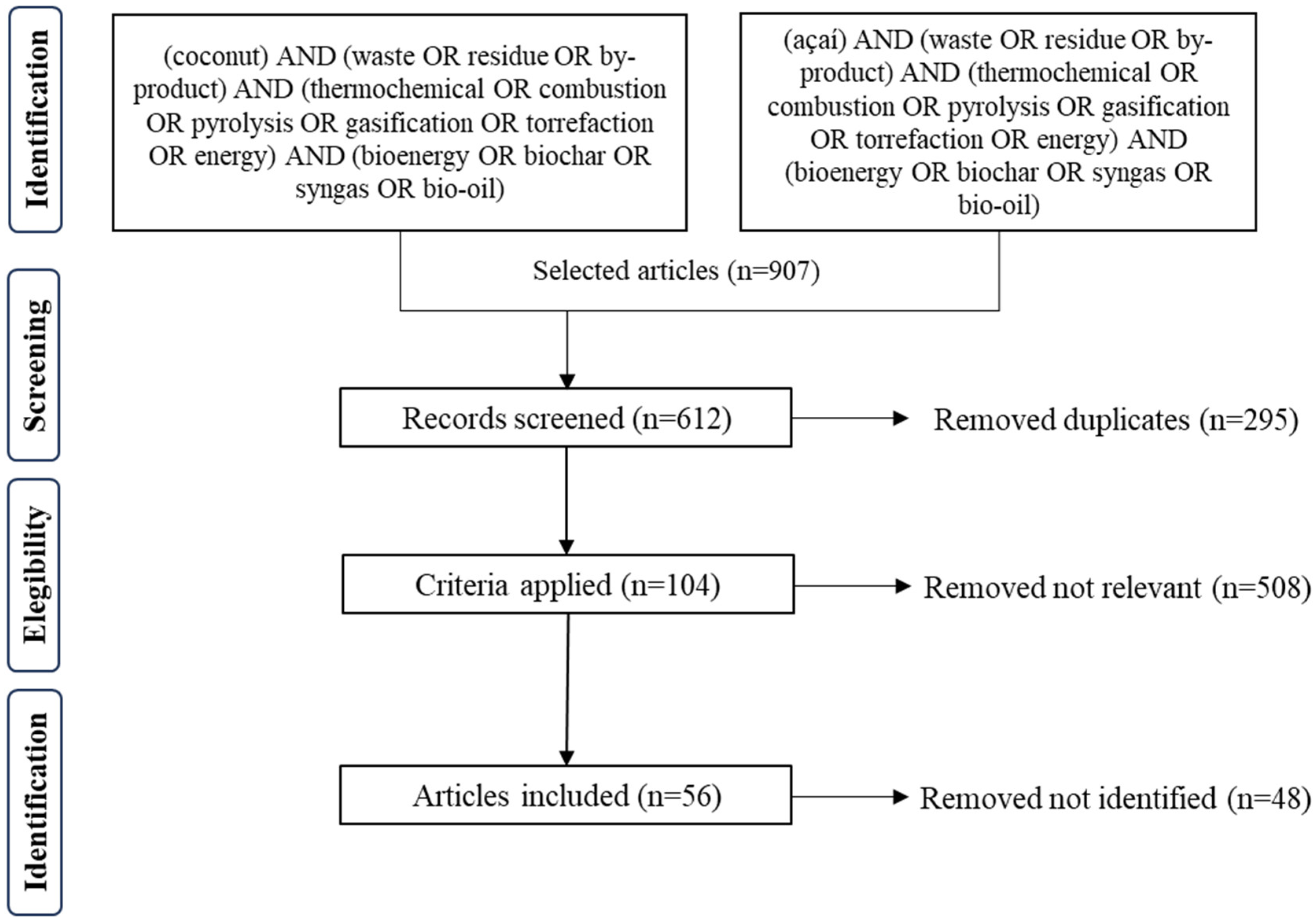
The research strategy combined Boolean operators and keywords related to the biomass type, conversion processes, and energy products. The main search string applied across databases was: (“coconut” OR “açaí”) AND (“waste” OR “residue” OR “by-product”) AND (“thermochemical” OR “combustion” OR “pyrolysis” OR “gasification” OR “torrefaction” OR “energy”) AND (“bioenergy” OR “biochar” OR “syngas” OR “bio-oil”).
This strategy was designed to capture studies addressing both process-level performance and energy product generation, while excluding non-energy-related uses of coconut and açaí residues.

2.2. Eligibility Criteria and Study Selection

Studies were included in the review if they met all of the following criteria: (1) focused on coconut or açaí biomass residues, including husk, shell, fiber, seed, or derived oils, (2) reported thermochemical, chemical, or physical conversion processes associated with energy or energy-related products, (3) provided sufficient experimental, operational, or system-level information to enable assessment of technological maturity, and (4) included experimental validation, pilot-scale operation, or real-system testing.
On the other hand, studies were excluded if they (a) addressed non-energy applications (e.g., food, cosmetics, materials without energetic use), (b) were based exclusively on simulations, modeling, or theoretical analysis without experimental validation, and (c) focused solely on biomass characterization without conversion or system evaluation.
The initial search yielded about 907 records. After removal of duplicates, the remaining studies were screened by title and abstract to exclude clearly irrelevant publications for the purpose of the review. Full-text screening was then conducted to assess compliance with the inclusion criteria. Any discrepancies in study selection were resolved through consensus-based evaluation. The selection process is presented in the PRISMA flow diagram, shown in Figure 1, which illustrates the number of records identified, screened, excluded, and included in the final synthesis. The final dataset comprised 56 peer-reviewed articles, which were subsequently used for detailed qualitative and technological analysis.

2.3. Data Extraction and Classification

For each selected study, structured data extraction was performed to capture the following variables: biomass type and origin, country of study, conversion technology and equipment configuration, operating conditions (temperature, pressure, residence time, scale), main energy products and by-products (if mentioned), reported performance indicators, and experimental or operational scale. This information formed the basis for comparative analysis across technologies and for assessing trends in technological development. Structured data extraction and organization were performed using Microsoft Excel for Microsoft 365 (Microsoft Corporation, Redmond, WA, USA).

2.4. Technology Readiness Level Assessment

Technological maturity was evaluated using a simplified and adapted TRL framework tailored to biomass conversion technologies (see Table 1). The TRL classification focused on levels 3 to 7, as conceptual stages (TRL 1–2) were outside the scope of the experimental literature considered in this review.
The TRL assignment was conducted through a detailed manual review of each selected study. Relevant information was extracted from the reported experimental setup, scale of operation (e.g., laboratory, pilot, or pre-commercial scale), system integration, and performance results. The classification was not based solely on the terminology used by the original authors (e.g., laboratory or pilot scale), but on the interpretation of the reported experimental conditions according to the predefined TRL criteria. Based on this information, each study was classified according to the predefined TRL criteria presented in Table 1, which were adapted from established TRL classification frameworks for biomass conversion technologies [12]. The classification was based on reported experimental conditions rather than solely on the terminology used by the original authors.
The classification considered explicit criteria derived from the reported experimental setup, system integration level, and operational validation, including scale of operation, batch versus continuous operation, integration of subsystems (e.g., gas cleaning, engines, downstream conversion), and validation under realistic feedstock and operating conditions. The distinction between laboratory and pilot scales was based on the level of operational validation and system integration rather than on reactor dimensions alone.
For instance, studies reporting small-scale batch experiments under controlled laboratory conditions were classified as TRL 3–4, whereas studies demonstrating pilot-scale or semi-industrial operation under realistic conditions were classified as TRL 5–6. Studies reporting on-site operations or pre-commercial deployment were classified as TRL 7. Studies that focused exclusively on biomass characterization were used only for contextual information and were not included in the technological maturity analysis.

2.5. Geographic Distribution Analysis

The geographical distribution of the selected studies was analyzed to contextualize technological development within regional production systems and socio-economic settings. This analysis aimed to identify regional concentrations of research activity as well as underrepresented areas where coconut and açaí residues are abundant but technological development remains limited.
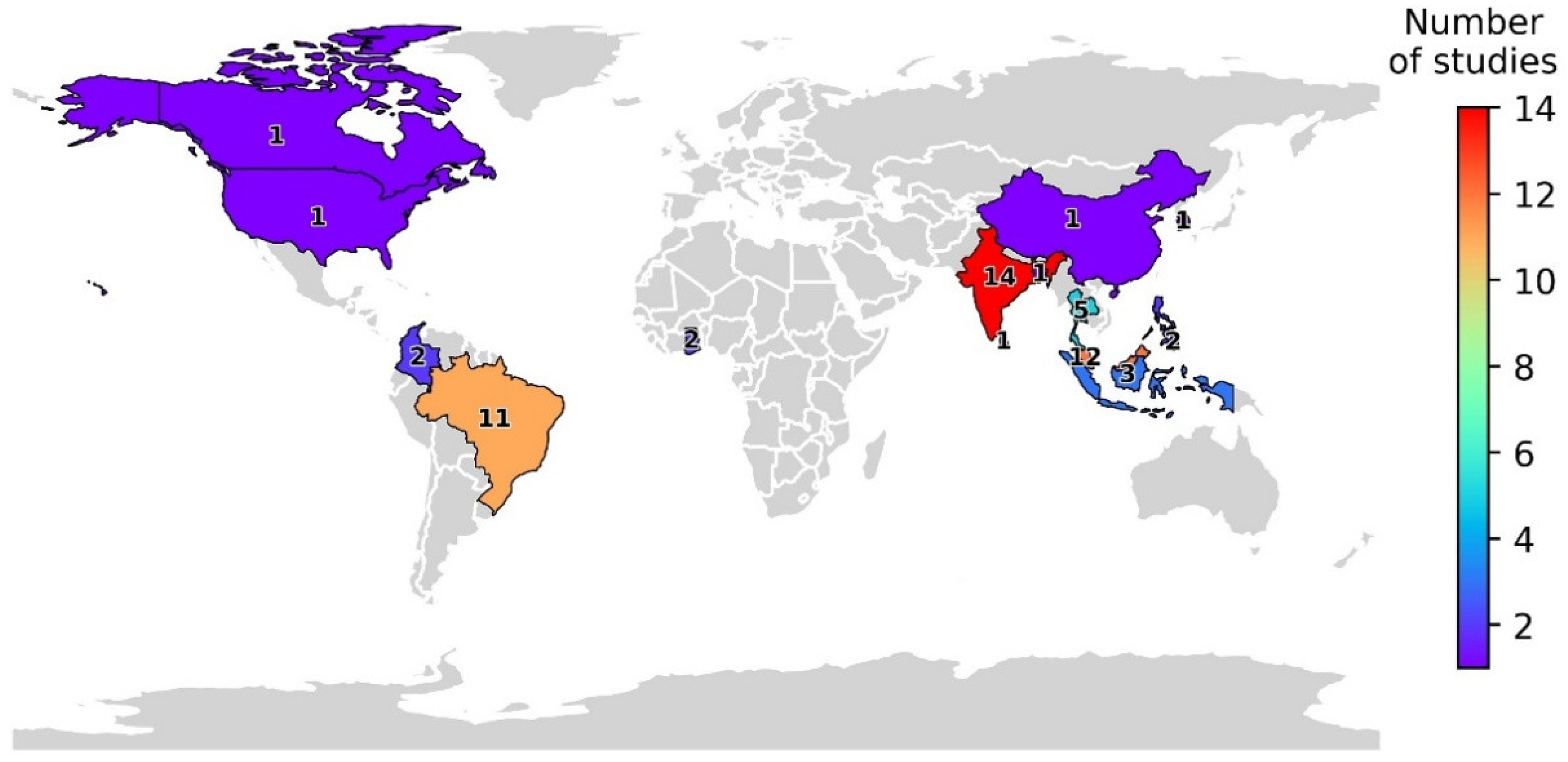
Figure 2 presents the geographic distribution of studies included in this review. A strong concentration of research activity was observed in South and Southeast Asia and Brazil, regions with high coconut production and establishes agro-industrial sectors. Conversely, African, and Caribbean regions exhibited limited representation, despite their biomass availability and energy access challenges. This geographic imbalance highlights important research gaps and underscores the need for comparative studies and technology adaptation to diverse territorial contexts.

2.6. Methodological Considerations

This review was based on the analysis of studies that met defined inclusion criteria, ensuring the availability of sufficient and relevant experimental information for technological assessment. The classification of technologies through TRL was conducted consistently based on reported operational conditions and system characteristics. As with any literature-based analysis, the results reflect the scope of the available evidence; however, the applied approach provides a robust and coherent framework for comparing technological maturity across studies.

3. Discussion

3.1. Socio-Economic Relevance of Coconut and Açaí in Tropical Regions

Coconut (Cocos nucifera) and açaí (Euterpe oleracea) are tropical crops of high socio-economic relevance in coastal and Amazonian regions of the Global South [9], where production is largely based on smallholder and community-driven systems [13]. In these territories, limited access to reliable and affordable energy contains agro-industrial development and local value creation, making biomass residues a strategic resource for decentralized energy solutions.
The processing of coconut and açaí fruits generates large volumes of residues—mainly shells, husks, and seeds—that are often underutilized despite their energetic potential. Coconut residues have been widely reported as suitable feedstocks for thermochemical and physical conversion pathways, while açaí seeds represent an emerging residue steam whose energetic valorization has gained increasing attention, particularly in Brazil [14,15].
Although coconut and açaí belong to different agro-industrial value chains, they share important similarities as lignocellulosic residues generated in regions with energy access limitations and significant socio-economic challenges. Therefore, their joint analysis provides a relevant framework for comparing bioenergy conversion pathways, technological maturity (TRL), and applicability in decentralized rural contexts. From this perspective, coconut and açaí residues serve as complementary case studies for evaluating biomass conversion technologies, as discussed in the following sections.

3.2. Physicochemical Properties of Coconut and Açaí and Implications for Energy Conversion

The selection and performance of biomass conversion technologies are strongly influenced by the physicochemical properties of the feedstock. Parameters such as lignocellulosic composition, elemental composition, volatile matter, fixed carbon, and ash content directly affect reaction pathways, product distribution, operation stability, and energy conversion efficient in thermochemical systems [16,17]. Consequently, these properties play a key role in determining the technological maturity and application of different conversion routes.
During coconut processing, significant amounts of lignocellulosic residues are generated, mainly shells and husks, which differ markedly in structure and composition. Coconut shells are characterized by high lignin and fixed carbon contents, providing mechanical strength and thermal stability that favor thermochemical conversion routes such as pyrolysis, gasification, and carbonization [18]. In contrast, coconut husk present lower density and higher ash content, which can limit their application in combustion systems due to slagging and fouling risks, but make them suitable for physical densification processes such as briquetting and pelletization, particularly at small and medium scales [16,19]. Regarding açaí residues, the main residue generated during the fruit processing is the seed, which represents approximately 70% of the total fruit mass. Açaí seeds exhibit a relatively homogeneous composition dominated by dietary fibers, with moderate carbon content and comparatively low ash levels [17,20]. These characteristics are advantageous for combustion and pyrolysis-based applications, as low ash content contributes to stable thermal operation and reduces equipment-related issues. The availability of açaí residues in Amazonian regions has motivated growing interest in their energetic valorization, remarking the case of Brazil, where laboratory-scale and pilot-scale studies have been reported [20].
Beyond solid residues, underutilized coconut-derived by-products such as residual or low-grade coconut oil also contribute to the energetic potential of the coconut value chain. Coconut oil is rich in medium-chain saturated fatty acids, mainly lauric, myristic, and palmitic acids, a composition that is suited for transesterification processes leading to biodiesel production with favorable combustion properties [21]. Nevertheless, the economic feasibility of biodiesel production from coconut oil is strongly dependent on feedstock cost, which can limit its use when high-quality oil is considered [22]. When coconut oil does not meet food-grade standards, its conversion into biodiesel represents an effective strategy to reduce losses and enhance resource efficiency in agro-industrial systems [21]. Therefore, relationships between feedstock properties, conversion technologies, and technological readiness provide an essential framework for interpreting the TRL distribution and technology-specific trends discussed in the subsequent sections. This linkage is further explored in the following section, which focuses on thermochemical conversion technologies and their corresponding TRL evolution.
Representative elemental and proximate compositions of coconut and açaí residues reported in the literature are summarized in Table S1 available in Supplementary Materials.

3.3. Thermochemical Conversion Pathways

Thermochemical conversion is a consolidated route for energetic valorization of lignocellulosic residues, enabling the transformation of biomass into solid, liquid, and gaseous energy carriers. The feasibility of coconut and açaí residues for thermochemical processing has been widely demonstrated through thermal and compositional analyses reports in the literature. Feedstock characterization data supporting the thermochemical suitability of coconut and açaí residues are compiled in the Supplementary Materials. The present section therefore concentrates on the conversion technologies, energy products, and reported TRLs rather than on primary characterization results.
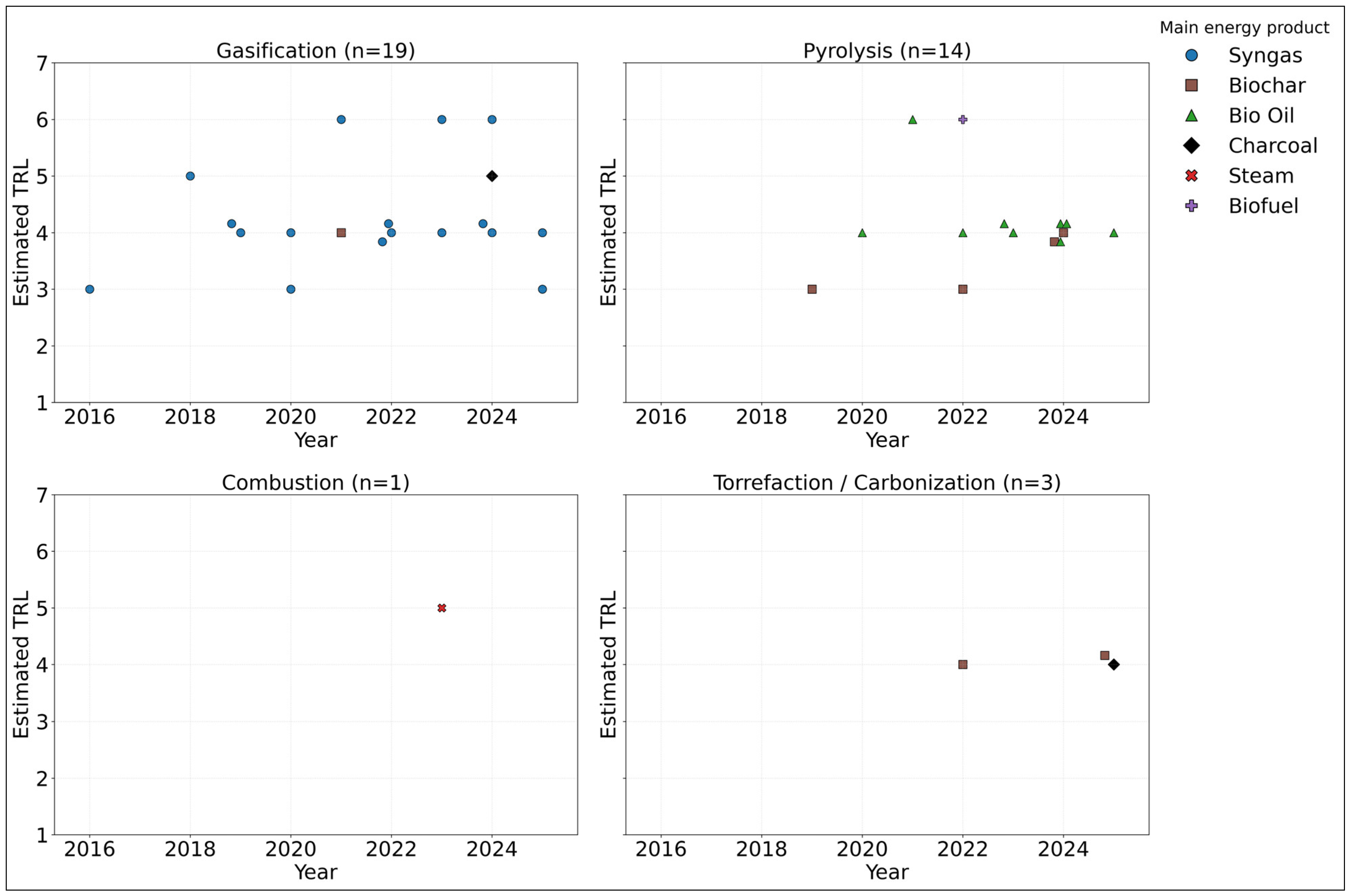
Figure 3 synthesizes the temporal evolution and technological maturity of the main thermochemical pathways applied to coconut and açaí residues, integrating year of publication, estimated TRL, conversion technology, and primary energy product. This representation allows the identification of dominant research trajectories, maturity gaps, and technology-product associations across the literature.
As observed, most thermochemical studies remain concentrated below TRL 6, indicating that despite an increasing number of publications in recent years, the transition from laboratory-scale validation to demonstration in relevant environments remains limited in the scientific articles. Based on these trends, the following subsections analyze each thermochemical operation to assess their current maturity, limitations, and applicability in rural and decentralized energy contexts.

3.3.1. Gasification

Gasification is a thermochemical conversion route that transforms solid biomass into synthesis gas (syngas), primarily composed of H2, CO, CO2, and light hydrocarbons, through partial oxidation at high temperatures. In the reviewed literature, gasification represents the most extensively investigated thermochemical pathway for coconut residues, while applications to açaí residues remain marginal. Despite the large volumes of açaí residues generated in Brazil, particularly in Pará, which accounts for approximately 1.3 million tons of processed açaí manually [23], no studies meeting the inclusion criteria of this review were identified for gasification of açaí residues, highlighting an important gap in the thermochemical valorization of this biomass.
Regarding the 19 gasification-related studies identified in the analyzed peer-reviewed literature, they can be grouped into conventional reactor configurations (fixed-bed and fluidized-bed) and process intensification and integrated routes (catalytic/staged systems and water/steam-based environments).
Fixed-bed gasifiers, mainly in downdraft or packed-bed configurations widely applied to coconut shells and husks due to their operational simplicity and suitability for small-scale systems [24]. Laboratory and bench-scale systems typically employ cylindrical reactors with internal diameters between ~40 and 150 mm and reactor lengths of 0.5–1.3 m, operating at temperatures between 700 and 900 °C with air as the gasifying agent [24,25]. For instance, coconut shell downdraft gasifiers tested at laboratory scale report biomass feed rates below 1 kg/h, enabling detailed analysis of syngas composition and thermal behavior but limiting continuous operation [25]. Under these conditions, syngas heating values typically range between 4.0 and 5.5 MJ/Nm3, with hydrogen fractions around 25% (v/v), CO near 23% (v/v), and methane concentrations close to 10% (v/v), confirming the suitability of coconut shell as a gasification feedstock due to its high fixed carbon content and favorable char structure [24].
Fixed-bed gasification technology has also progressed toward intermediate systems approaching pilot-relevant capacities, characterized by thermal capacities around 30–35 kW and reactor diameters around 300 mm, indicating advances toward practical deployment [26]. Additionally, batch kiln systems combining pyrolysis and gasification have reached TRL 5, where operational parameters and product characteristics are validated under functional conditions. In such systems, coconut charcoal with calorific values close to 7470 cal/g has been obtained, significantly higher than the original biomass [27].
At higher technological maturity, TRL 6 systems exhibit functional validation under relevant operating conditions, particularly through integration with power generation units. Recent pilot-scale downdraft gasifiers coupled with compression ignition engines operate with gas flow rated around 15 Nm3/h and electrical outputs between 3.5 and 14 kW, achieving diesel substitution levels between 45% and 63% in dual-fuel engine operation [28,29]. These results demonstrate the potential of coconut shell gasification to support decentralized bioenergy systems, particularly in rural agro-industrial contexts where partial diesel displacement can improve energy security.
Fluidized-bed gasifiers are mostly documented at laboratory or bench scales, utilizing stainless steel cylindrical reactors with internal diameters between 44 and 120 mm and heights ranging from 400 to 1150 mm [30,31]. Operating typically between 750 and 900 °C, these units employ bed materials such as silica sand or olivine, with superficial velocities carefully tuned to maintain stable fluidization.
Compared to fixed-bed designs, biomass feed rates and reactor dimensions in fluidized-bed systems remain limited, reflecting the higher complexity associated with hydrodynamic control, gas–solid contact, and equivalence ratio management under laboratory conditions. This contrasts with fixed-bed systems, which tend to reach higher TRLs due to their simpler design and operational robustness, whereas fluidized-bed systems remain predominantly experimental despite their superior mixing and reaction kinetics.
In fixed-bed downdraft systems, high syngas quality is often achieved at laboratory or bench scale (mainly TRL 4) under tightly controlled conditions. Studies reporting operation temperatures between 850 and 900 °C, with particle sizes below 3 mm and optimized equivalence ratios, report syngas heating values typically in a range of 4.0 and 5.5 MJ/Nm3, with hydrogen fractions above 25–30% (v/v) for coconut shell feedstocks [24,25].
Co-gasification strategies (e.g., blending coconut shell with palm kernel or charcoal) have also been explored to improve conversion efficiency and syngas quality [31,32,33]. For instance, co-gasification with refuse-derived fuel has shown improved syngas energy content and optimal performance near 800 °C [32], while co-processing with plastic waste can increase cold gas efficiency up to approximately 45% under optimized operating conditions [31]. Modified reaction environments have also been investigated. Gasification using humidified air has demonstrated improvements in hydrogen yield and gas heating value; in one study hydrogen production increased from approximately 7.67 to 10.26 mol, with gas heating values reaching 8.81 MJ/Nm3 [34].
Overall, although fluidized-bed systems often demonstrate positive reaction kinetics and improved hydrogen yields under controlled laboratory conditions, most of the studies analyzed are situated within TRL 3–4, reflecting the challenges associated with stable hydrodynamic operation and scale-up. Finally, gasification systems show promising laboratory performance using coconut residues; however, the peer-reviewed studies examined in this work are predominantly concentrated at TRL 3–4 (approximately 80% of the analyzed peer-reviewed literature), with only a limited number of fixed-bed configurations progressing toward TRL 5–6 under pilot or end-use validation conditions.
Some barriers emerge from the analyzed peer-reviewed literature that help explain the gap between laboratory optimization and scalable implementation. These include (i) limited long-term operation data, since few studies report sustained runs necessary to evaluate ash accumulation, refractory degradation, or maintenance [31,33], (ii) scale-up complexity as reactor diameter and height increase, introducing challenges related to heat transfer, pressure drop, and material durability, (iii) residues and ash management at larger reactor scales, and (iv) strong sensitivity of reactor performance to geometry, especially in fluidized beds, where stable fluidization depends on narrow combinations of particle size, gas velocity and bed height.
Beyond conventional air-blown fixed- and fluidized-bed gasification, studies have explored process intensification strategies aimed at tar mitigation, alternative reaction environments, and downstream syngas valorization. While these approaches can improve syngas quality, their evaluation within the analyzed literature indicates that most configurations remain within TRL 3–4, primarily due to limitations associated with transitioning from batch experiments to stable continuous operation.
The use of mineral catalyst (e.g., Portland cement, dolomite, or limestone) in catalytic co-gasification (operating temperatures from 700 to 900 °C) has demonstrated improvements in syngas yield and methane formation (up to 19.96% (v/v)) [35]. Similarly, catalytic co-gasification using dolomite or limestone as tar-reforming catalysts has demonstrated hydrogen fractions around 11.7% (v/v) and syngas heating value close to 4.96 MJ/Nm3 [26]. Nevertheless, within the analyzed studies, catalyst deactivation and the need for stable feedstock blending ratios tend to limit these systems to TRL 4.
More advanced concepts include two-step pyro-gasification using Ni-Fe catalytic, which has reported exceptionally high gas calorific values up to 22.97 MJ/Nm3 [36]. Despite these promising results, the evaluation of these systems in the analyzed literature suggests that their technological maturity remains at the level of laboratory validation (TRL 4), primarily due to the batch nature of the process and the complex thermal requirements—approximately 700 °C during pyrolysis followed by 850 °C for gasification—which limit immediate scalability.
Multistage downdraft reactor integrating natural catalysts such as zeolite and kaolin has demonstrated improved tar cracking and syngas energy content in a 15 kg batch semi-pilot reactor [37]. Nevertheless, within the analyzed studies, the discontinuous operation and emphasis on catalytic optimization indicate that this configuration is generally situated at TRL 4.
Hybrid pathways combining thermochemical and biological conversion have also been proposed. In one example, syngas produced from coconut shell gasification was used as a substrate for microbial fermentation to produce bioethanol, demonstrating the valorization potential of the process [38]. Nevertheless, the evaluation of this pathway in the analyzed literature suggests that its technological maturity remains at TRL 4, mainly due to the reliance on simulation models and the sensitivity of microbial systems to syngas impurities.
Alternative reaction environments have also been explored. Steam-assisted gasification in semi-continuous laboratory fluidized beds operating at 850 °C has been used to produce biochar with surface areas exceeding 667 m2/g, demonstrating potential applications in soil amendment and environmental remediation [39]. In this configuration, steam acts as a physical activating agent that promotes the development of highly porous carbon structures. However, within the analyzed studies, the laboratory scale of the system and the requirement for externally heated reactors indicate that this approach is generally situated at TRL 4.
In contrast, supercritical water gasification (SCWG) enables the direct conversion of wet biomass at 400–600 °C under pressures between 23 and 25 MP, reaching hydrogen yields up to 4.8 mmol/g [40]. Despite these promising results, the available evidence in the analyzed literature suggests that this technology remains at TRL 3, primarily due to the extreme pressure requirements and specialized metallurgy needed to withstand such conditions.
Although these intensified and integrated gasification routes provide significant improvements in gas quality and product diversity, their development in the peer-reviewed literature remains largely at laboratory scale, with the main challenge being the transition from batch experimental systems to continuous and reliable energy production. Advancing beyond TRL 4 will require sustained operational testing, improved catalyst durability, and comprehensive techno-economic and life cycle assessments under realistic operating conditions. These observations reflect the scope of the peer-reviewed literature analyzed in this study and may not fully capture the extent of industrial implementation.

3.3.2. Pyrolysis

Biomass pyrolysis is a thermochemical decomposition process performed in an oxygen-free atmosphere, generally at temperatures ranging from 300 to 700 °C, producing biochar, bio-oil, and non-condensable gases. Product yields depend on operating conditions (e.g., heating rate, residence time, atmosphere) and feedstock composition.
Across the 14 studies analyzed, the pyrolysis of coconut and açaí residues has been predominantly evaluated in lab-scale systems, with limited advancement toward pilot-scale or functional validation. The equipment configuration is dominated by fixed-bed and batch-type reactors designed for controlled screening of temperature, heating rate, residence time, and pre-treatments. Representative laboratory configurations include electrically heated fixed-bed units and laboratory furnaces designed for batch pyrolysis experiments, which process small biomass samples under controlled heating conditions and enable detailed physicochemical characterization of the resulting solids and liquids [41,42]. Operating conditions are typically under inert atmospheres (e.g., N2, CO2, or Ar), and residence times range from min to h (slow/intermediate conditions), reflecting the focus on product distribution rather than continuous operation [41,43].
Most studies identified in this review remain within TRL 3–4, since they validate pyrolysis through product characterization without reaching continuous operations. For coconut shell biochar, its production under controlled heating rates, long residence times and moderate temperature (300–350 °C) can achieve combustion indices comparable to PCI coal, supporting technical feasibility for energy substitution [42]. The same study shows that raising temperature to 400–500 °C increases carbonization but reduces combustion-related indices, indicating that higher severity can be detrimental when the target is reactive solid fuel rather than stable carbon [42].
For açaí residues, pyrolysis condition screening studies over 300–700 °C and residence times between 60 and 180 min show a different optimization logic: higher temperatures improve pH, stability, and recalcitrance, while lower temperatures increase char yields but may retain hydrophobic behavior [14]. Product tailoring using chemical activation or pretreatment remains mostly TRL 4, despite performance gains, due to increased process complexity. For example, alkaline activation with KOH during açaí seed pyrolysis at 350–450 °C has been shown to significantly reduce bio-oil acidity (from 257. 6 mg KOH/g to values as low as 12.3 mg KOH/g) while simultaneously increasing biochar yields [44]. In contrast, acid activation with HCl tends to decrease bio-oil yields while increasing the concentration of oxygenated compounds such as acids and phenolics, which often require further upgrading [45]. These processes remain at laboratory maturity because challenges related to reagent recovery, large-scale chemical handling, and waste-stream treatment are rarely addressed in experimental studies [44,45].
On the other hand, intensification strategies such as fast pyrolysis in small fixed-bed reactors combined with innovative pretreatments have demonstrated improvements in bio-oil yield. For example, lipid extraction using Energized Dispersive Guided Extraction (EDGE) increased bio-oil yield from 16 to approximately 21%, while also modifying the volatile composition and reducing char formation [46]. Similarly, kinetic, and statistical screening approaches applied to coconut shell pyrolysis have improved parameter sensitivity and reproducibility, highlighting temperature and particle size as the most influential variables controlling product yields [41]. Both cases demonstrate improvements in product quality and yield but lack continuous operation or system integration required for higher technological maturity.
The transition from laboratory-scale research to technology maturation is defined by functional validation within relevant operational environments. Within the analyzed peer-reviewed literature, TRL 6 is represented by studies that subject pyrolysis-derived fuels to the constraints of real mechanical systems or pilot-scale logistics. An important milestone toward TRL 6 in coconut shell pyrolysis, is the integration of pyrolysis oil produced around 400 °C was blended with diesel and tested in a Kirloskar TAF1 four-stroke single-cylinder compression ignition engine operating at 1500 rpm, maintaining a calorific value close to 36 MJ/kg while reducing emissions of CO, HC and smoke relative to pure diesel [47].
A validation under controlled laboratory conditions (corresponding to TRL 4) was conducted using a Kirloskar TV1 diesel engine, where blends containing 20% coconut shell oil (CSO20) demonstrated improved brake thermal efficiency and reduced specific fuel consumption compared to higher blending ratios [48]. These results illustrate how combustion performance depends on the balance between atomization, air-fuel mixing, and ignition characteristics, parameters that can only be resolved through full engine testing.
For açaí residues, the highest level of technological maturity identified in the analyzed peer-reviewed literature was TRL 6, corresponding to pyrolysis of açaí seeds carried out in a pilot-scale reactor (150 kg/batch) operating at 450 °C, followed by fractional distillation and NaOH impregnation for fuel upgrading [49]. Under this integrated configuration, the process produced bio-oil containing approximately 38% aliphatic hydrocarbons, with heating values between 20 and 30 MJ/kg. Although the associated techno-economic analysis (TEA) indicated that the process is not yet financially viable, the study demonstrates validation under operational conditions relevant to industrial biofuel production.
Additional laboratory studies explore catalytic and multistage pyrolysis configurations. For instance, multi-stage catalytic pyrolysis of coconut shell using Ni-based catalysts under CO2 atmospheres has been shown to significantly increase syngas formation and modify product distribution, indicating potential for integrated pyrolysis-gasification systems [50]. Similarly, catalytic intermediate pyrolysis using biochar-based catalysts derived from green coconut pericarp has demonstrated enhanced aromatic content and higher heating values in bio-oil fractions [51].
Within the analyzed peer-reviewed literature, the predominance of pyrolysis at TRL 3–4 appears to be linked more to configuration and operational constraints than to fundamental process limitations. Key barriers identified in the analyzed peer-reviewed literature include (i) the predominance of batch reactors, which limits evidence on long-term stability and scalability; (ii) the high variability of bio-oil composition, often requiring blending or upgrading steps not integrated into most laboratory-scale studies; (iii) the process complexity introduced by chemical activation routes, including reagent handling and waste management; and (iv) limited validation under feedstock variability and continuous operation, both of which are necessary to support progression beyond TRL 4 [41,42].

3.3.3. Direct Combustion

Direct combustion represents the most mature thermochemical pathway for biomass valorization, utilizing complete oxidation to generate process heat or steam. However, despite its technological maturity and widespread commercial application, its use for coconut and açaí residues remains underrepresented in the analyzed scientific literature, with experimental data limited to a single study using coconut shells as a boiler feedstock.
This study assessed the direct combustion of coconut shells (moisture content of 10% (w/w)) in a pilot-scale boiler under varying mass feed rates (5–10 kg/h) and hydraulic loads (1–3 L/min). The flue gas temperature was measured with values near 500 °C and water temperatures of 99 °C [52], confirming effective heat recovery for steam generation. The residues reported in this study were ash and unburned fractions [52], consistent with typical solid biofuel combustion losses.
This study was classified as TRL 5 because it utilized a functional boiler system to demonstrate stable combustion under realistic mass and hydraulic throughput, achieving a peak thermal efficiency of 62.04%. Although this study is relevant, to reach higher TRLs future evaluations must prioritize long-term durability, slagging and fouling kinetics, emission control, and integration with industrial production processes. Additionally, challenges regarding fuel-handling and sub-optimal combustion efficiency (evidenced by unburned residues) should be addressed to establish a more developed technical framework so that this technology can be considered in renewable energy projects. Although the fundamental concept is technically established, the application of direct combustion to agro-residues like coconut shells still lacks the comprehensive system-level data required for commercial-scale deployment.
This limited experimental evidence reflects a research gap rather than the technological maturity of combustion systems. Despite the widespread use of combustion for biomass energy conversion, its application to coconut residues remains scarcely documented in the scientific literature. This may be associated with the prevalence of established practices that are not systematically reported in academic studies. Therefore, further research is needed to better characterize and document the use of coconut residues in combustion-based energy systems.

3.3.4. Carbonization and Torrefaction

Solid-oriented thermochemical upgrading, specifically carbonization and torrefaction aim to improve the fuel properties of biomass through moisture removal and selective devolatilization. Carbonization (temperatures ranging from 400 to 500 °C) results in important carbon enrichment, whereas torrefaction (200–300 °C) functions as mild pretreatment to enhance feedstock hydrophobicity and handling characteristics before subsequent conversion stages.
Carbonization of coconut shells to produce coconut shell charcoal, followed by mechanical densification through briquetting, has been primarily evaluated at laboratory scale in the literature identified in this review. For instance, closed pyrolysis reactors operated between 400 and 500 °C with residence times of 1–1.5 h have been used to produce charcoal subsequently crushed and briquetted under uniaxial pressure of 7 MPa, forming cubic briquettes (35 mm side) with controlled geometry and moisture content below 15%, achieved through sun-drying for 12 days [53]. The formulation stage included binders and additives (such as cassava peel starch and pine resin) introduced to improve mechanical consolidation and fuel properties (i.e., strength vs. energy density) within the same briquetting configuration [53]. Under these conditions, carbonization followed by briquetting produced charcoal with calorific values ranging from 26.07 to 31.60 MJ/kg and densities between 0.83 and 1.14 g/cm3 [53], where cassava starch improved mechanical strength (2.11 MPa), while pine resin increased the calorific value up to 31.7 MJ/kg.
Two laboratory-scale torrefaction configurations were reported. A custom-built vertical tubular furnace operated under N2 flow ranges of 0.1–0.3 L/min, with torrefaction temperatures ranging from 190 to 290 °C and residence times between 10 and 70 min, evaluating solid yield, energy yield and combustion behavior using TGA-based indices [54]. A second configuration employed a batch torrefaction rector operated between 225 and 300 °C under inert gas supply, with residence times of 20–60 min and a constant heating rate of 50 °C/min, focusing on thermal degradation behavior and energy yield trends under controlled laboratory conditions [55]. Torrefaction processes at temperatures ranging from 190 to 300 °C yielded torrefied biomass with increased heating values (up to 31.6 MJ/kg), high energy retention (about 99.85%) [55]. Temperature was identified as the primary influencing parameter controlling the trade-off between solid yield and energy densification, with lower temperatures maximizing mass and energy retention while higher temperatures increased calorific value and devolatilization intensity [54]. Although carbonization and torrefaction focus primarily on producing a solid carbonaceous fuel with improved energy properties; the released vapors and gases constitute secondary by-products that can potentially be combusted to partially supply process heat.
Carbonization and torrefaction of coconut shells described in this review correspond to TRL 4, reflecting laboratory-scale validation of carbonized briquettes and torrefied biomass production. According to the search criteria, one study on carbonization and two on torrefaction met the inclusion criteria. While both carbonization and torrefaction are recognized routes for producing solid energy carriers with improved fuel properties, this classification reflects the limited availability of peer-reviewed studies on integrated energy systems rather than the absence of implementation. Increased collaboration between industry and academia could support the generation of data under real operating conditions, where the evaluation, validation, and demonstration of carbonized and torrefied coconut residues in energy systems may enable progression from TRL 4 toward higher maturity levels, including validation in relevant environments, demonstration under operational conditions, and the incorporation of life cycle, techno-economic, and environmental assessments, thereby strengthening the scientific framework and enabling future decentralized energy applications.

3.4. Physical and Mechanical Transformation

Physical densification processes such as briquetting and pelletization are widely used to improve the usability of agricultural residues as solid biofuels. These processes do not alter the chemical composition of biomass; rather, they increase bulk density, improve transportability, and enhance combustion stability through mechanical compression. Briquetting produces larger block-shaped solids obtained at moderate pressure, whereas pelletization yields smaller and more uniform particles produced under higher compaction pressures, generally with added binders. These methods are key strategies to valorize agricultural residues, which typically exhibit low energy density and present logistical challenges for storage and transportation.
Regarding pelletization, the mechanical pressing of powered coconut residues combined with binging agents such as tapioca starch or cassava flour produces pellets with low ash content (<1.5%) and stable combustion temperatures around 360–370 °C, highlighting their potential for decentralized energy applications [56].
Briquetting processes show greater diversity in feedstock formulations and binders. Briquettes produced from carbonized coconut shells using cassava-based adhesive have demonstrated mechanical resistance values above 3.8 kg/cm2, meeting quality standards for solid biofuels [57]. Similarly, briquettes produced from mixtures of coconut residues and other municipal waste streams achieved calorific values close to 24–25 kJ/g, comparable to traditional charcoal fuels used for cooking and heating [58]. Hybrid briquettes combining coconut residues with mineral coal also exhibited high mechanical durability (99.88%) and compressive strength above 7000 kPa, indicating strong structural stability during combustion tests [59]. Other formulations using mixtures of wood residues and coconut shell charcoal reported bulk densities around 0.86 g/cm3 and heat utilization efficiencies close to 37.5%, demonstrating the potential of such blends as alternative solid fuels [60].
From a technological maturity perspective, most densification studies identified in this analyzed peer-reviewed literature remain at TRL 4, corresponding to laboratory-scale validation of briquetting or pelletization processes and evaluation of fuel properties. Only one case reached TRL 5, where briquettes were produced using a small-scale commercial briquetting machine and tested under operational conditions relevant for cooking and heating applications [58].
This maturity pattern reflects relatively low technological complexity of densification processes, which can be implemented using simple mechanical systems. However, further progression toward higher TRLs requires standardization of fuel quality, optimization of binder formulations, and validation of combustion performance under continuous operational conditions. Densification offers several advantages for the valorization of coconut residues including improved energy density, better transport and storage properties, and the possibility of producing standardized solid fuels suitable for decentralized energy systems. Nevertheless, some limitations remain, including dependence on binder materials, variability in feedstock composition, and the need for consistent fuel quality to meet industrial standards, limiting large-scale deployment.

3.5. Chemical Transformation

Among the thermochemical routes for valorizing residual or vegetable oils, transesterification is a well-established conversion pathway that transforms triglycerides into fatty acid methyl or ethyl esters (biodiesel), providing a renewable alternative to conventional diesel fuels. Studies about transesterification of coconut oil and waste coconut oils demonstrate that the resulting biodiesel exhibits physicochemical properties comparable to petroleum diesel and can be used in compression ignition engines with minor modifications [61,62]. The transesterification process generally involves the reaction of triglycerides with short-chain alcohols (typically methanol or ethanol) in the presence of basic catalysts such as NaOH or KOH. Typical reaction conditions reported in the analyzed peer-reviewed literature include temperatures around 60 °C, alcohol-to-oil molar ratios near 6:1, and catalysts loadings of approximately 1% (w/w), producing fatty acid methyl esters (FAME) as the main product and glycerol as the primary by-product [63].
Alternative process intensification strategies have also been explored. For instance, a solar-assisted oscillatory reactor for the transesterification of waste coconut cooking oil achieved biodiesel yields of 93.7% within 30 min, reducing reaction time compared with conventional stirred reactors [64]. Other studies investigated ethanol-based transesterification followed by purification through vacuum distillation to produce coconut oil ethyl esters suitable for aviation fuel blending [65].
The biodiesel produced from coconut oil has been evaluated in various combustion systems, including single-cylinder diesel engines, multi-cylinder compression ignition engines, swirl burners, and small gas turbines. In diesel engine tests, blends such as B20 or B30 (20–30% biodiesel in diesel) typically maintain stable engine operation while reducing CO, HC, and smoke emissions, although slight increases in NOx emissions may occur under certain load conditions [66,67].
In advanced combustion systems, coconut methyl esters have demonstrated favorable flame characteristics and low soot formation due to their high oxygen content and relatively high cetane number, contributing to improved combustion efficiency [68]. Similarly, distributed combustion experiments reported reductions of approximately 80% in NOx emissions compared with conventional flame configurations, highlighting the potential of coconut biodiesel in low-emission combustion regimes [69].
Furthermore, the applicability of coconut-derived esters has also been explored in aviation-type combustion systems, where blends of coconut oil ethyl esters with Jet-A1 fuel demonstrated stable turbine operation with moderate increases in specific fuel consumption (approximately 2.6–7.4%) [65]. These results are evidence of the versatility of coconut-derived biodiesel across multiple combustion platforms.
From a technological maturity perspective, most transesterification studies identified in the analyzed peer-reviewed literature remain at TRL 4, corresponding to laboratory or experimental validation of biodiesel production and subsequent performance evaluation in combustion systems. Although several studies include engine testing under realistic operating conditions, these experiments are generally conducted using controlled laboratory rigs rather than fully integrated industrial production systems.
Only one study exploring an integrated biorefinery concept combining fermentation and transesterification was identified at TRL 3, reflecting a proof-of-concept stage for this alternative pathway [70]. In this study, the coconut meal was used as a substrate for Rhodotorula mucilaginosa fermentation to produce yeast oil, while the remaining solid residues were sulfonated to generate a solid acid catalyst subsequently used in the transesterification process [70]. This configuration illustrates the potential of circular biorefinery approaches, where coconut residues are valorized simultaneously for biofuel production and catalyst generation.
Overall, the analyzed peer-reviewed literature indicates that conventional alkaline transesterification of coconut oil represents a technically mature reaction pathway, although the systems reported are primarily validated at laboratory scale. The main advantages include high biodiesel yields, compatibility with compression ignition engines—commonly evaluated as blends—and reductions in emissions such as CO, HC, and smoke. However, challenges remain, including glycerol management, sensitivity to feedstock composition, and NOx control at higher blending ratios. While several studies report physicochemical properties using standardized methods, the primary focus is on engine and emission performance under controlled conditions, and comprehensive evaluation against international fuel standards is not consistently reported across the analyzed studies.

3.6. Hybrid and Emerging Conversion Pathways

Hydrothermal treatment is an emerging technology for transforming coconut residues under subcritical water conditions. Hydrothermal treatment (HTT) of coconut husk at temperatures of 150, 170, and 185 °C has been reported to improve the calorific value of the biomass while reducing its ash content, particularly at lower temperatures (150 °C). These changes are associated with hydrolysis reactions that modify the elemental composition of the biomass and partially solubilize inorganic components, leading to increases in hydrogen and oxygen fractions in the solid phase [71].
The main product of this process is hydrochar, a solid biofuel with improved fuel properties, while the aqueous supernatant phase contains dissolved organic compounds released during hydrothermal conversion. The experiments were conducted in laboratory-scale Parr reactors, confirming that this route is still under early experimental validation and requires further optimization of energy efficiency and mass-energy balances [71]. Combined thermochemical routes have also been explored for coconut residues. Hydrothermal carbonization (HTC) followed by CO2 gasification in a fixed-bed reactor has been reported as a sequential process to enhance syngas production from coconut husk blends with municipal solid waste. Under gasification conditions of 1073 K and injection velocities between 0.43 and 0.83 m/s, the system produced syngas with an H2/CO ratio of approximately 0.39 and a lower heating value (LHV) of about 5.61 MJ/Nm3 [72]. In this configuration, hydrochar generated during HTC stage acts as the intermediate solid feedstock for the subsequent gasification step, while secondary chars are produced as additional solid residues.
Other hybrid thermochemical approaches combine pyrolysis and gasification reactions within sequential configurations. For instance, coconut shell pyrolysis followed by reverse Boudouard gasification has been investigated to convert the resulting biochar into CO-rich syngas through CO2–char reactions at elevated temperatures [73]. In this system, pyrolysis produces intermediate char that subsequently reacts with CO2, enabling further carbon conversion into gaseous products. This configuration highlights the potential of integrating thermochemical technologies to enhance overall carbon utilization compared with single-stage conversion processes.
As reported in the peer-reviewed studies examined in this work, the mentioned hybrid pathways remain at low technological maturity (TRL 3–4), reflecting laboratory-scale validation and proof-of-concept experimentation. Nevertheless, they illustrate promising strategies to improve carbon conversion efficiency and diversify the portfolio of bioenergy products derived from coconut residues.

3.7. Insights into Energy Products and Technological Maturity

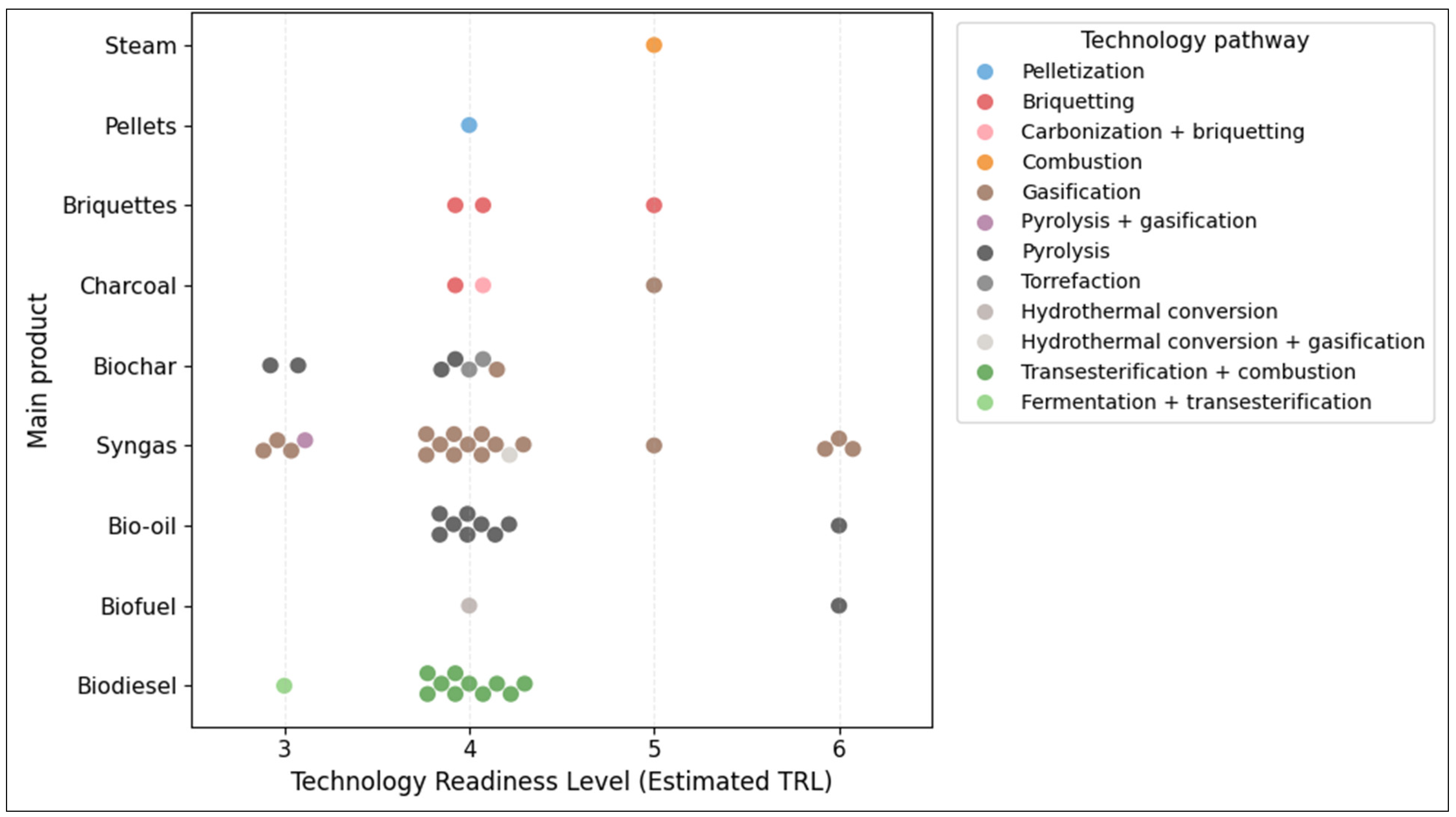
A variety of energy products were identified across the reviewed studies, including syngas, biodiesel, bio-oil, biochar, and densified solid fuels such as briquettes and pellets. Figure 4 integrates these energy vectors with their associated conversion pathways and estimated TRL, providing a comparative overview of their technological maturity.
Among the reported products, syngas is the most extensively investigated energy carrier within the analyzed literature. This product is primarily associated with thermochemical conversion processes and is reported across relatively wide TRL range (3–6), reflecting both early experimental studies and systems tested under more advanced pilot conditions [24,28]. The diversity of studies and technological configurations highlights syngas as a versatile energy vector with significant potential for the energetic valorization of coconut and açaí residues.
Liquid biofuels constitute another important product category. Biodiesel production is mainly associated with transesterification processes and is generally reported at around TRL 4 within the reviewed studies, indicating laboratory validation combined with engine testing [62,66]. Although biodiesel production is a technically established process, its application using coconut-derived feedstocks remains largely explored at experimental scales within the reviewed studies.
Pyrolysis-derived liquids, mainly bio-oil, represent another frequently reported product; however, most studies are situated within TRL 3–4, suggesting that their development is still largely confined to laboratory conditions [48]. This trend is consistent with the well-known challenges associated with pyrolysis liquids, including high oxygen content, acidity, and chemical instability.
Solid energy carriers such as biochar, charcoal, briquettes, and pellets are also reported in the analyzed peer-reviewed literature. These products are generally situated at intermediate TRLs and are often associated with relatively simple processing technologies. Despite their long history of traditional use, particularly in the case of charcoal and briquettes, their development within standardized technological frameworks appears limited in the reviewed studies, likely due to the predominance of decentralized and small-scale production systems [53,60].
Other products appear less frequently. For instance, steam generation from coconut residues is reported in only one study, although the system reaches pilot-scale validation [52]. Overall, the distribution of energy products across TRLs reflects a heterogeneous technological landscape, in which certain energy vectors—particularly syngas—tend to exhibit higher technological maturity within the analyzed literature, while others remain largely confined to laboratory-scale research. The diversity of products identified highlights the versatility of coconut and açaí residues as renewable bioenergy feedstocks.

4. Future Directions for Coconut and Açaí Residue Energetic Valorization

The analysis of the reviewed studies reveals a clear concentration of technologies at intermediate levels of technological maturity. Most of the conversion pathways identified in the analyzed peer-reviewed literature are situated at TRL 4, corresponding to laboratory validation under controlled conditions. Only a limited number of studies have progressed toward TRL 5–6, where prototype systems or pilot-scale demonstrations have been evaluated under relevant operating environments. These higher maturity levels are mainly associated with small-scale gasification systems, biomass boilers, and some densification technologies, which already show potential for decentralized energy applications.
The technological landscape also reflects a strong predominance of thermochemical conversion routes, particularly pyrolysis and gasification, which together account for the largest share of studies analyzed. These pathways enable the production of multiple energy carriers (including syngas, bio-oil, biochar, and solid fuels) highlighting the versatility of coconut and açaí residues as feedstocks for bioenergy systems. At the same time, simpler upgrading routes such as briquetting and pelletization represent attractive alternatives for improving the energy density and handling properties of biomass residues, especially in contexts where technological complexity or infrastructure availability may limit the implementation of advanced conversion systems.
Future research should therefore focus on bridging the gap between laboratory-scale experimentation and real-world applications. Priority areas include pilot-scale validation of promising thermochemical processes, improved reactor design for stable and continuous operation, and integration of conversion pathways within biorefinery-oriented systems capable of producing multiple energy carriers and value-added products from agricultural residues. To systematically advance the technological readiness of biomass conversion pathways identified in this review, a staged progression beyond laboratory validation (TRL 4) is required. This progression involves (i) validation under relevant operating conditions (TRL 5), where technologies are tested using realistic feedstocks and semi-integrated systems; (ii) demonstration of integrated processes at pilot scale (TRL 6), including stable and continuous operation of conversion units coupled with energy generation systems; and (iii) demonstration in operational environments (TRL 7), where performance, reliability, and scalability are evaluated under real-world conditions.
Across these stages, the incorporation of life cycle assessment (LCA), techno-economic analysis (TEA), and environmental performance evaluation becomes essential to support decision-making and enable comparison between technologies. In addition, the development of standardized reporting frameworks for system performance and operational parameters would facilitate reproducibility and accelerate technology transfer. It should be noted that these observations are based on the peer-reviewed scientific literature analyzed in this study and may not fully reflect the current level of industrial implementation, highlighting the need for greater documentation of advanced-stage systems. This structured approach can provide a clear pathway for bridging the gap between laboratory research and practical implementation of decentralized bioenergy systems.

5. Conclusions

This review synthesized recent advances in the valorization of coconut and açaí residues through thermochemical, biochemical, and densification pathways. The analysis reveals a diversified technological landscape in which thermochemical routes, mainly pyrolysis and gasification, dominate the scientific literature, while densification processes provide simpler alternatives for improving the energy density and handling of biomass residues. Despite this diversity, the overall technological maturity remains limited, with most systems validated only laboratory conditions and relatively few reaching pilot or functional demonstration stages. This highlights a persistent gap between experimental research and practical deployment of residue-based bioenergy systems.
Nevertheless, the wide range of conversion pathways identified confirms the significant potential of coconut and açaí residues as feedstocks for renewable energy and circular bioeconomy strategies. Their valorization can contribute not only to energy production but also improved residue management and diversification of rural value chains. Future progress will depend on bridging the gap between laboratory experimentation and real-world implementation through pilot-scale validation, techno-economic assessments, and integrated biorefinery approaches capable of generating multiple energy carriers and value-added products from agricultural residues.

Supplementary Materials

The following supporting information can be downloaded at: https://www.mdpi.com/article/10.3390/pr14081314/s1, A general description of coconut and açaí residues is provided based on literature sources [17,21,74,75]; Table S1: Chemical composition of coconut and açaí wastes [16,18,19,20]; Table S2: Experimental conditions, key parameters, and findings from thermochemical characterization of coconut and açaí residues [76,77,78,79]; Table S3: Dataset of studies on coconut and açaí residue conversion technologies and their estimated technological readiness levels (TRLs). Details of the studies included in the integrative review, including biomass source, transformation technology, main products, by-products, relevant results, and estimated TRL [14,24,25,26,27,28,29,30,31,32,33,34,35,36,37,38,39,40,41,42,43,44,45,46,47,48,49,50,51,52,53,54,55,56,57,58,59,60,61,62,63,64,65,66,67,68,69,70,71,72,73,80,81,82,83,84].

Author Contributions

Conceptualization, L.J.C.-R., F.V., E.V. and J.R.; Methodology, L.J.C.-R., F.V. and E.V.; Formal analysis, L.J.C.-R. and E.V.; Data curation, L.J.C.-R. and F.V.; Visualization, L.J.C.-R.; Writing—original draft preparation, L.J.C.-R. and F.V.; Writing—review and editing, J.E., E.V. and J.R.; Supervision, J.R.; Project administration, J.R.; Funding acquisition, J.R. and E.V. All authors have read and agreed to the published version of the manuscript.

Funding

This work was funded by the Ministry of Science, Technology and Innovation of Colombia through the Francisco José de Caldas National Fund for Science, Technology, and Innovation (Project Code 439-2023). The research was conducted within the project “Local value generation for traditional palm products: açai (Euterpe precatoria) and coconut (Cocos nucifera) in the Amazon and Pacific Coast regions”, executed by the Colombian Corporation for Agricultural Research (AGROSAVIA).This manuscript is the result of research conducted within the framework of the project “Local value generation for traditional palm products: açai (Euterpe precatoria) and coconut (Cocos nucifera) in the Amazon and Pacific Coast regions code 439-2023.”, led and carried out by the Colombian Corporation for Agricultural Research—AGROSAVIA.

Data Availability Statement

The data presented in this study are available in the Supplementary Materials. The dataset includes the compiled and processed information used for the analysis presented in this review.

Acknowledgments

During the preparation of this manuscript, the authors used OpenAI ChatGPT (GPT-4/GPT-5, OpenAI, San Francisco, CA, USA) for language refinement and clarity improvement. The authors reviewed and edited the generated content as necessary and take full responsibility for the content of the publication.

Conflicts of Interest

Authors Luis J. Cruz-Reina, Fabian Velásquez, John Espitia, Edwin Villagrán and Jader Rodríguez were employed by the company Corporación Colombiana de Investigación Agropecuaria—AGROSAVIA. The remaining authors declare that the research was conducted in the absence of any commercial or financial relationships that could be construed as a potential conflict of interest.

Abbreviations

The following abbreviations are used in this manuscript:
TRLTechnology Readiness Level
PRISMAPreferred Reporting Items for Systematic Reviews and Meta-Analyses
WoSWeb of Science
COCarbon monoxide
CO2Carbon dioxide
H2Hydrogen
MJ/kgMegajoules per kilogram
MJ/Nm3Megajoules per normal cubic meter
kWKilowatt
mmMillimeter
mMeter
°CDegrees Celsius
% (v/v)Volume percentage
% (w/w)Mass percentage
HTC Hydrothermal carbonization
LCALife cycle assessment

References

  1. Yaashikaa, P.R.; Senthil Kumar, P.; Varjani, S. Valorization of Agro-Industrial Wastes for Biorefinery Process and Circular Bioeconomy: A Critical Review. Bioresour. Technol. 2022, 343, 126126. [Google Scholar] [CrossRef]
  2. Cruz Reina, L.J.; Durán-Aranguren, D.D.; Forero-Rojas, L.F.; Tarapuez-Viveros, L.F.; Durán-Sequeda, D.; Carazzone, C.; Sierra, R. Chemical Composition and Bioactive Compounds of Cashew (Anacardium occidentale) Apple Juice and Bagasse from Colombian Varieties. Heliyon 2022, 8, e09528. [Google Scholar] [CrossRef] [PubMed]
  3. Laurindo, L.F.; Barbalho, S.M.; Araújo, A.C.; Guiguer, E.L.; Mondal, A.; Bachtel, G.; Bishayee, A. Açaí (Euterpe oleracea Mart.) in Health and Disease: A Critical Review. Nutrients 2023, 15, 989. [Google Scholar] [CrossRef] [PubMed]
  4. Rodríguez-Castro, R.; Guerrero, R.; Valero, A.; Franco-Rodriguez, J.; Posada-Izquierdo, G. Cocoa Mucilage as a Novel Ingredient in Innovative Kombucha Fermentation. Foods 2024, 13, 1636. [Google Scholar] [CrossRef] [PubMed]
  5. G, G.; S, K.; R, Y.K.; Bhatia, S.K.; S, A.K.; M, R.; Kumar, G.; Pugazhendhi, A.; Chi, N.T.L.; J, R.B. Valorization of Agricultural Residues: Different Biorefinery Routes. J. Environ. Chem. Eng. 2021, 9, 105435. [Google Scholar] [CrossRef]
  6. Qian, X.; Xue, J.; Yang, Y.; Lee, S.W. Thermal Properties and Combustion-Related Problems Prediction of Agricultural Crop Residues. Energies 2021, 14, 4619. [Google Scholar] [CrossRef]
  7. Arumugam, T.; Hatta, M.A.M. Improving Coconut Using Modern Breeding Technologies: Challenges and Opportunities. Plants 2022, 11, 3414. [Google Scholar] [CrossRef]
  8. Brondízio, E.S.; Safar, C.A.M.; Siqueira, A.D. The Urban Market of Açaí Fruit (Euterpe oleracea Mart.) and Rural Land Use Change: Ethnographic Insights into the Role of Price and Land Tenure Constraining Agricultural Choices in the Amazon Estuary. Urban Ecosyst. 2002, 6, 67–97. [Google Scholar] [CrossRef]
  9. Vieira, F.; Santana, H.E.P.; Jesus, M.; Santos, J.; Pires, P.; Vaz-Velho, M.; Silva, D.P.; Ruzene, D.S. Coconut Waste: Discovering Sustainable Approaches to Advance a Circular Economy. Sustainability 2024, 16, 3066. [Google Scholar] [CrossRef]
  10. Elgarahy, A.M.; Hammad, A.; El-Sherif, D.M.; Abouzid, M.; Gaballah, M.S.; Elwakeel, K.Z. Thermochemical Conversion Strategies of Biomass to Biofuels, Techno-Economic and Bibliometric Analysis: A Conceptual Review. J. Environ. Chem. Eng. 2021, 9, 106503. [Google Scholar] [CrossRef]
  11. Rastogi, P.M.; Kumar, N.; Sharma, A. Use of Response Surface Methodology Approach for Development of Sustainable Jojoba Biodiesel Diesel Blend with CuO Nanoparticles for Four Stroke Diesel Engine. Fuel 2023, 339, 127367. [Google Scholar] [CrossRef]
  12. Dovichi Filho, F.B.; Castillo Santiago, Y.; Silva Lora, E.E.; Escobar Palacio, J.C.; Almazan del Olmo, O.A. Evaluation of the Maturity Level of Biomass Electricity Generation Technologies Using the Technology Readiness Level Criteria. J. Clean. Prod. 2021, 295, 126426. [Google Scholar] [CrossRef]
  13. Alouw, J.C.; Wulandari, S. Present Status and Outlook of Coconut Development in Indonesia. IOP Conf. Ser. Earth Environ. Sci. 2020, 418, 012035. [Google Scholar] [CrossRef]
  14. Sato, M.K.; de Lima, H.V.; Costa, A.N.; Rodrigues, S.; Pedroso, A.J.S.; de Freitas Maia, C.M.B. Biochar from Acai Agroindustry Waste: Study of Pyrolysis Conditions. Waste Manag. 2019, 96, 158–167. [Google Scholar] [CrossRef] [PubMed]
  15. Filho, L.A.B.; Sampaio, P.d.T.B.; Matos, M.; Blair, C. Updating the Economic Profile of Açaí (Euterpe precatoria Mart. and E. oleraceae) Fruit in the states of Amazonas and Pará. Int. J. Adv. Eng. Res. Sci. 2021, 8, 302–308. [Google Scholar] [CrossRef]
  16. Costa, J.E.B.; Barbosa, A.S.; Melo, M.A.F.; Melo, D.M.A.; Medeiros, R.L.B.A.; Braga, R.M. Renewable Aromatics through Catalytic Pyrolysis of Coconut Fiber (Cocos nucífera Linn.) Using Low Cost HZSM-5. Renew. Energy 2022, 191, 439–446. [Google Scholar] [CrossRef]
  17. Melo, P.S.; Selani, M.M.; Gonçalves, R.H.; de Oliveira Paulino, J.; Massarioli, A.P.; de Alencar, S.M. Açaí Seeds: An Unexplored Agro-Industrial Residue as a Potential Source of Lipids, Fibers, and Antioxidant Phenolic Compounds. Ind. Crops Prod. 2021, 161, 113204. [Google Scholar] [CrossRef]
  18. Ajien, A.; Idris, J.; Md Sofwan, N.; Husen, R.; Seli, H. Coconut Shell and Husk Biochar: A Review of Production and Activation Technology, Economic, Financial Aspect and Application. Waste Manag. Res. 2023, 41, 37–51. [Google Scholar] [CrossRef]
  19. Inseemeesak, B.; Areeprasert, C. Fiber Extraction and Energy Recovery from Cocos nucifera Linn Mesocarp Residues Employing Steam Explosion and Anaerobic Digestion. Ind. Crops Prod. 2020, 147, 112180. [Google Scholar] [CrossRef]
  20. Queiroz, L.S.; de Souza, L.K.C.; Thomaz, K.T.C.; Leite Lima, E.T.; da Rocha Filho, G.N.; do Nascimento, L.A.S.; de Oliveira Pires, L.H.; do Carmo Freitas Faial, K.; da Costa, C.E.F. Activated Carbon Obtained from Amazonian Biomass Tailings (Acai Seed): Modification, Characterization, and Use for Removal of Metal Ions from Water. J. Environ. Manage. 2020, 270, 110868. [Google Scholar] [CrossRef] [PubMed]
  21. Barlina, R.; Dewandari, K.T.; Mulyawanti, I.; Herawan, T. Chapter 30—Chemistry and Composition of Coconut Oil and Its Biological Activities. In Multiple Biological Activities of Unconventional Seed Oils; Mariod, A.A., Ed.; Academic Press: Cambridge, MA, USA, 2022; pp. 383–395. ISBN 978-0-12-824135-6. [Google Scholar]
  22. Atabani, A.E.; Silitonga, A.S.; Badruddin, I.A.; Mahlia, T.M.I.; Masjuki, H.H.; Mekhilef, S. A Comprehensive Review on Biodiesel as an Alternative Energy Resource and Its Characteristics. Renew. Sustain. Energy Rev. 2012, 16, 2070–2093. [Google Scholar] [CrossRef]
  23. Barbosa, J.R.; Carvalho Junior, R.N. de Food Sustainability Trends—How to Value the Açaí Production Chain for the Development of Food Inputs from Its Main Bioactive Ingredients? Trends Food Sci. Technol. 2022, 124, 86–95. [Google Scholar] [CrossRef]
  24. Menon, S.D.; Sampath, K.; Kaarthik, S.S. Feasibility Studies of Coconut Shells Biomass for Downdraft Gasification. Mater. Today Proc. 2021, 44, 3133–3137. [Google Scholar] [CrossRef]
  25. Yahaya, A.Z.; Somalu, M.R.; Muchtar, A.; Sulaiman, S.A.; Wan Daud, W.R. Effect of Particle Size and Temperature on Gasification Performance of Coconut and Palm Kernel Shells in Downdraft Fixed-Bed Reactor. Energy 2019, 175, 931–940. [Google Scholar] [CrossRef]
  26. Sulaiman, S.A.; Roslan, R.; Inayat, M.; Yasin Naz, M. Effect of Blending Ratio and Catalyst Loading on Co-Gasification of Wood Chips and Coconut Waste. J. Energy Inst. 2018, 91, 779–785. [Google Scholar] [CrossRef]
  27. Khaeso, K.; Sukhuna, B.; Katekaew, S.; Junsiri, C.; Monatrakul, W.; Srichat, A.; Senawong, K.; Laloon, K. Sustainable Conversion of Agricultural Waste into Solid Fuel (Charcoal) via Gasification and Pyrolysis Treatment. Energy Convers. Manag. X 2024, 24, 100693. [Google Scholar] [CrossRef]
  28. Raj, R.; Tirkey, J.V.; Jena, P. Gasification of Briquette, Mahua Wood, and Coconut Shell and Application to CI Engines: Comparative Performance and Optimisation Analysis. Ind. Crops Prod. 2023, 199, 116758. [Google Scholar] [CrossRef]
  29. Raj, R.; Tirkey, J.V.; Jena, P.; Prajapati, L.K. Comparative Analysis of Gasifier-CI Engine Performance and Emissions Characteristics Using Diesel with Producer Gas Derived from Coal– Briquette-Coconut Shell-Mahua Feedstock and Its Blends. Energy 2024, 293, 130708. [Google Scholar] [CrossRef]
  30. Ram, M.; Mondal, M.K. Investigation on Fuel Gas Production from Pulp and Paper Waste Water Impregnated Coconut Husk in Fluidized Bed Gasifier via Humidified Air and CO2 Gasification. Energy 2019, 178, 522–529. [Google Scholar] [CrossRef]
  31. Tamilmani, T.; Ganesan, P. Experimental Investigation on Co-Gasification Characteristics of Coconut Shell and Medical Plastic Waste in Fluidized Bed Gasifier. Biomass Convers. Biorefin. 2024, 14, 25263–25278. [Google Scholar] [CrossRef]
  32. Chommontha, N.; Phongphiphat, A.; Wangyao, K.; Patumsawad, S.; Towprayoon, S. Effects of Operating Parameters on Co-Gasification of Coconut Petioles and Refuse-Derived Fuel. Waste Manag. Res. 2022, 40, 575–585. [Google Scholar] [CrossRef]
  33. Saini, R.; M Mahajani, S.; Deb Barma, S.; Srinivas Rao, D. Valorization of Coconut and Banana Wastes with Petcoke and Coal via Steam Gasification in a Fluidized Bed Reactor. J. Clean. Prod. 2024, 434, 139955. [Google Scholar] [CrossRef]
  34. Ram, M.; Mondal, M.K. Conversion of Unripe Coconut Husk into Refined Products Using Humidified Air in Packed Bed Gasification Column. Biomass Convers. Biorefin. 2020, 10, 409–421. [Google Scholar] [CrossRef]
  35. Inayat, M.; Sulaiman, S.A.; Shahbaz, M.; Bhayo, B.A. Application of Response Surface Methodology in Catalytic Co-Gasification of Palm Wastes for Bioenergy Conversion Using Mineral Catalysts. Biomass Bioenergy 2020, 132, 105418. [Google Scholar] [CrossRef]
  36. Kumar, R.; Mondal, M.K. Two-Step Feeding Pyro-Gasification of Coconut Husk: Effects of Ni-Fe Impregnation on Products Yields and Quality. Renew. Energy 2025, 248, 123164. [Google Scholar] [CrossRef]
  37. Wiyono, A.; Aziz, M.; Sholehudin, A.; Sukrawan, Y.; Purnawan; Anggrainy, R.; Kadja, G.T.M.; Pambudi, N.A. Syngas Optimization and Tar Reduction via Multistage Catalytic Gasification: Effects of Catalyst Pore, Catalyzer Stage, and Temperature Profile. S. Afr. J. Chem. Eng. 2024, 48, 246–253. [Google Scholar] [CrossRef]
  38. Monir, M.U.; Aziz, A.A.; Yousuf, A. Integrated Technique to Produce Sustainable Bioethanol from Lignocellulosic Biomass. Mater. Lett. X 2022, 13, 100127. [Google Scholar] [CrossRef]
  39. Romero Millán, L.M.; Sierra Vargas, F.E.; Nzihou, A. Characterization of Steam Gasification Biochars from Lignocellulosic Agrowaste Towards Soil Applications. Waste Biomass Valorization 2021, 12, 4141–4155. [Google Scholar] [CrossRef]
  40. Nanda, S.; Isen, J.; Dalai, A.K.; Kozinski, J.A. Gasification of Fruit Wastes and Agro-Food Residues in Supercritical Water. Energy Convers. Manag. 2016, 110, 296–306. [Google Scholar] [CrossRef]
  41. Agrizzi, T.; Oliveira, M.A.; Faria, E.V.; Santos, K.G.; Xavier, T.P.; Lira, T.S. Assessing Coconut Shell Pyrolysis: Biomass Characterization, Activation Energy Estimation, and Statistical Analysis of Operating Conditions. Bioresour. Technol. Rep. 2024, 26, 101831. [Google Scholar] [CrossRef]
  42. Durango Padilla, E.R.; Hansted, F.A.S.; Luna, C.M.R.; de Campos, C.I.; Yamaji, F.M. Biochar Derived from Agricultural Waste and Its Application as Energy Source in Blast Furnace. Renew. Energy 2024, 220, 119688. [Google Scholar] [CrossRef]
  43. Sarkar, J.K.; Wang, Q. Different Pyrolysis Process Conditions of South Asian Waste Coconut Shell and Characterization of Gas, Bio-Char, and Bio-Oil. Energies 2020, 13, 1970. [Google Scholar] [CrossRef]
  44. Valois, F.P.; Bezerra, K.C.A.; Assunção, F.P.D.C.; Bernar, L.P.; da Paz, S.P.A.; Santos, M.C.; Feio, W.P.; Silva, R.M.P.; Mendonça, N.M.; de Castro, D.A.R.; et al. Improving the Antioxidant Activity, Yield, and Hydrocarbon Content of Bio-Oil from the Pyrolysis of Açaí Seeds by Chemical Activation: Effect of Temperature and Molarity. Catalysts 2024, 14, 44. [Google Scholar] [CrossRef]
  45. Valdez, G.D.; Valois, F.P.; Bremer, S.J.; Bezerra, K.C.A.; Guerreiro, L.H.H.; Santos, M.C.; Bernar, L.P.; Feio, W.P.; Moreira, L.G.S.; Mendonça, N.M.; et al. Improving the Bio-Oil Quality of Residual Biomass Pyrolysis by Chemical Activation: Effect of Alkalis and Acid Pre-Treatment. Energies 2023, 16, 3162. [Google Scholar] [CrossRef]
  46. Conrado, N.M.; dos Santos, N.C.T.; dos Santos, A.L.; Farrapeira, R.O.; Andrade, Y.B.; dos Santos, P.N.A.; Krause, L.C.; Freitas, L.D.S.; Caramão, E.B.; Polidoro, A.S. Innovative Açaí Seed Pre-Treatment: Energized Dispersive Guided Extraction for Small-Scale Fixed-Bed Reactor Fast-Pyrolysis. Waste Biomass Valorization 2025, 16, 1241–1252. [Google Scholar] [CrossRef]
  47. Gunasekar, N.; Mohan, C.G.; Prakash, R.; Saravana Kumar, L. Utilization of Coconut Shell Pyrolysis Oil Diesel Blends in a Direct Injection Diesel Engine. Mater. Today Proc. 2021, 45, 713–717. [Google Scholar] [CrossRef]
  48. Gowthaman, S.; Thangavel, K. Performance, Emission and Combustion Characteristics of a Diesel Engine Fuelled with Diesel/Coconut Shell Oil Blends. Fuel 2022, 322, 124293. [Google Scholar] [CrossRef]
  49. Amaral, A.R.; Bernar, L.P.; Ferreira, C.C.; de Oliveira, R.M.; Pereira, A.M.; Pereira, L.M.; Santos, M.C.; Assunção, F.P.D.C.; Bezerra, K.C.A.; Almeida, H.D.S.; et al. Economic Feasibility Assessment of the Thermal Catalytic Process of Wastes: Açaí Seeds (Euterpe oleracea) and Scum from Grease Traps. Energies 2022, 15, 7718. [Google Scholar] [CrossRef]
  50. Kwon, D.; Kim, Y.; Choi, D.; Jung, S.; Tsang, Y.F.; Kwon, E.E. Enhanced Thermochemical Valorization of Coconut Husk through Carbon Dioxide Integration: A Sustainable Approach to Agricultural Residue Utilization. Appl. Energy 2024, 369, 123576. [Google Scholar] [CrossRef]
  51. Arantes, H.T.L.; Machado, M.A.; Santoro, M.C.; Freitas, J.C.C.; Ronconi, C.M.; Ligiero, C.B.P.; Cassini, S.T.A.; Sampaio, I.C.F.; Luz, P.P. Effect of Activated Biochar as a Low-Cost Catalyst on the Quality of Catalytic Intermediate Co-Pyrolysis Oil from Waste Polystyrene and Green Coconut Pericarp. Fuel Process. Technol. 2023, 240, 107539. [Google Scholar] [CrossRef]
  52. Yulianto, M.; Hartulistiyoso, E.; Nelwan, L.O.; Agustina, S.E.; Gupta, C. Thermal Characteristics of Coconut Shells as Boiler Fuel. Int. J. Renew. Energy Dev. 2023, 12, 227–234. [Google Scholar] [CrossRef]
  53. Madhusanka, L.; Nilmalgoda, H.; Wijethunga, I.; Ampitiyawatta, A.; Koswattage, K. Agri-Eco Energy: Evaluating Non-Edible Binders in Coconut Shell Biochar and Cinnamon Sawdust Briquettes for Sustainable Fuel Production. AgriEngineering 2025, 7, 132. [Google Scholar] [CrossRef]
  54. Manatura, K.; Samsalee, N.; Kaewtrakulchai, N.; Jadsadajerm, S.; Muangklang, E.; Jaruwongwittaya, T.; Huang, C. Optimization of Torrefaction Parameters for Coconut Shell Using Taguchi Method: Impact on Torrefaction Performances, Combustion Characteristics, and Thermal Stability. Therm. Sci. Eng. Prog. 2025, 57, 103137. [Google Scholar] [CrossRef]
  55. Brojolall, N.; Surroop, D. Improving Fuel Characteristics through Torrefaction. Energy 2022, 246, 123359. [Google Scholar] [CrossRef]
  56. Dos Santos, G.R.; de Sousa, A.M.; Lima, B.K.; Moreira, F.L.; Gondim, F.L.; da Silva, G.M.; Ratts, M.G.; Serra, D.S.; de Oliveira, M.L.; Cavalcante, F.S. Combustion of Pellets Produced from the Powders of Coconut and Cashew Nut Shells: Chemical, Thermal and Emission Analyses. Waste Manag. Res. 2022, 40, 420–428. [Google Scholar] [CrossRef]
  57. Rudiyanto, B.; Agustina, I.R.; Ulma, Z.; Prasetyo, D.A.; Hijriawan, M.; Piluharto, B.; Prasetyo, T. Utilization of Cassava Peel (Manihot Utilissima) Waste as an Adhesive in the Manufacture of Coconut Shell (Cocos nucifera) Charcoal Briquettes. Int. J. Renew. Energy Dev. 2023, 12, 270–276. [Google Scholar] [CrossRef]
  58. Nikiema, J.; Asamoah, B.; Egblewogbe, M.N.Y.H.; Akomea-Agyin, J.; Cofie, O.O.; Hughes, A.F.; Gebreyesus, G.; Asiedu, K.Z.; Njenga, M. Impact of Material Composition and Food Waste Decomposition on Characteristics of Fuel Briquettes. Resour. Conserv. Recycl. Adv. 2022, 15, 200095. [Google Scholar] [CrossRef]
  59. Sofán-Germán, S.J.; Doria-Oviedo, M.E.; Rhenals-Julio, J.D. Mechanical and Energy Assessment of Hybrid Biofuels: Integrating Agro-Industrial Coconut and Rice Husk Biomass with Mineral Coal for Sustainable Energy in Córdoba, Colombia. S. Afr. J. Chem. Eng. 2025, 52, 303–310. [Google Scholar] [CrossRef]
  60. Kongprasert, N.; Wangphanich, P.; Jutilarptavorn, A. Charcoal Briquettes from Madan Wood Waste as an Alternative Energy in Thailand. Procedia Manuf. 2019, 30, 128–135. [Google Scholar] [CrossRef]
  61. Muhammed Niyas, M.; Shaija, A. Performance Evaluation of Diesel Engine Using Biodiesels from Waste Coconut, Sunflower, and Palm Cooking Oils, and Their Hybrids. Sustain. Energy Technol. Assess. 2022, 53, 102681. [Google Scholar] [CrossRef]
  62. Teoh, Y.H.; How, H.G.; Balakrishnan, N.K.; Le, T.D.; Nguyen, H.T. Performance, Emissions, Combustion and Vibration Analysis of a CI Engine Fueled with Coconut and Used Palm Cooking Oil Methyl Ester. Processes 2020, 8, 990. [Google Scholar] [CrossRef]
  63. Sharma, V.; Hossain, A.K.; Duraisamy, G. Experimental Investigation of Neat Biodiesels’ Saturation Level on Combustion and Emission Characteristics in a CI Engine. Energies 2021, 14, 5203. [Google Scholar] [CrossRef]
  64. Muhammed Niyas, M.; Shaija, A. Biodiesel Production from Coconut Waste Cooking Oil Using Novel Solar Powered Rotating Flask Oscillatory Flow Reactor and Its Utilization in Diesel Engine. Therm. Sci. Eng. Prog. 2023, 40, 101794. [Google Scholar] [CrossRef]
  65. Yakovlieva, A.; Andoga, R.; Főző, L.; Zubenko, S.; Konovalov, S. Development and Turbine Engine Testing of Coconut Oil-Based Biojet Fuel. Fuel Process. Technol. 2025, 274, 108252. [Google Scholar] [CrossRef]
  66. Kalam, M.A.; Rashed, M.M.; Imdadul, H.K.; Masjuki, H.H. Property Development of Fatty Acid Methyl Ester from Waste Coconut Oil as Engine Fuel. Ind. Crops Prod. 2016, 87, 333–339. [Google Scholar] [CrossRef]
  67. Teoh, Y.H.; Masjuki, H.H.; How, H.G.; Kalam, M.A.; Yu, K.H.; Alabdulkarem, A. Effect of Two-Stage Injection Dwell Angle on Engine Combustion and Performance Characteristics of a Common-Rail Diesel Engine Fueled with Coconut Oil Methyl Esters-Diesel Fuel Blends. Fuel 2018, 234, 227–237. [Google Scholar] [CrossRef]
  68. Chiong, M.C.; Chong, C.T.; Ng, J.-H.; Tran, M.-V.; Lam, S.S.; Valera-Medina, A.; Mohd Jaafar, M.N. Combustion and Emission Performances of Coconut, Palm and Soybean Methyl Esters under Reacting Spray Flame Conditions. J. Energy Inst. 2019, 92, 1034–1044. [Google Scholar] [CrossRef]
  69. Hidegh, G.T.; Csemány, D.; DarAli, O.; Rizvi, S.A.H.; Ng, J.-H.; Chong, C.T.; Józsa, V. Comparison of Thermophysical Properties and Combustion Characteristics of Various Biodiesels in a Non-MILD Ultra-Low Emission Swirl Burner. Fuel 2023, 334, 126583. [Google Scholar] [CrossRef]
  70. Leesing, R.; Somdee, T.; Siwina, S.; Ngernyen, Y.; Fiala, K. Production of 2G and 3G Biodiesel, Yeast Oil, and Sulfonated Carbon Catalyst from Waste Coconut Meal: An Integrated Cascade Biorefinery Approach. Renew. Energy 2022, 199, 1093–1104. [Google Scholar] [CrossRef]
  71. Paczkowski, S.; Sarquah, K.; Yankyera, J.; Sarfo Agyemang Derkyi, N.; Empl, F.; Jaeger, D.; Pelz, S. Hydrothermal Treatment (HTT) Improves the Combustion Properties of Regional Biomass Waste to Face the Increasing Sustainable Energy Demand in Africa. Fuel 2023, 351, 128928. [Google Scholar] [CrossRef]
  72. Mateo, R.S.G.; Mosqueda, A.O.; Kuttin, K.W.; Yu, H.; Dy Pico, A.P.V.; Abesamis, M.F.A.; Ding, L.; Yu, G. Computational Fluid Dynamics Study of Sequential Hydrothermal Carbonization and CO2-Gasification of Municipal Solid Waste-Coconut Husk-Derived Hydrochar for Tunable Syngas Production. Fuel 2025, 388, 134421. [Google Scholar] [CrossRef]
  73. Abdallah, M.; Ni, D.; Simson, A. Evaluation of Biochars Derived from Food Waste for Synthesis Gas Production via Pyrolysis and CO2 Gasification. Biomass Bioenergy 2020, 143, 105883. [Google Scholar] [CrossRef]
  74. Bichang’a, D.O.; Oladele, I.O.; Alabi, O.O.; Aramide, F.O.; Oluseye, O.; Borisade, S.G.; Githinji, D.N.; Ojemaye, M.O. Comparative Property Investigation of Raw and Treated Coconut Shell Biomass for Potential Polymer Composite Application. Heliyon 2024, 10, e40704. [Google Scholar] [CrossRef] [PubMed]
  75. Puspaningrum, T.; Haris, Y.H.; Sailah, I.; Yani, M.; Indrasti, N.S. Physical and Mechanical Properties of Binderless Medium Density Fiberboard (MDF) from Coconut Fiber. IOP Conf. Ser. Earth Environ. Sci. 2020, 472, 012011. [Google Scholar] [CrossRef]
  76. Virmond, E.; De Sena, R.F.; Albrecht, W.; Althoff, C.A.; Moreira, R.F.P.M.; José, H.J. Characterisation of Agroindustrial Solid Residues as Biofuels and Potential Application in Thermochemical Processes. Waste Manag. 2012, 32, 1952–1961. [Google Scholar] [CrossRef]
  77. da Costa, J.S.; da Silva, M.G.; Scatolino, M.V.; Lima, M.D.R.; de Assis, M.R.; Bufalino, L.; Numazawa, S.; Trugilho, P.F.; de Paula Protásio, T. Relating Features and Combustion Behavior of Biomasses from the Amazonian Agroforestry Chain. Biomass Convers. Biorefinery 2023, 13, 321–341. [Google Scholar] [CrossRef]
  78. Alves, J.L.F.; Da Silva, J.C.G.; Di Domenico, M.; Galdino, W.V.D.A.; Andersen, S.L.F.; Alves, R.F.; De Sena, R.F. Exploring Açaí Seed (Euterpe Oleracea) Pyrolysis Using Multi-Component Kinetics and Thermodynamics Assessment Towards Its Bioenergy Potential. BioEnergy Res. 2021, 14, 209–225. [Google Scholar] [CrossRef]
  79. de Paula Protásio, T.; da Costa, J.S.; Scatolino, M.V.; Lima, M.D.R.; de Assis, M.R.; da Silva, M.G.; Bufalino, L.; Dias Junior, A.F.; Trugilho, P.F. Revealing the Influence of Chemical Compounds on the Pyrolysis of Lignocellulosic Wastes from the Amazonian Production Chains. Int. J. Environ. Sci. Technol. 2022, 19, 4491–4508. [Google Scholar] [CrossRef]
  80. Thangaraja, J.; Srinivasan, V. Techno-Economic Assessment of Coconut Biodiesel as a Potential Alternative Fuel for Compression Ignition Engines. Environ. Sci. Pollut. Res. 2019, 26, 8650–8664. [Google Scholar] [CrossRef]
  81. Sathish, T.; Karthikeyan, S.; sathyamurthy, R.; Kumar, A.; Rajaram, K.; Kumar, S.S.; Al-Kahtani, A.A.; Pandit, B.; Gupta, M.; Senthilkumar, N.; et al. Waste Coconut Oil Meal to Hydrogen Production through Combined Steam/Water Gasification with Varying Operating Parameters and NaCl Additions. Int. J. Hydrog. Energy 2025, 107, 350–358. [Google Scholar] [CrossRef]
  82. Janakiraman, T.; Pathy, A.; Poosari Kumaravel, S.; Paramasivan, B. Effect of Coconut Shell in Gasification Kinetics of Palm Kernel Shells at Various Blending Ratios. Environ. Dev. Sustain. 2022, 24, 8333–8350. [Google Scholar] [CrossRef]
  83. John, V.; Braga, A.R.d.O.; Danielli, C.K.A.d.O.; Sousa, H.M.; Danielli, F.E.; de Araujo, R.O.; Marques-dos-Santos, C.S.d.C.; Falcão, N.P.d.S.; Guerra, J.F.C. Characterization of Biochar Produced in a Mobile Handmade Kiln from Small-Sized Waste Biomass for Agronomic and Climate Change Benefits. Agronomy 2024, 14, 1861. [Google Scholar] [CrossRef]
  84. Song, G.; Wang, Y.; Huang, D.; Li, H.; Abdullahi, S.A.; Xu, J.; Jiang, L.; Wang, Y.; Su, S.; Hu, S.; et al. The Heating Rate and Final Temperature Impacts on the Coconut Shell Char Structure Characteristics during Photo-Thermal Pyrolysis. J. Anal. Appl. Pyrolysis 2022, 167, 105695. [Google Scholar] [CrossRef]
Figure 1. Flow diagram based on the PRISMA-ScR methodology for systematic reviews. “Açaí” refers to the fruit of Euterpe oleracea Mart., commonly known as acai berry.
Processes 14 01314 g001
Figure 2. Global distribution of the studies included in the review by country. Numbers displayed on each country indicate the total number of studies identified, while color intensity represents the study frequency.
Processes 14 01314 g002
Figure 3. Progress in technology readiness levels of coconut and açaí waste-to-energy technologies based on the analyzed peer-reviewed studies (2016–2025). Marker shapes indicate the primary energy product.
Processes 14 01314 g003
Figure 4. Technology readiness levels of bioenergy products and conversion pathways. Colored dots represent individual studies, and each color corresponds to a specific technology pathway.
Processes 14 01314 g004
Table 1. Criteria used to estimate TRLs in this review.
TRLDescription Adapted to This StudyDescription Adapted to Biomass Conversion TechnologiesClassification Criteria Used in This Review
3Experimental proof of conceptInitial demonstration of scientific feasibility of a biomass conversion pathway under laboratory conditions.Bench-scale experiments confirming the basic feasibility of the conversion route. Experiments focus on concept verification rather than process optimization or system validation.
4Laboratory validationThe conversion process or fuel application is validated under controlled laboratory conditions with defined operating parameters and basic product characterization.Batch laboratory reactors or controlled experimental rigs used to evaluate conversion efficiency reaction performance, or fuel properties. Laboratory engine, burner, or combustion tests using biomass-
5Validation in a relevant environmentThe technology is validated under conditions that begin to represent realistic operational environments.Pilot-scale reactors, semi-continuous systems, or experimental platforms processing realistic biomass feedstocks. Experiments may involve partial integration of subsystems and extended operation, but full system demonstration is not yet achieved.
6Demonstration in a relevant environmentIntegrated demonstration of the technology under representative operating conditions.Continuous or semi-continuous pilot systems integrating conversion technology and energy generation (e.g., pilot gasifiers coupled with engines, pilot biofuel production units supplying energy systems). Demonstration focuses on operational stability and system integration.
7Demonstration in an operational environmentThe technology is demonstrated under near-commercial conditions with integrated subsystems.Pre-commercial demonstration plants or field-scale energy systems operating with biomass-derived fuels or products under real operating conditions. Performance and operational reliability are evaluated over extended periods.
Adapted from [12].
Disclaimer/Publisher’s Note: The statements, opinions and data contained in all publications are solely those of the individual author(s) and contributor(s) and not of MDPI and/or the editor(s). MDPI and/or the editor(s) disclaim responsibility for any injury to people or property resulting from any ideas, methods, instructions or products referred to in the content.