


Collaborative Optimization Between Efficient Thermal Dissipation and Microstructure of Ceramic Matrix Composite Component Under Non-Uniform Thermal Loads


Abstract
1. Introduction
2. Research Model and Boundary Conditions
2.1. Research Model
2.2. Boundary Conditions
2.3. Material Property Parameter Settings
3. Optimization Methods
3.1. Introduction to Research Methods
3.2. Establishment of a Two-Way Mapping Model Between Microstructure and Equivalent Thermal Conductivity
3.3. Thermal Analysis Model for CMC Components
3.4. Optimization Design Methodology
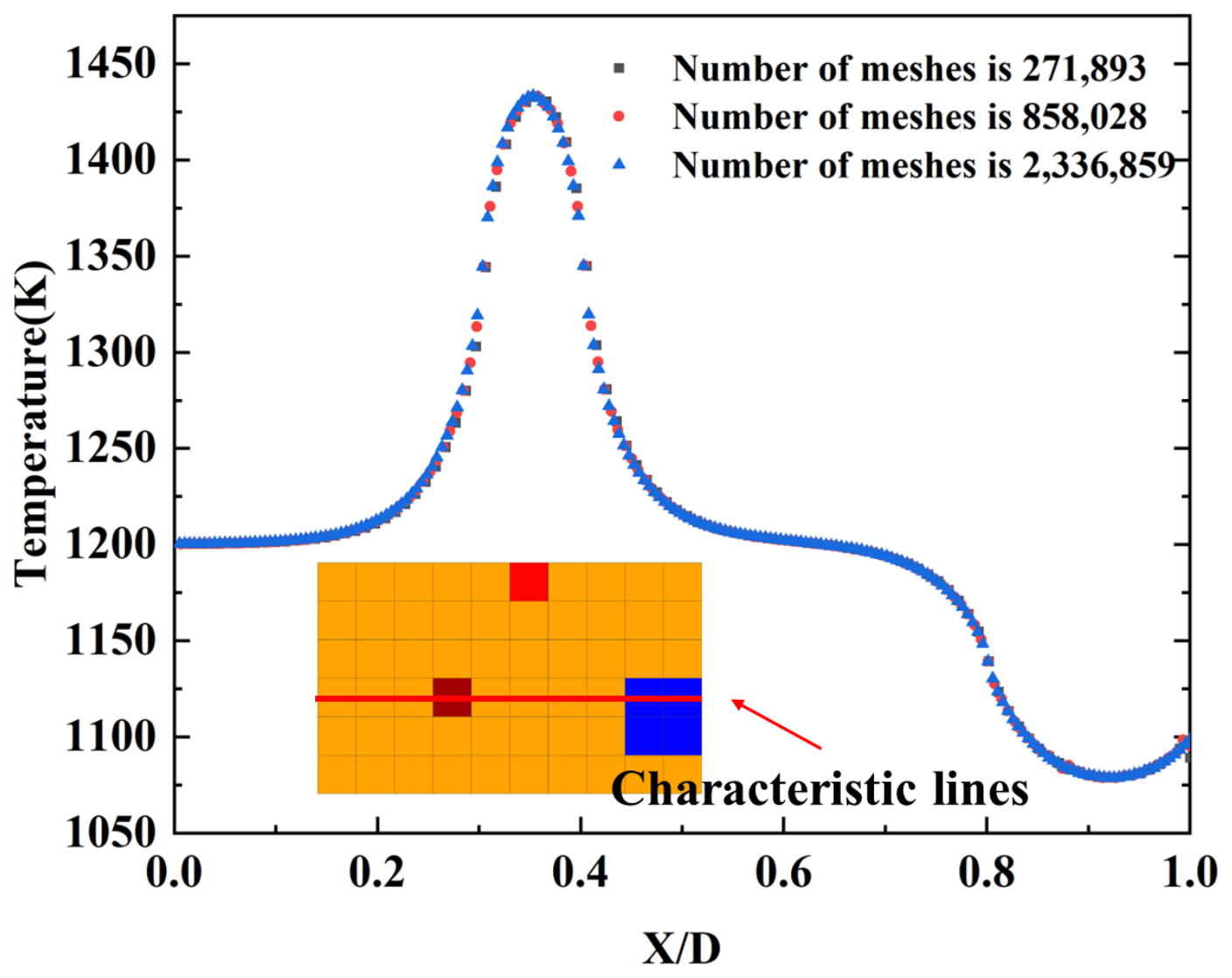
3.5. Mesh Generation and Independence Verification
4. Results and Discussion
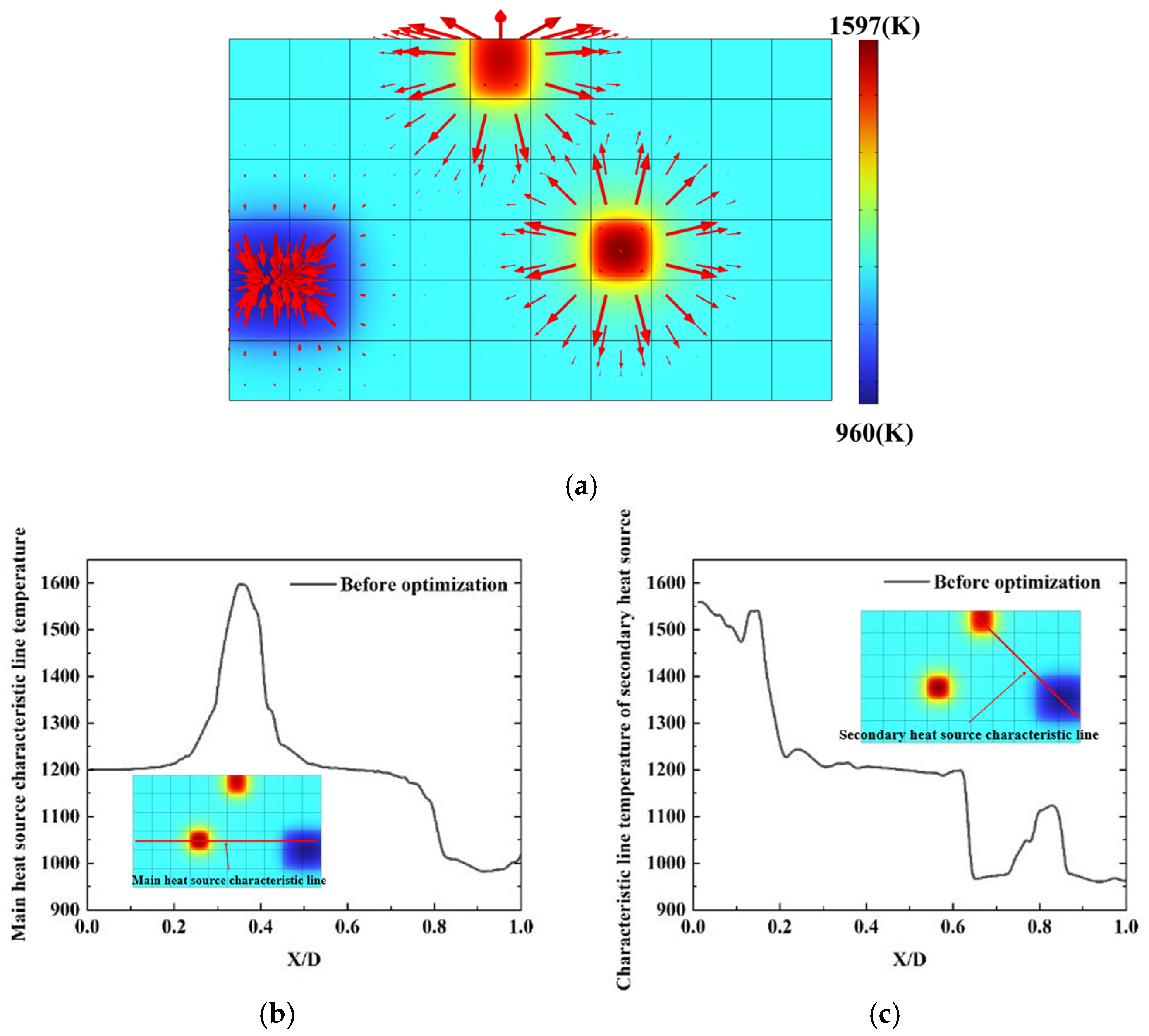
4.1. Initial Results Analysis of the Flat Plate Before Optimization
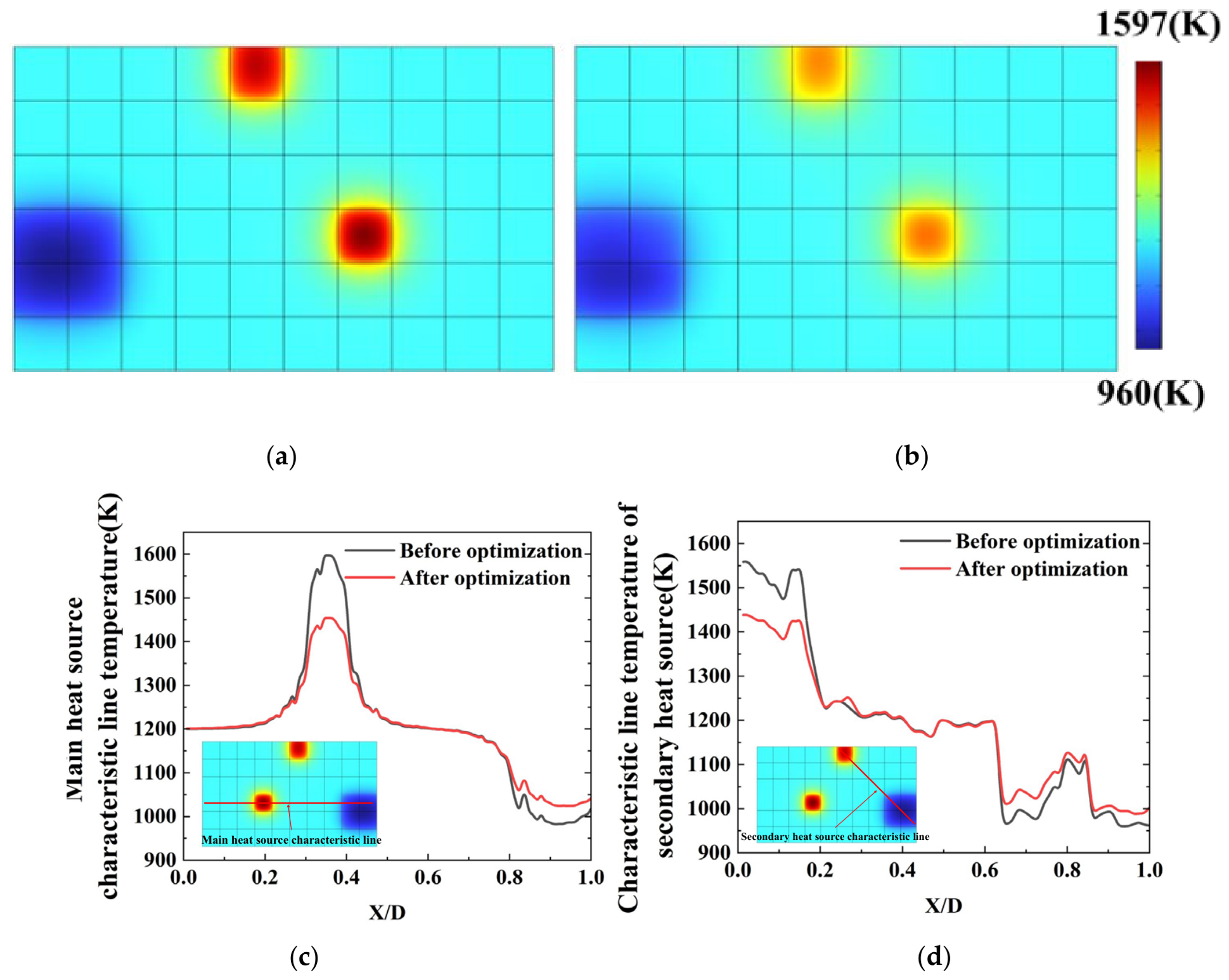
4.2. Comparative Analysis of Temperature Fields Before and After Optimization
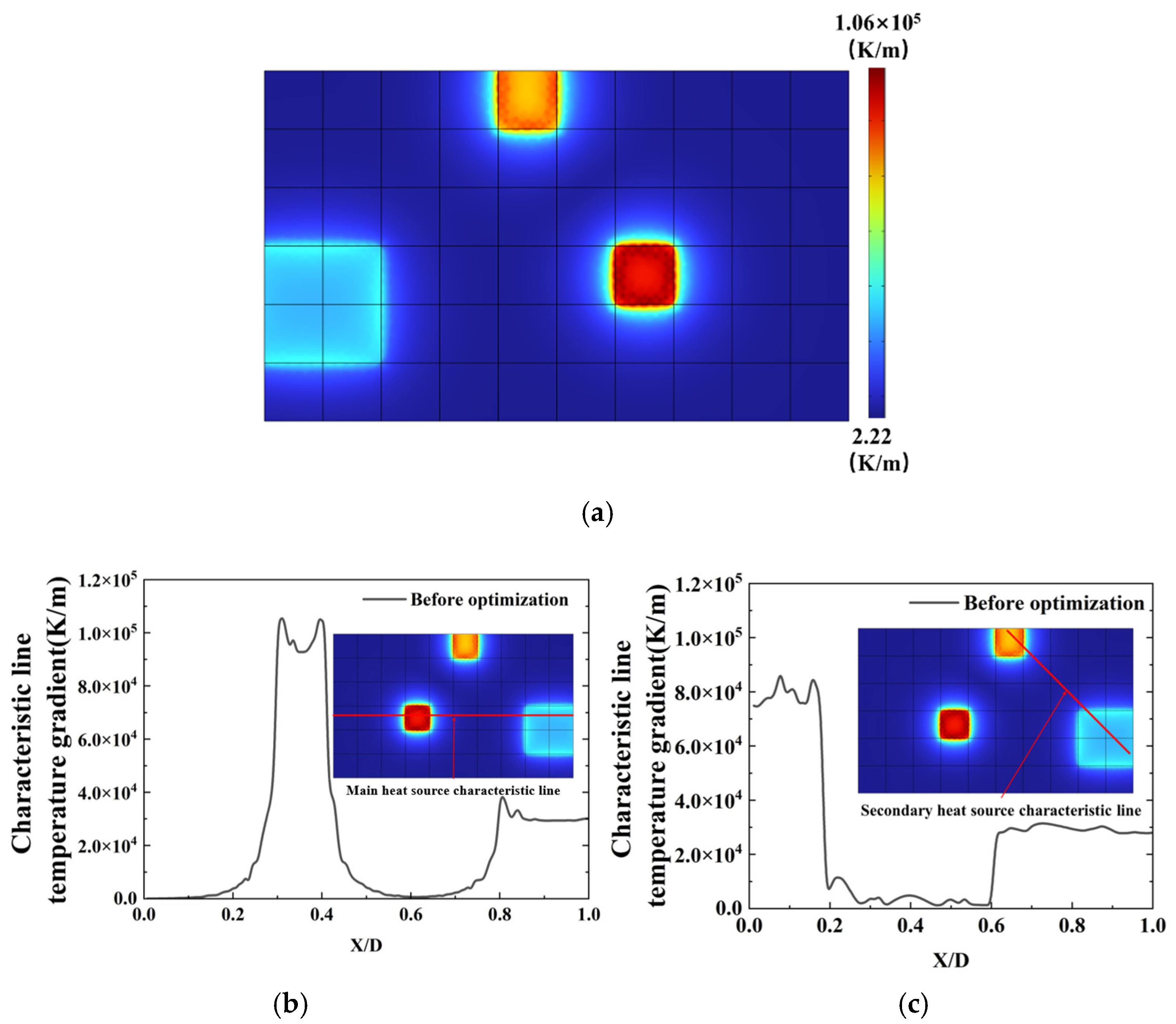
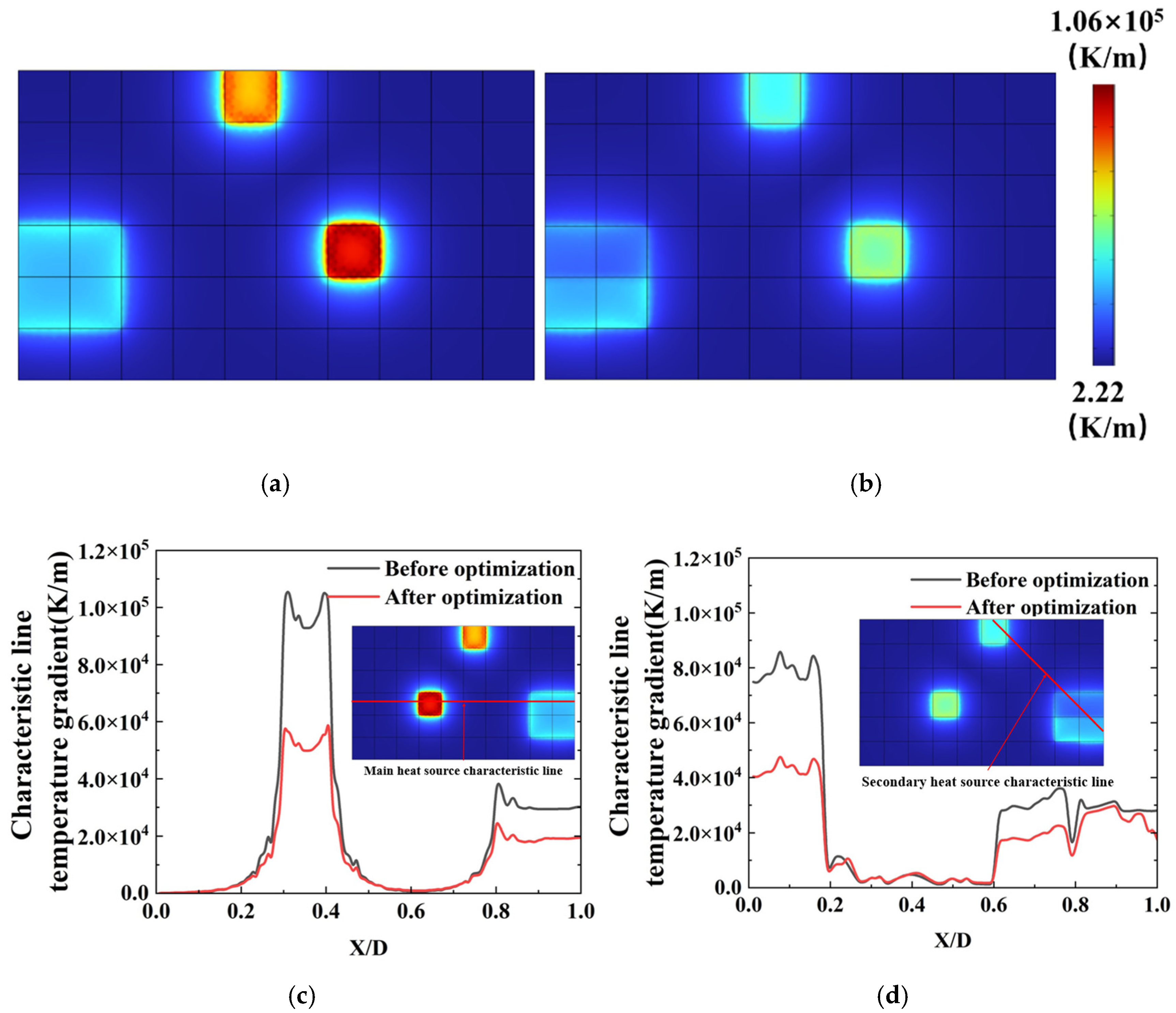
4.3. Analysis of Temperature Gradient Results
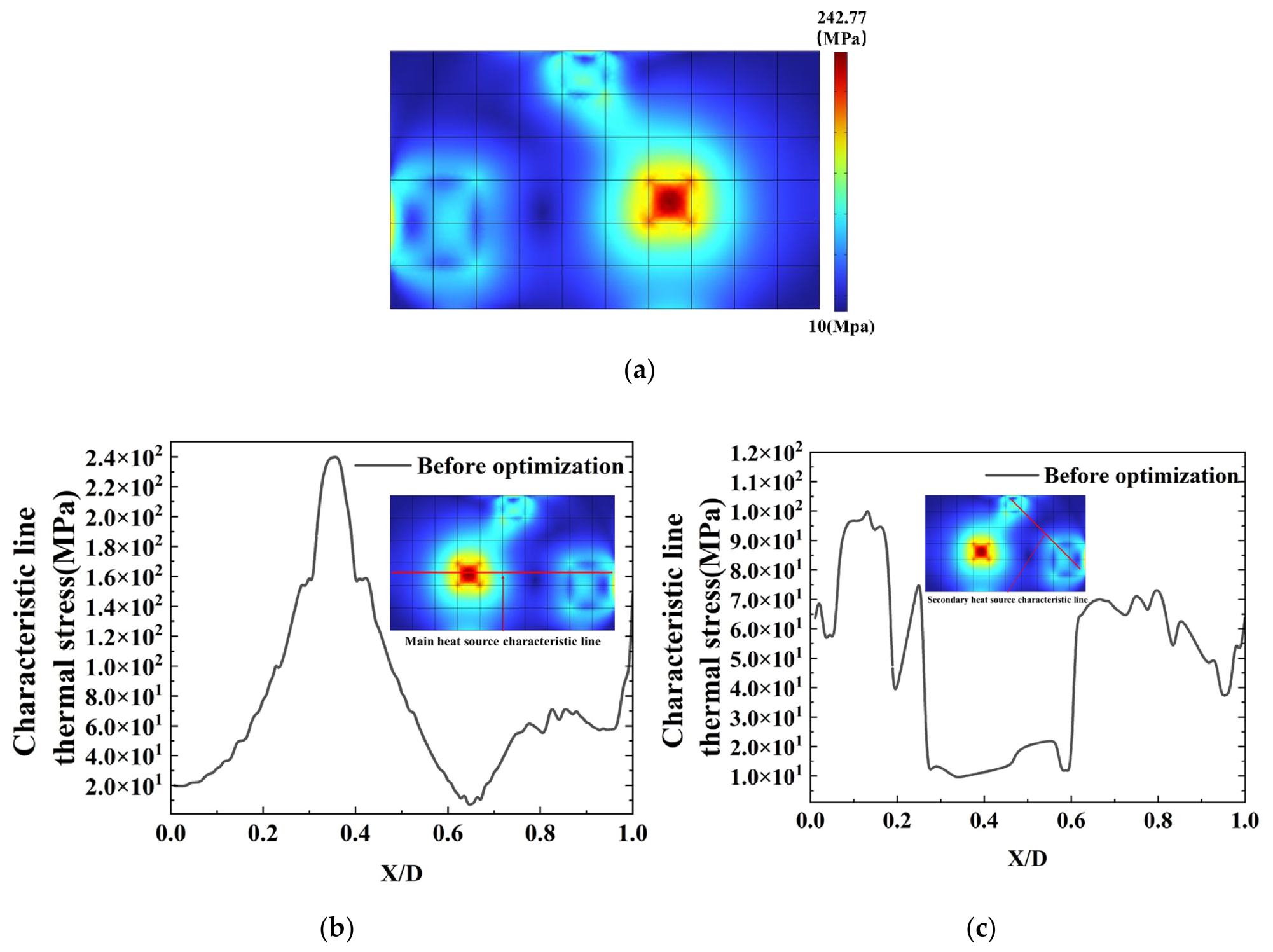
4.4. Analysis of Thermal Stress Results
5. Conclusions
- (1)
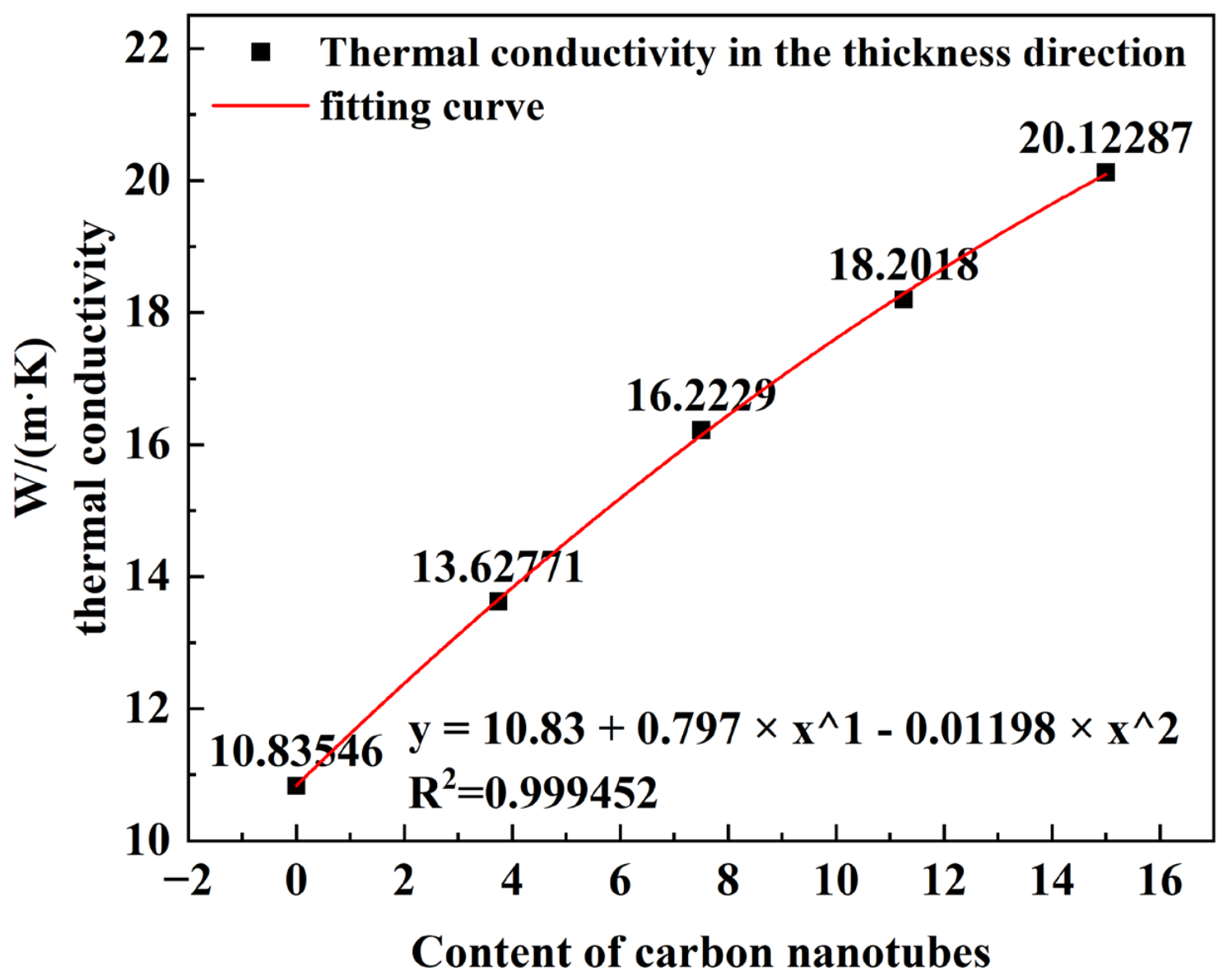
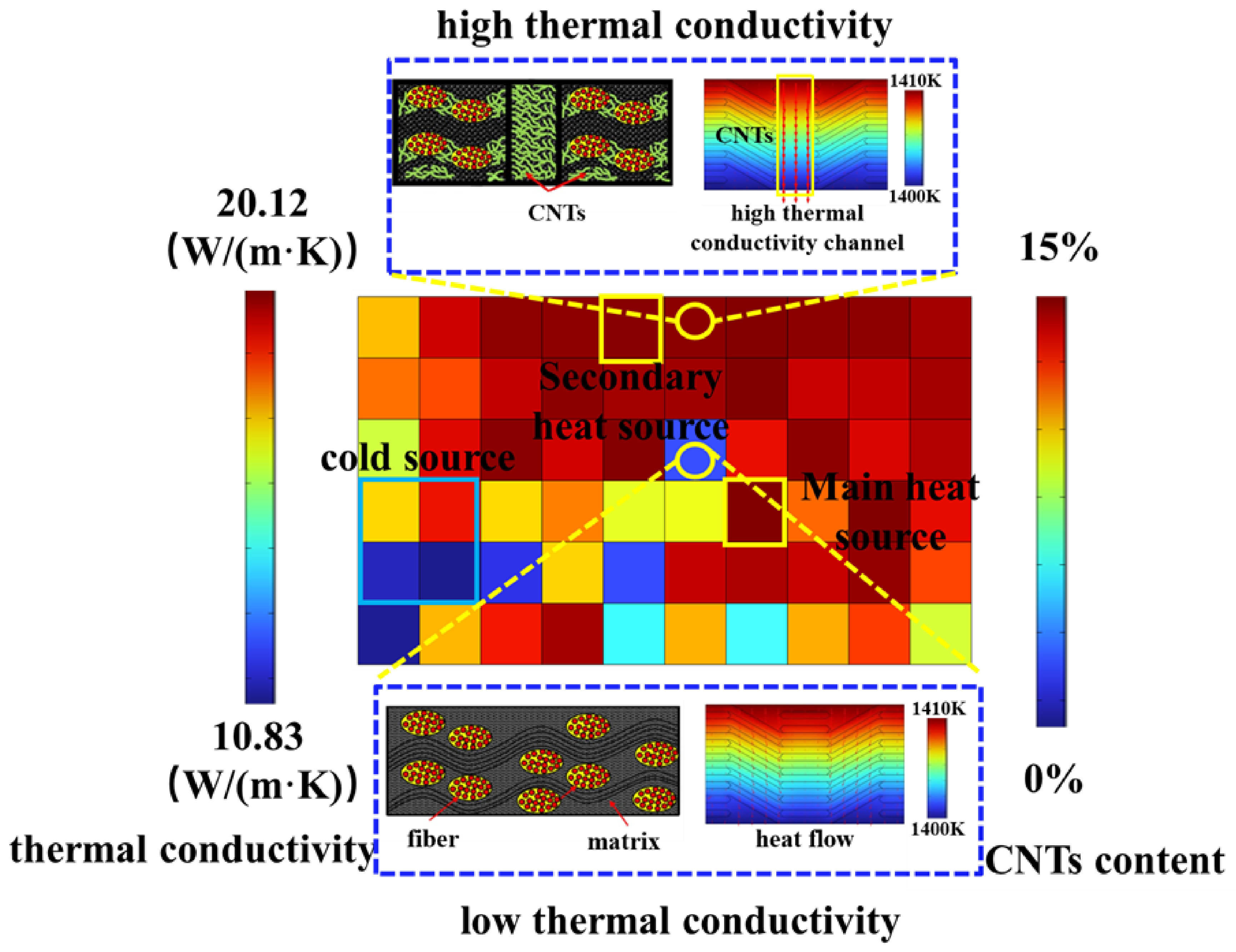
- The research results show that the highest temperature on the optimized plate surface decreases from 1597.7 K to 1454.47 K (a reduction of 8.96%). Meanwhile, heat backflow is suppressed, and the formation of secondary high-temperature points is effectively prevented. In this study, a multi-scale numerical prediction model for the thermal conductivity of CMC materials with varying amounts of CNTs was developed. Additionally, a quantitative correlation equation between CNT content and the composite’s effective thermal conductivity was established. Experimental verification indicates that the maximum relative error between the model’s predictions and the measured data is 8.73%.
- (2)
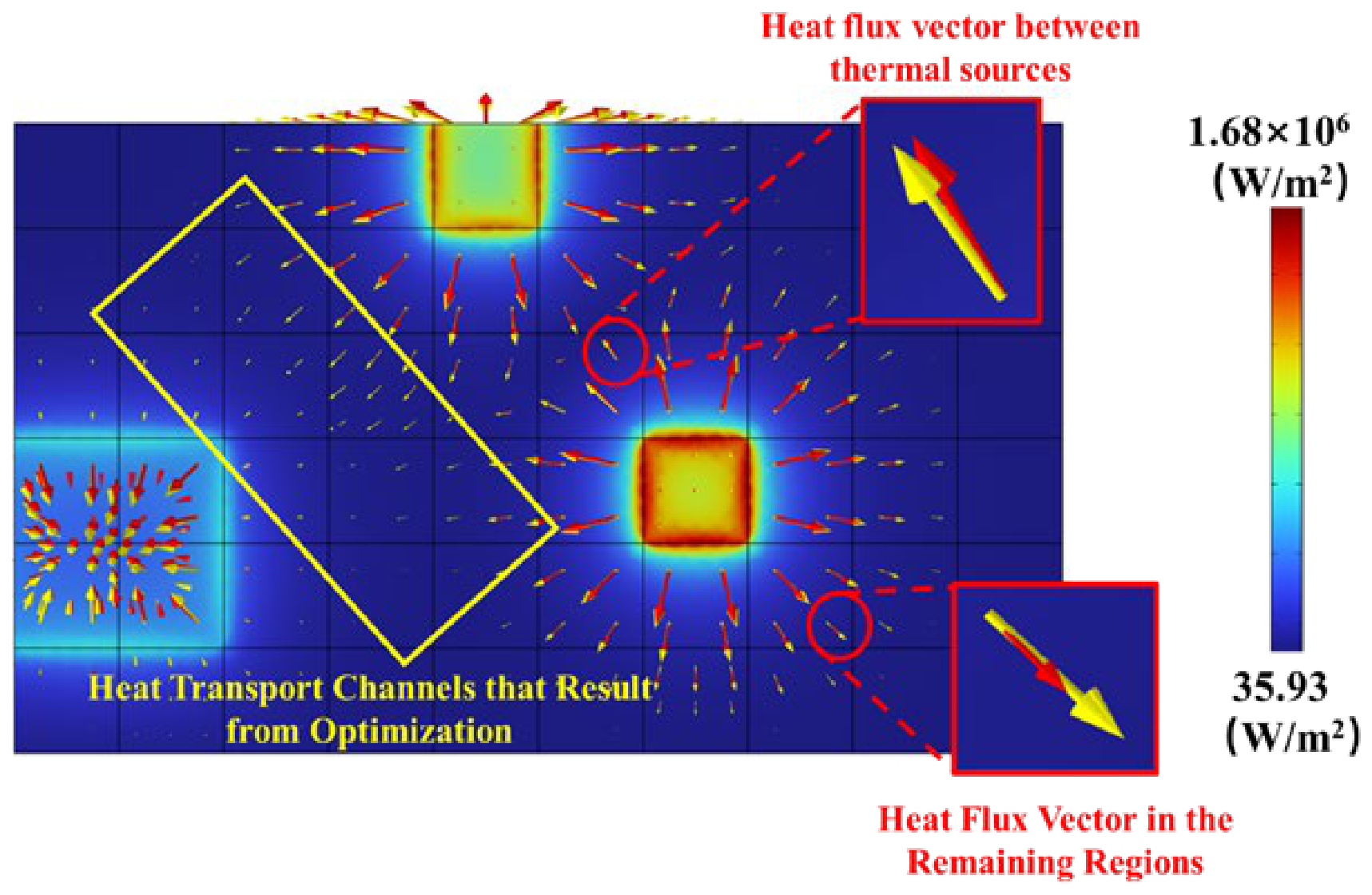
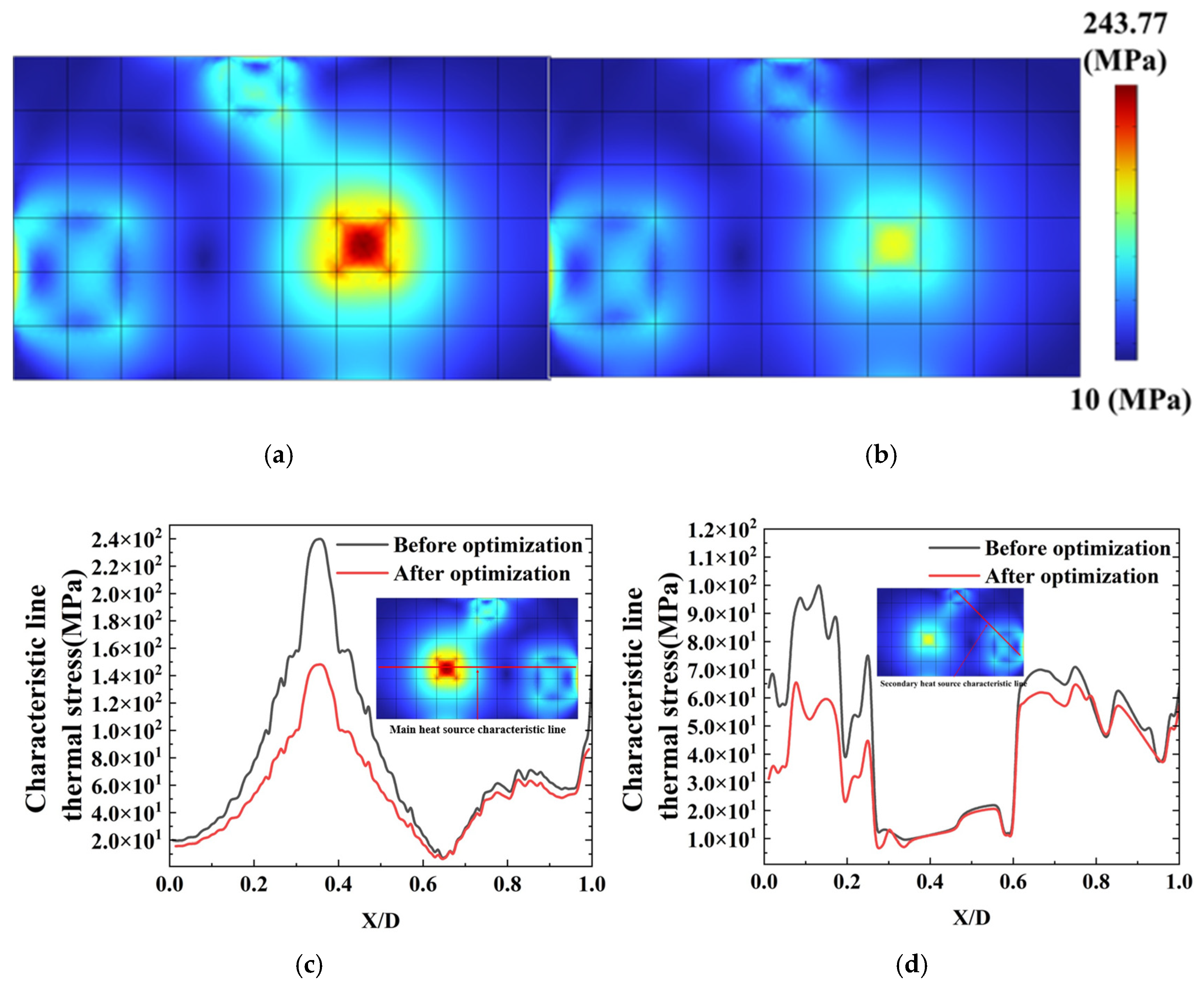
- Thermal property optimization improves the thermal conductivity of the CMC material in areas with high temperature gradients. By lowering local thermal resistance, the temperature difference between hot zones and nearby regions is reduced, helping to prevent thermal stress concentration and extending the CMC material’s service life. The optimization of thermal conductivity redesigns the heat-flux pathways, which greatly decreases the peak temperature gradient. Compared to the state before optimization, the peak temperature gradient along the main heat source’s characteristic line drops by 46.64% after optimization. Additionally, the peak thermal stress along this characteristic line decreases by 38.17% relative to the pre-optimization level.
Author Contributions
Funding
Data Availability Statement
Conflicts of Interest
Abbreviations
| CMC | Ceramic Matrix Composite |
| CNTs | Carbon nanotubes |
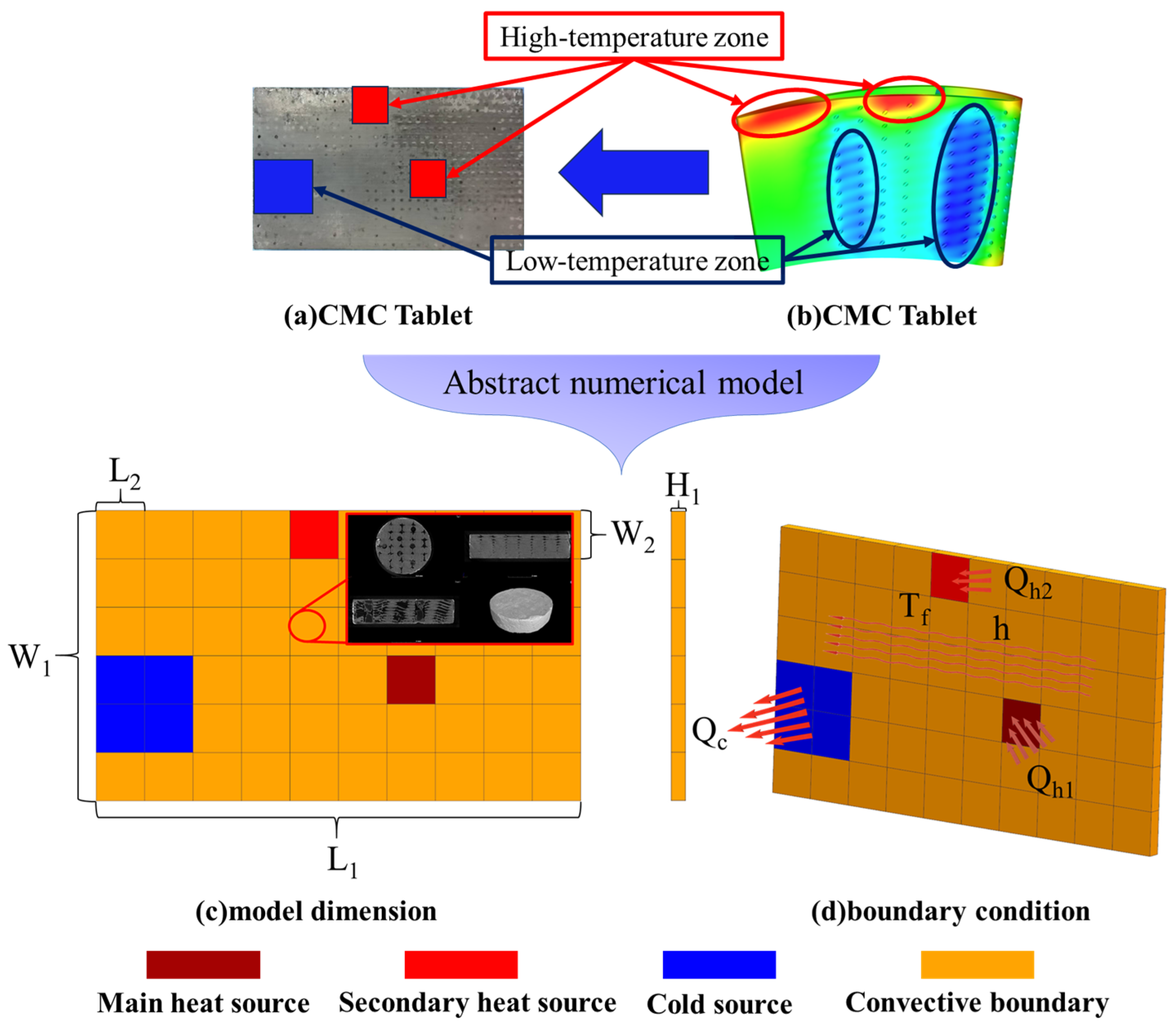
| L1 | Tablet length [mm] |
| W1 | Flat width [mm] |
| L2 | Unit area length [mm] |
| W2 | Unit area width [mm] |
| Qh1 | Main-heat-source heat-flux density [W/m2] |
| Qh2 | Secondary heat-source heat-flux density [W/m2] |
| Qc | Cold-source heat-flux density [W/m2] |
| Tf | Fluid temperature [K] |
| h | Convective heat transfer coefficient [W/(m2·K)] |
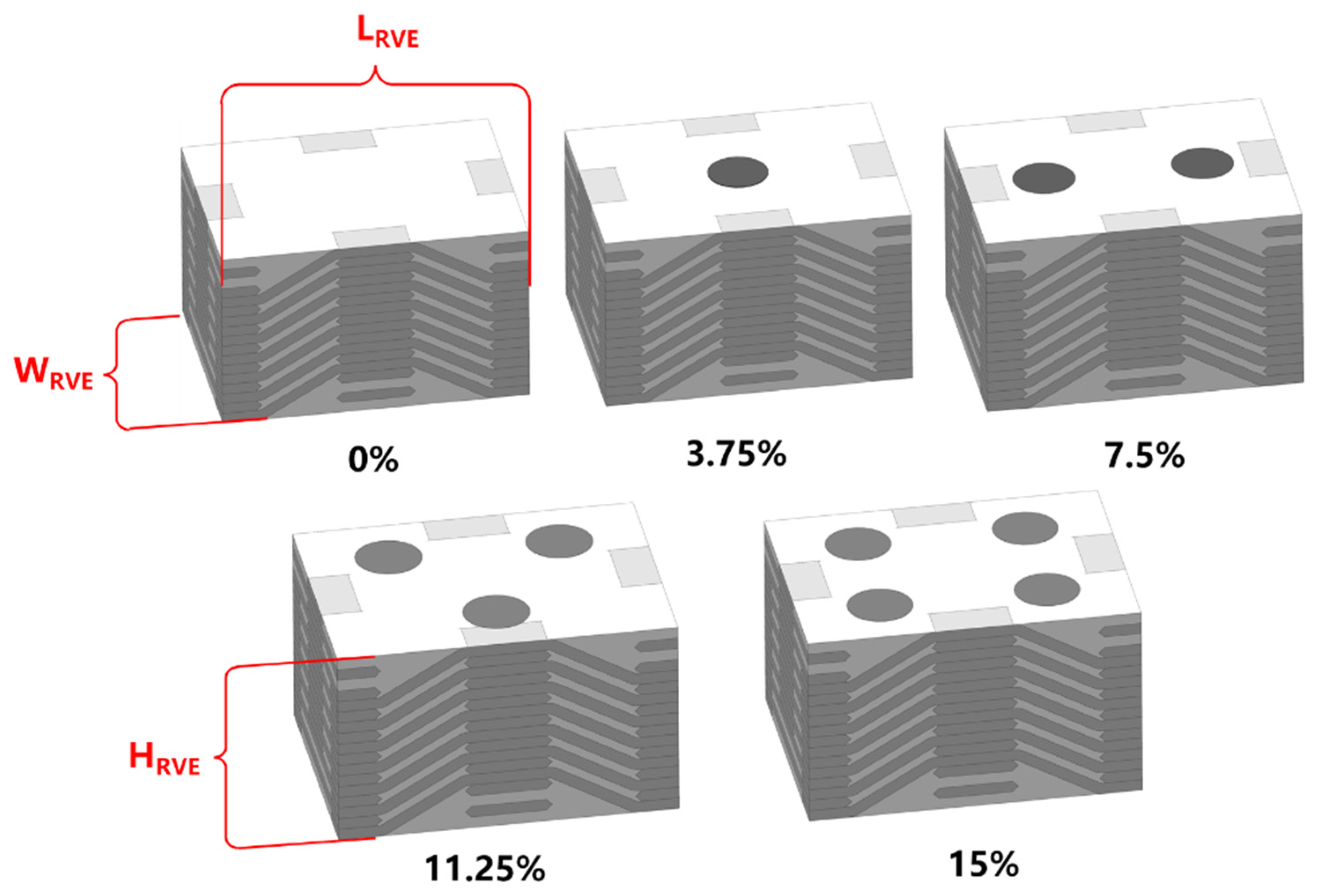
| LRVE | RVE unit model length [mm] |
| WRVE | RVE unit model width [mm] |
| HRVE | RVE unit model thickness [mm] |
| Th | RVE unit hot-end surface temperature [K] |
| Kc | RVE unit cold-end surface temperature [K] |
| λij | thermal conductivity [W/(m·K)] |
| T | Temperature [K] |
| q | Heat-flux density [W/m2] |
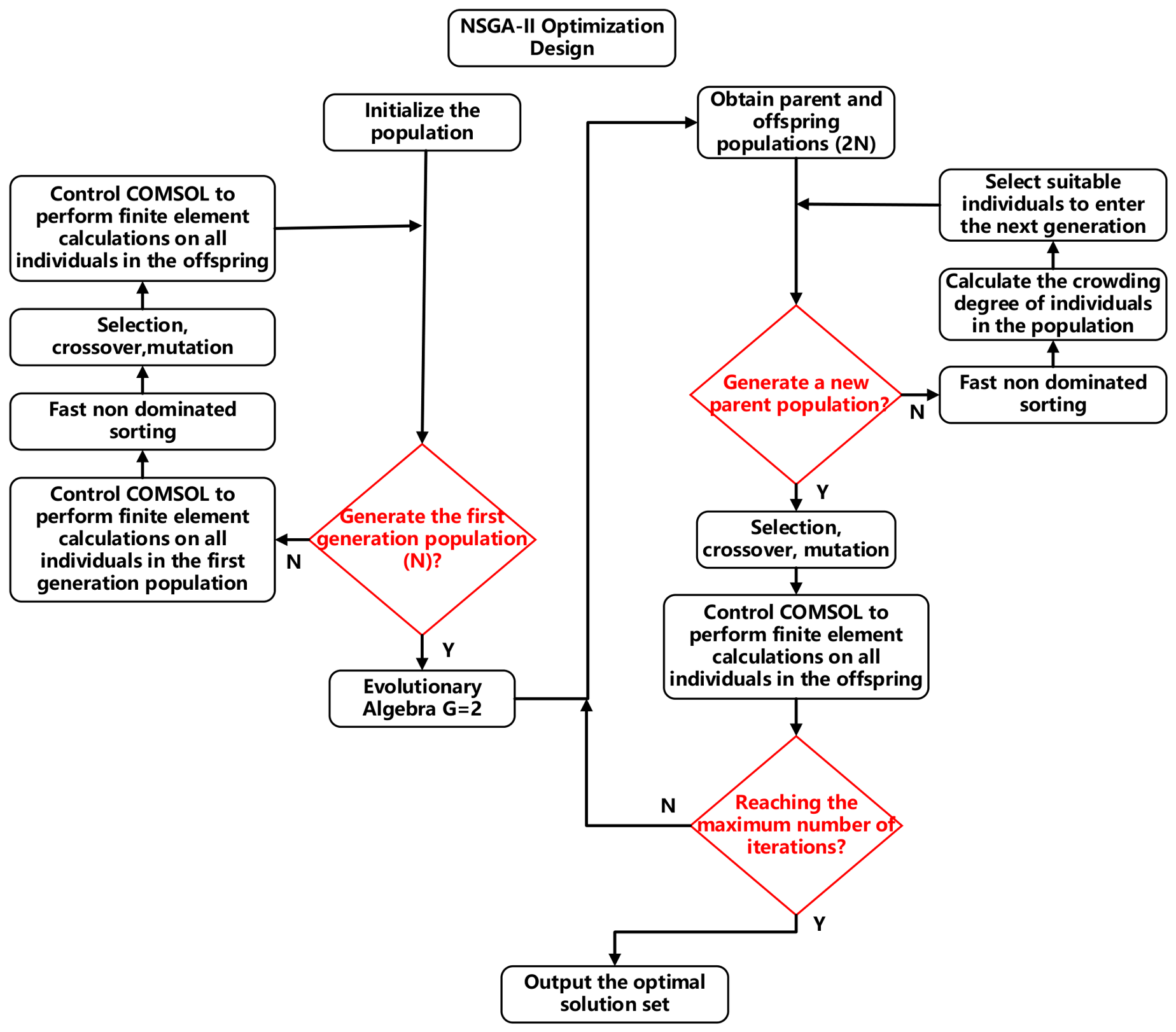
| N | Number of individuals in the population |
References
- Huang, Y.; Liu, Y.; Deng, C.; Wang, Y.; Li, H.; Li, H.; Tao, Z. Review of the thermal analysis of ceramic matrix composites and cooling structures for aeroengine applications. Appl. Therm. Eng. 2026, 284, 129165. [Google Scholar] [CrossRef]
- Dhanasekar, S.; Ganesan, A.T.; Rani, T.L.; Vinjamuri, V.K.; Rao, M.N.; Shankar, E.; Dharamvir; Kumar, P.S.; Golie, W.M. A Comprehensive Study of Ceramic Matrix Composites for Space Applications. Adv. Mater. Sci. Eng. 2022, 2022, 6160591. [Google Scholar] [CrossRef]
- Zhou, J. Investigation of Flow and Heat Transfer Characteristics in Compressible One-Stage Turbine with Non-Uniform Inlet. Master’s Thesis, Nanjing University of Aeronautics and Astronautics, Nanjing, China, 2021. [Google Scholar] [CrossRef]
- Qureshi, I.; Smith, A.D.; Povey, T. HP vane aerodynamics and heat transfer in the presence of aggressive inlet swirl. J. Turbomach. 2013, 135, 021040. [Google Scholar] [CrossRef]
- Zhang, X.; Chen, F. Influence of non-uniform inflow swirl and hot streak on turbine vane. Aerosp. Syst. 2020, 3, 79–85. [Google Scholar] [CrossRef]
- Wang, C.; Tao, H.; Xu, P.; Liu, W.; Sha, Y. The effect of changing the combustion chamber head structure on turbine blades under thermal shock test. Int. J. Therm. Sci. 2024, 205, 109260. [Google Scholar] [CrossRef]
- Ni, Z.; Yu, G.; Chen, Y.; Xue, B.; Deng, Y.; Ma, W.; Gao, X.; Song, Y. Experimental and numerical analysis of CMCs mechanical properties under high-temperature thermal gradient environment. Ceram. Int. 2024, 50, 7132–7149. [Google Scholar] [CrossRef]
- Hu, X.; Liu, Q.; Chen, L.; Liu, S.; Guo, J.; Zhu, W. Damage analysis of CVI SiCf/SiCm ceramic matrix composites under thermal shock. Int. J. Fatigue 2025, 194, 108842. [Google Scholar] [CrossRef]
- Yang, Z.; Wang, J.; Yang, R.; Jiao, J. Thermomechanical-induced cracking model for ceramic matrix composite laminates subjected to thermal gradients and transients. Int. J. Solids Struct. 2024, 300, 112927. [Google Scholar] [CrossRef]
- Zhao, C.; Tu, Z.; Mao, J.; Chen, P.; Li, L. The design of special woven-preformed structures for the high-performance film cooling with undamaged fibers based on 2.5D ceramic matrix composites. Compos. Struct. 2022, 283, 115114. [Google Scholar] [CrossRef]
- Xu, J.-C.; Du, S.; Zhou, Y.-P.; Li, Z.-Y. Research on the heat transfer characteristics of through-hole transpiration cooling based on ceramic matrix composites. Appl. Therm. Eng. 2024, 257, 124360. [Google Scholar] [CrossRef]
- Li, J.; Wang, Z.; Jiang, H.; Lu, S.; Zhou, C. Influence of anisotropic thermal conductivity on leading edge cooling performance of a film cooled CMC turbine vane. Int. J. Therm. Sci. 2026, 220, 110360. [Google Scholar] [CrossRef]
- Zhao, X. Investigation on Film Cooling of Braided Composites Considering Film Hole and Braided Structure Interference. Master’s Thesis, Nanjing University of Aeronautics and Astronautics, Nanjing, China, 2018. [Google Scholar]
- Tu, Z. Investigation of CMC’s Thermal Conduction Mechanism and Its Application in Thermal Analysis for Turbine Vane. Ph.D. Thesis, Nanjing University of Aeronautics and Astronautics, Nanjing, China, 2018. [Google Scholar] [CrossRef]
- Wu, X. Research on the Reconstruction Method of Braided CMC Film Cooling Structure’s Temperature Field Considering the Influence of Microstructure Characteristics. Master’s Thesis, Nanjing University of Aeronautics and Astronautics, Nanjing, China, 2020. [Google Scholar] [CrossRef]
- Du, K.; Yan, H.; Chen, L.; Li, P.; Liu, C.; Sunden, B. Conjugate heat transfer performance of a ceramic matrix composite plate considering the influences of the mesoscopic properties of yarns. Int. Commun. Heat Mass Transf. 2024, 159, 108121. [Google Scholar] [CrossRef]
- Du, K.; Pei, X.; Chen, Q.; Liu, C.; Sunden, B. Overall cooling investigation of the composite platforms considering the anisotropic thermal conductivities and weaving pattern. Int. J. Heat Fluid Flow 2024, 108, 109452. [Google Scholar] [CrossRef]
- Tu, Z.; Zhao, C.; Mao, J.; Zhao, X.; Han, X. Influence of the braided structure on the film cooling performance over the ceramic matrix composite plate. Int. J. Therm. Sci. 2021, 170, 107112. [Google Scholar] [CrossRef]
- Bryant, C.E.; Rutledge, J.L. Influence of Anisotropic Thermal Conductivity on Overall Cooling Effectiveness on a Film-Cooled Leading Edge. J. Therm. Sci. Eng. Appl. 2022, 14, 041008. [Google Scholar] [CrossRef]
- Zhao, C.; Tu, Z.; Mao, J.; Hui, J.; Chen, P. Multi-scale collaborative design method for macroscopic thermal optimization and mesoscopic woven structure of hypersonic vehicle’s TOCMC leading edge. Chin. J. Aeronaut. 2024, 37, 524–541. [Google Scholar] [CrossRef]
- Guo, F.; Zhao, X.; Tu, W.; Liu, C.; Li, B.; Ye, J. Inverse Identification and Design of Thermal Parameters of Woven Composites through a Particle Swarm Optimization Method. Materials 2023, 16, 1953. [Google Scholar] [CrossRef]
- Ghasemi, H.; Kerfriden, P.; Bordas, S.P.A.; Muthu, J.; Zi, G.; Rabczuk, T. Probabilistic multiconstraints optimization of cooling channels in ceramic matrix composites. Compos. Part B Eng. 2015, 81, 107–119. [Google Scholar] [CrossRef]
- Li, L. Thermal Analysis of Ceramic Matrix Composite Air-Cooled Turbine Blades Based on Probability Statistics. Master’s Thesis, Nanjing University of Aeronautics and Astronautics, Nanjing, China, 2023. [Google Scholar] [CrossRef]
- Pan, Y.; Wang, J.; Wang, N.; Liu, Y.; Wang, C.; He, S.; Cheng, L. Effects of aligned carbon nanotube microcolumns on mechanical and thermal properties of C/SiC composites prepared by LA-CVI methods. J. Eur. Ceram. Soc. 2019, 39, 5463–5467. [Google Scholar] [CrossRef]
- Cho, J.; Boccaccini, A.R.; Shaffer, M.S.P. Ceramic matrix composites containing carbon nanotubes. J. Mater. Sci. 2009, 44, 1934–1951. [Google Scholar] [CrossRef]
- Almansoori, A.; Balázsi, K.; Balázsi, C. Advances, Challenges, and Applications of Graphene and Carbon Nanotube-Reinforced Engineering Ceramics. Nanomaterials 2024, 14, 1881. [Google Scholar] [CrossRef]
- Ramachandran, K.; Boopalan, V.; Bear, J.C.; Subramani, R. Multi-walled carbon nanotubes (MWCNTs)-reinforced ceramic nanocomposites for aerospace applications: A review. J. Mater. Sci. 2022, 57, 3923–3953. [Google Scholar] [CrossRef]
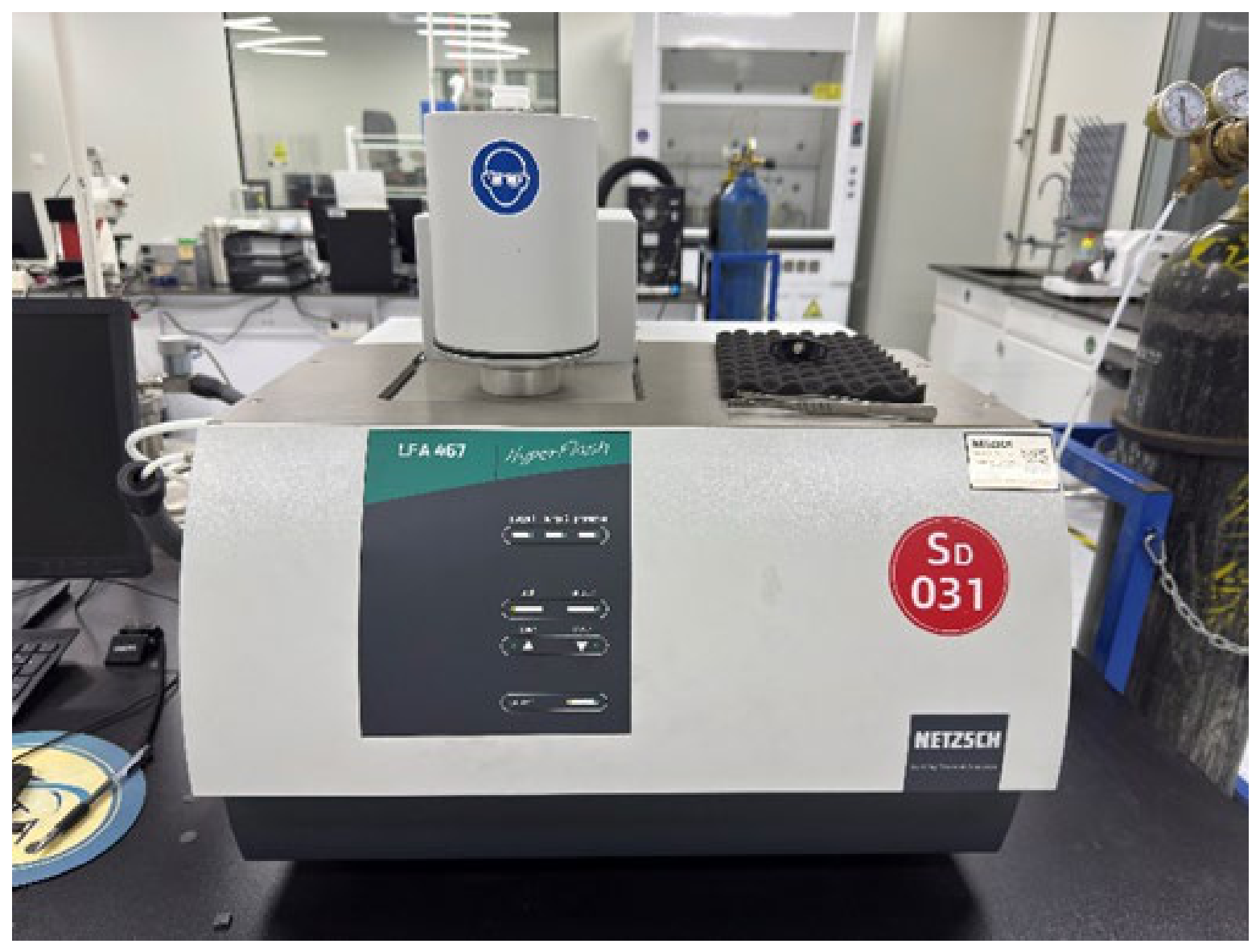
- GB/T 22588-2008; Determination of Thermal Diffusivity or Thermal Conductivity by the Flash Method. Standards Press of China: Beijing, China, 2008.
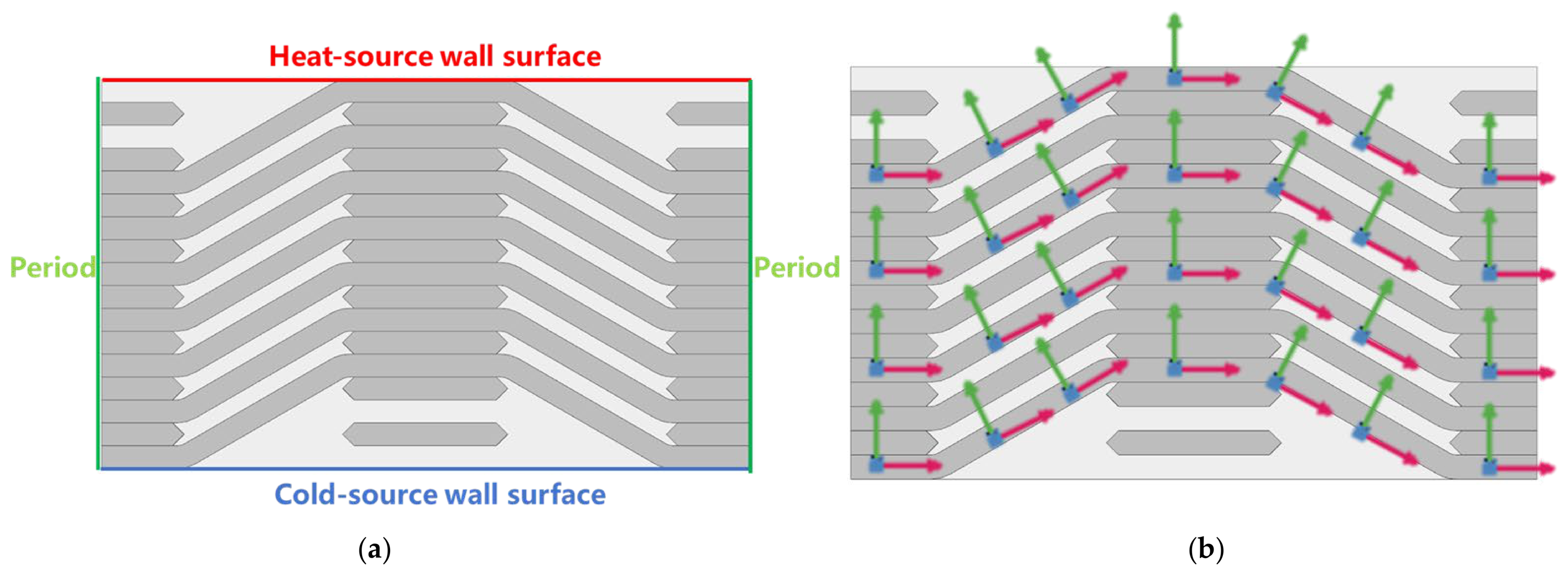

| Boundary Type | Heat Flux (W/m2) | Fluid Temperature (K) | Convective Heat Transfer Coefficient (W/(m2·K)) |
|---|---|---|---|
| Main heat source (Qh1) | 1,000,000 | - | - |
| Secondary heat source (Qh2) | 800,000 | - | - |
| Cold source (Qc) | −800,000 | - | - |
| Convective boundary (Tf/h) | - | 1200 | 1000 |
| Thickness Direction | In-Plane Direction | |
|---|---|---|
| Density (kg/m3) | 2520 | |
| specific heat (J/(kg·K)) | 841–1685 | 765–1345 |
| thermal conductivity (W/(m·K)) | 10.8~20.12 | 16.2~30.18 |
| Young’s modulus (MPa) | 263.4–189.6 | 196.6–192.7 |
| Poisson’s ratio | 0.24 | 0.158 |
| Content of Carbon Nanotubes | Experimental Value (W/(m·K)) | Analog Value (W/(m·K)) | Error (%) |
|---|---|---|---|
| 0% | 9.96 | 10.83 | 8.73% |
| 3.75% | 12.75 | 13.62 | 6.823% |
Disclaimer/Publisher’s Note: The statements, opinions and data contained in all publications are solely those of the individual author(s) and contributor(s) and not of MDPI and/or the editor(s). MDPI and/or the editor(s) disclaim responsibility for any injury to people or property resulting from any ideas, methods, instructions or products referred to in the content. |
© 2026 by the authors. Licensee MDPI, Basel, Switzerland. This article is an open access article distributed under the terms and conditions of the Creative Commons Attribution (CC BY) license.
Share and Cite
Chu, Y.; Tu, Z.; Mao, J.; Yang, C.; Wu, W.; Zhu, K. Collaborative Optimization Between Efficient Thermal Dissipation and Microstructure of Ceramic Matrix Composite Component Under Non-Uniform Thermal Loads. Processes 2026, 14, 1315. https://doi.org/10.3390/pr14081315
Chu Y, Tu Z, Mao J, Yang C, Wu W, Zhu K. Collaborative Optimization Between Efficient Thermal Dissipation and Microstructure of Ceramic Matrix Composite Component Under Non-Uniform Thermal Loads. Processes. 2026; 14(8):1315. https://doi.org/10.3390/pr14081315
Chicago/Turabian StyleChu, Yanchao, Zecan Tu, Junkui Mao, Chao Yang, Weilong Wu, and Keke Zhu. 2026. "Collaborative Optimization Between Efficient Thermal Dissipation and Microstructure of Ceramic Matrix Composite Component Under Non-Uniform Thermal Loads" Processes 14, no. 8: 1315. https://doi.org/10.3390/pr14081315
APA StyleChu, Y., Tu, Z., Mao, J., Yang, C., Wu, W., & Zhu, K. (2026). Collaborative Optimization Between Efficient Thermal Dissipation and Microstructure of Ceramic Matrix Composite Component Under Non-Uniform Thermal Loads. Processes, 14(8), 1315. https://doi.org/10.3390/pr14081315

