Large-Scale Mine Experimental Study on the Crack Extension Law of Deep-Seated Coal Rock

 , ,
, ,
Abstract
1. Introduction
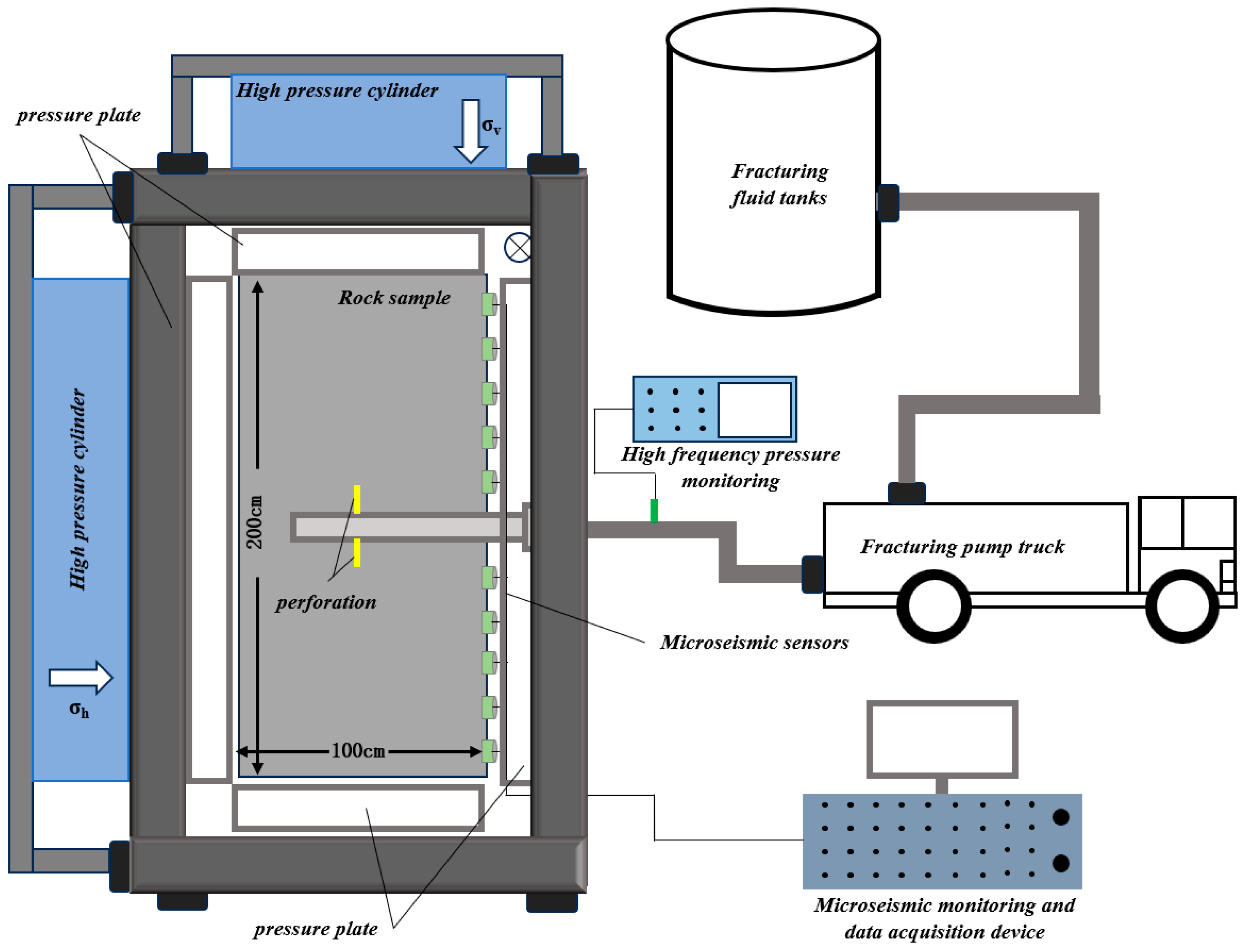
2. Extra-Large True Three-Axis Hydraulic Fracturing Mine Field Test Platform
3. Experimental Protocol
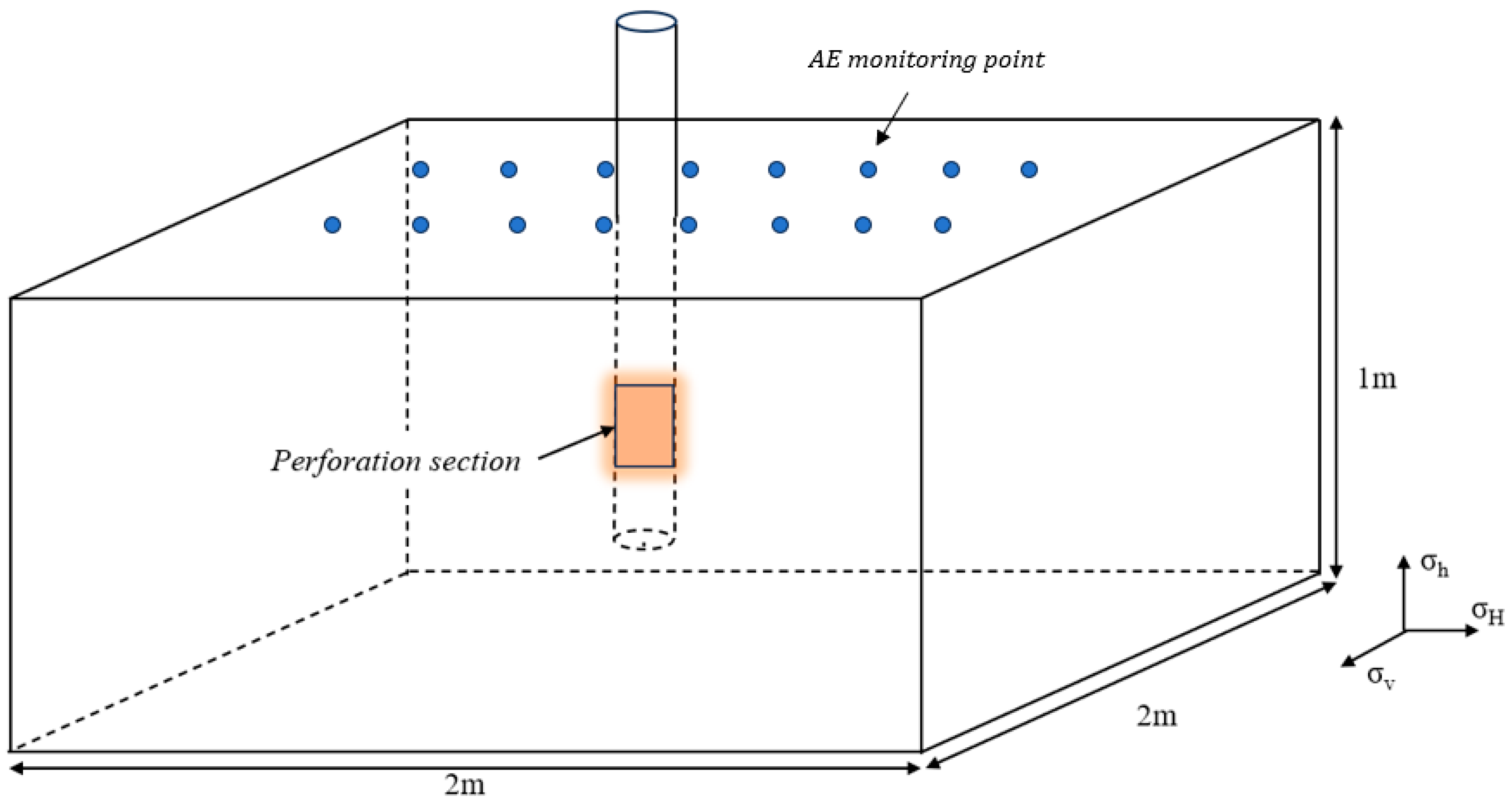
3.1. Rock Sample Preparation
3.2. Experimental Procedures and Protocol
3.3. Data Acquisition and Image Processing Procedures
4. Analysis of Experimental Results
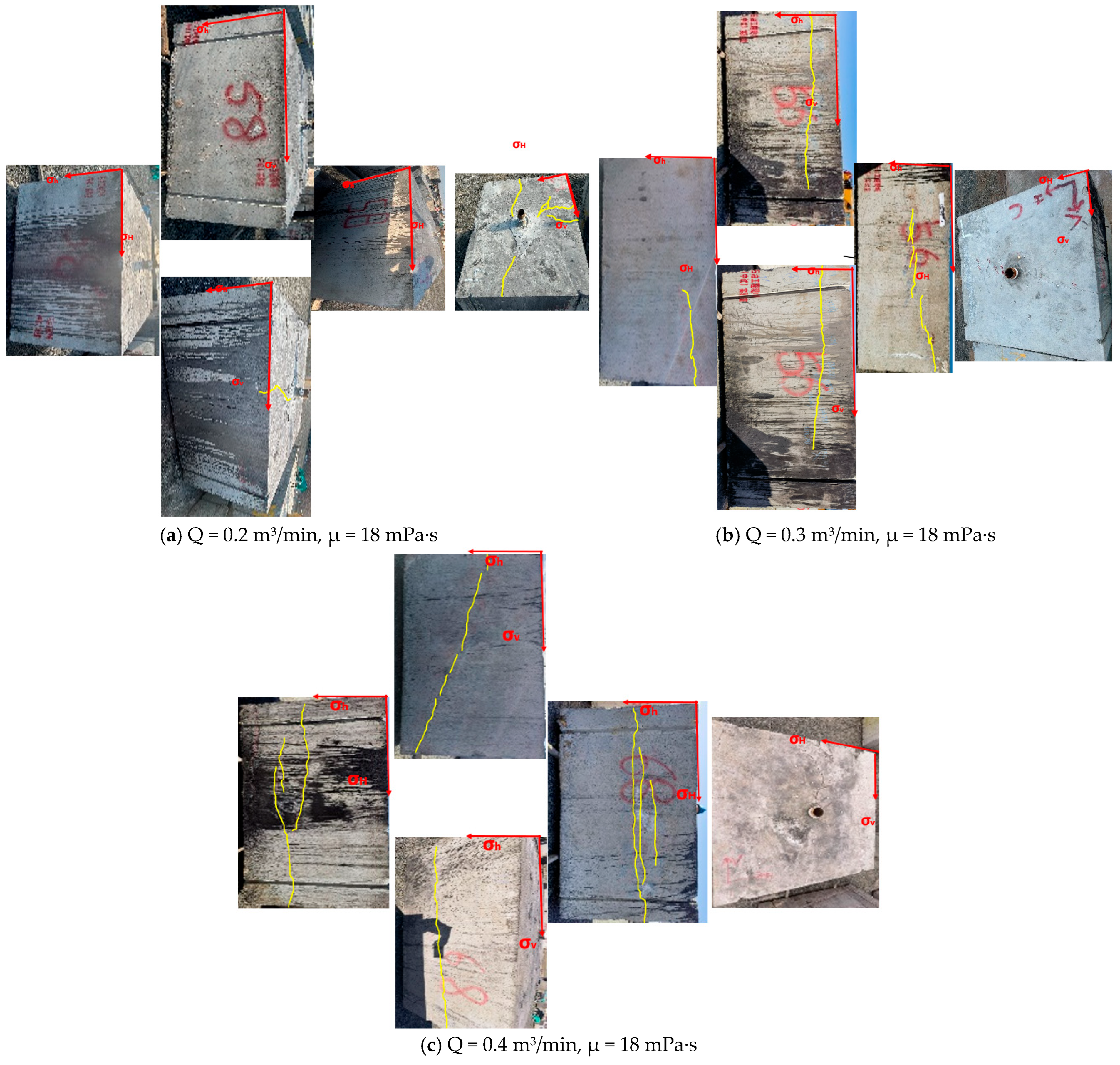
4.1. Pump Discharge Volume Impact
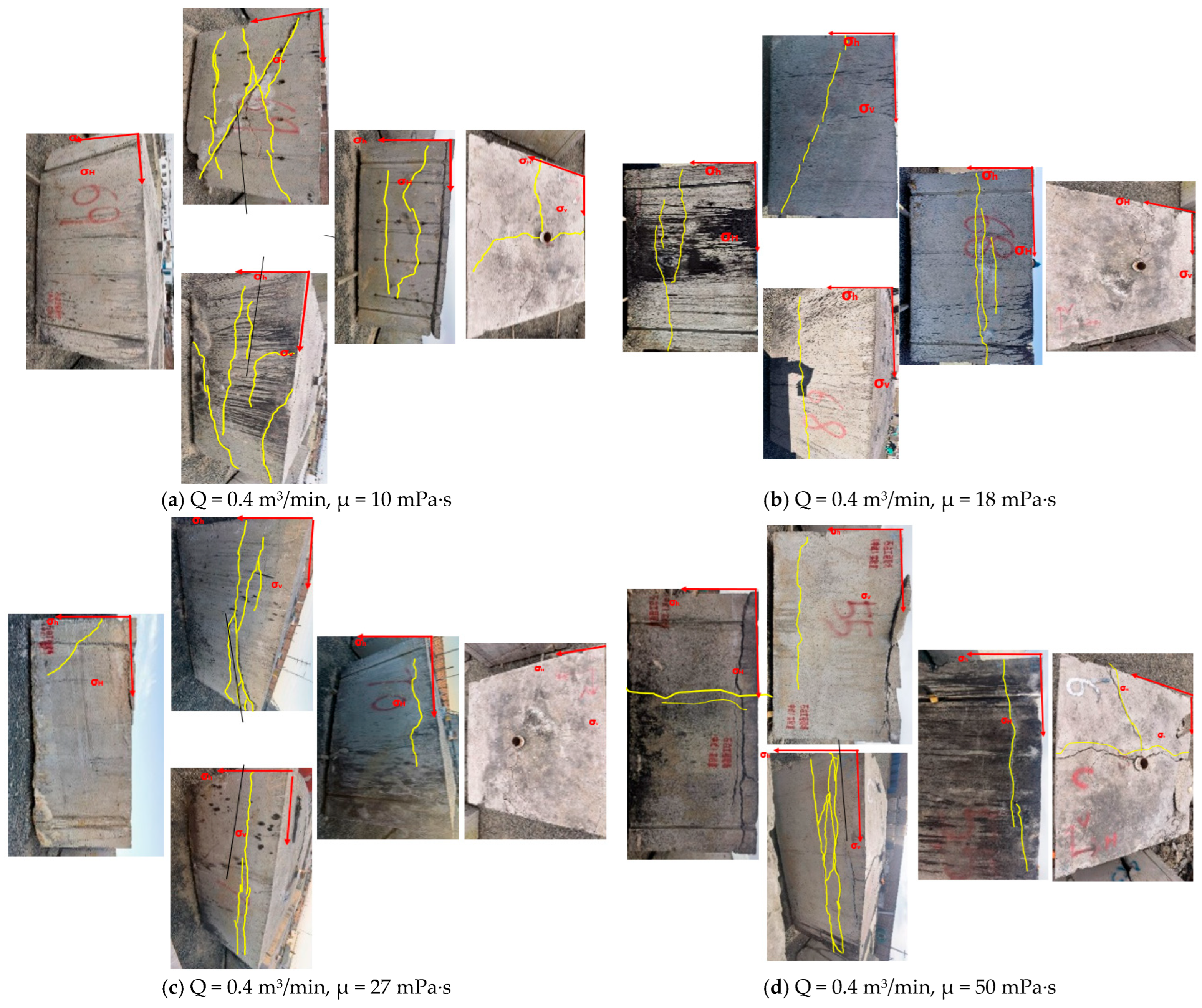
4.2. Impact of Fracturing Fluid Viscosity
4.3. SRV Characterization
4.4. Analysis of Fracture Network Morphological Characteristics in Deep Coal Seams
5. Conclusions
- (1)
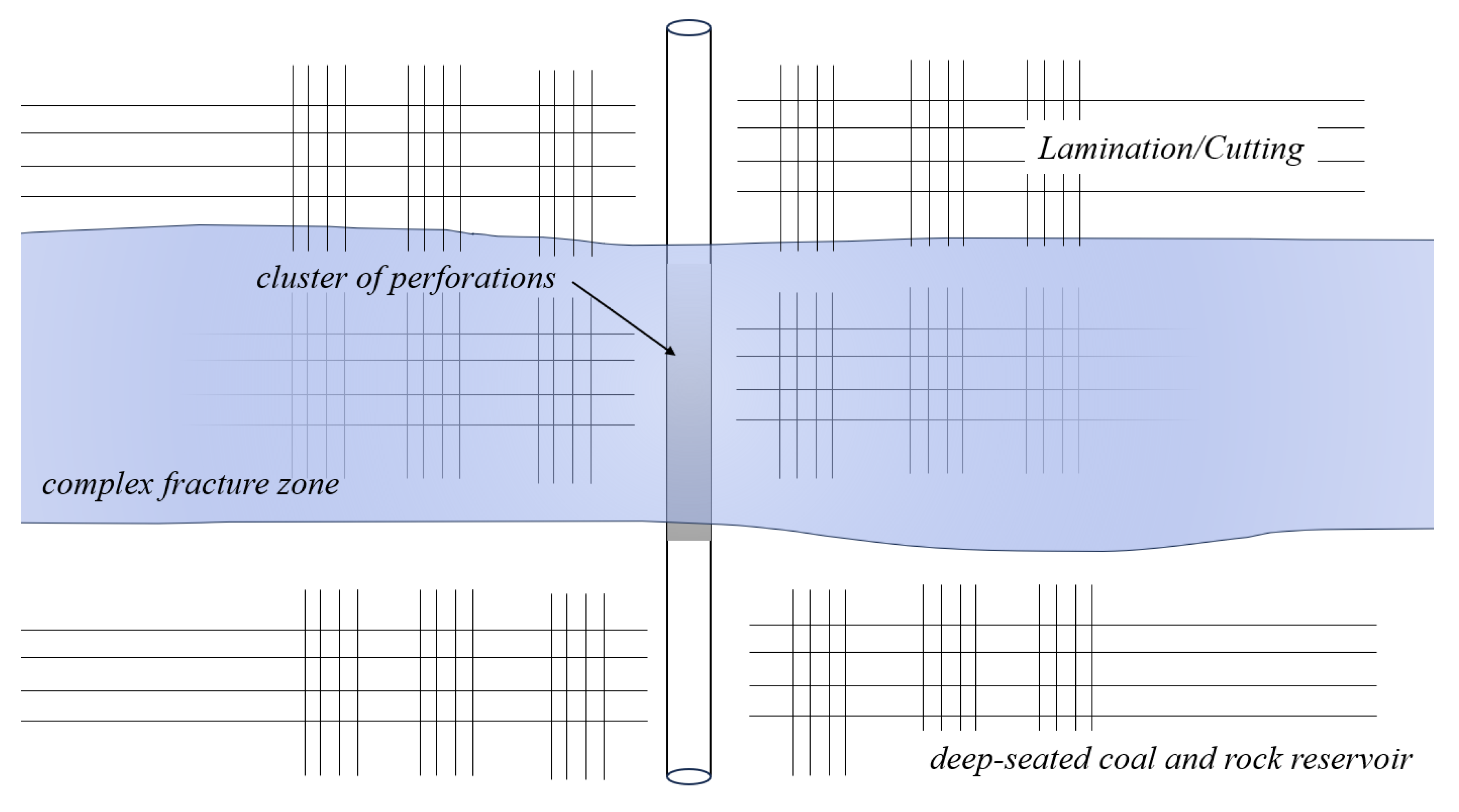
- After the compaction stage, fracture initiation and propagation in coal-rock reservoirs predominantly develop along the vertical wellbore direction, forming wide and structurally complex fracture zones. These zones often display irregular branching behavior, including tangential fractures that extend parallel to the wellbore trajectory. During propagation, these fracture networks interact dynamically with pre-existing bedding planes and joint planes, and they frequently induce the formation of secondary fractures. This results in a multi-scale fracture system that reflects strong mechanical heterogeneity and the combined influence of natural discontinuities.
- (2)
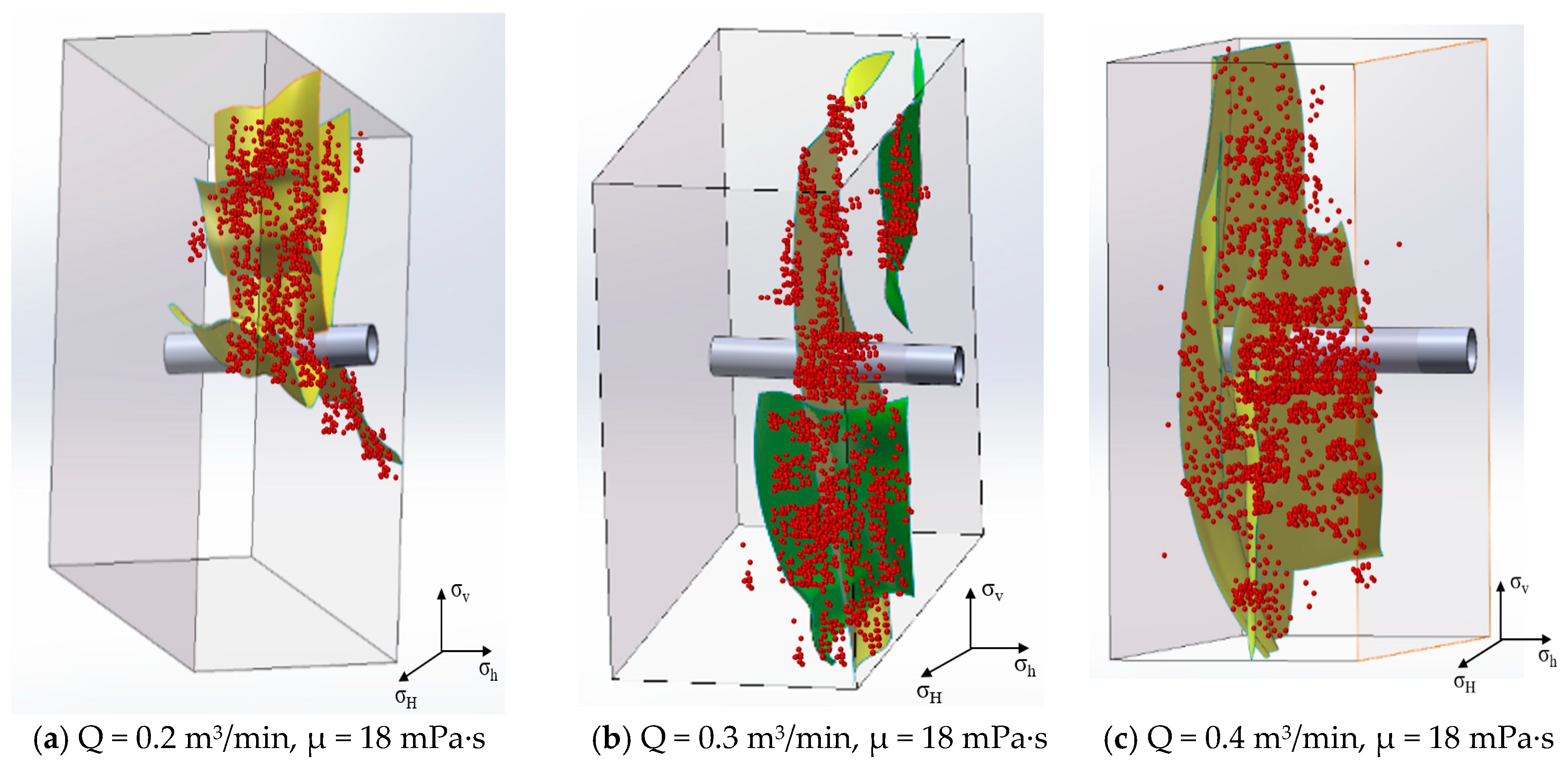
- The complex fracture zones generated during hydraulic fracturing consist of multiple interacting primary and secondary fractures that are continuously deflected by in-situ stress anisotropy and the distribution of natural fractures. Within these zones, fractures interconnect extensively, developing into three-dimensional networks characterized by twisting paths and net-like geometries. The degree of structural complexity, including the number of branches and interconnections, shows a clear positive relationship with the pumping volume, indicating that higher injection volumes promote more active fracture branching and enhance the extent of fracture connectivity.
- (3)
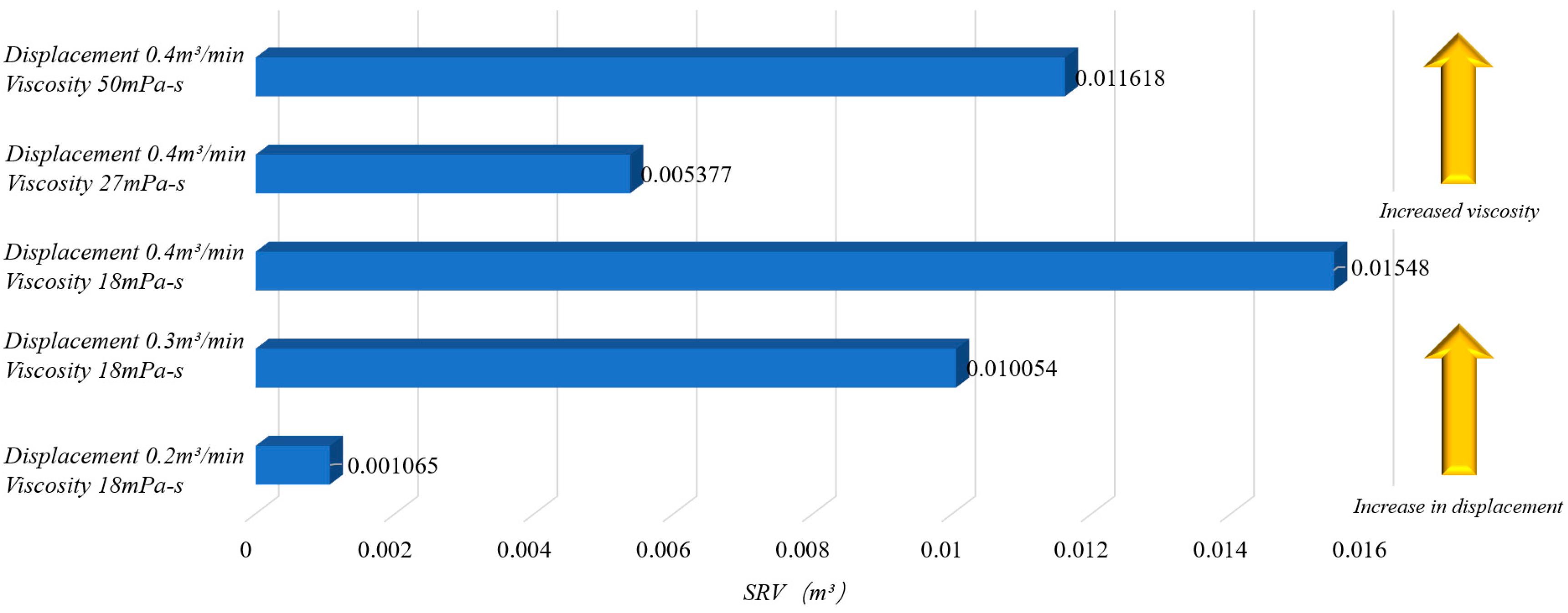
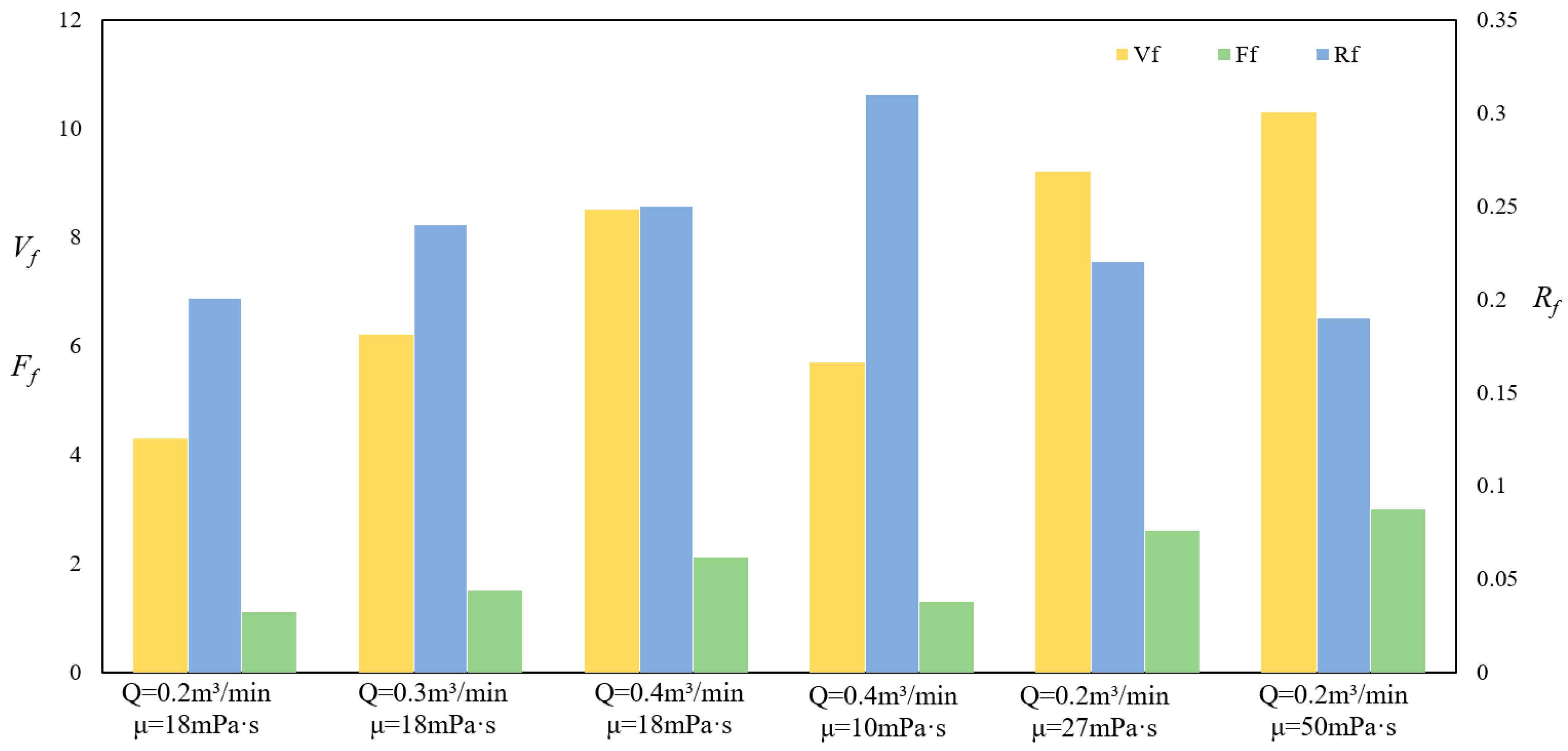
- Stimulated Reservoir Volume (SRV) exhibits a strong dependence on pumping volume, generally increasing as injection volume rises. With changes in fracturing fluid viscosity, SRV demonstrates a non-linear trend: it decreases initially and then increases again. Low-viscosity fluids show a pronounced ability to penetrate weak surfaces such as natural fractures, bedding planes, and joint planes, enabling the creation of more extensive interconnected fracture systems. This enhanced penetration capacity is a primary reason why low-viscosity fracturing fluids tend to achieve larger SRV under similar pumping conditions.
- (4)
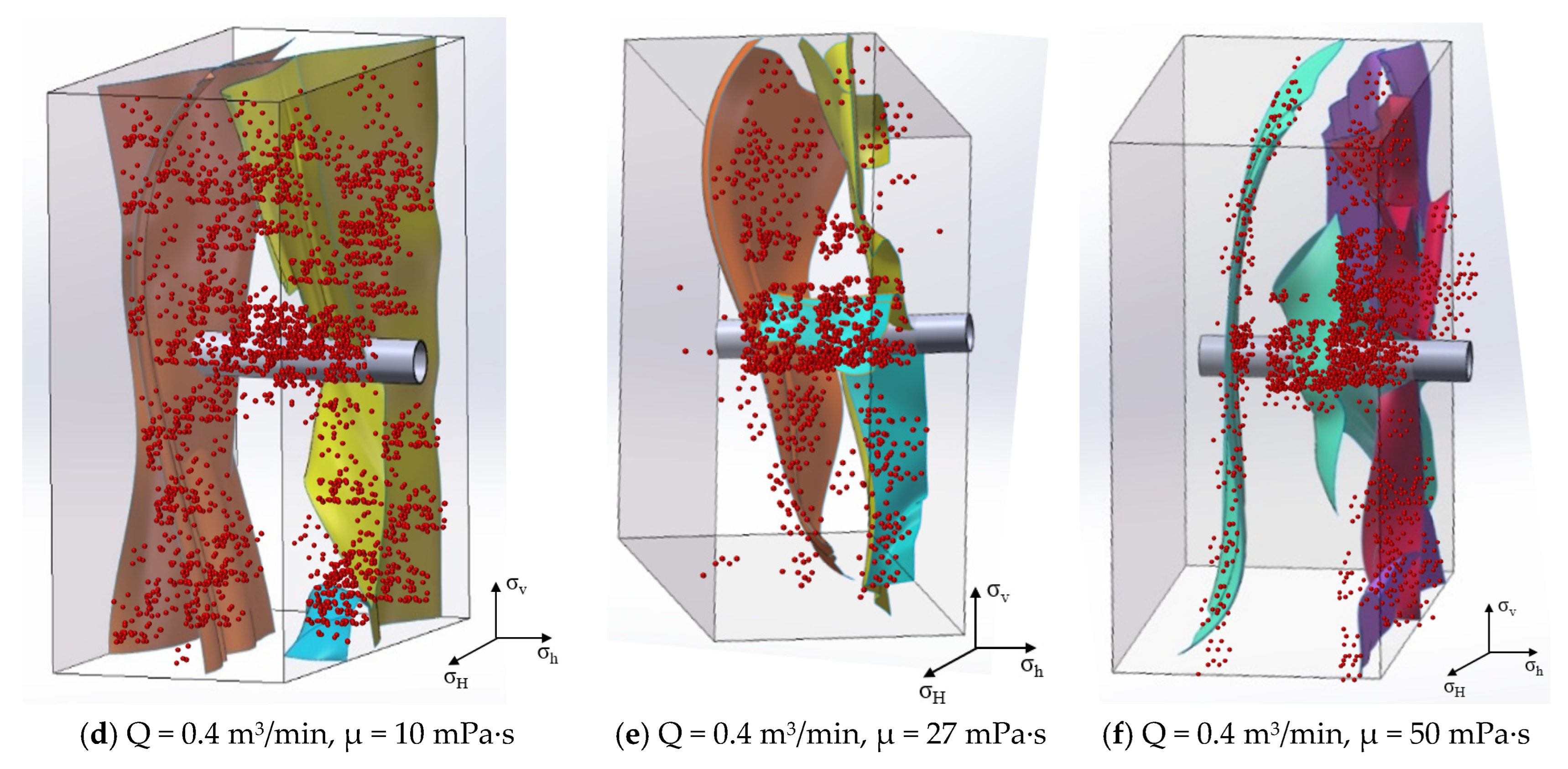
- Under low-viscosity conditions, the resulting fracture morphology is highly branched and spatially diverse, producing interwoven fracture networks that span large regions around the wellbore. As fluid viscosity increases, however, fracture propagation becomes more focused and localized, reducing the degree of branching and limiting fracture extension into natural discontinuities. Maintaining fluid viscosity within an optimal range of 18–27 mPa·s is shown to be effective in suppressing undesired fracture migration along the wellbore trajectory, thereby improving fracture controllability and promoting more favorable fracture geometry for reservoir stimulation.
- (5)
- Both the fracture volume fraction and the density of branch fractures exhibit strong positive correlations with pumping volume and fracturing fluid viscosity, illustrating the fundamental coupling between fluid properties and fracture formation mechanics. Nevertheless, under high-viscosity fracturing conditions, the overall SRV becomes noticeably lower despite the presence of dense localized fractures. Meanwhile, the spatial tortuosity of the resulting fracture zones increases, creating complex pathways that hinder proppant migration and reduce the efficiency of proppant placement. This highlights an inherent trade-off between fracture complexity and proppant transport when viscosity is excessively high.
Author Contributions
Funding
Data Availability Statement
Conflicts of Interest
References
- Li, Y. Exploration Practices of and Recent Production Breakthroughs in Deep Middle-Rankcoalbed Methane in The Daniudi Gas Field, Ordos Basin. Pet. Nat. Gas Geol. 2024, 45, 1555–1566. [Google Scholar] [CrossRef]
- He, F.; Lei, T.; Qi, R.; Xu, B.; Li, X.; Zhang, R. Breakthroughs and Key Technology in Deep Coalbed Methane Exploration in The Daniudi gas field in the Ordos Basin. Oil Gas Geol. 2024, 45, 1567–1576. [Google Scholar] [CrossRef]
- Ni, C.; Wu, X.; Wang, P.; Wang, F.; Jia, H.; Zhu, J.; Zhang, Y.; Jiang, H. Geochemical Characteristics of Light Hydrocarbons in Upper Paleozoic Tight Gas from Daniuqi Gas Field, Ordos Basin. Exp. Pet. Geol. 2024, 46, 366–379. [Google Scholar] [CrossRef]
- He, F.; Dong, Z. Development Potential of Deep Coalbed Methane: A Case Study in The Daniudi Gas Field, Ordos Basin. Pet. Nat. Gas Geol. 2022, 43, 277–285. [Google Scholar] [CrossRef]
- He, X.; Xiao, C.; Gao, Y.; Li, X.; Guo, T.; Cai, X. Geological characteristics and key technologies for exploration and developmentof the Yanchuannan coalbed methane field, Ordos Basin. Coal Geol. Explor. 2025, 53, 54−71. [Google Scholar] [CrossRef]
- Liu, B. Strategies and Reflections on Beneficial Development of Coalbed Methane in China. Pet. Sci. Technol. Forum 2025, 44, 51–62. [Google Scholar]
- Lin, B.; Chen, S.; Yan, X.; Chen, M.; Du, L.; Chen, Y.; Lu, H.; Sun, S. High-efficiency variable-viscosity fracturing fluid for deep coalbed methane and its application in extreme-volume fracturing. J. Coal Sci. Eng. 2025, 50, 1162. [Google Scholar] [CrossRef]
- Tang, Y.; Kong, X.; Yang, W.; He, J.; Chen, Q.; Xu, Z.; An, G. Study on hydraulic fracture propagation in deep coal seams based on perforation angle and fracturing fluid parameters. Coal Mine Saf. 2025, 55, 1–12. [Google Scholar] [CrossRef]
- Guo, Z.; Zhang, S.; Ma, B. Poduction Prediction of Deep Coal-Rock Gas Based on Integrated Multi-Modal Characteristics. Nat. Gas Ind. 2024, 44, 140–149. [Google Scholar]
- Dehghan, A.N.; Goshtasbi, K.; Ahangari, K.; Jin, Y. The effect of natural fracture dip and strike on hydraulic fracture propagation. Int. J. Rock Mech. Min. Sci. 2015, 75, 210–215. [Google Scholar] [CrossRef] [Scilit]
- Meng, S.; Hou, B.; Zhang, J.; Tan, P.; Xiong, Z. Experimental Study on Fracture Propagation in Co-extracted “Three Gases” Production Formations in Coal Seams. J. Coal Sci. Eng. 2016, 41, 221–227. [Google Scholar]
- Gao, J.; Hou, B.; Tan, P.; Guo, X.; Chang, Z. Mechanism of Interlayer Hydraulic Fracture Propagation in Sand-Coal Interbeds. Chin. J. Coal Sci. Eng. 2017, 42, 428–433. [Google Scholar]
- Sharma, A.; Chen, H.; Teufel, L. Flow-Induced Stress Distribution in A Multi-Rate and Multi-Well Reservoir. In SPE Rocky Mountain Petroleum Technology Conference/Low-Permeability Reservoirs Symposium; Society of Petroleum Engineers: Richardson, TX, USA, 1998. [Google Scholar] [CrossRef]
- Fu, S.; Chen, M.; Xia, Y.; Zhou, S.; Qiu, X. Experimental Investigation on Fracture Propagation for Vertical Well Fracturing in Coalbed and Shale Interbedded Reservoir. In Proceedings of the 55th U.S. Rock Mechanics/Geomechanics Symposium, Online, 18–25 June 2021; pp. 1321–2021. [Google Scholar]
- Xie, J.; Cheng, W.; Wang, R.; Jiang, G.; Sun, D.; Sun, J. Experiments and Analysis on The Influence of Perforation Mode on Hydraulic Fracture Geometry in Shale Formation. J. Pet. Sci. Eng. 2018, 168, 133–147. [Google Scholar] [CrossRef] [Scilit]
- Men, X.; Li, J.; Han, Z. Fracture Propagation Behavior of Jointed Rocks in Hydraulic Fracturing. Adv. Mater. Sci. Eng. 2018, 2018, 9461284. [Google Scholar] [CrossRef] [Scilit]
- Zhang, Q.; Zhang, X.; Zhang, H.; Ji, P.; Wu, S.; Peng, J. Study of Interaction Mechanisms Between Hydraulic Fracture and Weak Plane with Different Strengths and Widths Using The Bonded-Particle Model Based on Moment Tensors. Eng. Fract. Mech. 2020, 225, 106813. [Google Scholar] [CrossRef] [Scilit]
- Fan, T.; Zhang, G.; Cui, J. The impact of cleats on hydraulic fracture initiation and propagation in coal seams. Pet. Sci. 2014, 11, 532–539. [Google Scholar] [CrossRef] [Scilit]
- Hu, T. Finite Element Study on Fracture Propagation in Coal Seams. Ph.D. Thesis, China University of Petroleum (Beijing), Beijing, China, 2018. [Google Scholar] [CrossRef]
- Liu, J.; Yao, Y.; Liu, D.; Xu, L.; Elsworth, D.; Huang, S.; Luo, W. Experimental simulation of hydraulic fracture propagation in an anthracite coal reservoir in the southern Qinshui Basin, China. J. Pet. Sci. Eng. 2018, 168, 400–408. [Google Scholar] [CrossRef] [Scilit]
- Bai, J.; Zhao, Y.; Shi, J.; He, X. Cross-scale Study on the Mechanical Properties and Frost Resistance Durability of Aeolian Sand Concrete. KSCE J. Civ. Eng. 2021, 25, 4386–4402. [Google Scholar] [CrossRef] [Scilit]
- Hu, J.; Yang, D. Meso-damage Evolution and Mechanical Characteristics of Low-porosity Sedimentary Rocks Under Uniaxial Compression. Trans. Nonferrous Met. Soc. China 2020, 30, 1071–1077. [Google Scholar] [CrossRef] [Scilit]
- Sun, H.; Belhaj, H.; Tao, G.; Vega, S.; Liu, L. Rock Properties Evaluation for Carbonate Reservoir haracterization with Multi-scale Digital Rock Images. J. Pet. Sci. Eng. 2019, 175, 654–664. [Google Scholar] [CrossRef] [Scilit]
- Isaka, B.; Gamage, R.; Rathnaweera, T.; Perera, M.S.A.; Chandrasekharam, D.; Kumari, W.G.P. An Influence of Thermally-induced Micro-cracking Under Cooling Treatments: Mechanical Characteristics of Australian Granite. Energies 2018, 11, 1338. [Google Scholar] [CrossRef] [Scilit]
- Zhang, J.; Shi, S.; Guo, X.; Lv, Z.; Zhang, J.; Dong, J. Large-scale field experiment on hydraulic fracture propagation in dense conglomerate. J. Shenzhen Univ. 2024, 41, 173–182. [Google Scholar] [CrossRef] [Scilit]



| Serial Number | Note | Experimental Displacement | Corresponding on-Site Flow Rate | Fracturing Fluid Viscosity | Perforation Plan | Stress State |
|---|---|---|---|---|---|---|
| 1 | Different displacement | 0.2 m3/min | 4 m3/min | 18 mPa·s | Spiral perforation, phase angle 120°, number of perforations 3, hole spacing 10 cm, hole diameter 10 mm | σv = 15 MPa σH = 8 MPa σh = 0 |
| 2 | 0.3 m3/min | 6 m3/min | 18 mPa·s | |||
| 3 | 0.4 m3/min | 8 m3/min | 18 mPa·s | |||
| 4 | Different viscosities | 0.4 m3/min | 8 m3/min | 10 mPa·s | ||
| 5 | 0.4 m3/min | 8 m3/min | 27 mPa·s | |||
| 6 | 0.4 m3/min | 8 m3/min | 50 mPa·s |
Disclaimer/Publisher’s Note: The statements, opinions and data contained in all publications are solely those of the individual author(s) and contributor(s) and not of MDPI and/or the editor(s). MDPI and/or the editor(s) disclaim responsibility for any injury to people or property resulting from any ideas, methods, instructions or products referred to in the content. |
© 2026 by the authors. Licensee MDPI, Basel, Switzerland. This article is an open access article distributed under the terms and conditions of the Creative Commons Attribution (CC BY) license.
Share and Cite
Hu, A.; Guo, X.; Liu, X.; Zhang, J.; Li, K.; Xi, X.; Chen, F.; Chang, H. Large-Scale Mine Experimental Study on the Crack Extension Law of Deep-Seated Coal Rock. Processes 2026, 14, 754. https://doi.org/10.3390/pr14050754
Hu A, Guo X, Liu X, Zhang J, Li K, Xi X, Chen F, Chang H. Large-Scale Mine Experimental Study on the Crack Extension Law of Deep-Seated Coal Rock. Processes. 2026; 14(5):754. https://doi.org/10.3390/pr14050754
Chicago/Turabian StyleHu, Aiguo, Xiaodong Guo, Xugang Liu, Jingchen Zhang, Kezhi Li, Xiangrui Xi, Fuhu Chen, and Hui Chang. 2026. "Large-Scale Mine Experimental Study on the Crack Extension Law of Deep-Seated Coal Rock" Processes 14, no. 5: 754. https://doi.org/10.3390/pr14050754
APA StyleHu, A., Guo, X., Liu, X., Zhang, J., Li, K., Xi, X., Chen, F., & Chang, H. (2026). Large-Scale Mine Experimental Study on the Crack Extension Law of Deep-Seated Coal Rock. Processes, 14(5), 754. https://doi.org/10.3390/pr14050754