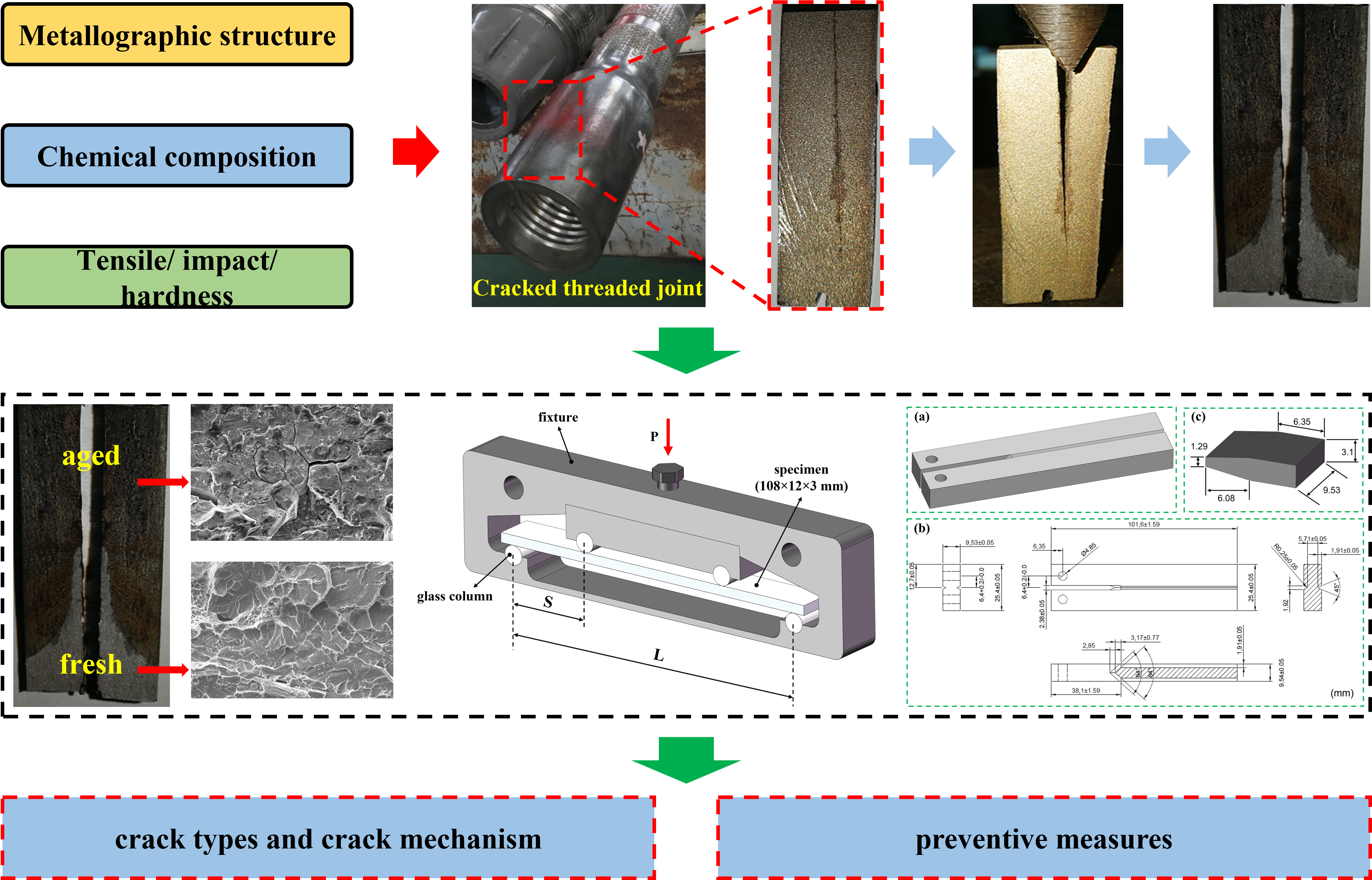
Environmental Cracking Failure Analysis of Stainless Steel Threaded Joint in Rotary Steerable Tool

 and
and 
Abstract
1. Introduction
2. Materials and Methods
2.1. Physical and Chemical Performance Test
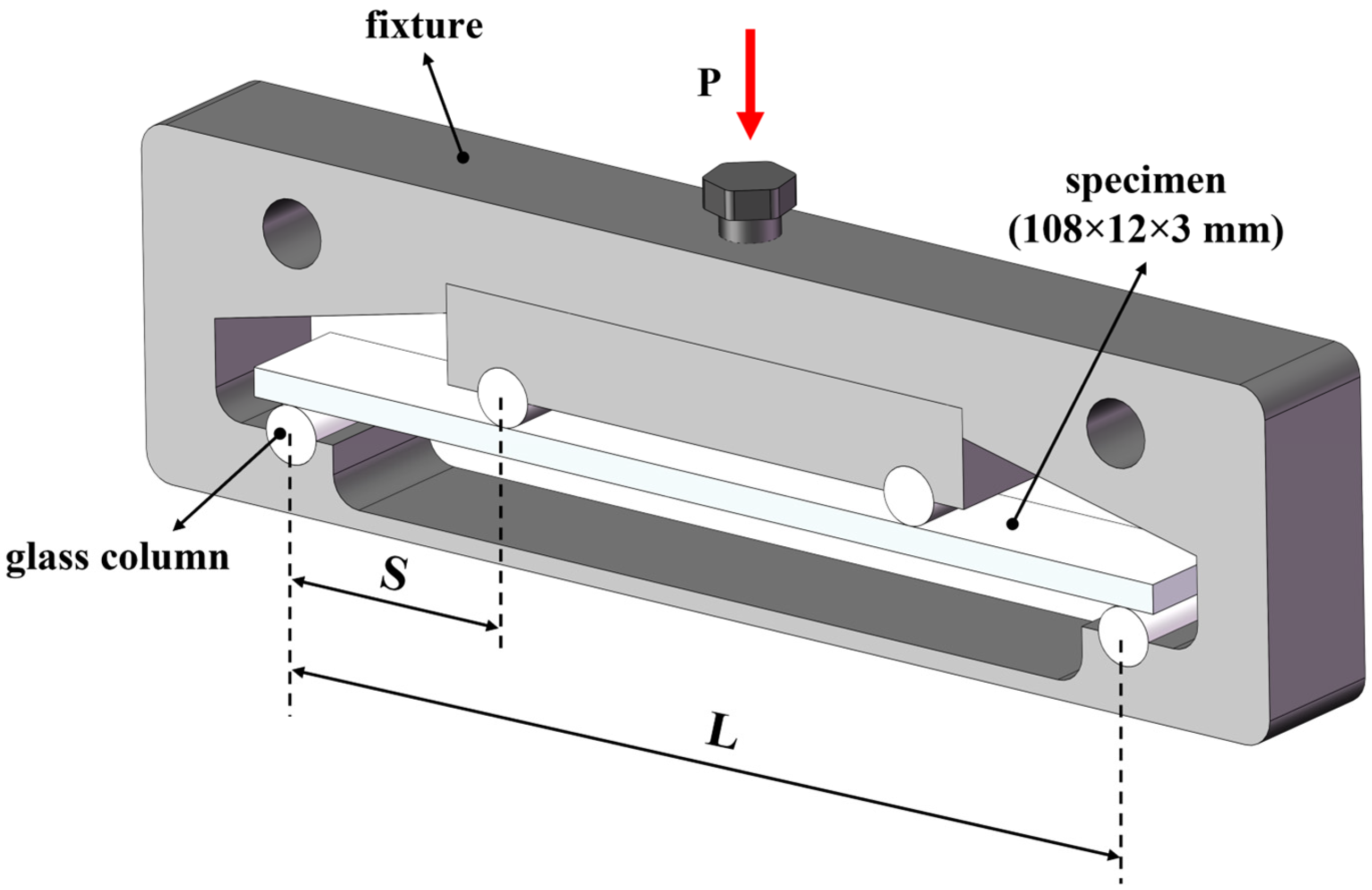
2.2. Four-Point Bend Method
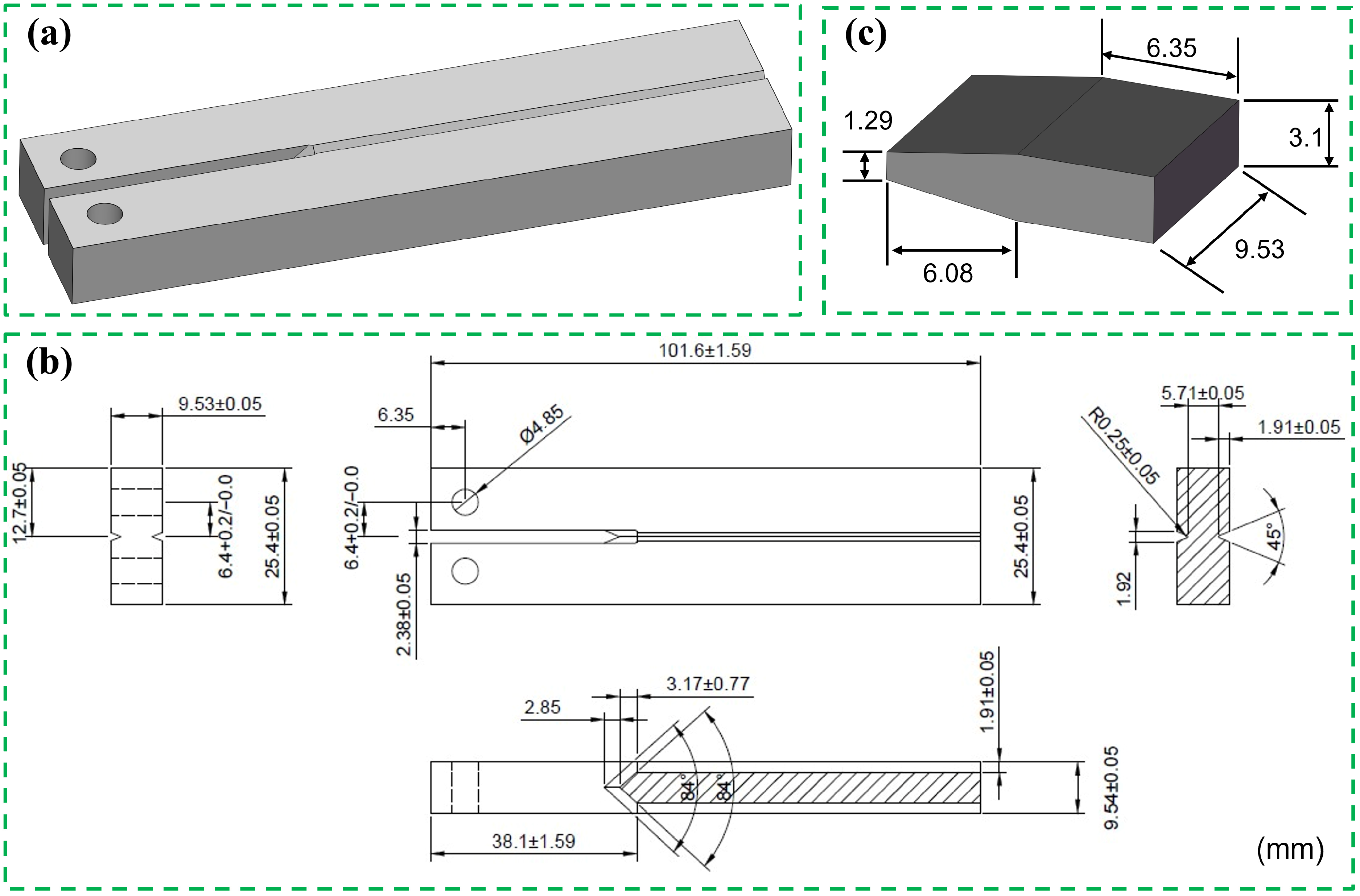
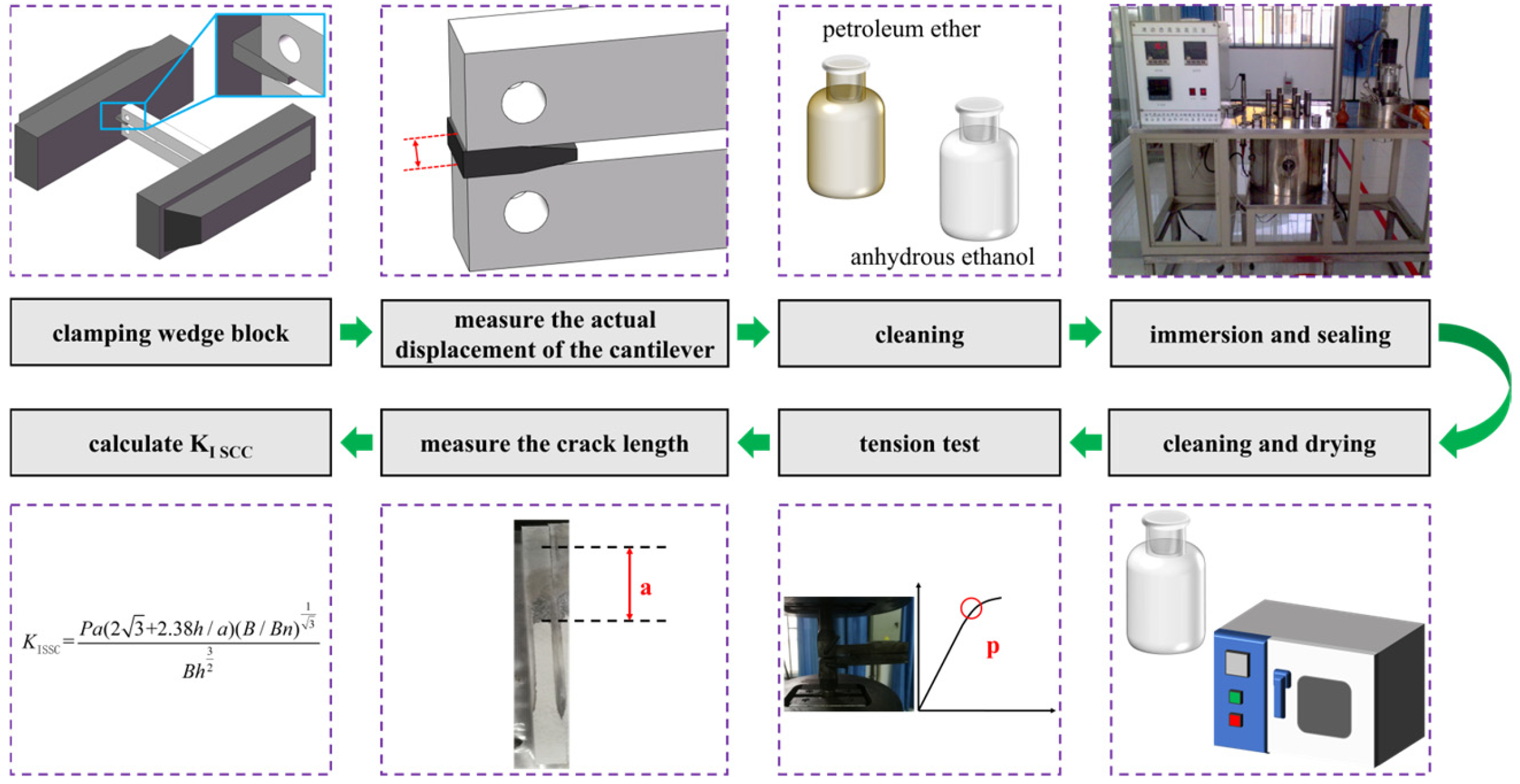
2.3. Double Cantilever Beam Method
2.4. Microscopic Corrosion Morphology Characterization
3. Results
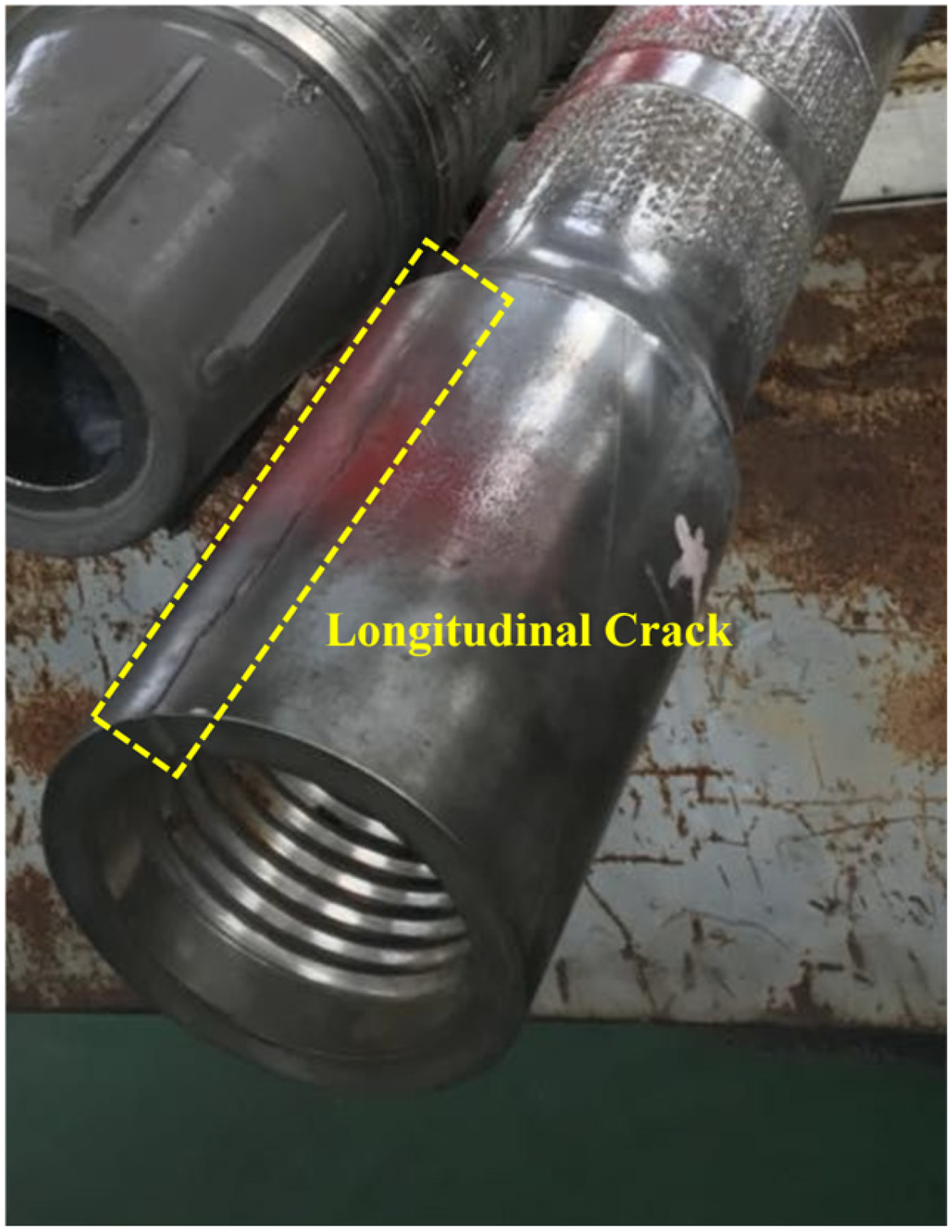
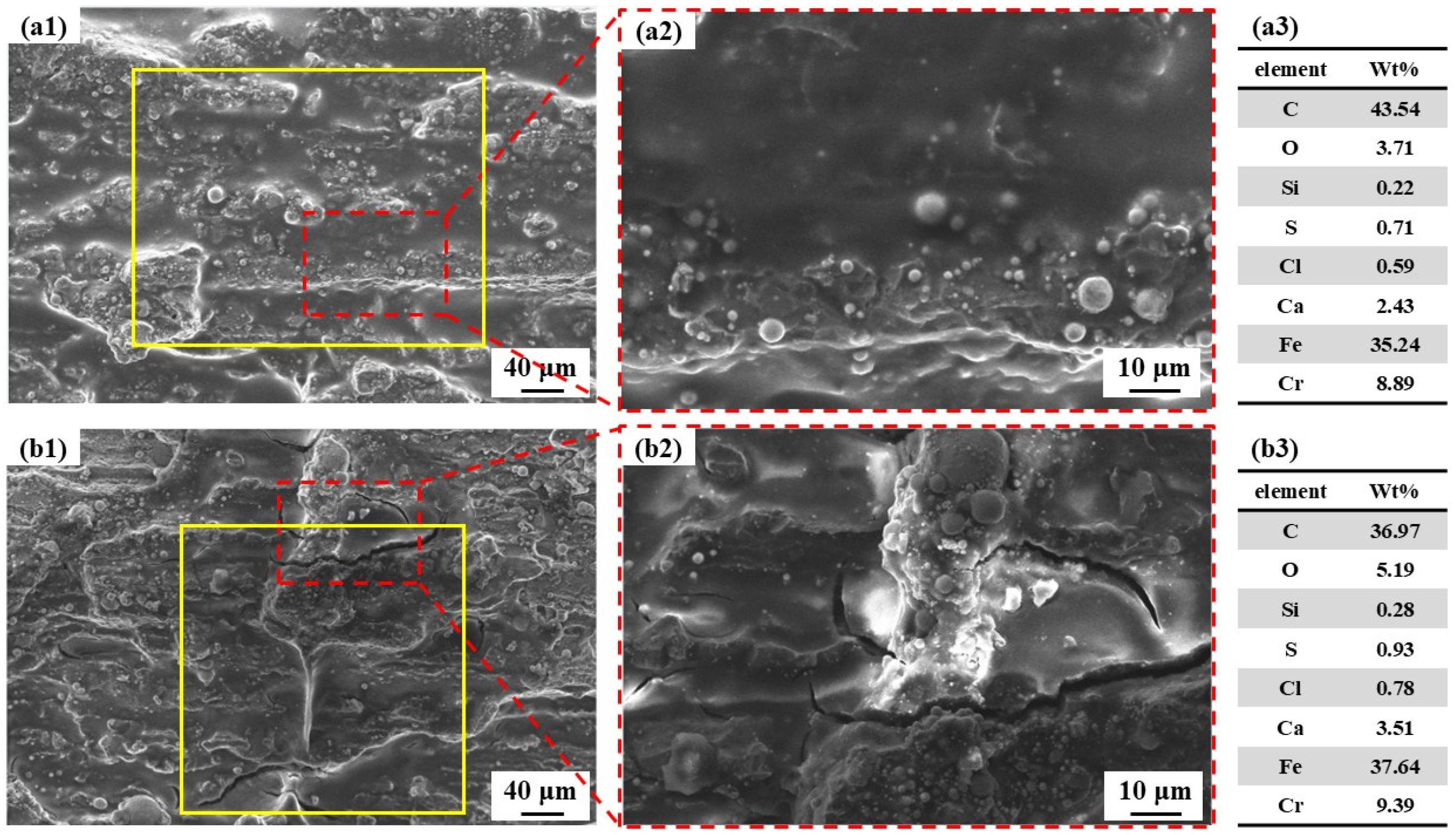
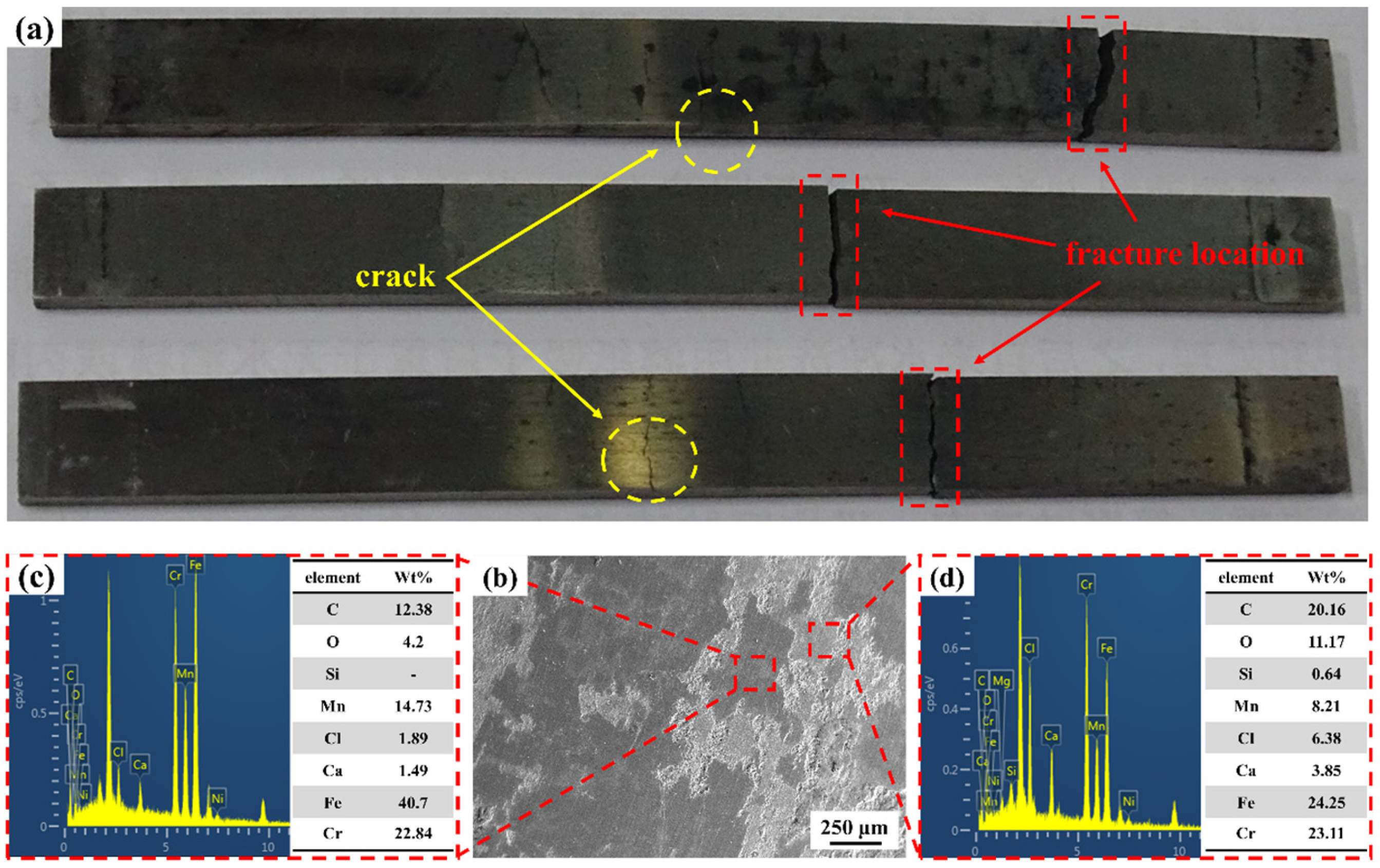
3.1. Macroscopic Observation and Media Environment Analysis
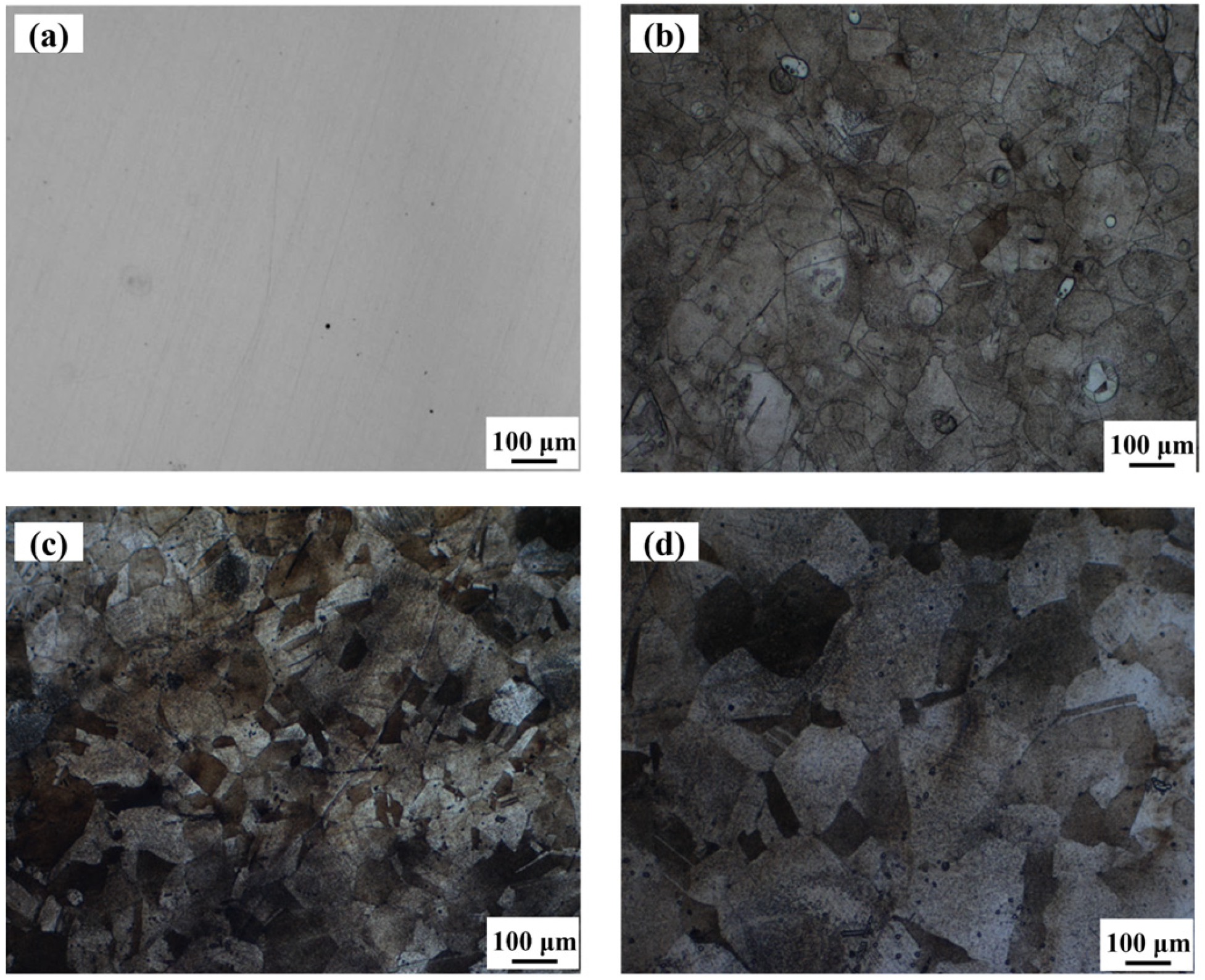
3.2. Physical and Chemical Tests
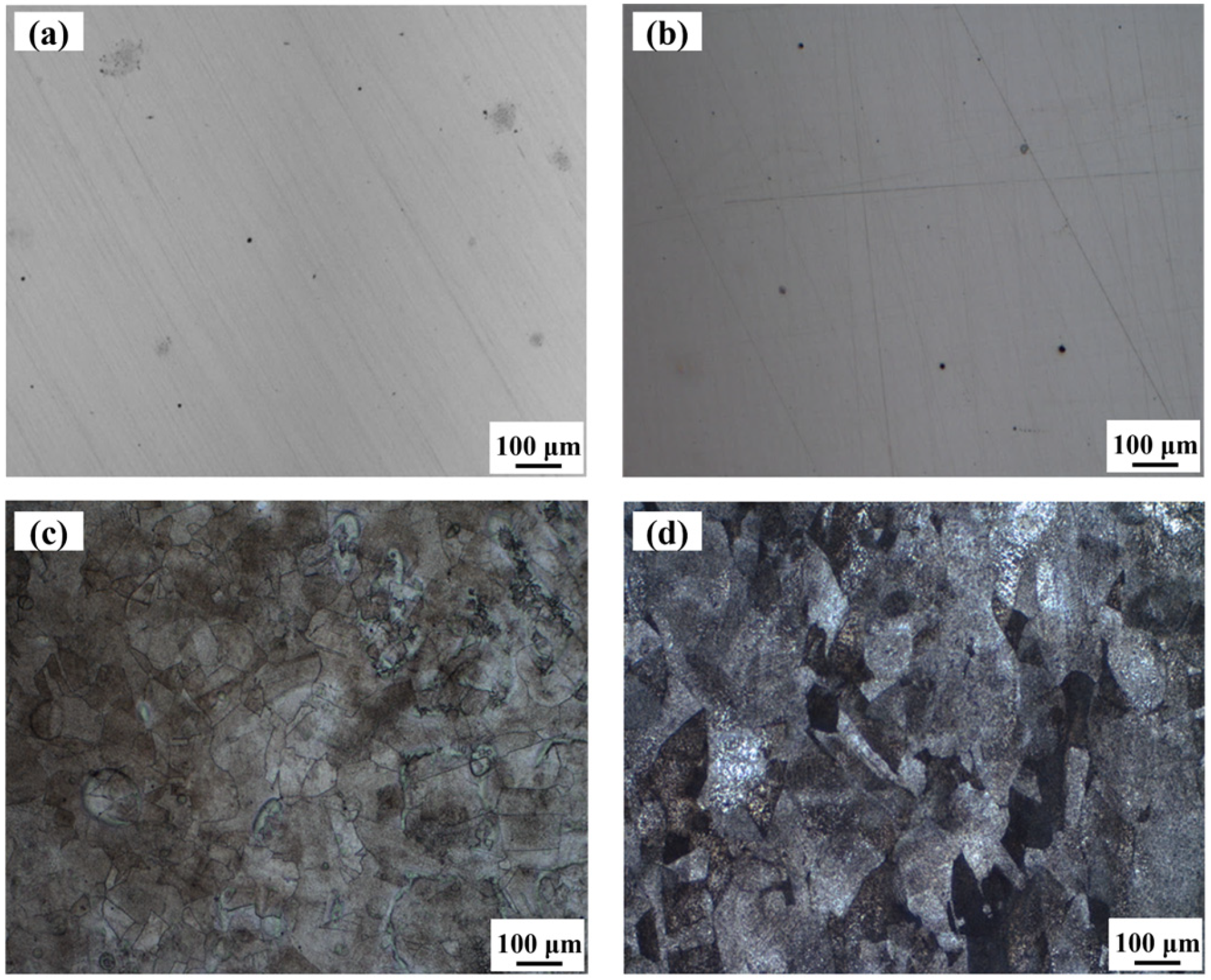
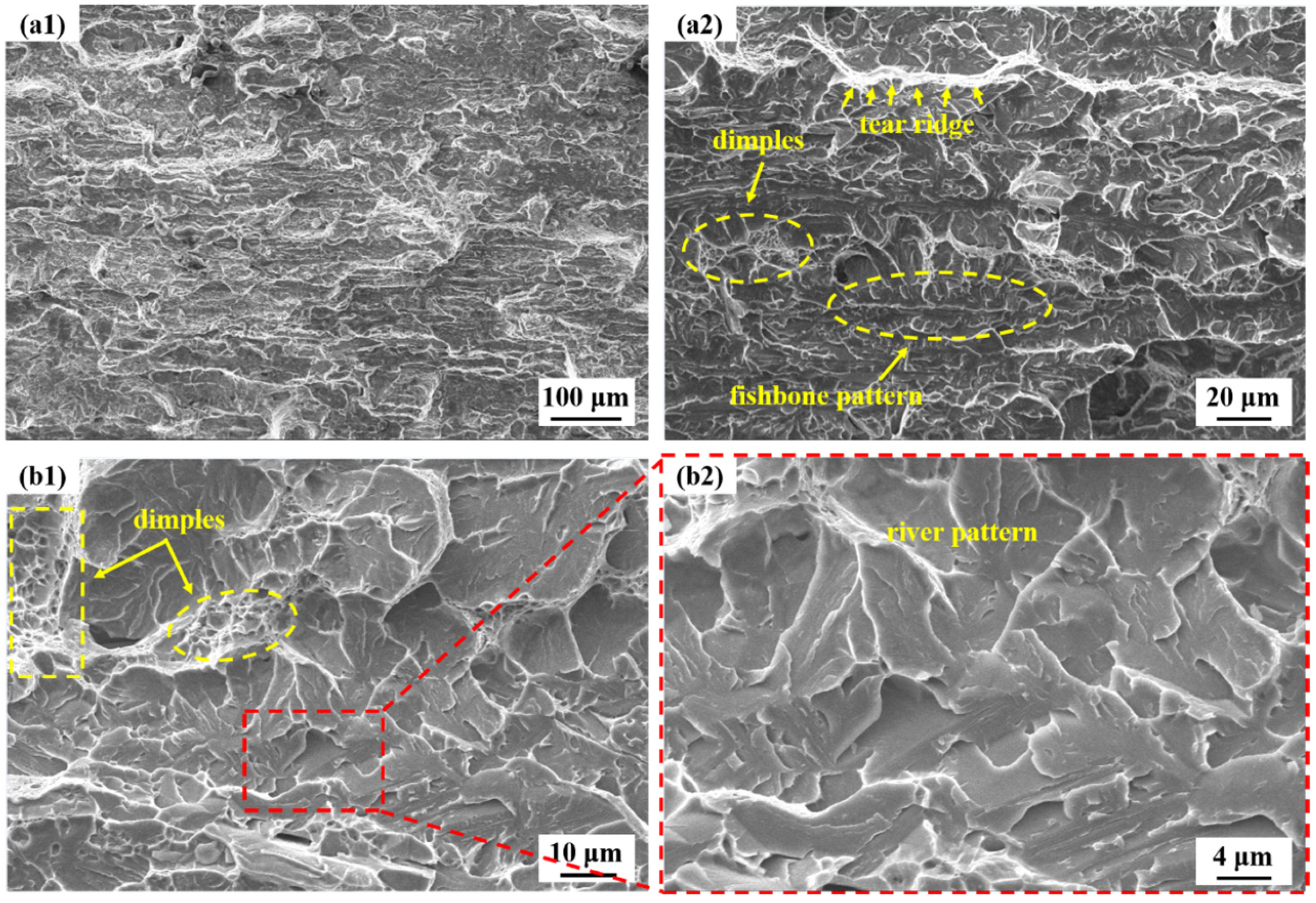
3.3. Observation of Crack
3.4. Stress Analysis
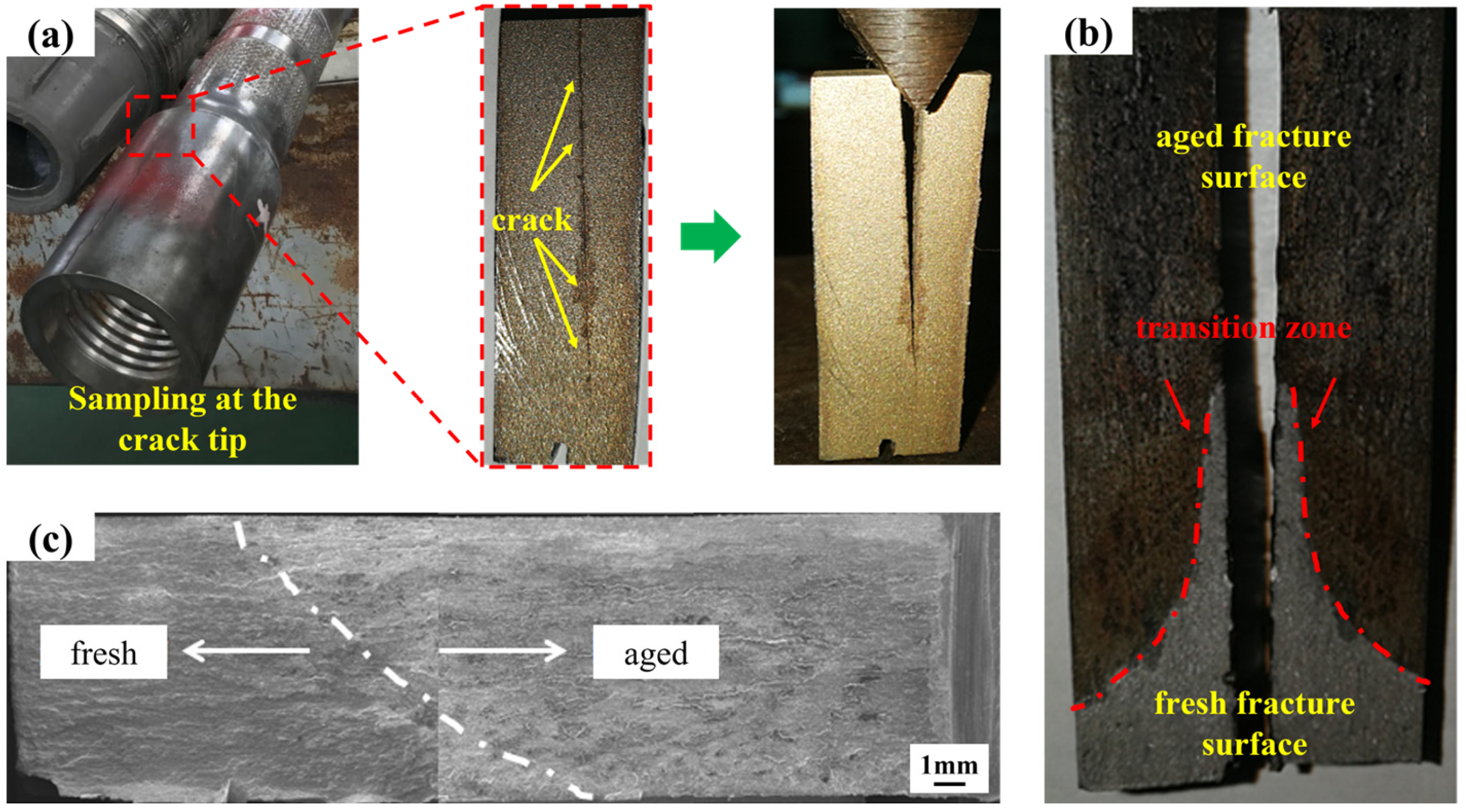
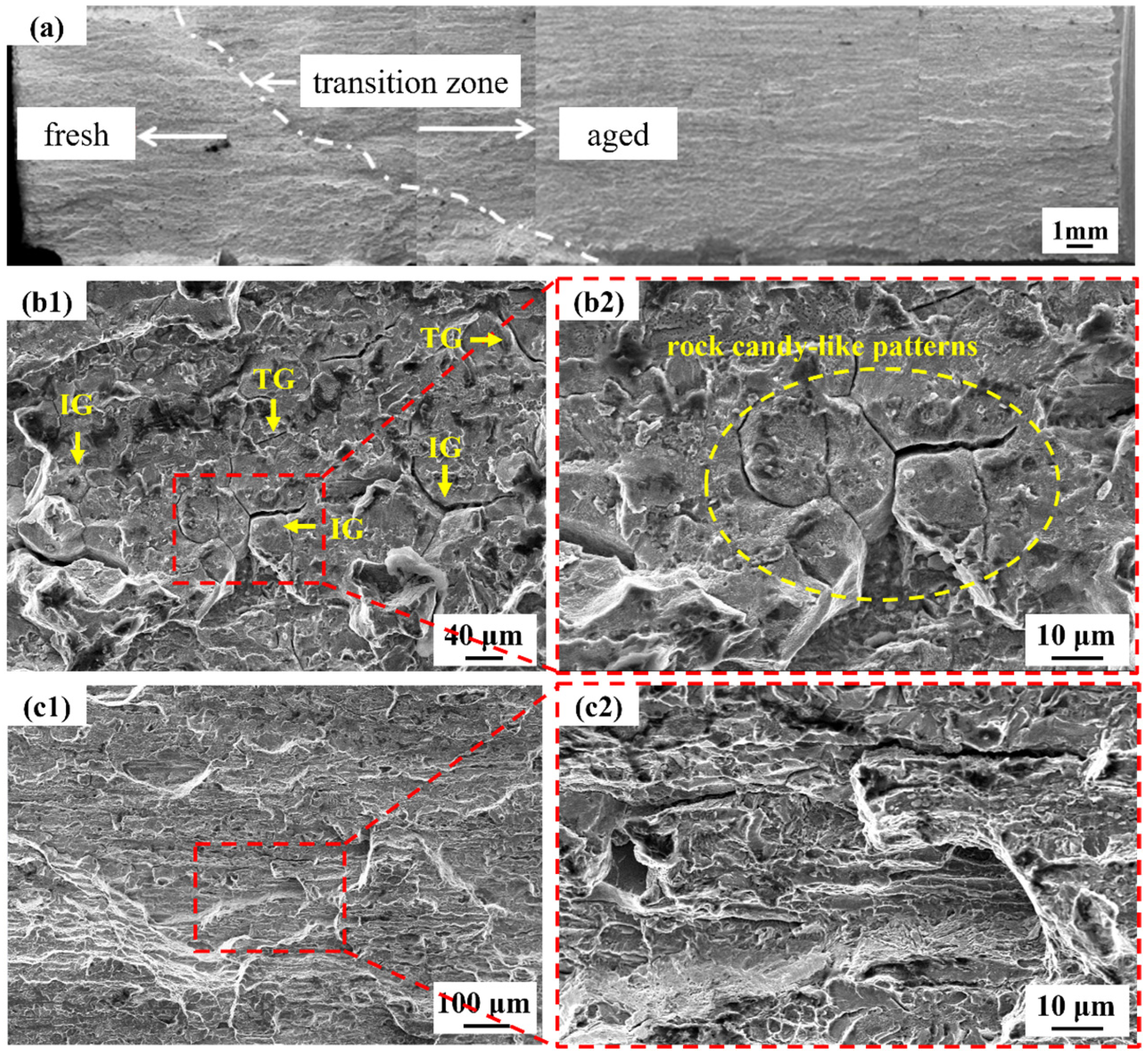
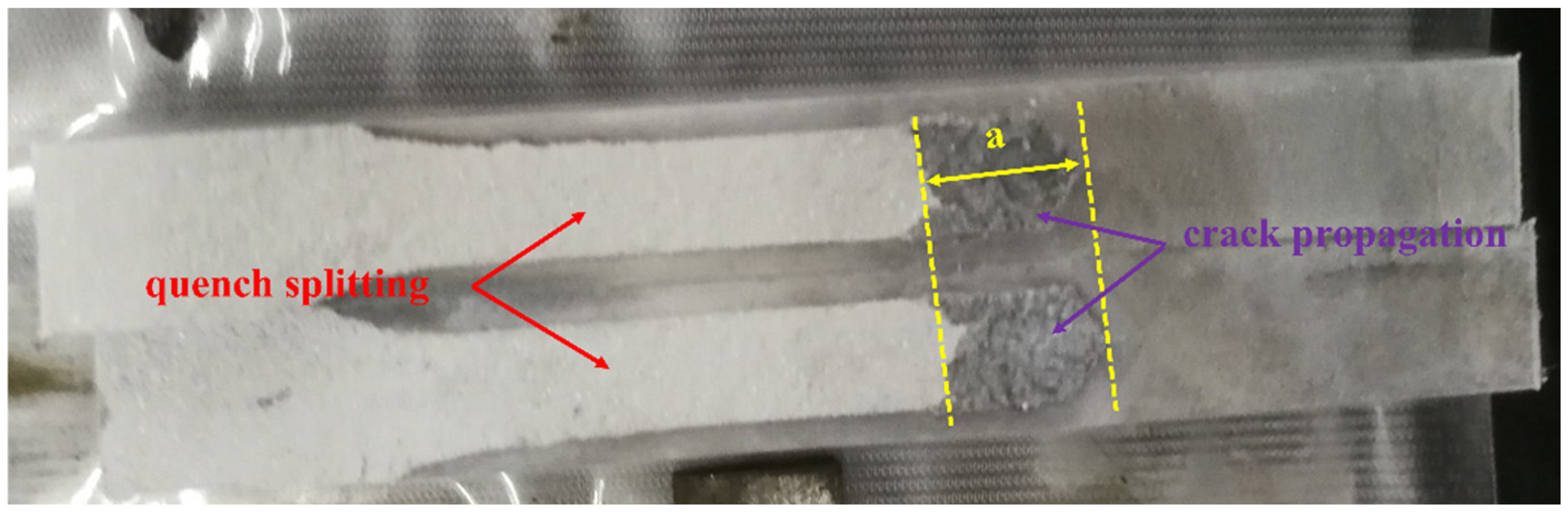
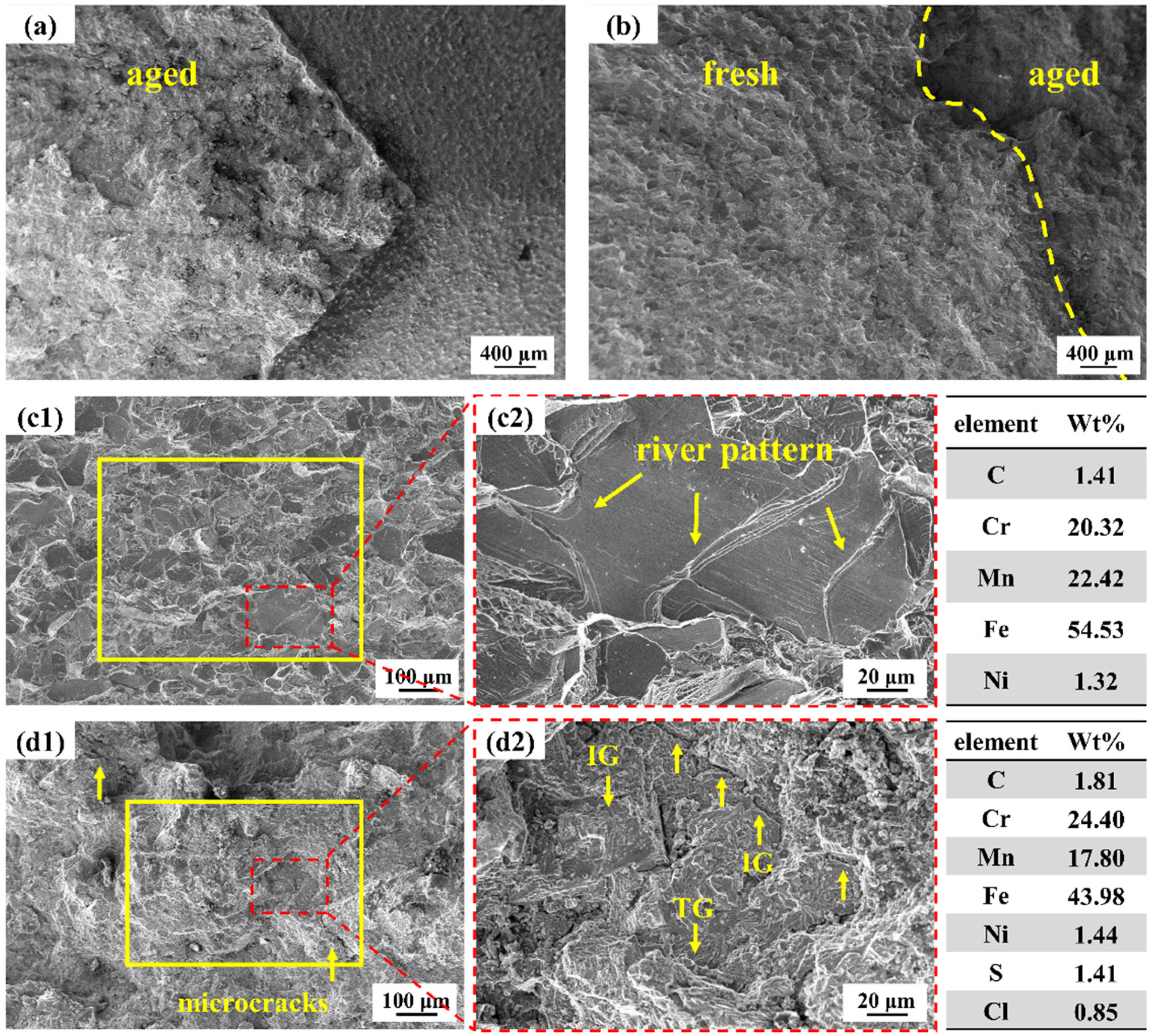
3.5. Confirmatory Experiment Result Analysis
4. Failure Mechanism Analysis
5. Measures and Recommendations
- (1)
- Material selection:
- (2)
- Compositional control:
- (3)
- Surface treatment:
- (4)
- Operational changes:
6. Conclusions
- (1)
- This investigation demonstrates that the axial cracking of the threaded joint resulted from chloride-induced SCC, which was critically enabled by high in-service tensile stresses and significantly exacerbated by the material’s high strength/hardness and non-standard P content.
- (2)
- The case highlights that for critical threaded connections in corrosive, high-stress downhole environments, facture toughness and SCC resistance in simulated service environments must be key selection criteria. A moderate reduction in strength/hardness for improved toughness can be a life-saving trade-off.
- (3)
- The case underscores the necessity of controlling both chloride ion concentrations in drilling fluids, and the importance of strictly adhering to recommended make-up torque procedures to avoid excessive assembly stress.
- (4)
- Nevertheless, this study still has certain limitations, including the constant-displacement FPB test that served as a qualitative pass/fail indicator but did not provide crack initiation kinetics. The potential synergistic role of hydrogen embrittlement in this specific chloride-sulfide environment also warrants further dedicated investigation. Based on these findings, future work should focus on: establishing quantitative, environment-specific threshold values for hardness and yield-to-tensile ratio for critical RSS threaded connections and conducting slow strain rate tests or monitoring crack initiation in FPB tests to better quantify SCC initiation susceptibility.
Author Contributions
Funding
Data Availability Statement
Conflicts of Interest
Nomenclature
| API | American Petroleum Institute |
| DCB | Double Cantilever Beam |
| EDS | Energy-Dispersive X-ray Spectroscopy |
| EAC | Environmentally Assisted Cracking |
| FPB | Four-Point Bend |
| KISCC | Threshold Stress Intensity Factor for Stress Corrosion Cracking |
| RSS | Rotary Steerable System |
| SCC | Stress Corrosion Cracking |
| SEM | Scanning Electron Microscopy |
| UTS | Ultimate Tensile Strength |
| YS | Yield Strength |
References
- Lindequist, D.; Selent, S. Did Shale Gas Green the U.S. Economy? Energy Econ. 2025, 145, 108388. [Google Scholar] [CrossRef]
- McMahon, T.P.; Larson, T.E.; Zhang, T.; Shuster, M. Geologic Characteristics, Exploration and Production Progress of Shale Oil and Gas in the United States: An Overview. Pet. Explor. Dev. 2024, 51, 925–948. [Google Scholar] [CrossRef]
- Zou, C.; Lin, M.; Ma, F.; Liu, H.; Yang, Z.; Zhang, G.; Yang, Y.; Guan, C.; Liang, Y.; Wang, Y.; et al. Development, Challenges and Strategies of Natural Gas Industry under Carbon Neutral Target in China. Pet. Explor. Dev. 2024, 51, 476–497. [Google Scholar] [CrossRef]
- Geng, H.; Zhang, B.; Xie, Y. Rotary Steerable Drilling Technology: Bottlenecks Breakthroughs and Intelligent Trends in China Shale Gas Development. Processes 2025, 13, 3471. [Google Scholar] [CrossRef]
- Zafarian, H.; Ameri, M.; Vaghasloo, Y.A. Error Reduction of Tracking Planned Trajectory in a Thin Oil Layer Drilling Using Smart Rotary Steerable System. J. Pet. Sci. Eng. 2021, 196, 107668. [Google Scholar] [CrossRef]
- Li, F.; Ma, X.; Tan, Y. Review of the Development of Rotary Steerable Systems. J. Phys. Conf. Ser. 2020, 1617, 012085. [Google Scholar] [CrossRef]
- Yang, J.; Meng, W.; Yao, M.; Gao, D.; Zhou, B.; Xu, Y. Calculation Method of Riser Top Tension in Deep Water Drilling. Pet. Explor. Dev. 2015, 42, 119–122. [Google Scholar] [CrossRef]
- Wada, R.; Kaneko, T.; Ozaki, M.; Inoue, T.; Senga, H. Longitudinal Natural Vibration of Ultra-Long Drill String during Offshore Drilling. Ocean Eng. 2018, 156, 1–13. [Google Scholar] [CrossRef]
- Song, J.; Liu, S.; He, Y.; Jiang, S.; Zhou, S.; Zhu, H. The State-of-the-Art Review on the Drill Pipe Vibration. Geoenergy Sci. Eng. 2024, 243, 213337. [Google Scholar] [CrossRef]
- Lv, S.; Ji, B.; Kang, Y.; Zhang, H.; Qin, T.; Chi, J.; Gong, J.; Yang, X. Cause Analysis on Drill Pipe Bending and Fracture. Eng. Fail. Anal. 2010, 17, 1483–1489. [Google Scholar] [CrossRef]
- Cai, M.; Mao, D.; Li, Y.; He, T.; He, M.; Tan, L. Study on the Expansion Characteristics of Oil-Based Drilling Fluid in HTHP Wellbore. Pet. Res. 2025. [Google Scholar] [CrossRef]
- Song, H.X.; Zhang, S.L.; Chen, X.W.; Wyclif, K.; Guo, J.X.; Xiong, R.Y.; Wang, L. Research on the Pollution and Damage Mechanism of Drilling Fluid on Casing during Ultra-Deep Well Drilling Process. Pet. Sci. 2025, 22, 1234–1251. [Google Scholar] [CrossRef]
- Vakili, M.; Koutník, P.; Kohout, J.; Gholami, Z. Analysis, Assessment, and Mitigation of Stress Corrosion Cracking in Austenitic Stainless Steels in the Oil and Gas Sector: A Review. Surfaces 2024, 7, 589–642. [Google Scholar] [CrossRef]
- Serafim, F.M.F.; Alabi, W.O.; Oguocha, I.N.A.; Odeshi, A.G.; Evitts, R.; Gerspacher, R.J.; Ohaeri, E.G. Stress Corrosion Cracking Behavior of Selected Stainless Steels in Saturated Potash Brine Solution at Different Temperatures. Corros. Sci. 2021, 178, 109025. [Google Scholar] [CrossRef]
- Wang, X.; Yang, Z.; Wang, Z.; Shi, Q.; Xu, B.; Zhou, C.; Zhang, L. The Influence of Copper on the Stress Corrosion Cracking of 304 Stainless Steel. Appl. Surf. Sci. 2019, 478, 492–498. [Google Scholar] [CrossRef]
- Roy, R.; Qu, H.J.; Mao, K.S.; Wharry, J.P. Chloride-Induced Stress Corrosion Crack Propagation Mechanisms in Austenitic Stainless Steel Are Mechanically Driven. Scr. Mater. 2025, 262, 116652. [Google Scholar] [CrossRef]
- Kryzhanivskyi, E.; Nykyforchyn, H.; Student, Z.; Krechkovska, H.V.; Chudyk, I.I. Role of Nonmetallic Inclusions in Premature Stress-Corrosion Fractures of Drill Pipes. Mater. Sci. 2020, 55, 822–830. [Google Scholar] [CrossRef]
- Yu, Z.; Zeng, D.; Hu, S.; Zhou, X.; Lu, W.; Luo, J.; Fan, Y.; Meng, K. The Failure Patterns and Analysis Process of Drill Pipes in Oil and Gas Well: A Case Study of Fracture S135 Drill Pipe. Eng. Fail. Anal. 2022, 138, 106171. [Google Scholar] [CrossRef]
- Liu, W.; Li, J.; Zhong, Y.; Shi, T.; Zhang, J.; Li, S. Failure Analysis on Aluminum Alloy Drill Pipe with Pits and Parallel Transverse Cracks. Eng. Fail. Anal. 2022, 131, 105809. [Google Scholar] [CrossRef]
- Wang, Y.; Chen, X.; Chen, W.; Pu, W.; Zeng, J.; Luo, J.; Zhang, H.; Zeng, D. Corrosion Failure Analysis of a Pressure-Resistant Cylinder for Measurement While Drilling Tools in Directional Drilling. Processes 2025, 14, 45. [Google Scholar] [CrossRef]
- Liu, Y.; Lian, Z.; Lin, T.; Shen, Y.; Zhang, Q. A Study on Axial Cracking Failure of Drill Pipe Body. Eng. Fail. Anal. 2016, 59, 434–443. [Google Scholar] [CrossRef]
- GB/T 11170-2008; Stainless Steel—Determination of Multi-Element Contents—Spark Discharge Atomic Emission Spectrometric Method (Routine Method). Standards Press of China: Beijing, China, 2008.
- ISO 6892-1:2019; Metallic Materials—Tensile Testing—Part 1: Method of Test at Room Temperature. International Organization for Standardization: Geneva, Switzerland, 2019.
- GB/T 230.1-2018; Metallic Materials—Rockwell Hardness Test—Part 1: Test Method. Standards Press of China: Beijing, China, 2018.
- GB/T 229-2020; Metallic Materials—Charpy Pendulum Impact Test Method. Standards Press of China: Beijing, China, 2020.
- GB/T 40403-2021; Corrosion of Metals and Alloys—Methodology for Determining the Resistance of Metals to Stress Corrosion Cracking Using the Four-Point Bend Method. Standards Press of China: Beijing, China, 2021.
- NACE TM 0316-2023; Four-Point Bend Testing of Materials for Oil and Gas Applications. NACE International: Houston, TX, USA, 2023.
- ISO 15156-2:2020; Petroleum and Natural Gas Industries—Materials for Use in H2S-Containing Environments in Oil and Gas Production—Part 2: Cracking-Resistant Carbon and Low-Alloy Steels, and the Use of Cast Irons. International Organization for Standardization: Geneva, Switzerland, 2020.
- Zhou, C.; Huang, Q.; Guo, Q.; Zheng, J.; Chen, X.; Zhu, J.; Zhang, L. Sulphide Stress Cracking Behaviour of the Dissimilar Metal Welded Joint of X60 Pipeline Steel and Inconel 625 Alloy. Corros. Sci. 2016, 110, 242–252. [Google Scholar] [CrossRef]
- Ding, J.; Zhang, L.; Li, D.; Lu, M.; Xue, J.; Zhong, W. Corrosion and Stress Corrosion Cracking Behavior of 316L Austenitic Stainless Steel in High H2S-CO2-Cl− Environment. J. Mater. Sci. 2013, 48, 3708–3715. [Google Scholar] [CrossRef]
- Galakhova, A.; Prattes, K.; Mori, G. High-Temperature High-Pressure SCC Testing of Corrosion-Resistant Alloys. Mater. Corros. 2021, 72, 1831–1842. [Google Scholar] [CrossRef]
- NACE TM 0177-2016; Laboratory Testing of Metals for Resistance to Sulfide Stress Cracking and Stress Corrosion Cracking in H2S Environments. NACE International: Houston, TX, USA, 2016.
- GB/T 15970.6-2007; Corrosion of Metals and Alloys—Stress Corrosion Testing—Part 6: Preparation and Use of Pre-Cracked Specimens for Tests Under Constant Load or Constant Displacement. Standards Press of China: Beijing, China, 2007.
- Zhou, G.Y.; Wang, X.T.; Cao, G.H.; Russell, A.M.; Luo, M.; Dong, X.M.; Zhang, Z.H. Effect of Double Tempering Process on Sulfide Stress Cracking Susceptibility in API-5CT-C110 Casing Steel. Corros. Sci. 2023, 219, 111208. [Google Scholar] [CrossRef]
- Wang, Z.; Wang, P.; Zeng, D.; Shi, T.; Deng, W. A Study on the Influential Factors of Stress Corrosion Cracking in C110 Casing Pipe. Materials 2022, 15, 801. [Google Scholar] [CrossRef]
- American Petroleum Institute. API Spec 7-1; Specification for Rotary Drill Stem Elements; API Publishing Services: Washington, DC, USA, 2011. [Google Scholar]
- Manuel, Q.A.L.; Noé, R.O.J.; Del Rosario, D.A.Y.; Ariadna, A.J.I.; Vicente, G.F.; Icoquih, Z.P. Analysis of the Physicochemical, Mechanical, and Electrochemical Parameters and Their Impact on the Internal and External Scc of Carbon Steel Pipelines. Materials 2020, 13, 5771. [Google Scholar] [CrossRef]
- Mohtadi-Bonab, M.A. Effects of Different Parameters on Initiation and Propagation of Stress Corrosion Cracks in Pipeline Steels: A Review. Metals 2019, 9, 590. [Google Scholar] [CrossRef]
- Xu, A.; Wan, Y.; Li, B.; Yang, X.; Ye, M.; Song, X. Stress Ratio Effect on Fatigue Crack Growth Behavior for Steels Related to Yield-to-Tensile Strength Ratio and Fracture Toughness. Theor. Appl. Fract. Mech. 2025, 139, 105015. [Google Scholar] [CrossRef]
- Wang, X.; Li, F.; Liu, Y.; Feng, Y.; Zhu, L. A Comprehensive Analysis on the Longitudinal Fracture in the Tool Joints of Drill Pipes. Eng. Fail. Anal. 2017, 79, 1–7. [Google Scholar] [CrossRef]
- Souza, S.M.C.; Cavalcanti, E.H.D.S.; Abud, I.C.; Centeno, R.O.; Alves, M.R.; Zamora, C.A. Failure Analysis in Heavy-Weight Drillpipes during Drilling Operation of off-Shore Oil Well. In Proceedings of the NACE-International Corrosion Conference Series, San Diego, CA, USA, 16–20 March 2003. [Google Scholar]
- Villalba, R.; Díaz, Y.; Peñalver, J.R. Bad Practices in Drilling Operation Promoting Corrosion Failures under High Stress. In Proceedings of the NACE-International Corrosion Conference Series, Houston, TX, USA, 3–7 April 2005. Volume 2005-April. [Google Scholar]
- Zhang, N.; Zeng, D.; Xiao, G.; Shang, J.; Liu, Y.; Long, D.; He, Q.; Singh, A. Effect of Cl- Accumulation on Corrosion Behavior of Steels in H2S/CO2 Methyldiethanolamine (MDEA) Gas Sweetening Aqueous Solution. J. Nat. Gas. Sci. Eng. 2016, 30, 444–454. [Google Scholar] [CrossRef]
- Wang, S.; Zhang, G.; Fu, A.; Liu, Z.; Cao, X. The Corrosion and Tribological Behaviors of DLC Film in CO2 Saturated NaCl Solution with High Cl− Concentration. Diam. Relat. Mater. 2024, 144, 111016. [Google Scholar] [CrossRef]
- GB/T 20972.3-2025; Petroleum and Natural Gas Industries—Materials for Use in H2S-Containing Environments in Oil and Gas Production—Part 3: Cracking-Resistant CRAs (Corrosion-Resistant Alloys) and Other Alloys. Standards Press of China: Beijing, China, 2025.
- GB/T 19830-2023; Petroleum and Natural Gas Industries—Steel Pipes for Use as Casing or Tubing for Wells. Standards Press of China: Beijing, China, 2023.
- Ziomek-Moroz, M. Environmentally Assisted Cracking of Drill Pipes in Deep Drilling Oil and Natural Gas Wells. J. Mater. Eng. Perform. 2012, 21, 1061–1069. [Google Scholar] [CrossRef]
- Liu, H.; Wang, B.; Ding, B.; Zheng, T.; Wen, C.; Zhang, H. Failure Behavior Analysis of the Main Shaft Threaded Joint of Ultra-Deep Top Drive Drilling Rig under Complex Loading Conditions. Eng. Fail. Anal. 2025, 182, 110090. [Google Scholar] [CrossRef]
- Pilkey, W.D.; Pilkey, D.F.; Bi, Z. Peterson’s Stress Concentration Factors; John Wiley & Son: Hoboken, NJ, USA, 2020. [Google Scholar]
- Timoshenko, S.P.; Goodier, J.N. Theory of Elasticity, 3rd ed.; McGraw-Hill: New York, NY, USA, 1970. [Google Scholar]
- MacDonald, K.A.; Deans, W.F. Stress analysis of drillstring threaded connections using the finite element method. Eng. Fail. Anal. 1995, 2, 1–30. [Google Scholar] [CrossRef]
- Li, X.; Li, C.Y.; Qi, T.G.; Zhou, Q.S.; Liu, G.H.; Peng, Z.H. Reaction Behavior of Pyrite during Bayer Digestion at High Temperature. Zhongguo Youse Jinshu Xuebao/Chin. J. Nonferrous Met. 2013, 23, 829–835. [Google Scholar]
- Ssemanobe, J.P.; Mutua, J.M.; Mose, B.R.; Olakanmi, E.O. Synergistic Effects of Chloride Ingress and Copper Deposition on Stress Corrosion Cracking in SA 210 Gr A1 Boiler Tubes. Eng. Fail. Anal. 2025, 179, 109761. [Google Scholar] [CrossRef]
- Li, H.; Xu, H.; Li, Z.; Wang, X.; Song, F.; Zhou, Y.; Tang, J.; Gong, J. Degradation of 316 L Steel under Corrosion-Creep Interaction in Solar Salt: Effects of Stress Levels and Chloride Impurities. J. Energy Storage 2025, 138, 118492. [Google Scholar] [CrossRef]
- Bulloch, J.H. Some Effects of Yield Strength on the Stress Corrosion Cracking Behaviour of Low Alloy Steels in Aqueous Environments at Ambient Temperatures. Eng. Fail. Anal. 2004, 11, 843–856. [Google Scholar] [CrossRef]



| Element | |||||||||||||
|---|---|---|---|---|---|---|---|---|---|---|---|---|---|
| C | P | S | Si | Ni | Cr | Mo | Al | Mn | Cu | V | Ti | Fe | |
| Content | 0.06 | 0.03 | 0.015 | 0.20 | 1.84 | 17.5 | 0.10 | 0.02 | 14.4 | 0.16 | 0.14 | 0.002 | Bal. |
| API Spec 7-1 | - | ≤0.02 | ≤0.015 | - | - | - | - | - | - | - | - | - | - |
| Sample | Non-Metallic Inclusions | Metallographic Structure | Grain Size (Grade) | |||||||||
|---|---|---|---|---|---|---|---|---|---|---|---|---|
| A | B | C | D | DS | ||||||||
| Thin | Thick | Thin | Thick | Thin | Thick | Thin | Thick | Thin | Thick | |||
| Horizontal | - | - | - | - | - | - | - | 1.0 | - | - | Austenite | 4.0 |
| Vertical | - | - | - | - | - | - | 1.0 | - | - | - | Austenite | 4.0 |
| Test Result | Yield Strength (MPa) | Tensile Strength (MPa) | Elongation After Fracture (%) | Impact Test Result KV2 (J) | Hardness (HRC) |
|---|---|---|---|---|---|
| Test value | 1159 | 1163 | 18.2 | 216.59 | 38.5 |
| Number | a/mm | D/mm | d/mm | h/mm | B/mm | Bn/mm | KISCC | |
|---|---|---|---|---|---|---|---|---|
| Measured Value | Average Value | |||||||
| 1 | 37.02 | 17.50 | 17.95 | 12.28 | 9.50 | 6.16 | 25.34 | 24.14 |
| 2 | 37.04 | 17.47 | 17.92 | 12.31 | 9.49 | 6.21 | 22.23 | |
| 3 | 36.91 | 17.50 | 17.92 | 12.30 | 9.50 | 6.11 | 24.84 | |
| Parameter | Value |
|---|---|
| Pitch (p) | 5.08 mm |
| Pitch diameter (d2) | 114.3 mm |
| Inner radius of female thread (r1) | 50.8 mm |
| Outer radius of female thread (r2) | 63.5 mm |
| Thread engagement length (L) | 63.5 mm |
| Makeup torque (T) | 24,400 N·m |
| Friction coefficient (μ) | 0.12 |
| Stress concentration factor (Kt) | 1.37 [49] |
Disclaimer/Publisher’s Note: The statements, opinions and data contained in all publications are solely those of the individual author(s) and contributor(s) and not of MDPI and/or the editor(s). MDPI and/or the editor(s) disclaim responsibility for any injury to people or property resulting from any ideas, methods, instructions or products referred to in the content. |
© 2026 by the authors. Licensee MDPI, Basel, Switzerland. This article is an open access article distributed under the terms and conditions of the Creative Commons Attribution (CC BY) license.
Share and Cite
Jiang, Y.; Zheng, H.; Luo, J.; Zhang, K.; Du, Z.; Liu, W.; Yu, Z.; Zeng, D. Environmental Cracking Failure Analysis of Stainless Steel Threaded Joint in Rotary Steerable Tool. Processes 2026, 14, 684. https://doi.org/10.3390/pr14040684
Jiang Y, Zheng H, Luo J, Zhang K, Du Z, Liu W, Yu Z, Zeng D. Environmental Cracking Failure Analysis of Stainless Steel Threaded Joint in Rotary Steerable Tool. Processes. 2026; 14(4):684. https://doi.org/10.3390/pr14040684
Chicago/Turabian StyleJiang, Yuhong, Hualin Zheng, Jiancheng Luo, Ke Zhang, Zhengpeng Du, Wei Liu, Zhiming Yu, and Dezhi Zeng. 2026. "Environmental Cracking Failure Analysis of Stainless Steel Threaded Joint in Rotary Steerable Tool" Processes 14, no. 4: 684. https://doi.org/10.3390/pr14040684
APA StyleJiang, Y., Zheng, H., Luo, J., Zhang, K., Du, Z., Liu, W., Yu, Z., & Zeng, D. (2026). Environmental Cracking Failure Analysis of Stainless Steel Threaded Joint in Rotary Steerable Tool. Processes, 14(4), 684. https://doi.org/10.3390/pr14040684