


Abstract
During the mid-to-late stages of oilfield development, reservoir energy depletion and declining formation pressure coefficients are prevalent challenges. To address the issues of severe fluid loss and extended post-workover fluid recovery periods during conventional operations such as thermal wax removal and pump inspection in low-pressure, waxy wells within a specific block of the Xinjiang Oilfield, a dynamic loss analysis model for workover fluids was developed. Additionally, a wash pressure control valve was engineered to meet the requirements for squeeze killing under abnormal conditions, and an integrated anti-leakage tubing string was designed. This system effectively isolates the workover fluid from the reservoir during interventions, thereby significantly reducing fluid loss and enhancing operational safety. Field applications demonstrate that this technology reduces workover fluid loss by 96% during thermal wax removal and shortens the average post-workover fluid recovery period by 8.7 days after pump inspection. This technology enables rapid restoration of well productivity, lowers operational costs for thermal wax removal and pump inspection, and provides an effective solution for maintaining low-pressure, waxy wells.
1. Introduction
With the advancement of oilfield development, the sustained decline in reservoir energy has led to a marked increase in the frequency of conventional well maintenance operations, including thermal wax removal [1,2] and pump inspection, required to sustain normal production. When performing these interventions in low-pressure reservoirs, significant loss of workover fluid into the formation occurs [3] if the wellbore fluid column pressure exceeds the formation pressure. This not only reduces operational efficiency but also causes formation damage and prolonged post-workover fluid recovery periods, which severely constrain the economic performance of oilfield development [4].
In most blocks of the No. 1 Oil Production Plant in the Xinjiang Oilfield, formation energy has declined, leading to frequent issues during operations, such as poor efficiency in thermal wax removal for waxy wells and severe workover fluid loss. Statistics from thermal wax removal operations in 14 waxy wells in one block of the plant indicate an average fluid loss rate of 85.5%, with some wells exhibiting a return volume of less than 10% of the injected volume. This leads to ineffective wax removal and increased operational costs. Furthermore, an analysis of pump inspection operations in 184 wells reveals that 29.3% experience post-workover fluid recovery periods exceeding 7 days, with the longest reaching 48 days, severely disrupting normal production schedules. Therefore, research on anti-leakage technologies for low-pressure, waxy wells is of significant practical engineering importance.
To address fluid loss during operations in low-pressure and waxy wells, researchers both domestically and internationally have investigated various approaches, including anti-pollution tubing strings [5,6,7,8,9,10,11,12,13], low-density workover fluids [14,15,16], temporary plugging agents [17,18,19], and fluid loss prediction models [20,21,22,23,24,25,26]. Low-density workover fluids control fluid loss by reducing the hydrostatic pressure of the fluid column in the well during operations, thereby decreasing the driving force for fluid invasion into the formation. Temporary plugging agents work by temporarily sealing high-permeability zones in the reservoir, thereby increasing resistance to fluid loss. In practical applications, however, both low-density workover fluids and temporary plugging agents entail high operational costs and carry the risk of secondary formation damage, thereby limiting their widespread field application.
Anti-leakage process technology reduces workover fluid loss during operations by optimizing tubing string configuration and key tool placement. It utilizes mechanical isolation to create a physical barrier that blocks leakage pathways. This technology primarily comprises two types: retrievable and single-trip tubing string systems. Research on retrievable anti-leakage tubing strings has primarily focused on structural optimization of packers and leakage control valves. He [5] designed an anti-pollution tubing string based on a retrievable large-bore packer, allowing pump setting depth to be independent of the anti-leakage string’s position. Yan [6] and Luo [7] designed mechanical and pressure-differential anti-leakage valves, respectively, to meet the requirements of separate zone production and acidizing operations. Research on single-trip anti-leakage tubing strings has mainly focused on packer selection, tubing string creep control, and anti-leakage valve design. Xu [8] proposed an anti-pollution tubing string that employs a JY342 packer and a check valve, incorporating a compensator to mitigate the effects of tubing creep on operational effectiveness. Furthermore, other researchers have designed anti-leakage valves with various structures to meet the requirements of specialized processes such as heavy oil thermal recovery [9], acidizing [10], snubbing operations [11], and fracturing [12]. Kan [13] developed a non-restrictive down-pump leakage control device, reducing flow resistance caused by the anti-leakage valve during production. A comparison of the two technologies is presented in Table 1. The application of retrievable strings is limited by well conditions such as sand production and scaling, which can affect the success rates of valve actuation and packer retrieval. Consequently, single-trip anti-leakage tubing strings are predominantly used in field applications.
Table 1.
A comparison of anti-leakage process technology.
The application of anti-leakage process technology is limited by its scope and implementation conditions, requiring customized designs tailored to actual field circumstances. Furthermore, current anti-leakage tubing strings pose safety hazards in terms of well control. When water channeling occurs in the formation or gas content suddenly increases, the inability of current tubing string designs to support circulation well killing may lead to well control incidents, such as overflow, during operations. Therefore, it is necessary to develop anti-leakage process technology suitable for on-site thermal wax removal and pump inspection operations. This technology should be based on optimized anti-leakage valve structures and account for the low-pressure, waxy conditions of wells in the No. 1 Oil Production Plant of the Xinjiang Oilfield. This is important for improving wax removal efficiency, reducing workover fluid loss, and enhancing operational safety.
2. Analysis Model for Workover Fluid Loss
Researchers have established various mathematical models for different formation types and fluid loss mechanisms [27,28,29]. However, most existing models predominantly focus on fluid loss during drilling operations, with relatively few studies specifically addressing fluid loss during workover interventions. Furthermore, these analytical models are primarily based on steady-state assumptions and do not account for the real-time dynamic variations inherent in workover procedures. Consequently, there is a clear need to develop a dynamic fluid loss analysis model that incorporates the specific characteristics of workover operations, thereby providing a crucial theoretical foundation for field applications.
In the context of the Xinjiang Oilfield, where permeability leak-off is the dominant fluid loss mechanism, the fluid loss rate during workover operations is expressed as follows:
In the formula, is the fluid loss rate (m3/h), is the formation permeability (mD), is the effective reservoir thickness (m), is the fluid viscosity (mPa·s), is the invasion radius (m), is the wellbore radius (m), is the bottom-hole pressure (MPa), and is the reservoir pressure (MPa).
The workover process involves multiple operational steps accompanied by dynamic changes in downhole conditions. The associated fluid loss process can be divided into three stages: in situ fluid displacement, workover fluid circulation, and workover string retrieval.
2.1. In Situ Fluid Displacement Stage
During operations such as circulation washing or pump inspection, workover fluid must be injected into the well to displace the original wellbore fluids. Before fluid displacement begins, the bottom-hole pressure is in equilibrium with the reservoir pressure.
In the formula, is the initial fluid density in the well (kg/m3), is the acceleration due to gravity (m/s2), and is the initial static liquid column height (m).
As workover fluid continues to be injected, the fluid level in the wellbore gradually rises, leading to a progressive increase in bottom-hole pressure. The time required for the fluid level to rise from its initial position to the wellhead is denoted as . After the fluid level reaches the wellhead, injection continues until the original fluid in the well is completely displaced; the time required for this stage is denoted as .
In the formula, denotes the time required for the fluid level in the wellbore to rise to the wellhead (s), represents the time needed to displace the original fluid after the wellbore is completely filled (s), is the cross-sectional area of the wellbore (m2), is the mid-depth of the reservoir (m), and is the injection flow rate (m3/s).
Before the fluid level reaches the wellhead, the wellbore is not fully filled with workover fluid. The bottom-hole pressure during this stage consists of the hydrostatic pressure from the original in situ fluid plus the additional pressure from the injected workover fluid column. The bottom-hole pressure during the rise in fluid level is expressed as follows:
In the formula, is the fluid density (kg/m3).
The workover fluid loss volume during the time period is calculated as follows:
After the fluid level reaches the wellhead and the wellbore is fully filled with workover fluid, displacement of the in situ wellbore fluids continues. As the original fluid is progressively replaced by the higher density workover fluid, the average fluid density in the wellbore increases, causing the bottom-hole pressure to continue rising. The bottom-hole pressure during the complete displacement of in situ fluid by workover fluid is expressed as follows:
The workover fluid loss volume during the time period is calculated as follows:
The total workover fluid loss volume during the in situ fluid displacement stage is calculated as follows:
2.2. Workover Fluid Circulation Stage
After completion of in situ fluid displacement, the operation proceeds to the circulation stage. During this stage, the bottom-hole pressure remains stable, determined by the wellhead pump pressure, the hydrostatic column pressure, and annular friction pressure loss. The duration of this stage, , is defined by specific operational requirements.
The bottom-hole pressure during the circulation stage is expressed as follows:
In the formula, is the bottom-hole pressure during the circulation stage (MPa), is the wellhead pump pressure (MPa), and is the annular friction pressure loss (MPa).
The volume of workover fluid lost during the circulation stage is expressed as follows:
2.3. Workover String Retrieval Stage
After completion of the circulation operation, the process enters the workover string retrieval stage. During this stage, pumping of workover fluid into the well is stopped. As the string is pulled out, the fluid level gradually declines, causing the bottom-hole pressure to decrease correspondingly. After the entire workover string has been retrieved, the static fluid level height at this stage, due to the change in workover fluid density, is expressed as follows:
The volume of workover fluid lost during the string retrieval stage is expressed as follows:
In the formula, is the static fluid level height in the well after the operation (m), is the cross-sectional area of the tubing (m2), is the cross-sectional area of the sucker rod (m2), and is tubing depth (m).
The total volume of workover fluid lost during the entire workover operation is the algebraic sum of the losses from the three stages, expressed as follows:
3. Design of Anti-Leakage Tubing String
To address the severe fluid loss encountered during thermal wax removal and pump inspection operations in low-pressure wells, an anti-leakage tubing string was designed based on the principle of “maintaining connection with the reservoir during production while isolating it during interventions”. This tubing string effectively isolates the workover fluid in the wellbore from the reservoir during thermal wax removal and pump inspection operations. It thereby reduces fluid loss, shortens post-workover fluid recovery periods, and enhances well control safety.
3.1. Structure of Anti-Leakage Tubing String
3.1.1. Overall Configuration
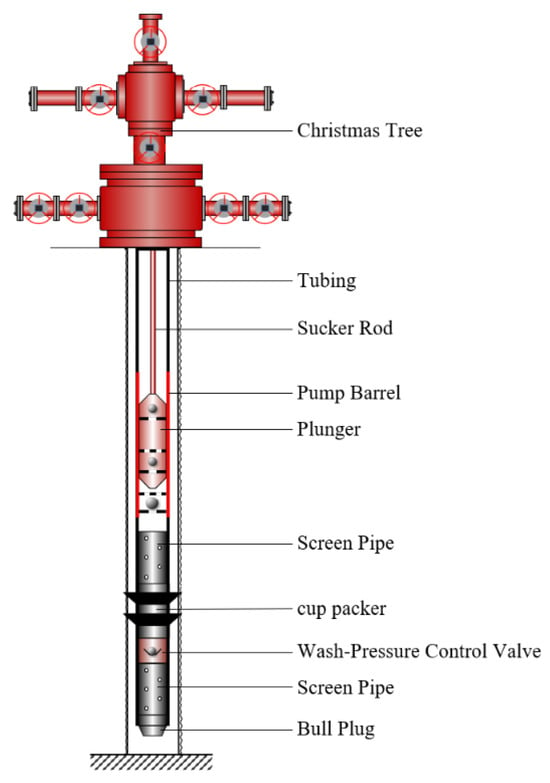
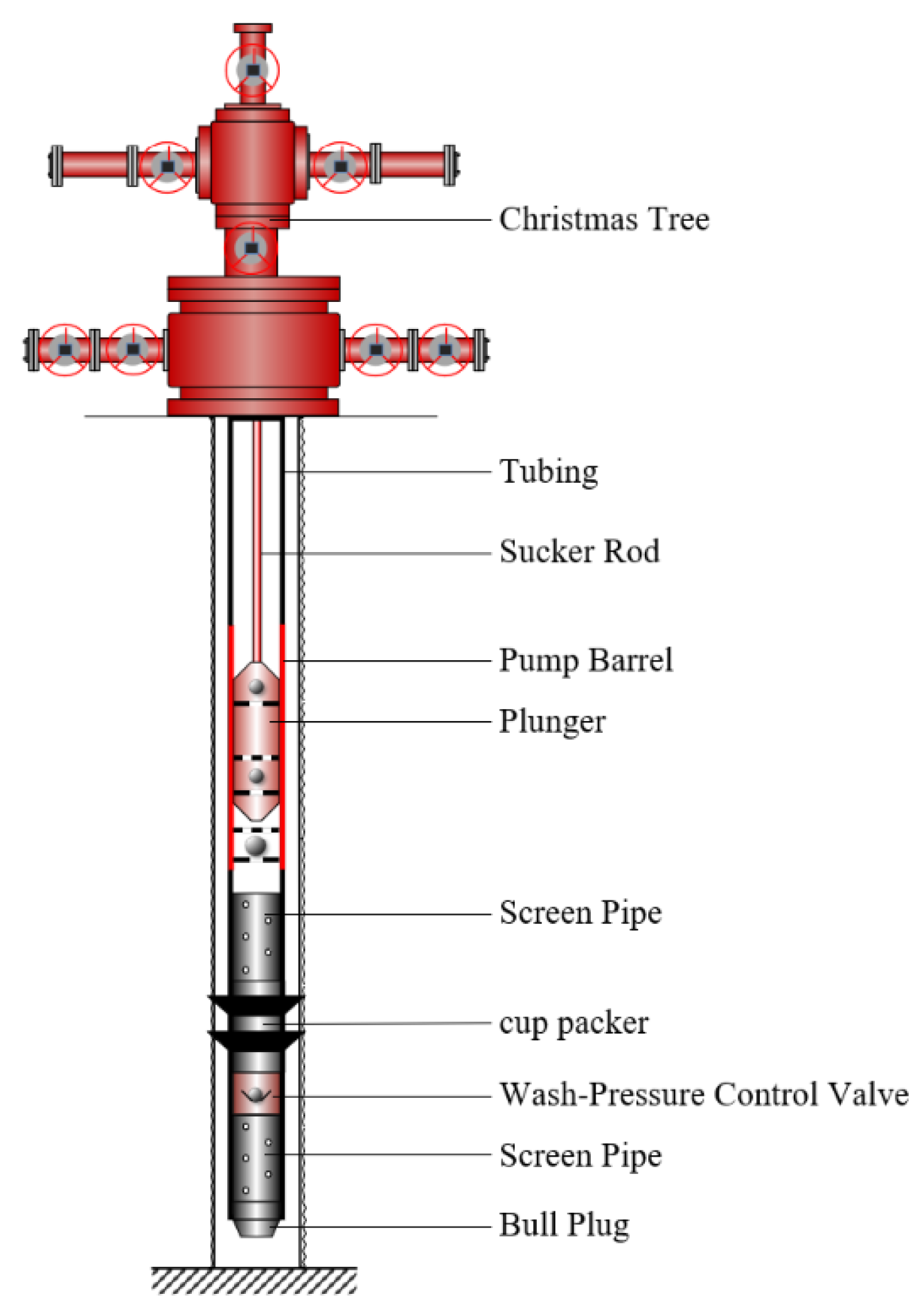
The anti-leakage tubing string is illustrated in Figure 1. It primarily consists of a cup packer, a wash pressure control valve, a screen pipe, a tail pipe, and a bull plug. During thermal wax removal and pump inspection operations, the cup packer isolates the annulus between the tubing and casing, preventing fluid loss through this pathway. The wash pressure control valve remains open during production to provide a flow channel but seals the internal tubing space during thermal wax removal and pump inspection, preventing fluid loss through the tubing. This anti-leakage tubing string not only meets the requirements of artificial lift processes but also minimizes the contact time between wellbore fluids and the reservoir during thermal wax removal and pump inspection operations, thereby addressing the needs of both production and workover in low-pressure wells.
Figure 1.
Overall configuration of anti-leakage tubing.
3.1.2. Design of Wash Pressure Control Valve
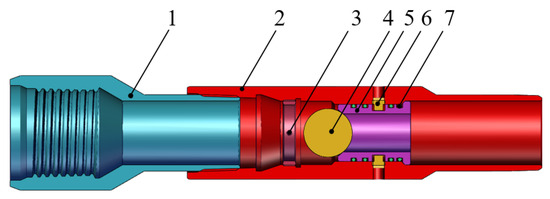
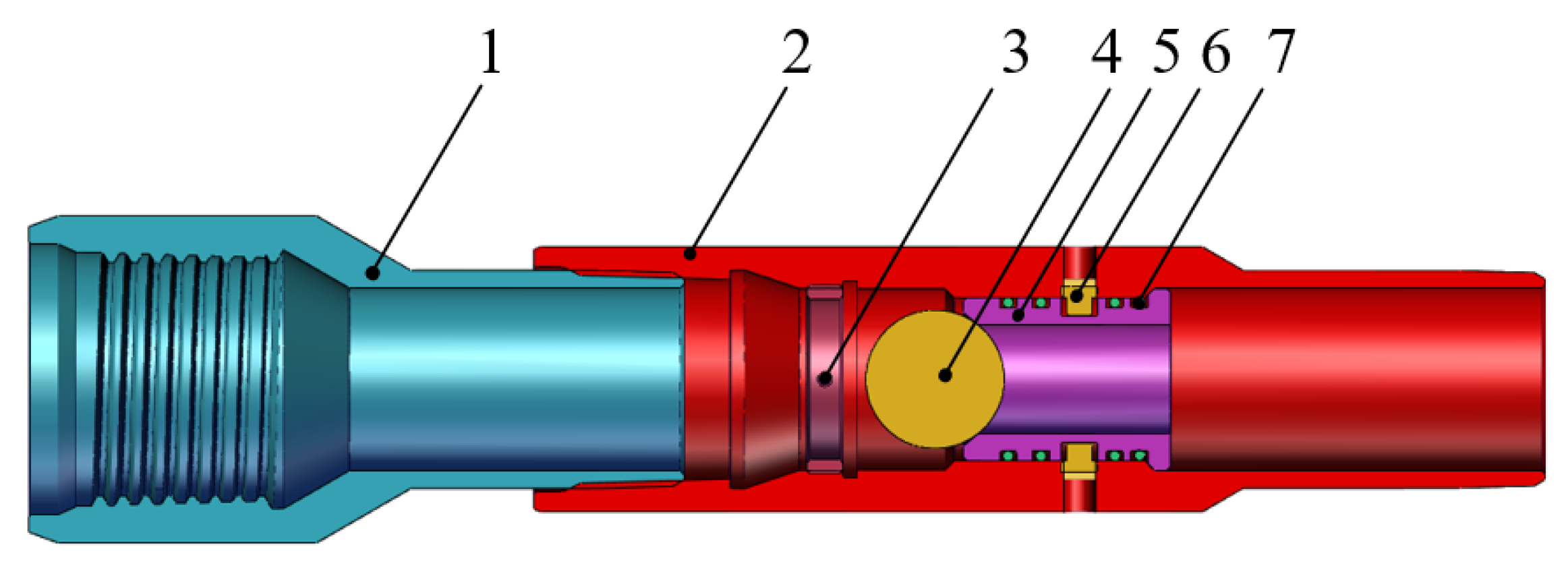
The wash pressure control valve is a key downhole tool that regulates fluid flow and balances wellbore pressure during both production and workover operations. Its core function relies on pressure differential actuation and typically employs a ball-and-seat mechanical sealing structure for well control. The configuration of the wash pressure control valve is shown in Figure 2. Currently, field-deployed anti-leakage valves commonly feature a unidirectional flow path design, which prevents well killing or squeeze operations under abnormal conditions, posing a well control risk. In contrast, the wash pressure control valve incorporates a shearable pin mechanism while retaining its anti-leakage functionality. During production and well washing stages, its operating mode is consistent with that of conventional anti-leakage valves, relying on pressure differentials to open, close, and seal the valve ball. When well killing is required, pressure can be applied to create a differential that reaches a preset threshold, thereby establishing a fluid injection channel. This enables squeeze killing operations and enhances well control safety. The technical specifications of the wash pressure control valve are listed in Table 2.
Figure 2.
Schematic diagram of wash pressure control valve. 1—adapter sub; 2—upper sub; 3—retaining ring; 4—valve ball; 5—valve seat; 6—shear pin; 7—outer seal.
Table 2.
Specifications for operating conditions of wash pressure control valve.
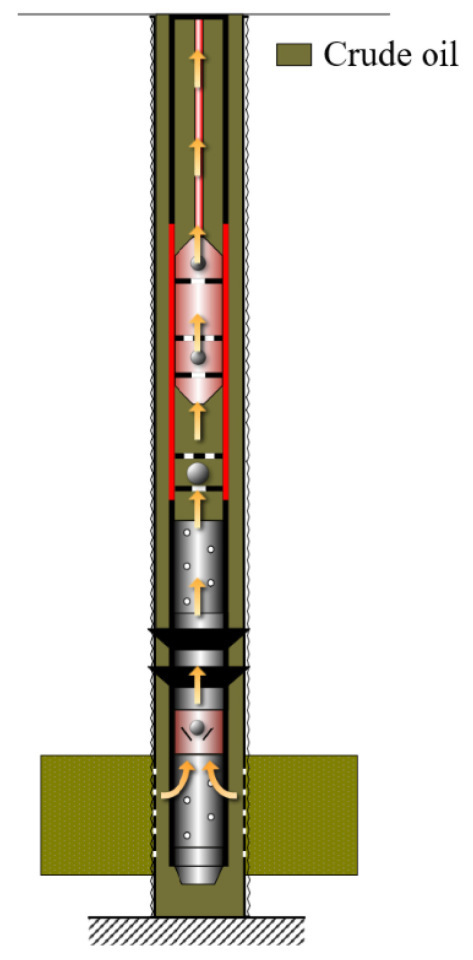
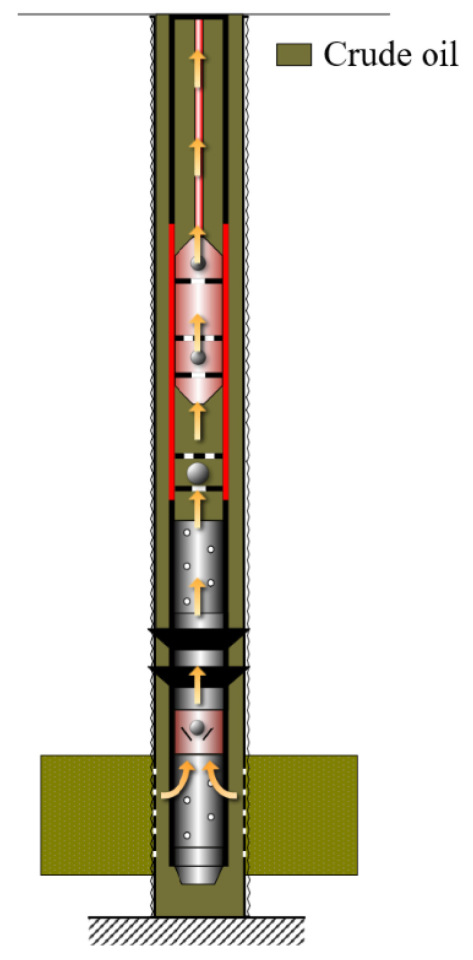
During the production phase, the upstroke of the pump plunger creates a pressure differential that lifts the valve ball off its seat, thereby opening the wash pressure control valve and establishing a flow channel. This allows crude oil to enter the tubing string.
During well washing operations, when the pressure differential between the tubing above the valve and the reservoir pressure below falls below the valve’s opening pressure, the valve ball is forced against its seat. This sealing force—resulting from the combined effects of wellbore fluid pressure and the valve ball’s weight—creates a reliable seal. This effectively prevents washing fluid from leaking into the reservoir.
During well killing operations, pressure is applied through the annulus. When the resulting pressure differential across the wash pressure control valve exceeds the preset threshold, the shear pins rupture. Once the pins are sheared, the kill fluid channel opens, enabling squeeze killing operations within the tubing string.
3.1.3. Design of Cup Packer
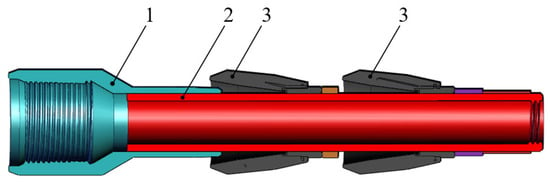
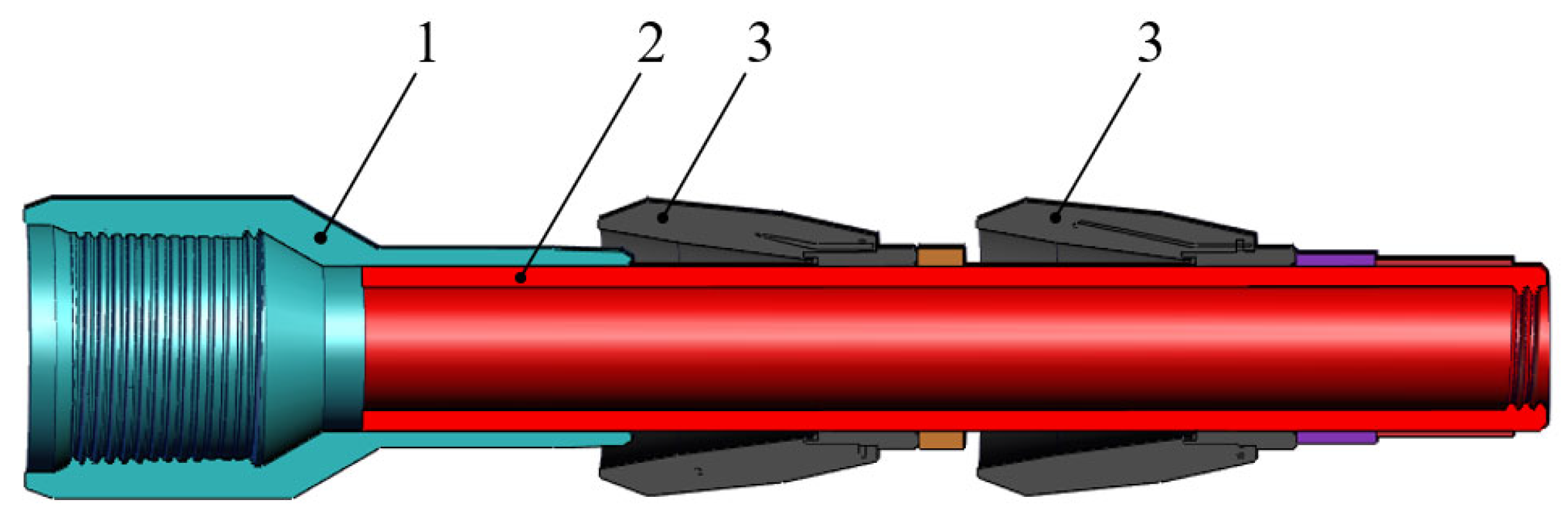
The structure of the cup packer is shown in Figure 3. Its primary function is to isolate the annulus during operations. This design enables reliable setting without complex procedures, thereby simplifying field operations and providing a cost-effective sealing solution for short-term workover requirements. The technical specifications of the cup packer are listed in Table 3.
Figure 3.
Schematic diagram of cup packer. 1—adapter sub; 2—tubing; 3—cup packer.
Table 3.
Specifications for operating conditions of cup packer.
The cup packer operates on a self-sealing principle. After being lowered to the target depth in the wellbore, the cup packer achieves an initial seal through interference fit. During operations, when the pressure above the packer exceeds that below it, the sealing element expands radially, forming a tighter seal against the casing wall. Retrieval is accomplished simply by pulling the tubing string, which brings the packer out of the well.
3.2. Functions of Anti-Leakage Tubing String
The innovative feature of this tubing string design is the integration of the cup packer and the wash pressure control valve, which provides a dual sealing mechanism for both the tubing–casing annulus and the internal tubing bore. This integrated structure enables reservoir isolation, controlled thermal washing, and safe well killing.
3.2.1. Reservoir Connectivity During Production
During the production phase, the upstroke of the sucker rod pump plunger reduces the pressure inside the tubing string. This pressure differential automatically opens the wash pressure control valve, establishing a flow path to the reservoir. Subsequently, crude oil—driven by this differential pressure—enters the tubing after being filtered by the screen pipe and passing through the open valve and is finally lifted to the wellhead. The entire production process is illustrated in Figure 4.
Figure 4.
Schematic diagram of tubing string during production.
3.2.2. Reservoir Isolation During Operations
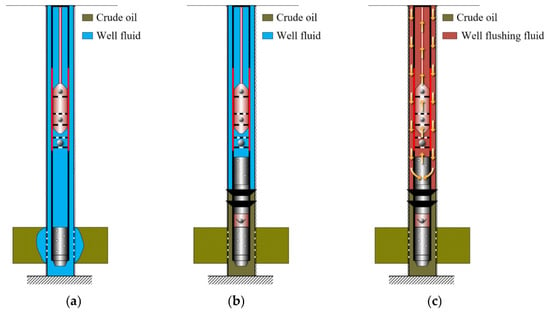
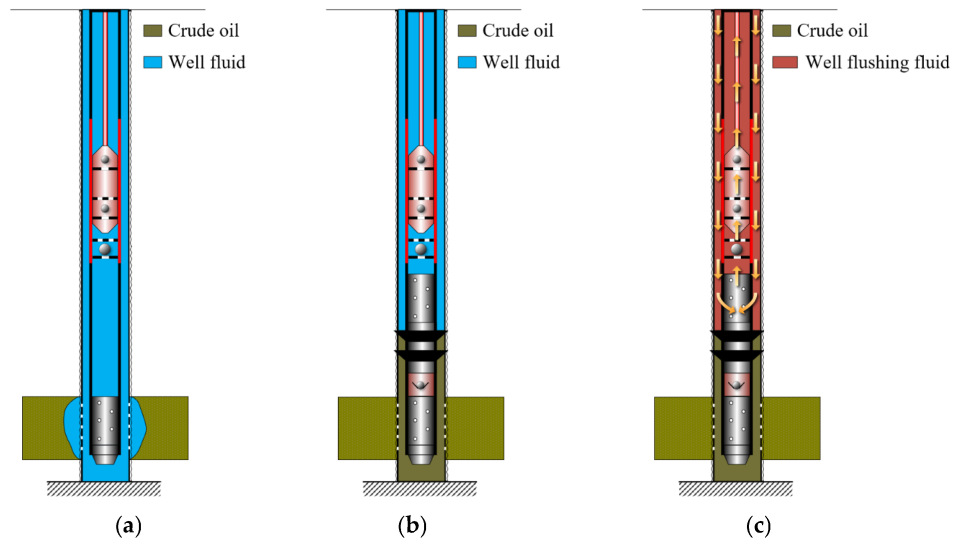
During well intervention operations, such as hot washing for wax removal and pump inspection, wellbore fluids may leak into the formation when the bottom-hole pressure exceeds the reservoir pressure. This can lead to significant fluid loss and potential formation damage; the initial condition is illustrated in Figure 5a. To address this challenge, the leak-proof workover string uses key tools in a coordinated manner to partition the wellbore into two independent pressure systems during operations (Figure 5b), thereby establishing a fully sealed circulation loop that remains completely isolated from the reservoir (Figure 5c). The circulation loop is initiated by injecting fluid through the annulus. The fluid is then diverted by the cup packer into the tubing and ultimately returns to the wellhead through the tubing string.
Figure 5.
Operational schematic of tubing string during well intervention. (a) Fluid loss in conventional string. (b) Reservoir isolation. (c) Well flushing circulation process.
The integrity of this sealed system is achieved through two critical components. Activated by well fluid pressure, the cup packer expands radially, sealing the annulus between the casing and tubing and preventing annular fluid loss into the reservoir. Simultaneously, the wash pressure control valve remains closed during operations, blocking the internal tubing passage and preventing fluid loss through the tubing. This circulation design provides two primary advantages. First, it enables high operational efficiency. The fully sealed circulation channel has no leakage points, allowing for efficient utilization of the working fluid’s flow rate and thermal energy, thereby substantially improving wax removal efficiency. Second, it provides reservoir protection. By maintaining complete isolation between the circulating fluid and the reservoir throughout the process, it prevents formation damage from fluid invasion.
3.2.3. Well Killing During Emergencies
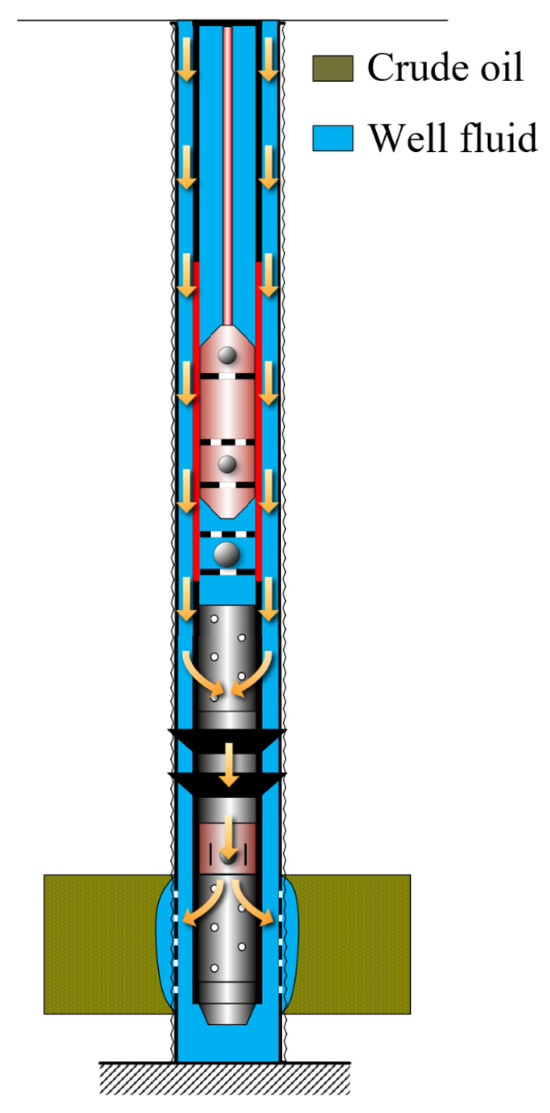
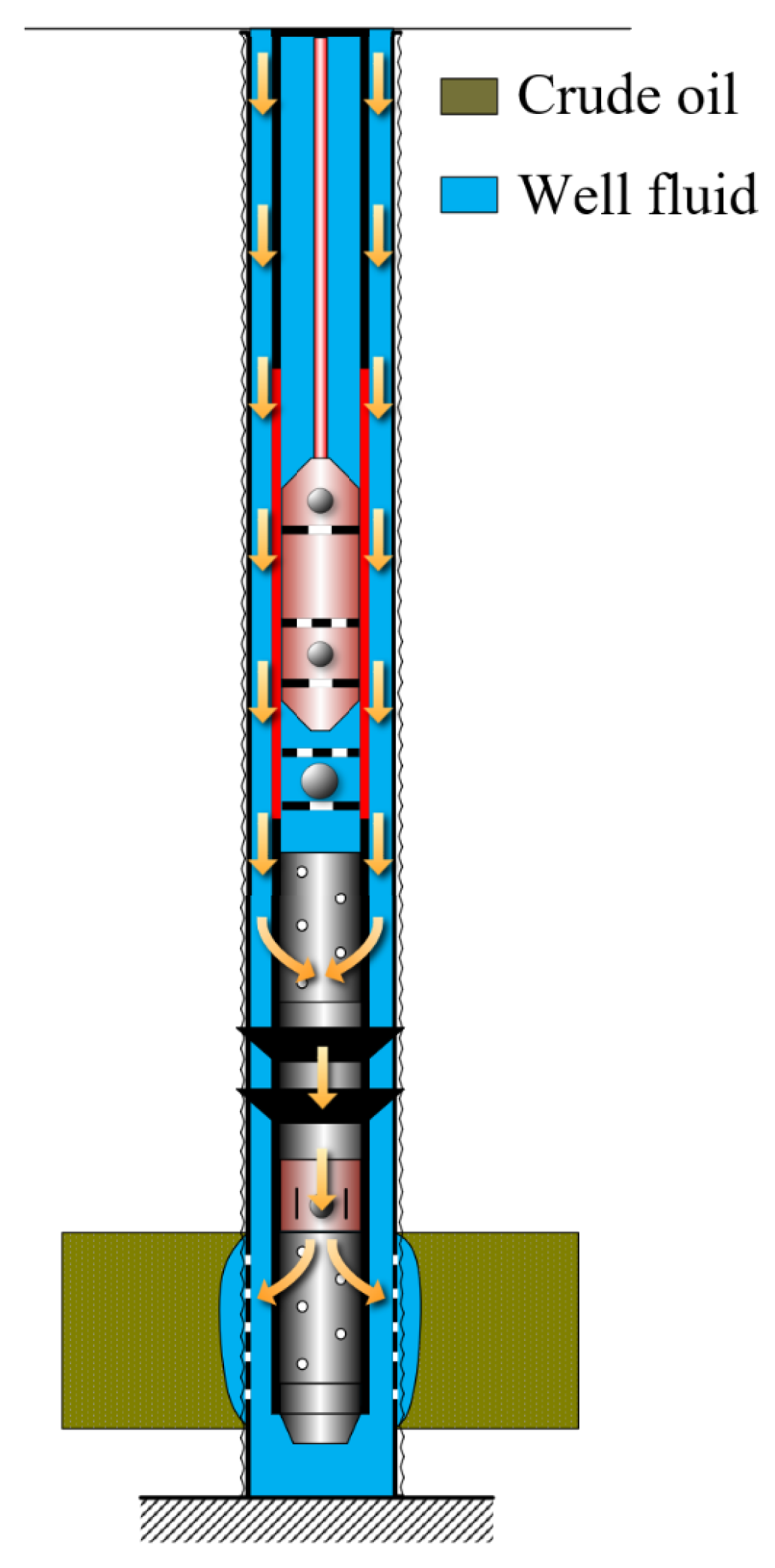
During workover operations, pulling the tubing string can cause a declining fluid level in the wellbore, inducing a swabbing effect and posing well control risks. As shown in Figure 6, the anti-leakage tubing string establishes a fluid injection path by opening the wash pressure control valve, allowing for timely replenishment of wellbore fluids to maintain hydrostatic pressure and reduce fluid loss during tubing pull-out. In the event of abnormal downhole conditions, well kill fluid can be injected via the well control fluid injection pathway. This enables effective wellbore pressure control and prevents well control incidents.
Figure 6.
Schematic of squeeze well killing in tubing string.
3.3. Operating Procedure for Anti-Leakage Tubing String
3.3.1. Tubing String Running and Packer Setting
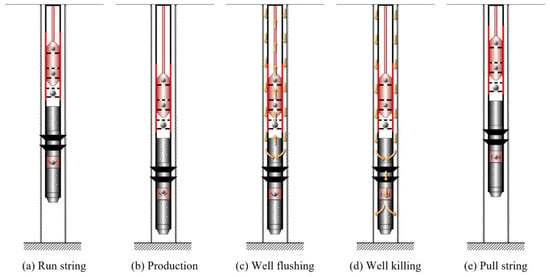
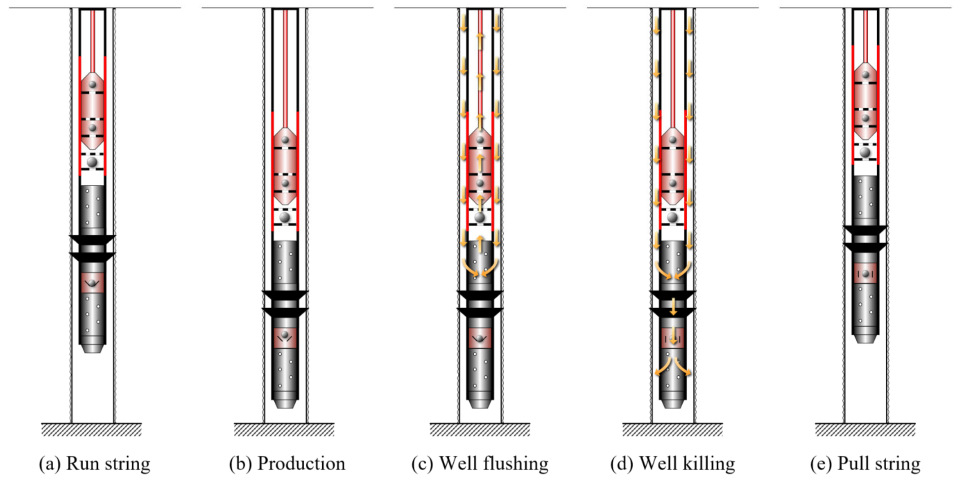
The complete anti-leakage tubing string assembly, comprising a bull plug, tail pipe, screen pipe, wash pressure control valve, and cup packer, is run into the well to the target depth. Annular hydraulic pressure is then applied to radially expand the cup packer’s elastomeric element, establishing a reliable seal in the casing–tubing annulus. Subsequently, the sucker rod and tubing pump are installed to complete the lifting system. At this stage, the wash pressure control valve automatically opens under the production pressure differential, establishing a flow path for oil production. This process is illustrated in Figure 7a,b.
Figure 7.
Operating procedure for anti-leakage tubing string.
3.3.2. Well Flushing and Paraffin Removal
Pressure is applied through the casing–tubing annulus to close the wash pressure control valve, isolating the reservoir from the production channel and establishing a closed circulation system. For paraffin removal, a circulation path is established, followed by injection of hot flushing fluid at 80–120 °C into the annulus. Continuous circulation heats the inner tubing wall, melting the deposited paraffin, which is then carried out of the wellbore by the working fluid. The overall well flushing procedure is shown in Figure 7c.
3.3.3. Pump Inspection and String Retrieval
Applying fluid pressure through the annulus creates a pressure differential across the wash pressure control valve that exceeds its opening threshold, shearing the shear pins and causing the valve to open automatically. A squeeze killing operation may be performed simultaneously if required. Once downhole pressure conditions meet operational requirements, the tubing string is pulled upward to unset the cup packer, completing pump inspection and enabling smooth retrieval of the tubing string, as shown in Figure 7d,e.
4. Effectiveness Analysis
4.1. Theoretical Analysis
During thermal wax removal and pump inspection operations, fluid loss occurs at distinct stages. Fluid loss during thermal wax removal primarily occurs in the in situ fluid displacement and workover fluid circulation stages, whereas pump inspection requires loss calculations for all three stages: in situ fluid displacement, workover fluid circulation, and tubing string retrieval. To validate the theoretical effectiveness of the anti-leakage tubing string in reducing workover fluid loss, a loss analysis was conducted using Well XJ-6 as an example. The basic well parameters are as follows: formation permeability of 61.87 mD, effective oil layer thickness of 55.9 m, oil layer mid-depth of 1588.25 m, tubing string length of 1424 m, and formation pressure of 13.07 MPa. Calculations assumed the use of purified water (density: 1000 kg/m3; viscosity: 1.005 mPa·s) as the workover fluid during pump inspection. For thermal washing operations, the washing fluid temperature was 80–100 °C, corresponding to a purified water viscosity of 0.3–0.5 mPa·s. The calculated fluid loss volumes for each stage using conventional tubing strings and the anti-leakage tubing string are summarized in Table 4.
Table 4.
Theoretical fluid loss for Well XJ-6.
Theoretical analysis reveals a significant difference in fluid loss between conventional and anti-leakage tubing strings. For thermal wax removal, the conventional tubing string exhibits fluid losses of 28.5 m3 and 130.0 m3 during the fluid displacement and circulation stages, respectively, totaling 158.5 m3. In contrast, the anti-leakage tubing string completely eliminates fluid loss in both stages, resulting in a 100% reduction. During pump inspection operations with a conventional tubing string, fluid loss amounts to 14.2 m3 in the displacement stage, 64.1 m3 in the circulation stage, and 9.5 m3 during string retrieval. The anti-leakage tubing string eliminates fluid loss in the displacement and circulation stages, limiting the total loss to 9.5 m3 during string retrieval. This results in an overall fluid loss reduction of approximately 89% for pump inspection operations, demonstrating the excellent anti-leakage performance of the anti-leakage tubing string.
4.2. Field Application Analysis
4.2.1. Thermal Wax Removal Efficiency Verification
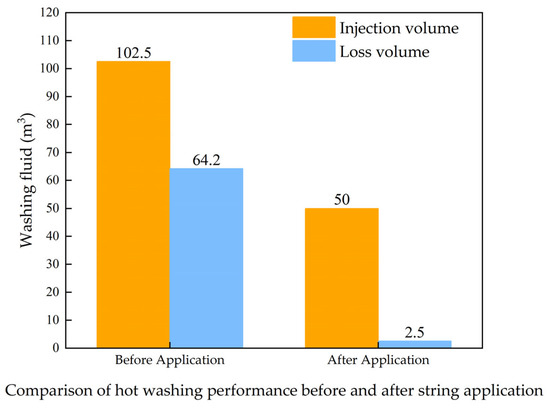
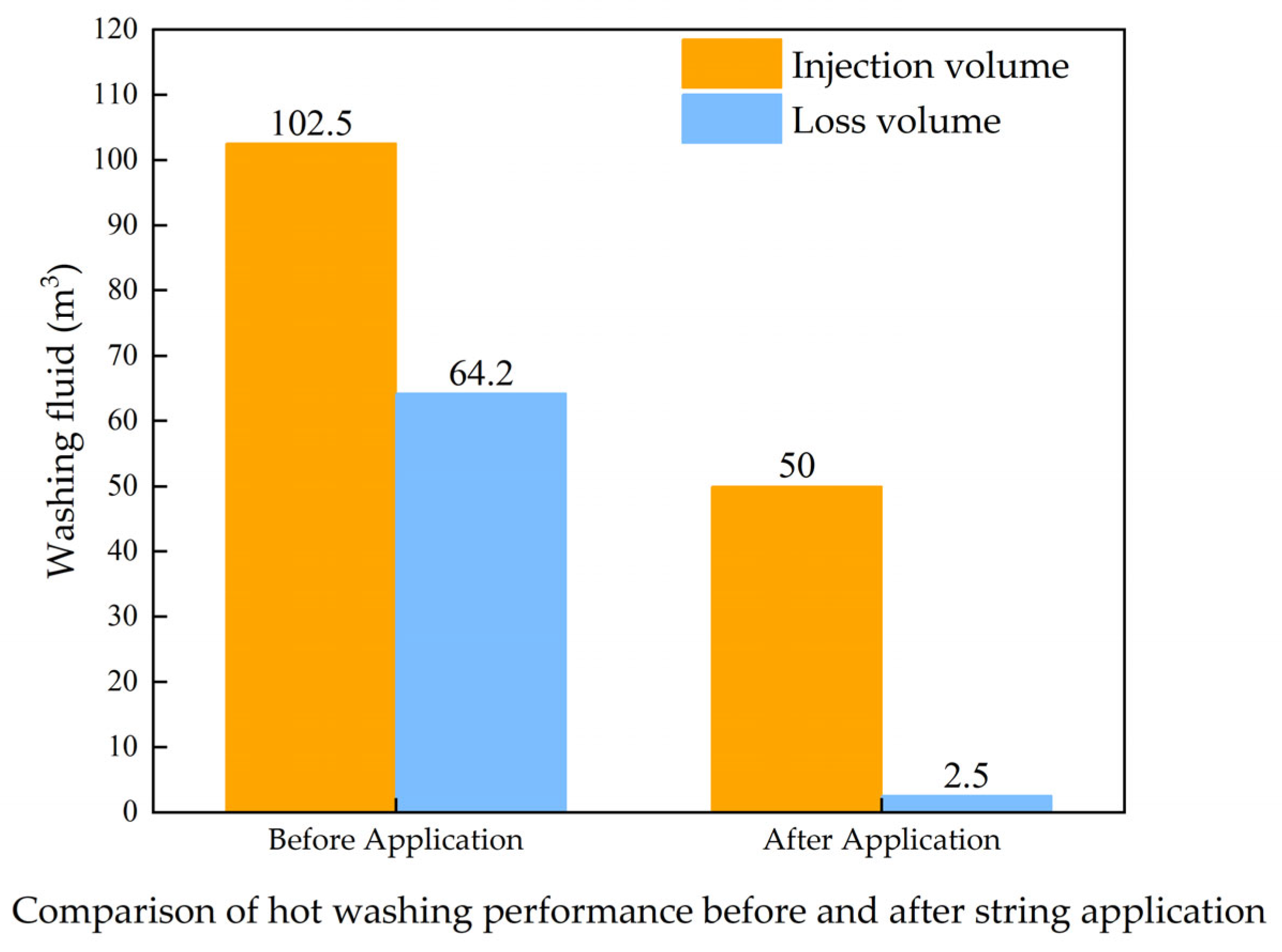
To validate the improved thermal washing efficiency of the anti-leakage tubing string during paraffin removal operations, the string was deployed in wells within the operating area that had previously exhibited fluid non-return or required excessive working fluid injection during thermal washing. A performance comparison before and after implementation is presented in Figure 8.
Figure 8.
Comparison of fluid injection volume and loss volume in wells before and after string application for thermal wax removal.
Prior to deployment, the average injection volume of the wellbore working fluid during thermal washing was 102.5 m3 per well across 16 wells, with an average fluid loss of 64.2 m3 per well. After implementing the technology in 16 wells, the average injection volume decreased to 50 m3 per well, with an average fluid loss of 2.5 m3. These results indicate a 51% reduction in average working fluid injection volume and a 96% reduction in average fluid loss during thermal washing operations. The data confirm that the anti-leakage tubing string not only effectively mitigates fluid loss but also significantly reduces working fluid costs, demonstrating excellent overall performance.
4.2.2. Pump Inspection Effectiveness Verification
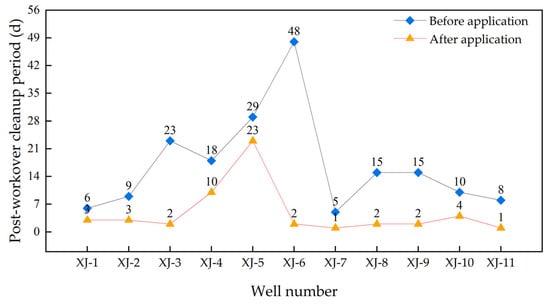
To verify the practical effectiveness of the anti-leakage tubing string in preventing fluid loss and shortening the post-workover recovery period during pump inspection operations, recovery period statistics for 11 wells were compiled before and after its application. The results are shown in Figure 9. Data analysis indicates that the average recovery period was shortened by 12.1 days after application. Furthermore, in 9 of the 11 wells, the post-application recovery period was less than 7 days, with a 100% success rate in implementation. This demonstrates that the anti-leakage tubing string significantly shortens the post-workover recovery period.
Figure 9.
Comparison of post-workover cleanup period before and after string implementation.
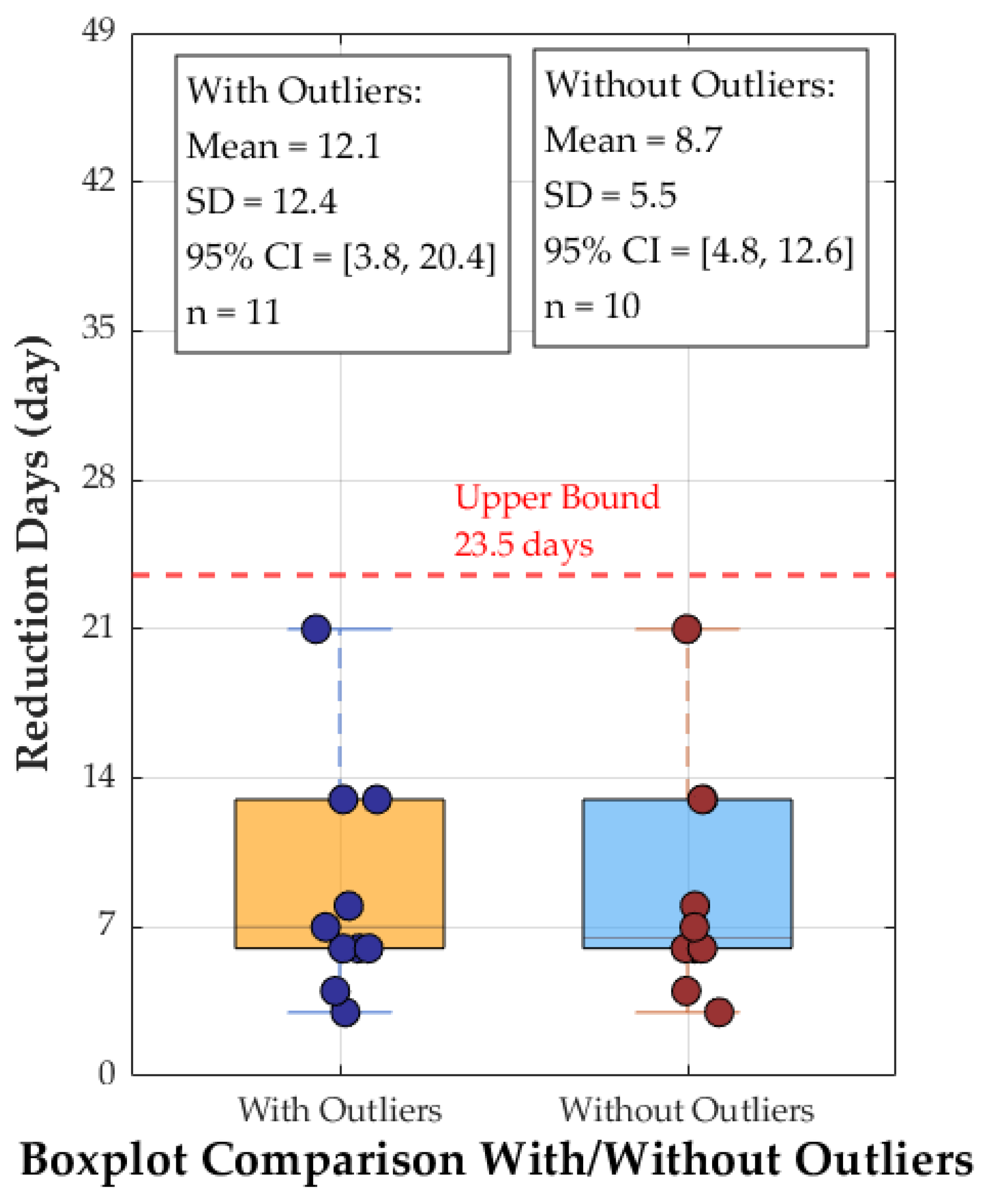
To assess the statistical robustness of the application results, a 95% confidence interval analysis was conducted on the post-workover recovery period data. The 95% confidence interval for the recovery periods of the 11 wells ranged from 3.8 to 20.4 days, with a standard deviation of 12.4 days, indicating variability in effectiveness across individual wells. Further analysis revealed that, for Well XJ-6, the recovery period decreased dramatically from 48 days before application to 2 days afterward. The magnitude of this reduction was significantly greater than in other wells, primarily accounting for the overall data variability. Therefore, a detailed cause analysis was carried out for this well.
The reservoir parameters for Well XJ-6 are listed in Table 5. This well is located in a low-pressure, waxy reservoir with severe wax deposition in the wellbore. Wax thickness on the tubing inner wall reached 3–4 mm, with wax plugging occurring in the 810–1310 m section. Furthermore, wax deposition on the sucker rods extended over 1306.44 m, severely impairing workover operation effectiveness.
Table 5.
Reservoir parameters of Well XJ-6.
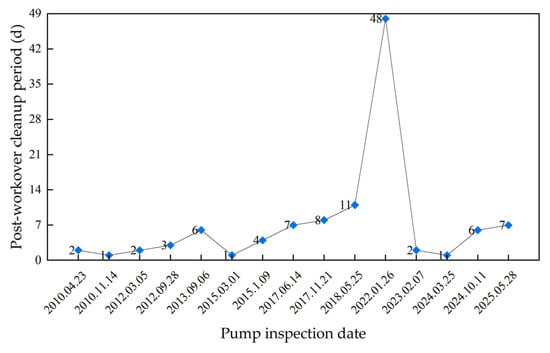
Under these geological and production conditions, the anti-leakage tubing string was deployed in this well to effectively mitigate fluid loss caused by wax deposition. As shown in Figure 10, before application of the anti-leakage tubing string, the post-workover recovery period showed a gradual increase over successive operations—from 5 days to 11 days—and then rose sharply to 48 days after a severe wax deposition event in 2022. After application of the anti-leakage tubing string, the post-workover recovery period was significantly shortened to 2 days. Furthermore, in the three subsequent pump inspection operations, the duration of the recovery period remained consistently within 7 days. These results demonstrate that the anti-leakage tubing string effectively mitigates fluid loss in wells with severe wax deposition, significantly shortens the post-workover recovery period, and ensures rapid restoration of production capacity.
Figure 10.
Historical post-workover cleanup period for Well XJ-6.
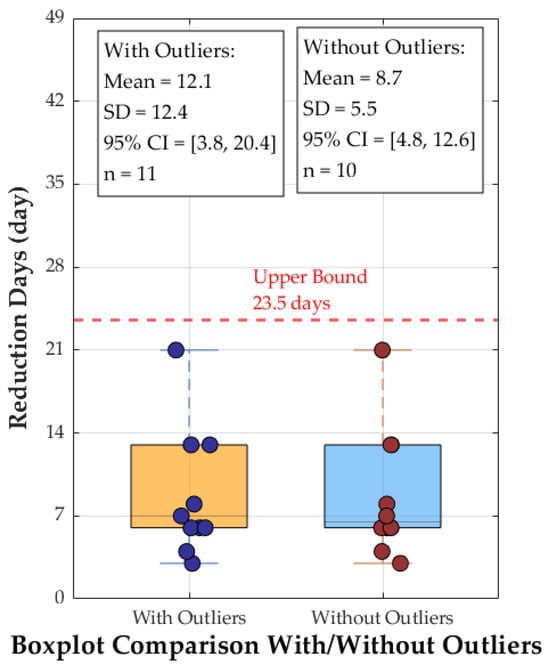
Based on the severe wax deposition and fluid loss characteristics observed in Well XJ-6, a boxplot analysis was conducted on the recovery period reduction data from the 11 wells to more robustly assess the general effectiveness of the anti-leakage tubing string under conventional well conditions. The results are shown in Figure 11. The analysis shows that, after excluding this outlier well, the 95% confidence interval narrows to 4.8–12.6 days, with the standard deviation decreasing to 5.5 days. The analysis demonstrates that applying the anti-leakage tubing string effectively shortens the average post-workover recovery period by 8.7 days.
Figure 11.
Analysis using boxplot method.
The field application results demonstrate that the anti-leakage tubing string successfully mitigates fluid loss during operations and shortens cleanup periods in low-pressure, paraffin-prone wells. This technology significantly reduces post-intervention recovery time, improves thermal washing efficiency, preserves reservoir productivity, and lowers operational costs. This solution provides reliable technical support for maintaining stable production in the mid-to-late stages of field development and exhibits strong potential for wider application.
5. Conclusions
To address severe fluid loss and prolonged post-workover recovery periods during operations in low-pressure, waxy wells of the No. 1 Oil Production Plant in the Xinjiang Oilfield, we developed a dynamic fluid loss analysis model and designed a novel anti-leakage tubing string. This tubing string provides an efficient solution for workover operations and rapid productivity restoration in such wells. The main achievements are summarized as follows:
(1) The Development of a Dynamic Workover Fluid Loss Analysis Model: Addressing the characteristics of permeable fluid loss in the Xinjiang Oilfield, a dynamic fluid loss calculation model was established that encompasses the three stages of workover operations: in situ fluid displacement, workover fluid circulation, and tubing string retrieval. This model provides a theoretical foundation for quantitative analysis of fluid loss during workover interventions.
(2) The Design of a Novel Anti-Leakage Workover Tubing String: Based on the principle of “connecting to the reservoir during production while isolating it during operations,” a novel anti-leakage tubing string was designed. To accommodate squeeze killing under abnormal conditions, a wash pressure control valve was developed, thereby enhancing operational safety and reservoir protection.
(3) Theoretical Verification of Anti-Leakage Tubing String Performance: Calculations for Well XJ-6 demonstrate that, compared to a conventional tubing string, the anti-leakage tubing string reduces fluid loss by 100% during thermal wax removal operations and by approximately 89% during pump inspection operations, confirming its excellent anti-leakage performance.
(4) Significant Field Application Outcomes: Following application of the anti-leakage tubing string in a specific block of the Xinjiang Oilfield, workover fluid loss during thermal wax removal operations was reduced by 96%, and the average post-pump-inspection recovery period was shortened by 8.7 days, thereby ensuring effective restoration of well productivity.
This study provides a comprehensive technical solution to fluid loss challenges in low-pressure, waxy wells. Through a systematic approach encompassing model development, tool design, performance verification, and field application, this study confirms that the anti-leakage tubing string effectively reduces workover fluid loss and shortens post-workover recovery periods. This technology offers multiple advantages, including reservoir protection, well control safety, cost reduction, and improved operational efficiency, providing a reliable solution for fluid loss control during workover operations in such wells. This technology demonstrates strong potential for application and promotion in reservoirs with similar conditions.
Author Contributions
Conceptualization, E.W., L.L. and X.Z.; methodology, E.W. and X.Z.; software, J.L. and F.Q.; validation, L.C., H.Z. and J.S.; formal analysis, E.W. and J.S.; investigation, L.C., Y.Y. and J.L.; resources, E.W. and H.Z.; data curation, Y.Y.; writing—original draft preparation, J.L.; writing—review and editing, E.W. and L.L.; visualization, J.L.; supervision, L.C. and X.Z.; project administration, L.C.; funding acquisition, J.S. All authors have read and agreed to the published version of the manuscript.
Funding
This research is supported by No. 1 Oil Production Plant 2024 Research Project on Operation Technologies for Shortening Post-Workover Liquid Drainage Period (XJYT-2024-JS-6114).
Data Availability Statement
The original contributions presented in this study are included in the article. Further inquiries can be directed to the corresponding author.
Conflicts of Interest
Authors Enwei Wang, Li Li, Lu Chen, Hu Zhang, Jianying Shi and Yonghong Yang were employed by the China National Petroleum Corporation Xinjiang Oilfield Branch. The remaining authors declare that the research was conducted in the absence of any commercial or financial relationships that could be construed as a potential conflict of interest.
References
- Cheng, S.; Wu, B.; Huppert, H.E.; Ma, T.; Chen, Z.; Tan, P. Modeling transport and bridging behavior of lost circulation materials in a hydraulic fracture. J. Rock Mech. Geotech. Eng. 2025, 17, 2650–2664. [Google Scholar] [CrossRef] [Scilit]
- Sun, J.; Shi, G.; Zheng, Y.; Zheng, Y.; Deng, S.; Meng, F.; Wang, S.; Lu, Y.; Sun, N.; Li, W. Investigation of wax deposition in horizontal two-phase oil–water flow with high water content: A combined experimental and numerical approach. Appl. Therm. Eng. 2025, 279, 127521. [Google Scholar] [CrossRef] [Scilit]
- Wu, Y.; Peng, L.; Wang, H.; Tian, C.; Peng, J.; Wang, S. A novel self-generating foam workover fluid system for low-pressure reservoirs. Drill. Fluid Complet. Fluid 2025, 42, 413–417. [Google Scholar] [CrossRef]
- Wu, J.; Ansari, U. From CO2 sequestration to hydrogen storage: Further utilization of depleted gas reservoirs. Reserv. Sci. 2025, 1, 19–35. [Google Scholar] [CrossRef] [Scilit]
- He, Z.; Zheng, J.; Liu, T.; Xuan, X. Optimization and application of anti-pollution leakage control tubing string. J. Chengde Pet. Coll. 2023, 25, 37–41. [Google Scholar] [CrossRef]
- Yan, W.; Wei, A.; Chen, J.; Chen, L.; Zhao, S.; Wang, L. Development of integrated technology and tools for leakage prevention and separate zone production. Oil Field Equip. 2018, 47, 61–64. [Google Scholar] [CrossRef]
- Luo, J.; Liu, C.; Li, R.; Wang, Y.; Wang, S.; Zhang, Y. Research and application of new mechanical anti-pollution tools in offshore oilfields. Oil Drill. Prod. Technol. 2019, 41, 806–810. [Google Scholar] [CrossRef]
- Xu, Z.; Wang, B.; Chen, X.; Liu, T.; Song, L. Development and application of a new washing anti-pollution tubing string. Oil Field Equip. 2011, 40, 84–87. [Google Scholar] [CrossRef]
- Xu, F.; Zhang, W.; Zhang, L.; Li, Q.; Xu, H. Development and experiment of a high-temperature resistant anti-leakage valve for heavy oil thermal recovery. Pet. Geol. Eng. 2023, 37, 82–85. [Google Scholar] [CrossRef]
- Wang, W.; Sun, D.; Xu, J. Research and application of acidizing anti-leakage process string in Bohai Oilfield. Chem. Enterp. Manag. 2023, 33, 132–136. [Google Scholar] [CrossRef]
- Wang, D.; Lai, X.; Tang, Q.; Zhou, J. Snubbing unit technology for shale oil horizontal wells in Cangdong Sag. Pet. Drill. Tech. 2021, 49, 150–154. [Google Scholar] [CrossRef]
- Ping, E.; Wang, L.; Xie, T.; Wang, Z.; Liu, S.; Teng, J.; Zhang, L. Research and application of snubbing completion technology for casing fracturing wells. China Pet. Mach. 2022, 50, 113–118. [Google Scholar] [CrossRef]
- Kan, C.; Yang, J.; Yu, X.; Fang, X.; Qiao, H.; Su, J. Application and evaluation of non-restrictive high-efficiency washing anti-pollution tubing string. Oil Drill. Prod. Technol. 2018, 40, 665–670. [Google Scholar] [CrossRef]
- Zhong, P.; Yang, L.; Che, S.; Wen, L. Research and application of sand cleaning technology with micro-foam workover fluid in low-pressure leakage wells using coiled tubing. Drill. Prod. Technol. 2025, 48, 229–234. [Google Scholar] [CrossRef]
- Chen, X.; Qi, S.; Cui, C.; Huang, R.; Zhao, Q.; Yang, K. Development and application of a workover fluid system suitable for an offshore high-porosity, high-permeability, and low-pressure coefficient oilfield. Fine Spec. Chem. 2025, 33, 56–60. [Google Scholar] [CrossRef]
- Luo, Y.; Ju, Y.; Wang, S.; Yang, Y.; Jang, Z.; Wang, J. Development and test of nano-composite foam gel workover fluid. Drill. Fluid Complet. Fluid 2020, 37, 127–132. [Google Scholar]
- Chen, S.; Cao, C.; Zhu, J.; Pang, Z.; Ying, T. Research progress of temporary plugging and killing technology in China. Oilfield Chem. 2025, 42, 545–550. [Google Scholar] [CrossRef]
- Shi, W.; Zhang, S.; Peng, C.; Zhang, L.; Dou, C.; Zhang, X.; Zhuang, Y. Optimization of flushing fluid plugging theory based on plugging experiments and simulations. Processes 2025, 13, 3639. [Google Scholar] [CrossRef] [Scilit]
- Han, L.; Ren, Q.; Qin, L.; Wang, D.; Zhang, F. Development and evaluation of a bridging temporary plugging agent for high-porosity and high-permeability reservoirs. Fine Spec. Chem. 2023, 31, 22–24, 28. [Google Scholar] [CrossRef]
- Ji, H.; Wang, L.; Wu, Z.; Tu, D. Research on 3D stochastic fracture modeling and seepage numerical simulation of fractured rock masses. Chin. J. Comput. Mech. 2024, 41, 718–725. [Google Scholar] [CrossRef]
- Li, D.; Kang, Y.; Liu, X.; Chen, Z.; Si, N. Research progress on dynamic models of drilling fluid loss in fractured formations. Pet. Drill. Tech. 2013, 41, 42–47. [Google Scholar] [CrossRef]
- Li, M.; Liu, J.; Xia, Y. Risk prediction of gas hydrate formation in the wellbore and subsea gathering system of deep-water turbidite reservoirs: Case analysis from the south China sea. Reserv. Sci. 2025, 1, 52–72. [Google Scholar] [CrossRef] [Scilit]
- Cao, L.; Lv, M.; Li, C.; Sun, Q.; Wu, M.; Xu, C.; Dou, J. Effects of crosslinking agents and reservoir conditions on the propagation of fractures in coal reservoirs during hydraulic fracturing. Reserv. Sci. 2025, 1, 36–51. [Google Scholar] [CrossRef] [Scilit]
- Jafarizadeh, F.; Larki, B.; Kazemi, B.; Mehrad, M.; Rashidi, S.; Neycharan, J.; Gandomgoun, M.; Gandomgoun, M. A new robust predictive model for lost circulation rate using convolutional neural network: A case study from marun oilfield. Petroleum 2023, 9, 468–485. [Google Scholar] [CrossRef] [Scilit]
- Huang, J.; Griffiths, D.; Wong, S. Characterizing natural-fracture permeability from mud-loss data. SPE J. 2010, 16, 111–114. [Google Scholar] [CrossRef] [Scilit]
- Ahammad, F.; Mahmud, S.; Islam, S.Z. Computational fluid dynamics study of yield power law drilling fluid flow through smooth-walled fractures. J. Pet. Explor. Prod. Technol. 2019, 9, 2717–2727. [Google Scholar] [CrossRef] [Scilit]
- Luo, C.; Li, Y.; Xu, Z. A method for determining the leakage pressure profile considering the properties of the leakage zone. West-China Explor. Eng. 2024, 36, 73–76, 80. [Google Scholar] [CrossRef]
- Zou, D.; Zhao, J.; Guo, Y.; Fang, M.; Guan, S. A prediction model for lost circulation pressure in permeable sandstone formations. Pet. Drill. Tech. 2014, 42, 33–36. [Google Scholar] [CrossRef]
- Zhang, J.; Yue, H.; Zhang, D.; Hou, R.; Liu, K. A new method for analyzing and calculating the depth and pressure of permeable lost circulation zones. Oil Drill. Prod. Technol. 2013, 35, 12–15. [Google Scholar] [CrossRef]

Disclaimer/Publisher’s Note: The statements, opinions and data contained in all publications are solely those of the individual author(s) and contributor(s) and not of MDPI and/or the editor(s). MDPI and/or the editor(s) disclaim responsibility for any injury to people or property resulting from any ideas, methods, instructions or products referred to in the content. |
© 2025 by the authors. Licensee MDPI, Basel, Switzerland. This article is an open access article distributed under the terms and conditions of the Creative Commons Attribution (CC BY) license.