Article

Development and Quality Characteristics of Grilled Pacific Cod (Gadus macrocephalus) Fillet Home Meal Replacement (HMR)

1
Department of Food Science and Culinary Arts, College of Human Ecology, Silla University, Busan 46958, Republic of Korea
2
Seafood Research Center, Industry-Academic Cooperation Foundation, Silla University, Busan 49277, Republic of Korea
3
Department of Seafood Science and Technology, The Institute of Marine Industry, Gyeongsang National University, Tongyeong 53064, Republic of Korea
4
LSTME-Busan, Busan 46742, Republic of Korea
*
Authors to whom correspondence should be addressed.
These authors contributed equally to this work.
Processes 2026, 14(4), 669; https://doi.org/10.3390/pr14040669
Submission received: 8 January 2026 / Revised: 5 February 2026 / Accepted: 13 February 2026 / Published: 15 February 2026
(This article belongs to the Special Issue Food Biochemistry and Health: Recent Developments and Perspectives)

Abstract

Changes in lifestyle and food consumption patterns have contributed to a growing demand for home meal replacements (HMRs), emphasizing the need for high-quality seafood-based products. This study aimed to develop a grilled Pacific cod (Gadus macrocephalus) fillet HMR prototype and to evaluate optimal processing conditions, quality characteristics, and shelf-life stability. High-frequency thawing was selected to improve raw material handling by minimizing drip loss to 11.91% and reducing thawing time to 15 min. A thyme-based marinade at a concentration of 3% for 20 min was applied to reduce odor and enhance sensory quality, and superheated steam grilling was compared with conventional heating methods. Processing parameters were optimized using response surface methodology, and smoking conditions were evaluated using different wood types. Superheated steam grilling produced superior sensory attributes under optimal conditions of 340 °C for 4 min, followed by cherry wood smoking at 60 °C for 5 min. The combined processing approach reduced total bacterial counts while maintaining acceptable physicochemical quality characteristics. Thermal processing increased texture firmness and nutritional density due to moisture loss, reduced lipid oxidation, and modified amino acid and fatty acid profiles. Shelf-life modeling indicated safe storage for up to 18 months under frozen conditions. These findings demonstrate that integrated marination, superheated steam grilling, and controlled smoking can be effectively applied to produce a safe, stable, and high-quality grilled Pacific cod HMR product.

1. Introduction

In recent years, changes in the social structure of Korean society, such as the steady increase in single-person households, the rise of dual-income families, and the growing elderly population, have significantly increased consumer demand for foods that offer convenience and reduced cooking time. These societal shifts have driven the rapid expansion of the home meal replacement (HMR) market in the Republic of Korea [1]. HMR products refer to commercially prepared meal products that are ready to eat or require minimal preparation and serve as alternatives to home-cooked meals [2,3]. These products are typically designed as complete, pre-assembled main dishes intended for in-home consumption, rather than as individual meal components or snack items [2]. The COVID-19 pandemic further accelerated this trend by encouraging non–face-to-face consumption patterns, thereby creating additional growth opportunities for the HMR industry [4]. Recent studies have consistently shown that, alongside convenience, consumers increasingly prioritize nutritional quality and sensory satisfaction when selecting food products [2,5].
Alongside these evolving consumption patterns, the development of seafood-based HMR products has gained attention. Numerous studies have investigated retort processing and quality characteristics of soup-type, steamed, braised, and fried seafood products. Representative examples include retorted brown-backed toadfish (Lagocephalus gloveri) soup [6], combined steaming and heat-smoking treatments for hagfish (Myxine glutinosa) [7], and optimized cooking methods for mackerel (Scomber japonicus) dishes [8,9]. With respect to grilled-type HMR products, improvements in sensory and physicochemical properties have been reported for heat-smoked Japanese Spanish mackerel (Scomberomorus niphonius) [10]. In addition, heat-smoking conditions for grilled mackerel HMR products have been systematically optimized [11], and the quality of grilled common squid (Todarodes pacificus) has been enhanced through combined superheated steam roasting and smoking processes [12]. Similar integrated processing strategies, such as the combination of high-frequency thawing, superheated steam roasting, and rapid freezing, have resulted in improved texture stability and sensory attributes in grilled pen shell (Atrina pectinata) and squid [13]. Further studies have addressed flavor and textural optimization in honey butter–marinated and roasted abalone (Haliotis discus hannai) [14]. Collectively, these findings demonstrate that integrated processing approaches involving marination, grilling, and smoking have been actively explored for squid-, mackerel-, and shellfish-based HMR products, yielding consistent improvements in sensory quality and shelf-life stability.
Pacific cod (Gadus macrocephalus) represents a promising raw material for the development of seafood HMR. This species is classified as low-fat and high-protein, containing approximately 16.1 g of protein and 0.67 g of fat per 100 g of edible portion [15]. According to recent statistics, domestic production of Pacific cod in Korea (4648 t) remains substantially lower than import volumes (23,575 t) as of 2020 [16], underscoring the species’ continued reliance on imports and its economic significance in the domestic seafood market. Pacific cod also holds high commercial value in Pacific coastal regions [17]. Owing to its mild flavor and tender texture, it is widely used in Korean traditional cuisine, including codfish soup and codfish fritters [18], suggesting strong potential for its application in value-added, consumer-ready food products.
Despite the growing research on integrated processing technologies for seafood HMR products, studies specifically focusing on Pacific cod remain limited. Previous investigations have primarily addressed Pacific cod utilization as a food ingredient, its compositional and quality characterization, or the valorization of processing by-products [19,20]. Processed applications have largely focused on partial utilization approaches, such as stock production from cod heads and bones [21]. In contrast, systematic studies examining Pacific cod as a finished, ready-to-eat grilled HMR product are scarce. This contrasts sharply with the extensive research conducted on squid-, mackerel-, and shellfish-based HMR products using integrated processing strategies [10,11,12]. The lack of research on consumer-ready, grilled Pacific cod HMR products, particularly those produced through combined marination, superheated steam grilling, and smoking, represents a clear knowledge gap [20].
The limited applications of integrated processing technologies to Pacific cod reflects a broader tendency in seafood research to focus on optimizing individual processing steps rather than adopting holistic, product-oriented approaches. However, the rapid growth of the HMR sector necessitates processing strategies that simultaneously enhance sensory quality, ensure safety, and extend shelf-life. Integrated processing approaches can generate synergistic effects, including effective odor reduction, microbiological control, and texture stabilization, which are difficult to achieve through single treatments alone. Furthermore, the development of value-added HMR products from cod could improve the utilization efficiency of imported raw materials, reduce post-harvest losses, and extend product shelf-life. These outcomes align with internationally recognized strategies for enhancing sustainability within seafood supply chains [22,23].
Based on this gap, we hypothesized that applying integrated processing technologies successfully used in other seafood HMR products would improve the quality and shelf-life stability of Pacific cod–based grilled HMR products. Therefore, this study intended to develop a grilled Pacific cod fillet HMR product using a combination of marination, superheated steam grilling, and hot smoking, and to evaluate its microbiological and physicochemical quality characteristics and shelf-life stability. High-frequency thawing was employed as an efficient thawing method due to its ability to reduce thawing time, retain high moisture, minimize drip loss, and preserve freshness compared with conventional approaches [24]. Herb-based marinades were applied for their effectiveness in reducing fishy odors [25]. Superheated steam grilling was selected to enhance overall palatability by producing a moist texture, shortening cooking time, and suppressing microbial growth [26]. Finally, hot smoking was incorporated to impart desirable flavor and aroma while inhibiting microbial proliferation [27].

2. Materials and Methods

2.1. Materials and Reagents

Frozen Pacific cod (Gadus macrocephalus) fillets were supplied by Padosori Co., Ltd. (Busan, Republic of Korea). Fillet portions measuring 5 × 10 × 3.5 cm and weighing 76.4 ± 3.3 g were prepared by removing the head, tail, scales, internal organs, viscera, and large central bones. A total of 40 kg of cod fillet portions was used in the study. To minimize experimental variability, three independent lots were prepared, and three samples from each lot were used for prototype preparation.
Nine herb and spice ingredients, including coriander powder, whole basil, basil powder, whole thyme, cumin seed, whole fennel, vitamin tree fruit powder, whole stigmas, and bay leaf, were used for the marination experiments and were purchased from Solpyofood Co., Ltd. (Namyangju, Republic of Korea). Sea salt was obtained from Hanju Corp. (Ulsan, Republic of Korea), and black pepper was sourced from Ottogi Corp. (Anyang, Republic of Korea). Five types of smoking wood, namely walnut, cherry, oak, chestnut, and apple, were used in the smoking experiments and purchased from Shinsei Sangyo Co., Ltd. (Kanagawa, Japan). All chemical reagents used in the analyses were of analytical or HPLC grade and were obtained from Sigma-Aldrich (St. Louis, MO, USA).

2.2. Production Process of Grilled Cod Fillet Prototype

The overall manufacturing process of the grilled cod fillet prototype is summarized in the flow diagram shown in Figure S1 and is described in detail below. Following optimization of thawing methods, marinade formulation, and superheated steam processing conditions using response surface methodology (RSM), as well as optimization of grilling and smoking treatments, the final product was rapidly frozen at −35 °C for 1 h using an electromagnetic freezer (PF-15A; Ryoho Freeze Systems Co., Ltd., Nara, Japan) and subsequently stored at −20 °C until further analysis.

2.2.1. Thawing Treatment

The optimal thawing method was determined by comparing high-frequency thawing (HFD), running-water thawing (RW), and room-temperature thawing (RT). RW thawing was conducted under running tap water at 23 ± 1 °C, while RT thawing was performed at 15 ± 1 °C in an incubator (JSMI-04C; JC Research, Gongju, Republic of Korea) operated in accordance with the Hazard Analysis and Critical Control Point (HACCP) guidelines of the Korean Ministry of Food and Drug Safety (MFDS) [28]. HFD was carried out using a high-frequency thawing system operating at 27 MHz and 11 kW (TEMPERTRON FRT-10; Yamamoto Vinita Co., Ltd., Osaka, Japan). For RW and RT treatments, cod fillets were placed in low-density polyethylene zipper bags (17.7 × 18.8 cm; Ziploc Frozen; SC Johnson Korea Ltd., Seoul, Republic of Korea), vacuum packed (TPS-V750; M.A.P Packaging Co., Ltd., Hwaseong, Republic of Korea), and thawed either under running tap water at 22 to 24 °C or at room temperature between 18 and 20 °C.

2.2.2. Preparation and Processing of Marinade Solutions

Thawed cod fillets were immersed in nine different herb and spice extracts supplemented with 0.5% sea salt and 0.01% black pepper. The selection of herbs and the initial extract concentration were based on the previous study by Cho and Choi [29]. Marinade concentration and immersion time were varied to determine optimal marination conditions. Herb extracts were prepared by placing 60 g of individual herb materials, including coriander powder, whole basil, basil powder, whole thyme, cumin seed, whole fennel, vitamin tree fruit powder, whole stigmas, and bay leaf, in a mesh strainer and extracting them in 2 L of boiling purified edible water at 100 °C for 20 min to obtain a concentration of 30 g/L, as previously reported by Cho and Choi [29]. The extracts were cooled to room temperature prior to use. Cod fillets were immersed individually in each extract at a fillet to liquid ratio of 1:2 (g/L) and marinated at 15 ± 1 °C for 20 min. Following marination, samples were drained at 4 °C for 10 min.
The marinated samples were then grilled using a superheated steam oven at 340 °C for 4 min and subjected to sensory evaluation using a 9-point hedonic scale to assess appearance, odor, taste, texture, and overall liking in order to identify suitable herbs and spices. Selected spices were subsequently extracted at concentrations of 10, 30, and 50 g/L by using 20, 60, or 100 g of solids in 2 L of purified edible water. Cod fillets were marinated in these extracts for immersion times of 10, 20, or 30 min. Sensory evaluation focusing on odor, taste, and overall preference, together with odor intensity measurement using an odor meter (XP-329; New Cosmos Electric Co., Ltd., Osaka, Japan), was conducted to determine the optimal extract concentration and marination time.

2.2.3. Response Surface Methodology

Response surface methodology (RSM) was applied to establish optimal superheated steam-grilling conditions. Processing temperature and time were selected as independent variables, and a central composite design with five coded levels was employed, as shown in Table S1. The temperature range was 311.72 to 368.28 °C, and the processing time ranged from 2.586 to 5.414 min. A total of 11 experimental runs were conducted. Overall sensory preference was evaluated for each treatment, and optimal grilling conditions were determined based on the model results.

2.2.4. Superheated Steam Grilling and Smoke Treatment

Marinated cod fillets were cooked either in a superheated steam oven (DFC-560A-2R/L; Naomoto Co., Osaka, Japan) operated at 340 °C for 4 min or in a convection oven (RCO-060CE; Rinnai, Incheon, Republic of Korea) operated at 190 °C for 20 min. Grilling conditions were evaluated using sensory analysis with a 9-point preference scale.
Cod fillets cooked by superheated steam were subsequently subjected to smoking using a smoker (BDSTD6; BRAAI, Delta, BC, Canada). Five types of smoking wood, including walnut, cherry, oak, chestnut, and apple, were initially tested at 70 °C for 15 min, followed by sensory evaluation to select the optimal wood type. Further smoking trials were conducted at 60 °C and 70 °C, each applied for smoking times of 5 and 10 min. Sensory evaluation and odor intensity measurements using the XP-329 odor meter were used to determine the optimal smoking conditions.

2.3. Product Characterization

2.3.1. Drip Loss Analysis by Thawing Method

Drip loss was determined using the filter paper wetness method described by Cho and Choi [29]. Filter paper No. 2 with a diameter of 55 mm (Advantech, Tokyo, Japan) was weighed prior to use (y). During thawing, a cod fillet was placed on the filter paper, which was then reweighed after thawing (x). Drip loss was calculated using Equation (1).
D r i p   l o s s   % = ( x y ) F r o z e n   c o d   f i l l e t × 100

2.3.2. Sensory Evaluation of the Developed Prototype

Sensory evaluation of appearance, odor, taste, texture, and overall preference was conducted by 21 trained panelists affiliated with the industry academic cooperation foundation of Silla University, Busan, Republic of Korea, using a 9-point hedonic scale. Prior to evaluation, panelists completed training sessions in accordance with ISO 8586 guidelines [30]. All sensory assessments were performed in triplicate to ensure reliability. According to Stone and Sidel [31], scores of 9, 5, and 1 represent the highest quality, acceptable quality, and the lowest quality, respectively. The study protocol was approved by the Institutional Review Board of Silla University (Approval No. 1041449-202204-HR-017; approved on 28 April 2022). As the samples consisted solely of cooked fish fillets and commonly consumed food ingredients, participant risk was considered minimal. Nevertheless, all panelists were fully informed of the study objectives and procedures, and written informed consent was obtained prior to participation.

2.3.3. Physiochemical Quality Characteristics

Physiochemical quality parameters were evaluated by measuring pH, volatile basic nitrogen (VBN), and thiobarbituric acid reactive substances (TBARS). pH measurements were conducted in triplicate using an OHAUS Starter 3100 pH meter (Ohaus, Seoul, Republic of Korea) equipped with a glass electrode, following MFDS guidelines [32].
VBN content was analyzed in triplicate using the Conway microdiffusion method according to MFDS procedures [3]. Briefly, 5 g of sample was homogenized with 25 mL of distilled water and filtered. The filtrate was placed in a Conway unit containing 1 mL of 0.01 N sulfuric acid and incubated at 37 °C for 90 min following the addition of saturated potassium carbonate. The trapped ammonia was then titrated with 0.01 N sodium hydroxide to calculate VBN values.
TBARS were measured in triplicate following the methods described by Yildiz [33] and Mohibbullah et al. [34]. Samples were homogenized in 20% trichloroacetic acid prepared in 2 M phosphoric acid, filtered, and mixed with 0.005 M thiobarbituric acid. The mixture was heated in a water bath at 95 °C for 30 min. After cooling to room temperature, absorbance was measured at 530 nm using a SPECTROstar Nano microplate reader (BMG Labtech, Ortenberg, Germany).

2.3.4. Odor Intensity

Odor intensity was evaluated using an odor meter (XP-329; New Cosmos Electric Co., Ltd., Osaka, Japan) following the method of Macagnano et al. [35]. Samples of 5 g were placed in 50 mL conical tubes (Corning Inc., Corning, NY, USA), sealed with Parafilm M, capped, and analyzed in triplicate.

2.3.5. Texture Profile Analysis

Texture profile analysis was performed using a texture analyzer (CT3 4500; Brookfield Engineering Laboratories Inc., Middleboro, MA, USA) equipped with TexturePRO CT software (version 1.0; Brookfield Engineering Laboratories Inc., Middleboro, MA, USA). Sample cubes measuring 10 × 10 × 10 mm were compressed to 50% of their original height using a cylindrical glass probe with a diameter of 12.7 mm and a length of 35 mm at a crosshead speed of 0.5 mm/s. All measurements were conducted in triplicate at room temperature.

2.3.6. Nutritional Quality Analysis

Moisture content was determined by oven-drying samples at 105 °C for 24 h according to Association of Official Analytical Chemists International (AOAC) methods [36]. Ash content was measured using an ash furnace at 550 °C following AOAC 938.08 [36], and sodium content was determined according to AOAC 971.27 [36]. Crude protein content was analyzed using AOAC 960.48, with nitrogen values converted using a factor of 6.26. Calories, carbohydrates, sugars, dietary fiber, crude fat, cholesterol, vitamin D, potassium, iron, and calcium contents were analyzed according to AOAC methods 971.10, 998.18, 985.29, 948.15, 994.10, 936.14, 2011.11, 990.05, and 984.27, respectively [36].

2.3.7. Fatty Acid Analysis

Fatty acid composition was determined using a gas chromatograph (GC-2010 Plus; Shimadzu Corp., Kyoto, Japan) equipped with a flame ionization detector, following AOAC method 963.22 [36] and the procedure described by Baten et al. [37]. Lipids were extracted following the Bligh and Dyer method [38]. The resulting fatty acid methyl esters (FAMEs) from extracted lipids were recovered by extraction with n-heptane and saturated sodium chloride solution, and the organic phase was dried over anhydrous sodium sulfate prior to analysis, as commonly practiced in FAME preparation protocols for gas chromatographic fatty acid analysis [39]. Separation was achieved using a capillary column measuring 100 m × 0.25 mm × 0.25 μm (Supelco Inc., Bellefonte, PA, USA) at an oven temperature of 240 °C. Fatty acids were identified by comparison of retention times with a 37-component FAME standard mixture, and contents were calculated based on peak areas.

2.3.8. Amino Acid Analysis

Amino acid composition was analyzed according to AOAC method 994.12 [36] and the method of Cho et al. [40]. Samples weighing 1 g were hydrolyzed with 6 N hydrochloric acid at 110 °C for 24 h under reduced pressure. Following hydrolysis, samples were filtered, concentrated at 55 °C, and reconstituted in citric acid buffer at pH 2.2. The solutions were filtered through a 0.45 μm membrane and analyzed using an automatic amino acid analyzer (Biochrom 20; Pharmacia Biotech Ltd., Cambridge, UK).

2.4. Safety Analysis of the Developed Grilled Cod Fillet Prototype

2.4.1. Microbiological Analysis

Microbiological safety was evaluated by determining total bacterial count (TBC) and total coliform group (TCG) in triplicate according to AOAC official methods [36]. Aerobic Count Plates and Escherichia coli and Coliform Count Plates (3M, Saint Paul, MN, USA) were used for enumeration.

2.4.2. Heavy Metals and Benzo[a]pyrene (BaP) Analysis

The concentrations of lead, cadmium, mercury, and arsenic were analyzed according to the AOAC official method [36] and the method described by Cho et al. [40]. Samples weighing 10 g were ashed at 450 °C using a microwave digestion system (MARS6; CEM Corporation, Matthews, NC, USA), homogenized, dissolved in 5 N nitric acid, and diluted to a final volume of 20 mL. Lead, cadmium, and arsenic were quantified using inductively coupled plasma spectroscopy (Optima 5300 DV; Perkin Elmer, Waltham, MA, USA). Mercury content was determined using a mercury analyzer (MA-2; Nippon Instruments Corporation, Tokyo, Japan).
Benzo[a]pyrene content was determined using high-performance liquid chromatography (LC-20A; Shimadzu Corp., Kyoto, Japan) equipped with a fluorescence detector (RF-20A; Shimadzu Corp., Kyoto, Japan), following MFDS guidelines [41] and the method of Baten et al. [37]. The excitation and emission wavelengths were set at 294 nm and 404 nm, respectively.

2.4.3. Radiation Measurement

Radioactivity levels of iodine-131 (I131), cesium-134 (Cs134), and cesium-137 (Cs137), were measured using a high-purity germanium gamma ray analyzer (OCTEC GEM-60195-P; Ortec, Oak Ridge, TN, USA) in accordance with MFDS guidelines [42]. Samples were sealed in stainless steel containers and measured for more than 10,000 s. Radioactivity levels were calculated based on peak area, counting efficiency, emission ratio, measurement time, and sample weight. All analyses were conducted at the Radiation Analysis Center of Pusan National University (Busan, Republic of Korea).

2.5. Shelf-Life Evaluation

Shelf-life of the grilled cod fillet prototype was predicted following MFDS guidelines [28] using the Visual Shelf-Life Simulator for Foods (VSLSF). Accelerated storage tests were conducted at 30-day intervals over a period of 180 days at storage temperatures of −13 °C, −18 °C, and −23 °C in accordance with the MFDS guidelines [28]. Microbiological indicators including TBC and E. coli, physicochemical indicators including VBN and pH, and sensory scores based on a 9-point preference scale were evaluated. Prior to sensory evaluation, samples were defrosted in a microwave oven (MW25S; LG Electronics Co., Ltd., Seoul, Republic of Korea) for 2 min. Final shelf-life was calculated by inputting all experimental data into the simulator and applying a safety factor of 0.8.

2.6. Statistical Analysis

All experiments were conducted using three independent batches, with each batch consisting of separately thawed, marinated, cooked, and smoked cod fillets. Statistical analyses were performed using one-way analysis of variance and t tests using SPSS version 23.0 (IBM Corp., Armonk, NY, USA). Differences were considered statistically significant at p < 0.05.

3. Results

3.1. Drip Loss

Drip loss of cod fillets thawed using three different methods (HFD, RW, and RT) is presented in Figure 1 and Table S2. Significant differences were observed among treatments (p < 0.05). Cod fillets thawed by HFD exhibited the lowest drip loss at 11.91%, whereas substantially higher drip losses were recorded for RW at 24.46% and RT at 28.97%. This represents more than a twofold reduction in drip loss for HFD compared with conventional room temperature thawing, demonstrating its superior moisture retention capability.
Thawing time also differed markedly among treatments. HFD required only 15 min to completely thaw the fillets, while RW and RT required 80 min and 100 min, respectively. The shorter thawing time achieved with HFD was accompanied by reduced drip loss, indicating improved water holding capacity and reduced structural damage to muscle tissue. Based on these results, HFD was selected as the optimal thawing method due to its significantly lower drip loss and shorter thawing time compared with other tested methods (p < 0.05).

3.2. Marinade Treatment

Sensory evaluation results for the selection of the optimal herb type are shown in Figure 2 and Table S3. With herb concentration fixed at 3% and soaking time at 20 min, thyme consistently achieved the highest sensory scores among the nine herb extracts evaluated. Thyme extract-treated samples received mean scores of 7.67 for appearance, 8.00 for odor, 8.05 for taste, and 8.05 for overall preference. Texture scores did not differ significantly among herb treatments. Based on these findings, thyme extract was selected as the most suitable herbal extract for marinating cod fillets.
Sensory evaluation results of thyme extract concentration (1, 3, and 5%) and soaking time (10, 15, and 20 min) are presented in Figure 3 and Table S4. Cod fillets marinated at a concentration of 3% for either 15 or 20 min exhibited higher sensory scores than other treatments. The 3% concentration for 20 min produced the highest scores across all sensory attributes, indicating optimal flavor development and consumer acceptability. In contrast, samples treated with 5% thyme extract showed reduced odor and taste scores, suggesting excessive herbal intensity.
Odor intensity analysis results are shown in Figure 4. Raw cod exhibited an odor intensity value of 68. In marinated samples, odor intensity increased with increasing thyme extract concentration and soaking time. The 3% thyme treatment for 20 min resulted in a distinct increase in odor intensity relative to the control, indicating effective absorption of aromatic compounds. However, samples treated with 5% thyme extract, particularly for 20 min, showed the highest odor intensity values of approximately 140, which corresponded with reduced sensory preference. Overall, marination with 3% thyme extract for 20 min achieved the highest overall sensory scores while maintaining a balanced herbal aroma without off flavors.

3.3. Grilling Conditions for Cod Fillets Marinated with Thyme Extract

Sensory characteristics of cod fillets processed using two grilling methods, convection oven grilling at 190 °C for 20 min and superheated steam grilling at 340 °C for 4 min, are shown in Figure 5. All evaluated sensory attributes, including appearance, odor, taste, texture, and overall acceptance, were significantly higher in samples treated with superheated steam compared with convection oven (p < 0.05).
Taste and texture were particularly enhanced by superheated steam processing, with mean scores of 8.26 and 8.36, respectively, compared with 7.02 and 7.08 for convection oven grilling. Overall acceptance was also higher for superheated steam-treated samples, with a score of 8.40 compared with 7.22 for convection oven-treated samples.

3.4. Optimization of Superheated Steam Condition Using RSM Technology

Overall acceptability scores for cod fillets processed under 11 superheated steam conditions are summarized in Table S2. Processing temperature and time were evaluated using response surface methodology (RSM) based on a central composite design. Regression analysis indicated that the quadratic terms for both temperature and processing time were statistically significant (p < 0.05), whereas the linear and interaction terms were not. The influence of processing temperature on overall acceptability was more pronounced than that of processing time, as indicated by the lower p-value of the quadratic temperature term (p = 0.002) compared with that of the quadratic time term (p = 0.003).
The three-dimensional response surface plot (Figure 6) showed that overall acceptability increased with increasing temperature and processing time up to an optimum point, after which acceptability declined. Temperatures above 340 °C and processing times exceeding approximately 4 min resulted in reduced sensory scores. The lack-of-fit test was not significant (p = 0.068), and the model exhibited a high coefficient of determination (R2 = 0.91), confirming good model adequacy (Table S3).
Optimal processing conditions were predicted at 340 °C for 3.98 min, with a predicted overall acceptability score of 8.494 (Tables S4 and S5). Experimental validation at 340 °C for 4 min yielded a measured score of 8.632, confirming the reliability of the model. Accordingly, 340 °C for 4 min was selected as the optimal superheated steam-grilling condition.

3.5. Smoke Treatment

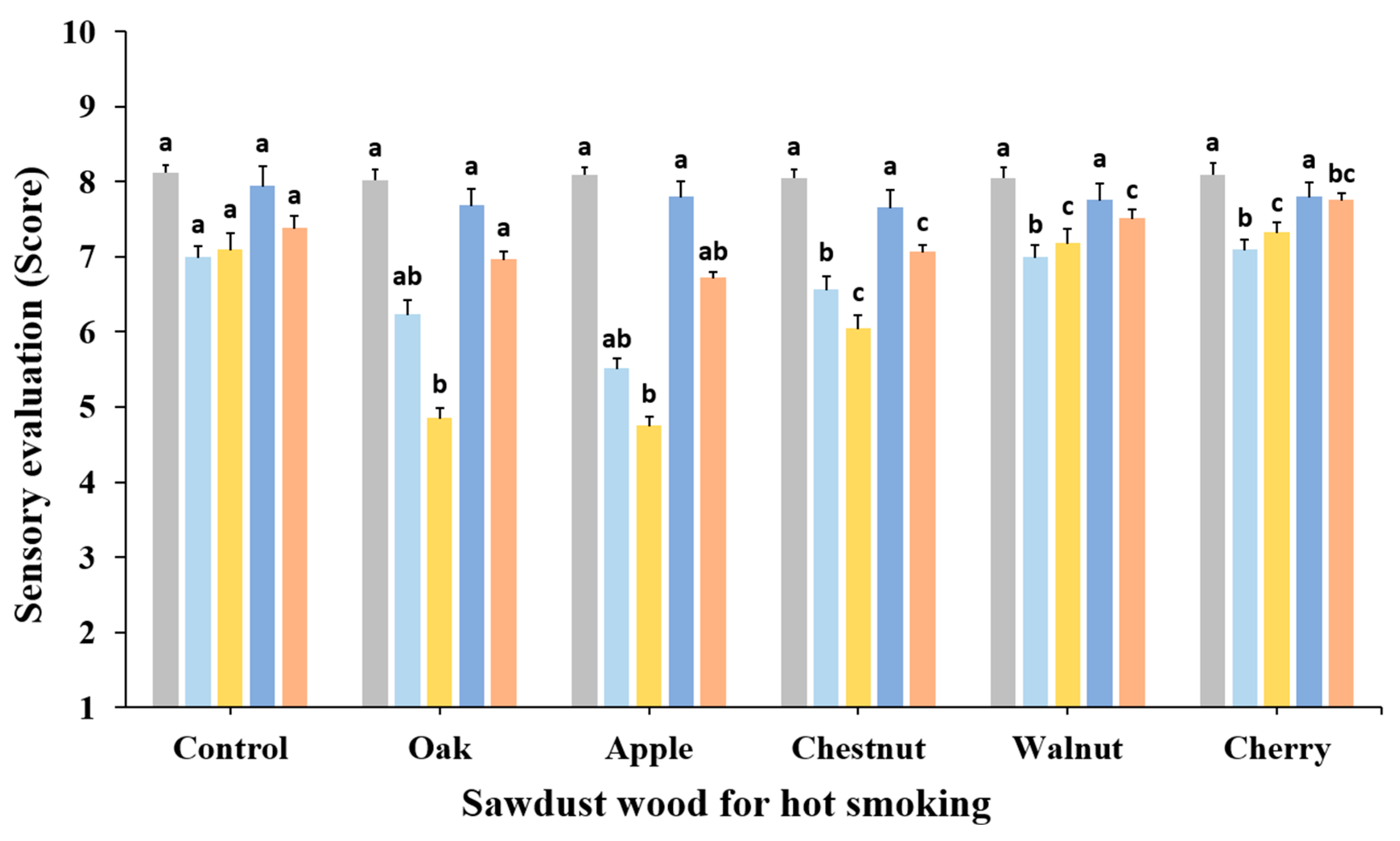
The effects of smoking wood type on sensory quality are shown in Figure 7. Among the five woods evaluated, cherry wood produced significantly higher sensory scores for all attributes assessed (p < 0.05). Apple and oak woods resulted in comparatively lower scores for odor, taste, and overall preference.
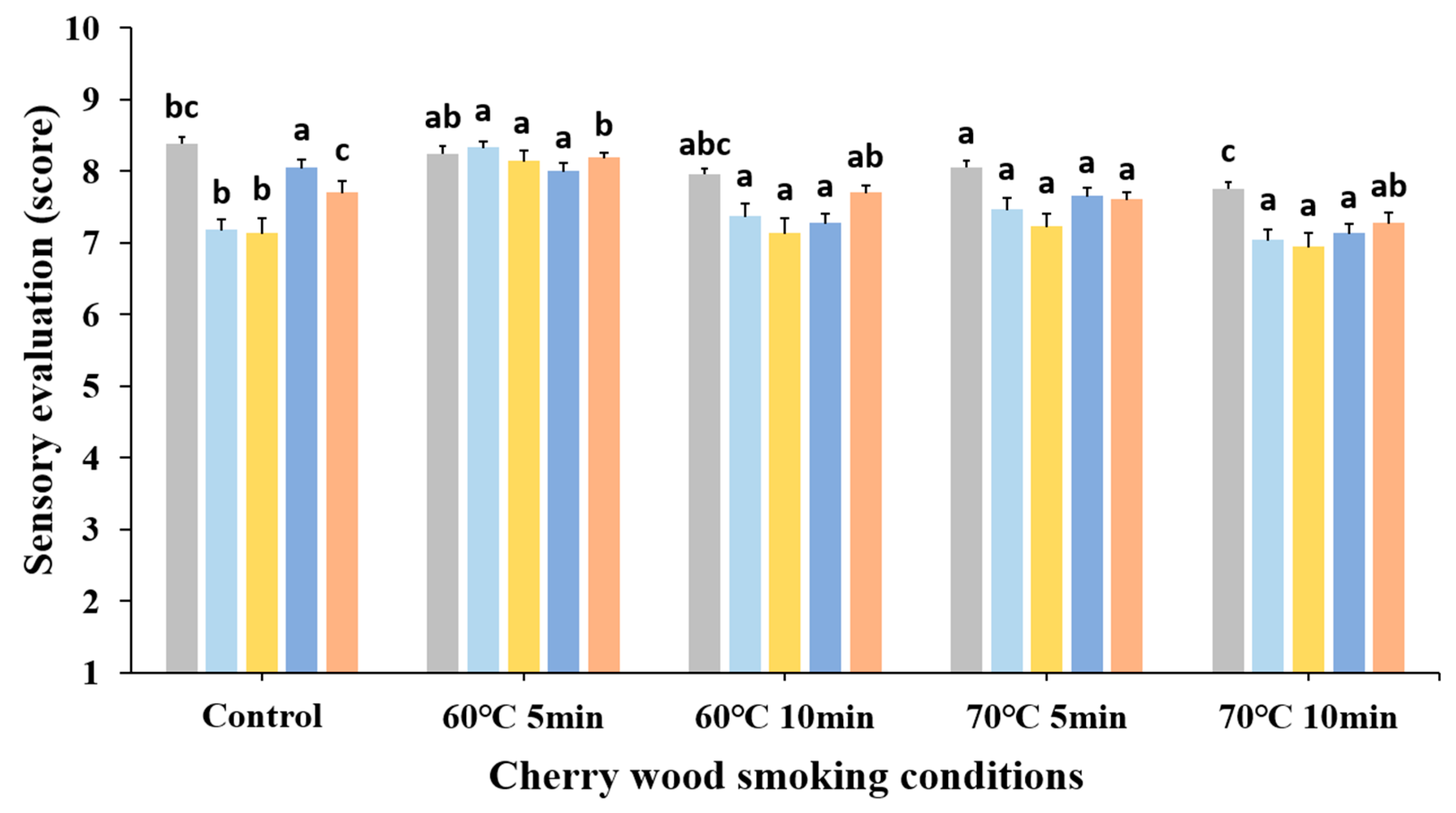
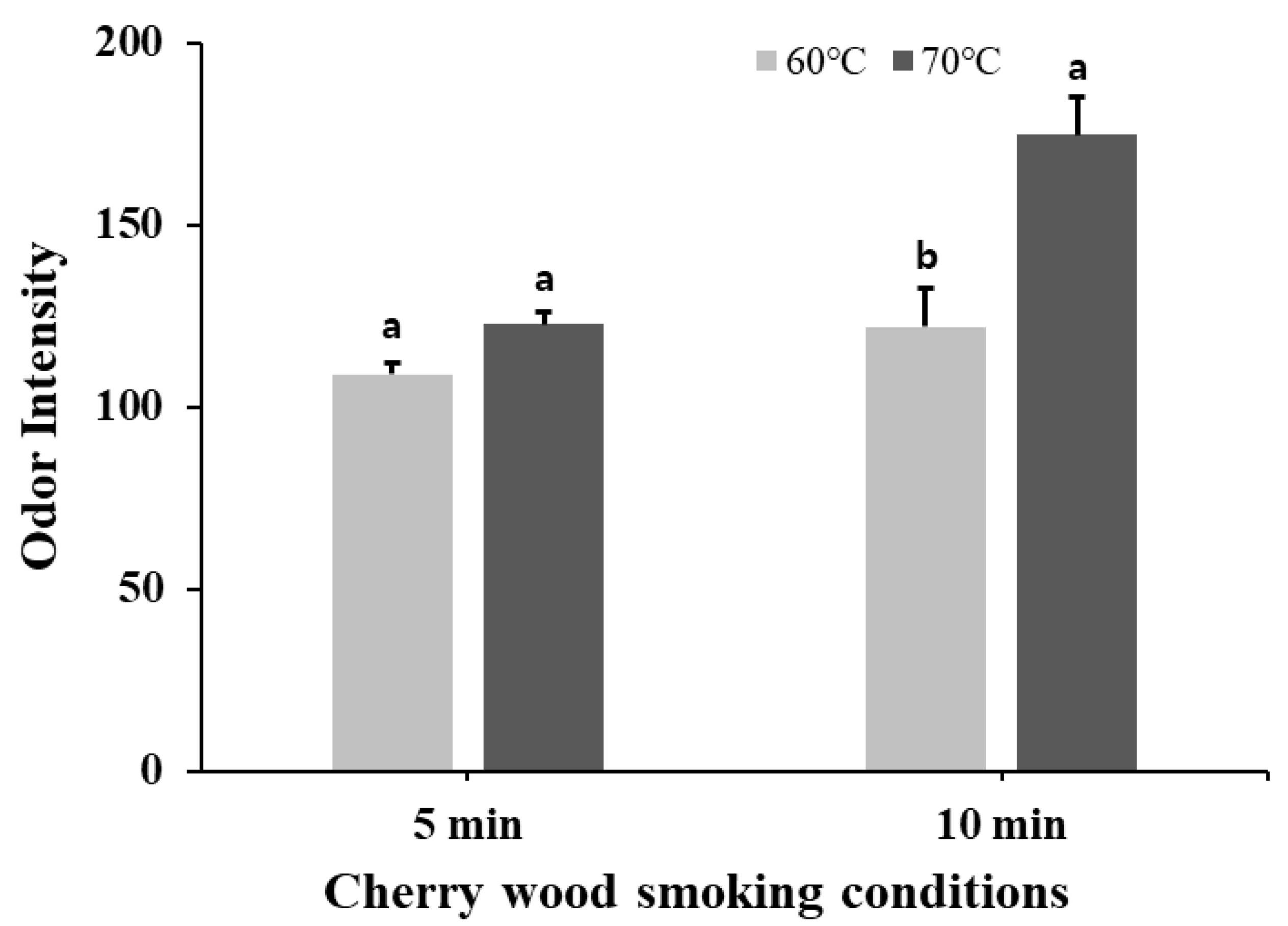
Sensory evaluation and odor intensity results under different smoking temperatures of 60 and 70 °C and smoking times of 5 and 10 min are presented in Figure 8 and Figure 9, respectively. Lower smoking temperature and shorter smoking time resulted in higher sensory scores, whereas prolonged smoking increased odor intensity and reduced overall acceptability. Overall, cherry wood smoking at 60 °C for 5 min was identified as the optimal condition, maximizing flavor enhancement while preventing excessive moisture loss and overly intense smoky aromas.

3.6. Microbiological Characteristics

Microbiological analysis results are presented in Table 1. Total bacterial count decreased significantly from 3.20 ± 0.04 log CFU/g in raw cod to 1.91 ± 0.26 log CFU/g in the final product (p < 0.05). In addition, coliform bacteria were not detected in either raw or processed samples.

3.7. Physicochemical Quality Characteristics

Physicochemical properties of raw cod fillets and the final product are summarized in Table 1. The pH increased from 5.63 ± 0.25 in raw cod to 7.11 ± 0.08 in the final product. Volatile basic nitrogen content increased from 2.57 ± 0.40 mg/100 g to 5.62 ± 0.93 mg/100 g (p < 0.05). In contrast, TBARS values decreased from 0.094 mg MDA/kg in raw cod to 0.029 mg MDA/kg in the final product. This reduction is likely associated with volatilization of malondialdehyde during superheated steam processing, combined with the antioxidant activity of phenolic compounds derived from smoking [43].

3.8. Changes in Texture Profile

Texture profile analysis results are presented in Table 1. Hardness, springiness, gumminess, and chewiness were all significantly higher in the final product compared with raw cod (p < 0.05).

3.9. Nutritional Composition

Nutritional composition data are shown in Table 2. Moisture content decreased significantly following processing, while energy, crude protein, crude fat, and sodium contents per 100 g increased.

3.10. Fatty Acid Composition of Raw Cod Fillet and the Final Product

Fatty acid composition results are presented in Table 3. Absolute contents of saturated, monounsaturated, and polyunsaturated fatty acids increased in the final product. Monounsaturated fatty acid content increased markedly, with oleic acid showing the greatest increase. Relative proportions of fatty acid classes changed only moderately following processing.

3.11. Total and Free Amino Acid Composition

Total and essential amino acid contents increased in the final product compared with raw cod, as shown in Table 4. In contrast, total free amino acid content decreased from 421.1 mg/100 g in raw cod to 165.3 mg/100 g in the final product (Table 5).

3.12. Heavy Metals, Benzo[a]pyrene, and Radioactivity

Heavy metal concentrations, benzo[a]pyrene content, and radioactivity levels are presented in Table 6. All measured values were below regulatory limits, and benzo[a]pyrene and radioactivity were not detected.

3.13. Shelf-Life Determination

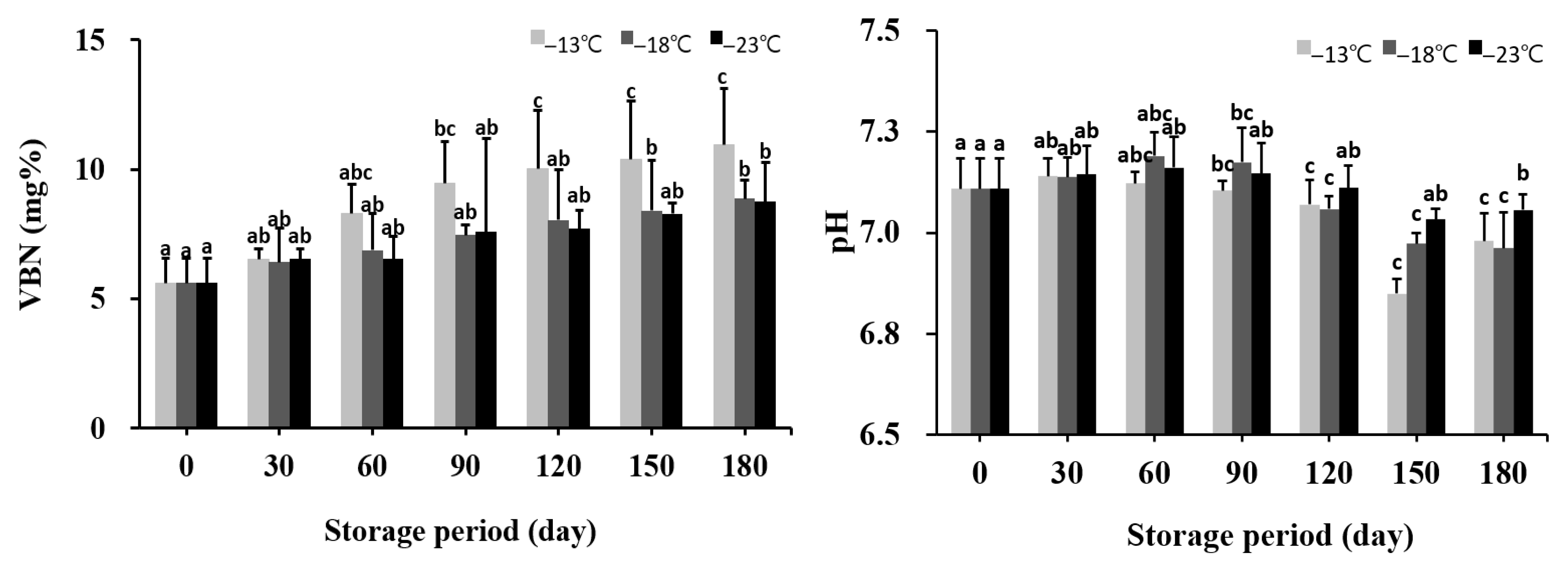
During 180 days of frozen storage at −13, −18, and −23 °C, TBC remained below 5 log CFU/g, and coliforms were not detected (Table 7). Volatile basic nitrogen increased gradually but remained below the Korean MFDS limit of 20 mg%, while pH values remained relatively stable (Figure 10). Sensory quality was best preserved at −23 °C, with minimal deterioration during storage (Figure S2; Table 8). Shelf-life estimation using the VSLSF predicted a shelf-life of 18 months at −18 °C (Table S6).

4. Discussion

High-frequency thawing demonstrated clear advantages over conventional thawing methods by significantly reducing thawing time and drip loss, indicating improved preservation of muscle cell integrity. Excessive drip loss is widely recognized as a critical quality defect in fish products, as it negatively affects texture, appearance, juiciness, and overall palatability [47]. The rapid and uniform internal heating associated with high-frequency thawing likely minimizes ice crystal growth and recrystallization during thawing, which are primary causes of mechanical damage to muscle fibers and cell membranes. By generating heat internally through molecular friction, high-frequency thawing reduces reliance on surface heat conduction and limits temperature gradients within the fillet. Previous studies have reported that this mechanism preserves muscle microstructure and enhances water-holding capacity compared with conventional air or water thawing methods [8,29,48,49]. These findings support the suitability of high-frequency thawing as an effective pretreatment for frozen cod fillets intended for high-quality processed seafood products, particularly those requiring further thermal processing.
Herb marination markedly influenced sensory characteristics, particularly odor and taste, which are critical determinants of consumer acceptance for cod-based products. Among the herbs evaluated, thyme exhibited superior deodorizing and flavor-enhancing effects. This outcome can be attributed to thyme’s high content of volatile aromatic compounds and phenolic constituents, which are effective in suppressing fishy odors while imparting characteristic herbal notes. Similar deodorizing and masking effects of thyme and bay leaf extracts have been reported in previous studies involving food products [50]. However, sensory evaluation revealed that increasing thyme concentration beyond an optimal level negatively affected acceptability. This finding underscores the importance of balancing odor suppression with overall flavor harmony, as excessive herb intensity can dominate the sensory profile and reduce consumer preference even when off-odors are effectively masked.
The effectiveness of thyme marination in improving product quality is closely linked to its phenolic components, particularly thymol and carvacrol. These compounds are known to inhibit lipid oxidation and reduce the formation of fishy off-flavor aldehydes such as hexanal and nonanal [51,52]. Their antioxidant activity is primarily attributed to free radical scavenging and metal-chelating mechanisms, which limit the propagation of lipid peroxidation reactions and the generation of secondary oxidation products responsible for undesirable odors. Comparable antioxidant effects of herbal phenolics have been documented in fish and meat systems by Viuda-Martos et al. [53] and by Shahidi and Zhong [54]. In the present study, the combined deodorizing and antioxidant properties of thyme contributed to improved sensory quality while also supporting oxidative stability during subsequent thermal processing.
Superheated steam grilling further contributed to quality retention by reducing drip loss through rapid surface heating and crust formation. This processing method limits moisture and soluble nutrient exudation compared with conventional dry-heat methods such as oven grilling or pan frying. Rapid protein denaturation at the surface creates a physical barrier that limits water migration from the interior of the fillet, a mechanism previously described for superheated steam processing by Iyota et al. [55] and Abe and Miyashita [56]. As a result, drip loss in the high-frequency thawed and superheated steam-grilled sample was 11.9%, which is substantially lower than the 20 to 30% commonly reported for conventionally grilled or oven-cooked fish fillets [57]. Improved water retention not only enhances yield but also contributes to better texture and juiciness in the final product.
In addition to improving water-holding capacity, superheated steam grilling significantly enhanced sensory quality compared with convection heating, particularly in terms of taste, texture, and overall acceptance. Short-time, high-temperature processing enabled rapid heat penetration while minimizing surface dehydration and oxidative damage. This mechanism helped preserve internal moisture and promoted favorable protein denaturation, resulting in a tender yet cohesive texture and a more pronounced cooked flavor. Optimization using response surface methodology confirmed that moderate processing conditions maximized sensory acceptability, whereas excessive temperature or prolonged heating led to quality deterioration. These observations are consistent with thermal processing principles described by Myers et al. [58] and emphasize the importance of precise thermal control in the development of seafood-based HMR products.
Smoking further enhanced sensory attributes, with cherry wood imparting a favorable and well-balanced flavor profile that complemented the herbal and grilled notes of the product. Differences in sensory characteristics among smoking woods are attributed to variations in volatile compounds generated during wood combustion, including phenols, carbonyls, and organic acids [59]. Mild smoking conditions preserved texture and enhanced flavor without causing excessive odor intensity or surface dehydration. Importantly, benzo[a]pyrene was not detected in the final product, confirming that controlled smoking parameters can enhance sensory quality while maintaining product safety. Previous studies have emphasized that low-temperature, short-duration smoking minimizes moisture loss and reduces the formation of harmful polycyclic aromatic hydrocarbons [60,61], supporting the smoking conditions selected in this study.
The combined application of herb marination, superheated steam grilling, and smoking resulted in significant improvements in microbiological and chemical stability. Herbal extracts contain phenolic compounds and flavonoids that inhibit microbial growth by disrupting cell membranes and interfering with enzyme systems [62]. Thermal processing further reduces microbial populations through protein denaturation and membrane damage, while smoking introduces antimicrobial compounds such as phenols, organic acids, and formaldehyde [48,63]. The observed increases in pH and volatile basic nitrogen were primarily associated with thermal protein degradation rather than microbial spoilage, consistent with previous reports on cooked fish products [64,65,66]. These synergistic effects contributed to the low microbial counts observed in the final product. Consequently, changes in physicochemical indicators such as pH and volatile basic nitrogen should be interpreted as effects of thermal processing rather than indicators of spoilage.
The increase in pH observed after grilling and smoking is primarily associated with heat-induced protein denaturation and deamination reactions, which release basic nitrogenous compounds and reduce the buffering capacity of muscle proteins. Similar pH increases have been widely reported for cooked and smoked fish products, even in the absence of microbial spoilage [67,68]. In cooked fish, pH values in the range of approximately 6.5 to 7.3 are generally considered acceptable when microbial counts remain within regulatory limits. Likewise, the observed increase in VBN content is mainly attributed to the thermal degradation of proteins and non-protein nitrogen fractions rather than spoilage-related microbial metabolism [69,70]. Throughout storage, VBN levels remained well below regulatory and spoilage thresholds, reaching a maximum value of 10.97 mg/100 g at −13 °C, which is far below the commonly accepted spoilage threshold of 20 to 30 mg/100 g, indicating that the product retained high freshness and quality. These slight increases were primarily associated with residual enzymatic activity rather than microbial spoilage [71,72].
Lipid oxidation was effectively controlled throughout processing, as indicated by reduced TBARS values. TBARS values below 0.2 mg MDA/kg are commonly associated with low-oxidation conditions in food products [73,74]. Although thermal treatments generally suppress the formation of new oxidation products rather than eliminate existing ones, the significantly lower TBARS values observed in the final product compared with raw cod may be explained by several mechanisms. Malondialdehyde and other secondary oxidation products are partially volatile and thermally unstable and may decompose or evaporate during grilling and smoking. In addition, oxidized lipid fractions can be lost with cooking exudates. The presence of antioxidant phenolic compounds from thyme (e.g., thymol and carvacrol) and smoke-derived antioxidants such as syringol and guaiacol may further contribute to radical scavenging and reduction of measurable TBARS levels [42,73].
Thermal processing induced pronounced textural changes in the cod fillets, including increased hardness, gumminess, and chewiness. These structural modifications are associated with increased tissue density and mechanical resistance, a phenomenon widely reported in thermally processed lean fish species such as cod and pollock [75]. Such changes primarily reflect moisture loss, protein aggregation, and collagen shrinkage during high-temperature treatment. Reduced moisture content increases tissue density and structural cohesion, resulting in greater mechanical resistance [76]. Muscle protein denaturation alters functional properties and contributes to water expulsion due to reduced protein solubility and water-binding capacity [77]. During heating, the diameter of muscle fibers and the length of sarcomeres decrease as water, soluble proteins, and fats are expelled and proteins denature [78]. Despite increased firmness, the slight increase in springiness observed in the final product suggests that elasticity was largely retained, resulting in a texture that balances firmness with palatability.
Changes in proximate composition were primarily driven by moisture loss during grilling and smoking. The observed increases in crude protein, lipid, ash, and energy content per 100 g of product reflect concentration effects rather than absolute nutrient gains, as commonly reported for cooked lean fish [79,80,81,82]. Lean fish species such as cod typically exhibit increased nutrient density after cooking because water is expelled from muscle tissue, concentrating remaining macronutrients on a wet-weight basis [79,82]. These compositional changes should therefore be interpreted as redistribution effects rather than enhanced nutritional value per se.
Total and essential amino acid contents increased following processing, primarily due to moisture-driven concentration effects rather than enhanced protein synthesis. Similar increases have been reported for cooked cod and other lean fish species subjected to grilling and roasting [75,80]. In contrast, free amino acid levels decreased markedly by approximately 60%, likely due to their participation in heat-induced reactions such as Maillard reactions and Strecker degradation [83], as well as losses through volatilization during high-temperature grilling and smoking [84,85]. Free amino acids such as lysine, alanine, and histidine are particularly reactive and are known to decrease substantially during thermal processing [84], contributing to flavor development but reducing measurable free amino acid levels. Although Maillard reaction products were not directly measured in this study, the substantial decline in free amino acids under high-temperature processing conditions supports this interpretation.
Marked increases in EPA (76%) and DHA (116%) contents are similarly attributed to moisture loss and the relative thermal stability of long-chain n−3 polyunsaturated fatty acids during cooking, as previously reported for processed fish [80,82]. Changes in fatty acid composition reflected both concentration effects and moderate oxidative modification, with partial preservation of nutritionally important polyunsaturated fatty acids such as EPA and DHA, which are known to be sensitive to thermal oxidation [86,87,88,89]. These changes reflect compositional redistribution rather than direct nutritional enhancement, since bioavailability and physiological effects were not assessed. Sodium content increased substantially, primarily due to herb marination [90], which introduced dissolved sea salt and naturally occurring sodium from plant materials into the muscle matrix. Thermal processing facilitated sodium diffusion and retention within denatured proteins, while moisture loss further concentrated sodium on a wet-weight basis [91].
Frozen storage effectively maintained microbiological safety and quality attributes throughout the storage period, particularly at lower temperatures. Freezing suppresses microbial metabolic activity and slows chemical and enzymatic reactions [92], explaining the low and stable microbial counts observed. Sensory stability during frozen storage, especially at −23 °C, aligns with previous reports highlighting the importance of low-temperature storage for preserving texture and flavor in seafood products [92,93].
Sensory-driven optimization was prioritized in this study because the primary objective was the development of a consumer-oriented home meal replacement product, for which sensory acceptance is a key determinant of market success. Sensory evaluation integrates multiple quality attributes, including flavor, texture, and appearance, which cannot be fully captured by instrumental measurements alone [30,94]. Previous studies on seafood and ready-to-eat products have demonstrated meaningful relationships between sensory attributes and instrumental parameters [77,78,95], supporting the combined use of sensory and analytical approaches for product optimization.
From an industrial and market perspective, the integrated processing strategy developed in this study is feasible within existing HMR production lines. High-frequency thawing, superheated steam cooking, and smoking are already applied commercially and can be integrated to reduce processing time, product loss, and rework. Superheated steam cooking has been reported to exhibit higher thermal efficiency than conventional convection heating due to rapid heat transfer and shorter cooking times [55,96]. High-frequency thawing further improves yield and reduces raw material waste by minimizing drip loss [97,98]. This approach is particularly relevant for cod, a species of high commercial value that is heavily traded internationally [22,23], and aligns with continued growth in the HMR sector and increasing demand for high-quality seafood products [22,99].
Despite these promising results, several limitations should be acknowledged. Sensory evaluation was performed by a trained panel under controlled laboratory conditions, which may not fully reflect consumer preferences in real market settings [100]. Shelf-life assessment was restricted to frozen storage, and quality changes under refrigerated or temperature abuse conditions relevant to commercial distribution were not evaluated [101]. In addition, comprehensive characterization of volatile flavor compounds was beyond the scope of this study. Future research should therefore incorporate consumer acceptance testing, instrumental flavor profiling, and evaluation of product stability across diverse storage and distribution conditions. Further investigation of alternative natural marinades and smoking materials, as well as formal cost benefit analyses, would also support commercialization. Although a detailed consumer-level cost analysis was not conducted, previous economic evaluations of seafood convenience products suggest that value addition through processing can offset higher production costs by extending shelf-life and increasing consumer willingness to pay [102,103]. Overall, the integrated processing strategy developed in this study shows strong potential for producing safe, stable, and high-quality grilled cod HMR products, while improving the economic utilization of imported fish and reducing post-import handling and quality losses.


5. Conclusions

An integrated HMR prototype was successfully developed for frozen Pacific cod (G. macrocephalus) fillets using high-frequency thawing, herb marinade treatment, superheat-ed steam grilling, and smoking, with electromagnetic freezing applied to confirm freezing stability. Based on comprehensive evaluation criteria including minimization of drip loss, reduction of fishy odor, sensory acceptability, and overall product quality, the final proto-type applying high-frequency thawing, herb marination at a 3% concentration for 20 min, superheated steam grilling at 340 °C for 4 min, and cherry wood hot smoking at 60 °C for 5 min was selected as optimal. High-frequency thawing effectively minimized drip loss, while herb marination reduced fishy odor and improved flavor. Optimal superheated steam-grilling conditions determined using response surface methodology, followed by cherry wood smoking, further enhanced sensory attributes. The final product showed increased crude protein content from 17.3 to 22.4 g/100 g and total essential amino acids from 6562.9 to 9360.1 mg/100 g, along with marked increases in DHA and EPA, indicating preservation and concentration of highly unsaturated fatty acids. Heavy metals, ben-zo[a]pyrene, and radionuclides were below detection limits, confirming product safety, while microbiological quality was maintained for 180 days of frozen storage with total bacterial counts within acceptable limits and no coliform detection. Sensory quality remained high with scores of eight points, physicochemical indicators such as VBN and pH remained stable, and the estimated shelf-life was 18 months at −18 °C. Although sensory evaluation was limited to a trained panel and shelf-life assessment focused on frozen storage conditions, the results demonstrate that the optimized processing strategy yields a safe, nutritionally valuable, and sensory-stable grilled cod home meal replacement product with strong potential for commercialization and value enhancement of imported cod.

Supplementary Materials

The following supporting information can be downloaded at https://www.mdpi.com/article/10.3390/pr14040669/s1: Figure S1. Production process of Pacific cod fillet Home Meal Replacement (HMR) prototype; Table S1. Central composite design and responses for optimization of superheated steam treatment; Table S2. Drip loss (%) and thawing time (min) of frozen cod fillets according to thawing method; Table S3. Sensory evaluation of cod fillets marinated with different herbs; Table S4. Sensory evaluation of cod fillets as affected by thyme extract concentration and immersion time; Table S5. Odor intensity of cod fillets as affected by thyme extract concentration and immersion time; Table S6. Sensory evaluation of cod fillets grilled by convection oven and a superheated steam oven; Table S7. Central composite design of variables and responses for superheated steam optimization; Table S8. ANOVA results for response variables during optimization of superheated steam treatment; Table S9. Response surface predictive model of overall acceptance of product grilled by superheated steam; Table S10. Optimal superheated steam treatment conditions determined by response surface methodology; Table S11. Sensory evaluation of cod fillets smoked with five different types of smoke wood; Table S12. Sensory evaluation of cod fillets smoked with cherry wood at different temperatures and times; Table S13. Odor intensity of cod fillets smoked with cherry wood under different temperature and time conditions; Figure S2. Sensory evaluation of final products stored at different temperatures for 180 days; Table S14. Statistical parameters of the VSLSF model for predicting the shelf-life of grilled Pacific cod fillets at different reaction orders.

Author Contributions

Conceptualization, J.-S.C. and J.H.S.; methodology, K.M.I.B., J.-S.C. and J.H.S.; validation, K.M.I.B., S.M. and J.-S.C.; formal analysis, M.-J.L., A.H.S., K.M.I.B., H.-R.A., D.-M.K. and S.M.; investigation, K.M.I.B., H.-R.A., S.M. and J.-S.C.; resources, J.-S.C. and J.H.S.; data curation, M.-J.L., A.H.S., K.M.I.B., H.-R.A., D.-M.K. and S.M.; writing—original draft preparation, M.-J.L., A.H.S., K.M.I.B. and S.M.; writing—review and editing, K.M.I.B., S.M., J.-S.C. and J.H.S.; visualization, K.M.I.B., S.M., J.-S.C. and J.H.S.; supervision, J.-S.C. and J.H.S.; project administration, J.-S.C. and J.H.S.; funding acquisition, J.-S.C. All authors have read and agreed to the published version of the manuscript.

Funding

This research was funded by the Ministry of Oceans and Fisheries, Korea, under project no. PJT200885 entitled “Development and commercialization of traditional seafood products based on the Korean coastal marine resources”.

Data Availability Statement

The original contributions presented in this study are included in the article/Supplementary Material. Further inquiries can be directed to the corresponding authors.

Conflicts of Interest

The authors declare no conflicts of interest. The authors declare that this study received funding from the Ministry of Oceans and Fisheries of Korea. The funder was not involved in the study design, collection, analysis, interpretation of data, the writing of this article or the decision to submit it for publication.

Abbreviations

The following abbreviations are used in this manuscript:
Cs134Cesium-134
Cs137Cesium-137
VSLSFVisual Shelf-Life Simulator for Foods
ANOVAAnalysis of Variance
HMRHome meal replacements
HFDHigh-frequency thawing
HACCPHazard Analysis and Critical Control Point
RTLinear dichroism
RWRunning-water thawing
LDPELow-density polyethylene
RSMResponse surface methodology
TBCTotal bacterial count
TBARSThiobarbituric acid reactive substances
MFDSMinistry of Food and Drug Safety
AOACAssociation of Official Analytical Chemists International
FAMEFatty acid methyl esters
I131Iodine-131
TCGTotal coliform group
VBNVolatile basic nitrogen

References

  1. Kim, T.-K.; Choi, H.-D.; Kim, Y.-B.; Jeon, K.-H.; Choi, Y.-S. Home meal replacement status and technology trends. Food Ind. Nutr. 2017, 22, 1–7. [Google Scholar]
  2. Costa, A.I.A.; Dekker, M.; Beumer, R.R.; Rombouts, F.M.; Jongen, W.M.F. A consumer-oriented classification system for home meal replacements. Food Qual. Prefer. 2001, 12, 229–242. [Google Scholar] [CrossRef] [Scilit]
  3. MFDS—Ministry of Food and Drug Safety. 8th General Analysis Method: Food Code; Ministry of Food and Drug Safety: Cheongju, Republic of Korea, 2020. Available online: https://various.foodsafetykorea.go.kr/fsd/#/ext/Document/FC?searchNm=%ED%9C%98%EB%B0%9C%EC%84%B1&itemCode=FC0A003001002A017 (accessed on 23 June 2021).
  4. Yoon, J.; Nam, Y.; Lee, B.; Rha, J.-Y. COVID-19 and changes in Korean consumers’ dietary attitudes and behaviors. Nutr. Res. Pract. 2021, 15, 94–109. [Google Scholar]
  5. Ji, Y.; Han, J. Sustainable home meal replacement (HMR) consumption in Korea: Exploring service strategies using a modified importance–performance analysis. Foods 2022, 11, 889. [Google Scholar] [CrossRef] [Scilit]
  6. Hwang, S.M.; Kim, G.C.; Hwang, Y.S.; Jeon, E.B.; Lee, H.J.; Oh, K.S. Processing and quality of a retort-pouched soup made from brown-backed toadfish (Lagocephalus gloveri). Korean J. Fish. Aquat. Sci. 2020, 53, 308–315. [Google Scholar] [CrossRef]
  7. Tirtawijaya, G.; Park, Y.; Won, N.E.; Kim, H.; An, J.H.; Jeon, J.H.; Park, S.-M.; Yoon, S.-J.; Sohn, J.H.; Kim, J.-S.; et al. Effect of steaming and hot smoking combination on quality characteristics of hagfish (Myxine glutinosa). J. Food Process. Preserv. 2020, 44, e14694. [Google Scholar] [CrossRef] [Scilit]
  8. Negara, B.F.S.P.; Lee, M.J.; Tirtawijaya, G.; Cho, W.H.; Sohn, J.H.; Kim, J.S.; Choi, J.S. Application of deep, vacuum, and air frying methods to fry chub mackerel (Scomber japonicus). Processes 2021, 9, 1225. [Google Scholar] [CrossRef] [Scilit]
  9. Tirtawijaya, G.; Kim, S.R.; Cho, W.H.; Sohn, J.H.; Kim, J.S.; Choi, J.S. Development of a home meal replacement product containing braised mackerel (Scomber japonicus) with radish (Raphanus sativus). Foods 2021, 10, 1135. [Google Scholar] [CrossRef] [Scilit] [PubMed]
  10. Baten, M.A.; Won, N.E.; Mohibbullah, M.; Yoon, S.J.; Sohn, J.H.; Kim, J.S.; Choi, J.S. Effect of hot smoking treatment in improving sensory and physicochemical properties of processed Japanese Spanish mackerel (Scomberomorus niphonius). Food Sci. Nutr. 2020, 8, 3957–3968. [Google Scholar] [CrossRef] [Scilit]
  11. Rana, M.M.; Mohibbullah, M.; Won, N.E.; Baten, M.A.; Sohn, J.H.; Kim, J.S.; Choi, J.S. Improved hot smoke processing of chub mackerel (Scomber japonicus) promotes sensorial, physicochemical, and microbiological characteristics. Appl. Sci. 2021, 11, 2629. [Google Scholar] [CrossRef] [Scilit]
  12. Sutikno, L.A.; Bashir, K.M.I.; Kim, H.; Park, Y.; Won, N.E.; An, J.H.; Jeon, J.-H.; Yoon, S.-J.; Park, S.-M.; Sohn, J.H.; et al. Improvement in physicochemical, microbial, and sensory properties of common squid (Todarodes pacificus) by superheated steam roasting in combination with smoking treatment. J. Food Qual. 2019, 2019, 8721725. [Google Scholar] [CrossRef] [Scilit]
  13. Negara, B.F.S.P.; Kim, S.R.; Sohn, J.H.; Kim, J.S.; Choi, J.S. Application of high-frequency defrosting, superheated steam, and quick-freezing treatments to improve the quality of seafood home meal replacement products consisting of pen shell adductor muscle and common squid meat. Appl. Sci. 2021, 11, 2926. [Google Scholar] [CrossRef] [Scilit]
  14. Negara, B.F.S.P.; Gong, H.J.; Sohn, J.H.; Kim, J.S.; Choi, J.S. Development of a convenient home meal replacement product containing roasted abalone (Haliotis discus hannai) with honey butter sauce. Appl. Sci. 2021, 11, 12091. [Google Scholar] [CrossRef] [Scilit]
  15. USDA—United States Department of Agriculture. Agricultural Research Service. FoodData Central: Fish, Cod, Pacific, Raw (FDC ID: 2684444), USA, 2024. Available online: https://fdc.nal.usda.gov/food-details/2684444/nutrients (accessed on 1 January 2026).
  16. Abelman, A.; Abolhassani, A.; Dalton, M.; Dame, R.; Garber-Yonts, B.; Harley, A.; Kasperski, S.; Lee, J.; Lew, D.; Seung, C.; et al. Stock Assessment and Fishery Evaluation Report for the Groundfish Fisheries of the Gulf of Alaska and Bering Sea/Aleutian Islands Area; Alaska Fisheries Science Center: Seattle, WA, USA, 2023. Available online: https://www.fisheries.noaa.gov/alaska/ecosystems/economic-status-reports-gulf-alaska-and-bering-seaaleutian-islands (accessed on 4 February 2026).
  17. NOAA Fisheries. Assessment of the Pacific Cod Stock in the Gulf of Alaska; North Pacific Fishery Management Council: Anchorage, AK, USA, 2023. Available online: https://www.fisheries.noaa.gov/resource/data/2023-assessment-pacific-cod-stock-gulf-alaska (accessed on 7 January 2026).
  18. National Folk Museum of Korea. Daegutang [Codfish Soup]. Korean Folk Encyclopedia, 2025. Available online: https://folkency.nfm.go.kr/topic/%EB%8C%80%EA%B5%AC%ED%83%95 (accessed on 23 April 2025).
  19. Zarubin, N.Y.; Kharenko, E.N.; Bredikhina, O.V.; Lavrukhina, E.V.; Rysakova, K.S.; Novikov, V.Y.; Leonov, G.E.; Vakhrushev, I.V.; Zolotarev, K.V.; Mikhailov, A.N.; et al. An Isotonic drink containing Pacific cod (Gadus macrocephalus) processing waste collagen hydrolysate for bone and cartilage health. Mar. Drugs 2024, 22, 202. [Google Scholar] [CrossRef] [Scilit]
  20. Jafarpour, A.; Gomes, R.M.; Gregersen, S.; Sloth, J.J.; Jacobsen, C.; Sørensen, A.-D.M. Characterization of cod (Gadus morhua) frame composition and its valorization by enzymatic hydrolysis. J. Food Compos. Anal. 2020, 89, 103469. [Google Scholar] [CrossRef] [Scilit]
  21. Kim, D.-S.; Lee, S.-H.; Choi, W.-K.; Shin, K.-E. Quality characteristics of cod stock with different extraction times using high-pressure extraction. J. East Asian Soc. Diet. Life 2013, 23, 203–210. [Google Scholar]
  22. OECD—Organisation for Economic Co-operation and Development. Rebuilding Fisheries: The Way Forward; OECD Publishing: Paris, France, 2012; Available online: https://www.oecd.org/en/publications/2012/07/rebuilding-fisheries_g1g1d11f.html (accessed on 27 January 2026).
  23. FAO—Food and Agriculture Organization. The State of World Fisheries and Aquaculture, Blue Transformation in Action; Food and Agriculture Organization of the United Nations: Rome, Italy, 2024; Available online: https://openknowledge.fao.org/handle/20.500.14283/cd0683en (accessed on 27 January 2026).
  24. Jung, S.-B.; Kim, J.S.; Lee, M.N. A study on development of the high-frequency thawing machine. J. Korean Soc. Ind. Converg. 2018, 21, 301–307. [Google Scholar] [CrossRef]
  25. Huang, P.; Li, X.; Zhang, Y.; Wu, Z. Deodorizing effects of rosemary extract on silver carp (Hypophthalmichthys molitrix) and determination of its deodorizing components. J. Food Sci. 2022, 87, 636–650. [Google Scholar] [CrossRef] [Scilit]
  26. Oh, J.-H.; Yoon, S.; Choi, Y. The effect of superheated steam cooking conditions on physico-chemical and sensory characteristics of chicken breast fillets. Korean J. Food Cook. Sci. 2014, 30, 317–324. [Google Scholar] [CrossRef] [Scilit]
  27. Milly, P.J. Antimicrobial Properties of Liquid Smoke Fractions. Doctoral Dissertation, University of Georgia, Athens, GA, USA, 2003. [Google Scholar]
  28. MFDS—Ministry of Food and Drug Safety. Guidelines for Shelf-Life Setting Experiments for Foods; Livestock Products, and Health Functional Foods: Cheongju, Republic of Korea, 2023. Available online: https://www.mfds.go.kr/brd/m_1060/view.do?seq=15279 (accessed on 31 July 2023).
  29. Cho, W.-H.; Choi, J.-S. Sensory quality evaluation of superheated steam-treated chicken leg and breast meats with a combination of marination and hot smoking. Foods 2021, 10, 1924. [Google Scholar] [CrossRef] [Scilit]
  30. ISO 8586:2023; Sensory Analysis—Selection and Training of Sensory Assessors. International Organization for Standardization: Geneva, Switzerland, 2023. Available online: https://www.iso.org/standard/76667.html (accessed on 12 February 2026).
  31. Stone, H.; Sidel, J.L. Sensory Evaluation Practices, 3rd ed.; Academic Press: London, UK, 2004. [Google Scholar]
  32. MFDS—Ministry of Food and Drug Safety. 4th General Analysis Method; Food Additives Code: Cheongju, Republic of Korea, 2020. Available online: https://various.foodsafetykorea.go.kr/fsd/?idx=878#/ext/Document/FC?searchNm=pH&itemCode=FC0A263004005A269 (accessed on 23 June 2021).
  33. Yildiz, P.O. Effect of essential oils and packaging on hot smoked rainbow trout during storage. J. Food Process. Preserv. 2014, 39, 806–815. [Google Scholar] [CrossRef] [Scilit]
  34. Mohibbullah, M.; Won, N.E.; Jeon, J.-H.; An, J.H.; Park, Y.; Kim, H.; Bashir, K.M.I.; Park, S.-M.; Kim, Y.-S.; Yoon, S.-J.; et al. Effect of superheated steam roasting with hot smoking treatment on improving physicochemical properties of the adductor muscle of pen shell (Atrina pectinate). Food Sci. Nutr. 2018, 6, 1317–1327. [Google Scholar] [CrossRef] [Scilit] [PubMed]
  35. Macagnano, A.; Careche, M.; Herrero, A.; Paolesse, R.; Martinelli, E.; Pennazza, G.; Carmona, P.; D’Amico, A.; Di Natale, C. A model to predict fish quality from instrumental features. Sens. Actuators B Chem. 2005, 111, 293–298. [Google Scholar] [CrossRef] [Scilit]
  36. AOAC—Association of Official Analytical Chemists International. Official Methods of Analysis of AOAC International, 21st ed.; AOAC International: Rockville, MD, USA, 2019; Available online: https://www.aoac.org/about-aoac-international/ (accessed on 7 August 2025).
  37. Baten, M.A.; Won, N.E.; Sohn, J.H.; Kim, J.S.; Mohibbullah, M.; Choi, J.S. Improvement of sensorial, physicochemical, microbiological, nutritional and fatty acid attributes and shelf life extension of hot smoked half-dried Pacific saury (Cololabis saira). Foods 2020, 9, 1009. [Google Scholar] [CrossRef] [Scilit]
  38. Bligh, E.G.; Dyer, W.J. A rapid method of total lipid extraction and purification. Can. J. Biochem. Physiol. 1959, 37, 911–917. [Google Scholar] [CrossRef] [Scilit]
  39. Ambrozova, J.V.; Misurcova, L.; Vicha, R.; Machu, L.; Samek, D.; Baron, M.; Mlcek, J.; Sochor, J.; Jurikova, T. Influence of extractive solvents on lipid and fatty acids content of edible freshwater algal and seaweed products, the green microalga Chlorella kessleri and the cyanobacterium Spirulina platensis. Molecules 2014, 19, 2344–2360. [Google Scholar] [CrossRef] [Scilit]
  40. Cho, W.-H.; Park, J.-M.; Kim, E.-J.; Mohibbullah, M.; Choi, J.-S. Evaluation of the quality characteristics and development of a puffed-rice snack enriched with honeybee (Apis mellifera L.) drone pupae powder. Foods 2022, 11, 1599. [Google Scholar] [CrossRef] [Scilit]
  41. MFDS—Ministry of Food and Drug Safety. Food Code; Ministry of Food and Drug Safety: Cheongju, Republic of Korea, 2014. Available online: https://various.foodsafetykorea.go.kr/fsd/?idx=878#/ext/Document/FC?searchNm=%EB%B2%A4%EC%A1%B0%ED%94%BC%EB%A0%8C&itemCode=FC0A070002003A707 (accessed on 23 June 2021).
  42. MFDS—Ministry of Food and Drug Safety. Food Code; Ministry of Food and Drug Safety: Cheongju, Republic of Korea, 2022. Available online: https://various.foodsafetykorea.go.kr/fsd/?idx=11142#/ext/Document/FC?searchNm=%EB%B0%A9%EC%82%AC%EB%8A%A5&itemCode=FC0A070002003A725 (accessed on 23 June 2021).
  43. Bortolomeazzi, R.; Fazzio, M.; Corradini, C.; Pavan, B. Comparative evaluation of the antioxidant capacity of smoke flavouring phenols by crocin bleaching inhibition, DPPH radical scavenging and oxidation potential. Food Chem. 2007, 100, 1481–1489. [Google Scholar] [CrossRef] [Scilit]
  44. MFDS—Ministry of Food and Drug Safety. Sharing Information on Radioactive Contamination Monitoring in Foods, Cheongju, Republic of Korea, 2016. Available online: https://www.mfds.go.kr/brd/m_176/view.do?seq=25168 (accessed on 23 June 2021).
  45. MFDS—Ministry of Food and Drug Safety. Re-Evaluation Report on Standards and Specifications for Heavy Metals in Foods (Integrated Version of 7 Types); Ministry of Food and Drug Safety: Cheongju, Republic of Korea, 2024. Available online: https://www.foodsafetykorea.go.kr/portal/board/boardDetail.do (accessed on 11 March 2024).
  46. FDA—U.S. Food and Drug Administration. CPG Sec. 555.880 Guidance Levels for Radionuclides in Domestic and Imported Foods, Silver Spring, MD, USA, 2005. Available online: https://www.fda.gov/regulatory-information/search-fda-guidance-documents/cpg-sec-555880-guidance-levels-radionuclides-domestic-and-imported-foods (accessed on 23 June 2021).
  47. Otto, G.; Roehe, R.; Looft, H.; Thoelking, L.; Kalm, E. Comparison of different methods for determination of drip loss and their relationships to meat quality and carcass characteristics in pigs. Meat Sci. 2004, 68, 401–409. [Google Scholar] [CrossRef] [Scilit] [PubMed]
  48. Venugopal, V. Seafood Processing: Adding Value Through Quick Freezing, Retortable Packaging, and Cook-Chilling; CRC Press (Taylor & Francis): Boca Raton, FL, USA, 2006; p. 485. [Google Scholar] [CrossRef] [Scilit]
  49. Alizadeh, E.; Chapleau, N.; De Lamballerie, M.; LeBail, A. Effects of freezing and thawing processes on the quality of Atlantic salmon (Salmo salar) fillets. J. Food Sci. 2007, 72, 279–284. [Google Scholar] [CrossRef] [Scilit]
  50. Kurup, A.H.; Deotale, S.; Rawson, A.; Patras, A. Thermal processing of herbs and spices. In Herbs, Spices and Medicinal Plants; Hossain, M.B., Brunton, N.P., Rai, D.K., Eds.; Wiley Online Library: Hoboken, NJ, USA, 2021; pp. 1–21. [Google Scholar] [CrossRef] [Scilit]
  51. Hudaib, M.; Speroni, E.; Di Pietra, A.M.; Cavrini, V. GC/MS evaluation of thyme (Thymus vulgaris L.) oil composition and variations during the vegetative cycle. J. Pharm. Biomed. Anal. 2002, 29, 691–700. [Google Scholar] [CrossRef] [Scilit]
  52. Solomakos, N.; Govaris, A.; Koidis, P.; Botsoglou, N. The antimicrobial effect of thyme essential oil, nisin and their combination against Escherichia coli O157: H7 in minced beef during refrigerated storage. Meat Sci. 2008, 80, 159–166. [Google Scholar] [CrossRef] [Scilit] [PubMed]
  53. Viuda-Martos, M.; Ruiz-Navajas, Y.; Fernández-López, J.; Pérez-Álvarez, J.A. Effect of added citrus fibre and spice essential oils on quality characteristics and shelf-life of mortadella. Meat Sci. 2010, 85, 568–576. [Google Scholar] [CrossRef] [Scilit]
  54. Shahidi, F.; Zhong, Y. Lipid oxidation and improving the oxidative stability. Chem. Soc. Rev. 2010, 39, 4067–4079. [Google Scholar] [CrossRef] [Scilit]
  55. Iyota, H. A study on the use of superheated steam in food processing. Jpn. J. Food Eng. 2024, 25, 1–7. [Google Scholar] [CrossRef] [Scilit]
  56. Abe, T.; Miyashita, K. Heat treatment of scallop adductor muscle using superheated steam. J. Food Sci. 2007, 72, E345–E350. [Google Scholar] [CrossRef] [Scilit]
  57. Mansoor, S.; An, H.-R.; Sohn, J.H.; Bashir, K.M.I.; Choi, J.-S. Superheated steam processing: A novel approach to improve seafood quality and nutritional value. Int. J. Food Sci. Technol. 2025, 60, vvaf212. [Google Scholar] [CrossRef] [Scilit]
  58. Myers, R.H.; Montgomery, D.C.; Anderson-Cook, C.M. Response Surface Methodology: Process and Product Optimization Using Designed Experiments, 4th ed.; John Wiley & Sons: Hoboken, NJ, USA, 2016. [Google Scholar]
  59. Feng, H.; Timira, V.; Zhao, J.; Lin, H.; Wang, H.; Li, Z. Insight into the characterization of volatile compounds in smoke-flavored sea bass (Lateolabrax maculatus) during processing via HS-SPME-GC–MS and HS-GC-IMS. Foods 2022, 11, 2614. [Google Scholar] [CrossRef] [Scilit]
  60. Rizo, A.; Miranda, J.; Otero, L.; Domínguez, R.; Rodríguez-Monsalve, M.J.; Modroño, A. Feasibility of processing temperatures on the quality and shelf-life of smoke-flavoured cod. LWT—Food Sci. Technol. 2016, 69, 546–553. [Google Scholar] [CrossRef] [Scilit]
  61. Ciemniak, Z.; Szymandera-Buszka, K.; Mozdżer, K.; Waszkowiak, K. Effects of smoking temperature, smoking time, and type of wood sawdust on polycyclic aromatic hydrocarbon accumulation levels in directly smoked pork sausages. J. Agric. Food Chem. 2020, 68, 8435–8443. [Google Scholar] [CrossRef] [Scilit]
  62. Burt, S. Essential oils: Their antibacterial properties and potential applications in foods—A review. Int. J. Food Microbiol. 2004, 94, 223–253. [Google Scholar] [CrossRef] [Scilit]
  63. Nizio, E.; Czwartkowski, K.; Niedbała, G. Impact of smoking technology on the quality of food products: Absorption of polycyclic aromatic hydrocarbons (PAHs) by food products during smoking. Sustainability 2023, 15, 16890. [Google Scholar] [CrossRef] [Scilit]
  64. Howgate, P. A critical review of total volatile bases and trimethylamine as indices of freshness of fish. Part 1. Determination. Electron. J. Environ. Agric. Food Chem. 2010, 9, 29–57. [Google Scholar]
  65. Chen, H.Z.; Zhang, M.; Bhandari, B.; Yang, C.H. Development of a novel colorimetric food package label for monitoring lean pork freshness. LWT—Food Sci. Technol. 2019, 99, 43–49. [Google Scholar] [CrossRef] [Scilit]
  66. Servillo, L.; D’onofrio, N.; Giovane, A.; Casale, R.; Cautela, D.; Castaldo, D.; Iannaccone, F.; Neglia, G.; Campanile, G.; Balestrieri, M.L. Ruminant meat and milk contain delta-valerobetaine, another precursor of trimethylamine N-oxide (TMAO) like gamma-butyrobetaine. Food Chem. 2018, 260, 193–199. [Google Scholar] [CrossRef] [Scilit] [PubMed]
  67. Huss, H.H. Quality and Quality Changes in Fresh Fish; FAO Fisheries Technical Paper No. 348; Food and Agriculture Organization: Rome, Italy, 1995; Available online: https://www.fao.org/4/v7180e/v7180e00.htm (accessed on 28 January 2026).
  68. Goulas, A.E.; Kontominas, M.G. Effect of modified atmosphere packaging and vacuum packaging on the shelf-life of refrigerated chub mackerel (Scomber japonicus): Biochemical and sensory attributes. Eur. Food Res. Technol. 2007, 224, 545–553. [Google Scholar] [CrossRef] [Scilit]
  69. Connell, J.J. Control of Fish Quality, 4th ed.; Fishing News Books; Wiley-Blackwell: Hoboken, NJ, USA, 1995; pp. 1–256. [Google Scholar]
  70. Özden, Ö. Changes in amino acid and fatty acid composition during shelf-life of marinated fish. J. Sci. Food Agric. 2005, 85, 2015–2020. [Google Scholar] [CrossRef] [Scilit]
  71. Gram, L.; Huss, H.H. Microbiological spoilage of fish and fish products. Int. J. Food Microbiol. 1996, 33, 121–137. [Google Scholar] [CrossRef] [Scilit]
  72. Kung, H.-F.; Lee, Y.-C.; Lin, C.-W.; Huang, Y.-R.; Cheng, C.-A.; Lin, C.-M.; Tsai, Y.-H. The effect of vacuum packaging on histamine changes of milkfish sticks at various storage temperatures. J. Food Drug Anal. 2017, 25, 812–818. [Google Scholar] [CrossRef] [Scilit]
  73. Botsoglou, N.A.; Fletouris, D.J.; Papageorgiou, G.E.; Vassilopoulos, V.N.; Mantis, A.J.; Trakatellis, A.G. Rapid, sensitive, and specific thiobarbituric acid method for measuring lipid peroxidation in animal tissue, food, and feedstuff samples. J. Agric. Food Chem. 1994, 42, 1931–1937. [Google Scholar] [CrossRef] [Scilit]
  74. Zhang, Y.; Holman, B.W.B.; Ponnampalam, E.N.; Kerr, M.G.; Bailes, K.L.; Kilgannon, A.K.; Collins, D.; Hopkins, D.L. Understanding beef flavour and overall liking traits using two different methods for determination of thiobarbituric acid reactive substance (TBARS). Meat Sci. 2019, 149, 114–119. [Google Scholar] [CrossRef] [Scilit] [PubMed]
  75. Skipnes, D.; der Plancken, I.V.; Loey, A.V.; Hendrickx, M.E. Kinetics of heat denaturation of proteins from farmed Atlantic cod (Gadus morhua). J. Food Eng. 2008, 85, 51–58. [Google Scholar] [CrossRef] [Scilit]
  76. Ángel-Rendón, S.V.; Filomena-Ambrosio, A.; Hernández-Carrión, M.; Llorca, E.; Hernando, I.; Quiles, A.; Sotelo-Díaz, I. Pork meat prepared by different cooking methods. A microstructural, sensorial and physicochemical approach. Meat Sci. 2020, 163, 108089. [Google Scholar] [CrossRef] [Scilit]
  77. Hassoun, A.; Heia, K.; Lindberg, S.K.; Nilsen, H. Spectroscopic techniques for monitoring thermal treatments in fish and other seafood: A review of recent developments and applications. Foods 2020, 9, 767. [Google Scholar] [CrossRef] [Scilit]
  78. Ovissipour, M.; Rasco, B.; Tang, J.; Sablani, S. Kinetics of protein degradation and physical changes in thermally processed Atlantic salmon (Salmo salar). Food Bioprocess Technol. 2017, 10, 1865–1882. [Google Scholar] [CrossRef] [Scilit]
  79. Sikorski, Z.E.; Kolakowska, A.; Burt, J.R. Postharvest biochemical and microbial changes. In Seafood: Resources, Nutritional Composition, and Preservation; Sikorski, Z.E., Ed.; CRC Press: Boca Raton, FL, USA, 1990. [Google Scholar] [CrossRef] [Scilit]
  80. Gokoglu, N.; Yerlikaya, P.; Cengiz, E. Effects of cooking methods on the proximate composition and fatty acid profile of fish. Food Chem. 2004, 84, 19–22. [Google Scholar] [CrossRef] [Scilit]
  81. Juárez, M.; Failla, S.; Ficco, A.; Peña, F.; Avilés, C.; Polvillo, O. Buffalo meat composition as affected by different cooking methods. Food Bioprod. Process. 2010, 88, 145–148. [Google Scholar] [CrossRef] [Scilit]
  82. Gladyshev, M.I.; Sushchik, N.N.; Makhutova, O.N. Production of EPA and DHA in aquatic ecosystems and their stability. Biol. Rev. 2013, 107, 117–126. [Google Scholar] [CrossRef] [Scilit]
  83. Luan, D.; Wang, Y.; Wang, Y. Thermal degradation characteristics of amino acids in rainbow trout fillets during traditional high temperature short time processing and microwave processing. J. Food Meas. Charact. 2022, 16, 1940–1952. [Google Scholar] [CrossRef] [Scilit]
  84. Martins, S.I.F.S.; Jongen, W.M.F.; van Boekel, M.A.J.S. A review of Maillard reaction in food and implications for amino acids. Trends Food Sci. Technol. 2000, 11, 364–373. [Google Scholar] [CrossRef] [Scilit]
  85. Mottram, D.S. Flavour formation in meat and meat products: A review. Food Chem. 1998, 62, 415–424. [Google Scholar] [CrossRef] [Scilit]
  86. Tornberg, E. Effects of heat on meat proteins—Implications on structure and quality of meat products. Meat Sci. 2005, 70, 493–508. [Google Scholar] [CrossRef] [Scilit] [PubMed]
  87. Miyashita, K. Prevention of fish oil oxidation. J. Oleo Sci. 2019, 68, 1–11. [Google Scholar] [CrossRef] [Scilit]
  88. Prato, E.; Biandolino, F.; Scardicchio, C.; Papa, L. Effect of different cooking methods on the fatty acid profile of red mullet (Mullus barbatus). Pol. J. Food Nutr. Sci. 2023, 73, 147–155. [Google Scholar] [CrossRef] [Scilit]
  89. Biandolino, F.; Spagnolo, M.; Caroppo, C.; Fanizzi, F.P. Effect of different cooking methods on lipid nutritional quality of the mussel Mytilus galloprovincialis (Lamarck, 1819). Foods 2021, 10, 416. [Google Scholar] [CrossRef] [Scilit]
  90. Jang, Y.W.; Ko, Y.H.; Kang, S.H. Tracking changes in inorganic substance concentration and precipitation in pet bottled water distributed domestically be-fore and after freezing and thawing. Environ. Anal. Toxicol. Health 2024, 27, 268–277. [Google Scholar] [CrossRef] [Scilit]
  91. Bornhorst, E.R.; Tang, J.; Sablani, S.S. Sodium chloride diffusion in low-acid foods during thermal processing and storage. J. Food Sci. 2016, 81, E1130–E1140. [Google Scholar] [CrossRef] [Scilit]
  92. Strateva, M.; Penchev, G. Histological, physicochemical and microbiological changes in fresh and frozen/thawed fish. Trakia J. Sci. 2020, 18, 69–80. [Google Scholar] [CrossRef] [Scilit]
  93. Qiao, Z.; Yin, M.; Qi, X.; Li, Z.; Yu, Z.; Chen, M.; Xiao, T.; Wang, X. Freezing and storage on aquatic food: Underlying mechanisms and implications on quality deterioration. Food Sci. Technol. 2022, 42, e91322. [Google Scholar] [CrossRef] [Scilit]
  94. Lawless, H.T.; Heymann, H. Sensory Evaluation of Food: Principles and Practices, 2nd ed.; Food Science Text Series; Springer: Berlin/Heidelberg, Germany, 2010. [Google Scholar]
  95. Li, M.; Huang, J.; Chen, Y.; Zu, X.; Xiong, G.; Li, H. Correlations between texture profile analysis and sensory evaluation of cured largemouth bass meat (Micropterus salmoides). J. Food Qual. 2022, 2022, 1319744. [Google Scholar] [CrossRef] [Scilit]
  96. Zhang, H.; Yu, F.; Yi, J.; Xu, X.; Ma, Y. Superheated steam technology: Recent developments and applications in food industries. Compr. Rev. Food Sci. Food Saf. 2024, 23, e70073. [Google Scholar] [CrossRef] [Scilit]
  97. James, C.; Purnell, G.; James, S.J. A review of novel and innovative food freezing technologies. Food Bioprocess Technol. 2015, 8, 1616–1634. [Google Scholar] [CrossRef] [Scilit]
  98. Backi, C.J. Methods for (industrial) thawing of fish blocks: A review. J. Food Process Eng. 2018, 41, e12598. [Google Scholar] [CrossRef] [Scilit]
  99. Olsen, S.O.; Scholderer, J.; Brunsø, K.; Verbeke, W. Exploring the relationship between convenience and fish consumption: A cross-cultural study. Appetite 2007, 49, 84–91. [Google Scholar] [CrossRef] [Scilit] [PubMed]
  100. Boutrolle, I.; Delarue, J.; Arranz, D.; Rogeaux, M.; Köster, E.P. Central location test vs. home use test: Contrasting results depending on product type. Food Qual. Prefer. 2007, 18, 490–499. [Google Scholar] [CrossRef] [Scilit]
  101. Antelm, P.; Mkama, B.M.; Tarimo, J.S.; Ngailo, S. Effects of vacuum packaging and chilling storage on the microbiological changes of the superheated steam-dried sardines. Tanzan. J. Sci. 2023, 49, 140–151. [Google Scholar] [CrossRef] [Scilit]
  102. Menozzi, D.; Nguyen, T.T.; Sogari, G.; Taskov, D.; Lucas, S.; Castro-Rial, J.L.S.; Mora, C. Consumers’ Preferences and willingness to pay for fish products with health and environmental labels: Evidence from five European countries. Nutrients 2020, 12, 2650. [Google Scholar] [CrossRef] [Scilit]
  103. Morrissey, M.; DeWitt, C. Value-added Seafood. In Seafood Processing: Technology, Quality and Safety; Boziaris, I.S., Ed.; John Wiley & Sons, Ltd.: Hoboken, NJ, USA, 2014. [Google Scholar] [CrossRef] [Scilit]
Figure 1. Drip loss (%) and thawing time (min) of frozen cod fillets according to thawing method. Values are presented as means ± SD (n = 3). HFD: High-frequency thawing; RW: Running-water thawing; RT: Room-temperature thawing. Different letters (a–c) within each parameter indicate significant differences among samples according to Tukey’s test (p < 0.05).
Processes 14 00669 g001
Figure 2. Sensory evaluation of cod fillets marinated with different herbs. Values are presented as means ± SD (n = 3). Appearance (Processes 14 00669 i001), Odor (Processes 14 00669 i002), Taste (Processes 14 00669 i003), Texture (Processes 14 00669 i004), Overall acceptance (Processes 14 00669 i005). FW: Fennel whole; TW: Thyme whole; CS: Cumin seeds; CP: Coriander powder; BW: Basil whole; BP: Basil powder; BL: Bay leaves; SA: Star anise; SBFP: Sea buckthorn fruit powder. Different letters (a–f) within each attribute indicate significant differences among means according to Tukey’s test (p < 0.05).
Processes 14 00669 g002
Figure 3. Sensory evaluation of cod fillets as affected by thyme concentration and immersion time. Values are presented as means ± SD (n = 3). Appearance (Processes 14 00669 i001), Odor (Processes 14 00669 i002), Taste (Processes 14 00669 i003), Texture (Processes 14 00669 i004), Overall acceptance (Processes 14 00669 i005). Different letters (a–e) within each attribute indicate significant differences among means according to Tukey’s test (p < 0.05).
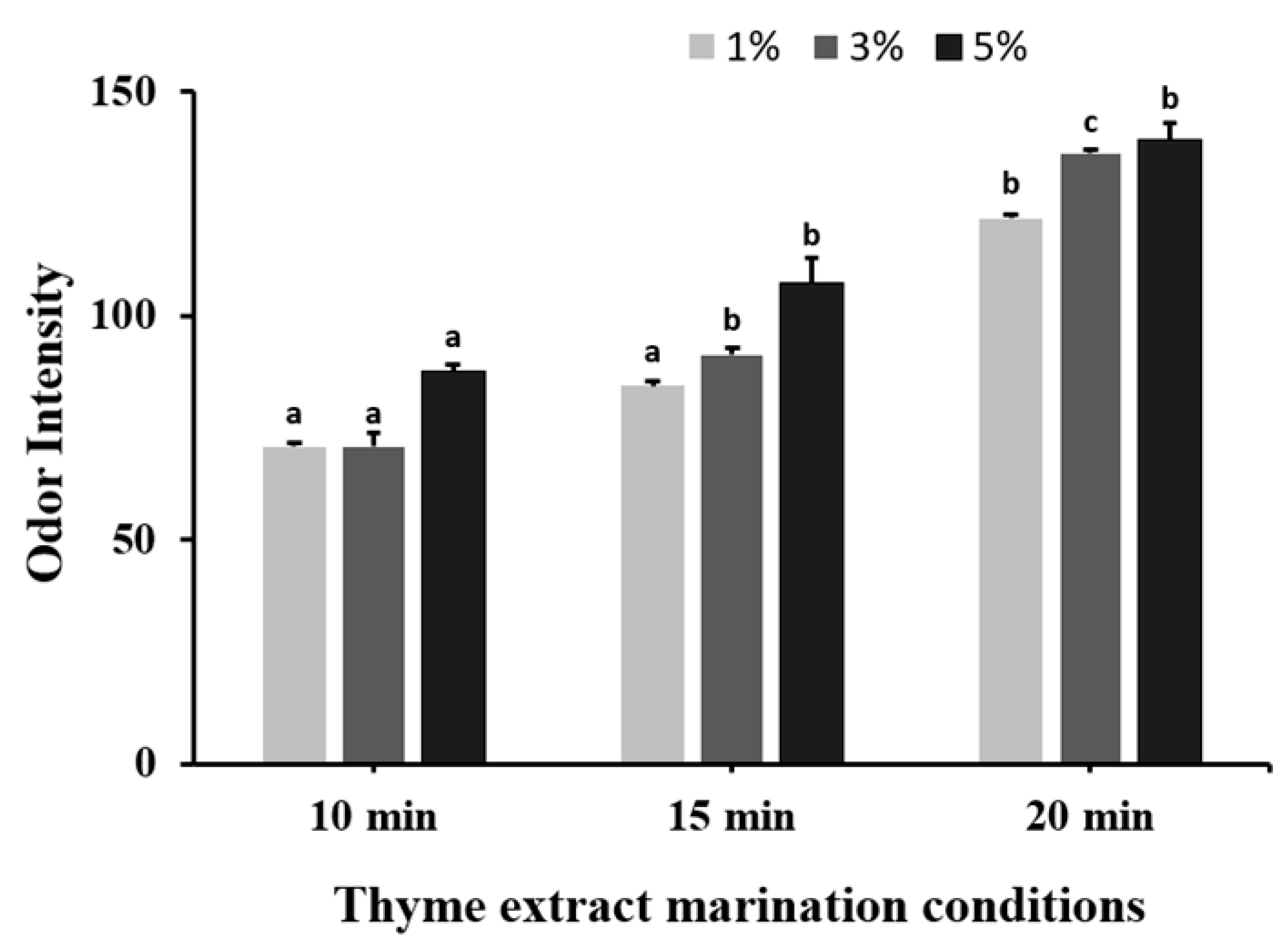
Processes 14 00669 g003
Figure 4. Odor intensity of cod fillets affected by thyme extract concentration and immersion time. Values are presented as means ± SD (n = 3). Different letters (a–c) within each set indicate significant differences according to Tukey’s test (p < 0.05).
Processes 14 00669 g004
Figure 5. Sensory evaluation of cod fillets grilled by convection oven and a superheated steam oven. Values are presented as means ± SD (n = 3). Appearance (Processes 14 00669 i001), Odor (Processes 14 00669 i002), Taste (Processes 14 00669 i003), Texture (Processes 14 00669 i004), Overall acceptance (Processes 14 00669 i005). Different letters (a,b) within each attribute indicate significant differences according to Tukey’s test (p < 0.05).
Processes 14 00669 g005
Figure 6. Three-dimensional response surface plots showing overall acceptance of superheated steam–treated cod fillets in relation to grilling temperature and time.
Processes 14 00669 g006
Figure 7. Sensory evaluation of cod fillets smoked with five different types of smoke wood. Values are presented as means ± SD (n = 3). Appearance (Processes 14 00669 i001), Odor (Processes 14 00669 i002), Taste (Processes 14 00669 i003), Texture (Processes 14 00669 i004), Overall acceptance (Processes 14 00669 i005). Different letters (a–c) within each attribute indicate significant differences according to Tukey’s test (p < 0.05).

Processes 14 00669 g007
Figure 8. Sensory evaluation of cod fillets smoked with cherry wood at different temperatures and times. Values are presented as means ± SD (n = 3). Appearance (Processes 14 00669 i001), Odor (Processes 14 00669 i002), Taste (Processes 14 00669 i003), Texture (Processes 14 00669 i004), Overall acceptance (Processes 14 00669 i005). Different letters (a–c) within each attribute indicate significant differences according to Tukey’s test (p < 0.05).

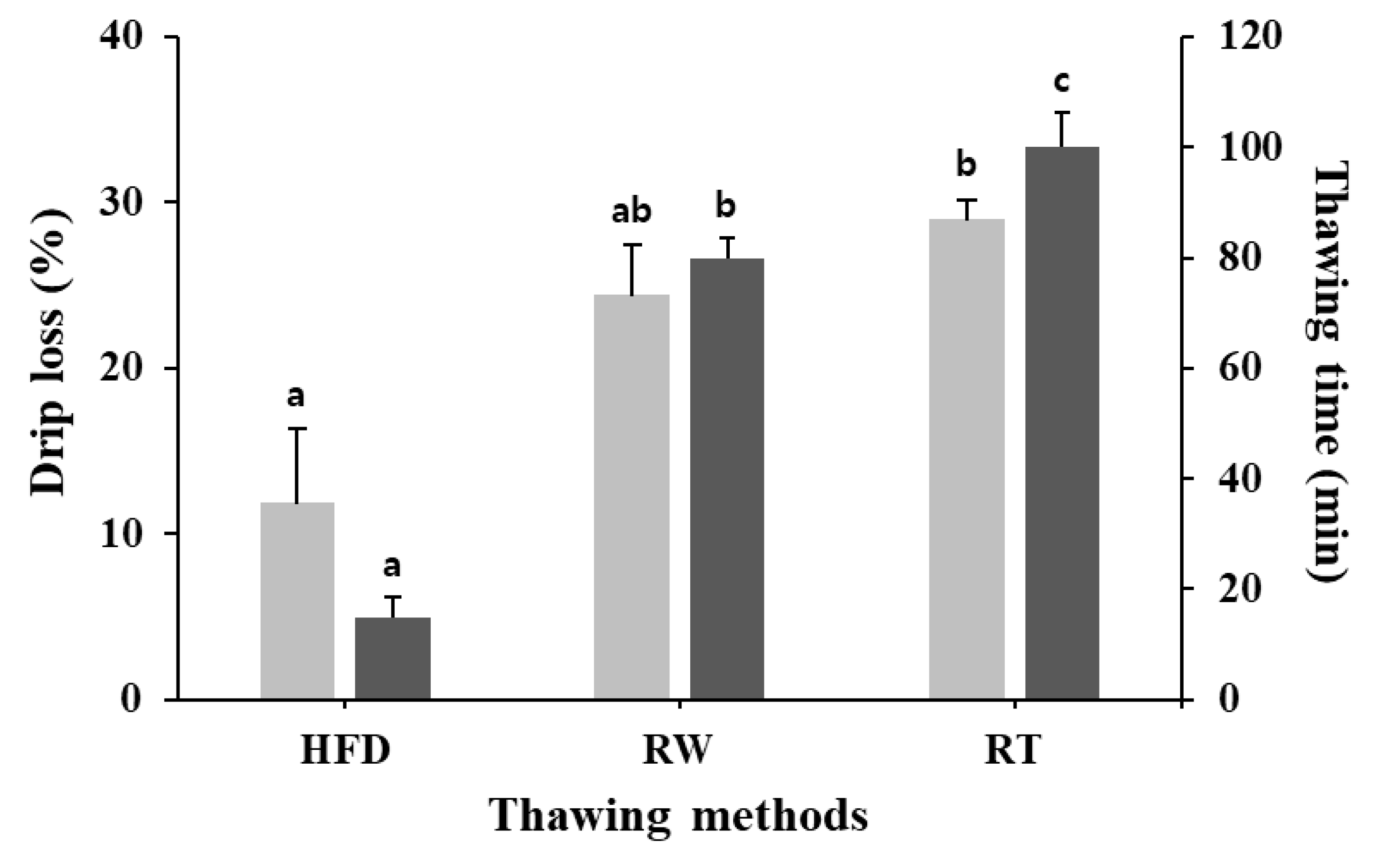
Processes 14 00669 g008
Figure 9. Odor intensity of cod fillets smoked with cherry wood under different temperature and time conditions. Values are presented as means ± SD (n = 3). Different letters (a,b) indicate significant differences according to Tukey’s test (p < 0.05).
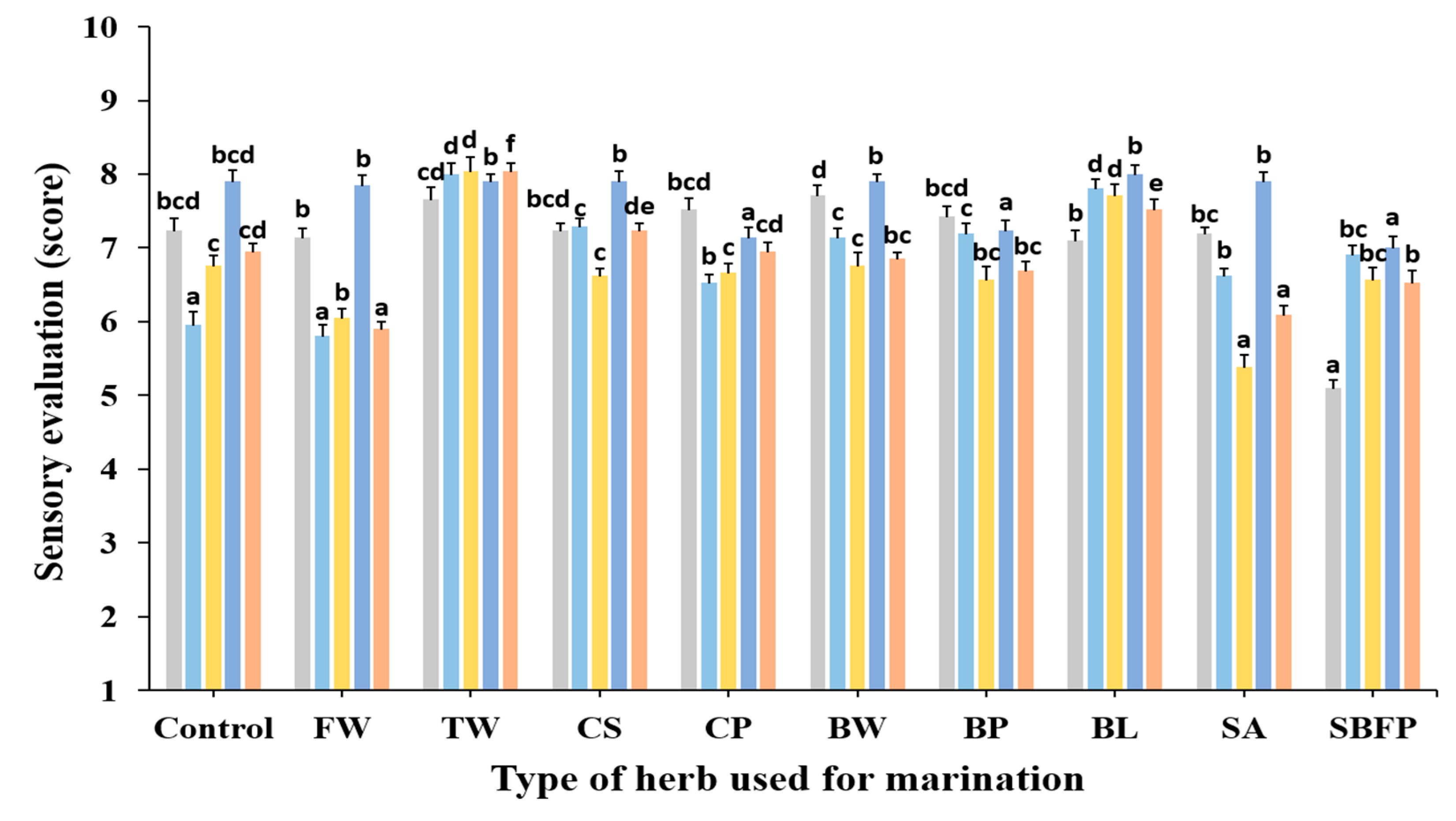
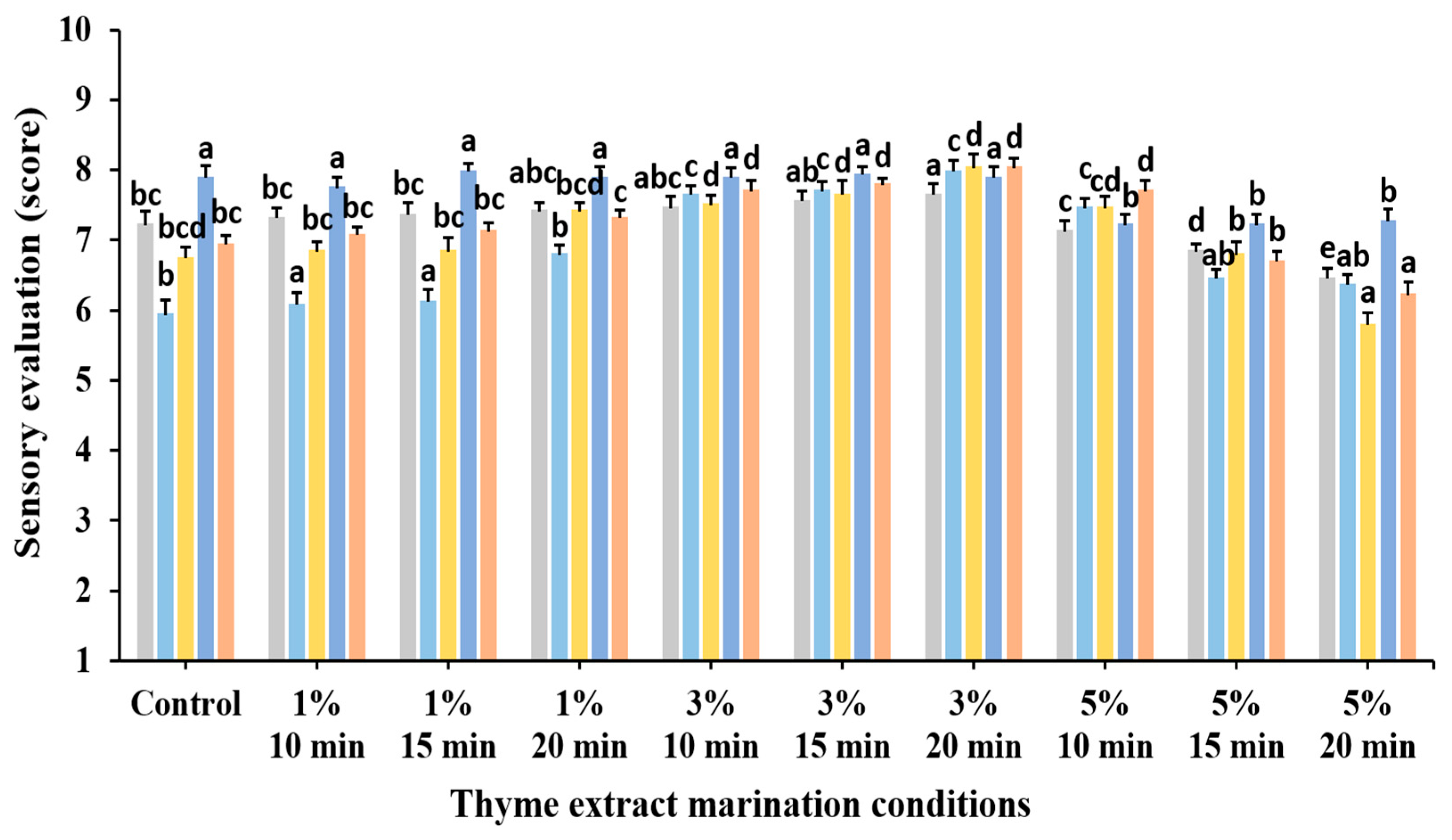
Processes 14 00669 g009
Figure 10. VBN and pH values of final products stored at different temperatures for 180 days. Values are presented as means ± SD (n = 3). Different letters (a–c) within each parameter indicate significant differences among means according to Tukey’s test (p < 0.05).
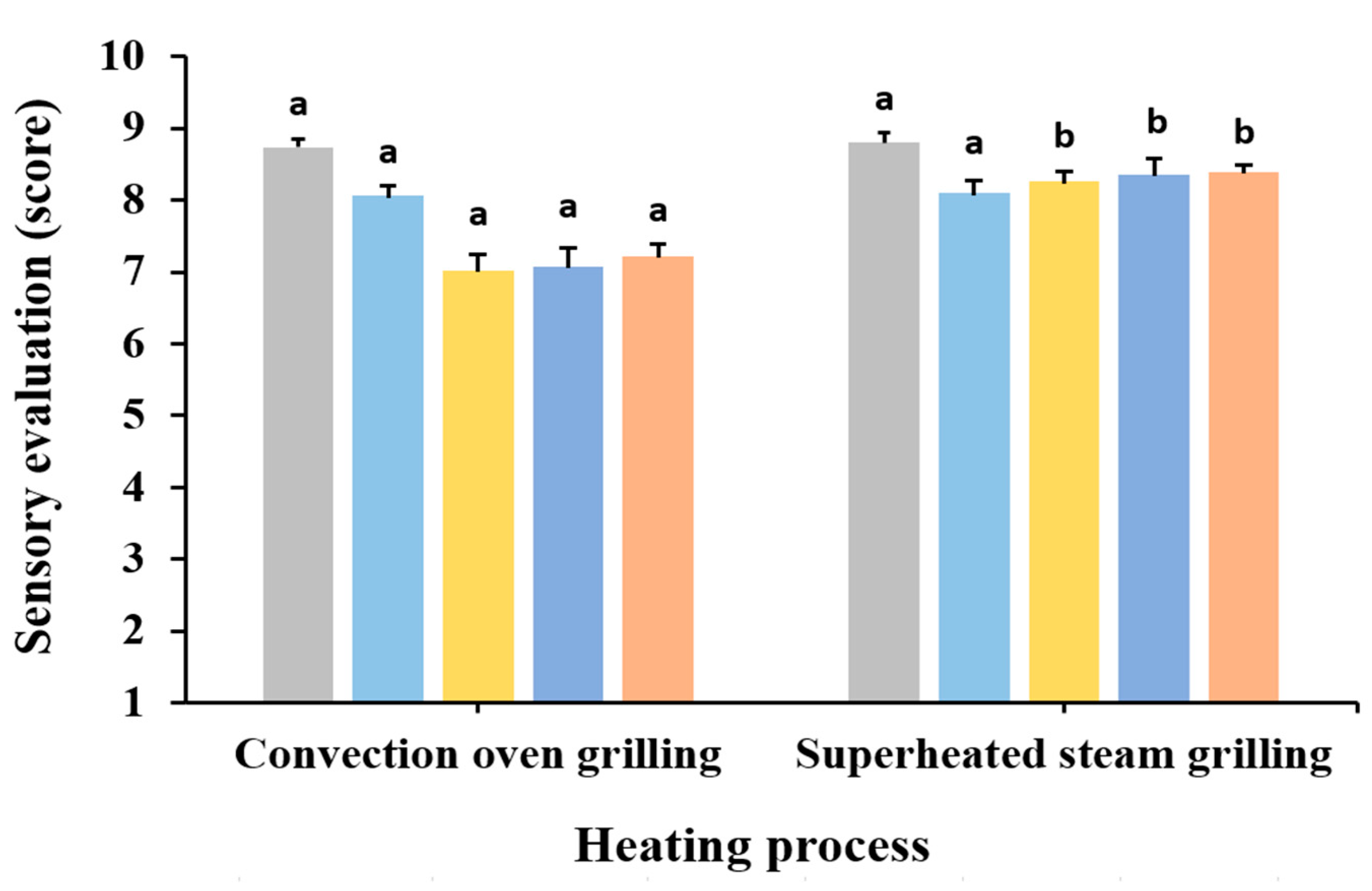
Processes 14 00669 g010
Table 1. Quality characteristics of raw cod fillet versus final product.
CategoryParameterUnitRaw FishFinal ProductFdfη2
Microbiological propertiesGeneral bacterial countlog CFU/g3.20 a ± 0.041.91 b ± 0.269.147(4)0.921
Coliform groupCFU/gNDND
Physicochemical propertiespH-5.63 a ± 0.257.11 a ± 0.082.494(10)0.951
VBNmg/100 g2.57 a ± 0.405.62 b ± 0.9311.887(4)0.379
TBARSMDA mg/kg0.094 a ± 0.0160.029 a ± 0.0073.167(4)0.870
Textural
properties
Hardnessg114.40 a ± 12.61436.80 b ± 114.6914.995(8)0.796
Springinessmm2.83 a ± 0.113.30 a ± 0.160.387(8)0.752
Gumminessg80.80 a ± 7.63291.60 b ± 69.669.306(8)0.819
ChewinessmJ2.24 a ± 0.279.36 b ± 1.9010.380(8)0.874
Values are presented as means ± SD (n = 3). VBN: Volatile basic nitrogen; TBARS: Thiobarbituric acid reactive substances; CFU: Colony-forming unit; MDA: Malondialdehyde; ND: Not detected; F: F-statistics; df: Degree of freedom; η2: Eta-squared. Different letters (a,b) in each column indicate significant differences among means by Tukey’s test (p < 0.05).
Table 2. Nutritional composition of raw cod fillet versus final product.
CompositionsUnitRaw FishFinal Product
Caloriekcal/100 g73.798.6
Carbohydrateg/100 g<limit of detection<limit of detection
Crude Proteing/100 g17.322.4
Dietary fiberg/100 g<limit of detection<limit of detection
Sugarsg/100 g<limit of detection<limit of detection
Crude fatg/100 g0.51.0
Saturated fatg/100 g0.10.2
Trans fatg/100 g<limit of detection<limit of detection
Cholesterolmg/100 g53.954.0
Sodiummg/100 g11.1110.3
Vitamin Dμg/100 g<limit of detection<limit of detection
Potassiummg/100 g268.7243.6
Ironmg/100 g0.30.2
Calciummg/100 g17.225.1
Ashg/100 g2.064.08
Moisture%80.172.5
Table 3. Fatty acid composition of raw cod fillet versus final product.
Fatty AcidShorthandRaw FishFinal Product
mg/100 g%mg/100 g%
Myristic acidC14:07.601.7623.902.88
Palmitic acidC16:091.2021.14166.5020.06
Stearic acidC18:026.606.1645.805.52
∑ SFA-125.4029.06236.2028.46
Palmitoleic acidC16:17.701.7818.202.19
Oleic acidC18:145.7010.59106.0012.77
∑ MUFA-53.4012.38124.2014.97
Linoleic acidC18:2 (n − 6)13.303.0818.202.19
Eicosenoic acidC20:1 (n − 9)--10.401.25
Eicosapentaenoic acidC20:5 (n − 3)75.7017.54163.7019.73
Eicosatrienoic acidC20:3 (n − 3)9.102.11--
Arachidonic acidC20:4 (n − 6)13.003.0123.902.88
Docosahexaenoic acidC22:5 (n − 3)141.6032.82253.3030.52
∑ PUFA-252.7058.56469.5056.57
SFA: Saturated fatty acids; MUFA: Monounsaturated fatty acids; PUFA: Polyunsaturated fatty acids.
Table 4. Total amino acid composition of raw cod fillet versus final product.
Amino AcidRaw FishFinal Product
mg/100 g%mg/100 g%
Alanine813.86.051157.06.00
Aspartic acid1399.010.392085.310.81
Cystine102.30.76128.90.67
Glutamic acid2284.416.973265.416.92
Glycine645.04.79882.04.57
Proline559.34.16765.13.97
Serine580.94.32898.54.66
Tyrosine512.23.81751.63.90
Arginine855.06.351253.56.50
∑NAA7751.957.5911,187.357.98
Histidine291.42.16412.72.14
Isoleucine651.04.84873.44.53
Leucine1128.38.381628.68.44
Lysine1307.99.721849.89.59
Methionine445.23.31641.53.32
Phenylalanine585.34.35837.84.34
Threonine612.64.55917.94.76
Valine686.45.10945.94.90
∑EAA5708.142.418107.642.02
NAA: Non-essential amino acid; EAA: Essential amino acid.
Table 5. Free amino acid composition of raw cod fillet versus final product.
Amino AcidRaw FishFinal Product
mg/100 g%mg/100 g%
Taurine26.26.2226.716.15
L-Threonine--4.72.84
L-Serine--3.52.12
L-Glutamic Acid24.65.844.92.96
L-a-Aminoadipic Acid1.00.24--
L-Proline--2.01.21
Glycine24.55.829.05.44
L-Alanine33.67.9810.86.53
L-Citrulline2.30.55--
L-a-Aminoiso-n-butyric Acid0.90.210.60.36
L-Valine28.16.672.51.51
L-Cystine0.10.02--
L-Methionine2.10.502.11.27
Cystathionine0.20.051.30.79
L-Isoleucine21.55.111.60.97
L-Leucine30.07.123.01.81
L-Tyrosine3.00.711.30.79
B-Alanine31.17.399.95.99
L-Phenylalanine24.75.871.81.09
D, L-B-Aminoisobutyric Acid0.50.12--
L-Homocystine1.20.28--
Y-Amino-n-butyric Acid5.21.230.20.12
Ethanolamine--1.20.73
Ammonium Chloride21.15.017.64.60
б-Hydroxylysine17.94.25--
L-Ornithine3.20.760.90.54
L-Lysine34.78.2412.47.50
1-Methyl-L-histidine41.99.9511.97.20
L-Histidine----
L-Tryptophan5.71.351.10.67
3-Methyl-L-histidine0.50.120.50.30
L-Anserine33.98.0539.724.02
L-Carnosine--0.40.24
L-Arginine1.40.333.72.24
∑FAA421.1100.00165.3100.00
FAA: Free amino acids.
Table 6. Heavy metals, benzo[a]pyrene, and radioactivity levels in raw cod fillet versus final product.
CategoryParameterUnitAmountMFDS
Standard
International Standard
Raw FishFinal Product
Heavy metalsLeadmg/kg<LOD<LOD0.5 10.3 5
Mercurymg/kgNDND0.5 10.5 6
Cadmiummg/kg<LOD<LOD0.2 10.05 6
Arsenicmg/kg<LOD<LOD--
PAHsBenzo[a]pyreneμg/kgNDND2.0 1/5.0 2-
RadioactivityI131Bq/kgNDND100 3170 6
Cs134, Cs137Bq/kgNDND100 41200 6
LOD: Limit of detection; ND: Not detected; PAHs: Polycyclic aromatic hydrocarbons. 1 The acceptable limit for marine fish in the Food Code [3]. 2 The acceptable limit for smoked fish meat in the Food Code [3]. 3 The acceptable limit for general foods in the Food Code [44]. 4 The acceptable limit for food other than infant products in the Food Code [44]. 5 The acceptable limit for heavy metals in seafood by the European Union [45]. 6 Section 555.80 of the U.S. FDA Compliance Policy Guide [46].
Table 7. Changes in total bacteria and total coliform count in final products stored at different temperatures for 180 days.
Storage DayTotal Bacterial CountTotal Coliform Count
−13 °C−18 °C−23 °C−13 °C−18 °C−23 °C
01.91 a ± 0.261.91 a ± 0.261.91 a ± 0.26NDNDND
301.95 a ± 0.061.90 a ± 0.032.04 a ± 0.07NDNDND
602.03 a ± 0.072.14 a ± 0.042.06 a ± 0.06NDNDND
902.01 a ± 0.042.12 a ± 0.072.09 a ± 0.02NDNDND
1201.98 a ± 0.031.95 a ± 0.051.98 a ± 0.03NDNDND
1501.86 a ± 0.161.93 a ± 0.071.87 a ± 0.09NDNDND
1801.98 a ± 0.051.98 a ± 0.052.06 a ± 0.01NDNDND
Values are presented as means ± SD (n = 3). ND: Not detected; a: No significant differences were observed among column means according to Tukey’s test (p < 0.05).
Table 8. Sensory evaluation of final products stored at different temperatures for 180 days.
TemperatureDayAppearanceOdorTasteTextureOverall Acceptance
−13 °C08.67 c ± 0.487.71 c ± 0.648.33 a ± 0.588.67 d ± 0.488.33 d ± 0.48
308.48 bc ± 0.517.57 bc ± 0.608.05 a ± 0.598.43 cd ± 0.518.19 cd ± 0.40
608.29 ab ± 0.567.43 abc ± 0.688.10 a ± 0.838.29 bcd ± 0.468.14 cd ± 0.36
908.29 ab ±0.567.29 abc ± 0.467.95 a ± 0.748.24 bc ± 0.628.10 cd ± 0.44
1208.24 ab ± 0.707.19 ab ± 0.408.00 a ± 0.778.05 abc ± 0.807.95 bc ± 0.22
1508.10 a ±0.447.05 a ± 0.677.90 a ±0.627.90 ab ± 0.707.81 ab ± 0.40
1807.95 a ± 0.507.14 ab ± 0.967.95 a ± 0.677.76 a ± 0.627.62 a ± 0.50
−18 °C08.67 c ±0.487.71 c ± 0.648.33 a ± 0.588.67 e ± 0.488.33 d ± 0.48
308.48 bc ± 0.517.48 bc ± 0.518.19 a ± 0.408.48 de ± 0.518.24 cd ± 0.44
608.33 abc ±0.667.29 ab ± 0.468.14 a ± 0.658.38 cde ± 0.508.19 bcd ± 0.40
908.38 abc ± 0.677.19 ab ± 0.688.05 a ± 0.388.29 bcd ± 0.468.14 bcd ± 0.36
1208.43 bc ± 0.517.10 ab ± 0.548.14 a ± 0.738.14 abc ± 0.488.00 abc ± 0.00
1508.19 ab ± 0.517.14 ab ± 0.657.95 a ±0.598.05 ab ±0.387.95 ab ± 0.38
1808.05 a ± 0.507.05 a ± 0.748.05 a ± 0.677.90 a ± 0.447.76 a ± 0.44
−23 °C08.67 b ± 0.487.71 c ± 0.648.33 a ± 0.588.67 b ± 0.488.33 c ± 0.48
308.43 ab ± 0.567.67 bc ± 0.488.29 a ± 0.468.52 ab ± 0.518.29 bc ± 0.46
608.38 ab ± 0.597.38 abc ± 0.508.24 a ± 0.708.43 ab ± 0.818.24 bc ± 0.44
908.48 ab ± 0.517.33 ab ± 0.488.33 a ± 0.488.29 ab ± 0.728.10 abc ± 0.30
1208.38 ab ± 0.507.33 ab ± 0.488.29 a ± 0.648.19 ab ± 0.608.05 ab ± 0.22
1508.24 a ± 0.447.29 a ± 0.468.19 a ± 0.758.24 a ± 0.837.90 a ± 0.30
1808.19 a ± 0.407.19 a ± 0.758.24 a ± 0.44 8.10 a ± 0.547.86 a ± 0.48
Values are presented as means ± SD (n = 3). Different letters (a–e) within each parameter indicate significant differences among means according to Tukey’s test (p < 0.05).
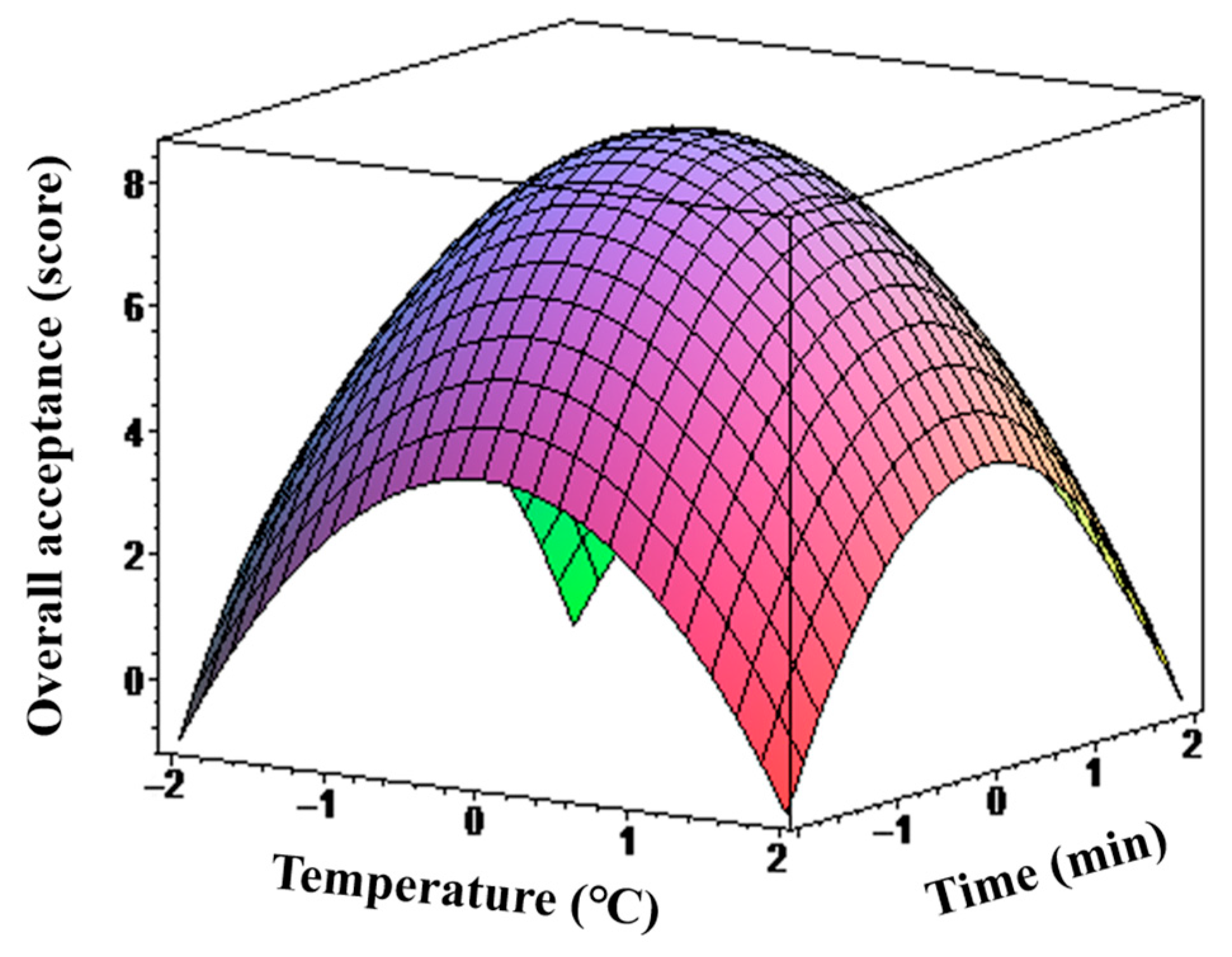
Disclaimer/Publisher’s Note: The statements, opinions and data contained in all publications are solely those of the individual author(s) and contributor(s) and not of MDPI and/or the editor(s). MDPI and/or the editor(s) disclaim responsibility for any injury to people or property resulting from any ideas, methods, instructions or products referred to in the content.