Three-Dimensional Modeling of Full-Diameter Micro–Nano Digital Rock Core Based on CT Scanning

Abstract
1. Introduction
2. Methods
2.1. Establishment of 3D Digital Core Model
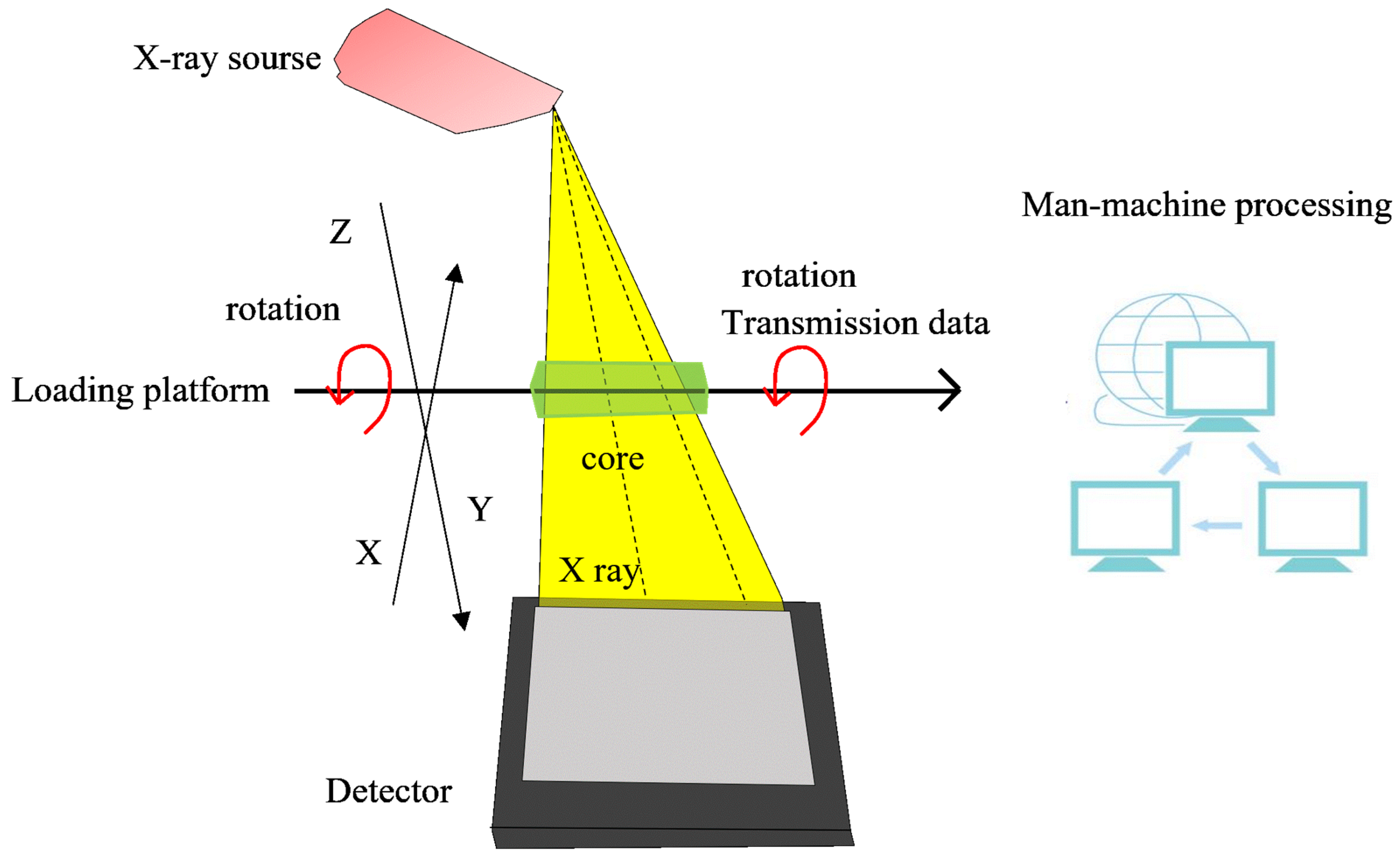
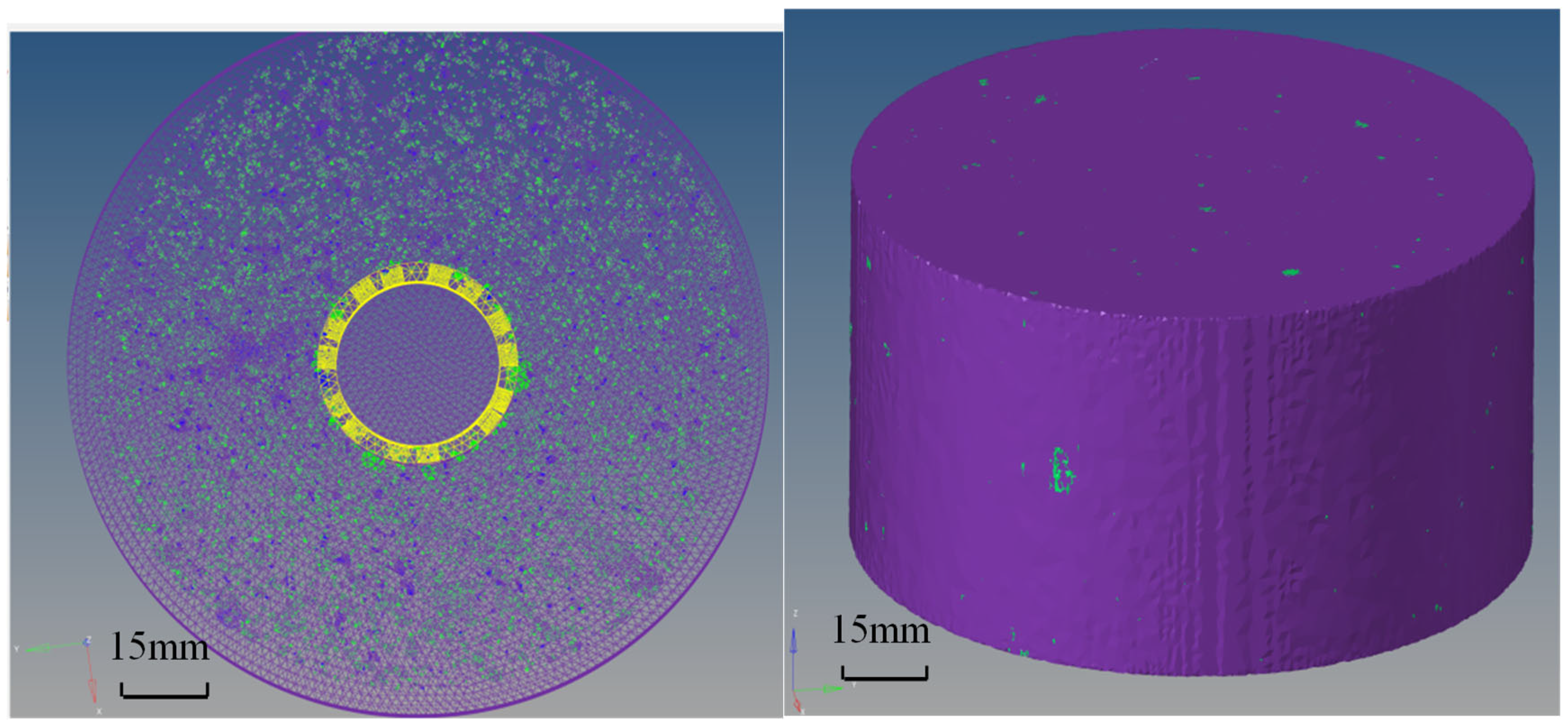
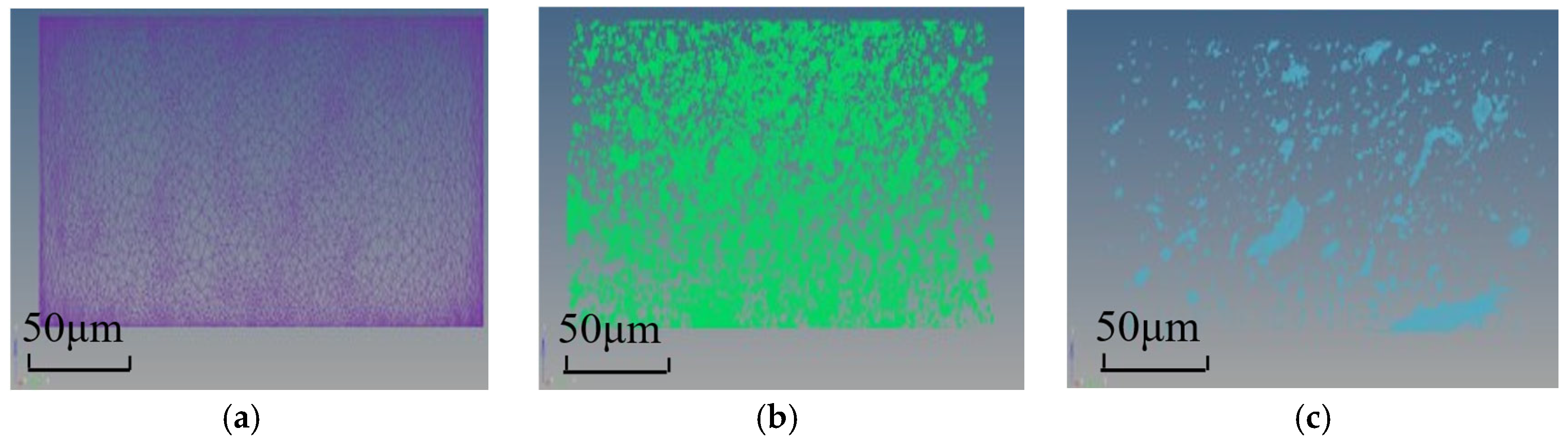
Image Acquisition and Simulation Model Construction
2.2. Three-Dimensional Digital Core Experiment Method
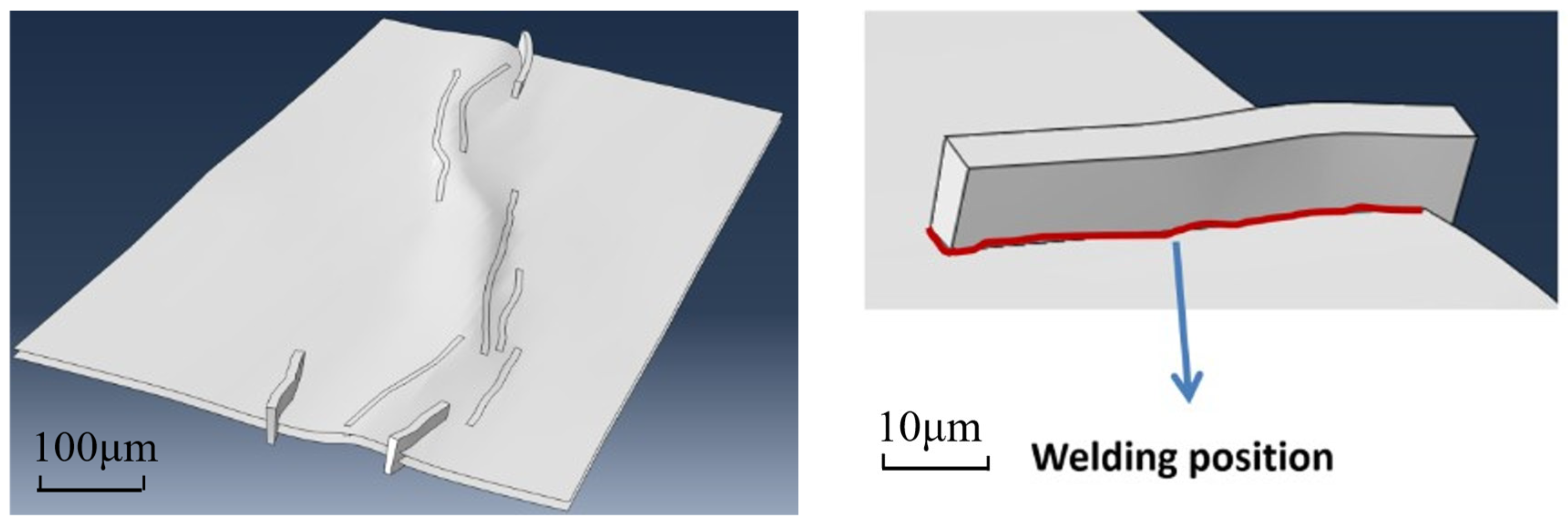
2.3. Finite Element Modeling
2.3.1. Basic Steps
- Pore and Throat Geometry: The algorithm identified and quantified the fundamental elements of the pore space. The pore throat radius distribution ranged from 0.05 to 0.32 μm, with a median pore throat radius of 0.14 μm (standard deviation: 0.06 μm). The throat length distribution varied between 0.2 and 1.8 μm, with a median of 0.75 μm (standard deviation: 0.32 μm). These distributions were derived by fitting maximum inscribed spheres within the pore bodies and characterizing the connecting channels, providing a direct measure of the pore-scale geometry controlling fluid access and storage.
- Topological Connectivity (Coordination Number): The coordination number (Z), which indicates the number of throats connected to each pore, is a critical topological parameter for assessing connectivity. Analysis of the extracted PNM revealed an average coordination number (Z) of 2.8. The distribution of connectivity was as follows: approximately 35% of pores had two connections (Z = 2), 42% had three connections (Z = 3), and 23% had four or more connections (Z ≥ 4). This statistically quantifies the pore network’s topology, indicating a moderately connected system with a significant proportion of pores having only two connections, which influences potential percolation pathways.
- Overall Connectivity and Model Utility: Based on the 26-connectivity definition used in the extraction process, the overall pore connectivity rate of the digital core model was calculated to be 89.6%. This high connectivity rate, combined with the detailed geometric and topological statistics above, confirms that the extracted PNM successfully captures the essential flow-relevant features of the tight shale’s complex pore space. This quantitatively characterized PNM serves as the direct input for subsequent predictions of permeability and multi-phase flow behavior, moving beyond algorithmic description to applied reservoir characterization.
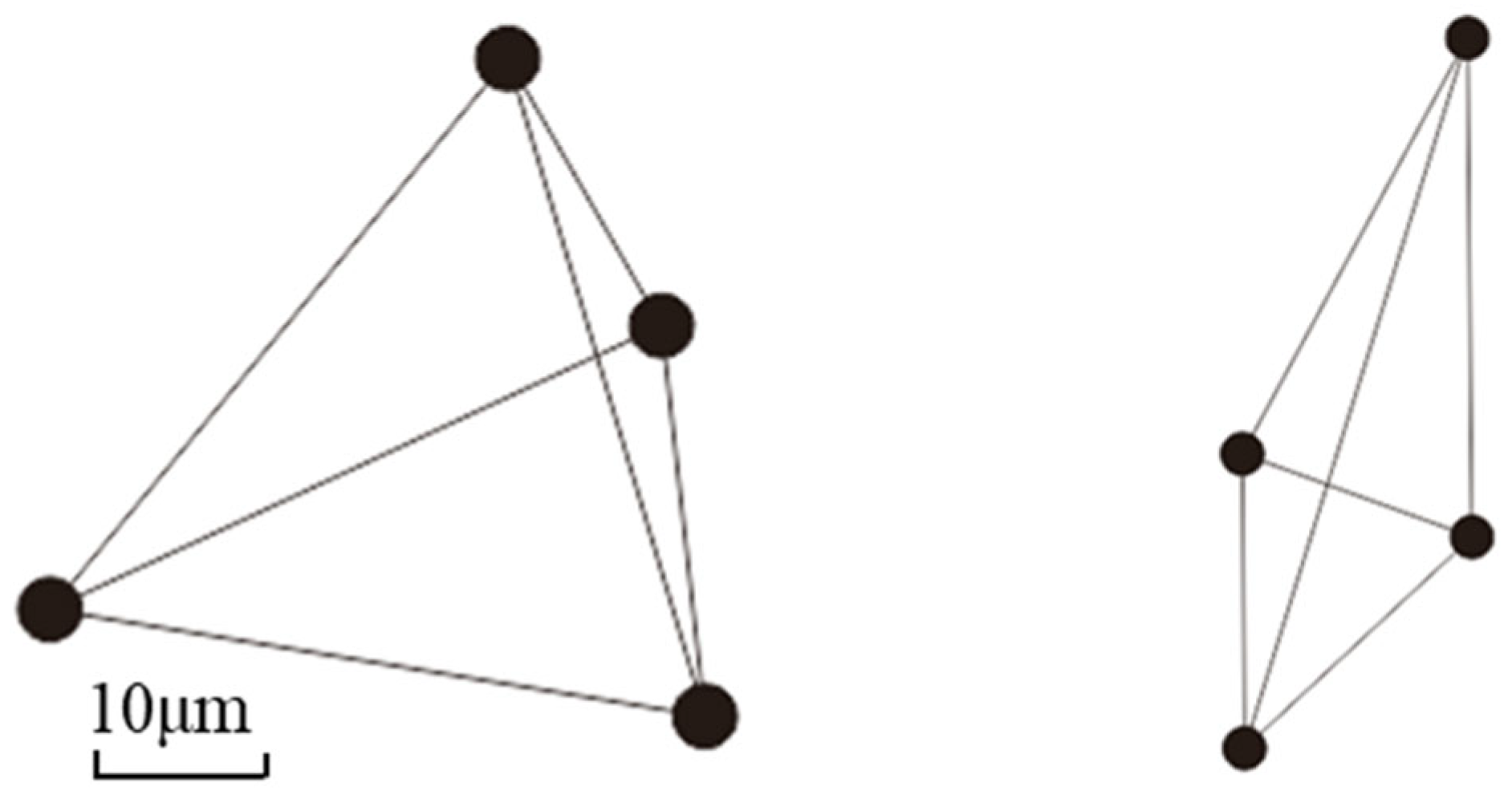
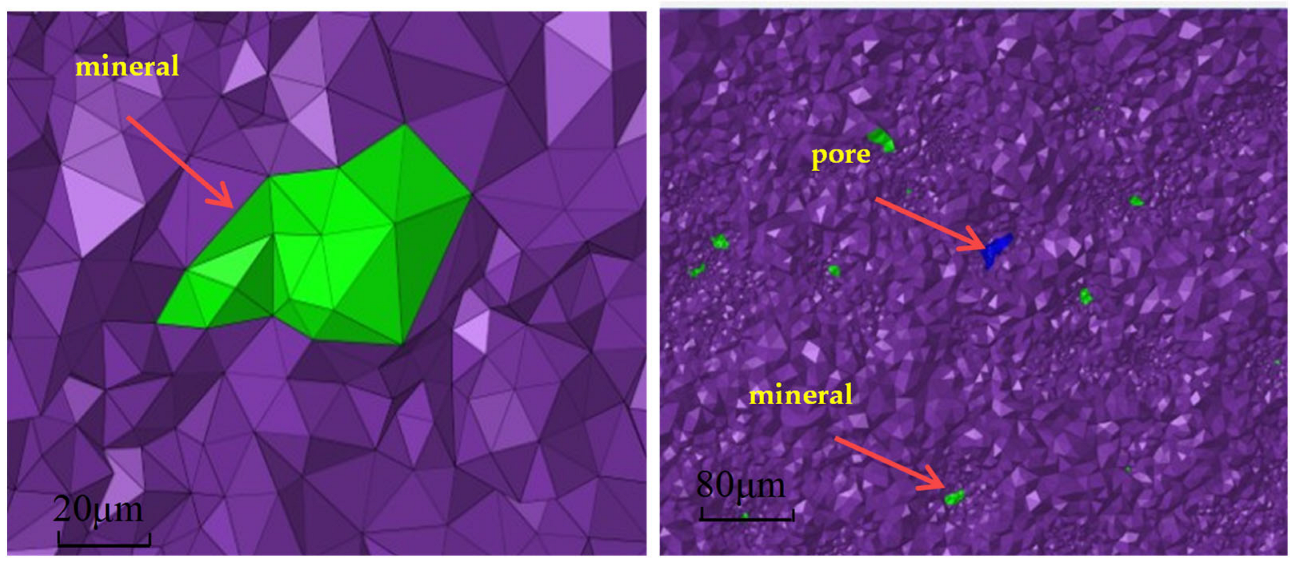
2.3.2. Mesh Shape Control
3. Results
4. Discussion
4.1. Validation of the Digital Core Model Against Physical Measurements
4.2. Quantitative Characterization of the Pore Network
5. Innovativeness
6. Conclusions
- (1)
- The digital core model, constructed from high-resolution (0.4 μm) CT scans, demonstrates accurate replication of the specific sample under laboratory conditions. The validation against physical measurements yielded relative errors below 5% for porosity, permeability, and elastic modulus, confirming the workflow’s capability to produce a reliable digital representation for the characterized lithology.
- (2)
- The Pore network analysis of the validated model quantified the microstructure of this tight shale, revealing a characteristic pore throat radius distribution and an average coordination number (Z = 2.8) that explains its low intrinsic permeability. It is acknowledged that this characterization reflects the unstressed, laboratory-state geometry.
- (3)
- The integrated workflow successfully bridges scales through a hierarchical approach, using the full-diameter context to guide high-resolution imaging and property calculation. While computationally intensive for a single, detailed model, the process proves feasible and provides a foundational platform. Its primary value is as a high-fidelity tool for deriving constitutive relationships and conducting detailed mechanistic studies, rather than for high-throughput, field-scale statistical modeling.
- (4)
- The study acknowledges important limitations that define the scope of the current model and direct future work. These include the following: the validation on a single lithotype; the homogenization of sub-resolution nanoporosity; the representation of the sample in its relaxed, “as-received” state; and the simplifying assumptions of perfect interfacial bonding and isotropic, linear elastic material behavior. Furthermore, complex processes such as chemo-poromechanical interactions (e.g., clay swelling) and dynamic multiphase flow are not yet incorporated.
Author Contributions
Funding
Data Availability Statement
Conflicts of Interest
References
- Lin, W.; Yang, Z.; Li, X.; Wang, J.; He, Y.; Wu, G.; Xiong, S.; Wei, Y. A method to select representative rock samples for digital core modeling. Fractals 2017, 25, 1740013. [Google Scholar] [CrossRef]
- Chawshin, K.; Berg, C.F.; Varagnolo, D.; Lopez, O. Automated porosity estimation using CT-scans of extracted core data. Comput. Geosci. 2022, 26, 595–612. [Google Scholar] [CrossRef]
- Aslannezhad, M.; Sayyafzadeh, M.; Tang, D.; Iglauer, S.; Keshavarz, A. Application of digital core analysis to improve reservoir characterisation and modelling: The Otway formation as a case study. Int. J. Greenh. Gas Control 2025, 141, 104316. [Google Scholar] [CrossRef]
- Aslannezhad, M.; Tang, D.; Bason, D.; Gomez, L.; Iglauer, S.; Keshavarz, A. Digital Core Analysis and Pore Network Modeling of CO2 Flow and Trapping in the Otway Basin. Energy Fuels 2025, 39, 15369–15385. [Google Scholar] [CrossRef]
- McCaskill, B.; Gong, Y.; Qin, Z.; Sedghi, M.; Piri, M.; Masalmeh, S. Pore-to-Core Upscaling of Two-Phase Flow in Mixed-Wet Porous Media: Part I—Seamless Pore-Network Extraction. Transp. Porous Media 2024, 151, 2529–2560. [Google Scholar] [CrossRef]
- Kohanpur, A.H.; Valocchi, A.J. Pore-network stitching method: A pore-to-core upscaling approach for multiphase flow. Transp. Porous Media 2020, 135, 659–685. [Google Scholar] [CrossRef]
- Mahmoud, A.; Gajbhiye, R.; Li, J.; Dvorkin, J.; Hussaini, S.R.; AlMukainah, H.S. Digital rock physics (DRP) workflow to assess reservoir flow characteristics. Arab. J. Geosci. 2023, 16, 248. [Google Scholar] [CrossRef]
- Huang, R.; Zan, C.; Long, W.; Cheng, H.; Li, W.; Wang, G.; Zhang, B. OpenGL based A 3D Visual Technology of Digital Core. J. Phys. Conf. Ser. 2019, 1302, 022086. [Google Scholar] [CrossRef]
- Foroughi, S.; Shojaei, M.J.; Lane, N.; Rashid, B.; Lakshtanov, D.; Ning, Y.; Zapata, Y.; Bijeljic, B.; Blunt, M.J. A framework for multiphase pore-scale modeling based on micro-CT imaging. Transp. Porous Media 2025, 152, 18. [Google Scholar] [CrossRef]
- Scott, G.; Wu, K.; Zhou, Y. Multi-scale image-based pore space characterisation and pore network generation: Case study of a north sea sandstone reservoir. Transp. Porous Media 2019, 129, 855–884. [Google Scholar] [CrossRef]
- Belytschko, T.E.D. The finite element method: Linear static and dynamic finite element analysis: Thomas JR Hughes. Comput. Aided Civ. Infrastruct. Eng. 1989, 4, 245–246. [Google Scholar] [CrossRef]
- Lima, P.; Shauer, N.; Villegas, J.B.; Devloo, P.R. DFNMesh: Finite element meshing for discrete fracture matrix models. Adv. Eng. Softw. 2023, 186, 103545. [Google Scholar] [CrossRef]
- Barsoum, R.S. Triangular quarter-point elements as elastic and perfectly-plastic crack tip elements. Int. J. Numer. Methods Eng. 1977, 11, 85–98. [Google Scholar] [CrossRef]
- Banks-Sills, L.; Bortman, Y. Reappraisal of the quarter-point quadrilateral element in linear elastic fracture mechanics. Int. J. Fract. 1984, 25, 169–180. [Google Scholar] [CrossRef]
- Tsoutsanis, P.; Titarev, V.; Drikakis, D. WENO schemes on arbitrary mixed-element unstructured meshes in three space dimensions. J. Comput. Phys. 2011, 230, 1585–1601. [Google Scholar] [CrossRef]
- Tao, W.Q.; He, Y.L.; Wang, Q.W.; Qu, Z.G.; Song, F.Q. A unified analysis on enhancing single phase convective heat transfer with field synergy principle. Int. J. Heat Mass Transf. 2002, 45, 4871–4879. [Google Scholar] [CrossRef]
- Nayroles, B.; Touzot, G.; Villon, P. Generalizing the finite element method: Diffuse approximation and diffuse elements. Comput. Mech. 1992, 10, 307–318. [Google Scholar] [CrossRef]
- Liu, G.R. An overview on meshfree methods: For computational solid mechanics. Int. J. Comput. Methods 2016, 13, 1630001. [Google Scholar] [CrossRef]
- Singh, R.; Singh, K.M. Interpolating meshless local Petrov-Galerkin method for steady state heat conduction problem. Eng. Anal. Bound. Elem. 2019, 101, 56–66. [Google Scholar] [CrossRef]
- Zhang, X.; Liu, X.; Song, K.; Lu, M. Least-squares collocation meshless method. Int. J. Numer. Methods Eng. 2001, 51, 1089–1100. [Google Scholar] [CrossRef]
- Lv, Y.; Jiang, Y.; Wang, H. Finite Element Modeling of Asphalt Mixture Based on Image Recognition. IOP Conf. Ser. Earth Environ. Sci. 2019, 304, 052103. [Google Scholar] [CrossRef]
- Zakian, P. Stochastic finite cell method for structural mechanics. Comput. Mech. 2021, 68, 185–210. [Google Scholar] [CrossRef]
- Lenti, M.; Pomaranzi, G.; Schito, P.; Pennacchi, P.; Zasso, A. Dynamics of an aerial cableway through a time-varying meshing finite element approach. Meccanica 2025, 60, 1149–1172. [Google Scholar] [CrossRef]
- Ehsan, K.; He, L. Structural collapse simulation using a hybrid FEM-rigid body dynamics approach. J. Build. Eng. 2025, 114, 114299. [Google Scholar] [CrossRef]
- Liu, X.; Qu, Z.; Guo, T.; Sun, Y.; Shi, Z.; Chen, L.; Li, Y. Numerical Simulation of Artificial Fracture Propagation in Shale Gas Reservoirs Based on FPS-Cohesive Finite Element Method. Geofluids 2019, 2019, 9402392. [Google Scholar] [CrossRef]
- Lu, J.; Li, L.; Zhang, F.; Yang, F.; Zhang, Z.; Lu, M.; Niu, L.; Chang, X. Simulation of multi-fracture interference and optimization of stimulated reservoir volume in layered shale using finite element and response surface method. Phys. Fluids 2025, 37, 076616. [Google Scholar] [CrossRef]
- Wang, S.; Li, H.; Lin, L.; Yin, S. Development characteristics and finite element simulation of fractures in tight oil sandstone reservoirs of Yanchang Formation in western Ordos Basin. Front. Earth Sci. 2022, 9, 823855. [Google Scholar] [CrossRef]
- Trimble, D.; Agarwal, A.; McDonnell, D.; Barron, S.; Ahearne, E.; O’dOnnell, G. Finite element simulation of orthogonal machining of biomedical grade co–cr–mo alloy. CIRP J. Manuf. Sci. Technol. 2020, 28, 8–14. [Google Scholar] [CrossRef]
- Lv, R.; Yu, H.; Guo, X.; Zhang, X.; Wang, L.; Tang, D. Intravascular Ultrasound Image-Based Finite Element Modeling Approach for Quantifying In Vivo Mechanical Properties of Human Coronary Artery. J. Vis. Exp. (JoVE) 2024, 6, e67573. [Google Scholar] [CrossRef]
- Li, X.; Song, H.; Shi, Y.; Li, X.; Zhang, S.; Wang, Z.; Zhuo, X.; Nie, B. Comparative Analysis and Improvement of CT Scanning 3D Reconstruction Methods for Coal Samples. Pure Appl. Geophys. 2025, 182, 685–704. [Google Scholar] [CrossRef]
- Srivardhan, V.; Mukherjee, B. Estimating reservoir properties of 2D CT scan core images using Machine Learning. J. Earth Syst. Sci. 2024, 133, 200. [Google Scholar] [CrossRef]
- Chawshin, K.; Gonzalez, A.; Berg, C.F.; Varagnolo, D.; Heidari, Z.; Lopez, O. Classifying Lithofacies from Textural Features in Whole Core CT-Scan Images. SPE Reserv. Eval. Eng. 2021, 24, 341–357. [Google Scholar] [CrossRef]
- Lin, C.Y.; Wang, Y.; Yang, S.; Ren, L.H.; You, C.M.; Wu, S.T.; Wu, Y.; Zhang, Y.M. 3D Modeling of digital core based on X-ray computed tomography. J. Jilin Univ. 2018, 48, 307–317. [Google Scholar]



| Lithology | Scanning Current (mA) | Scanning Voltage (kV) | Optimal Resolution (μm) | Penetration Threshold (mm) | Applicable Depth Range (m) |
|---|---|---|---|---|---|
| Gray-Black Shale | 120 | 140 | 0.4 | 80 | 2043.03–2043.85 |
| Tight Sandstone | 150 | 160 | 0.5 | 100 | 1800–2500 |
| Argillaceous Limestone | 130 | 150 | 0.6 | 90 | 2200–2800 |
| Depth/m | Rock Name | Porosity/% | CT Scan Photograph |
|---|---|---|---|
| 2043.03–2043.85 m | Gray-black shale | 4.615% |  |
| Validation Metric | Model Result | Physical Measurement | Relative Error | Experimental Method | Validation Metric |
|---|---|---|---|---|---|
| Porosity (%) | 4.52 | 4.615 | 2.06% | Helium Porosimetry | Porosity (%) |
| Permeability (mD) | 0.0186 | 0.0192 | 3.13% | Steady-State Gas Permeability | Permeability (mD) |
| Elastic Modulus (GPa) | 38.2 | 39.5 | 3.29% | Uniaxial Compression Test | Elastic Modulus (GPa) |
| Poisson’s Ratio | 0.23 | 0.24 | 4.17% | Uniaxial Compression Test | Poisson’s Ratio |
| Average Throat Radius (μm) | 0.125 | 0.121 | 3.31% | Mercury Injection Capillary Pressure | Average Throat Radius (μm) |
Disclaimer/Publisher’s Note: The statements, opinions and data contained in all publications are solely those of the individual author(s) and contributor(s) and not of MDPI and/or the editor(s). MDPI and/or the editor(s) disclaim responsibility for any injury to people or property resulting from any ideas, methods, instructions or products referred to in the content. |
© 2026 by the authors. Licensee MDPI, Basel, Switzerland. This article is an open access article distributed under the terms and conditions of the Creative Commons Attribution (CC BY) license.
Share and Cite
Xia, C.; Shan, J.; Li, Y.; Liu, G.; Shi, H.; Zhao, P.; Sun, Z. Three-Dimensional Modeling of Full-Diameter Micro–Nano Digital Rock Core Based on CT Scanning. Processes 2026, 14, 337. https://doi.org/10.3390/pr14020337
Xia C, Shan J, Li Y, Liu G, Shi H, Zhao P, Sun Z. Three-Dimensional Modeling of Full-Diameter Micro–Nano Digital Rock Core Based on CT Scanning. Processes. 2026; 14(2):337. https://doi.org/10.3390/pr14020337
Chicago/Turabian StyleXia, Changyuan, Jingfu Shan, Yueli Li, Guowen Liu, Huanshan Shi, Penghui Zhao, and Zhixue Sun. 2026. "Three-Dimensional Modeling of Full-Diameter Micro–Nano Digital Rock Core Based on CT Scanning" Processes 14, no. 2: 337. https://doi.org/10.3390/pr14020337
APA StyleXia, C., Shan, J., Li, Y., Liu, G., Shi, H., Zhao, P., & Sun, Z. (2026). Three-Dimensional Modeling of Full-Diameter Micro–Nano Digital Rock Core Based on CT Scanning. Processes, 14(2), 337. https://doi.org/10.3390/pr14020337