Article

Assessing the Sustainability and Thermo-Economic Performance of Solar Power Technologies: Photovoltaic Power Plant and Linear Fresnel Reflector Coupled with an Organic Rankine System

by
Erdal Yıldırım
1,* and
Mehmet Azmi Aktacir
2
1
Organized Industrial Zone Vocational School, Harran University, Sanliurfa 63200, Turkey
2
Department of Mechanical Engineering, Harran University, Sanliurfa 63300, Turkey
*
Author to whom correspondence should be addressed.
Processes 2026, 14(2), 204; https://doi.org/10.3390/pr14020204
Submission received: 1 December 2025 / Revised: 24 December 2025 / Accepted: 29 December 2025 / Published: 7 January 2026

Abstract

In this study, the technical, economic, and environmental performances of a Linear Fresnel Reflector (LFR) integrated with an Organic Rankine Cycle (ORC), designed with a non-storage approach, and a monocrystalline photovoltaic (PV) system were comparatively evaluated in meeting a building’s 10 kW electricity demand. Solar-based electricity generation systems play a critical role in reducing carbon emissions and increasing energy self-sufficiency in buildings, yet small-scale, storage-free LFR-ORC applications remain relatively underexplored compared to PV systems. The optimal areas for both systems were determined using the P1P2 methodology. The electricity generation of the LFR-ORC system was calculated based on experimentally measured thermal power output and ORC efficiency, while the production of the PV system was determined using panel area, efficiency, and measured solar irradiation data. System performance was assessed through self-consumption and self-sufficiency ratios, and the economic analysis included life cycle savings (LCS), payback period, and levelized cost of electricity (LCOE). The results indicate that the PV system is more advantageous economically, with an optimal payback of 4.93 years and lower LCOE of 0.053 €/kWh when the economically optimal panel area is considered. On the other hand, the LFR-ORC system exhibits up to 35% lower life-cycle CO2 emissions compared to grid electricity under grid-connected operation (15.86 tons CO2-eq for the standalone LFR-ORC system versus 50.57 tons CO2-eq for PV over 25-year lifetime), thus providing superiority in terms of environmental sustainability. In this context, the study presents an engineering-based approach for the technical, economic, and environmental assessment of small-scale, non-storage solar energy systems in line with the United Nations Sustainable Development Goals (SDG 7: Affordable and Clean Energy and SDG 13: Climate Action) and contributes to the existing literature.

1. Introduction

The Linear Fresnel Reflector (LFR) stands out as an effective alternative for utilizing solar energy due to its low cost and adequate thermal efficiency [1]. It is a promising and emerging technology that contributes to renewable heat supply for industrial processes requiring thermal energy in the medium temperature range below 250 °C [2]. Moreover, it offers high potential for solar heat generation in industrial applications of various scales [3]. The Organic Rankine Cycle (ORC) technology, which enables electricity generation from low-temperature heat sources such as LFRs, is one of the prominent clean energy-based alternatives for residential use when considering environmental impacts [4,5].
The Organic Rankine Cycle (ORC) is an effective technology for converting low- and medium-temperature waste heat into electrical energy, utilizing various heat sources such as industrial waste heat, solar, and geothermal energy [6]. In particular, ultra-low temperature ORC systems developed for the utilization of temperatures of 150 °C or lower have advanced rapidly in recent years [7]. In this context, ORC systems integrated with Linear Fresnel Reflector (LFR) technology offer significant potential for efficient and continuous electricity generation from solar energy. Photovoltaic (PV) systems convert sunlight to electricity directly and instantaneously, whereas solar-thermal ORC systems introduce thermal inertia through an intermediate heat transfer stage. This inertia smooths short-term power fluctuations but causes a delayed electrical response to changing irradiance, as demonstrated in dynamic performance studies under cloudy conditions [8]. In ref. [9], different working fluids were investigated for small-scale LFR-ORC systems, achieving approximately 5.97% efficiency and 7.99 kW of electrical power generation using neopentane in a regenerative ORC. In an LFR-ORC system designed in Spain, a maximum power output of 7.296 kW was achieved with more than a 40% increase during summer months by using suitable heat transfer and working fluids, and nighttime generation was made possible through a two-tank thermal storage system [10]. Studies on the thermodynamic performance and stability of different organic fluids demonstrate the potential for improving the efficiency of LFR-ORC systems [11]. However, most existing LFR–ORC studies rely on simulation-based collector models and incorporate thermal energy storage, while experimental investigations focusing on small-scale, storage-free applications remain limited.
Studies on the economic performance of LFR-ORC systems emphasize their potential competitiveness in terms of Levelized Cost of Energy (LCOE). This potential is based on the systems’ low capital cost and superior land-use efficiency [12]. However, the issue of low thermal efficiency necessitates system optimization for achieving competitive LCOE, and determining final economic feasibility requires a comprehensive comparative analysis with competing technologies [13]. These findings highlight that, particularly for systems operating without storage, the optimal design area plays a critical role in energy production and economic indicators. However, despite this emphasis, most existing economic assessments focus on large-scale or storage-integrated configurations, while small-scale, storage-free LFR-ORC systems remain insufficiently investigated, particularly in terms of demand-oriented performance indicators such as self-sufficiency.
On the other hand, comparisons with PV systems show that PV generally offers a lower LCOE and shorter payback period [14]. However, in PV systems without storage, ensuring energy continuity becomes challenging, and ORC-based systems provide a more reliable option for electricity generation, especially under conditions of intermittent solar irradiation throughout the day [15]. Under storage-free operation, the temporal mismatch between PV electricity generation and building demand directly limits self-sufficiency, making demand-matching performance an important evaluation criterion. Therefore, evaluating LFR-ORC and PV systems, either individually or as hybrid configurations emerges as an important criterion in system design from both technical and economic perspectives [16,17]. Furthermore, while emerging photovoltaic technologies like perovskites offer higher efficiencies and novel architecture [18], this study focuses on established monocrystalline silicon PV as a reliable benchmark for small-scale building applications.
In addition, the environmental impacts of solar-ORC systems have also been addressed in the literature. Solar-powered Organic Rankine Cycle (ORC)-based systems have been shown to exhibit significant advantages in terms of environmental sustainability [19,20]. Concentrated Solar Power (CSP) technology has been reported to demonstrate lower life-cycle emissions and higher land-use efficiency compared to Photovoltaic (PV) systems [16]. LFR-ORC systems achieve superior performance in regions with high direct normal irradiation (DNI) and persistent clear skies. This is because CSP technology relies exclusively on direct beam radiation, enabling stable operation often enhanced by thermal storage. In contrast, PV system output is less stable in such climates, as it suffers from efficiency losses due to high ambient temperatures and is compromised by the increased diffuse radiation prevalent under intermittent cloud cover [21].
Recent research has predominantly focused on photovoltaic (PV) systems for building applications, investigating either their architectural integration or their optimization with energy storage. For instance, ref. [22] analyzed the carbon reduction potential of façade-integrated PV systems in residential buildings, while ref. [23] developed models for optimized battery sizing in rooftop PV installations. However, these studies remain confined to PV-based solutions and lack comparative assessment with alternative solar thermal electricity generation technologies, such as Linear Fresnel Reflector-Organic Rankine Cycle (LFR-ORC) systems, particularly under storage-free, building-scale operation scenarios.
Moreover, recent advances in solar energy research have leveraged transformation thermodynamics-based metamaterials for thermal energy manipulation and finite control set model predictive control for enhanced photovoltaic system performance, in both PV and solar thermal systems [24,25]. While these approaches demonstrate promising efficiency improvements, their application to small-scale, building-level LFR–ORC or PV systems remains limited and is beyond the scope of the present study.
The decarbonization of the energy sector has become a global priority under the United Nations Sustainable Development Goals (SDG 7.1–7.5: ensuring access to affordable, reliable, sustainable, and modern energy for all; and SDG 13.2–13.3: reducing greenhouse gas emissions and combating climate change) [26]. In this framework, solar-based systems—particularly PV and thermal-based cycles (e.g., LFR-ORC)—offer significant alternatives for enhancing energy supply security and reducing the carbon footprint. Nevertheless, the integration of small-scale (≈10 kW) solar electricity generation systems into existing buildings involves practical challenges. For Linear Fresnel Reflector (LFR) systems, these include the risk of shading in confined spaces, increased structural loads, and the maintenance and control complexity of thermodynamic subsystems like the Organic Rankine Cycle (ORC) [27]. Similarly, Building-Integrated Photovoltaic (BIPV) systems face challenges such as suboptimal orientation of existing roofs, efficiency loss due to shading, high costs, and difficulties in achieving architectural aesthetic integration [28].
This study aims to comparatively evaluate the technical, economic, and environmental performances of a Linear Fresnel Reflector (LFR)-integrated Organic Rankine Cycle (ORC) and a monocrystalline photovoltaic (PV) system, both designed without storage, in meeting the continuous 10 kW electricity demand of a building throughout the year. Energy storage systems are intentionally excluded to isolate the intrinsic techno-economic performance of the two solar electricity generation technologies. The study also presents an engineering-based approach toward achieving the aforementioned SDG sub-targets. In the literature, LFR-ORC systems have mostly been examined with thermal energy storage, while optimization studies for storage-free operation and small-scale applications are limited. Consequently, there exists a clear research gap regarding comparative, measurement-based evaluations of PV and LFR-ORC systems operating without energy storage, with a particular focus on self-sufficiency and self-consumption for building-scale applications. In this context, using P1 and P2 methodologies, the optimal collector areas for both systems were determined, and annual electricity generation, LCOE, investment cost, and payback periods were calculated for these areas. Furthermore, PV and LFR-ORC systems were compared in terms of lifetime CO2 emissions. Accordingly, the findings of this study are specific to the climatic conditions of Sanliurfa, Türkiye, and to the experimentally investigated LFR configuration; therefore, direct generalization to other regions or system designs should be made with caution. This approach enables the assessment of the economic and environmental performance of grid-connected but on-site generation systems and has the potential to contribute to the existing literature, particularly for small-scale applications.
The novelty of this study lies in: (i) the use of experimentally measured LFR performance data rather than purely simulation-based models, (ii) the comparative evaluation of PV and LFR-ORC systems under a storage-free, small-scale building configuration, and (iii) the analysis of self-sufficiency trends as a function of collector and panel area.
The remainder of the paper is organized as follows: Section 2 describes the system configurations and modeling methodology. Section 3 presents the technical, economic, and environmental results. Section 4 discusses the main findings, limitations, and future research directions.

2. Methods

2.1. System Definition and Design

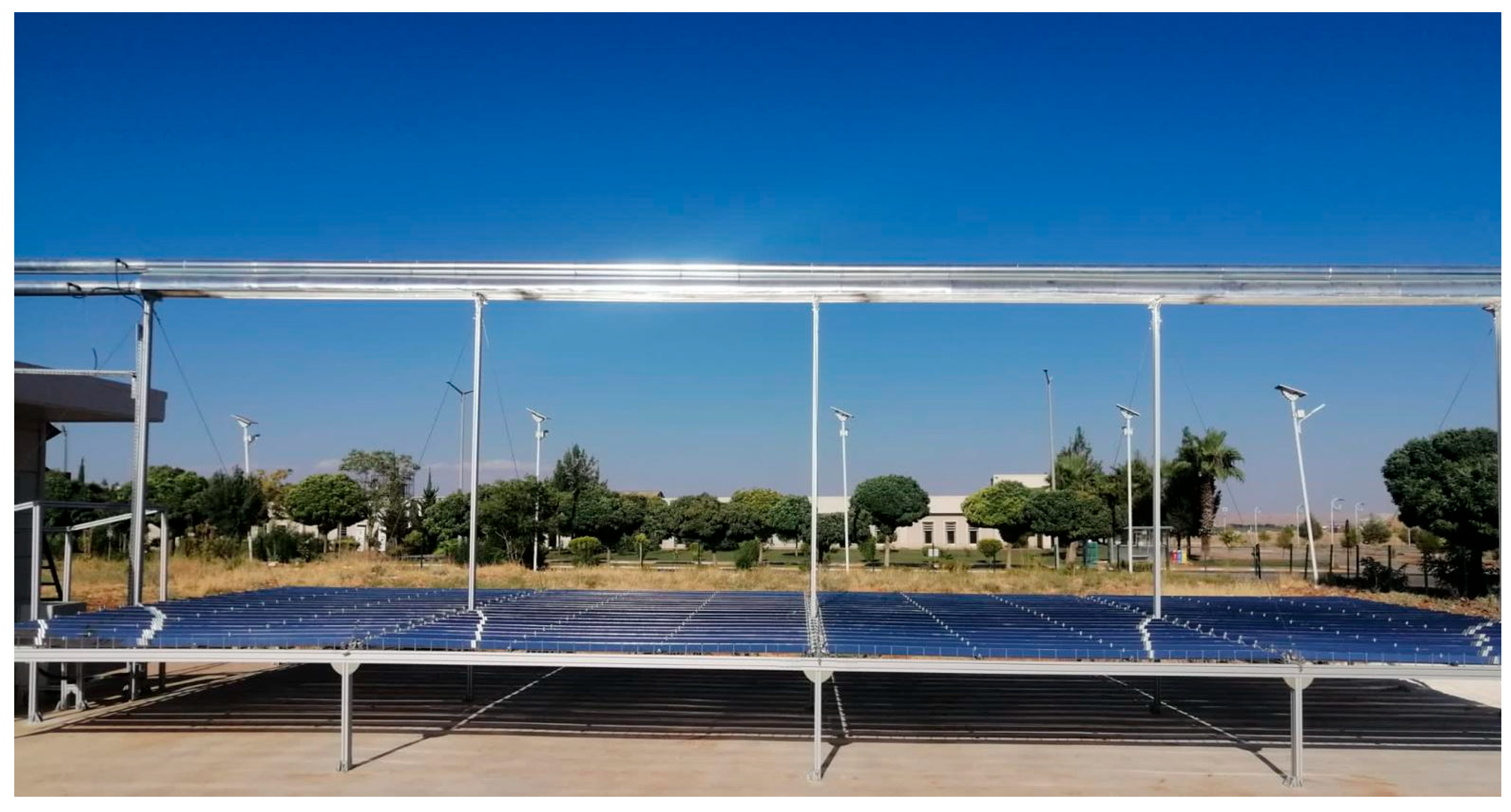
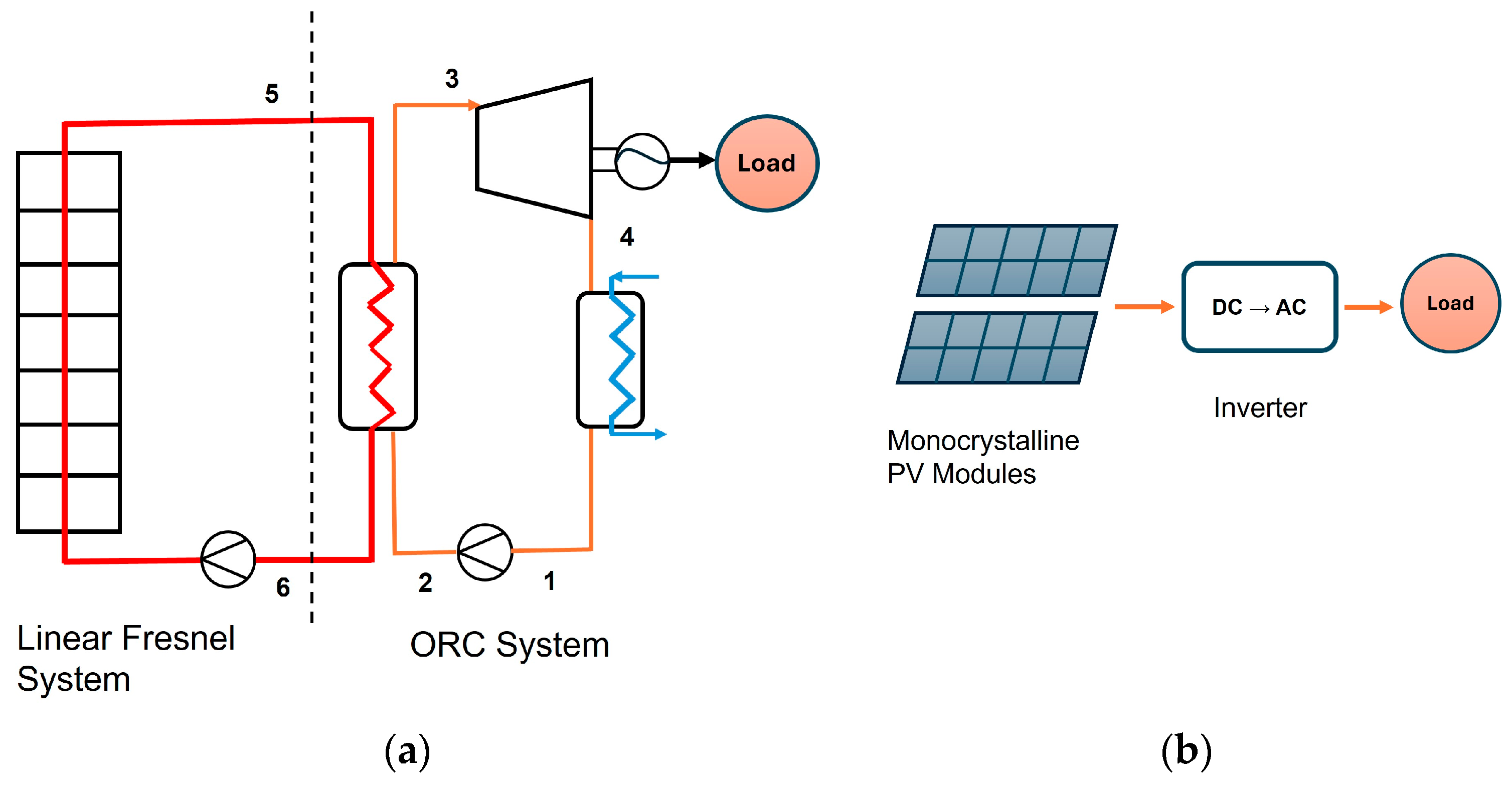
In this study, two renewable energy-based system designs were developed for a building with an instantaneous electricity demand of 10 kW. The first system is an LFR-ORC system designed based on data from the Linear Fresnel Reflector (LFR) installed for heat generation at Harran University Osmanbey Campus. As shown in Figure 1, the absorber height of the LFR is 3 m, the mirror spacing is 10 cm, mirror width is 20 cm, and the number of mirror rows is 20. The system consists of four modules with a total length of 12 m. The absorber tube diameter is 66 mm. Detailed technical specifications and performance parameters of this system have been reported in previous studies [29,30,31]. Electricity generation from the LFR system was calculated using only its thermal power output and the ORC efficiency. The second system consists of monocrystalline photovoltaic (PV) panels (Figure 2). Both systems were assumed to generate electricity from available solar irradiation without storage, supporting the grid.
Energy production for the systems was calculated by multiplying the thermal power output of the LFR-ORC system with the ORC efficiency, while for the PV system, panel area, efficiency, and incident radiation were used. The electricity generated was evaluated in terms of self-sufficiency (F) and self-consumption (SC) ratios based on the energy directly consumed by the building relative to total production. Economic analysis included Life-Cycle Savings (LCS), payback period, and Levelized Cost of Electricity (LCOE), considering investment costs, operation and maintenance expenses, inflation, and discount rates. Total lifetime emissions of the systems were also calculated, allowing for a comparative assessment of both systems in terms of energy production potential and economic performance.

2.2. Energy Modeling

2.2.1. Electricity Generation of the LFR-ORC System

The electricity generated by the LFR-ORC system is calculated by multiplying the thermal power output measured from the LFR, Q ˙ i n , with the ORC efficiency, η O R C [32]:
E ˙ O R C = Q ˙ i n · η O R C
The thermal power, Q ˙ i n , is determined using the measured thermophysical properties of the LFR heat transfer fluid and the temperature difference between the inlet and outlet of the LFR system ( Δ T , shown as points 5 and 6 in Figure 2a) as follows:
Q ˙ i n = m ˙   · c p · T
The data are based on measurements taken between 17 August 2021, and 22 July 2022 (Table 1). Measurements for LFR performance were conducted at Harran University Osmanbey Campus, located at coordinates 37.1719° N and 39.0044° E. Data from the LFR system were recorded at 10 s intervals, and the system operated only between 08:00 and 17:00. Information on measurement equipment and uncertainty limits can be found in references [29,30].

2.2.2. Electricity Generation of the PV System

The electricity generation of the PV system was calculated using the following equation [33]:
E ˙ P V = A P V · η P V · I T · P r
Here, A P V   and η P V represent the total panel area and panel efficiency, respectively. I T denotes the total solar radiation incident on the tilted surface, and P r is the performance ratio, which includes all system losses. A performance ratio of 0.75 is assumed, which is a conservative estimate supported by locally measured annual PR values for fixed-tilt monocrystalline PV systems in the same region (Şanlıurfa, Turkey), where empirical studies report values of approximately 0.80–0.85 under comparable installation and climatic conditions [34]. The analysis focuses on monocrystalline silicon (mono-Si) PV technology due to its high module efficiency; a panel efficiency of 24% is used to maximize energy yield per unit area [35]. The electricity output depends on panel efficiency, available solar irradiation, temperature effects, and other system losses.
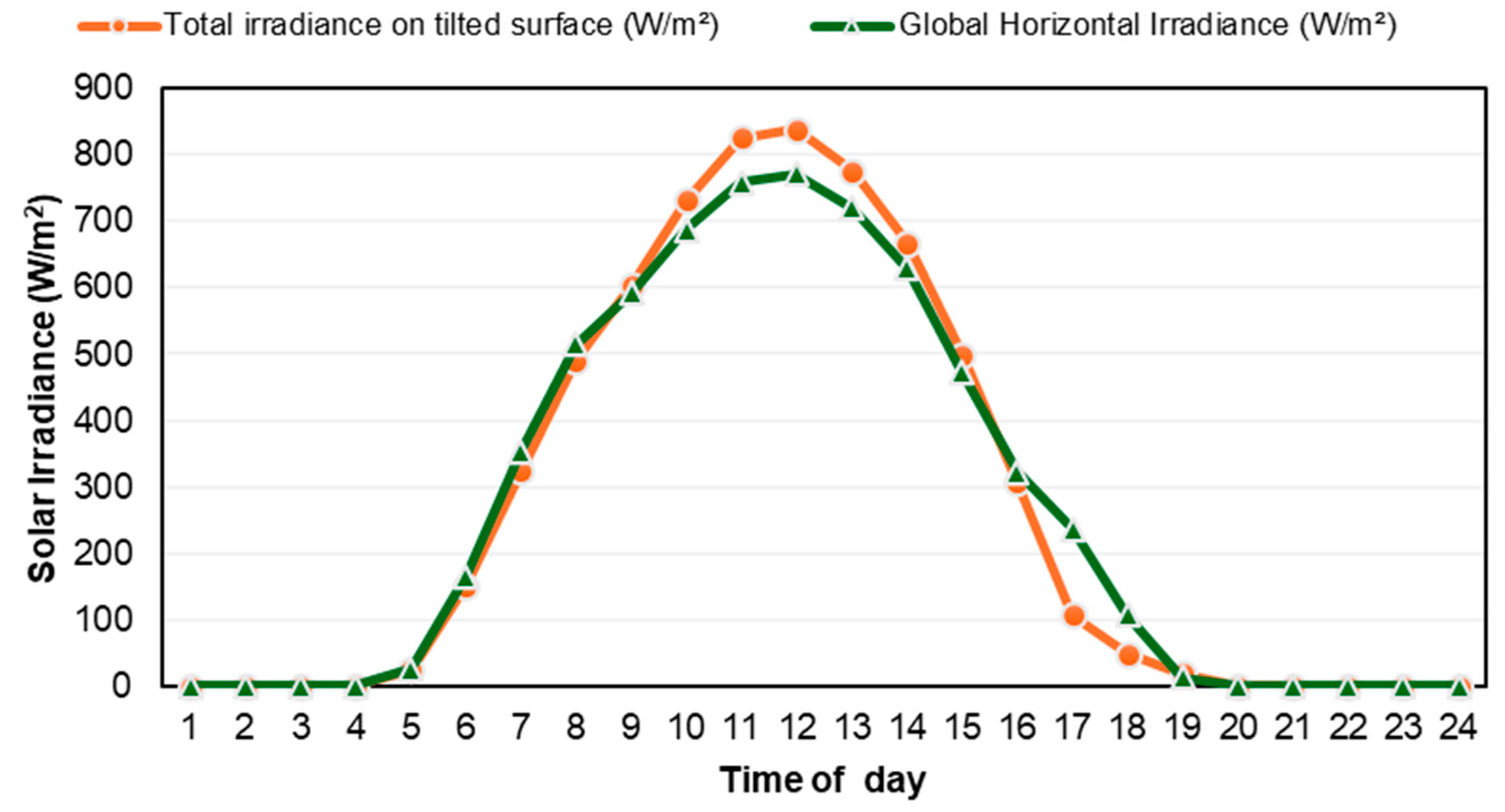
The total solar radiation values I incident on a horizontal surface were measured at 10 s intervals during the period given in Table 1. Figure 3 presents the average daily values representing a typical day of the year. In the calculation of PV panel electricity generation, the total solar radiation incident on the tilted surface ( I T ) was determined using the Isotropic Diffuse Model provided in [36]. The model defines the total solar radiation reaching a tilted surface as the sum of direct, diffuse, and reflected components, and the general formula is expressed as follows:
I T =   I b ·   R b +   I d · 1   + cos β 2 +   I ρ g · 1   cos β 2
Here, I b and I d denote the direct and diffuse radiation incident on a horizontal surface, respectively. The measured total radiation I is the sum of these two components. R b is defined as the geometric factor. Equation (4) is presented in its general form, and other calculation procedures are not detailed in order to maintain the study’s focus. Further details can be found in ref. [36]. Additionally, β represents the surface tilt angle. In this study, the PV surface was oriented toward the south ( γ = 0 ° ), and the optimum tilt angle was taken as 7° less than the latitude angle [37]. The PV tilt angle was selected to maximize annual energy yield based on the site latitude and local irradiation characteristics of Sanliurfa, in accordance with a site-specific optimization study reported for this region and standard design practices for fixed PV installations.

2.2.3. Performance Indicators

After calculating the electricity generation for each system (PV and LFR-ORC), the system performance was evaluated without energy storage using the self-sufficiency ( F ) and self-consumption ( S C ) ratios.
The self-sufficiency (F) ratio represents the amount of electricity directly consumed by the building ( E C ) relative to its total electricity demand ( E L ), and it is defined as follows [38]:
F = E C E L
The self-consumption ( S C ) ratio indicates the portion of the generated electricity that is directly consumed by the building and is expressed as:
S C = E C E G
Here, E G represents the electricity generation of the PV and LFR-ORC systems.

2.3. Economic Analysis

2.3.1. Life-Cycle Savings (LCS)

In this study, the Life-Cycle Savings (LCS) method was used to determine the optimum installed capacity of the LFR-ORC and PV systems [36]. The economically optimal collector area for each technology was identified by applying the P1P2 methodology within the LCS framework. This approach evaluates the trade-off between the present value of future fuel savings (P1) and the life-cycle cost of the initial capital investment (P2). The optimal area corresponds to the point where expanding the collector size yields no additional net economic benefit, mathematically expressed as d(LCS)/dA = 0. By incorporating time-dependent financial parameters including fuel inflation, discount rates, and maintenance expenses, this methodology delivers a more comprehensive economic assessment than simple payback analysis. The life-cycle savings are calculated as follows:
L C S = P 1 · C F 1 · L · F P 2 · ( C A · A c + C E )
The economic and cost parameters of the systems are summarized in Table 2 [19,36,39,40,41]. Using these values, the installation costs, operation and maintenance expenses, unit electricity price, and annual total energy demand of the PV and LFR-ORC systems were considered. No storage system was included, and the systems were operated to meet a continuous load demand.
P 1 represents the ratio of life-cycle fuel cost savings to the first-year fuel cost savings and is calculated by:
P 1 = ( 1 C t ˉ ) P W F ( N e , i F , d )
Here, C represents the income condition (0 if there is no income), t ˉ is the effective income tax rate, i F is the fuel inflation rate, d is the discount rate, and N e is the system lifetime. All these parameters are summarized in Table 2 [14,36]. No income generation was assumed.
P 2 represents the ratio of the life-cycle cost of additional capital investment to the initial investment. Assuming no prepayment and negligible tax effects, it can be simplified as:
P 2 = 1 + M S P W F ( N e , i , d ) R v ( 1 + d ) N e
Here, M S represents the operation and maintenance costs, and R v denotes the present value of the remaining value at the end of the system’s life (Table 2).

2.3.2. Payback Period

The payback period ( N p ) is defined as the time required for the fuel savings generated by an investment to recover its initial cost. It is calculated as follows [36]:
N p = ln ( C s i F F L C F 1 + 1 ) l n ( 1 + i F )
Here, C s denotes the total installation cost (CAPEX) of the solar energy equipment.

2.3.3. Levelized Cost of Electricity (LCOE)

The economic feasibility of an investment should be evaluated not only in terms of savings but also in terms of unit energy production cost. Therefore, following the LCS analysis, the Levelized Cost of Electricity (LCOE) method was employed to determine the lifetime cost-effectiveness of the systems [15].
L C O E = Present   Value   of   Total   Investment   ( ) Present   Value   of   Total   Energy   Generated   ( kWh )
The annual operating expenses (OPEX) are calculated as:
O P E X i = M S × C s × ( 1 + i r ) i 1
where i r is the annual inflation rate, assumed to be 6%. The present value of total operating expenses throughout the plant’s lifetime is determined by:
O P E X = i = 1 N e O P E X ( i ) ( 1 + d ) i
The present value of the total investment over the plant’s lifetime is calculated by summing the initial investment cost ( C s ) and the discounted total operating and maintenance expenses (OPEX):
Present   Value   of   Total   Investment = C s + O P E X
Similarly, the present value of the total energy generated over the plant’s lifetime is expressed as:
    Present   Value   of   Total   Energy   Generated   =     i = 1 N e E g ( i ) ( 1 + d ) i
Here, E g represents the estimated energy generation for the respective year, determined using Equations (1) and (3).

2.4. Greenhouse Gas Emissions (GHG) Calculation

In this study, the greenhouse gas (GHG) emission performance of the solar systems (LFR-ORC and Monocrystalline PV) was compared with that of the Turkish electricity grid. The total life-cycle emissions (LCE) of the systems were calculated using the following equation [42]:
L C E = E g N e E F
Here, E g is the annual electricity generation (kWh/year), N e is the system lifetime (years), and E F is the unit emission factor for electricity generation (gCO2-eq/kWh). The emission factor for the LFR-ORC system was assumed as 20 gCO2-eq/kWh based on a cradle-to-grave life cycle assessment, consistent with the IPCC definition of lifecycle greenhouse gas emissions [43]. For monocrystalline silicon PV technology, a cradle-to-grave life cycle emission factor of 75 gCO2-eq/kWh was adopted from the literature [44]. The Turkish electricity grid emission factor was taken as 442 gCO2-eq/kWh based on official national electricity generation statistics [45].

3. Results and Discussion

In this section, the annual and daily energy production performances and economic indicators of the designed Linear Fresnel Reflector (LFR) integrated with an Organic Rankine Cycle (ORC) and a monocrystalline photovoltaic (PV) system are presented and compared. First, the technical performance of both systems was evaluated based on measured and model-predicted data; the systems’ capacities to meet the demanded electrical load were examined through self-consumption and self-sufficiency ratios. Then, within the scope of the economic analysis, comparisons of life cycle savings (LCS), payback period, and levelized cost of electricity (LCOE) were conducted. Finally, the lifetime greenhouse gas emissions of the systems were assessed, and their performances were discussed in terms of environmental sustainability. This holistic approach reveals the technical and economic feasibility of small-scale, non-storage solar energy systems.

3.1. LFR-ORC System Performance

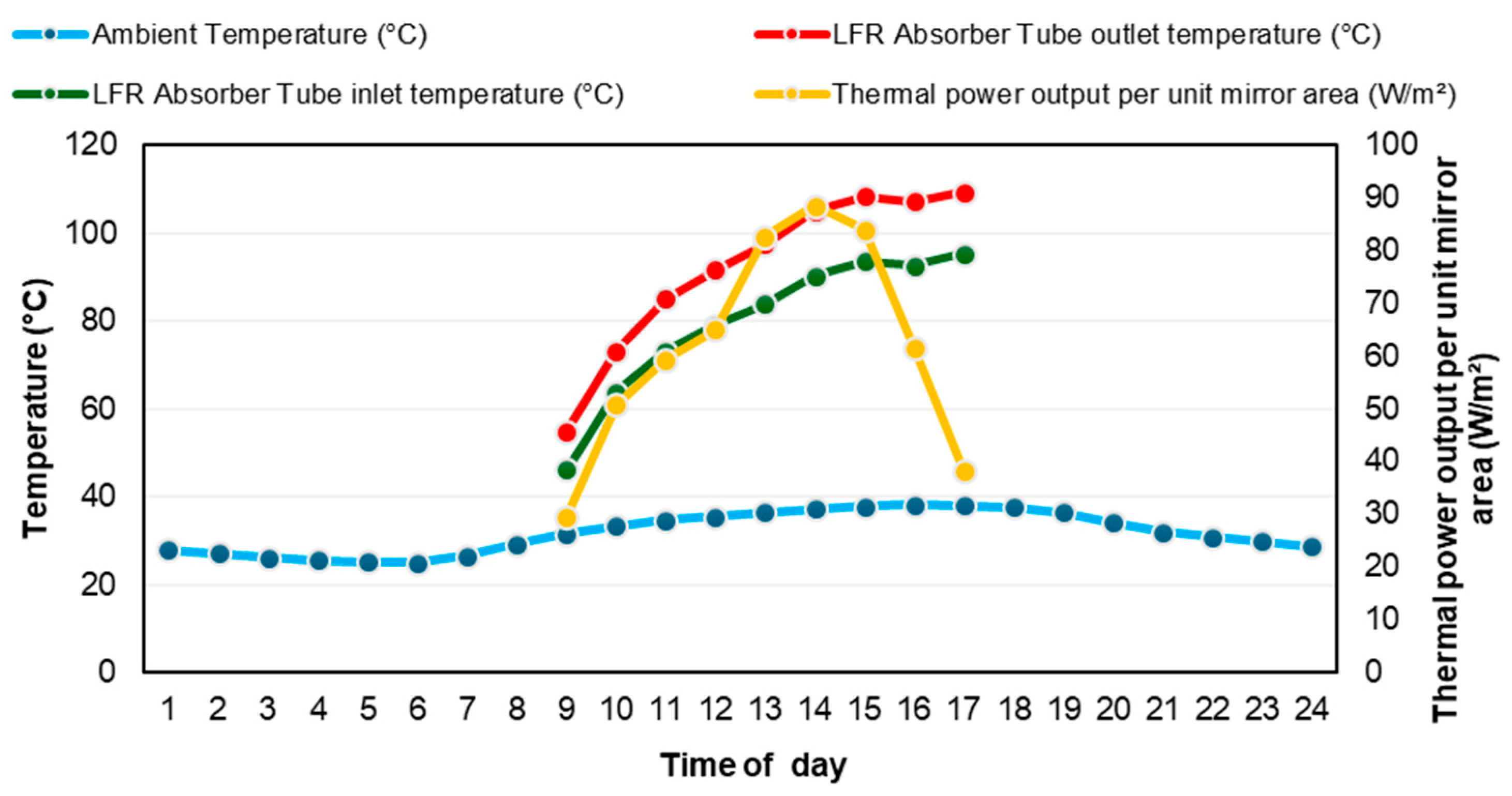
Figure 4 shows the variations in the inlet and outlet temperatures of the absorber heat transfer oil and the ambient temperature throughout the day for a typical day representing the entire year, for the LFR system installed at Harran University Osmanbey Campus for heat production purposes. Considering the heat source (the outlet temperature of the LFR absorber tube heat transfer fluid, point 5 in Figure 2a) and the ambient temperature, the ORC efficiency was assumed to be 10.8%. The ORC thermal efficiency of 10.8% assumed in this study represents a typical value in the literature for small-scale systems operating within the low-to-medium temperature range (100–300 °C) [19] and is consistent with the heat source temperature of the investigated LFR system. While working fluid selection significantly influences this efficiency and safety, a fixed, literature-supported baseline value was employed because the focus of this comparative techno-economic analysis is on primary solar technology performance. The efficiency of the electric generator was taken as 0.95 [6].
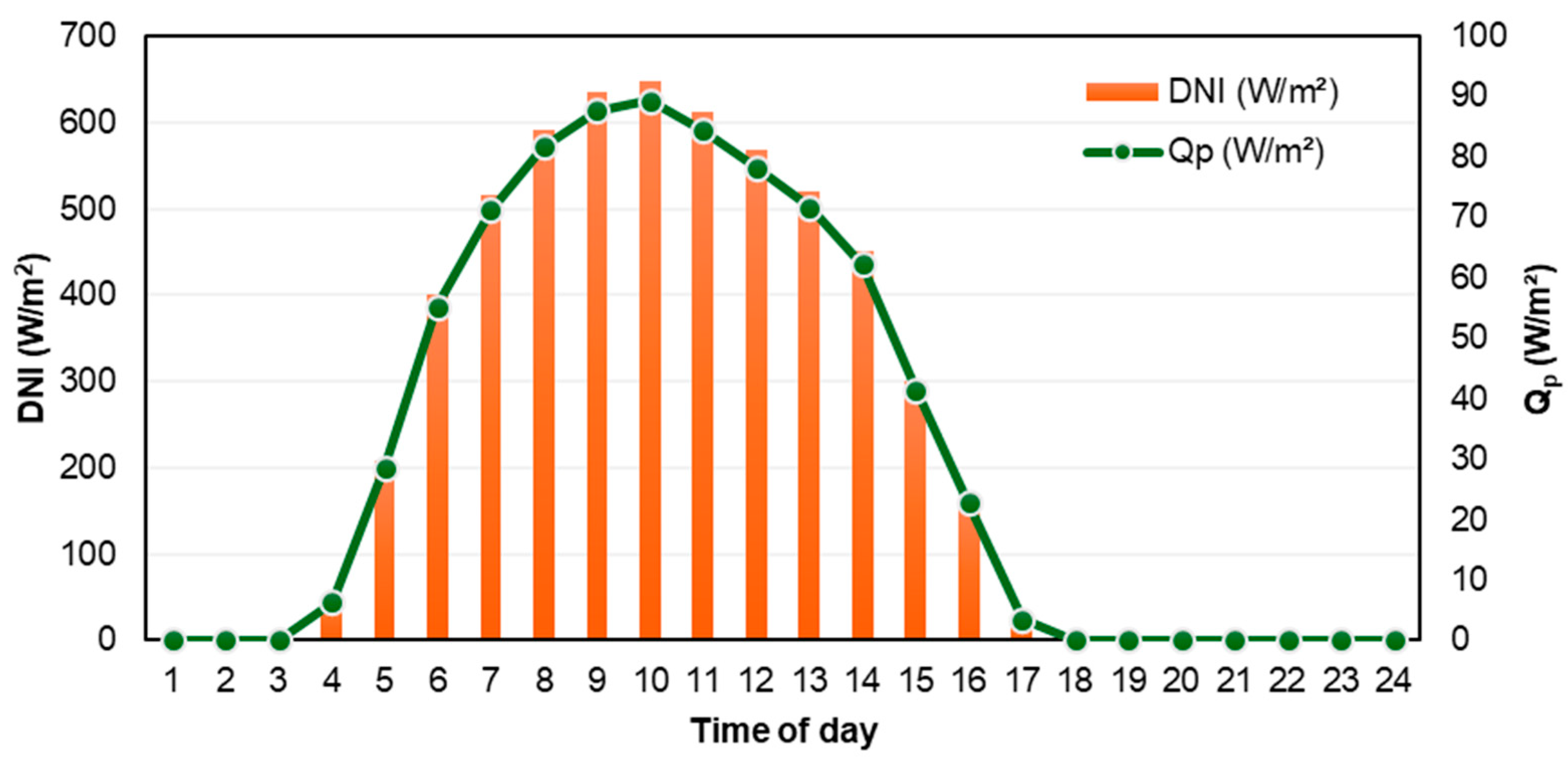
In Figure 5, to estimate the thermal power outputs of the LFR system for a typical day, the Direct Normal Irradiance (DNI) values were calculated using the beam radiation ( G b ) from ref. [46] and the formula given in ref. [47]:
G b = D N I cos θ
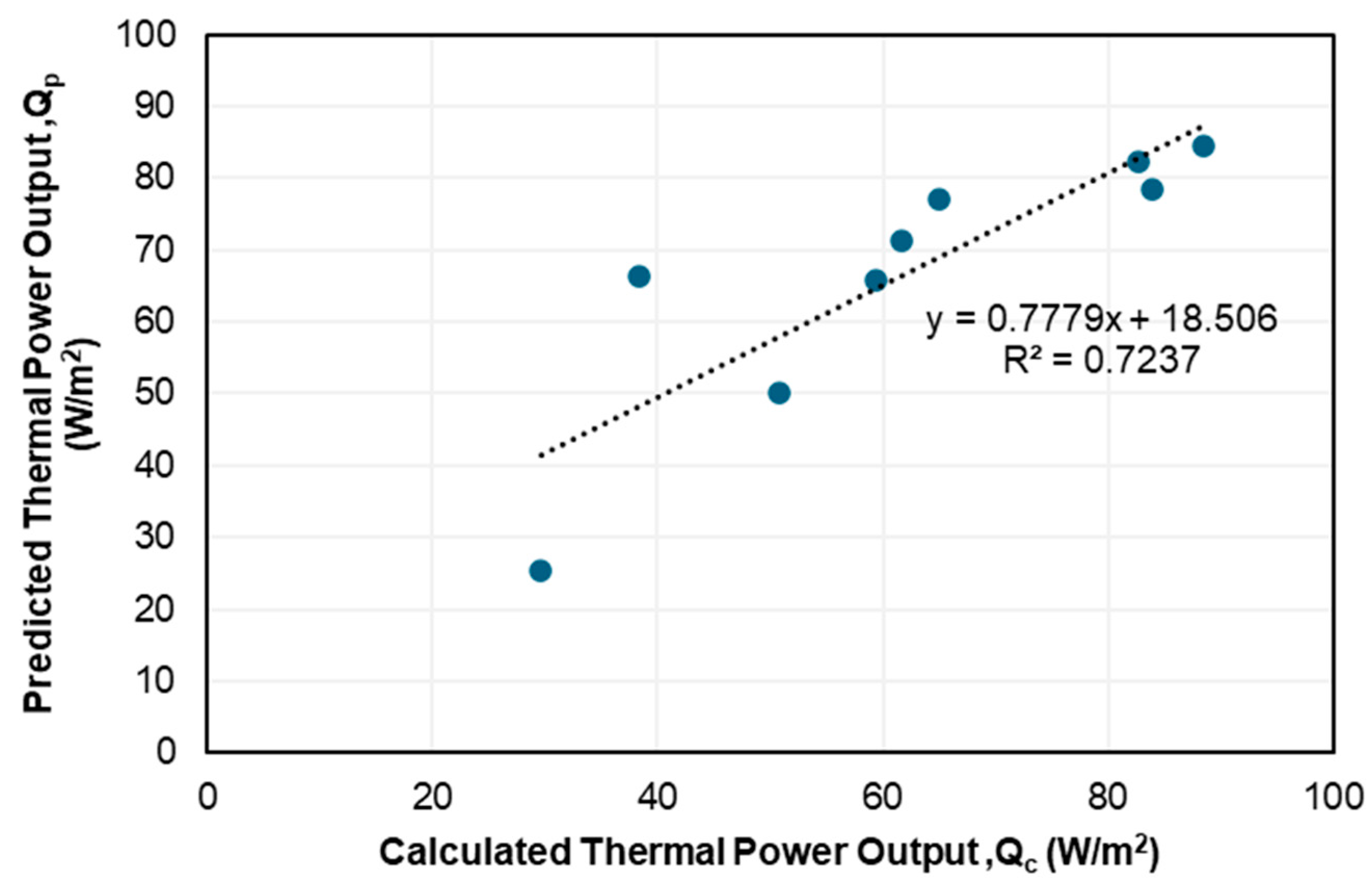
For the calculation details of the zenith angle, c o s ( θ ) , reference can be made to [36]. Using the measured thermophysical data, the calculated thermal power output ( Q ˙ c ) was compared with the predicted heat output ( Q ˙ p ). The total of the squared differences between these values were minimized using the Least Squares method. The predicted heat output was calculated through the function defining the performance equation or instantaneous efficiency characteristic of the Linear Fresnel reflector system [48]:
η = η 0 a 1 T m T a m b D N I a 2 T m T a m b D N I 2
As a result of the calculation, the obtained parameters were optical efficiency η 0 = 0.138 , and thermal loss coefficients a 1 = 0.01 and a 2 = 0.001 . Here, Δ T = T m T a m b represents the temperature difference between the average temperature of the fluid in the collector ( T m ) and the ambient temperature ( T a m b ). The delay in system behavior was determined through a cross-correlation analysis between the measured DNI and heat output profiles, showing maximum correlation (0.85) at a delay of 4 h. This delay results from the system’s thermal response time and the start-up schedule, as the system begins operation at 08:00. Therefore, the predicted heat outputs were time-shifted according to the measured data for performance evaluation.
The model’s accuracy was assessed using the Root Mean Square Error (RMSE) and the coefficient of determination (R2) between the predicted and measured values, yielding RMSE = 11.2 W/m2 and R2 = 0.72 (Figure 6). The scatter plot shows that the calculated and predicted values indicate that the model reliably represents the daily heat output profile.
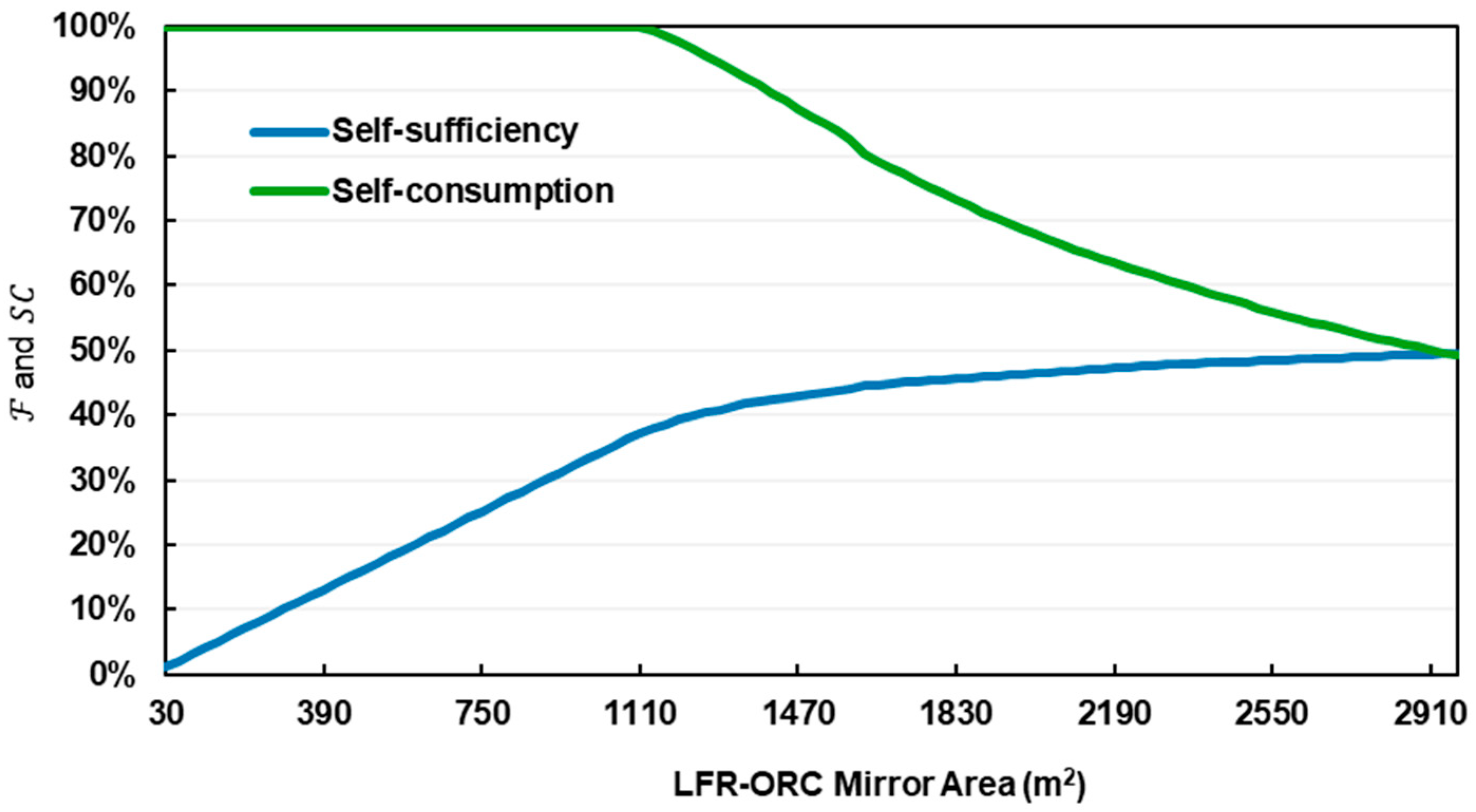
The mirror area required for the LFR-ORC system to meet the demanded electrical load under Self-Consumption conditions and the variation in the Self-Sufficiency ratio with mirror area are shown in Figure 7. Under 100% Self-Consumption conditions and without energy storage, the system achieves 36.2% Self-Sufficiency with a mirror area of 1080 m2, producing 86.9 kWh of electricity per day.
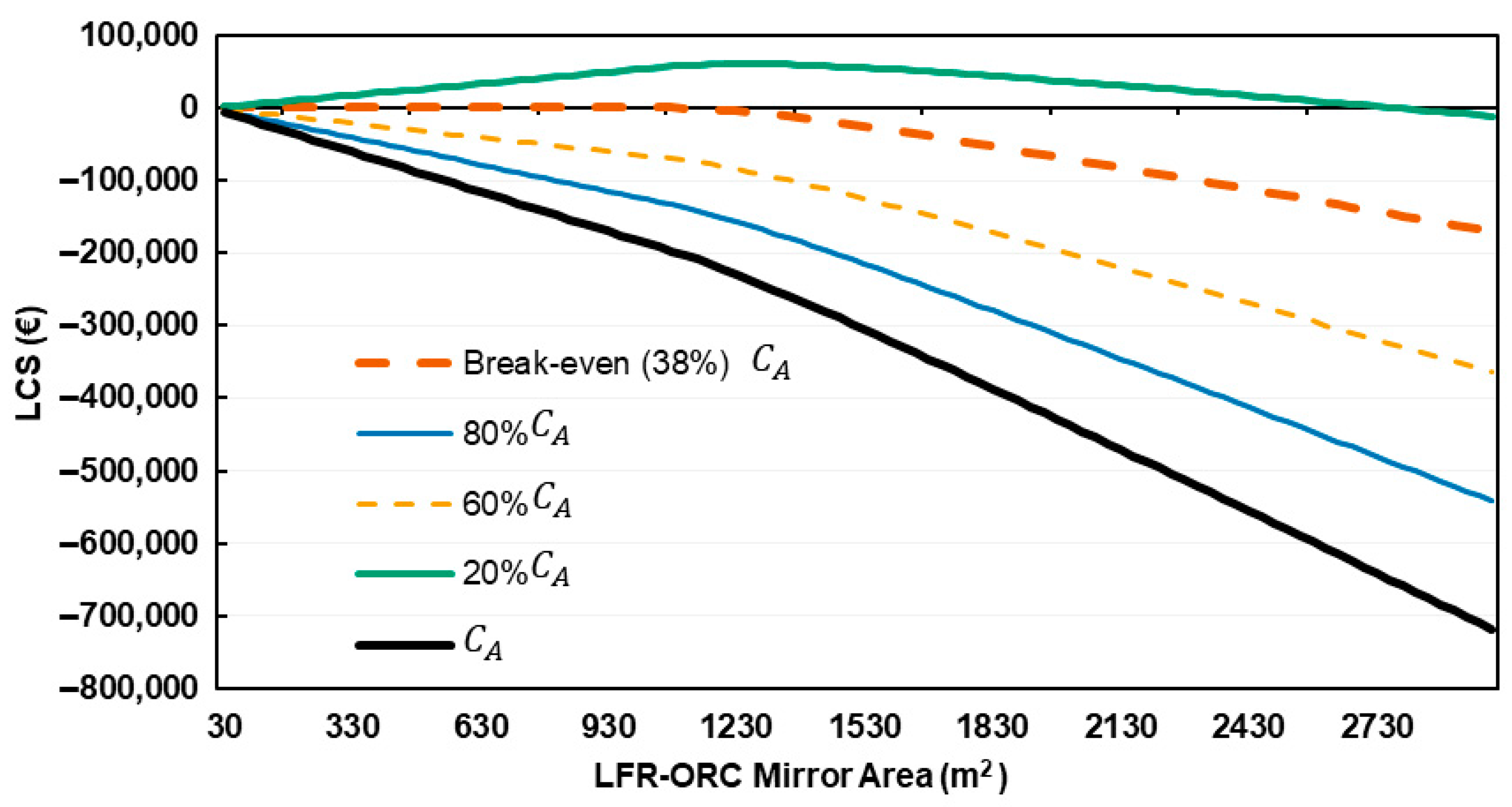
Figure 8 shows the variation in the Life Cycle Savings (LCS) of the LFR-ORC system as a function of mirror area under different cost scenarios. When the reference design cost C A is used, the LCS value remains below zero, indicating that the system is not economically feasible under current conditions. Even when the total cost depending on the area is reduced to 80% and 60% of C A , the LCS remains negative. However, when C A is reduced to 38%, a break-even point is achieved, and if the cost drops to 20% of its current value, the LCS becomes positive, making the system economically viable.

3.2. PV System Performance

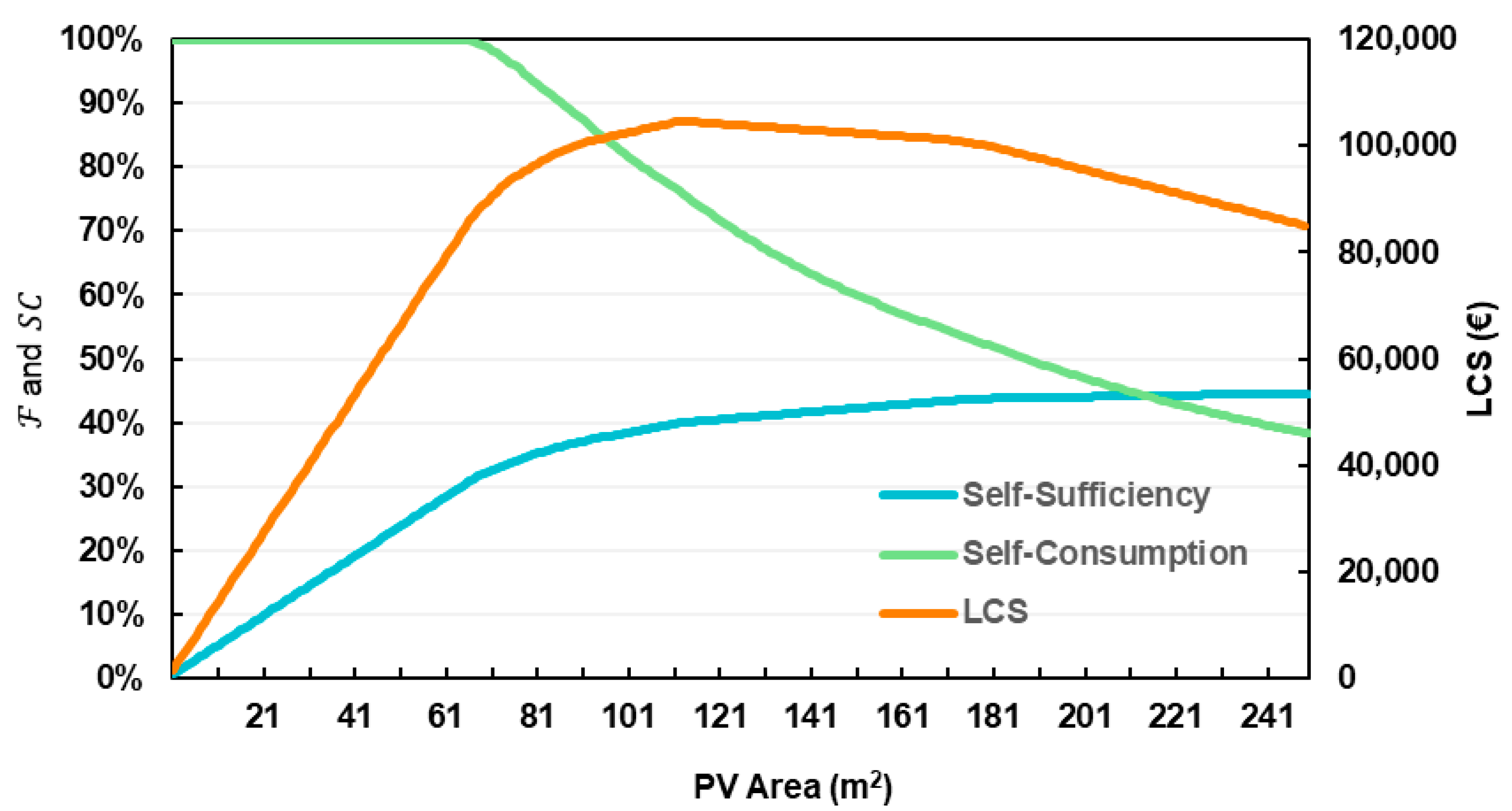
As shown in Figure 9, using the same economic parameters, the monocrystalline PV system requires a 66 m2 PV area to meet the demanded electrical load under 100% Self-Consumption conditions without energy storage, achieving a Self-Sufficiency value of 30.8%. With the energy-optimal PV area, the system produces 73.9 kWh of electricity per day. Figure 8 also shows the variation in the LCS values of the monocrystalline PV system with PV area. The positive LCS values indicate that the system is economically viable. The maximum LCS point ( d ( L C S ) / d A = 0 ) represents the economic optimum, corresponding to 40% Self-Sufficiency and 76% Self-Consumption, with a PV panel area of 113 m2.
The different trends in self-sufficiency arise from the temporal mismatch between electricity generation and demand under a non-storage configuration. As PV panel area increases, electricity production increasingly exceeds the building demand during midday hours; since excess electricity cannot be directly consumed, the self-sufficiency ratio exhibits a nonlinear increase and saturation. In contrast, within the investigation, the electricity generation of the LFR-ORC system remains mostly below the demand, allowing additional mirror area to contribute directly to on-site consumption and resulting in an approximately linear increase in self-sufficiency.
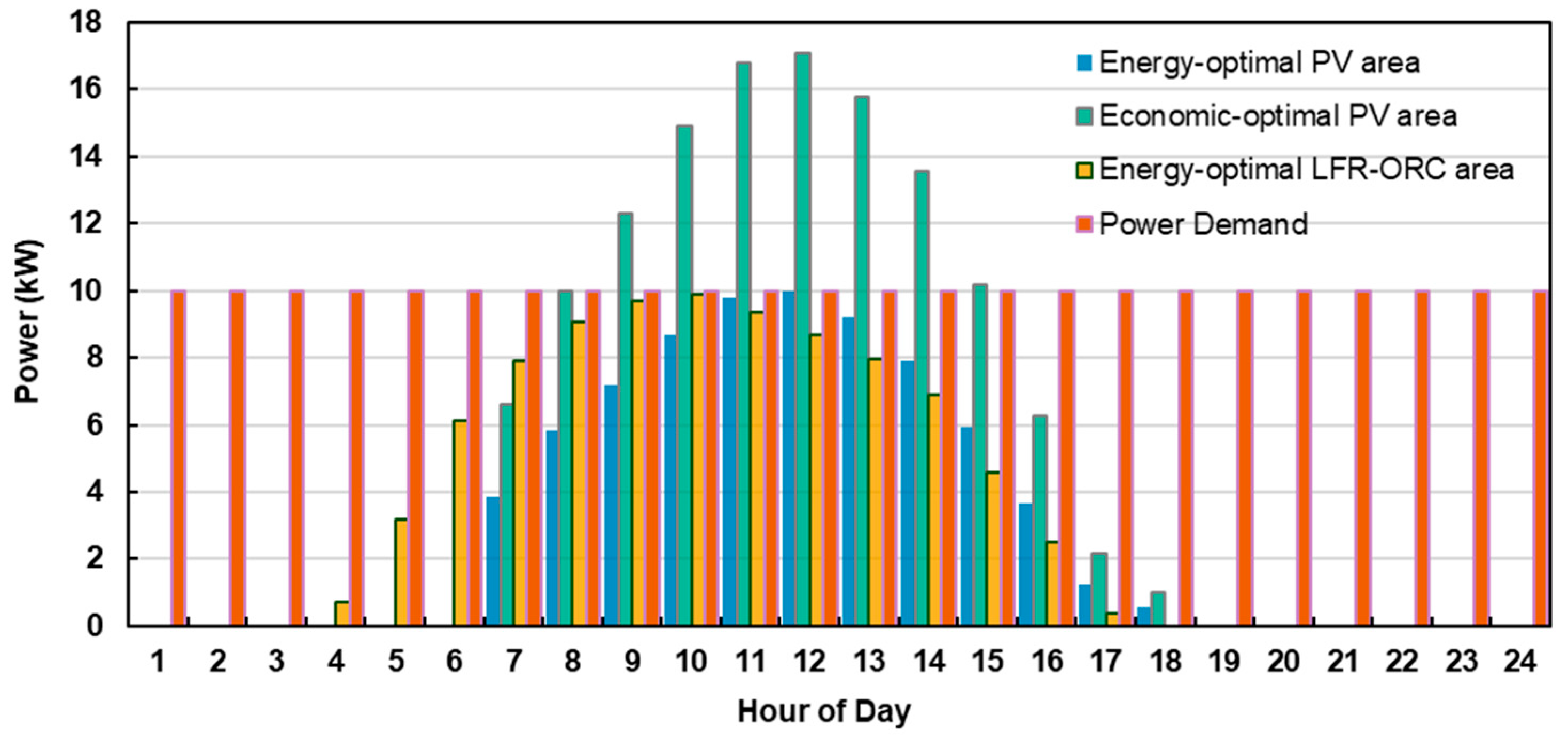
As shown in Figure 10, with the economic-optimum PV panel area, a total of 126.5 kWh of electricity was produced throughout the day, meeting 52.7% of the total daily electricity demand. Figure 9 and Figure 10 illustrate the nonlinear relationship between panel area, production, and economic performance in the PV system. While production increases with panel area, the economic optimum occurs at a smaller area, and marginal gains decrease beyond this point. Therefore, determining the correct panel area is critical for both energy production and economic efficiency.

3.3. Economic Comparison and Benchmarking

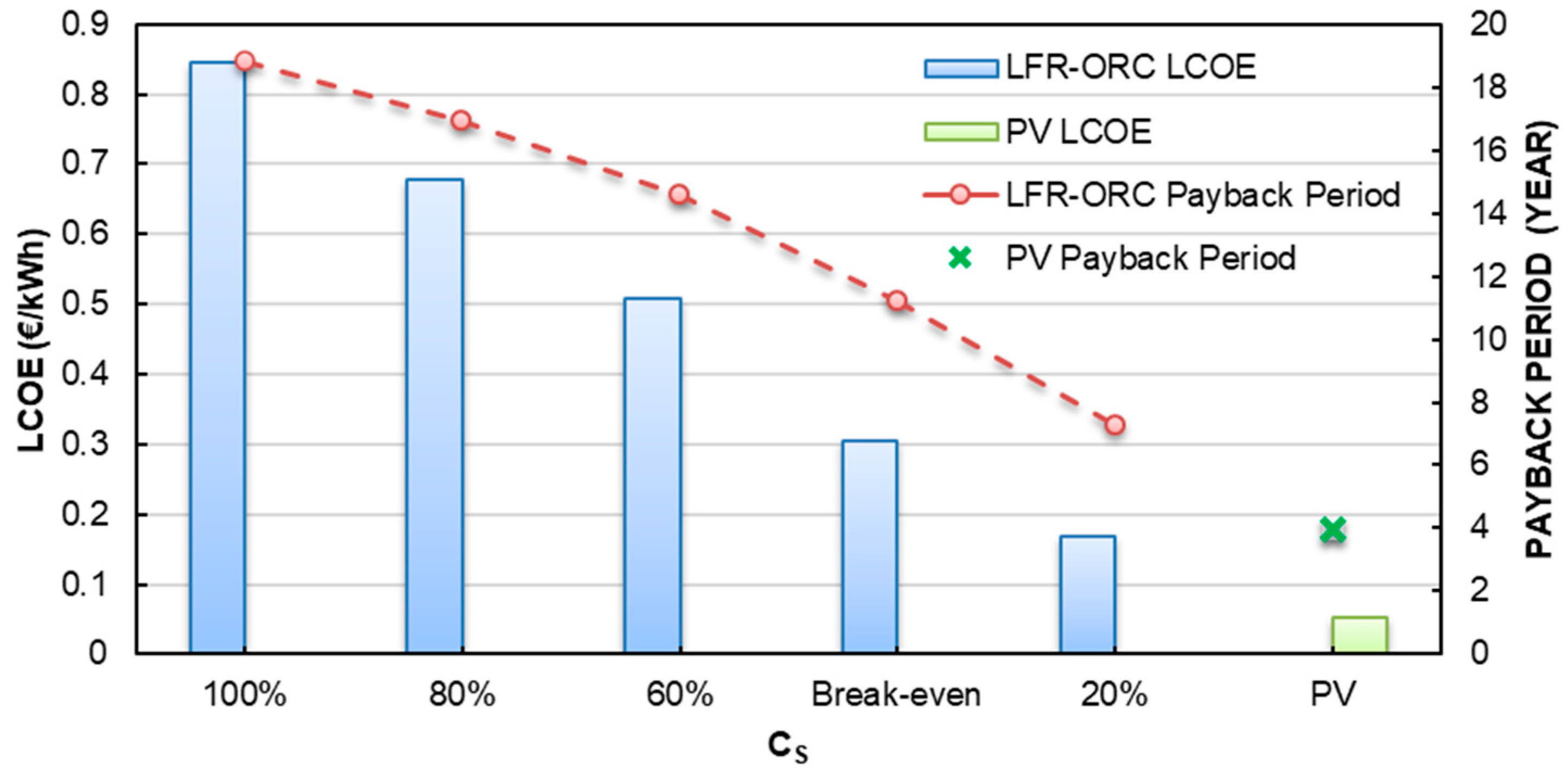
Figure 11 shows the response of the LFR-ORC system to variations in investment cost ( C S ). At the initial C S value, the system’s LCOE is 0.85 €/kWh, and the payback period is calculated as 18.8 years. In the literature, small-scale solar-powered ORC systems have been reported to have LCOE values around 1 €/kWh when investment costs are included [49,50], indicating that the current system operates at a comparable cost level. When the investment cost is reduced to 80%, the LCOE decreases to approximately 0.17 €/kWh, and the payback period shortens to 7.26 years.
For comparison, the LCOE for the economically optimal PV system is calculated as 0.053 €/kWh with a payback period of 4.93 years. This result demonstrates that the PV system offers a significantly more cost-effective solution. The obtained values also align with reported LCOE ranges of 0.041–0.144 €/kWh for PV systems in Europe [51]. Table 3 compares the LCOE results of this study with similar systems in the literature. The cost of our storage-free PV system falls at the lower end of the range reported for European installations, while the cost of our similar storage-free LFR-ORC system is close to the values reported for small-scale solar-thermal systems that include storage. Consequently, under current economic conditions and an 8% discount rate, PV systems offer a much more cost-effective solution. For LFR-ORC systems to become competitive, both initial investment and financing (discount rate) costs must be reduced.

3.4. Environmental Assessment

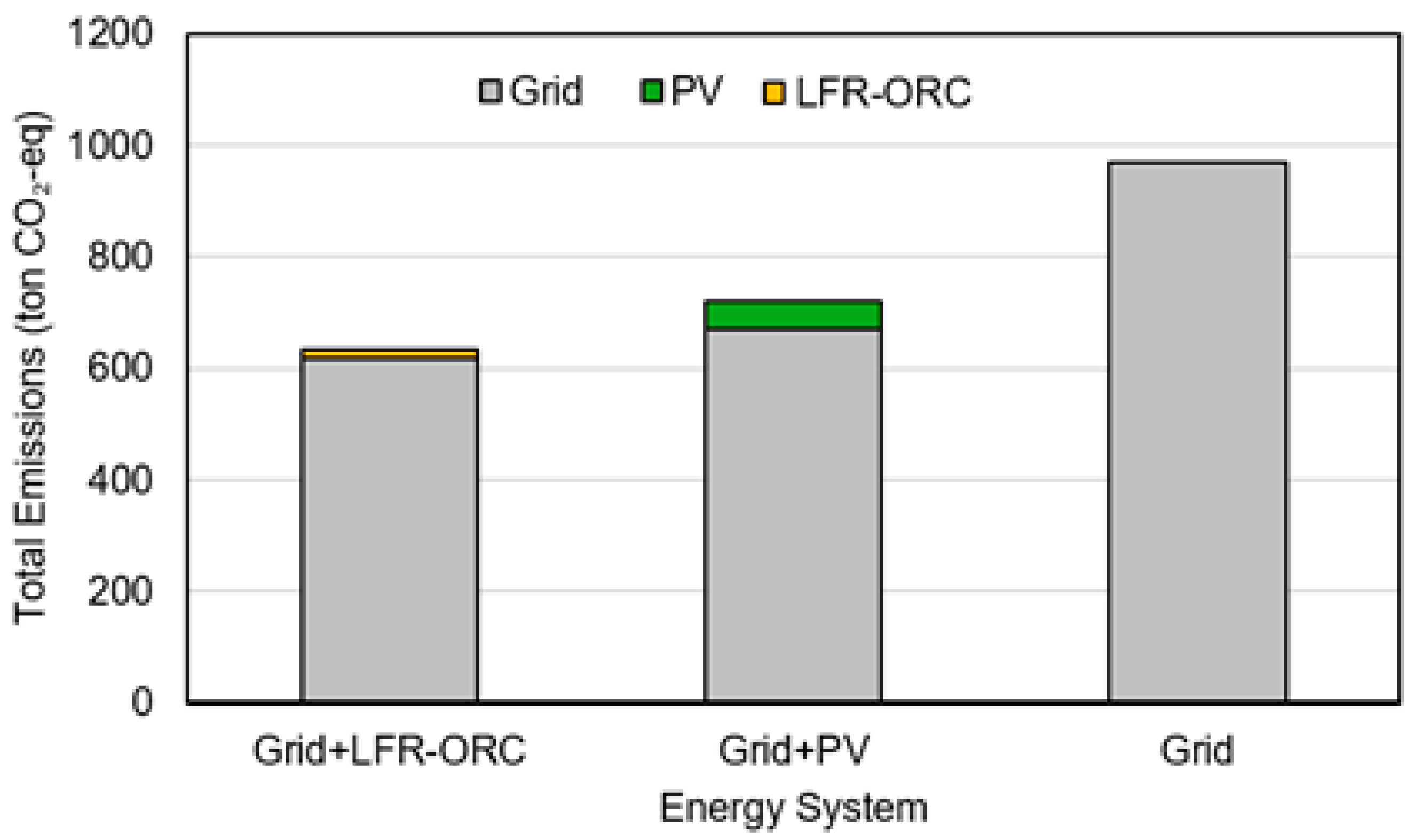
Figure 12 presents a 25-year life cycle emission comparison, highlighting the effectiveness of LFR-ORC and PV systems in emission reduction. The grid-only system has the highest total emission at 968 tons of CO2-eq. The Grid-PV system reduces total emissions by 26%, down to 720.55 tons CO2-eq. The lowest emission value, 633.32 tons CO2-eq, is achieved by the Grid–LFR-ORC system, corresponding to a 35% reduction compared to the grid-only system. Examining the standalone system performances, the total life cycle emission of the LFR-ORC system is 15.86 tons CO2-eq, while that of the PV system is 50.57 tons CO2-eq. These results indicate that LFR-ORC technology has a lower carbon footprint during production and operation compared to the PV system.
Regarding economic considerations, capital investment costs predominantly influence the LCOE and payback period, while operation and maintenance costs affect long-term economic sustainability, particularly relevant for ORC-based systems with more complex mechanical components.

3.5. Sensitivity Analysis of Key Assumptions

To assess the influence of fixed parameter assumptions on the economic results, a sensitivity analysis was conducted. The ORC efficiency ( η O R C = 10.8%) and PV performance ratio ( P r = 0.75) were each varied by ±20%, and the corresponding LCOE values were recalculated (Table 4).
The analysis demonstrates that PV remains economically more favorable across the entire tested range. Even under the upper-bound LFR-ORC scenario ( η O R C = 13.0%, LCOE = 0.71 €/kWh) and lower-bound PV scenario ( P r = 0.60, LCOE = 0.066 €/kWh), PV retains a significant cost advantage.
Regarding generation stability, the constant η O R C assumption simplifies the output profile. Actual ORC efficiency varies with heat source and ambient temperatures, which would introduce additional variability in daily generation. However, this does not affect the overall economic comparison presented in this study.
This sensitivity check demonstrates the robustness of the main conclusion against parameter uncertainty and supports the validity of the fixed-efficiency approach for this comparative assessment.
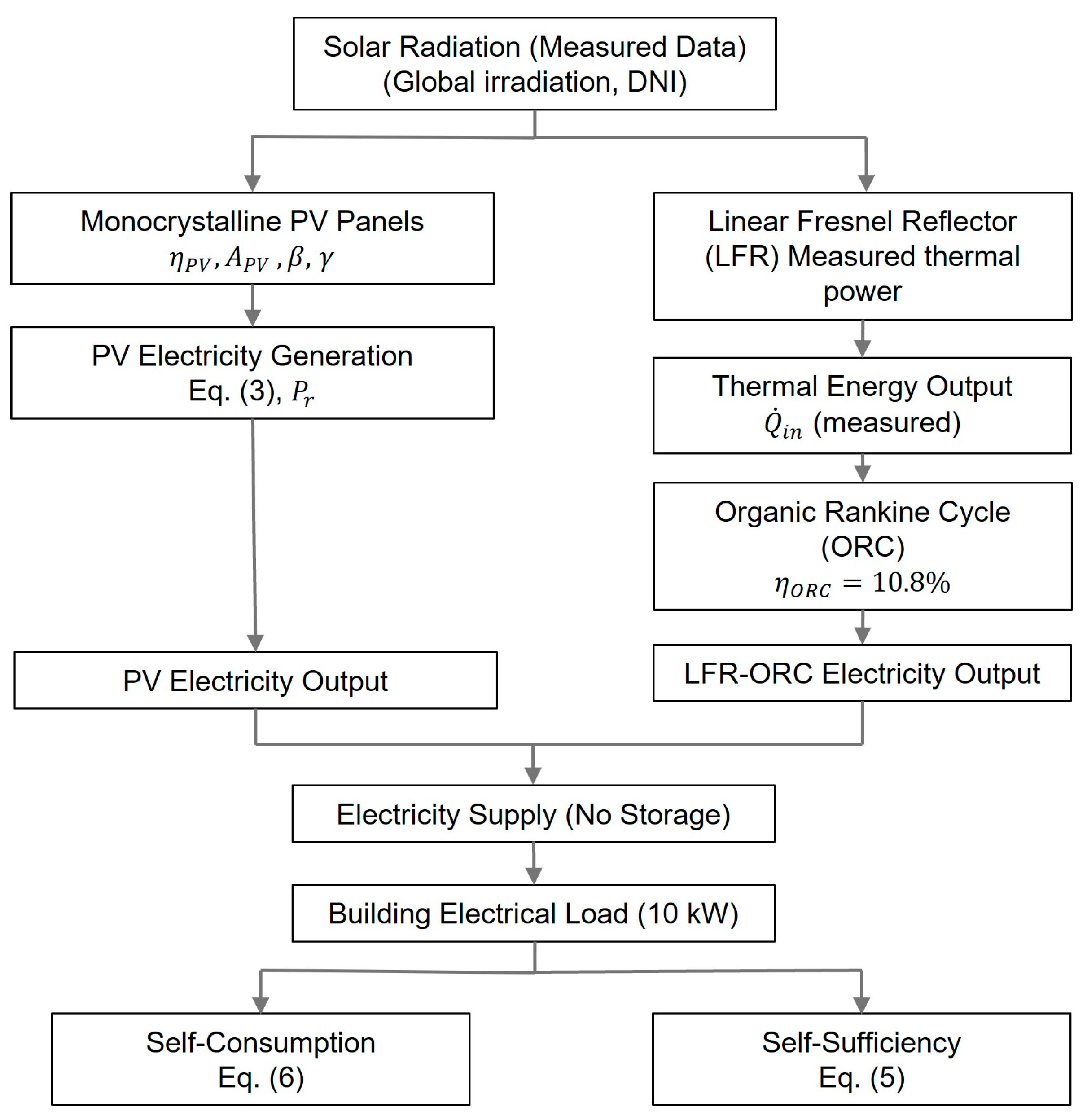
Figure 13 summarizes the overall electricity generation and utilization process of the PV and LFR–ORC systems discussed in Section 3.1, Section 3.2, Section 3.3, Section 3.4 and Section 3.5.

4. Conclusions and Future Work

4.1. Conclusions

In this study, the performances of a Linear Fresnel Reflector (LFR) integrated with an Organic Rankine Cycle (ORC) and a monocrystalline PV system, designed to meet a 10 kW electrical load demand, were analyzed. The analyses revealed various aspects of the systems in terms of both energy production and economic efficiency.
The PV system, at its energy-optimum area (66 m2), produces 73.9 kWh daily and achieves 30.8% self-sufficiency. At the economic-optimum point (113 m2), the life cycle savings (LCS) are maximized, with 40% self-sufficiency and 76% self-consumption. This shows that the PV system reaches its economic optimum at a panel area different from that of maximum technical energy production.
The LFR-ORC system, with a 1080 m2 mirror area, produces 86.9 kWh per day and achieves 36.2% self-sufficiency. Although it lags behind PV economically under current cost conditions, it offers a lower carbon footprint of 15.86 tons CO2-eq compared to the PV system, providing a more environmentally sustainable solution.
These findings indicate that PV systems excel in short-term economic performance and investment return, while the LFR-ORC system offers advantages in energy diversification and environmental sustainability. Considering both energy-optimum and economic-optimum points in system design and optimization is crucial to balance demand coverage, economic efficiency, and environmental performance. From a sustainability perspective, PV systems primarily contribute to SDG 7 by enabling affordable and widely accessible renewable electricity generation, whereas LFR–ORC systems contribute more strongly to SDG 13 through lower life-cycle CO2 emissions. The storage-free configuration further supports both goals by minimizing material use and system complexity.

4.2. Study Limitations and Future Research Directions

The present study has several limitations. The obtained findings are based on the climatic conditions of Sanliurfa and data from a specific Linear Fresnel Reflector prototype; therefore, their direct applicability to other regions is limited. Constant efficiency values were adopted for the Organic Rankine Cycle, and long-term degradation effects including PV module aging and ORC component wear were not considered. Energy storage systems were deliberately excluded to focus on the intrinsic techno-economic performance of PV and LFR-ORC technologies; however, this limits the assessment of hourly and seasonal demand-generation matching.
The observed four-hour delay in the LFR system’s response is mainly related to the scheduled morning start-up at 08:00 rather than thermal inertia alone. The relative effects of operational scheduling versus intrinsic thermal mass on this delay, and its consequences for self-consumption, were not analyzed separately.
Sustainability indicators beyond life-cycle CO2 emissions, such as land-use, exergy destruction, and end-of-life impacts, were not included due to data limitations.
In addition, the PV electricity generation model was not validated using site-specific measured data. Nevertheless, previous studies indicate that even for well-characterized crystalline silicon PV systems, the combined uncertainty in annual energy yield predictions typically lies in the range of 7–9%, mainly due to solar resource variability, irradiance transposition models, and system loss assumptions [52].
Long-term aging and degradation effects of PV modules and LFR–ORC components were not explicitly accounted for and constitute an additional limitation of this study. Although the analysis is performed for a 10 kW system, the applied techno-economic framework can be extended to larger system sizes by incorporating degradation and scale-dependent cost factors.
The economic and technical results are based on fixed input values without a full statistical uncertainty analysis. Therefore, the reported outputs (e.g., LCOE, payback period) represent single-point estimates, and their confidence levels are not quantified. Future studies should perform advanced uncertainty assessments to strengthen the reliability of the findings.
Future research should focus on multi-location analyses, dynamic hourly simulations incorporating energy storage, comprehensive uncertainty analysis, working fluid optimization for ORC systems, and the expansion of environmental sustainability assessments.

Author Contributions

Conceptualization, E.Y.; Methodology, E.Y.; Validation, M.A.A.; Formal analysis, E.Y.; Investigation, E.Y.; Data curation, E.Y.; Writing—original draft, E.Y.; Writing—review and editing, E.Y. and M.A.A.; Supervision, M.A.A.; Project administration, M.A.A.; Funding acquisition, M.A.A. All authors have read and agreed to the published version of the manuscript.

Funding

This study was financed by the Scientific and Technological Research Council of Turkey (Grant No. 1003-118M143).

Data Availability Statement

The data presented in this study are available on request from the corresponding author.

Conflicts of Interest

The authors declare no conflicts of interest.

References

  1. Bellos, E. Progress in the design and the applications of linear Fresnel reflectors—A critical review. Therm. Sci. Eng. Prog. 2019, 10, 112–137. [Google Scholar] [CrossRef]
  2. Fernández-Reche, J.; Valenzuela, L.; Pulido-Iparraguirre, D. Measuring Concentrated Solar Radiation Flux in a Linear Fresnel-Type Solar Collector. Solar 2022, 2, 401–413. [Google Scholar] [CrossRef]
  3. Famiglietti, A.; Lecuona, A. Small-scale linear Fresnel collector using air as heat transfer fluid: Experimental characterization. Renew. Energy 2021, 176, 459–474. [Google Scholar] [CrossRef]
  4. Ancona, M.A.; Bianchi, M.; Branchini, L.; De Pascale, A.; Melino, F.; Peretto, A.; Poletto, C.; Torricelli, N. Solar driven micro-ORC system assessment for residential application. Renew. Energy 2022, 195, 167–181. [Google Scholar] [CrossRef]
  5. Pereira, J.S.; Ribeiro, J.B.; Mendes, R.; Vaz, G.C.; André, J.C. ORC based micro-cogeneration systems for residential application—A state of the art review and current challenges. Renew. Sustain. Energy Rev. 2018, 92, 728–743. [Google Scholar] [CrossRef]
  6. Zhang, Y.; Gong, L.; Hung, T.-C. Innovative arrangements of multiple organic Rankine cycles to effectively generate power from the medium-to-low grade of heat source. Appl. Therm. Eng. 2021, 193, 116960. [Google Scholar] [CrossRef]
  7. Cao, J.; Zheng, L.; Zheng, Z.; Peng, J.; Hu, M.; Wang, Q.; Leung, M.K. Recent progress in organic Rankine cycle targeting utilisation of ultra-low-temperature heat towards carbon neutrality. Appl. Therm. Eng. 2023, 231, 120903. [Google Scholar] [CrossRef]
  8. Ni, J.; Zhao, L.; Zhang, Z.; Zhang, Y.; Zhang, J.; Deng, S.; Ma, M. Dynamic performance investigation of organic Rankine cycle driven by solar energy under cloudy condition. Energy 2018, 147, 122–141. [Google Scholar] [CrossRef]
  9. Elmaanaoui, Y.; Saifaoui, D. Preliminary assessment of an organic Rankine cycle power plant derived by linear Fresnel reflector. Int. J. Renew. Energy Res. (IJRER) 2018, 8, 2014–2024. [Google Scholar] [CrossRef]
  10. Mahmood, H.; Hossin, K. Daily, monthly and annual thermal performance of a linear Fresnel reflector to drive an organic Rankine-cycle system. Clean Energy 2021, 5, 673–689. [Google Scholar] [CrossRef]
  11. Ferrara, F.; Gimelli, A.; Luongo, A. Small-scale Concentrated Solar Power (CSP) plant: ORCs comparison for different organic fluids. Energy Procedia 2014, 45, 217–226. [Google Scholar] [CrossRef]
  12. Cau, G.; Cocco, D. Comparison of medium-size concentrating solar power plants based on parabolic trough and linear Fresnel collectors. Energy Procedia 2014, 45, 101–110. [Google Scholar] [CrossRef]
  13. Jawad, J.; Hussain, A.; Mabrouk, A. Pilot testing of water utilization for integrated solar energy storage and power production using linear Fresnel collector and organic Rankine cycle. Energy Convers. Manag. X 2024, 23, 100625. [Google Scholar] [CrossRef]
  14. Loni, R.; Mahian, O.; Markides, C.N.; Bellos, E.; le Roux, W.G.; Kasaeian, A.; Najafi, G.; Rajaee, F. A review of solar-driven organic Rankine cycles: Recent challenges and future outlook. Renew. Sustain. Energy Rev. 2021, 150, 111410. [Google Scholar] [CrossRef]
  15. Patil, V.R.; Biradar, V.I.; Shreyas, R.; Garg, P.; Orosz, M.S.; Thirumalai, N. Techno-economic comparison of solar organic Rankine cycle (ORC) and photovoltaic (PV) systems with energy storage. Renew. Energy 2017, 113, 1250–1260. [Google Scholar] [CrossRef]
  16. Saif, A.G.H.; Alquaity, A.B.S.; Mokheimer, E.M.A. Techno-economic analysis of green hydrogen production in Saudi Arabia: A comparative study of solar PV and CSP technologies. Int. J. Hydrogen Energy 2025, 105, 1361–1374. [Google Scholar] [CrossRef]
  17. Behar, O.; Sbarbaro, D.; Moran, L. Which is the most competitive solar power technology for integration into the existing copper mining plants: Photovoltaic (PV), concentrating solar power (CSP), or hybrid PV-CSP? J. Clean. Prod. 2021, 287, 125455. [Google Scholar] [CrossRef]
  18. Spampinato, C.; La Magna, P.; Valastro, S.; Smecca, E.; Arena, V.; Bongiorno, C.; Mannino, G.; Fazio, E.; Corsaro, C.; Neri, F.; et al. Infiltration of CsPbI3:EuI2 perovskites into TiO2 spongy layers deposited by gig-lox sputtering processes. Solar 2023, 3, 347–361. [Google Scholar] [CrossRef]
  19. Alvi, J.Z.; Guan, Z.; Imran, M. Thermoeconomic Evaluation and Sustainability Insights of Hybrid Solar–Biomass Powered Organic Rankine Cycle Systems: A Comprehensive Review. Biomass 2024, 4, 1092–1121. [Google Scholar] [CrossRef]
  20. Rajaee, F.; Vaziri Rad, M.A.; Aliyon, K.; Kasaeian, A.; Mahian, O. Techno-economic evaluation of an organic Rankine cycle-based multi-source energy system for 100%-renewable power supply: A rural case study. Sustain. Cities Soc. 2023, 89, 104290. [Google Scholar] [CrossRef]
  21. Sharma, C.; Sharma, A.K.; Mullick, S.C.; Kandpal, T.C. Assessment of solar thermal power generation potential in India. Renew. Sustain. Energy Rev. 2015, 42, 902–912. [Google Scholar] [CrossRef]
  22. Yang, Y.; Li, X.; Yao, Z.; Yu, A.; Wang, M. Impact of facade photovoltaic retrofit on building carbon emissions for residential buildings in cold regions. Buildings 2025, 15, 3762. [Google Scholar] [CrossRef]
  23. Zhang, Y.; Zhang, Y.; Zheng, B.; Cui, H.; Qi, H. Statistical analysis for estimating the optimized battery capacity for roof-top PV energy system. Renew. Energy 2025, 242, 122491. [Google Scholar] [CrossRef]
  24. Xia, G.; He, X.; Jia, Y.; Zhu, Y.; Tian, Z. Design of a cylindrical thermal rotary concentrator based on transformation thermodynamics. Materials 2025, 18, 4440. [Google Scholar] [CrossRef]
  25. Meng, Q.; He, Y.; Hussain, S.; Lu, J.; Guerrero, J.M. Robust single-layer predictive control for grid-tied solar systems with integrated maximum power point tracking and power flow optimization. Energy Rep. 2025, 14, 2557–2569. [Google Scholar] [CrossRef]
  26. United Nations. About the Sustainable Development Goals. In United Nations Sustainable Development; United Nations: New York, NY, USA, 2025. [Google Scholar]
  27. Thomas, S.J.; Sahoo, S.S.; Thomas, S.; Kumar, G.A.; Awad, M.M. A review on Linear Fresnel Reflector (LFR) as a solar line concentrator in polygeneration for low-medium temperature applications among the rural livelihoods. Energy Nexus 2025, 17, 100340. [Google Scholar] [CrossRef]
  28. Heinstein, P.; Ballif, C.; Perret-Aebi, L.-E. Building Integrated Photovoltaics (BIPV): Review, potentials, barriers and myths. Green 2013, 3, 125–156. [Google Scholar] [CrossRef]
  29. Yıldırım, E. Doğrusal Fresnel kolektörün performans analizi. Gazi Üniversitesi Mühendislik Mimar. Fakültesi Derg. 2022, 38, 1231–1246. [Google Scholar] [CrossRef]
  30. Aktacir, M.A.; Işıker, Y.; Beşli, N.; Aslan, F.; Yıldırım, E.; Gümüşçü, A.; İlKhan, M.A.; Süzer, M.H.; Özen, M. Hot fluid production with condensing solar collector for industrial thermal processes: Development of a 20-kW linear Fresnel collector prototype. Therm. Sci. Eng. Prog. 2024, 55, 102971. [Google Scholar] [CrossRef]
  31. Yildirim, E.; aus der Wiesche, S.; Aktacir, M.A. Impact of off-design performance of turbines on organic Rankine cycle simulations for solar-power applications. In Proceedings of the ASME Turbo Expo 2024: Turbomachinery Technical Conference and Exposition, London, UK, 24–28 June 2024; Volume 5, p. V005T06A024. [Google Scholar] [CrossRef]
  32. Matuszewska, D. Solar Organic Rankine Cycle (ORC) Systems: A Review of Technologies, Parameters, and Applications. Energies 2024, 17, 5106. [Google Scholar] [CrossRef]
  33. Bhandari, K.P.; Collier, J.M.; Ellingson, R.J.; Apul, D.S. Energy payback time (EPBT) and energy return on energy invested (EROI) of solar photovoltaic systems: A systematic review and meta-analysis. Renew. Sustain. Energy Rev. 2015, 47, 133–141. [Google Scholar] [CrossRef]
  34. Aktacir, M.A.; Güzel, A. Energy monitoring and performance evaluation of new generation photovoltaic modules. Int. J. Glob. Warm. 2025, 37, 108–120. [Google Scholar] [CrossRef]
  35. Obaideen, K.; Olabi, A.G.; Al Swailmeen, Y.; Shehata, N.; Abdelkareem, M.A.; Alami, A.H.; Rodriguez, C.; Sayed, E.T. Solar Energy: Applications, Trends Analysis, Bibliometric Analysis and Research Contribution to Sustainable Development Goals (SDGs). Sustainability 2023, 15, 1418. [Google Scholar] [CrossRef]
  36. Duffie, J.A.; Beckman, W.A. Available solar radiation. In Solar Engineering of Thermal Processes; Wiley: Hoboken, NJ, USA, 2013; Volume 43–137, pp. 447–476. [Google Scholar]
  37. Yıldırım, E.; Aktacir, M.A. Binaya entegre fotovoltaik sistemlerde azimut ve eğim açısı etkilerinin incelenmesi. Gazi Üniversitesi Mühendislik Mimar. Fakültesi Derg. 2019, 34, 609–620. [Google Scholar] [CrossRef]
  38. Luthander, R.; Widén, J.; Nilsson, D.; Palm, J. Photovoltaic self-consumption in buildings: A review. Appl. Energy 2015, 142, 80–94. [Google Scholar] [CrossRef]
  39. Fraunhofer Institute for Solar Energy Systems ISE. Photovoltaics Report; PSE Projects GmbH: Freiburg, Germany, 2025. [Google Scholar]
  40. Özalp, H.Y.; Öztürk, R. Production Performance and Cost Analysis of 60 Kwp Grid-Connected Photovoltaic System in Ayaş. Black Sea J. Agric. 2024, 7, 622–630. [Google Scholar] [CrossRef]
  41. Enerji Piyasası Düzenleme Kurumu (EPDK). Elektrik Faturalarına Esas Tarife Tabloları. Available online: https://www.epdk.gov.tr/Detay/Icerik/3-1327/elektrik-faturalarina-esas-tarife-tablolari (accessed on 10 September 2025).
  42. Bertolini, M.; Duttilo, P.; Lisi, F. Accounting carbon emissions from electricity generation: A review and comparison of emission factor-based methods. Appl. Energy 2025, 392, 125992. [Google Scholar] [CrossRef]
  43. Bošnjaković, M.; Santa, R.; Crnac, Z.; Bošnjaković, T. Environmental impact of PV power systems. Sustainability 2023, 15, 11888. [Google Scholar] [CrossRef]
  44. Intergovernmental Panel on Climate Change (IPCC). IPCC Special Report on Renewable Energy Sources and Climate Change Mitigation; Cambridge University Press: Cambridge, UK, 2011. [Google Scholar]
  45. Enerji ve Tabii Kaynaklar Bakanlığı, Enerji Verimliliği ve Çevre Dairesi Başkanlığı. Türkiye Elektrik Üretimi ve Elektrik Tüketim Noktası Emisyon Faktörleri; Enerji ve Tabii Kaynaklar Bakanlığı, Enerji Verimliliği ve Çevre Dairesi Başkanlığı: Ankara, Türkiye, 2024.
  46. European Commission, Joint Research Centre (JRC). Photovoltaic Geographical Information System (PVGIS); European Commission: Brussels, Belgium, 2025. [Google Scholar]
  47. Boutahir, M.K.; Farhaoui, Y.; Azrour, M.; Zeroual, I.; El Allaoui, A. Effect of Feature Selection on the Prediction of Direct Normal Irradiance. Big Data Min. Anal. 2022, 5, 309–317. [Google Scholar] [CrossRef]
  48. Rodríguez, R.R.; Martín, R.D.; Fernández, B.M.; Gallego, J.Á.R.; del Río, C.M. Technical and economic study of solar energy concentration technologies (linear Fresnel and parabolic trough collectors) to generate process heat at medium temperature for the dairy industry of Spain. Sol. Energy 2024, 271, 112420. [Google Scholar] [CrossRef]
  49. Wang, Y.; Song, J.; Chatzopoulou, M.A.; Sunny, N.; Simpson, M.C.; Wang, J.; Markides, C.N. A holistic thermoeconomic assessment of small-scale, distributed solar organic Rankine cycle (ORC) systems: Comprehensive comparison of configurations, component and working fluid selection. Energy Convers. Manag. 2021, 248, 114618. [Google Scholar] [CrossRef]
  50. Freeman, J.; Hellgardt, K.; Markides, C.N. An assessment of solar-powered organic Rankine cycle systems for combined heating and power in UK domestic applications. Appl. Energy 2015, 138, 605–620. [Google Scholar] [CrossRef]
  51. Kost, C. Levelized Cost of Electricity: Renewable Energy Technologies; Fraunhofer Institute for Solar Energy Systems ISE: Freiburg, Germany, 2025. [Google Scholar]
  52. Thevenard, D.; Pelland, S. Estimating the uncertainty in long-term photovoltaic yield predictions. Sol. Energy 2011, 91, 432–445. [Google Scholar] [CrossRef]
Figure 1. Photo of the LFR system installed at Harran University Osmanbey Campus.
Processes 14 00204 g001
Figure 2. (a) Schematic diagram of the integrated Linear Fresnel Reflector (LFR)and Organic Rankine Cycle (ORC) electricity generation system based on performance data; (b) Schematic representation of the PV system.
Processes 14 00204 g002
Figure 3. Total solar radiation incident on a horizontal surface and total radiation incident on a south-oriented surface with optimum tilt.
Processes 14 00204 g003
Figure 4. Variation in absorber heat transfer oil inlet and outlet temperatures and ambient temperatures.
Processes 14 00204 g004
Figure 5. Daily thermal power output of the designed LFR system.
Processes 14 00204 g005
Figure 6. Comparison between the calculated Q c and the model-predicted Q p .
Processes 14 00204 g006
Figure 7. Variation in self-sufficiency and self-consumption ratios with mirror area in the LFR-ORC system without energy storage.
Processes 14 00204 g007
Figure 8. Life Cycle Savings of LFR-ORC Systems as a Function of Mirror Area for Different Area-Dependent Costs.
Processes 14 00204 g008
Figure 9. Variation in self-sufficiency, self-consumption ratios, and LCS values with panel area in the PV system without energy storage.
Processes 14 00204 g009
Figure 10. Power Demand and Comparison of Economic and Energy Optimal PV and LFR-ORC Systems.
Processes 14 00204 g010
Figure 11. Variation in LCOE and Payback Period for the LFR-ORC System under Different Investment Cost ( C S ) Scenarios and Comparison with PV System.
Processes 14 00204 g011
Figure 12. Life Cycle Emission Comparison of Energy Systems under storage-free operation.
Processes 14 00204 g012
Figure 13. Overall electricity generation and utilization flowchart of the PV and LFR–ORC systems under storage-free operation.
Processes 14 00204 g013
Table 1. Monthly Distribution of Measurement Days.
MonthNumber of Measurement Days
August 20212
September 20219
October 20212
November 20218
December 20214
January 20224
February 20226
March 202212
April 20229
May 202216
June 202219
July 20229
Table 2. Economic and Cost Parameters for the Systems (costs in nominal 2024 € from 2024 to 2025 sources).
ParameterValue/DescriptionSource
C A PV: 700 €/kWp, LFR: 175 €/m2, ORC: 2000 €/kW[19,39,40]
M S 0.02[36]
N e 25 years[15]
C F 1 0.131 €/kWh[41]
i r 6%[36]
d 8%[36]
i F 10%[36]
R v 0.4[36]
StorageNone; systems operate in grid-support mode
Table 3. Comparison of LCOE values with literature.
SystemScaleLCOE (€/kWh)ReferenceContext
This study-PV system10 kW0.053This studyNo energy storage
This study-LFR-ORC system10 kW0.85This studyNo energy storage
PV systems in Germany<30 kW0.063–0.106[51]Lower solar irradiation conditions
ORC systems with thermal storage~1 kW0.30–1.28[49,50]Different climatic conditions
Table 4. Sensitivity of LCOE to parameter variations.
ParameterBaselineVariation RangeResulting LCOE Range
ORC efficiency ( η O R C ) 10.8%8.6–13.0%0.71–1.06 €/kWh (LFR-ORC)
PV performance ratio ( P r ) 0.750.60–0.900.044–0.066 €/kWh (PV)
Disclaimer/Publisher’s Note: The statements, opinions and data contained in all publications are solely those of the individual author(s) and contributor(s) and not of MDPI and/or the editor(s). MDPI and/or the editor(s) disclaim responsibility for any injury to people or property resulting from any ideas, methods, instructions or products referred to in the content.